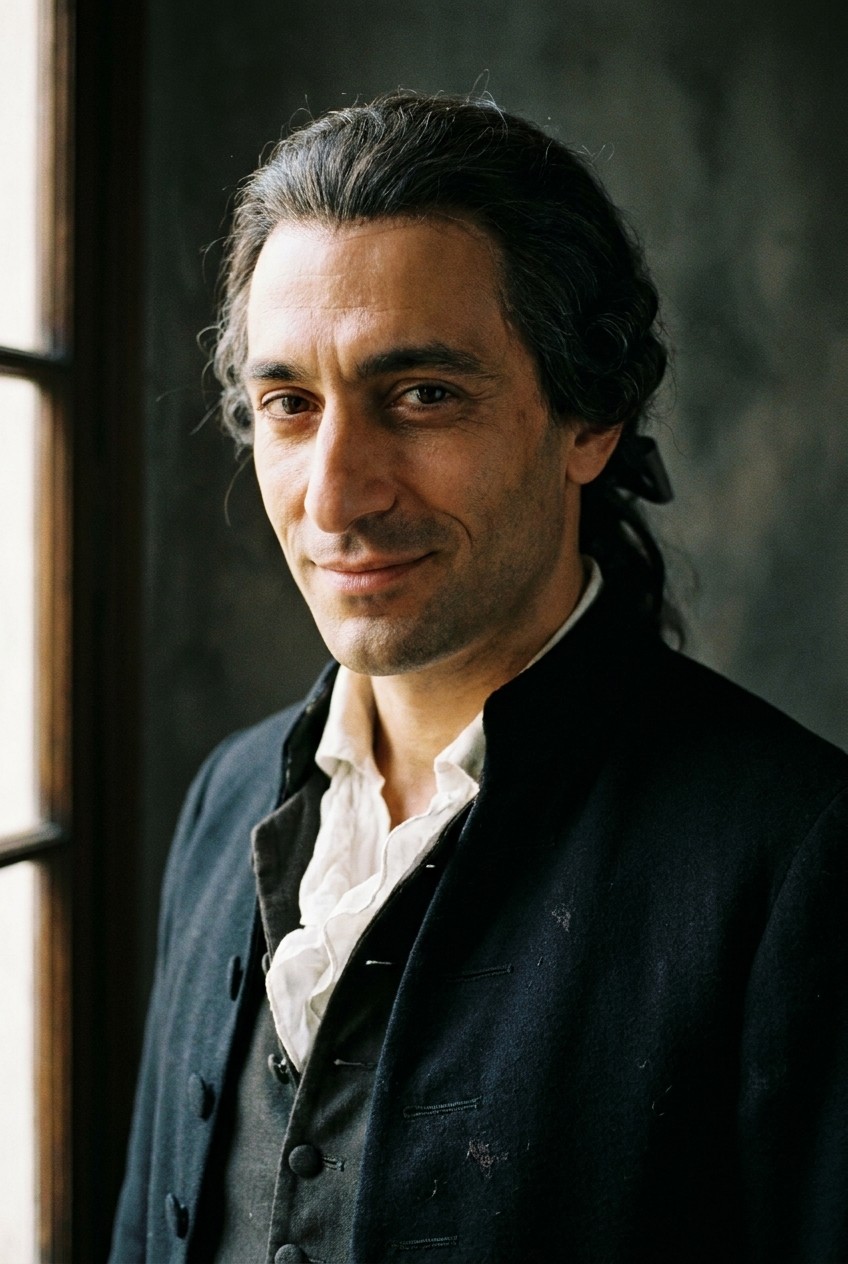
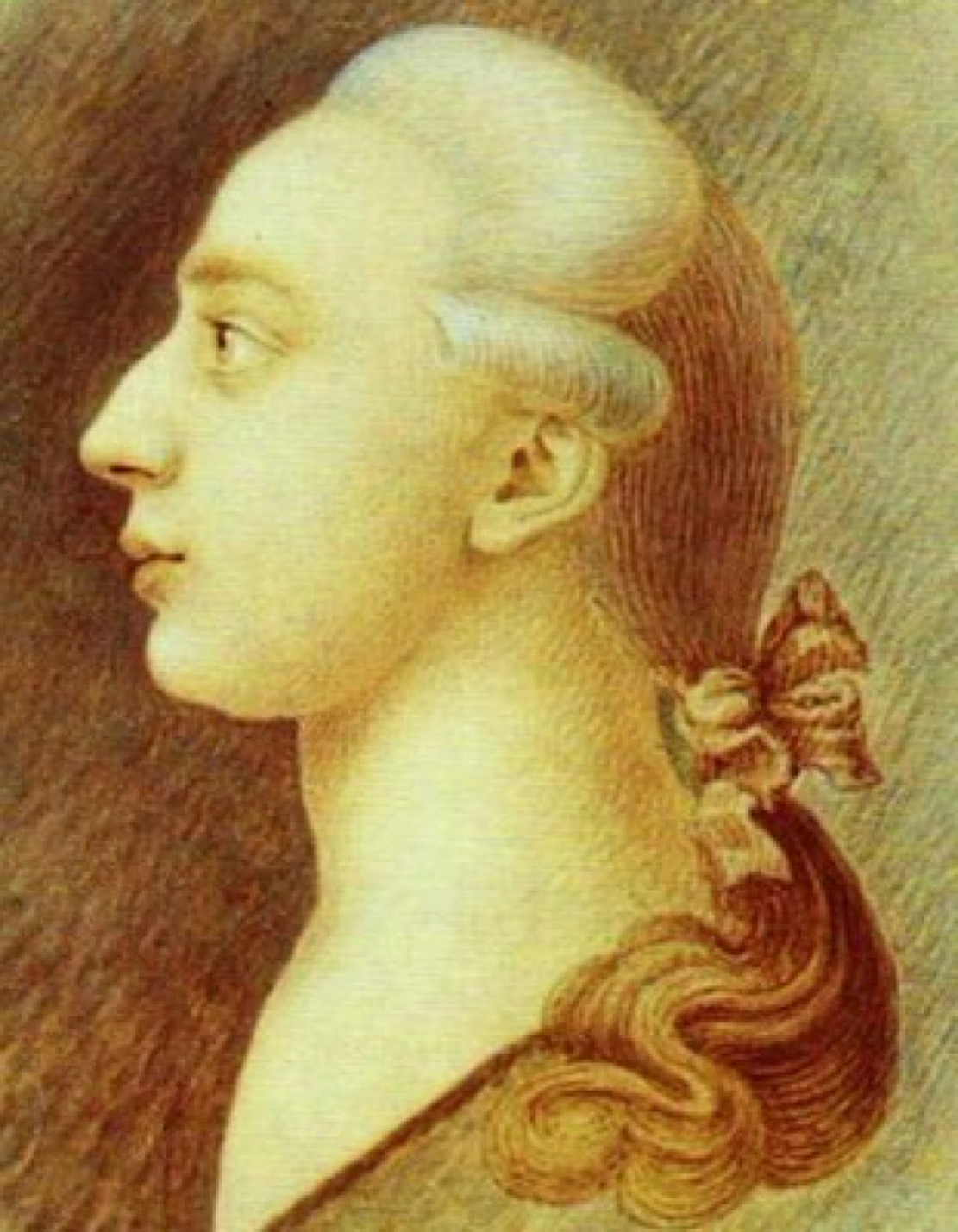
Giacomo Casanova, Histoire de ma vie (History of My Life), written c. 1789–1798, first complete publication 1960–1962 (Brockhaus-Plon edition)
Casanova's massive autobiography (over 3,500 pages) includes detailed self-description alongside accounts of his adventures. While self-serving in places, the physical descriptions are consistent with the portrait evidence and with accounts from people who knew him. The memoirs are the single richest source for his appearance, manner, and dress.
“Casanova on himself: "I was not handsome, but I had something better: I was tall, dark-complexioned, strong, and I knew how to dress. My nose was prominent, my eyes lively. I knew that to please, one must first appear to be worth pleasing."”
Was uns diese Quelle sagt
GrößeTall for the era, approximately 5'10"–6'0" (178–183 cm); he stood out in most roomsBelegt
KörperbauStrong and athletic in his prime; broad-shouldered with a powerful frame. Grew heavy in later life.Belegt
TeintOlive, dark; a Mediterranean complexion consistent with his Venetian originsBelegt
AugenDark, lively, and expressive; described as having a sharp, penetrating qualityBelegt
NaseProminent, strong, and somewhat long; the dominant feature of his faceBelegt
HaarDark brown to black; worn in the powdered and dressed style of the 18th-century aristocracy, though his natural colour was very darkBelegt
Besondere MerkmaleHis height and physical size; the prominent nose; an overall impression of vigour and confidence rather than delicacy. Contemporaries consistently describe him as magnetic and physically imposing.Belegt