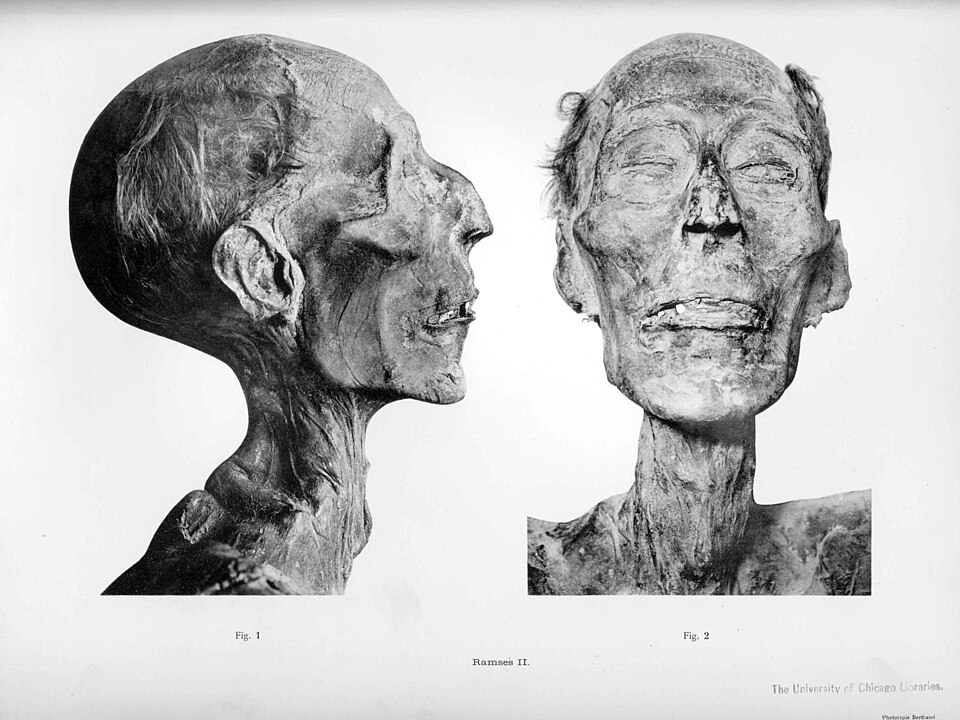
Mummy of Ramesses II, discovered 1881 in the Deir el-Bahri royal cache (DB320), originally from tomb KV7, Valley of the Kings. Now in the National Museum of Egyptian Civilization, Cairo.
The actual body of Ramesses II, preserved for over 3,000 years. Provides direct evidence of height (170 cm), skeletal structure, facial bone geometry, dental condition, arthritis, and the distinctive hooked nose. The hair survives as reddish-gold strands. Examined extensively in Paris in 1976 for conservation and scientific study.
Was uns diese Quelle sagt
GrößeAbout 5’7” (170 cm); tall for the eraBelegt
KörperbauAthletic and broad-shouldered in his prime; the mummy shows a wiry, slender frame, as you'd expect of a man who lived to 90Abgeleitet
GesichtLong oval face with strong bone structure, high cheekbones, broad foreheadBelegt
TeintUnknown; mummification destroys skin pigmentation. Tomb paintings use conventional Egyptian colour codes.Abgeleitet
AugenWide-set; deep-set in the skull; eye colour unknownAbgeleitet
NaseProminent, hooked (aquiline); long with a high bridge. His most recognisable feature.Belegt
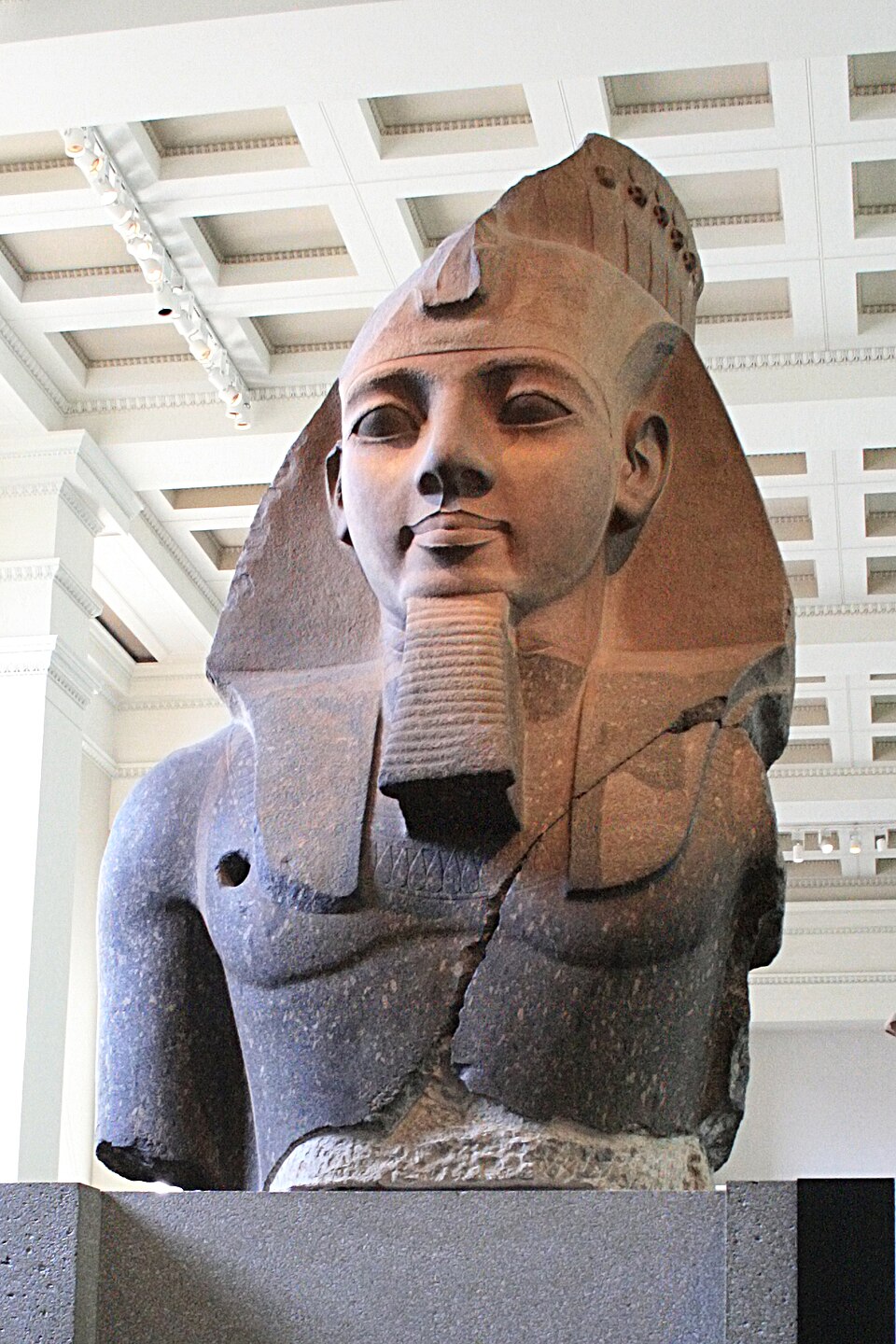
MundThin lips; slight overbite visible in the mummy; the statues show fuller, more idealised lipsBelegt
Kiefer und KinnStrong, square jaw; prominent chin. The mummy confirms robust mandibular bone structure.Belegt
HaarReddish-gold, fine and wavy; still visible on the mummy. Whether naturally red, dyed with henna, or changed by age is debated.Belegt
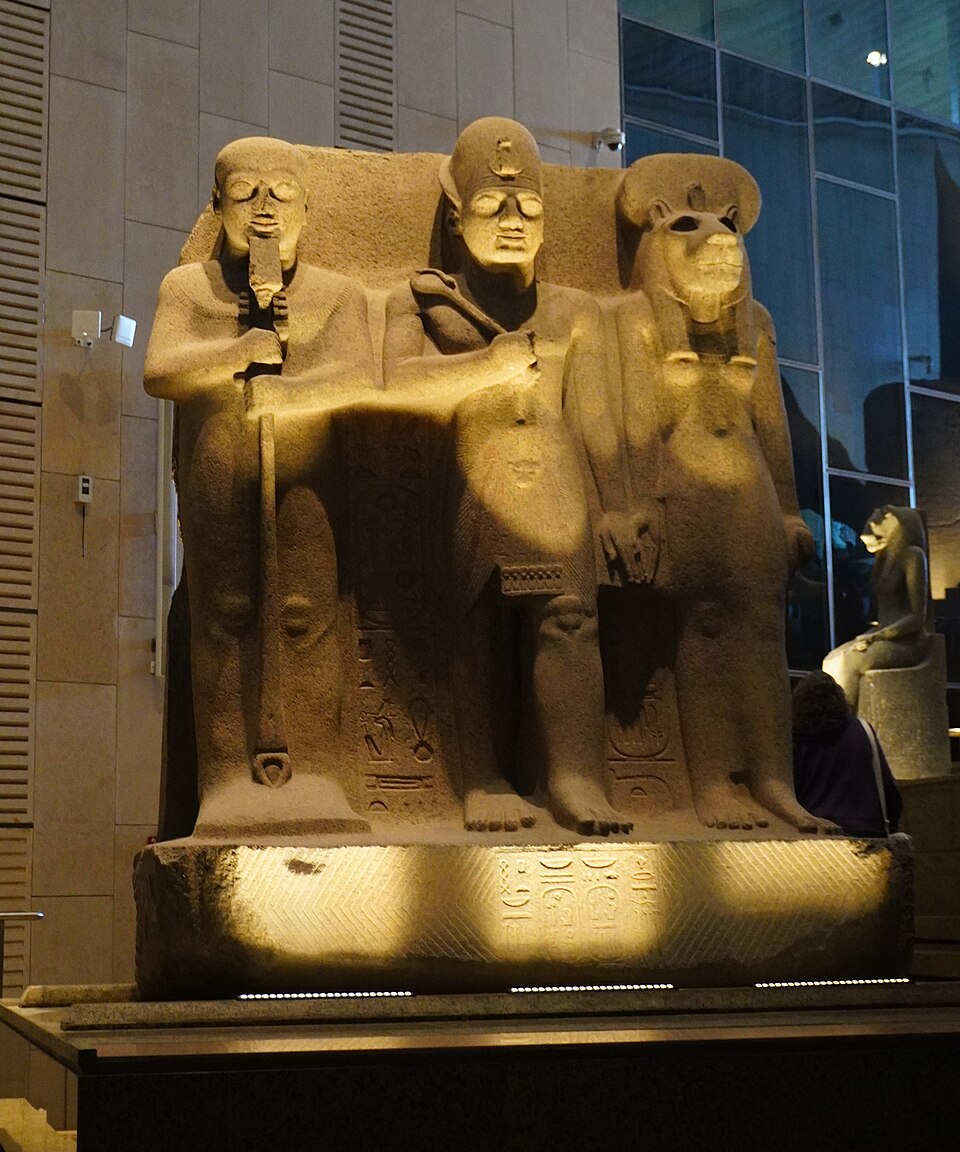
Besondere MerkmaleThe prominent hooked nose is his most recognisable feature, matching across the mummy and all major statues. The reddish hair on the mummy is unique among preserved pharaonic remains. He also had severe dental wear and an arthritic spine in old age.Belegt