Wie sah Richard III of England aus? | Die Gesichter der Geschichte — AI reconstruction based on 4 historical sources
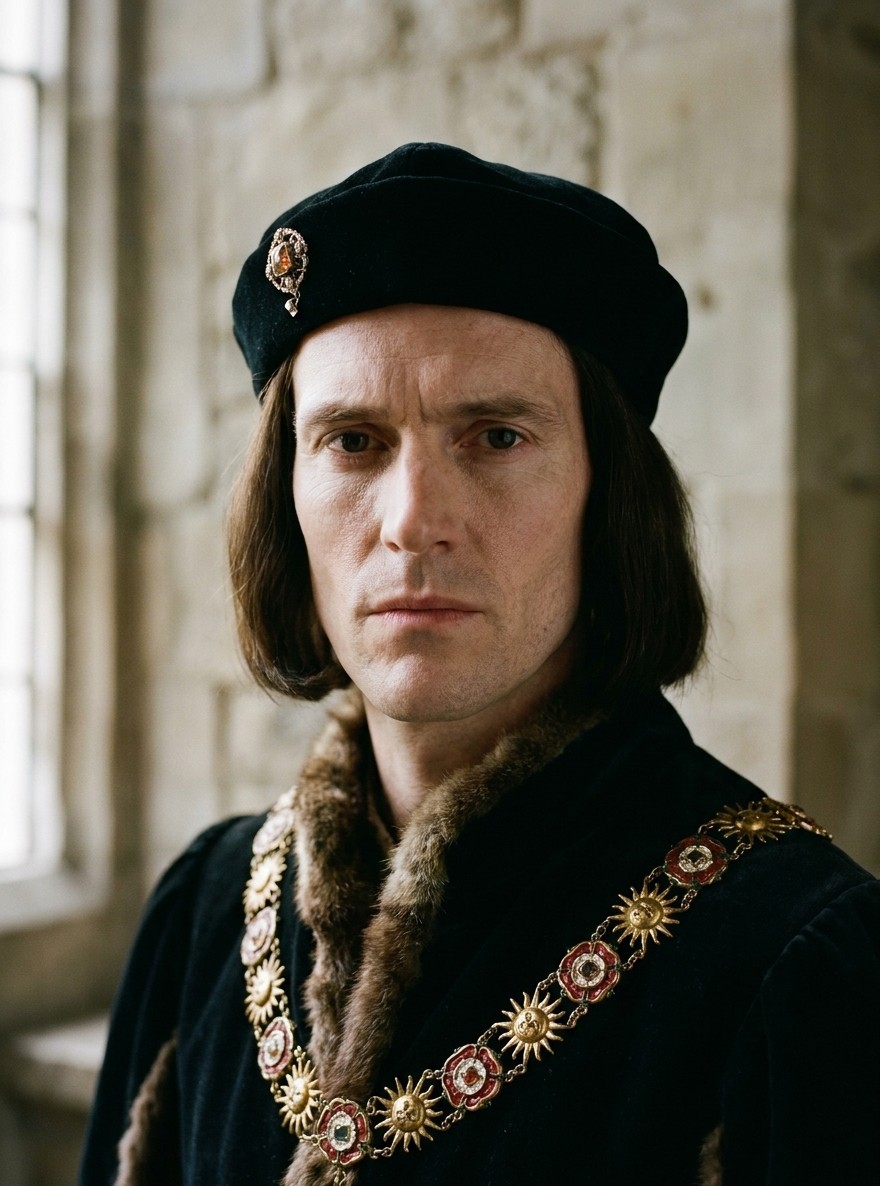
KI-Rekonstruktion

Late Medieval England · 1452–1485

Richard III of England

Konfidenz: Hohe KonfidenzDargestelltes Alter: ~32

Rekonstruiert aus

The last Plantagenet king. Tudor propaganda made him a hunchbacked villain, but his skeleton, found under a Leicester car park in 2012, tells a different story: a slender man with scoliosis, not a deformity visible at a glance.

What did Richard III really look like? His skeleton turned up under a Leicester car park in 2012. Mitochondrial DNA confirmed the identification. Because of this, we know more about Richard III's physical appearance than almost any other medieval king. He stood about 5'8" with his spine straightened, but adolescent-onset scoliosis (a rightward curve of 70-80° in the thoracic spine) would have reduced his apparent height by several inches and pushed his right shoulder higher than his left.

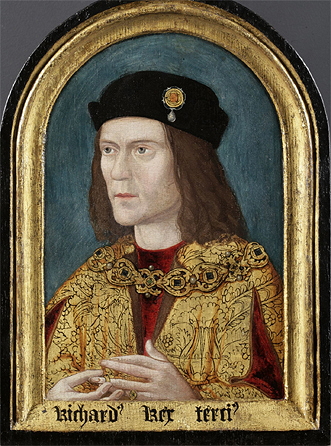
The skeleton is slender, gracile, with lean limbs. Nikolaus von Popplau, a Silesian knight who met Richard in 1484, confirms this: he described the king as lean with delicate arms and legs. The skull gives precise facial geometry. A narrow, fine-boned face with a strong jaw, straight nose, well-proportioned cranium. The Society of Antiquaries portrait, likely copied from a lost lifetime original, matches the forensic reconstruction closely and fills in what bone can't tell us: dark eyes, thin lips, dark brown hair worn to collar length.

Was Richard III a hunchback? Not the way Shakespeare and Thomas More described. The scoliosis was real but partially concealable under tailored clothing and armour. Both arms were normal. The "withered arm" is Tudor propaganda. DNA analysis suggests he may have had blue eyes and blond hair as a child, which conflicts with the dark colouring in the portraits. Hair commonly darkens with age, which may explain it.


Körperliche Beschreibung

GrößeAround 5’8” (173 cm) when standing straight, but scoliosis reduced apparent height by several inchesBelegt
KörperbauSlender, gracile frame; lean limbsBelegt
GesichtNarrow, fine-boned, with a strong jawBelegt
TeintFair-skinnedAbgeleitet
AugenDark; described in portraits as brownAbgeleitet
BrauenFurrowed, somewhat heavyAbgeleitet
NaseStraight, proportionate, slightly narrowBelegt
MundThin lips, slightly pursedAbgeleitet
Kiefer und KinnStrong, slightly protruding chin; defined jawlineBelegt
HaarDark brown, worn to collar lengthAbgeleitet
GesichtsbehaarungClean-shavenBelegt
SchädelWell-proportioned; no abnormalitiesBelegt
HalsNormal; no evidence of the short or twisted neck of Tudor propagandaBelegt
Besondere MerkmaleRight thoracic scoliosis causing the right shoulder to sit higher than the left; slender frame; intense expression. Not the grotesque hunchback of Shakespeare — the condition would have been noticeable but concealable under tailored clothing and armour.Belegt
AusdruckSerious, watchful, somewhat tenseAbgeleitet

Die Belege

Skeleton of Richard III, discovered 2012, Greyfriars church site, Leicester. University of Leicester excavation. DNA-confirmed 2014.

The actual skeleton, confirmed by mitochondrial DNA match to living maternal-line descendants. Provides precise height, build, bone structure, facial geometry, and pathology (scoliosis, battle wounds). The single most important piece of evidence.

Was uns diese Quelle sagt

GrößeAround 5’8” (173 cm) when standing straight, but scoliosis reduced apparent height by several inchesBelegt
KörperbauSlender, gracile frame; lean limbsBelegt
GesichtNarrow, fine-boned, with a strong jawBelegt
BrauenFurrowed, somewhat heavyAbgeleitet
NaseStraight, proportionate, slightly narrowBelegt
Kiefer und KinnStrong, slightly protruding chin; defined jawlineBelegt
SchädelWell-proportioned; no abnormalitiesBelegt
HalsNormal; no evidence of the short or twisted neck of Tudor propagandaBelegt
Besondere MerkmaleRight thoracic scoliosis causing the right shoulder to sit higher than the left; slender frame; intense expression. Not the grotesque hunchback of Shakespeare — the condition would have been noticeable but concealable under tailored clothing and armour.Belegt
Portrait of Richard III, c. 1510s, Society of Antiquaries of London

Portrait of Richard III, c. 1510s, Society of Antiquaries of London

Earliest surviving portrait. Posthumous, but X-ray and infrared analysis show it was likely copied from a lost lifetime original, with later alterations (the chin was made more pointed, possibly to match Tudor-era caricature). The unaltered layer beneath is considered a reasonable likeness.

Was uns diese Quelle sagt

GesichtNarrow, fine-boned, with a strong jawBelegt
TeintFair-skinnedAbgeleitet
AugenDark; described in portraits as brownAbgeleitet
BrauenFurrowed, somewhat heavyAbgeleitet
MundThin lips, slightly pursedAbgeleitet
Kiefer und KinnStrong, slightly protruding chin; defined jawlineBelegt
HaarDark brown, worn to collar lengthAbgeleitet
GesichtsbehaarungClean-shavenBelegt
Besondere MerkmaleRight thoracic scoliosis causing the right shoulder to sit higher than the left; slender frame; intense expression. Not the grotesque hunchback of Shakespeare — the condition would have been noticeable but concealable under tailored clothing and armour.Belegt
AusdruckSerious, watchful, somewhat tenseAbgeleitet

Nikolaus von Popplau, travel diary, 1484

Eyewitness account. Von Popplau, a Silesian knight, met Richard III in 1484 and described him as lean with delicate arms and legs, and three fingers taller than von Popplau himself. One of the only contemporary physical descriptions.

He was lean, with delicate arms and legs, and also had a great heart. [Paraphrase from German manuscript; no standard English translation exists.]

From manuscript in Wrocław University Library

Was uns diese Quelle sagt

KörperbauSlender, gracile frame; lean limbsBelegt
Besondere MerkmaleRight thoracic scoliosis causing the right shoulder to sit higher than the left; slender frame; intense expression. Not the grotesque hunchback of Shakespeare — the condition would have been noticeable but concealable under tailored clothing and armour.Belegt
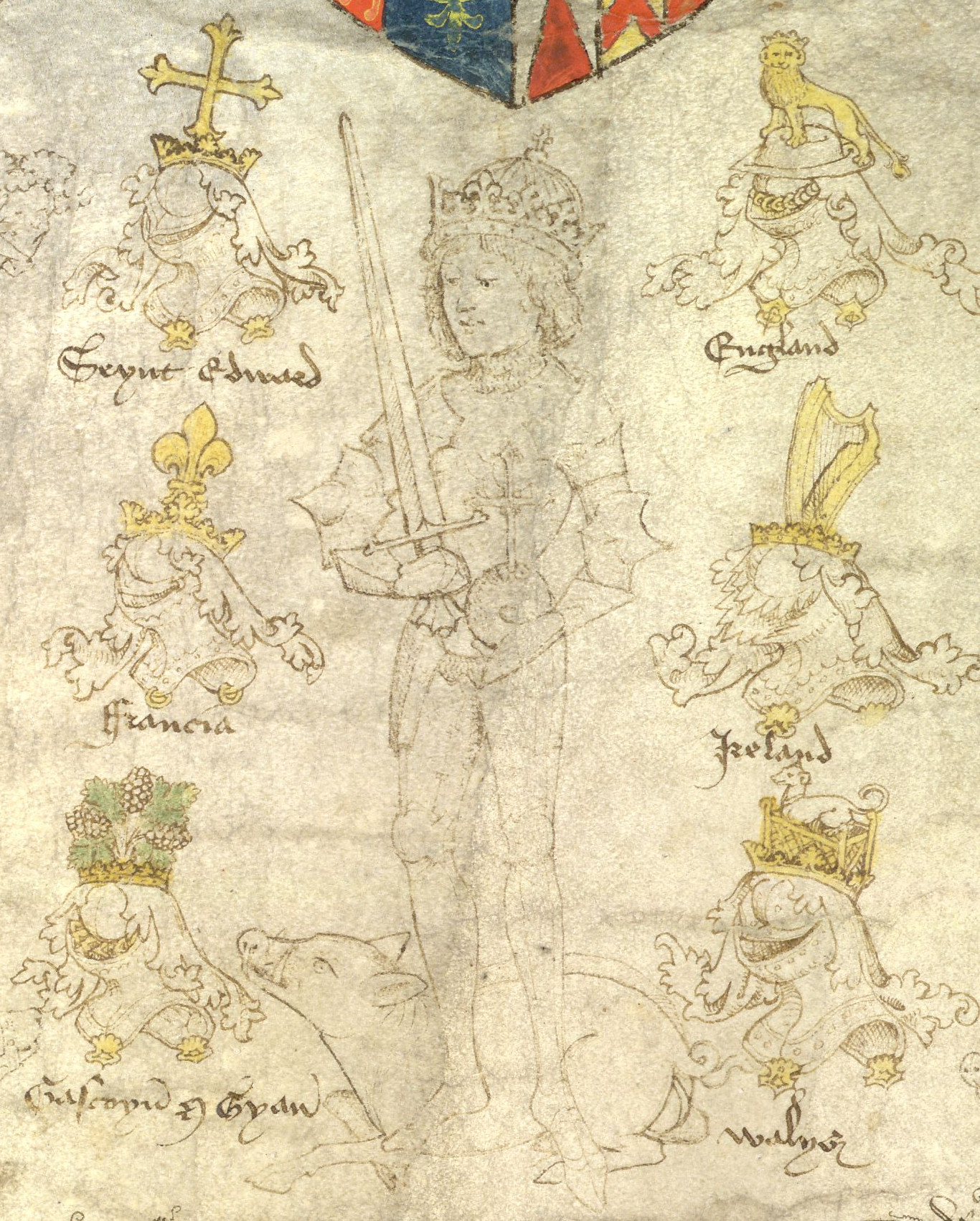
Rous Roll, English version, c. 1483–1485, by John Rous

Rous Roll, English version, c. 1483–1485, by John Rous

Contemporary illustrated chronicle. The English version (created during Richard’s reign) shows a normal figure; Rous revised his Latin version after Bosworth to depict Richard negatively. The English version is the more reliable likeness.

Wo sich die Quellen widersprechen

Tudor propaganda (Thomas More, Shakespeare) describes a hunchback with a withered arm. The skeleton proves the scoliosis but disproves the withered arm — both arms are normal. The condition would have been partially visible but was likely managed with tailored clothing.

Eye colour: DNA suggests blue; the portrait tradition shows dark brown. Hair colour: DNA suggests blond; portraits show dark brown. These may reflect childhood vs. adult colouring (hair), or portrait copying errors (eyes).

The Society of Antiquaries portrait is posthumous (~1510s) but X-ray analysis suggests it was copied from a lost lifetime original, with the chin later altered to appear more pointed. The skull supports the original, less exaggerated version.