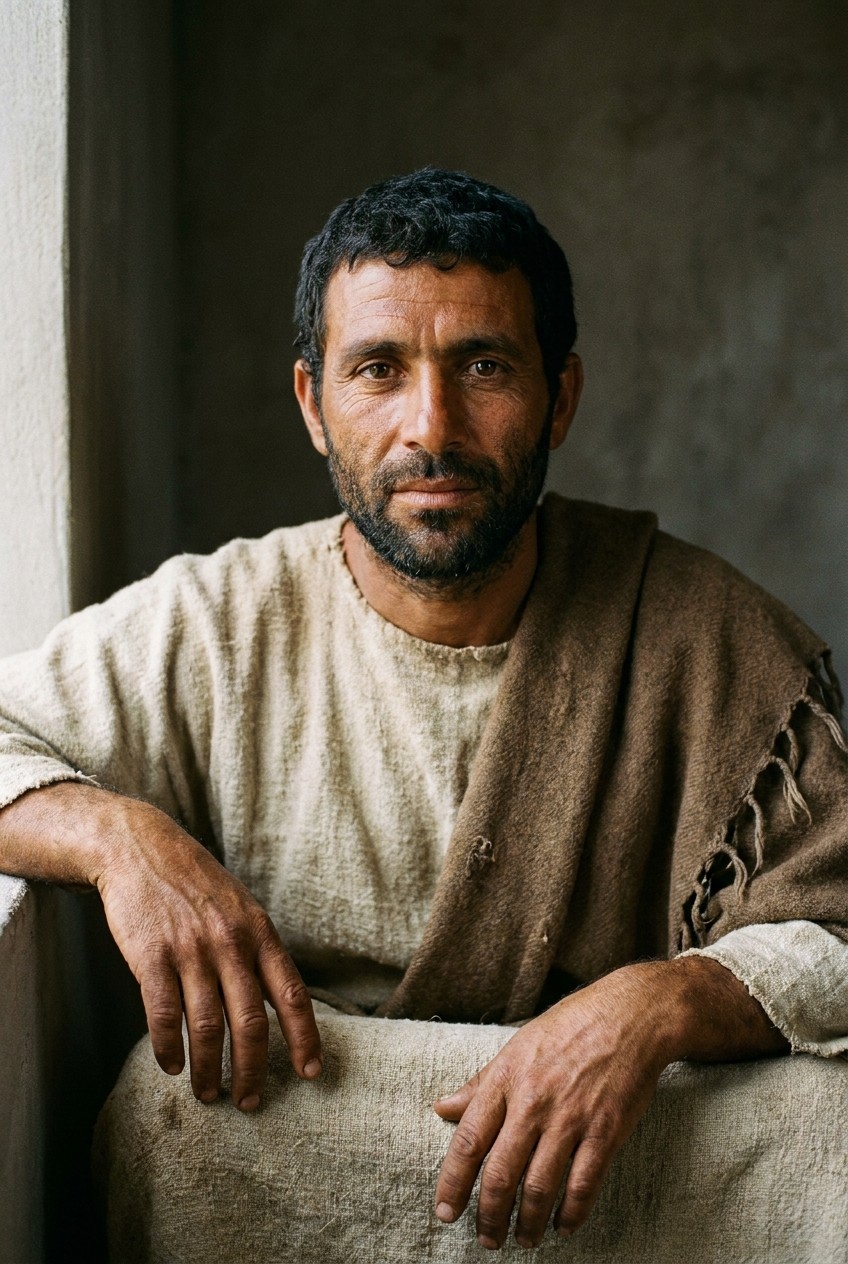
The Gospels call Jesus a "tekton," which in Greek covers carpentry, stonemasonry, and general building work. He grew up doing this in Nazareth, a small village in the Galilee. Later he spent roughly three years as a travelling preacher, walking between towns in a hot, dry landscape with no shade and no sunscreen. A 30-year-old who has lived like that would have been tanned and weathered, with calloused hands and a lean, strong build. He would have looked older than a comfortable modern 30-year-old.
None of the Gospels describe what he looked like. There's no portrait, no bust, no coin. The pale, long-haired European Jesus of Western art is a medieval invention with no connection to the historical person.
What we do have is population-level evidence. In 2001, forensic anthropologist Richard Neave at the University of Manchester took a 1st-century Galilean Jewish skull and built a facial reconstruction from it. The result was a broad-faced man with short curly dark hair, a short beard, dark brown eyes, and a wide nose. Average height for Jewish men in the region was about 166 cm (5'5"). The skull wasn't his, obviously, but it tells us what men from his exact time and place looked like.
There's one specific clue about hair. Paul, writing to the Corinthians around 53 CE, argues that long hair on a man is "degrading." Paul was building a movement in Jesus' name, roughly 20 years after his death. You don't make that argument if the founder of your movement was famous for having long hair.
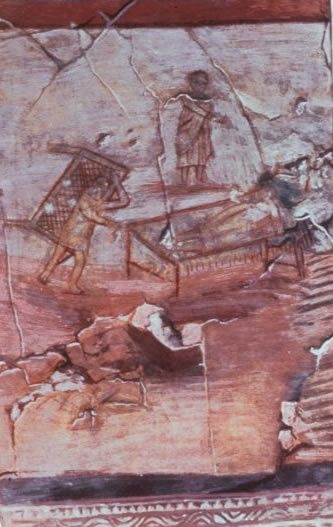
The earliest surviving images of Jesus are from centuries later and aren't useful as evidence. The Dura-Europos church paintings (c. 232 CE) show a beardless young man in Roman clothing. The familiar long-haired, bearded version doesn't show up until the 6th century, and none of it is based on anyone who actually saw him.