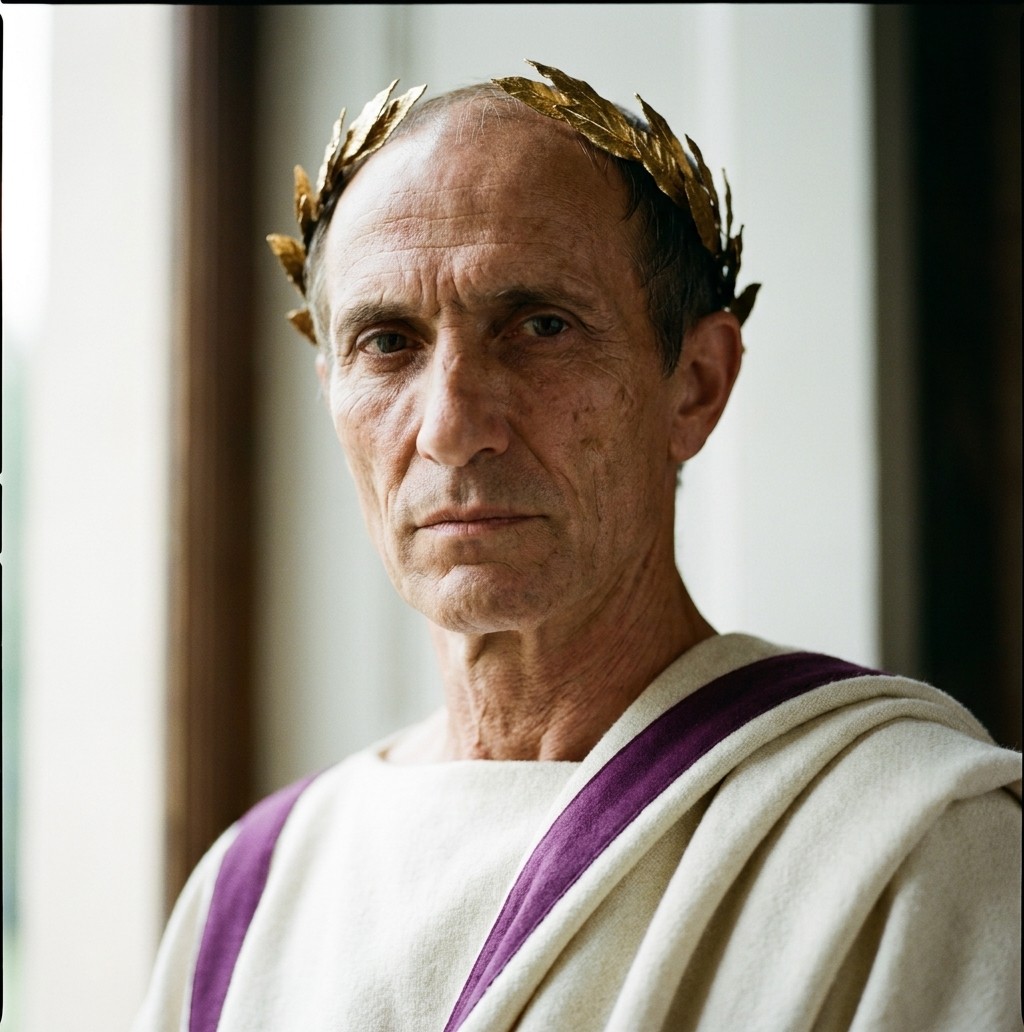
What Did Gaius Julius Caesar Look Like? | Faces Who Made History — AI reconstruction based on 4 historical sources
AI Reconstruction

Roman Republic · 100–44 BCE

Gaius Julius Caesar

Confidence: High confidenceDepicted age: ~53

Dictator of Rome. A lifetime bust, coins struck in his final year, and Suetonius' physical description converge on a gaunt, balding, keen-eyed man in his fifties.

What did Julius Caesar look like? The evidence for his real face is stronger than for most ancient figures. Suetonius, writing with access to imperial archives, describes a tall man with a fair complexion, keen dark eyes, and shapely limbs. He was self-conscious about his baldness, combing his thinning hair forward from the crown. The Senate's grant of a laurel wreath was, by Suetonius' account, one of the honours he most gladly accepted, partly because it covered his head.

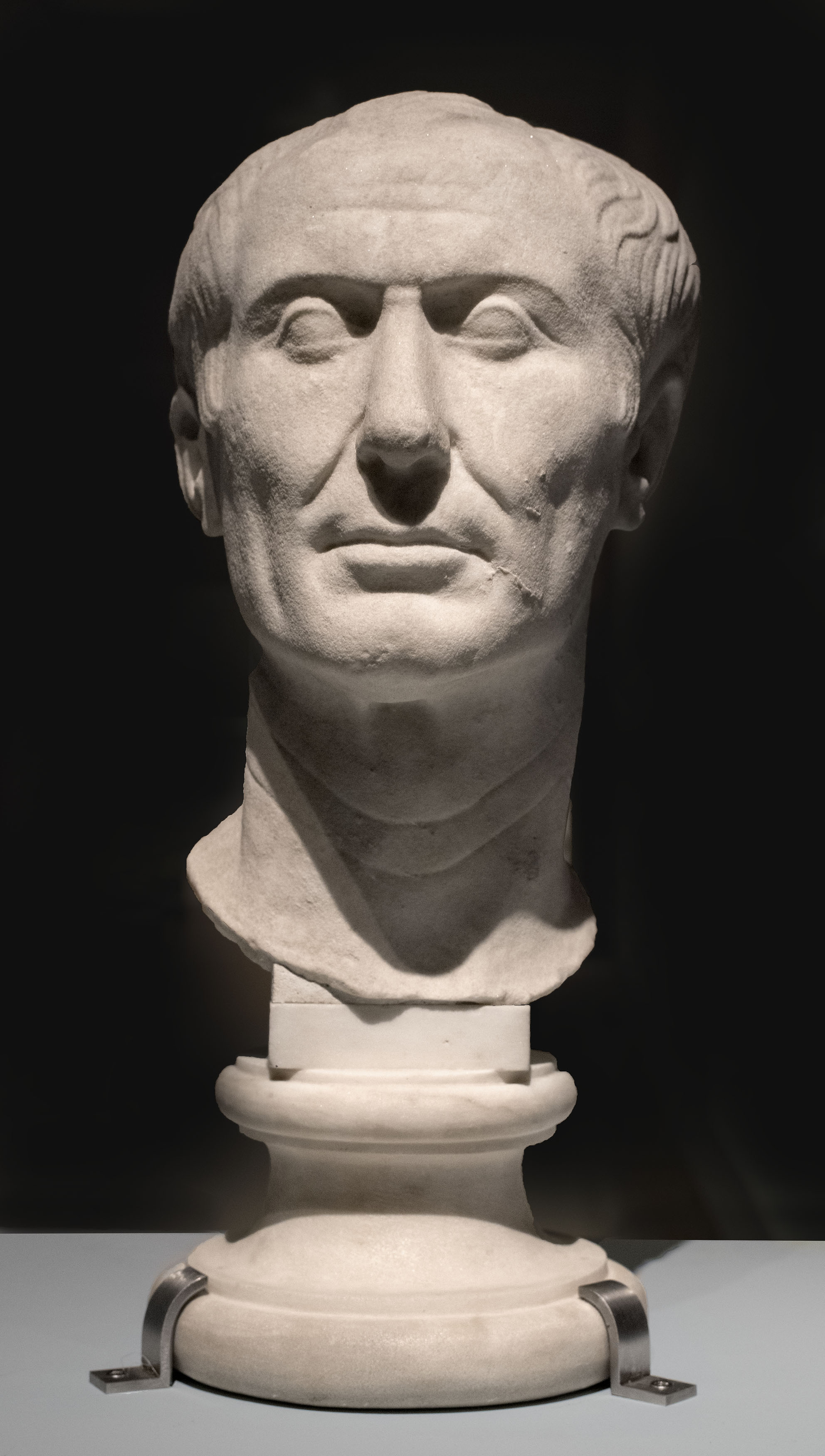
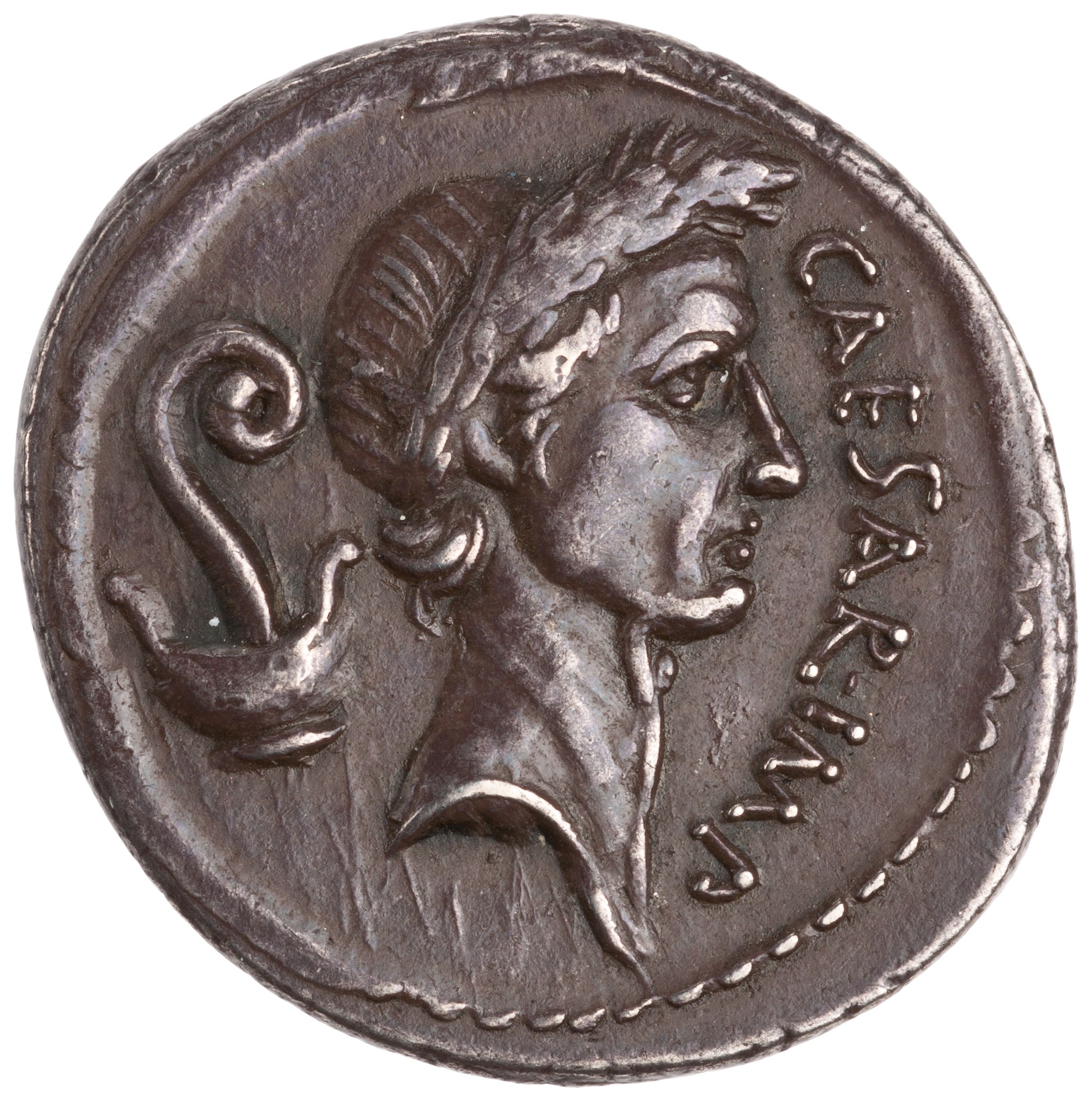
The Tusculum portrait bust, widely regarded as the best candidate for a lifetime likeness, shows an older man with a gaunt, lined face, an elongated skull, hollow cheeks, and a prominent high-bridged nose. The veristic style spares nothing. The profile on his 44 BCE denarius, the first Roman coin to show a living person, matches: the same lean jaw, thin neck, receding hairline.

Caesar's hair colour is not recorded in any surviving text and can't be recovered from marble or metal. Dark hair greying with age is inferred from his Italian origin and the fact that he died at 55. Suetonius describes his build as well-proportioned, though by late life he was lean, suffering from the seizure episodes Suetonius calls the "falling sickness."


Physical Description

HeightTall / above average for the periodAttested
BuildWell-proportioned, shapely limbs; lean rather than heavy in late lifeAttested
FaceLean, elongated, strongly lined; hollow cheeks in late lifeAttested
ComplexionFair / light-skinnedAttested
EyesDark, described as keen and livelyAttested
BrowFurrowed, prominent brow-ridge in the veristic portraitsInferred
NoseProminent, high-bridged, faintly aquilineAttested
MouthThin lips, set firm; slightly downturnedAttested
Jaw & chinLean jaw, firm prominent chinAttested
HairThin, worn combed forward from the crown; dark going greyAttested
BaldnessReceding hairline, balding at the crown; he was self-conscious about itAttested
Facial hairClean-shaven; carefully groomedAttested
CraniumNotably elongated skullAttested
NeckThin, wrinkled, with a prominent laryngeal prominenceAttested
Distinguishing featuresReceding/comb-forward thinning hair; elongated cranium; gaunt, deeply lined late-life face; habitual laurel wreathAttested
ExpressionAustere, alert, authoritativeInferred

The Evidence

Denarius of Julius Caesar, 44 BCE (Crawford RRC 480 series)

Denarius of Julius Caesar, 44 BCE (Crawford RRC 480 series)

First living Roman depicted on Roman coinage; portrait struck and approved in his lifetime; veristic.

View source

What this source tells us

NoseProminent, high-bridged, faintly aquilineAttested
Jaw & chinLean jaw, firm prominent chinAttested
BaldnessReceding hairline, balding at the crown; he was self-conscious about itAttested
CraniumNotably elongated skullAttested
NeckThin, wrinkled, with a prominent laryngeal prominenceAttested
Distinguishing featuresReceding/comb-forward thinning hair; elongated cranium; gaunt, deeply lined late-life face; habitual laurel wreathAttested
Tusculum portrait, Museo di Antichità, Turin

Tusculum portrait, Museo di Antichità, Turin

Widely regarded as the best surviving candidate for a lifetime likeness; realistic/veristic type. Attribution is scholarly-probable, not certain.

View source

What this source tells us

FaceLean, elongated, strongly lined; hollow cheeks in late lifeAttested
BrowFurrowed, prominent brow-ridge in the veristic portraitsInferred
NoseProminent, high-bridged, faintly aquilineAttested
MouthThin lips, set firm; slightly downturnedAttested
Jaw & chinLean jaw, firm prominent chinAttested
CraniumNotably elongated skullAttested
Distinguishing featuresReceding/comb-forward thinning hair; elongated cranium; gaunt, deeply lined late-life face; habitual laurel wreathAttested
ExpressionAustere, alert, authoritativeInferred

Suetonius, Divus Iulius 45

View source

He was tall of stature, with a fair complexion, shapely limbs, a somewhat full face, and keen black eyes; he was somewhat over-particular in the care of his person. His baldness was a disfigurement which troubled him greatly, since he found that it was often the subject of the gibes of his detractors. Because of it he used to comb forward his scanty locks from the crown of his head, and of all the honours voted him by the senate and people there was none which he received or made use of more gladly than the privilege of wearing a laurel wreath at all times.

J.C. Rolfe, Loeb Classical Library, 1913/14

What this source tells us

HeightTall / above average for the periodAttested
BuildWell-proportioned, shapely limbs; lean rather than heavy in late lifeAttested
ComplexionFair / light-skinnedAttested
EyesDark, described as keen and livelyAttested
HairThin, worn combed forward from the crown; dark going greyAttested
BaldnessReceding hairline, balding at the crown; he was self-conscious about itAttested
Facial hairClean-shaven; carefully groomedAttested
Distinguishing featuresReceding/comb-forward thinning hair; elongated cranium; gaunt, deeply lined late-life face; habitual laurel wreathAttested
Chiaramonti Caesar, Vatican Museums

Chiaramonti Caesar, Vatican Museums

Posthumous, idealized — supporting reference only.

View source

Where sources conflict

Fuller face (Suetonius) vs. gaunt, lean face (lifetime coins + Tusculum bust) → resolved by depicting age ~53, favouring the veristic late-life portraits.