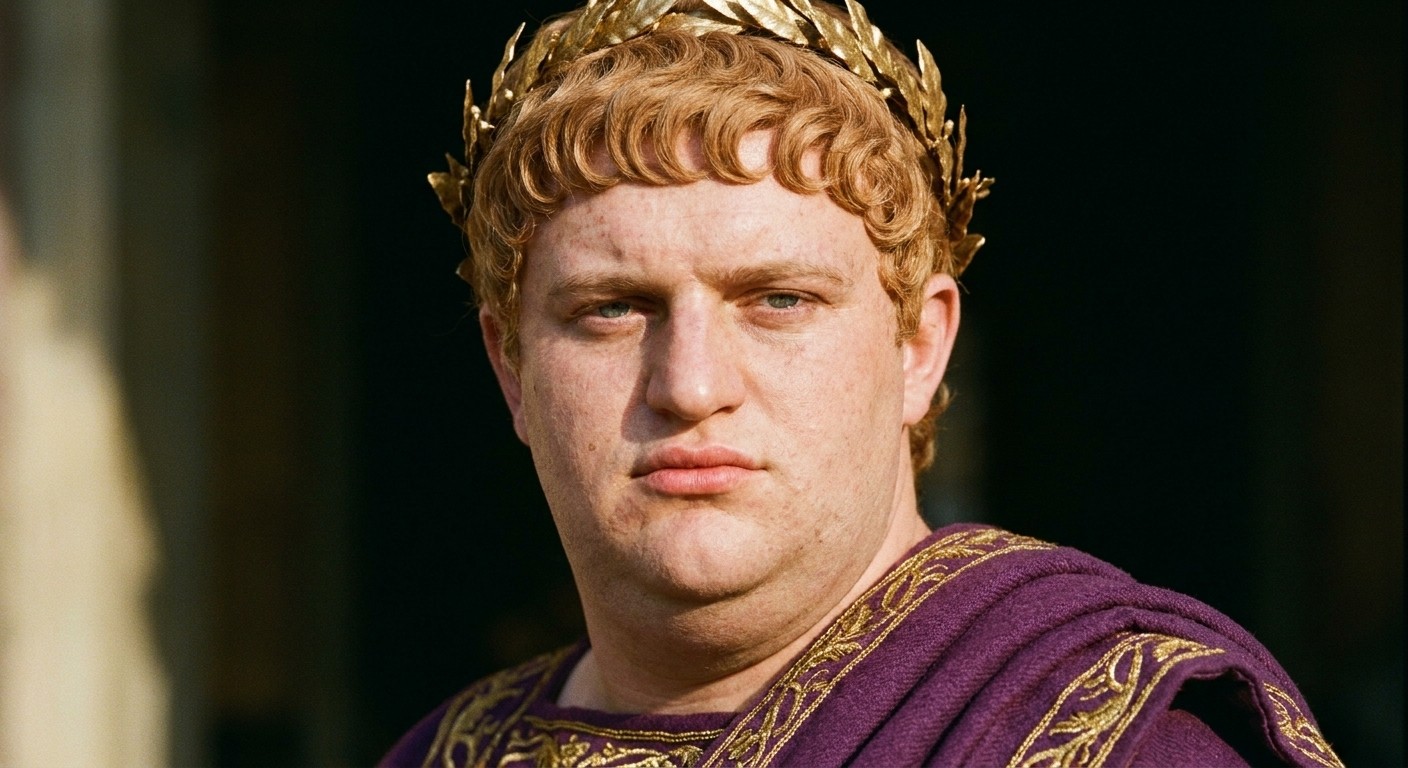
What Did Nero Claudius Caesar Look Like? | Faces Who Made History — AI reconstruction based on 4 historical sources
AI Reconstruction

Roman Empire (Julio-Claudian dynasty) · 37–68 CE

Nero Claudius Caesar

Confidence: High confidenceDepicted age: ~28

Rome’s most infamous emperor. Multiple lifetime busts, coins, and Suetonius’ unflinching physical description converge on a stocky, thick-necked man with weak eyes and a bloated face.

What did Nero look like? Suetonius, writing with access to imperial records and the testimony of people who knew him, leaves one of the most detailed physical descriptions of any Roman emperor. Nero was of average height with a body that was “blotched and ill-smelling,” a thick neck, a protruding belly, and spindly legs. His hair was light blond, his face more pretty than handsome, his eyes dull blue-grey and weak — he squinted. This is not a flatterer’s portrait.

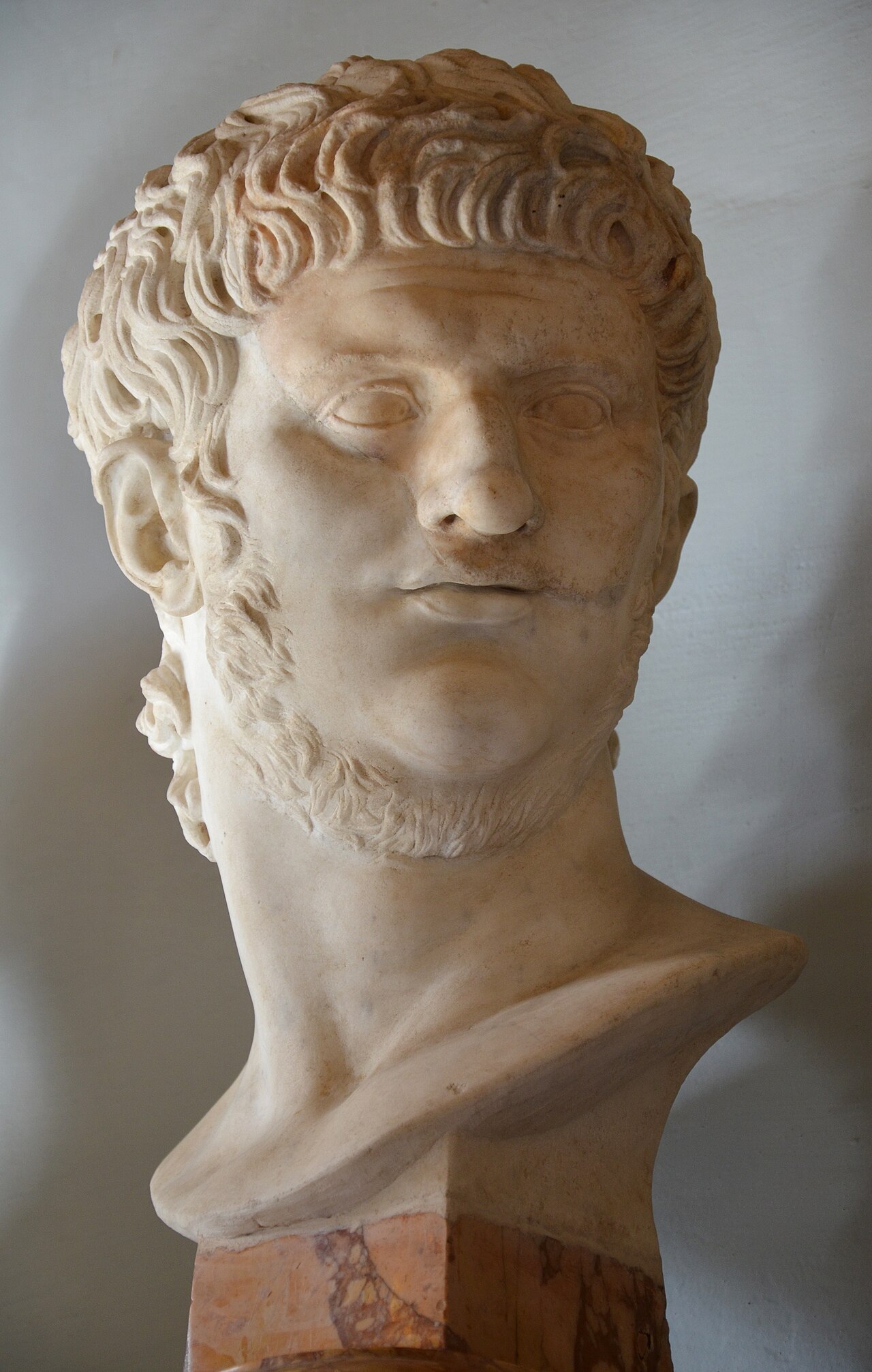
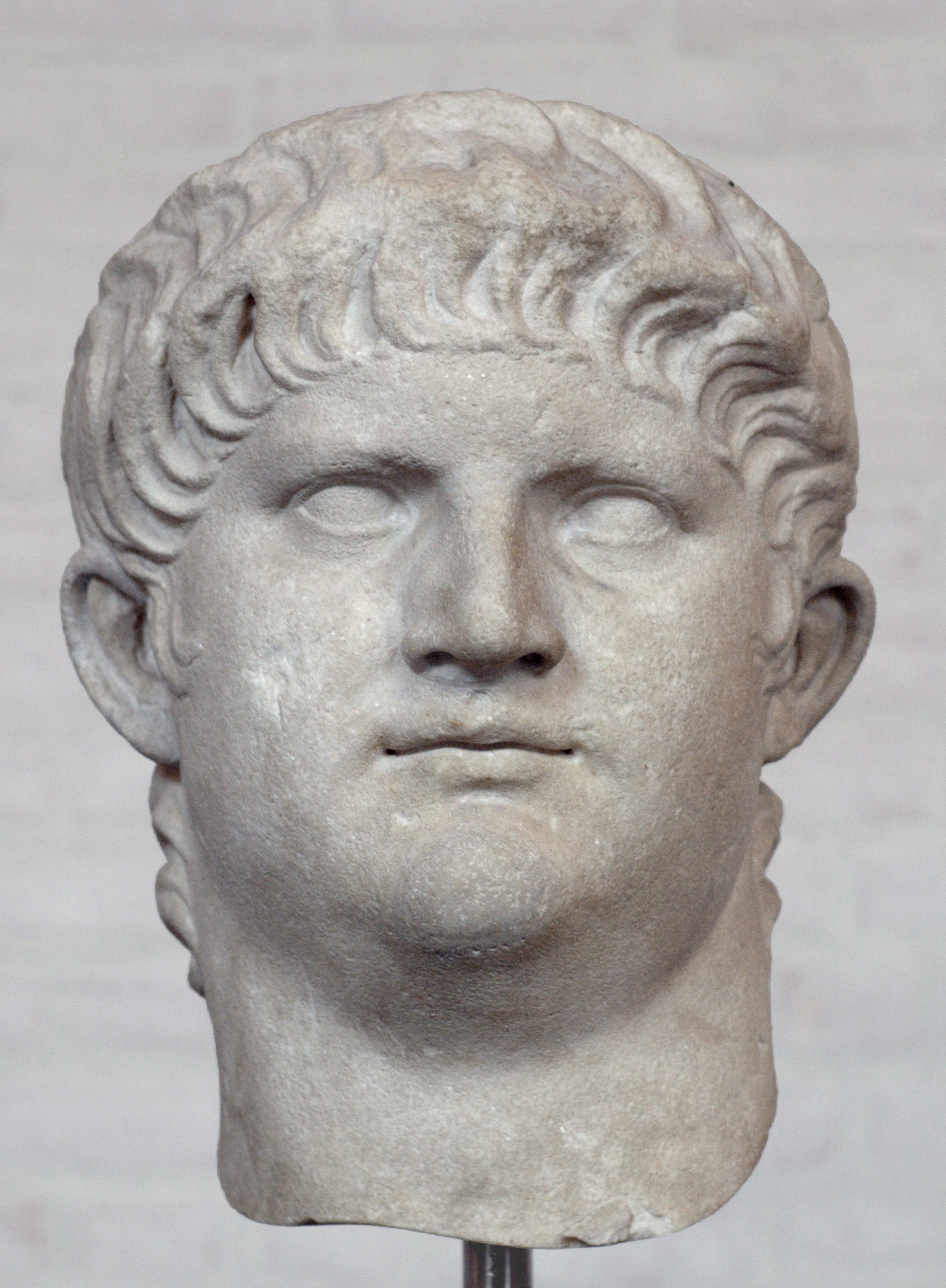
The surviving lifetime busts confirm much of this. The Palatine Museum bust and the Capitoline Nero both show a fleshy, round face with a thick neck, heavy jowls, and a double chin. The coin portraits from his reign trace his physical decline in real time: the early issues (c. 54–60 CE) show a young man with softer, more refined features; the later coins show the unmistakable bloating and heaviness of his final years. Nero’s face on his coinage is among the most consistently documented physical transformations in ancient art.

Nero was vain about his appearance. Suetonius says he wore his hair arranged in rows of curls and, during his trip to Greece, let it grow long at the back. He dressed elaborately, often in silk and embroidered robes — scandalous for a Roman man. His weak eyesight is well-attested: he reportedly watched gladiatorial contests through a polished emerald (an early form of corrective lens).


Physical Description

HeightAbout average height for the periodAttested
BuildStocky, with a protruding belly and spindly legs; increasingly heavy and bloated with ageAttested
FaceRound, fleshy, with heavy jowls and a double chin in later yearsAttested
ComplexionBlotched; described as ill-smelling skinAttested
EyesDull blue-grey; weak, near-sighted; he squintedAttested
NoseStraight, somewhat broadAttested
MouthFull, fleshy lipsAttested
Jaw & chinWeak chin beneath heavy jowls; double chin in later yearsAttested
HairLight blond; arranged in rows of curls on the forehead, worn long at the back during his Greek tourAttested
Facial hairClean-shaven in the Roman imperial fashionAttested
NeckThick, fleshy; a defining featureAttested
Distinguishing featuresThick neck; protruding belly; light blond curled hair; weak squinting eyes; the polished emerald ‘lens’ he used to watch gamesAttested
ExpressionSelf-satisfied, somewhat petulant in the bustsInferred

The Evidence

Portrait bust of Nero, Palatine Museum (Museo Palatino), Rome

Portrait bust of Nero, Palatine Museum (Museo Palatino), Rome

A lifetime or near-lifetime marble portrait showing the fleshy, round face, thick neck, and heavy jowls of the mature Nero. One of the best-preserved Neronian busts.

What this source tells us

FaceRound, fleshy, with heavy jowls and a double chin in later yearsAttested
NoseStraight, somewhat broadAttested
MouthFull, fleshy lipsAttested
Jaw & chinWeak chin beneath heavy jowls; double chin in later yearsAttested
Facial hairClean-shaven in the Roman imperial fashionAttested
NeckThick, fleshy; a defining featureAttested
Distinguishing featuresThick neck; protruding belly; light blond curled hair; weak squinting eyes; the polished emerald ‘lens’ he used to watch gamesAttested
ExpressionSelf-satisfied, somewhat petulant in the bustsInferred
Portrait bust of Nero, Capitoline Museums, Rome

Carole Raddato, CC BY-SA 2.0, via Wikimedia Commons

Portrait bust of Nero, Capitoline Museums, Rome

Another lifetime bust, consistent with the Palatine version. Shows the same fleshy features and distinctive hairstyle.

What this source tells us

FaceRound, fleshy, with heavy jowls and a double chin in later yearsAttested
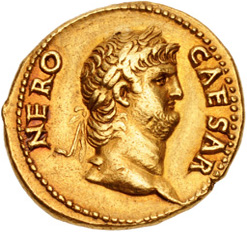
Sestertii and aurei of Nero, c. 64–68 CE, various mints (Rome, Lugdunum)

Sestertii and aurei of Nero, c. 64–68 CE, various mints (Rome, Lugdunum)

The late coinage shows the mature, heavy-set Nero with thick neck, double chin, and elaborate hairstyle. Tracked against earlier, slimmer coin portraits, the series documents his physical change over his 14-year reign.

What this source tells us

FaceRound, fleshy, with heavy jowls and a double chin in later yearsAttested
NoseStraight, somewhat broadAttested
Jaw & chinWeak chin beneath heavy jowls; double chin in later yearsAttested
HairLight blond; arranged in rows of curls on the forehead, worn long at the back during his Greek tourAttested
Facial hairClean-shaven in the Roman imperial fashionAttested
NeckThick, fleshy; a defining featureAttested
Distinguishing featuresThick neck; protruding belly; light blond curled hair; weak squinting eyes; the polished emerald ‘lens’ he used to watch gamesAttested

Suetonius, Nero 51

View source

He was about the average height, his body marked with spots and ill-smelling, his hair light blond, his features regular rather than attractive, his eyes blue and somewhat weak, his neck over thick, his belly prominent, and his legs very slender.

J.C. Rolfe, Loeb Classical Library, 1914

What this source tells us

HeightAbout average height for the periodAttested
BuildStocky, with a protruding belly and spindly legs; increasingly heavy and bloated with ageAttested
ComplexionBlotched; described as ill-smelling skinAttested
EyesDull blue-grey; weak, near-sighted; he squintedAttested
HairLight blond; arranged in rows of curls on the forehead, worn long at the back during his Greek tourAttested
NeckThick, fleshy; a defining featureAttested
Distinguishing featuresThick neck; protruding belly; light blond curled hair; weak squinting eyes; the polished emerald ‘lens’ he used to watch gamesAttested

Where sources conflict

Suetonius is a hostile source writing under the Flavian dynasty, which had every reason to demonise Nero. However, his physical description is unusually specific (blond hair, blue-grey eyes, blotched skin) and consistent with the visual evidence, suggesting it reflects genuine observation rather than pure invective.

Early coins show a slimmer, more refined young man; late coins and busts show a heavy, bloated face. This is physical change over time, not a conflict between sources.