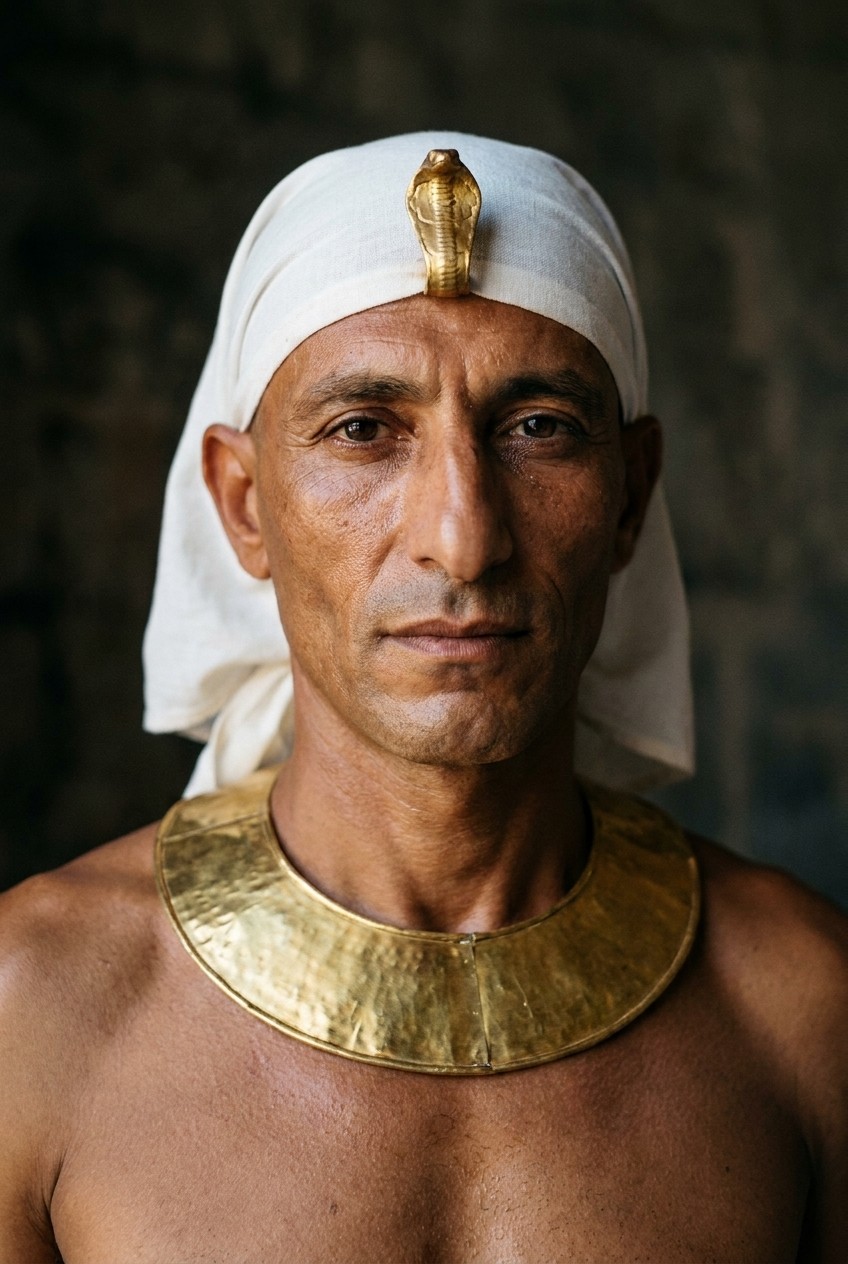
What Did Ramesses II Look Like? | The Faces of History — AI reconstruction based on 4 historical sources
AI Reconstruction

New Kingdom Egypt (19th Dynasty) · c. 1303–1213 BCE

Ramesses II

Evidence: Strong evidenceDepicted age: ~42

Reconstructed from

The pharaoh who built Abu Simbel and reigned for 66 years. His mummy survives: tall, hook-nosed, with reddish hair still visible after three thousand years. More colossal statues bear his face than any other Egyptian king.

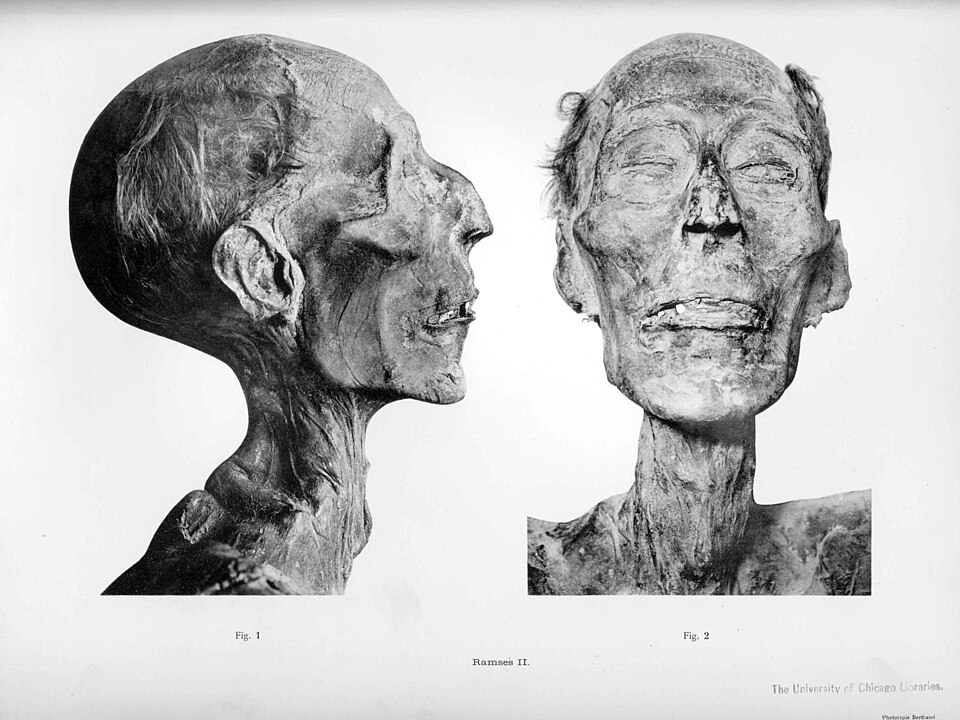
What did Ramesses the Great look like? We can answer with more confidence than for most ancient figures, because his body survives. The mummy of Ramesses II, discovered in the Deir el-Bahri cache in 1881, shows a tall man for his era, about 5’7” (170 cm), with a prominent hooked nose, a strong jaw, and thin lips drawn back to reveal a pronounced overbite. His hair is still visible: fine, wavy strands of a reddish-gold colour. Whether this was natural, the result of henna dyeing (common in Egyptian funerary practice), or just age-related pigment change is debated, but the hair itself is unmistakable.

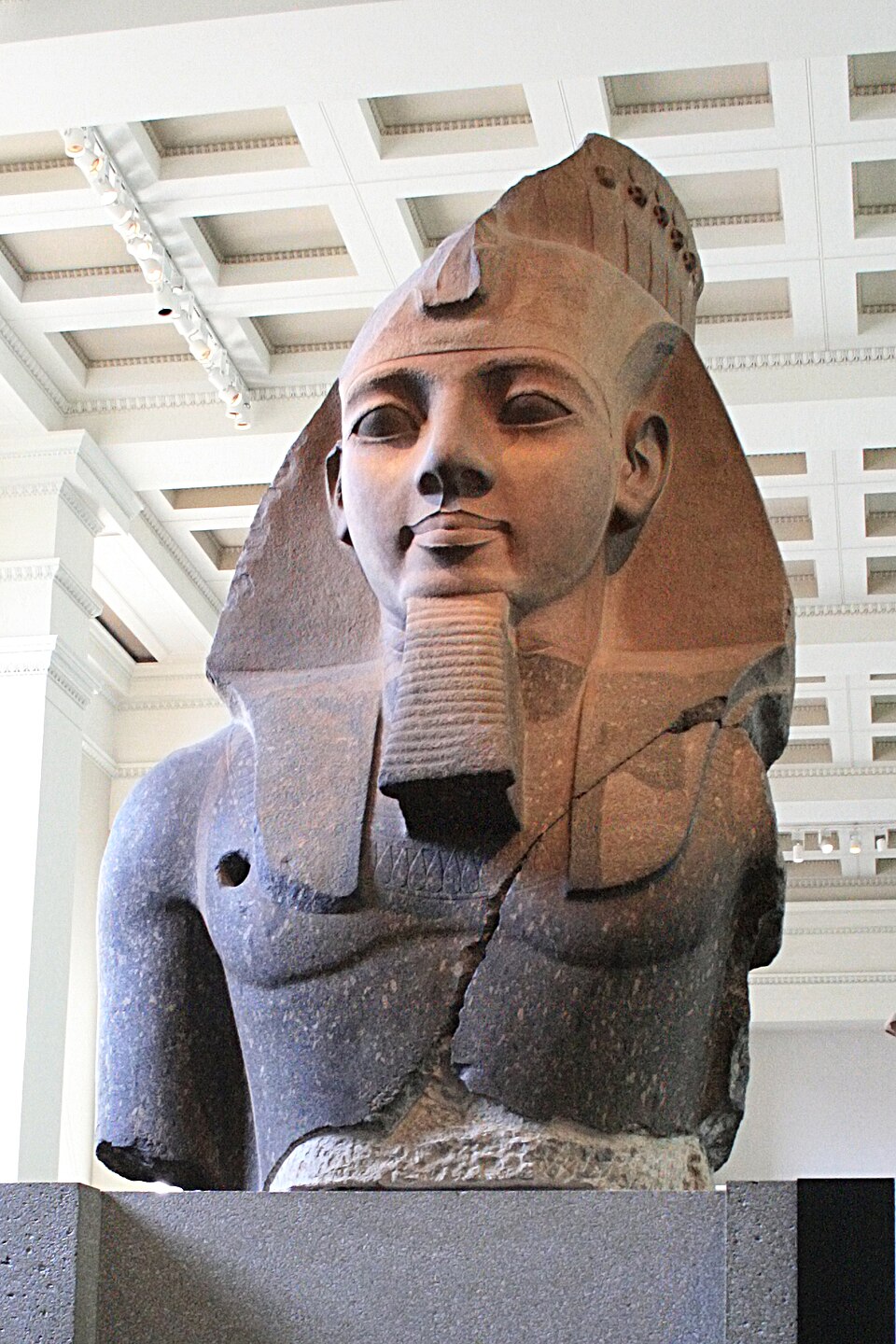
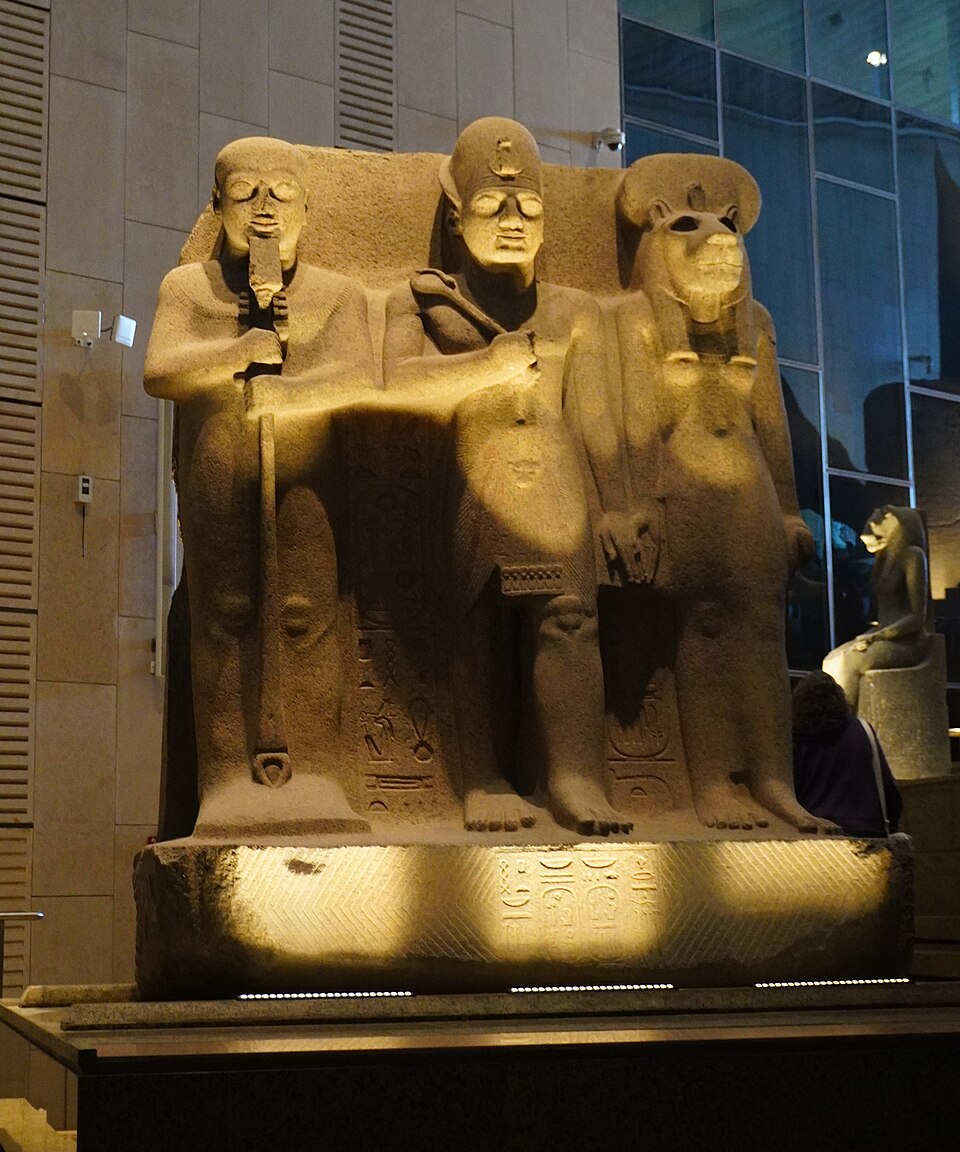
The mummy is that of a very old man. Ramesses lived to roughly 90, an astonishing age for the ancient world. But we also have his face at the height of his power, carved in stone on an enormous scale. The four colossal seated statues at Abu Simbel, the ‘Young Memnon’ bust now in the British Museum, and the granite statue in the Museo Egizio in Turin all show broad, strong features: wide-set eyes, an aquiline nose, full lips, and a firm jaw. These are idealised royal portraits, but they line up with the mummy’s bone structure well enough, especially that distinctive nose, to suggest they preserve real traits rather than pure convention.

Ramesses commissioned more statues and monuments than any other pharaoh. From Abu Simbel to Luxor, from Karnak to the Ramesseum, his face was carved thousands of times during his lifetime. The question is always how much is royal idealisation and how much is the actual man. The mummy gives us the skeleton; the statues give us the living face as his court sculptors understood it. Between the two, Ramesses is one of the best-known faces of the ancient world.


Physical Description

HeightAbout 5’7” (170 cm); tall for the eraAttested
BuildAthletic and broad-shouldered in his prime; the mummy shows a wiry, slender frame, as you'd expect of a man who lived to 90Inferred
FaceLong oval face with strong bone structure, high cheekbones, broad foreheadAttested
ComplexionUnknown; mummification destroys skin pigmentation. Tomb paintings use conventional Egyptian colour codes.Inferred
EyesWide-set; deep-set in the skull; eye colour unknownInferred
NoseProminent, hooked (aquiline); long with a high bridge. His most recognisable feature.Attested
MouthThin lips; slight overbite visible in the mummy; the statues show fuller, more idealised lipsAttested
Jaw & chinStrong, square jaw; prominent chin. The mummy confirms robust mandibular bone structure.Attested
HairReddish-gold, fine and wavy; still visible on the mummy. Whether naturally red, dyed with henna, or changed by age is debated.Attested
Distinguishing featuresThe prominent hooked nose is his most recognisable feature, matching across the mummy and all major statues. The reddish hair on the mummy is unique among preserved pharaonic remains. He also had severe dental wear and an arthritic spine in old age.Attested
ExpressionSerene, composed. The statues project calm authority.Inferred

The Evidence

Mummy of Ramesses II, discovered 1881 in the Deir el-Bahri royal cache (DB320), originally from tomb KV7, Valley of the Kings. Now in the National Museum of Egyptian Civilization, Cairo.

Mummy of Ramesses II, discovered 1881 in the Deir el-Bahri royal cache (DB320), originally from tomb KV7, Valley of the Kings. Now in the National Museum of Egyptian Civilization, Cairo.

The actual body of Ramesses II, preserved for over 3,000 years. Provides direct evidence of height (170 cm), skeletal structure, facial bone geometry, dental condition, arthritis, and the distinctive hooked nose. The hair survives as reddish-gold strands. Examined extensively in Paris in 1976 for conservation and scientific study.

What this source tells us

HeightAbout 5’7” (170 cm); tall for the eraAttested
BuildAthletic and broad-shouldered in his prime; the mummy shows a wiry, slender frame, as you'd expect of a man who lived to 90Inferred
FaceLong oval face with strong bone structure, high cheekbones, broad foreheadAttested
ComplexionUnknown; mummification destroys skin pigmentation. Tomb paintings use conventional Egyptian colour codes.Inferred
EyesWide-set; deep-set in the skull; eye colour unknownInferred
NoseProminent, hooked (aquiline); long with a high bridge. His most recognisable feature.Attested
MouthThin lips; slight overbite visible in the mummy; the statues show fuller, more idealised lipsAttested
Jaw & chinStrong, square jaw; prominent chin. The mummy confirms robust mandibular bone structure.Attested
HairReddish-gold, fine and wavy; still visible on the mummy. Whether naturally red, dyed with henna, or changed by age is debated.Attested
Distinguishing featuresThe prominent hooked nose is his most recognisable feature, matching across the mummy and all major statues. The reddish hair on the mummy is unique among preserved pharaonic remains. He also had severe dental wear and an arthritic spine in old age.Attested
Colossal bust of Ramesses II (‘The Younger Memnon’), c. 1250 BCE, from the Ramesseum, Thebes. British Museum, London (EA 19).

Alensha, CC BY-SA 3.0, via Wikimedia Commons

Colossal bust of Ramesses II (‘The Younger Memnon’), c. 1250 BCE, from the Ramesseum, Thebes. British Museum, London (EA 19).

One of the finest surviving portrait sculptures of Ramesses II. A fragment of a larger seated colossus from his mortuary temple. Shows the broad face, aquiline nose, full lips, and serene expression. Carved during his lifetime by royal sculptors. The name ‘Younger Memnon’ is a historical misnomer.

What this source tells us

FaceLong oval face with strong bone structure, high cheekbones, broad foreheadAttested
EyesWide-set; deep-set in the skull; eye colour unknownInferred
NoseProminent, hooked (aquiline); long with a high bridge. His most recognisable feature.Attested
MouthThin lips; slight overbite visible in the mummy; the statues show fuller, more idealised lipsAttested
Jaw & chinStrong, square jaw; prominent chin. The mummy confirms robust mandibular bone structure.Attested
Distinguishing featuresThe prominent hooked nose is his most recognisable feature, matching across the mummy and all major statues. The reddish hair on the mummy is unique among preserved pharaonic remains. He also had severe dental wear and an arthritic spine in old age.Attested
ExpressionSerene, composed. The statues project calm authority.Inferred

Four colossal seated statues of Ramesses II, facade of the Great Temple at Abu Simbel, c. 1264 BCE, Nubia (modern southern Egypt).

Each statue is approximately 20 metres (65 feet) tall. Carved directly into the rock cliff face during Ramesses’ reign. The four colossi show consistent facial features: broad face, aquiline nose, wide-set eyes, and the nemes headdress with double crown. The most monumental surviving portraits of any ancient individual.

What this source tells us

BuildAthletic and broad-shouldered in his prime; the mummy shows a wiry, slender frame, as you'd expect of a man who lived to 90Inferred
NoseProminent, hooked (aquiline); long with a high bridge. His most recognisable feature.Attested
Distinguishing featuresThe prominent hooked nose is his most recognisable feature, matching across the mummy and all major statues. The reddish hair on the mummy is unique among preserved pharaonic remains. He also had severe dental wear and an arthritic spine in old age.Attested
ExpressionSerene, composed. The statues project calm authority.Inferred
Seated statue of Ramesses II, black granite, c. 1279–1213 BCE, Museo Egizio, Turin (Cat. 1380).

Dyolf77, CC BY-SA 4.0, via Wikimedia Commons

Seated statue of Ramesses II, black granite, c. 1279–1213 BCE, Museo Egizio, Turin (Cat. 1380).

Considered one of the masterpieces of Egyptian sculpture. Shows Ramesses seated on his throne with the nemes headdress, uraeus, and false beard. The facial features are finely carved: broad face, straight-to-aquiline nose, full lips, wide-set eyes. The quality of the carving makes this one of the most detailed surviving portraits.

What this source tells us

FaceLong oval face with strong bone structure, high cheekbones, broad foreheadAttested
Jaw & chinStrong, square jaw; prominent chin. The mummy confirms robust mandibular bone structure.Attested
ExpressionSerene, composed. The statues project calm authority.Inferred

Where sources conflict

Hair colour: the mummy’s reddish-gold hair has generated significant debate. The 1976 Paris study found henna dye but also naturally light underlying pigment. Some scholars argue Ramesses was naturally red-haired (rare but not unknown in ancient Egypt); others attribute the colour entirely to funerary henna treatment or age-related pigment loss. This remains unresolved.

Idealisation vs. reality: the colossal statues present an idealised, youthful, divine image. The mummy shows the reality of a man who lived to roughly 90 — gaunt, with dental abscesses and arthritis. His actual appearance in middle age fell somewhere between the youthful vigour of the statues and the extreme age of the mummy.

The nose profile matches across mummy and statues (prominently hooked), which is notable because most Egyptian royal statues idealise the nose to be straighter. The sculptors seem to have preserved this feature rather than correcting it.