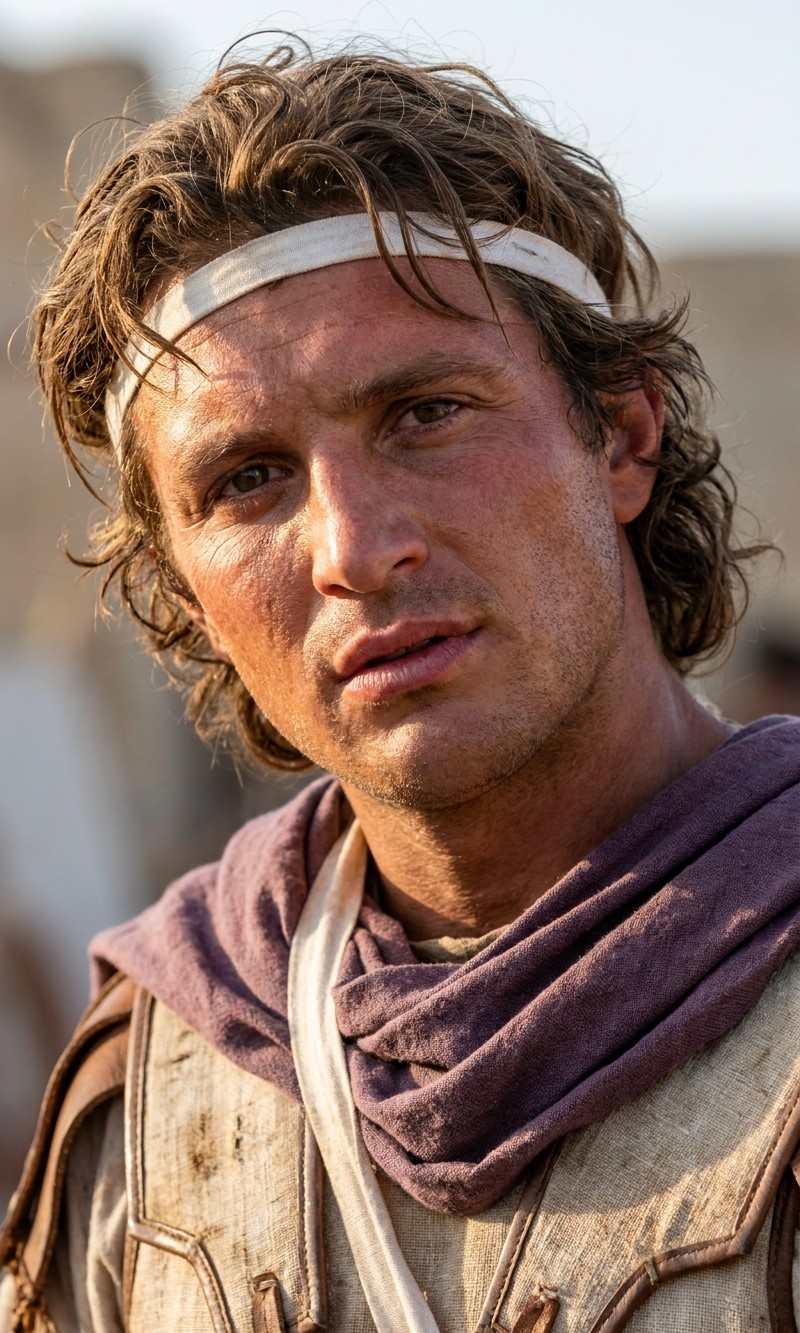
À quoi ressemblait Alexander III of Macedon ? | Les Visages de l'Histoire — AI reconstruction based on 3 historical sources
Reconstruction par IA

Classical Greece / Hellenistic · 356–323 BCE

Alexander III of Macedon

Confiance: Confiance moyenneÂge représenté: ~30

Reconstruit à partir de

King of Macedon, conqueror of the Persian Empire. Plutarch says he had a ‘melting’ quality to his gaze and held his head tilted to one side. His official sculptor Lysippus set the template, but no original survives, only Roman copies made centuries later.

What did Alexander the Great look like? Plutarch, drawing on earlier sources, gives the most detailed physical description: a fair complexion with a ruddy flush, tawny hair (the Greek xanthos covers blond to light brown), and eyes with a "melting" or liquid quality. He held his head tilted slightly to the left, a trait so consistent across sources that modern scholars have debated whether it was affectation or a physical condition like torticollis.

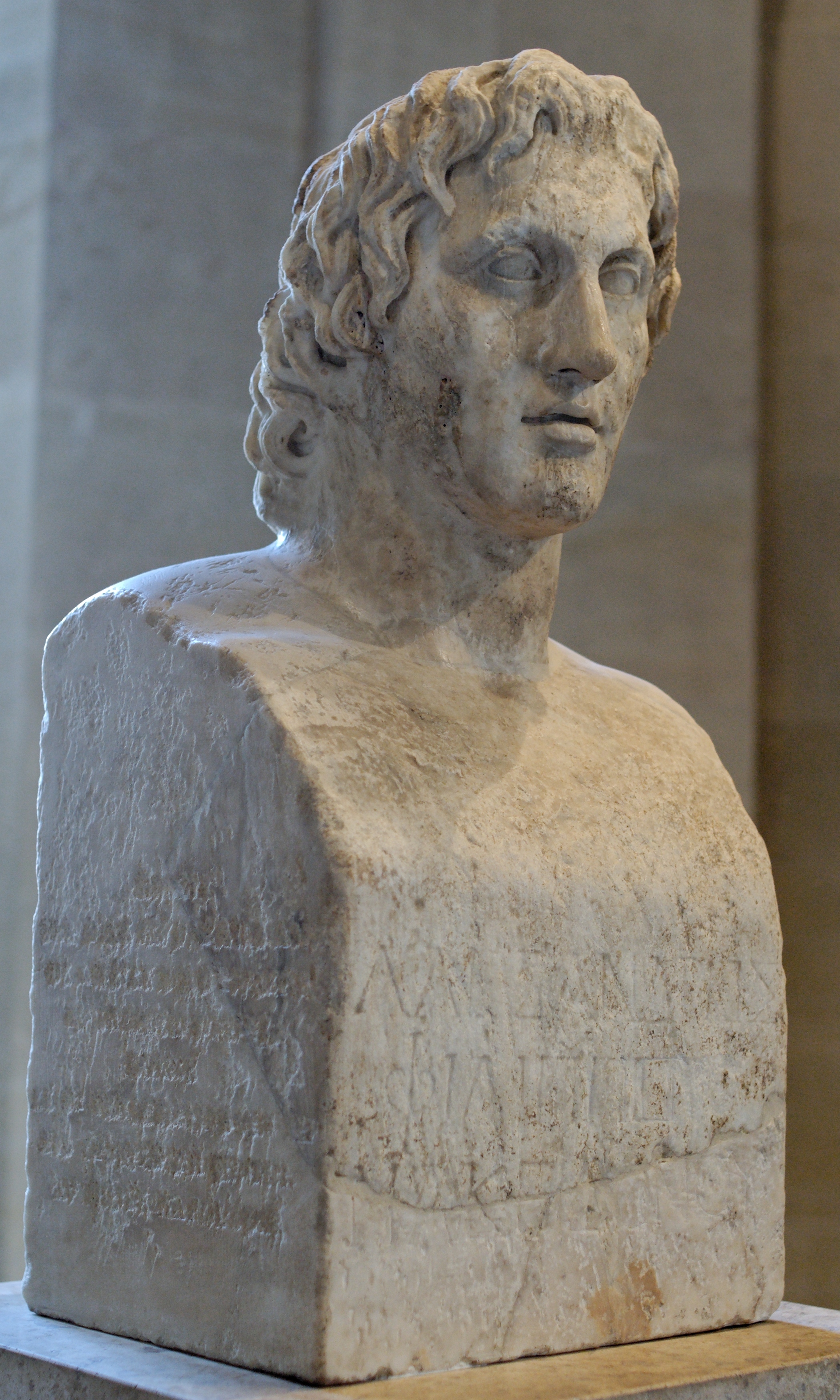
His official sculptor Lysippus established the portrait type: the anastole hairstyle (hair swept up and back from a central parting, like a lion's mane), the upward gaze, the clean-shaven face. Alexander required his soldiers to shave before battle, a break from the bearded Greek tradition that changed male grooming for centuries. The Azara herm in the Louvre, the only inscribed sculpture of Alexander, preserves this Lysippan look. The Alexander Mosaic from Pompeii, a Roman copy of a painting made within a decade of his death, shows him charging at the Battle of Issus: dark hair, intense eyes, compact build.

How tall was Alexander the Great? We don't know. Plutarch does not record his height. Later sources suggest he was short, but these are unreliable. His eye colour beyond "melting" is also unrecorded. The famous heterochromia (one dark, one light eye) comes from later, semi-fictional sources and is not supported by any reliable ancient historian.


Description physique

StatureProbably short to average, but not reliably recorded in primary sourcesInféré
CorpulenceAthletic, compact; a lifelong military campaigner who fought personally in battleInféré
VisageSmooth, clean-shaven, youthful; broad across the cheekbonesAttesté
TeintFair, with a ruddy or flushed quality, especially on the face and chestAttesté
YeuxLarge, expressive, with a ‘melting’ or liquid quality; one eye possibly lighter than the otherAttesté
SourcilsProminent; the ‘leonine’ quality of the forehead is a consistent feature of the portrait traditionAttesté
NezStraight, proportionateAttesté
BoucheFull lips, slightly parted in the portrait traditionInféré
Mâchoire et mentonStrong, clean-shaven chin; rounded jawAttesté
CheveuxThick, wavy, swept back from the forehead in the distinctive ‘anastole’ (lion’s mane parting); tawny or dark blondAttesté
Pilosité facialeClean-shaven; he established the fashion and required his soldiers to shaveAttesté
CrâneThe hair is always shown thick and voluminous, obscuring the cranial shapeInféré
CouHeld tilted to the left; thick, muscularAttesté
Traits distinctifsThe tilted head, the anastole hairstyle, the ‘melting’ eyes, and the clean-shaven face. These four features define every ancient portrait of Alexander and distinguish him from all other Hellenistic rulers.Attesté
ExpressionIntense, upward-gazing, with a quality ancient sources call ‘leonine’Attesté

Les Preuves

Azara Herm, Roman marble copy, Musée du Louvre, Paris (Ma 436)

Azara Herm, Roman marble copy, Musée du Louvre, Paris (Ma 436)

The only surviving sculpture inscribed with Alexander’s name. A Roman copy of a Lysippus-school original. Shows the characteristic tilted head, anastole hairstyle, and youthful clean-shaven face. Considered the most reliable sculptural portrait.

Voir la source

Ce que cette source nous apprend

VisageSmooth, clean-shaven, youthful; broad across the cheekbonesAttesté
SourcilsProminent; the ‘leonine’ quality of the forehead is a consistent feature of the portrait traditionAttesté
NezStraight, proportionateAttesté
BoucheFull lips, slightly parted in the portrait traditionInféré
Mâchoire et mentonStrong, clean-shaven chin; rounded jawAttesté
CheveuxThick, wavy, swept back from the forehead in the distinctive ‘anastole’ (lion’s mane parting); tawny or dark blondAttesté
CrâneThe hair is always shown thick and voluminous, obscuring the cranial shapeInféré
CouHeld tilted to the left; thick, muscularAttesté
Traits distinctifsThe tilted head, the anastole hairstyle, the ‘melting’ eyes, and the clean-shaven face. These four features define every ancient portrait of Alexander and distinguish him from all other Hellenistic rulers.Attesté
ExpressionIntense, upward-gazing, with a quality ancient sources call ‘leonine’Attesté

Plutarch, Life of Alexander 4

Voir la source

The outward appearance of Alexander is best represented by the statues of him which Lysippus made, and it was by this artist alone that Alexander himself thought it fit that he should be modelled. For those peculiarities which many of his successors and friends afterwards tried to imitate, namely, the poise of the neck, which was bent slightly to the left, and the melting glance of his eyes, this artist has accurately observed.

Bernadotte Perrin, Loeb Classical Library, 1919

Ce que cette source nous apprend

CorpulenceAthletic, compact; a lifelong military campaigner who fought personally in battleInféré
TeintFair, with a ruddy or flushed quality, especially on the face and chestAttesté
YeuxLarge, expressive, with a ‘melting’ or liquid quality; one eye possibly lighter than the otherAttesté
CheveuxThick, wavy, swept back from the forehead in the distinctive ‘anastole’ (lion’s mane parting); tawny or dark blondAttesté
Pilosité facialeClean-shaven; he established the fashion and required his soldiers to shaveAttesté
CouHeld tilted to the left; thick, muscularAttesté
Traits distinctifsThe tilted head, the anastole hairstyle, the ‘melting’ eyes, and the clean-shaven face. These four features define every ancient portrait of Alexander and distinguish him from all other Hellenistic rulers.Attesté
ExpressionIntense, upward-gazing, with a quality ancient sources call ‘leonine’Attesté
Alexander Mosaic, c. 100 BCE, from the House of the Faun, Pompeii. Now in the National Archaeological Museum, Naples.

Alexander Mosaic, c. 100 BCE, from the House of the Faun, Pompeii. Now in the National Archaeological Museum, Naples.

Roman floor mosaic, likely a copy of a lost painting by Philoxenos of Eretria or Apelles (c. 310 BCE). Shows Alexander at the Battle of Issus (333 BCE) charging Darius III. Remarkably detailed for a mosaic: shows his hair, eyes, armour, and expression. The closest thing to a ‘photograph’ of Alexander in action.

Voir la source

Ce que cette source nous apprend

CorpulenceAthletic, compact; a lifelong military campaigner who fought personally in battleInféré
VisageSmooth, clean-shaven, youthful; broad across the cheekbonesAttesté
SourcilsProminent; the ‘leonine’ quality of the forehead is a consistent feature of the portrait traditionAttesté
Mâchoire et mentonStrong, clean-shaven chin; rounded jawAttesté
CheveuxThick, wavy, swept back from the forehead in the distinctive ‘anastole’ (lion’s mane parting); tawny or dark blondAttesté
Traits distinctifsThe tilted head, the anastole hairstyle, the ‘melting’ eyes, and the clean-shaven face. These four features define every ancient portrait of Alexander and distinguish him from all other Hellenistic rulers.Attesté

Là où les sources se contredisent

No original Lysippus sculpture survives. All busts are Roman copies made 200–400 years later, with varying degrees of idealisation. The Azara herm is the most reliable because it is inscribed with his name, but it is still a copy of a copy.

The Alexander Mosaic is a Roman copy (c. 100 BCE) of a lost Greek painting (c. 310 BCE). It is remarkably detailed but is twice-removed from life. The hair colour shown (dark brown/auburn) may not match Plutarch’s ‘tawny’ description.

Heterochromia (mismatched eye colour) is popular in modern culture but comes from the Alexander Romance, a semi-fictional work. No reliable ancient historian mentions it.