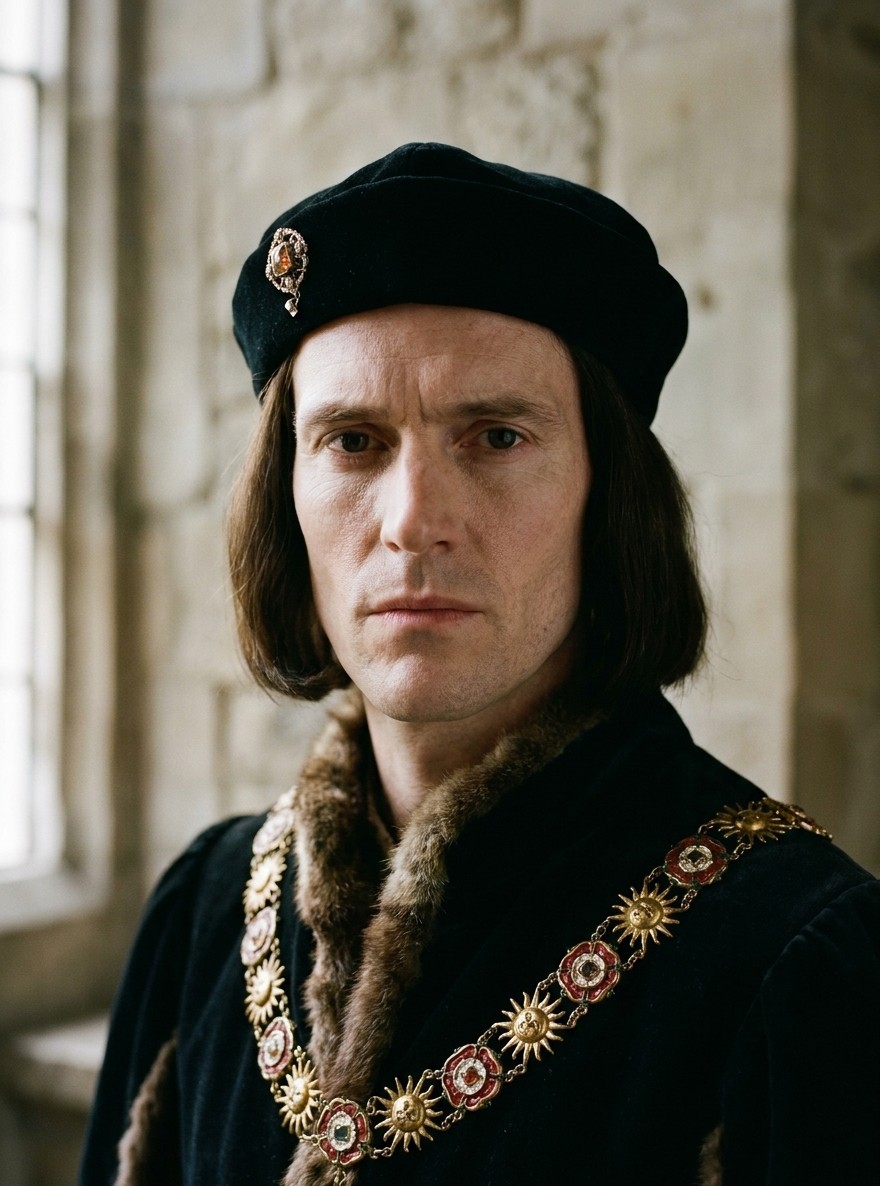
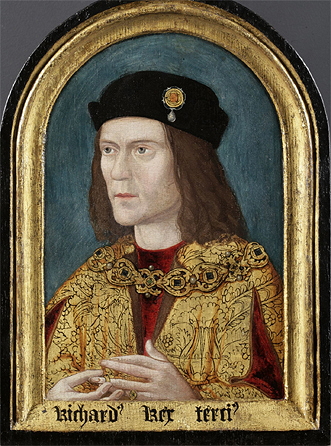
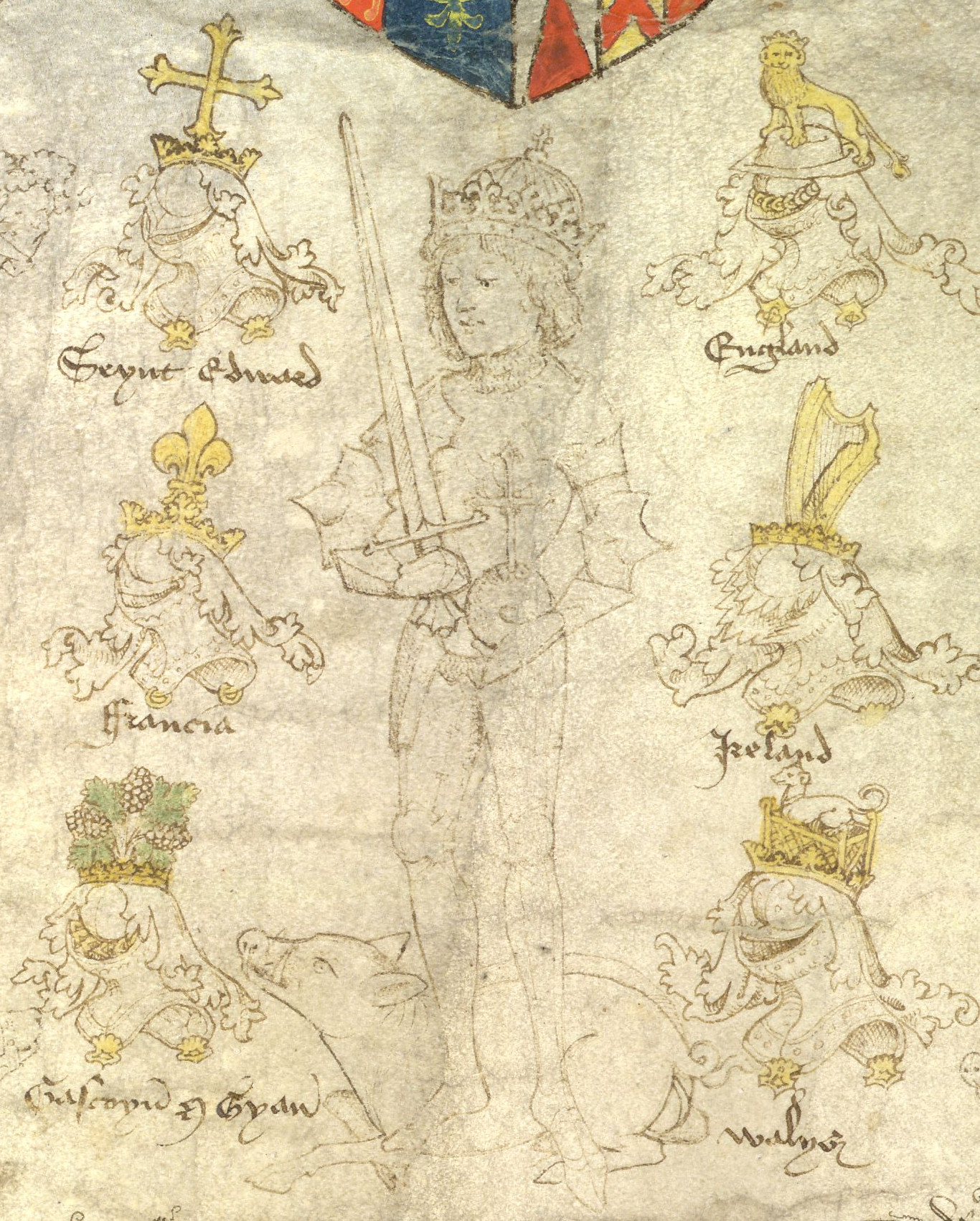
Skeleton of Richard III, discovered 2012, Greyfriars church site, Leicester. University of Leicester excavation. DNA-confirmed 2014.
The actual skeleton, confirmed by mitochondrial DNA match to living maternal-line descendants. Provides precise height, build, bone structure, facial geometry, and pathology (scoliosis, battle wounds). The single most important piece of evidence.
Ce que cette source nous apprend
StatureAround 5’8” (173 cm) when standing straight, but scoliosis reduced apparent height by several inchesAttesté
CorpulenceSlender, gracile frame; lean limbsAttesté
VisageNarrow, fine-boned, with a strong jawAttesté
SourcilsFurrowed, somewhat heavyInféré
NezStraight, proportionate, slightly narrowAttesté
Mâchoire et mentonStrong, slightly protruding chin; defined jawlineAttesté
CrâneWell-proportioned; no abnormalitiesAttesté
CouNormal; no evidence of the short or twisted neck of Tudor propagandaAttesté
Traits distinctifsRight thoracic scoliosis causing the right shoulder to sit higher than the left; slender frame; intense expression. Not the grotesque hunchback of Shakespeare — the condition would have been noticeable but concealable under tailored clothing and armour.Attesté