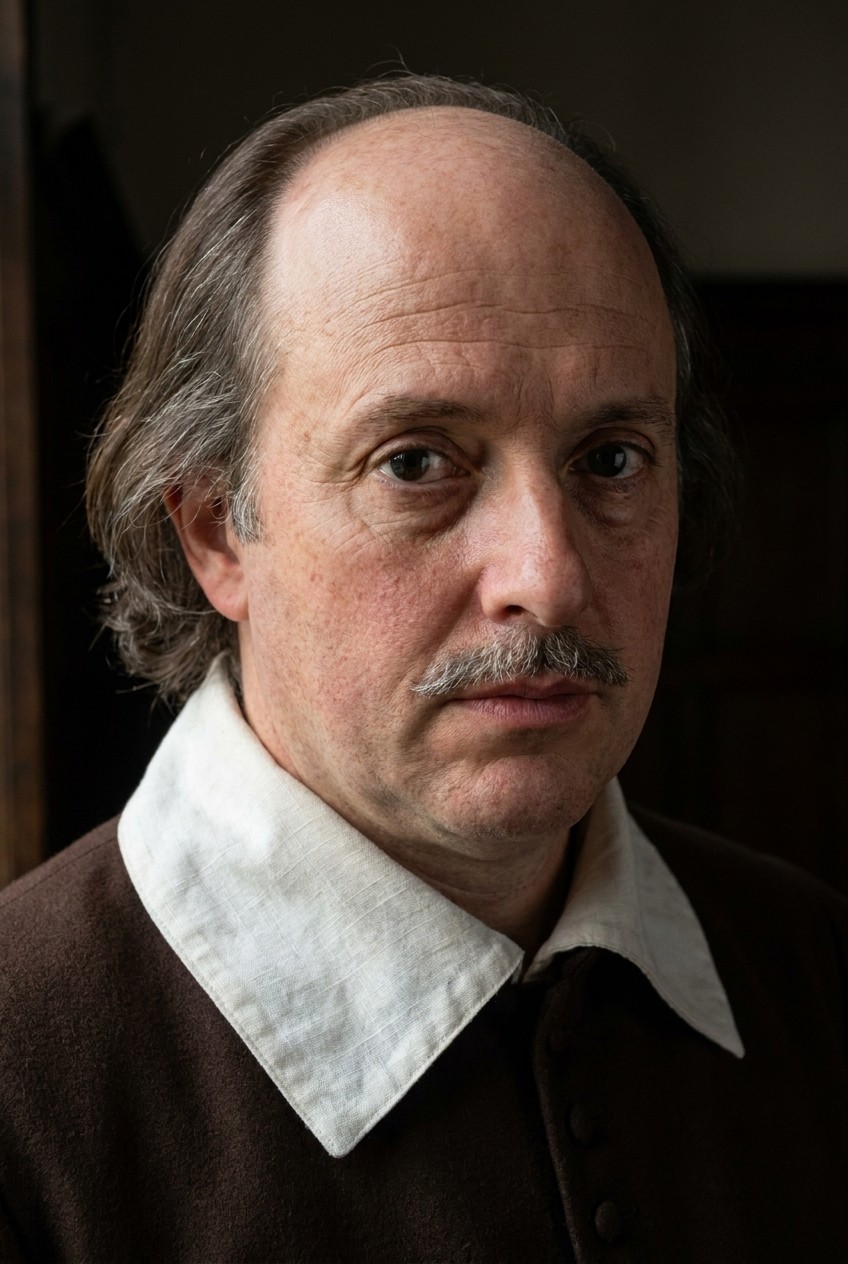
À quoi ressemblait William Shakespeare ? | Les Visages de l'Histoire — AI reconstruction based on 6 historical sources
Reconstruction par IA

Elizabethan & Jacobean England · 1564–1616

William Shakespeare

Sources: Sources partiellesÂge représenté: ~46

Reconstruit à partir de

The most famous face in English literature, and one of the least certain. Two images made within years of his death agree on the basics: a high domed forehead, receding hair, a steady gaze. Beyond that, the portraits diverge. No written description by anyone who knew him survives.

What did Shakespeare really look like? No physical description by anyone who knew him survives. We have nothing like the ambassador dispatches that document Elizabeth I or Henry VIII. What we have instead are images: three made within a few years of his death, and a single literary commendation from Ben Jonson that addresses the engraving rather than the man.

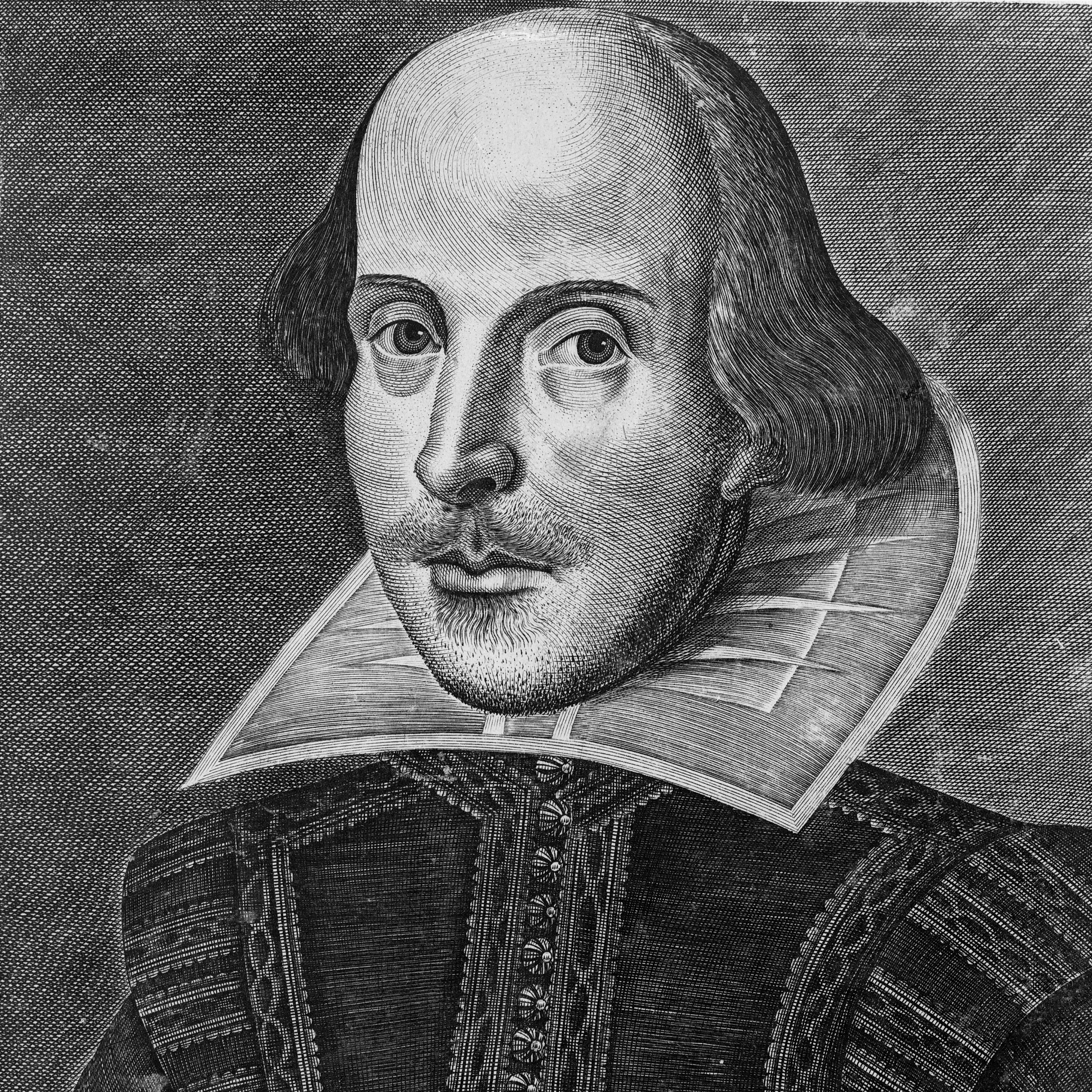
The Droeshout engraving, printed on the title page of the 1623 First Folio, is the closest thing to an authenticated likeness. Martin Droeshout was only fifteen when Shakespeare died, so he almost certainly worked from an earlier drawing or painting, now lost. But the engraving was approved for publication by John Heminges and Henry Condell, Shakespeare's fellow actors and friends, who wrote in their preface that readers should look past the engraver's skill to find the man. Ben Jonson's commendatory poem backs this up: "the Grauer had a strife / with Nature, to out-doo the life." The engraving captures the likeness, even if the art is stiff. It shows a massive domed forehead, receding hairline, arched eyebrows, large dark eyes, a straight nose, a small moustache, and a plain white collar over a dark doublet.

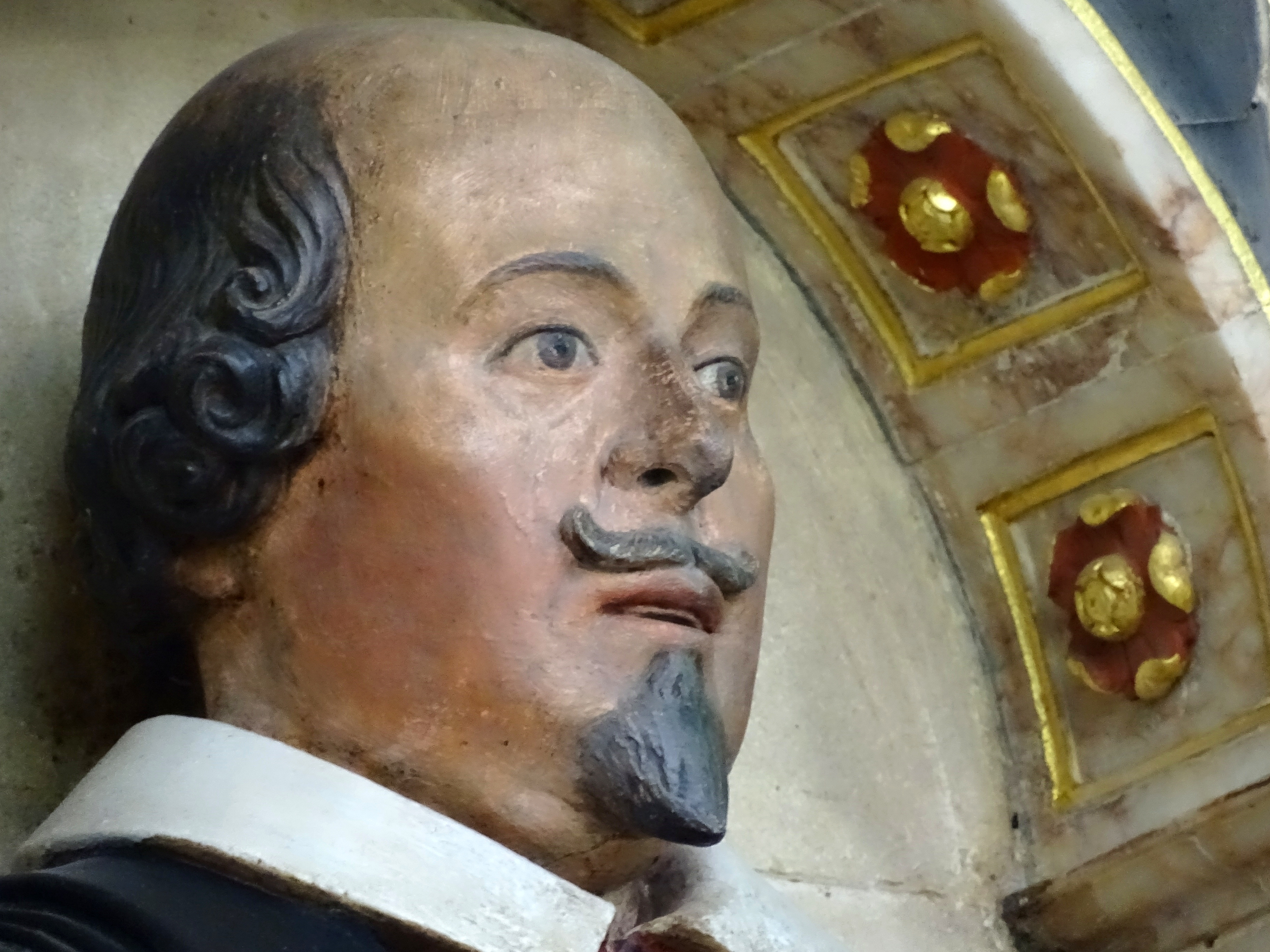
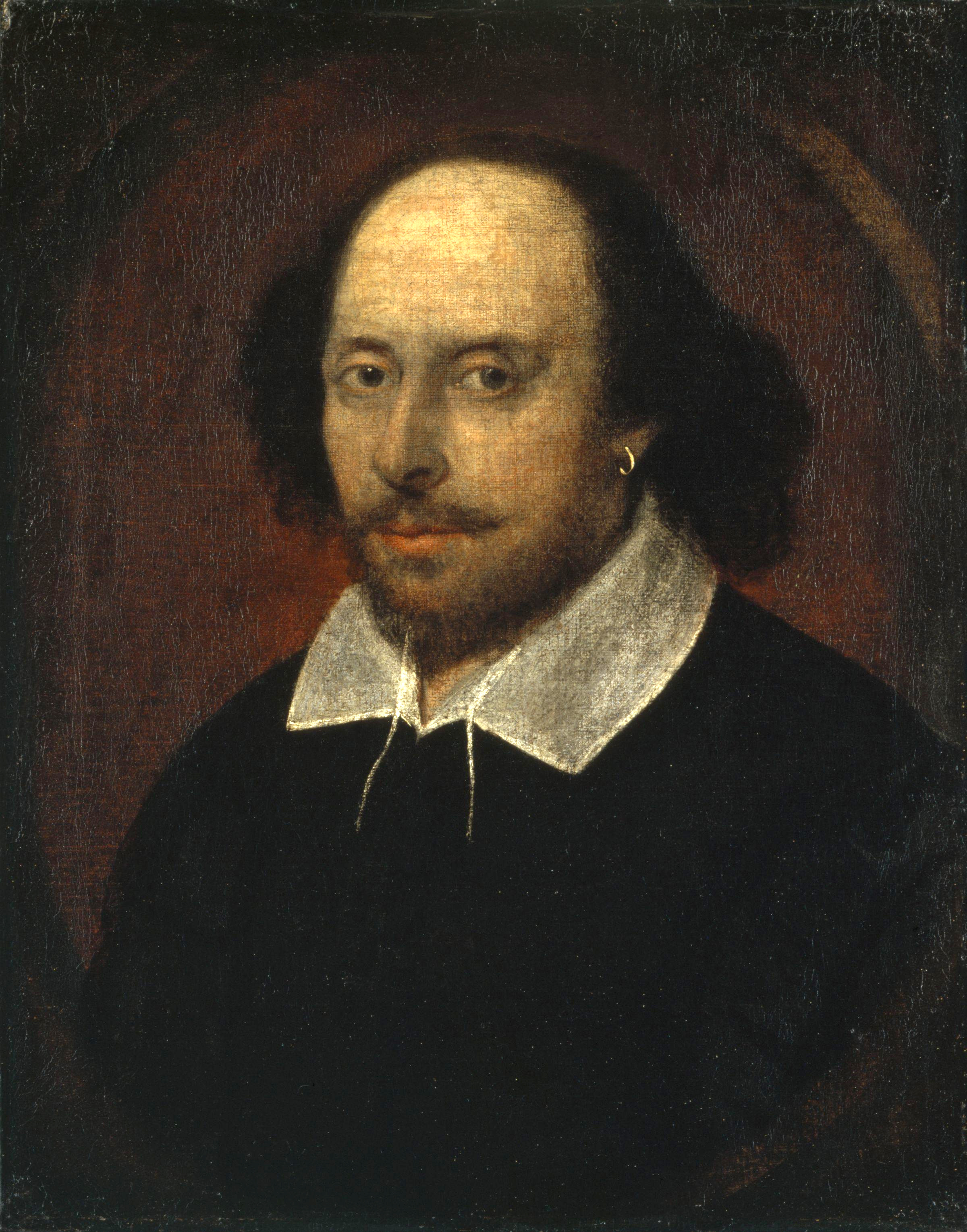
The Chandos portrait (c. 1600–1610, National Portrait Gallery No. 1) is the only painting with a serious claim to have been done from life. Traditionally attributed to John Taylor, it shows a darker, more bohemian figure: olive-toned skin, a gold earring in the left ear, a fuller face, and an open collar. The Holy Trinity Church bust in Stratford-upon-Avon, installed before 1623 on Shakespeare's funerary monument, shows a rounder, heavier face with a moustache and small forked beard, possibly reflecting his appearance in his final years. The three images share the high forehead and receding hair but disagree on nearly everything else: complexion, build, facial hair, expression. The Cobbe portrait, put forward in 2009 as a possible lifetime painting, remains contested; the Flower portrait, long thought to be the Droeshout's source, turned out on X-ray and pigment analysis to be a later copy painted over an Italian Madonna.


Description physique

StatureUnknown. No contemporary description of his height survives. The Holy Trinity bust and Droeshout engraving show only the upper body.Inféré
CorpulenceThe Holy Trinity bust suggests a stocky, well-fed man in later life. The Chandos portrait shows a leaner figure. The Droeshout engraving is a head-and-shoulders image that gives little indication of build.Inféré
VisageOval to round, dominated by a very high, broad forehead. The Droeshout shows an elongated oval; the Holy Trinity bust suggests a rounder, fuller face.Attesté
TeintFair to medium. The Chandos portrait shows a noticeably darker, olive-toned complexion; the Droeshout engraving, being monochrome, gives no information. The Holy Trinity bust was originally painted in lifelike colours (repainted several times since).Inféré
YeuxLarge, dark, and prominent. Both the Droeshout engraving and the Chandos portrait show large eyes with dark irises. The gaze is direct and steady in both images.Attesté
SourcilsArched, well-defined eyebrows. The Droeshout engraving shows thin, arched brows above the large eyes.Attesté
NezStraight, proportionate, of moderate length. The Droeshout engraving shows a straight nose with a slightly bulbous tip. The Chandos portrait shows a similar straight nose. The Holy Trinity bust has a broader nose.Attesté
BoucheFull lower lip, thinner upper lip, partially hidden by a moustache in all three major images. The Droeshout shows a small, closed mouth with a slight downturn. The Chandos portrait shows fuller, more sensuous lips.Attesté
Mâchoire et mentonRounded chin, soft jawline. The Droeshout shows a gently rounded chin. The Holy Trinity bust shows a fuller, heavier jaw consistent with weight gain.Attesté
CheveuxBrown, worn at medium length to the ears and slightly longer at the back. Thin on top, fuller at the sides and back. The Chandos portrait shows darker, possibly auburn-brown hair.Attesté
CalvitieDramatically receding hairline with a very high, domed forehead; effectively bald on top, with hair remaining at the sides and back. The one feature all three major images agree on without question.Attesté
Pilosité facialeMoustache visible in all three major images. The Droeshout shows a thin moustache with no beard. The Holy Trinity bust shows a moustache with a small forked or divided beard. The Chandos portrait shows a thin moustache and a small pointed goatee or chin patch.Attesté
Traits distinctifsThe huge domed forehead and receding hairline are Shakespeare's most recognisable features. The gold earring in the left ear, if the Chandos portrait is authentic, is another notable detail, suggesting a fashionable or bohemian streak.Attesté
ExpressionCalm, steady, guarded. The Droeshout shows a neutral expression, neither warm nor cold. The Chandos portrait suggests something more intense and thoughtful. Neither image shows warmth or animation; both present a man who watches.Inféré

Les Preuves

Martin Droeshout, engraved portrait of William Shakespeare, title page of the First Folio (Mr. William Shakespeares Comedies, Histories, & Tragedies), London, 1623

Martin Droeshout, Public domain, via Wikimedia Commons

Martin Droeshout, engraved portrait of William Shakespeare, title page of the First Folio (Mr. William Shakespeares Comedies, Histories, & Tragedies), London, 1623

The closest thing to an authenticated likeness. Droeshout was only fifteen when Shakespeare died and likely worked from a lost earlier image, but the engraving was published under the supervision of Heminges and Condell, Shakespeare's fellow actors, who implicitly endorsed it. Ben Jonson's poem confirms the resemblance.

Voir la source →

Ce que cette source nous apprend

CorpulenceThe Holy Trinity bust suggests a stocky, well-fed man in later life. The Chandos portrait shows a leaner figure. The Droeshout engraving is a head-and-shoulders image that gives little indication of build.Inféré
VisageOval to round, dominated by a very high, broad forehead. The Droeshout shows an elongated oval; the Holy Trinity bust suggests a rounder, fuller face.Attesté
YeuxLarge, dark, and prominent. Both the Droeshout engraving and the Chandos portrait show large eyes with dark irises. The gaze is direct and steady in both images.Attesté
SourcilsArched, well-defined eyebrows. The Droeshout engraving shows thin, arched brows above the large eyes.Attesté
NezStraight, proportionate, of moderate length. The Droeshout engraving shows a straight nose with a slightly bulbous tip. The Chandos portrait shows a similar straight nose. The Holy Trinity bust has a broader nose.Attesté
BoucheFull lower lip, thinner upper lip, partially hidden by a moustache in all three major images. The Droeshout shows a small, closed mouth with a slight downturn. The Chandos portrait shows fuller, more sensuous lips.Attesté
Mâchoire et mentonRounded chin, soft jawline. The Droeshout shows a gently rounded chin. The Holy Trinity bust shows a fuller, heavier jaw consistent with weight gain.Attesté
CheveuxBrown, worn at medium length to the ears and slightly longer at the back. Thin on top, fuller at the sides and back. The Chandos portrait shows darker, possibly auburn-brown hair.Attesté
CalvitieDramatically receding hairline with a very high, domed forehead; effectively bald on top, with hair remaining at the sides and back. The one feature all three major images agree on without question.Attesté
Pilosité facialeMoustache visible in all three major images. The Droeshout shows a thin moustache with no beard. The Holy Trinity bust shows a moustache with a small forked or divided beard. The Chandos portrait shows a thin moustache and a small pointed goatee or chin patch.Attesté
Traits distinctifsThe huge domed forehead and receding hairline are Shakespeare's most recognisable features. The gold earring in the left ear, if the Chandos portrait is authentic, is another notable detail, suggesting a fashionable or bohemian streak.Attesté
ExpressionCalm, steady, guarded. The Droeshout shows a neutral expression, neither warm nor cold. The Chandos portrait suggests something more intense and thoughtful. Neither image shows warmth or animation; both present a man who watches.Inféré

Ben Jonson, 'To the Reader,' commendatory poem in Mr. William Shakespeares Comedies, Histories, & Tragedies, London, 1623

Jonson's poem, printed opposite the Droeshout engraving, directly addresses the likeness: the engraver struggled to capture Shakespeare's wit in a copper plate, and readers should look to the book, not the picture, for the true man. Crucially, Jonson confirms that the engraving does resemble Shakespeare ('the Print... hit / His face'), even if the art is limited.

“This Figure, that thou here seest put, / It was for gentle Shakespeare cut; / Wherein the Grauer had a strife / with Nature, to out-doo the life: / O, could he but haue drawne his wit / As well in brasse, as he hath hit / His face; the Print would then surpasse / All, that was euer writ in brasse.”

Attributed to John Taylor, Portrait of William Shakespeare (the 'Chandos portrait'), c. 1600–1610, oil on canvas, National Portrait Gallery, London (NPG 1)

Attributed to John Taylor, Public domain, via Wikimedia Commons

Attributed to John Taylor, Portrait of William Shakespeare (the 'Chandos portrait'), c. 1600–1610, oil on canvas, National Portrait Gallery, London (NPG 1)

The first painting acquired by the National Portrait Gallery (1856) and the only oil portrait with a credible claim to have been painted from life. The provenance traces back through the Dukes of Chandos to Sir William Davenant, Shakespeare's godson (and rumoured natural son). Shows a man with dark hair, a gold hoop earring, olive complexion, open collar, and a direct, intense gaze. If authentic, this is the only colour portrait from life.

Voir la source →

Ce que cette source nous apprend

CorpulenceThe Holy Trinity bust suggests a stocky, well-fed man in later life. The Chandos portrait shows a leaner figure. The Droeshout engraving is a head-and-shoulders image that gives little indication of build.Inféré
VisageOval to round, dominated by a very high, broad forehead. The Droeshout shows an elongated oval; the Holy Trinity bust suggests a rounder, fuller face.Attesté
TeintFair to medium. The Chandos portrait shows a noticeably darker, olive-toned complexion; the Droeshout engraving, being monochrome, gives no information. The Holy Trinity bust was originally painted in lifelike colours (repainted several times since).Inféré
YeuxLarge, dark, and prominent. Both the Droeshout engraving and the Chandos portrait show large eyes with dark irises. The gaze is direct and steady in both images.Attesté
SourcilsArched, well-defined eyebrows. The Droeshout engraving shows thin, arched brows above the large eyes.Attesté
NezStraight, proportionate, of moderate length. The Droeshout engraving shows a straight nose with a slightly bulbous tip. The Chandos portrait shows a similar straight nose. The Holy Trinity bust has a broader nose.Attesté
BoucheFull lower lip, thinner upper lip, partially hidden by a moustache in all three major images. The Droeshout shows a small, closed mouth with a slight downturn. The Chandos portrait shows fuller, more sensuous lips.Attesté
CheveuxBrown, worn at medium length to the ears and slightly longer at the back. Thin on top, fuller at the sides and back. The Chandos portrait shows darker, possibly auburn-brown hair.Attesté
CalvitieDramatically receding hairline with a very high, domed forehead; effectively bald on top, with hair remaining at the sides and back. The one feature all three major images agree on without question.Attesté
Pilosité facialeMoustache visible in all three major images. The Droeshout shows a thin moustache with no beard. The Holy Trinity bust shows a moustache with a small forked or divided beard. The Chandos portrait shows a thin moustache and a small pointed goatee or chin patch.Attesté
Traits distinctifsThe huge domed forehead and receding hairline are Shakespeare's most recognisable features. The gold earring in the left ear, if the Chandos portrait is authentic, is another notable detail, suggesting a fashionable or bohemian streak.Attesté
ExpressionCalm, steady, guarded. The Droeshout shows a neutral expression, neither warm nor cold. The Chandos portrait suggests something more intense and thoughtful. Neither image shows warmth or animation; both present a man who watches.Inféré
Gheerart Janssen (Gerard Johnson), painted limestone bust of William Shakespeare, funerary monument, Holy Trinity Church, Stratford-upon-Avon, before 1623

Adam Jones, CC BY-SA 4.0, via Wikimedia Commons

Gheerart Janssen (Gerard Johnson), painted limestone bust of William Shakespeare, funerary monument, Holy Trinity Church, Stratford-upon-Avon, before 1623

Commissioned by Shakespeare's family and installed in the church where he is buried, probably within a few years of his death. His wife Anne and daughters Susanna and Judith would have seen and presumably approved it. Shows a round-faced, moustached man with a forked beard, holding a quill. The bust was originally painted in lifelike colours (it was whitewashed in 1793 and repainted in 1861).

Voir la source →

Ce que cette source nous apprend

CorpulenceThe Holy Trinity bust suggests a stocky, well-fed man in later life. The Chandos portrait shows a leaner figure. The Droeshout engraving is a head-and-shoulders image that gives little indication of build.Inféré
VisageOval to round, dominated by a very high, broad forehead. The Droeshout shows an elongated oval; the Holy Trinity bust suggests a rounder, fuller face.Attesté
TeintFair to medium. The Chandos portrait shows a noticeably darker, olive-toned complexion; the Droeshout engraving, being monochrome, gives no information. The Holy Trinity bust was originally painted in lifelike colours (repainted several times since).Inféré
NezStraight, proportionate, of moderate length. The Droeshout engraving shows a straight nose with a slightly bulbous tip. The Chandos portrait shows a similar straight nose. The Holy Trinity bust has a broader nose.Attesté
BoucheFull lower lip, thinner upper lip, partially hidden by a moustache in all three major images. The Droeshout shows a small, closed mouth with a slight downturn. The Chandos portrait shows fuller, more sensuous lips.Attesté
Mâchoire et mentonRounded chin, soft jawline. The Droeshout shows a gently rounded chin. The Holy Trinity bust shows a fuller, heavier jaw consistent with weight gain.Attesté
CalvitieDramatically receding hairline with a very high, domed forehead; effectively bald on top, with hair remaining at the sides and back. The one feature all three major images agree on without question.Attesté
Pilosité facialeMoustache visible in all three major images. The Droeshout shows a thin moustache with no beard. The Holy Trinity bust shows a moustache with a small forked or divided beard. The Chandos portrait shows a thin moustache and a small pointed goatee or chin patch.Attesté

Unknown artist, oil on panel, c. 1610, Cobbe Collection, Hatchlands Park, Surrey. Identified as a possible portrait of Shakespeare by Stanley Wells, 2009.

A well-painted portrait of a gentleman, advanced as a lifetime portrait of Shakespeare by the Shakespeare Birthplace Trust in 2009. The identification is based on resemblance to the Droeshout engraving, an inscription on a related copy (the 'Janssen portrait'), and possible provenance through the Earls of Southampton. The National Portrait Gallery disputes the identification, suggesting the sitter may be Sir Thomas Overbury.

Unknown artist, the 'Flower portrait,' oil on panel, Royal Shakespeare Company collection, Stratford-upon-Avon

Long believed to be the source painting from which the Droeshout engraving was made. In 2005, X-ray and pigment analysis by the National Portrait Gallery revealed it was painted over a 15th- or 16th-century Italian Madonna and Child, using chrome yellow — a pigment not available until c. 1814. It is therefore a 19th-century copy of the Droeshout, not its source.

Là où les sources se contredisent

The three major images disagree on facial hair: the Droeshout shows only a moustache, the Chandos adds a goatee, and the Holy Trinity bust shows a moustache with a forked beard. If all three depict Shakespeare, he varied his facial hair, or the artists exercised creative licence.

The Chandos portrait shows a markedly darker complexion and a gold earring — details absent from the other two images. If authentic, it suggests a different social self-presentation (more bohemian, less bourgeois) than the respectable gentleman of the Droeshout engraving. Some scholars have questioned whether the Chandos sitter is Shakespeare at all.

The Holy Trinity bust shows a distinctly rounder, heavier face than either the Droeshout or the Chandos portrait. This could reflect late-life weight gain, the limitations of the sculptor (Gheerart Janssen), or post-mortem idealisation. The bust has been repainted several times, further complicating comparison.

The Cobbe portrait (oil on panel, c. 1610) was advanced in 2009 by Stanley Wells and the Shakespeare Birthplace Trust as a possible lifetime portrait. The National Portrait Gallery and other scholars dispute this identification, noting the sitter may be Sir Thomas Overbury. The debate remains unresolved.