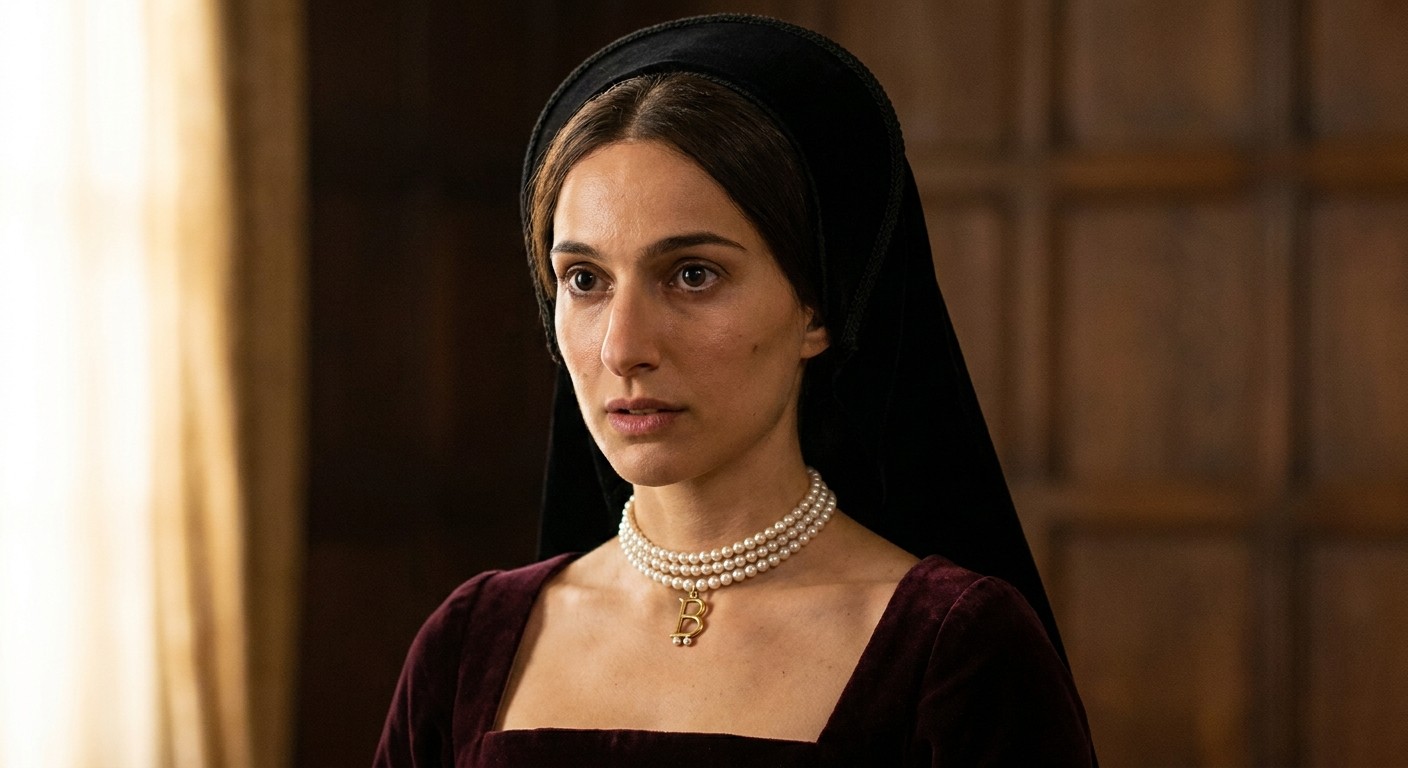
Anne Boleyn कैसे दिखते थे? | इतिहास के चेहरे — AI reconstruction based on 4 historical sources
AI पुनर्निर्माण

Tudor England · c. 1501–1536

Anne Boleyn

विश्वसनीयता: मध्यम विश्वसनीयताचित्रित आयु: ~33

Second wife of Henry VIII and mother of Elizabeth I. No confirmed lifetime portrait survives. Her appearance is reconstructed from ambassador dispatches, the NPG portrait type, and a medal, all debated.

What did Anne Boleyn look like? The honest answer is: we’re not sure. No confirmed lifetime portrait of Anne survives — after her execution in 1536, Henry VIII ordered her images destroyed. What we have are ambassador reports, a debated portrait type, and a single medal.

The Venetian ambassador described her as “not one of the handsomest women in the world; she is of middling stature, swarthy complexion, long neck, wide mouth, bosom not much raised.” The imperial ambassador Eustace Chapuys, who was hostile to her, was less generous. The papal nuncio noted her “beautiful black eyes.” Multiple sources agree on dark colouring — dark hair, olive or “swarthy” complexion, and dark eyes — which was unusual at the English court, where the beauty ideal favoured fair skin and light hair.

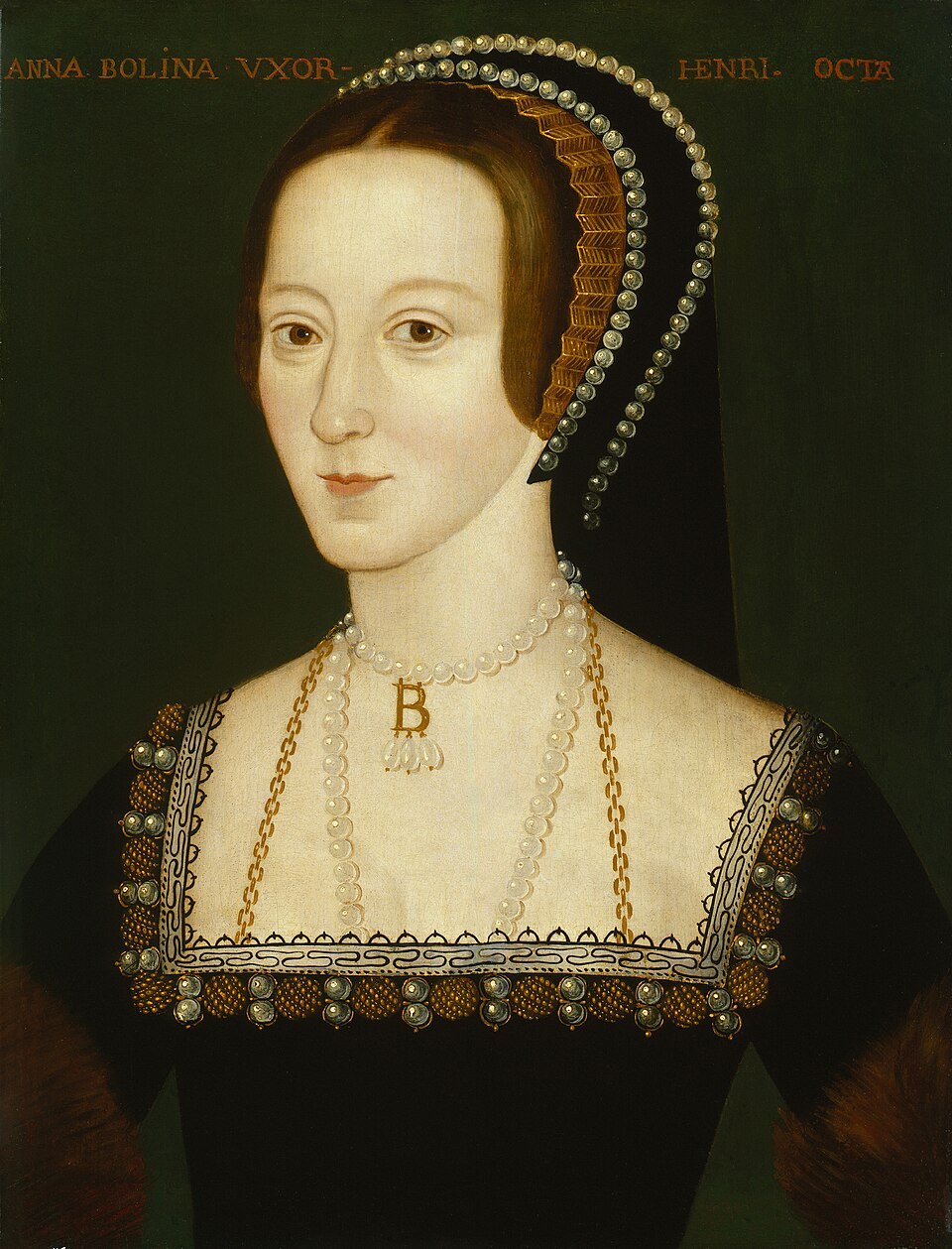
The NPG portrait (National Portrait Gallery 668) is the best-known image, showing a woman with an elongated face, high forehead, pointed chin, dark hair worn under a French hood, and a “B” pearl necklace. But this painting dates from the late 16th century and is likely a copy of a copy. The “Moost Happi” medal, struck c. 1534, may be the closest we have to a contemporary likeness: it shows a woman in profile with a long nose, small mouth, and pointed chin under a gable hood. Her famous alleged sixth finger and neck mole are almost certainly later myths — no contemporary source mentions them, and the Catholic propagandist Nicholas Sander introduced these details decades after her death to paint her as a witch.


शारीरिक विवरण

कदMiddling / averageप्रमाणित
शरीर गठनSlender; ‘bosom not much raised’ (small-busted)प्रमाणित
चेहराOval to elongated; pointed chin; high foreheadअनुमानित
रंगतOlive / ‘swarthy’; notably dark for the English courtप्रमाणित
आँखेंDark, ‘beautiful black eyes’; large and expressiveप्रमाणित
नाकLong, slightly prominent in profileअनुमानित
मुँहWide; described by the Venetian ambassadorप्रमाणित
जबड़ा और ठोड़ीPointed chinअनुमानित
बालDark brown or black; worn long under a French hood (the style she introduced to the English court)प्रमाणित
गर्दनLong; she reportedly wore choker necklaces and high-necked gownsप्रमाणित
विशिष्ट लक्षणStriking dark eyes; dark complexion unusual for the English court; long neck; the ‘B’ pearl necklace she is always depicted wearing. The alleged sixth finger and neck mole are almost certainly later myths introduced by the Catholic propagandist Nicholas Sander in 1585, nearly 50 years after her death.प्रमाणित
अभिव्यक्तिComposed, enigmatic in the portraits; contemporaries describe wit and vivacityअनुमानित

साक्ष्य

Dispatch of the Venetian ambassador (probably Francesco Sanudo or his successor), c. 1532–1533, Calendar of State Papers, Venetian

Diplomatic dispatches to Venice. The Venetian ambassadors were trained observers writing confidential reports, not flattery. Their physical descriptions are among the most reliable we have.

Madame Anne is not one of the handsomest women in the world; she is of middling stature, swarthy complexion, long neck, wide mouth, bosom not much raised, and in fact has nothing but the English king’s great appetite, and her eyes, which are black and beautiful.

यह स्रोत हमें क्या बताता है

कदMiddling / averageप्रमाणित
शरीर गठनSlender; ‘bosom not much raised’ (small-busted)प्रमाणित
रंगतOlive / ‘swarthy’; notably dark for the English courtप्रमाणित
आँखेंDark, ‘beautiful black eyes’; large and expressiveप्रमाणित
मुँहWide; described by the Venetian ambassadorप्रमाणित
बालDark brown or black; worn long under a French hood (the style she introduced to the English court)प्रमाणित
गर्दनLong; she reportedly wore choker necklaces and high-necked gownsप्रमाणित
विशिष्ट लक्षणStriking dark eyes; dark complexion unusual for the English court; long neck; the ‘B’ pearl necklace she is always depicted wearing. The alleged sixth finger and neck mole are almost certainly later myths introduced by the Catholic propagandist Nicholas Sander in 1585, nearly 50 years after her death.प्रमाणित

Lancelot de Carles, Poème sur la mort d’Anne Boleyn, 1536

A French diplomatic secretary who witnessed events in London. His poem about Anne’s fall includes physical description and is one of the few near-contemporary literary sources.

She was beautiful and had an elegant figure; her eyes were even more attractive, which she well knew how to use.

यह स्रोत हमें क्या बताता है

आँखेंDark, ‘beautiful black eyes’; large and expressiveप्रमाणित
विशिष्ट लक्षणStriking dark eyes; dark complexion unusual for the English court; long neck; the ‘B’ pearl necklace she is always depicted wearing. The alleged sixth finger and neck mole are almost certainly later myths introduced by the Catholic propagandist Nicholas Sander in 1585, nearly 50 years after her death.प्रमाणित
Portrait of Anne Boleyn, late 16th century (after a lost original), National Portrait Gallery, London (NPG 668)

Portrait of Anne Boleyn, late 16th century (after a lost original), National Portrait Gallery, London (NPG 668)

The best-known image of Anne Boleyn, but painted decades after her death, likely copied from a lost original that may or may not have been a lifetime portrait. Shows an elongated face, pointed chin, dark hair under a French hood, and the ‘B’ pearl necklace.

यह स्रोत हमें क्या बताता है

चेहराOval to elongated; pointed chin; high foreheadअनुमानित
जबड़ा और ठोड़ीPointed chinअनुमानित
बालDark brown or black; worn long under a French hood (the style she introduced to the English court)प्रमाणित
अभिव्यक्तिComposed, enigmatic in the portraits; contemporaries describe wit and vivacityअनुमानित

The ‘Moost Happi’ medal, c. 1534, British Museum

A lead medal showing a woman in profile with the inscription ‘A[nna] R[egina] — THE MOOST HAPPI.’ Probably struck to celebrate Anne’s pregnancy with Elizabeth. If genuine, it is the closest surviving contemporary likeness.

यह स्रोत हमें क्या बताता है

चेहराOval to elongated; pointed chin; high foreheadअनुमानित
नाकLong, slightly prominent in profileअनुमानित
जबड़ा और ठोड़ीPointed chinअनुमानित

जहाँ स्रोत परस्पर विरोधाभासी हैं

No confirmed lifetime portrait survives. The NPG portrait type (late 16th century) and the Moost Happi medal (c. 1534) are the only visual candidates, and both are debated. The portrait is a later copy; the medal’s identification as Anne is probable but not certain.

The sixth finger, prominent moles, and other physical defects described by Nicholas Sander (De Origine ac Progressu Schismatis Anglicani, 1585) are almost certainly anti-Protestant propaganda. No contemporary source mentions them, and a physical deformity would have been used against her at her trial.

The Venetian ambassador’s description (‘not one of the handsomest’) and the papal nuncio’s praise of her ‘beautiful black eyes’ reflect different perspectives and contexts, not necessarily contradictory observations.