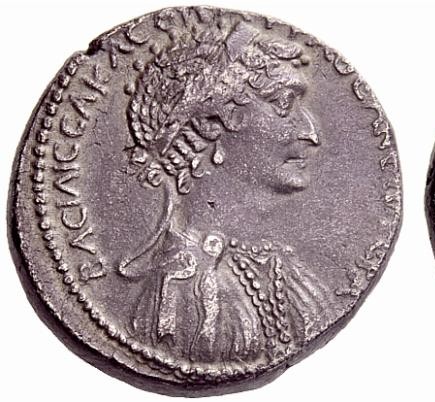
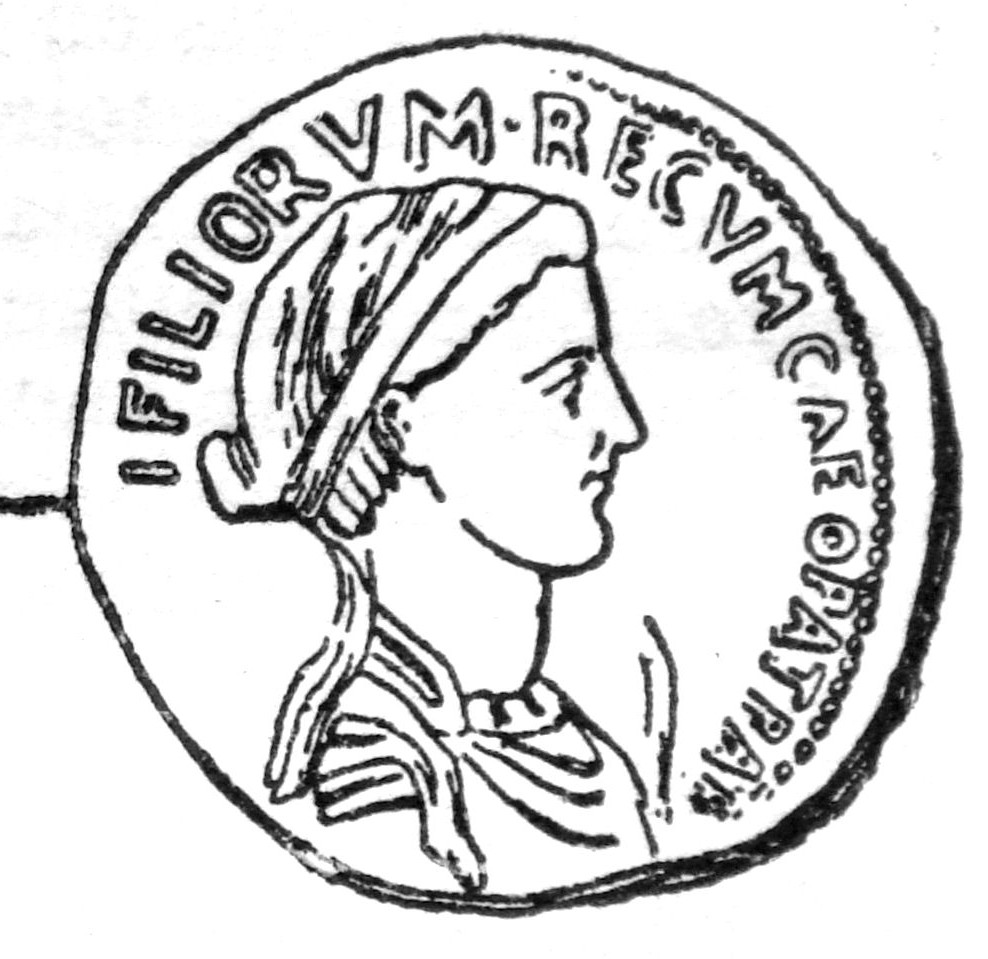
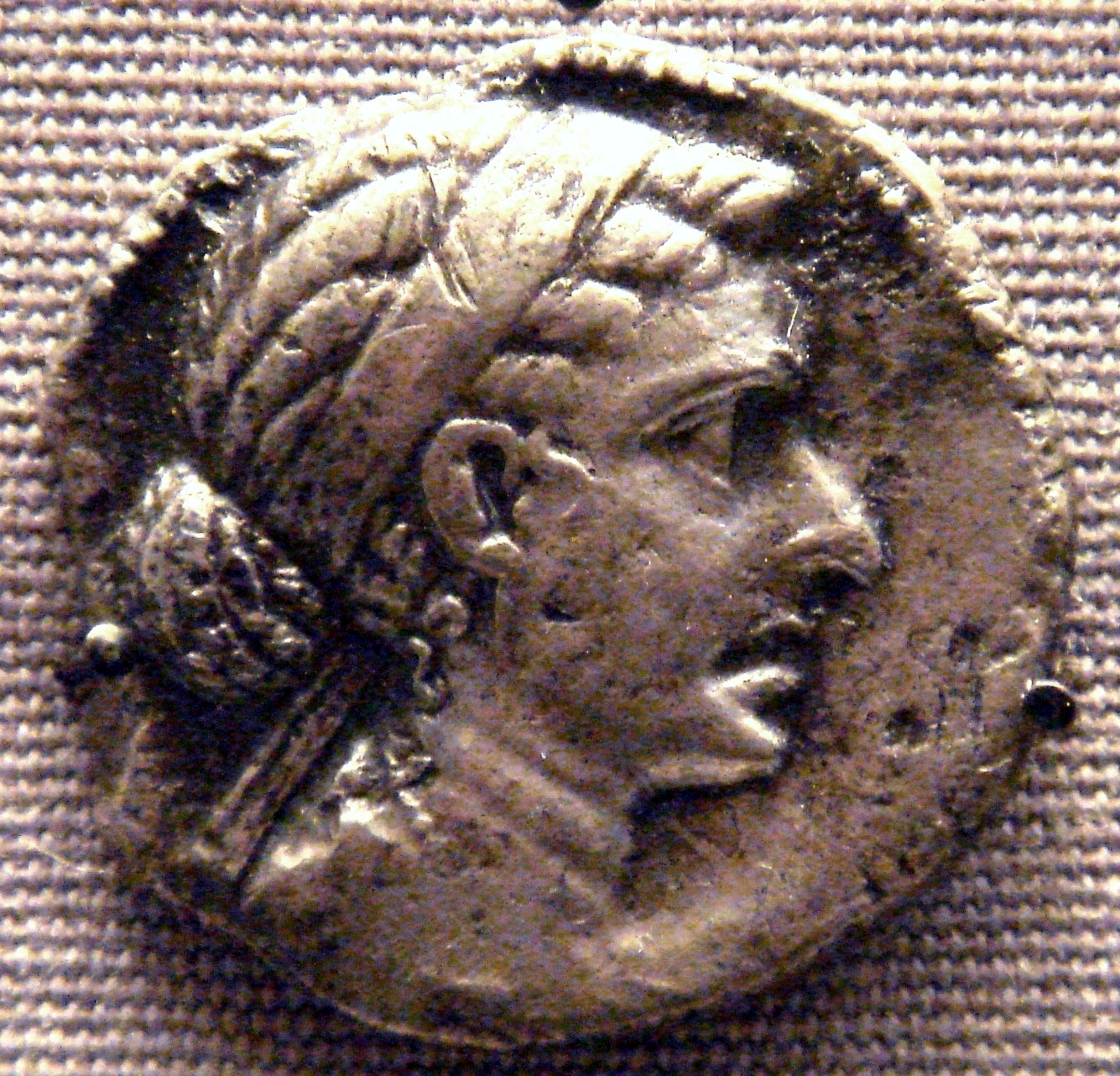

Silver tetradrachm, Antioch mint, c. 36 BCE (Cleopatra obverse, Antony reverse)
Lifetime issue showing Cleopatra’s profile with aquiline nose, strong chin, and melon hairstyle with royal diadem. The highest-relief portrait of her face.
स्रोत देखें →यह स्रोत हमें क्या बताता है
चेहराStrong, defined features; not conventionally beautiful by Greek standards but commandingप्रमाणित
नाकProminent, aquiline, hooked — the defining feature of her coin portraitsप्रमाणित
जबड़ा और ठोड़ीStrong, pointed chin projecting forwardप्रमाणित
मुँहThin lips, slightly downturned or neutralप्रमाणित
भौंहेंLow, straight brow with a strong bridge connecting to the noseप्रमाणित
बालWorn in the ‘melon’ coiffure (sections pulled back into a bun at the nape), sometimes with a royal diademप्रमाणित
खोपड़ीProportionate; forehead partially obscured by the melon hairstyle and diademअनुमानित
अभिव्यक्तिComposed, authoritative; the coin portraits project deliberate regality rather than beautyअनुमानित
विशिष्ट लक्षणThe aquiline nose and strong chin are the signature features; her voice, multilingualism, and conversational charm were what contemporaries remarked on, not her looksप्रमाणित


