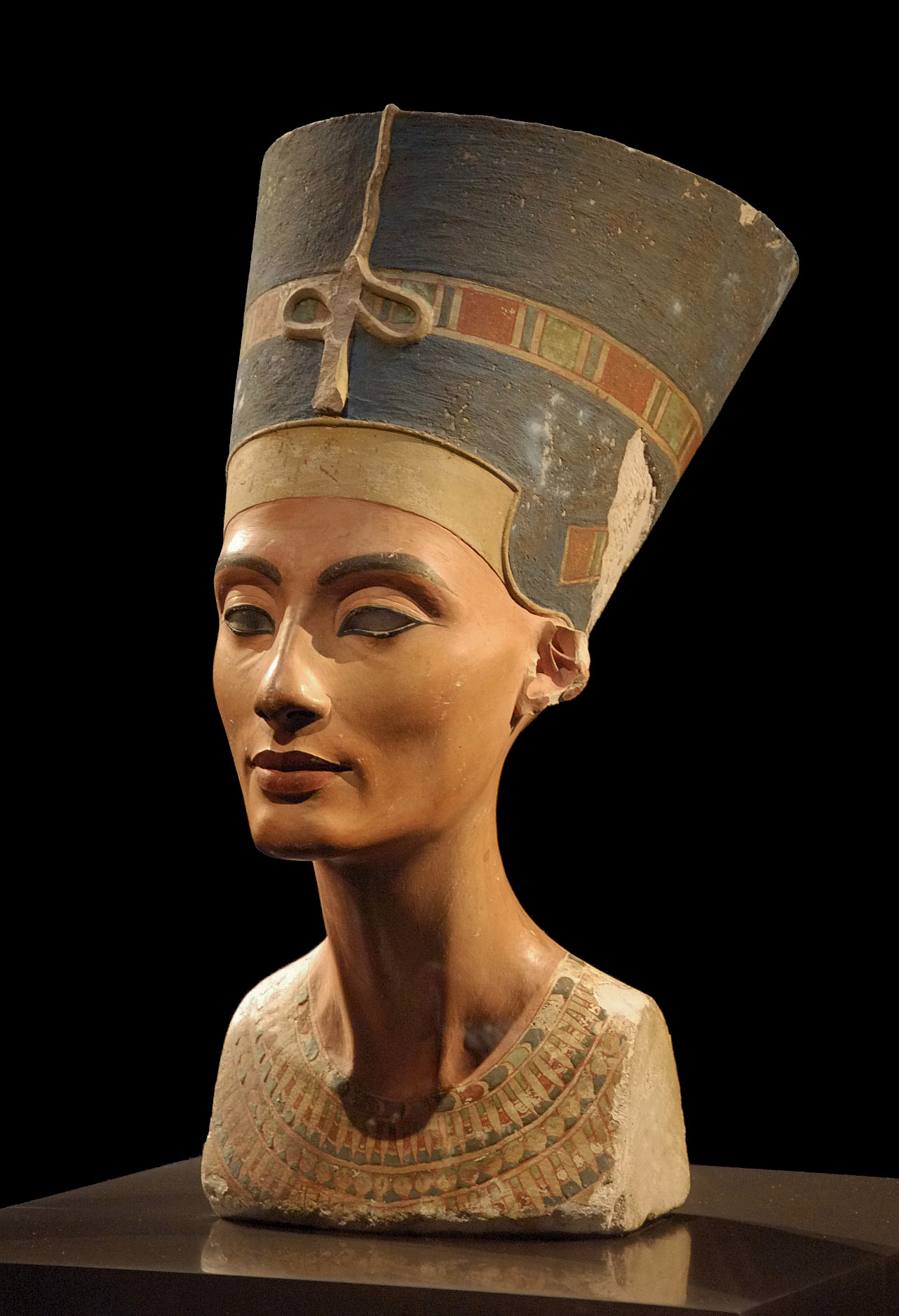
Painted limestone bust of Nefertiti, by the sculptor Thutmose, c. 1345 BCE. Neues Museum, Berlin (inventory ÄM 21300)
A sculptor’s model kept in Thutmose’s workshop at Amarna, discovered by Ludwig Borchardt in 1912. Made from life by the queen’s own court sculptor as a reference for other artists. One of the most important ancient portraits in existence.
यह स्रोत हमें क्या बताता है
चेहराOval, strongly symmetrical, with high angular cheekbonesप्रमाणित
रंगतWarm reddish-brown as painted on the bust; consistent with Egyptian convention for womenअनुमानित
आँखेंLarge, almond-shaped; colour unknownप्रमाणित
भौंहेंArched, well-defined brow ridgeप्रमाणित
नाकStraight, narrow, well-proportioned; slightly aquiline in profileप्रमाणित
मुँहFull lips, slightly downturned at the corners; pronounced Cupid’s bowप्रमाणित
जबड़ा और ठोड़ीStrong, defined jawline; firm chinप्रमाणित
गर्दनLong, slender, elegant; a defining feature of her appearanceप्रमाणित
खोपड़ीAppears elongated, but this is largely due to the tall flat-topped blue crown (the ‘Nefertiti cap’) she is always depicted wearing. Natural skull shape unknown.अनुमानित
बालUnknown; always depicted wearing the tall blue crown or other headdresses. Natural hair colour and style are not recorded.अनुमानित
विशिष्ट लक्षणThe long slender neck, high cheekbones, and the tall flat-topped blue crown she is always shown wearing. Strikingly symmetrical facial features.प्रमाणित
अभिव्यक्तिSerene, composed, regalअनुमानित