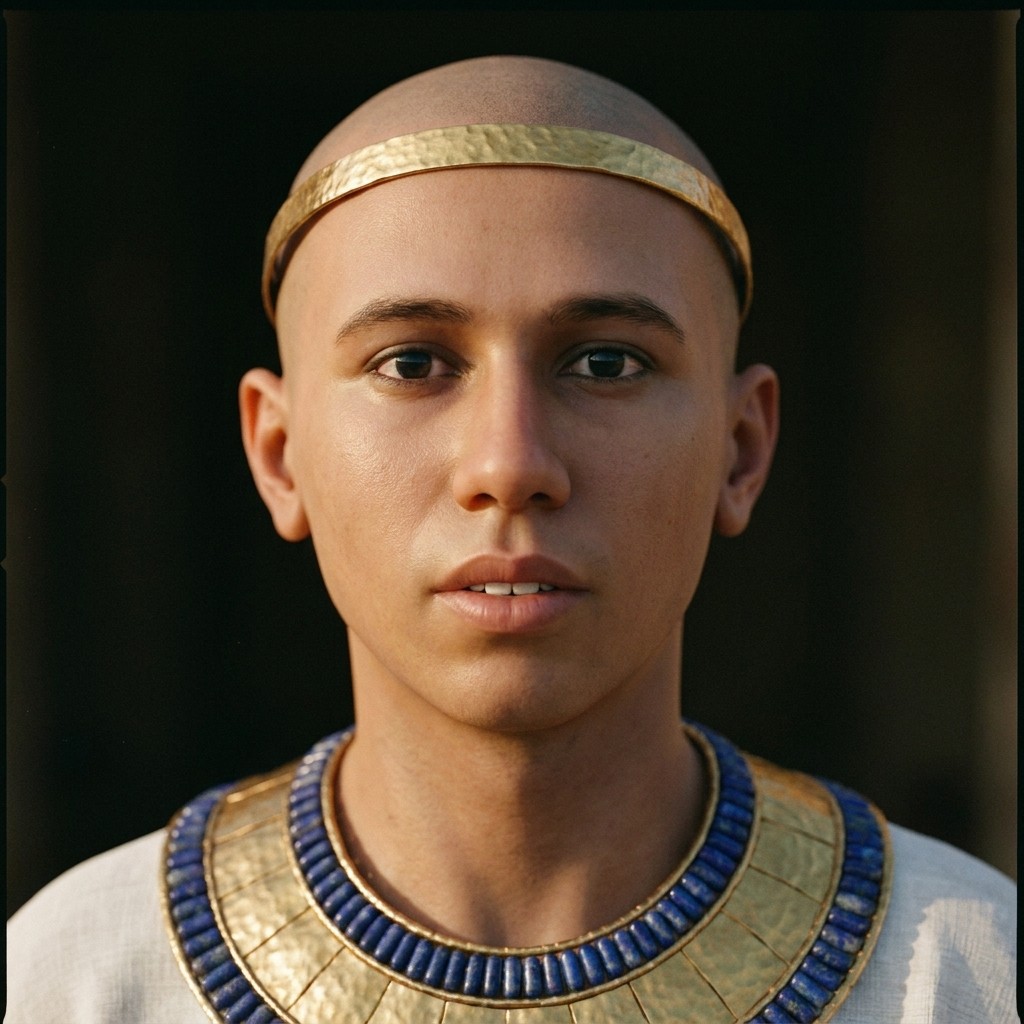
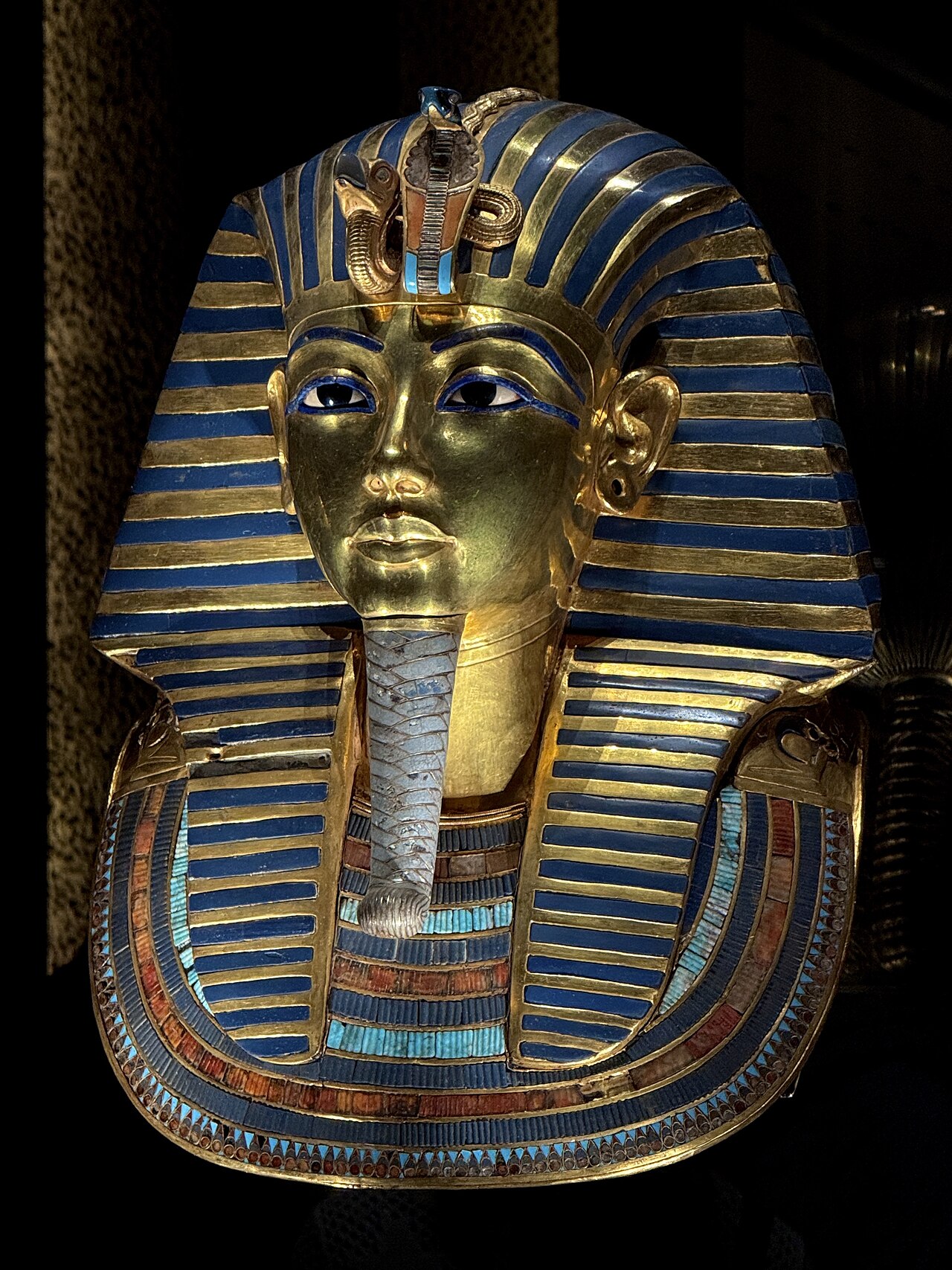
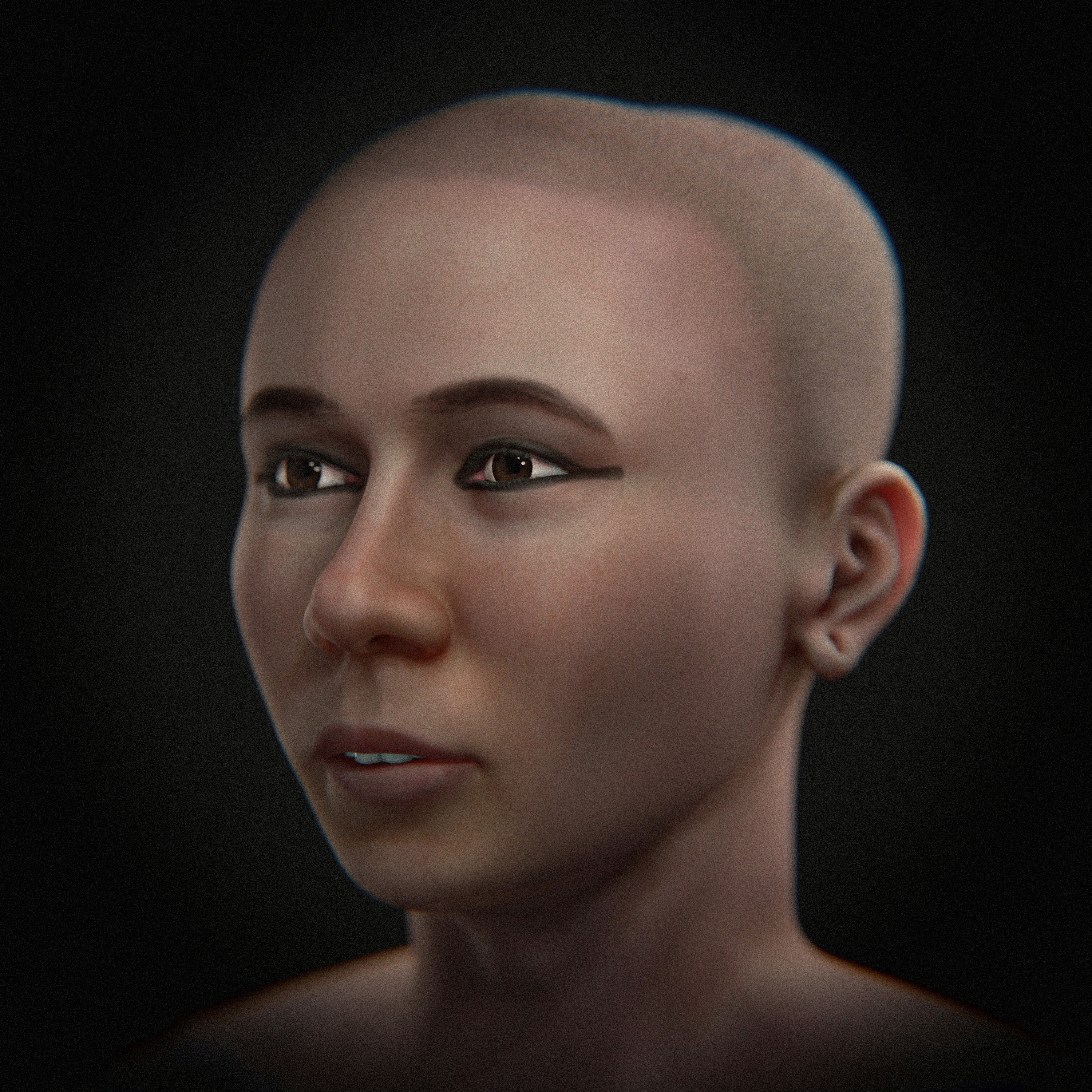
CT scan of Tutankhamun’s mummy, conducted January 2005 by Dr. Zahi Hawass and the Egyptian Supreme Council of Antiquities, with subsequent analysis by French, American, and Egyptian forensic teams
1,700 cross-sectional images giving precise skull measurements, pathology (cleft palate, foot deformity, malaria DNA), and data for forensic facial reconstruction. The single most important evidence source.
यह स्रोत हमें क्या बताता है
कदAbout 5’6” (167 cm); slender buildप्रमाणित
शरीर गठनSlender, slightly built; narrow shouldersप्रमाणित
चेहराNarrow, oval, with large eye sockets and a slight facial asymmetryप्रमाणित
रंगतUnknown; no evidence survives for skin colourअनुमानित
आँखेंLarge eye sockets; eye colour unknownप्रमाणित
नाकNarrow, straightप्रमाणित
मुँहSlight overbite; full lips (inferred from skull structure and family traits)प्रमाणित
जबड़ा और ठोड़ीSlightly receding chin; narrow mandibleप्रमाणित
खोपड़ीElongated skull (dolichocephalic); this is a natural familial trait, not artificial cranial modificationप्रमाणित
विशिष्ट लक्षणSlight overbite (Thutmosid family trait); elongated skull; cleft palate; left foot deformity requiring a walking caneप्रमाणित
अभिव्यक्तिYouthful; neutralअनुमानित