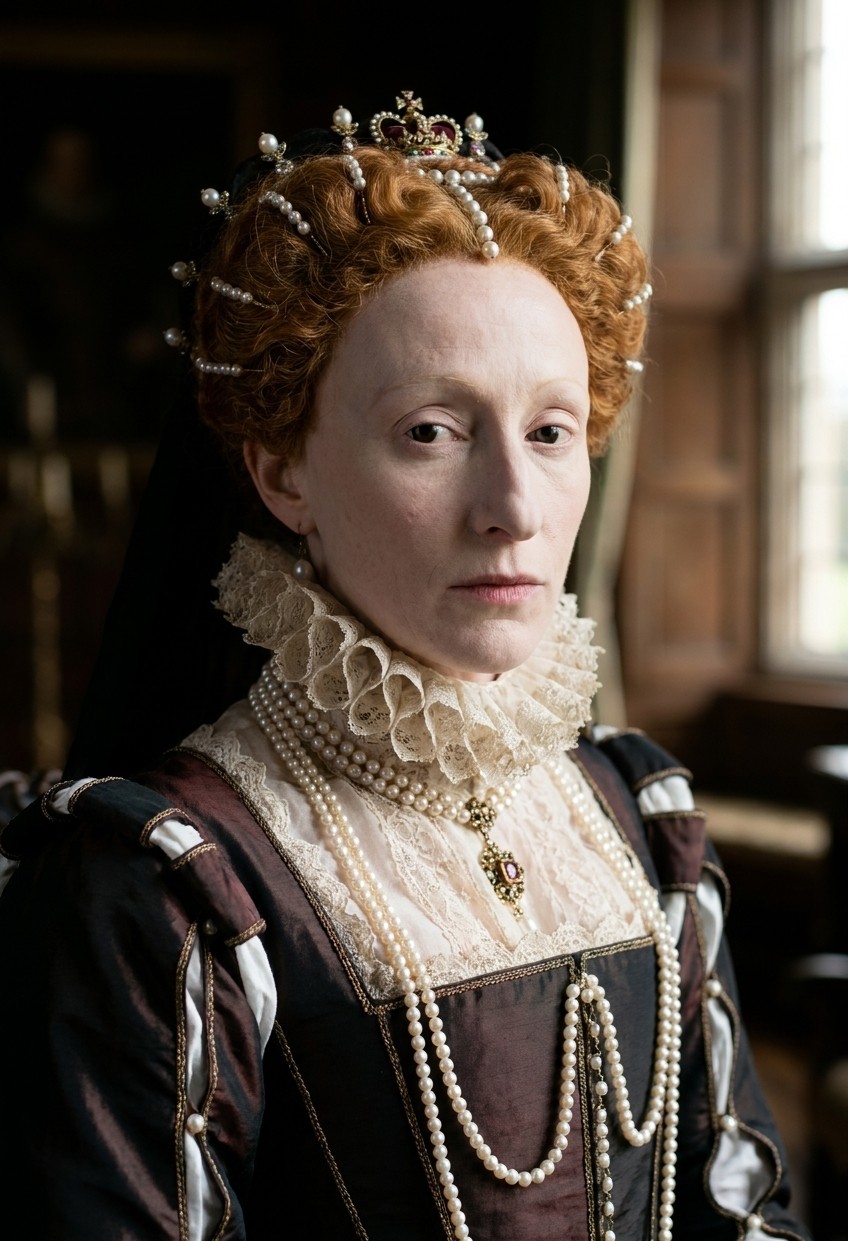
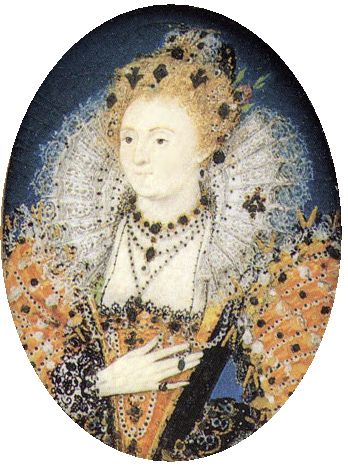
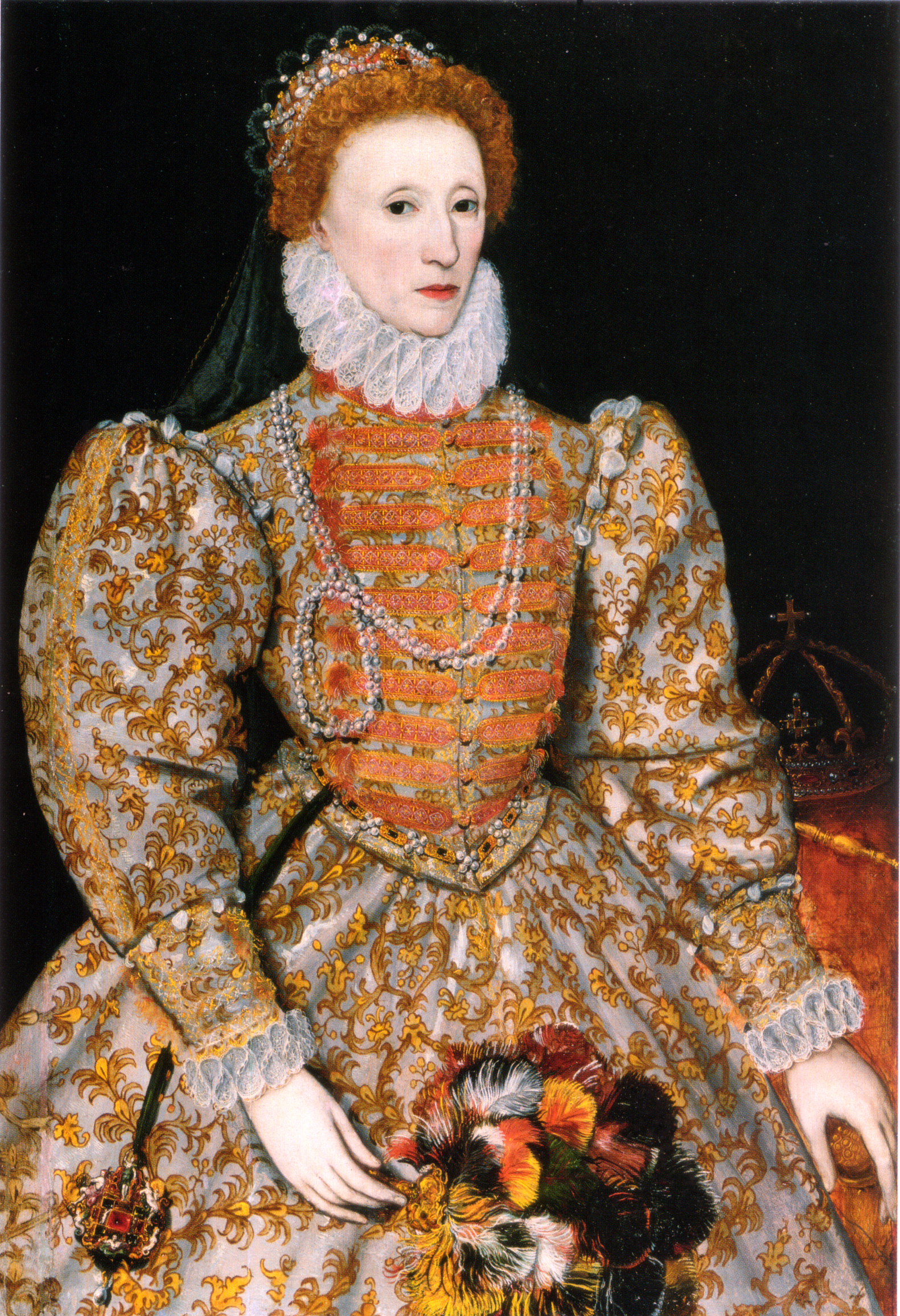
The Darnley Portrait, c. 1575, National Portrait Gallery, London (NPG 2082)
The face pattern from this portrait became the standard template for all subsequent official portraits. Painted from life around age 42. The most reliable single image of Elizabeth’s face, though some idealisation is likely.
この資料が伝えること
顔Long, oval face; high forehead; narrow at the chin証明済み
目Dark, small, described as sharp and penetrating証明済み
眉High, arched; eyebrows shaved or plucked very thin (fashionable in the period)証明済み
鼻Slightly hooked; Hentzner describes it as ‘a little hooked’証明済み
口Thin-lipped; fine mouth証明済み
顎と顓Narrow, pointed chin; the long face tapers noticeably証明済み
髪Naturally red-gold (auburn); wore elaborate wigs from her thirties onward, always in red or auburn. Her own hair thinned with age.証明済み
頭蓋骨High forehead, proportionate skull証明済み
首Long, slender; often adorned with a high ruff or elaborate collar証明済み
特徴的な点Striking red hair (later wigs); heavy white lead makeup over smallpox scars; blackened teeth; long oval face with penetrating dark eyes. The gap between the idealised portraits and her actual appearance grew extreme in her final decades.証明済み
表情Imperious, commanding; described as majestic in bearing despite physical decline推定