Jesus of Nazarethの実際の外見とは? | 歴史の顔 — AI reconstruction based on 6 historical sources
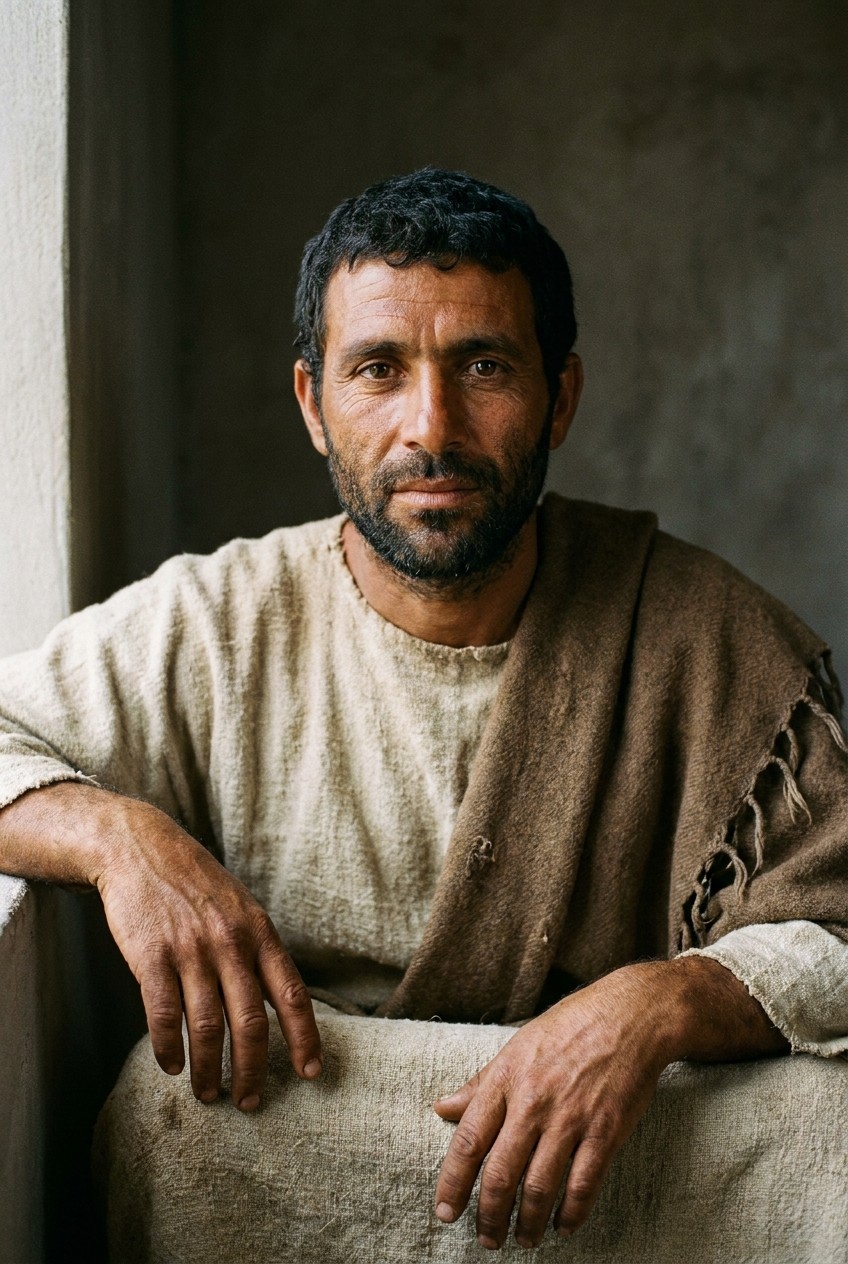
AI復元

Roman Judea · c. 4 BCE – c. 30 CE

Jesus of Nazareth

証拠: 限定的な証拠描写年齢: ~30

No one recorded what he looked like. But he worked construction in rural Galilee and spent years walking the region as a preacher, and forensic anthropologists have reconstructed faces from skulls found in the same place and period. This portrait combines both.

The Gospels call Jesus a "tekton," which in Greek covers carpentry, stonemasonry, and general building work. He grew up doing this in Nazareth, a small village in the Galilee. Later he spent roughly three years as a travelling preacher, walking between towns in a hot, dry landscape with no shade and no sunscreen. A 30-year-old who has lived like that would have been tanned and weathered, with calloused hands and a lean, strong build. He would have looked older than a comfortable modern 30-year-old.

None of the Gospels describe what he looked like. There's no portrait, no bust, no coin. The pale, long-haired European Jesus of Western art is a medieval invention with no connection to the historical person.

What we do have is population-level evidence. In 2001, forensic anthropologist Richard Neave at the University of Manchester took a 1st-century Galilean Jewish skull and built a facial reconstruction from it. The result was a broad-faced man with short curly dark hair, a short beard, dark brown eyes, and a wide nose. Average height for Jewish men in the region was about 166 cm (5'5"). The skull wasn't his, obviously, but it tells us what men from his exact time and place looked like.

There's one specific clue about hair. Paul, writing to the Corinthians around 53 CE, argues that long hair on a man is "degrading." Paul was building a movement in Jesus' name, roughly 20 years after his death. You don't make that argument if the founder of your movement was famous for having long hair.

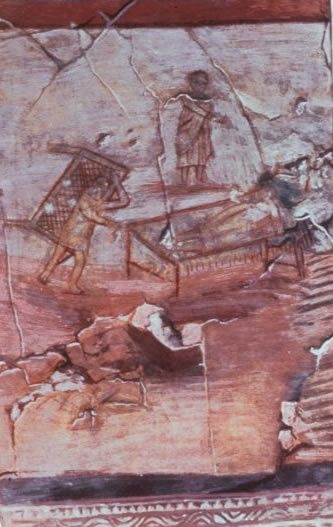
The earliest surviving images of Jesus are from centuries later and aren't useful as evidence. The Dura-Europos church paintings (c. 232 CE) show a beardless young man in Roman clothing. The familiar long-haired, bearded version doesn't show up until the 6th century, and none of it is based on anyone who actually saw him.
身体的特徴

身長Roughly 166 cm (5'5"), average for a 1st-century Jewish man from the eastern Mediterranean推定
体格Lean, physically fit from manual labour and extensive walking推定
顔Broad, with wide-set features consistent with 1st-century Galilean Jewish population推定
肌色Olive to brown, consistent with the eastern Mediterranean Jewish population of the period推定
目Dark brown, the predominant eye colour in the 1st-century Levantine Jewish population推定
鼻Broad, prominent; consistent with Neave's Galilean reconstruction推定
髪Short, dark, curly or wavy; Paul's letter to the Corinthians implies short hair was the Jewish male norm推定
髭Short beard, as was standard for Jewish men following Levitical law推定
特徴的な点Nothing. Isaiah 53:2, applied to him by early Christians, says 'he had no beauty or majesty to attract us to him.' Whether or not the passage was written about Jesus, the early Christian tradition accepted that his appearance was ordinary.推定

証拠

Richard Neave, forensic facial reconstruction from a 1st-century Galilean Jewish skull, University of Manchester, 2001. Produced for the BBC documentary 'Son of God' and subsequently published in Popular Mechanics (2002)

The most scientifically grounded attempt to visualise a 1st-century Galilean Jewish man. Neave used a skull from the period (not connected to Jesus) and standard forensic reconstruction methods. The result shows a broad-faced, dark-skinned man with short curly hair, a wide nose, and a short beard. It represents a population type, not an individual portrait.

この資料が伝えること

顔Broad, with wide-set features consistent with 1st-century Galilean Jewish population推定
鼻Broad, prominent; consistent with Neave's Galilean reconstruction推定

Skeletal remains from 1st-century Jewish burial sites in Judea and Galilee, including the Yehohanan crucifixion victim (Giv'at ha-Mivtar, Jerusalem, 1st century CE) and other excavated ossuaries

Multiple skeletal analyses provide average height (c. 166 cm for males), build characteristics, and cranial data for the 1st-century Jewish population of the region. These are population-level statistics, not evidence about any named individual.

この資料が伝えること

身長Roughly 166 cm (5'5"), average for a 1st-century Jewish man from the eastern Mediterranean推定
体格Lean, physically fit from manual labour and extensive walking推定
顔Broad, with wide-set features consistent with 1st-century Galilean Jewish population推定
肌色Olive to brown, consistent with the eastern Mediterranean Jewish population of the period推定
目Dark brown, the predominant eye colour in the 1st-century Levantine Jewish population推定
髪Short, dark, curly or wavy; Paul's letter to the Corinthians implies short hair was the Jewish male norm推定
髭Short beard, as was standard for Jewish men following Levitical law推定

Paul, First Letter to the Corinthians 11:14, c. 53-54 CE

Paul writes: 'Does not nature itself teach you that if a man wears long hair, it is degrading to him?' Written roughly 20 years after Jesus' death by the most important early Christian leader. Paul would be unlikely to argue that long hair on men is shameful if the movement's founder had been known for wearing long hair. This is the closest thing to evidence about Jesus' hair.

“Does not nature itself teach you that if a man wears long hair, it is degrading to him, but if a woman has long hair, it is her glory?”

この資料が伝えること

髪Short, dark, curly or wavy; Paul's letter to the Corinthians implies short hair was the Jewish male norm推定

The Synoptic Gospels (Mark c. 65-70 CE, Matthew and Luke c. 80-90 CE) and the Gospel of John (c. 90-100 CE)

The Gospels never describe Jesus' physical appearance. What they do provide is contextual evidence: he was a tekton (builder/carpenter) by trade, he walked extensively, he wore fringed garments (tzitzit), and Judas had to identify him with a kiss because he did not stand out visually from his companions.

この資料が伝えること

体格Lean, physically fit from manual labour and extensive walking推定
髭Short beard, as was standard for Jewish men following Levitical law推定

Isaiah 53:2, Hebrew Bible (written centuries before Jesus, applied to him by early Christians)

Not a description of Jesus, but a prophetic text that early Christians interpreted as referring to him: 'He had no beauty or majesty to attract us to him, nothing in his appearance that we should desire him.' The early Church's acceptance of this text suggests that Jesus was not remembered as physically remarkable.

“He had no beauty or majesty to attract us to him, nothing in his appearance that we should desire him.”

この資料が伝えること

特徴的な点Nothing. Isaiah 53:2, applied to him by early Christians, says 'he had no beauty or majesty to attract us to him.' Whether or not the passage was written about Jesus, the early Christian tradition accepted that his appearance was ordinary.推定
Healing of the Paralytic, wall painting from the baptistery of the Dura-Europos church, c. 232 CE. Yale University Art Gallery

Healing of the Paralytic, wall painting from the baptistery of the Dura-Europos church, c. 232 CE. Yale University Art Gallery

The earliest surviving depiction of Jesus in a Christian context. Shows a beardless young man with short hair in Roman clothing, not the bearded long-haired figure of later tradition. Created roughly 200 years after Jesus lived, it tells us about early Christian artistic convention, not about his real appearance.

資料が矛盾する点

No individual-specific evidence exists. Every physical detail here is inferred from population-level data about what 1st-century Galilean Jewish men looked like in general. The Neave reconstruction used a skull that has nothing to do with Jesus; it represents a generic male of the right time and place.

The long-haired, pale-skinned Jesus of Western art has no basis in any ancient source. It comes from late antique and medieval European artistic conventions, heavily influenced by images of Apollo and other Greco-Roman gods. The earliest Christian images (Dura-Europos, c. 232 CE) actually show Jesus beardless and short-haired, closer to Roman convention. The bearded, long-haired version doesn't stabilise until the 6th century.

Paul's remark about long hair (1 Corinthians 11:14) is the strongest individual evidence for short hair, but it's an argument about cultural norms, not a direct description. Some scholars point to Nazirite vows (which involved not cutting hair) as a complication, though there's little evidence Jesus was a Nazirite or that the practice was common among Galilean Jews in this period.