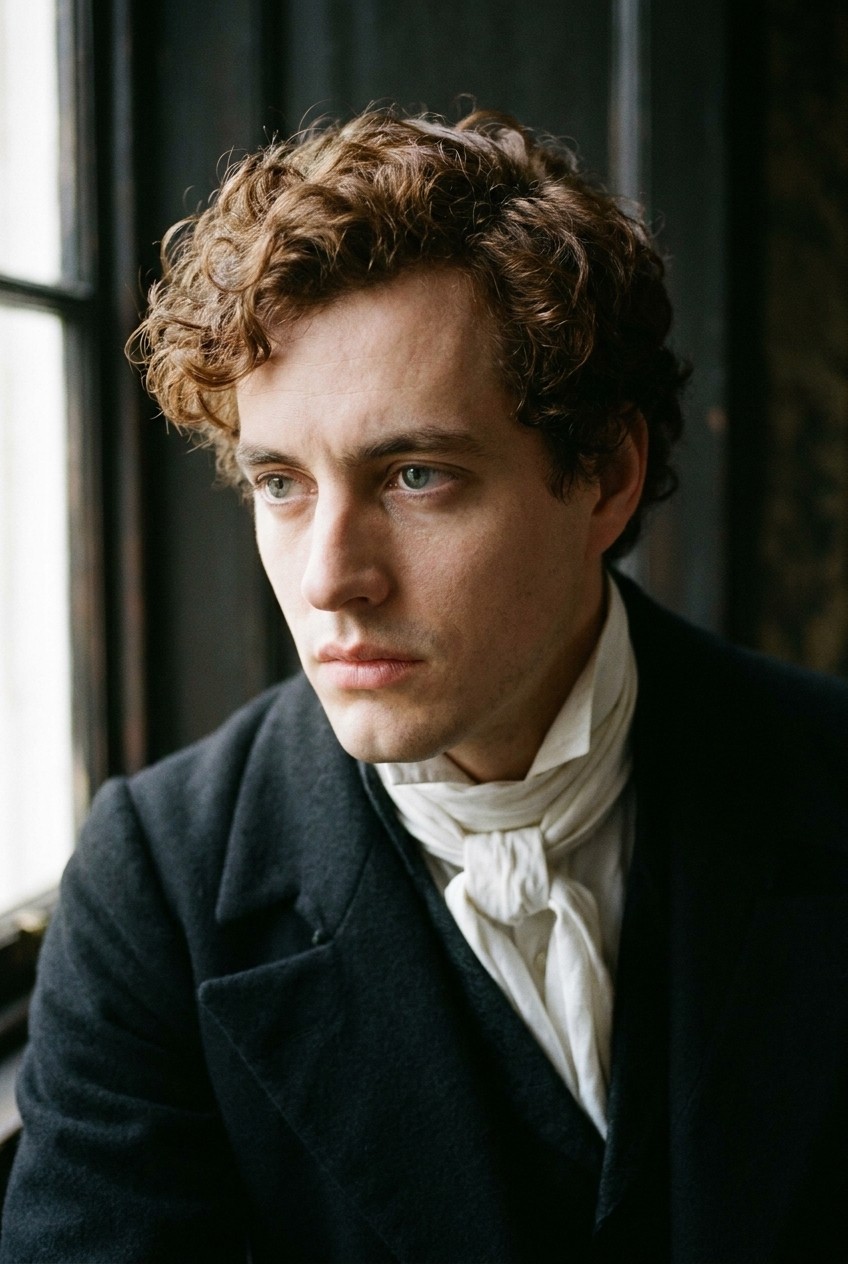
Lord Byronの実際の外見とは? | 歴史の顔 — AI reconstruction based on 3 historical sources
AI復元

Romantic era · 1788–1824

Lord Byron

証拠: 十分な証拠描写年齢: ~25

復元の根拠

The poet who invented the celebrity. Painted from life by Thomas Phillips and Richard Westall, obsessively described by lovers and enemies alike, Byron was the most recognised face of his generation.

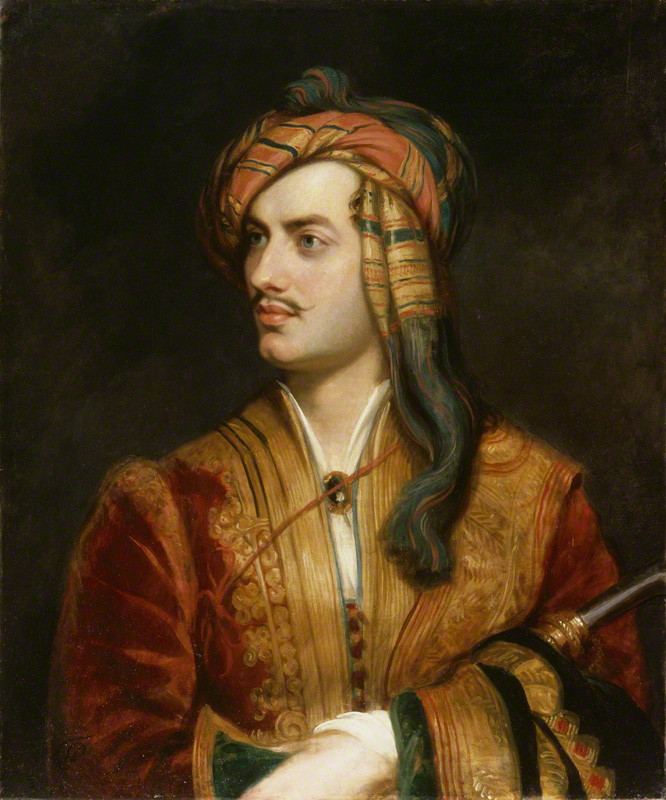
Lord Byron was, by every surviving account, almost unreasonably good-looking. His face launched a thousand poems and at least as many love affairs. Thomas Phillips painted him from life in 1813, producing the famous Albanian dress portrait that now hangs in the National Portrait Gallery. Richard Westall also painted him from life, and several other portraitists captured him during his years of peak celebrity in London.

The consistency across these portraits and the written record is strong. Byron had curly auburn-brown hair, grey eyes, a pale complexion, and a slightly cleft chin. His face was oval with fine, regular features. Lady Caroline Lamb, who knew him intimately, called him "mad, bad, and dangerous to know," a line that tells us more about his effect on people than his bone structure, but she and others also described him as "beautifully handsome."

What the portraits do not show is his club foot. Byron was born with a talipes equinovarus deformity of the right foot, which caused him a pronounced limp. He was deeply self-conscious about it and went to some lengths to conceal it in portraits and in person. His relationship with his own body was complicated in other ways too: he was vain about his face but struggled with his weight throughout his life, swinging between extreme thinness (achieved through punishing diets of vinegar and biscuits) and a heavier build that distressed him. At the time of the Phillips portrait he was lean and at the height of his beauty.


身体的特徴

身長About 5'8" (173 cm); tall enough to be considered well-proportioned, though his limp affected his carriage証明済み
体格Fluctuated between slender and heavy throughout his life; at 25 (the depicted age) he was lean and fit through rigorous dieting and swimming証明済み
顔Oval, with regular and symmetrical features; widely described as classically handsome証明済み
肌色Very pale, almost marble-white; this pallor was considered part of his beauty証明済み
目Grey, large, expressive; often described as his most captivating feature証明済み
眉Well-defined, slightly arched; a high forehead partially covered by curls証明済み
鼻Straight and well-proportioned; described as a fine, classic profile証明済み
口Full, well-shaped lips; described as sensual証明済み
顎と顓A slightly cleft chin; clean jawline証明済み
髪Curly auburn-brown (sometimes described as chestnut); worn long in the Romantic style, tumbling across his forehead証明済み
髭Clean-shaven in most portraits; occasionally shown with slight sideburns証明済み
特徴的な点Club foot (right foot, talipes equinovarus), which caused a pronounced limp; cleft chin; the famous curls; an almost theatrical handsomeness that contemporaries found impossible to ignore証明済み
表情Brooding, melancholic, self-consciously dramatic; he cultivated the look that would become the Byronic archetype推定

証拠

Compiled contemporary descriptions from Lady Caroline Lamb, John Cam Hobhouse, Teresa Guiccioli, Thomas Moore, and others, 1812–1824

Byron's appearance was described in detail by lovers, friends, and rivals. Lady Caroline Lamb's "mad, bad, and dangerous to know" is the most famous line, but she and others also left precise physical descriptions. Hobhouse, Byron's closest friend, provides particularly reliable accounts.

“Lady Caroline Lamb on first seeing Byron at a ball (1812): "That beautiful pale face is my fate." She later described him as having a "beautifully handsome" face with grey eyes and auburn curls.”

この資料が伝えること

身長About 5'8" (173 cm); tall enough to be considered well-proportioned, though his limp affected his carriage証明済み
体格Fluctuated between slender and heavy throughout his life; at 25 (the depicted age) he was lean and fit through rigorous dieting and swimming証明済み
顔Oval, with regular and symmetrical features; widely described as classically handsome証明済み
肌色Very pale, almost marble-white; this pallor was considered part of his beauty証明済み
目Grey, large, expressive; often described as his most captivating feature証明済み
口Full, well-shaped lips; described as sensual証明済み
顎と顓A slightly cleft chin; clean jawline証明済み
髪Curly auburn-brown (sometimes described as chestnut); worn long in the Romantic style, tumbling across his forehead証明済み
特徴的な点Club foot (right foot, talipes equinovarus), which caused a pronounced limp; cleft chin; the famous curls; an almost theatrical handsomeness that contemporaries found impossible to ignore証明済み
表情Brooding, melancholic, self-consciously dramatic; he cultivated the look that would become the Byronic archetype推定
Thomas Phillips, Portrait of Lord Byron in Albanian Dress, 1813, oil on canvas, National Portrait Gallery, London

Thomas Phillips, Public domain, via Wikimedia Commons

Thomas Phillips, Portrait of Lord Byron in Albanian Dress, 1813, oil on canvas, National Portrait Gallery, London

The most famous portrait of Byron, painted from life when he was 25. Byron sat for Phillips wearing the Albanian costume he had acquired during his Grand Tour. This is the defining image of the Romantic poet.

この資料が伝えること

体格Fluctuated between slender and heavy throughout his life; at 25 (the depicted age) he was lean and fit through rigorous dieting and swimming証明済み
顔Oval, with regular and symmetrical features; widely described as classically handsome証明済み
目Grey, large, expressive; often described as his most captivating feature証明済み
眉Well-defined, slightly arched; a high forehead partially covered by curls証明済み
鼻Straight and well-proportioned; described as a fine, classic profile証明済み
口Full, well-shaped lips; described as sensual証明済み
顎と顓A slightly cleft chin; clean jawline証明済み
髪Curly auburn-brown (sometimes described as chestnut); worn long in the Romantic style, tumbling across his forehead証明済み
髭Clean-shaven in most portraits; occasionally shown with slight sideburns証明済み
特徴的な点Club foot (right foot, talipes equinovarus), which caused a pronounced limp; cleft chin; the famous curls; an almost theatrical handsomeness that contemporaries found impossible to ignore証明済み
表情Brooding, melancholic, self-consciously dramatic; he cultivated the look that would become the Byronic archetype推定
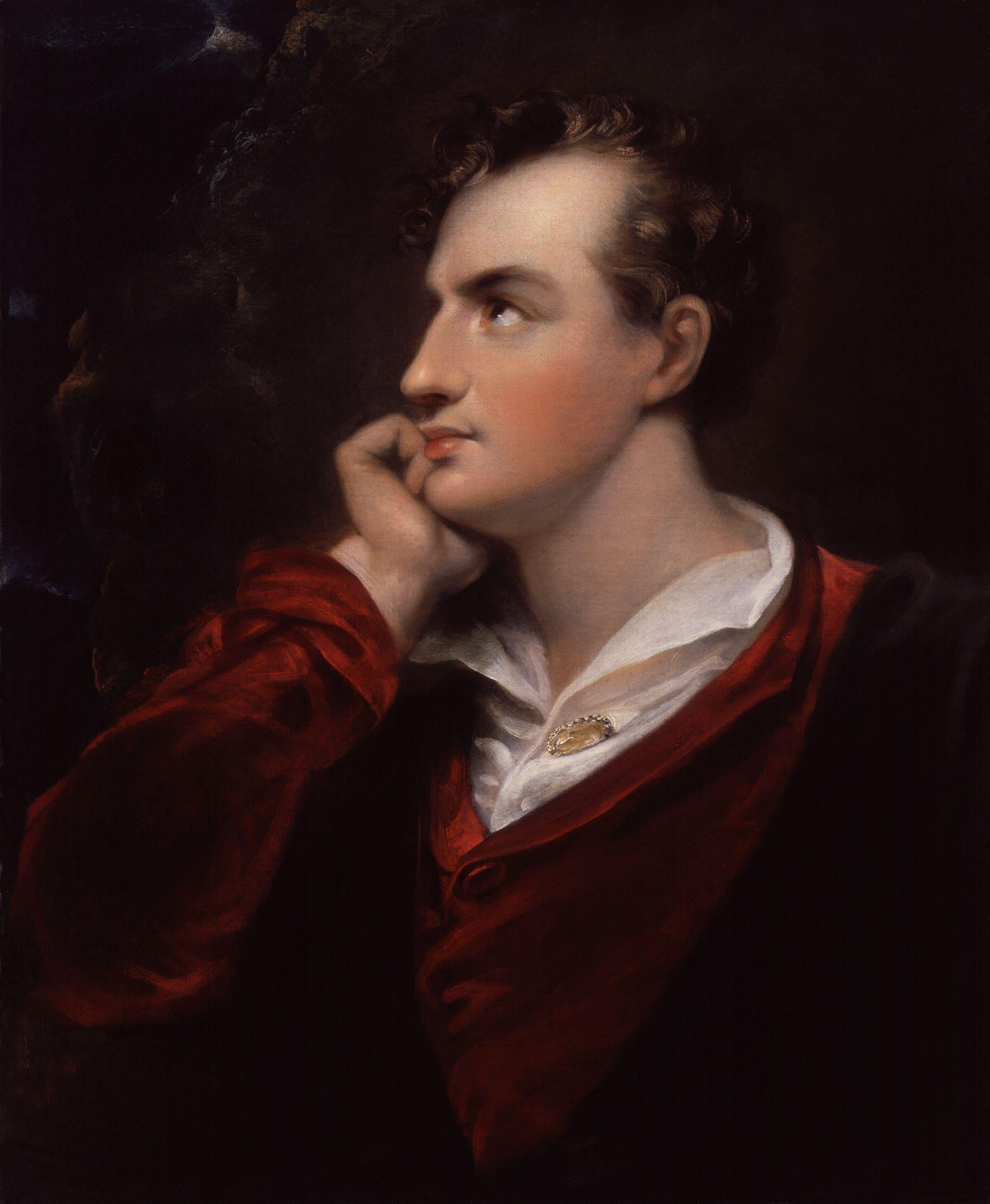
Richard Westall, Portrait of Lord Byron, c. 1813, oil on canvas, National Portrait Gallery, London

Richard Westall, Public domain, via Wikimedia Commons

Richard Westall, Portrait of Lord Byron, c. 1813, oil on canvas, National Portrait Gallery, London

Another lifetime portrait by a leading painter. Westall's depiction is more conventionally posed than Phillips's but confirms the same facial features: oval face, curly auburn hair, grey eyes, cleft chin.

この資料が伝えること

顔Oval, with regular and symmetrical features; widely described as classically handsome証明済み
眉Well-defined, slightly arched; a high forehead partially covered by curls証明済み
鼻Straight and well-proportioned; described as a fine, classic profile証明済み
髪Curly auburn-brown (sometimes described as chestnut); worn long in the Romantic style, tumbling across his forehead証明済み
髭Clean-shaven in most portraits; occasionally shown with slight sideburns証明済み

資料が矛盾する点

Hair colour is described variously as auburn, chestnut, and dark brown. The truth is likely a warm brown that appeared more reddish in certain light. Surviving hair samples are dark brown.

Eye colour: most sources say grey, a few say blue-grey or hazel. Grey is the consensus across the major portraits.