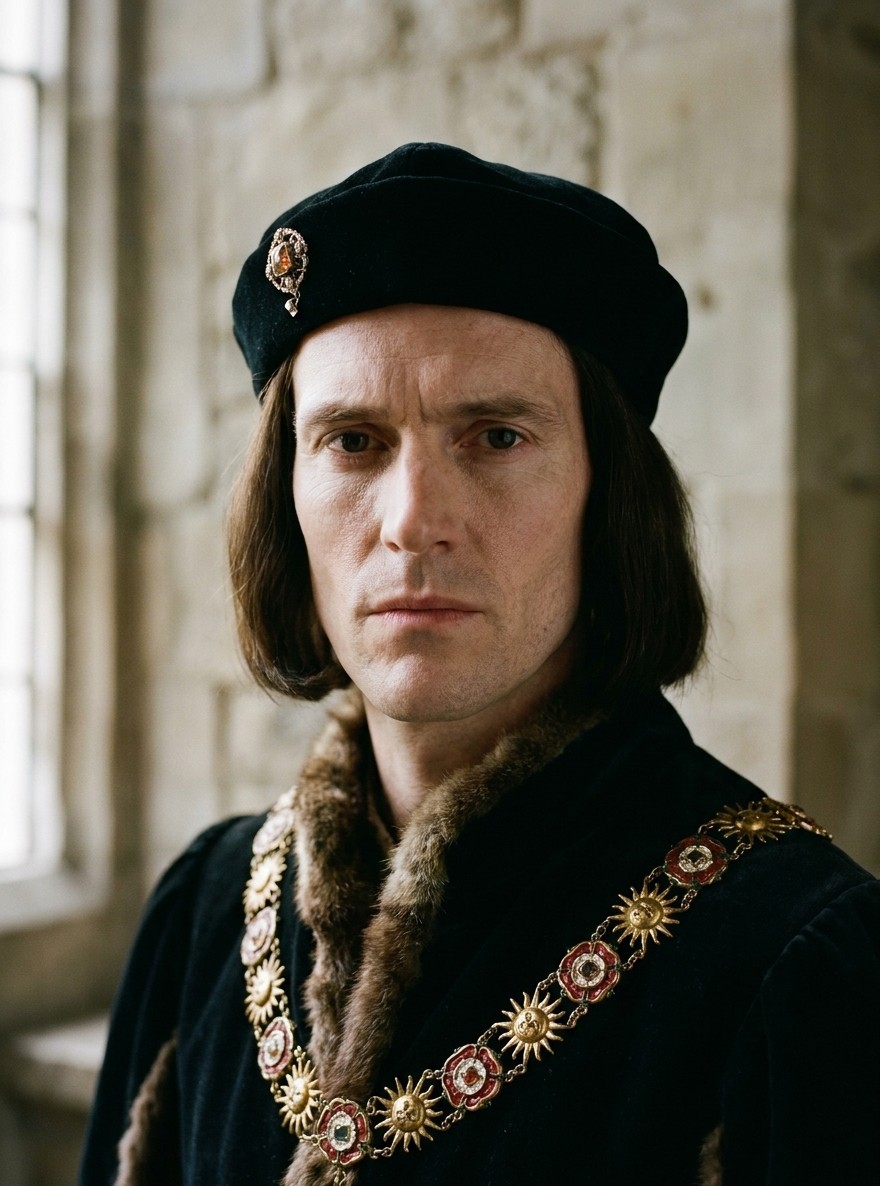
Richard III of Englandの実際の外見とは? | 歴史の顔 — AI reconstruction based on 4 historical sources
AI復元

Late Medieval England · 1452–1485

Richard III of England

信頼度: 高い信頼度描写年齢: ~32

復元の根拠

The last Plantagenet king. Tudor propaganda made him a hunchbacked villain, but his skeleton, found under a Leicester car park in 2012, tells a different story: a slender man with scoliosis, not a deformity visible at a glance.

What did Richard III really look like? His skeleton turned up under a Leicester car park in 2012. Mitochondrial DNA confirmed the identification. Because of this, we know more about Richard III's physical appearance than almost any other medieval king. He stood about 5'8" with his spine straightened, but adolescent-onset scoliosis (a rightward curve of 70-80° in the thoracic spine) would have reduced his apparent height by several inches and pushed his right shoulder higher than his left.

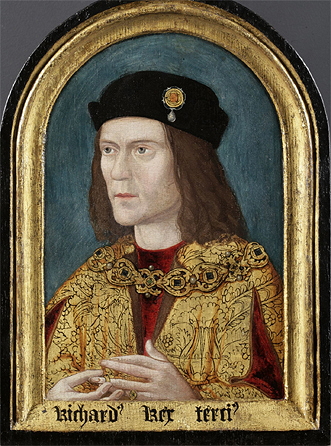
The skeleton is slender, gracile, with lean limbs. Nikolaus von Popplau, a Silesian knight who met Richard in 1484, confirms this: he described the king as lean with delicate arms and legs. The skull gives precise facial geometry. A narrow, fine-boned face with a strong jaw, straight nose, well-proportioned cranium. The Society of Antiquaries portrait, likely copied from a lost lifetime original, matches the forensic reconstruction closely and fills in what bone can't tell us: dark eyes, thin lips, dark brown hair worn to collar length.

Was Richard III a hunchback? Not the way Shakespeare and Thomas More described. The scoliosis was real but partially concealable under tailored clothing and armour. Both arms were normal. The "withered arm" is Tudor propaganda. DNA analysis suggests he may have had blue eyes and blond hair as a child, which conflicts with the dark colouring in the portraits. Hair commonly darkens with age, which may explain it.


身体的特徴

身長Around 5’8” (173 cm) when standing straight, but scoliosis reduced apparent height by several inches証明済み
体格Slender, gracile frame; lean limbs証明済み
Narrow, fine-boned, with a strong jaw証明済み
肌色Fair-skinned推定
Dark; described in portraits as brown推定
Furrowed, somewhat heavy推定
Straight, proportionate, slightly narrow証明済み
Thin lips, slightly pursed推定
顎と顓Strong, slightly protruding chin; defined jawline証明済み
Dark brown, worn to collar length推定
Clean-shaven証明済み
頭蓋骨Well-proportioned; no abnormalities証明済み
Normal; no evidence of the short or twisted neck of Tudor propaganda証明済み
特徴的な点Right thoracic scoliosis causing the right shoulder to sit higher than the left; slender frame; intense expression. Not the grotesque hunchback of Shakespeare — the condition would have been noticeable but concealable under tailored clothing and armour.証明済み
表情Serious, watchful, somewhat tense推定

証拠

Skeleton of Richard III, discovered 2012, Greyfriars church site, Leicester. University of Leicester excavation. DNA-confirmed 2014.

The actual skeleton, confirmed by mitochondrial DNA match to living maternal-line descendants. Provides precise height, build, bone structure, facial geometry, and pathology (scoliosis, battle wounds). The single most important piece of evidence.

この資料が伝えること

身長Around 5’8” (173 cm) when standing straight, but scoliosis reduced apparent height by several inches証明済み
体格Slender, gracile frame; lean limbs証明済み
Narrow, fine-boned, with a strong jaw証明済み
Furrowed, somewhat heavy推定
Straight, proportionate, slightly narrow証明済み
顎と顓Strong, slightly protruding chin; defined jawline証明済み
頭蓋骨Well-proportioned; no abnormalities証明済み
Normal; no evidence of the short or twisted neck of Tudor propaganda証明済み
特徴的な点Right thoracic scoliosis causing the right shoulder to sit higher than the left; slender frame; intense expression. Not the grotesque hunchback of Shakespeare — the condition would have been noticeable but concealable under tailored clothing and armour.証明済み
Portrait of Richard III, c. 1510s, Society of Antiquaries of London

Portrait of Richard III, c. 1510s, Society of Antiquaries of London

Earliest surviving portrait. Posthumous, but X-ray and infrared analysis show it was likely copied from a lost lifetime original, with later alterations (the chin was made more pointed, possibly to match Tudor-era caricature). The unaltered layer beneath is considered a reasonable likeness.

この資料が伝えること

Narrow, fine-boned, with a strong jaw証明済み
肌色Fair-skinned推定
Dark; described in portraits as brown推定
Furrowed, somewhat heavy推定
Thin lips, slightly pursed推定
顎と顓Strong, slightly protruding chin; defined jawline証明済み
Dark brown, worn to collar length推定
Clean-shaven証明済み
特徴的な点Right thoracic scoliosis causing the right shoulder to sit higher than the left; slender frame; intense expression. Not the grotesque hunchback of Shakespeare — the condition would have been noticeable but concealable under tailored clothing and armour.証明済み
表情Serious, watchful, somewhat tense推定

Nikolaus von Popplau, travel diary, 1484

Eyewitness account. Von Popplau, a Silesian knight, met Richard III in 1484 and described him as lean with delicate arms and legs, and three fingers taller than von Popplau himself. One of the only contemporary physical descriptions.

He was lean, with delicate arms and legs, and also had a great heart. [Paraphrase from German manuscript; no standard English translation exists.]

From manuscript in Wrocław University Library

この資料が伝えること

体格Slender, gracile frame; lean limbs証明済み
特徴的な点Right thoracic scoliosis causing the right shoulder to sit higher than the left; slender frame; intense expression. Not the grotesque hunchback of Shakespeare — the condition would have been noticeable but concealable under tailored clothing and armour.証明済み
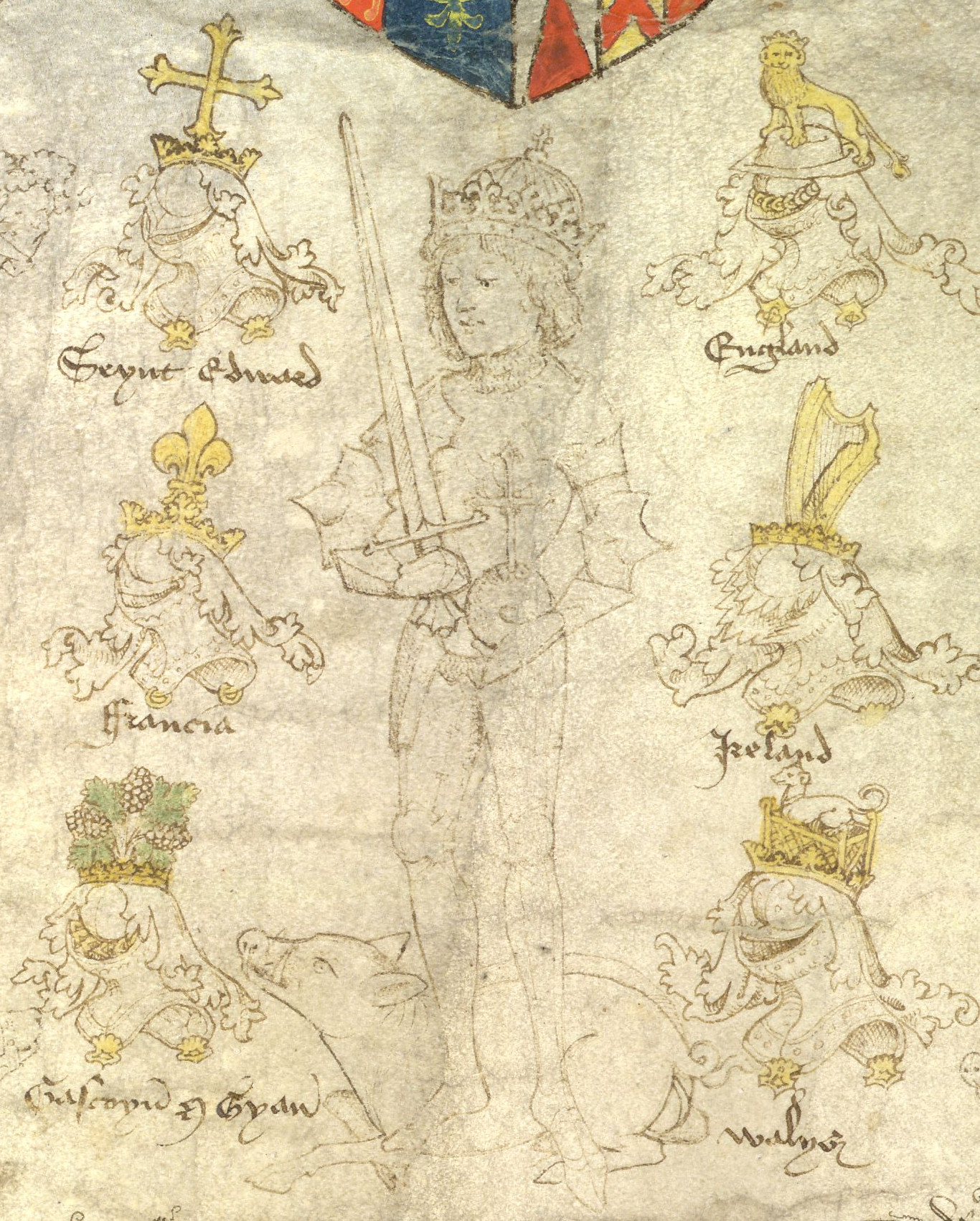
Rous Roll, English version, c. 1483–1485, by John Rous

Rous Roll, English version, c. 1483–1485, by John Rous

Contemporary illustrated chronicle. The English version (created during Richard’s reign) shows a normal figure; Rous revised his Latin version after Bosworth to depict Richard negatively. The English version is the more reliable likeness.

資料が矛盾する点

Tudor propaganda (Thomas More, Shakespeare) describes a hunchback with a withered arm. The skeleton proves the scoliosis but disproves the withered arm — both arms are normal. The condition would have been partially visible but was likely managed with tailored clothing.

Eye colour: DNA suggests blue; the portrait tradition shows dark brown. Hair colour: DNA suggests blond; portraits show dark brown. These may reflect childhood vs. adult colouring (hair), or portrait copying errors (eyes).

The Society of Antiquaries portrait is posthumous (~1510s) but X-ray analysis suggests it was copied from a lost lifetime original, with the chin later altered to appear more pointed. The skull supports the original, less exaggerated version.