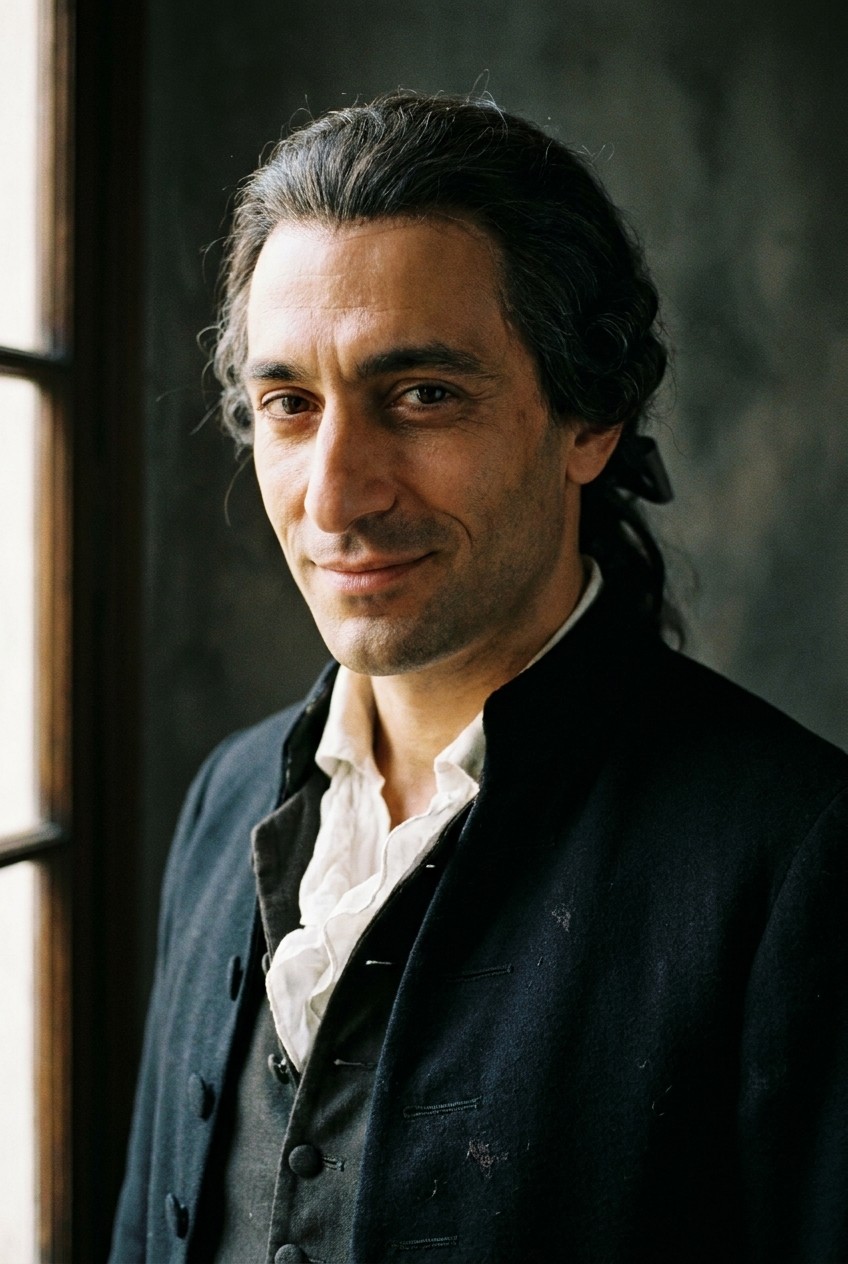
Giacomo Casanova은(는) 어떤 모습이었을까? | 역사의 얼굴들 — AI reconstruction based on 4 historical sources
AI 복원

18th century Enlightenment · 1725–1798

Giacomo Casanova

증거: 충분한 증거묘사된 나이: ~37

복원 근거

History's most famous lover, and he wrote his own description. Casanova's memoirs, combined with attributed portraits by Longhi and others, give us a face to match the legend: tall, dark, strong-featured, and imposing rather than pretty.

Casanova was not, by his own account or anyone else's, conventionally handsome. What he had was presence. He was tall for his era, dark-complexioned, powerfully built, and commanded a room. The face that launched a thousand seductions was strong-featured rather than fine: a prominent nose, dark penetrating eyes, a broad forehead, and a jaw that squared off a face built for confidence rather than delicacy.

We know this from two kinds of evidence. The first is Casanova himself. His memoirs, Histoire de ma vie, run to thousands of pages and include frank self-description alongside the more famous erotic adventures. He describes himself as tall, dark, and strong, with an olive complexion and features that were "not handsome but something better." He was aware that his appeal lay in energy, wit, and physical magnetism rather than beauty.

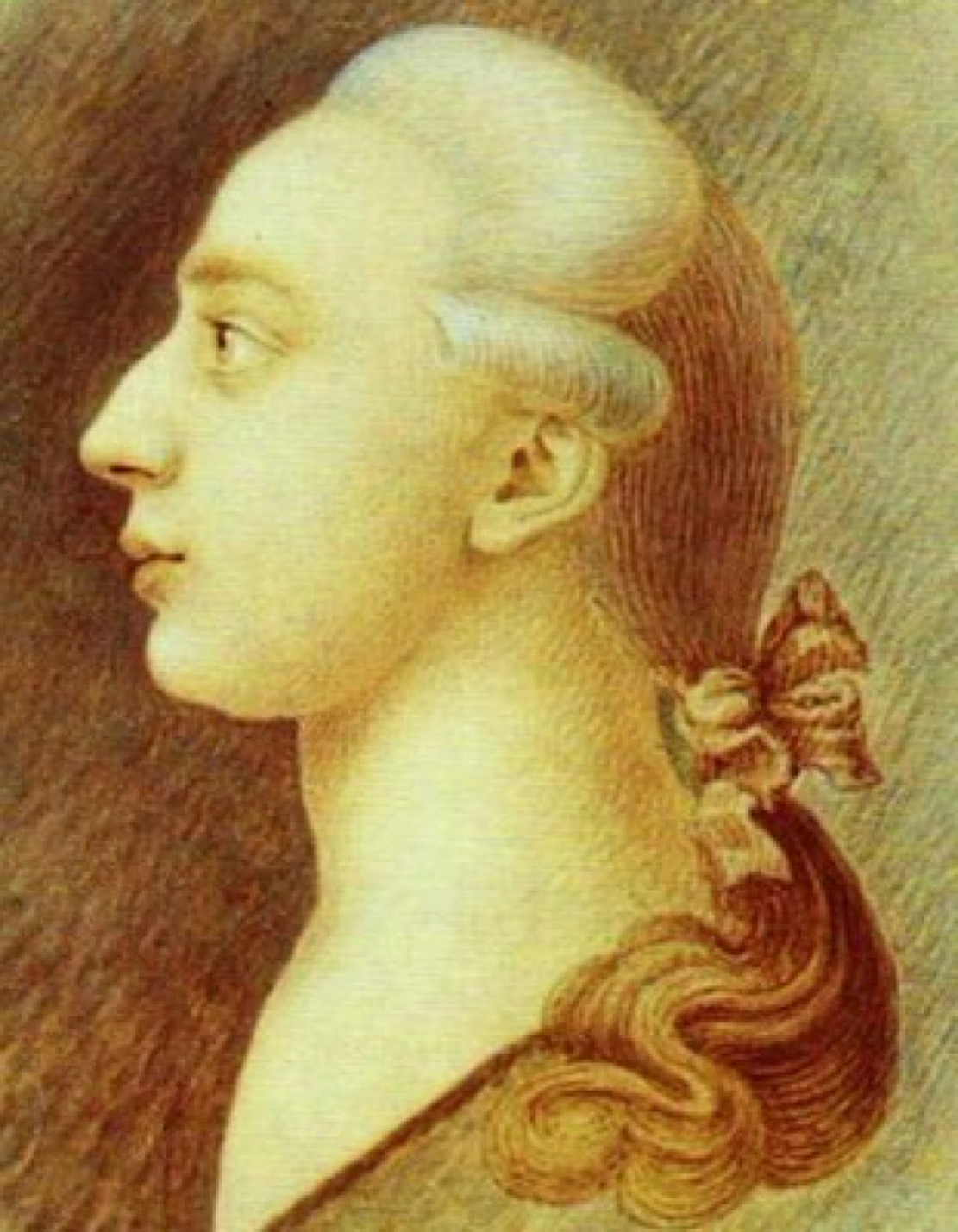
The second line of evidence is portraiture. Several paintings are attributed to this period, most importantly a portrait attributed to Alessandro Longhi (son of the more famous Pietro) and one by Francesco Narici. These show a man consistent with the written record: dark hair, strong nose, dark eyes, a face that is arresting without being refined. The attributions are debated in some cases, but the portraits align well enough with Casanova's self-description and with accounts from people who knew him.

By his later years, living in relative obscurity as a librarian at Count Waldstein's castle in Dux (Duchcov), Casanova had thickened considerably. The face of the old memoirist was heavier and jowled, a long way from the lean adventurer of Venice and Paris.


신체적 특징

키Tall for the era, approximately 5'10"–6'0" (178–183 cm); he stood out in most rooms입증됨
체격Strong and athletic in his prime; broad-shouldered with a powerful frame. Grew heavy in later life.입증됨
얼굴Strong, broad, angular; more imposing than refined입증됨
안색Olive, dark; a Mediterranean complexion consistent with his Venetian origins입증됨
눈Dark, lively, and expressive; described as having a sharp, penetrating quality입증됨
눈썸Broad forehead, well-defined brows; a strong upper face입증됨
코Prominent, strong, and somewhat long; the dominant feature of his face입증됨
입Full-lipped, expressive; the portraits show a mouth ready to speak or smile추정
턱과 턴Strong jaw, squared-off chin; a solid lower face that anchored his strong features추정
머리카락Dark brown to black; worn in the powdered and dressed style of the 18th-century aristocracy, though his natural colour was very dark입증됨
수염Clean-shaven, following 18th-century fashion for gentlemen입증됨
두드러진 특징His height and physical size; the prominent nose; an overall impression of vigour and confidence rather than delicacy. Contemporaries consistently describe him as magnetic and physically imposing.입증됨
표정Alert, confident, amused; his portraits show a man who is aware of being observed and entirely comfortable with it추정

증거

Giacomo Casanova, Histoire de ma vie (History of My Life), written c. 1789–1798, first complete publication 1960–1962 (Brockhaus-Plon edition)

Casanova's massive autobiography (over 3,500 pages) includes detailed self-description alongside accounts of his adventures. While self-serving in places, the physical descriptions are consistent with the portrait evidence and with accounts from people who knew him. The memoirs are the single richest source for his appearance, manner, and dress.

“Casanova on himself: "I was not handsome, but I had something better: I was tall, dark-complexioned, strong, and I knew how to dress. My nose was prominent, my eyes lively. I knew that to please, one must first appear to be worth pleasing."”

이 자료가 알려주는 것

키Tall for the era, approximately 5'10"–6'0" (178–183 cm); he stood out in most rooms입증됨
체격Strong and athletic in his prime; broad-shouldered with a powerful frame. Grew heavy in later life.입증됨
안색Olive, dark; a Mediterranean complexion consistent with his Venetian origins입증됨
눈Dark, lively, and expressive; described as having a sharp, penetrating quality입증됨
코Prominent, strong, and somewhat long; the dominant feature of his face입증됨
머리카락Dark brown to black; worn in the powdered and dressed style of the 18th-century aristocracy, though his natural colour was very dark입증됨
두드러진 특징His height and physical size; the prominent nose; an overall impression of vigour and confidence rather than delicacy. Contemporaries consistently describe him as magnetic and physically imposing.입증됨
Attributed to Alessandro Longhi, Portrait of Giacomo Casanova, c. 1774, oil on canvas

Attributed to Alessandro Longhi, Public domain, via Wikimedia Commons

Attributed to Alessandro Longhi, Portrait of Giacomo Casanova, c. 1774, oil on canvas

The most widely reproduced portrait identified as Casanova. Shows a man in middle age with strong features, dark eyes, a prominent nose, and powdered hair. The attribution to Longhi is broadly accepted but not certain. The painting is consistent with Casanova's self-description in the memoirs.

이 자료가 알려주는 것

얼굴Strong, broad, angular; more imposing than refined입증됨
눈Dark, lively, and expressive; described as having a sharp, penetrating quality입증됨
눈썸Broad forehead, well-defined brows; a strong upper face입증됨
코Prominent, strong, and somewhat long; the dominant feature of his face입증됨
입Full-lipped, expressive; the portraits show a mouth ready to speak or smile추정
턱과 턴Strong jaw, squared-off chin; a solid lower face that anchored his strong features추정
머리카락Dark brown to black; worn in the powdered and dressed style of the 18th-century aristocracy, though his natural colour was very dark입증됨
수염Clean-shaven, following 18th-century fashion for gentlemen입증됨
표정Alert, confident, amused; his portraits show a man who is aware of being observed and entirely comfortable with it추정

Francesco Narici, Portrait of Giacomo Casanova, c. 1760, oil on canvas

A portrait from Casanova's prime years. Shows the same strong features and dark colouring as the Longhi portrait. The Narici attribution has somewhat firmer documentary support.

이 자료가 알려주는 것

얼굴Strong, broad, angular; more imposing than refined입증됨
눈썸Broad forehead, well-defined brows; a strong upper face입증됨
코Prominent, strong, and somewhat long; the dominant feature of his face입증됨
입Full-lipped, expressive; the portraits show a mouth ready to speak or smile추정
턱과 턴Strong jaw, squared-off chin; a solid lower face that anchored his strong features추정
수염Clean-shaven, following 18th-century fashion for gentlemen입증됨

Compiled descriptions from Prince Charles de Ligne, Lorenzo Da Ponte, and other contemporaries, c. 1760–1798

Prince de Ligne, who befriended the elderly Casanova at Dux, left the most vivid outside description: a tall, imposing figure, still animated in conversation, though heavy and worn. Da Ponte (Mozart's librettist) knew him in his prime and later years.

“Prince de Ligne on the elderly Casanova at Dux: "He would have been a fine-looking man if he were not ugly; he is tall, built like Hercules, but with an African complexion; lively eyes, full of intelligence. He makes you like him at once."”

이 자료가 알려주는 것

키Tall for the era, approximately 5'10"–6'0" (178–183 cm); he stood out in most rooms입증됨
체격Strong and athletic in his prime; broad-shouldered with a powerful frame. Grew heavy in later life.입증됨
안색Olive, dark; a Mediterranean complexion consistent with his Venetian origins입증됨
눈Dark, lively, and expressive; described as having a sharp, penetrating quality입증됨
두드러진 특징His height and physical size; the prominent nose; an overall impression of vigour and confidence rather than delicacy. Contemporaries consistently describe him as magnetic and physically imposing.입증됨
표정Alert, confident, amused; his portraits show a man who is aware of being observed and entirely comfortable with it추정

자료 간 상충되는 부분

Portrait attributions are debated. The Longhi portrait is widely accepted but not conclusively proven. The Narici portrait has a firmer attribution but is less well known. Neither portrait is signed with certainty as depicting Casanova.

Casanova's self-descriptions in the memoirs are detailed but self-serving. He had every reason to present himself favourably, though he is surprisingly honest about his faults in other areas.

His exact height is not recorded in precise measurements. 'Tall' in 18th-century accounts could mean anything from 5'9" to 6'2". The estimate here reflects the consensus of historians.