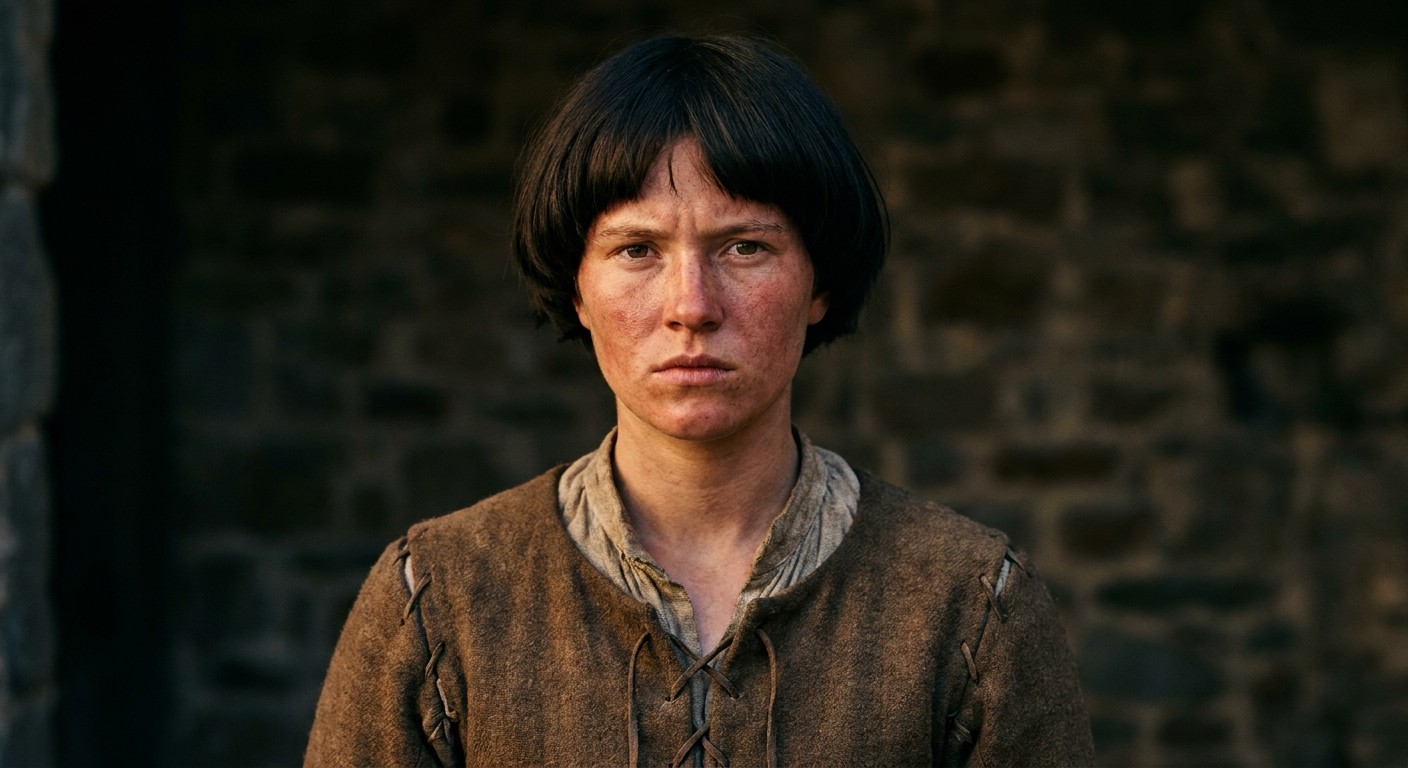
Joan of Arc은(는) 어떤 모습이었을까? | 역사의 얼굴들 — AI reconstruction based on 3 historical sources
AI 복원

Late Medieval France (Hundred Years’ War) · c. 1412–1431

Joan of Arc

신뢰도: 낮은 신뢰도묘사된 나이: ~19

The peasant girl who led armies. No lifetime portrait exists. Her appearance is known only from trial records, witness testimony at her rehabilitation, and one marginal sketch by a clerk who never saw her.

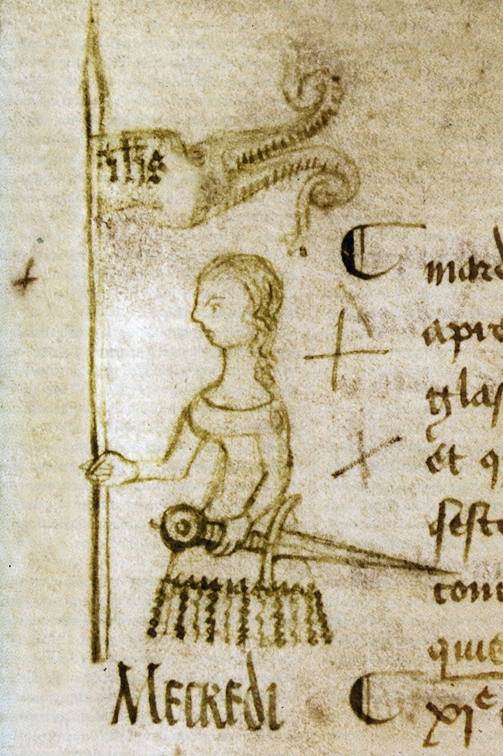
What did Joan of Arc look like? No one drew her from life — or if they did, it doesn’t survive. The only contemporary image is a marginal sketch by Clément de Fauquembergue, a clerk of the Parlement de Paris, who doodled a woman with a banner in the margin of his register on 10 May 1429 when news of the siege of Orléans reached Paris. He had never seen Joan. The sketch shows a generic woman in a dress holding a sword and banner. It tells us nothing about her actual appearance.

What we do have is extensive trial testimony. Joan was tried by an ecclesiastical court at Rouen in 1431, and her rehabilitation trial in 1456 collected sworn depositions from dozens of people who knew her. From these records, a consistent picture emerges: she was short, sturdy, and strong, with dark hair she kept cropped short above her ears in a masculine style. She wore men’s clothing almost exclusively — doublet, hose, and armour — and this was one of the charges at her trial. Multiple witnesses describe her as robust and capable of enduring the physical demands of campaign life.

Her face is barely described. The rehabilitation witnesses call her “beautiful and well-formed” in the formulaic language of medieval hagiography, which tells us little. Her skin colour, eye colour, and precise features are not recorded in any surviving source. We know she was young — about 19 when she died — and that she was a peasant from Domrémy, which gives a probable northern French complexion, but nothing more specific. This is an honest reconstruction from very limited evidence.
신체적 특징

Short; described as sturdy and strong입증됨
체격Sturdy, robust; physically strong enough to bear arms and ride in full armour입증됨
얼굴Not described in any surviving source추정
안색Not recorded; probably fair (northern French peasant origin)추정
Not recorded추정
머리카락Dark; cropped short above the ears in a masculine style입증됨
두드러진 특징Cropped hair; men’s clothing (doublet, hose, armour); extreme youth for a military leader. Her male dress and short hair were her most remarked-upon physical characteristics.입증됨
표정Not recorded; later art depicts her as inspired or visionary추정

증거

Procès de condamnation de Jeanne d’Arc (Trial of Condemnation), Rouen, January–May 1431. Published by Jules Quicherat (1841–1849) and Pierre Tisset (1960–1971)

The official trial record. Conducted by an ecclesiastical court under Bishop Pierre Cauchon. While politically motivated, the procedural records are detailed and include Joan’s own testimony about her clothing, hair, and daily life. The most important primary source.

이 자료가 알려주는 것

체격Sturdy, robust; physically strong enough to bear arms and ride in full armour입증됨
머리카락Dark; cropped short above the ears in a masculine style입증됨
두드러진 특징Cropped hair; men’s clothing (doublet, hose, armour); extreme youth for a military leader. Her male dress and short hair were her most remarked-upon physical characteristics.입증됨

Procès en nullité de la condamnation de Jeanne d’Arc (Trial of Rehabilitation/Nullification), 1452–1456. Published by Quicherat and subsequently by Pierre Duparc (1977–1988)

Sworn depositions from 115 witnesses who knew Joan, conducted 20–25 years after her death. Includes childhood neighbours from Domrémy, soldiers who fought with her, and courtiers who met her. Physical descriptions are sparse but this is the broadest collection of firsthand accounts.

이 자료가 알려주는 것

Short; described as sturdy and strong입증됨
체격Sturdy, robust; physically strong enough to bear arms and ride in full armour입증됨
얼굴Not described in any surviving source추정
안색Not recorded; probably fair (northern French peasant origin)추정
Not recorded추정
머리카락Dark; cropped short above the ears in a masculine style입증됨
두드러진 특징Cropped hair; men’s clothing (doublet, hose, armour); extreme youth for a military leader. Her male dress and short hair were her most remarked-upon physical characteristics.입증됨
표정Not recorded; later art depicts her as inspired or visionary추정
Marginal drawing by Clément de Fauquembergue, clerk of the Parlement de Paris, in the register of the Parlement, 10 May 1429. Archives nationales, Paris

Clément de Fauquembergue, Public domain, via Wikimedia Commons

Marginal drawing by Clément de Fauquembergue, clerk of the Parlement de Paris, in the register of the Parlement, 10 May 1429. Archives nationales, Paris

The only contemporary drawing made during Joan’s lifetime. However, Fauquembergue was in Paris and never saw Joan. He sketched a generic woman with a banner when news reached him. The drawing has no value as a portrait but is historically significant as the earliest visual response to Joan.

자료 간 상충되는 부분

The Fauquembergue sketch (1429) is the only contemporary image but was drawn by someone who never saw Joan. It shows a generic woman in a dress and has no evidentiary value for her actual appearance.

Rehabilitation witnesses use hagiographic language (‘beautiful and well-formed’) that served the political purpose of overturning the Rouen verdict. These descriptions cannot be taken as precise physical observations.

Post-medieval portraits (Ingres, Rossetti, etc.) show a wide range of appearances reflecting each era’s ideals. None has any basis in lifetime evidence.