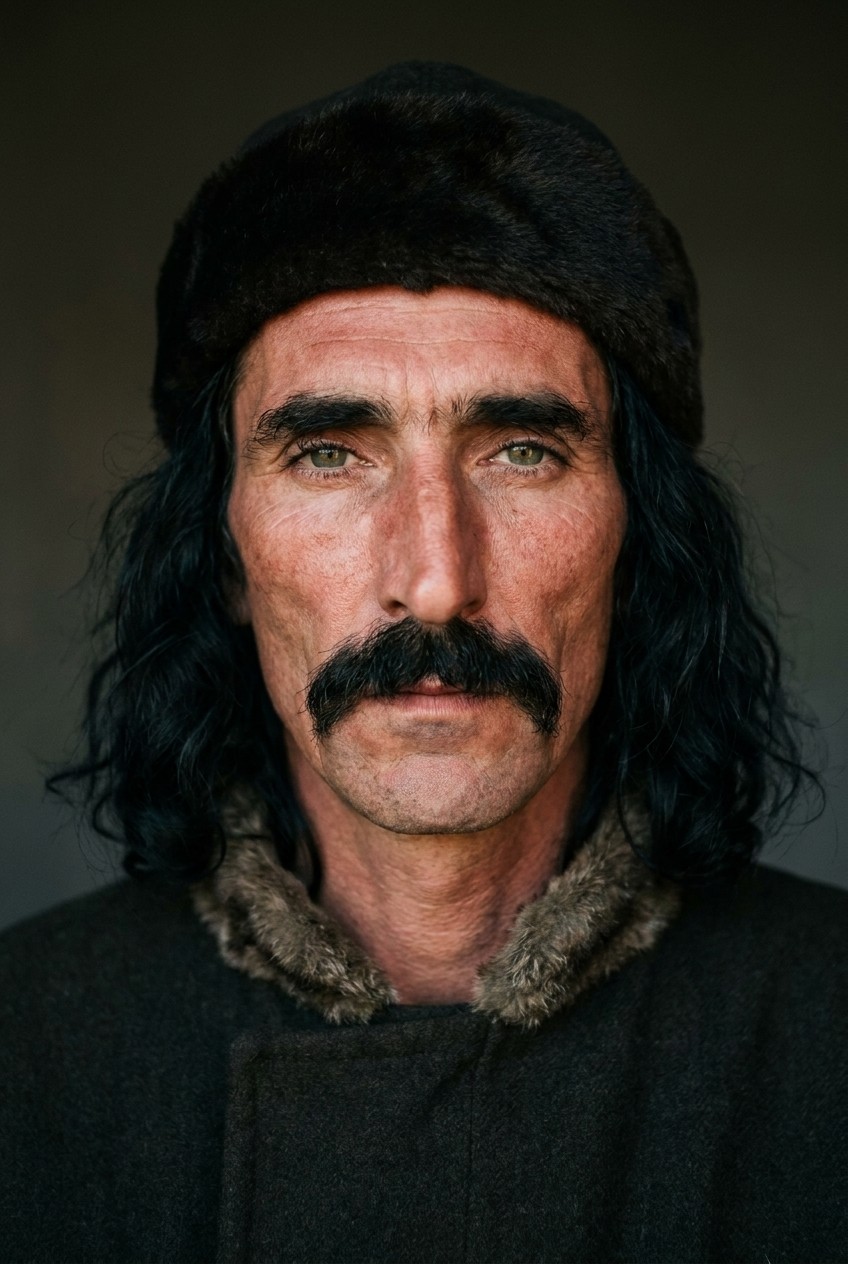
Vlad III Dracula은(는) 어떤 모습이었을까? | 역사의 얼굴들 — AI reconstruction based on 4 historical sources
AI 복원

Medieval Wallachia · c. 1431–1476/77

Vlad III Dracula

증거: 부분적 증거묘사된 나이: ~40

복원 근거

The Ambras Castle portrait, possibly copied from a lifetime original, is the face behind the Dracula legend. A papal legate who met him described large green eyes, a reddish complexion, and a long straight nose.

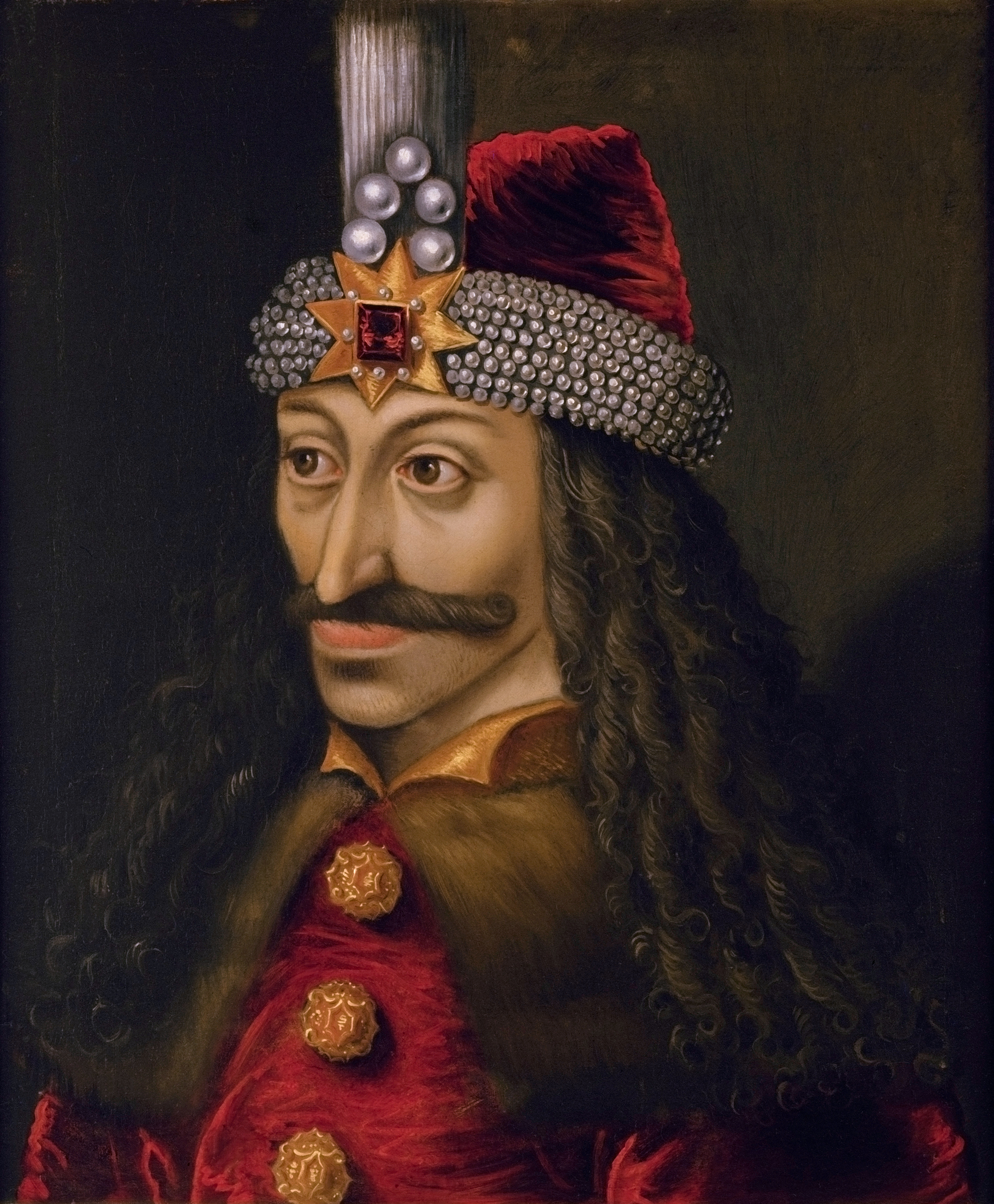
What did Vlad the Impaler really look like? The most important visual source is the Ambras Castle portrait, now in the Kunsthistorisches Museum in Vienna, possibly a copy of a lifetime original. It shows a man with large, deep-set eyes, a long face, pronounced cheekbones, a thick drooping mustache, and long dark hair falling past his shoulders beneath a fur-trimmed cap studded with gemstones. The portrait has been reproduced since the late 15th century and is the basis for nearly every depiction of Vlad since.

We also have something rarer: an eyewitness physical description. Niccolò Modrussa, a papal legate, met Vlad face to face around 1462 and left a detailed account. He described a man "not very tall but very stocky and strong, with a cruel and terrible appearance, a long straight nose, distended nostrils, a thin and reddish face in which the very long eyelashes framed large wide-open green eyes; the bushy black eyebrows made them appear threatening." The green eyes and reddish complexion are the kind of details that feel authentic because they're unexpected and serve no rhetorical purpose.

German pamphlet woodcuts published during and shortly after his lifetime, part of the lurid "Dracula" propaganda literature, show consistent features: the prominent mustache, the long face, the large eyes, the fur cap. Vlad is, of course, the historical figure behind Bram Stoker's Dracula, though Stoker's aristocratic vampire looks nothing like the stocky Wallachian voivode described by those who actually saw him.


신체적 특징

키Not very tall but very stocky and strong입증됨
체격Stocky, powerfully built입증됨
얼굴Long, thin face with pronounced cheekbones입증됨
안색Reddish입증됨
눈Large, wide-open, green; framed by very long eyelashes; appearing threatening under bushy black eyebrows입증됨
눈썸Bushy black eyebrows, giving a threatening appearance입증됨
코Long, straight, with distended (flared) nostrils입증됨
입Set beneath a thick, drooping mustache추정
턱과 턴Strong chin, somewhat obscured by the mustache추정
머리카락Long, dark/black, curling or wavy, falling past the shoulders입증됨
수염Thick, prominent drooping mustache; no beard입증됨
두드러진 특징Large green eyes under heavy brows; the thick drooping mustache; the fur-trimmed cap with gemstones; an overall appearance one eyewitness called 'cruel and terrible'입증됨
표정Stern, intense, commanding — described as 'cruel and terrible' by Modrussa입증됨

증거

Niccolò Modrussa (Nicolaus de Modrusiis), papal legate, physical description of Vlad III, c. 1462

The only known eyewitness physical description of Vlad III by a named observer. Modrussa met Vlad in person, likely during or shortly after his imprisonment by King Matthias Corvinus of Hungary. The level of physical detail is extraordinary for the period.

“He was not very tall, but very stocky and strong, with a cruel and terrible appearance, a long straight nose, distended nostrils, a thin and reddish face in which the very long eyelashes framed large wide-open green eyes; the bushy black eyebrows made them appear threatening. His face and chin were shaven but for a moustache. The swollen temples increased the bulk of his head. A bull's neck supported the head, from which black curly locks were falling to his wide-shouldered person.”

이 자료가 알려주는 것

키Not very tall but very stocky and strong입증됨
체격Stocky, powerfully built입증됨
얼굴Long, thin face with pronounced cheekbones입증됨
안색Reddish입증됨
눈Large, wide-open, green; framed by very long eyelashes; appearing threatening under bushy black eyebrows입증됨
눈썸Bushy black eyebrows, giving a threatening appearance입증됨
코Long, straight, with distended (flared) nostrils입증됨
머리카락Long, dark/black, curling or wavy, falling past the shoulders입증됨
두드러진 특징Large green eyes under heavy brows; the thick drooping mustache; the fur-trimmed cap with gemstones; an overall appearance one eyewitness called 'cruel and terrible'입증됨
표정Stern, intense, commanding — described as 'cruel and terrible' by Modrussa입증됨
Portrait of Vlad III, late 15th or early 16th century, Ambras Castle collection, now Kunsthistorisches Museum, Vienna (GG_4678)

Portrait of Vlad III, late 15th or early 16th century, Ambras Castle collection, now Kunsthistorisches Museum, Vienna (GG_4678)

The most important visual source for Vlad's appearance. Possibly copied from a lost lifetime original. Shows the distinctive long face, large eyes, thick mustache, long dark hair, and fur-trimmed cap. Consistent with Modrussa's independent eyewitness description.

이 자료가 알려주는 것

얼굴Long, thin face with pronounced cheekbones입증됨
눈Large, wide-open, green; framed by very long eyelashes; appearing threatening under bushy black eyebrows입증됨
코Long, straight, with distended (flared) nostrils입증됨
입Set beneath a thick, drooping mustache추정
턱과 턴Strong chin, somewhat obscured by the mustache추정
머리카락Long, dark/black, curling or wavy, falling past the shoulders입증됨
수염Thick, prominent drooping mustache; no beard입증됨
두드러진 특징Large green eyes under heavy brows; the thick drooping mustache; the fur-trimmed cap with gemstones; an overall appearance one eyewitness called 'cruel and terrible'입증됨
표정Stern, intense, commanding — described as 'cruel and terrible' by Modrussa입증됨

Woodcut illustrations from German Dracula pamphlets, c. 1462–1500 (multiple editions printed in Nuremberg, Strasbourg, Bamberg, and elsewhere)

Multiple woodcuts from the sensationalist German pamphlets about 'Dracole Wayda' show consistent facial features: the long face, thick mustache, large eyes, and fur cap. Though the pamphlets were hostile propaganda, the facial type agrees with the Ambras portrait and Modrussa's description, suggesting a common source of visual knowledge.

이 자료가 알려주는 것

얼굴Long, thin face with pronounced cheekbones입증됨
입Set beneath a thick, drooping mustache추정
머리카락Long, dark/black, curling or wavy, falling past the shoulders입증됨
수염Thick, prominent drooping mustache; no beard입증됨
두드러진 특징Large green eyes under heavy brows; the thick drooping mustache; the fur-trimmed cap with gemstones; an overall appearance one eyewitness called 'cruel and terrible'입증됨

Portrait of Vlad III, Esterházy Castle, Forchtenstein, Austria

A variant of the Ambras portrait type, showing the same basic features. Its relationship to the Ambras portrait (whether both derive from a common original or one copies the other) is debated.

자료 간 상충되는 부분

The Ambras Castle portrait is likely a late 15th- or early 16th-century copy of an earlier original; the degree to which it faithfully reproduces the original is uncertain. However, its consistency with Modrussa's independent eyewitness description and with the German woodcuts suggests it is broadly reliable.

Modrussa's description was written from a particular political perspective (he was a papal legate), and phrases like 'cruel and terrible appearance' may reflect anti-Vlad sentiment. However, the physical details (green eyes, reddish complexion, specific nose and eyebrow descriptions) are too precise to be merely rhetorical.

The German pamphlet woodcuts were propaganda pieces designed to demonize Vlad, so their depictions of him dining among impaled victims are not reliable historical scenes. However, the consistent facial features across different woodcuts (and their agreement with the Ambras portrait and Modrussa) suggest the facial type is based on genuine knowledge of his appearance.

Vlad's remains have never been conclusively identified. The supposed grave at Snagov Monastery was empty. Without skeletal remains or DNA, no forensic confirmation of the portrait tradition is possible.