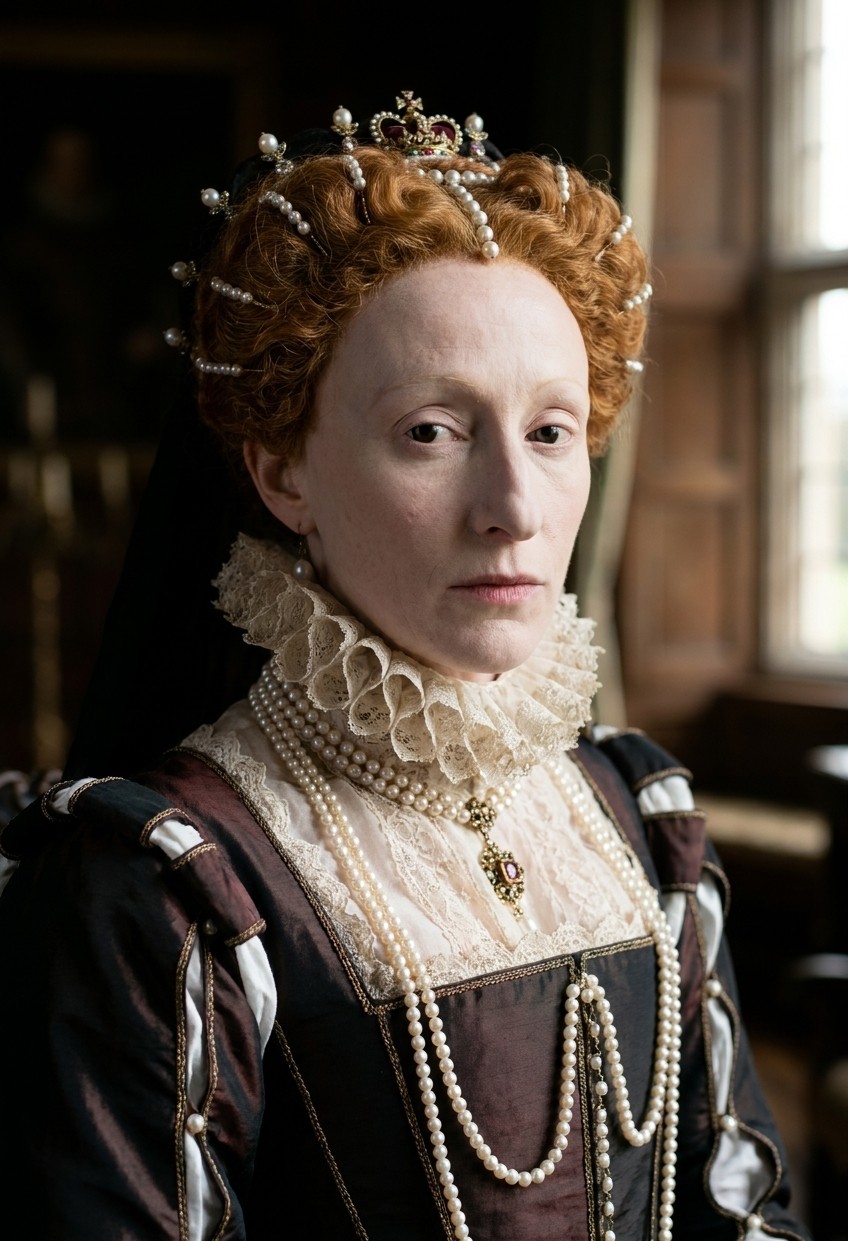
Como era Elizabeth I of England? | Os Rostos da História — AI reconstruction based on 4 historical sources
Reconstrução com IA

Tudor England · 1533–1603

Elizabeth I of England

Confiança: Confiança médiaIdade representada: ~42

Reconstruído a partir de

The Virgin Queen. Her court enforced a frozen ‘Mask of Youth’ in official portraits from her forties onward. Ambassadors who saw her in person told a different story: a thin, aging woman with blackened teeth and smallpox scars beneath white lead makeup.

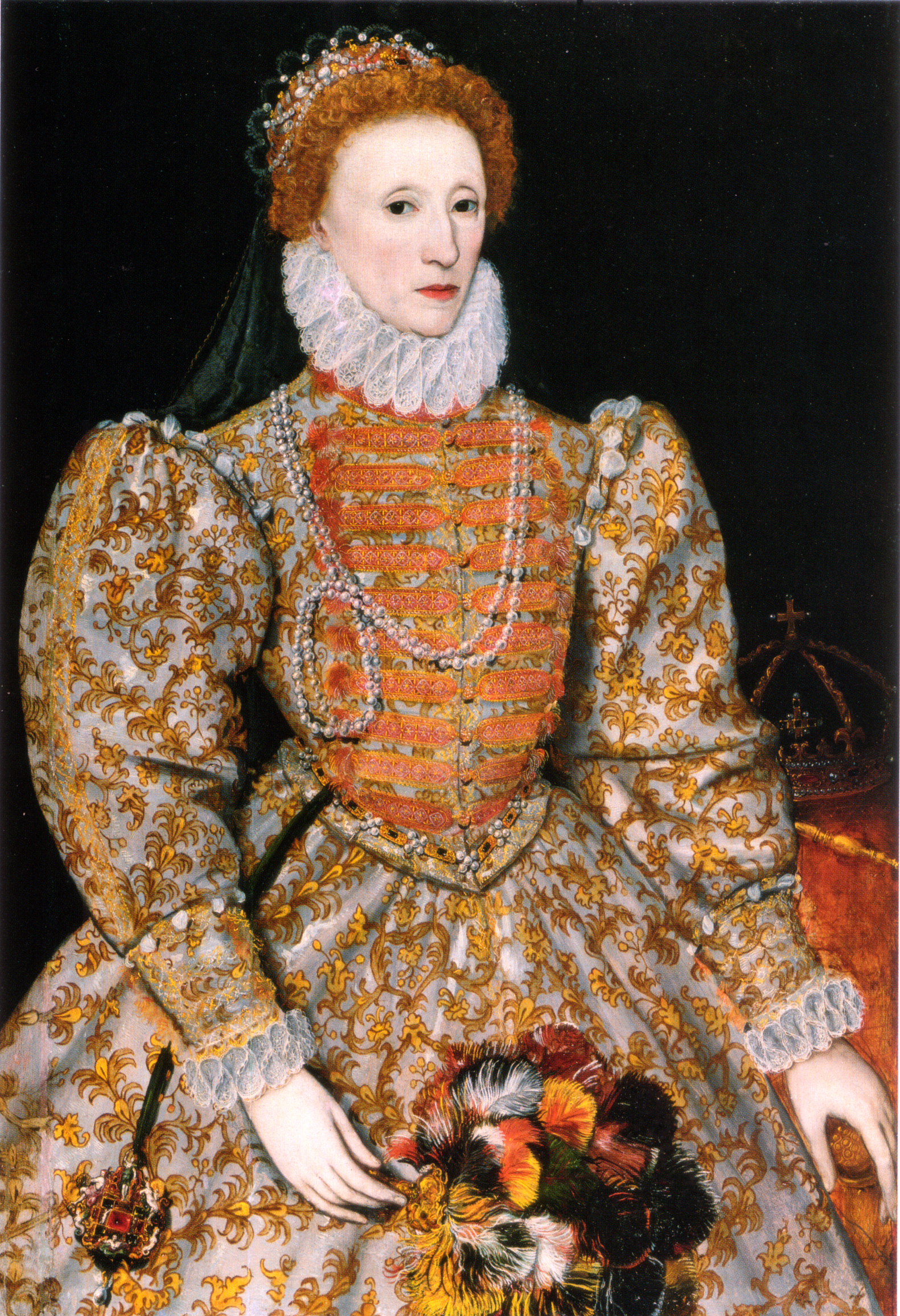
What did Elizabeth I really look like? The official portraits enforce an ageless "Mask of Youth." Flawless skin, eternal beauty. Ambassadors who saw her in person told a different story. The Darnley portrait (c. 1575), painted from life around age 42, established the face pattern that workshops copied for decades: a long oval face, high forehead, dark eyes, a slightly hooked nose, thin lips, narrow pointed chin.

Her most distinctive feature was her red-gold hair, inherited from her father Henry VIII. She wore elaborate wigs from her thirties onward, always in red or auburn, as her own hair thinned. After surviving smallpox in 1562, she covered her facial scarring with white lead ceruse. By her sixties the heavy white makeup was, in effect, a mask of its own. Paul Hentzner, who saw her at Greenwich in 1598, describes her face as "fair but wrinkled," her nose "a little hooked," and her teeth "black" from her fondness for sugar.

André Hurault de Maisse, the French ambassador, left the bluntest account in 1597: a thin, aged woman with missing teeth, wrinkled skin, an elaborate red wig, but still majestic in bearing. She was tall for a woman of the period and grew very thin in later life. The gap between the portrait version and the real woman grew wider every year of her final decades.


Descrição física

EstaturaTall for a woman of the period; described as of good statureAtestado
CompleiçãoSlender; grew thin in later lifeAtestado
RostoLong, oval face; high forehead; narrow at the chinAtestado
TezNaturally fair and pale. After smallpox (1562), she had visible pockmarks which she covered with white lead ceruse. By her sixties, the heavy white makeup was a mask.Atestado
OlhosDark, small, described as sharp and penetratingAtestado
SobrancelhasHigh, arched; eyebrows shaved or plucked very thin (fashionable in the period)Atestado
NarizSlightly hooked; Hentzner describes it as ‘a little hooked’Atestado
BocaThin-lipped; fine mouthAtestado
Mandíbula e queixoNarrow, pointed chin; the long face tapers noticeablyAtestado
CabeloNaturally red-gold (auburn); wore elaborate wigs from her thirties onward, always in red or auburn. Her own hair thinned with age.Atestado
CalvícieHigh natural hairline; hair thinned and she relied on wigs from middle age onwardAtestado
BarbaNoneAtestado
CrânioHigh forehead, proportionate skullAtestado
PescoçoLong, slender; often adorned with a high ruff or elaborate collarAtestado
teethBadly decayed and blackened; she was known to have very poor teeth, likely from her fondness for sugarAtestado
Traços distintivosStriking red hair (later wigs); heavy white lead makeup over smallpox scars; blackened teeth; long oval face with penetrating dark eyes. The gap between the idealised portraits and her actual appearance grew extreme in her final decades.Atestado
ExpressãoImperious, commanding; described as majestic in bearing despite physical declineInferido

A Evidência

The Darnley Portrait, c. 1575, National Portrait Gallery, London (NPG 2082)

The Darnley Portrait, c. 1575, National Portrait Gallery, London (NPG 2082)

The face pattern from this portrait became the standard template for all subsequent official portraits. Painted from life around age 42. The most reliable single image of Elizabeth’s face, though some idealisation is likely.

O que esta fonte nos diz

RostoLong, oval face; high forehead; narrow at the chinAtestado
OlhosDark, small, described as sharp and penetratingAtestado
SobrancelhasHigh, arched; eyebrows shaved or plucked very thin (fashionable in the period)Atestado
NarizSlightly hooked; Hentzner describes it as ‘a little hooked’Atestado
BocaThin-lipped; fine mouthAtestado
Mandíbula e queixoNarrow, pointed chin; the long face tapers noticeablyAtestado
CabeloNaturally red-gold (auburn); wore elaborate wigs from her thirties onward, always in red or auburn. Her own hair thinned with age.Atestado
CrânioHigh forehead, proportionate skullAtestado
PescoçoLong, slender; often adorned with a high ruff or elaborate collarAtestado
Traços distintivosStriking red hair (later wigs); heavy white lead makeup over smallpox scars; blackened teeth; long oval face with penetrating dark eyes. The gap between the idealised portraits and her actual appearance grew extreme in her final decades.Atestado
ExpressãoImperious, commanding; described as majestic in bearing despite physical declineInferido
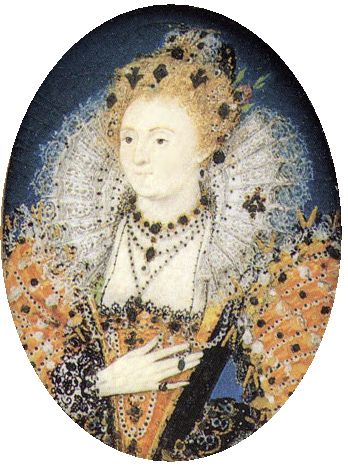
Nicholas Hilliard, various miniatures of Elizabeth I, c. 1572–1600

Nicholas Hilliard, Public domain, via Wikimedia Commons

Nicholas Hilliard, various miniatures of Elizabeth I, c. 1572–1600

Hilliard was Elizabeth’s official miniaturist and painted her from life multiple times. His miniatures show the same face pattern as the Darnley portrait but with finer detail. He is one of the few artists known to have had personal sittings.

O que esta fonte nos diz

RostoLong, oval face; high forehead; narrow at the chinAtestado
SobrancelhasHigh, arched; eyebrows shaved or plucked very thin (fashionable in the period)Atestado
Mandíbula e queixoNarrow, pointed chin; the long face tapers noticeablyAtestado

André Hurault, Sieur de Maisse, Journal, 1597

Eyewitness account by the French ambassador. Describes Elizabeth at 64 in unflinching detail: wrinkled, thin, bad teeth, wearing an elaborate red wig. Invaluable because it contradicts the ageless official portraits.

She was strangely attired in a dress of silver cloth, white and crimson... her face appeared to be very aged. It is long and thin, and her teeth are very yellow and unequal... many of them are missing, so that one cannot understand her easily when she speaks quickly. Her bosom is somewhat wrinkled...

G.B. Harrison and R.A. Jones, 1931

O que esta fonte nos diz

CompleiçãoSlender; grew thin in later lifeAtestado
TezNaturally fair and pale. After smallpox (1562), she had visible pockmarks which she covered with white lead ceruse. By her sixties, the heavy white makeup was a mask.Atestado
OlhosDark, small, described as sharp and penetratingAtestado
CabeloNaturally red-gold (auburn); wore elaborate wigs from her thirties onward, always in red or auburn. Her own hair thinned with age.Atestado
CalvícieHigh natural hairline; hair thinned and she relied on wigs from middle age onwardAtestado
teethBadly decayed and blackened; she was known to have very poor teeth, likely from her fondness for sugarAtestado
Traços distintivosStriking red hair (later wigs); heavy white lead makeup over smallpox scars; blackened teeth; long oval face with penetrating dark eyes. The gap between the idealised portraits and her actual appearance grew extreme in her final decades.Atestado
ExpressãoImperious, commanding; described as majestic in bearing despite physical declineInferido

Paul Hentzner, Itinerarium Germaniae, Galliae, Angliae, Italiae, 1598 visit (published 1612)

German traveller who saw Elizabeth at Greenwich in 1598. Describes her face as fair but wrinkled, with small eyes, hooked nose, and black teeth.

Her face oblong, fair but wrinkled; her eyes small, yet black and pleasant; her nose a little hooked; her teeth black (a defect the English seem subject to, from their too great use of sugar).

Horace Walpole translation, 1757

O que esta fonte nos diz

EstaturaTall for a woman of the period; described as of good statureAtestado
TezNaturally fair and pale. After smallpox (1562), she had visible pockmarks which she covered with white lead ceruse. By her sixties, the heavy white makeup was a mask.Atestado
NarizSlightly hooked; Hentzner describes it as ‘a little hooked’Atestado
teethBadly decayed and blackened; she was known to have very poor teeth, likely from her fondness for sugarAtestado
Traços distintivosStriking red hair (later wigs); heavy white lead makeup over smallpox scars; blackened teeth; long oval face with penetrating dark eyes. The gap between the idealised portraits and her actual appearance grew extreme in her final decades.Atestado

Onde as fontes se contradizem

The official portraits, especially from the 1580s onward, enforce a ‘Mask of Youth’ — an ageless, flawless face that bears little resemblance to the aging woman ambassadors describe. The Darnley portrait (c. 1575) is the most reliable face, but even it is likely idealised.

De Maisse (1597) describes a thin, aged woman with wrinkled face, blackened teeth, and an elaborate red wig — directly contradicting the smooth-skinned, eternally youthful queen of the Ditchley or Armada portraits from the same decade.