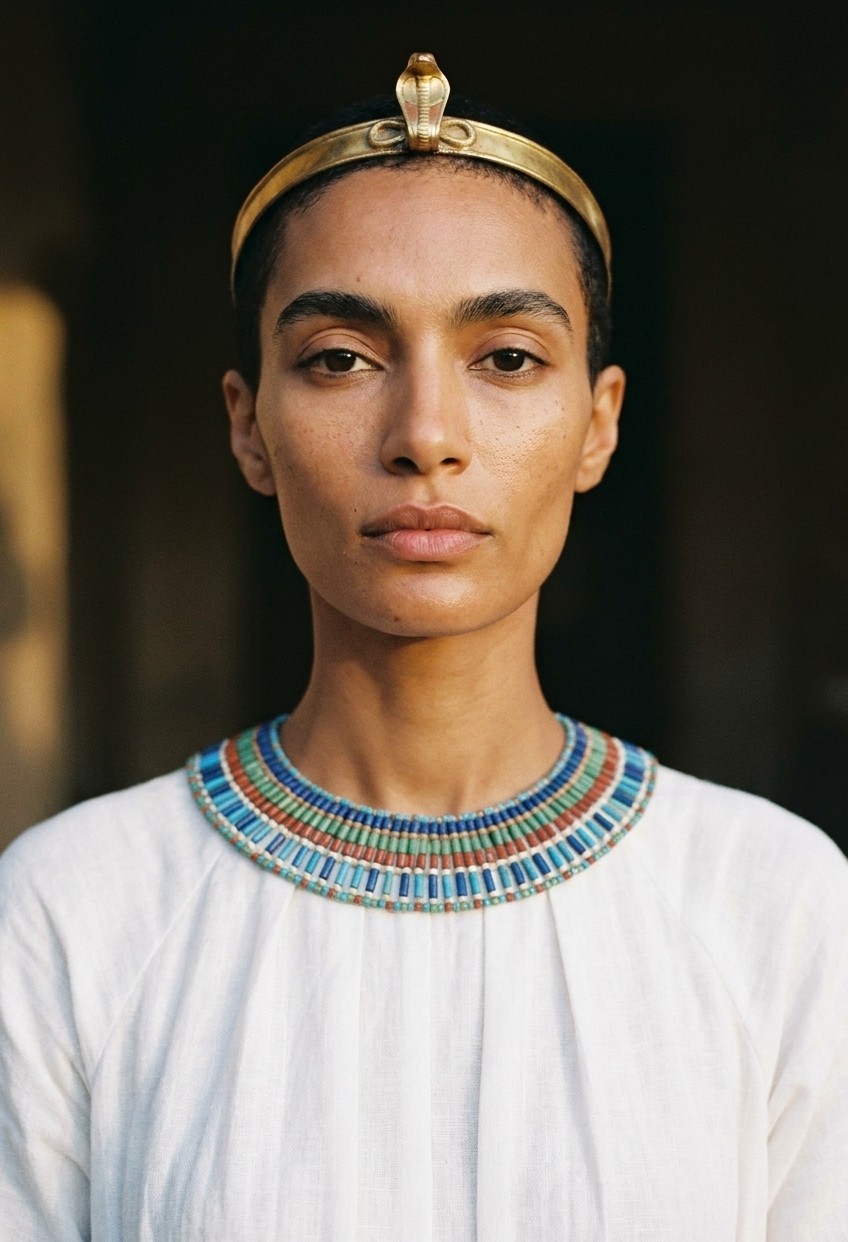
Como era Nefertiti? | Os Rostos da História — AI reconstruction based on 2 historical sources
Reconstrução com IA

New Kingdom Egypt (18th Dynasty) · c. 1370–c. 1330 BCE

Nefertiti

Confiança: Confiança altaIdade representada: ~30

Reconstruído a partir de

Queen of Egypt and wife of Akhenaten. The painted limestone bust by her court sculptor Thutmose is one of the best-preserved ancient portraits ever found. A lifetime likeness made by someone who saw her face.

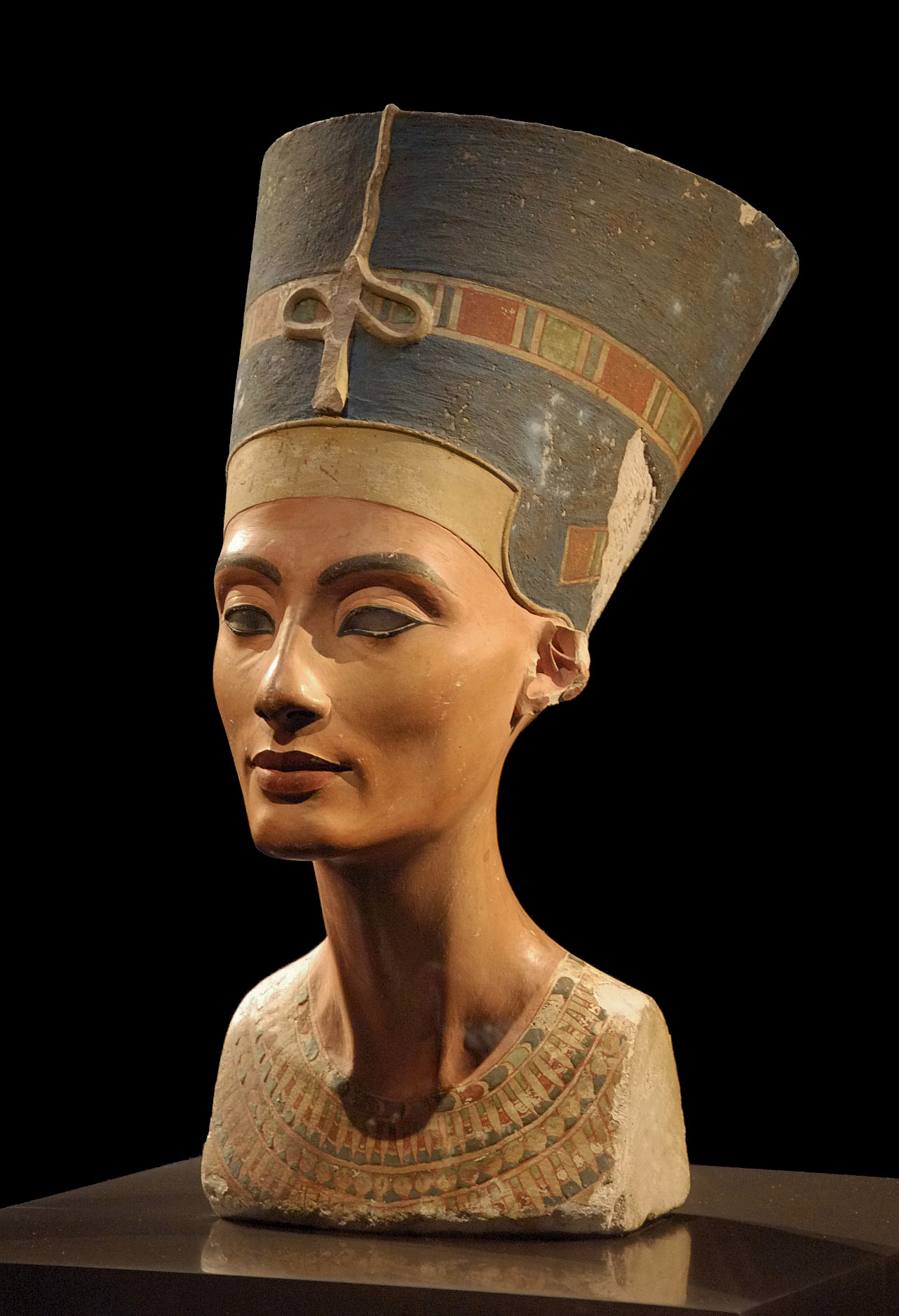
What did Nefertiti look like? Unlike most ancient figures, we have an extraordinary piece of evidence: a painted limestone bust made by Thutmose, the chief sculptor of the royal court at Amarna. Discovered in 1912 in Thutmose’s workshop, the bust was a sculptor’s model — a reference piece kept to ensure consistent representation of the queen. This means it was made from life, by someone with direct access to her, for the purpose of accuracy.

The bust shows a woman with a long, slender neck, high angular cheekbones, a straight and narrow nose, full lips, and a strong jawline. The face is strikingly symmetrical. The left eye socket is empty (the inlay was never inserted, suggesting the bust was a workshop piece, not a finished display item). The painted surface preserves her skin tone as a warm reddish-brown, consistent with Egyptian artistic convention for women of high status, though how closely this reflects her actual complexion is debated.

Nefertiti’s ethnicity is not fully settled. She may have been Egyptian-born or possibly of Mitanni origin (some scholars identify her with the Mitanni princess Tadukhipa, though this is a minority view). The Amarna reliefs consistently show her with the same facial features as the bust: elongated skull (probably exaggerated by the tall blue crown she typically wears), delicate features, and slender build. Her eye colour, hair colour, and height are unknown — the bust’s blue crown covers her natural hair entirely.


Descrição física

RostoOval, strongly symmetrical, with high angular cheekbonesAtestado
TezWarm reddish-brown as painted on the bust; consistent with Egyptian convention for womenInferido
OlhosLarge, almond-shaped; colour unknownAtestado
SobrancelhasArched, well-defined brow ridgeAtestado
NarizStraight, narrow, well-proportioned; slightly aquiline in profileAtestado
BocaFull lips, slightly downturned at the corners; pronounced Cupid’s bowAtestado
Mandíbula e queixoStrong, defined jawline; firm chinAtestado
PescoçoLong, slender, elegant; a defining feature of her appearanceAtestado
CrânioAppears elongated, but this is largely due to the tall flat-topped blue crown (the ‘Nefertiti cap’) she is always depicted wearing. Natural skull shape unknown.Inferido
CabeloUnknown; always depicted wearing the tall blue crown or other headdresses. Natural hair colour and style are not recorded.Inferido
Traços distintivosThe long slender neck, high cheekbones, and the tall flat-topped blue crown she is always shown wearing. Strikingly symmetrical facial features.Atestado
ExpressãoSerene, composed, regalInferido

A Evidência

Painted limestone bust of Nefertiti, by the sculptor Thutmose, c. 1345 BCE. Neues Museum, Berlin (inventory ÄM 21300)

Painted limestone bust of Nefertiti, by the sculptor Thutmose, c. 1345 BCE. Neues Museum, Berlin (inventory ÄM 21300)

A sculptor’s model kept in Thutmose’s workshop at Amarna, discovered by Ludwig Borchardt in 1912. Made from life by the queen’s own court sculptor as a reference for other artists. One of the most important ancient portraits in existence.

O que esta fonte nos diz

RostoOval, strongly symmetrical, with high angular cheekbonesAtestado
TezWarm reddish-brown as painted on the bust; consistent with Egyptian convention for womenInferido
OlhosLarge, almond-shaped; colour unknownAtestado
SobrancelhasArched, well-defined brow ridgeAtestado
NarizStraight, narrow, well-proportioned; slightly aquiline in profileAtestado
BocaFull lips, slightly downturned at the corners; pronounced Cupid’s bowAtestado
Mandíbula e queixoStrong, defined jawline; firm chinAtestado
PescoçoLong, slender, elegant; a defining feature of her appearanceAtestado
CrânioAppears elongated, but this is largely due to the tall flat-topped blue crown (the ‘Nefertiti cap’) she is always depicted wearing. Natural skull shape unknown.Inferido
CabeloUnknown; always depicted wearing the tall blue crown or other headdresses. Natural hair colour and style are not recorded.Inferido
Traços distintivosThe long slender neck, high cheekbones, and the tall flat-topped blue crown she is always shown wearing. Strikingly symmetrical facial features.Atestado
ExpressãoSerene, composed, regalInferido
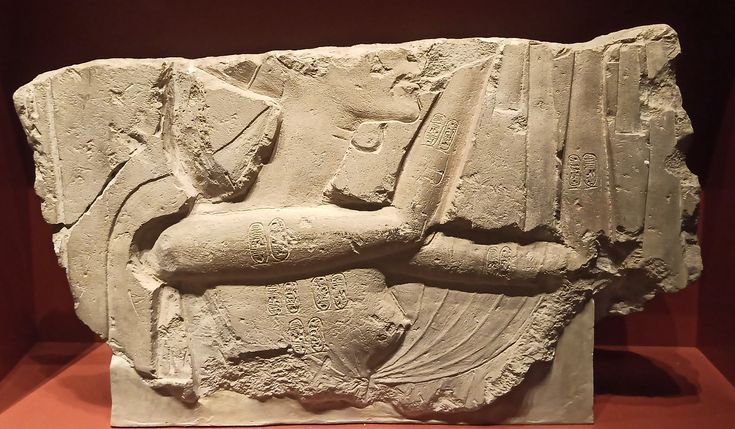
Wall reliefs from Amarna (Tell el-Amarna), various temples and tombs, c. 1353–1336 BCE

SpeakingArch, CC BY-SA 4.0, via Wikimedia Commons

Wall reliefs from Amarna (Tell el-Amarna), various temples and tombs, c. 1353–1336 BCE

Multiple official reliefs showing Nefertiti in religious, political, and domestic scenes. Consistent facial features across different contexts. Subject to Amarna-style artistic exaggeration but valuable for cross-referencing the bust.

O que esta fonte nos diz

RostoOval, strongly symmetrical, with high angular cheekbonesAtestado
NarizStraight, narrow, well-proportioned; slightly aquiline in profileAtestado
PescoçoLong, slender, elegant; a defining feature of her appearanceAtestado
Traços distintivosThe long slender neck, high cheekbones, and the tall flat-topped blue crown she is always shown wearing. Strikingly symmetrical facial features.Atestado

Onde as fontes se contradizem

The Amarna art style deliberately exaggerated certain features (elongated heads, long necks, swelling hips) for all royal family members. The Thutmose bust, as a sculptor’s model, is considered closer to reality than the more stylised wall reliefs, but some degree of artistic convention is present even in the bust.

Nefertiti’s ethnic origin is debated: possibly native Egyptian, possibly of Mitanni (northern Mesopotamian) descent. The bust alone cannot settle this.