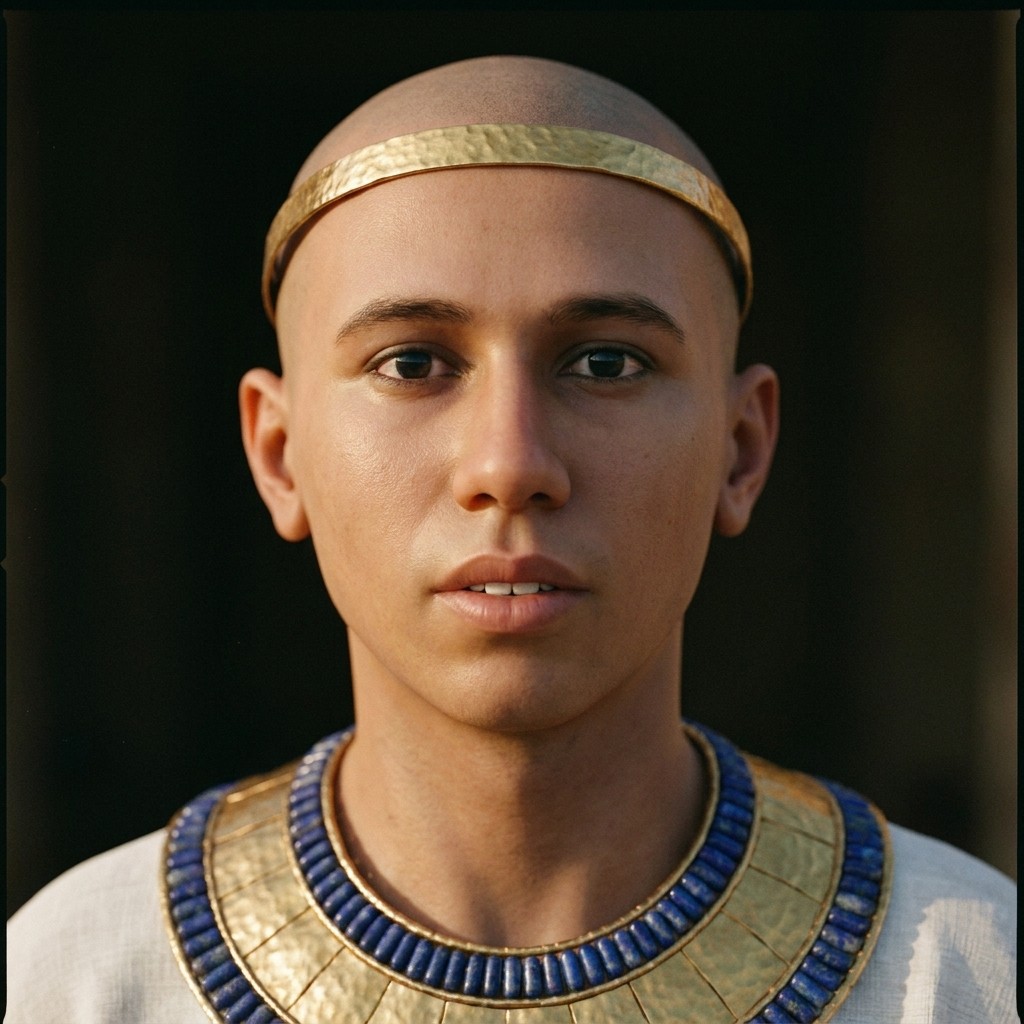
Como era Tutankhamun? | Os Rostos da História — AI reconstruction based on 3 historical sources
Reconstrução com IA

New Kingdom Egypt (18th Dynasty) · c. 1341–c. 1323 BCE

Tutankhamun

Confiança: Confiança altaIdade representada: ~19

Reconstruído a partir de

The boy king. His tomb survived intact for over 3,000 years. CT scans of his mummy, the gold death mask, and forensic reconstruction give us one of the most precise faces from the ancient world.

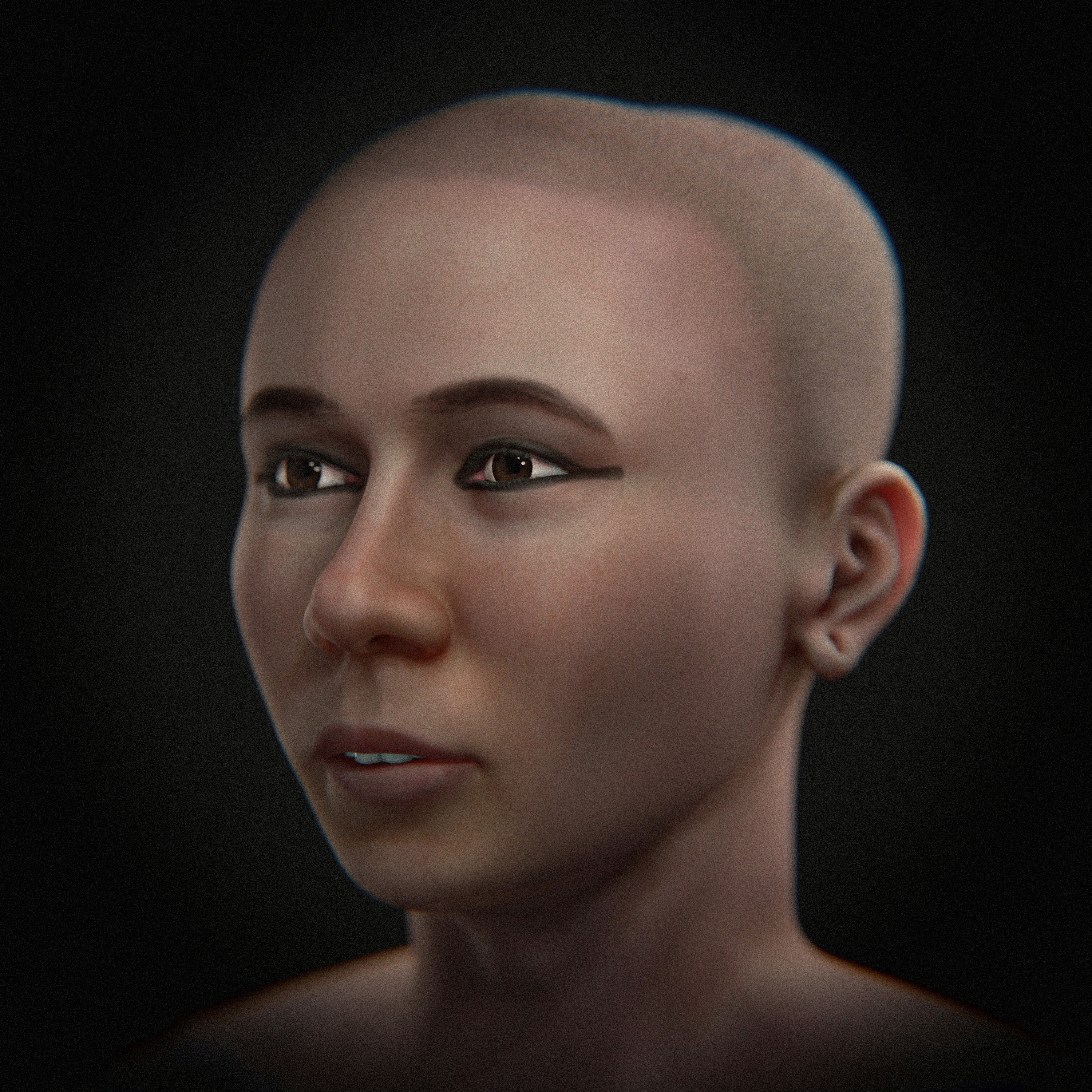
What did Tutankhamun look like? We know more about his physical appearance than almost any other ancient Egyptian ruler, because we have his actual body. His mummy, discovered by Howard Carter in 1922, has been CT-scanned multiple times (2005, 2009), giving precise measurements of his skull, skeleton, and pathology. Three independent forensic teams have reconstructed his face from the scan data, and they converge on the same result.

Tutankhamun was a slender young man, about 5’6” (167 cm), who died around age 19. The CT scans show a narrow face with a slight overbite (a familial Thutmosid trait), an elongated skull, a narrow nose, and large eye sockets. He had a cleft palate and a slightly receding chin. His left foot had a bone disorder (Köhler disease or club foot), and he likely needed a cane to walk — over 130 walking sticks were found in his tomb.

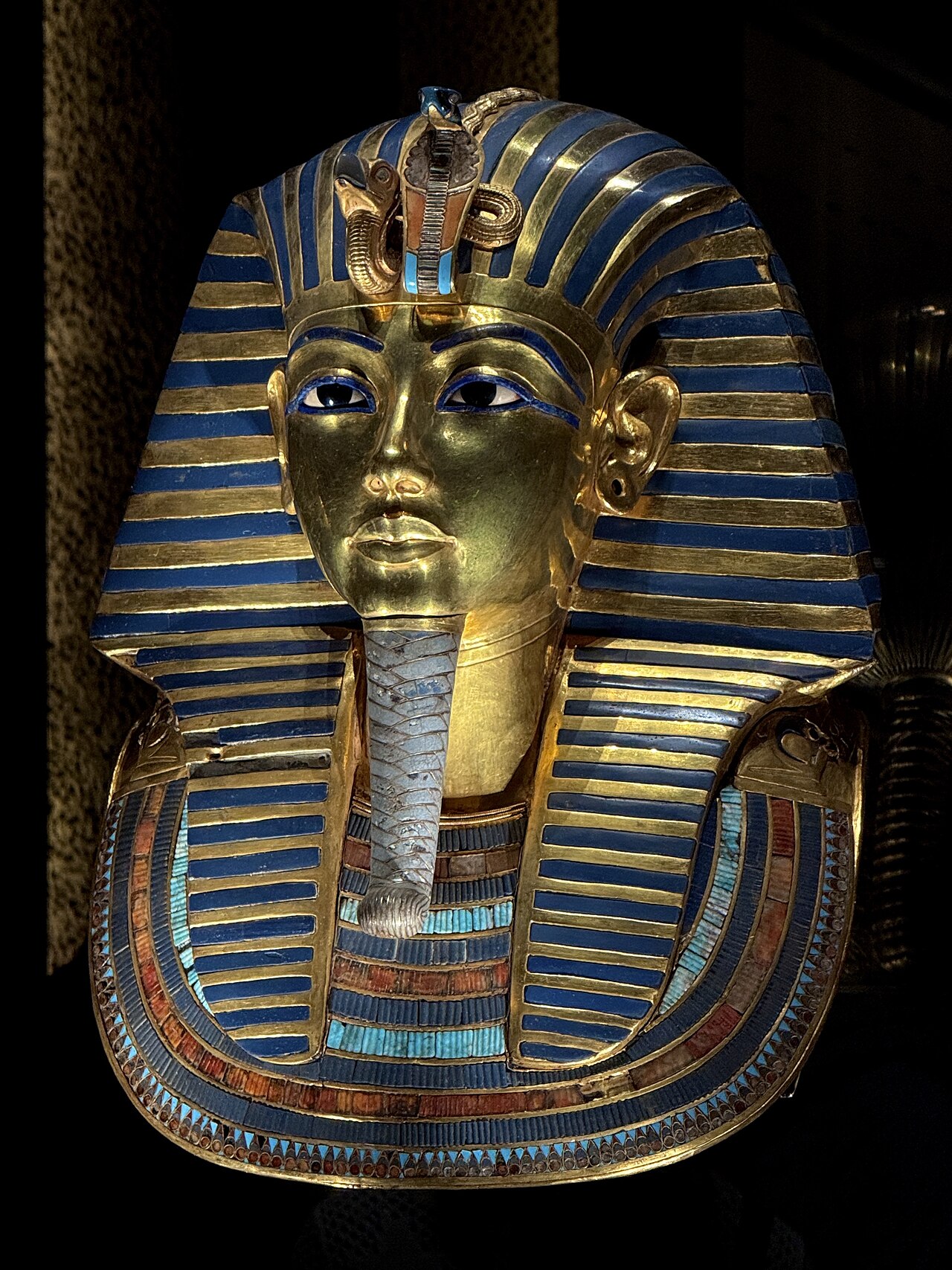
The gold death mask is the world’s most famous portrait of Tutankhamun, but it presents an idealised, divine image, not a literal likeness. The mask shows larger, more symmetrical features and none of the overbite or facial asymmetry visible in the skull. The forensic reconstructions, built directly from bone, are more accurate than the mask. His skin colour is unknown; the mask’s gold surface is symbolic, not descriptive. DNA analysis places him firmly in the 18th Dynasty royal family, the son of Akhenaten.


Descrição física

EstaturaAbout 5’6” (167 cm); slender buildAtestado
CompleiçãoSlender, slightly built; narrow shouldersAtestado
RostoNarrow, oval, with large eye sockets and a slight facial asymmetryAtestado
TezUnknown; no evidence survives for skin colourInferido
OlhosLarge eye sockets; eye colour unknownAtestado
NarizNarrow, straightAtestado
BocaSlight overbite; full lips (inferred from skull structure and family traits)Atestado
Mandíbula e queixoSlightly receding chin; narrow mandibleAtestado
CrânioElongated skull (dolichocephalic); this is a natural familial trait, not artificial cranial modificationAtestado
CabeloShaved head in life (standard for Egyptian royalty); natural hair colour unknownInferido
Traços distintivosSlight overbite (Thutmosid family trait); elongated skull; cleft palate; left foot deformity requiring a walking caneAtestado
ExpressãoYouthful; neutralInferido

A Evidência

CT scan of Tutankhamun’s mummy, conducted January 2005 by Dr. Zahi Hawass and the Egyptian Supreme Council of Antiquities, with subsequent analysis by French, American, and Egyptian forensic teams

CT scan of Tutankhamun’s mummy, conducted January 2005 by Dr. Zahi Hawass and the Egyptian Supreme Council of Antiquities, with subsequent analysis by French, American, and Egyptian forensic teams

1,700 cross-sectional images giving precise skull measurements, pathology (cleft palate, foot deformity, malaria DNA), and data for forensic facial reconstruction. The single most important evidence source.

O que esta fonte nos diz

EstaturaAbout 5’6” (167 cm); slender buildAtestado
CompleiçãoSlender, slightly built; narrow shouldersAtestado
RostoNarrow, oval, with large eye sockets and a slight facial asymmetryAtestado
TezUnknown; no evidence survives for skin colourInferido
OlhosLarge eye sockets; eye colour unknownAtestado
NarizNarrow, straightAtestado
BocaSlight overbite; full lips (inferred from skull structure and family traits)Atestado
Mandíbula e queixoSlightly receding chin; narrow mandibleAtestado
CrânioElongated skull (dolichocephalic); this is a natural familial trait, not artificial cranial modificationAtestado
Traços distintivosSlight overbite (Thutmosid family trait); elongated skull; cleft palate; left foot deformity requiring a walking caneAtestado
ExpressãoYouthful; neutralInferido

Mummy of Tutankhamun, discovered by Howard Carter, 4 November 1922, tomb KV62, Valley of the Kings

The intact mummy in its original tomb context. Provides direct physical evidence of height, build, pathology, and (via DNA analysis) family relationships. Confirmed as son of Akhenaten.

O que esta fonte nos diz

EstaturaAbout 5’6” (167 cm); slender buildAtestado
CompleiçãoSlender, slightly built; narrow shouldersAtestado
CabeloShaved head in life (standard for Egyptian royalty); natural hair colour unknownInferido
Traços distintivosSlight overbite (Thutmosid family trait); elongated skull; cleft palate; left foot deformity requiring a walking caneAtestado
Gold death mask of Tutankhamun, c. 1323 BCE, Egyptian Museum, Cairo (GEM inventory)

Dawid Wdowczyk, CC BY 4.0, via Wikimedia Commons

Gold death mask of Tutankhamun, c. 1323 BCE, Egyptian Museum, Cairo (GEM inventory)

The world’s most famous ancient artefact. Made of 11 kg of solid gold with inlays of lapis lazuli, carnelian, obsidian, and turquoise. Represents an idealised, divine image of the king — not a literal portrait. Useful for general proportions but not for specific features like the overbite or chin shape.

Onde as fontes se contradizem

The gold death mask shows an idealised, divine image with perfect symmetry and no overbite or facial asymmetry. The CT scan reveals the actual bone structure, which is less symmetrical and shows the overbite and receding chin. The forensic reconstructions follow the CT data, not the mask.

Whether the elongated skull is natural or artificially modified was debated. CT analysis (2005) concluded it is a natural familial trait with no evidence of cranial binding.

Cause of death: earlier theories (murder by blunt force trauma) have been superseded by the malaria + bone disease theory, but debate continues.