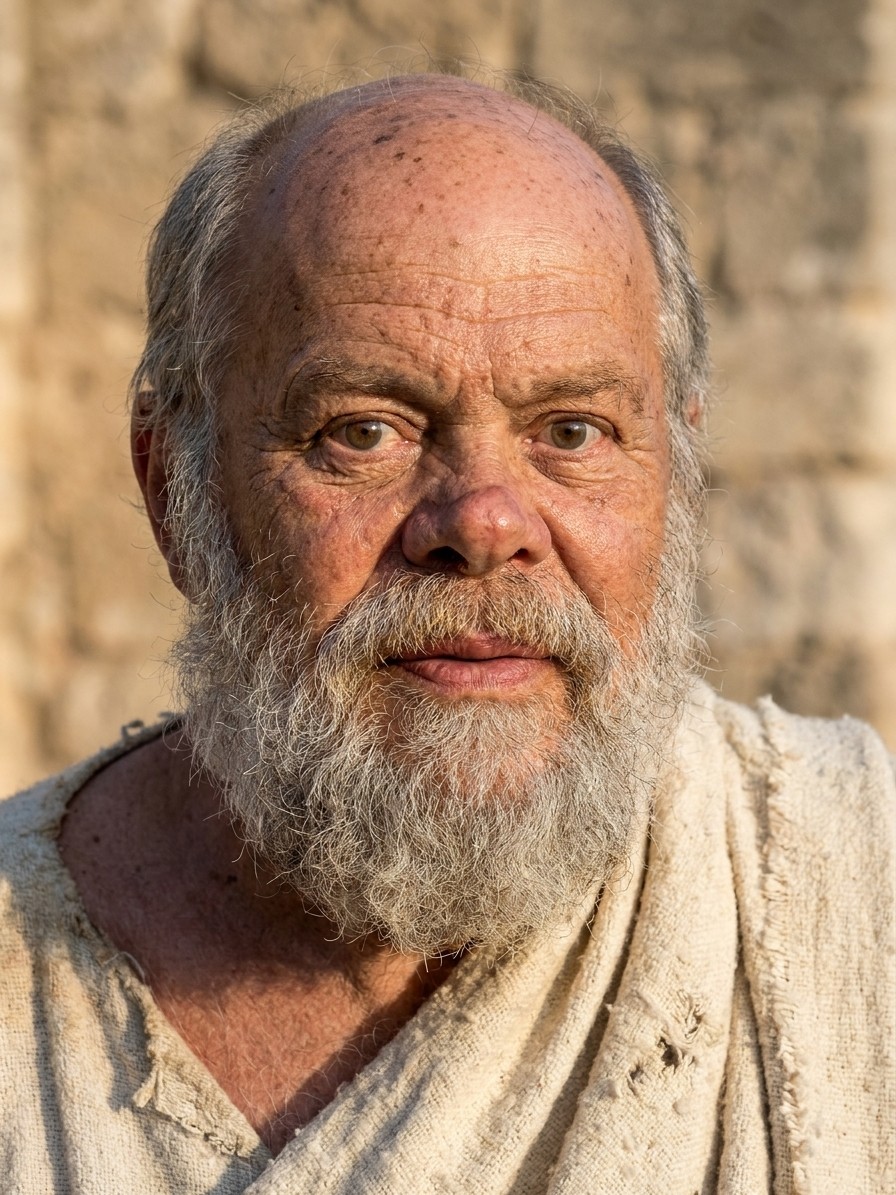
Socrates长什么样? | 历史的面容 — AI reconstruction based on 5 historical sources
AI重建

Classical Athens · c. 470–399 BCE

Socrates

证据: 部分证据描绘年龄: ~65

Athenian philosopher. His students Plato and Xenophon both describe a famously ugly face: snub nose, bulging eyes, thick lips, broad and flat. Alcibiades compared him to a Silenus statue. The surviving portrait busts match the literary descriptions closely.

What did Socrates look like? He may be the most thoroughly documented ugly person in antiquity. In Plato's Symposium, Alcibiades compares him to a Silenus figure: the satyr-like figurines sold in Athenian workshops, with snub noses, bulging eyes, and broad flat faces. It wasn't an insult but a philosophical compliment. The Silenus statues opened to reveal golden gods inside, and Alcibiades argued that Socrates worked the same way. The comparison stuck because it was plainly accurate. Nobody disputed that Socrates was ugly.

Xenophon's Symposium adds more. In a mock beauty contest, Socrates jokes about his own face: his bulging eyes see more widely, his flat snub nose catches smells from all directions, and his thick lips are better for kissing. The tone is playful, but the physical details match Plato's account and the surviving busts. Two independent students describing the same features, backed up by sculpture, puts us on solid ground for an ancient face.

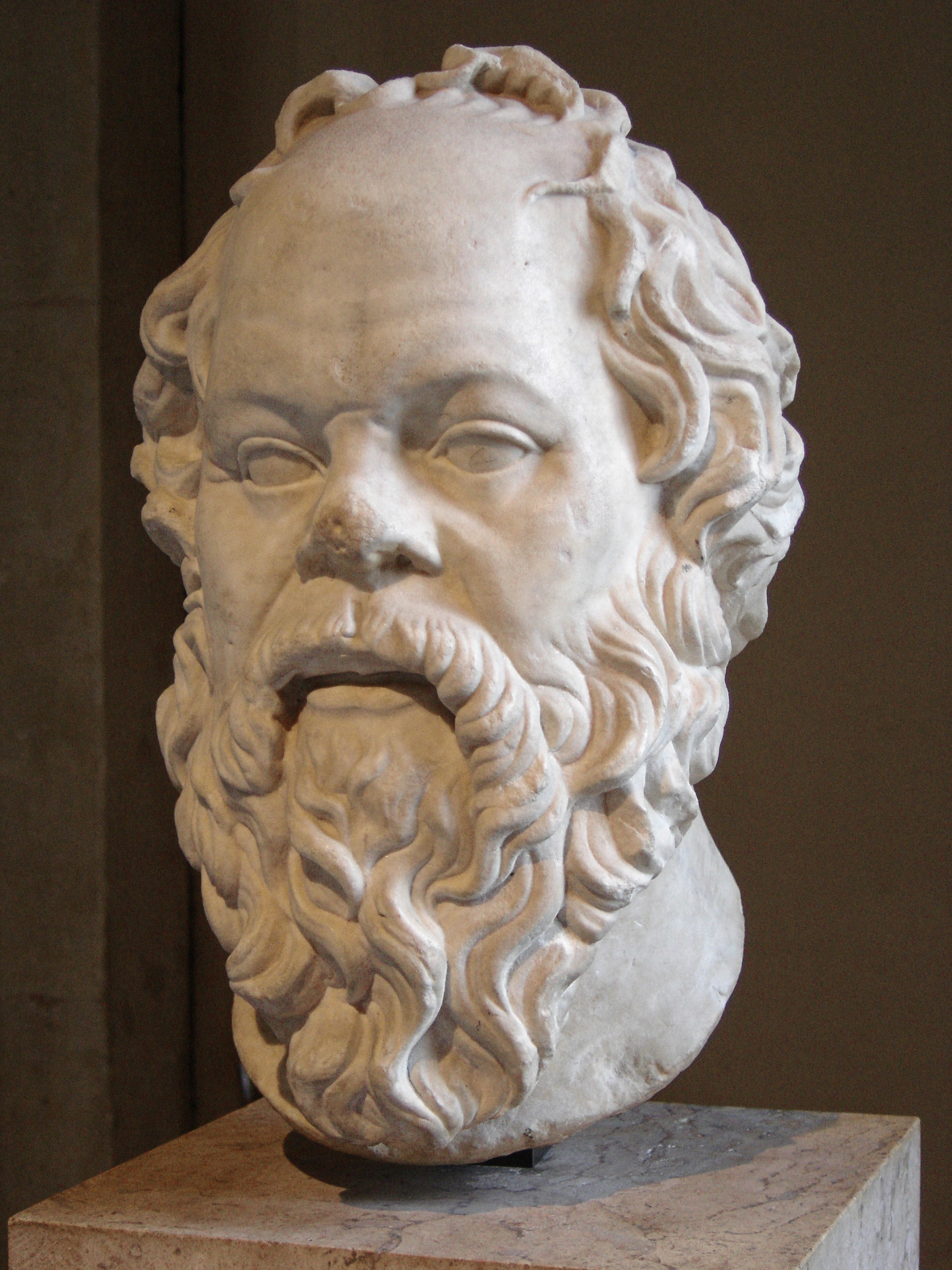
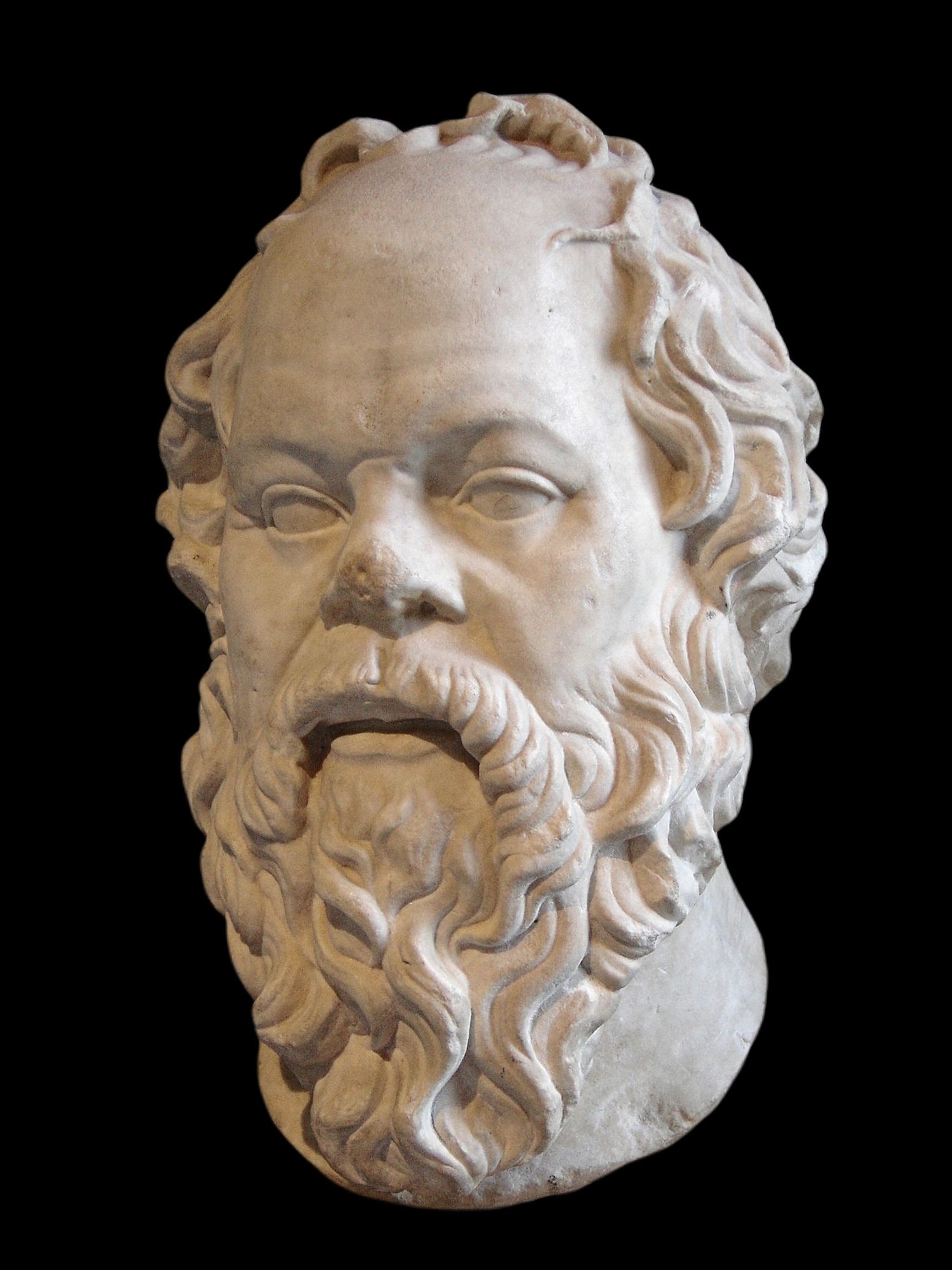
The surviving busts are Roman copies of Greek originals made within decades of his death. They show a stocky, balding man with a full beard, a broad flat face, a wide snub nose, protruding eyes, and thick lips. Socrates looked nothing like a conventional Greek hero, and every ancient source agrees on that.


外貌描述

身高Stocky, short to average height推断
体格Sturdy, thick-set; he served as a hoplite infantry soldier at Potidaea, Delium, and Amphipolis推断
面部Broad, flat, wide; consistently described as Silenus-like有记载
眼睛Bulging, protruding; Xenophon has Socrates joke that they see more widely because they project outward有记载
鼻子Snub, flat, upturned; Xenophon has Socrates joke that his wide nostrils catch smells from all directions有记载
嘴Thick, wide lips; Xenophon has Socrates joke that thick lips are better for kissing有记载
头发Balding; the portrait busts consistently show a receding hairline with thin remaining hair有记载
胡须Full, thick beard; the standard philosopher's beard of classical Athens有记载
显著特征The Silenus comparison: a satyr-like face with snub nose, bulging eyes, broad flat features, thick lips. Alcibiades says he looks like the Silenus figurines sold in workshops, which open to reveal golden gods inside. His ugliness was proverbial in Athens.有记载
证据

Plato, Symposium 215a–216a

查看资料 →

“I say then that he is most like those Silenus-figures that sit in the statuaries' shops; those, I mean, which our craftsmen make with pipes or flutes in their hands: when their two halves are pulled open, they are found to contain images of gods.”

W.R.M. Lamb, Loeb Classical Library, 1925

这个资料告诉我们什么

身高Stocky, short to average height推断
体格Sturdy, thick-set; he served as a hoplite infantry soldier at Potidaea, Delium, and Amphipolis推断
面部Broad, flat, wide; consistently described as Silenus-like有记载
眼睛Bulging, protruding; Xenophon has Socrates joke that they see more widely because they project outward有记载
鼻子Snub, flat, upturned; Xenophon has Socrates joke that his wide nostrils catch smells from all directions有记载
显著特征The Silenus comparison: a satyr-like face with snub nose, bulging eyes, broad flat features, thick lips. Alcibiades says he looks like the Silenus figurines sold in workshops, which open to reveal golden gods inside. His ugliness was proverbial in Athens.有记载

Xenophon, Symposium 5.5–7

查看资料 →

“Do you think my eyes are more beautiful than yours? I do, if the gods made them for the purpose of seeing; for yours look only straight ahead, but mine, being prominent, look also to the sides. And my nose is more beautiful, since the gods made noses for smelling; your nostrils look down, but mine are spread wide and turned up.”

O.J. Todd, Loeb Classical Library, 1923

这个资料告诉我们什么

面部Broad, flat, wide; consistently described as Silenus-like有记载
眼睛Bulging, protruding; Xenophon has Socrates joke that they see more widely because they project outward有记载
鼻子Snub, flat, upturned; Xenophon has Socrates joke that his wide nostrils catch smells from all directions有记载
嘴Thick, wide lips; Xenophon has Socrates joke that thick lips are better for kissing有记载
显著特征The Silenus comparison: a satyr-like face with snub nose, bulging eyes, broad flat features, thick lips. Alcibiades says he looks like the Silenus figurines sold in workshops, which open to reveal golden gods inside. His ugliness was proverbial in Athens.有记载

Plato, Symposium 220a–b

查看资料 →

“His endurance was simply marvellous when, being cut off from our supplies, we were compelled to go without food — in such cases he was far and away the best of us all at keeping going; and when there was plenty of good cheer, he alone could enjoy it to the full.”

W.R.M. Lamb, Loeb Classical Library, 1925

这个资料告诉我们什么

体格Sturdy, thick-set; he served as a hoplite infantry soldier at Potidaea, Delium, and Amphipolis推断
Portrait of Socrates (Type I), Roman marble copy, 1st century CE. National Archaeological Museum, Naples (inv. 6129)

Portrait of Socrates (Type I), Roman marble copy, 1st century CE. National Archaeological Museum, Naples (inv. 6129)

The most widely reproduced Socrates portrait. A Roman copy of a Greek bronze original created c. 380–350 BCE, possibly by Lysippus. Shows the characteristic snub nose, bulging eyes, broad flat face, full beard, and balding head. Considered the closest to the literary tradition.

这个资料告诉我们什么

身高Stocky, short to average height推断
面部Broad, flat, wide; consistently described as Silenus-like有记载
眼睛Bulging, protruding; Xenophon has Socrates joke that they see more widely because they project outward有记载
鼻子Snub, flat, upturned; Xenophon has Socrates joke that his wide nostrils catch smells from all directions有记载
嘴Thick, wide lips; Xenophon has Socrates joke that thick lips are better for kissing有记载
头发Balding; the portrait busts consistently show a receding hairline with thin remaining hair有记载
胡须Full, thick beard; the standard philosopher's beard of classical Athens有记载
显著特征The Silenus comparison: a satyr-like face with snub nose, bulging eyes, broad flat features, thick lips. Alcibiades says he looks like the Silenus figurines sold in workshops, which open to reveal golden gods inside. His ugliness was proverbial in Athens.有记载
Farnese Socrates, Roman marble copy, National Archaeological Museum, Naples

Farnese Socrates, Roman marble copy, National Archaeological Museum, Naples

Another Roman copy of the Greek Socrates portrait tradition. Consistent with the Type I bust: snub nose, wide face, full beard, receding hairline. The Farnese version shows slightly softer features, possibly reflecting a different stage in the copying tradition.

这个资料告诉我们什么

面部Broad, flat, wide; consistently described as Silenus-like有记载
鼻子Snub, flat, upturned; Xenophon has Socrates joke that his wide nostrils catch smells from all directions有记载
嘴Thick, wide lips; Xenophon has Socrates joke that thick lips are better for kissing有记载
头发Balding; the portrait busts consistently show a receding hairline with thin remaining hair有记载
胡须Full, thick beard; the standard philosopher's beard of classical Athens有记载

资料之间的矛盾

No portrait bust from Socrates' lifetime survives. The earliest known portrait type was created shortly after his death, possibly commissioned by his admirers. All surviving busts are Roman copies of these Greek originals, made 300–500 years later.

The literary descriptions (Plato, Xenophon) and the sculptural portraits line up closely, which is unusual for ancient figures. But both may derive from the same cultural tradition rather than independent observation. The 'ugly Socrates' was a philosophical trope, and sculptors may have followed the literary descriptions rather than any life portrait.

Some scholars argue that the portrait busts slightly idealise Socrates by giving him a 'philosophical' dignity that softens the literary descriptions of outright ugliness. The real Socrates may have been even less attractive than the busts suggest.