Imagine you are
an intergalactic
gem hunter...

Which gemstones are common across the universe?
Which are vanishingly rare?

Voyager 1

Take a sphere the size of Voyager 1's distance from the Sun. Then pile every piece of each gem in the universe next to it.

Voyager

Ruby & Sapphire

Born in the atmospheres of dying stars

Ruby and sapphire are the same crystal, corundum, with different impurities. It's one of the first crystals to condense from the gas of a star shedding its outer layers.

Voyager

Diamond

On Neptune, it rains diamonds.

Carbon, the fourth most abundant element, becomes diamond easily. Inside planets, around dying stars, in the methane atmospheres of ice giants. It forms everywhere.

Voyager

Quartz & Amethyst

Twelve percent of Earth's continental crust is this.

Any rocky planet that forms a crust will form quartz. Trillions of them have. Amethyst is just quartz with a trace of irradiated iron.

Voyager-sphere
Solar system

Jadeite

Forged in the collision zones of tectonic plates

Jadeite only forms under the extreme pressure of one tectonic plate diving beneath another. Not every rocky world has plate tectonics — but trillions do.

Solar system

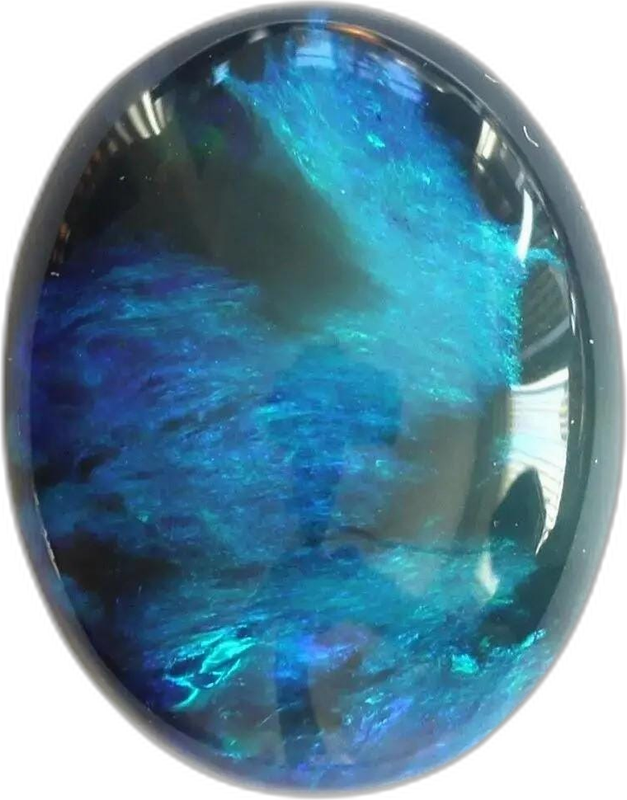
Opal

The only gemstone that needs water to exist.

Opal is hydrated silica — tiny spheres of glass arranged so precisely they diffract light into colour. It can only form on worlds with liquid water. It's been found on Mars.

Part II

These piles may look large — but this is all there is in the known universe.

The next four gems all need beryllium — an element stars can't make. It's created only when cosmic rays shatter heavier atoms at near-light speed.

Solar system-scale
The Sun

Emerald

The green comes from chromium — an element that shouldn't be anywhere near beryllium.

Beryllium lives in the crust. Chromium lives in the mantle. Emerald forms in the narrow zones where they collide.

The Sun

Red Beryl

Same crystal as emerald, coloured red by manganese. Even harder to form.

Red beryl needs everything emerald needs, plus manganese inside a specific type of volcanic flow. On Earth, one deposit exists — in Utah. One red beryl crystal for every 150,000 gem diamonds.

Sun-scale
Earth

Taaffeite

So rare it was discovered by accident — already cut and polished.

Taaffeite needs beryllium, magnesium, and aluminium in the same place — then almost never crystallises anyway. Fewer than a thousand faceted stones exist on Earth.

Earth

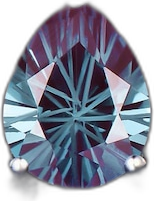
Alexandrite

Green in daylight. Red by candlelight.

The chromium in the crystal absorbs a narrow band of yellow. What's left is green and red — and whichever your light source favours, that's the colour you see.

Earth-scale
Everest

Painite

The Guinness record holder for rarest mineral — for twenty-four years.

Discovered in 1951. A second crystal wasn't found until 1979. Fewer than a thousand are known on Earth. But calcium, zirconium, boron, aluminium — they all exist on other worlds. Painite is rare here. It's not rare everywhere.

Part III

One planet.

Everything below exists only on Earth. The wooden table you're sitting at is rarer than diamond by thirty orders of magnitude.

Everest

Wood

Three trillion trees. 450 billion tonnes.

Cellulose, lignin, water. Grown ring by ring over decades. It rots, it burns, it gets eaten — and still there are 450 billion tonnes of it.

Everest

Ammonite

300 million years of dominance. Then the asteroid.

Ammonites survived four mass extinctions. The fifth one, 66 million years ago, ended them along with the dinosaurs. Their coiled shells are now embedded in rock on every continent.

Everest-scale
Statue of Liberty

Amber

Fossilised tree resin. 44 million years old.

Trees produce resin when wounded — sticky, antimicrobial, designed to seal a cut. The Baltic deposit holds about 640,000 tonnes of it, from a forest that disappeared 44 million years ago.

Statue of Liberty

Precious Coral

Not reef coral. A deep-water animal, growing one millimetre a year.

Precious coral lives in deep water, not on reefs. Its dense red skeleton has been harvested by Mediterranean fishers for millennia. Populations have crashed 80% since the 1970s.

Statue of Liberty-scale
Human

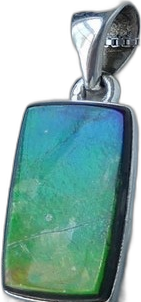
Ammolite

One extinct animal, one river, 70 million years.

The iridescent shell of one extinct ammonite, found along a narrow belt of Alberta's St. Mary River. Gem-grade material may run out within decades.

Human

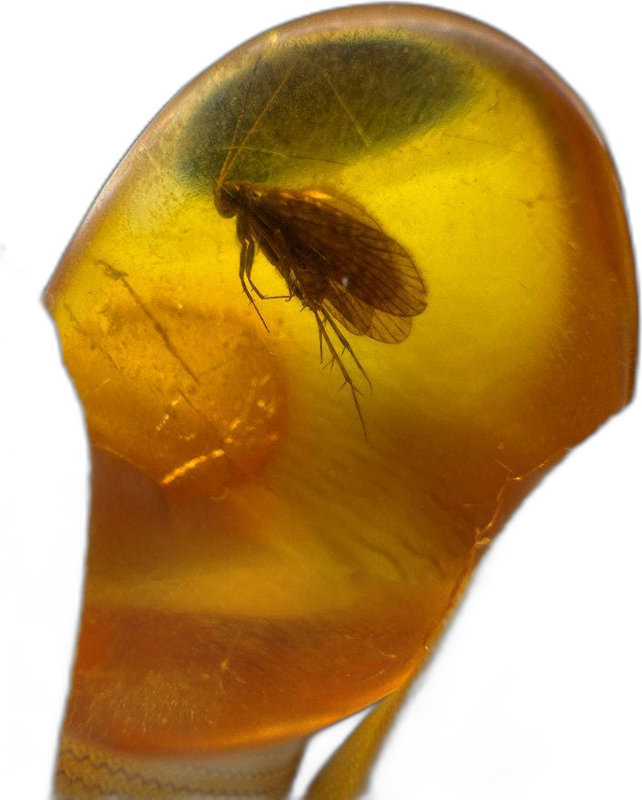
Amber with Insect

A whole creature, frozen in tree resin for 40 million years

One in a thousand pieces of amber contains an insect. Only 10% are preserved well enough to identify. Each one landed on a sticky wound on a tree and never left.

Human

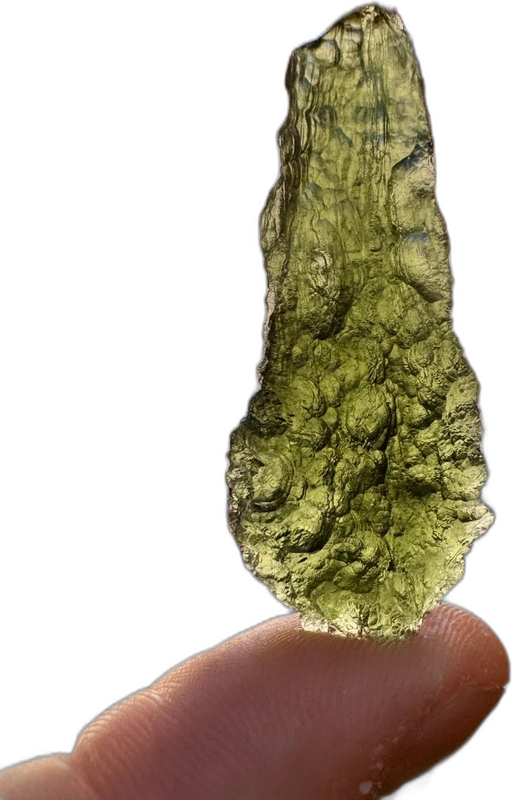
Moldavite

Earth's crust, turned to glass by a cosmic impact

An asteroid vaporised Bavarian ground 14.8 million years ago. The molten glass solidified mid-flight over central Europe. 275 tonnes survive. No more will ever form.

Human

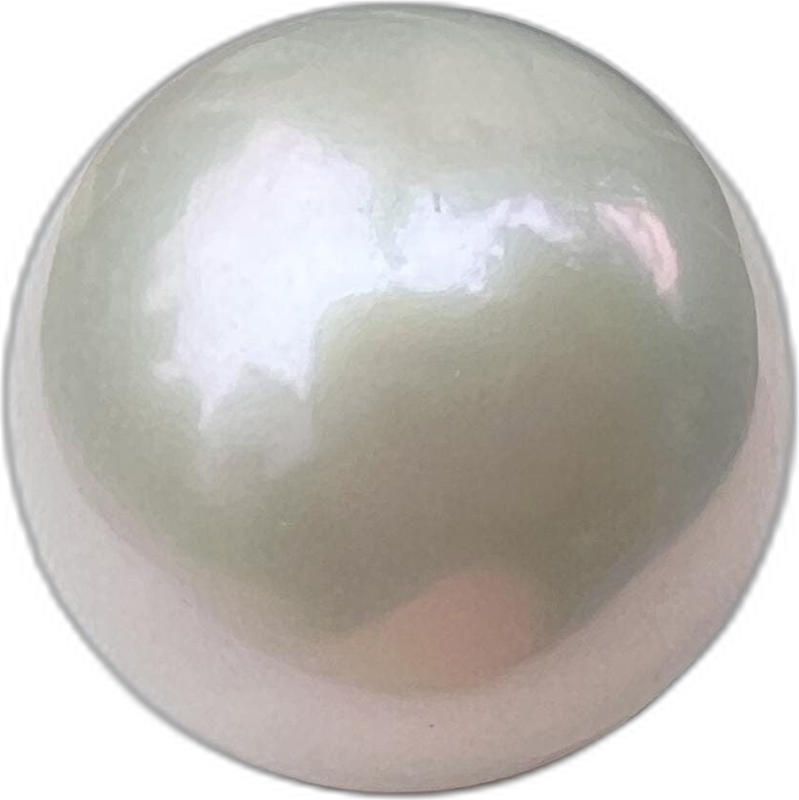
Natural Pearl

Every natural pearl ever formed would fit in one room.

One in ten thousand wild oysters produces a gem pearl. Layer by layer, over years, around an irritant the animal can't remove. Of everything you could wear, this is the rarest in existence.

The rarest gemstone in the known universe

A natural pearl

A natural pearl.


Not diamond. Not ruby. A small, quiet sphere built by a living creature, on the only planet known to have oceans, wrapped around an irritant layer by layer over years.

Rarer than diamond by forty orders of magnitude.

The rarest gemstones in the universe, ranked

We estimated how much of 17 selected precious materials — minerals, fossils, and biological gems — exists across the entire known universe. The result spans 44 orders of magnitude, from planet-swallowing quantities of corundum down to a single room of natural pearls.

The most common gemstones are cosmically abundant

Ruby and sapphire are the same crystal, corundum, with different impurities — one of the first minerals to condense from the gas of a star shedding its outer layers. Diamond is even more common: carbon, the fourth most abundant element, becomes diamond easily. On Neptune, it rains diamonds. Quartz, amethyst, jadeite, and opal follow — all abundant wherever rocky planets exist with the right conditions.

The beryllium cliff

Emerald, red beryl, taaffeite, and alexandrite all require beryllium — an element that can't be forged inside stars. Beryllium is created only when cosmic rays smash into heavier atoms at near-light speed. This bottleneck means these gems can never be cosmically common, no matter how many rocky worlds there are. Red beryl has one commercial deposit on Earth, and there is roughly one red beryl crystal for every 150,000 gem diamonds. Taaffeite was first discovered already cut and polished in a jeweller's box, mistaken for spinel. Fewer than a thousand faceted stones are known.

The rarest gemstones exist on only one planet

Minerals can form on trillions of worlds. Life — as far as we know — happened on one. Wood, ammonite fossils, amber, precious coral, ammolite, and natural pearl all exist only on Earth. Then there's moldavite — not biological, but just as singular: glass formed by a single asteroid impact in Bavaria 14.8 million years ago.

At the bottom of the list sits a natural pearl. One in ten thousand wild oysters produces one. Every natural pearl that has ever existed — across all of history — would fit inside a single room.

The full ranking

Most abundant gemstone to rarest, by total mass across the known universe:

  1. Ruby & Sapphire (corundum)
  2. Quartz & Amethyst
  3. Diamond
  4. Jadeite
  5. Opal
  6. Emerald
  7. Red Beryl
  8. Taaffeite
  9. Alexandrite
  10. Wood
  11. Ammonite
  12. Amber
  13. Precious Coral
  14. Ammolite
  15. Amber with Insect Inclusions
  16. Moldavite
  17. Natural Pearl