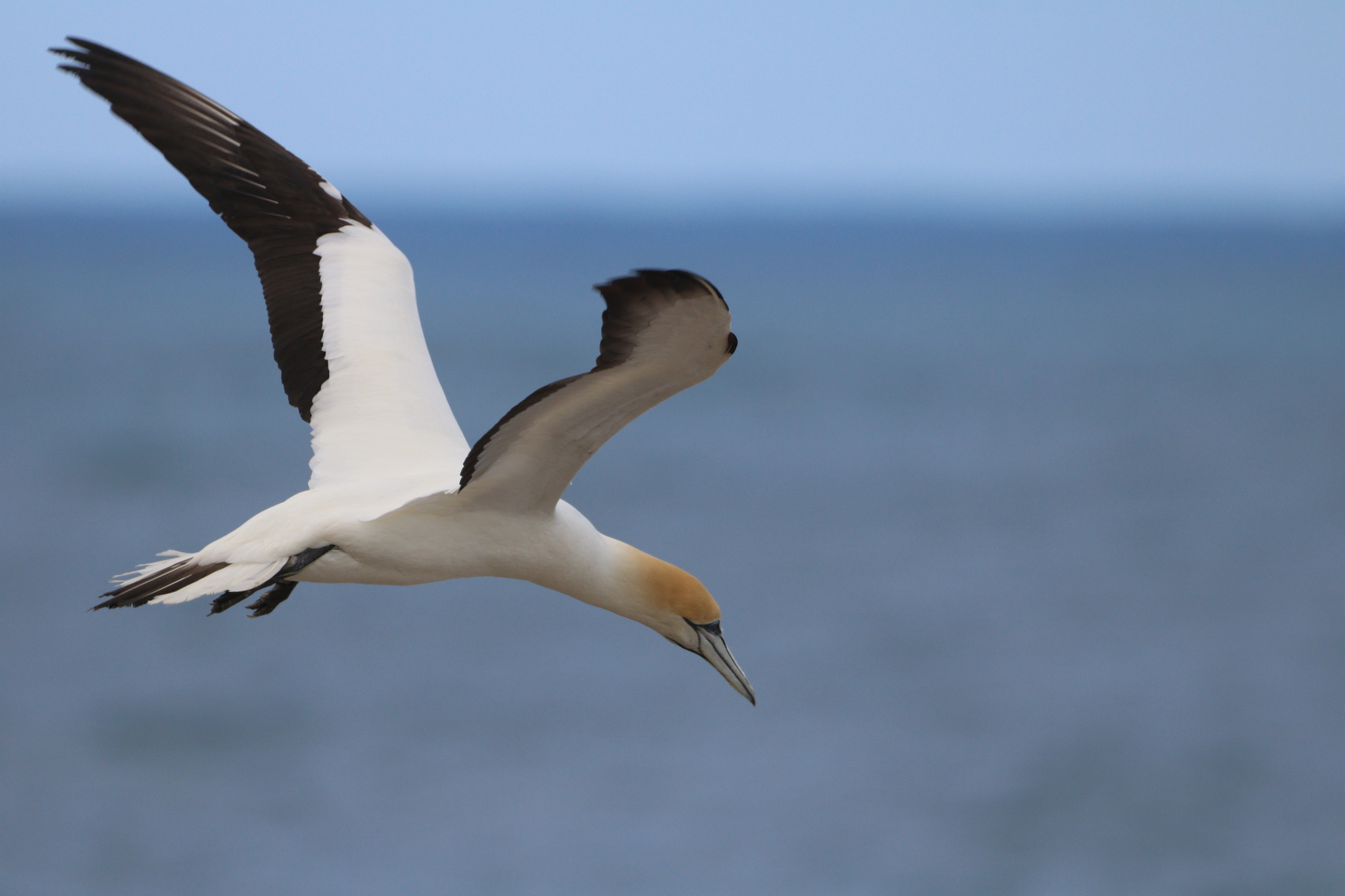
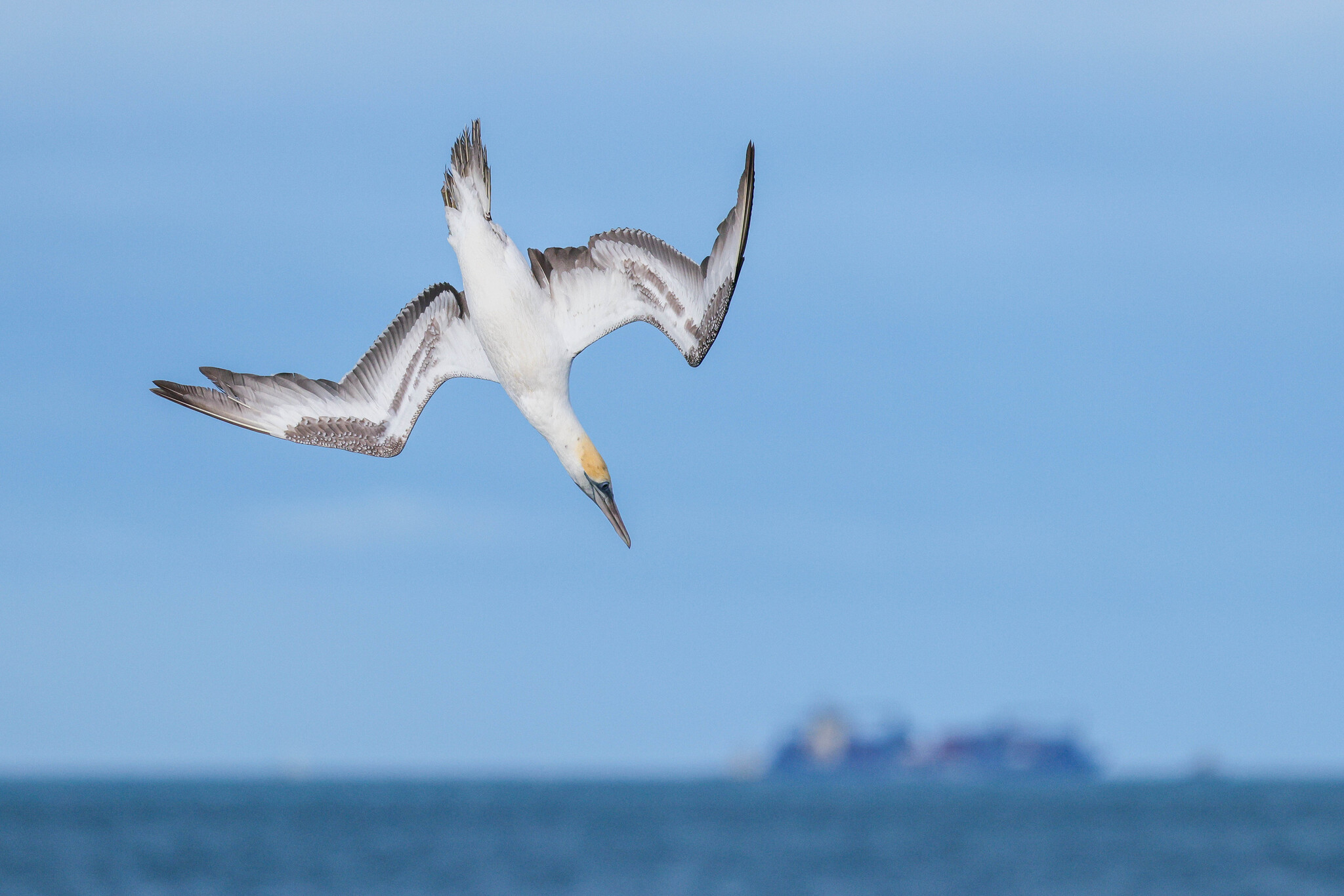
From ten metres or more above the sea, it folds its wings back and drops like a dart into the shoal. Tiny backward-pointing serrations on its bill grip the fish, and the fish is usually swallowed before the gannet even reaches the surface again, after only about ten seconds under.
It may not always have hunted this way. A skull from a lake in Germany, about 48 million years old, may be the earliest known member of the gannet family. Unlike today's gannets, which live only at sea, it was found in a freshwater lake, and its longer beak suggests it did not plunge-dive.
If that bird really was an early gannet, the dive came later. Perhaps it came a step at a time: birds that snatched fish from near the surface, then birds that dropped from a little higher, each generation's best divers a little more streamlined than the last, until a bird could hit the sea from ten metres and come up with its catch already swallowed.
When the next one folds its wings and falls, you're seeing where that road has led.