The Deeper Look
Sydney
Found something? Find it here, and read its piece standing in front of it: what to look for, and what it’s been doing for millions of years. 484 so far.
Want to know what’s out this week, and the best day to go? Get the Sydney Nature Forecast, free every Thursday →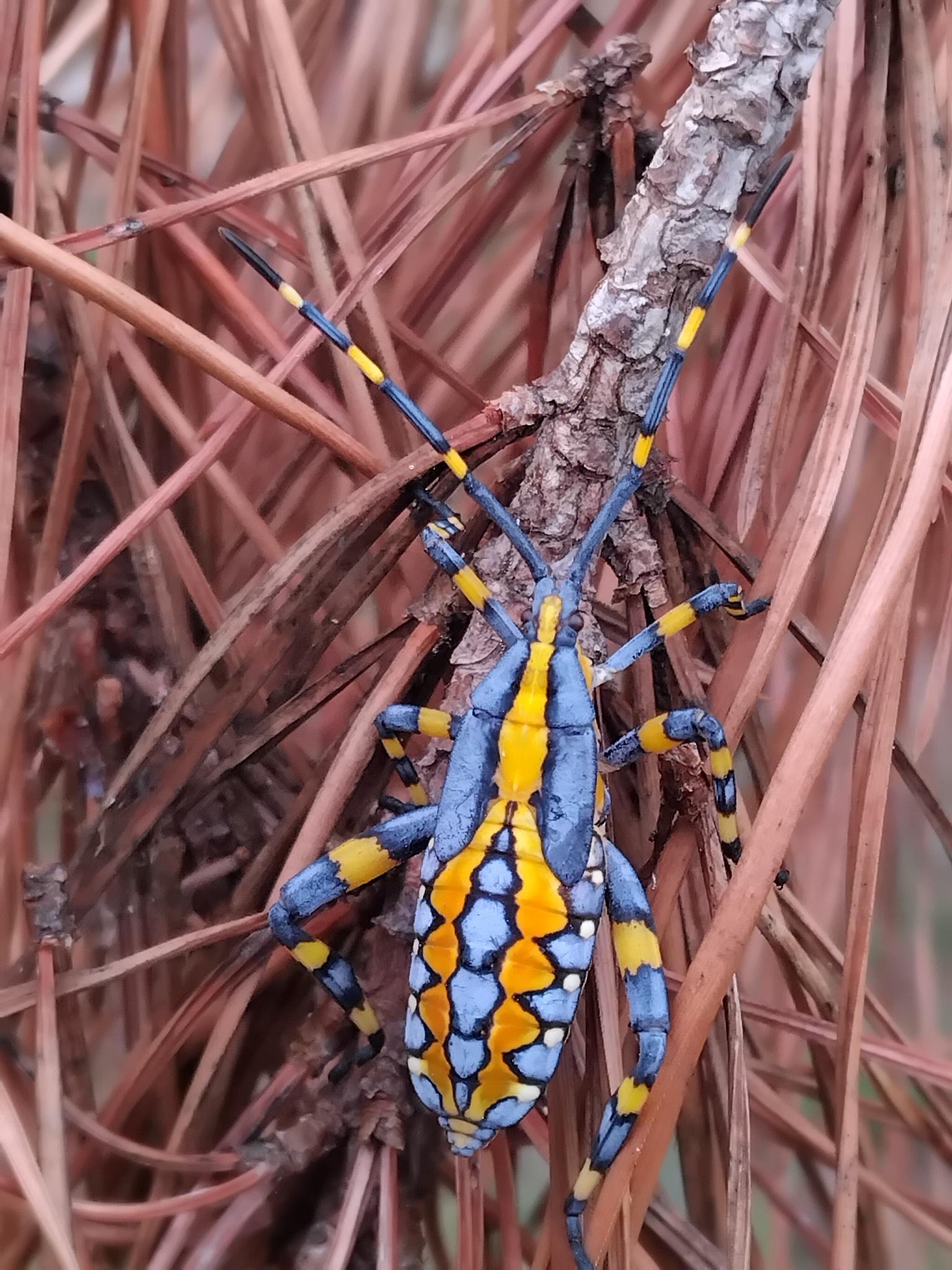 Amorbus atomariusThe little bugs on the gum tips are dressed loud: yellow, orange, blue or pale green. Like other gum-tree tip bugs, the young wear warning colours and back them up with defensive chemicals, and predators and parasites are rarely seen attacking them, possibly for those reasons.
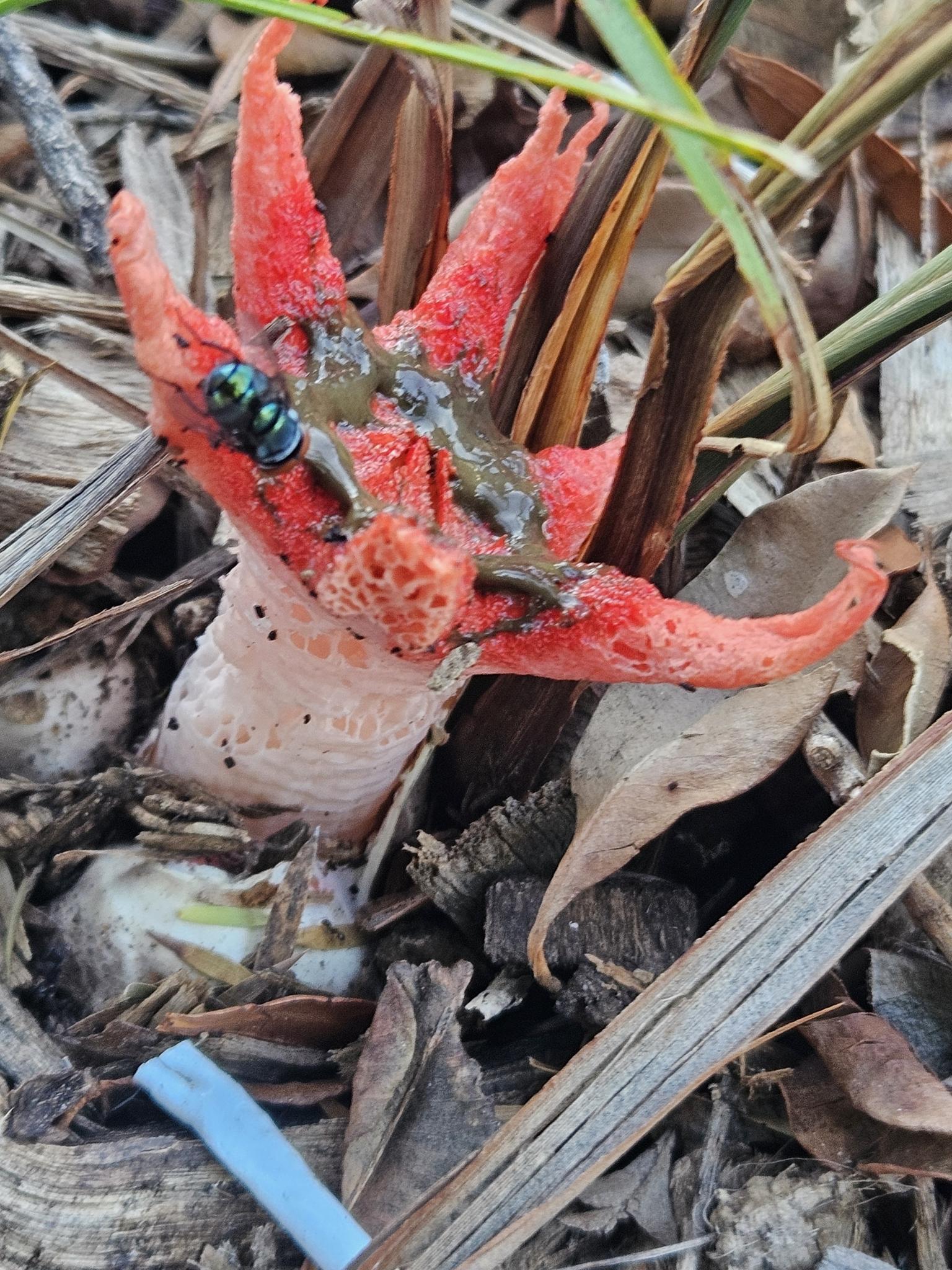 Anemone stinkhorn fungusIt bursts from an "egg" as a star of bright red arms, and it smells like rotting meat. Even the red looks like freshly exposed meat.
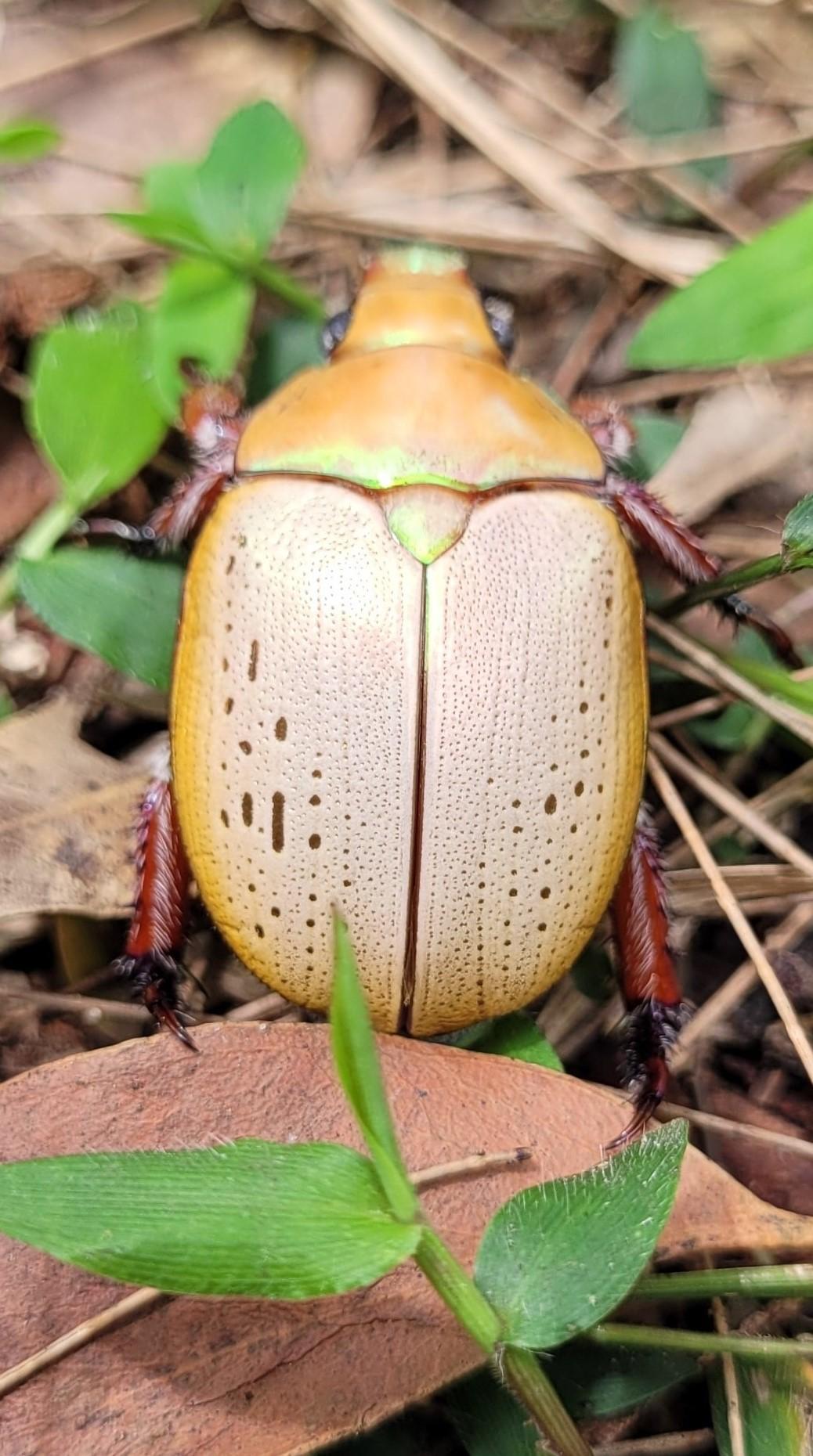 Anoplognathus olivieriThis Christmas beetle lives two lives in two worlds. As a grub it stays underground, chewing grass roots.
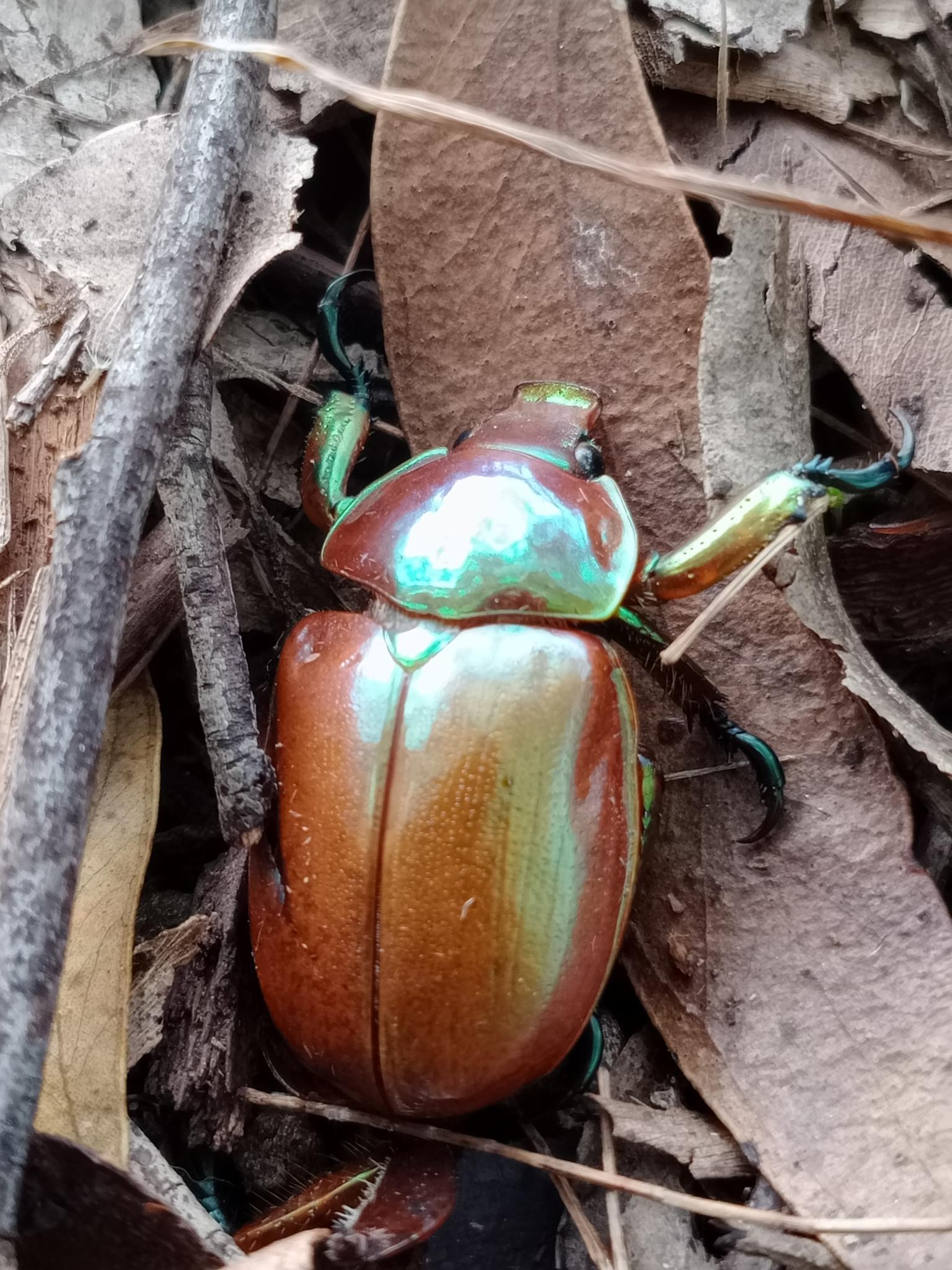 Anoplognathus viriditarsisThis is the biggest of Sydney's Christmas beetles, 24 to 30 millimetres of armour, and it has come for the gum leaves.
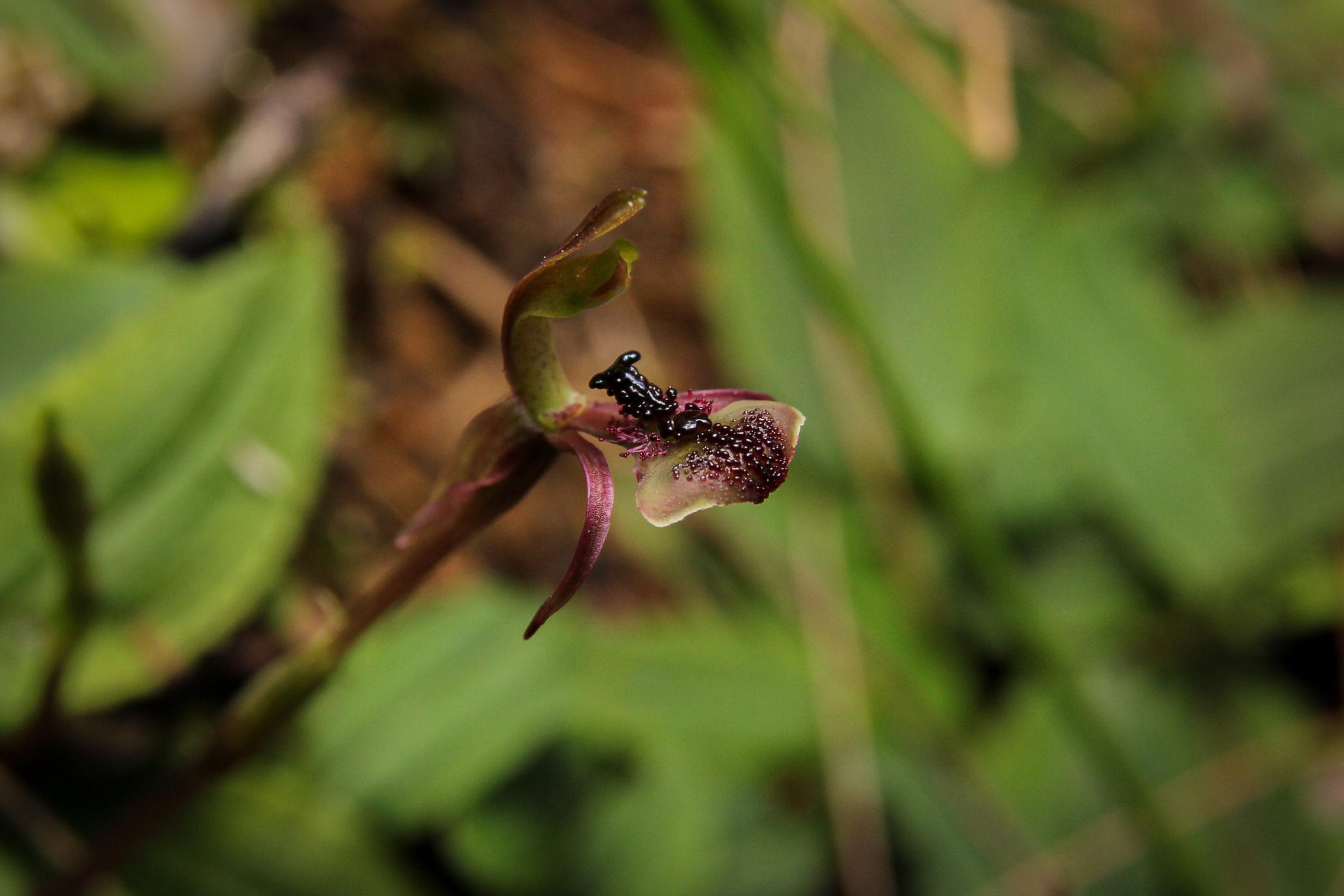 Ant OrchidRunning down the middle of the lip is a narrow, shiny black bump shaped like an ant. That's where it gets its name.
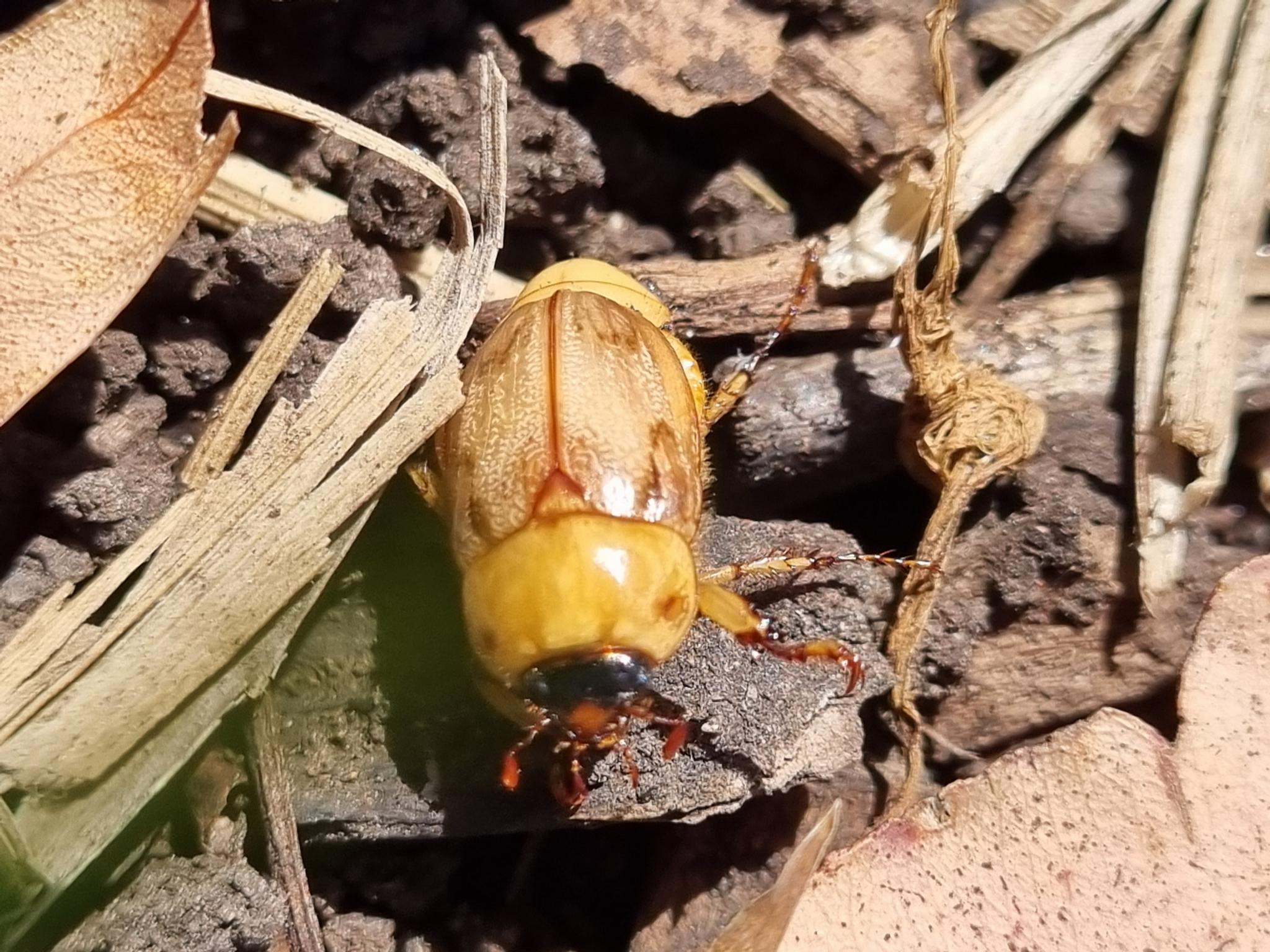 Argentinian ScarabThis beetle is a long way from home. It comes from Argentina and Uruguay, and in November 1947 its grubs turned up in the turf of a lawn in Bardwell Park.
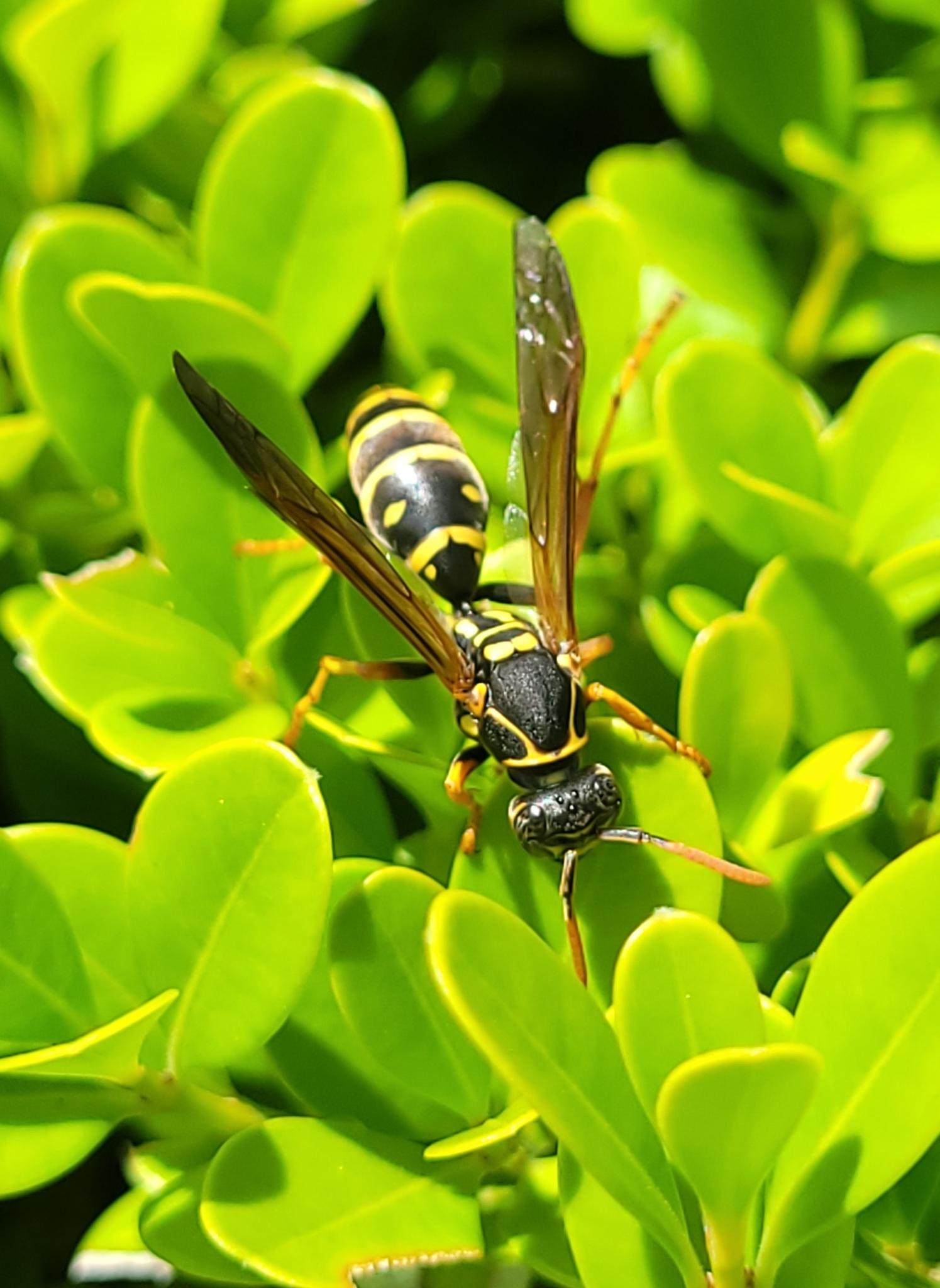 Asian Paper WaspThis wasp is an invader. The Asian paper wasp has come from overseas and is now counted as invasive in New Zealand and south-east Australia.
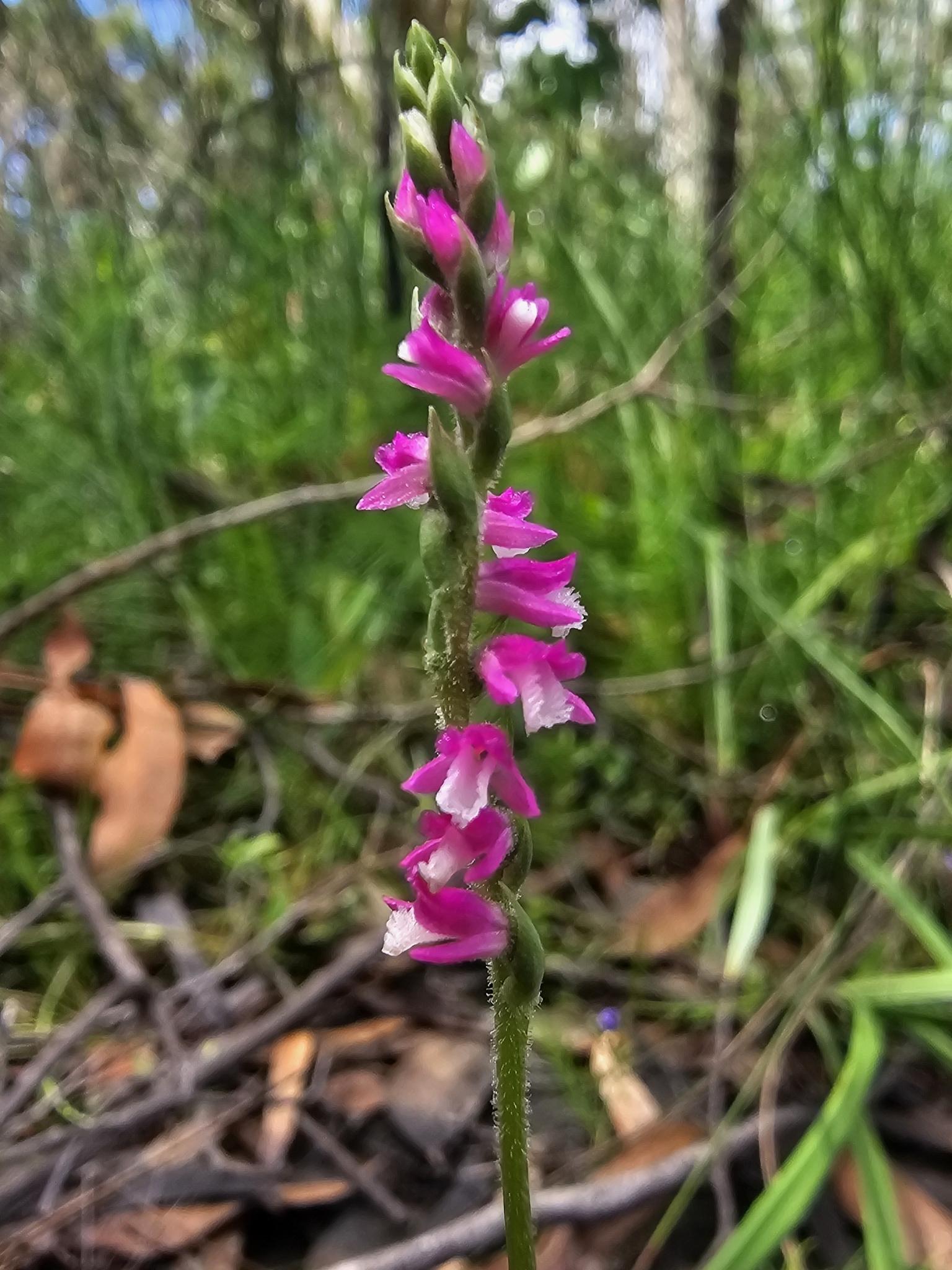 Austral ladies'-tressesFollow the tiny pink flowers up the stem. They climb in a spiral.
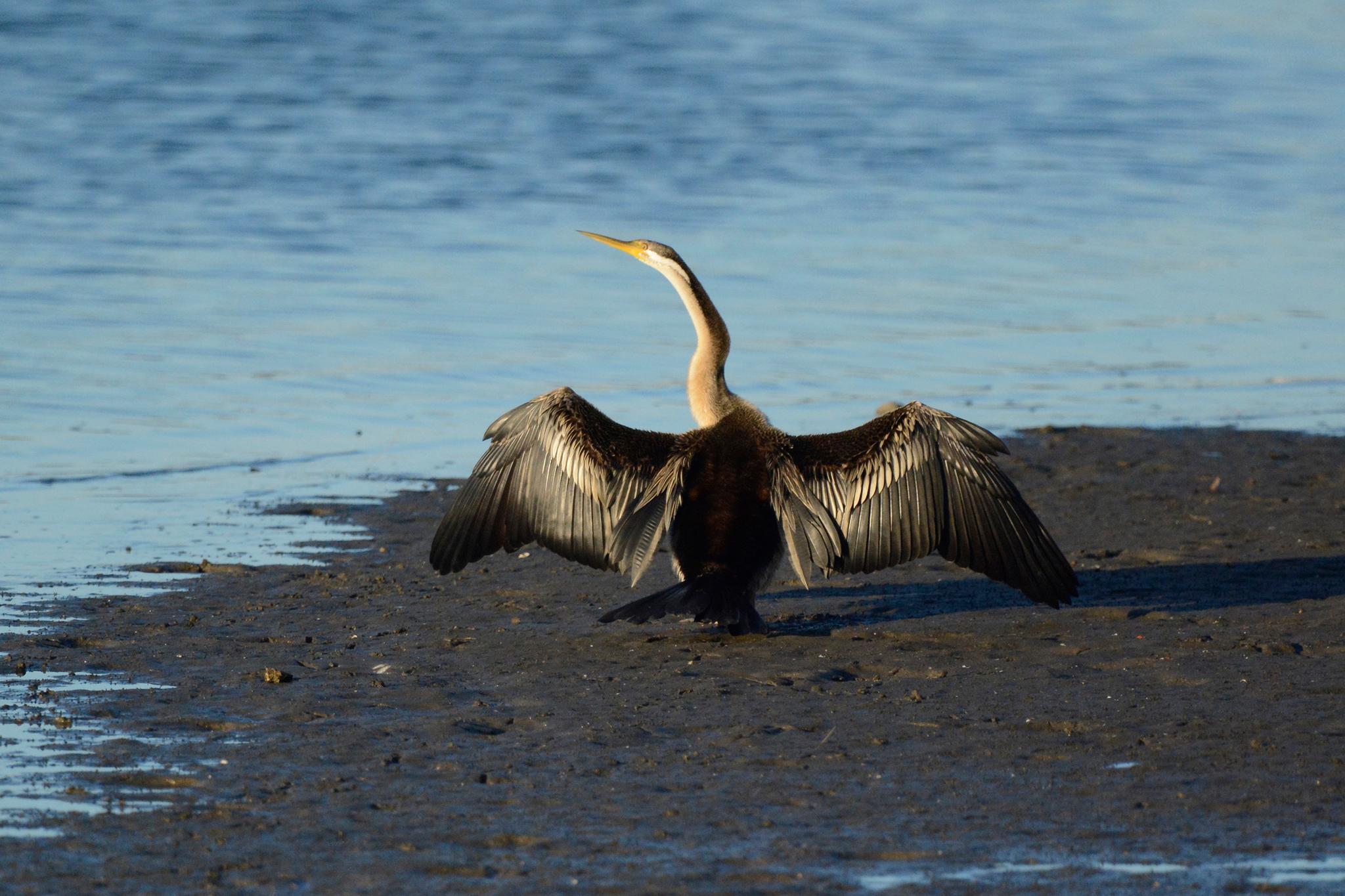 Australasian DarterUnderwater, the darter spreads its wings and tail like an umbrella. Fish come in under the patch of shade it makes, and the darter spears them with its sharp bill.
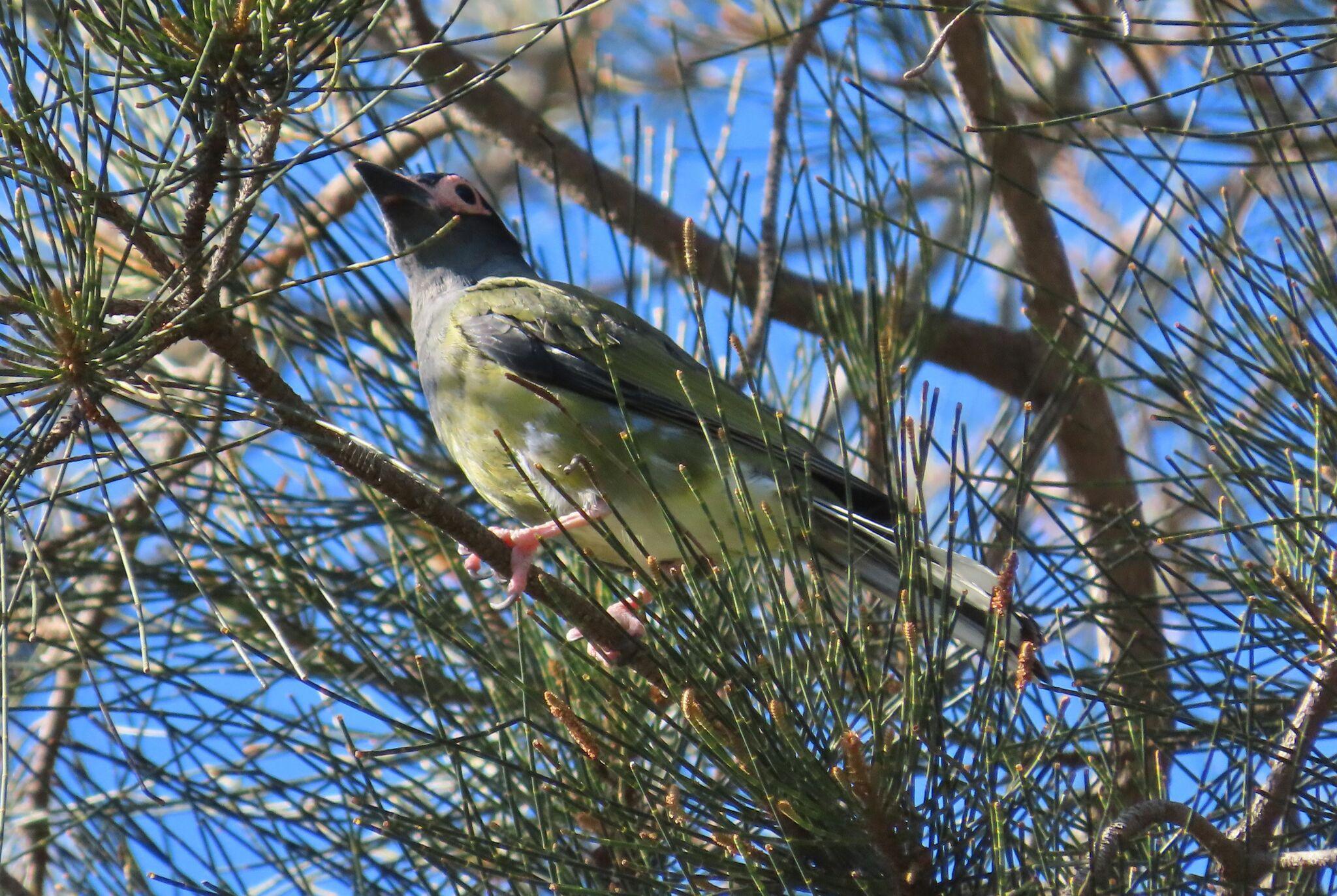 Australasian FigbirdUp in the canopy, as high as 20 metres, figbirds nest in small neighbourhoods, with nests often quite close together, each cup hung by its rim from a fork at the end of a branch.
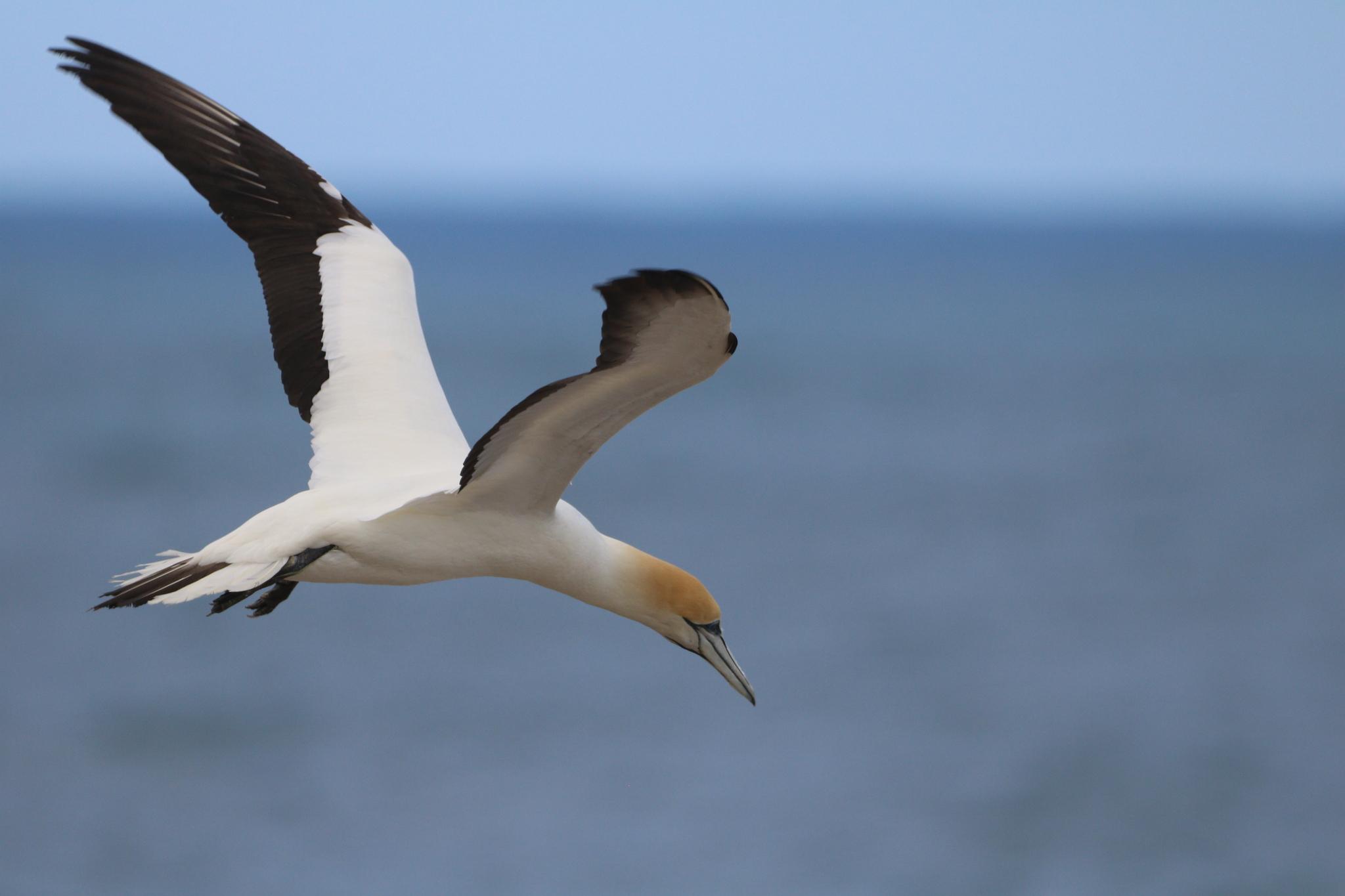 Australasian GannetFrom ten metres or more above the sea, it folds its wings back and drops like a dart into the shoal. Tiny backward-pointing serrations on its bill grip the fish, and the fish is usually swallowed before the gannet even reaches the surface again, after only about ten seconds under.
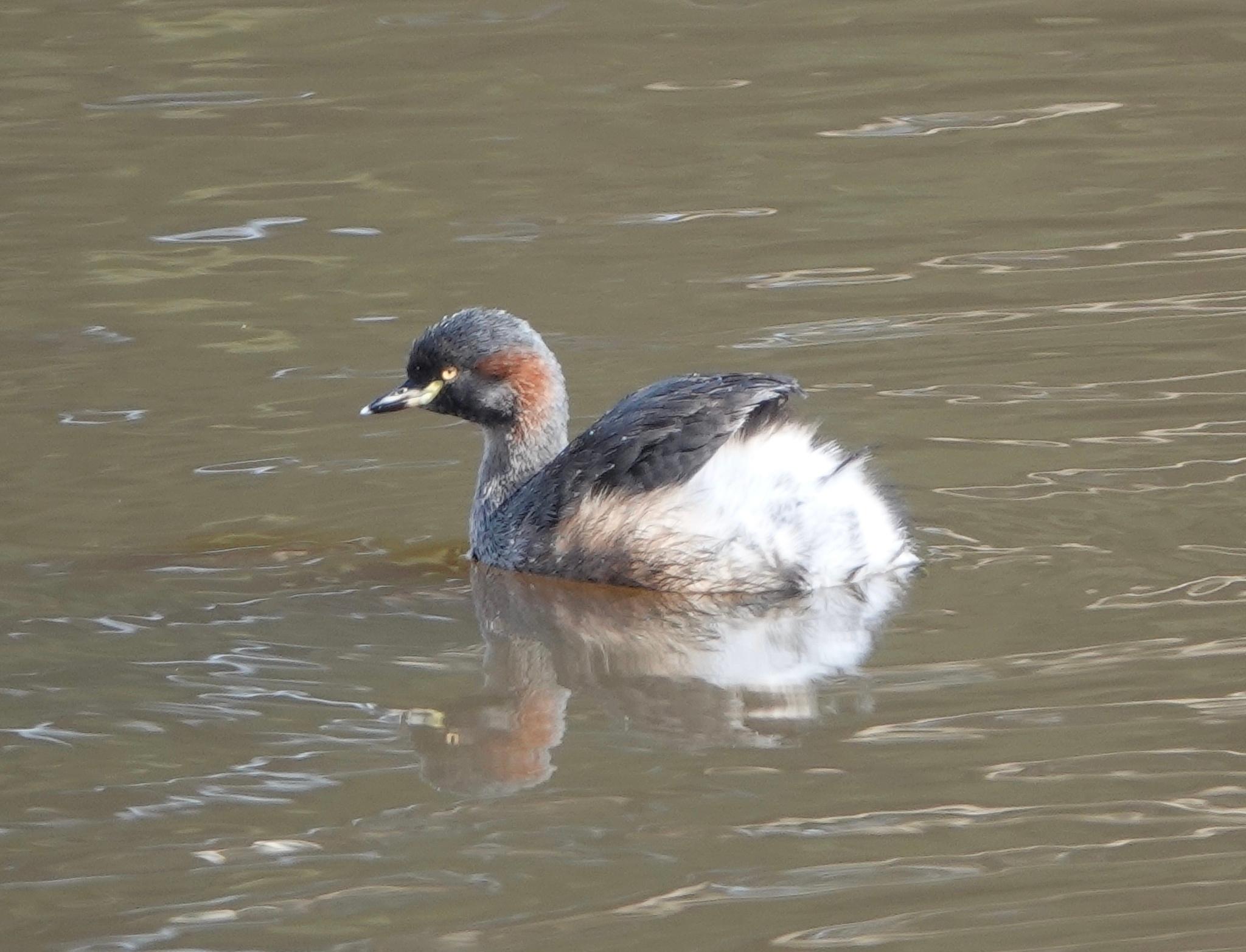 Australasian GrebeIt looks like a little duck. It isn't one.
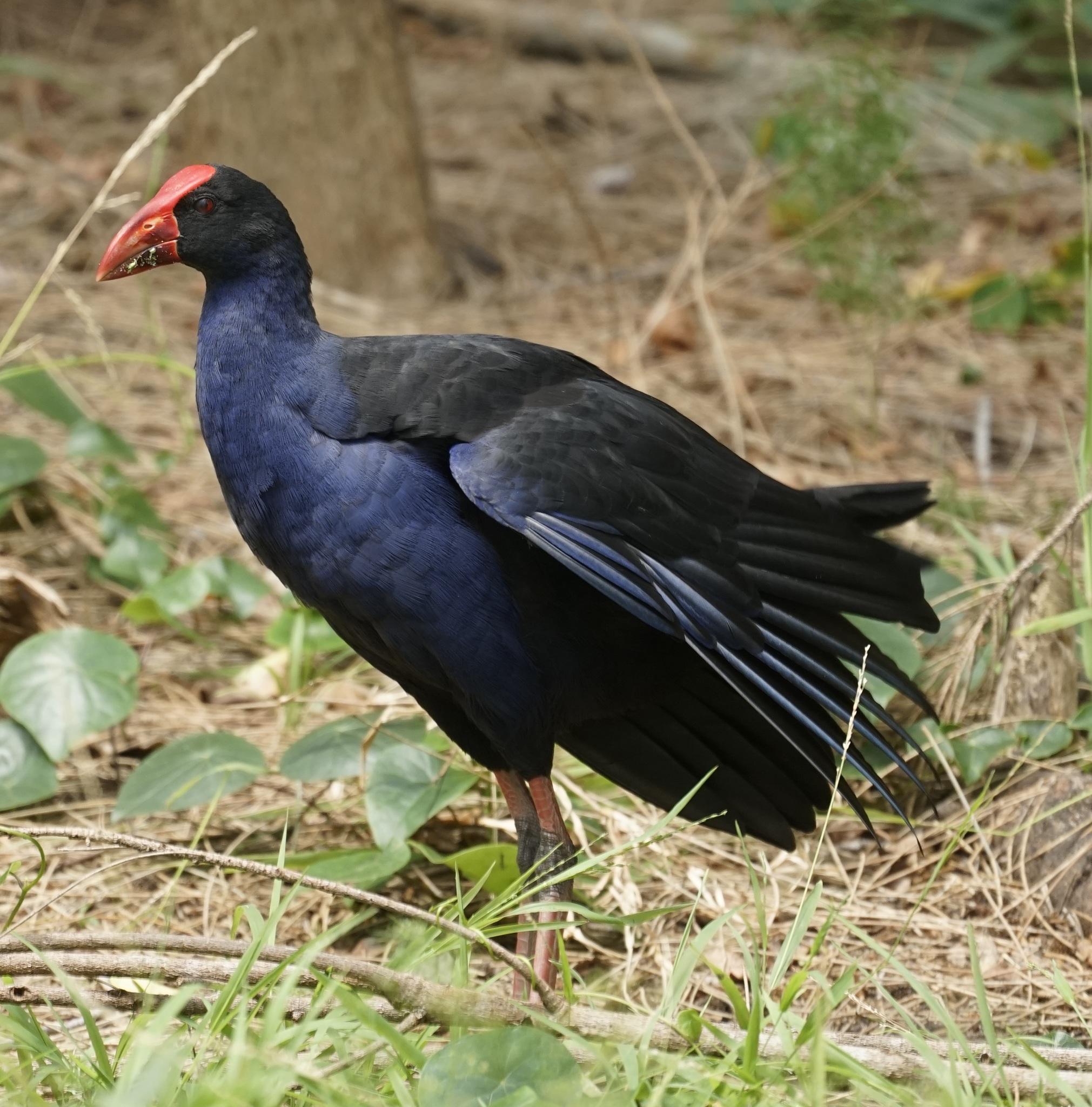 Australasian SwamphenWe tend to picture a bird family as a pair: one mum, one dad, a nest. Swamphens often don't work that way.
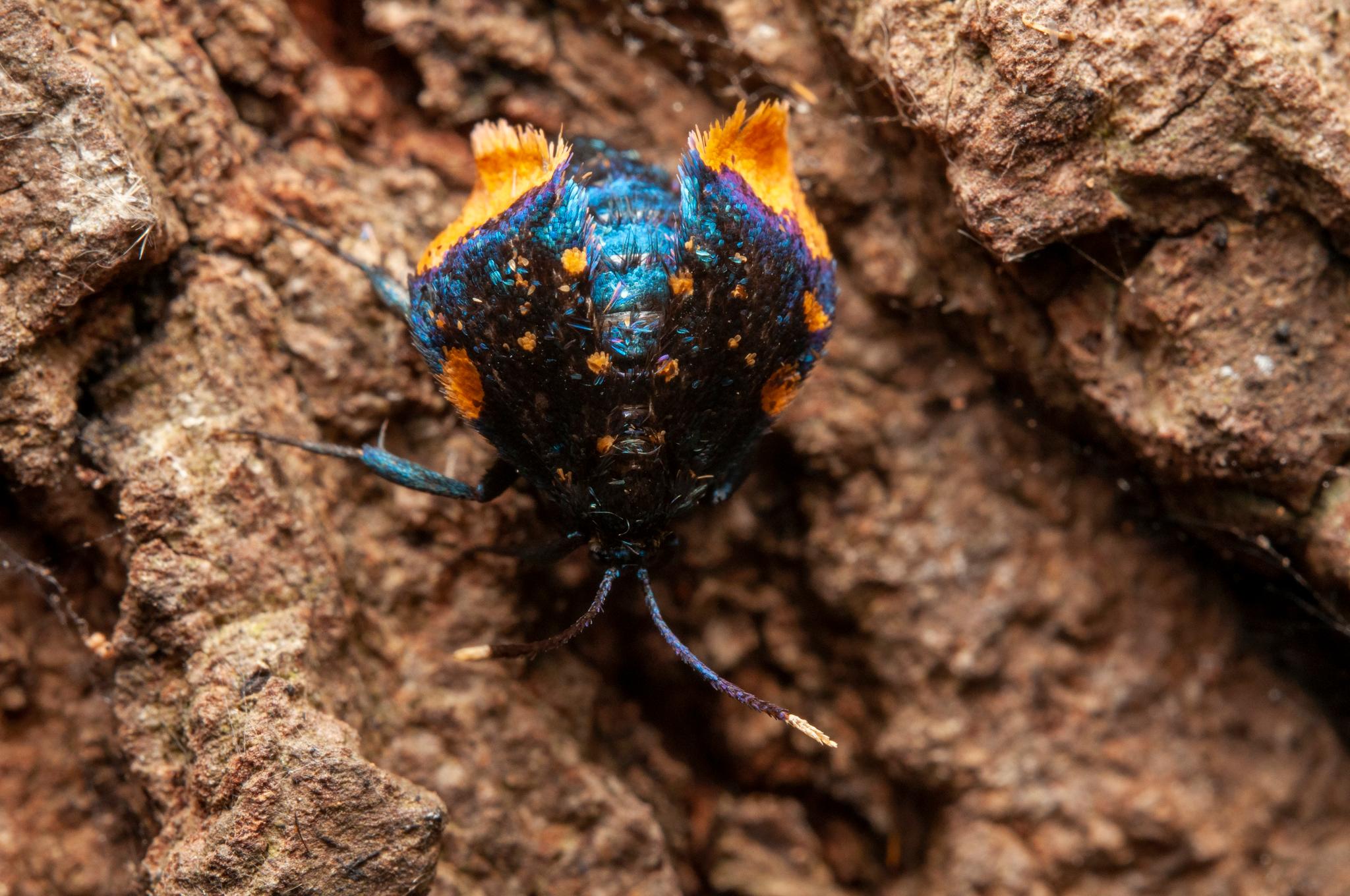 Australian bag mothThat scrap of lichen on the fence post is moving. Inside it is a caterpillar, in a silk case it has covered with bits of lichen, grazing algae and lichen off the wood.
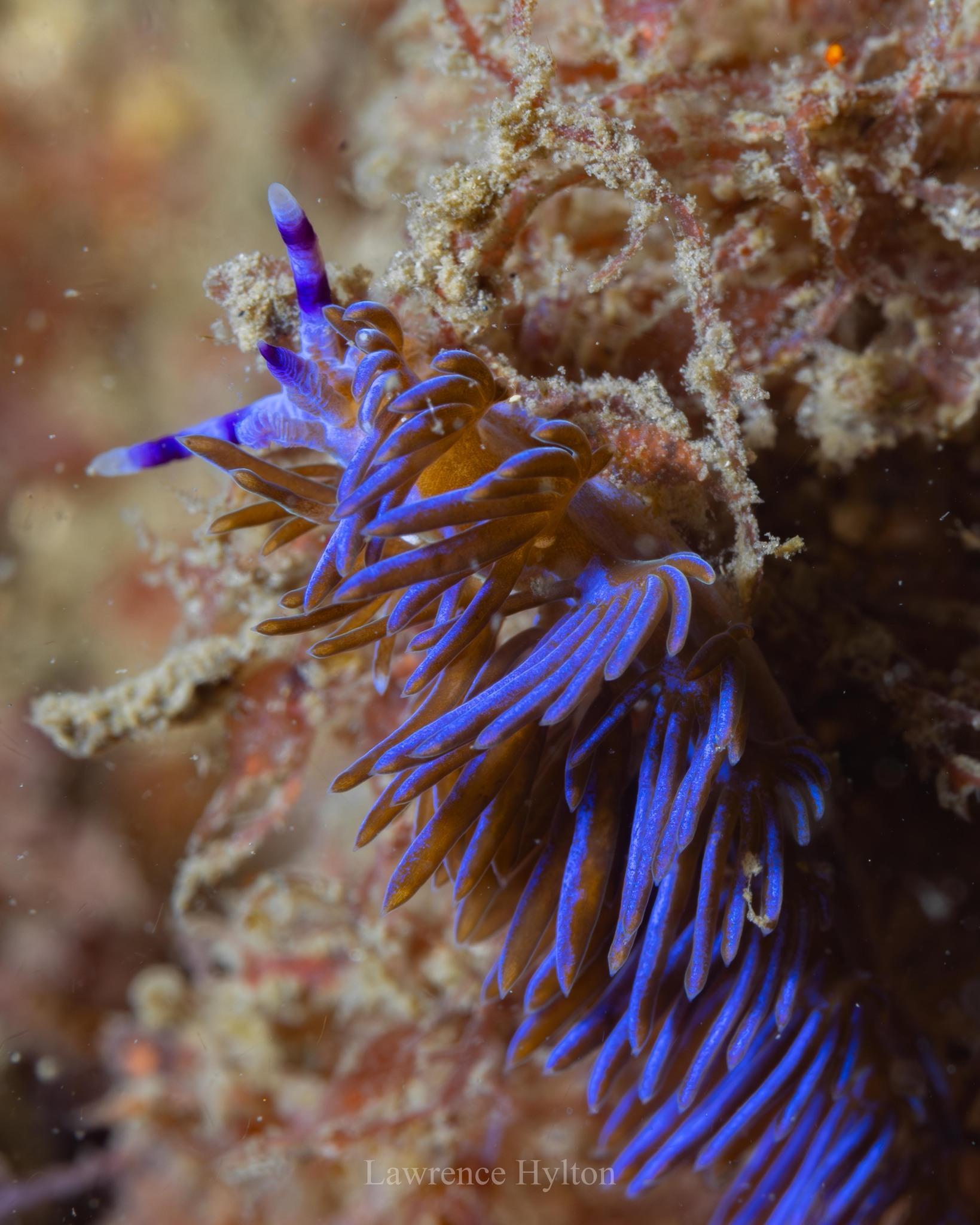 Australian Blue DragonThis sea slug is a farmer. It captures microscopic algae and farms them inside its own body, and adults can go some time without eating, probably living off their algae "gardens".
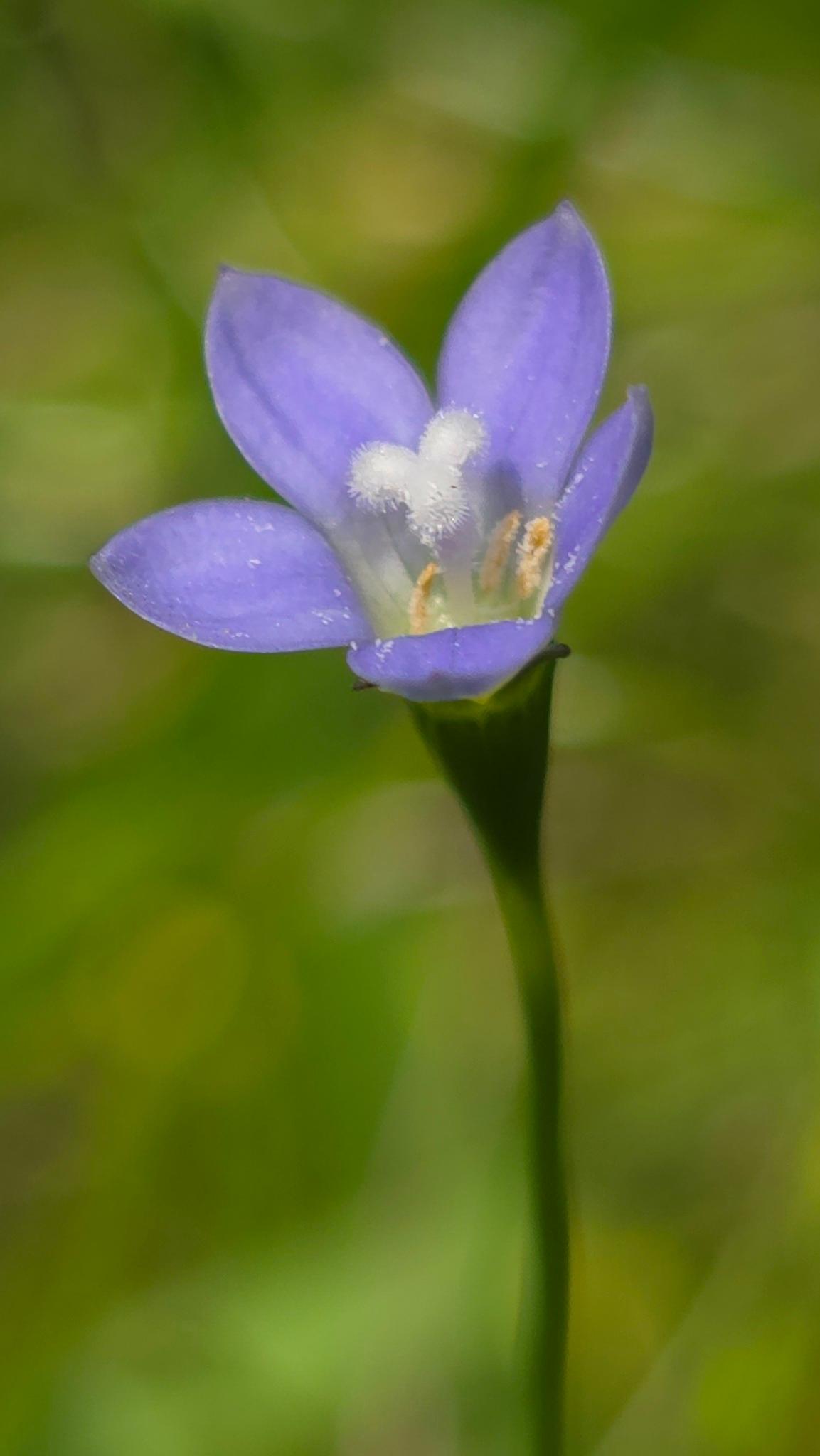 Australian BluebellThis little blue flower is male first and female later. Before it even opens, it loads its pollen onto the hairy top of its style.
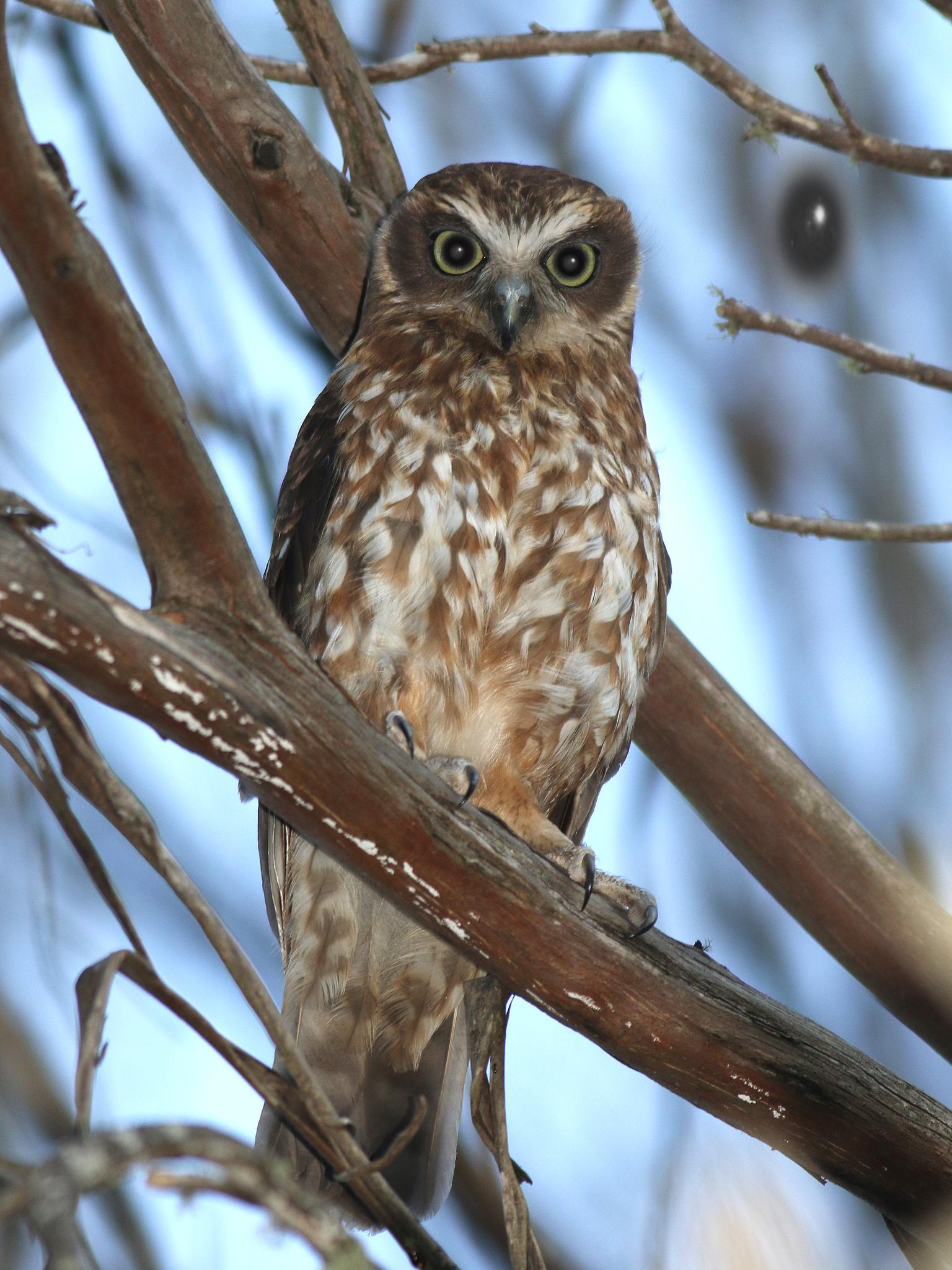 Australian BoobookMo-poke. Mo-poke.
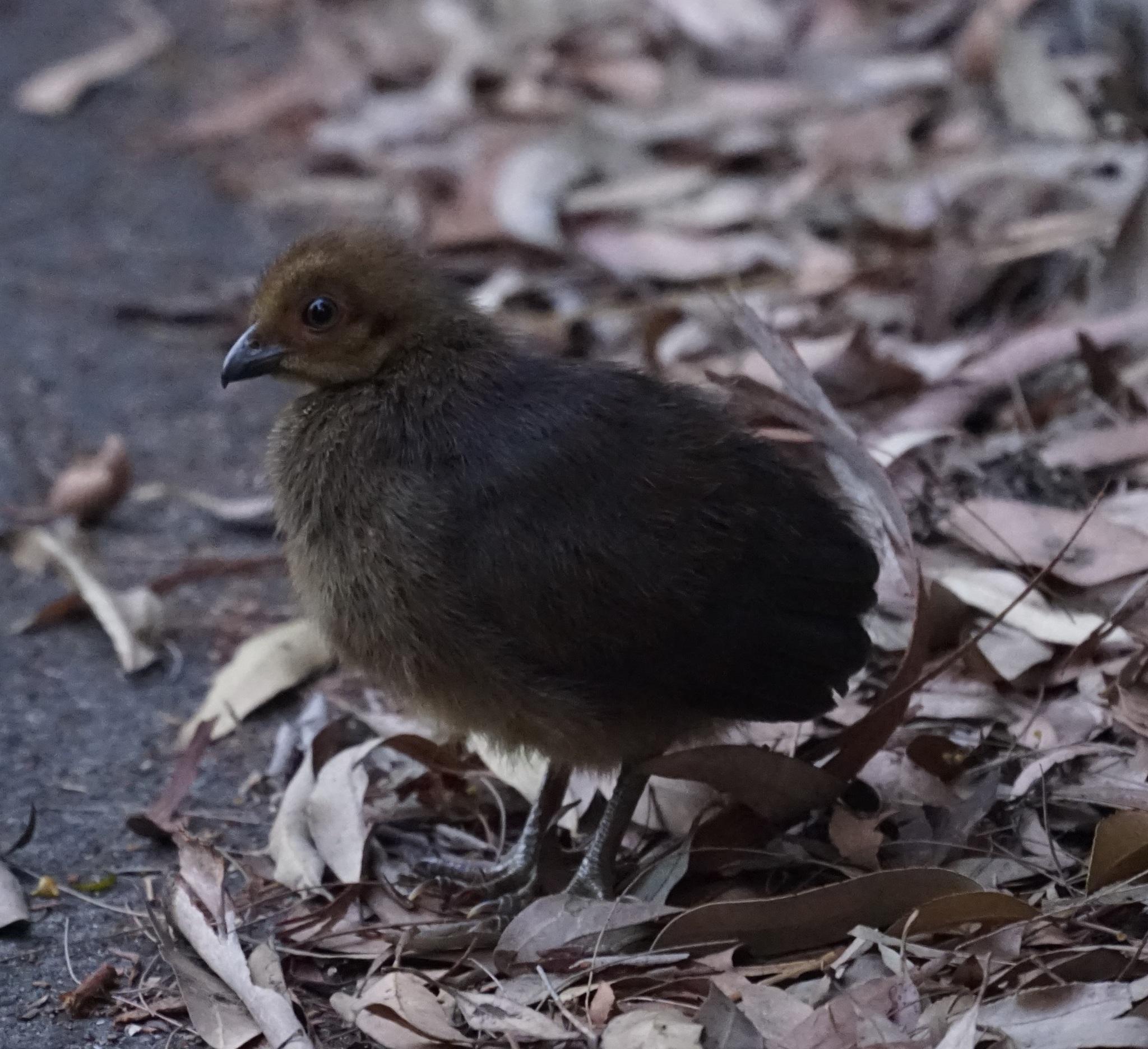 Australian brush turkey chicks emerging from moundsThis chick hatched in the dark, half a metre or more down inside a mound. It rested, then spent most of two days digging its way up, lying on its back and scraping at the soil with its feet, stopping between bouts, with no parent waiting at the top.
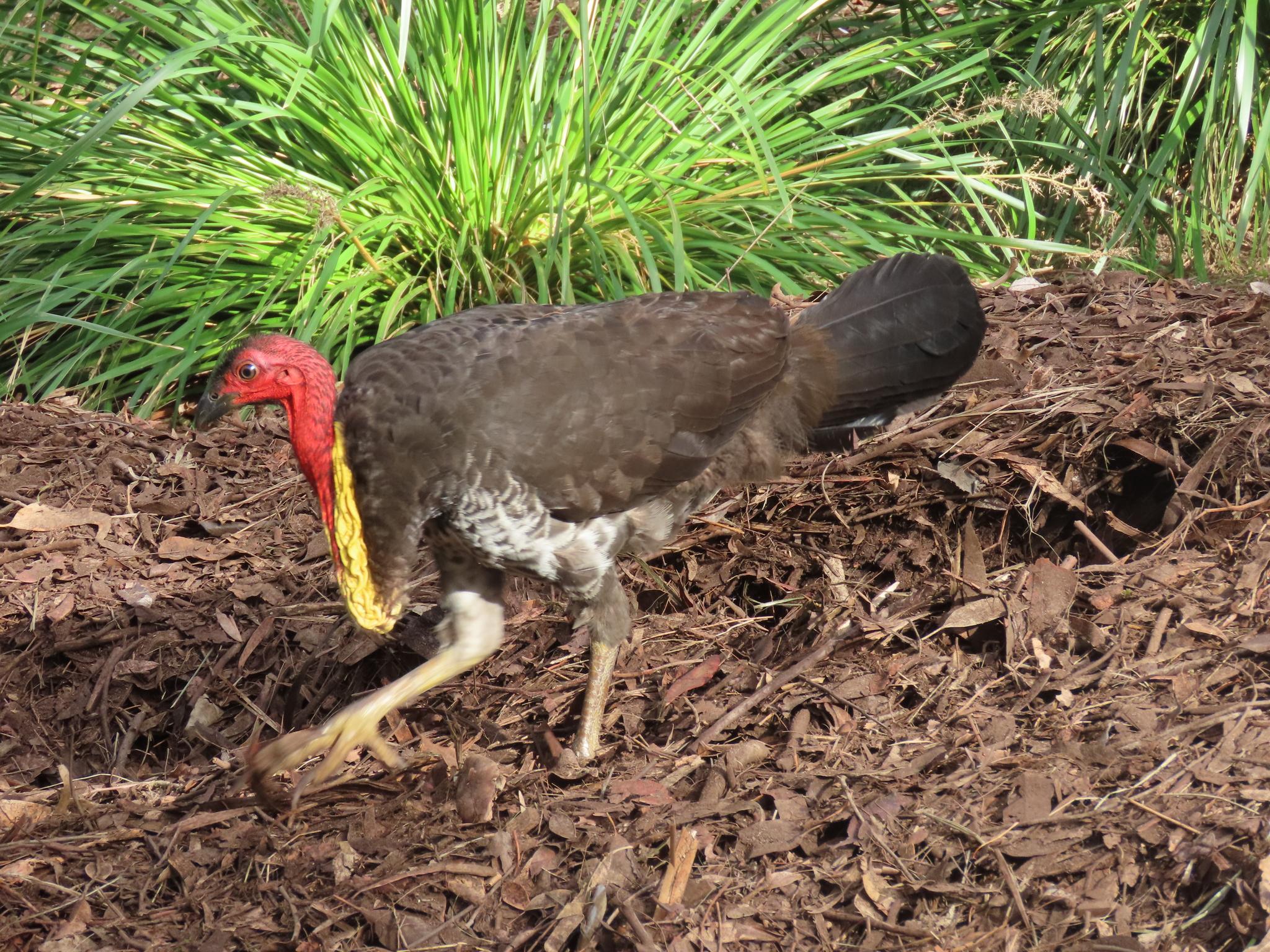 Australian brush turkeys building moundsWhen you find a mound, look on top for small holes. Don't dig or climb on it.
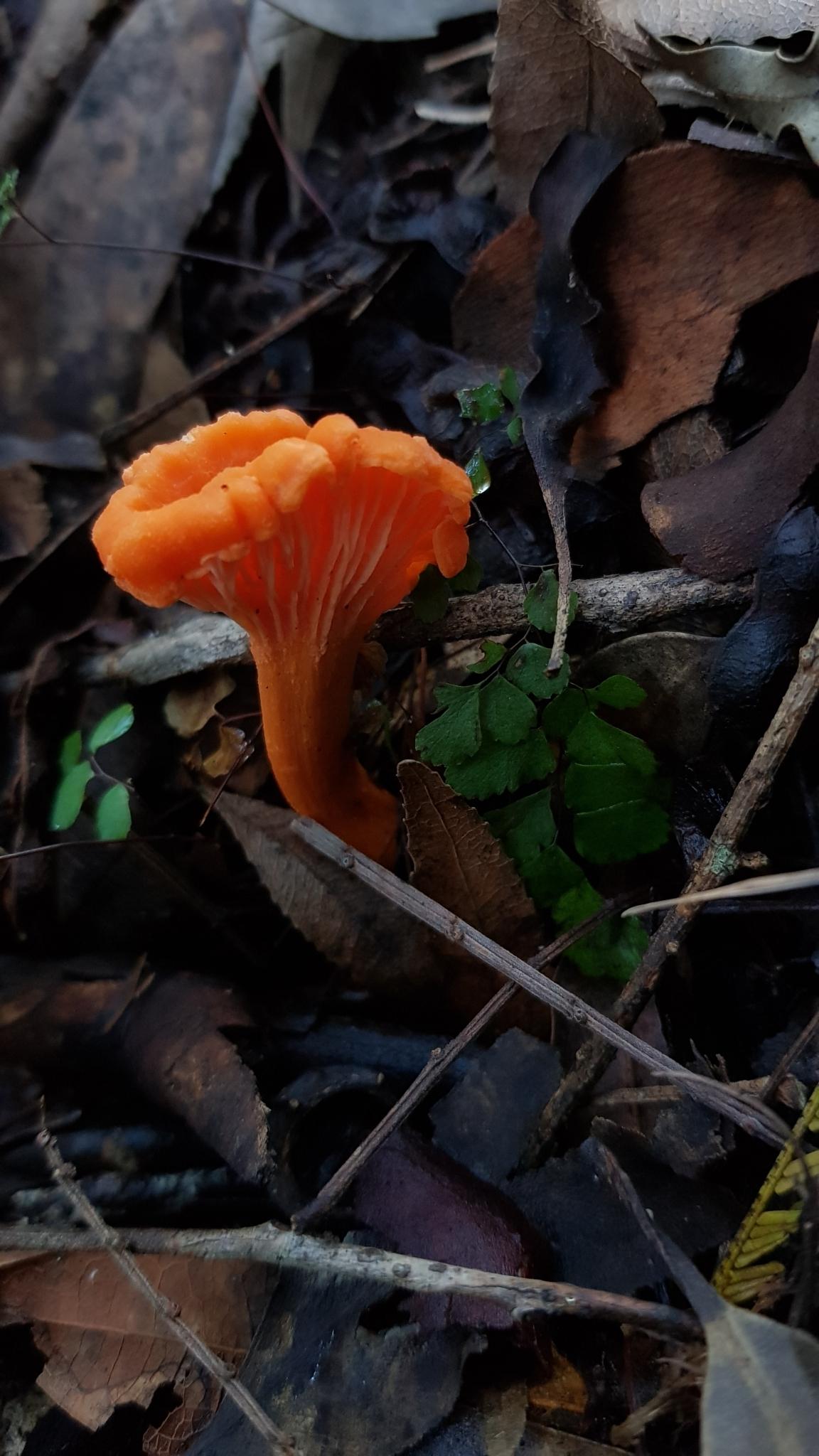 Australian chanterelleYou might smell it before you see it: a waft of apricots from the leaf litter. The mushroom is apricot-pink, but it usually stays hidden, covered or only half showing under the leaves.
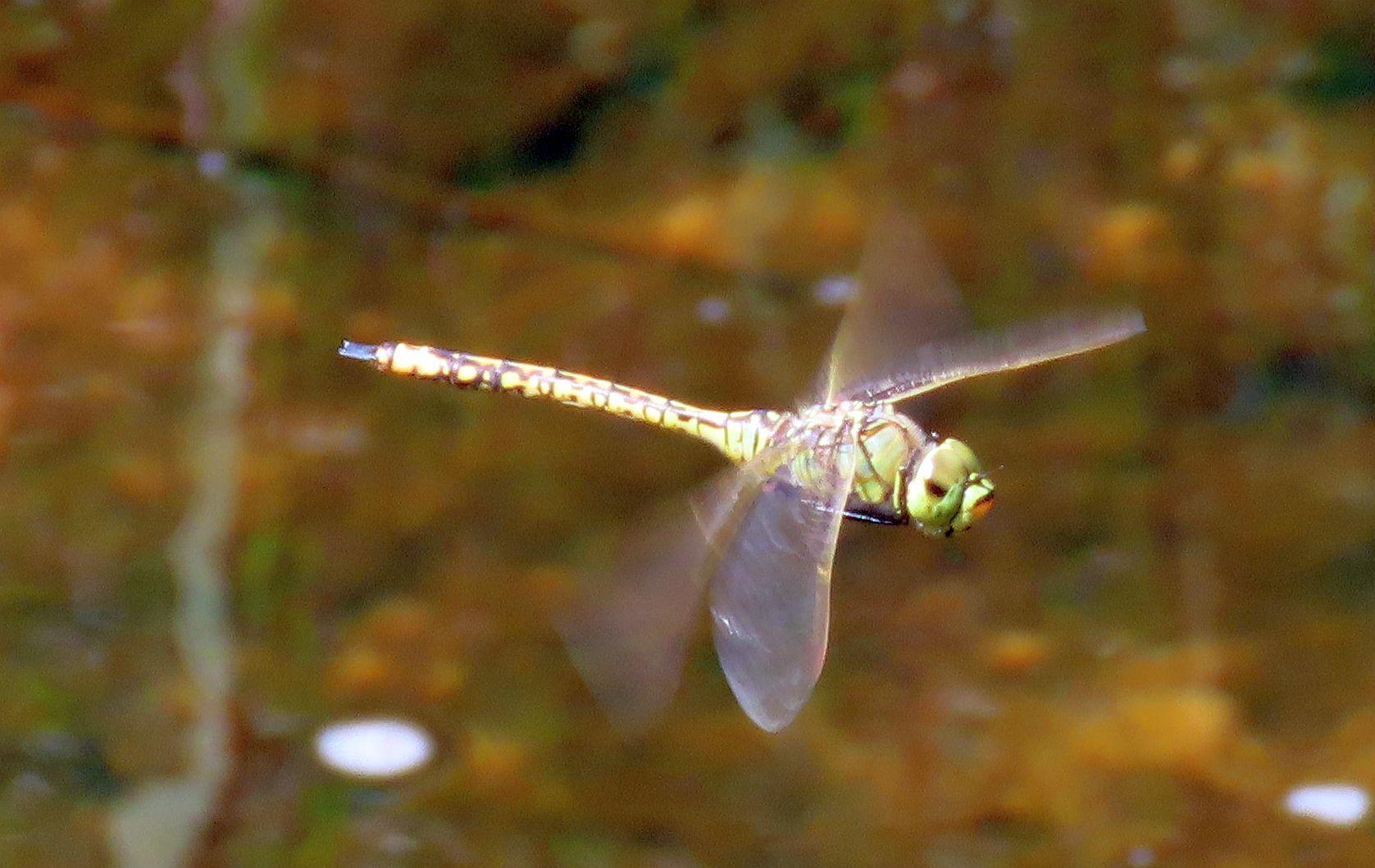 Australian EmperorWhen two emperor dragonflies chase over the water, one may be lying to the other. Australian emperors use what scientists call "motion camouflage".
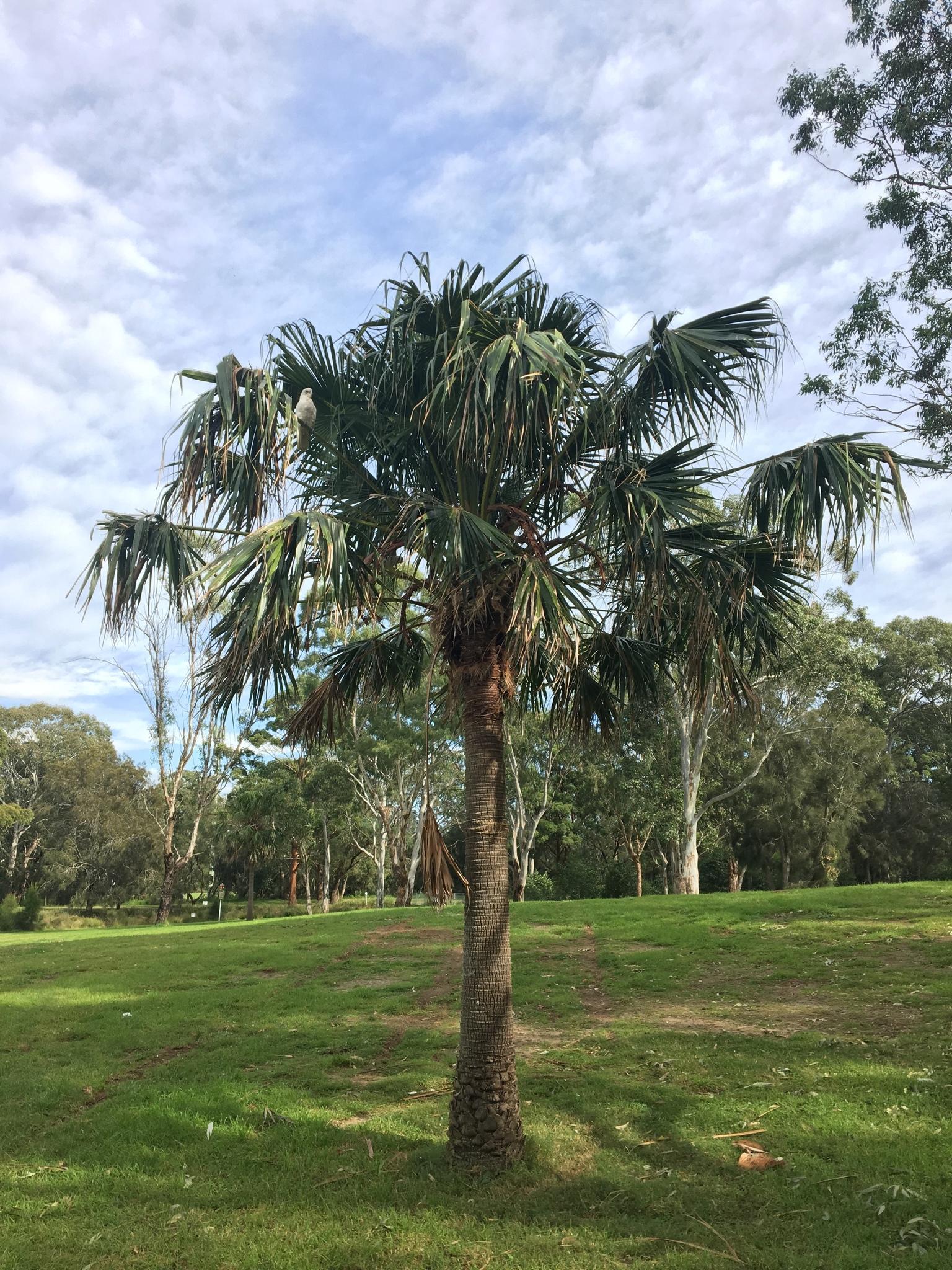 Australian Fan PalmThis palm is in no hurry. It takes more than 20 years to flower for the first time, and it's estimated to live 100 to 200 years.
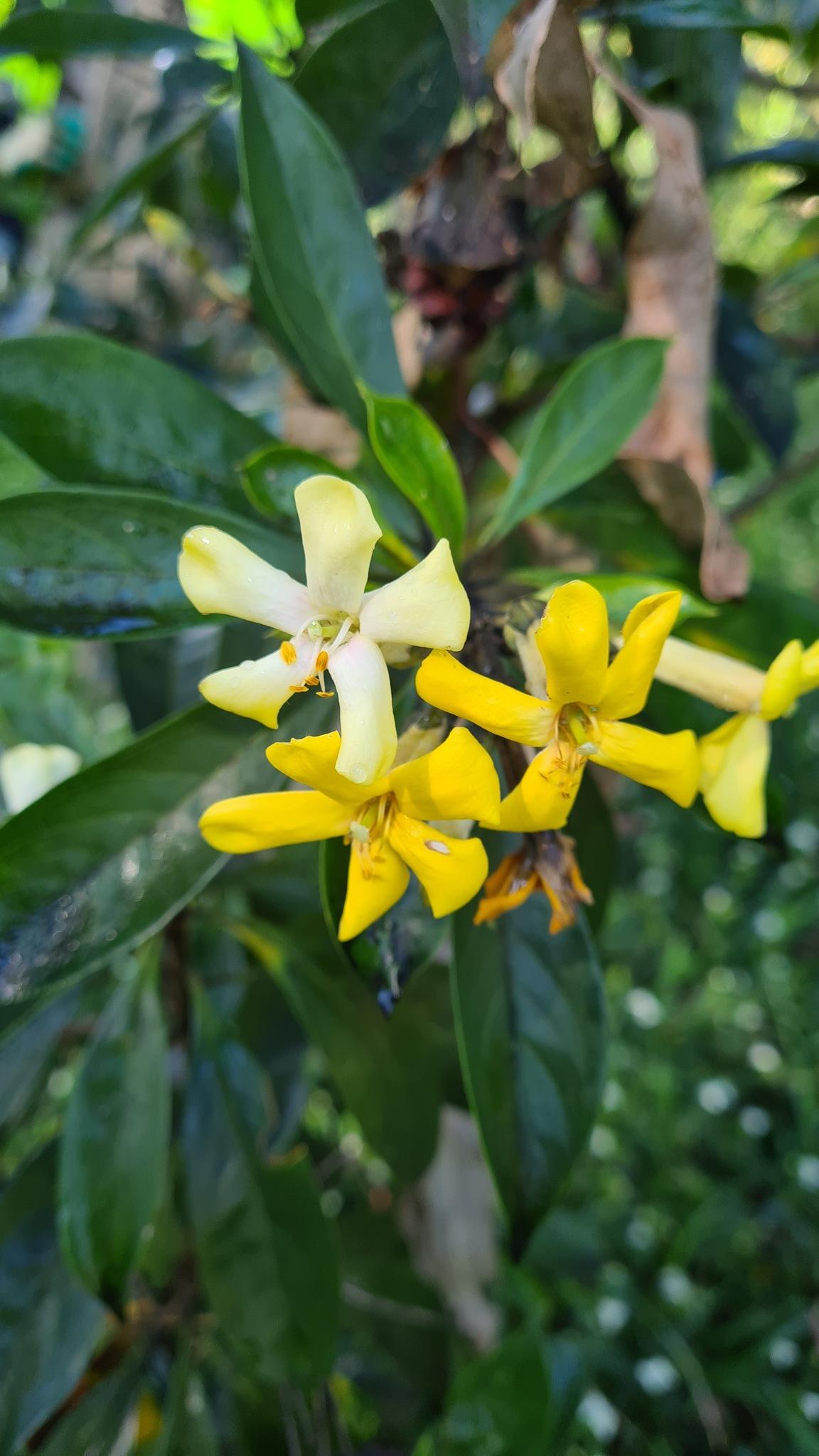 Australian frangipaniIt smells like a frangipani, and it's called one, but it isn't one. The Australian frangipani is a native tree from another family entirely.
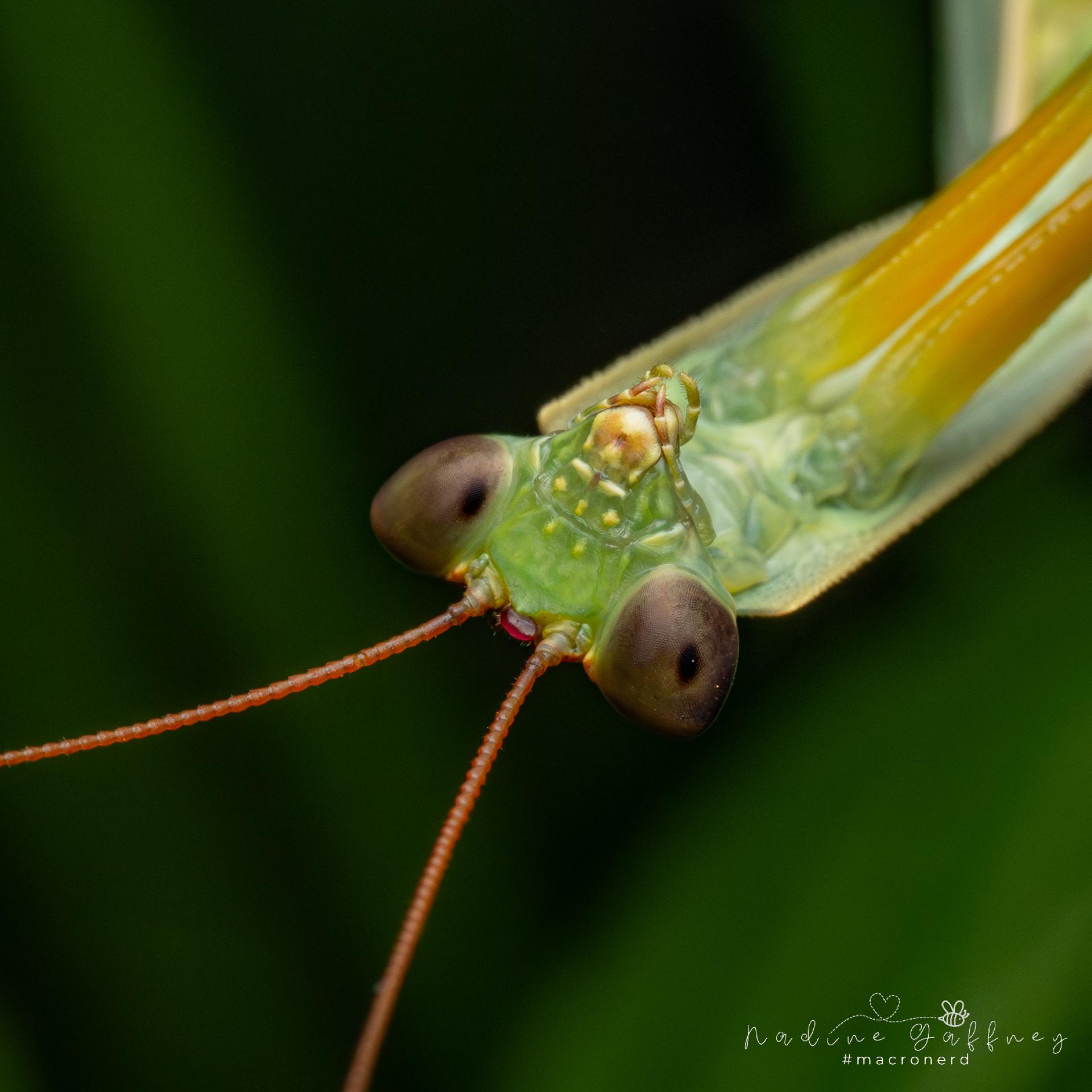 Australian Garden MantisThis is probably the mantis you're most likely to meet in Sydney, and it has moved in with us. Its egg cases turn up on fences, on buildings, and on fly screens: hard, woody capsules about 2 cm long.
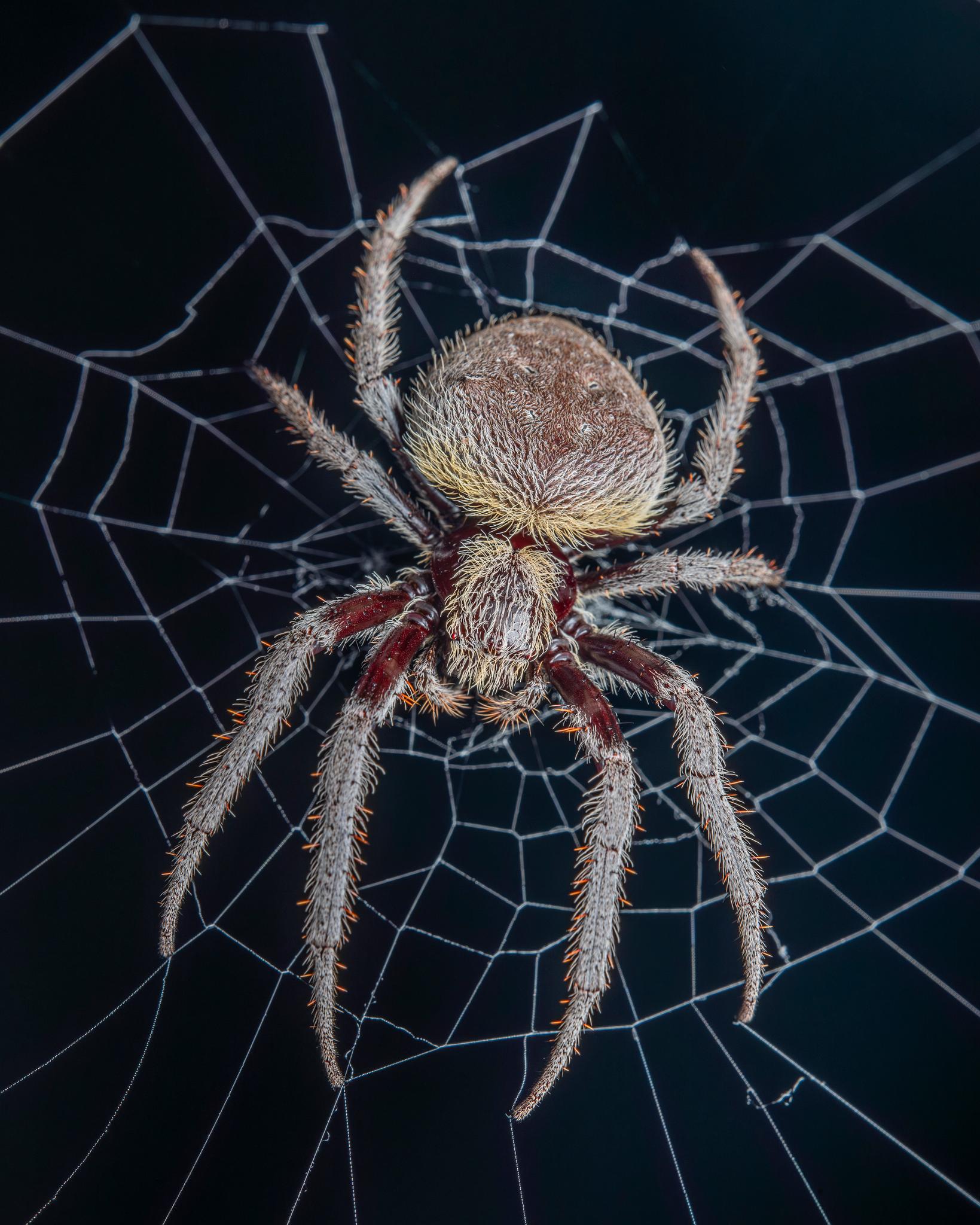 Australian Garden Orb WeaverBy day there's almost no sign of it. The garden orb weaver spends the day tucked into nearby leaves with its legs drawn under its body.
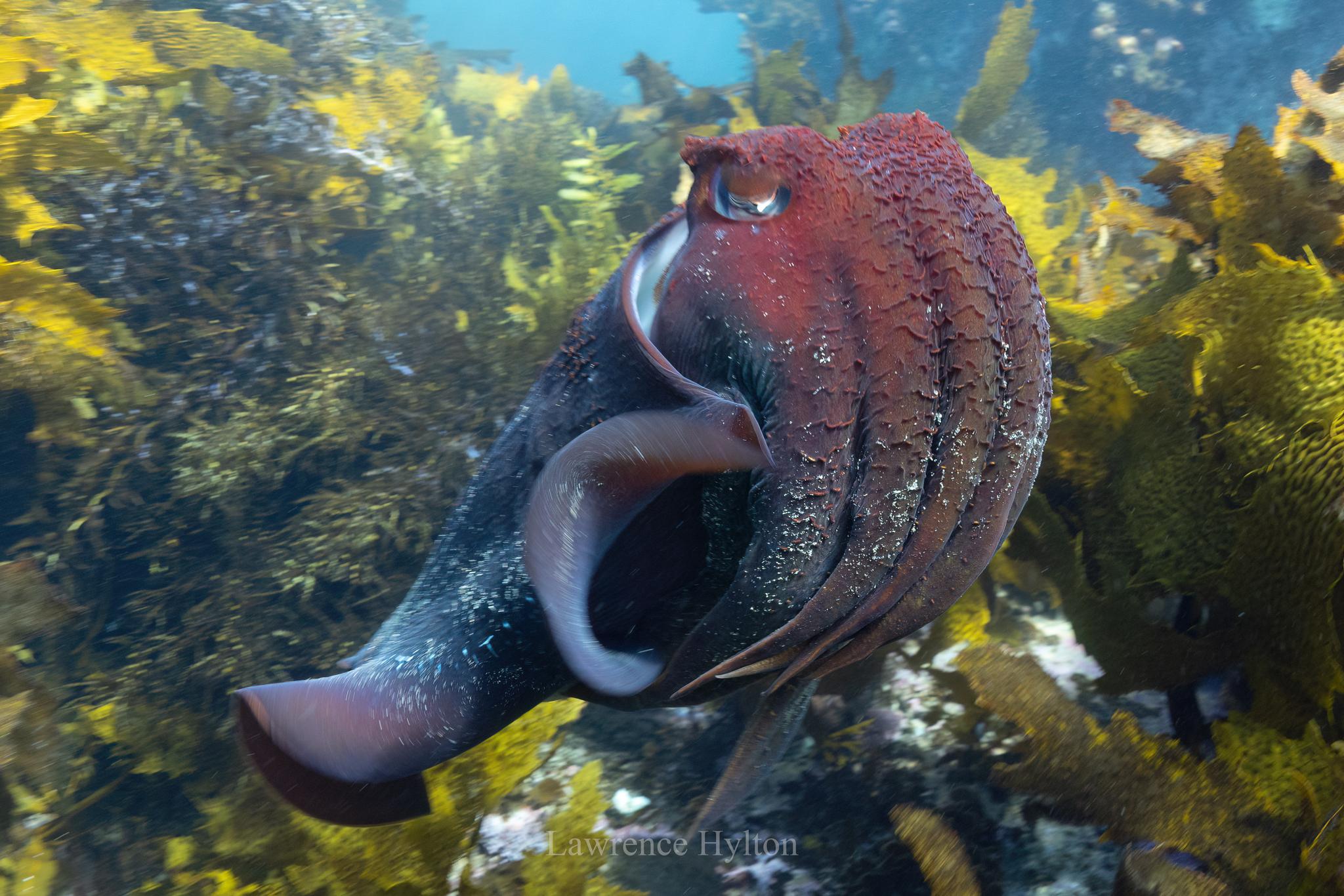 Australian Giant CuttlefishNot everything in female colours here is a female.
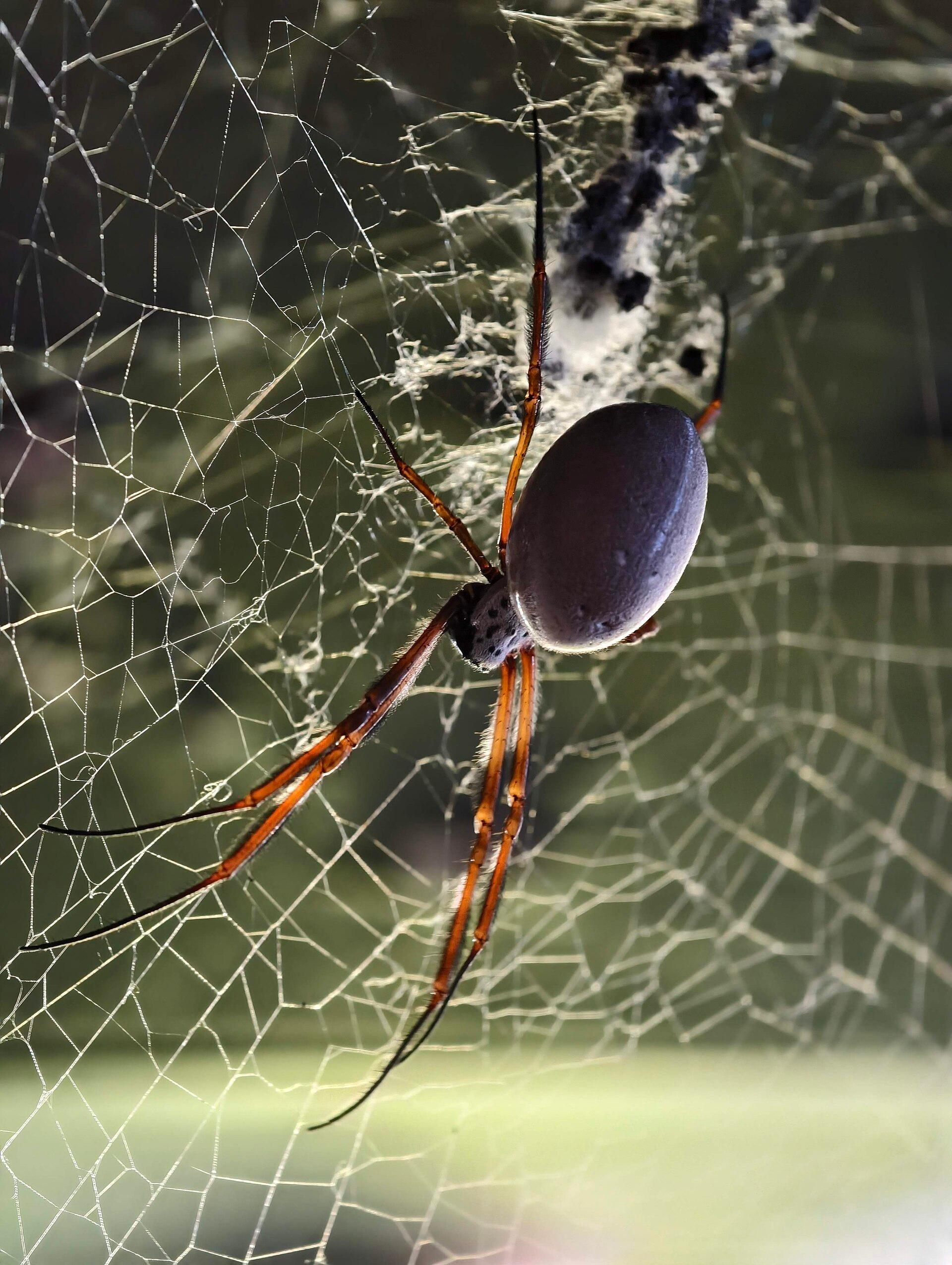 Australian Golden OrbweaverThe golden orb-weaver's web is so strong that, very occasionally, it catches a small bird or a bat. The silk even shines gold in the sun.
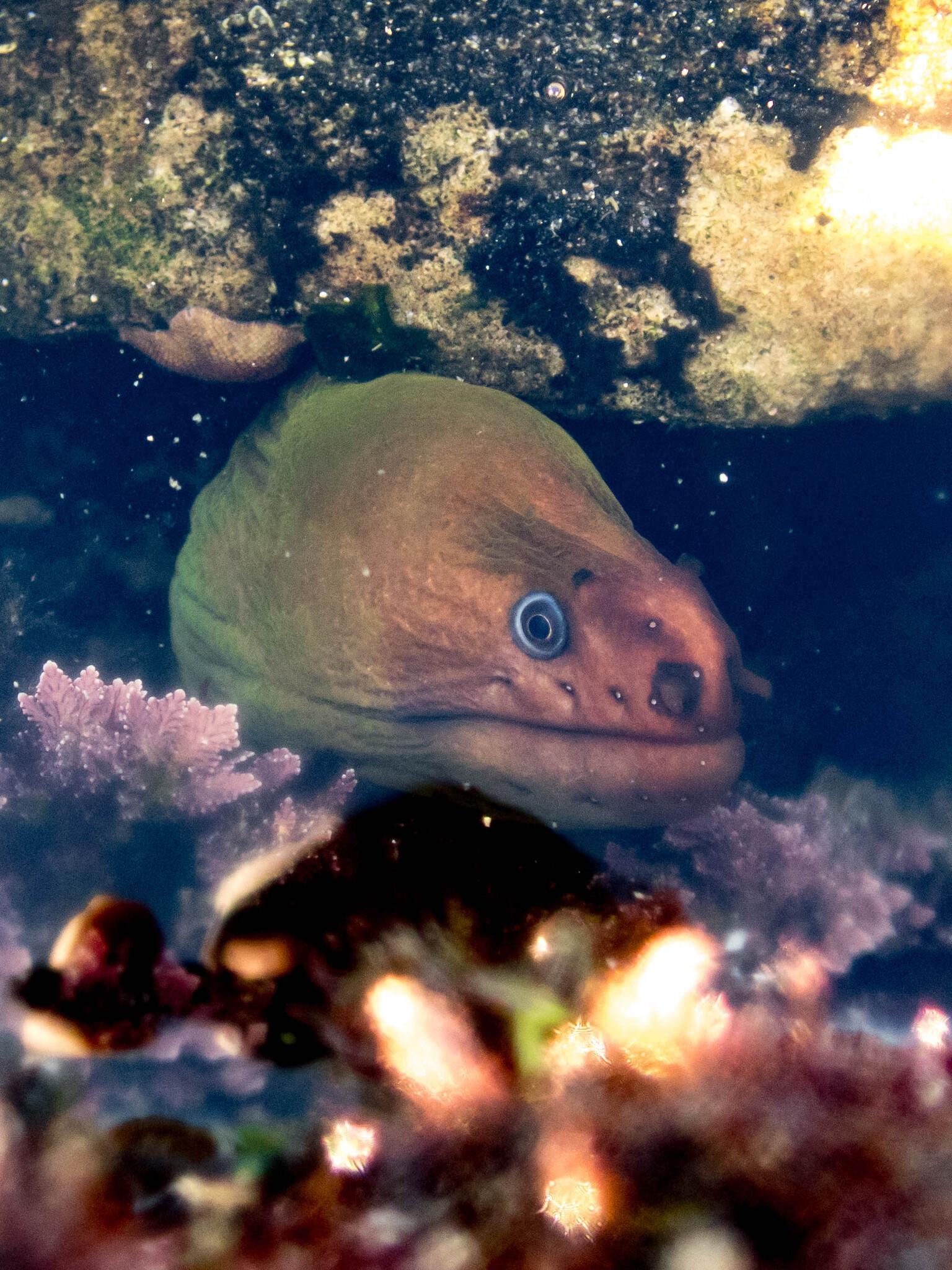 Australian Green MorayFor a long time it was thought to be just a story: morays, it was said, could tie their own bodies in a knot. It turned out to be true.
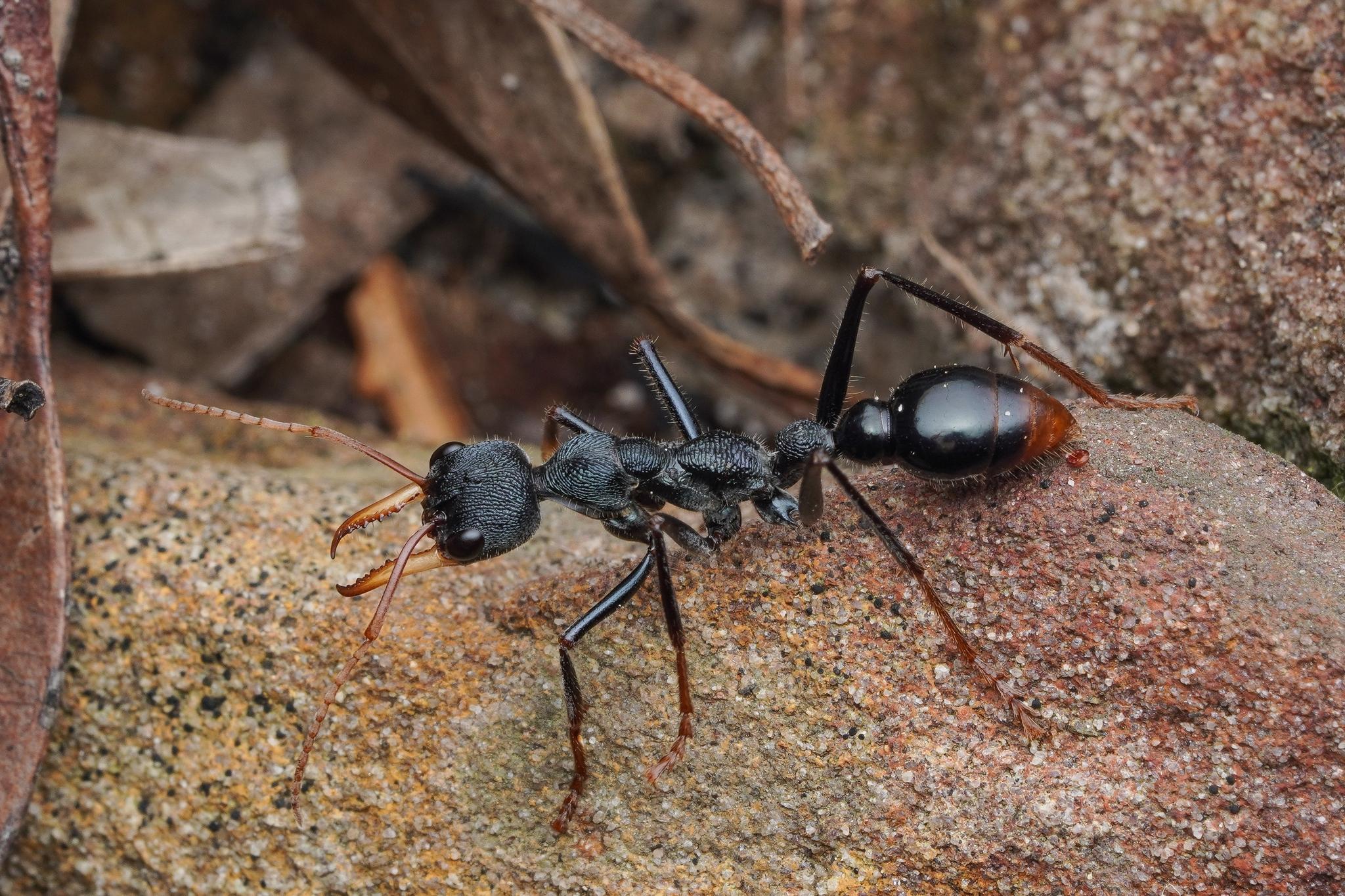 Australian Jumper AntThe jumper ant forages all day, and heads for home around sunset. Its eyes can do something ours can't: see the pattern of polarised light across the sky, and steer by it.
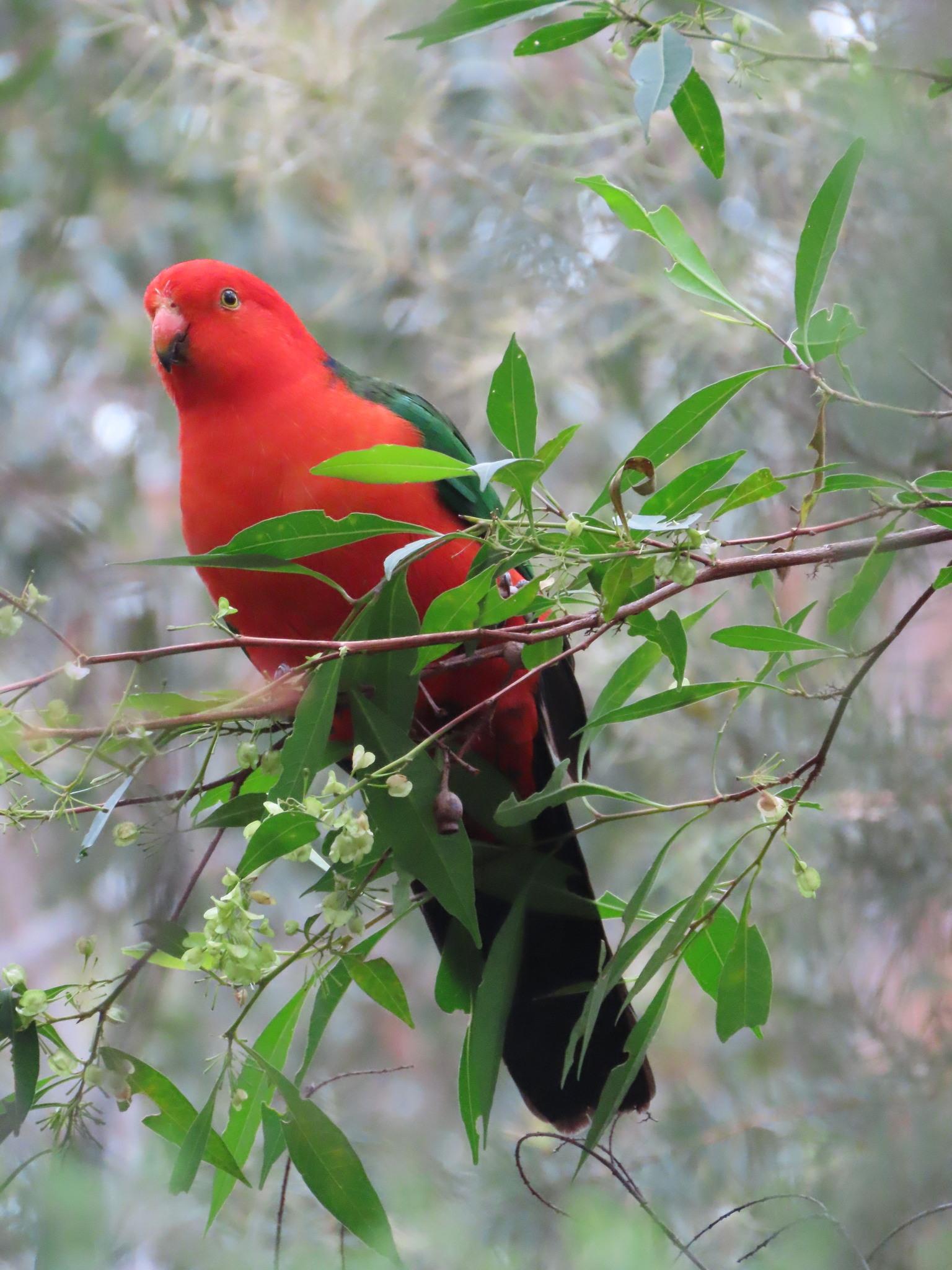 Australian King ParrotWhen this parrot nests, it climbs down inside a tree. The entrance to a king parrot's hollow may be 10 metres up the trunk, while its eggs sit near the ground, about half a metre up.
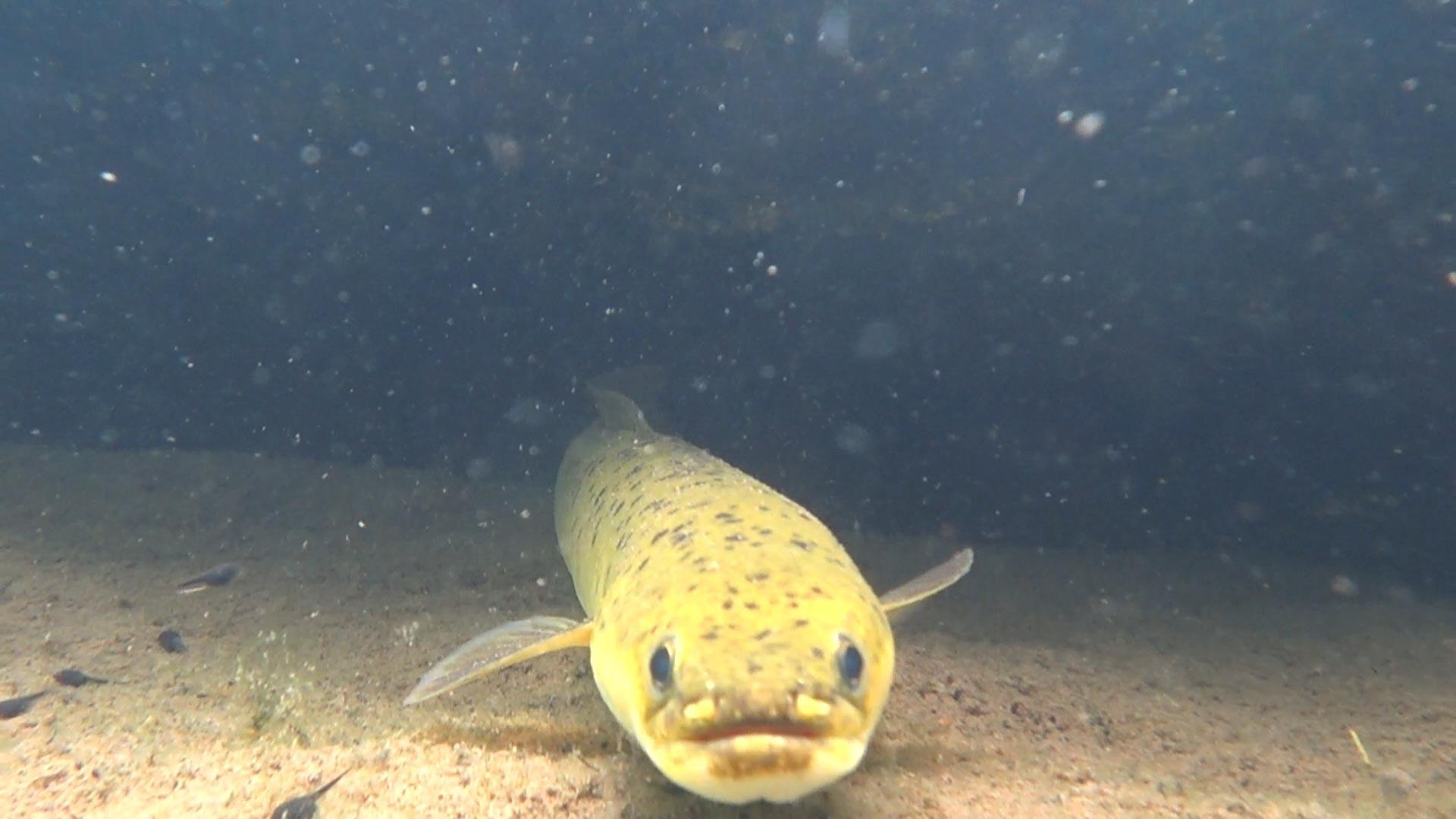 Australian Long-finned EelThis eel may have been living in fresh water for more than 50 years. One night it will leave.
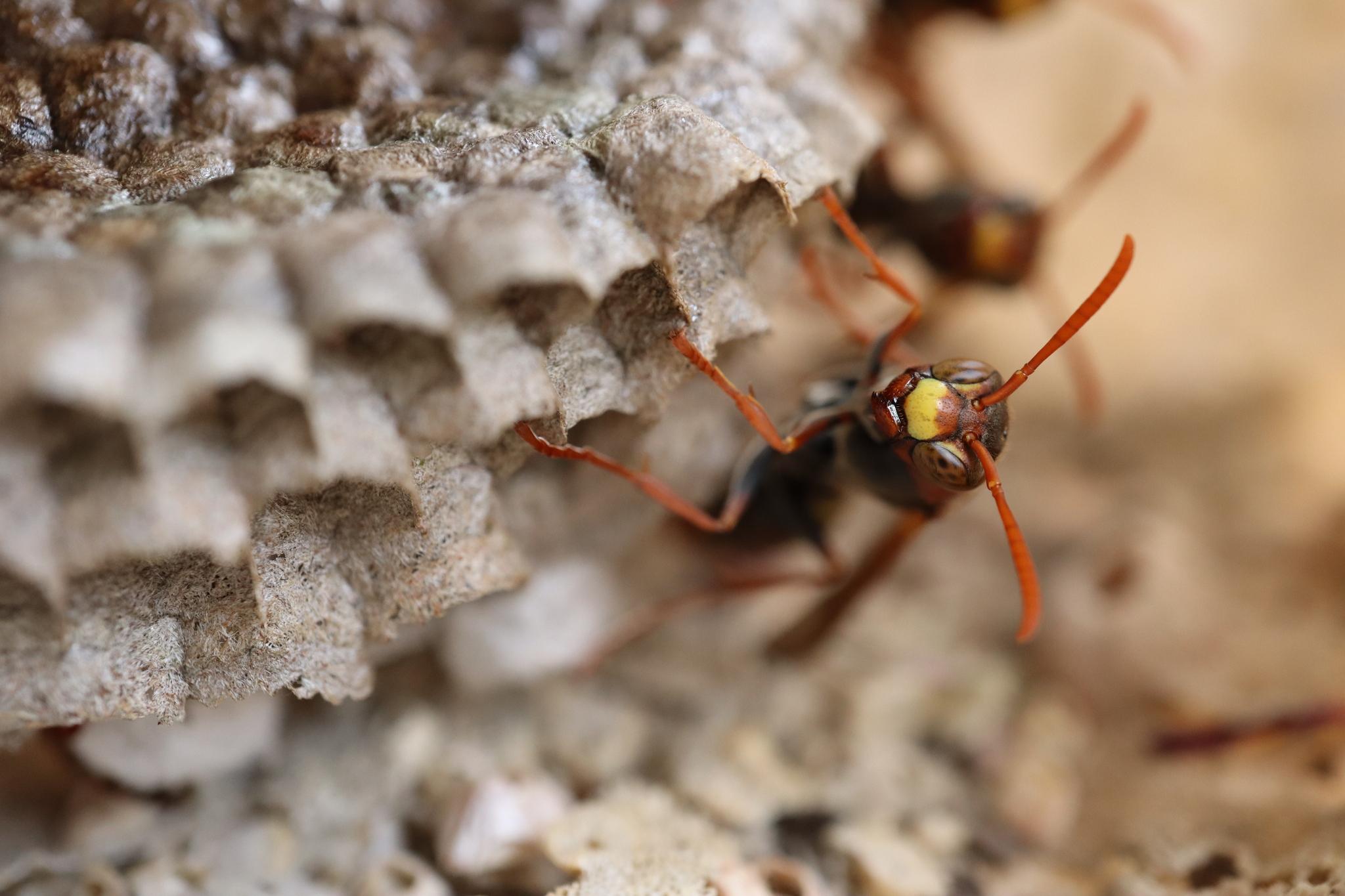 Australian Paper WaspThat grey nest is paper. Paper wasps chew wood fibre, mix it with saliva, and spread it out in a cluster of six-sided cells shaped like an upside-down cone.
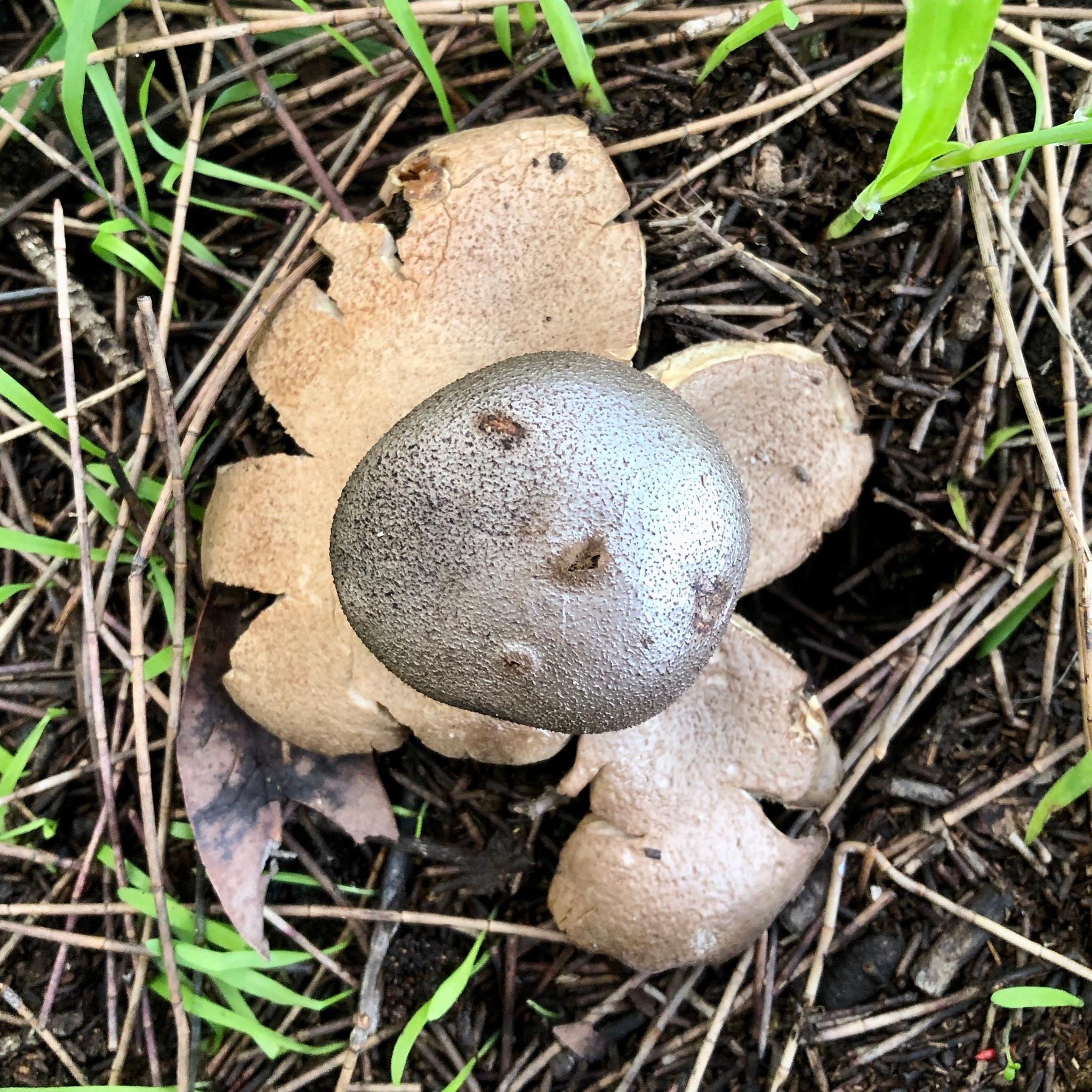 Australian PepperpotMost earthstars open into a star on the ground with a single spore sac in the middle. The pepperpot has gone further.
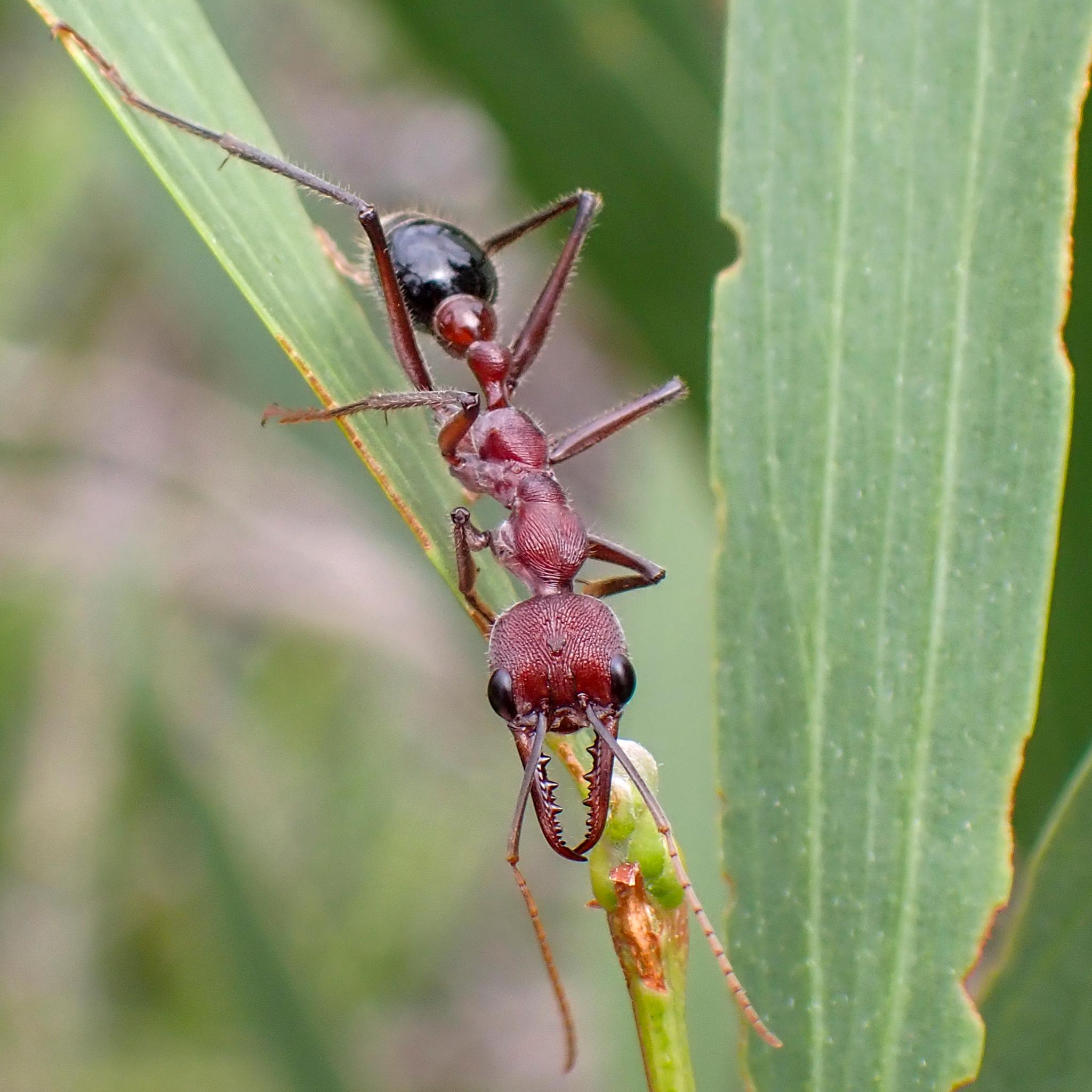 Australian Red Bull AntEverything about it is built for close combat: long jaws, a sting at the end of its body, and the nerve to use both. When a bull ant stings, it grips with its jaws, curls its abdomen round to bring out the sting, and injects venom, often again and again.
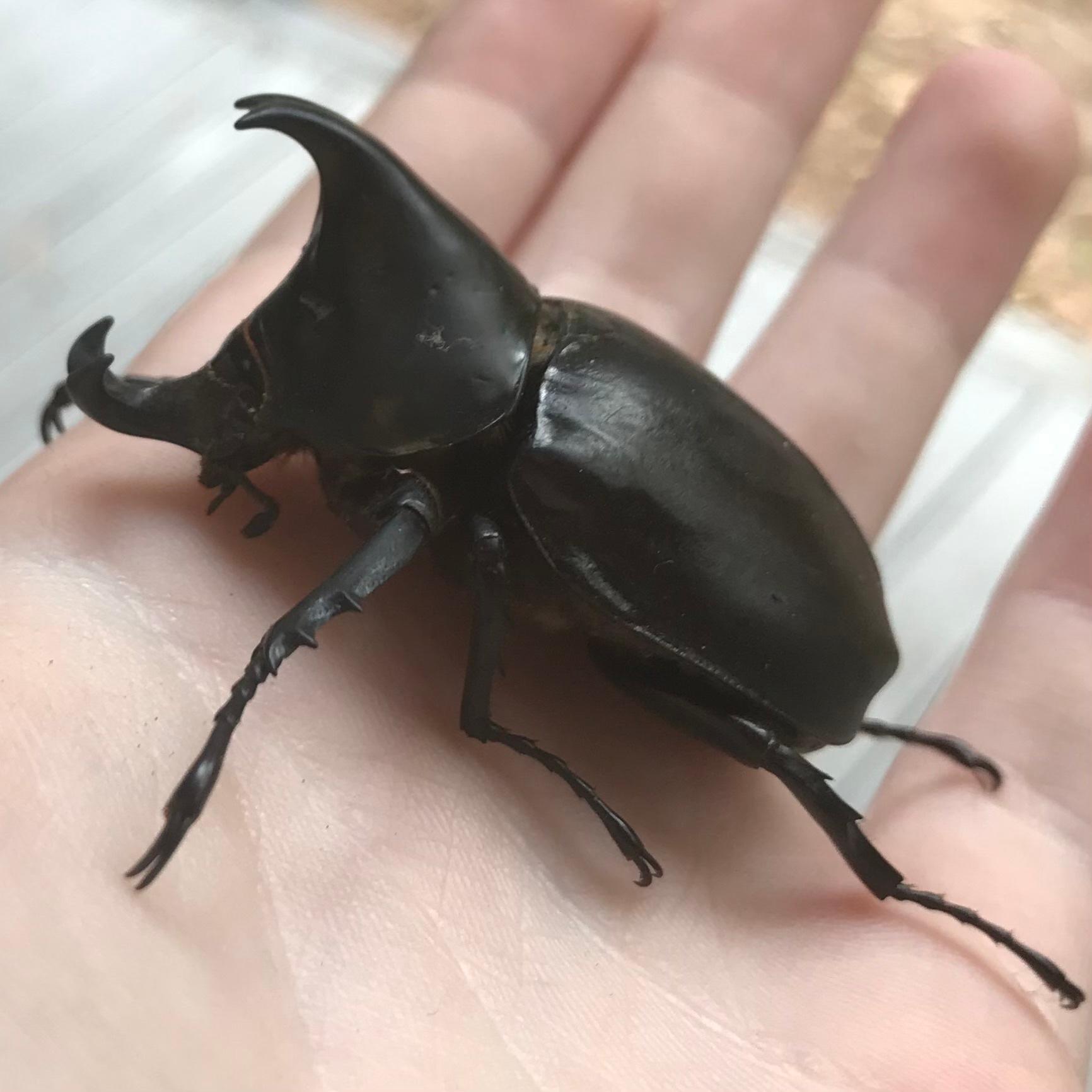 Australian Rhinoceros BeetleA rhinoceros beetle looks like armour with a horn on the front, and the horn is a weapon. Males use it to lever rivals off branches in fights over feeding spots and females.
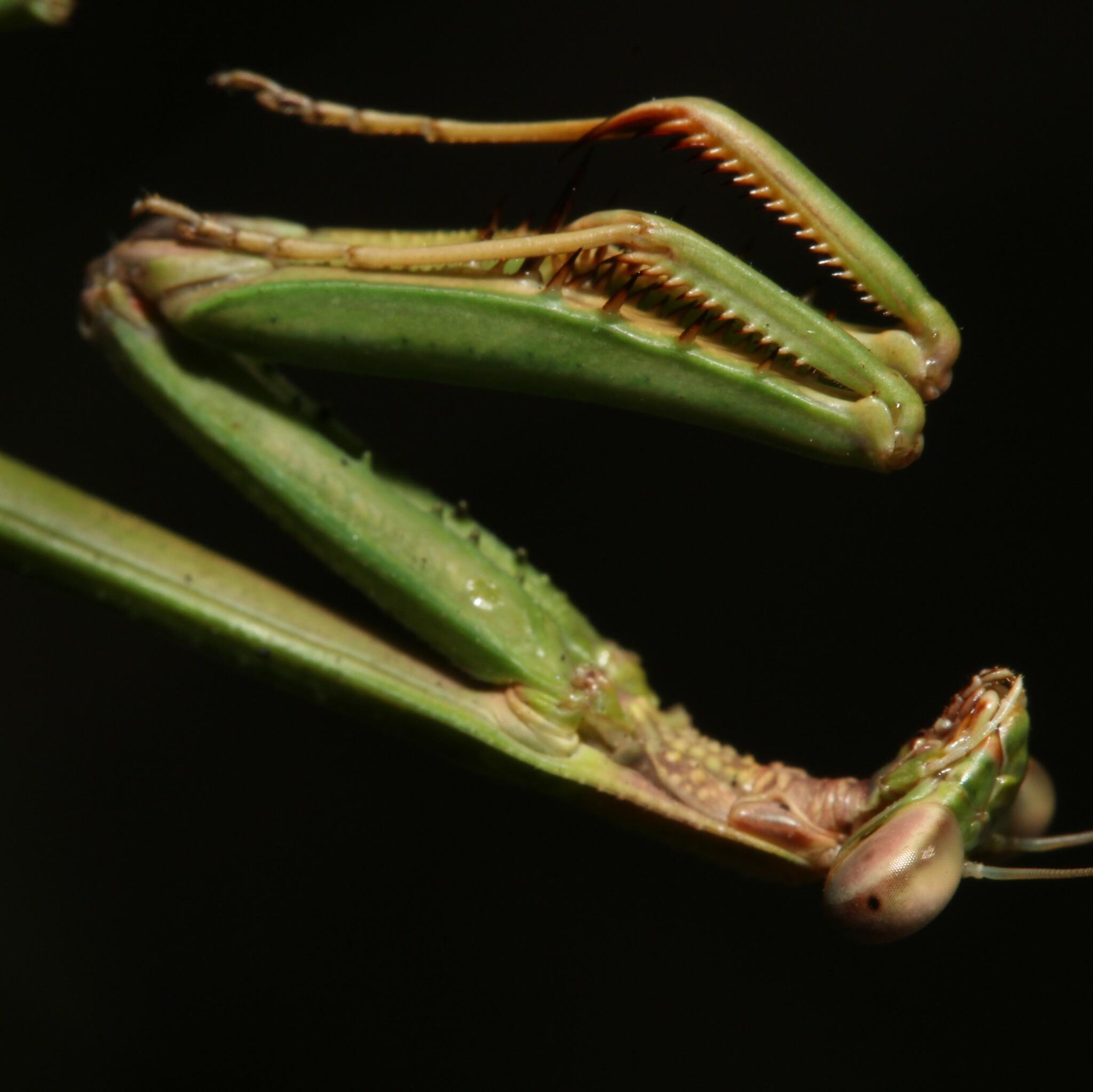 Australian Stick MantisA stick that hunts. A stick insect hides so it won't be eaten.
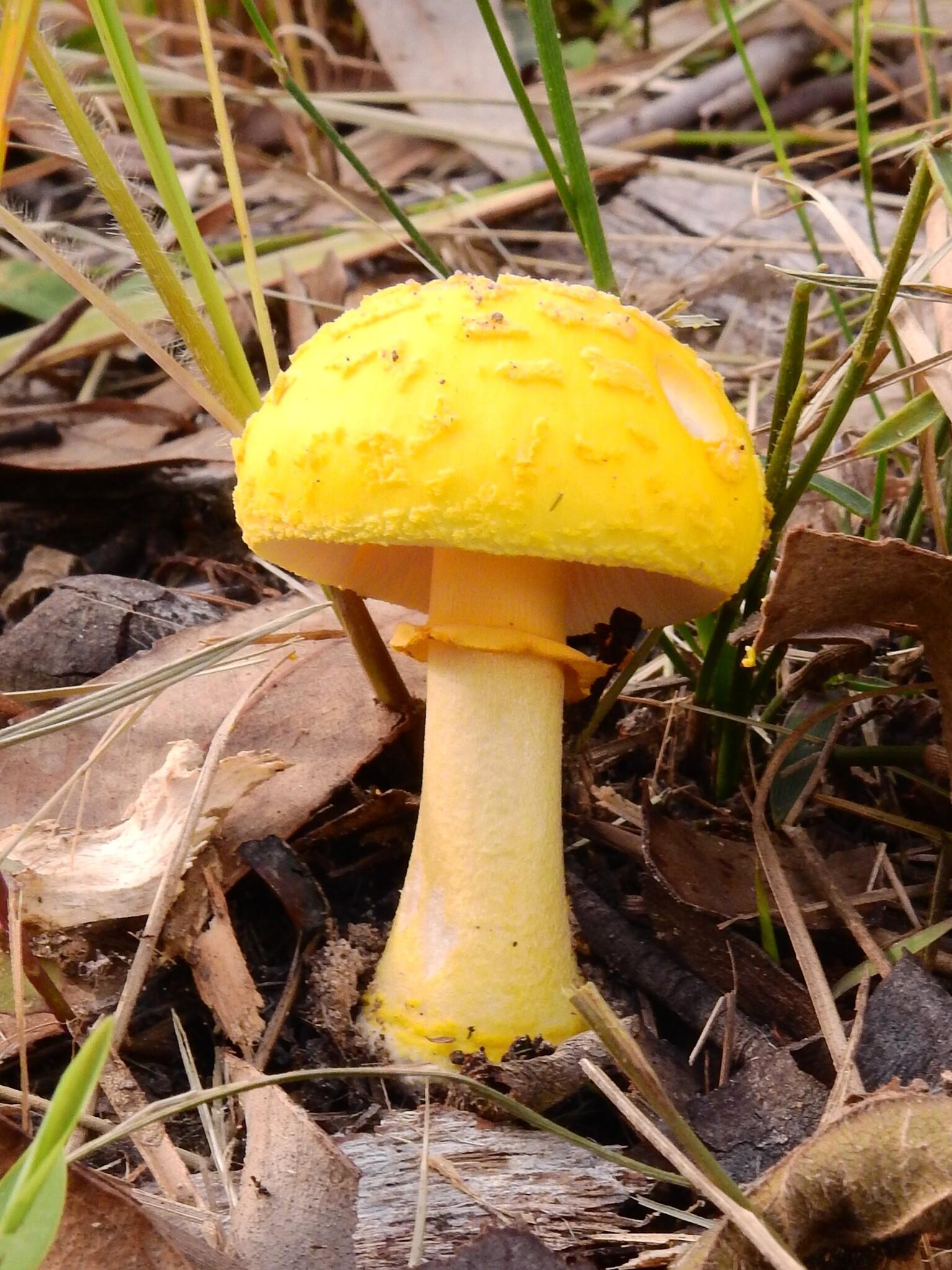 Australian Yellow Dust AmanitaA toadstool looks like a thing on its own. This one is the visible tip of something bigger.
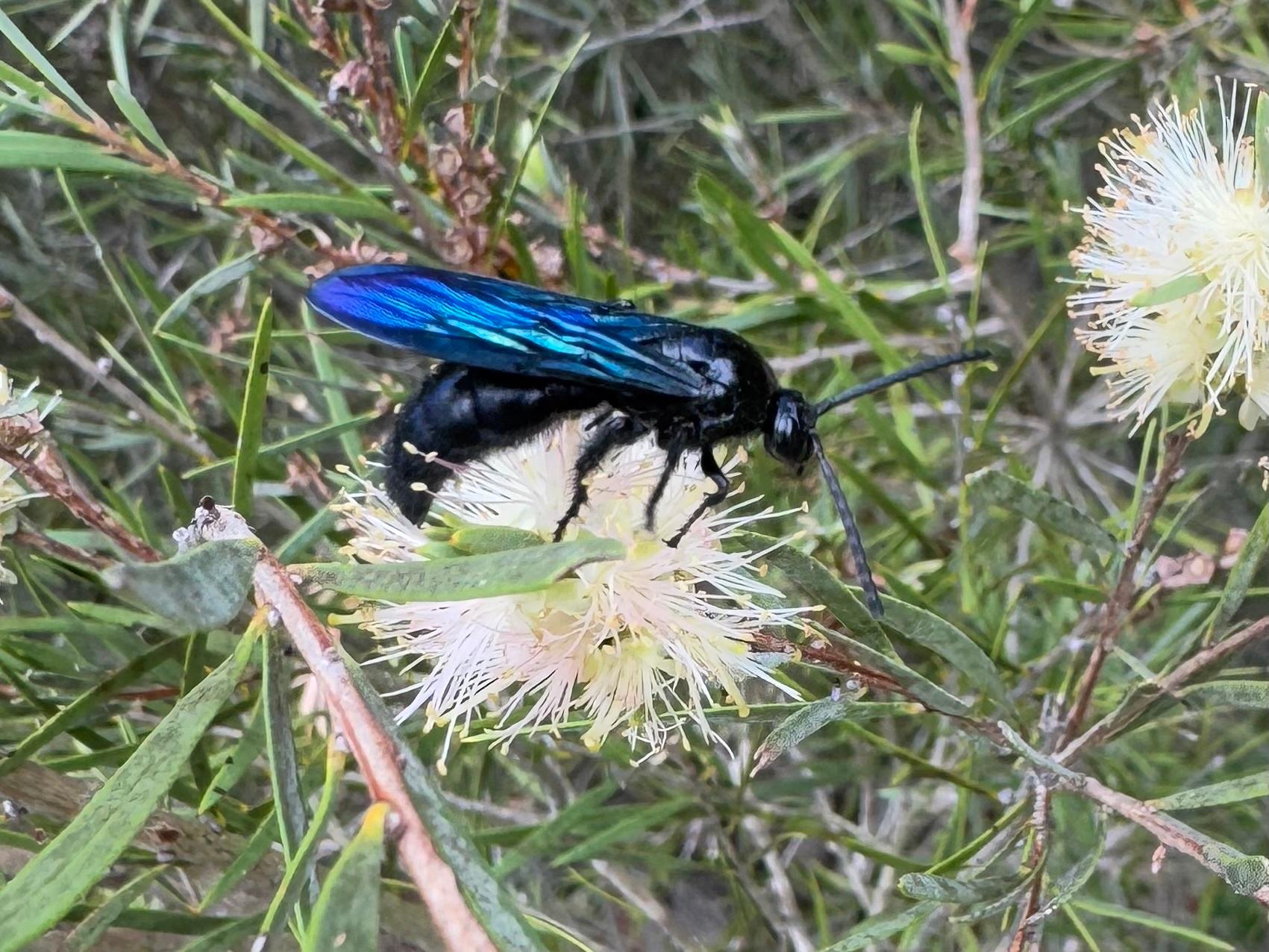 Austroscolia sororShe's hunting something she can't see. The female flower wasp lands on bare ground and digs straight down through the soil, searching for a beetle grub in the dark.
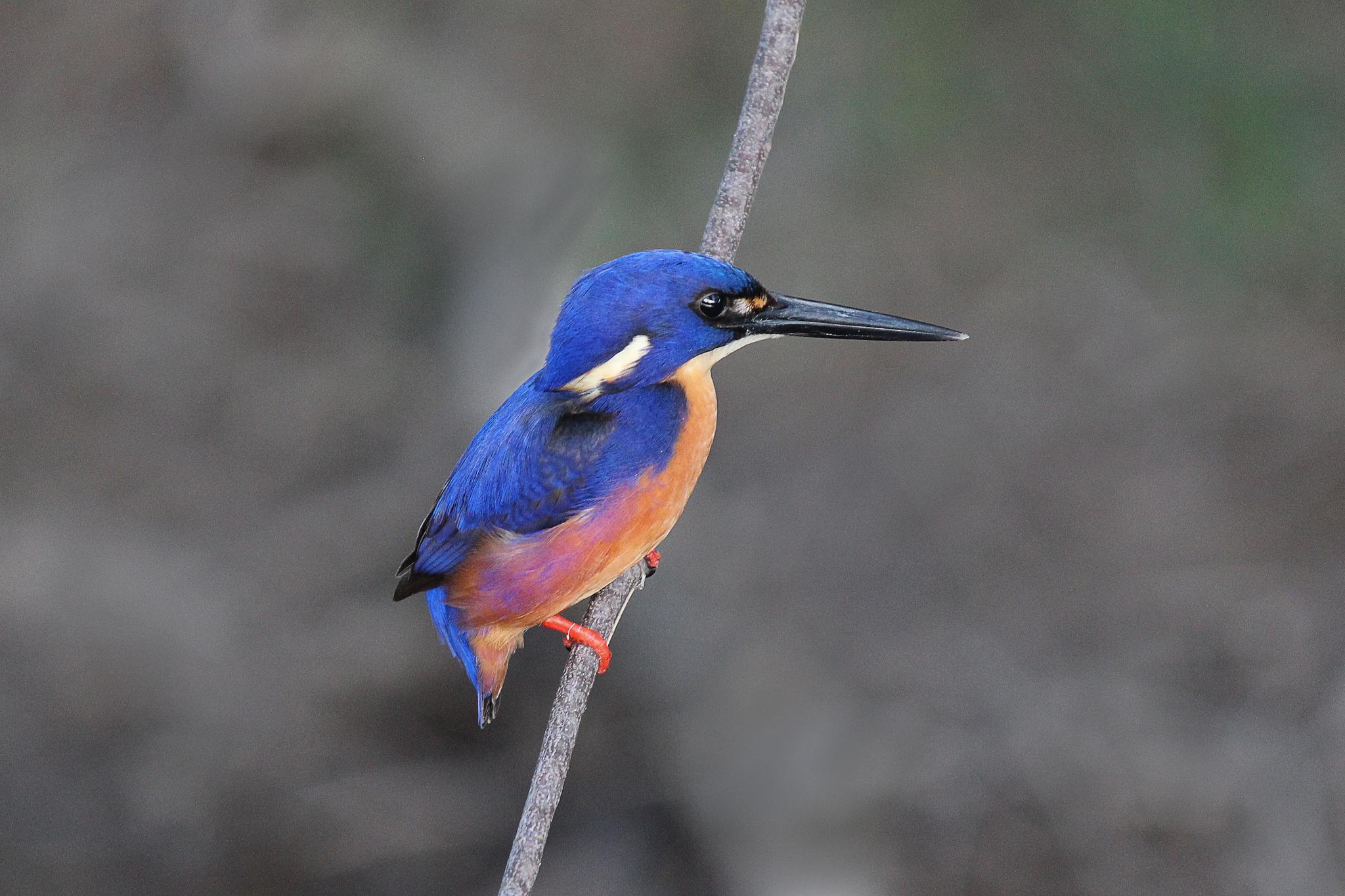 Azure KingfisherAn azure kingfisher sitting dead still over a creek may be watching something you can't see: a platypus, foraging underwater. Azure kingfishers often watch platypuses and catch any food the platypus stirs up.
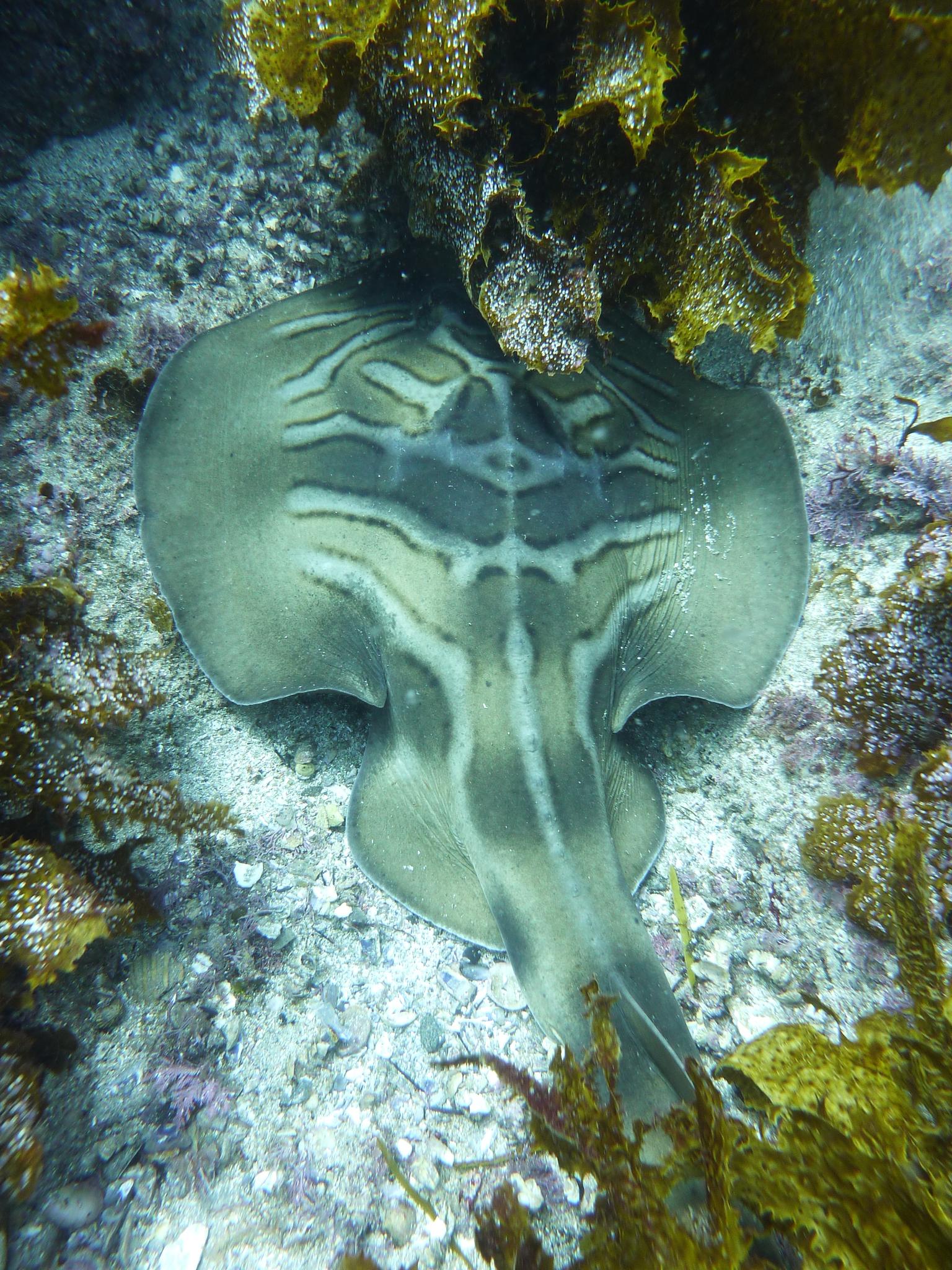 Banjo RayPeople call it the banjo shark. It's a ray.
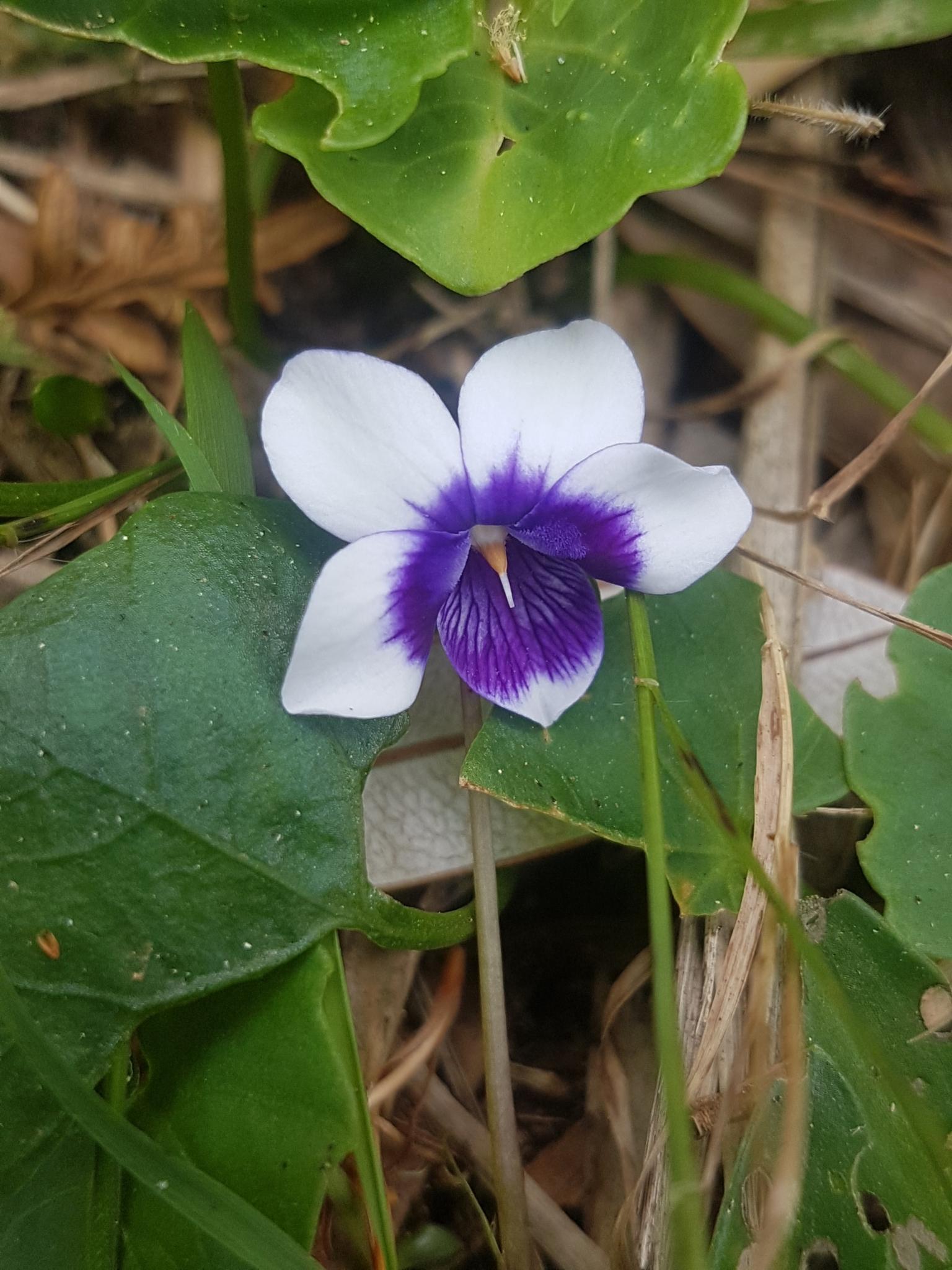 Banks' VioletThis little violet carries the name of Joseph Banks, the naturalist on Cook's voyage. He and Daniel Solander were the first to collect this group of native violets, and the plant has worn his name ever since.
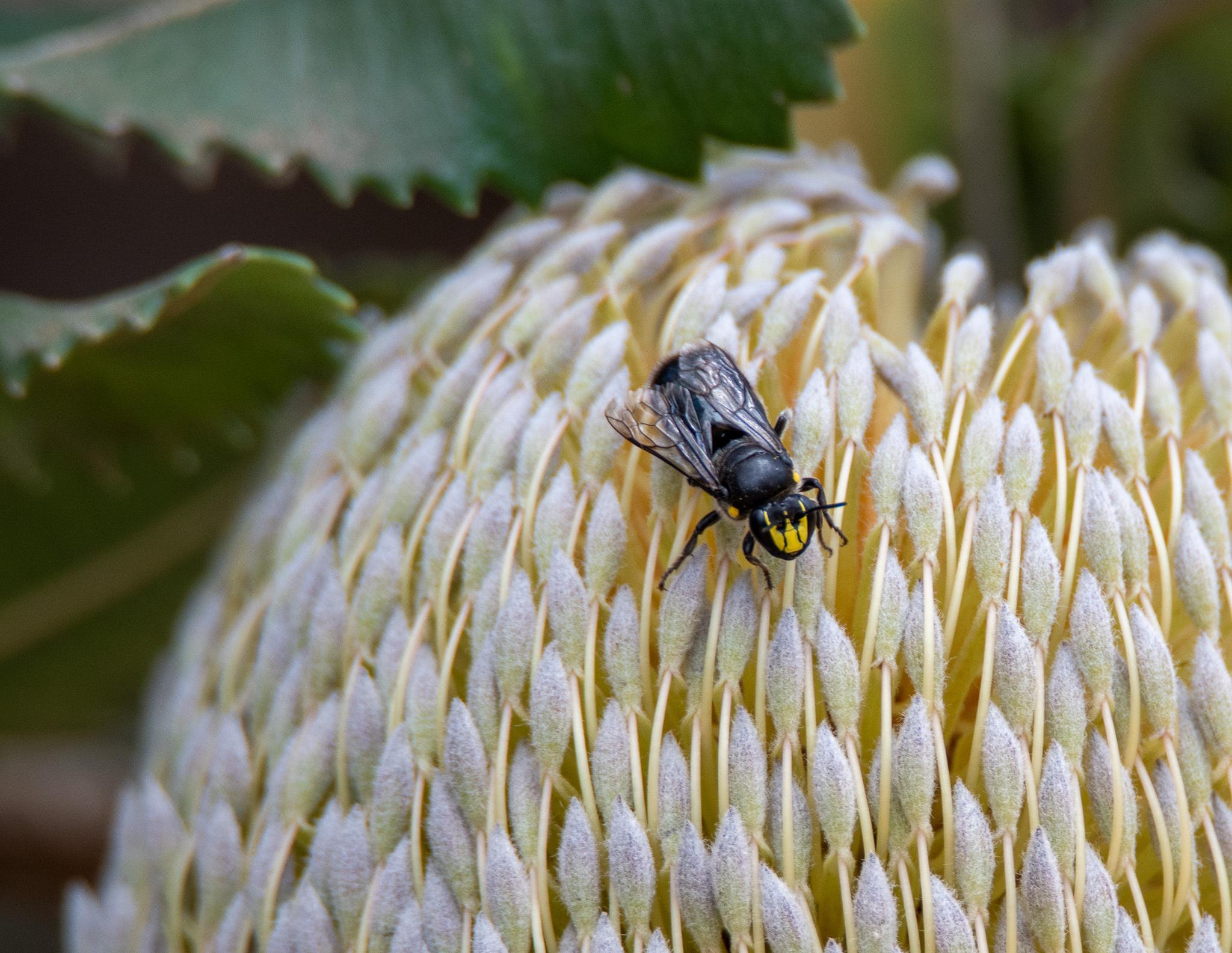 Banksia BeeThis bee fights. Male banksia bees are bigger than the females, and each one stakes out a banksia flower spike as his territory.
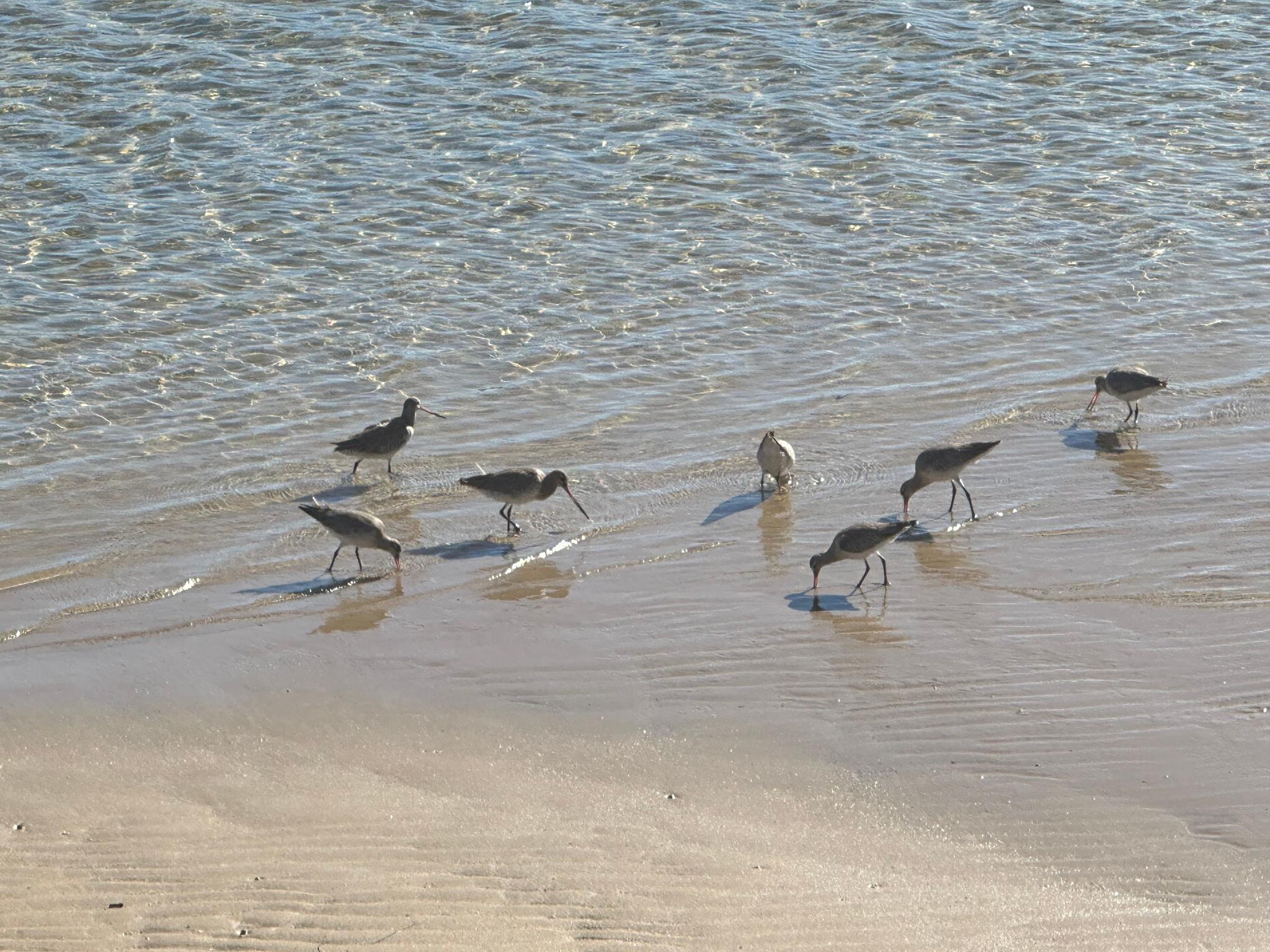 Bar-tailed GodwitGodwits fitted with satellite tags have flown non-stop across the Pacific Ocean for up to 11,680 kilometres without landing. The longest stayed in the air for 9.4 days.
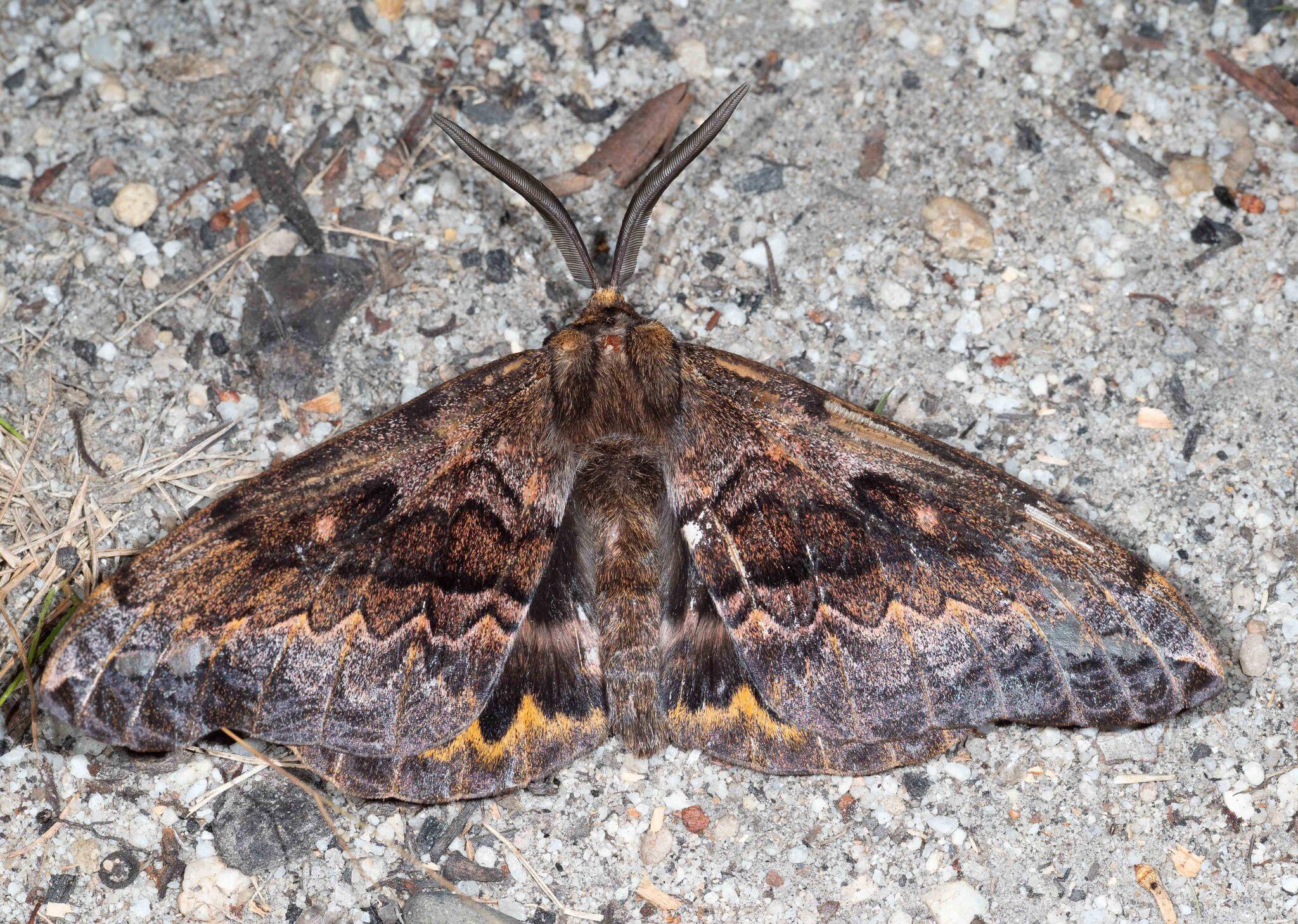 Batwing MothPeople have mistaken it for a bat. A female batwing moth can reach 16 centimetres across.
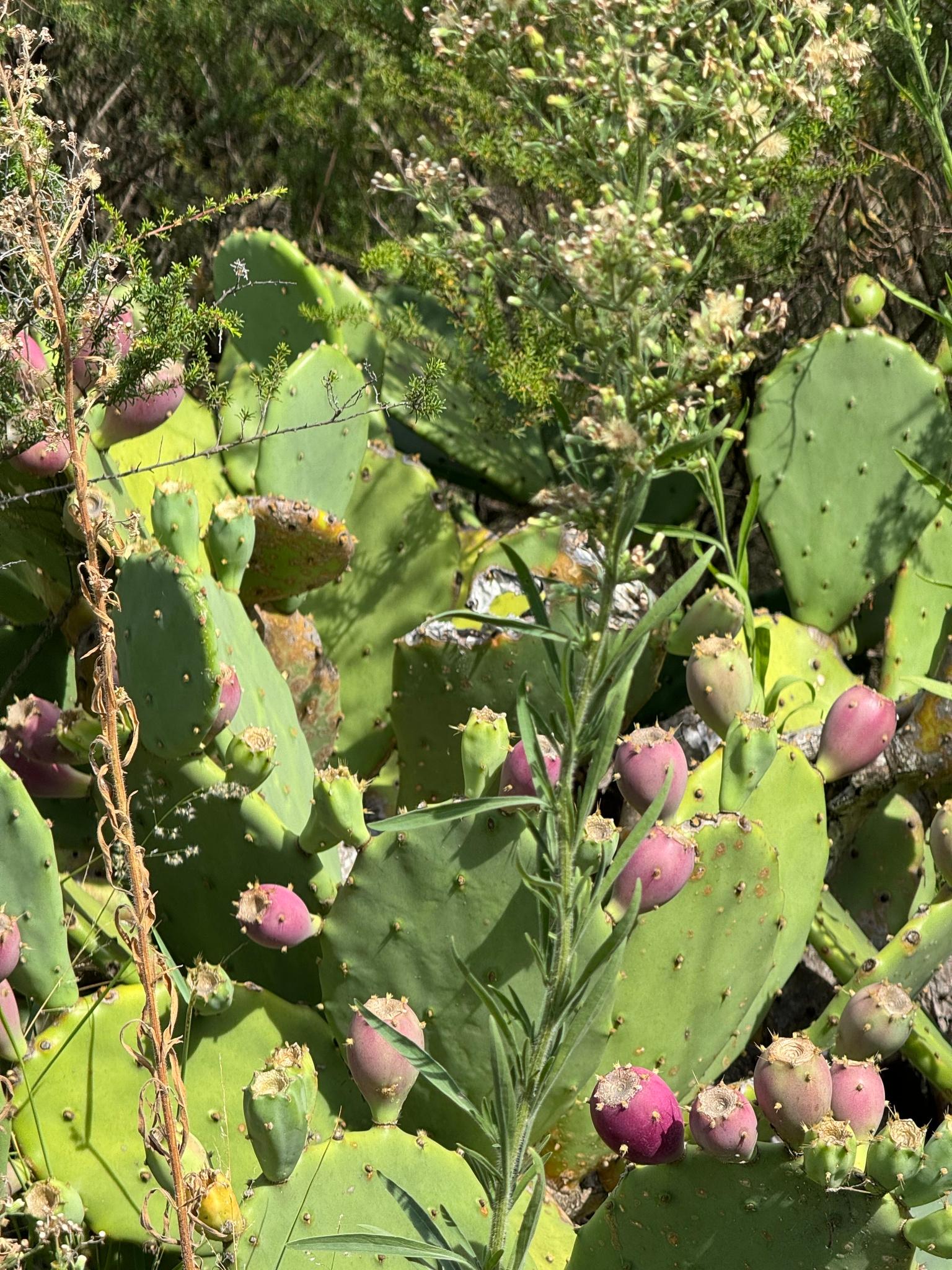 Beach prickly pearThis cactus is a survivor of one of the great invasions in Australian history. Prickly pear came from the Americas, and once it got loose it covered large areas of inland New South Wales and Queensland, thick enough to swallow farms.
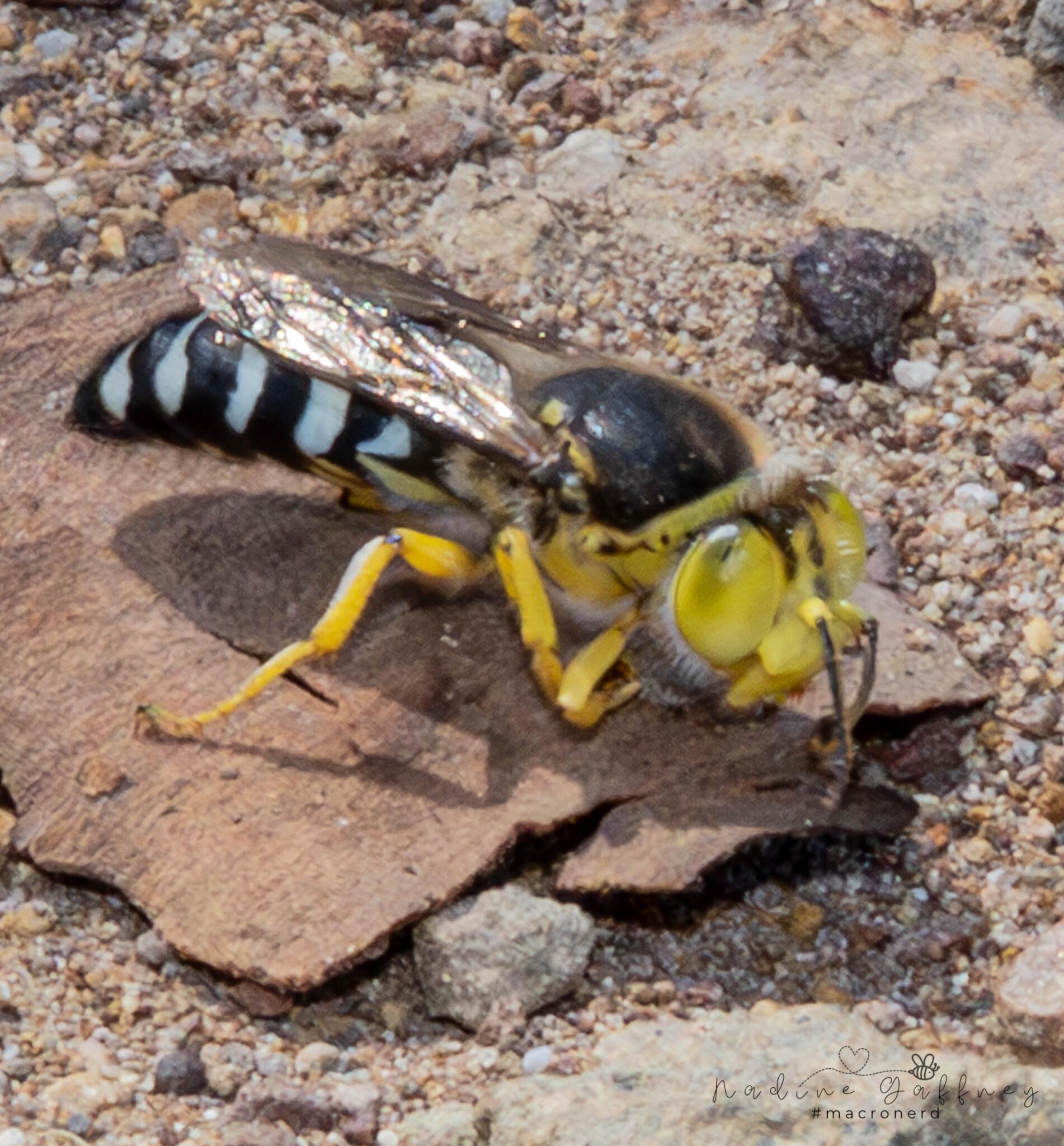 Bembix palmataSand wasps are fly hunters. They catch flies on the wing, paralyse them with a sting in mid-air, and carry them back to a burrow in the ground, where a grub is waiting.
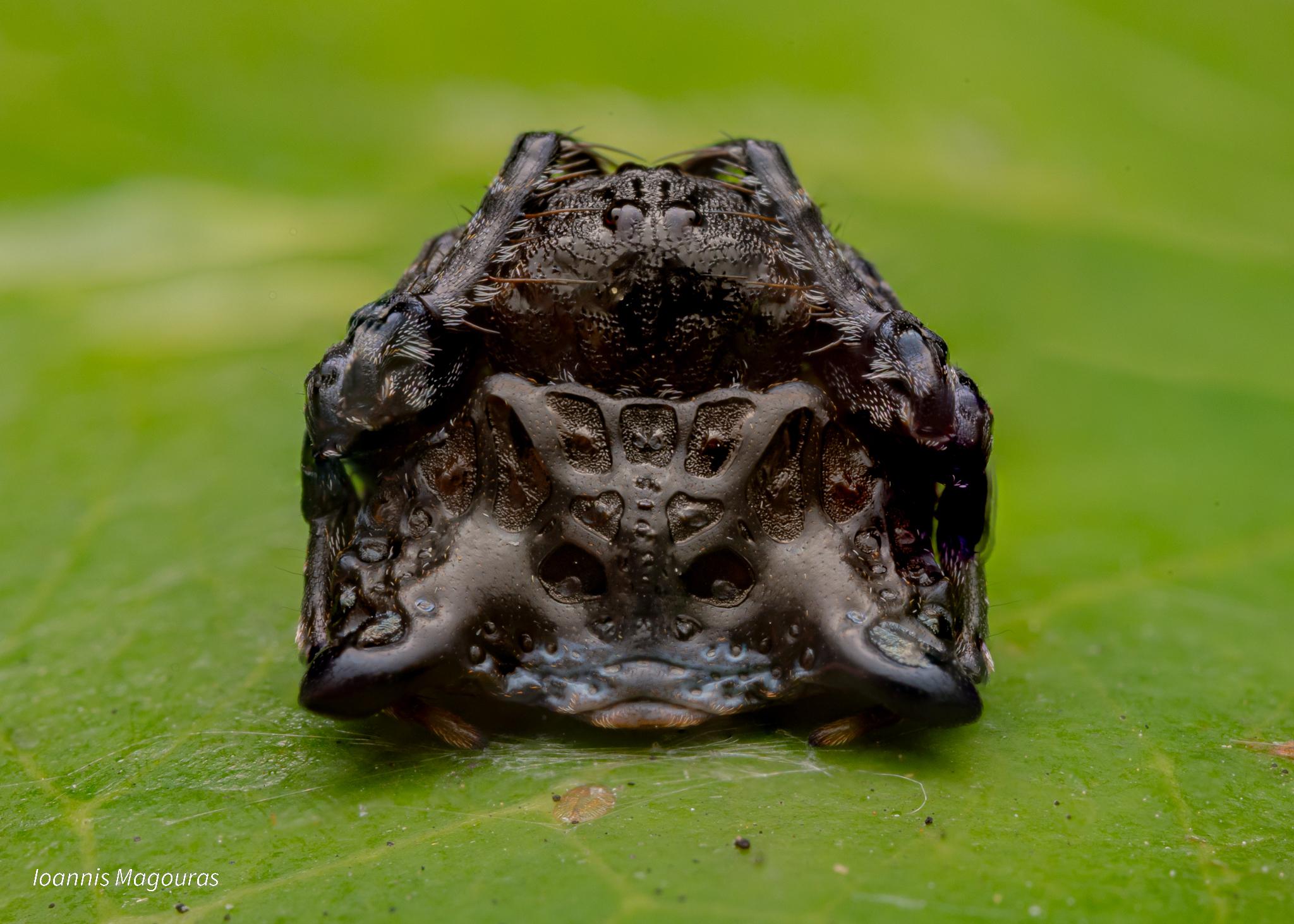 Bird-dropping ArkysIf you took it for a bird dropping, it's working. Some spiders in its genus disguise themselves as bird droppings, matching them in size, colour and shape.
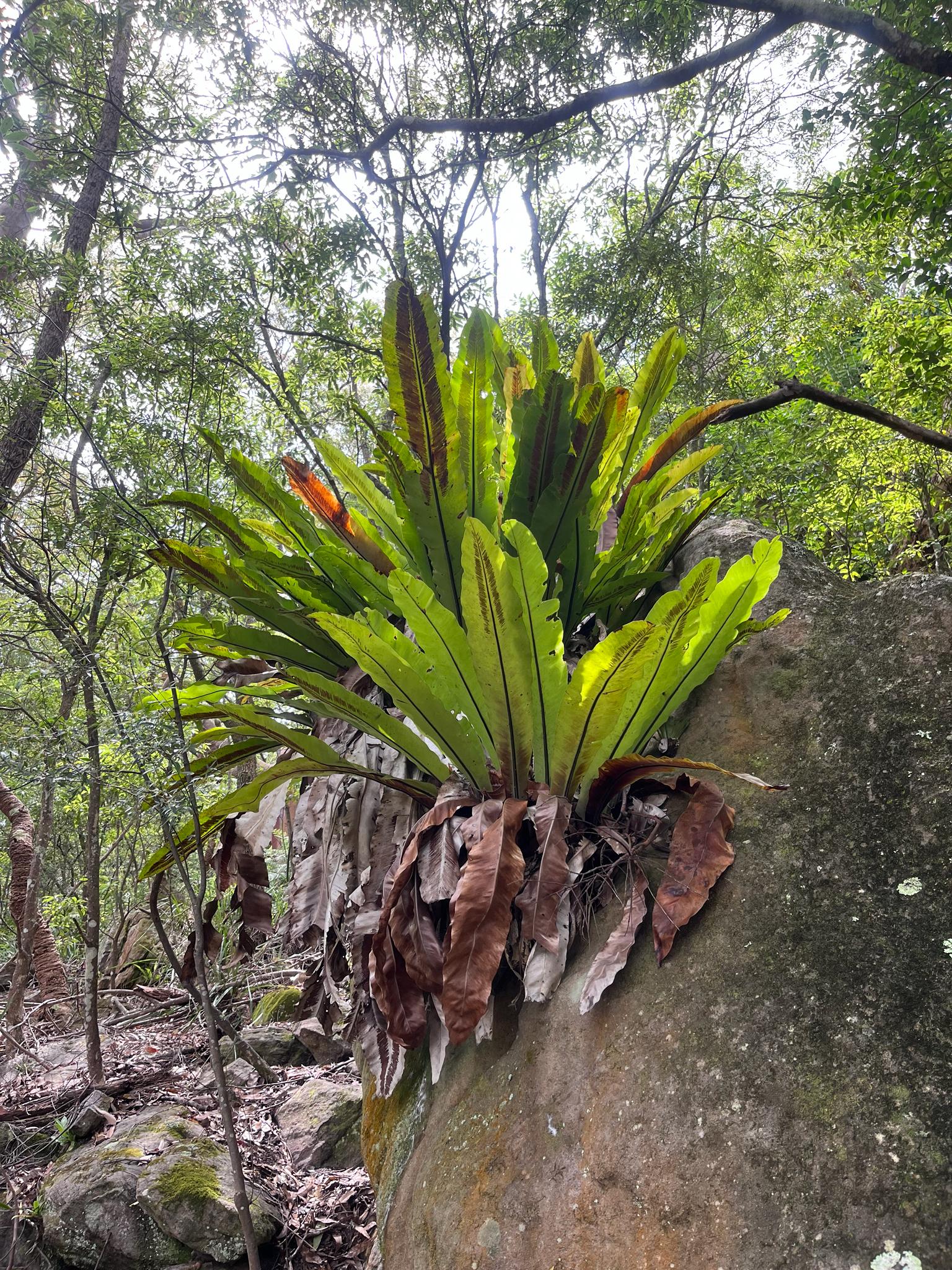 Bird's nest fernThis fern is making soil in midair. Its fronds grow up and out into a bowl that catches falling leaves, and the litter rots into soil up in the tree.
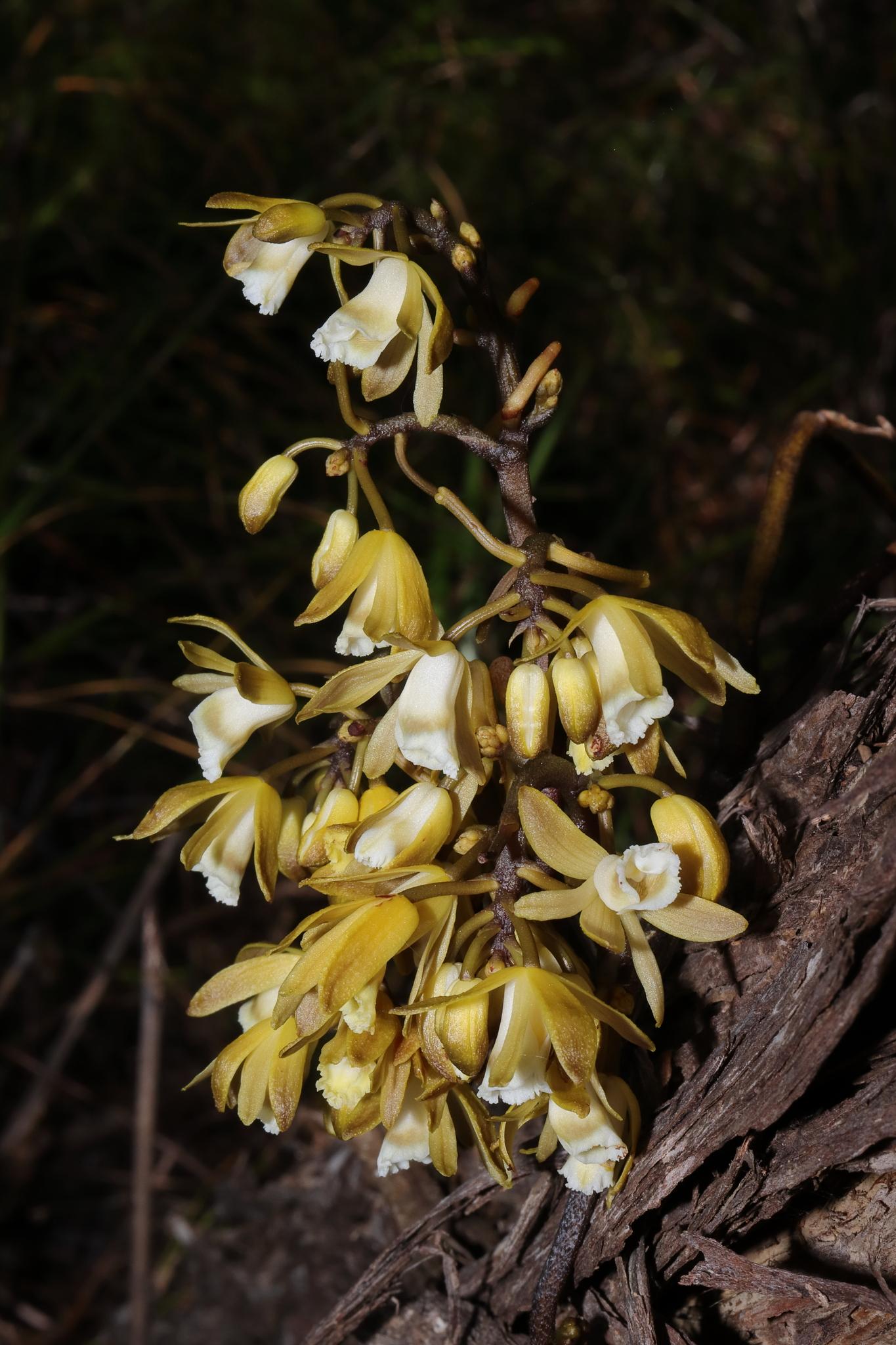 Black bootlace orchidIt looks like a dead brown vine snaking up a tree. It's an orchid.
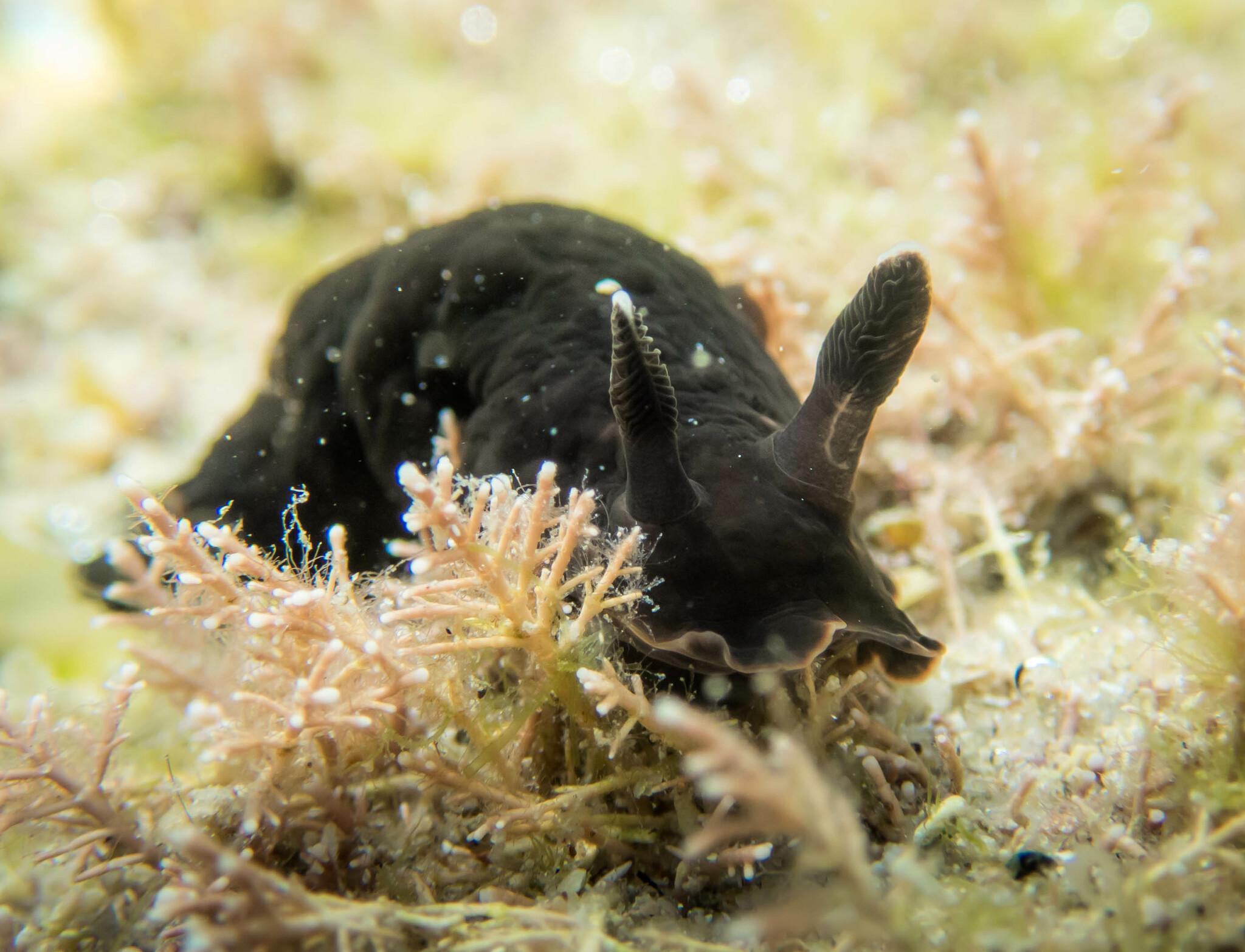 Black DorisIt starts life pink or orange and ends it black. And some of the white spots on its back aren't decoration: they're glands that ooze a milky, acidic liquid.
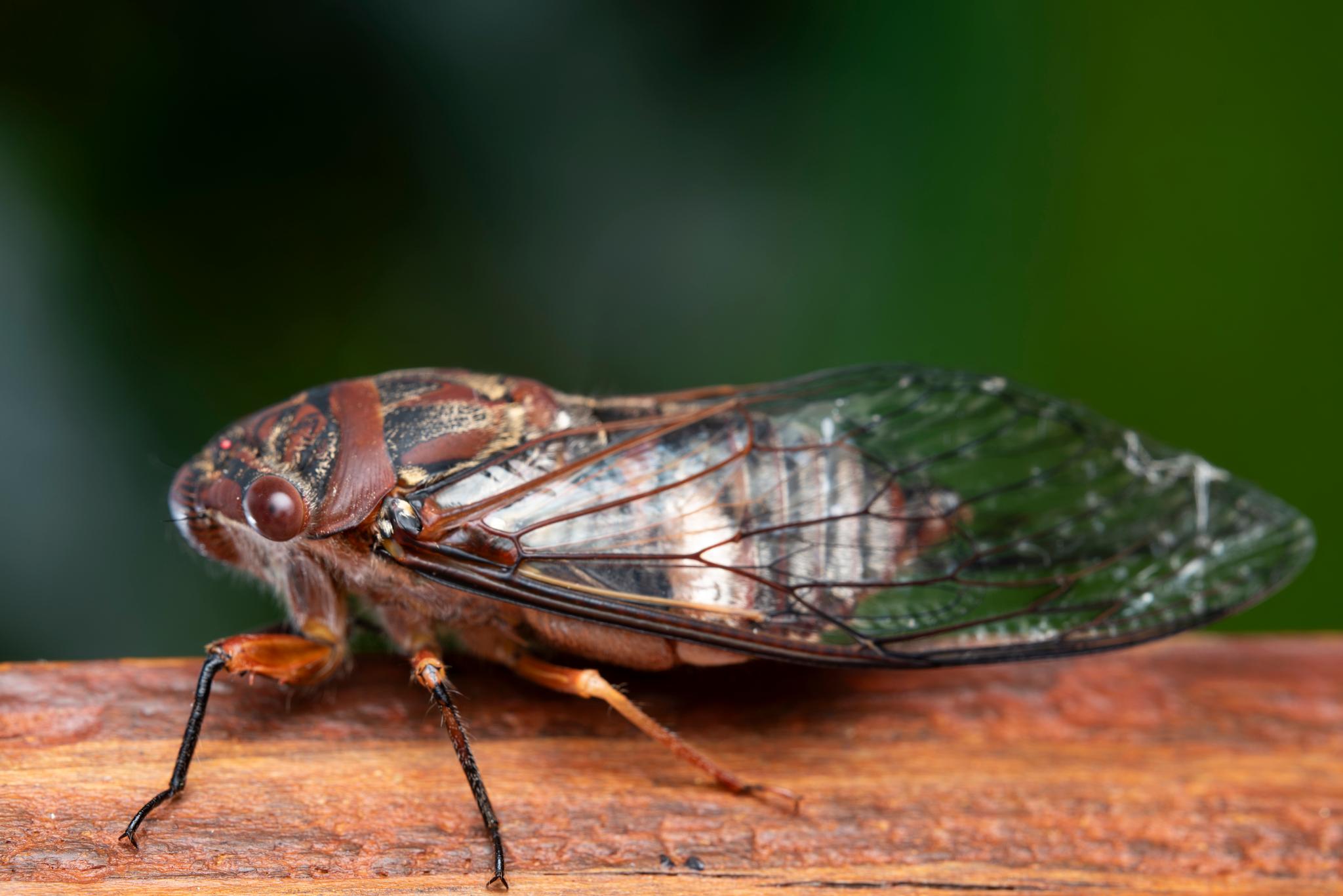 Black PrinceIf you've found a black prince, you've found the cicada Sydney kids have long prized. Kids believed it was rare.
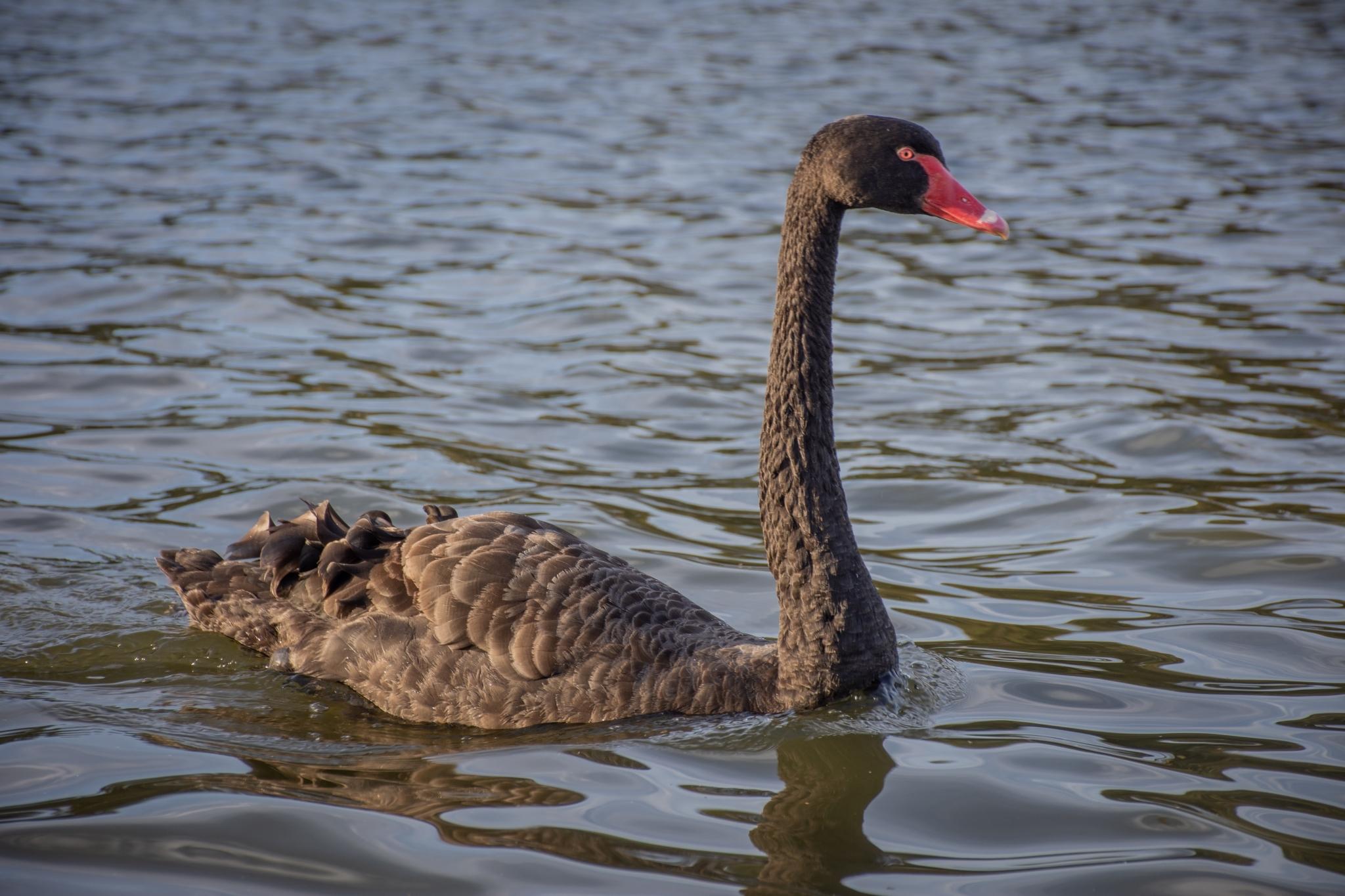 Black SwanFor more than 1500 years, Europeans used "a black swan" to mean something that couldn't exist. The Roman poet Juvenal called a perfect wife "a rare bird, very like a black swan".
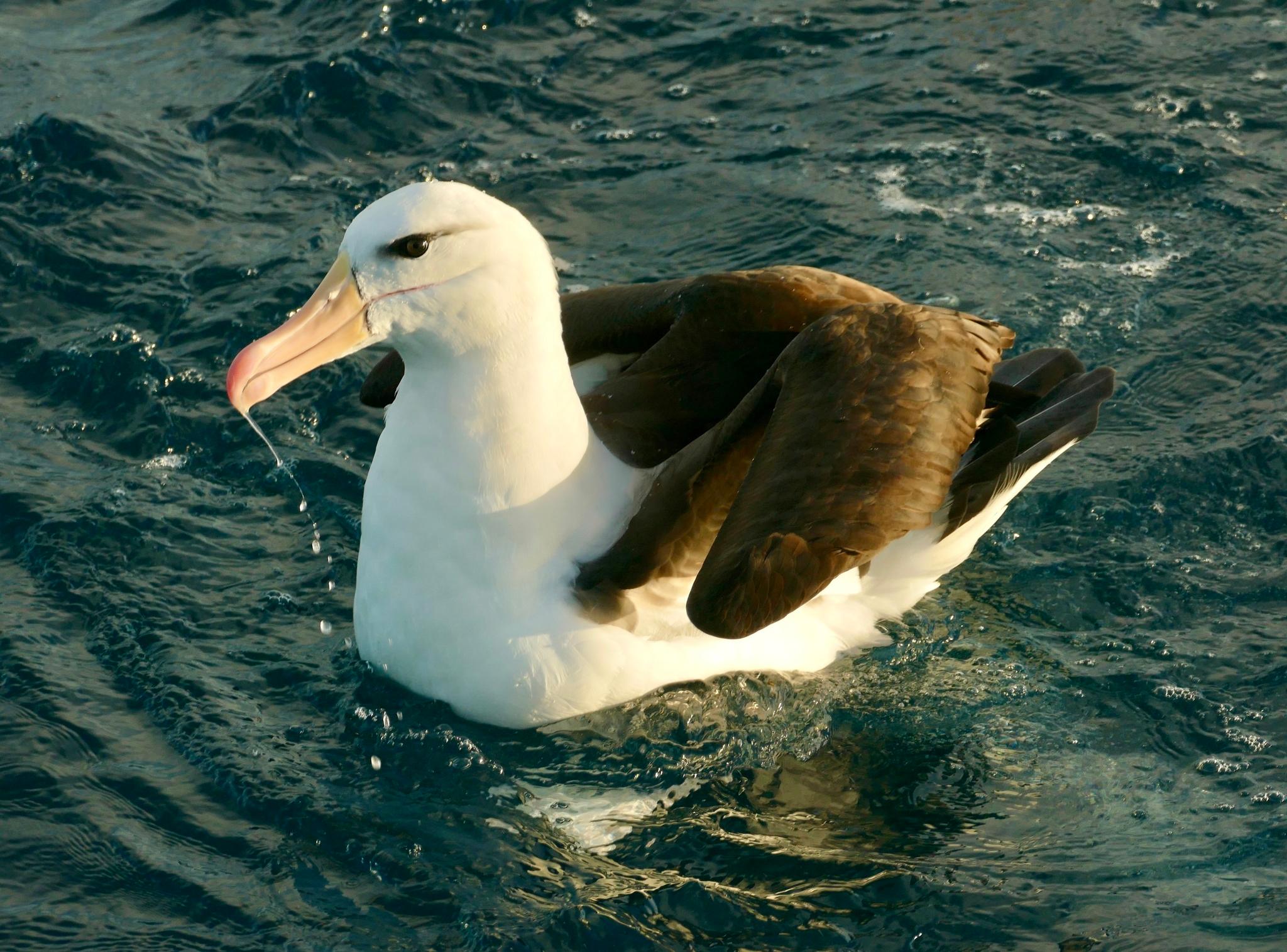 Black-browed AlbatrossIts wings span up to two and a half metres, and it's one of the smaller albatrosses. A black-browed albatross can live 30 years or more, and usually keeps the same breeding partner each season.
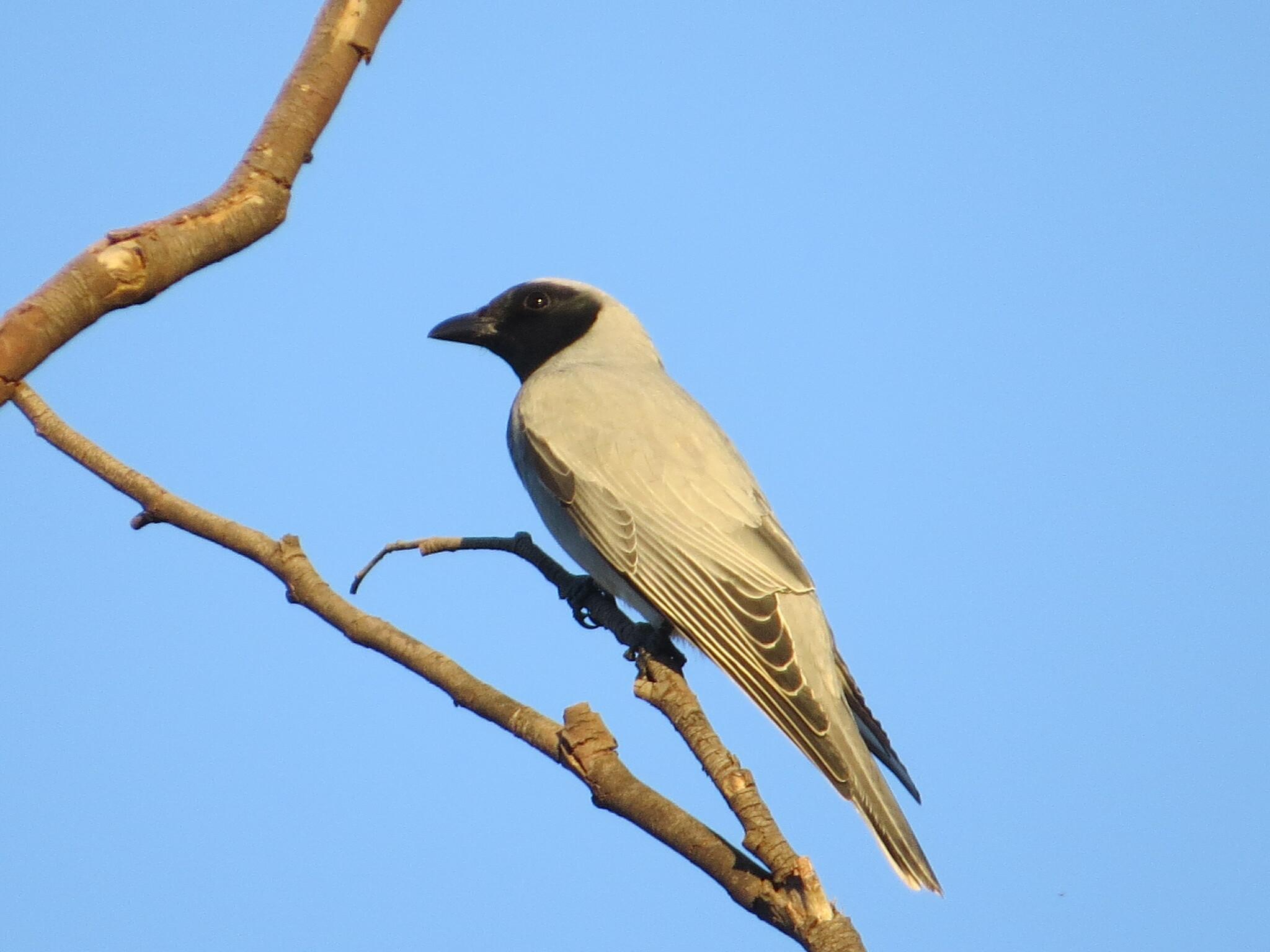 Black-faced CuckooshrikeIts name is two mistakes. The black-faced cuckooshrike is neither a cuckoo nor a shrike.
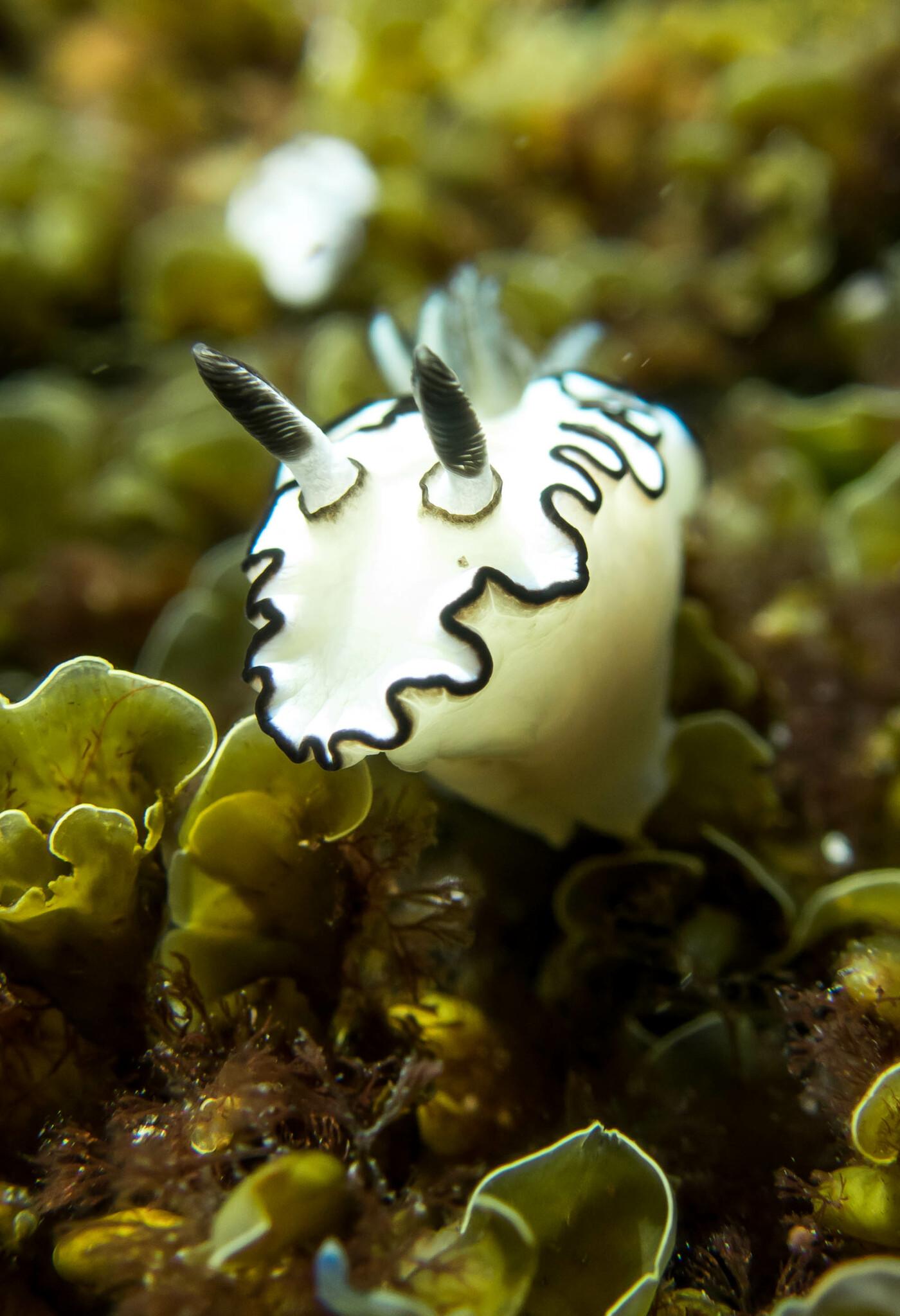 Black-margined NudibranchThis sea slug is grazing on a sponge, its gills waving rhythmically as it crawls. It's lemon-to-cream, edged in black, and it's telling every fish in the rockpool something.
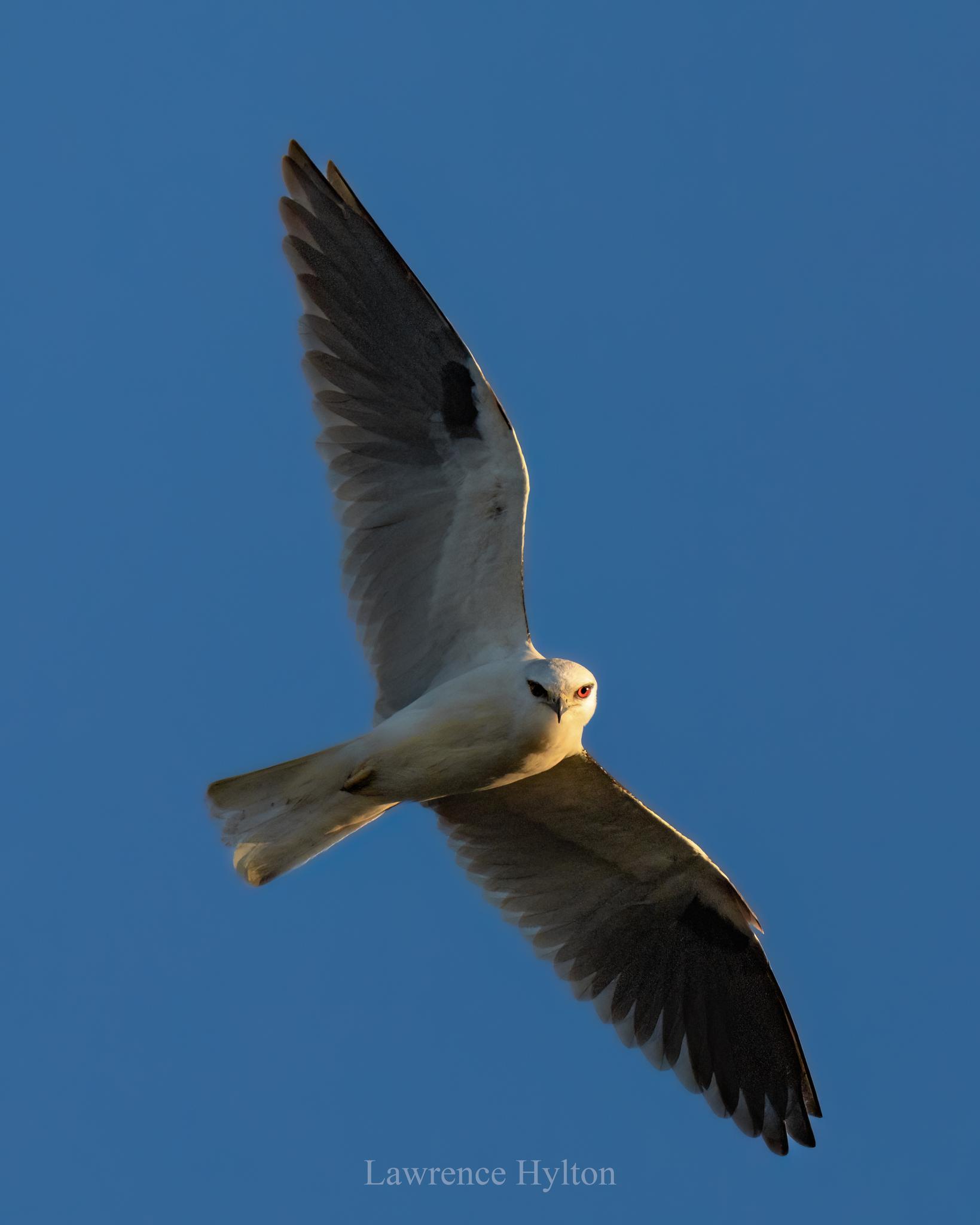 Black-shouldered KiteIt hangs over the grass on beating wings, still as if it were pinned to the sky, wings held up in a V. That's how it hunts: hovering, then dropping onto whatever moves below.
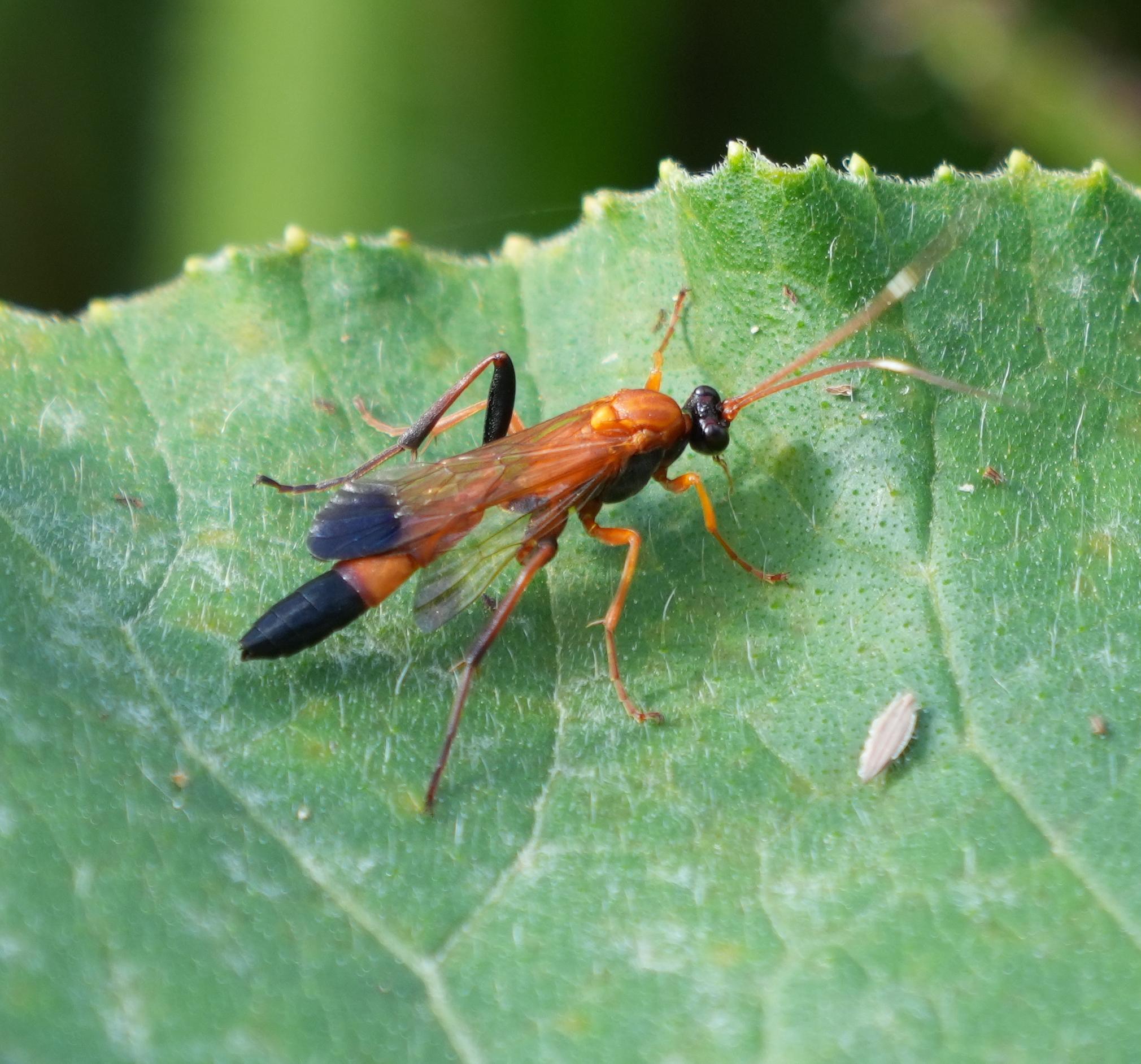 Black-tipped Orange Ichneumon WaspThis wasp raises its young inside other insects. It lays its eggs in the pupae of a moth, and its young develop in there, feeding on it from the inside.
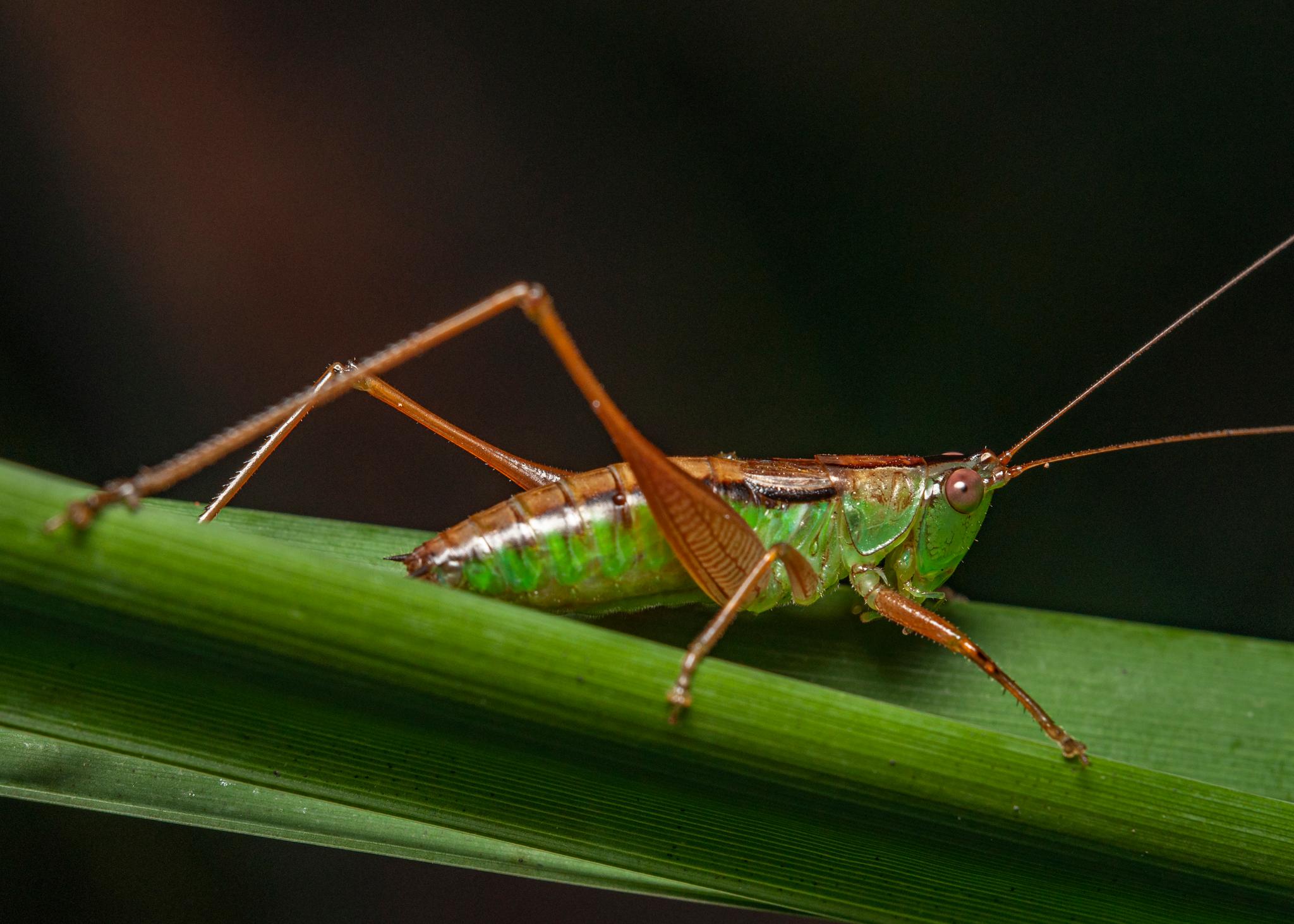 Blackish Meadow KatydidThat low buzzing in the long grass, right through summer, may be blackish meadow katydids. At times they turn up in large numbers, living among grasses, reeds, lomandra and dianella, where the adults eat the flowers and seeds.
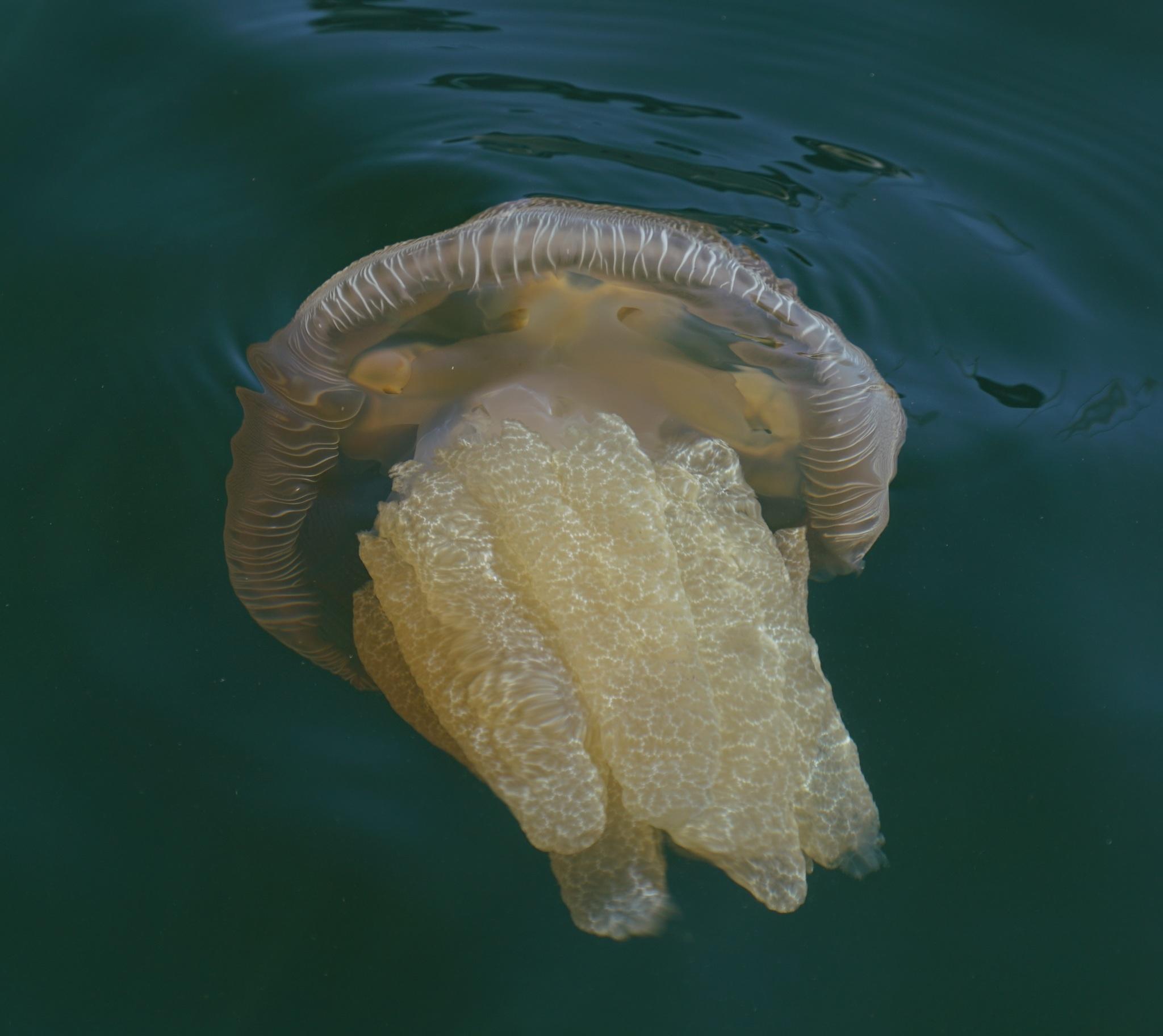 Blubber jellyfish blooms in the harbourWhen the harbour fills with blubbers, it can look like a soup of drifting blobs. They aren't drifting.
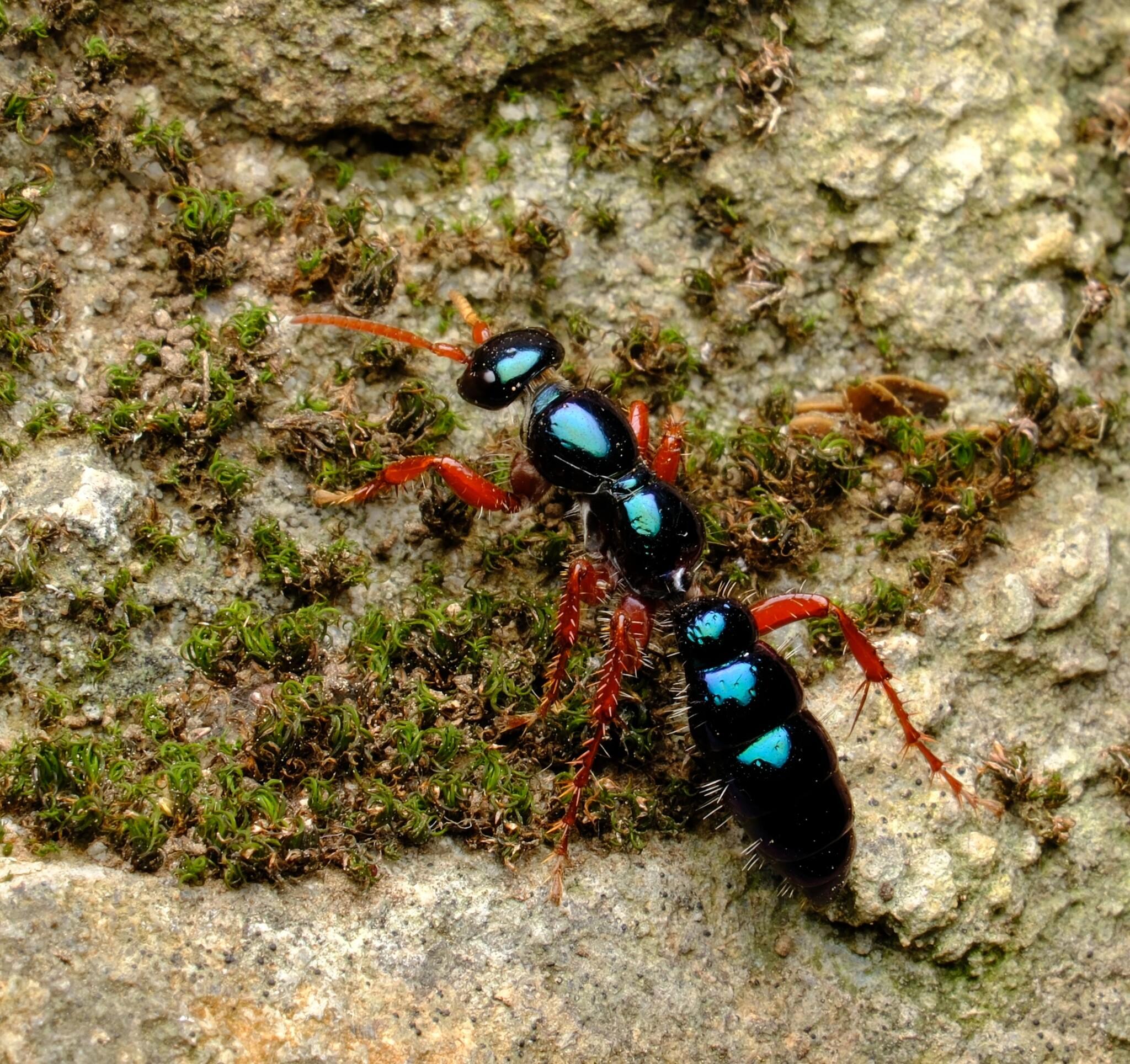 Blue AntIt's called the blue ant. It isn't an ant.
- Blue Blubber JellyIt has no tentacles. Under its bell hang eight trailing arms, and it moves by a trick that took scientists until 2018 to measure properly: it is pushed forward when its bell squeezes and again when the bell relaxes.
- Blue dragon nudibranchsThere are two blue dragons. The famous one drifts upside down on the open ocean, eating bluebottles.
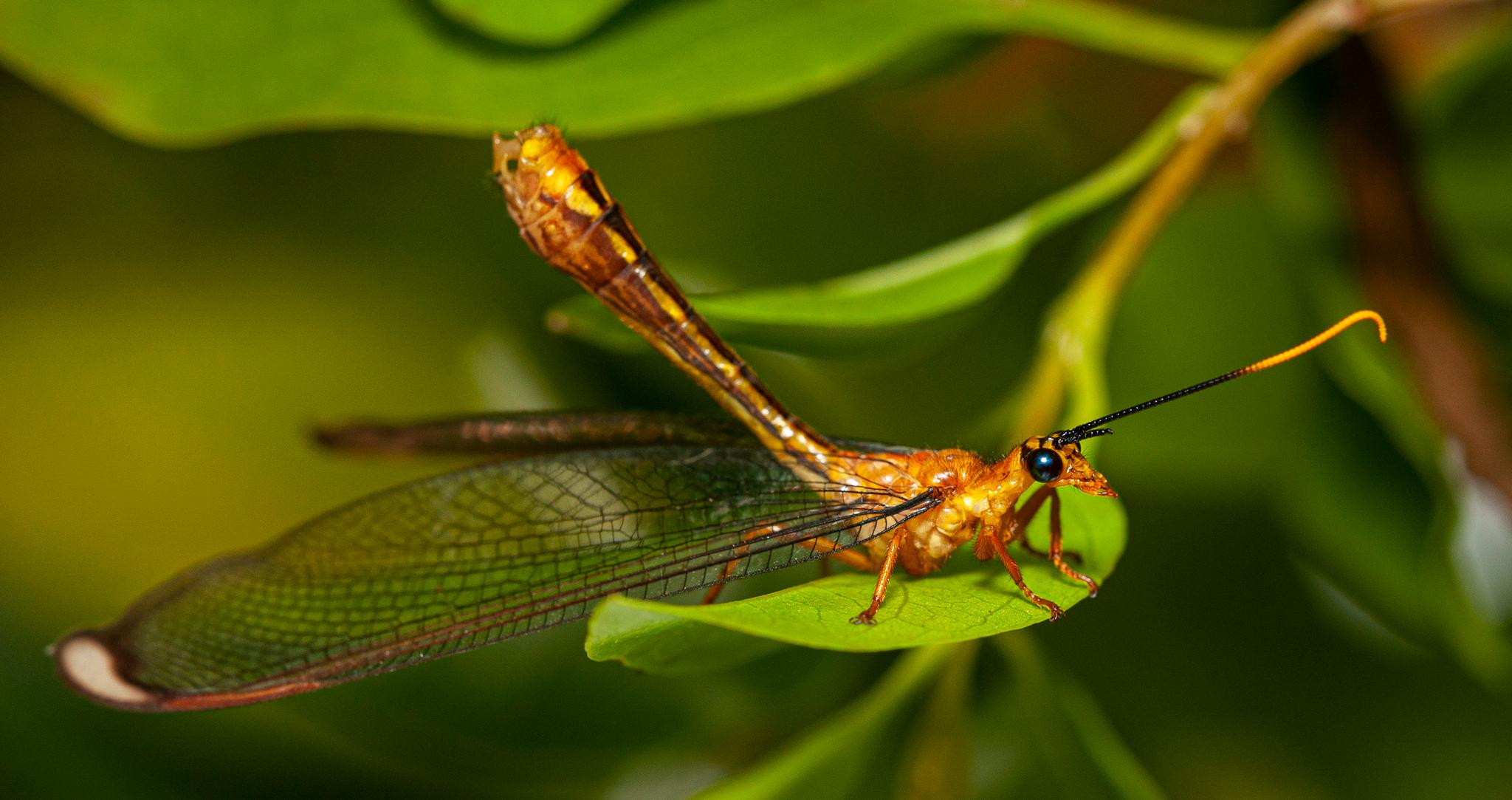 Blue Eyes LacewingIts scientific name, *myrmeleonoides*, means "like an antlion", and it looks the part: a long slim body and long, net-veined wings. It's a split-footed lacewing, and its family has a past.
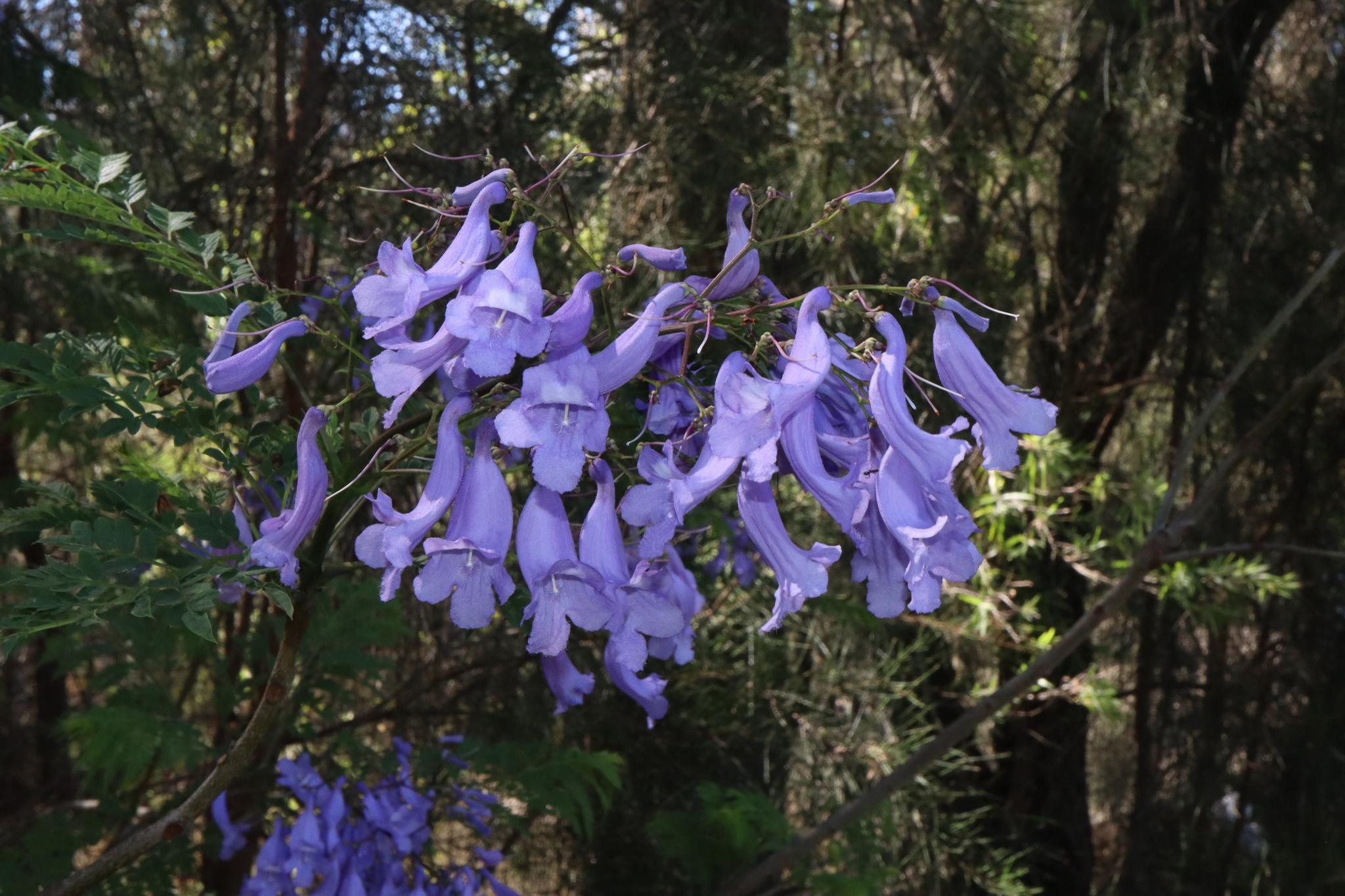 Blue jacarandaThis jacaranda is part of a wave. Every spring, blue sweeps across Australia from north to south, starting in north Queensland in September or October and reaching NSW in November.
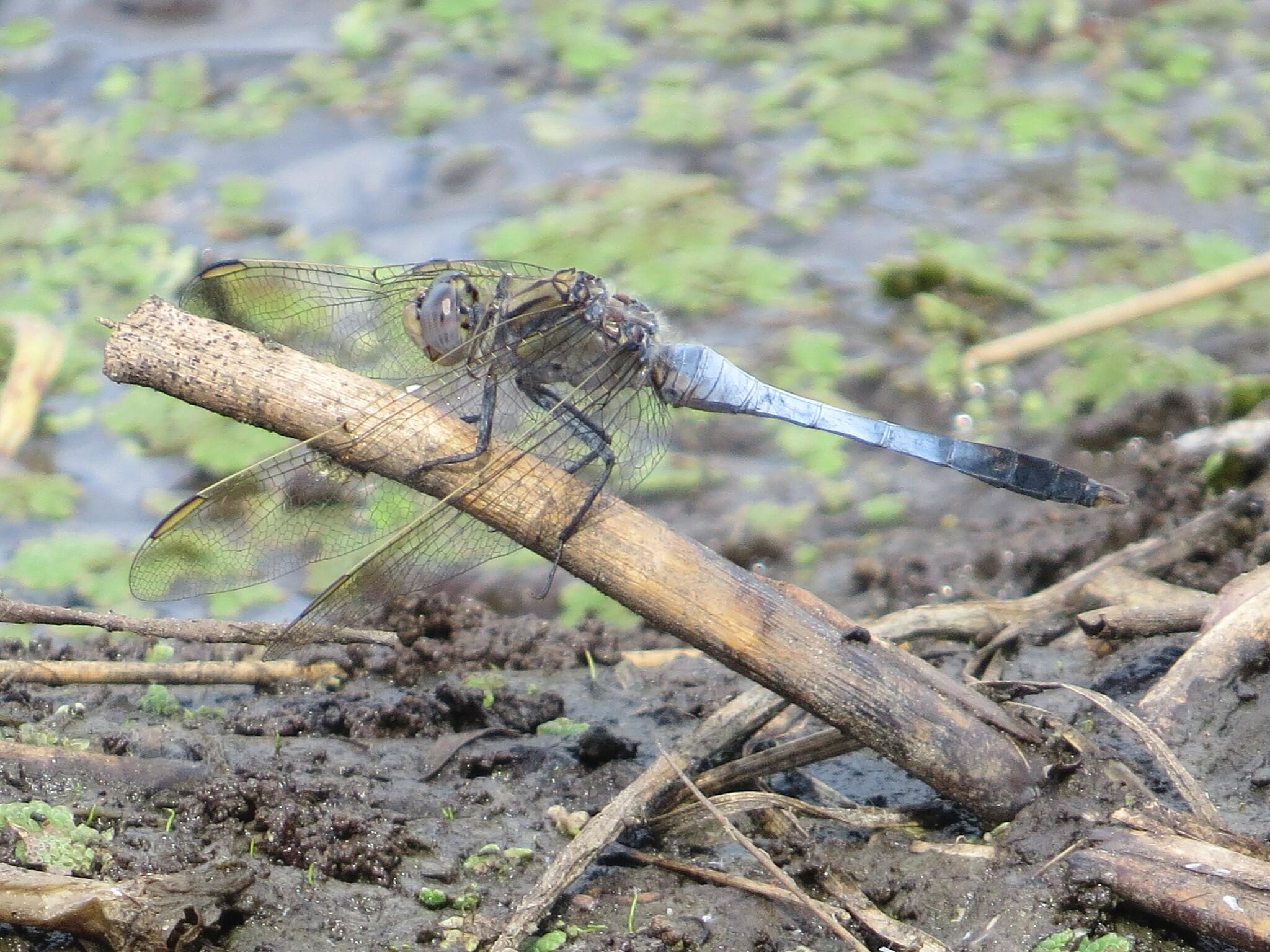 Blue SkimmerIt hangs in the air, darts sideways, then backs away. Dragonflies like the blue skimmer can hover, zigzag and even fly backwards.
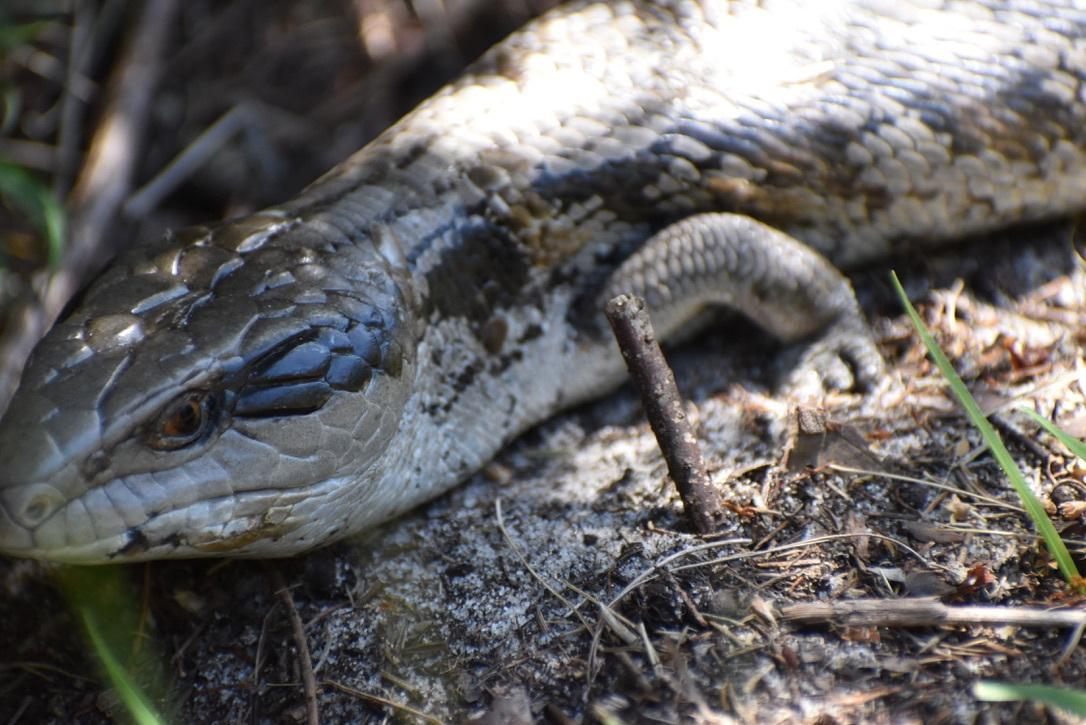 Blue-tongue lizards out baskingA blue-tongue basking in the morning is charging up. It can't make its own body heat, so it lies in the sun until it has warmed to about 30–35°C, and only then goes looking for food.
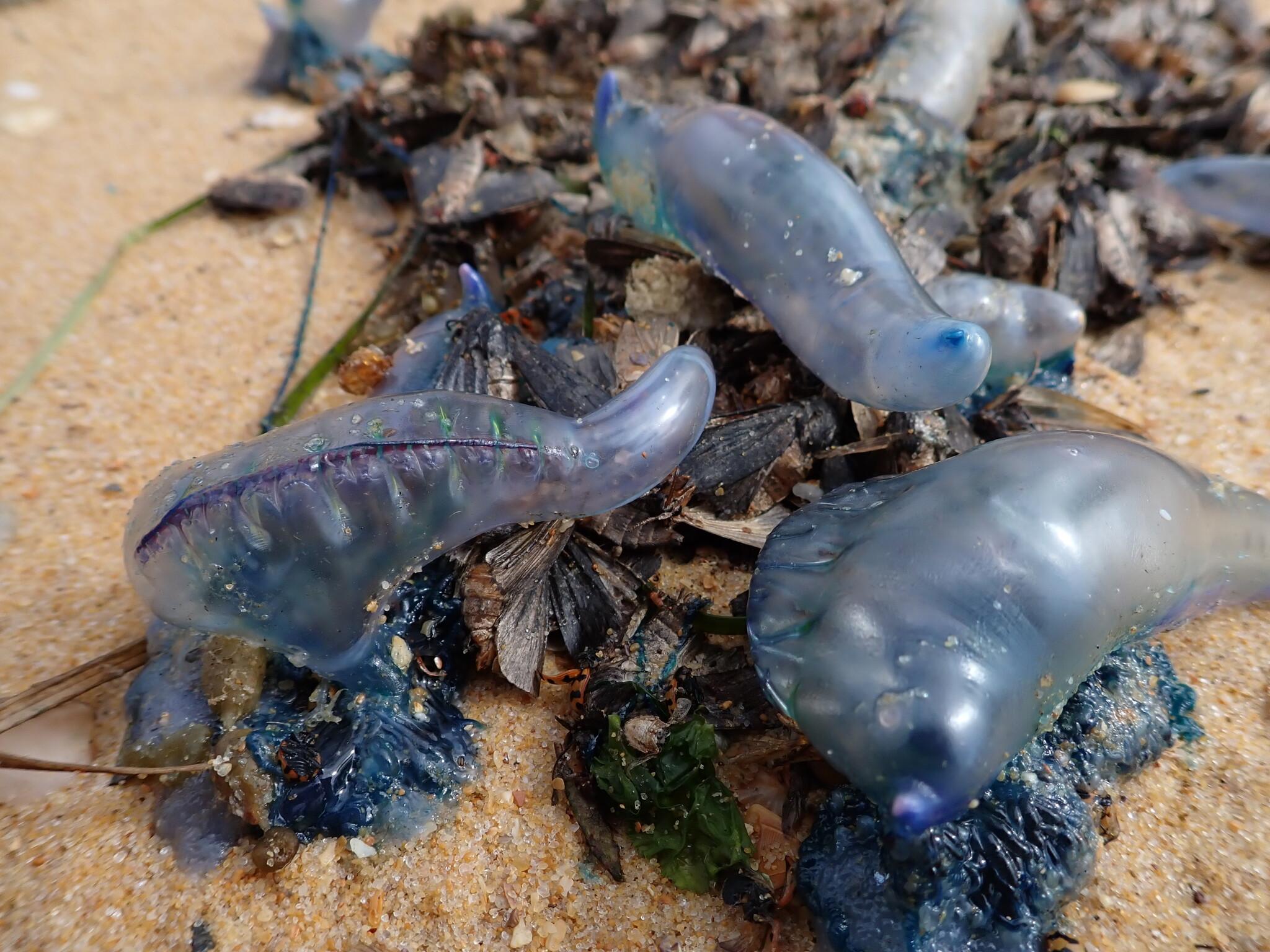 Bluebottle strandings (on onshore north-easterlies)The blue balloons all over the sand aren't single animals. A bluebottle is a colony of four kinds of specialised individuals, living as one: one makes the float, others catch, others digest, others breed.
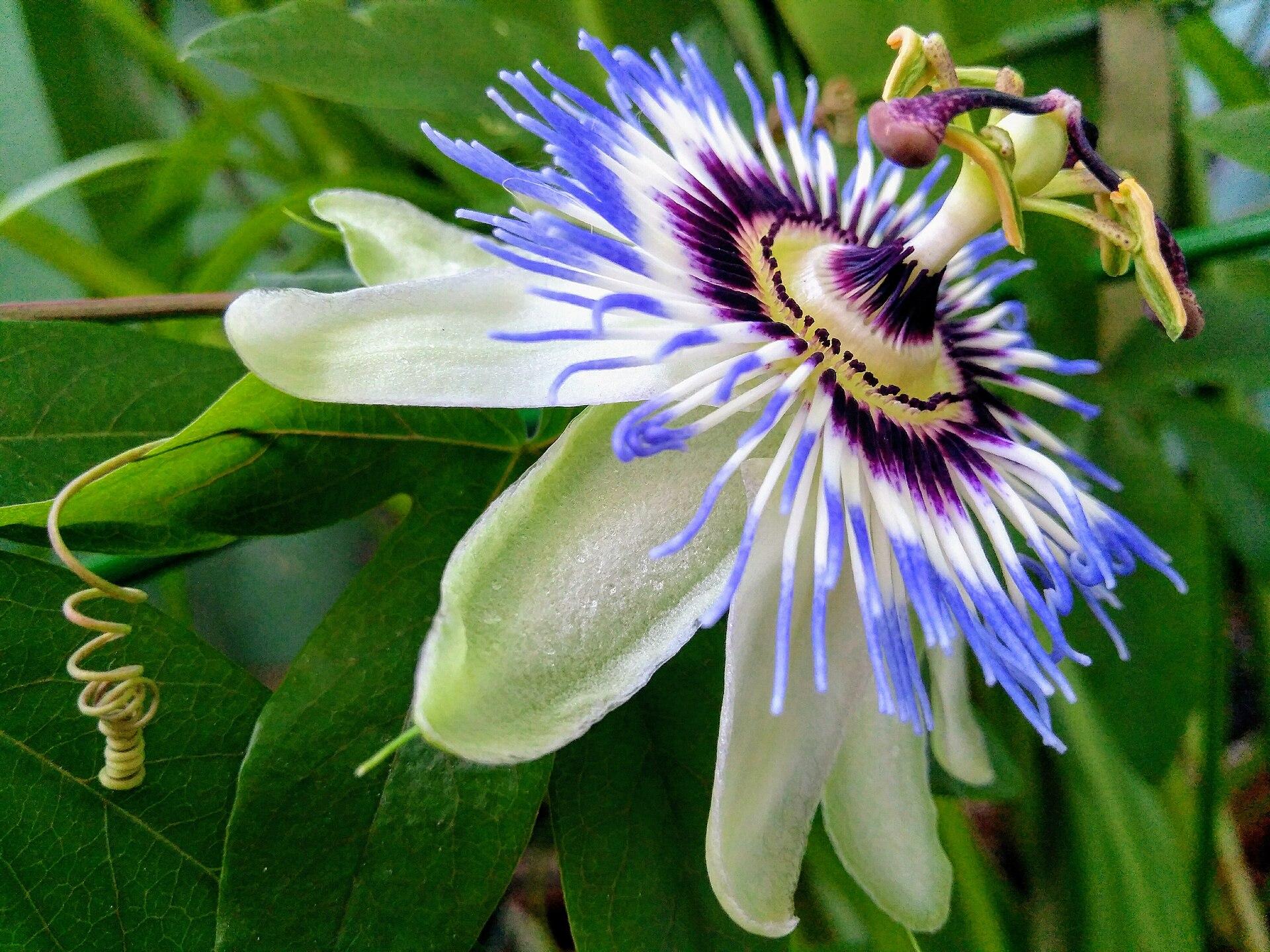 Bluecrown passionflowerThe bluecrown passionflower is introduced, from South America, and in Sydney it's often not the plant anyone meant to grow. It's used as rootstock: edible passionfruit is grafted onto its roots.
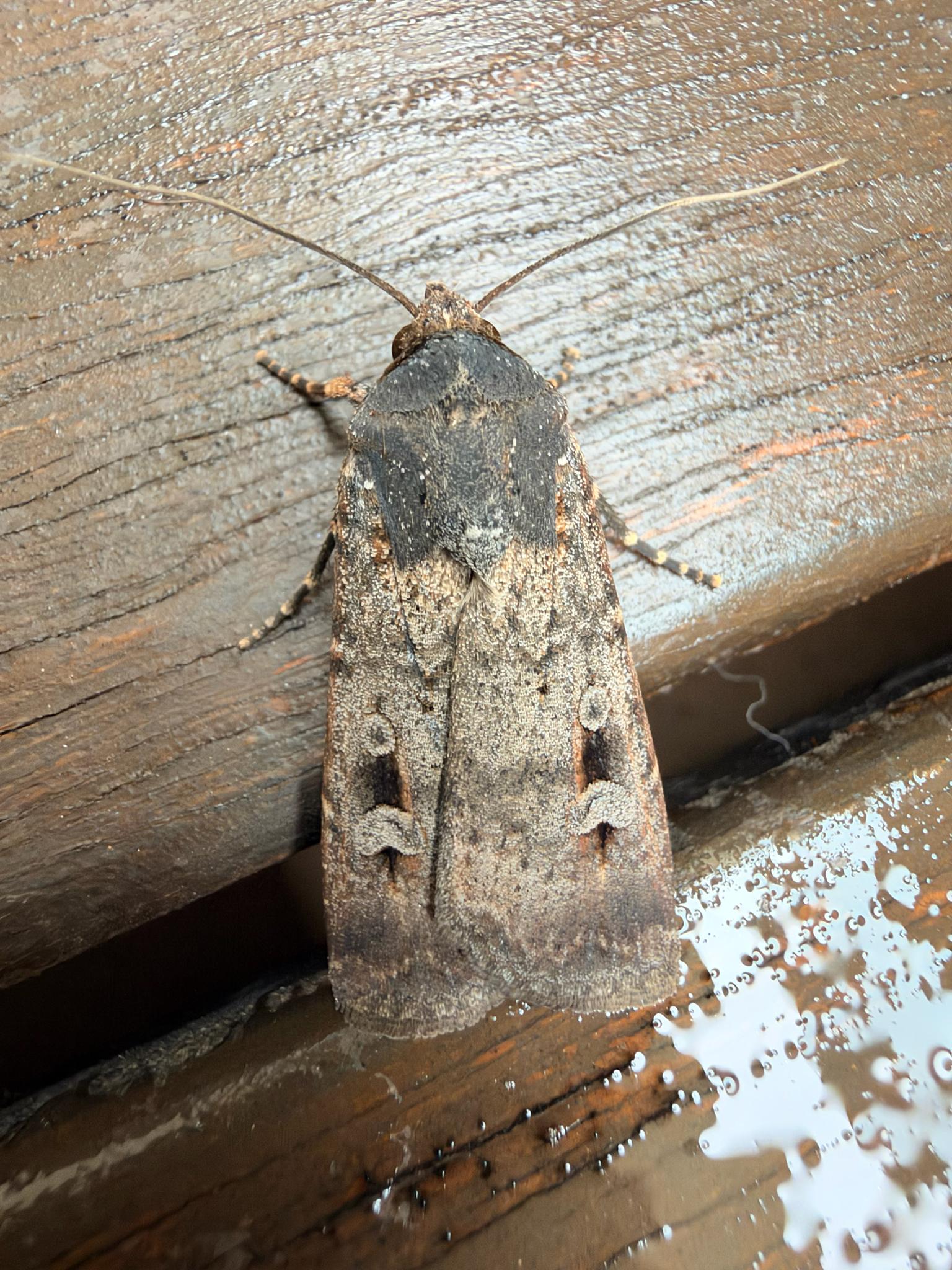 Bogong MothThis moth has never seen the place it's going. Each spring, billions of Bogong moths escape the heat across south-east Australia and fly up to 1,000 kilometres to a few cool caves in the Australian Alps.
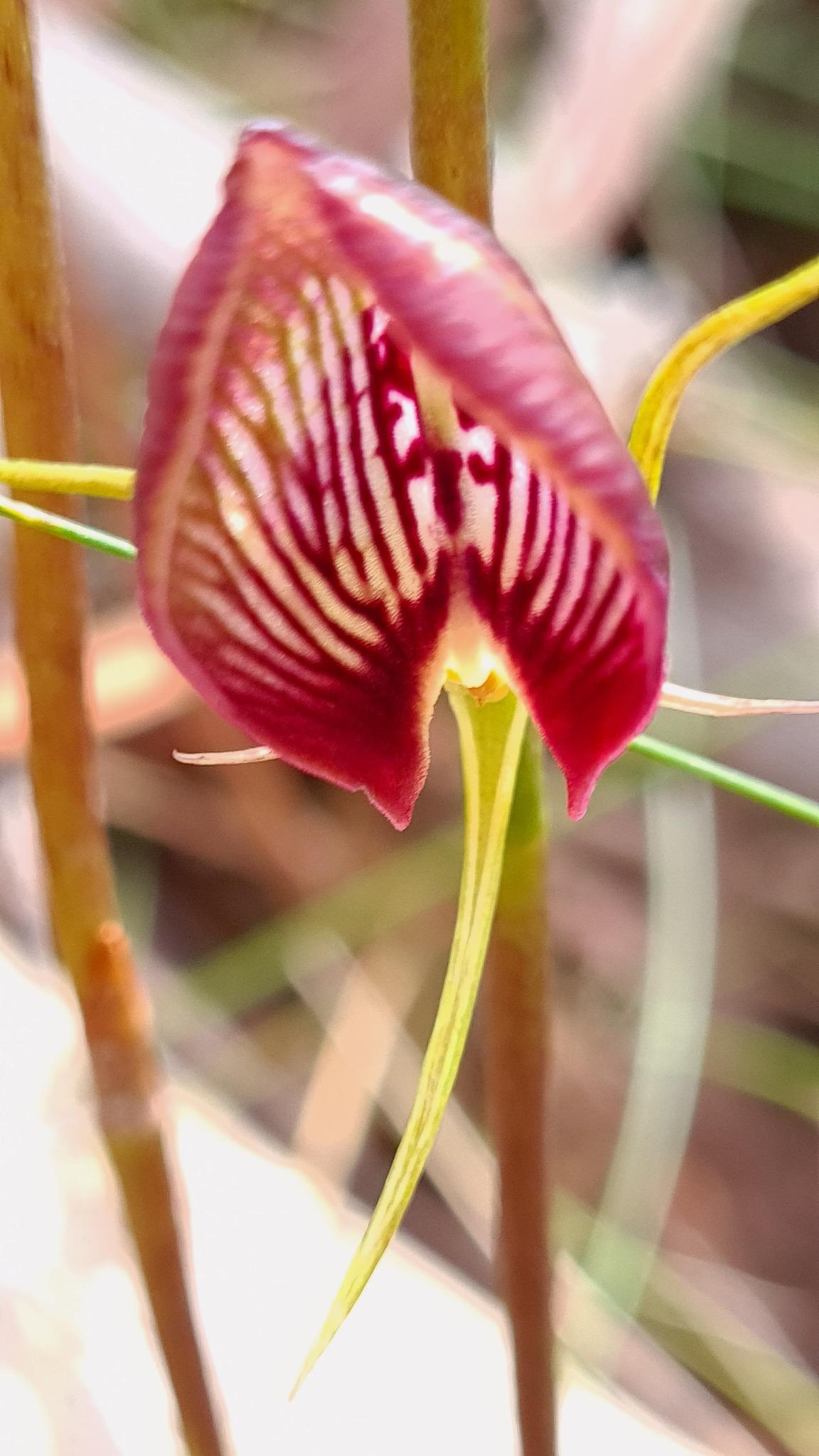 Bonnet orchidThis flower is a forgery. Tongue orchids like this one imitate a female wasp so well that male wasps try to mate with the flower, and they're often fooled so completely that they waste their sperm on it.
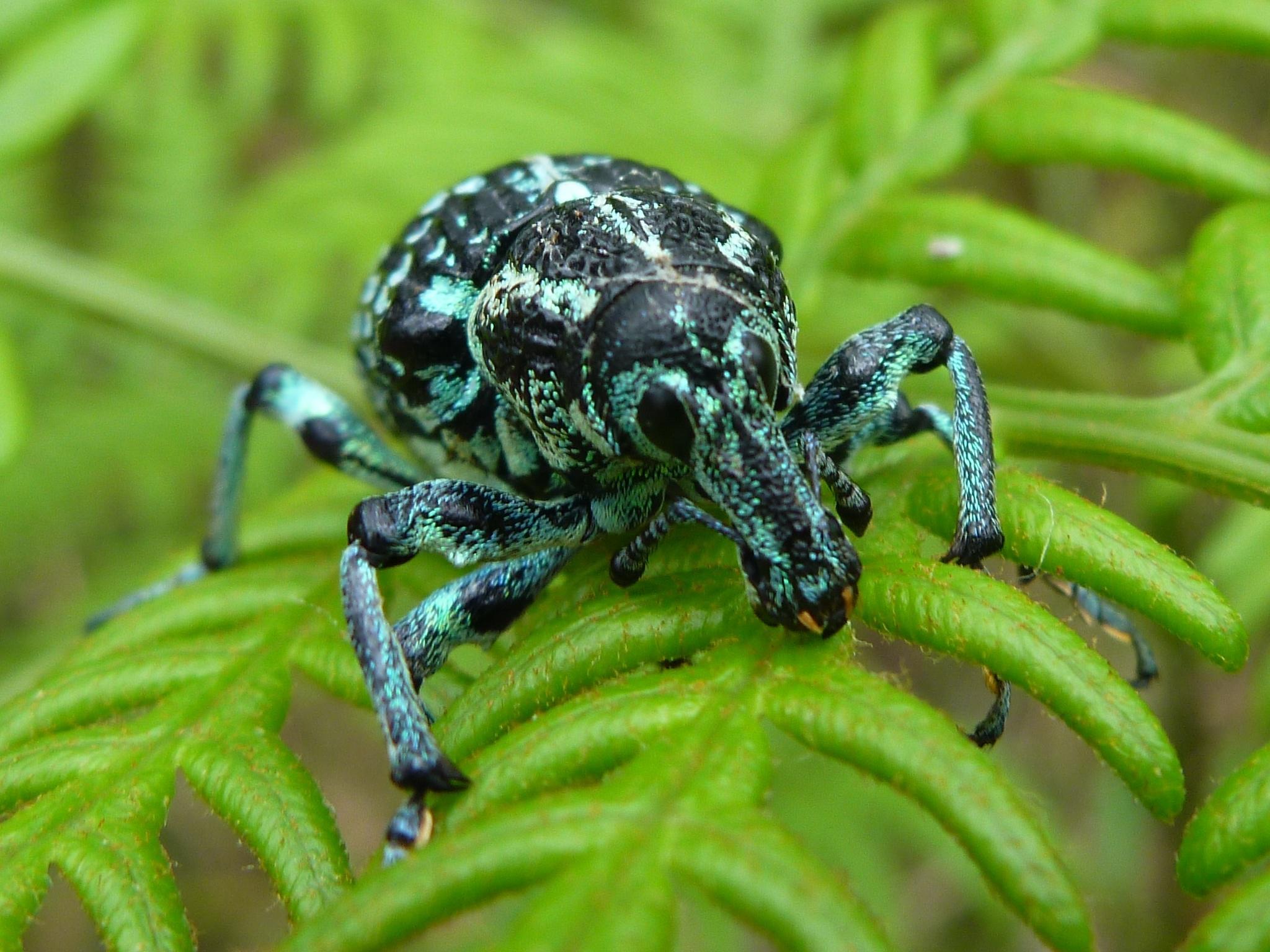 Botany Bay Diamond WeevilIn 1770, Joseph Banks landed at Botany Bay with Captain Cook. Among the specimens he collected on that voyage was this weevil.
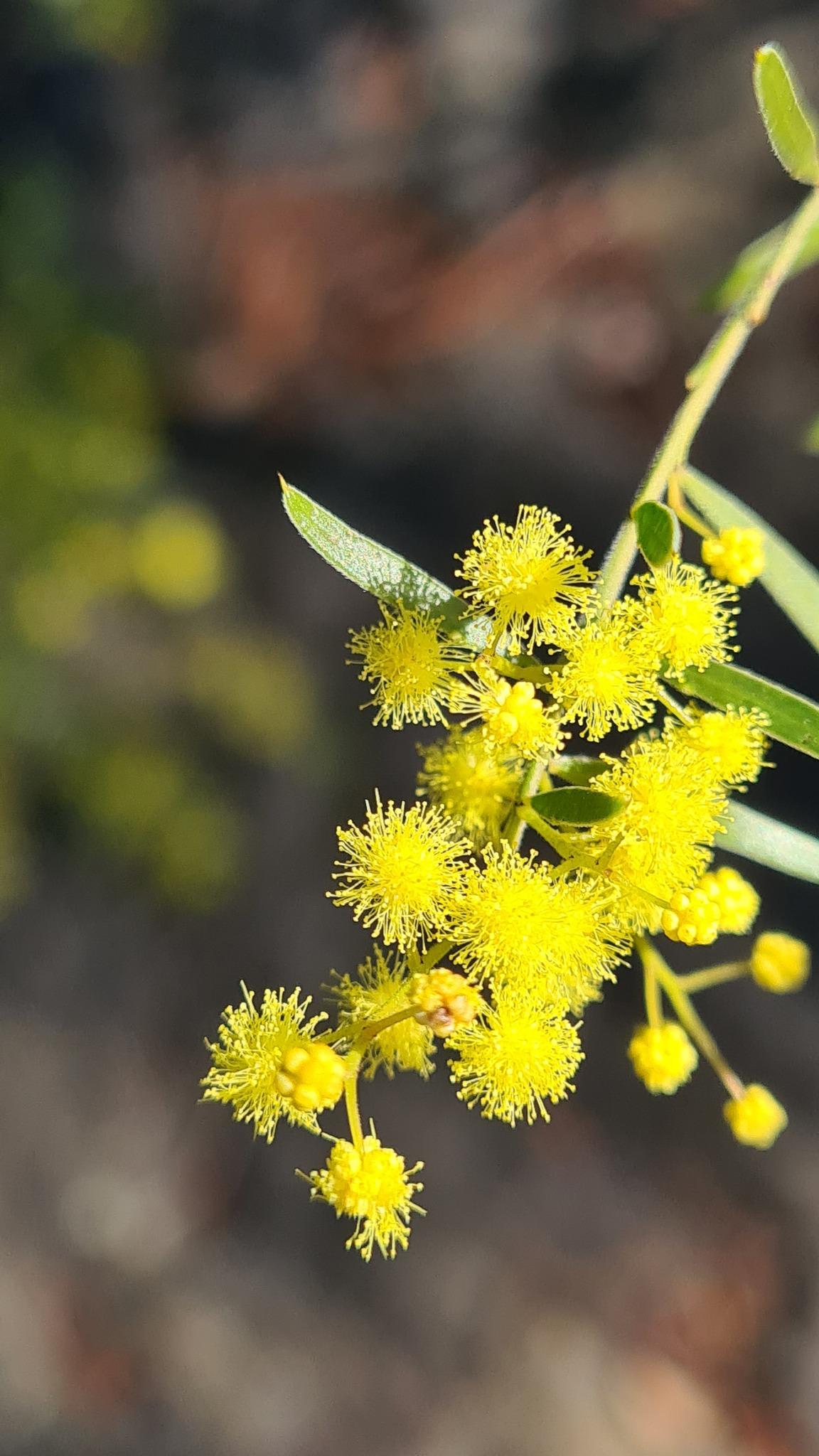 Brisbane wattleWattle feels like the most Australian plant there is. But wattles were newcomers.
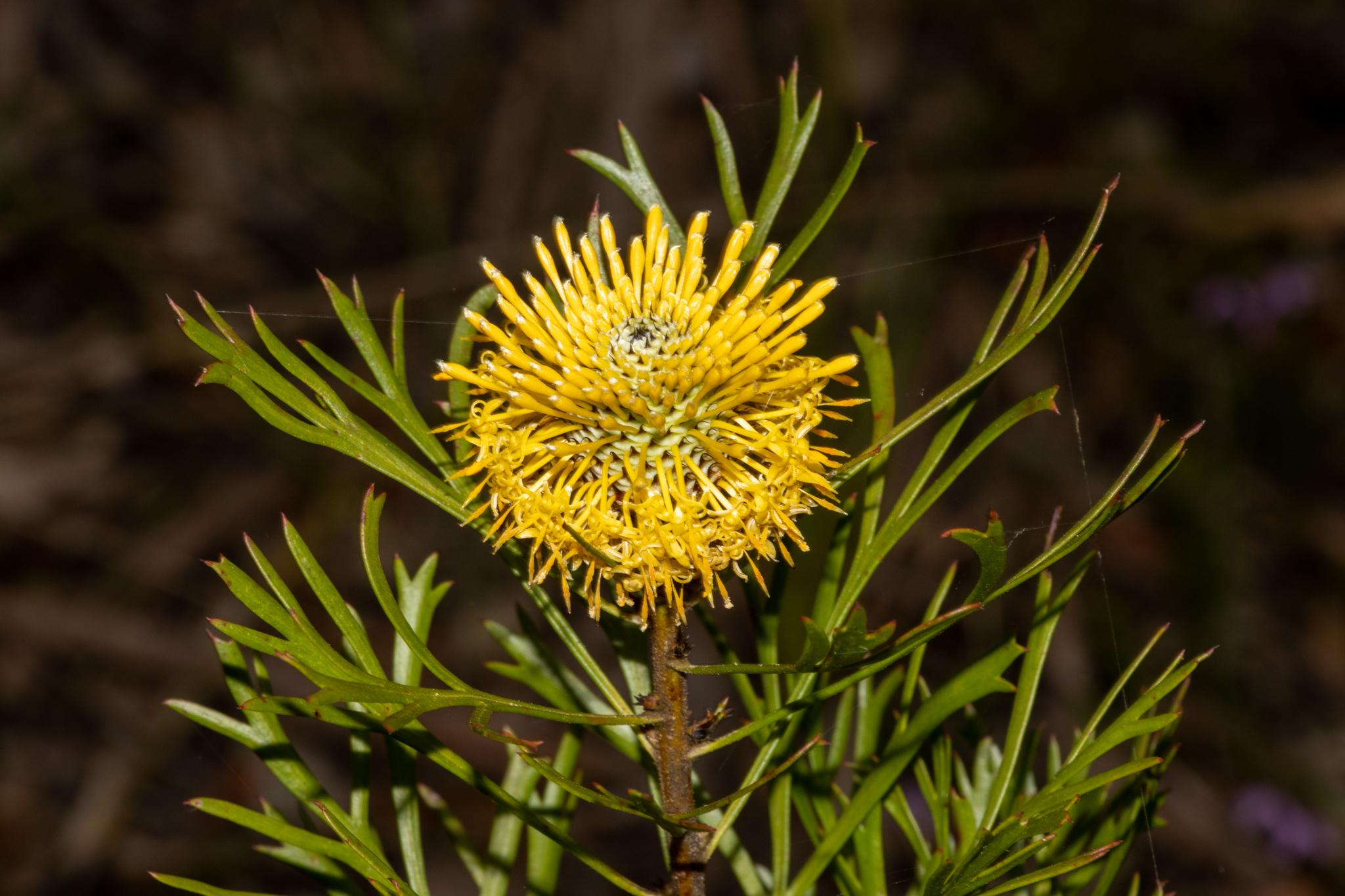 Broad-leaved DrumsticksThis shrub is keeping time against fire. After a fire burns it, it grows back from a woody lignotuber at its base within two months, and plants are thought to live more than 60 years.
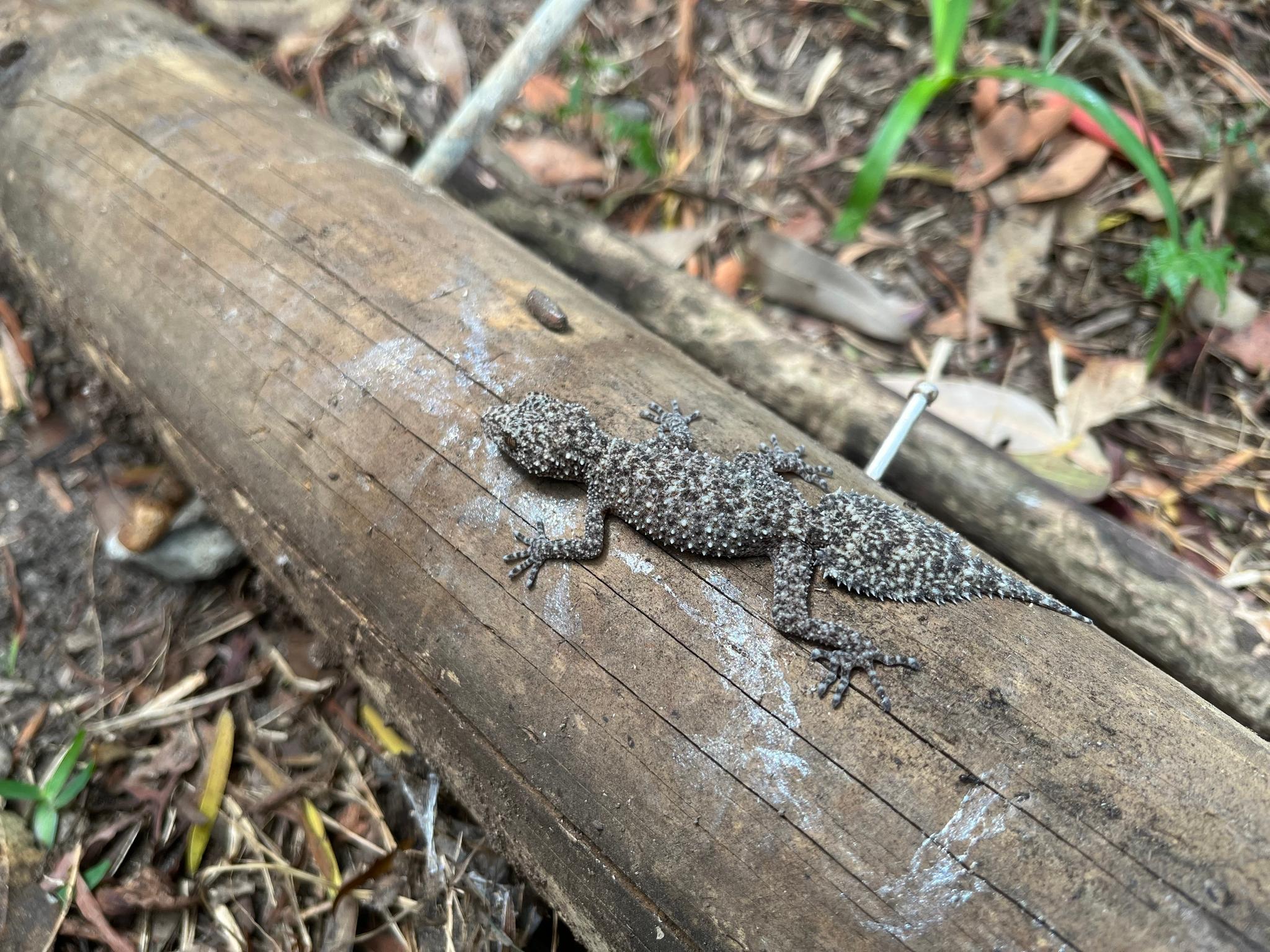 Broad-tailed GeckoMost people think of geckos as the lizards that can walk up glass. Geckos trapped in amber about 99 million years ago, while dinosaurs walked the Earth, already had sticky toe pads.
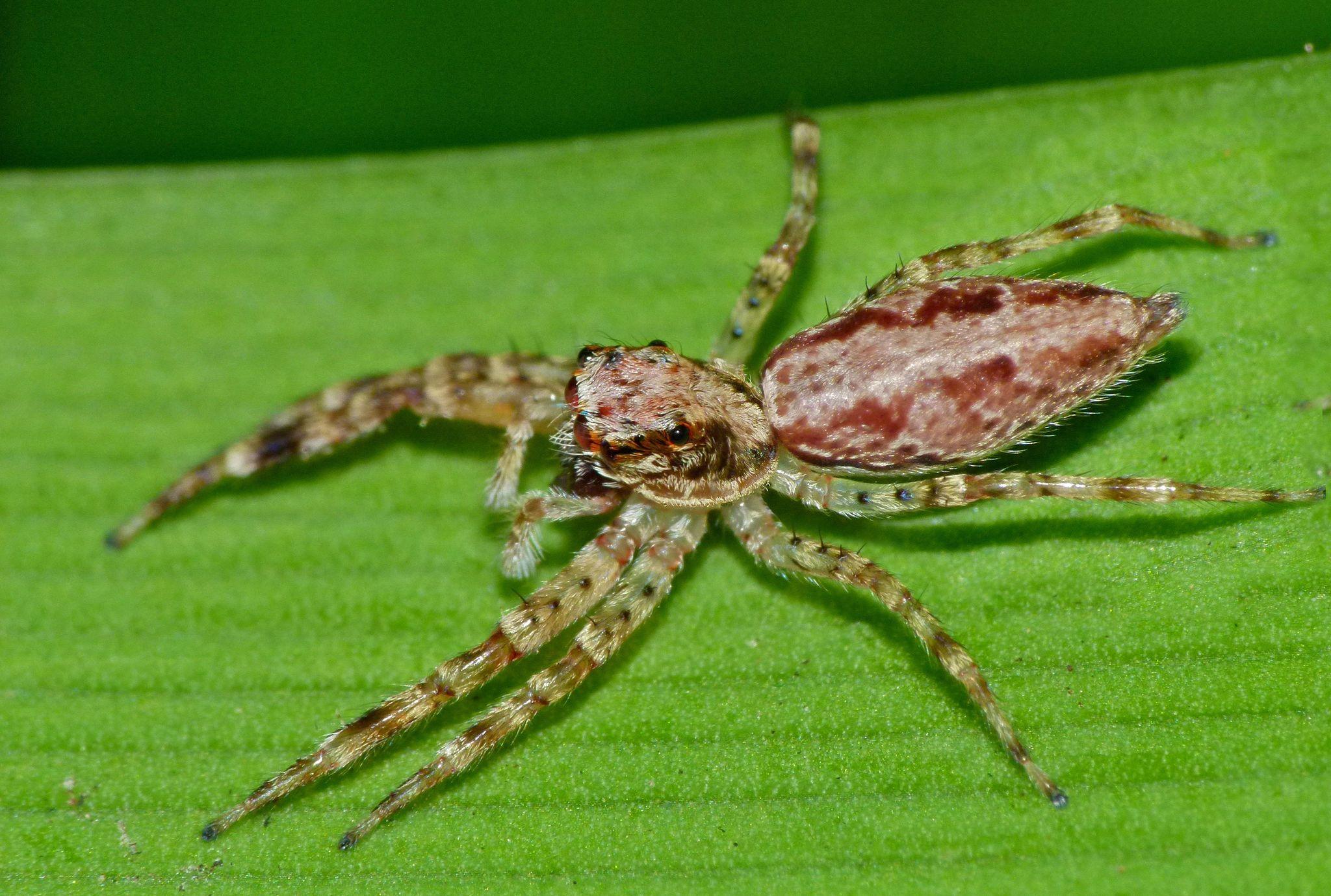 Bronze HopperIt may turn to face you. Jumping spiders hunt by eye.
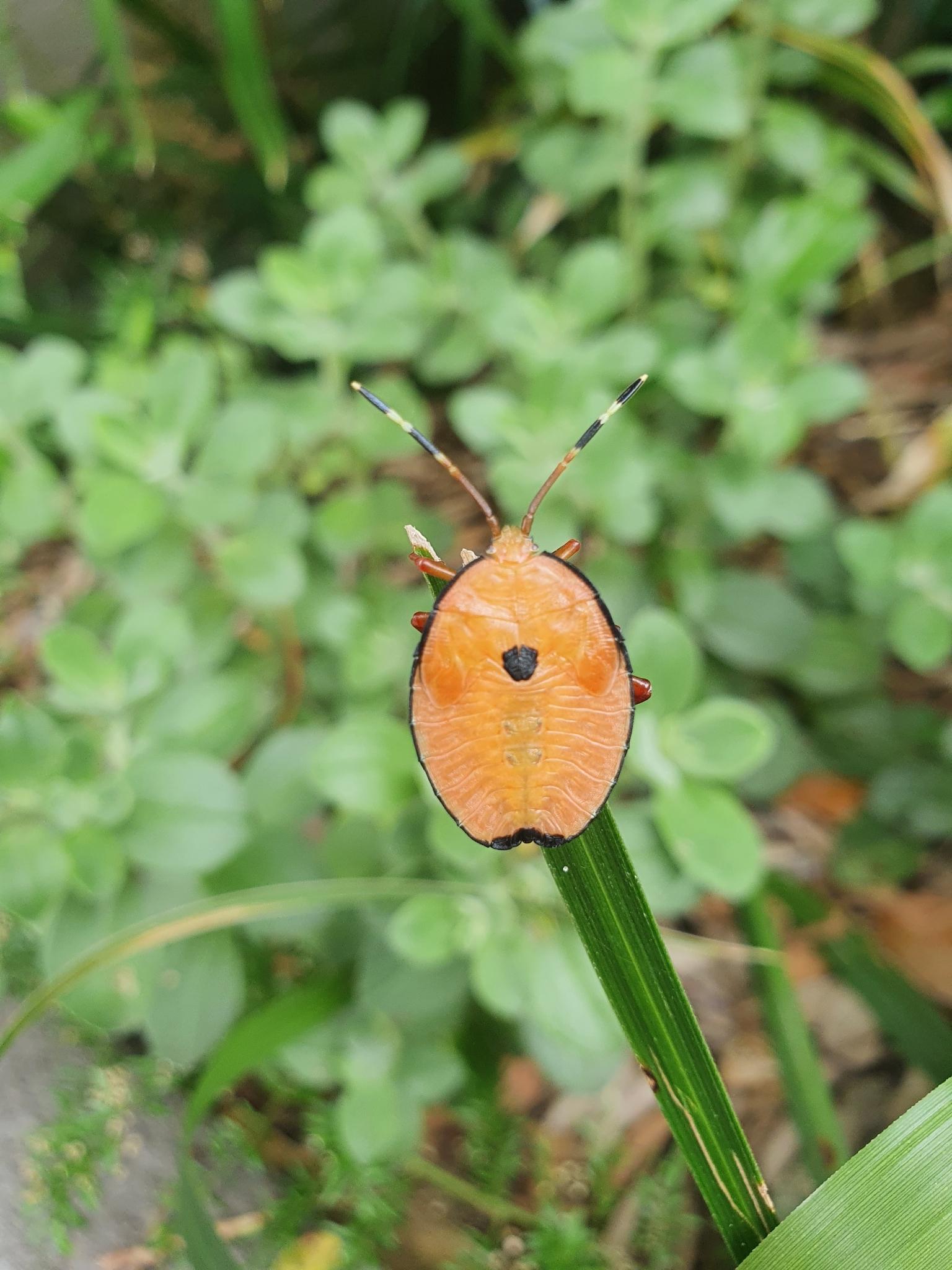 Bronze Orange BugDisturb a bronze orange bug and it can squirt a foul-smelling fluid that burns skin. It's a stink bug that has turned its smell into a chemical weapon, and it's in no hurry to get out of your way.
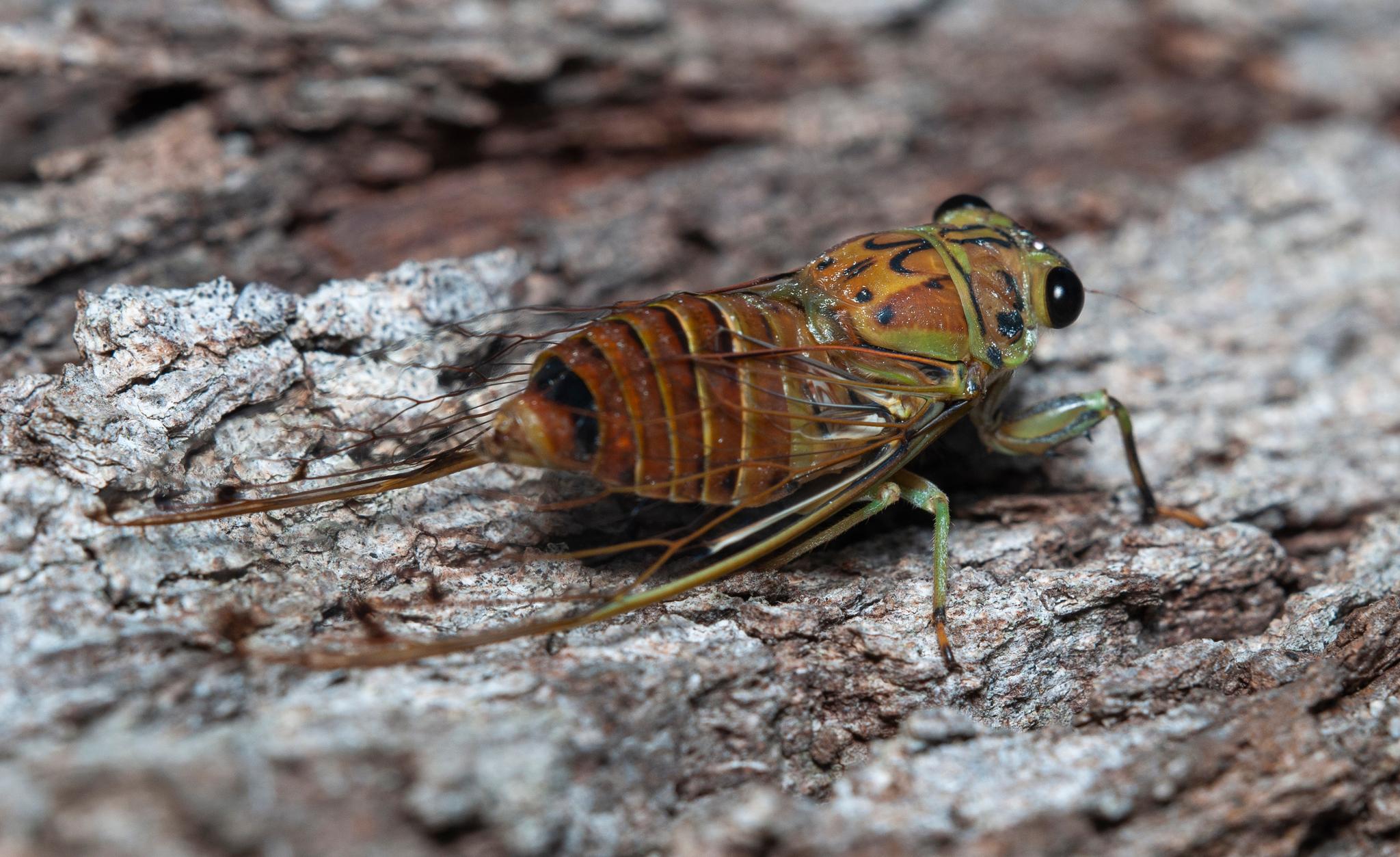 Brown BunyipAt dusk the brown bunyips start up together, a chorus that rises as the light goes.
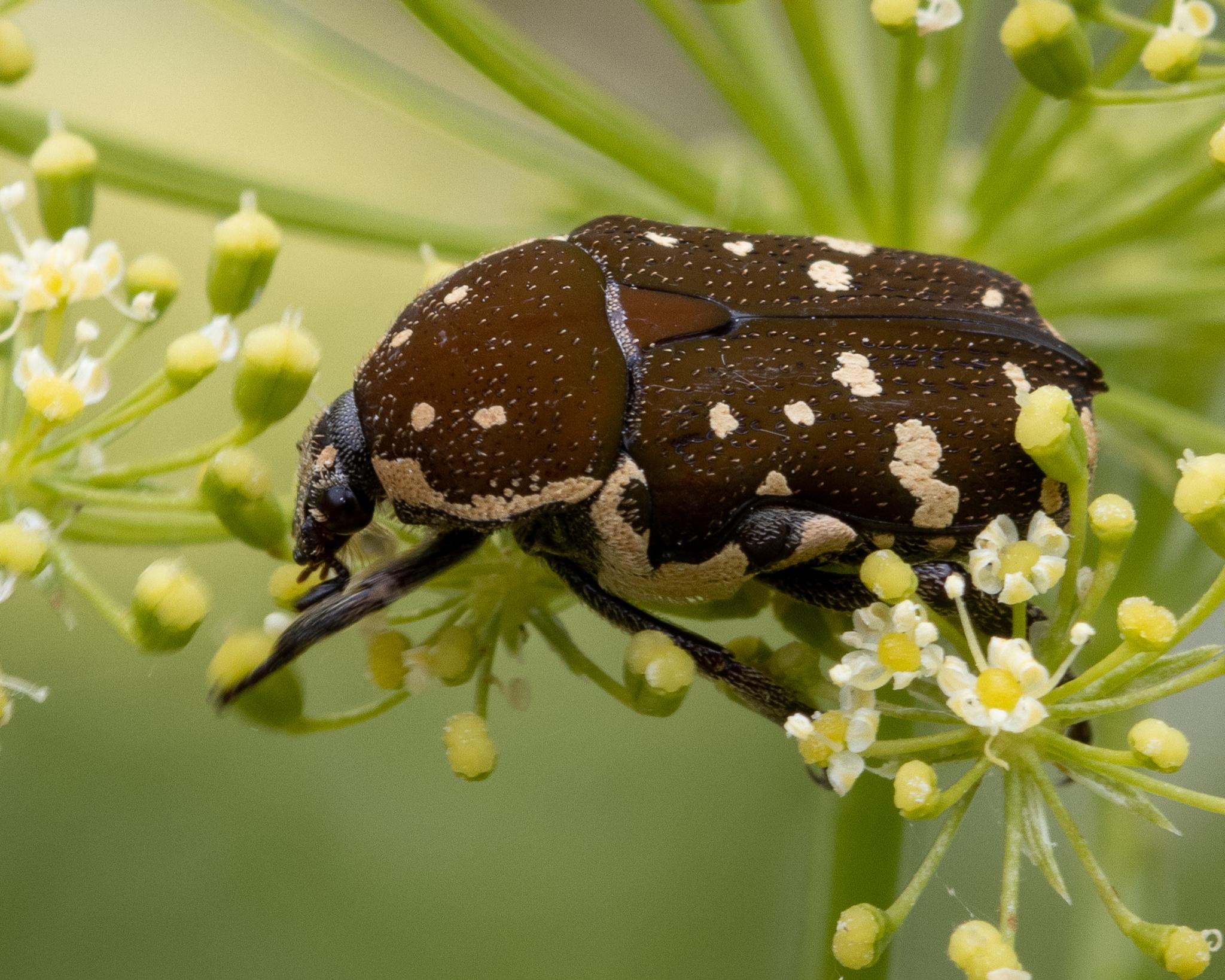 Brown Flower BeetleWhen this beetle flies, its armour stays shut. Most beetles have to lift their hard wing cases clear of the body before they can take off, opening up like a car bonnet.
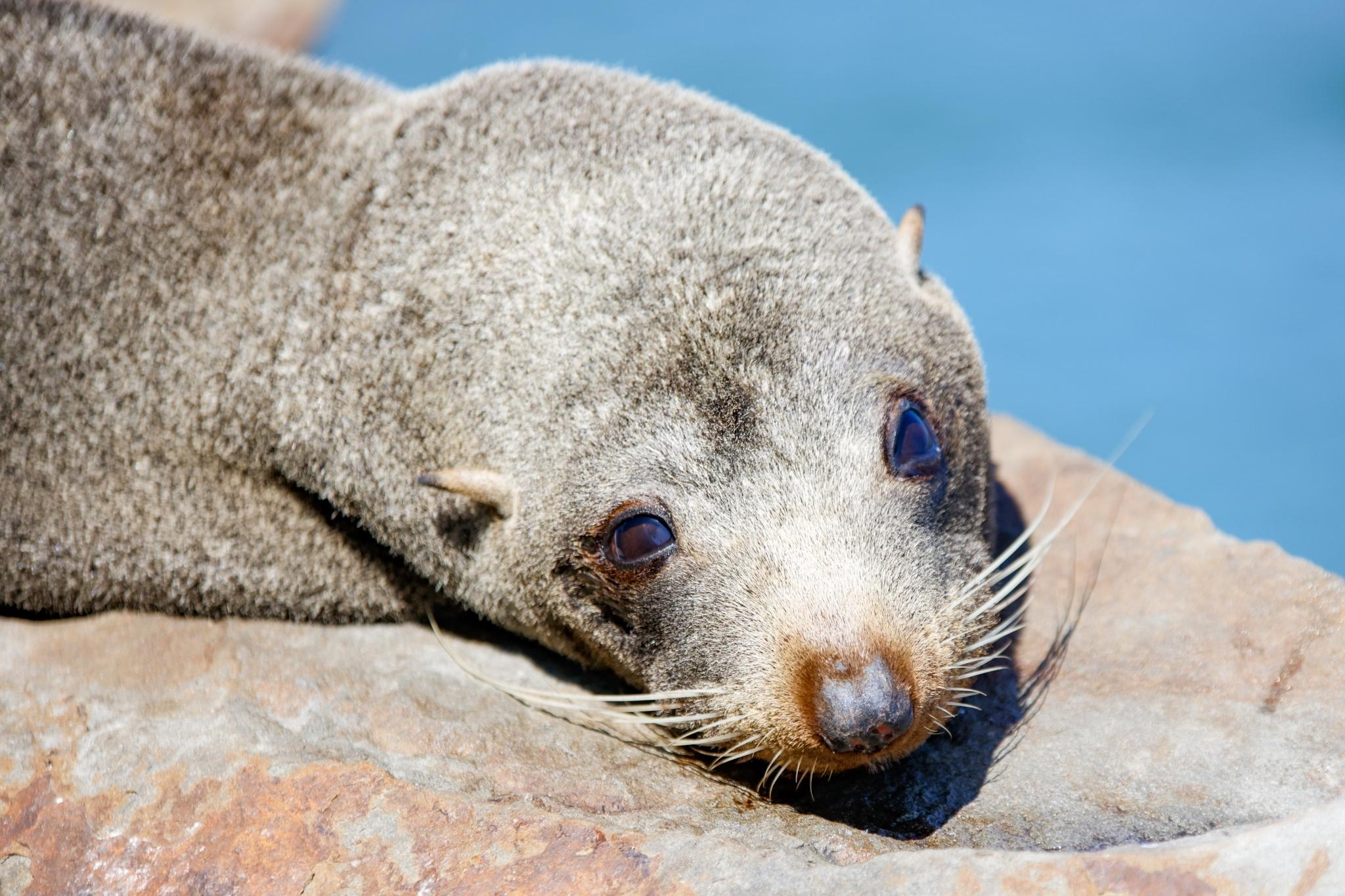 Brown Fur SealThe fur seal hauled out on the rocks is getting about on all four flippers. Unlike true seals, fur seals can still walk on land, and they have small external ears and two layers of fur, where other seals have one.
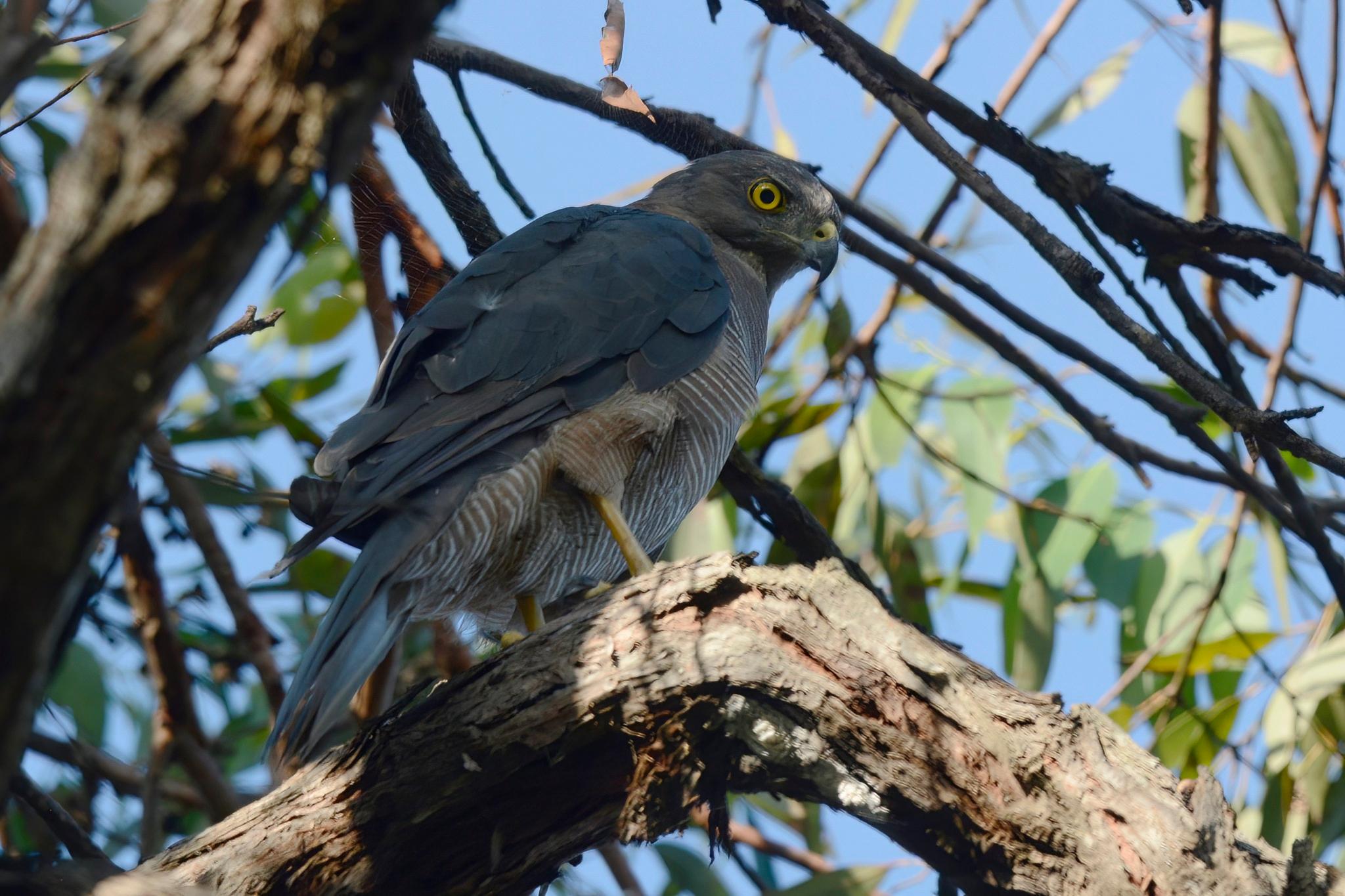 Brown GoshawkAs the light fades, starlings and house sparrows head home to roost, and a brown goshawk comes in low over the rooftops after them. Brown goshawks hunt like this over towns and suburbs in the evening.
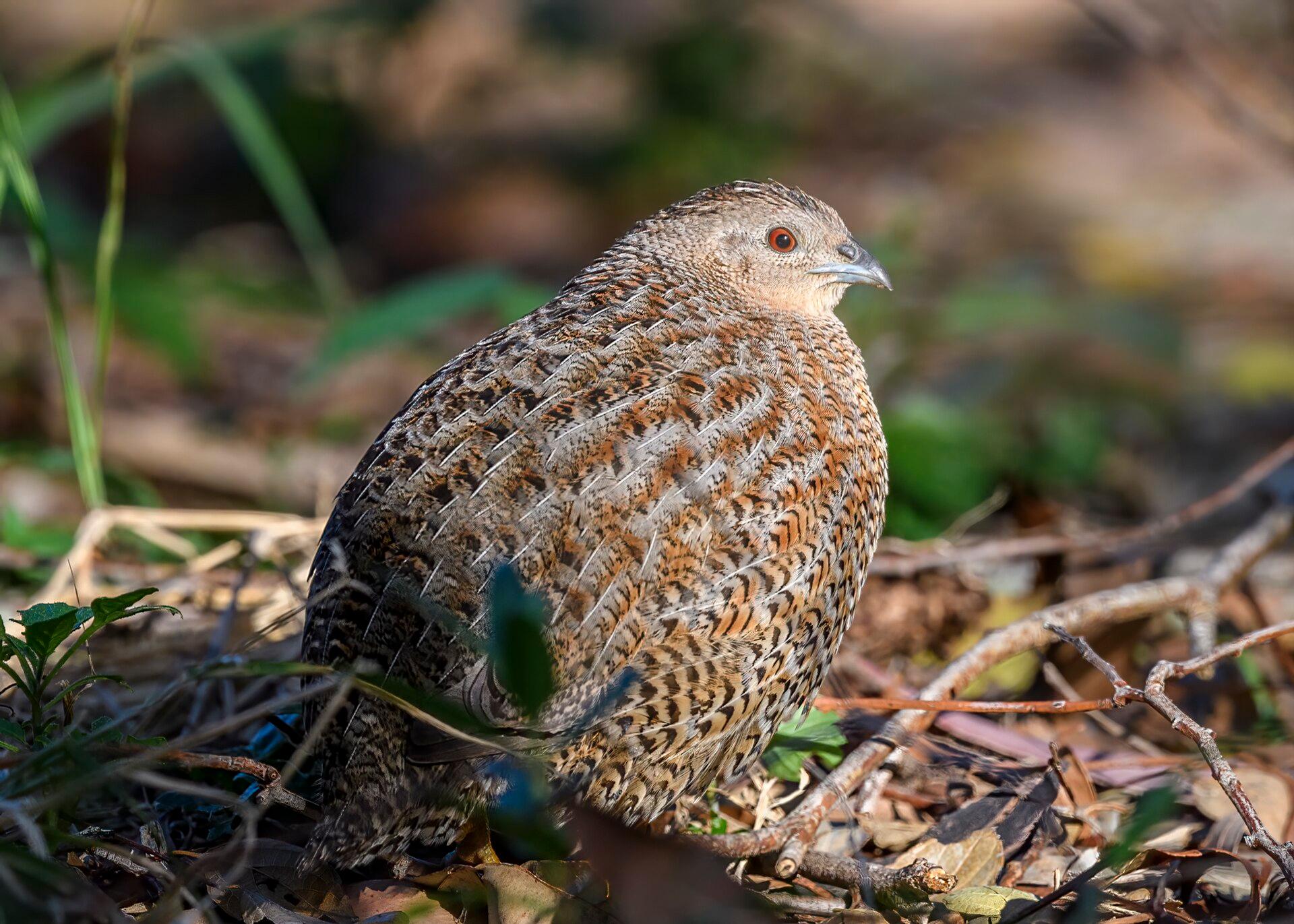 Brown QuailA brown quail lays a big clutch, 7 to 10 eggs, in a grass-lined scrape on the ground. The chicks leave the nest straight after they hatch, on their own legs from the first day.
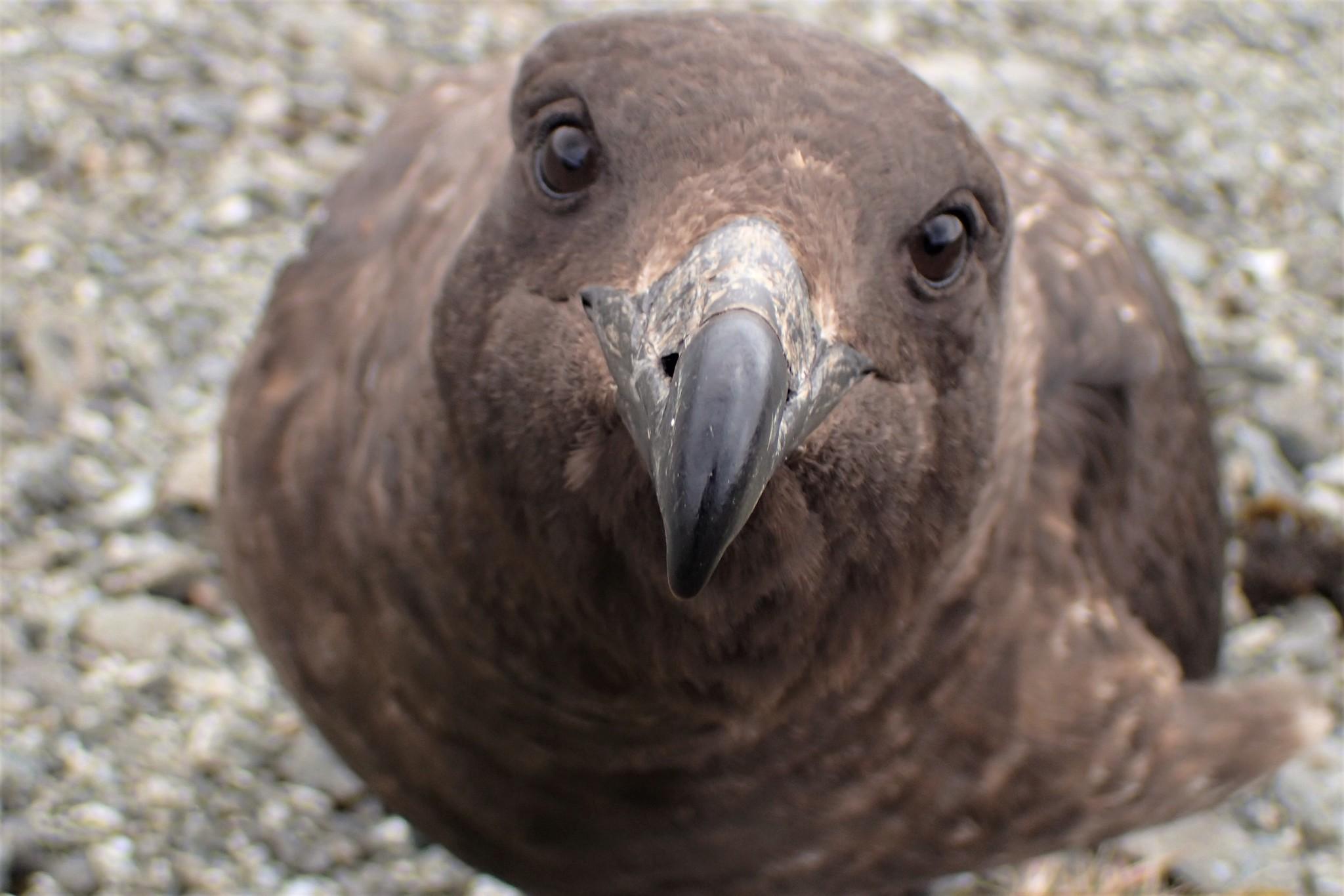 Brown SkuaSkuas are pirates. At sea, a brown skua will chase down a petrel, or even an albatross, at high speed, striking from above until it gives up its meal.
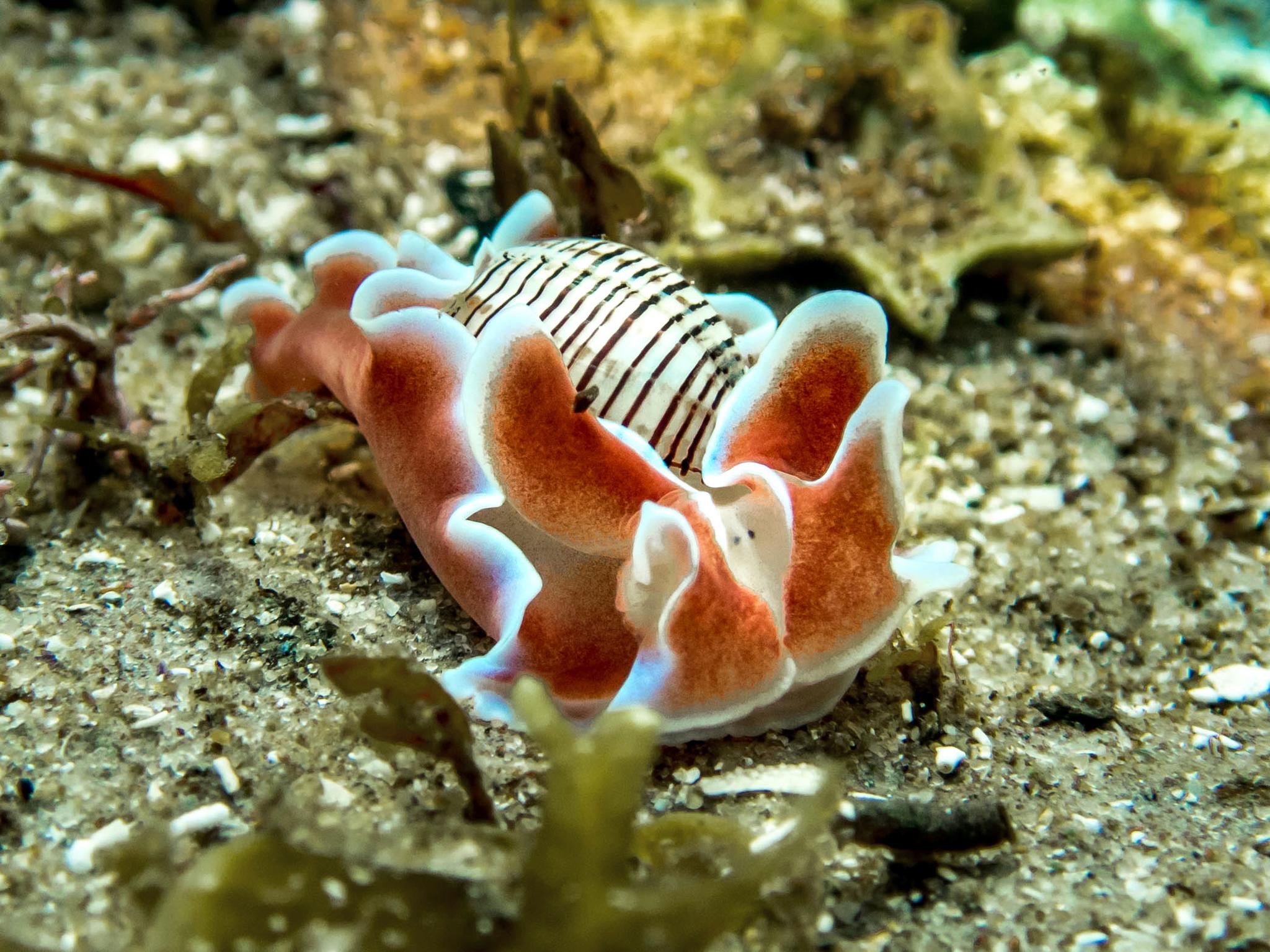 Brown-lined PaperbubbleIt has outgrown its house. The paperbubble's shell has become thin, and its body, large and brightly coloured, has taken over.
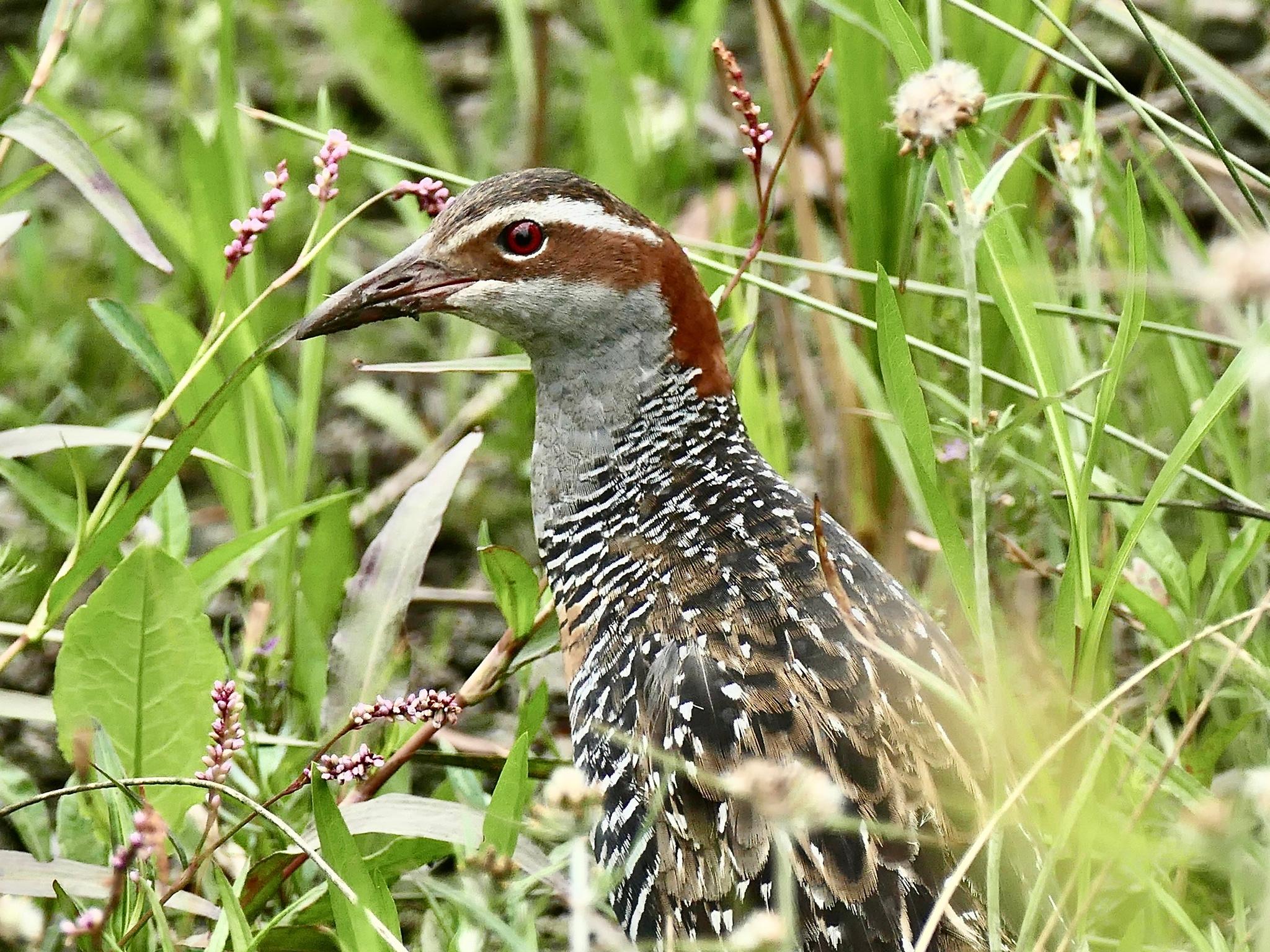 Buff-banded RailSecretive but not shy, a buff-banded rail will eat almost anything: crustaceans, molluscs, insects, seeds, fruit, frogs, carrion and even our rubbish. Its chicks leave the nest within 24 hours of hatching.
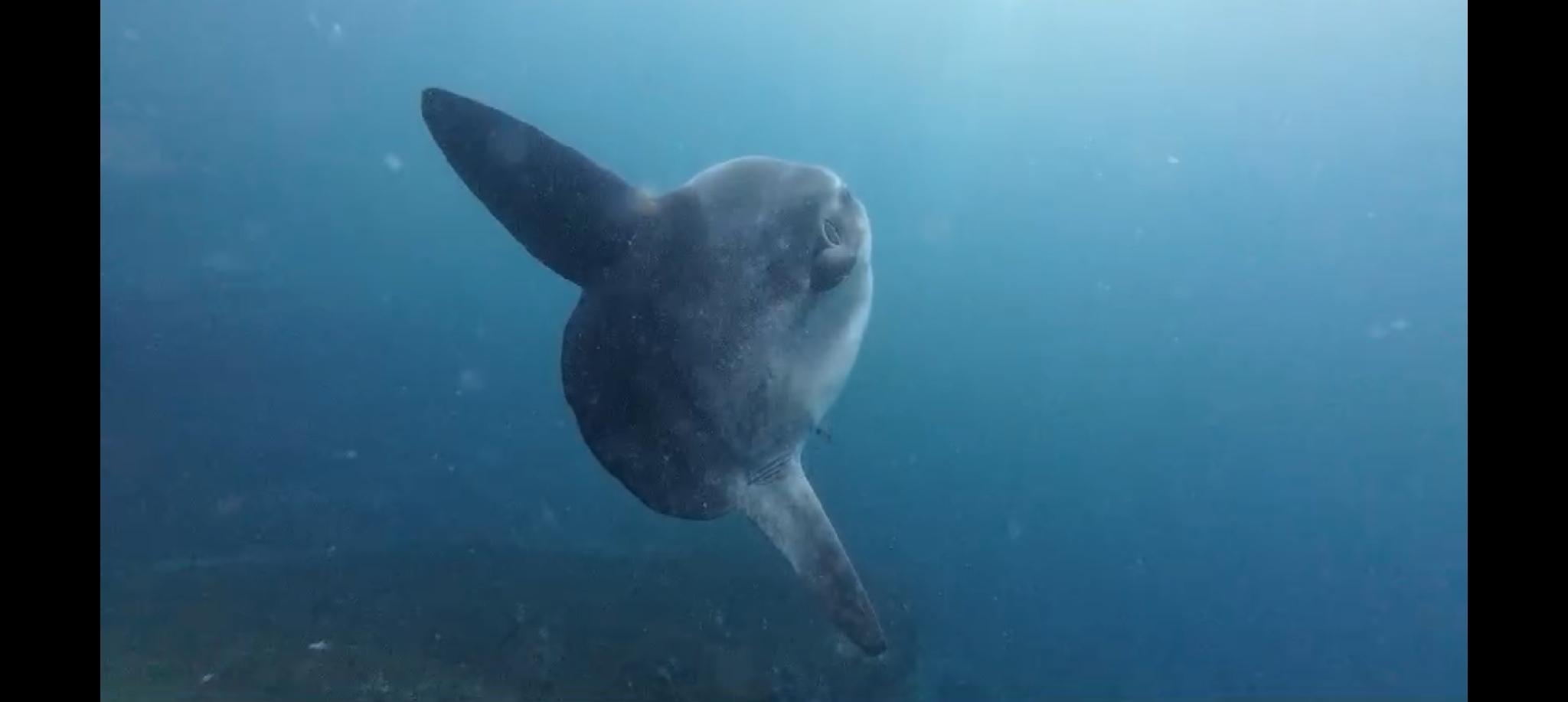 Bump-head MolaIt looks like a fish someone forgot to finish. It has no true tail.
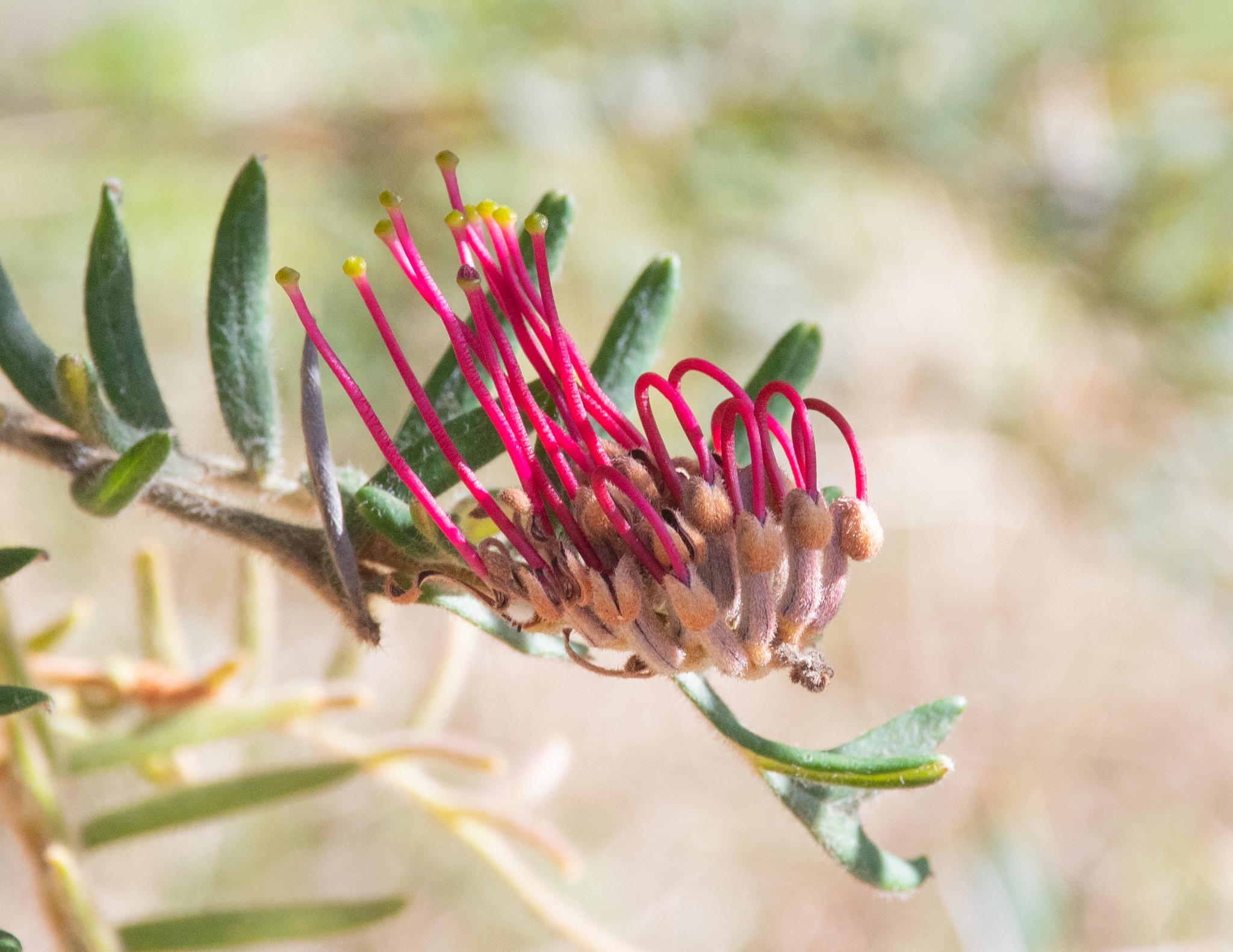 Caley's GrevilleaEvery Caley's grevillea is the child of a fire. Fire kills every adult plant, and the species comes back only from seed stored in the soil.
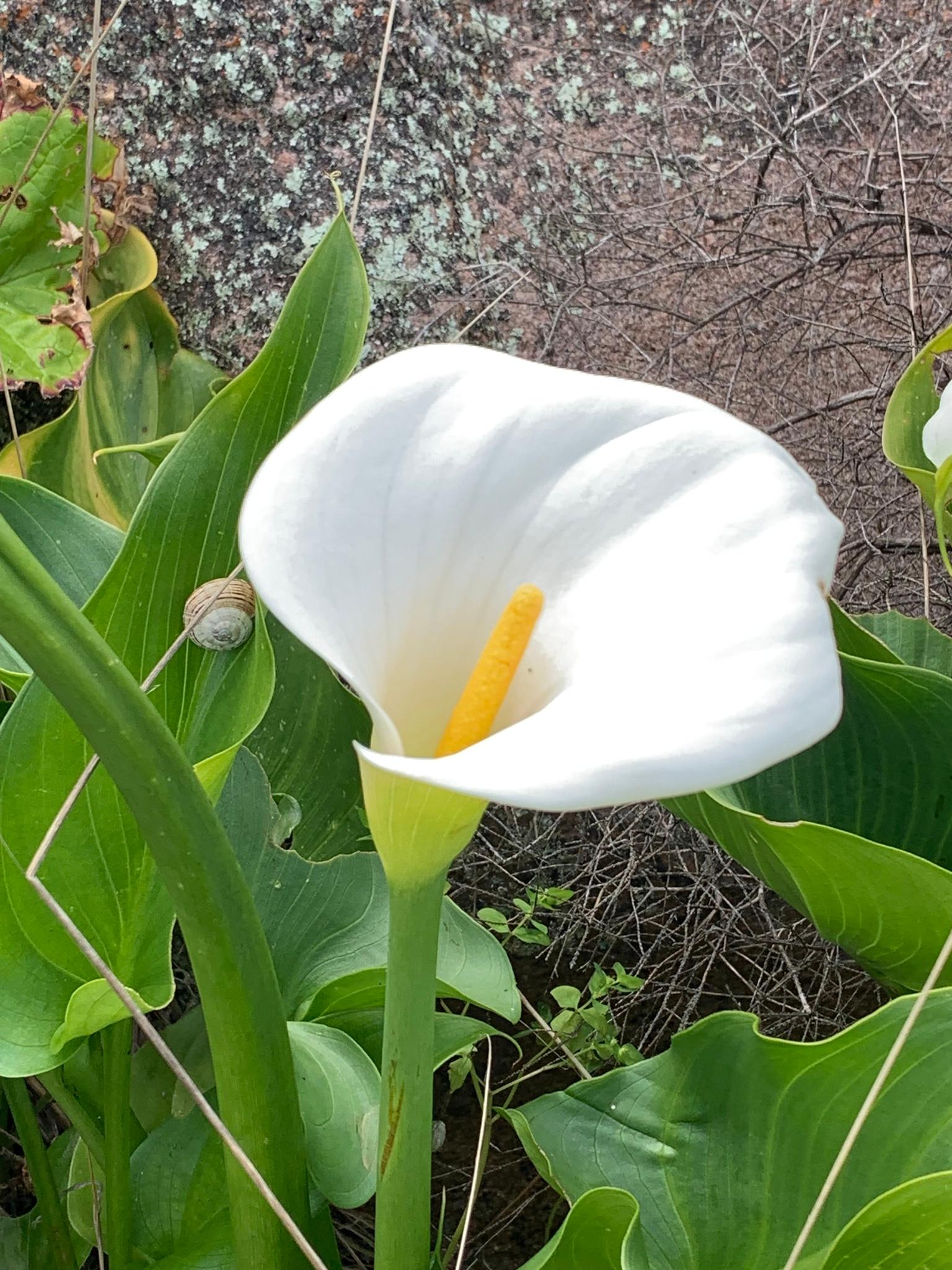 Calla lilyWhat looks like one big white flower isn't a flower. The white funnel is a bract, a kind of modified leaf, wrapped around the real flowers: many small ones, crowded onto the stalk in the middle.
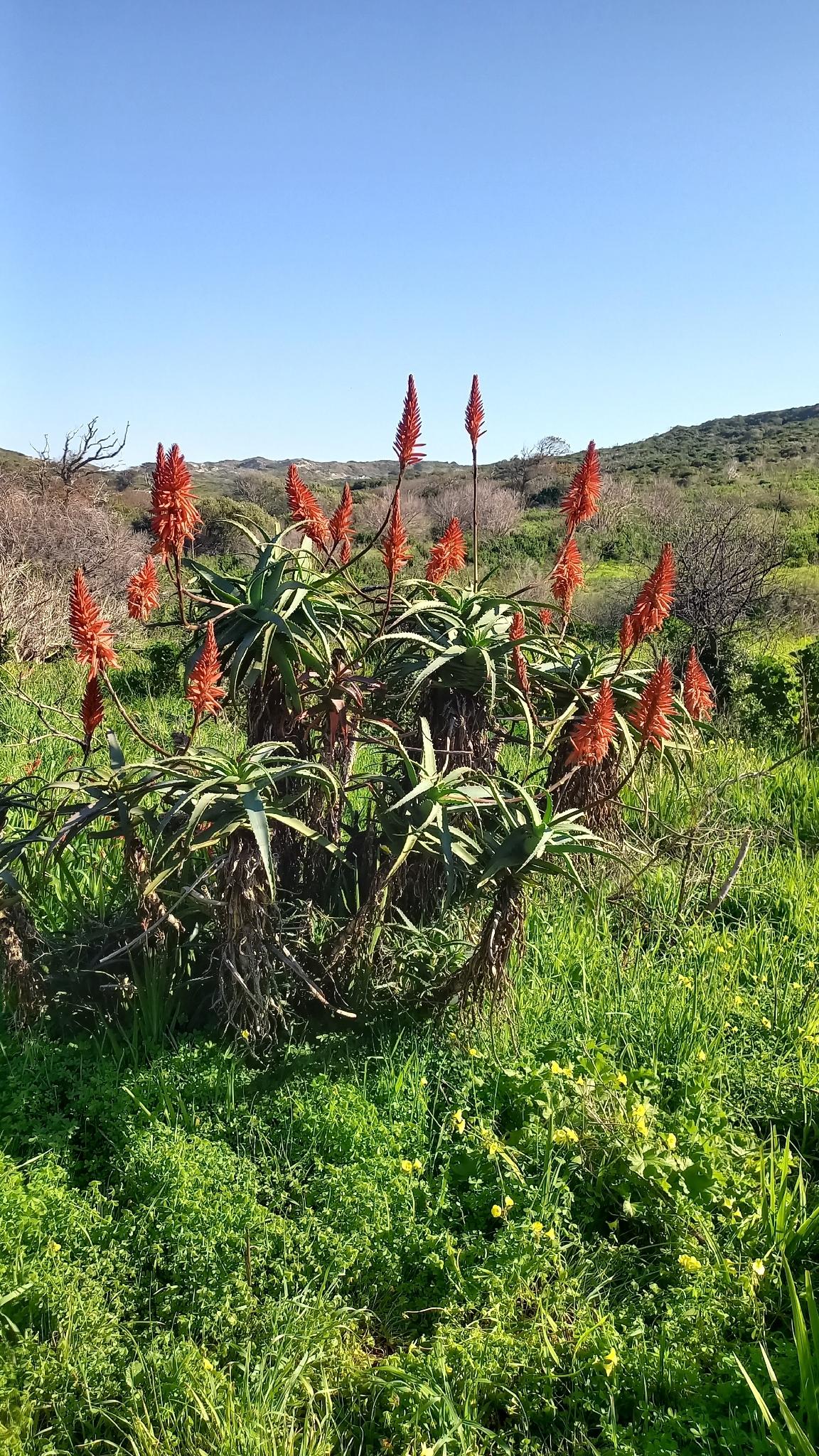 Candelabra AloeThese long, narrow flowers are made for birds. In South Africa, where this aloe comes from, sunbirds feeding at it come away carrying its pollen.
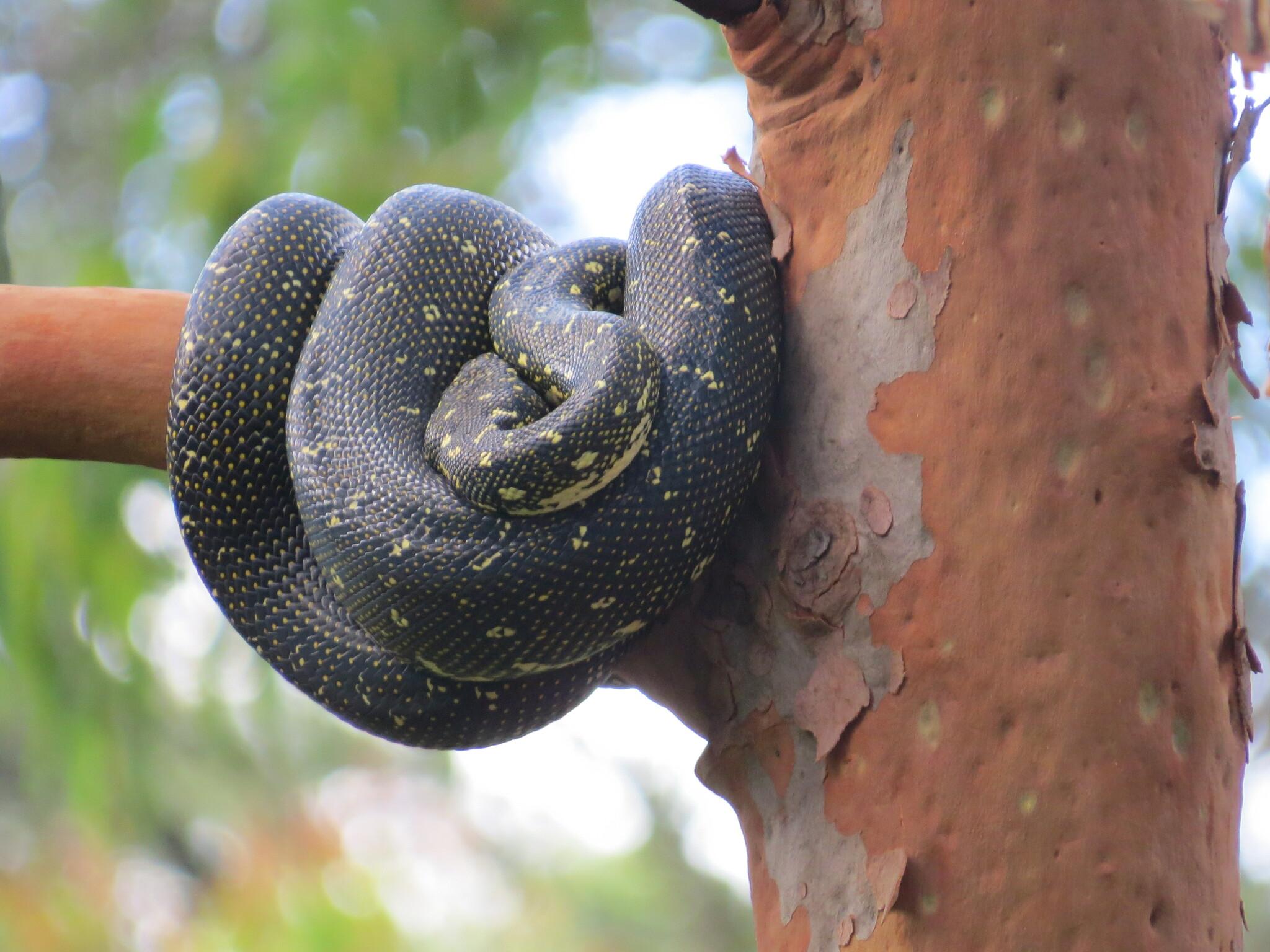 Carpet PythonA python in the roof sounds like a horror story. For the house, it's closer to good news.
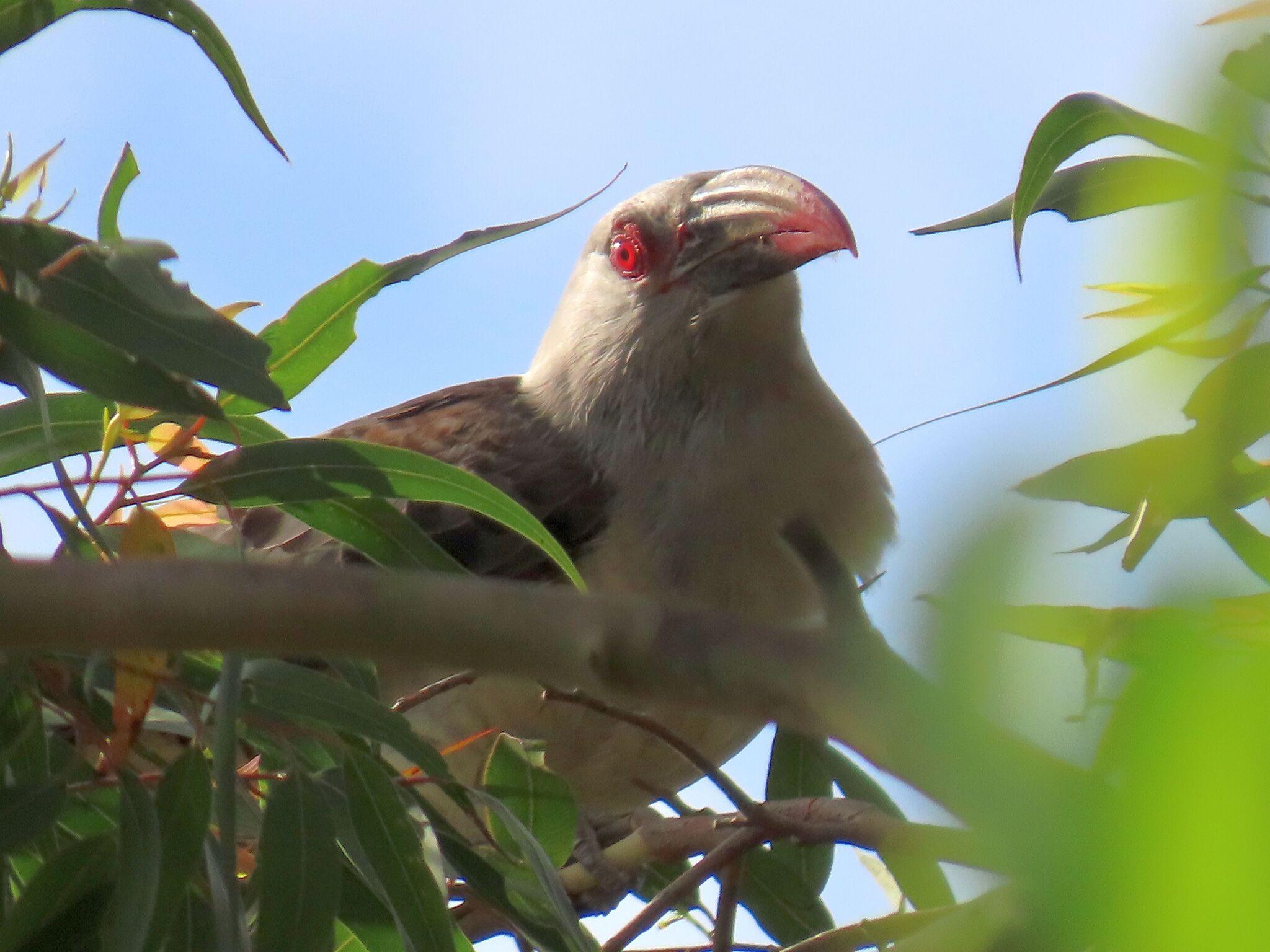 Channel-billed cuckooEvery spring, people across Sydney look up and see a huge grey bird with red eyes, looking like something from the dinosaur era. It seems to appear out of nowhere.
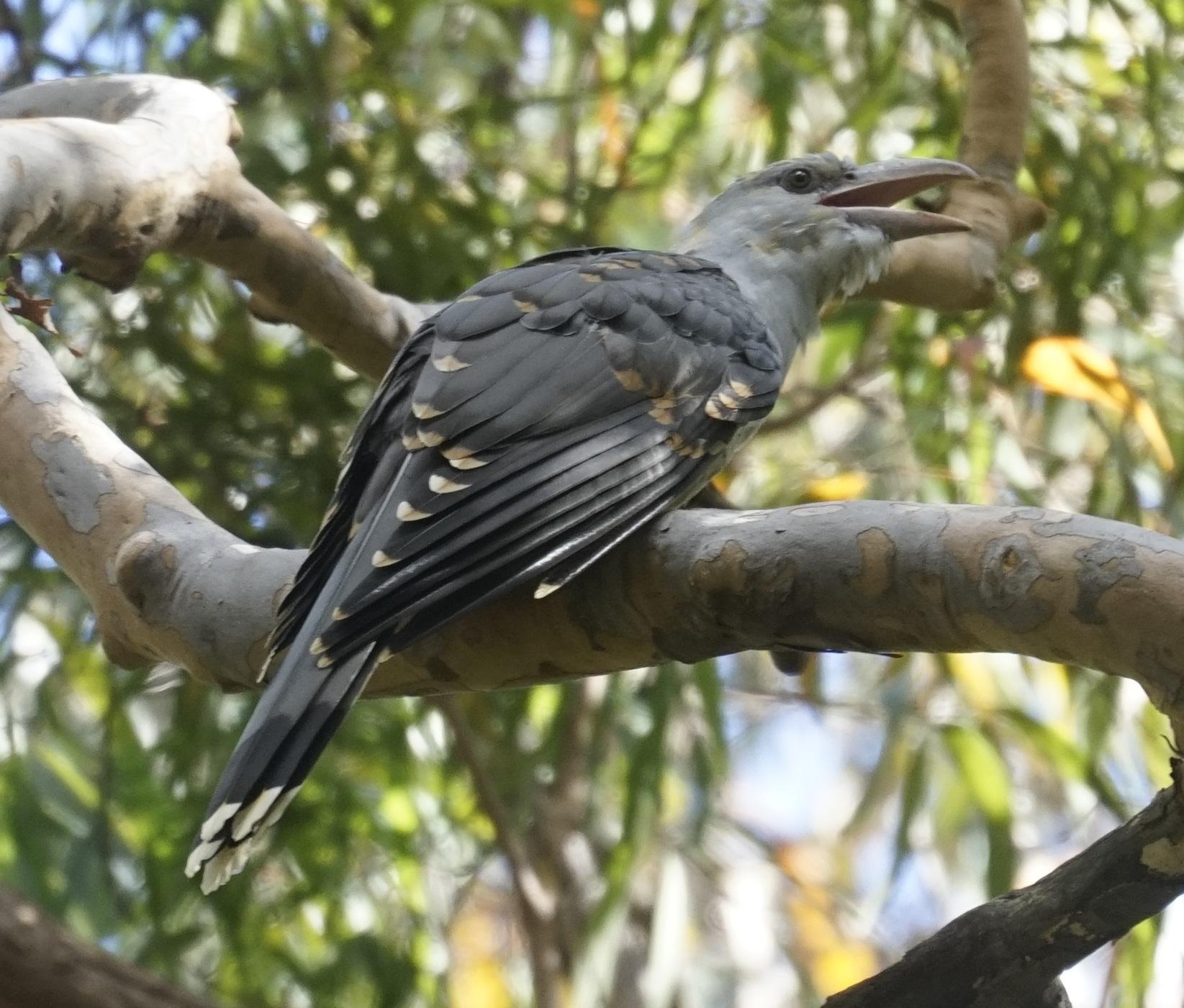 Channel-billed cuckoos calling overhead at nightThat harsh, screaming call over the roof at two in the morning isn't a night bird. Channel-billed cuckoos aren't nocturnal.
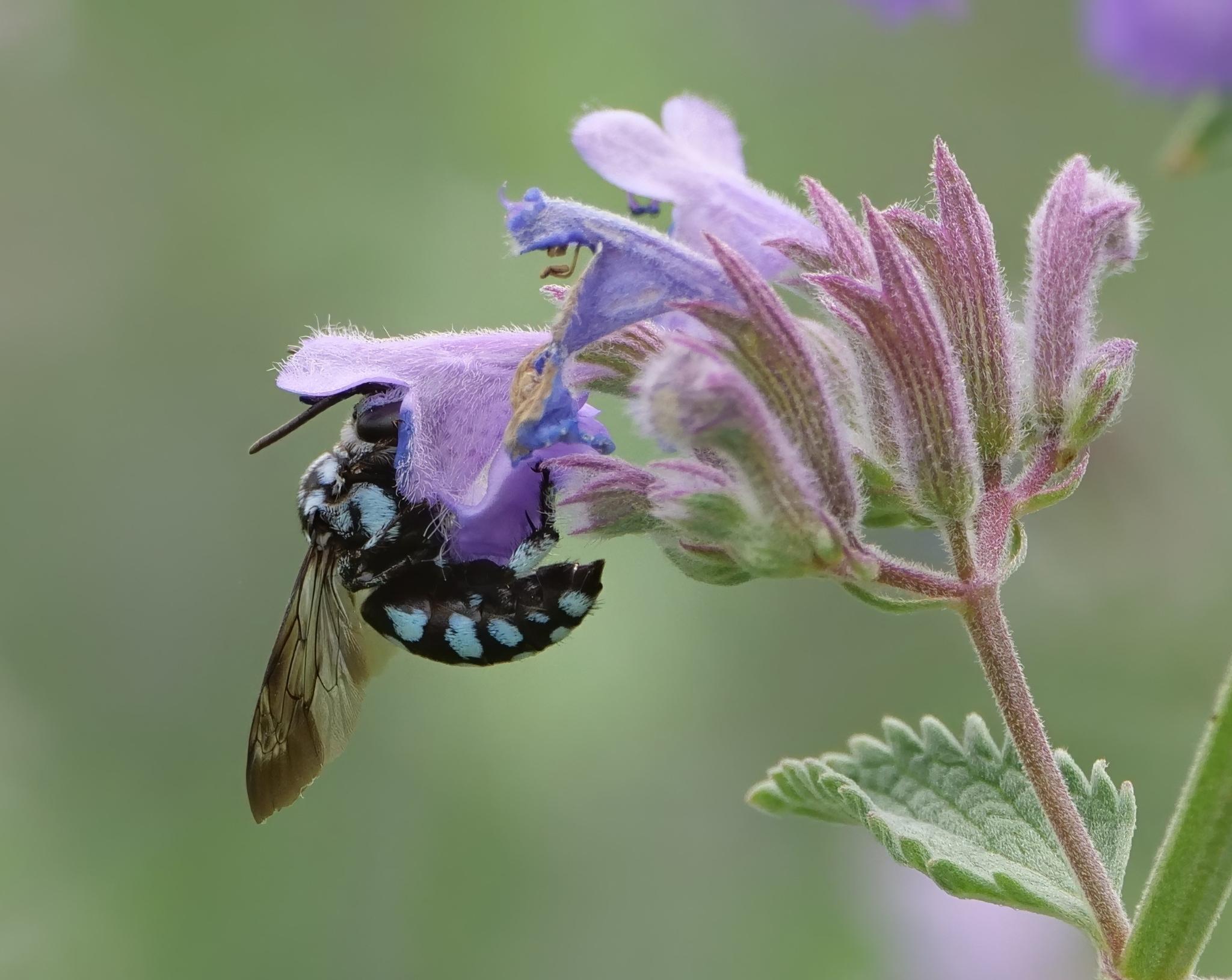 Chequered Cuckoo BeeThis bee has never built a nest, and never will. Like other cuckoo bees, she lives the way the cuckoo bird does: off someone else's work.
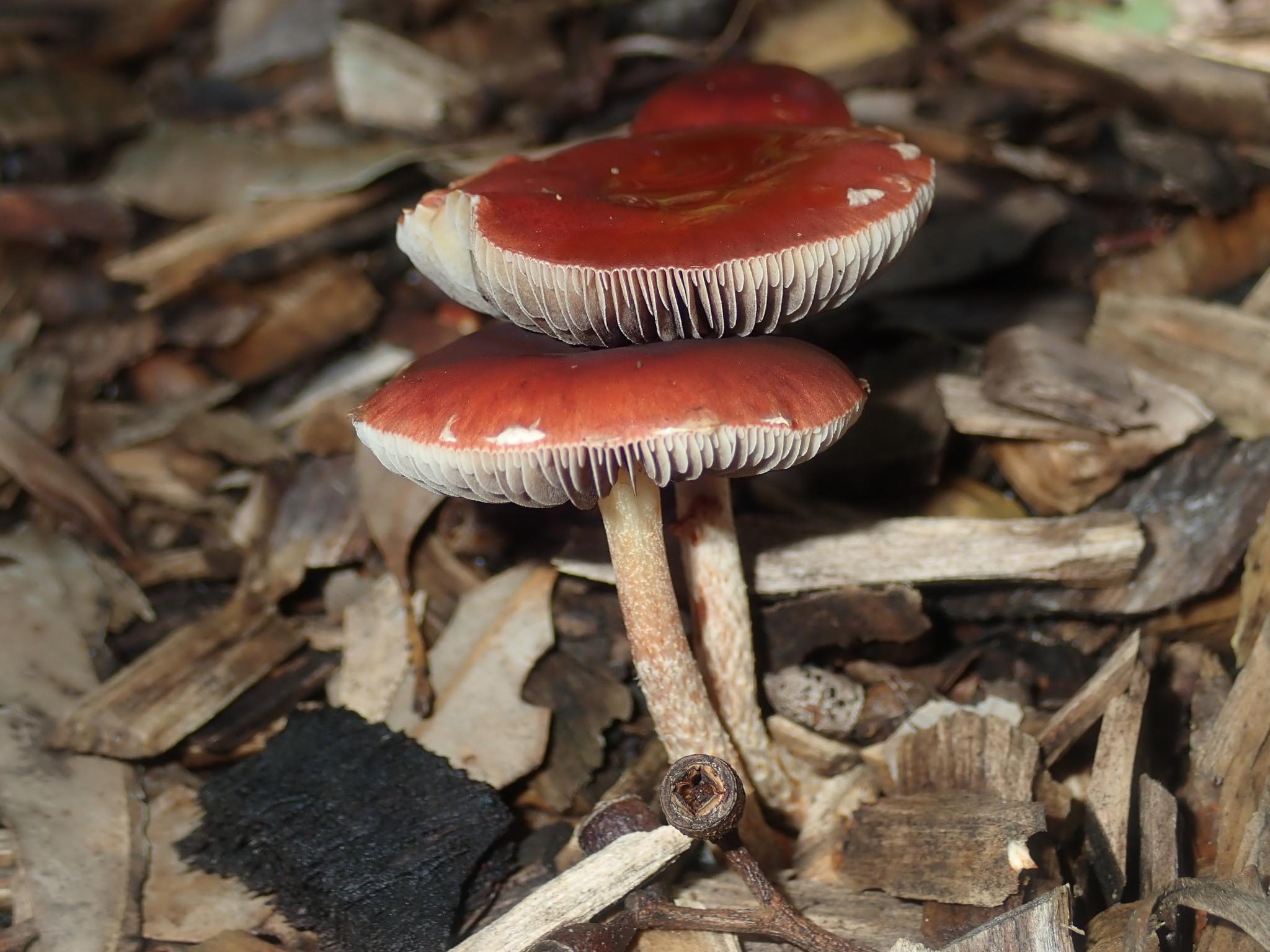 Chip CherriesLittle red caps, glossy as cherries, have come up through the woodchips. The garden bed's mulch is being eaten.
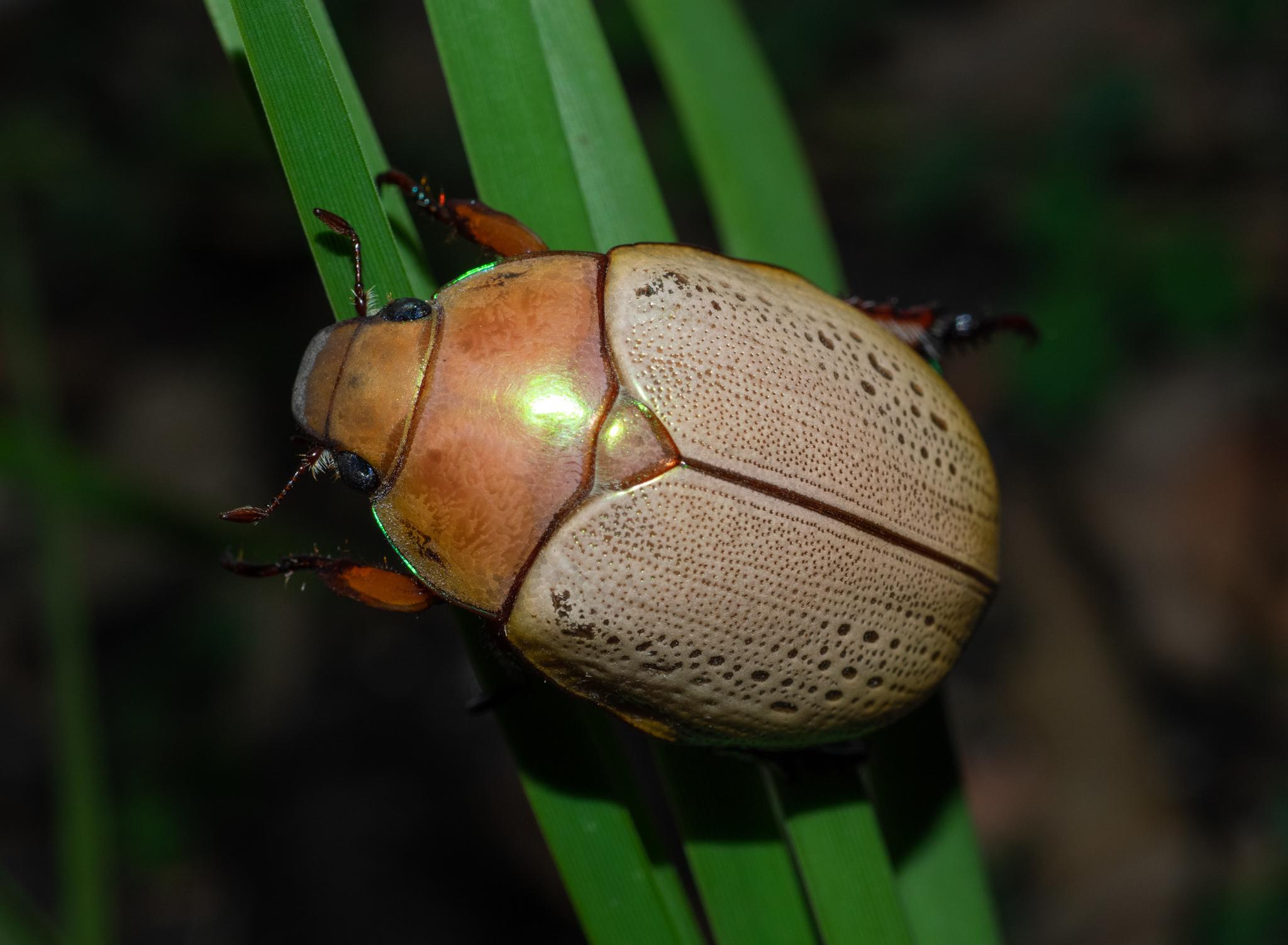 Christmas beetles flying to lights at nightIn the 1920s, Christmas beetles were reported around Sydney Harbour in such huge numbers that branches bent under their weight.
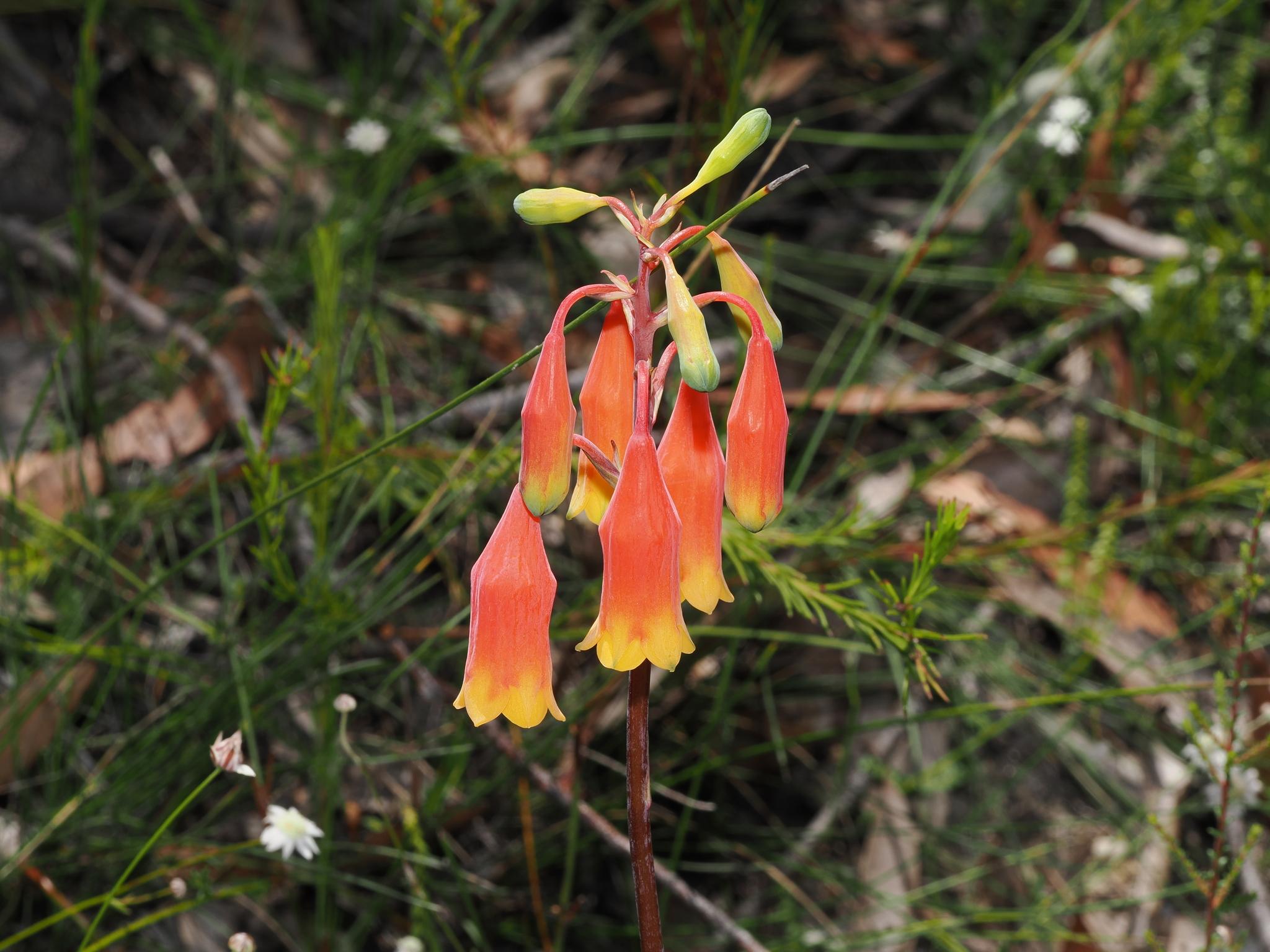 Christmas BellsChristmas bells flower best after a fire. In one Blue Mountains population of a related species, flowering stems jumped from 4 to 115 in the season after a burn, then dwindled again over the next few years.
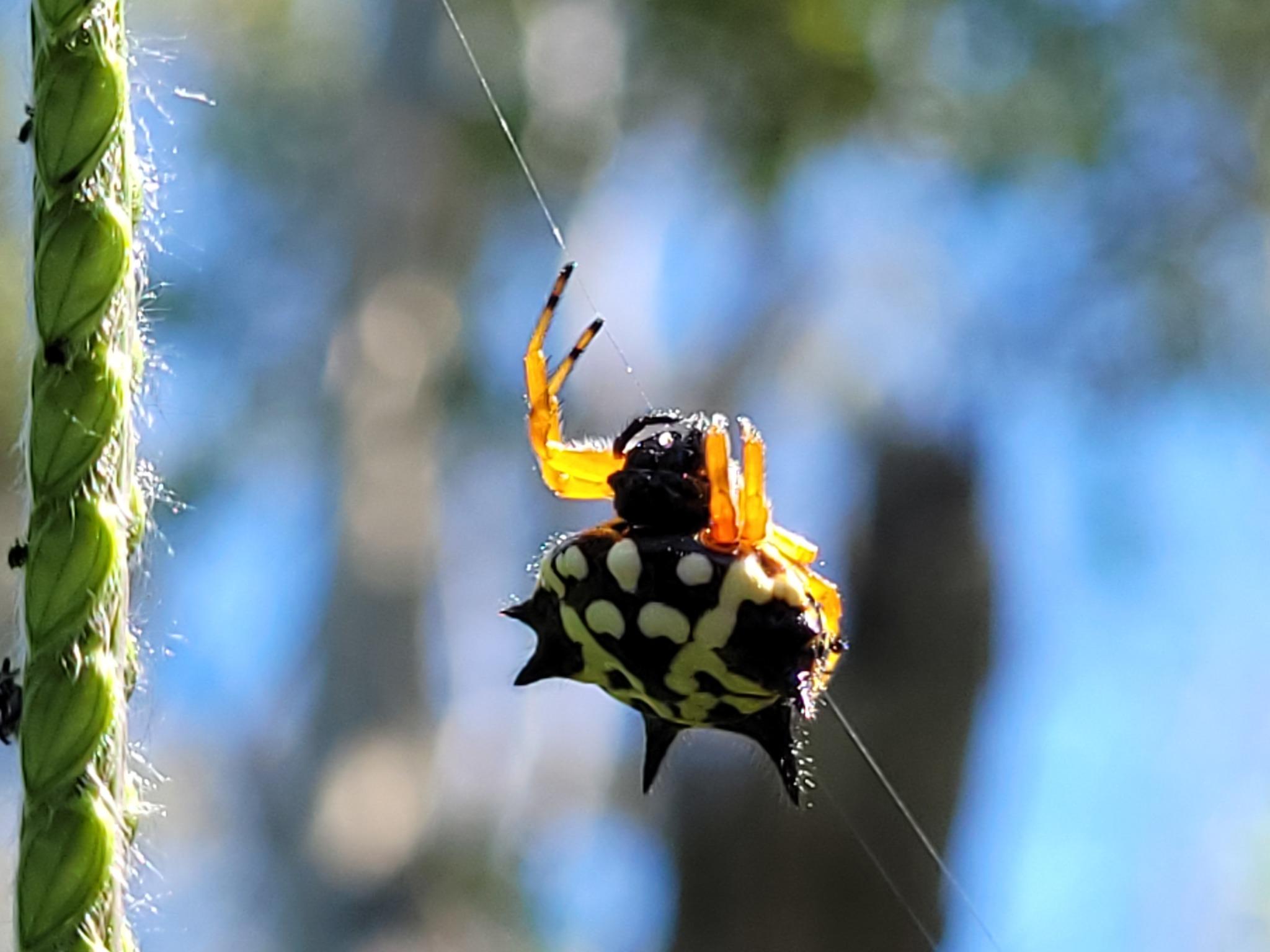 Christmas jewel spidersThe Christmas jewel spider is a small spiky body, black, white and yellow, sometimes all black, and it rarely lives alone. Their webs are often strung together in groups, a whole neighbourhood hanging in the shrubs.
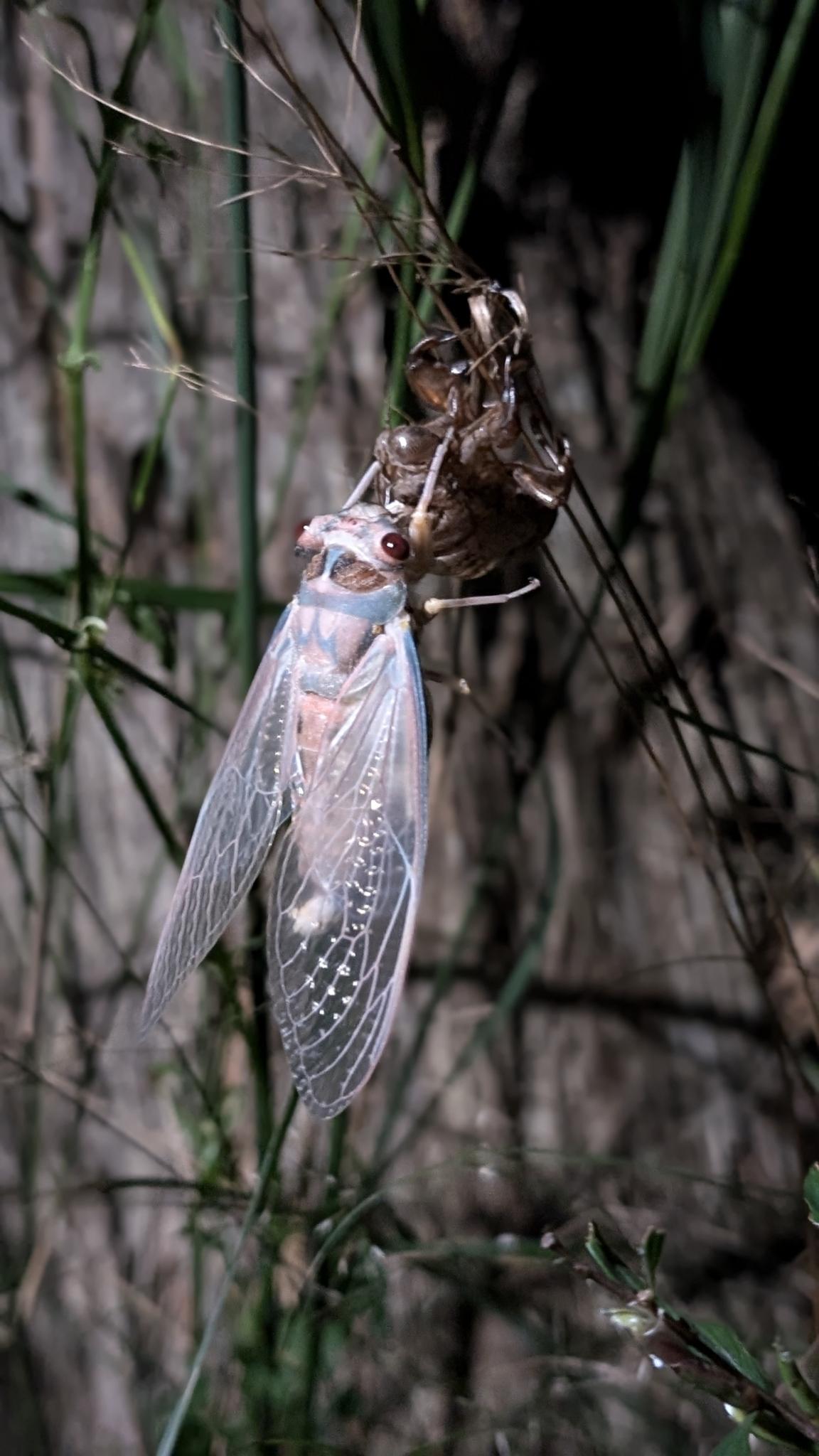 Cicada shells left on tree trunks as cicadas emergeThis shell is a door left open. The cicada that wore it spent years underground as a nymph, then climbed this trunk, shed its skin for the last time and left the empty shell behind.
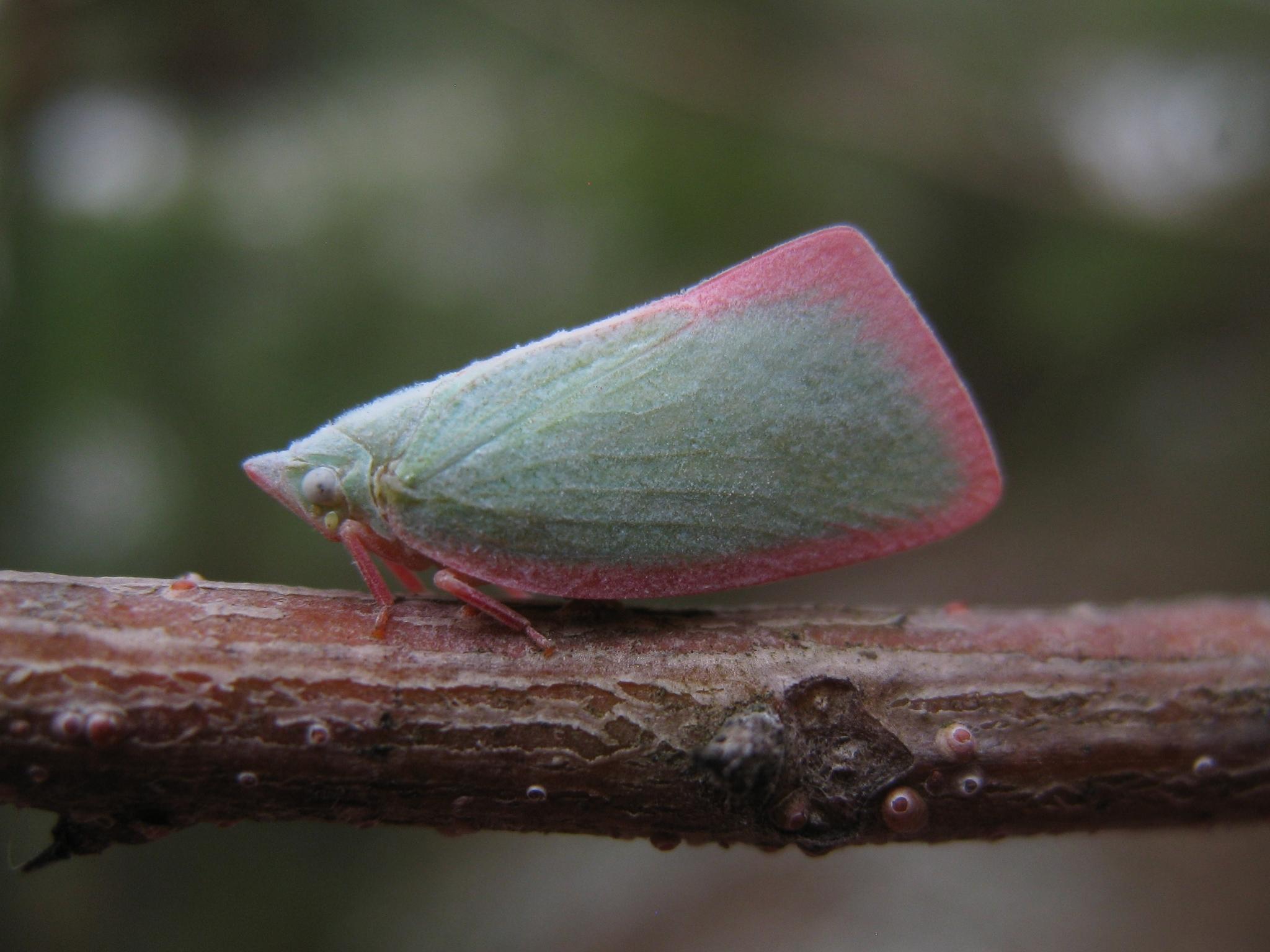 Citrus planthopperYou're probably looking at the wrong end. Some young planthoppers grow long tails of wax that look like feelers, so people take their back end for their head.
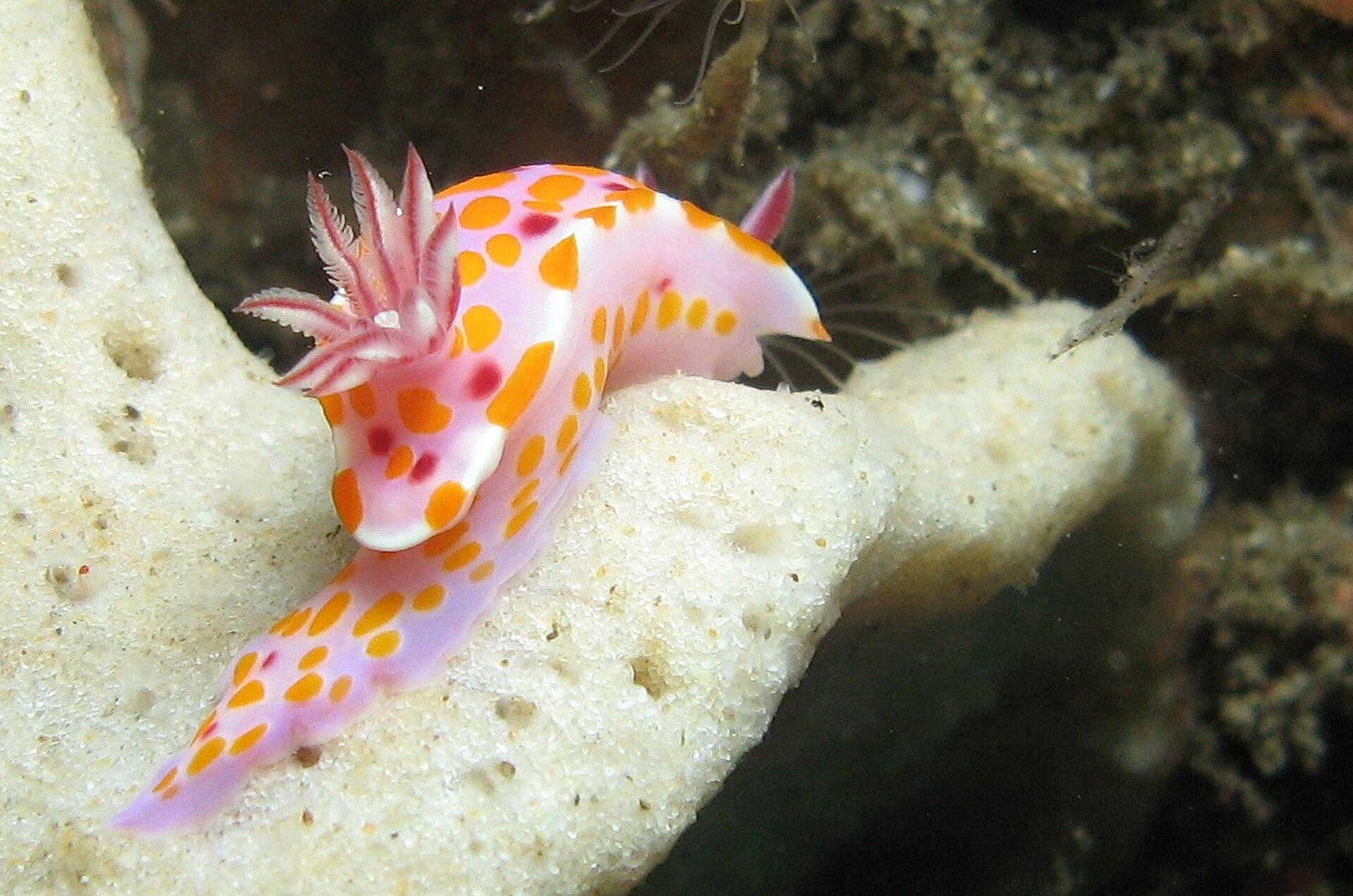 Clown doris nudibranchsThe clown doris doesn't hide. It crawls across open rock in full view, bright white with orange-red markings, and it can afford to.
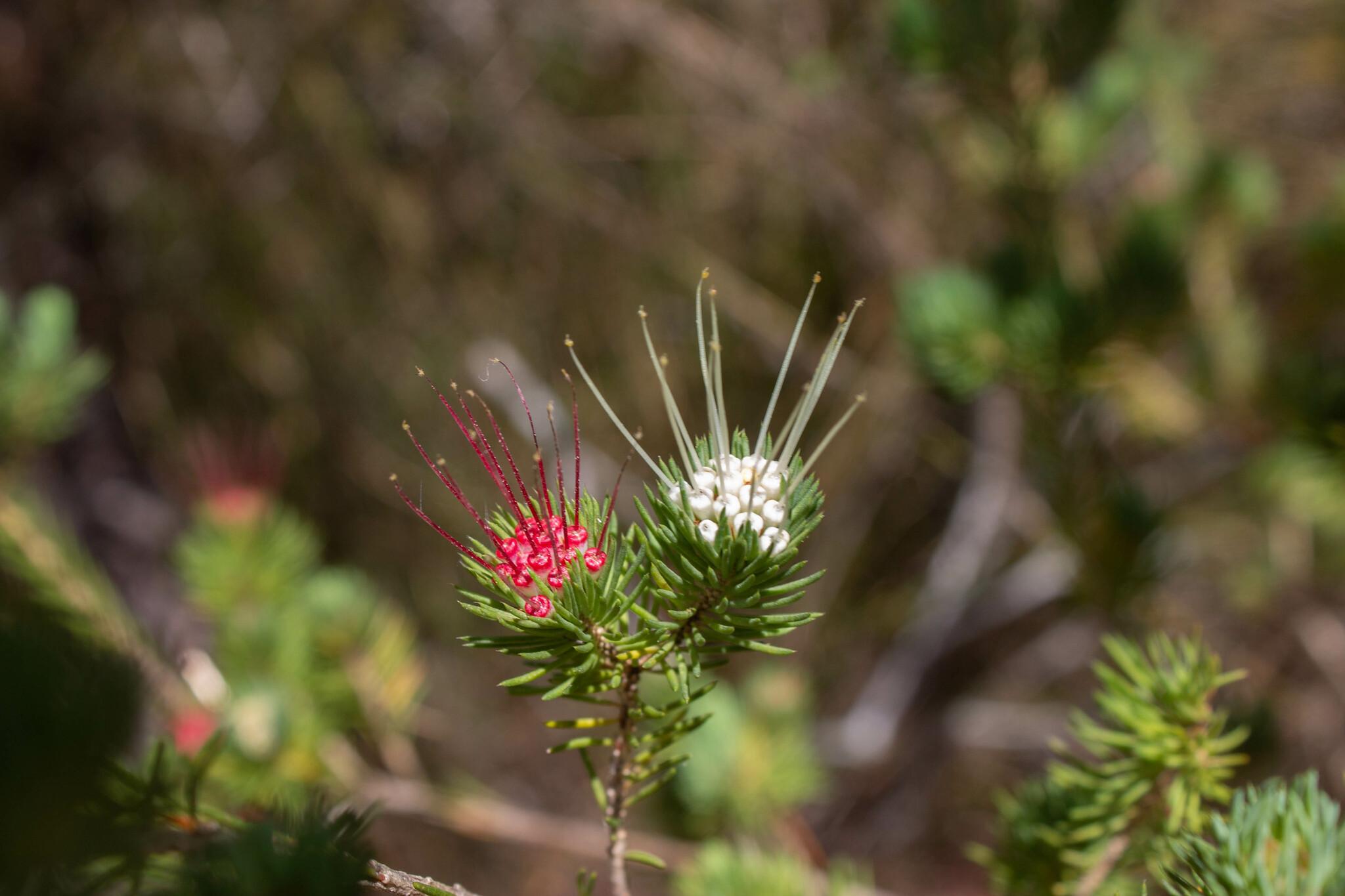 Clustered darwiniaIts tiny tubular flowers open creamy-white and turn red as they age, and they're made for birds. Honeyeaters such as the Eastern Spinebill feed on the nectar.
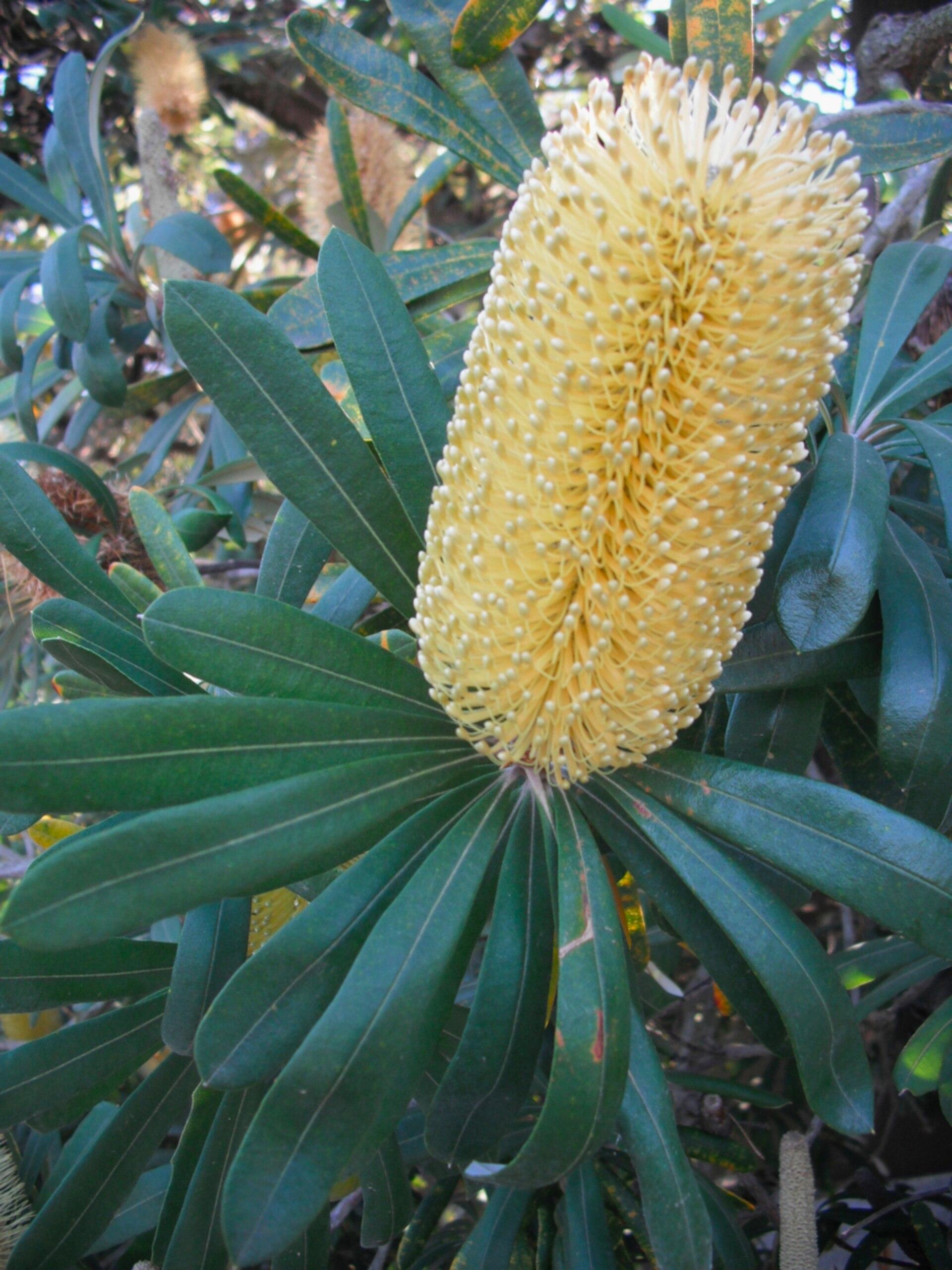 Coastal BanksiaThe banksia family grew up with fire. Some members of the protea family, which includes banksias, waratahs and grevilleas, were already living in fire-prone bush almost 90 million years ago, and banksias leave a record of fire in south-western Australia from about 61 million years ago.
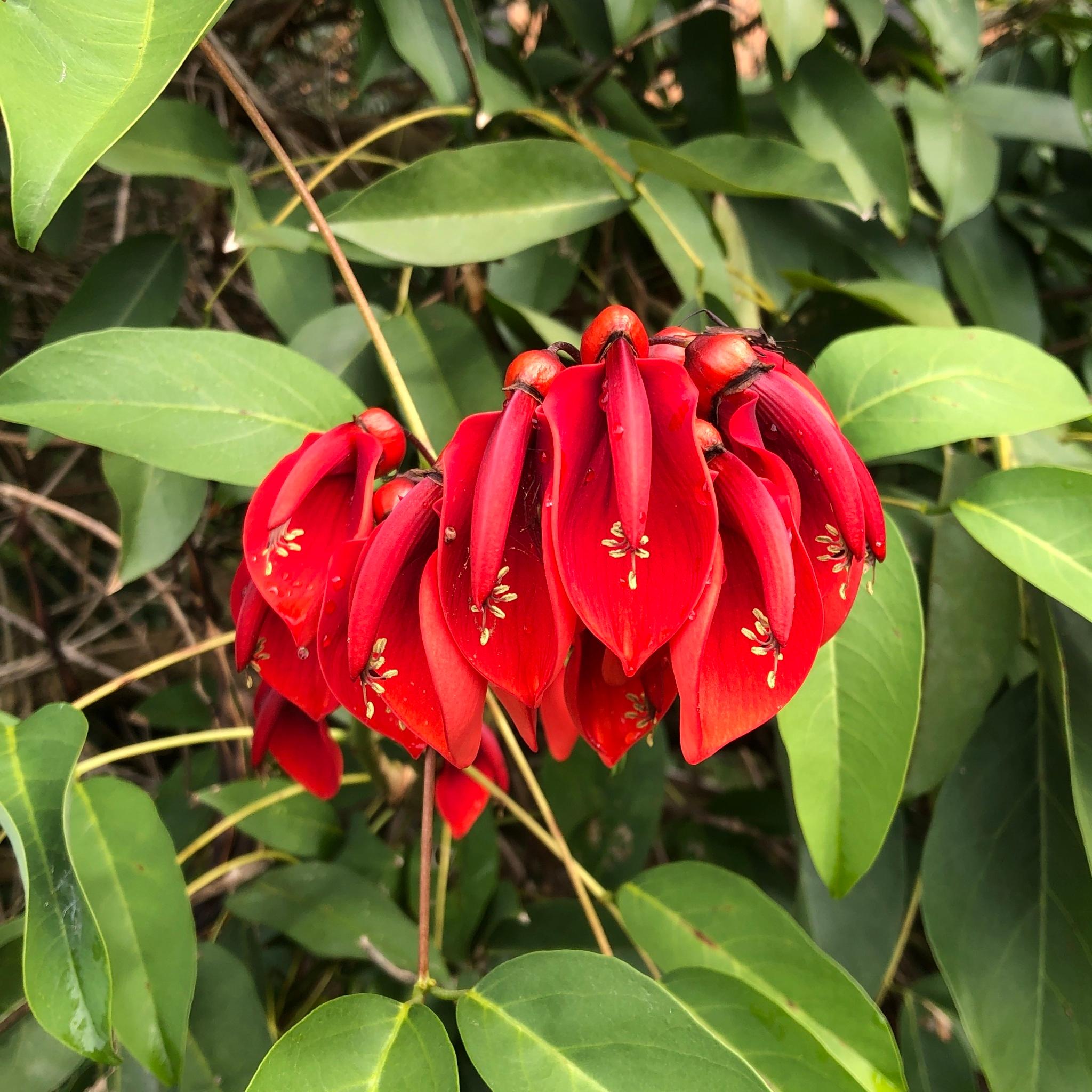 Cockspur coral treeBreak a branch off a cockspur coral tree and you haven't killed anything. A cut or broken branch can put down roots and grow into a new tree.
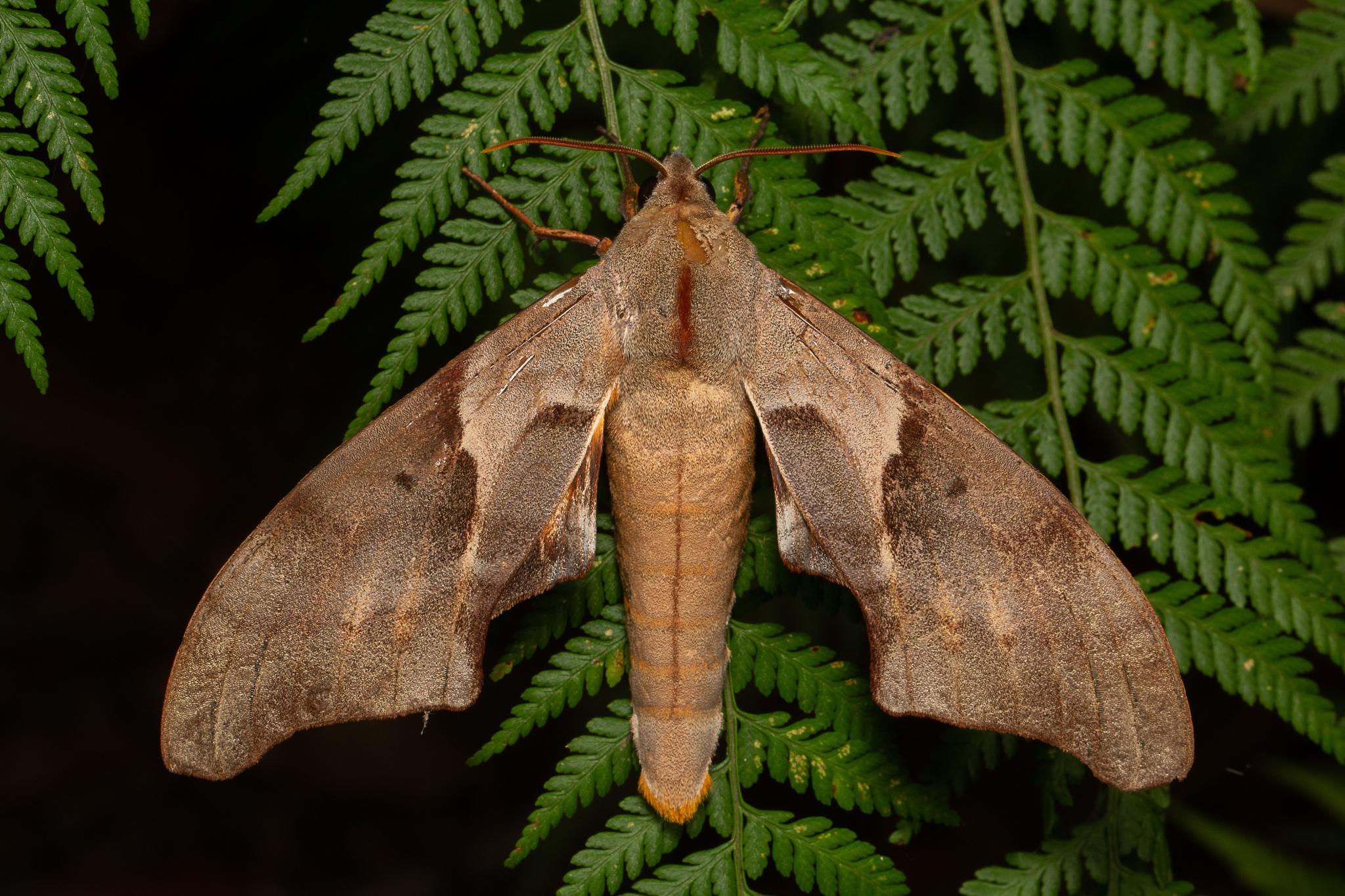 Coequosa australasiaeThis is one of Australia's largest hawk moths, and it was built out of gum leaves. Its caterpillar feeds on them and grows to about 11 or 12 centimetres long, as long as a finger.
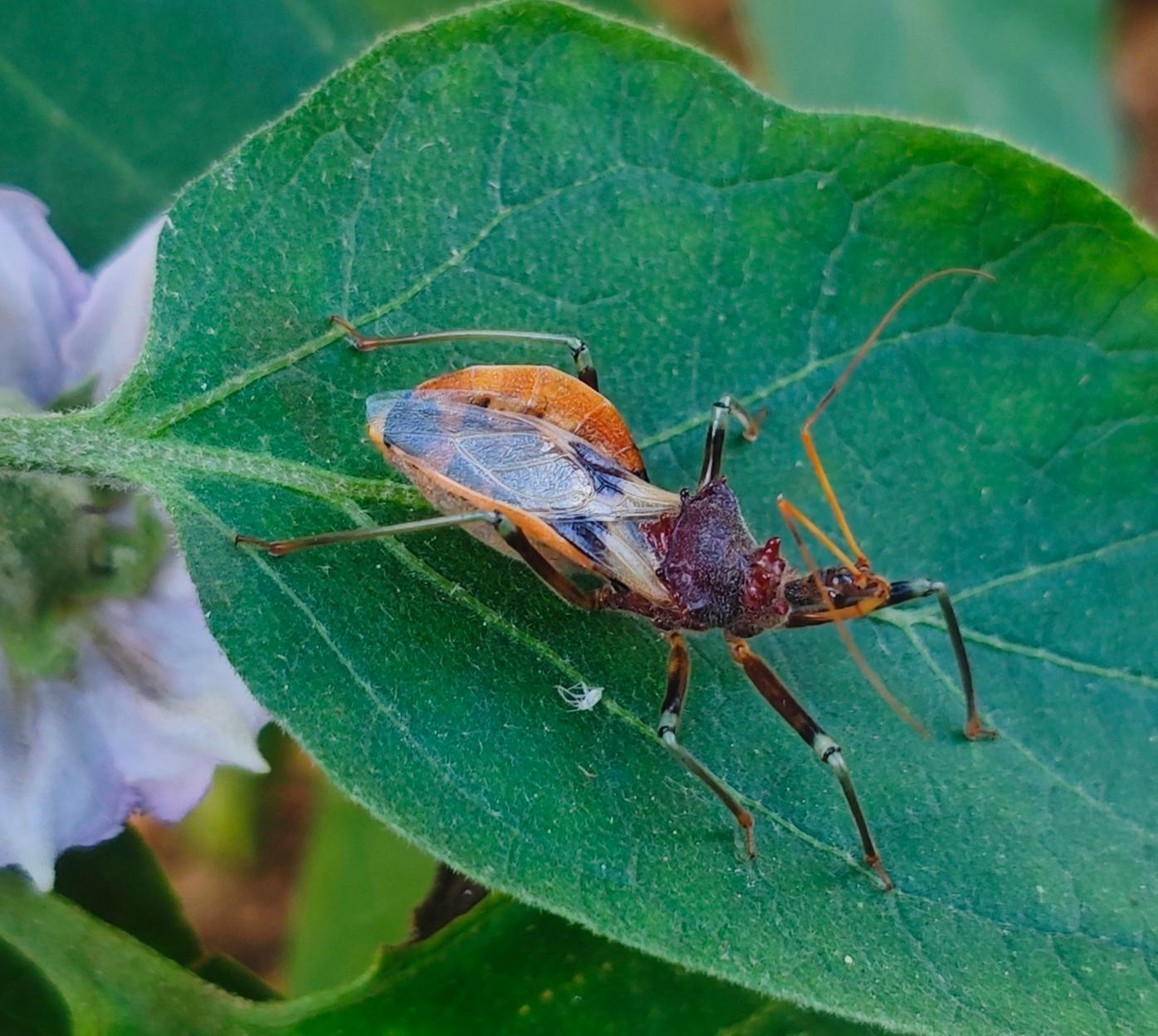 Common Assassin BugPeople call it the bee killer. It lurks on flowers, slow and patient, until an insect lands, especially a bee.
- Common BluetongueThis lizard was born, not hatched. Blue-tongues give birth to live young, usually about ten and up to 19 at once.
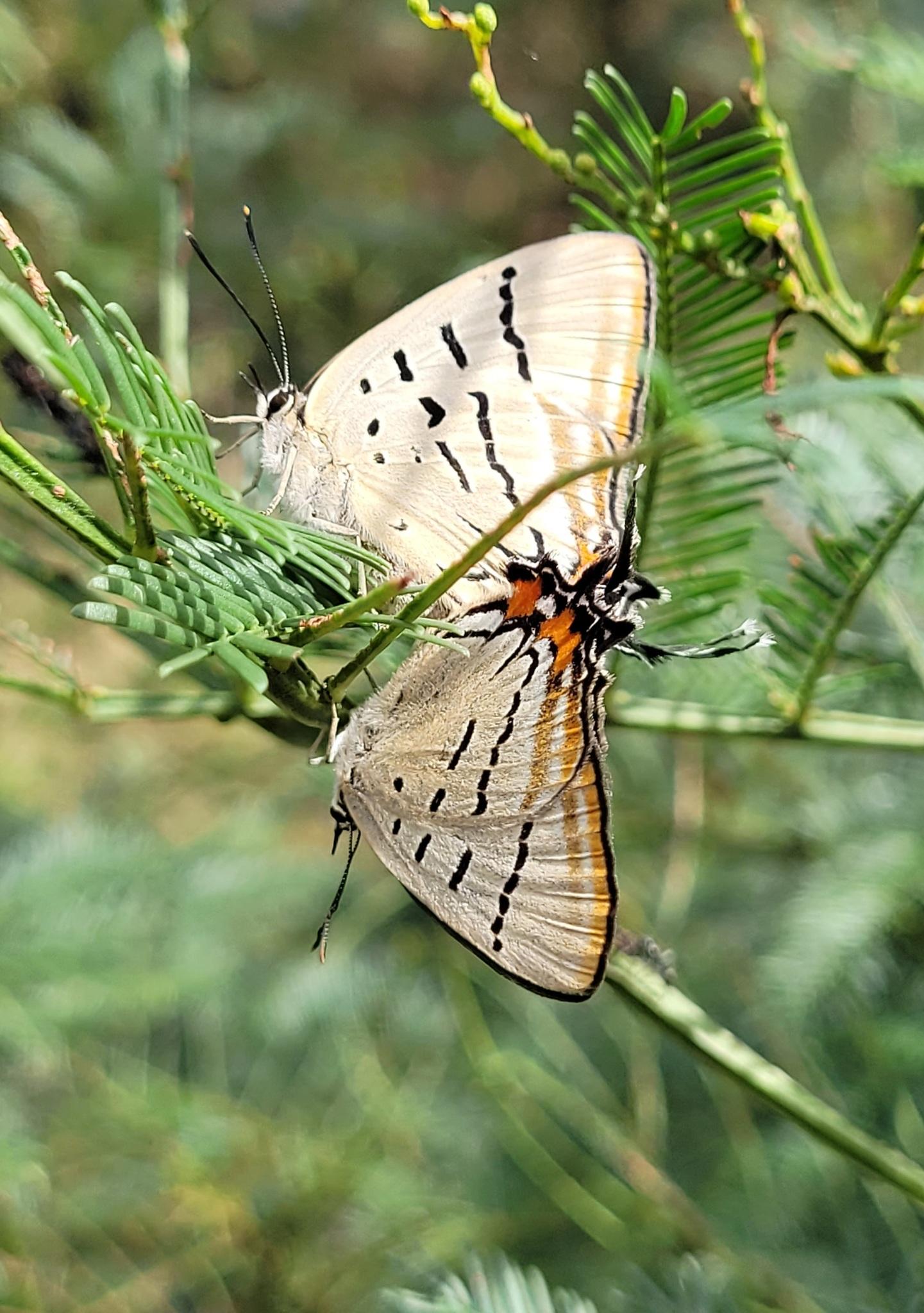 Common Imperial BlueThe ants swarming over these black caterpillars aren't attacking them. They're working for them.
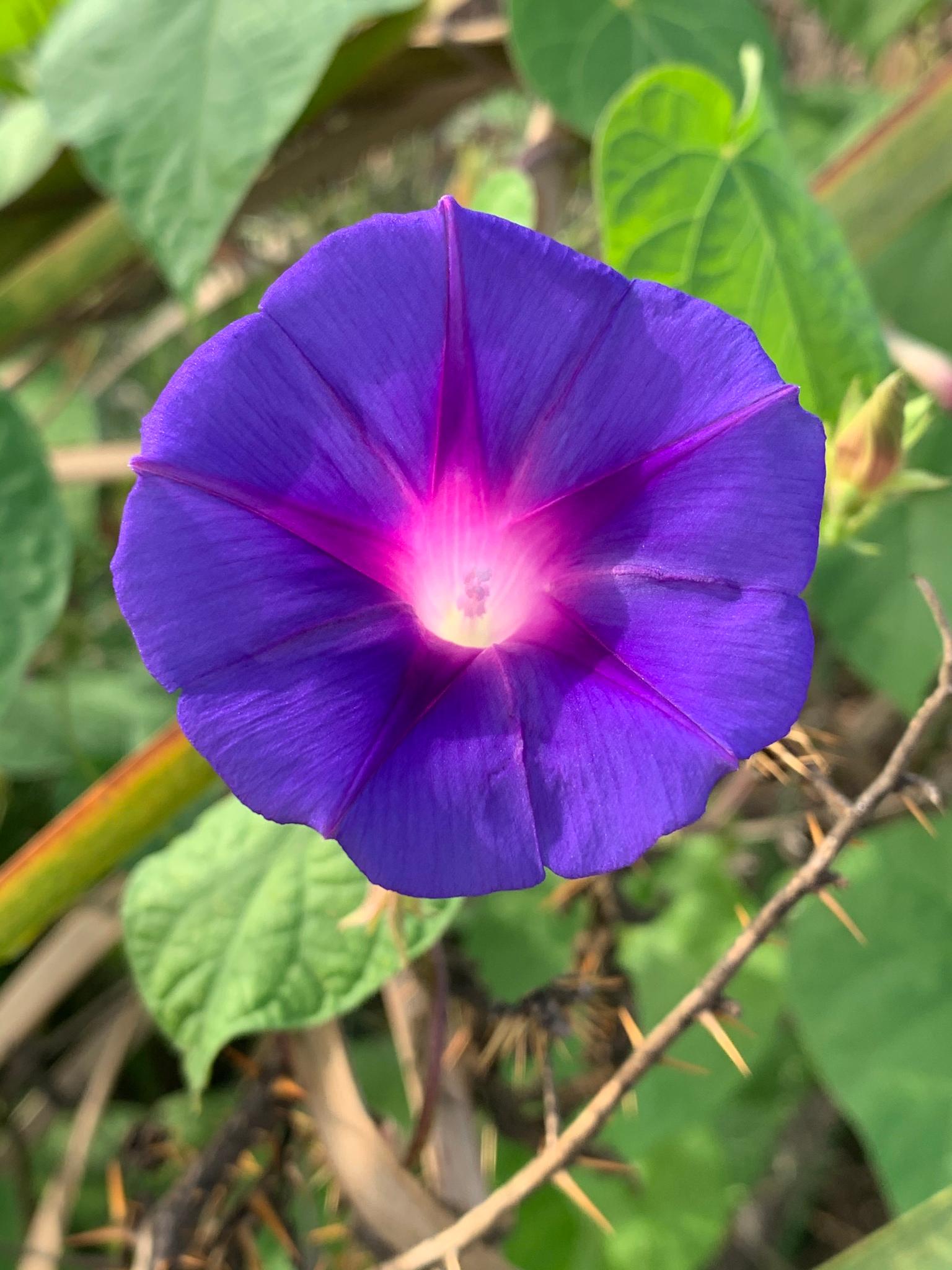 Common morning-gloryBy this afternoon, this flower will have folded into a bell, and it will look finished. It isn't.
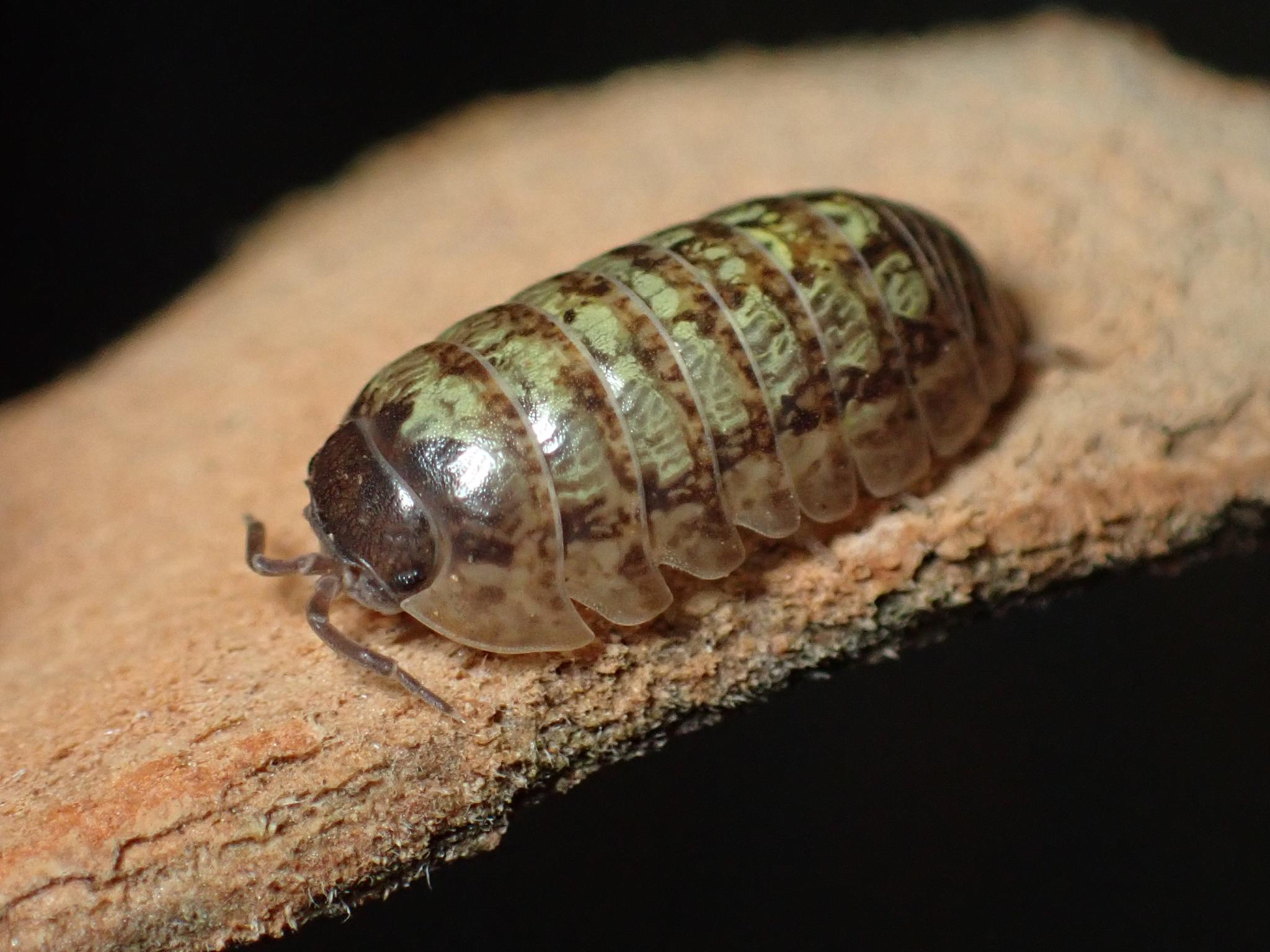 Common Pill WoodlouseTap a pill woodlouse and it rolls into a ball. Inside that ball is one of the strangest stories in biology.
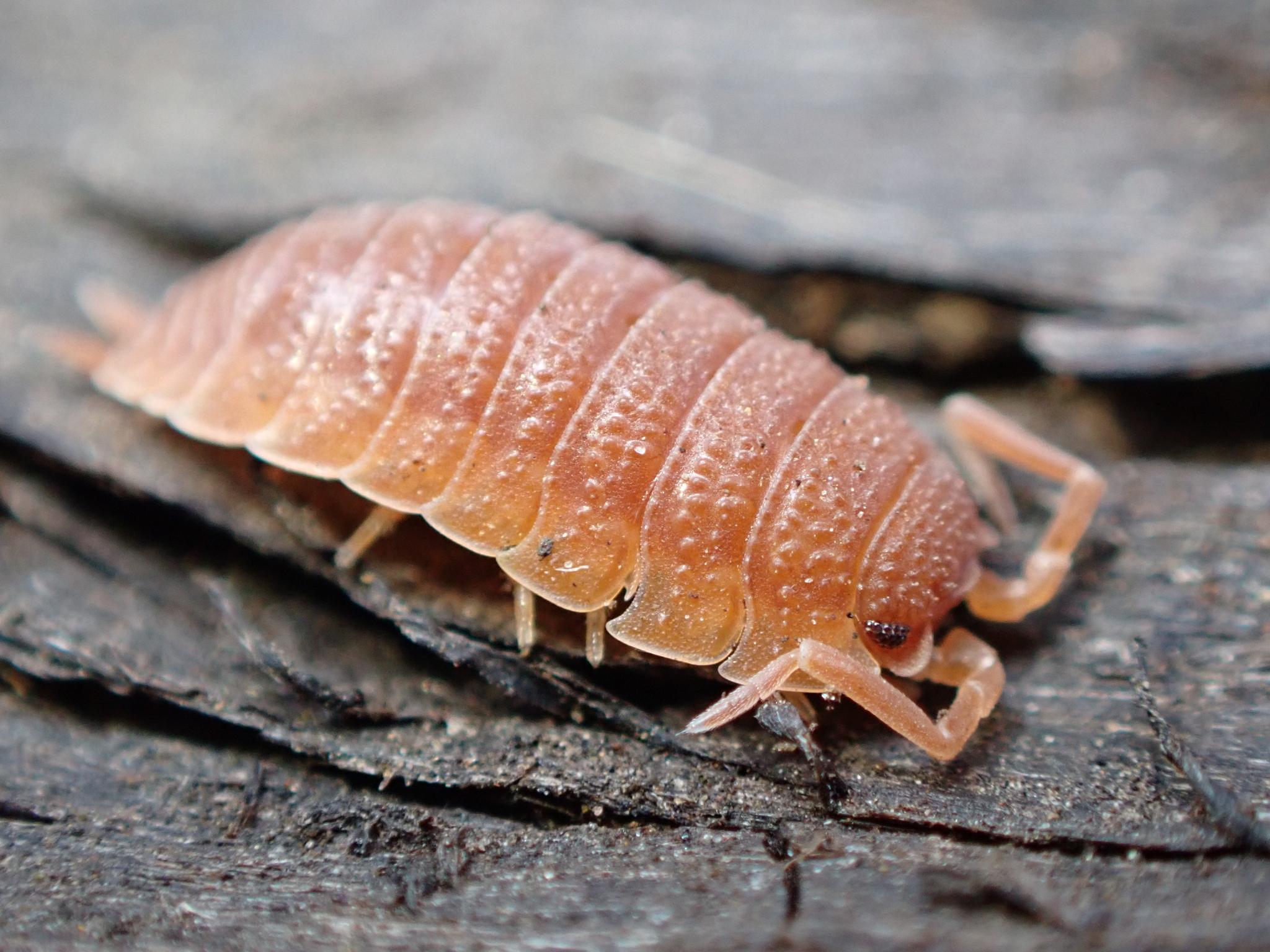 Common Rough WoodlouseA slater is a crustacean, a relative of crabs and prawns, living on land. Under its tail are small flat limbs with tiny lungs built in, and right beside them, gills.
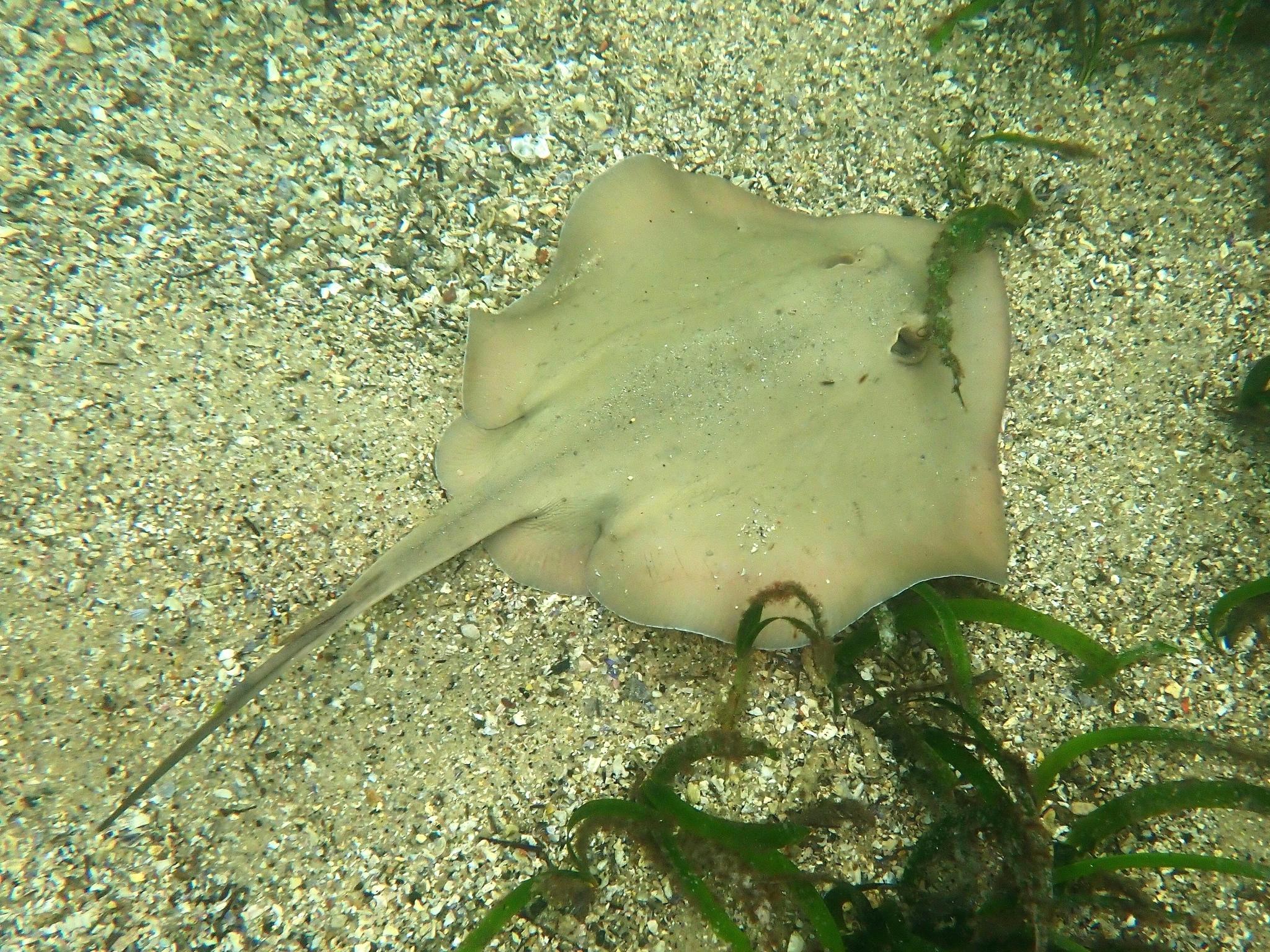 Common StingareeThe common stingaree is the commonest inshore ray on the east coast, and it raises its young in a way you might not expect of a fish. A mother common stingaree has only one or two pups at a time, each about 12 cm long at birth.
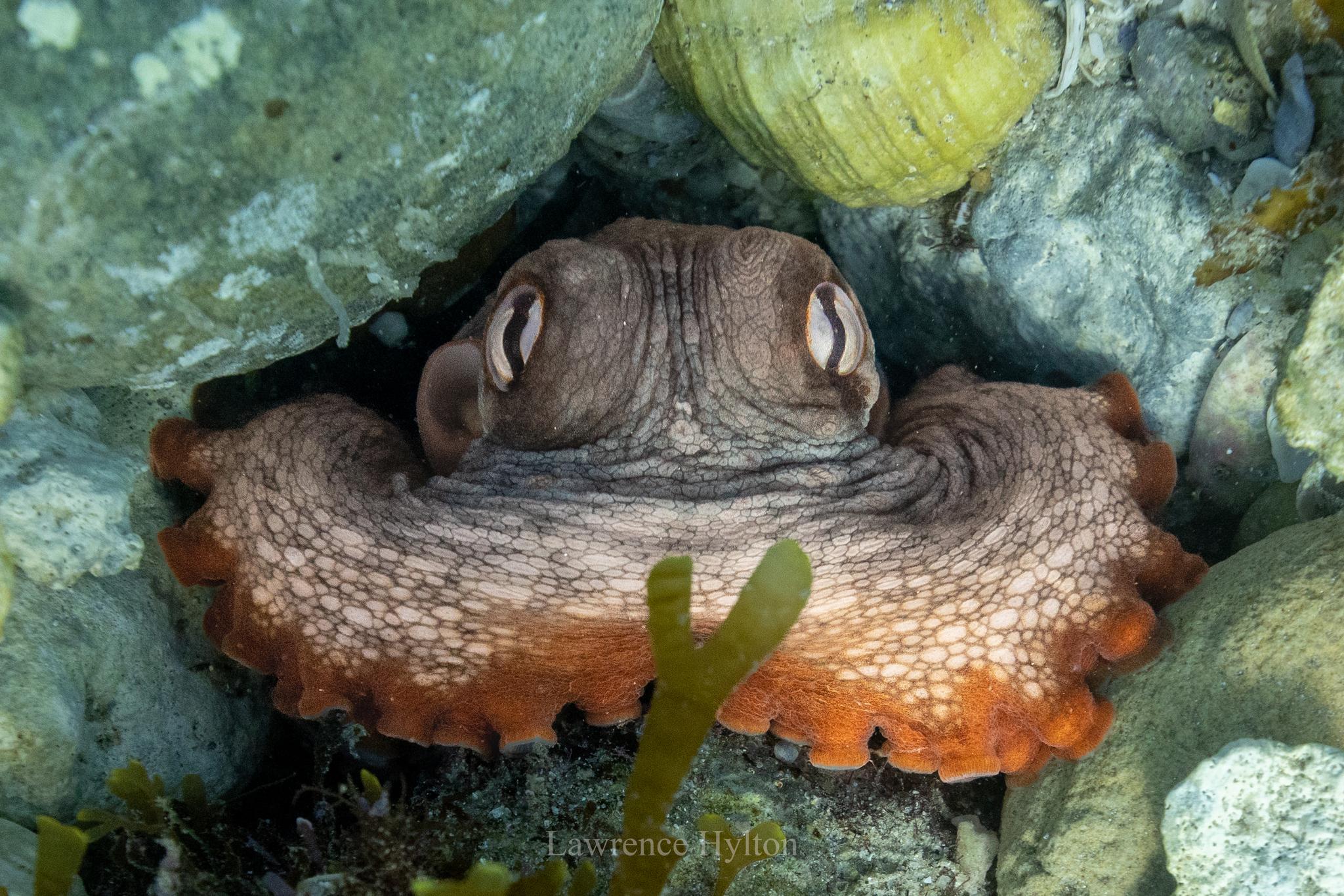 Common Sydney OctopusThis octopus throws things. Wild Sydney octopuses gather shells, silt or seaweed in their arms and blast them away with a jet of water.
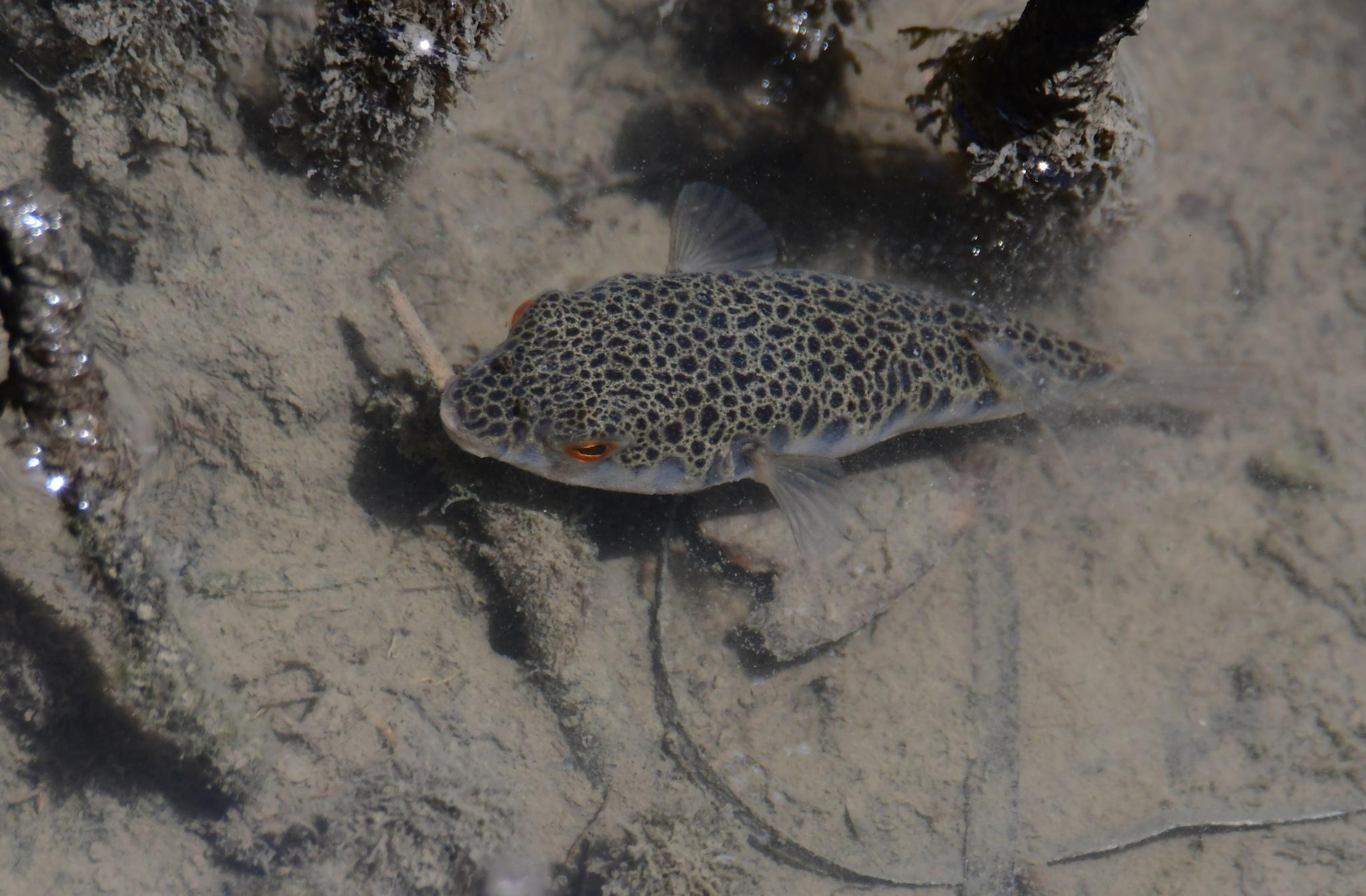 Common ToadfishThis fish has been seen squirting jets of water at crabs on the rocks, and even lunging out of the water at them. Its eyes come with built-in sunglasses: in bright light, its corneas turn yellowish.
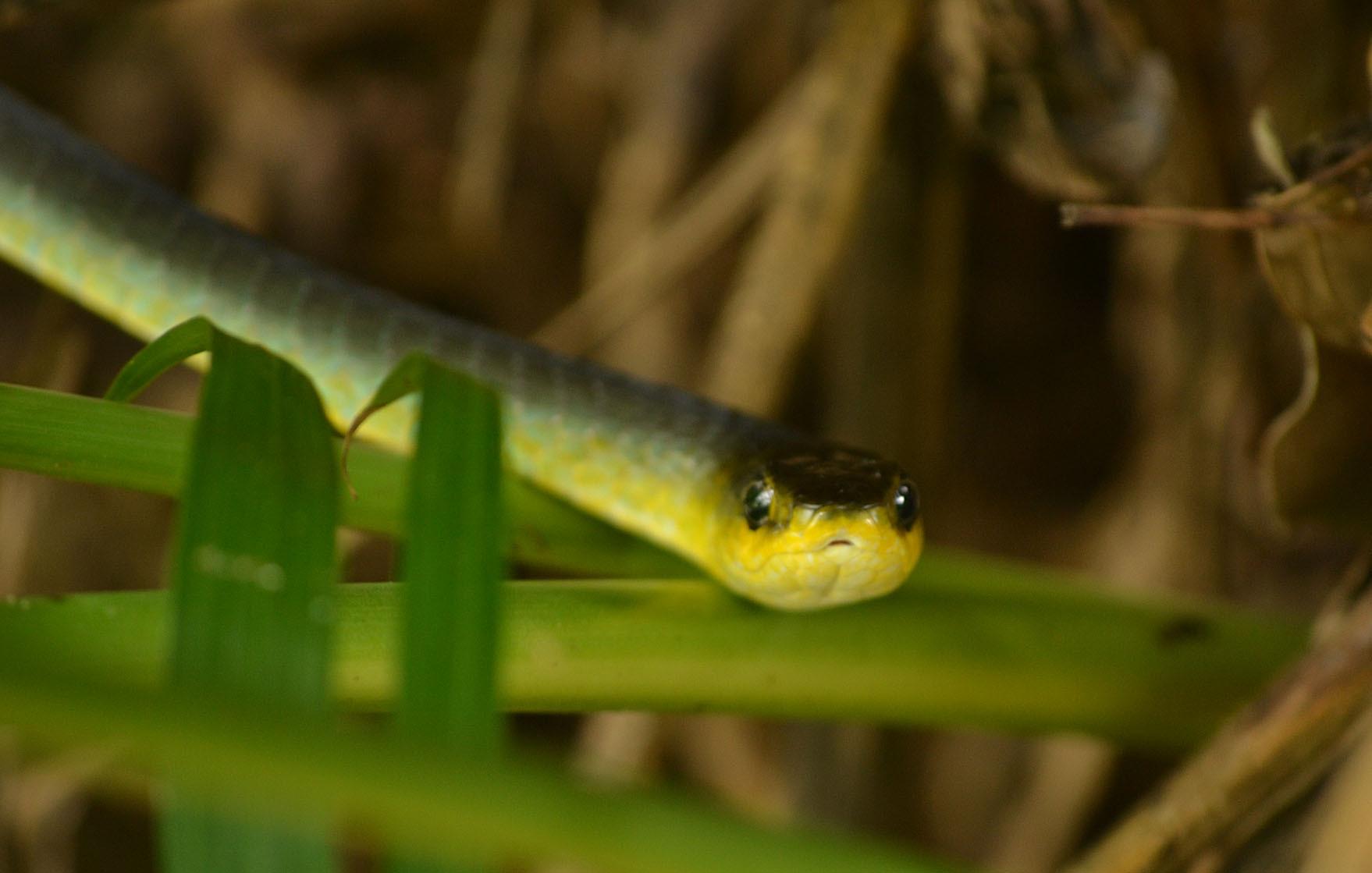 Common Tree SnakeA snake in the branches, climbing without arms or legs.
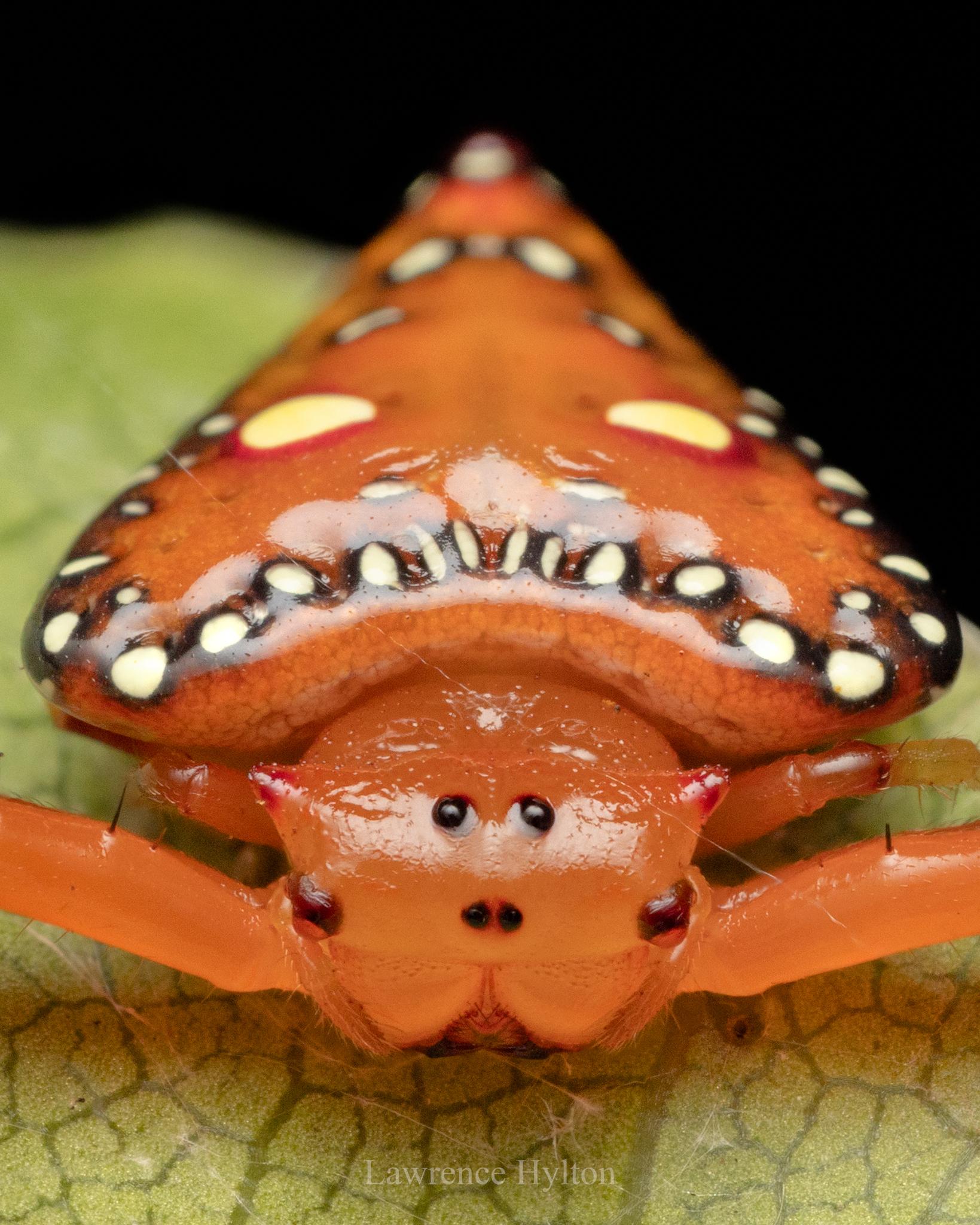 Common Triangular SpiderIt sits under a leaf with its front legs held open, spiny and curved forward like a trap. It doesn't build a web.
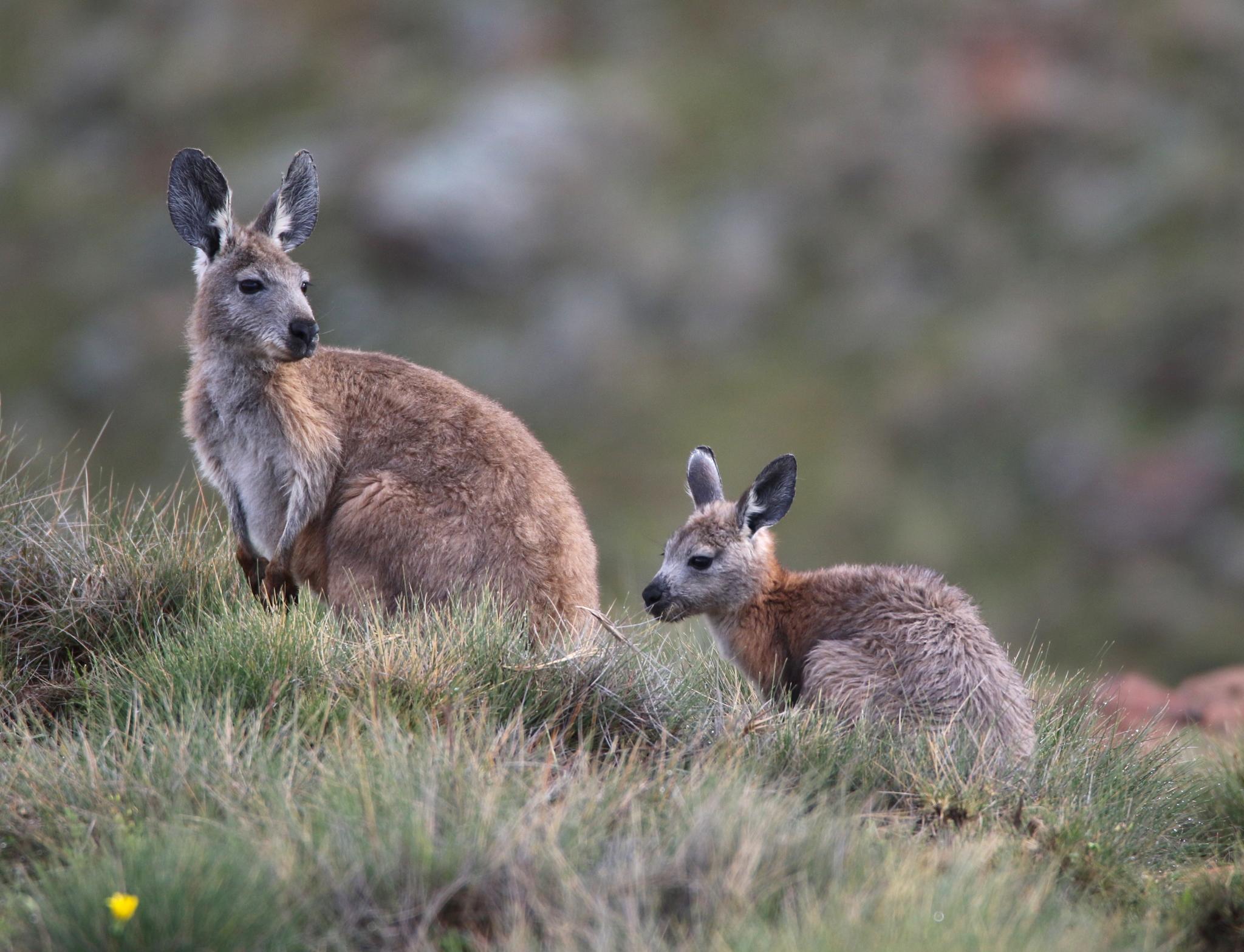 Common WallarooThe wallaroo is a kangaroo built for rocky hills: stocky, shaggy, and at home on slopes where a bigger, slimmer kangaroo would struggle.
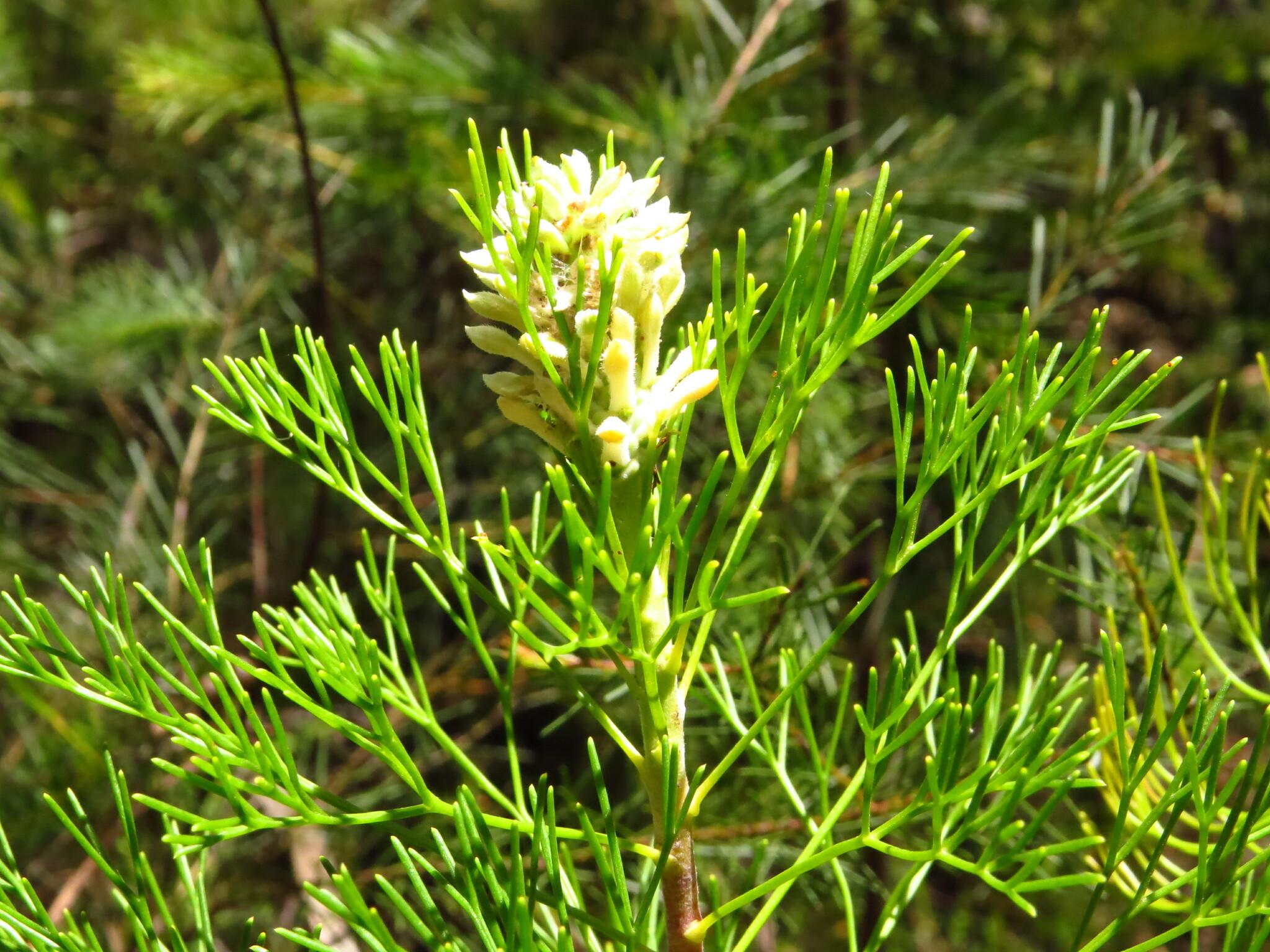 ConesticksFire kills a conesticks plant, and that's part of how it lives. It keeps its seeds stored in cones on its branches, and a fire releases them.
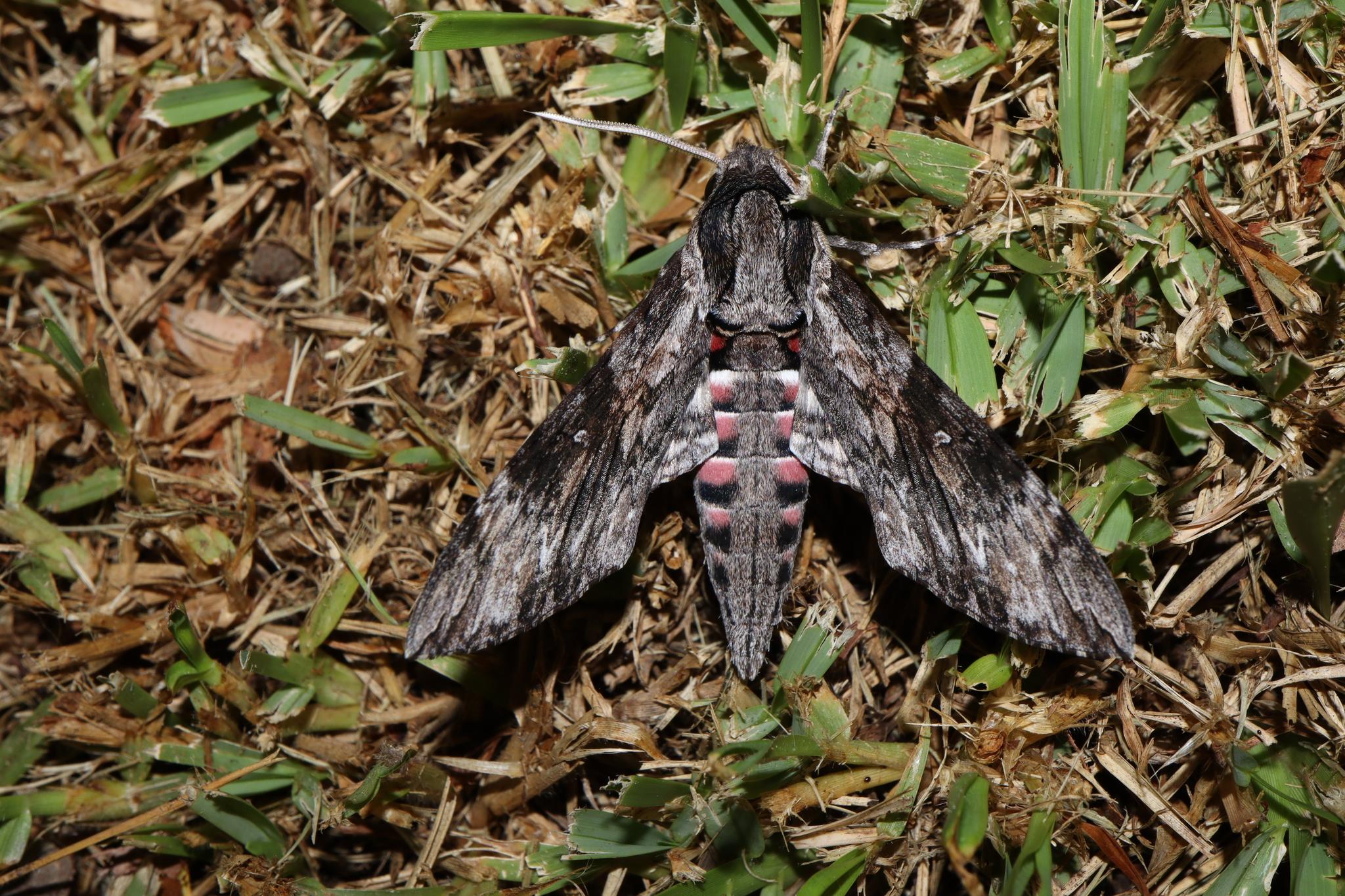 Convolvulus HawkmothIt hovers in front of a flower like a hummingbird and sips with a tongue up to 13 centimetres long, longer than its body.
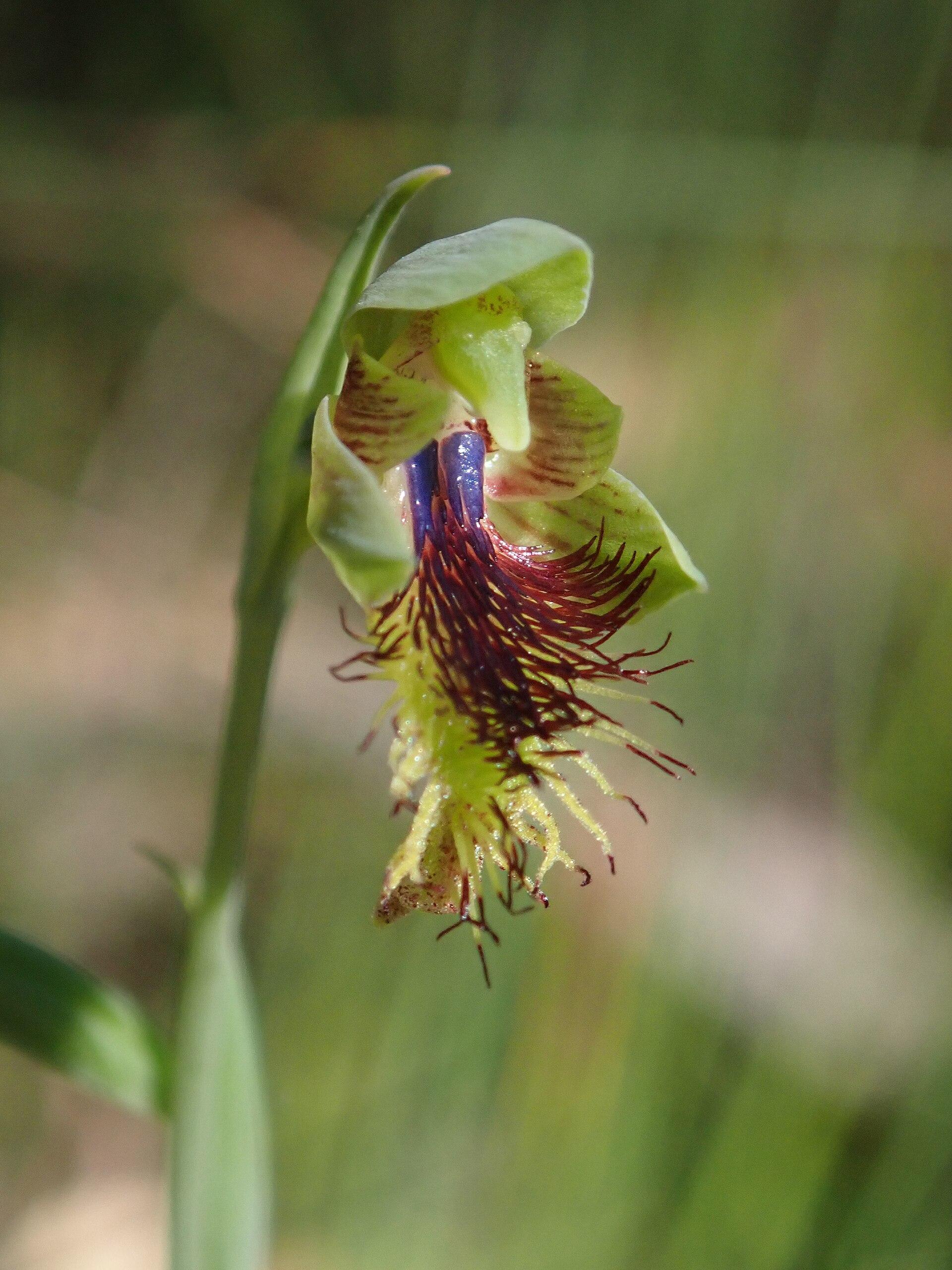 Copper beard orchidThat beard is a costume. The copper beard orchid fools male scoliid wasps, big colourful flower wasps, into trying to mate with it, and they carry its pollen away.
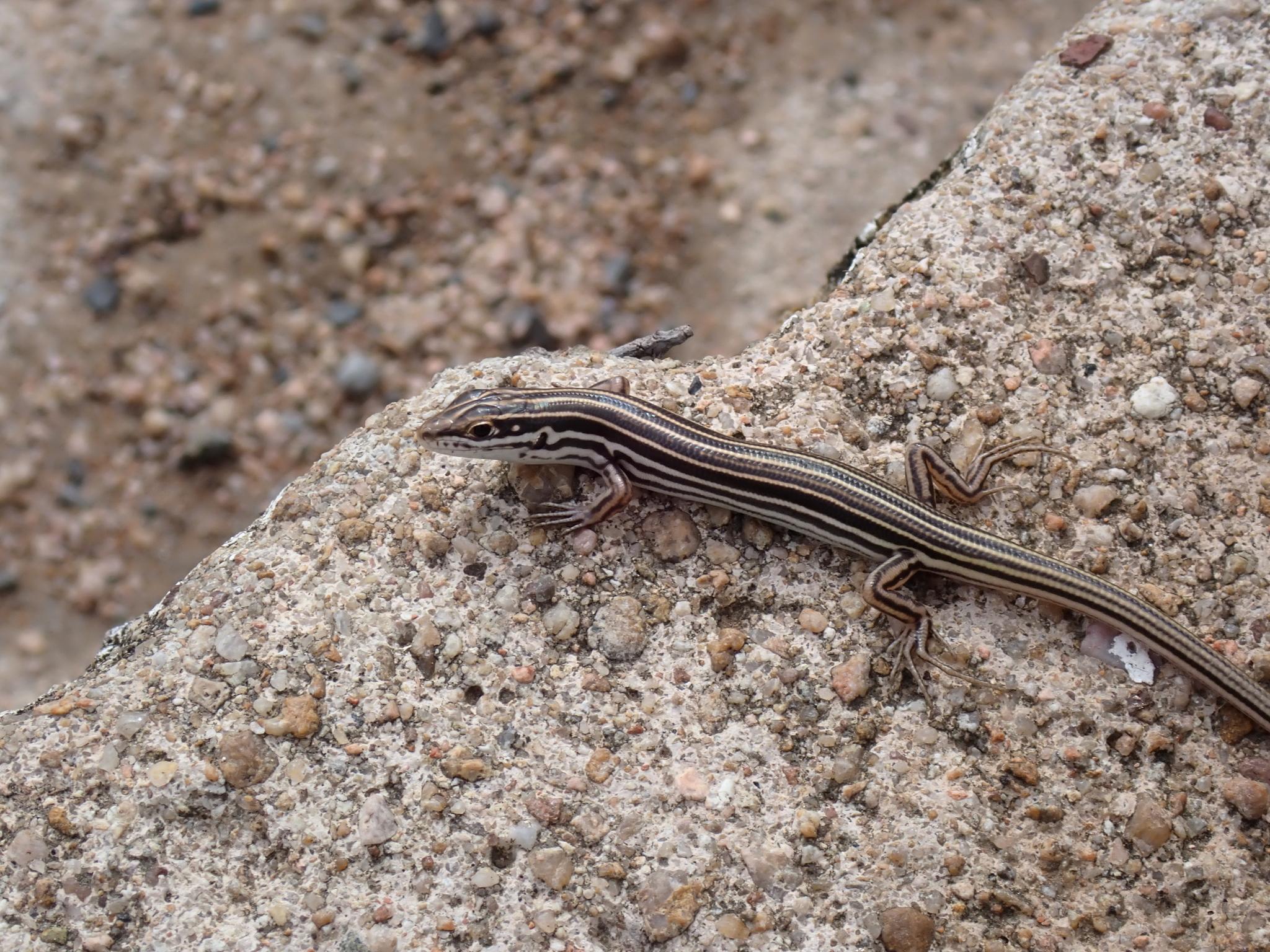 Copper-tailed CtenotusA flash of stripes and a copper tail, and it's gone into the leaf litter. It belongs to *Ctenotus*, the biggest group of lizards in Australia, with nearly 100 species.
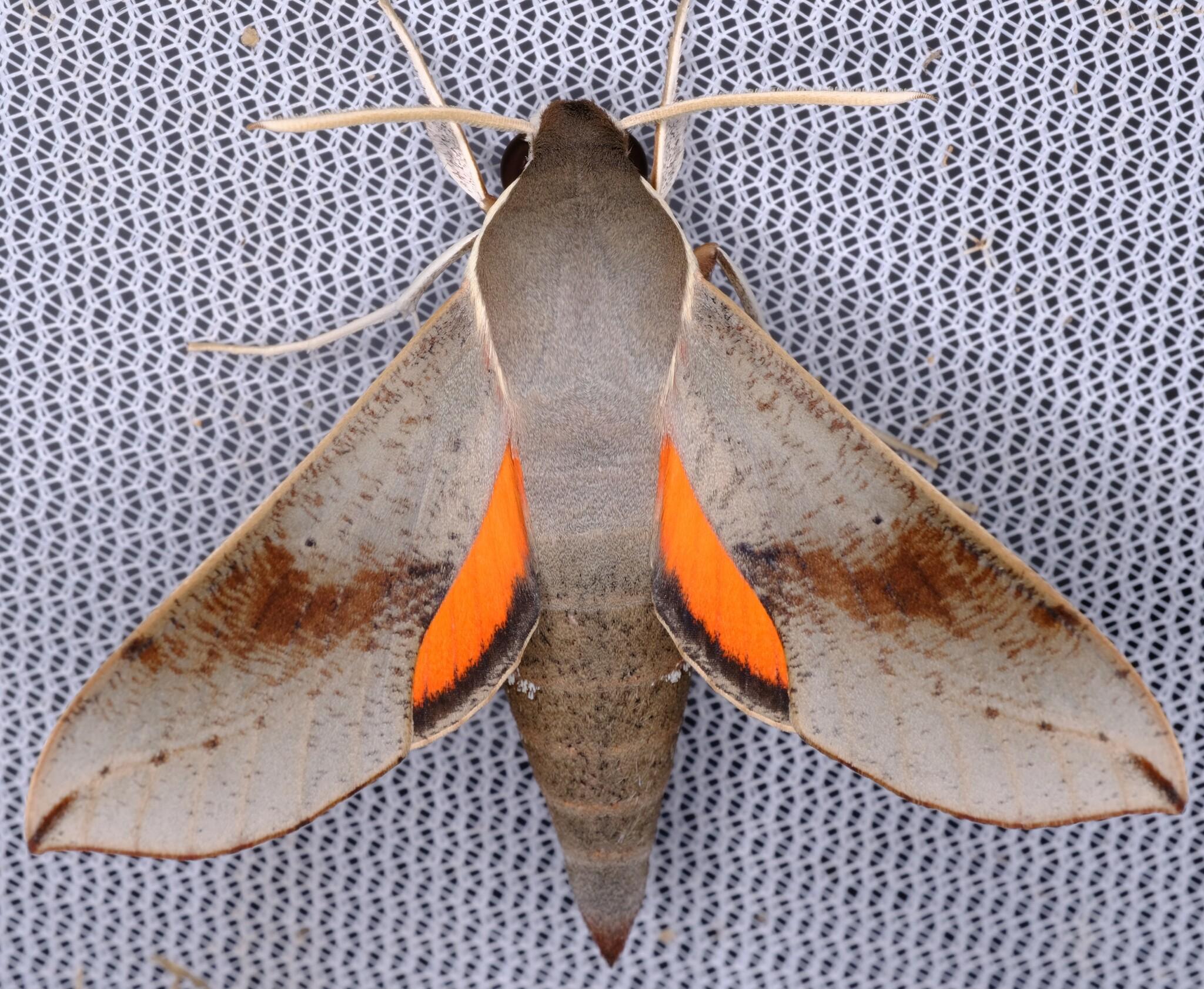 Coprosma Hawk MothThis moth's kind is still crossing the Pacific. The coprosma hawk moth seems to have reached Fiji only recently.
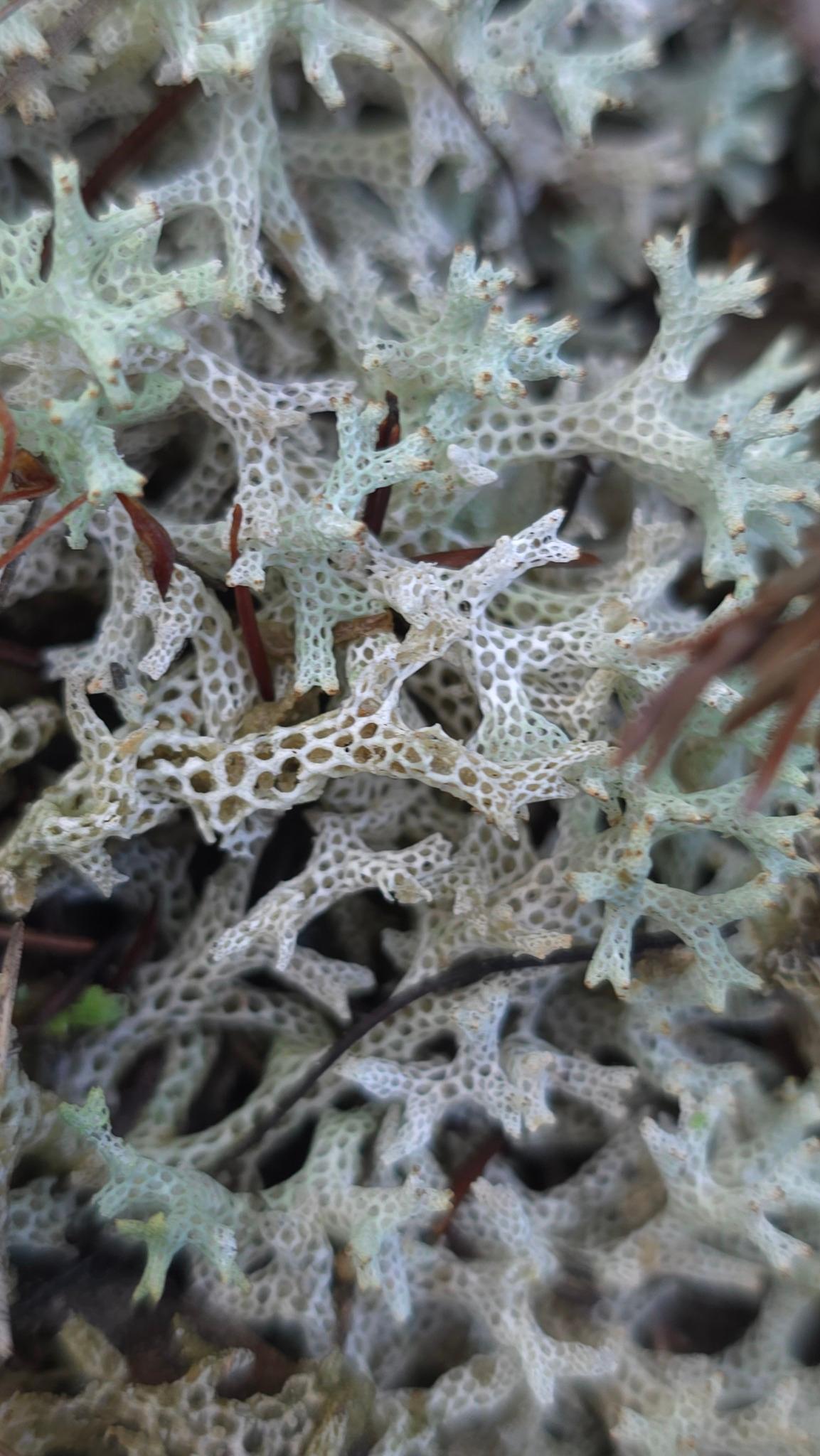 Coral lichenThis was the first lichen ever reported from Australia, and the man who described it didn't know it was a lichen. Labillardière collected it in Tasmania in 1792, and in 1806 he published it with the algae.
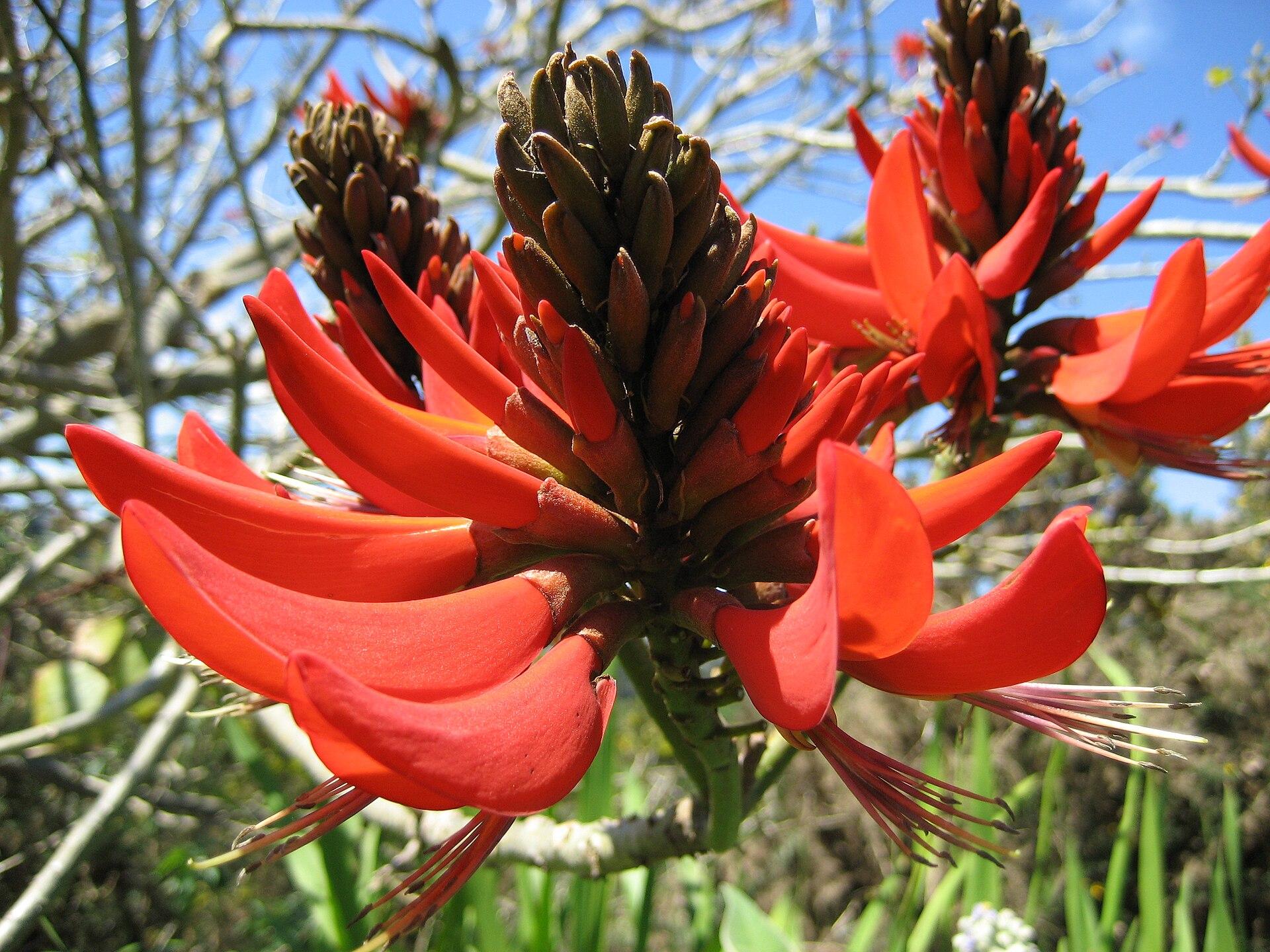 Coral treeThis tree can't make a living seed. It's a hybrid, bred by people, probably in Australia or New Zealand.
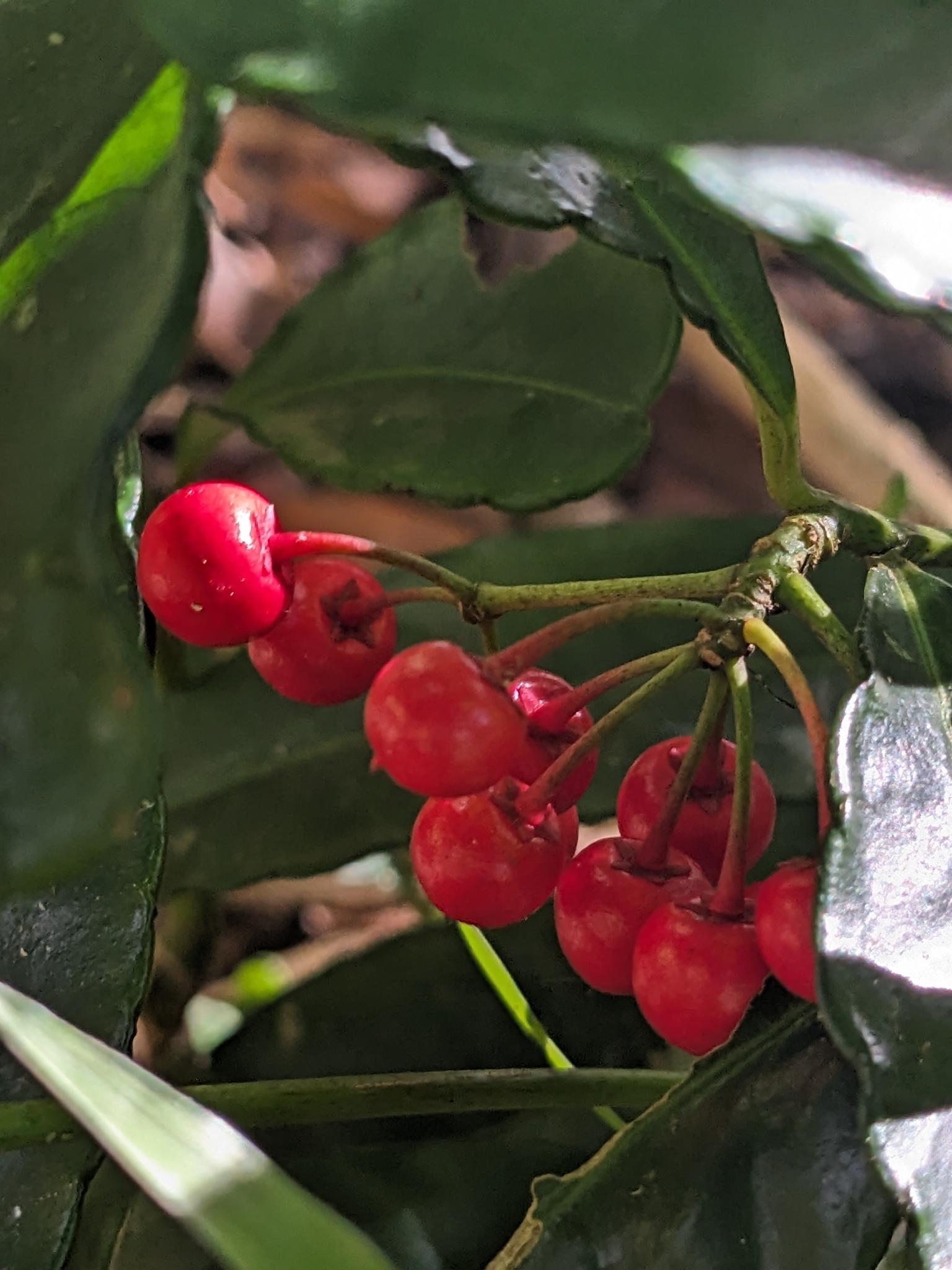 CoralberryLook at the crinkled edge of a coralberry leaf. The little swellings along it are homes for bacteria.
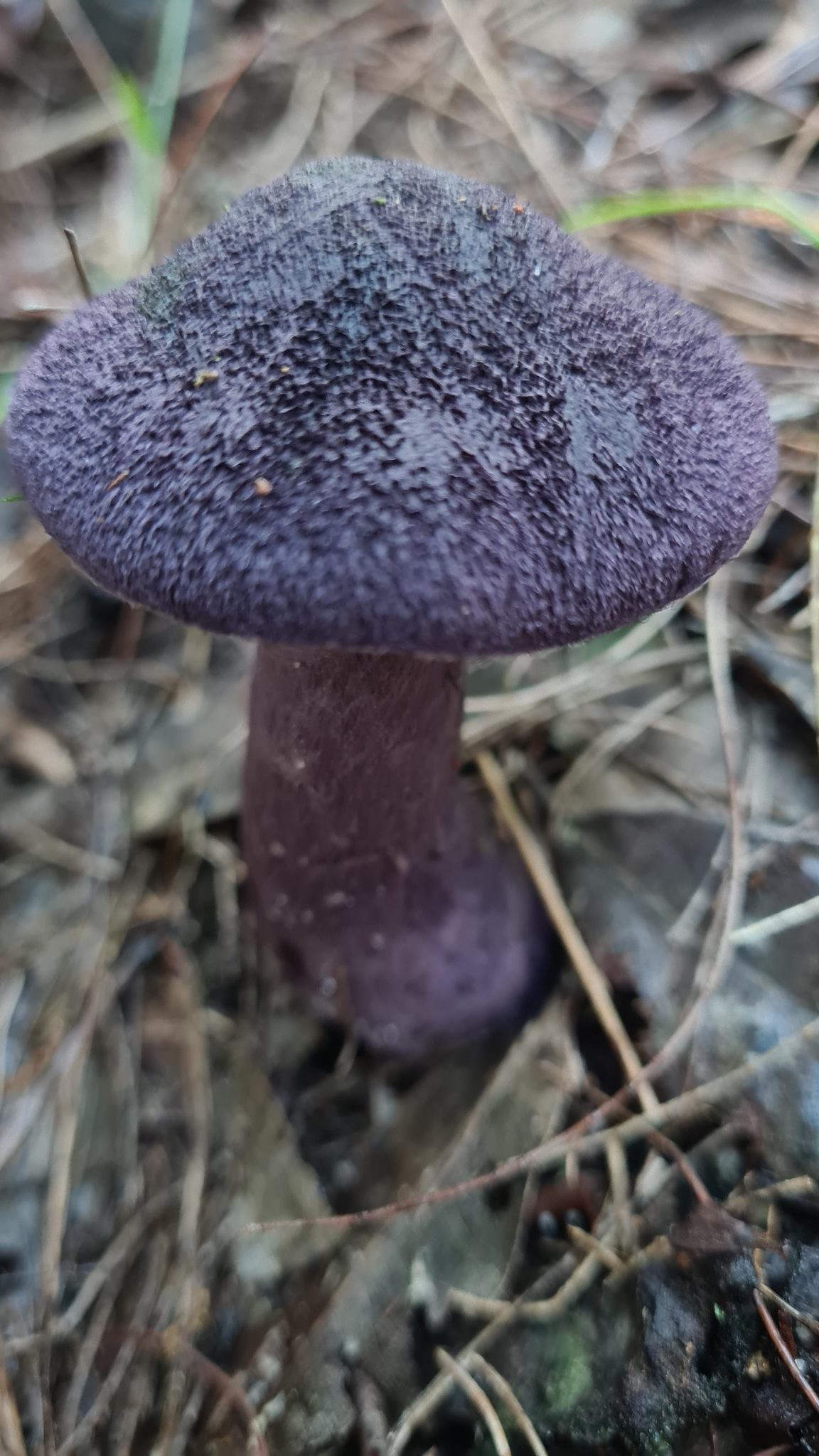 Cortinarius kioloensisThis mushroom is the tip of a trade deal. Like other *Cortinarius*, the fungus behind it wraps a dense sheath of threads around young tree roots.
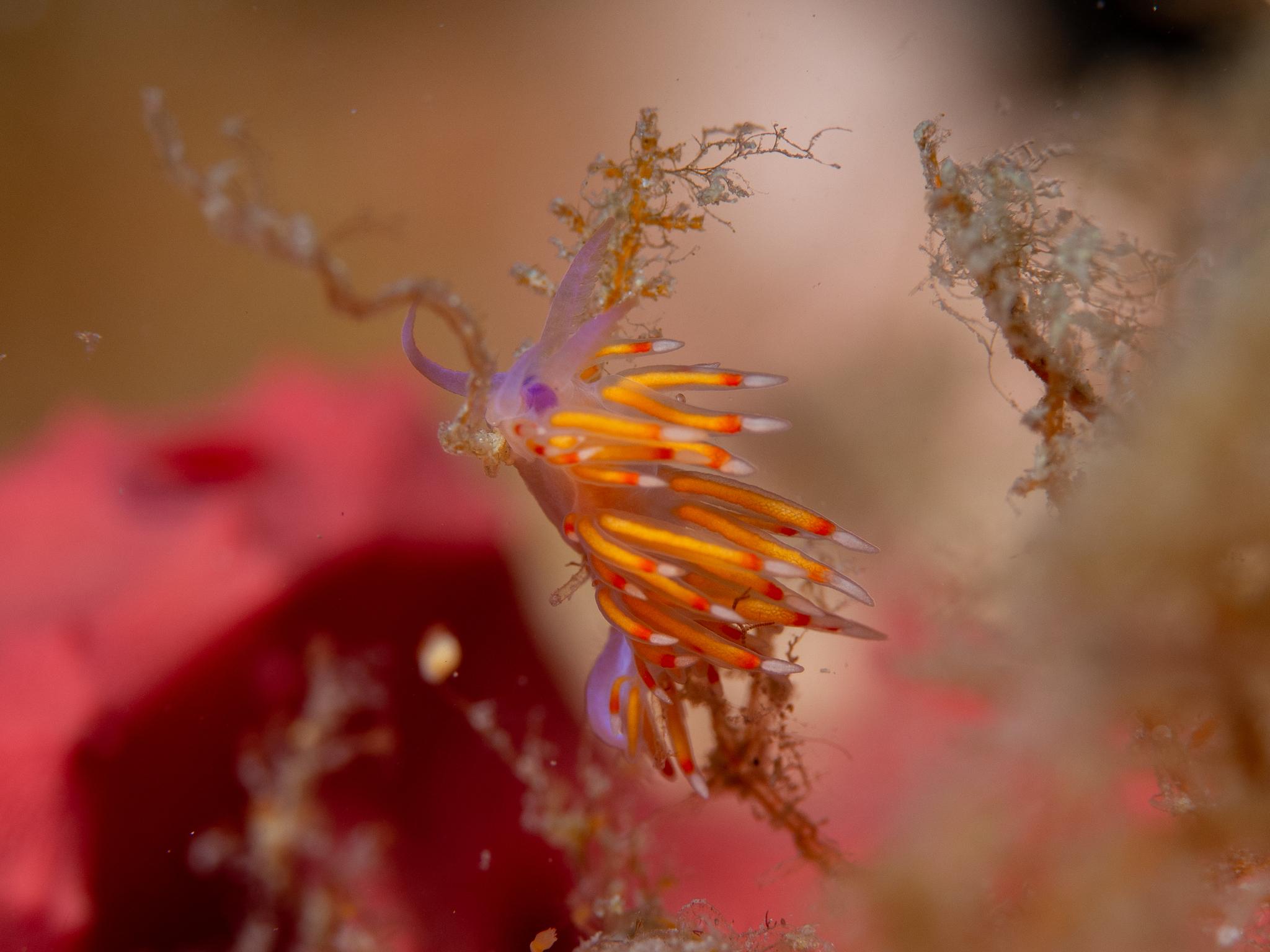 Coryphellina poeniciaThose orange fingers on its back are probably loaded with stolen weapons. Sea slugs like this one eat stinging animals and keep their stinging capsules, each one able to inject venom, in a small sac at the tip of each finger.
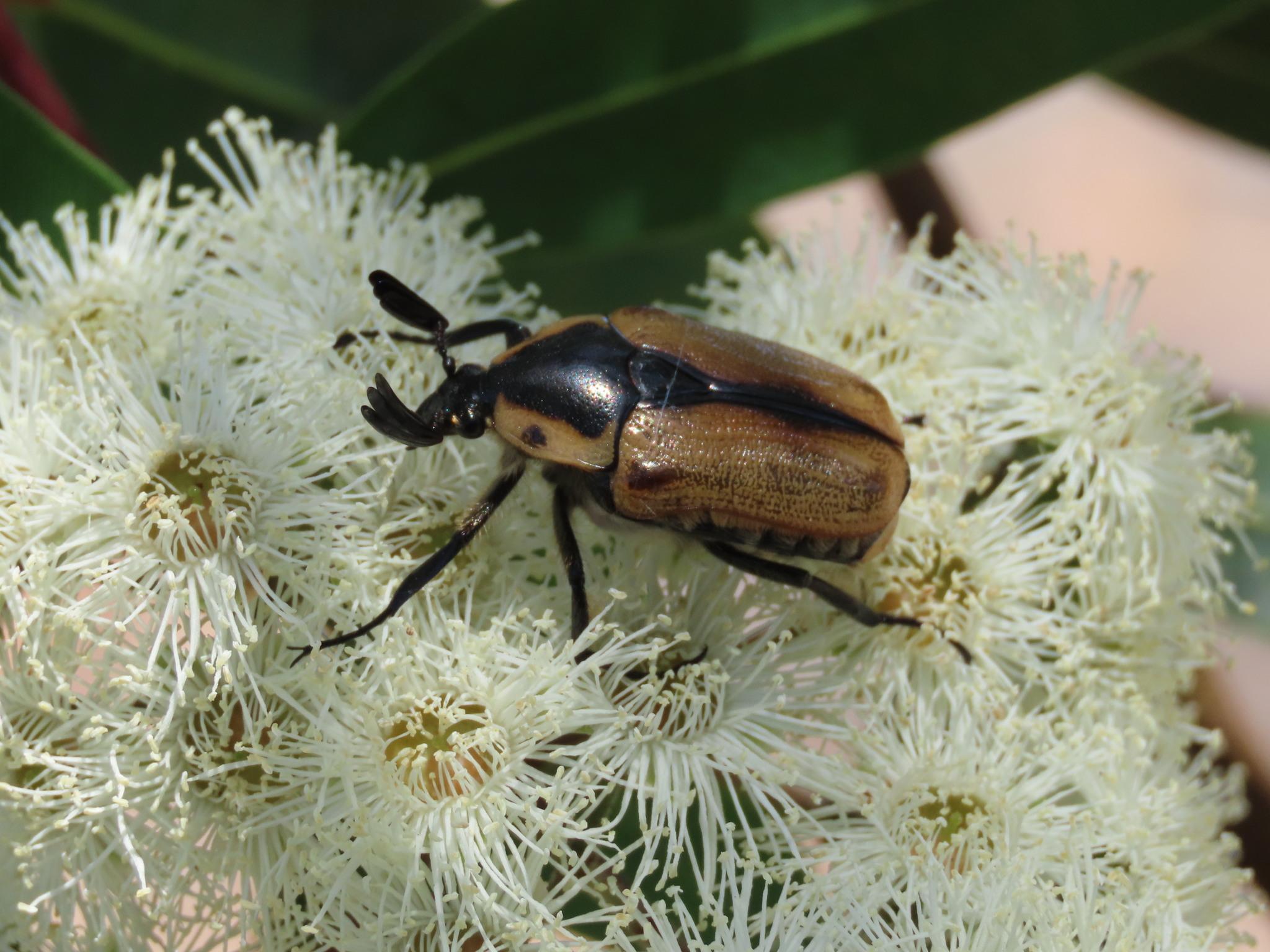 Cowboy BeetleIf you've tipped out a pot plant and found fat, C-shaped grubs curled in the potting mix, you may have met this beetle young. Female cowboy beetles are drawn to the rich stuff in potting mix and lay their eggs there, and the grubs eat the roots.
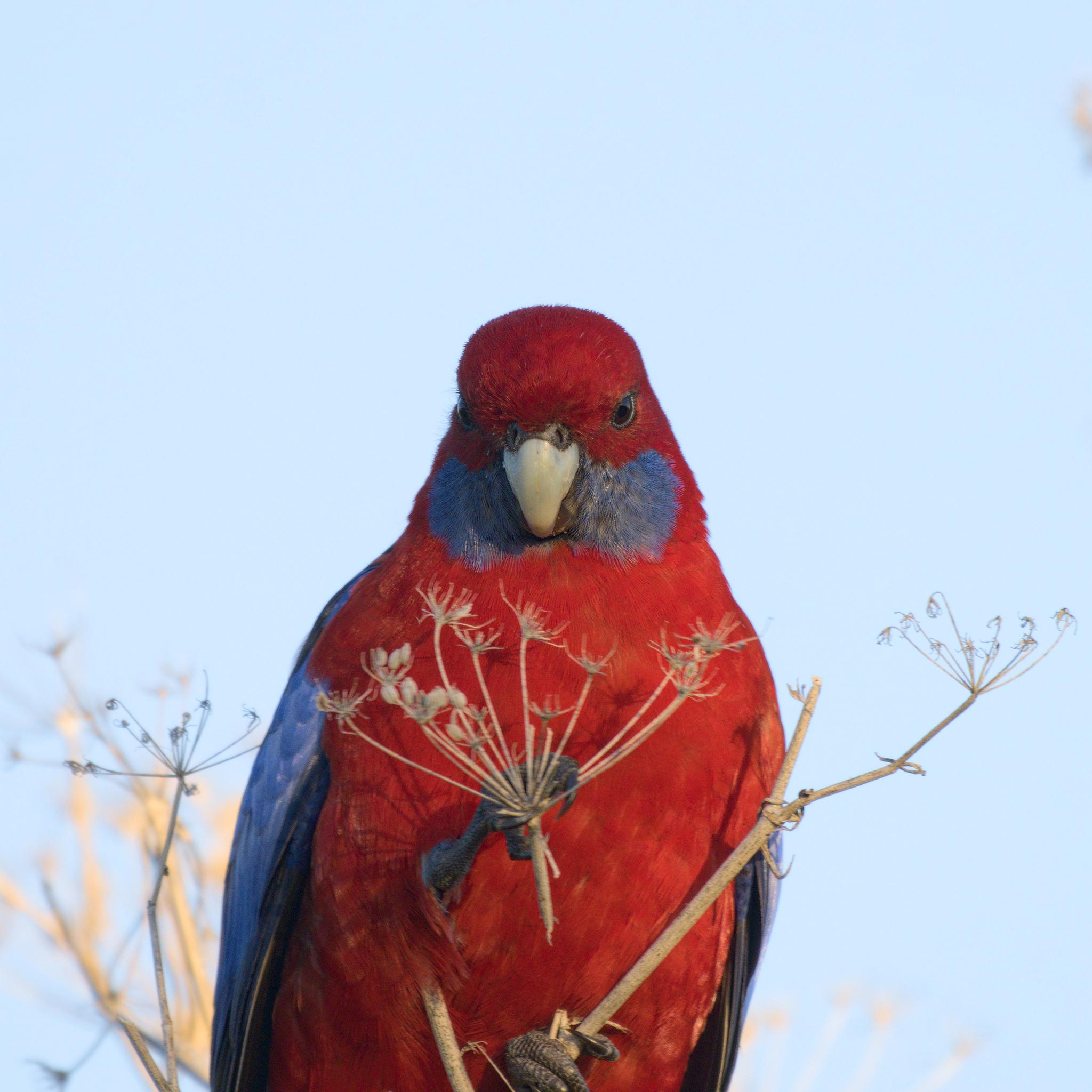 Crimson RosellaNot every crimson rosella is crimson. Sydney's are red.
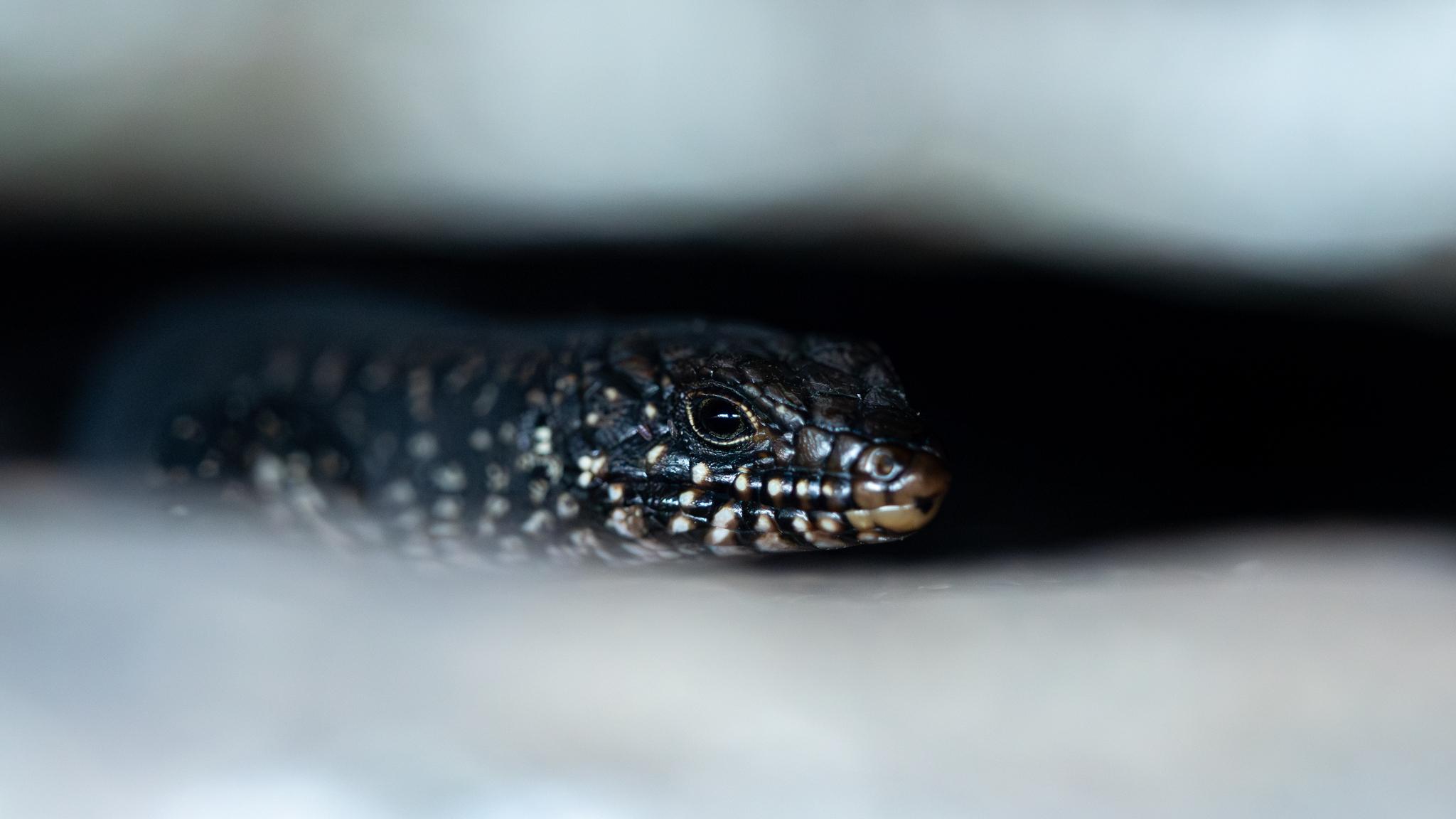 Cunningham's SkinkWedged in a rock crack, a cornered Cunningham's skink gulps air and swells up, so its spiny scales jam it in place. Nothing is pulling it out.
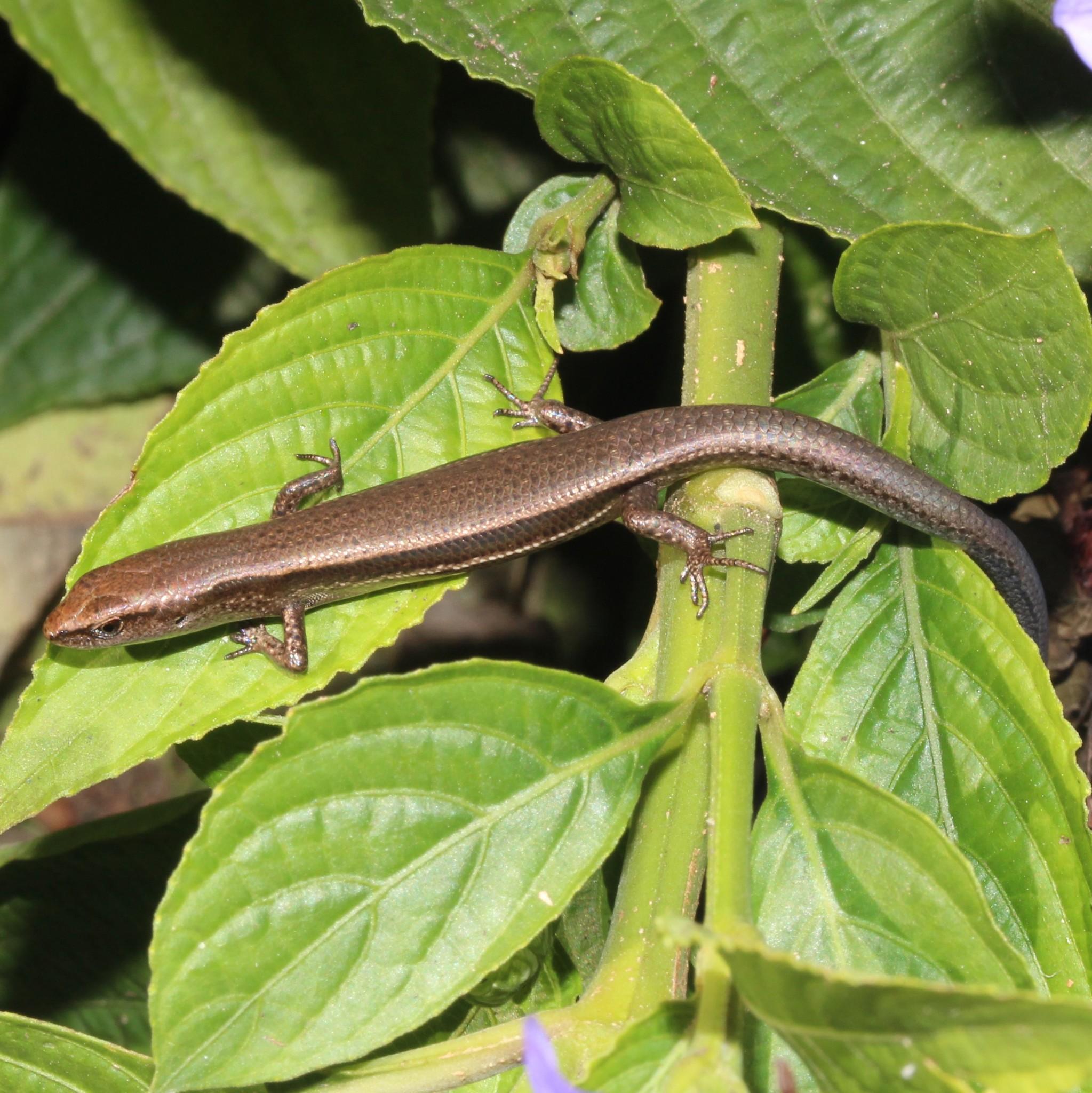 Dark-flecked Garden SunskinkThis tiny backyard skink is a world traveller. Dark-flecked garden sunskinks have hitched rides in freight and set up invasive populations in Hawaii, New Zealand and on Lord Howe Island, where they're called rainbow or plague skinks.
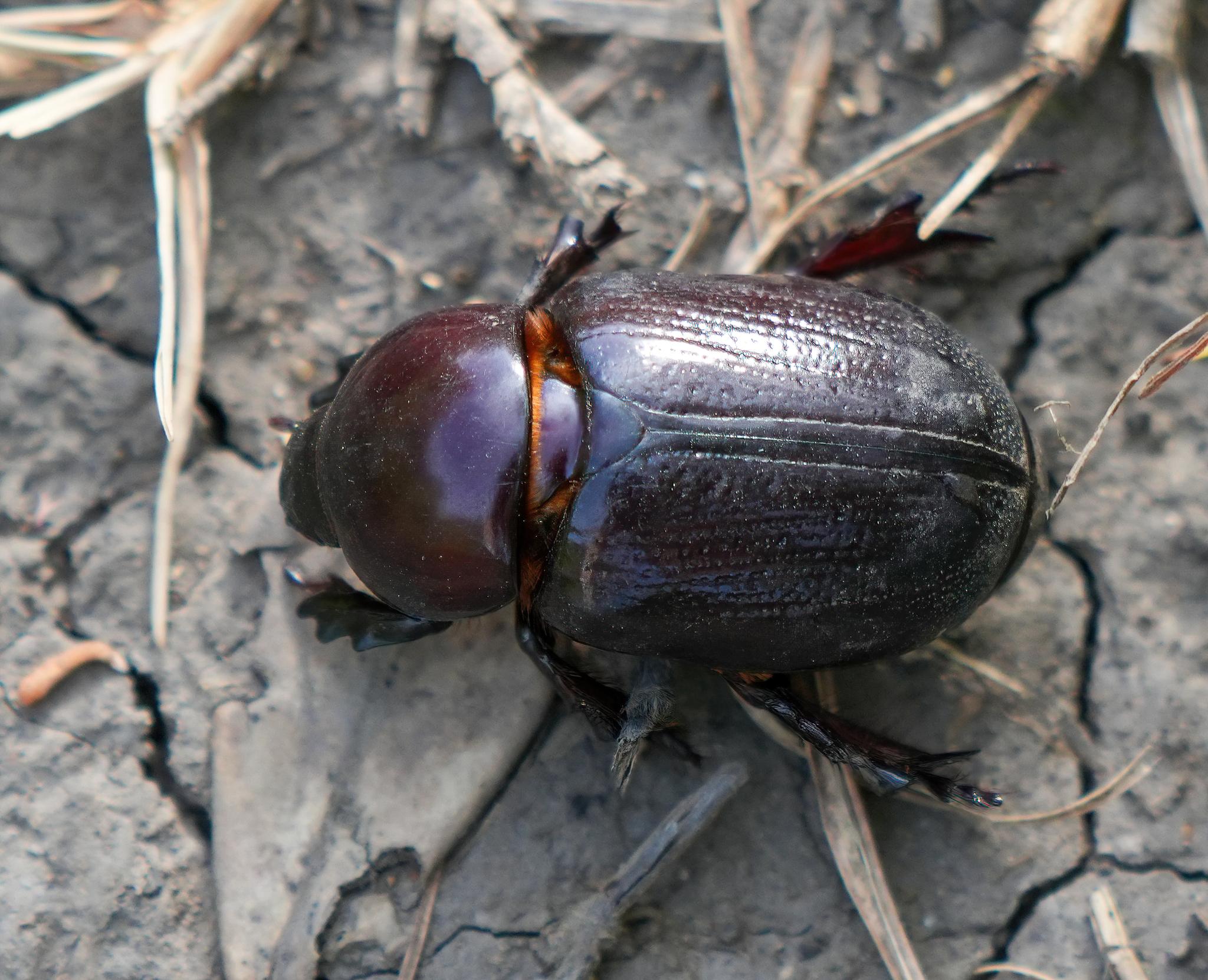 Dasygnathus trituberculatusA big, dark, heavy scarab beetle has turned up, the kind that thumps into a window on a summer night. It has a proper scientific name, but almost nothing else.
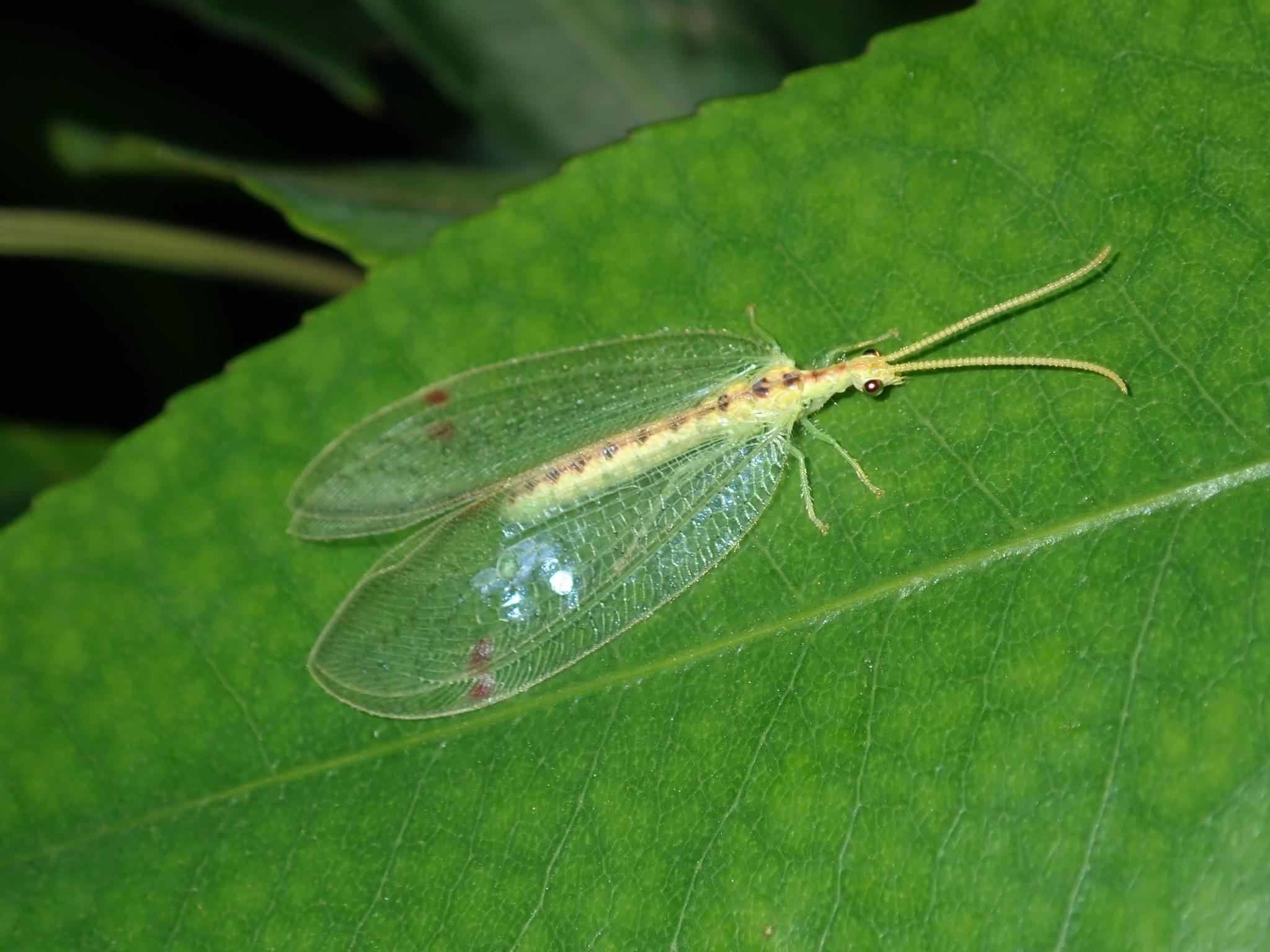 Diamond-banded LacewingThe delicate lacewing in front of you had a very different youth. Larvae of its family are flattened discs fringed with long, hair-like projections, and like most lacewing larvae they hunt, sucking prey dry through tube-shaped mouthparts.
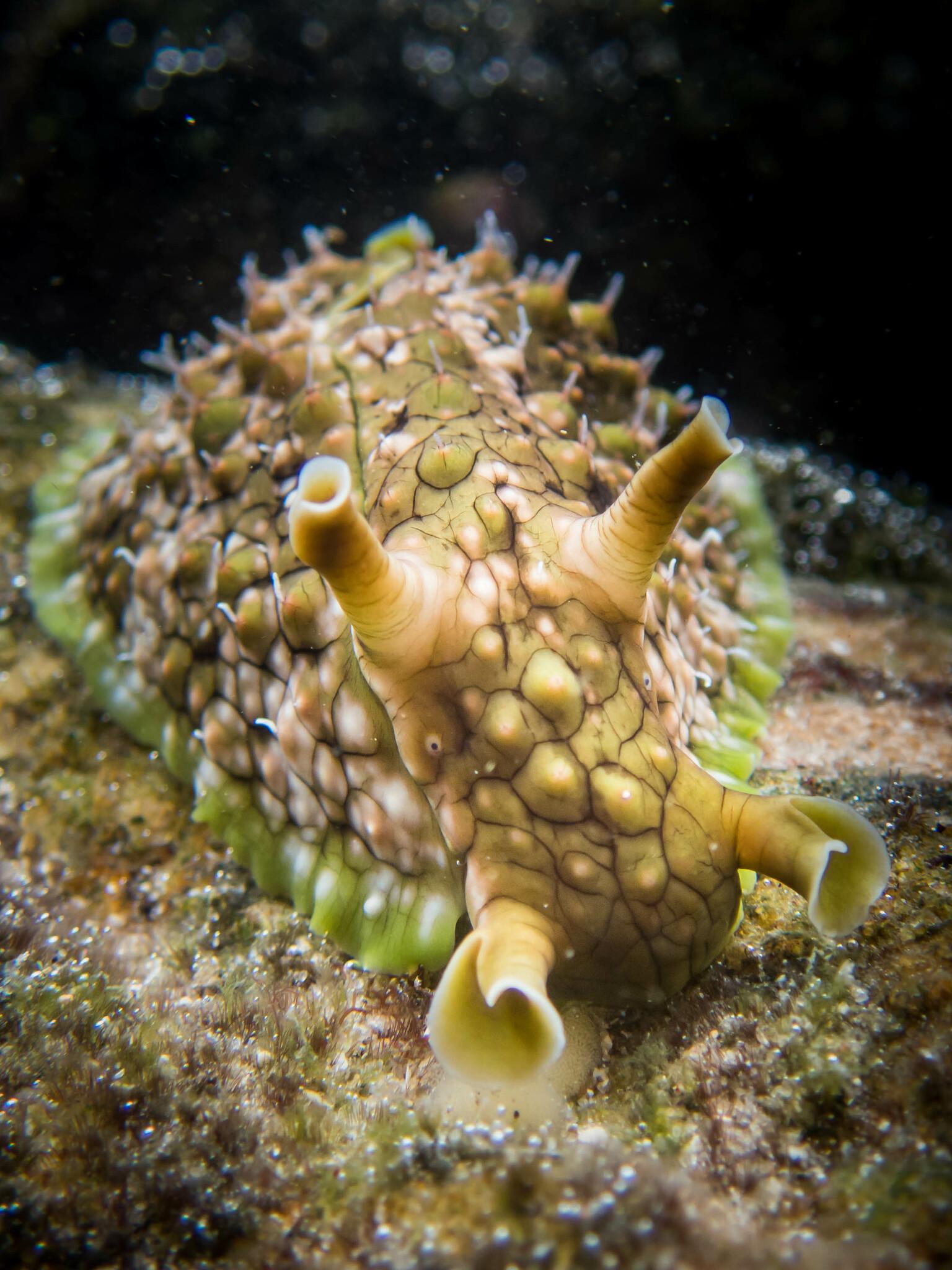 Dolabrifera brazieriThis sea hare is up to about 15 cm long, about the length of your hand, and you'll often look straight at it without seeing it. Its colours match the rock so well that it's very hard to spot.
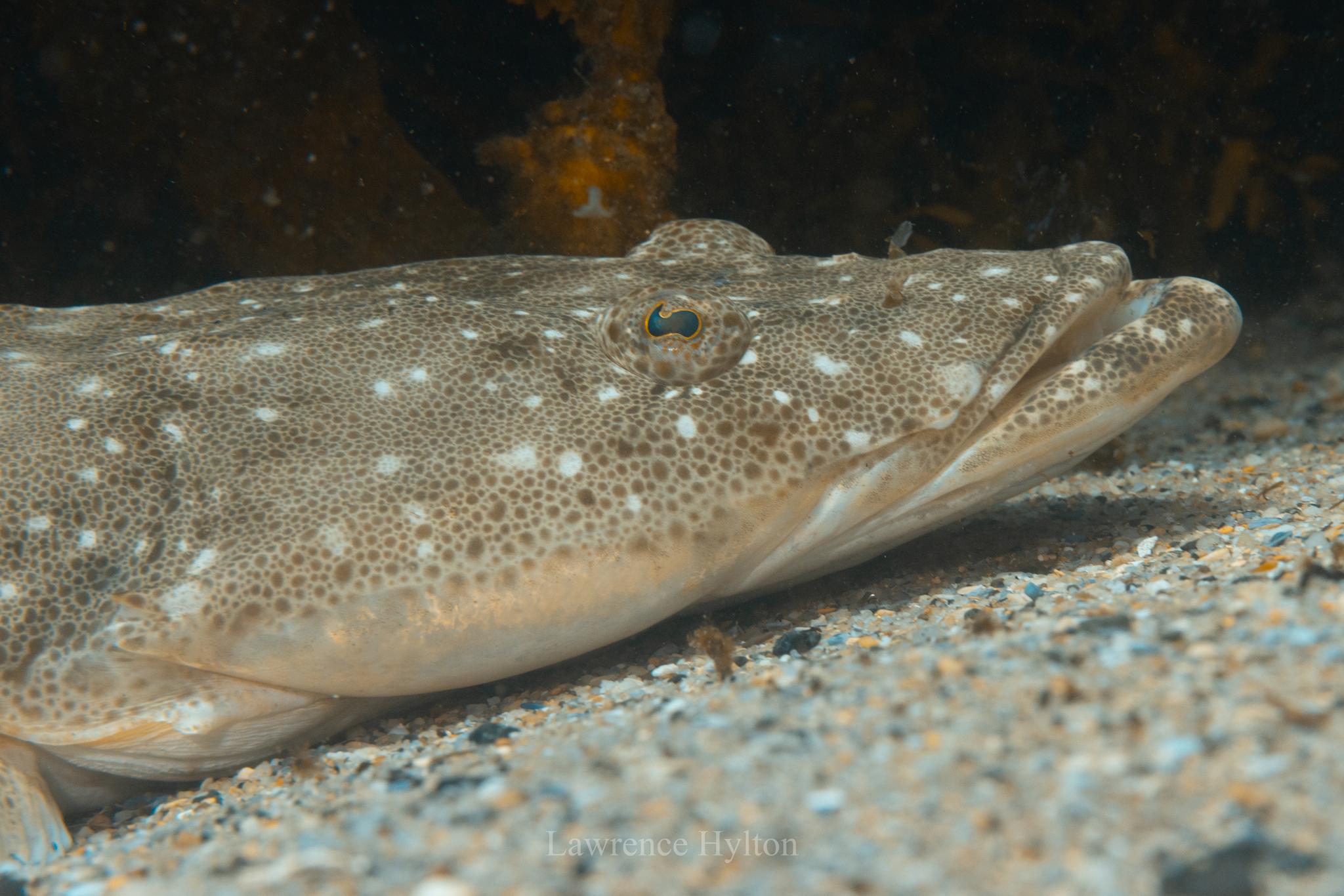 Dusky FlatheadIt's lying in the sand, mostly hidden, waiting. The dusky flathead is an ambush predator: it lies motionless, often buried, and takes the fish that come too close.
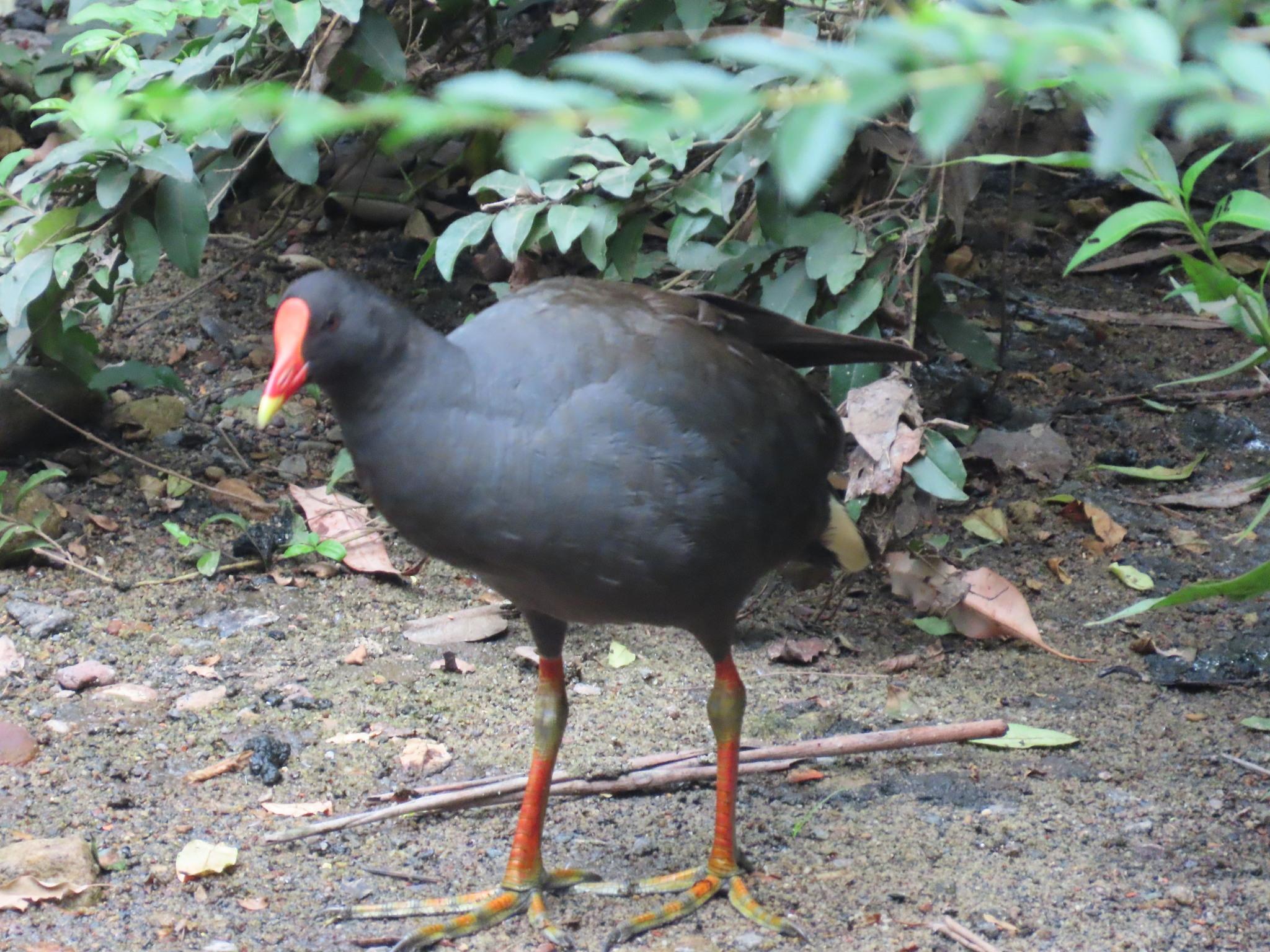 Dusky MoorhenCount the adults around those chicks. A dusky moorhen family is rarely just a mother and a father.
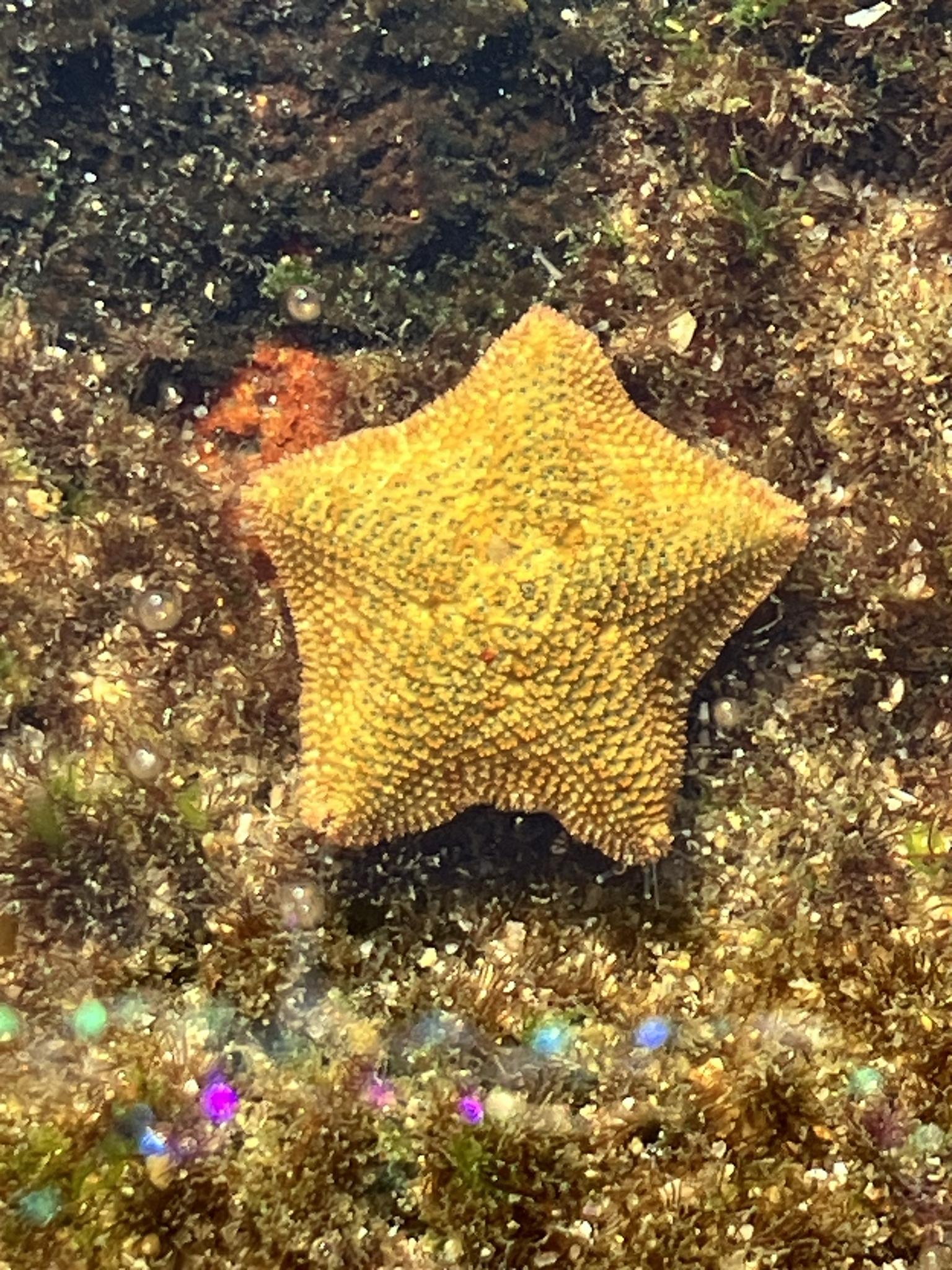 Dwarf Cushion StarThis sea star is only about 2 cm across, and it raises its next generation right here on the shore. It lays eggs, and its larvae stay on the bottom instead of drifting off into the open sea.
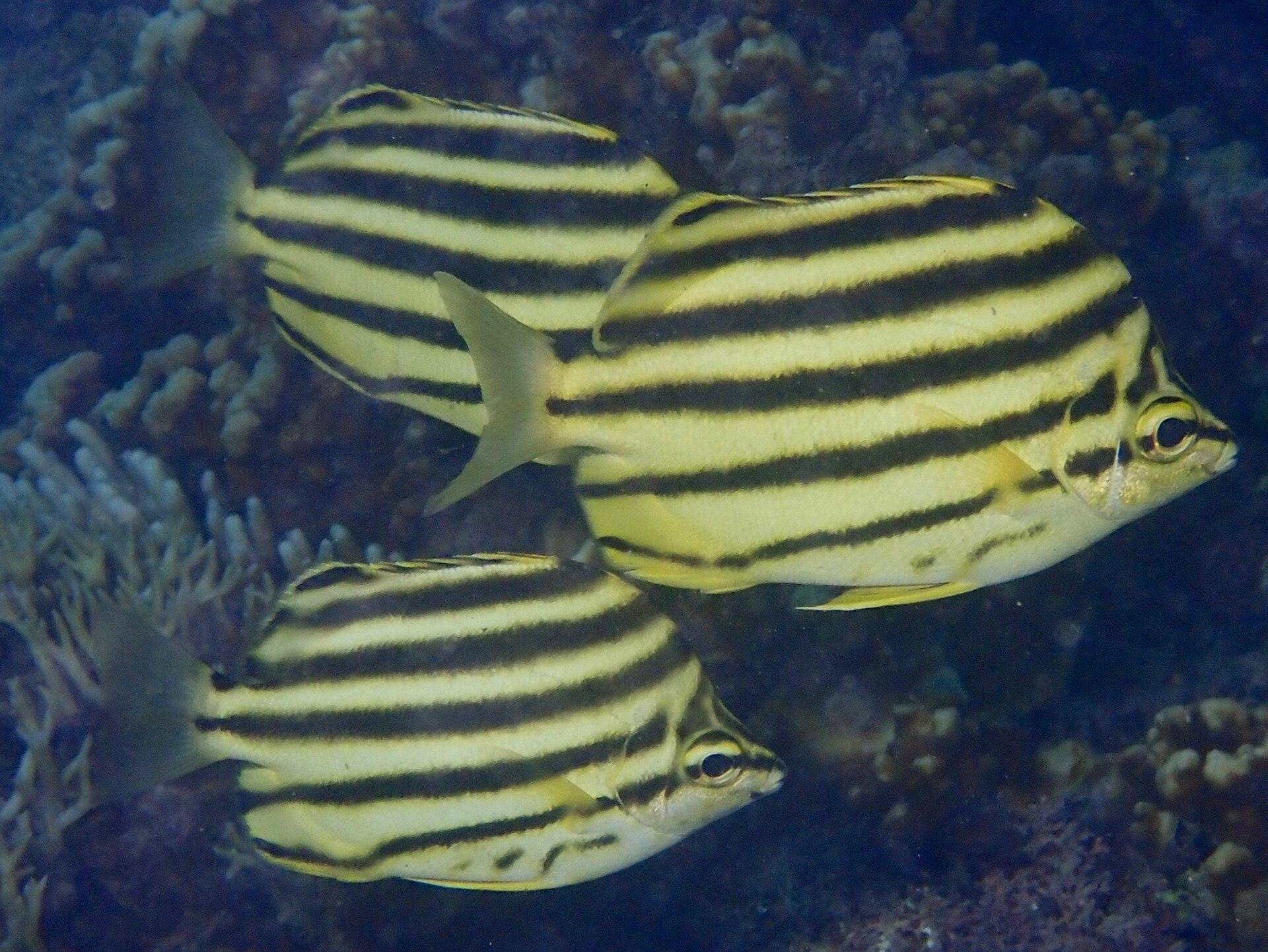 East-Australian StripeyThe stripey's family lives in a strange pattern. Stripeys are found on both sides of the tropics, in eastern and western Australia, and far to the north in Japan, China and Hawaii.
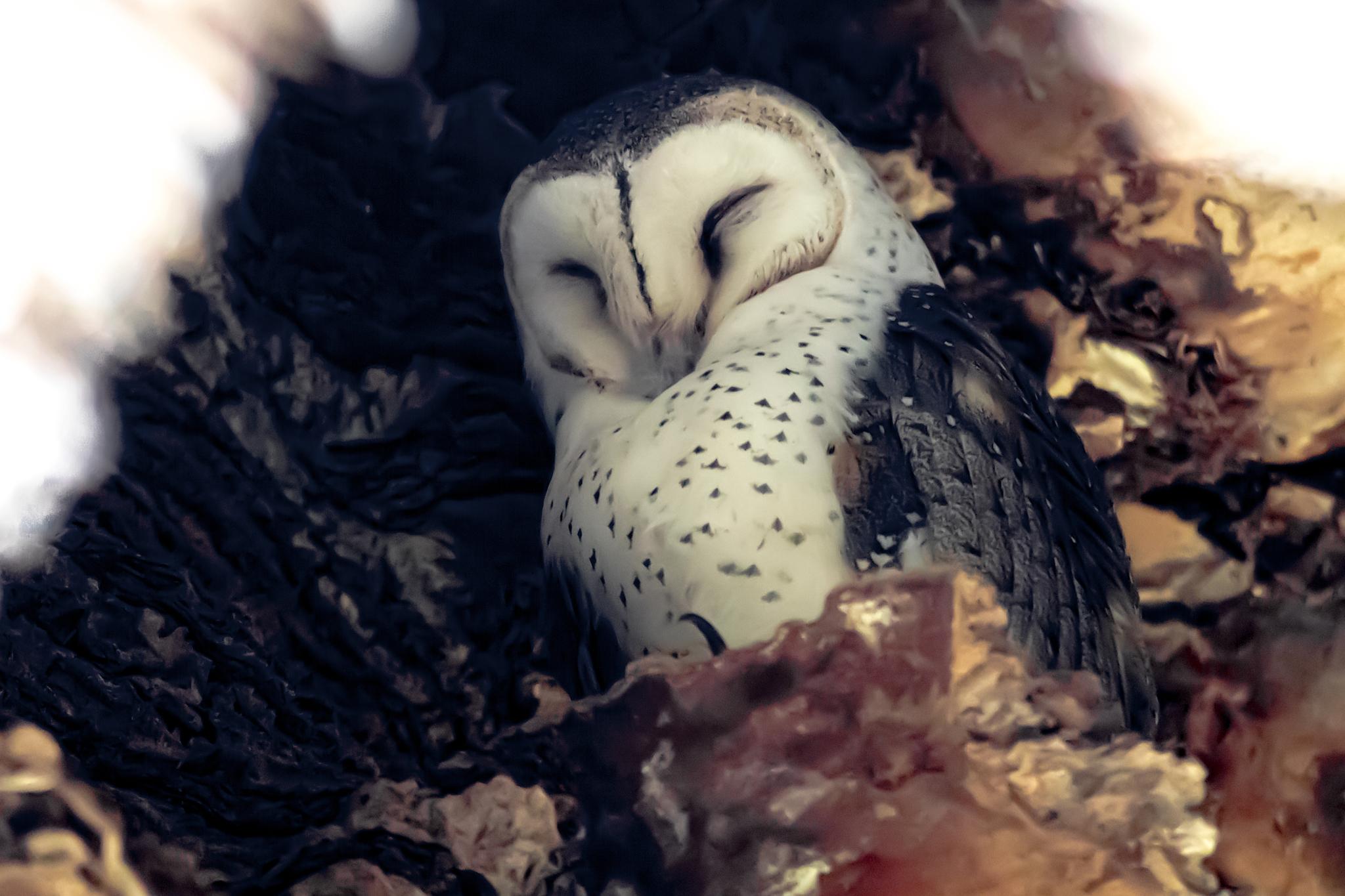 Eastern Barn OwlSomewhere in the dark, something small moves through the grass, and the barn owl above it hears exactly where. Barn owls can pinpoint prey on the ground even in complete darkness, by hearing alone.
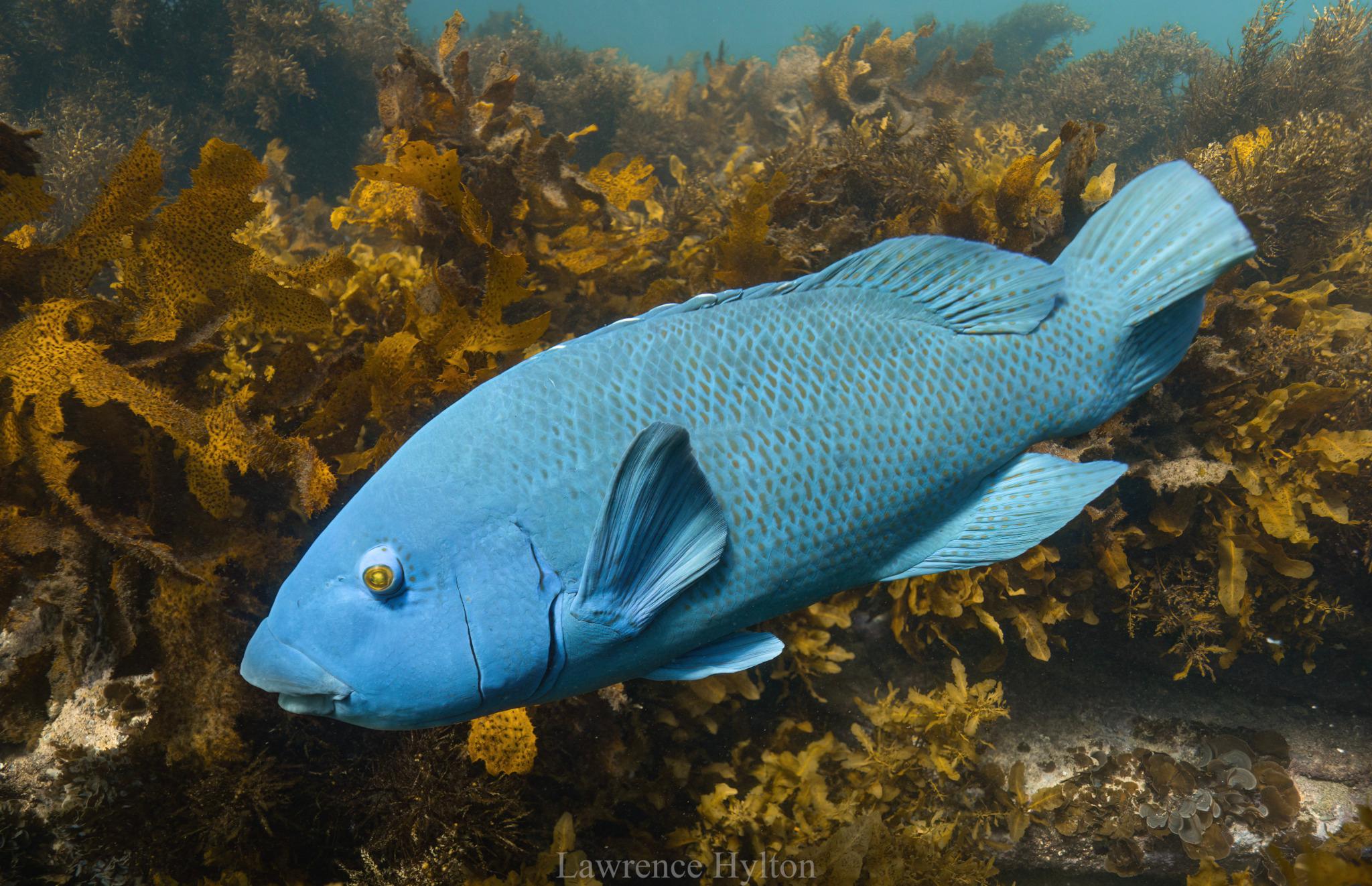 Eastern Blue GroperEvery blue groper starts life as a female. The big blue one in front of you is a male that has changed sex, and most males are at least ten years old.
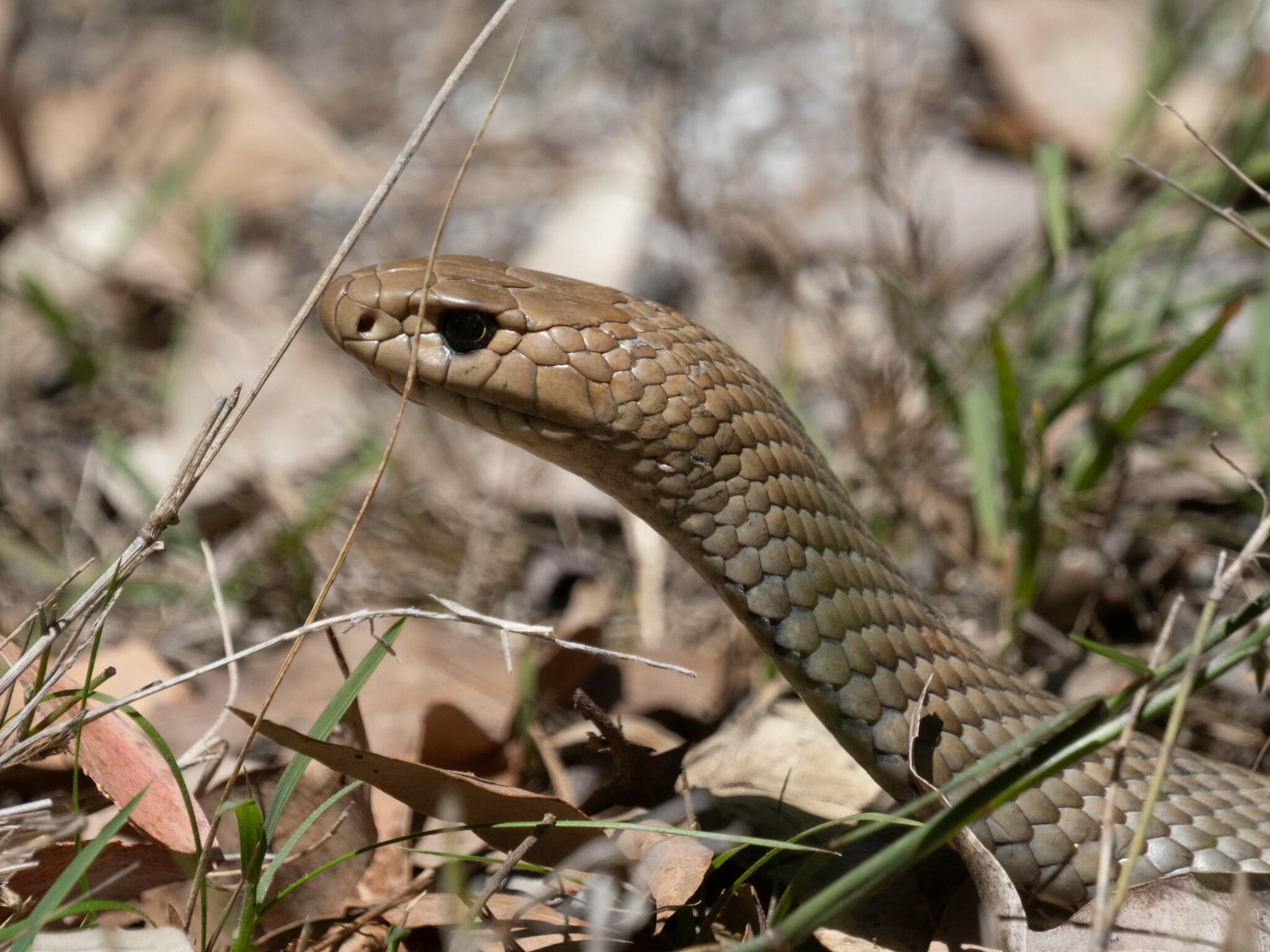 Eastern Brown SnakeEastern brown snakes live in a world of snakes. One of their predators is the mulga snake, itself venomous, and brown snakes appear to be immune to its venom, and to their own.
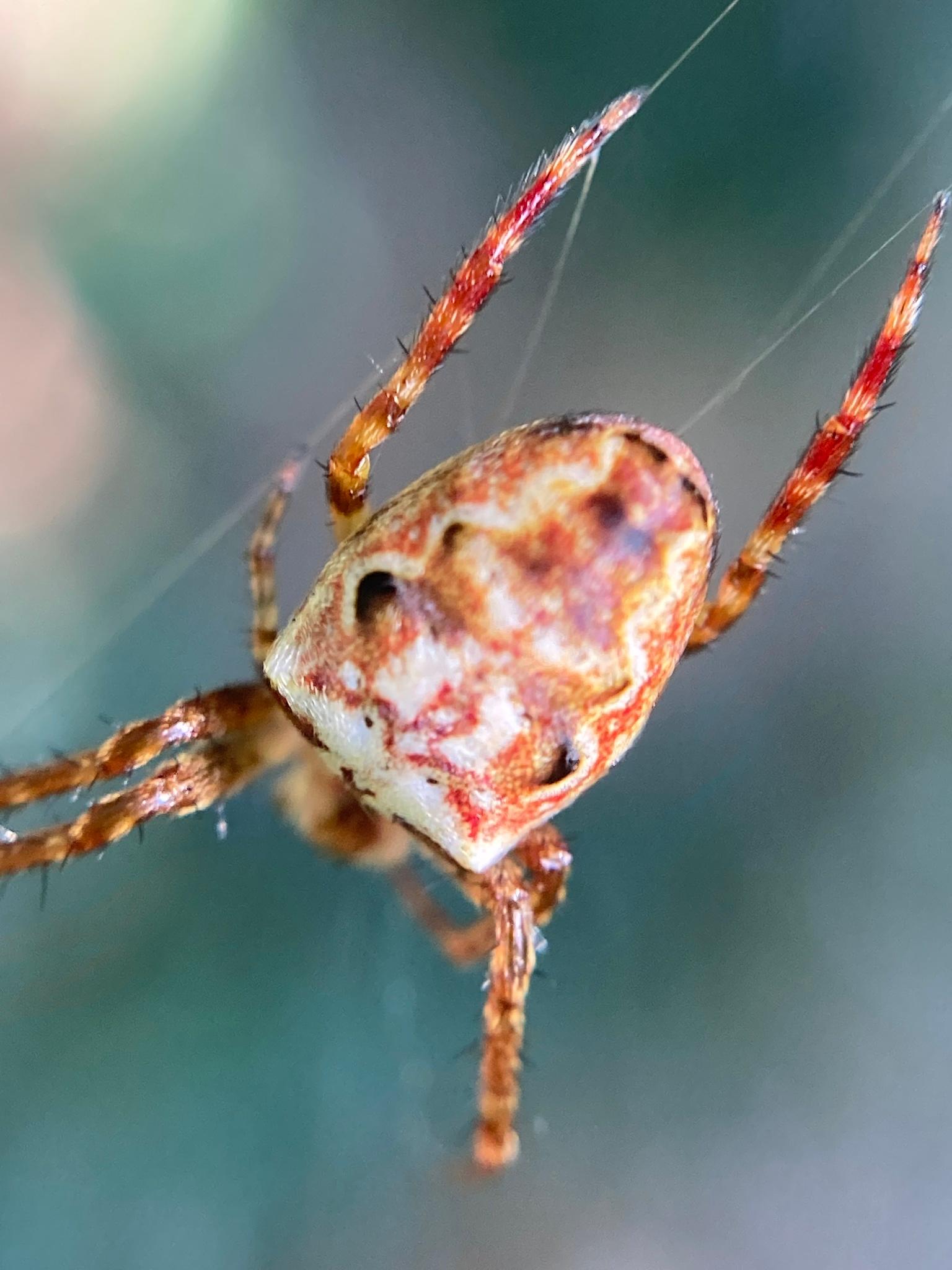 Eastern Bush OrbweaverThis small spider has strung a wheel of silk across a gap, and it's waiting for something to fly into it.
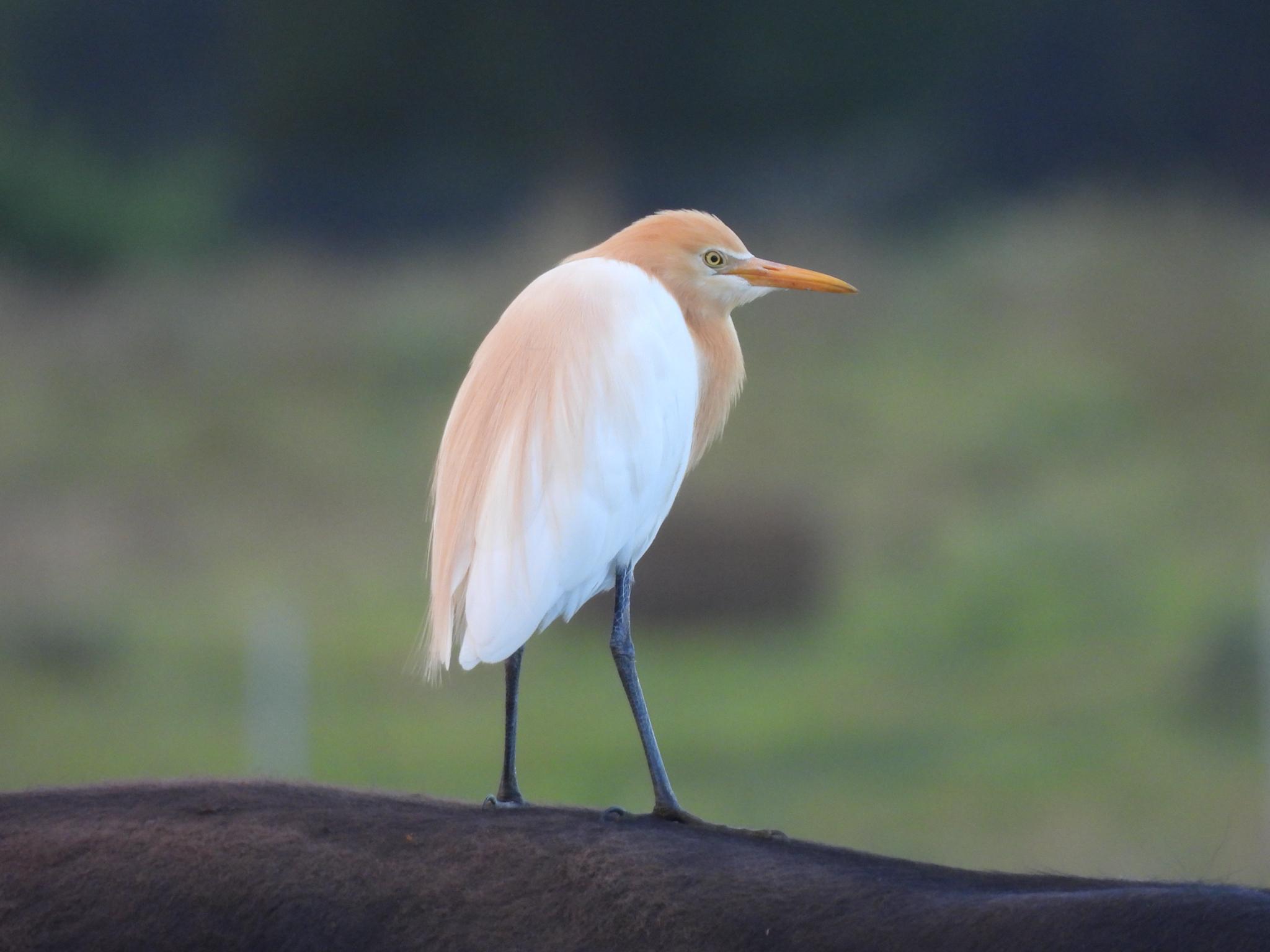 Eastern Cattle-EgretTrue to its name, the cattle egret follows cattle, snapping up the insects and worms their feet stir up. Sometimes it rides on their backs to look out for more.
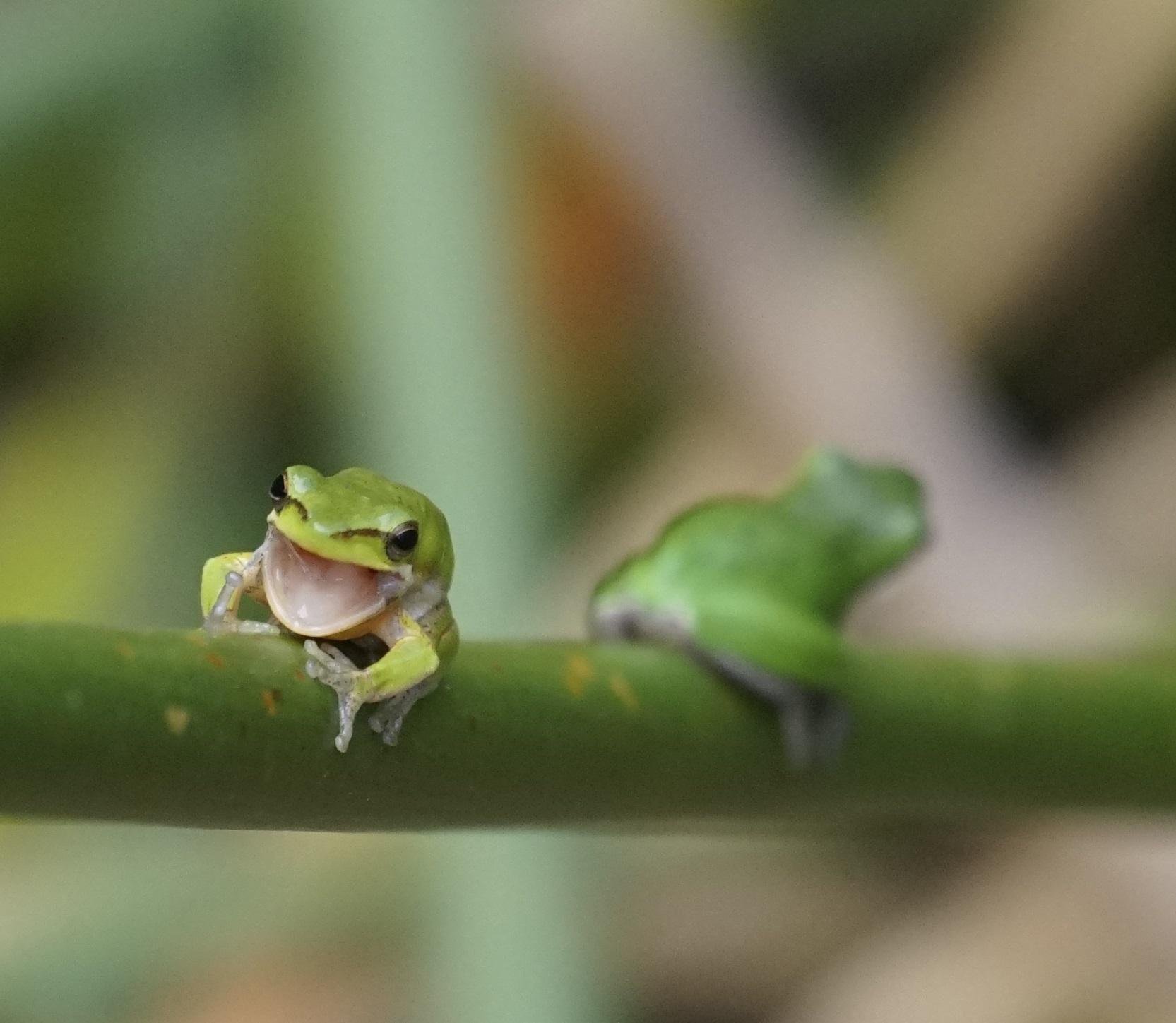 Eastern Dwarf Tree FrogA bright green frog only a couple of centimetres long, sitting out on a leaf in daylight, calling "screeeech-pip-pip". It's one of the great travellers among Australian frogs, and not on its own legs.
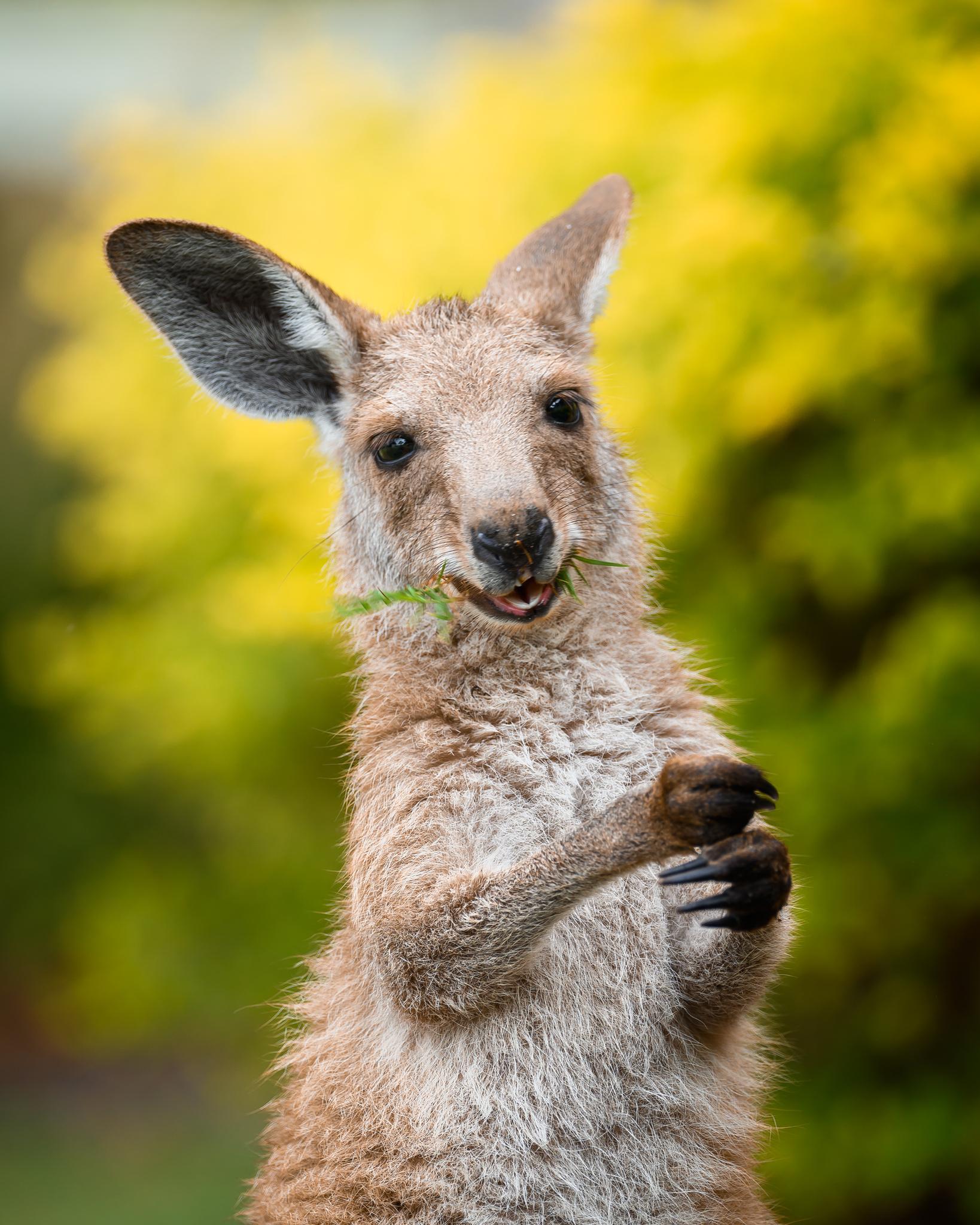 Eastern Grey KangarooMany people picture a joey being born into the pouch. It isn't born there.
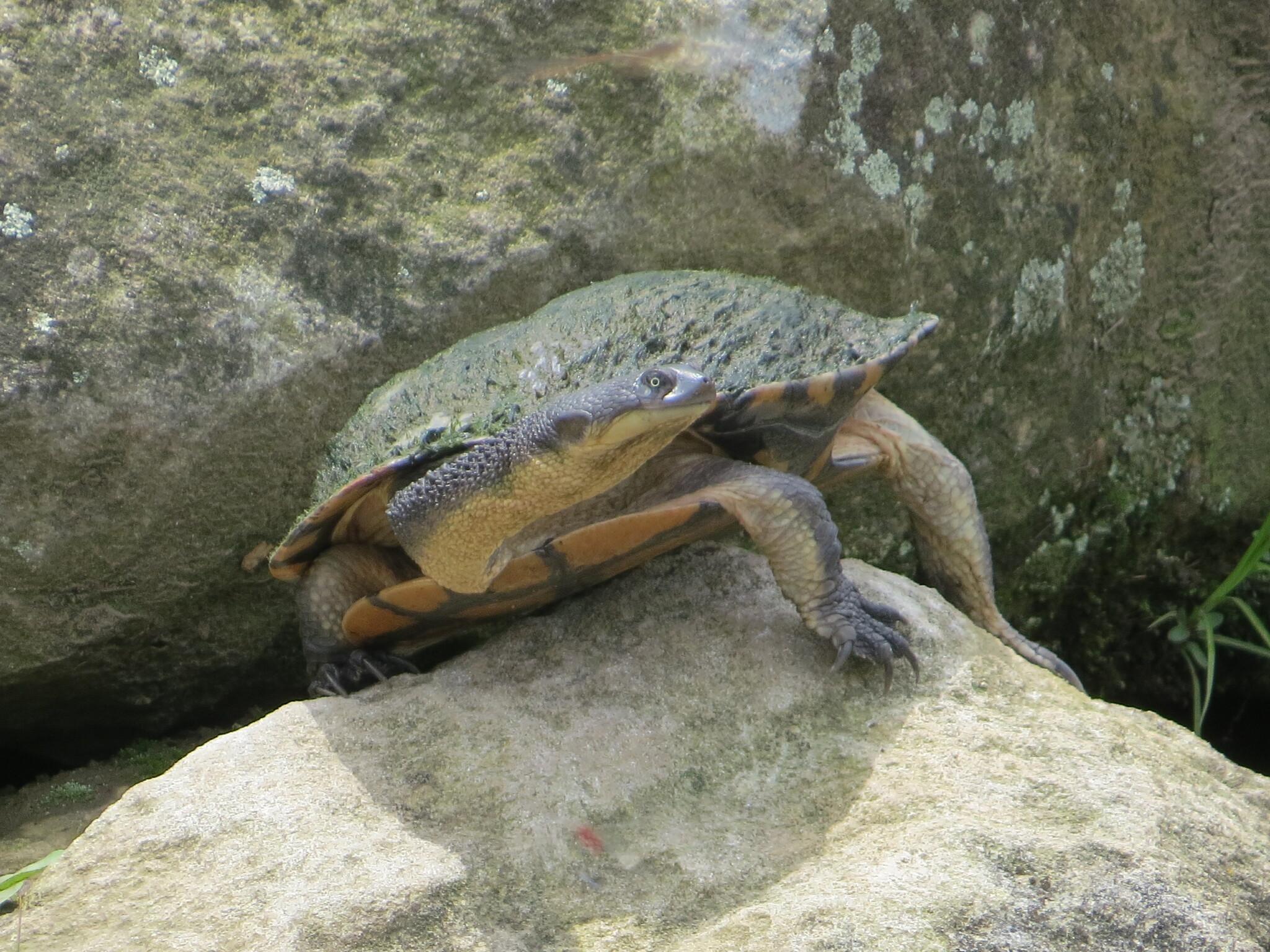 Eastern long-necked turtles crossing roads to lay eggsAn eastern long-necked turtle spends most of its life in water. So when one turns up on a road, it's on a journey: walking overland to find a new waterhole, or a place to nest.
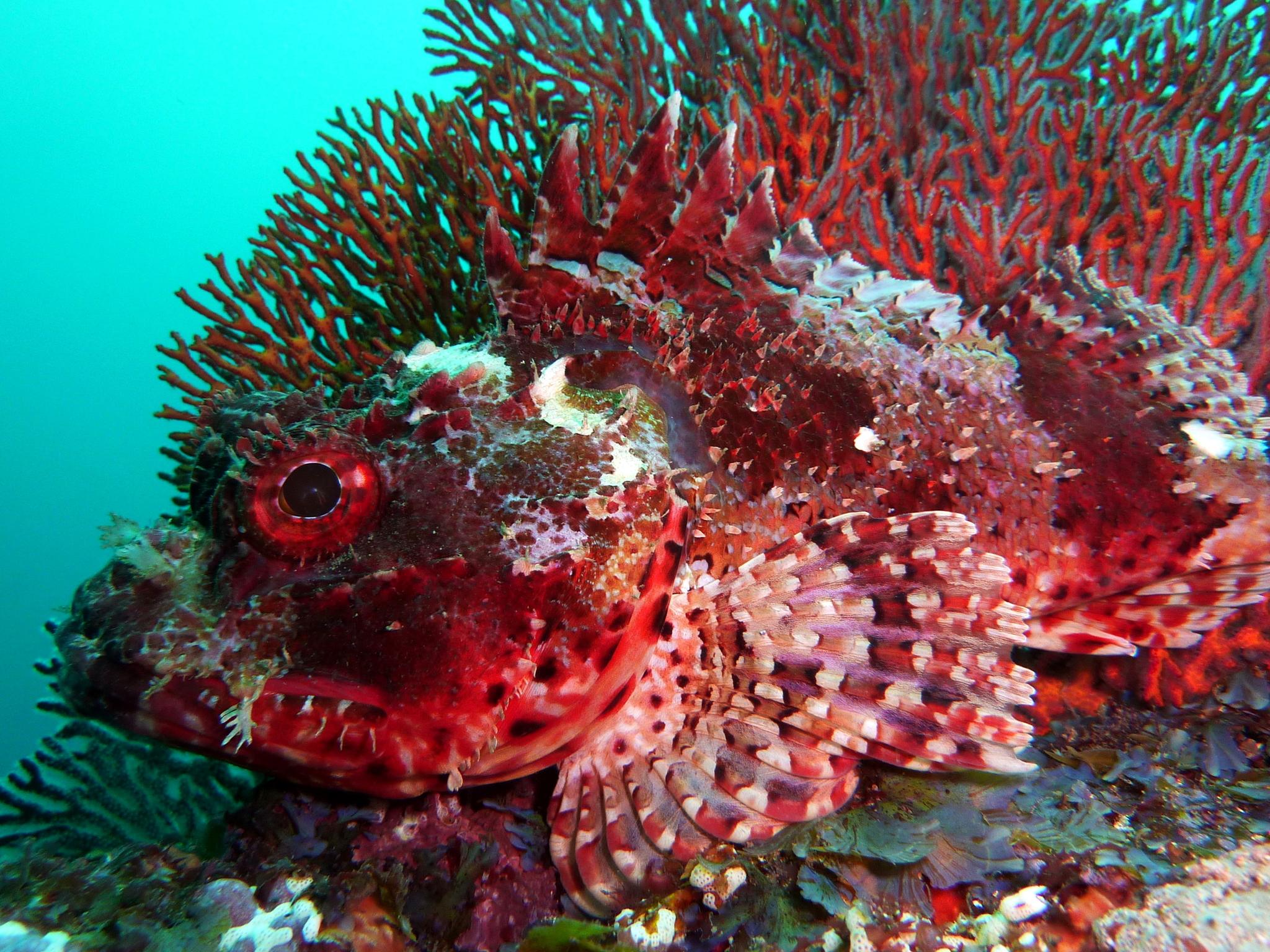 Eastern Red ScorpionfishIt lies motionless on the bottom, moving only when disturbed, waiting for a fish or a crustacean to come within reach of its big mouth. Then it swallows it whole.
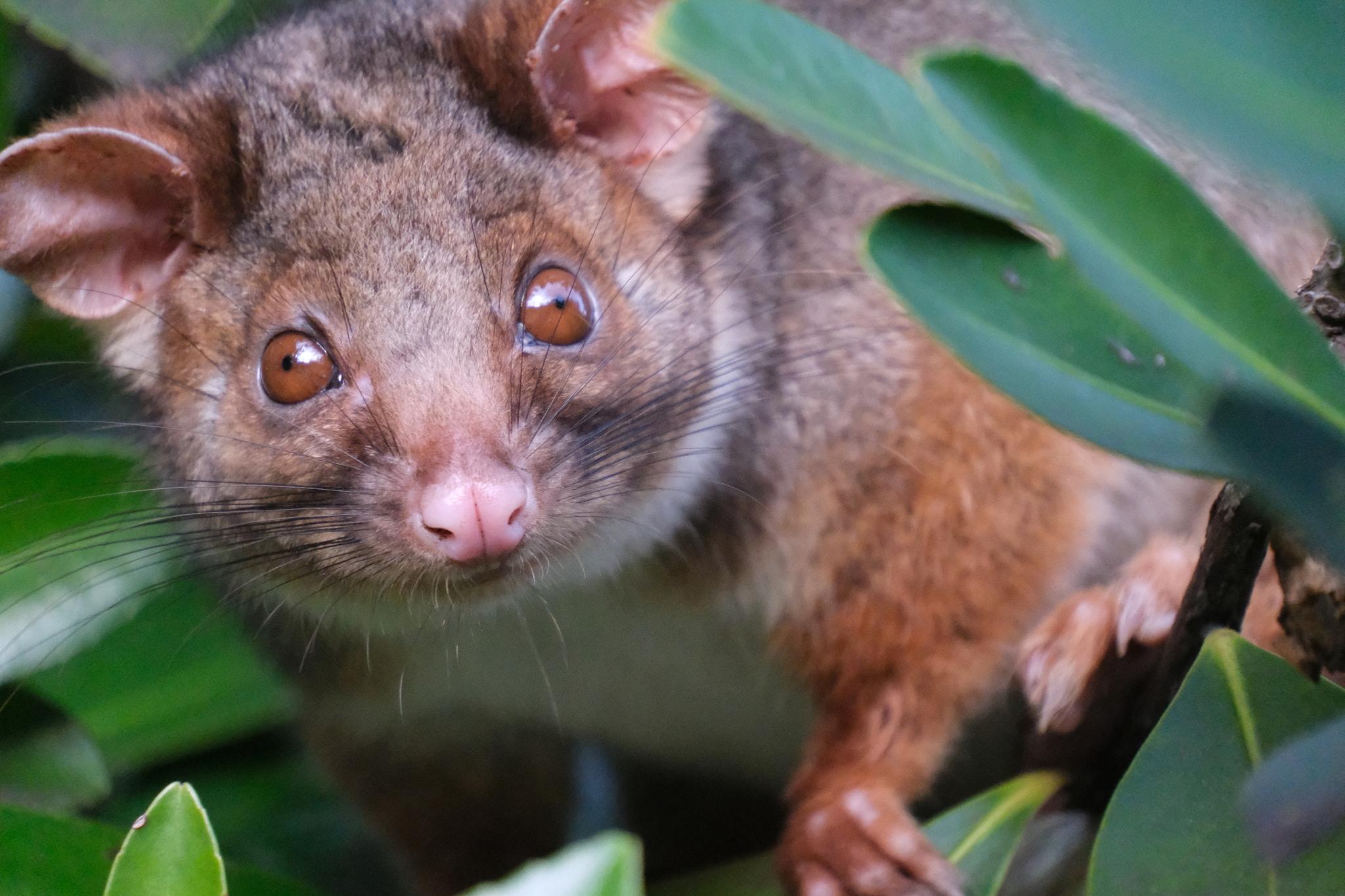 Eastern Ring-tailed PossumA ringtail possum eats every meal twice. It eats its own droppings, so its food goes through a second time, and it gets the most out of every leaf.
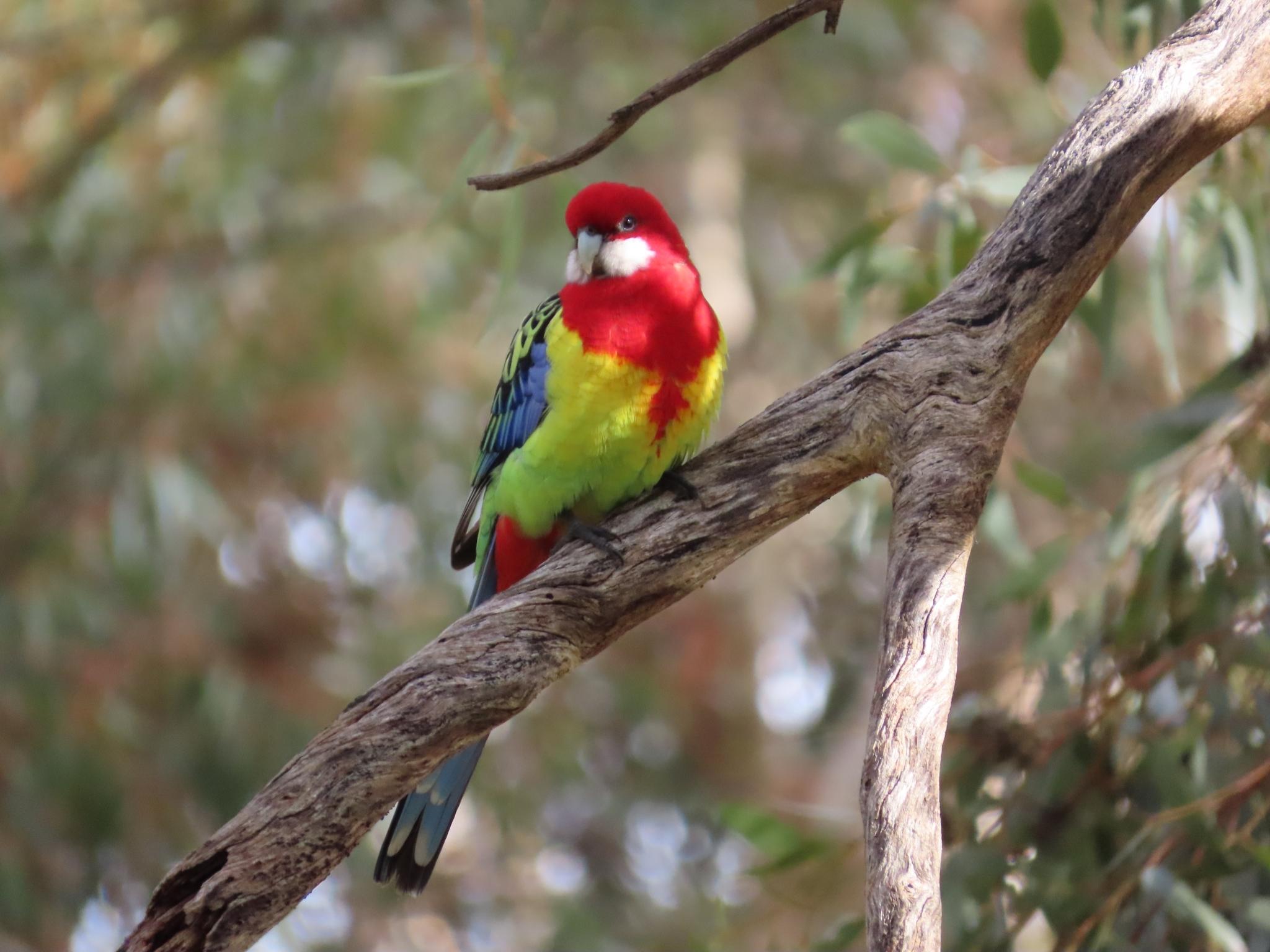 Eastern RosellaWhen an eastern rosella eats, it holds its food in one foot, and usually it's the right. Like you, it has a favourite hand.
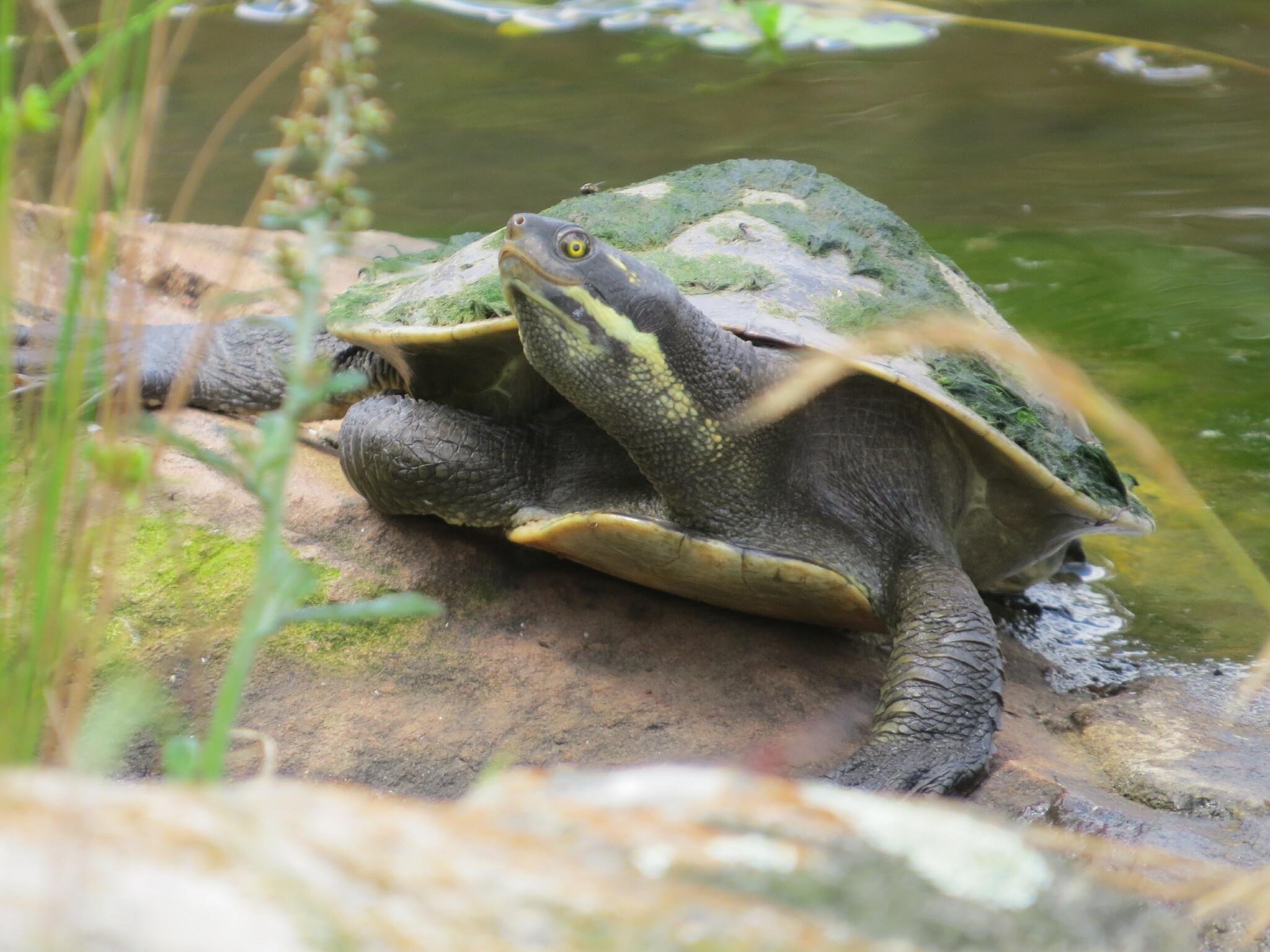 Eastern Short-necked TurtleThe odds against this turtle starting life are brutal. In one study on the Murray River, predators dug up more than 90% of its nests, and introduced foxes were a major cause.
- Eastern Snake-necked TurtleIts neck is about half as long as its shell, and it doesn't pull it straight back in. It folds it sideways, tucked under the edge of the shell.
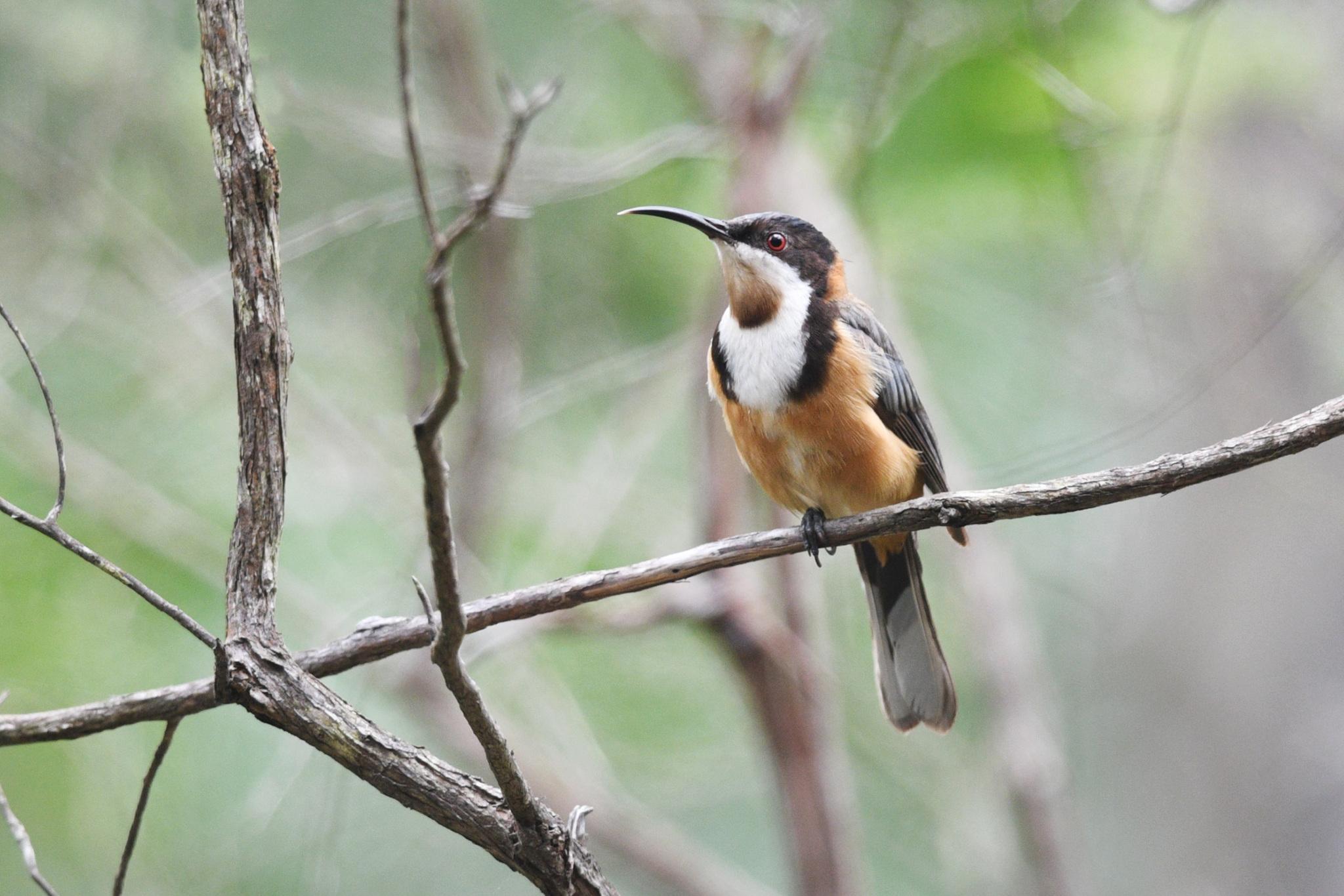 Eastern SpinebillThat small bird hanging in the air in front of a flower, wings a blur, looks like a hummingbird. There are no hummingbirds in Australia.
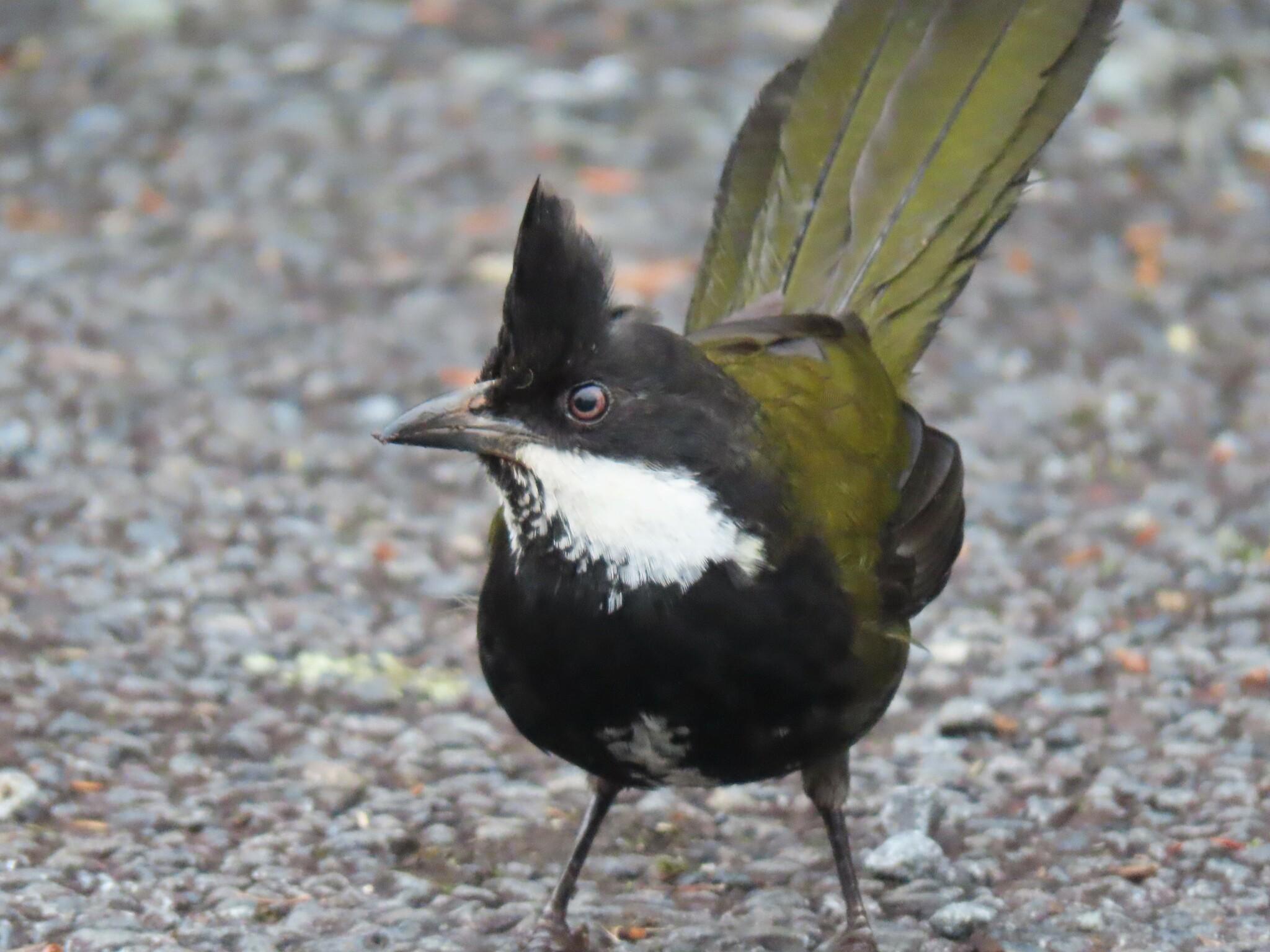 Eastern WhipbirdCrack! And almost before it ends, a sharp "choo-choo".
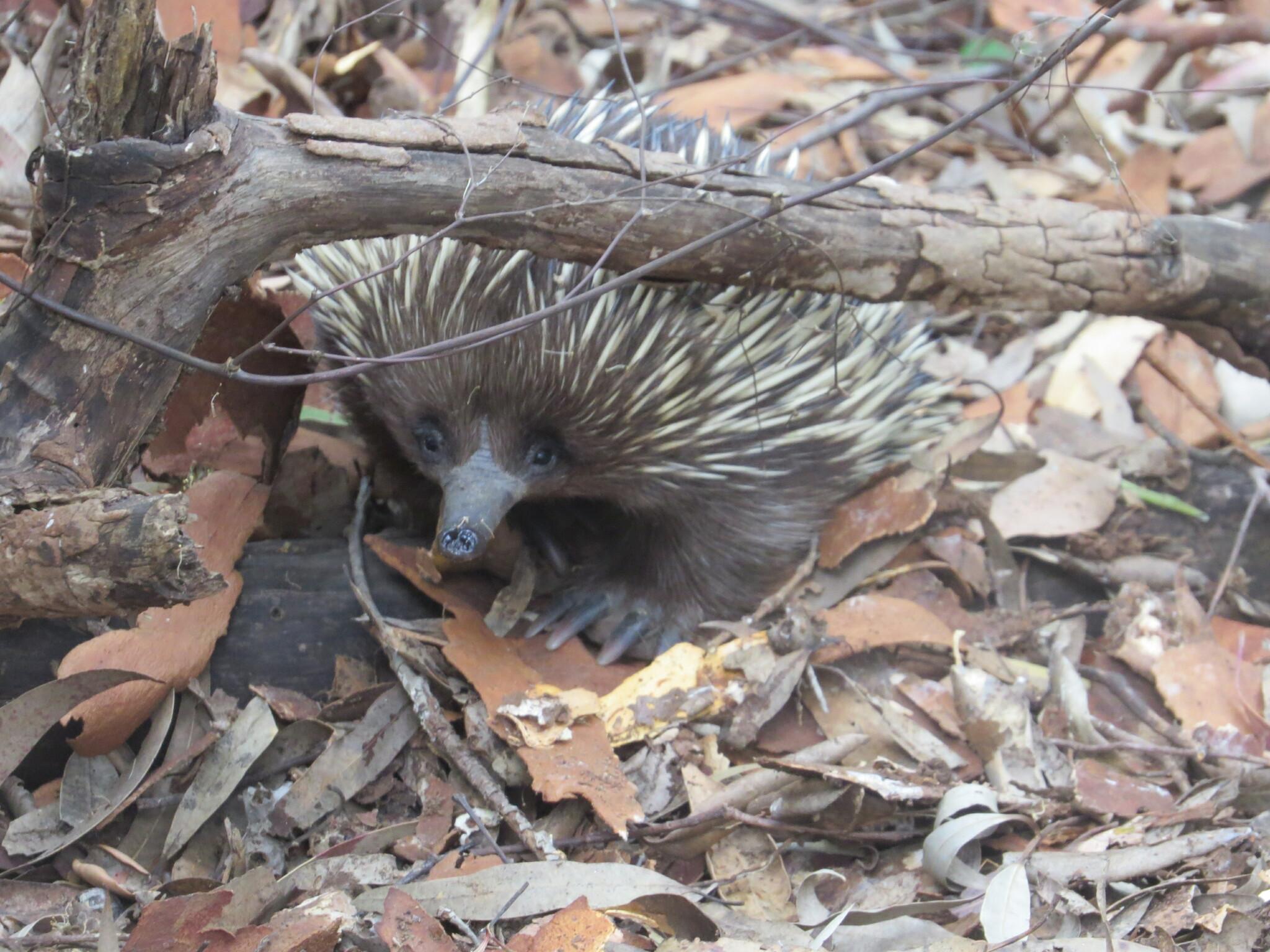 Echidna trains (males following a female)In front of you is a procession: one echidna, and behind it another, and another, nose to tail. The one in front is a female.
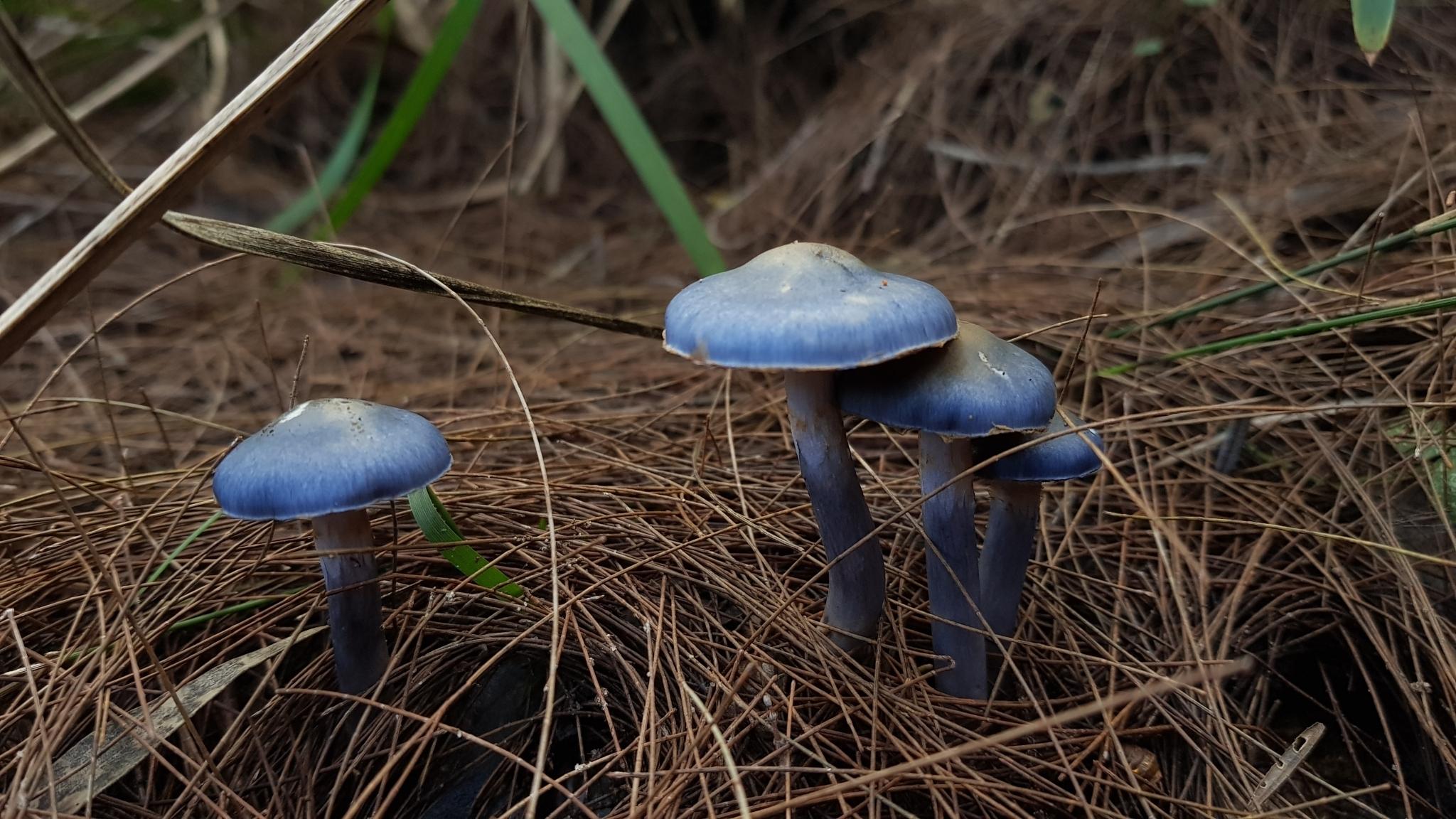 Elegant blue webcapThe elegant blue webcap is about as blue as a mushroom gets. But the mushroom is only the part that shows.
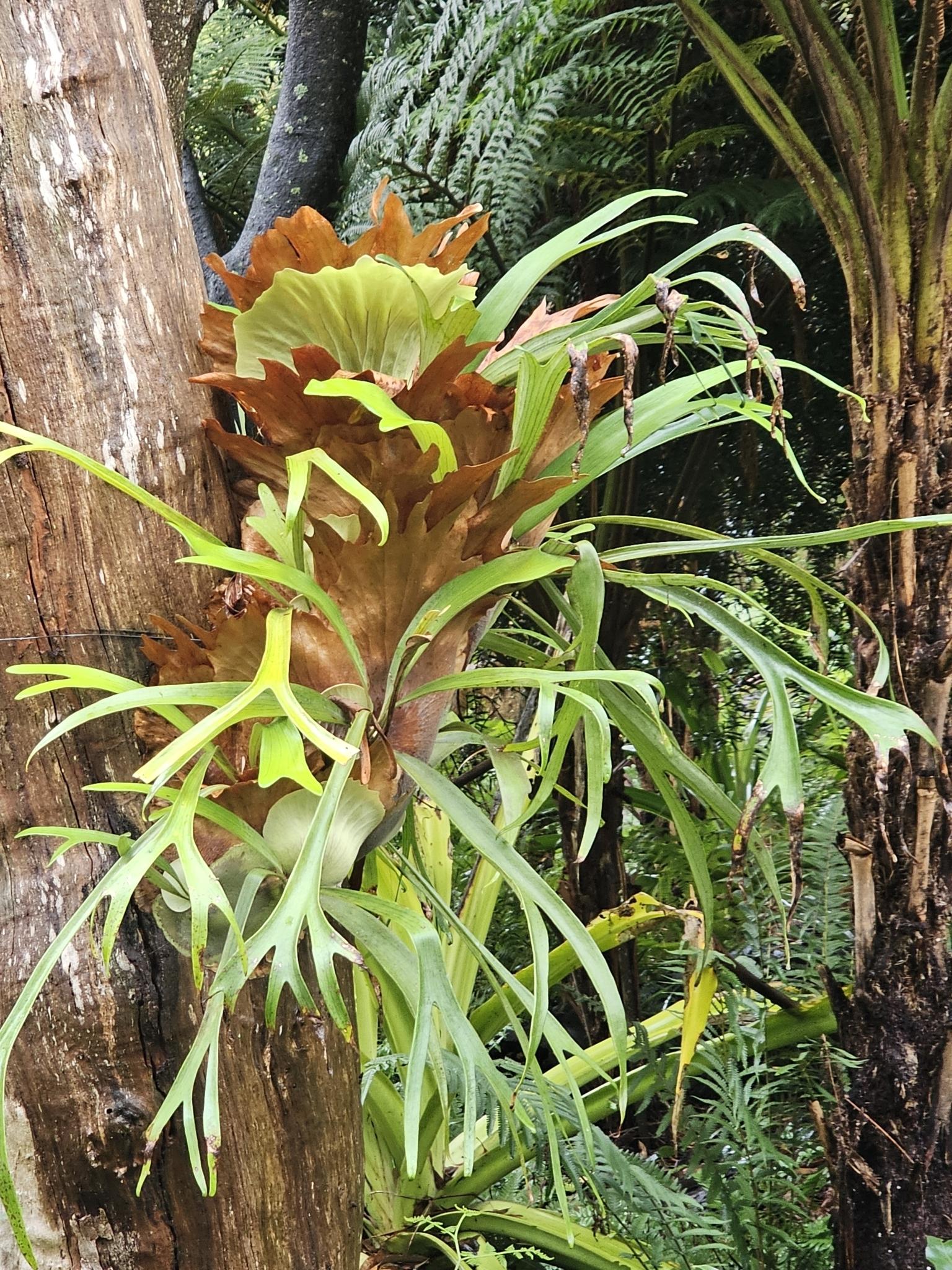 Elkhorn fernAn elkhorn clump high on a trunk looks like one plant. It's usually a colony, and it works as a team.
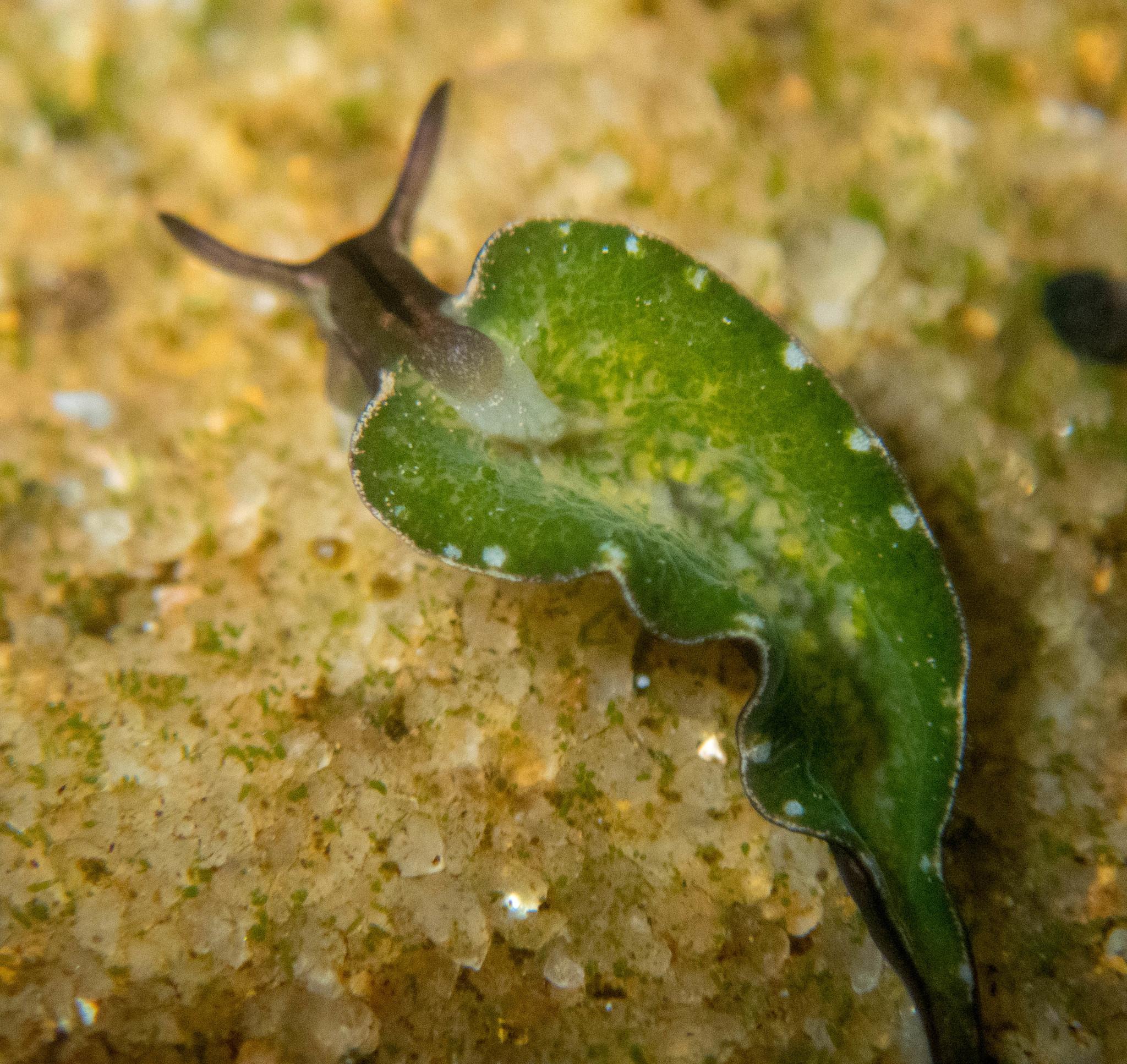 Elysia coodgeensisThis small sea slug seems to carry a Sydney beach in its name: *coodgeensis*, after Coogee. It's a sap-sucker, one of the sea slugs that pierce seaweed and drink its juice.
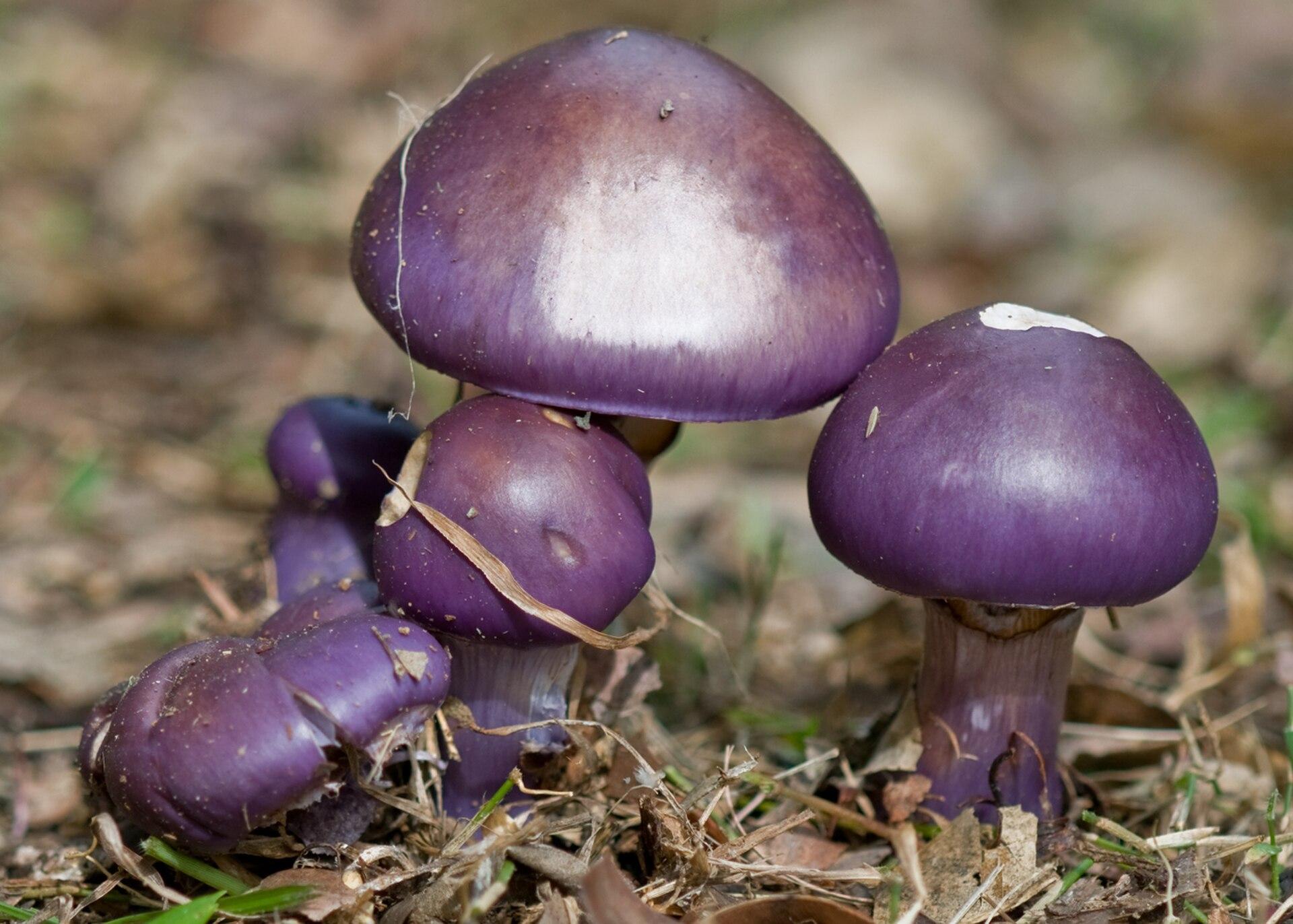 Emperor CortinarThis mushroom is named as one of the textbook examples of fungi that live wrapped around tree roots. Its threads form a dense sheath around young roots, trading water and soil nutrients for the tree's sugars.
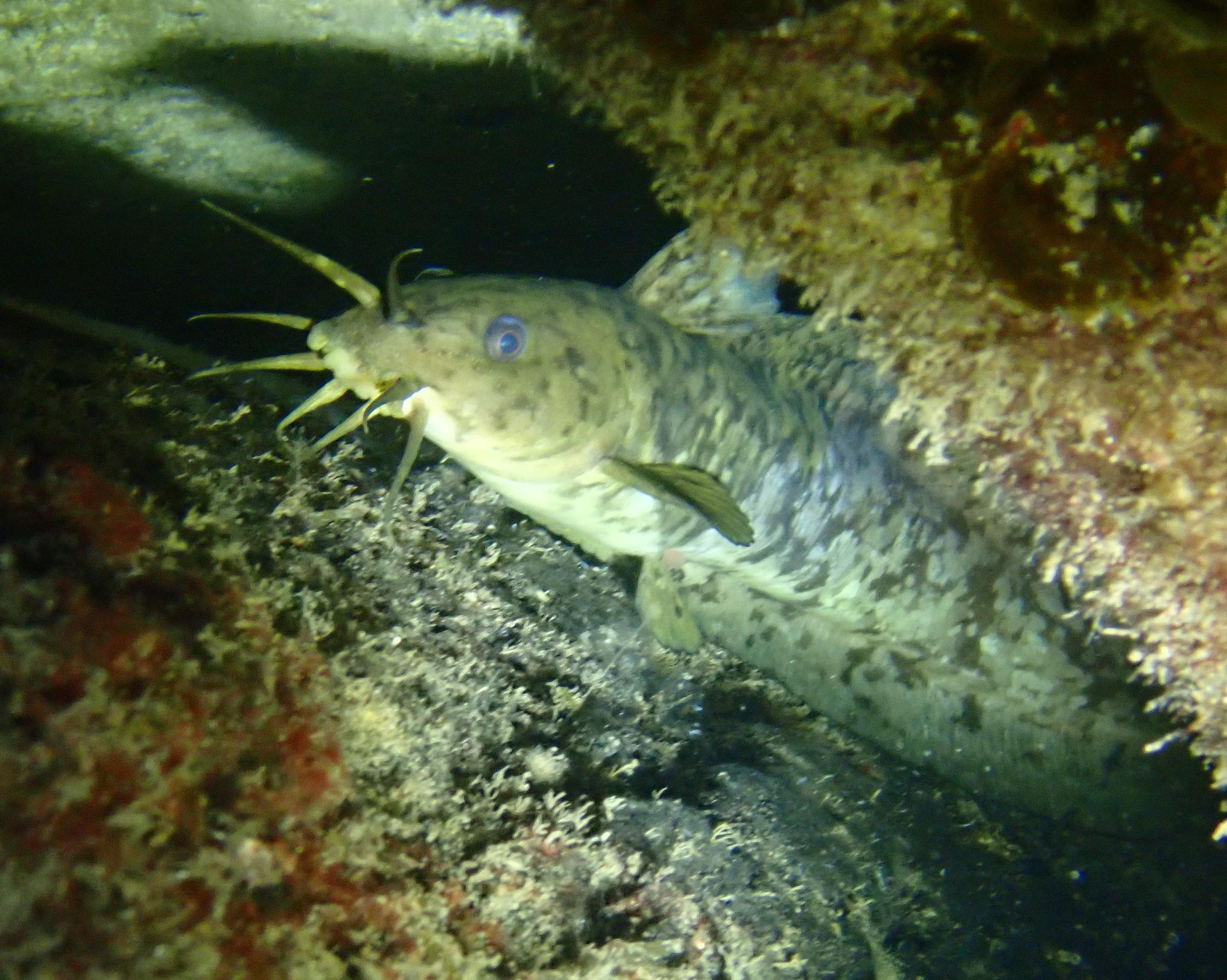 Estuary CobblerThe estuary cobbler is an eel-tailed catfish, armed. Its fin spines are serrated, with a venom gland at the base.
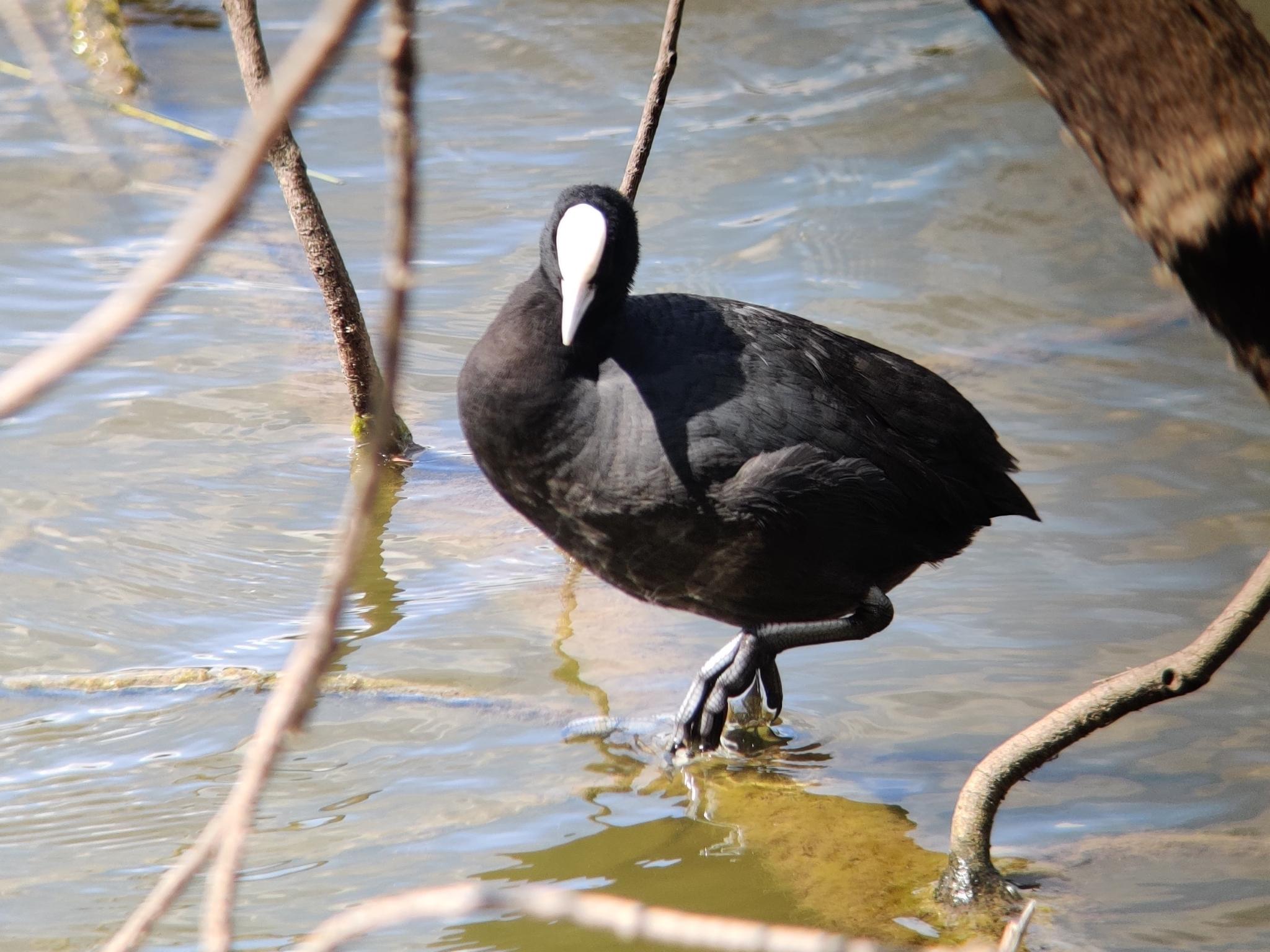 Eurasian CootBefore it dives, a coot can squeeze the air out of its feathers. With less air holding it up, it can dive deeper and stay down longer: up to 15 seconds, as deep as 7 metres.
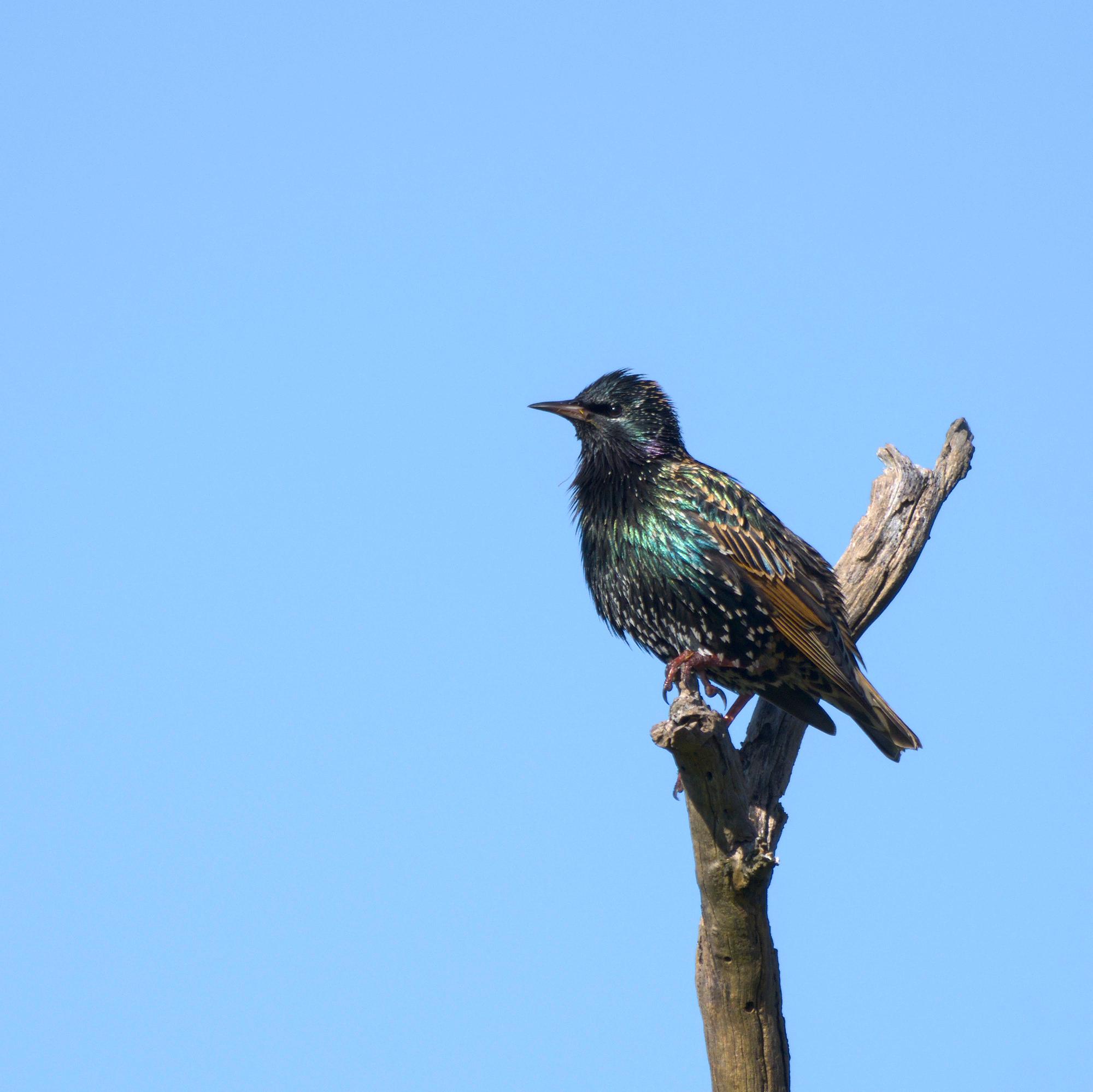 European StarlingAt dusk, a flock of starlings wheels in large circles over the suburb, looking for somewhere to spend the night. They're not from here.
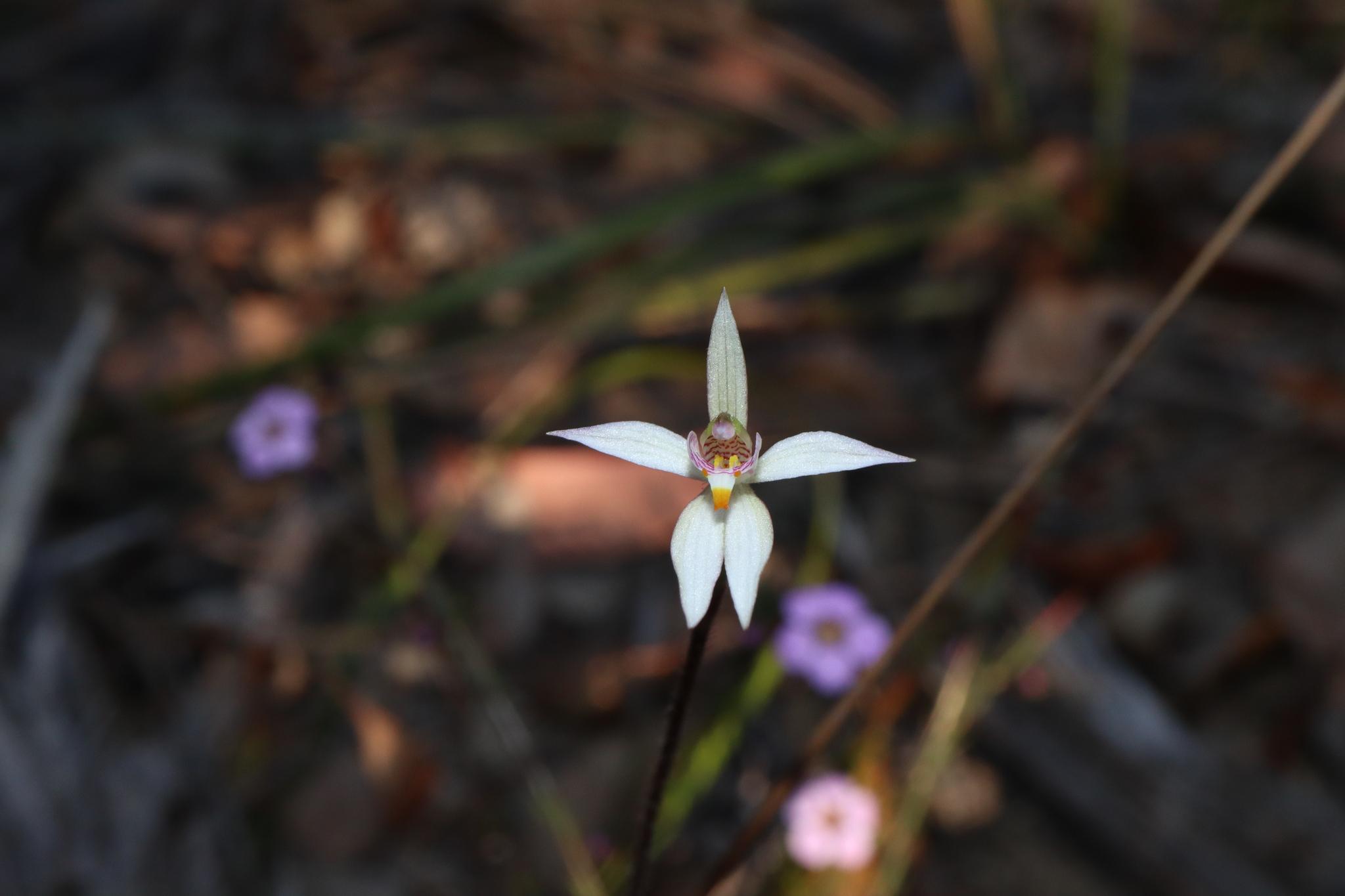 Fairy orchidA fairy orchid flower doesn't last. Its white or pink flowers are short-lived, out in spring and soon gone.
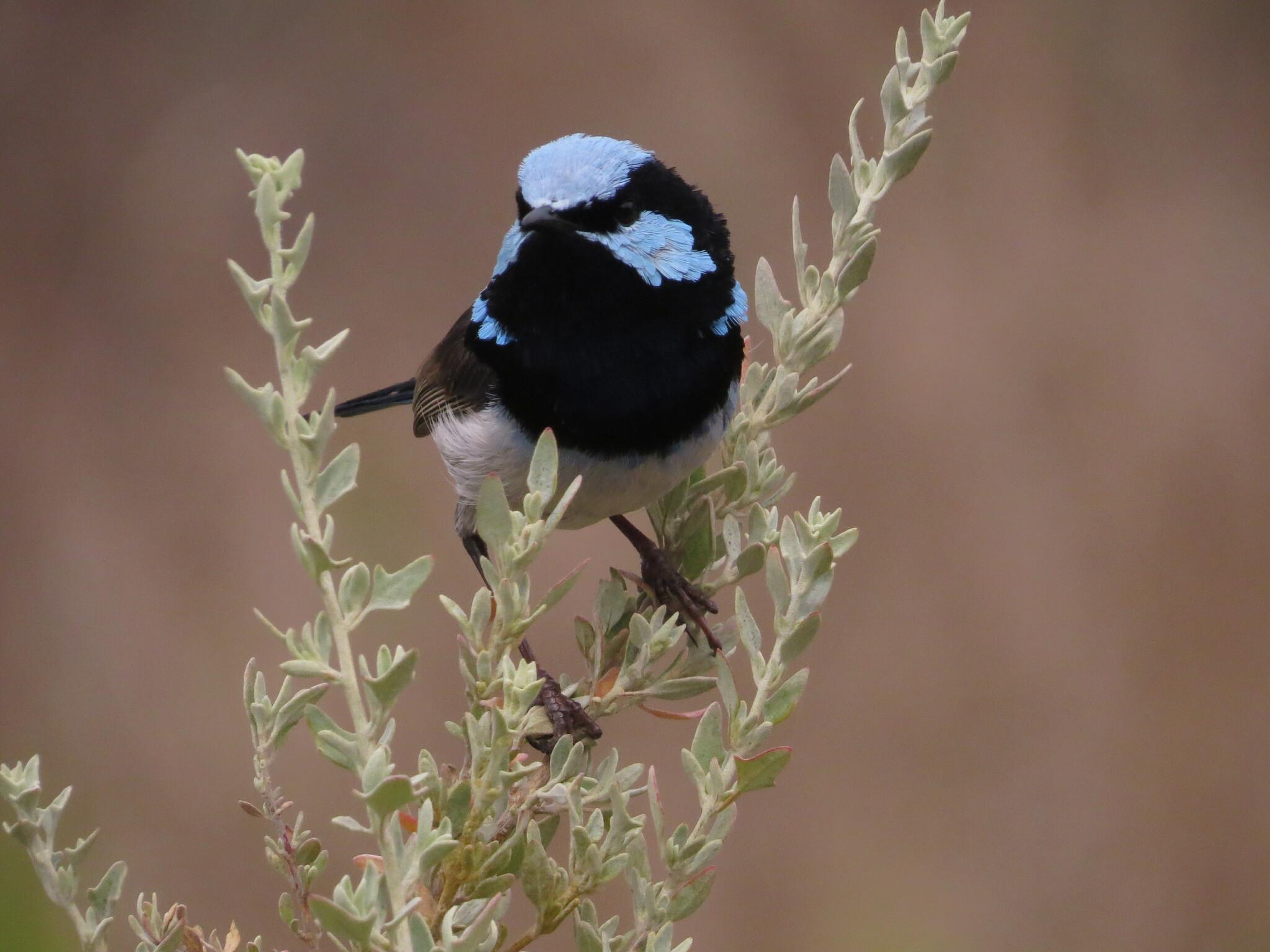 Fairy-wren males turning electric blue for breedingThe moment he turns electric blue, he starts visiting the females in the neighbouring territories, often months before breeding begins.
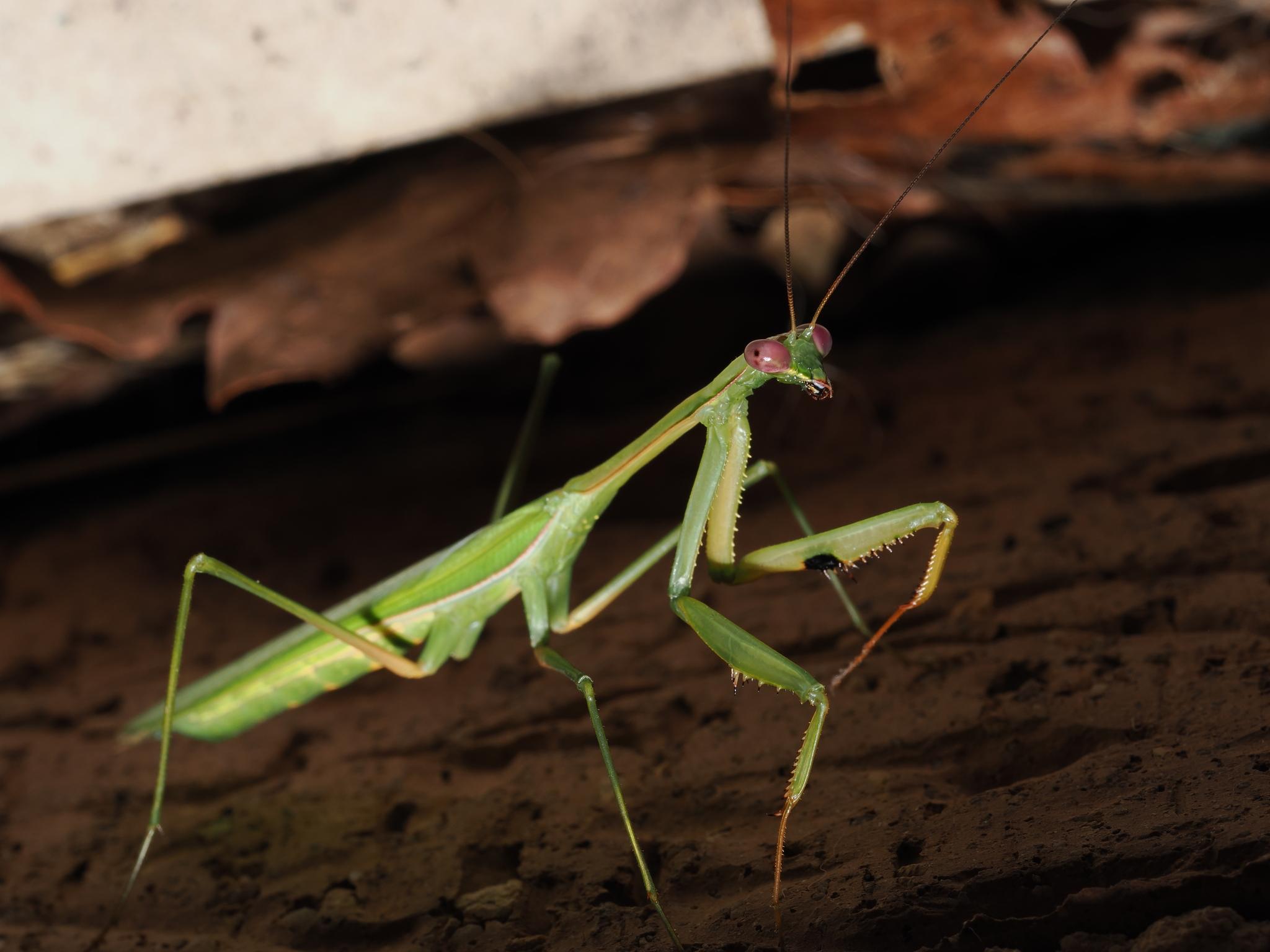 False Garden MantisFor a male false garden mantis, choosing a mate is a gamble with his life. Females that eat their mates gain condition and lay more eggs, so for her a male is both a partner and a meal.
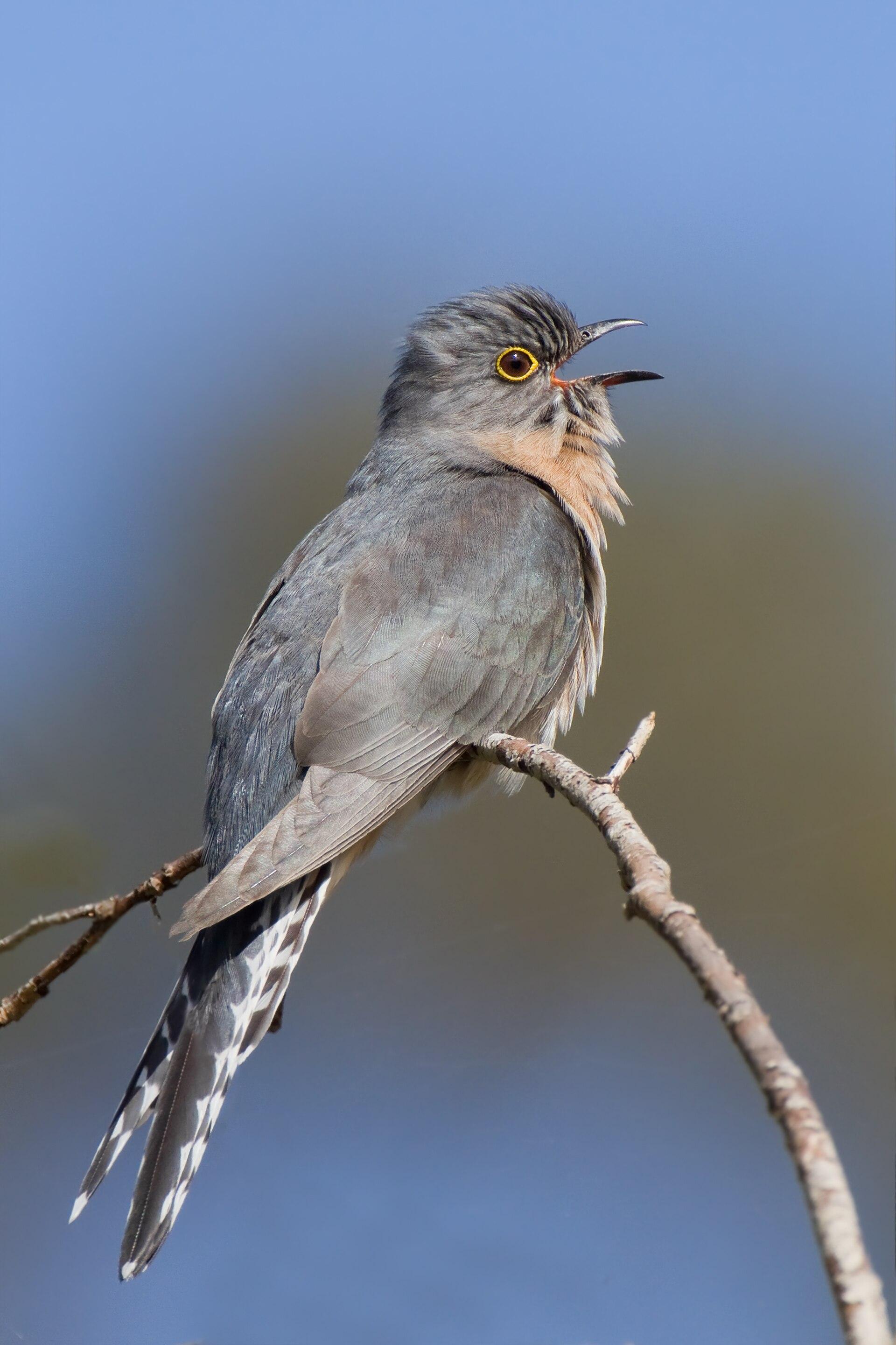 Fan-tailed CuckooThe female fan-tailed cuckoo lays a single egg in a small bird's nest, often a brown thornbill's, and takes away one of the host's own eggs. Her chick usually hatches first and pushes out the other eggs or chicks.
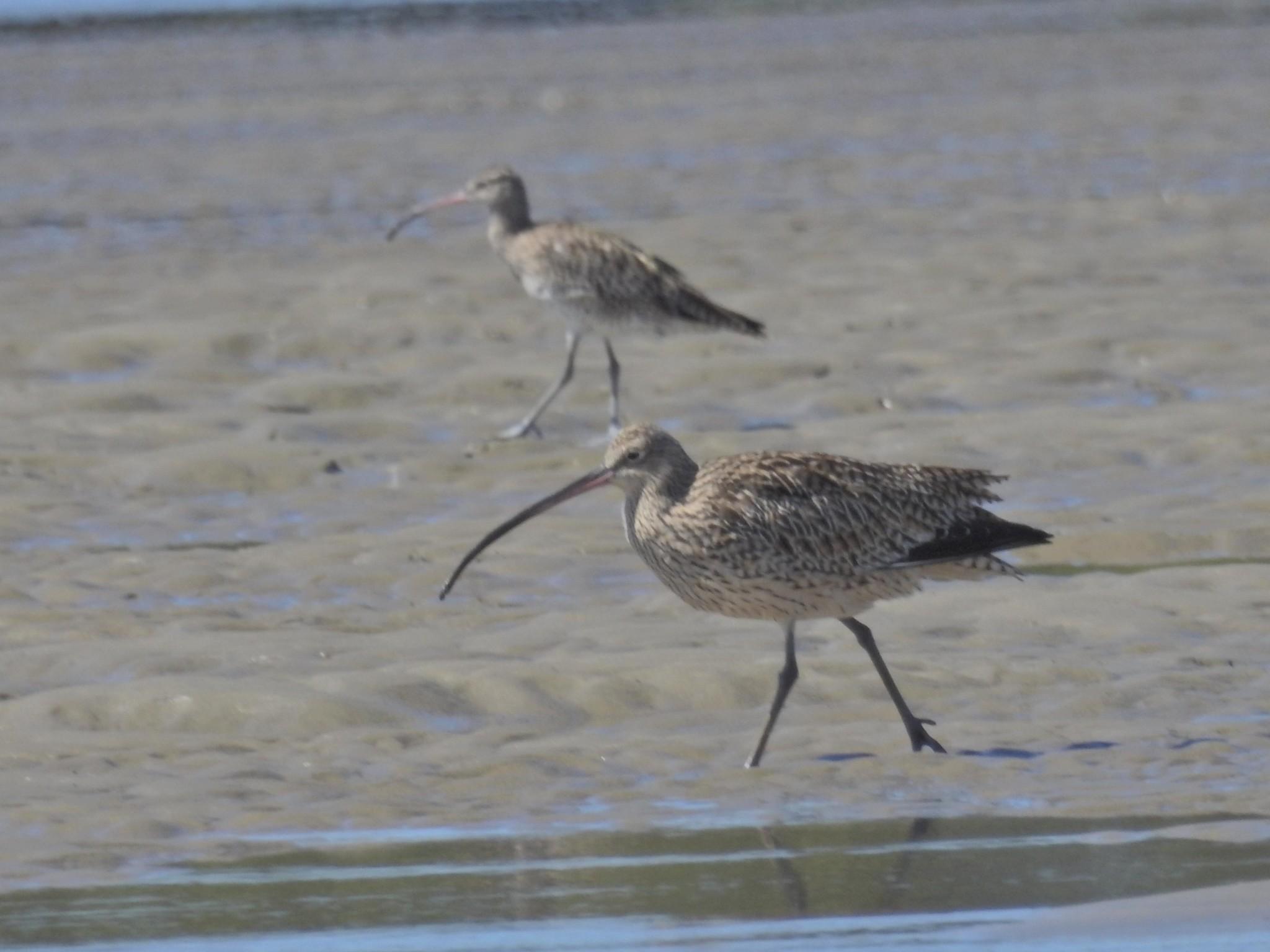 Far Eastern CurlewThis is the largest wader that visits Australia, and it carries the longest tool: a down-curved bill that in females averages 185 mm, longer than the male's.
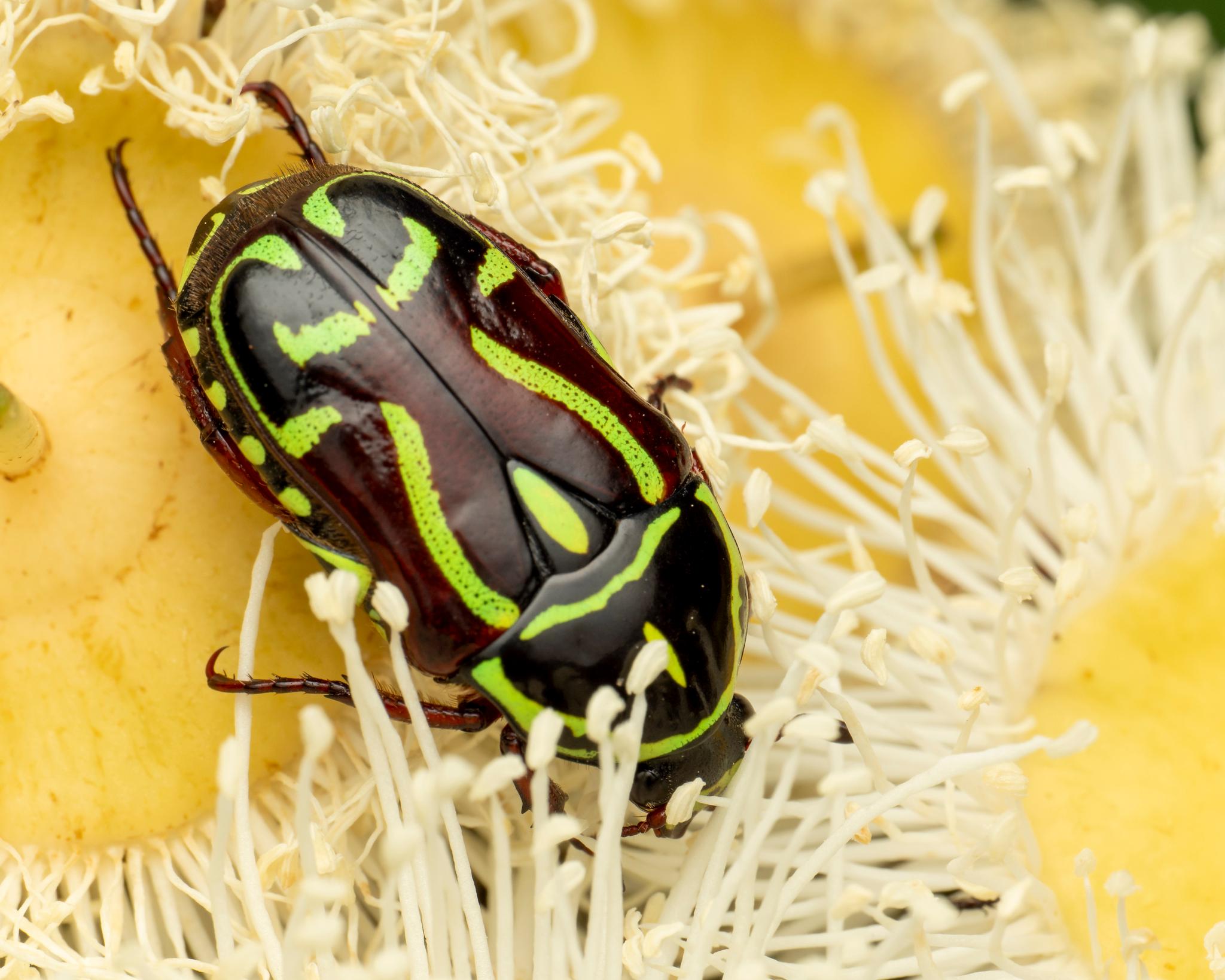 Fiddler BeetleThe fiddler beetle on that flower spent its childhood inside a dead tree. As a grub it lived in a rotting log, eating the timber, then built itself a cocoon of soil and debris and came out as this.
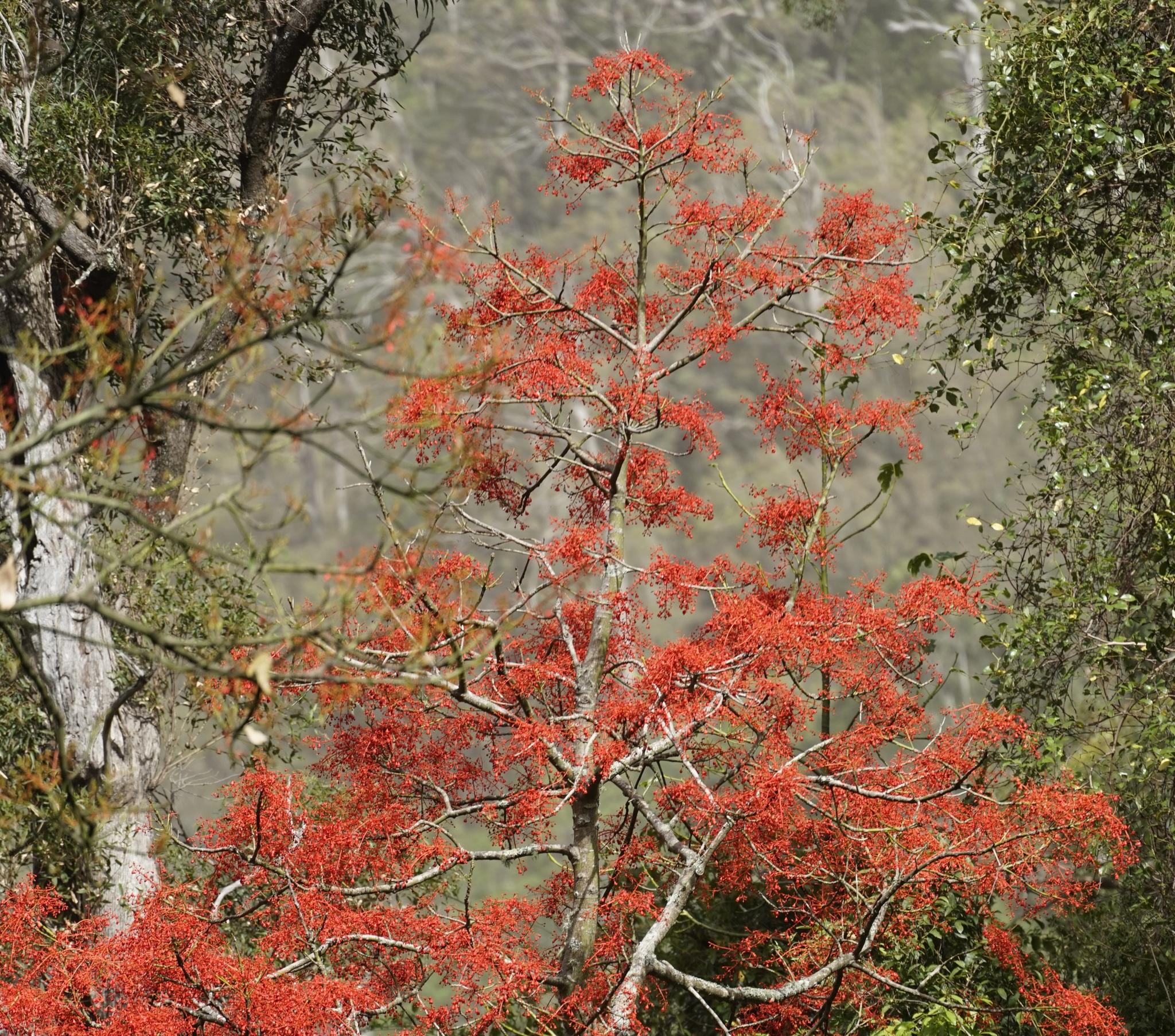 Flame treeIn spring the flame tree drops its leaves and flowers on bare branches, so the whole crown turns coral-red. In the subtropical rainforest where it grows wild, it can reach 35 m.
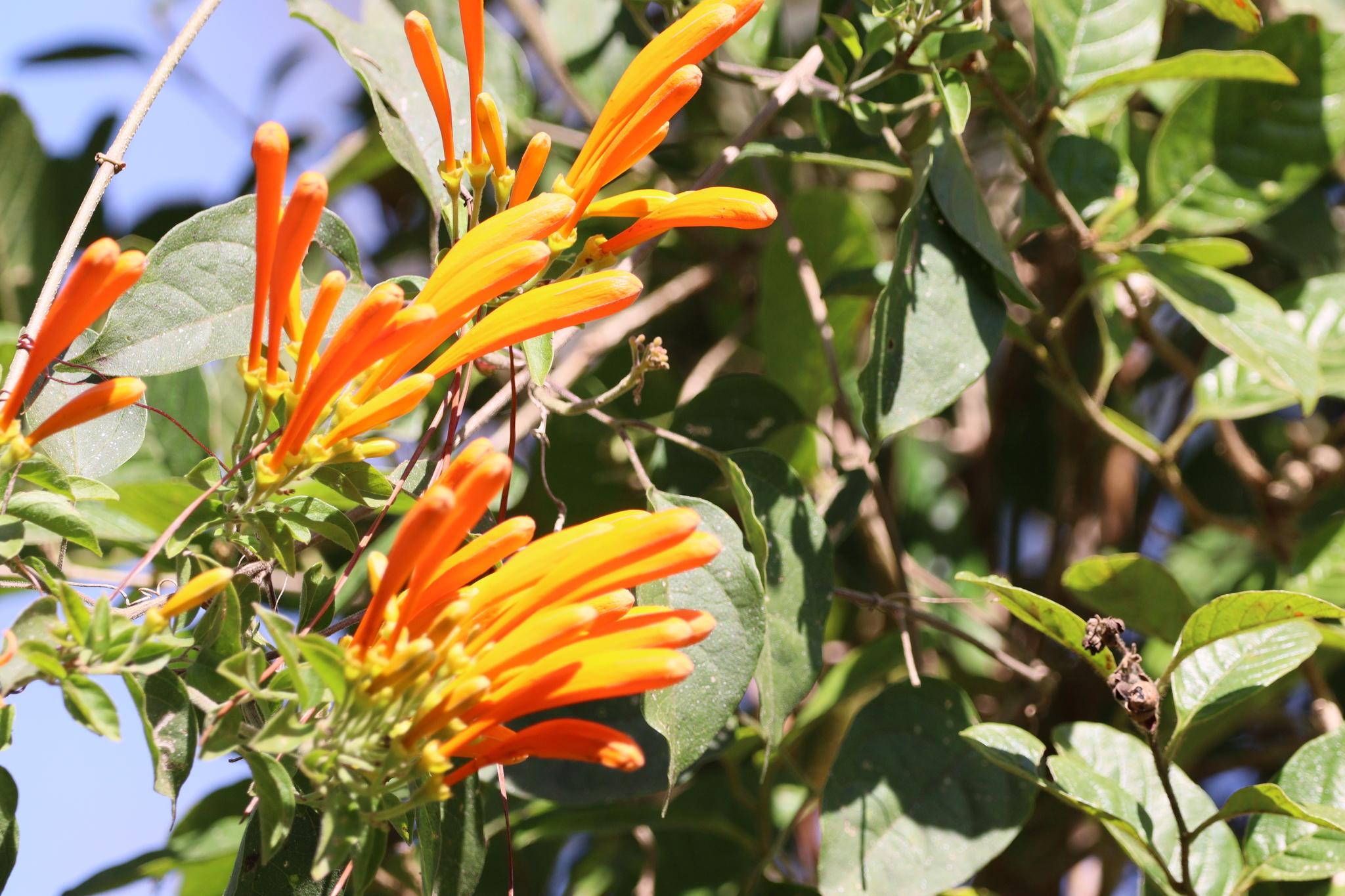 Flame vineEvery one of these orange trumpets is made for a hummingbird. In South America, where this vine comes from, hummingbirds pollinate it.
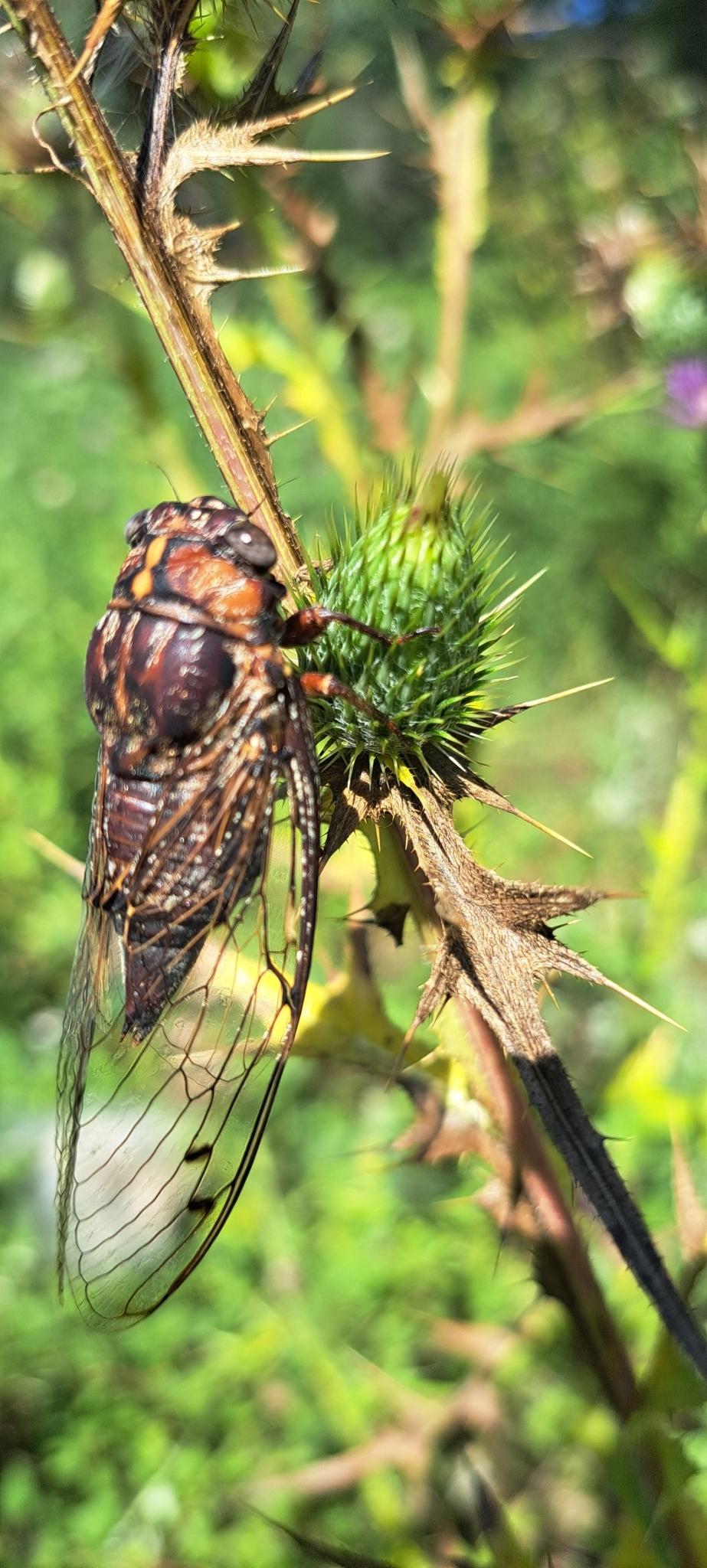 Floury BakerGreen grocer, black prince, razor grinder, redeye, floury baker. Sydney's cicadas have names that sound like a street from another century: a shopkeeper, a royal, a knife-grinder, a baker.
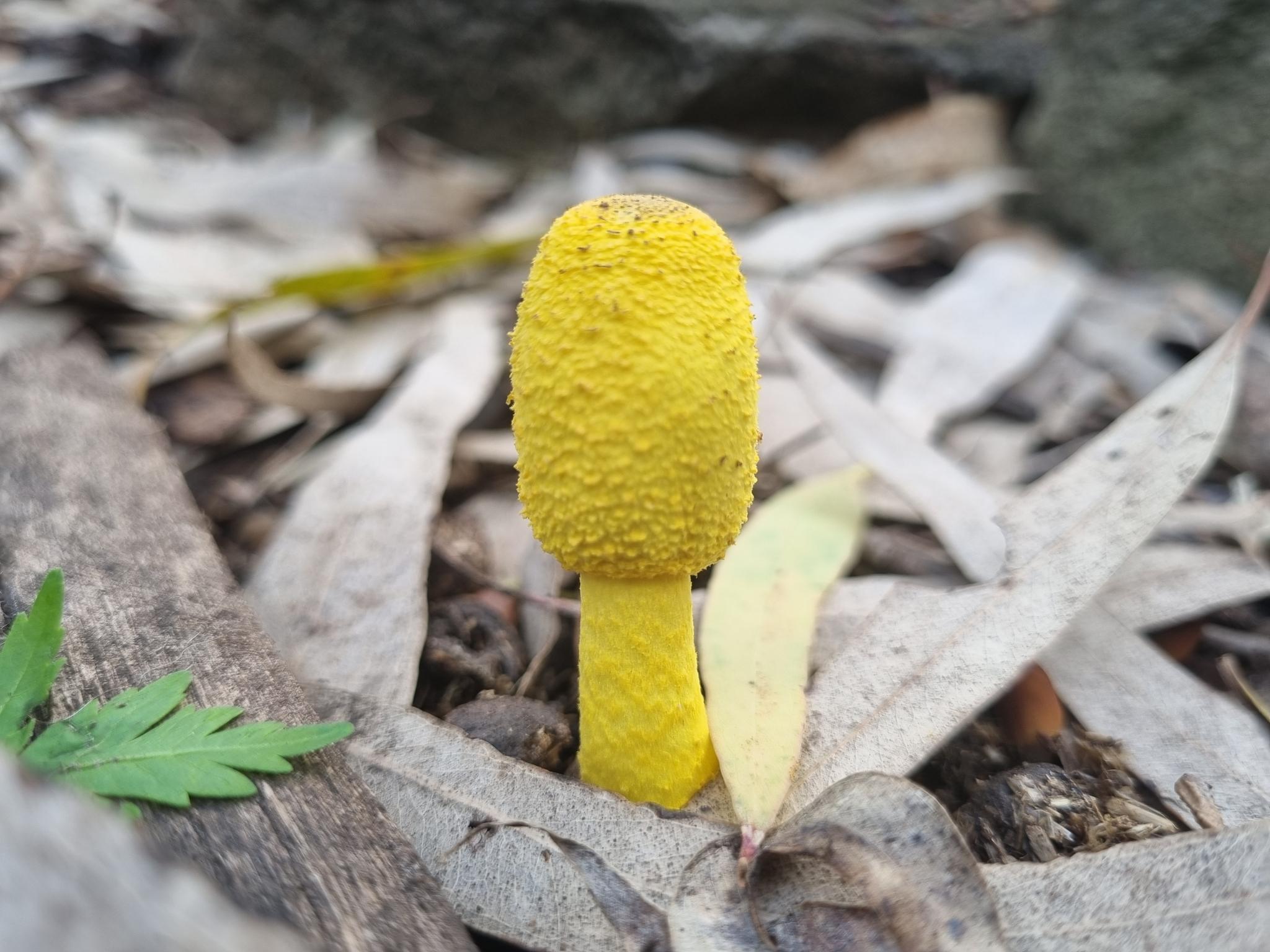 Flowerpot parasolA bright yellow mushroom has come up in a pot plant, indoors, where nobody planted it. It's common enough to have a nickname: the "yellow house plant mushroom", because it so often turns up in indoor pots.
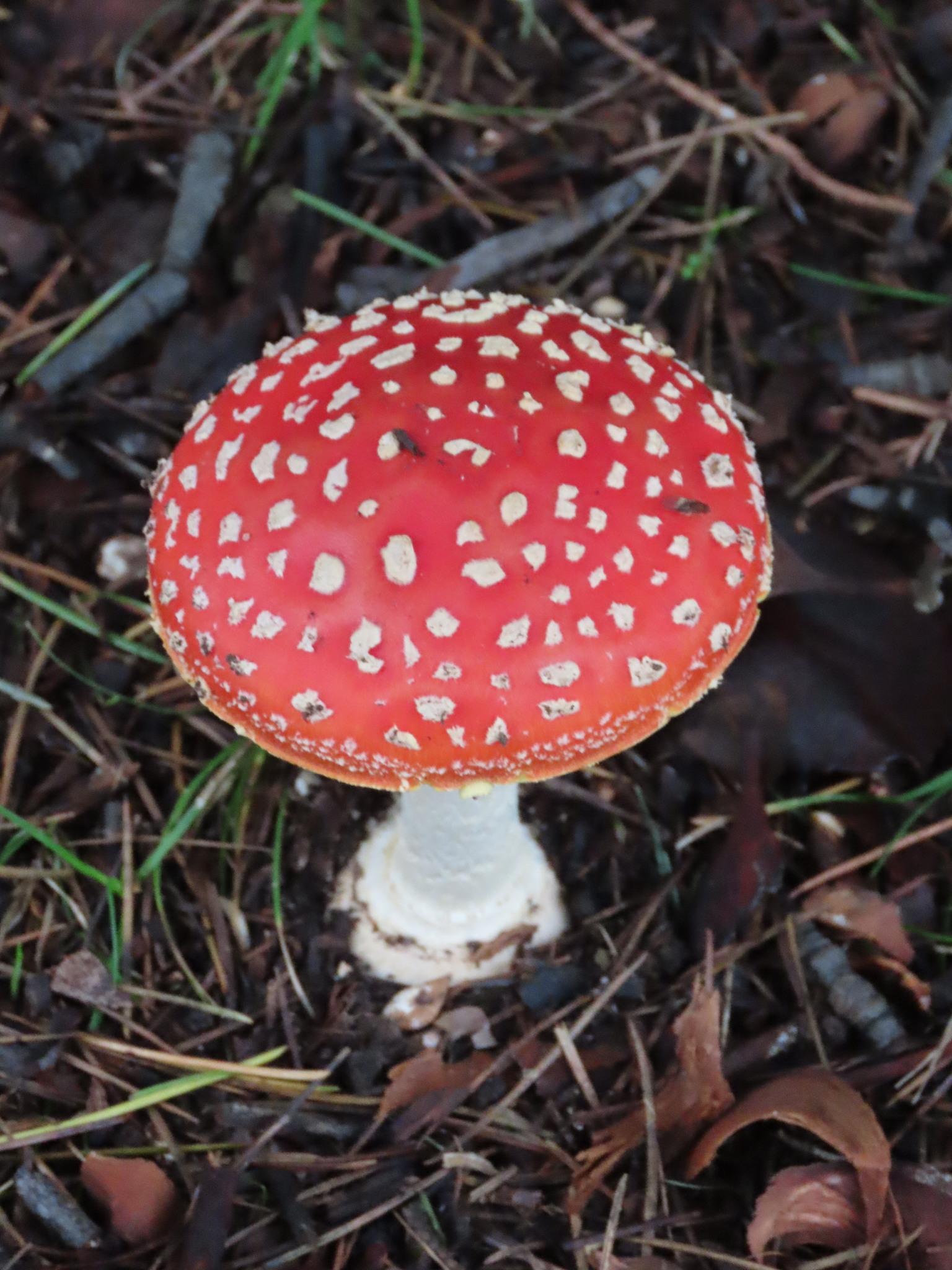 Fly AgaricRed cap, white spots: the toadstool from every fairy tale. It isn't from here.
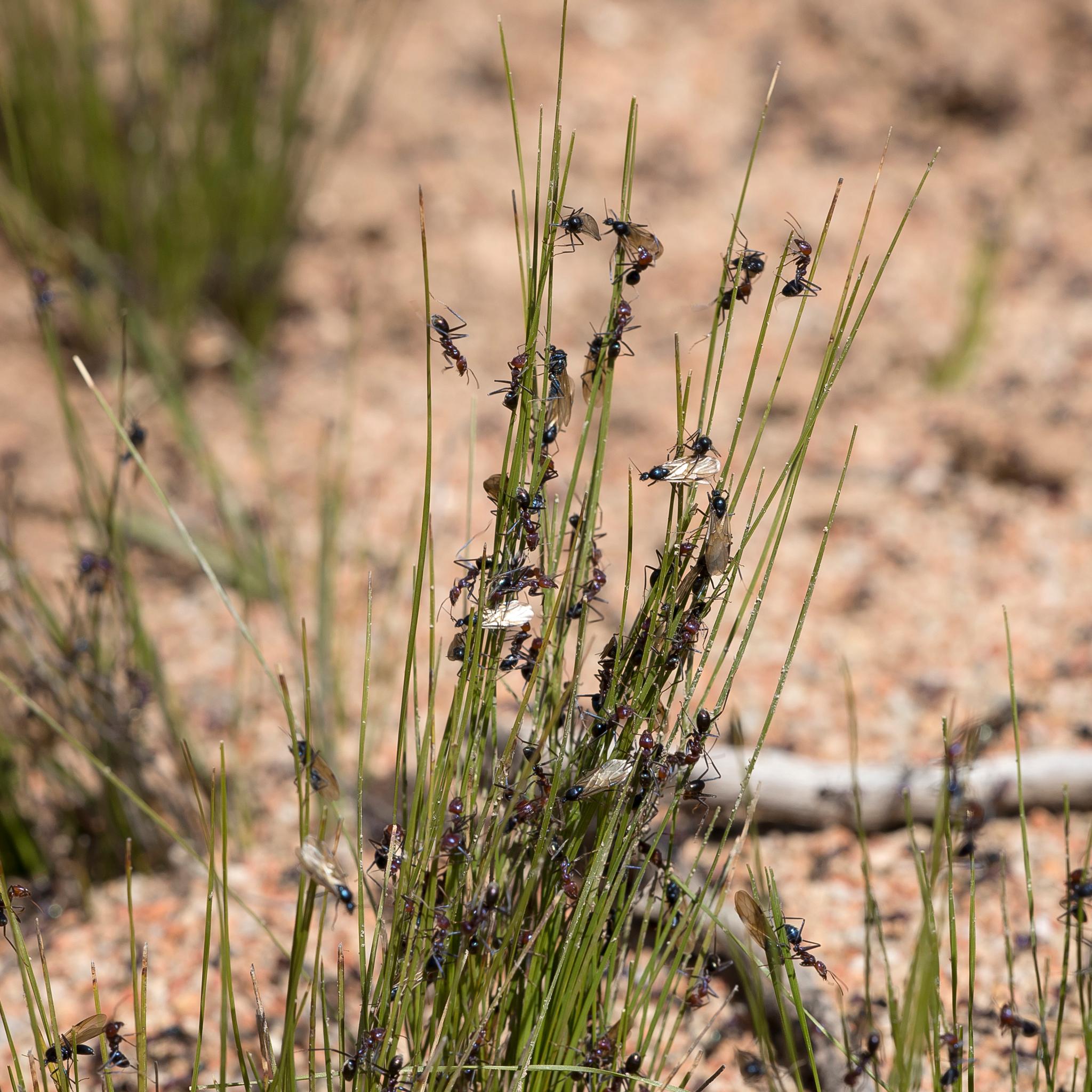 Flying ants swarming after summer rainThe air is full of wings. These aren't ordinary ants.
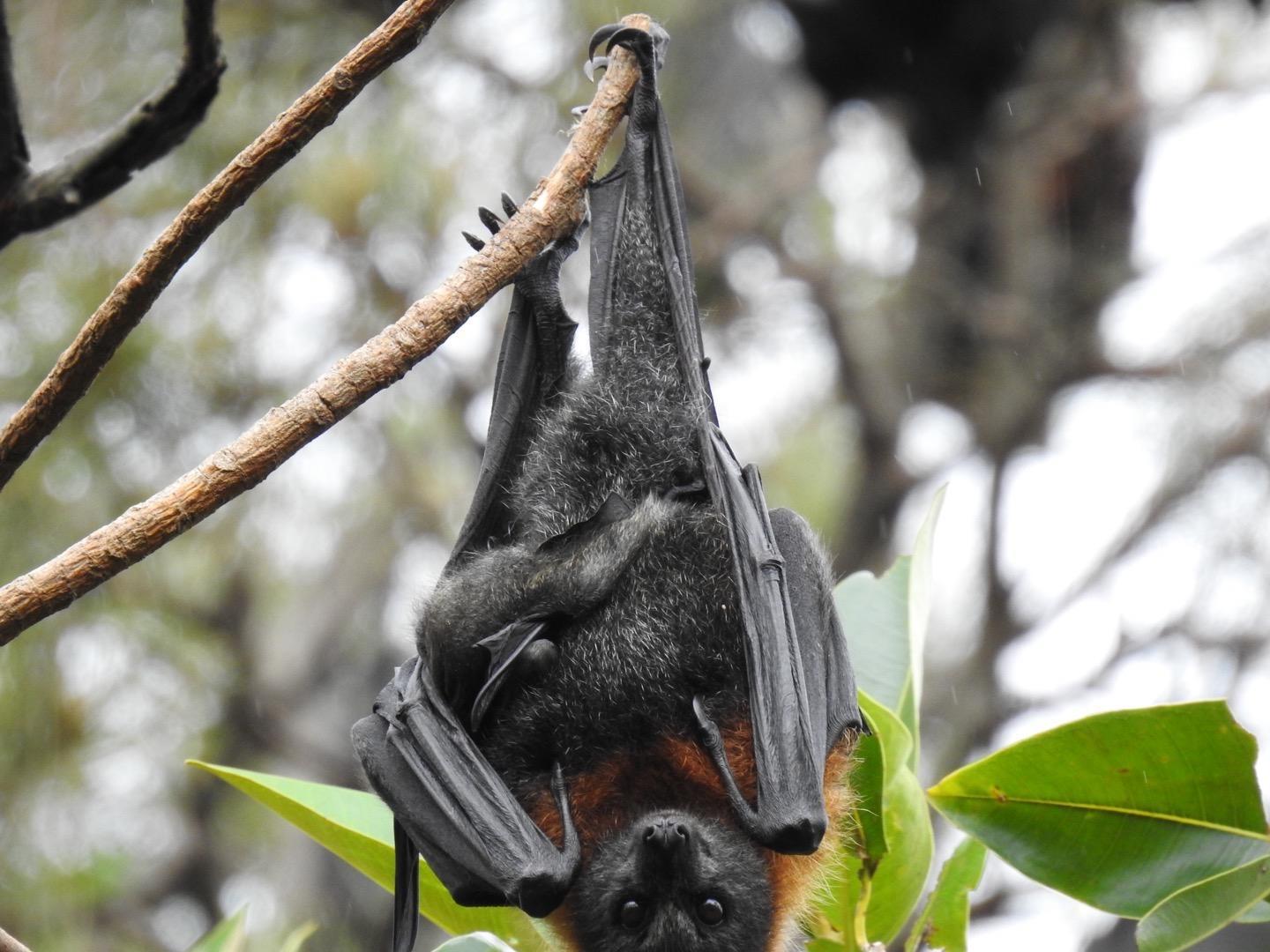 Flying-fox pups (mothers carrying young)Some of the flying-foxes crossing the sky at dusk aren't alone. Look at their bellies.
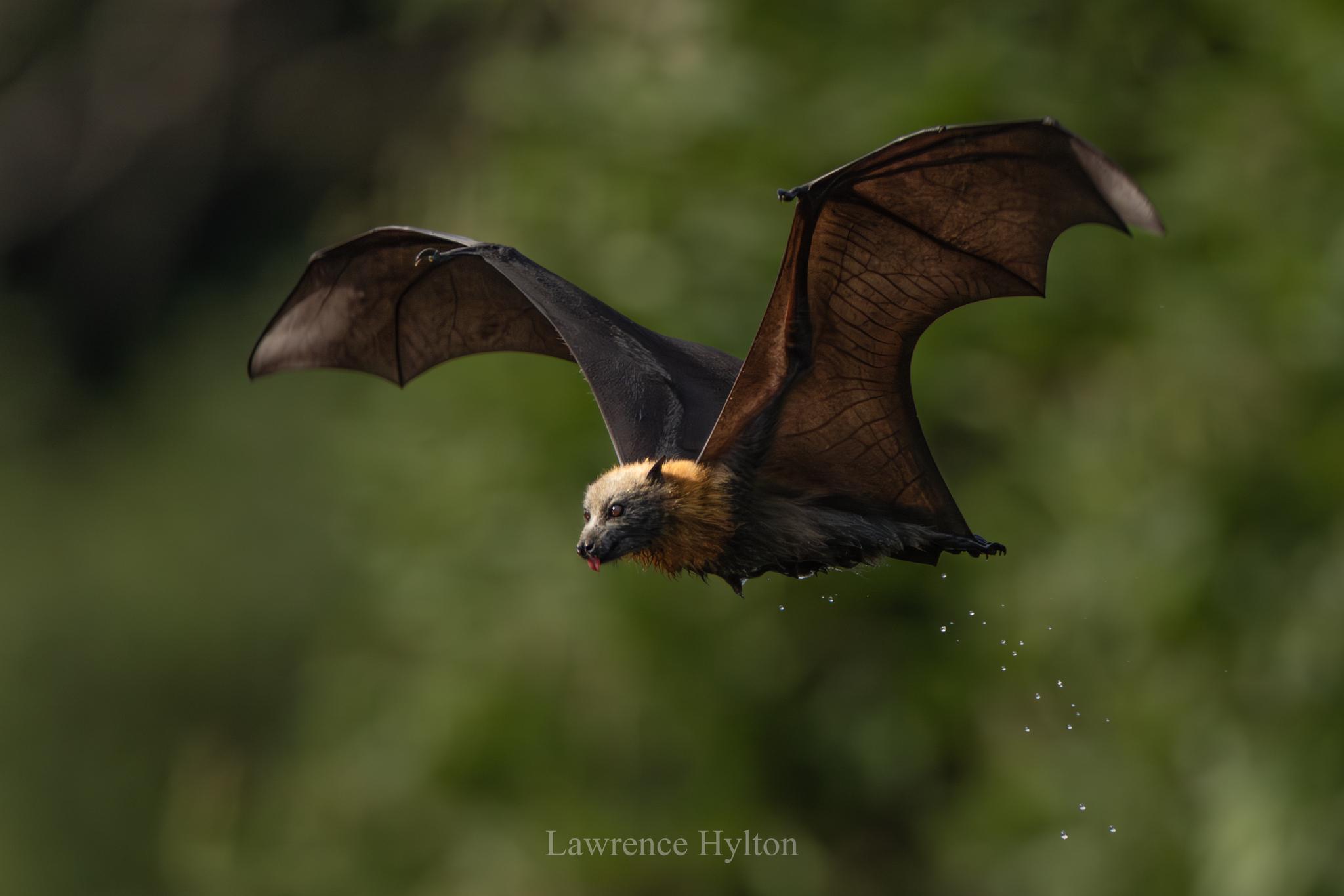 Flying-foxes streaming out over the city at duskAt sunset they start to stream out, first a few, then a river of flying-foxes over the rooftops. Each may fly up to 50 kilometres to its feeding trees tonight.
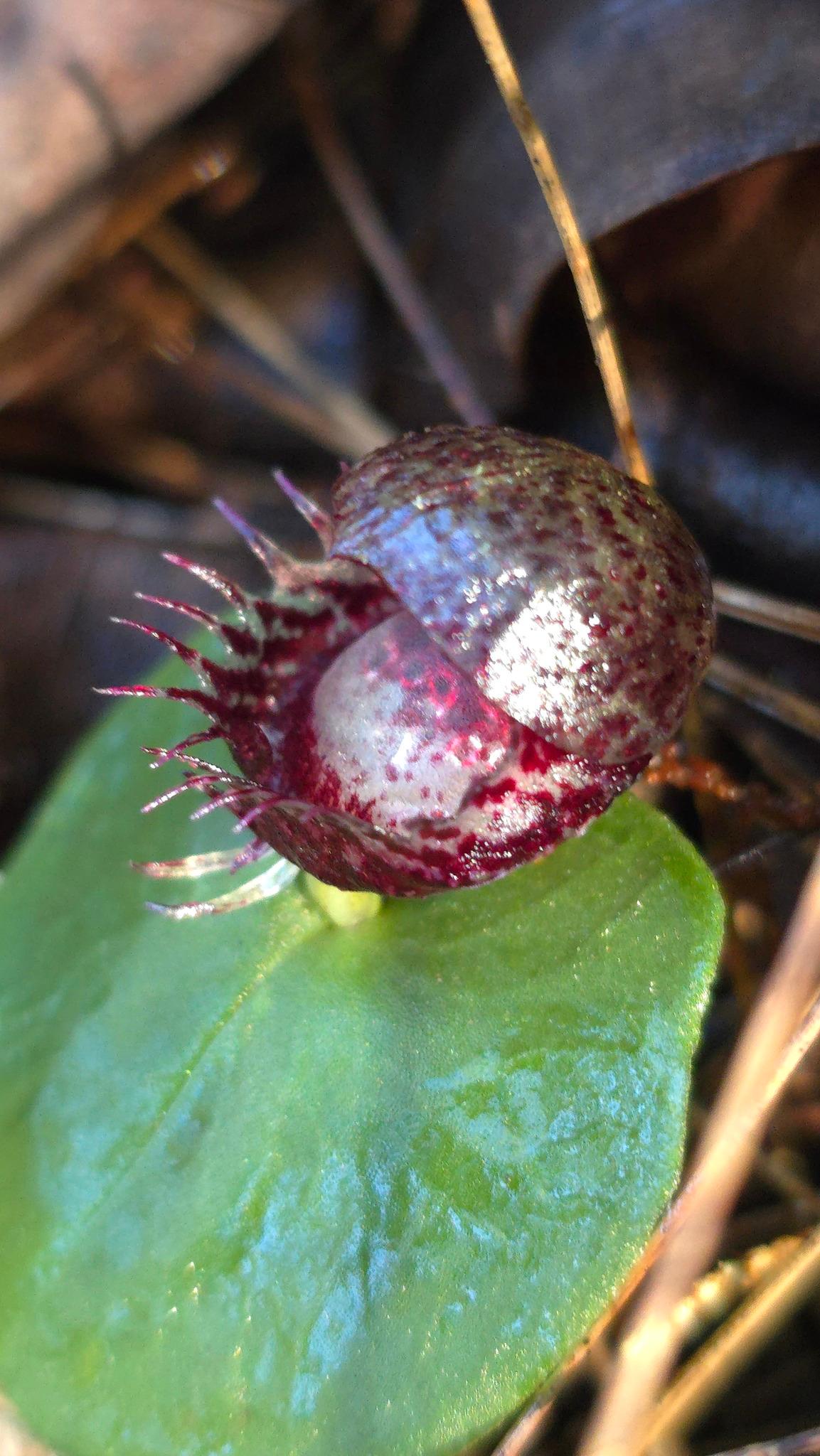 Fringed Helmet-orchidThe helmet orchid lives at gnat height. Its flower sits almost on the ground, and helmet orchids are pollinated by fungus gnats, tiny flies that run about close to the ground in humid weather.
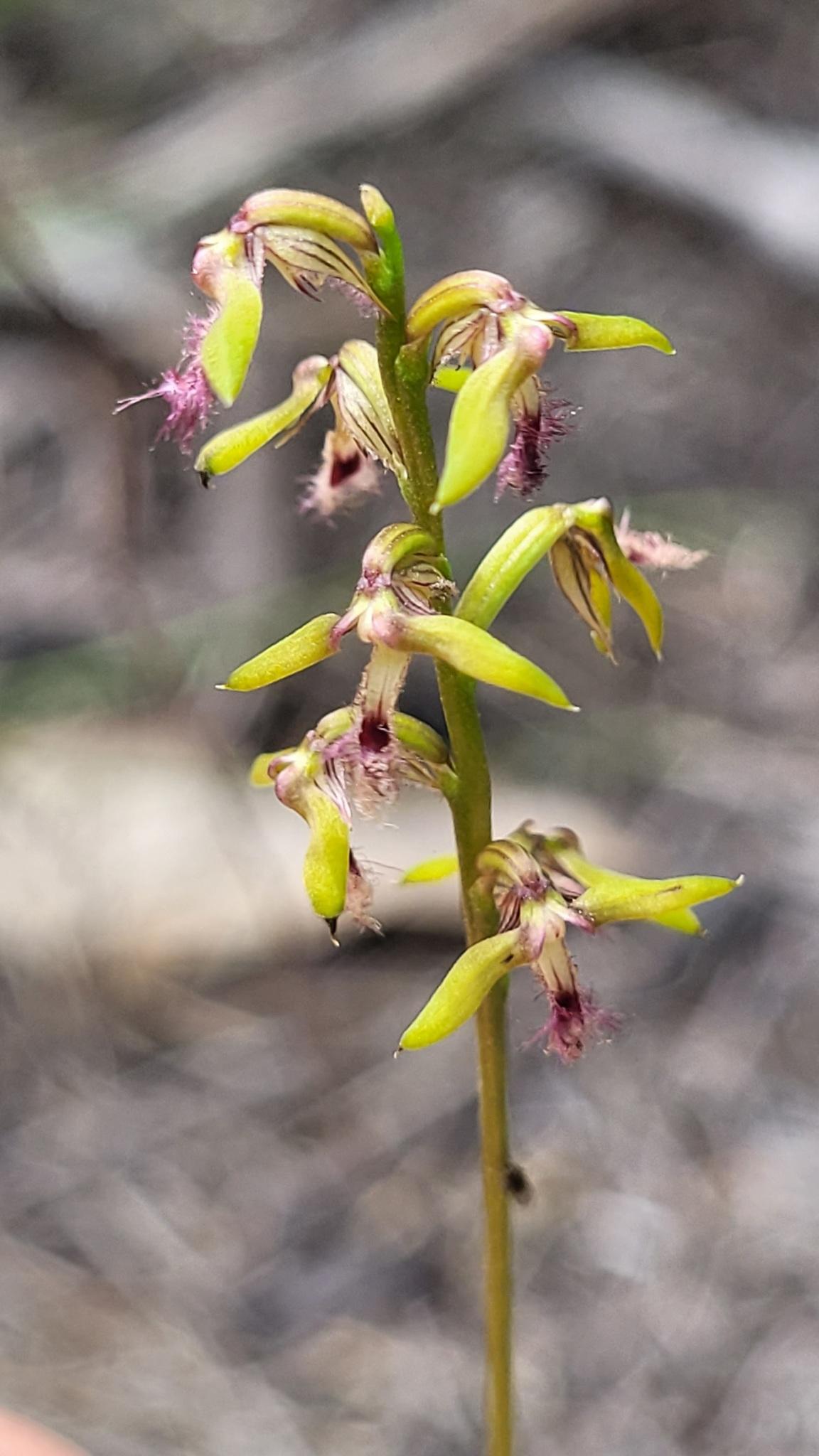 Fringed midge orchidEverything about this orchid happens at a scale you can barely see. Its flowers are tiny, and the main visitor is a female fly less than 3 mm long.
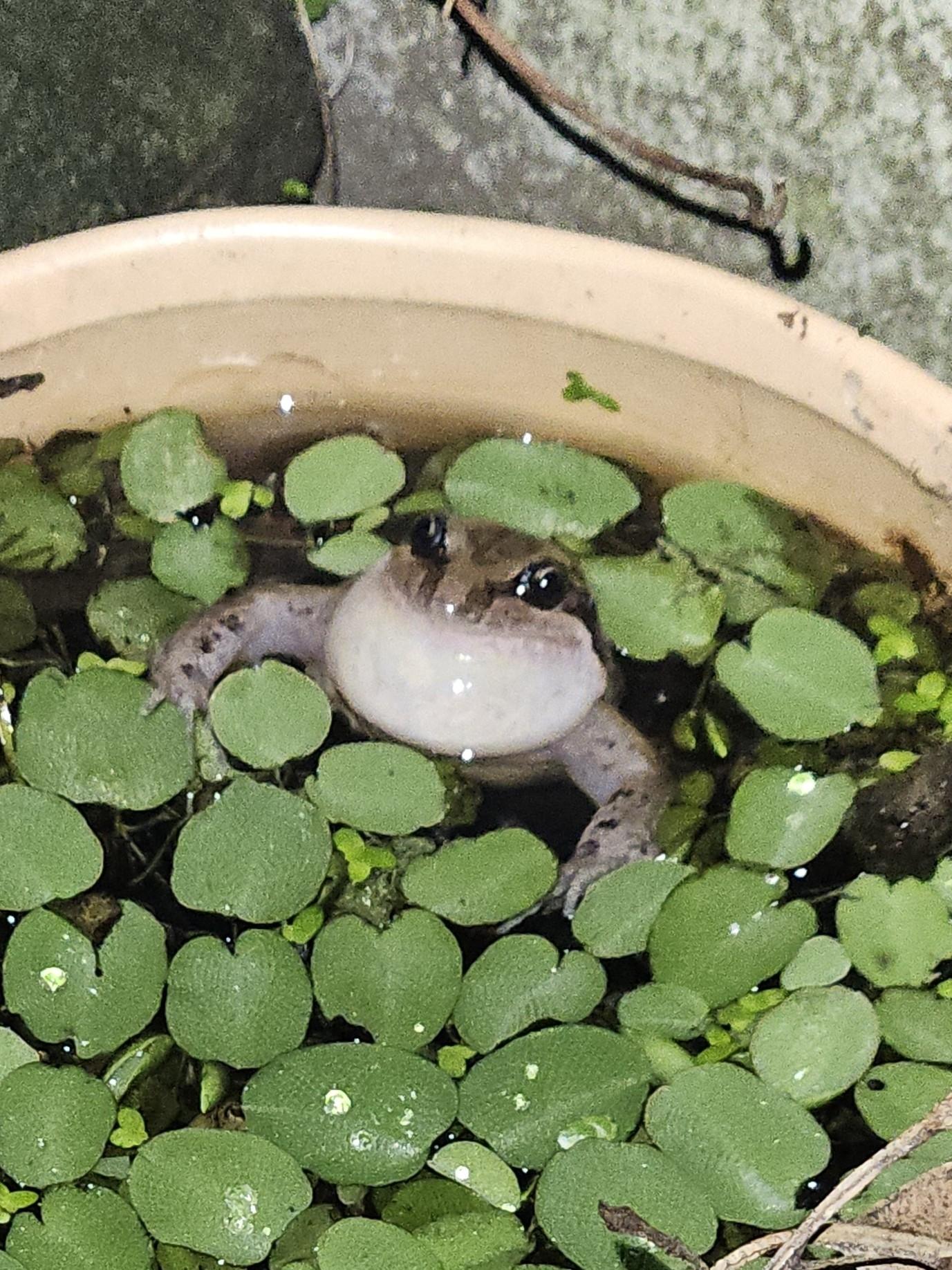 Frog choruses after summer storms (striped marsh frogs)After the storm, the night fills with frogs. Almost every voice in that chorus is a male, and the rain is why they're out: frogs call more after rain.
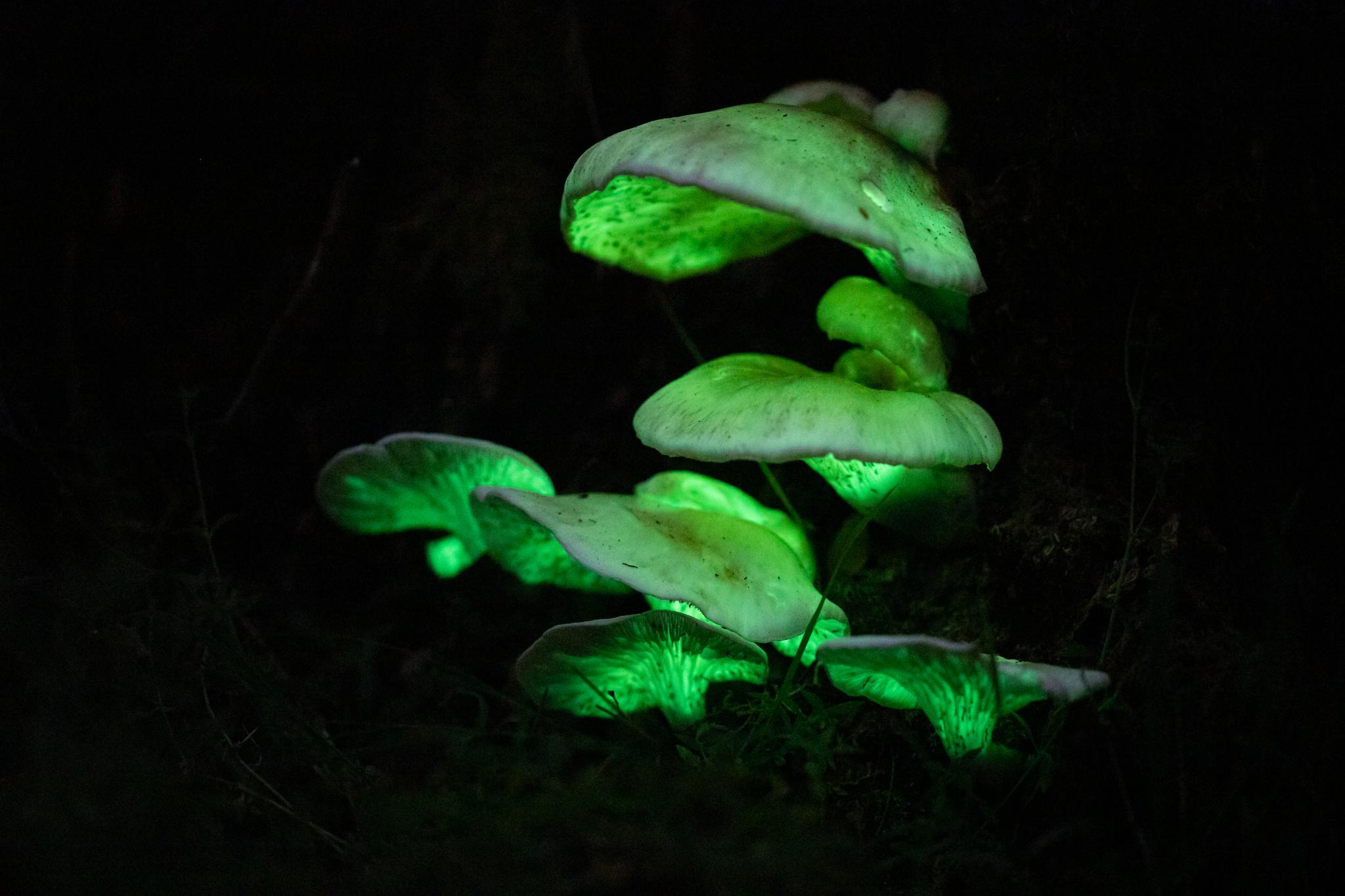 Fungi after autumn rain (ghost fungus glowing)In the dark under the trees, the ghost fungus is giving off a faint white glow. It's natural to ask what the light is for.
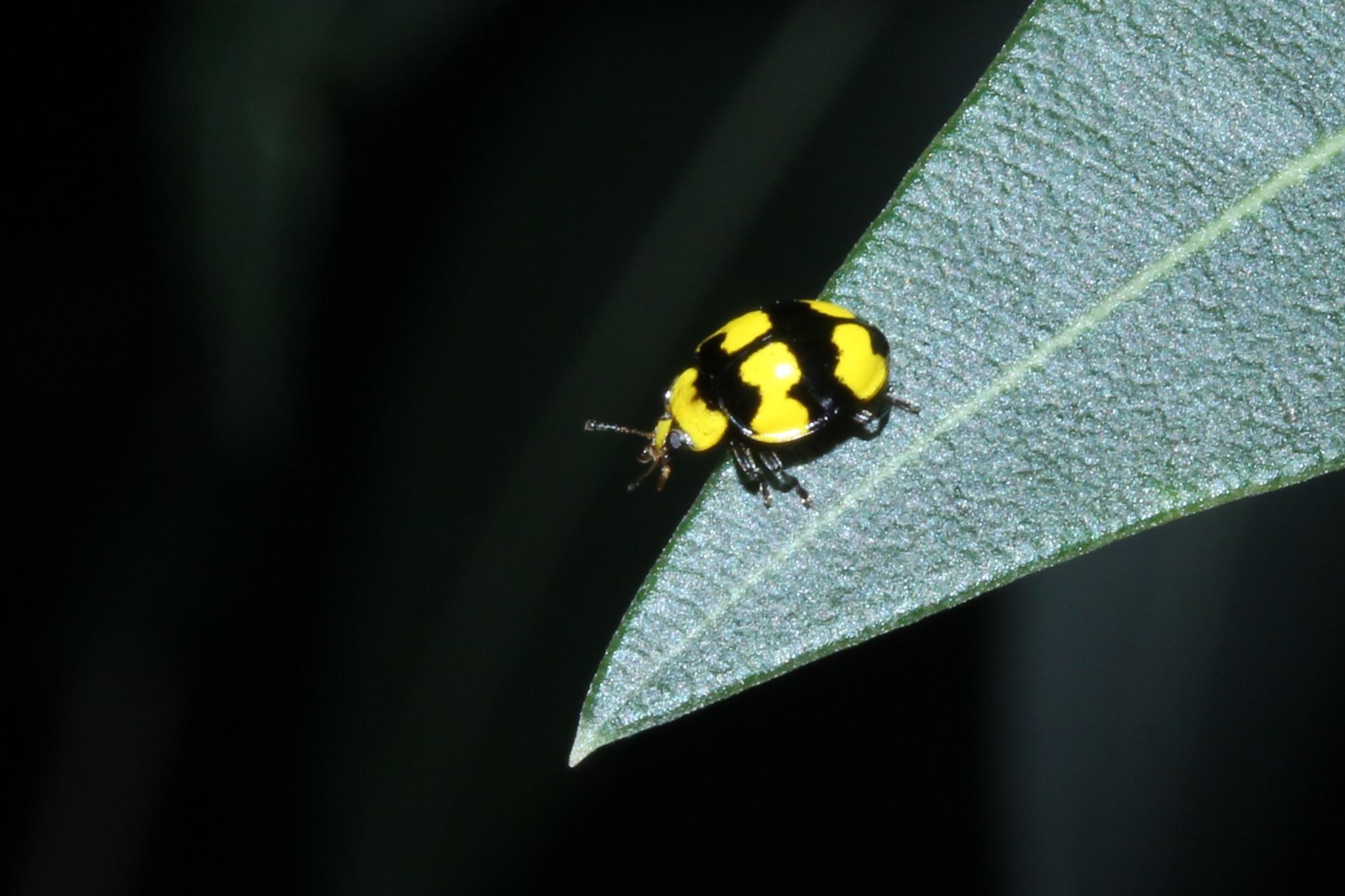 Fungus-eating ladybirdAsk any gardener what a ladybird eats, and they'll say aphids. This one eats mould.
- Fur seals hauled out on rocks and pontoonsThat heap of brown on the pontoon has ears. Look closely: small flaps on the side of the head.
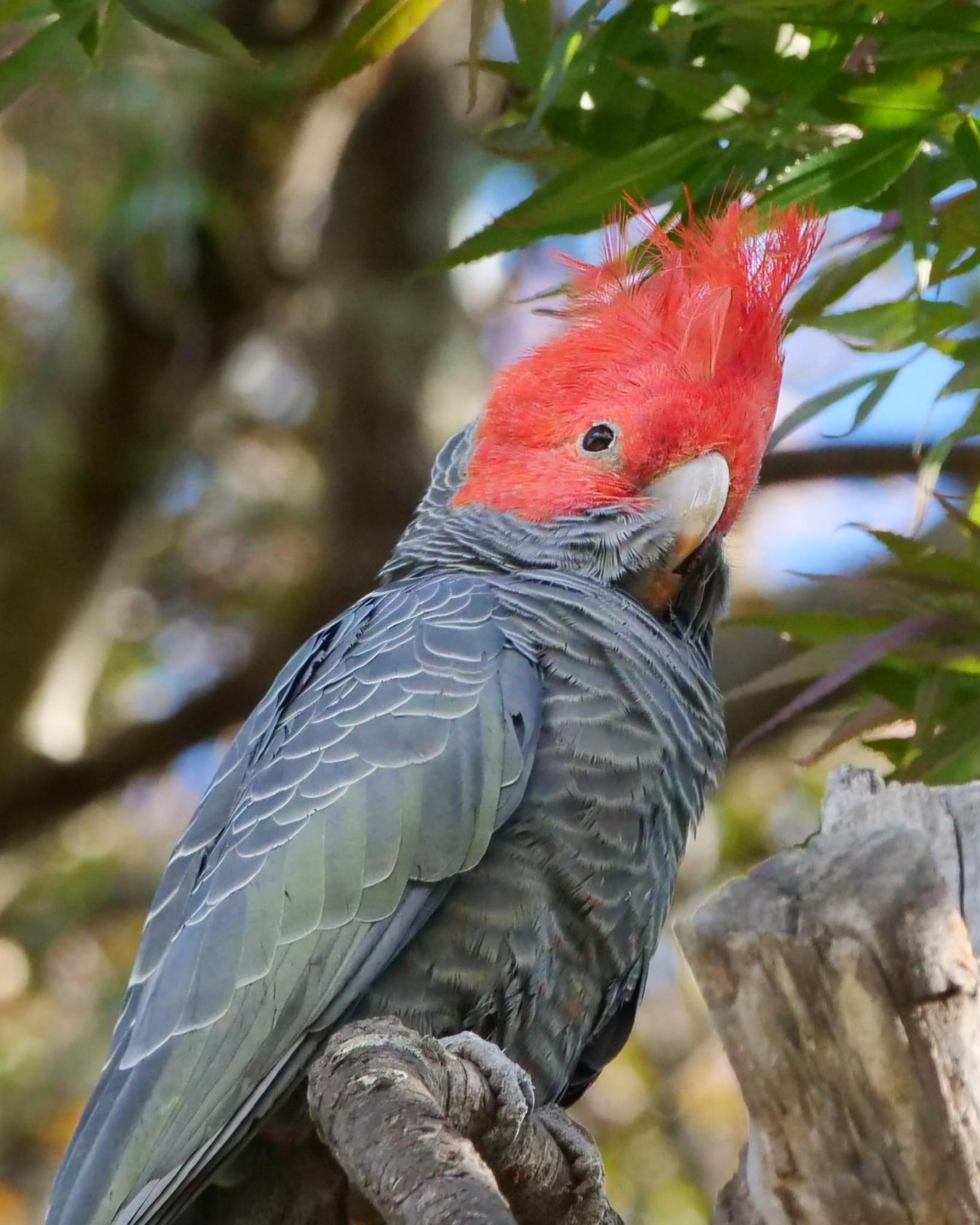 Gang-gang CockatooSomewhere up in the canopy, a creaky, rusty hinge. That's a gang-gang, and you'll often hear one before you see it.
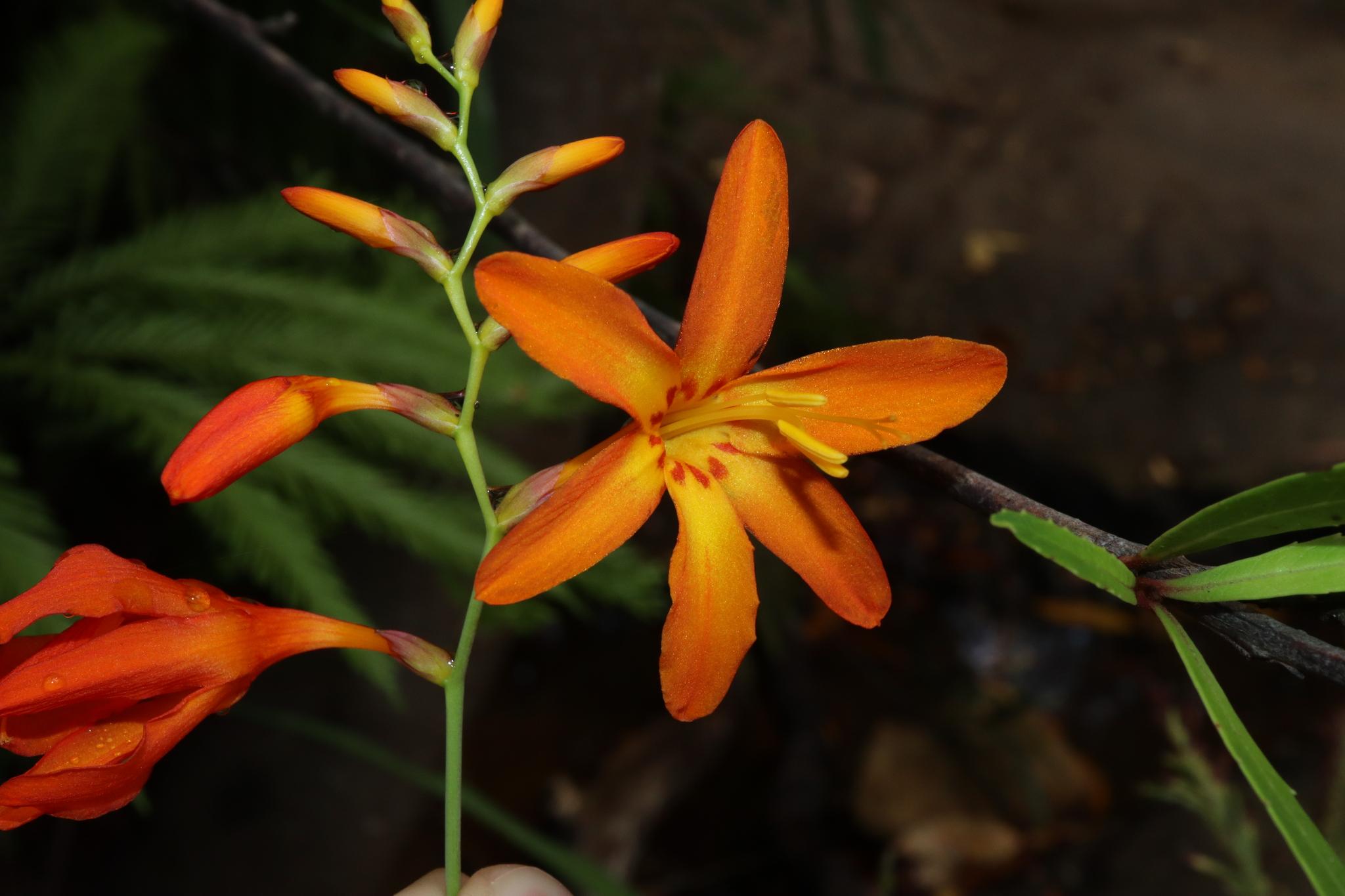 Garden MontbretiaThat blaze of orange at the edge of the bush mostly didn't arrive as seed. It arrived in pieces.
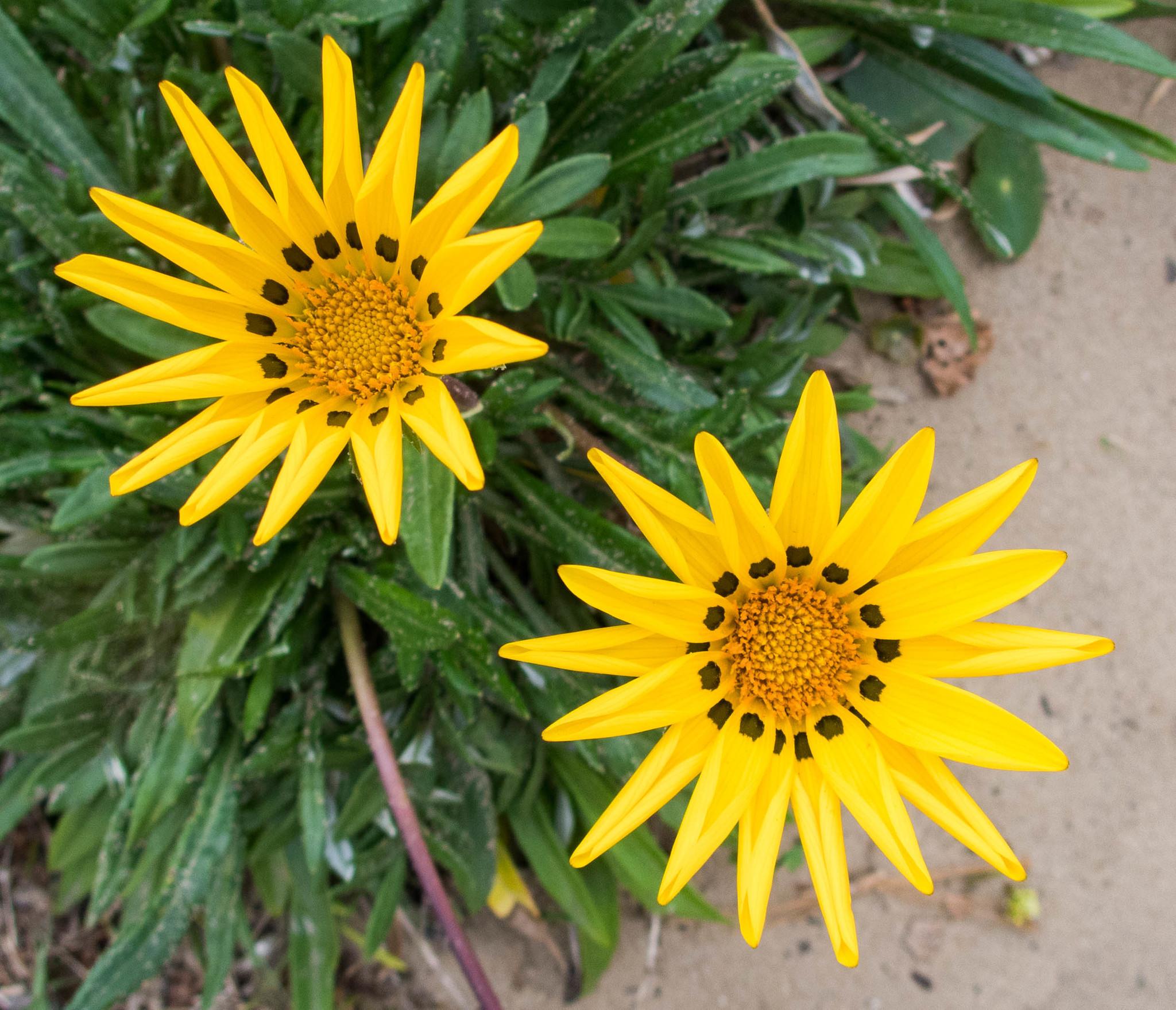 Garden Treasure FlowerSomeone planted this gazania in a garden, for its bright, striped flowers. It didn't stay there.
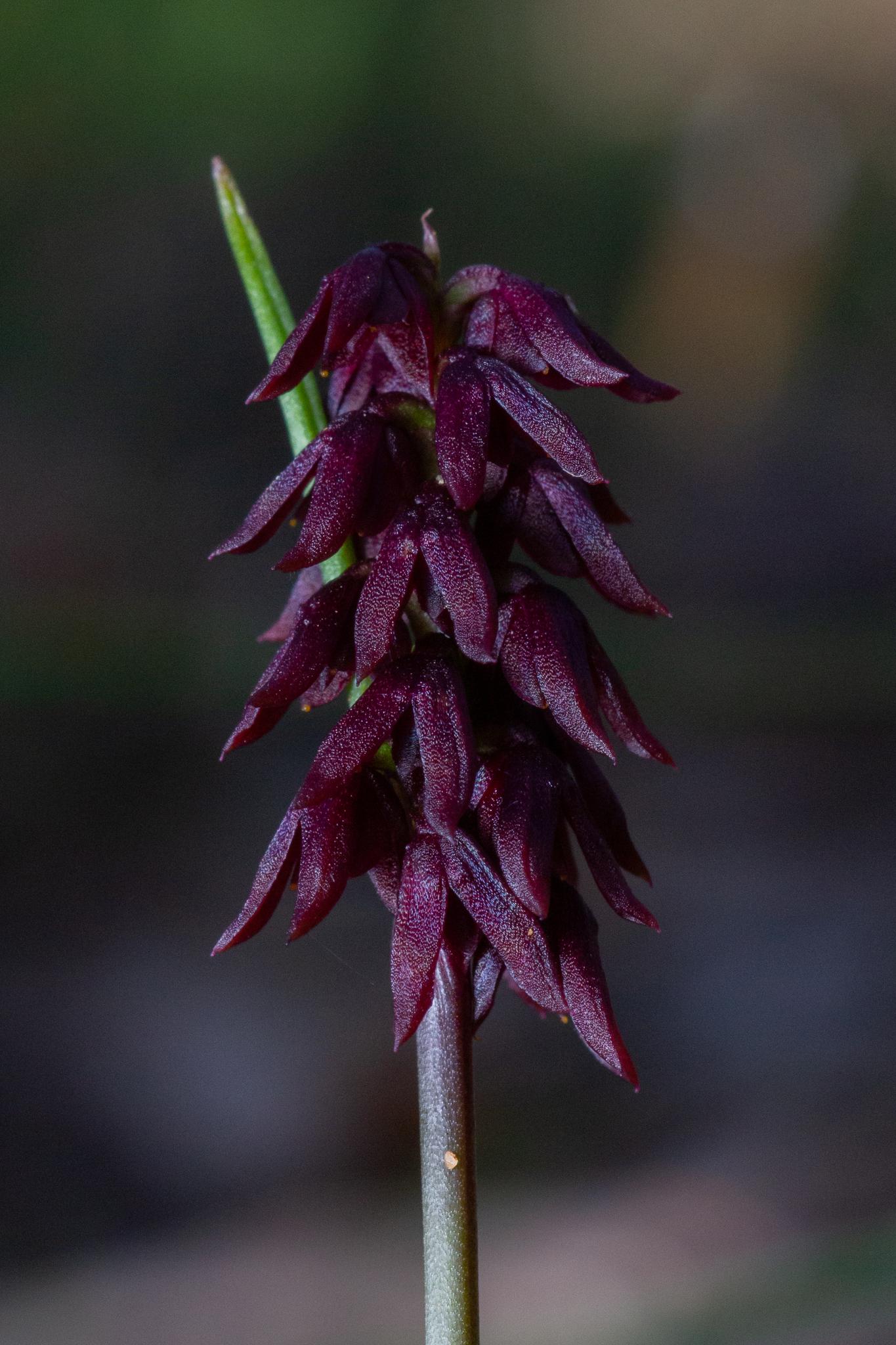 Genoplesium densumYou'll probably have to kneel. Like other midge orchids, its flowers are some of the smallest of any Australian orchid, and its partners are smaller still.
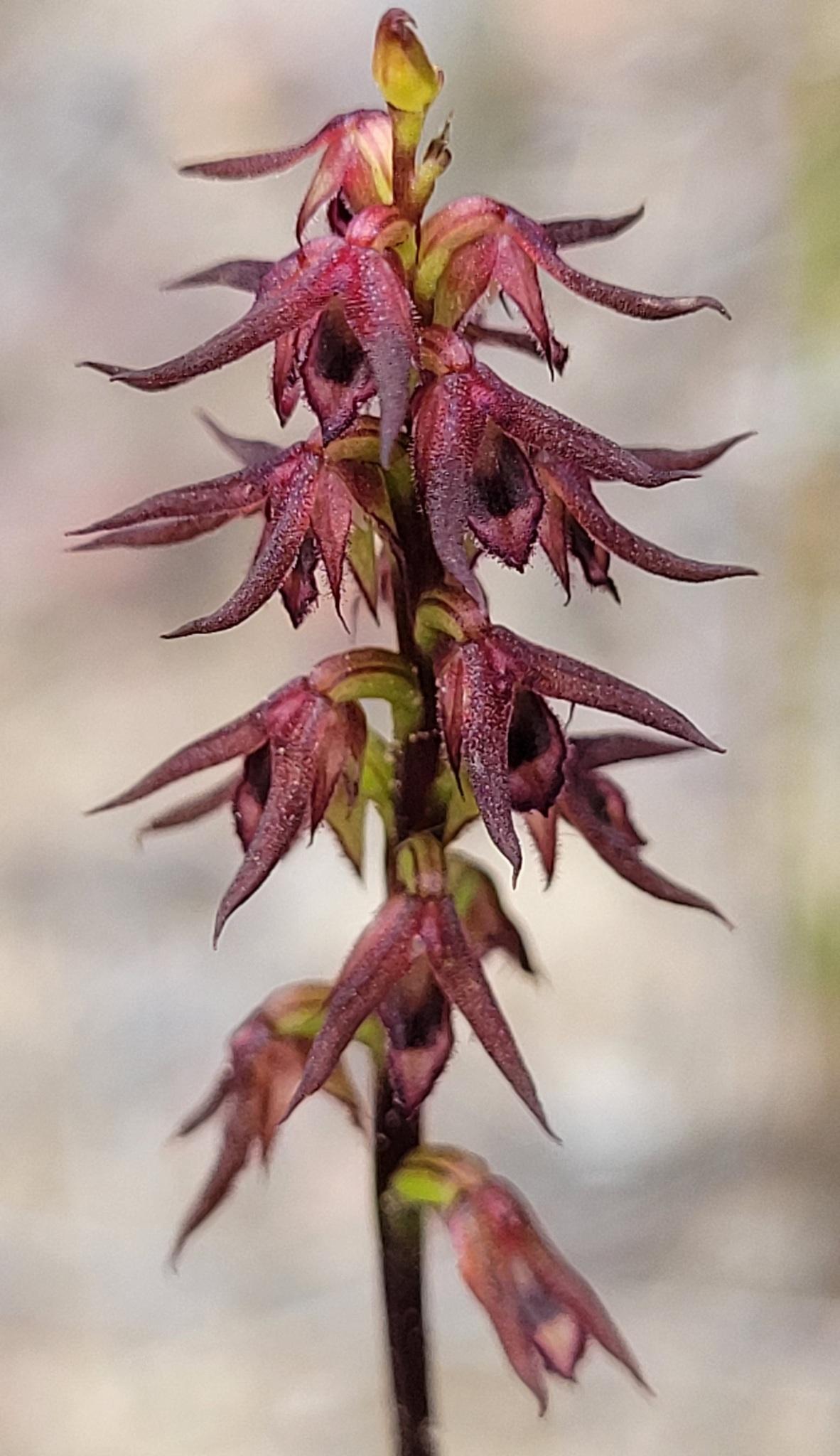 Genoplesium filiformeThis orchid's flowers are some of the smallest of any Australian orchid: a column of specks on a thread of a stem. They pay for pollination with a drink, offering a liquid reward to whoever visits.
- Ghost fungusThe ghost fungus glows a faint white, and it glows all the time, day and night. It's natural to ask what the light is for.
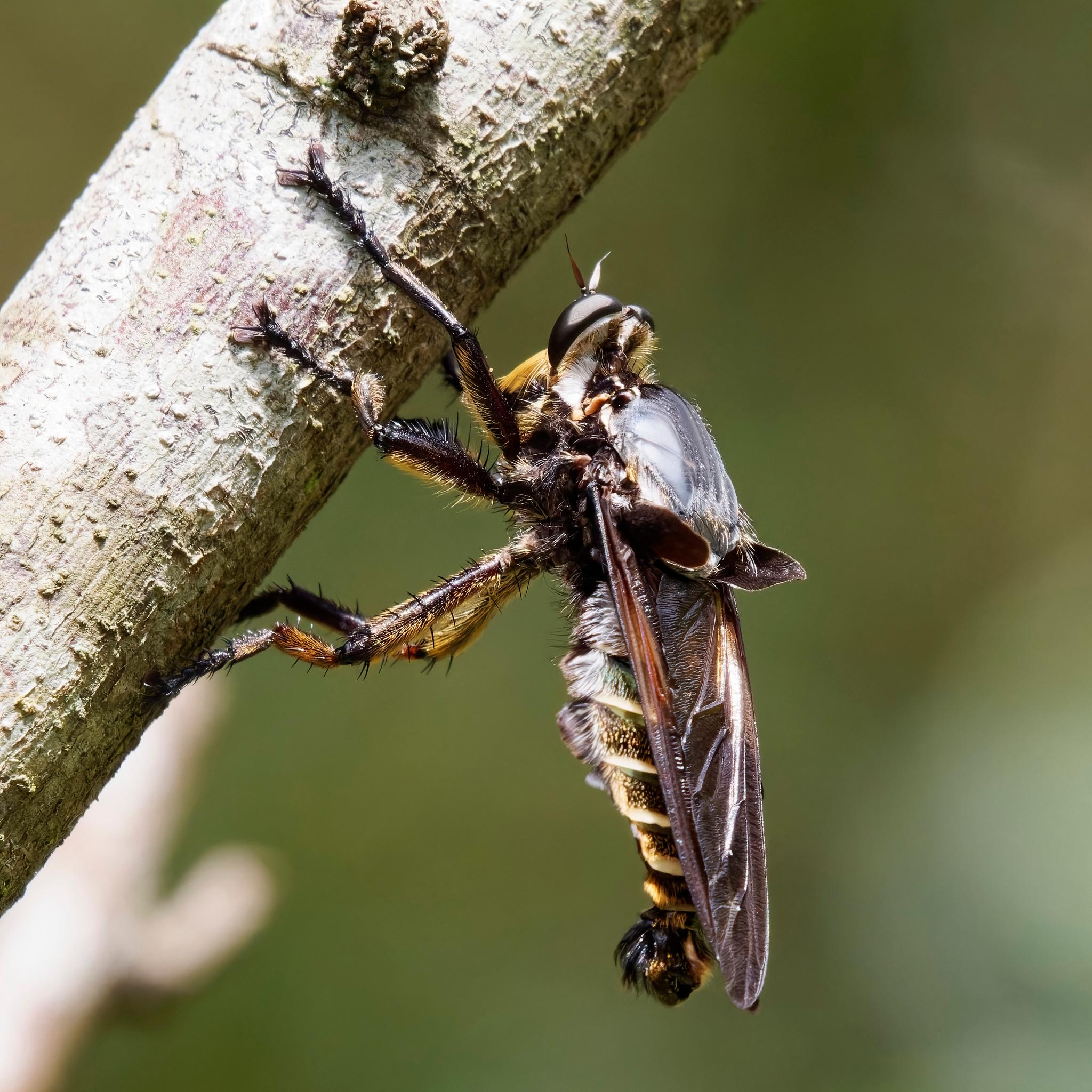 Giant Blue Robber FlyIt takes its prey in mid-air. A robber fly is a hunter built for the wing: it snatches an insect with clawed legs and injects a venom that paralyses its catch within seconds.
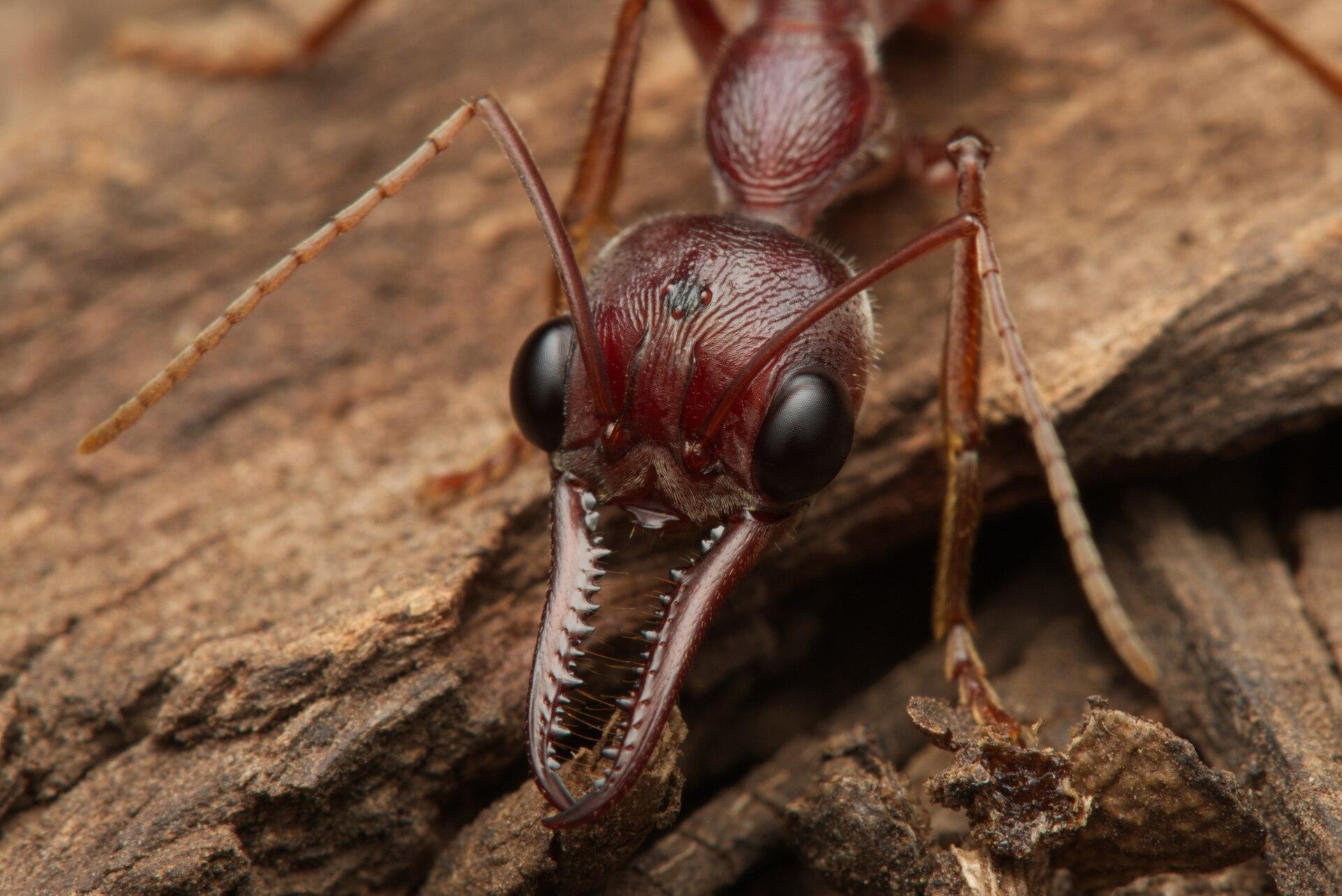 Giant Bulldog AntBull ants are big, alert ants that can grow up to 40 millimetres long. But the ant on the path is the small part.
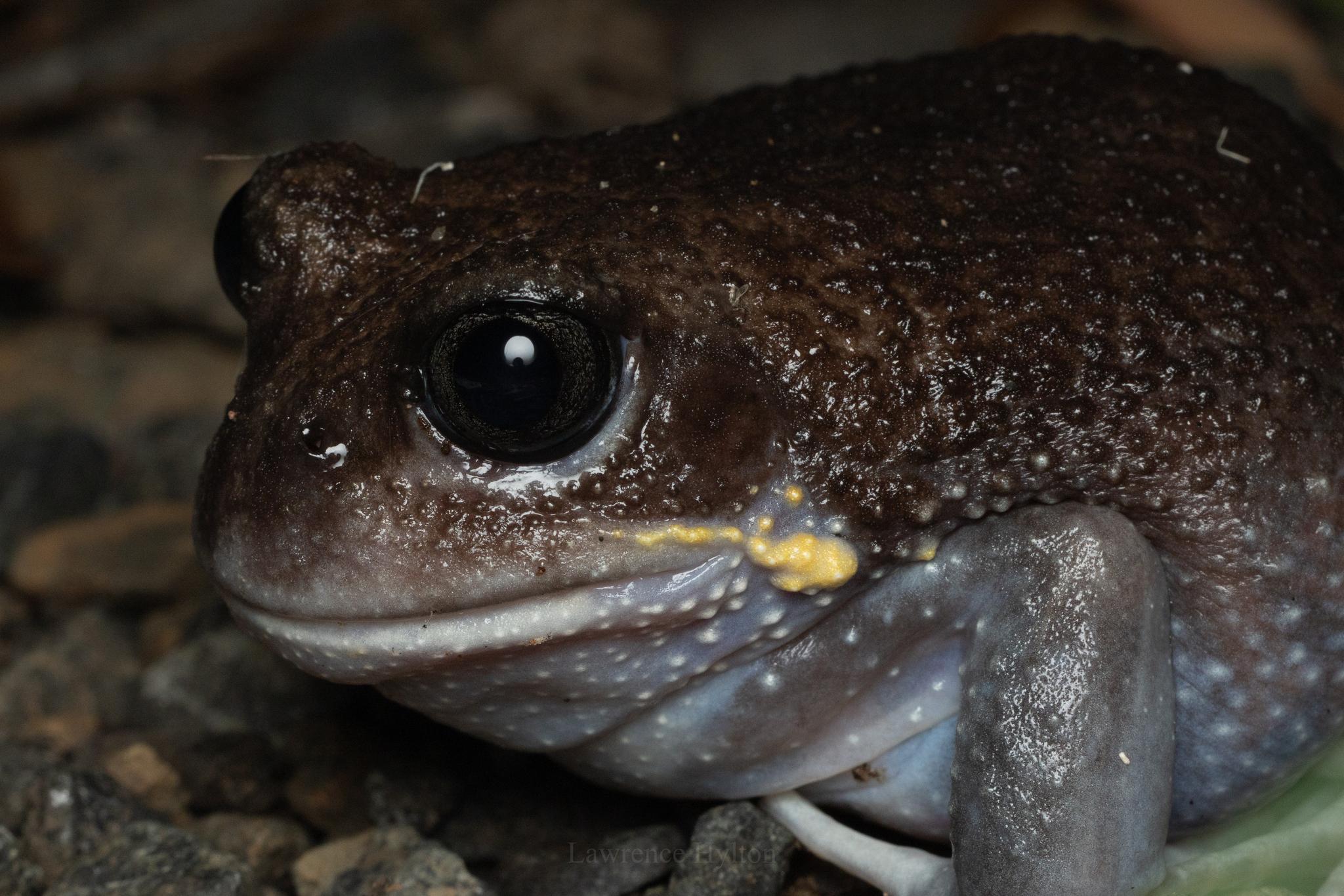 Giant Burrowing FrogThis frog's eggs were never laid in water. Giant burrowing frogs lay them as a foamy mass inside burrows, or in empty crayfish holes, out of the water.
- Giant cuttlefish breeding (Shelly Beach, Cabbage Tree Bay)This is the end of its life, and it's spending it on colour. In the breeding season, giant cuttlefish come together to spawn, in some places in their thousands, and soon afterwards they die.
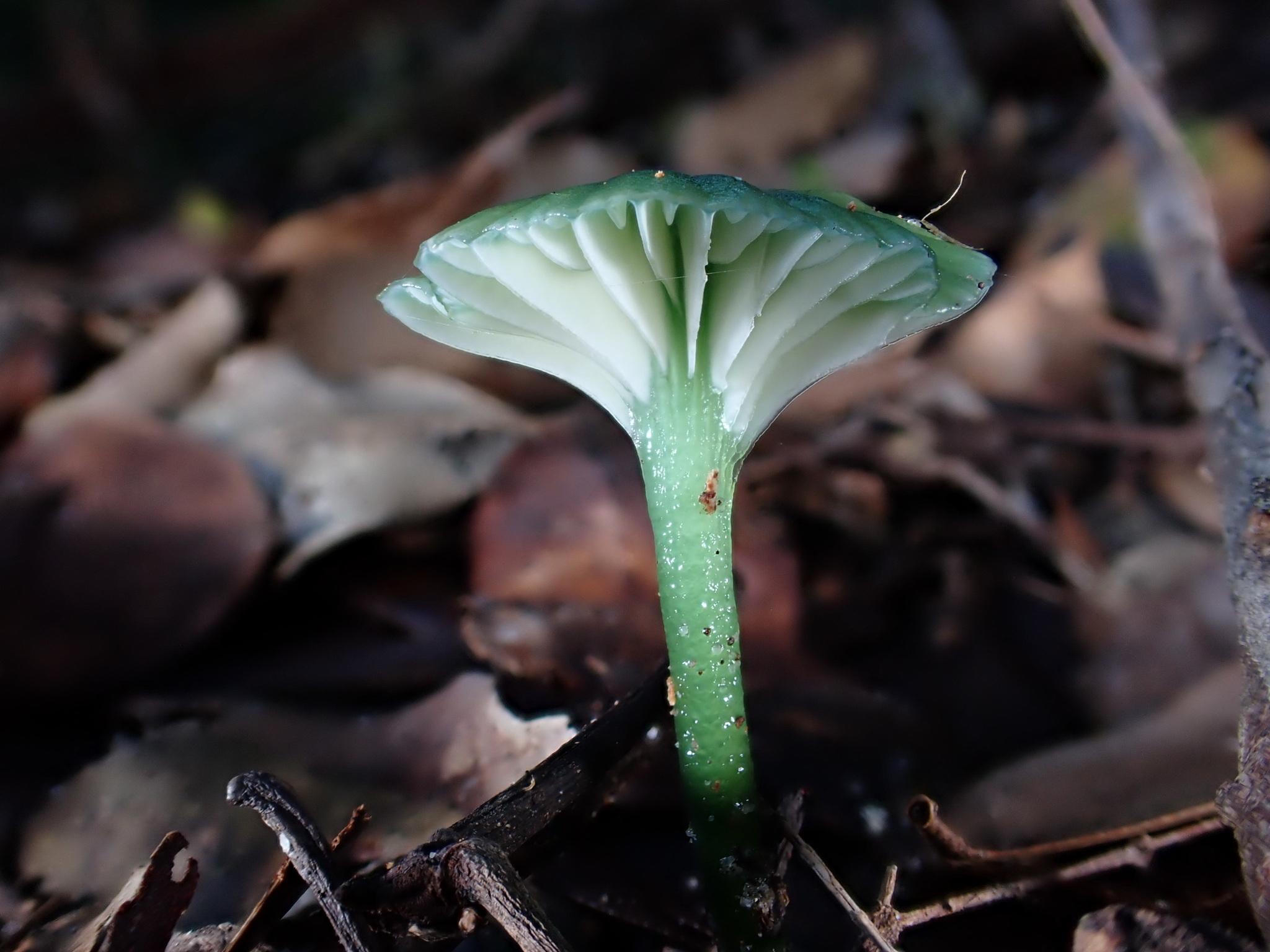 Gliophorus graminicolorIt's small, green and covered in slime, and its name, *graminicolor*, means grass-coloured. It would be easy to file it with the plants.
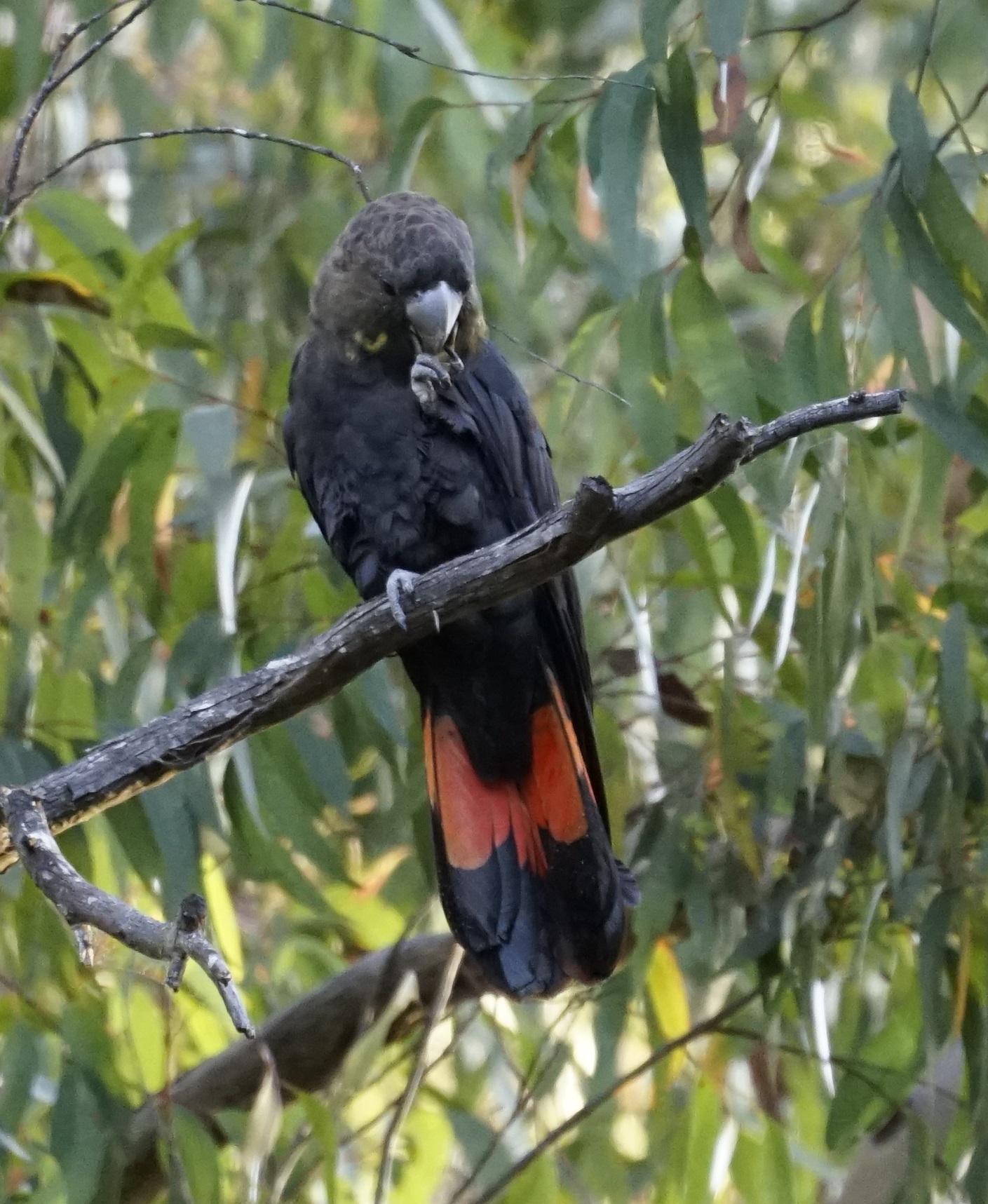 Glossy Black CockatooSometimes the only sign is a sound: a quiet clicking overhead, and bits of she-oak cone pattering to the ground. Look up.
- Golden orb-weaver webs strung across tracksMost spiders build a web, use it and pull it down. A golden orb-weaver builds one to keep.
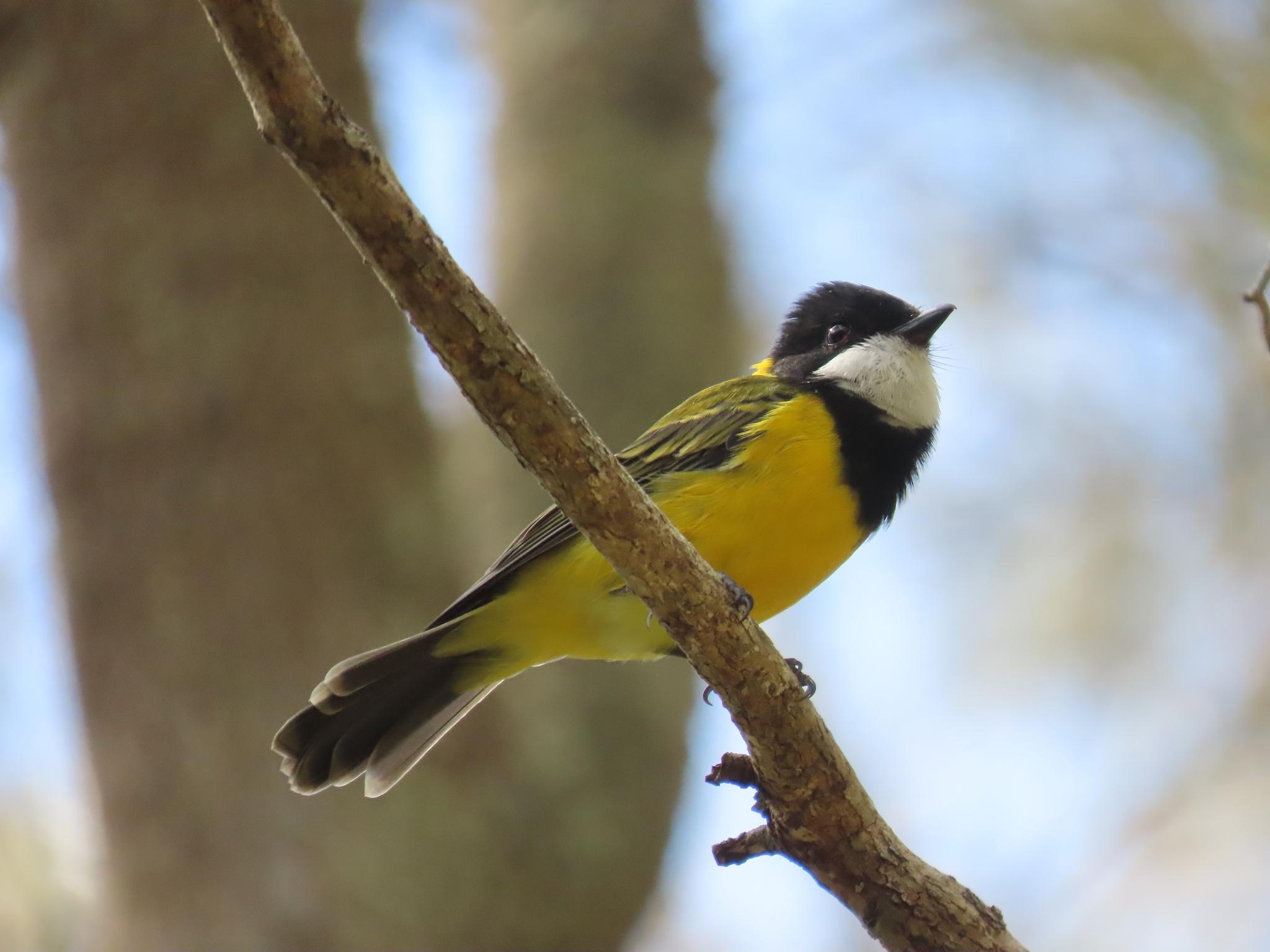 Golden WhistlerThe golden whistler is one of Australia's loudest and most beautiful songsters. Hear it ring out through the bush and you're hearing something that, in a way, started here.
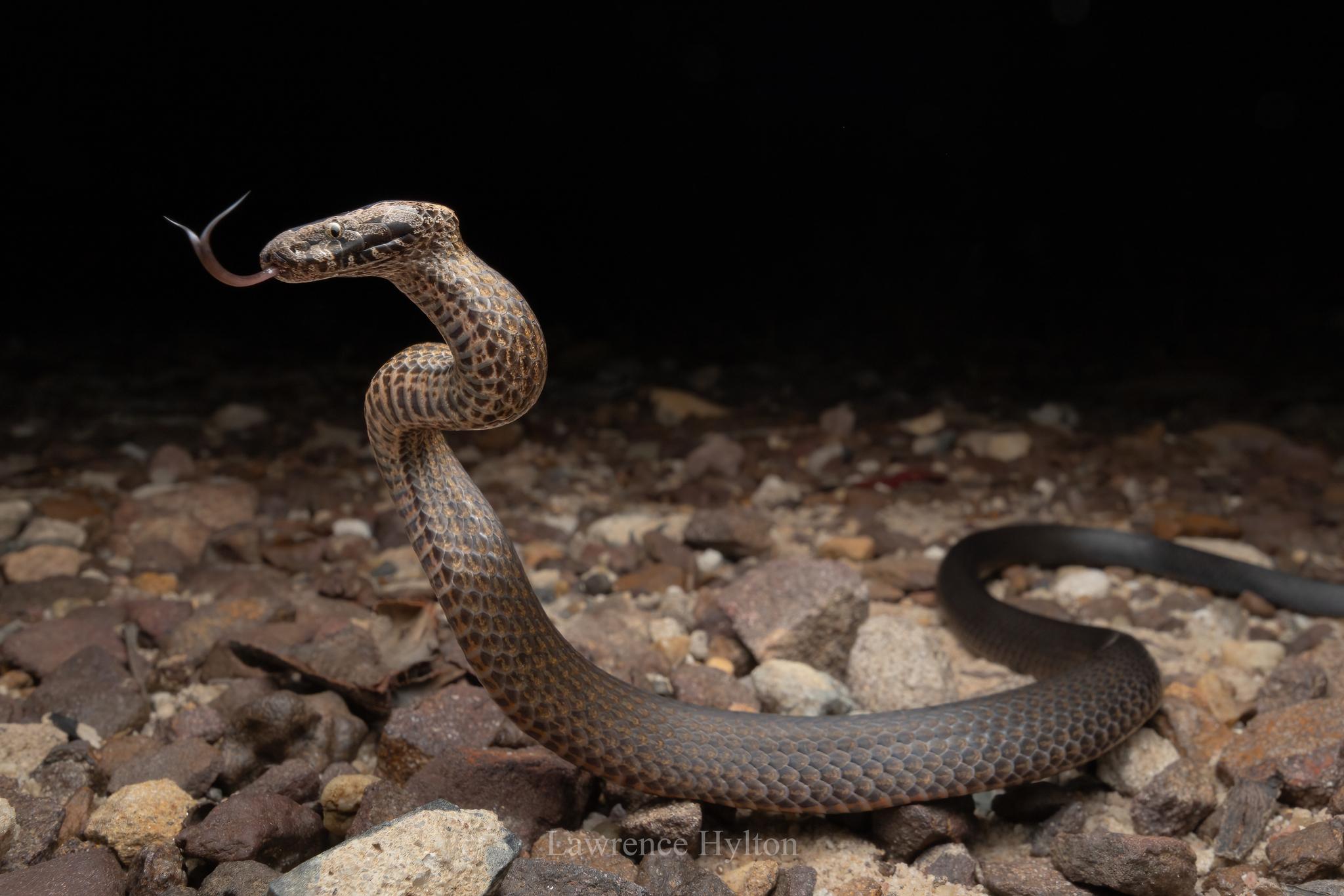 Golden-crowned SnakeIt hunts by night, and it hunts sleepers. The golden-crowned snake searches for sleeping lizards by scent, taking them from their night-time retreats.
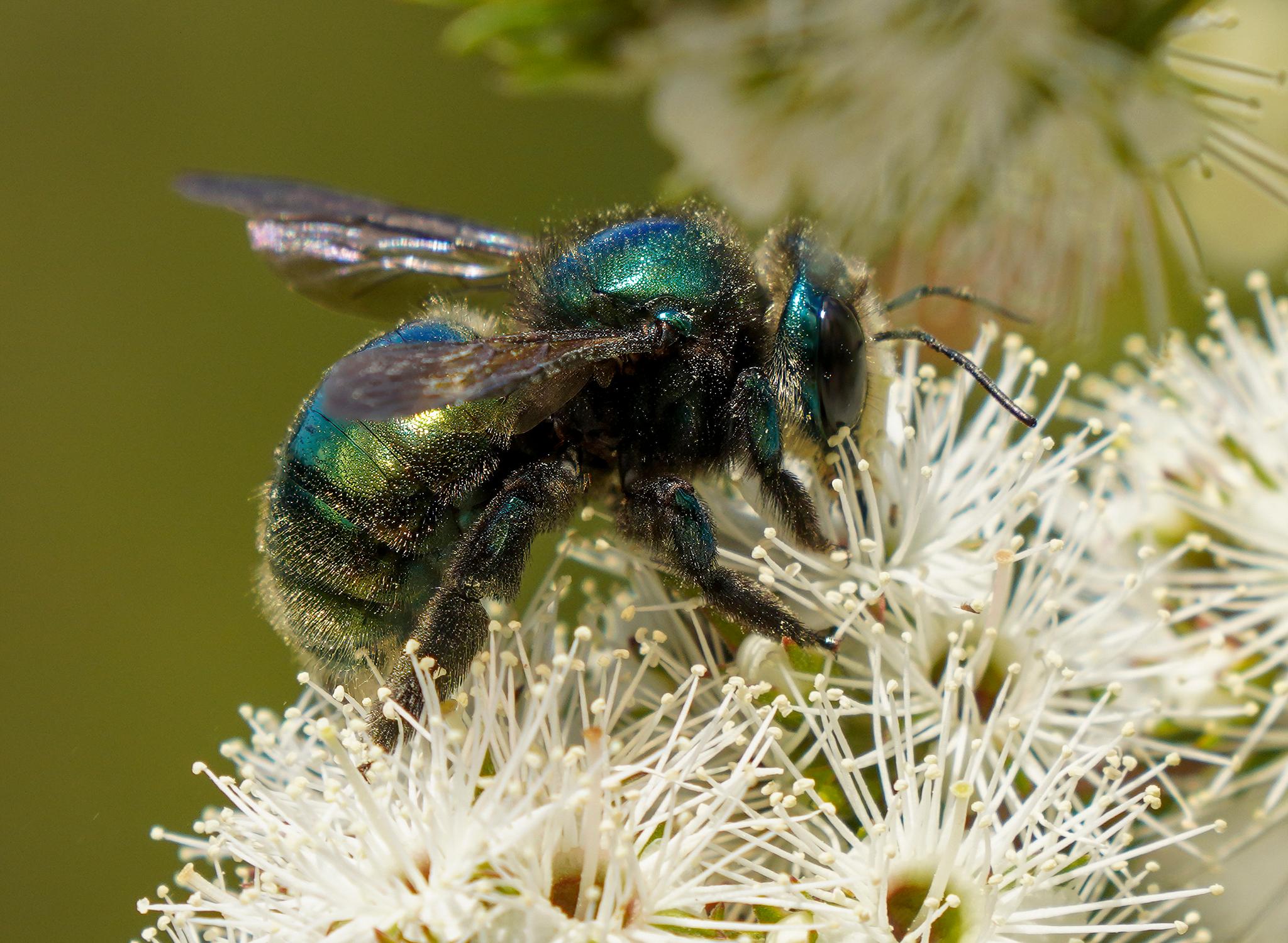 Golden-green Carpenter BeeA big bee, shining green-gold, and one of the rarest sights in this city's bush. It used to live much further south.
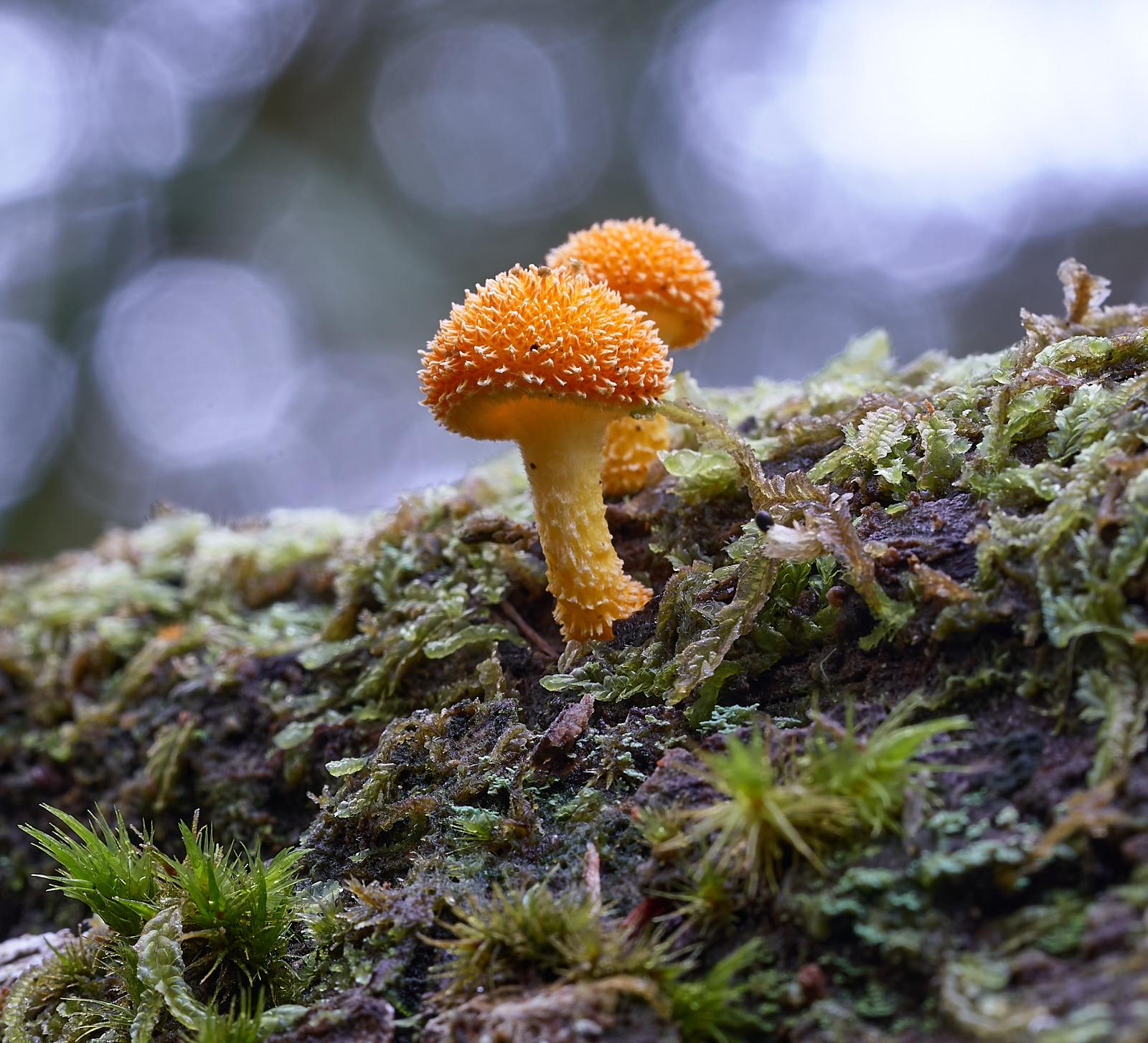 Golden-scruffy CollybiaA small golden mushroom with a scruffy cap, coming up from a rotting stick. The mushroom is only the fruit.
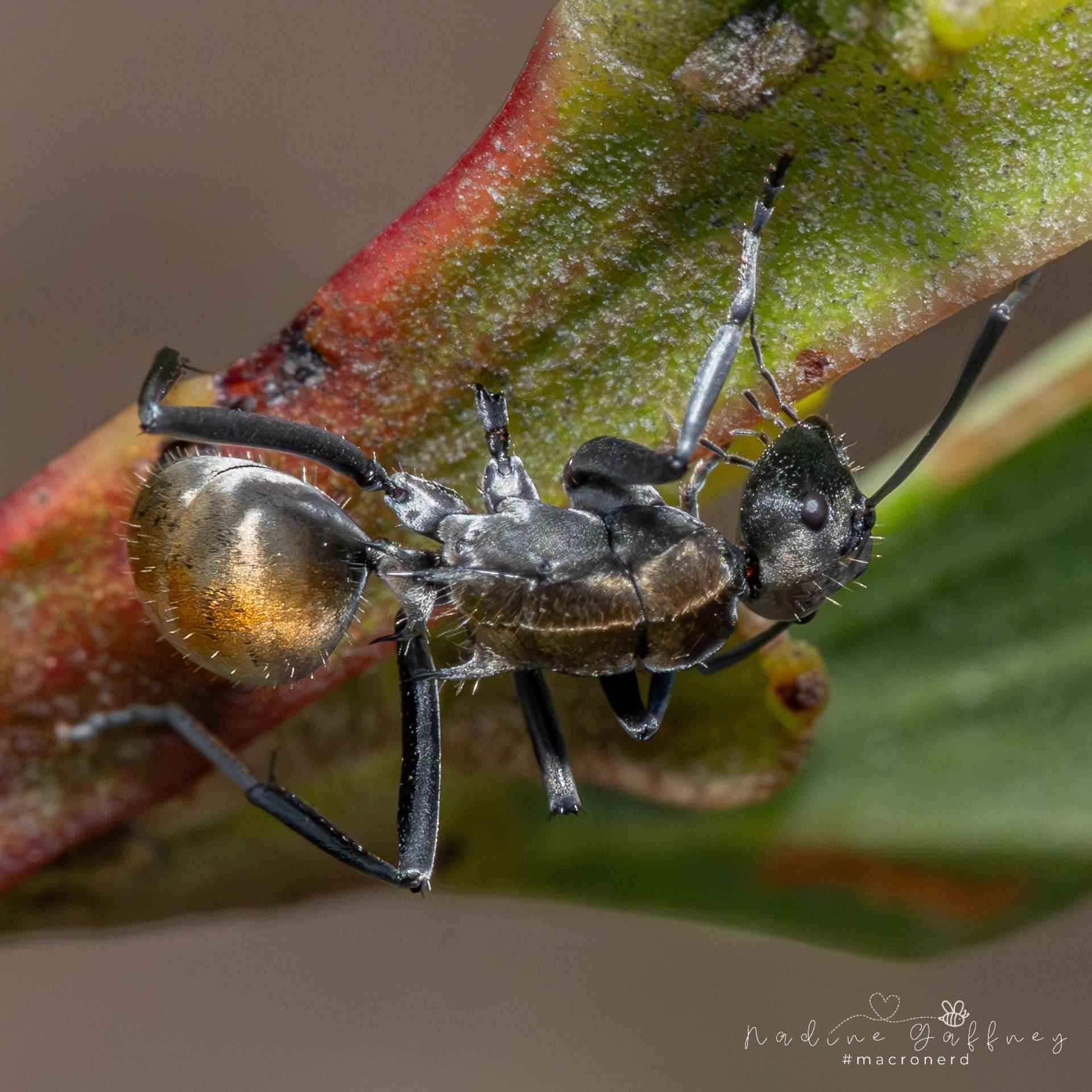 Golden-tailed Spiny AntThat golden shine is a uniform, and this ant isn't the only one wearing it. Scientists have found at least 140 species that seem to belong to one golden look-alike club: mostly ants, but also spiders, true bugs, a treehopper and a velvet ant, all with gold bodies and an ant's shape.
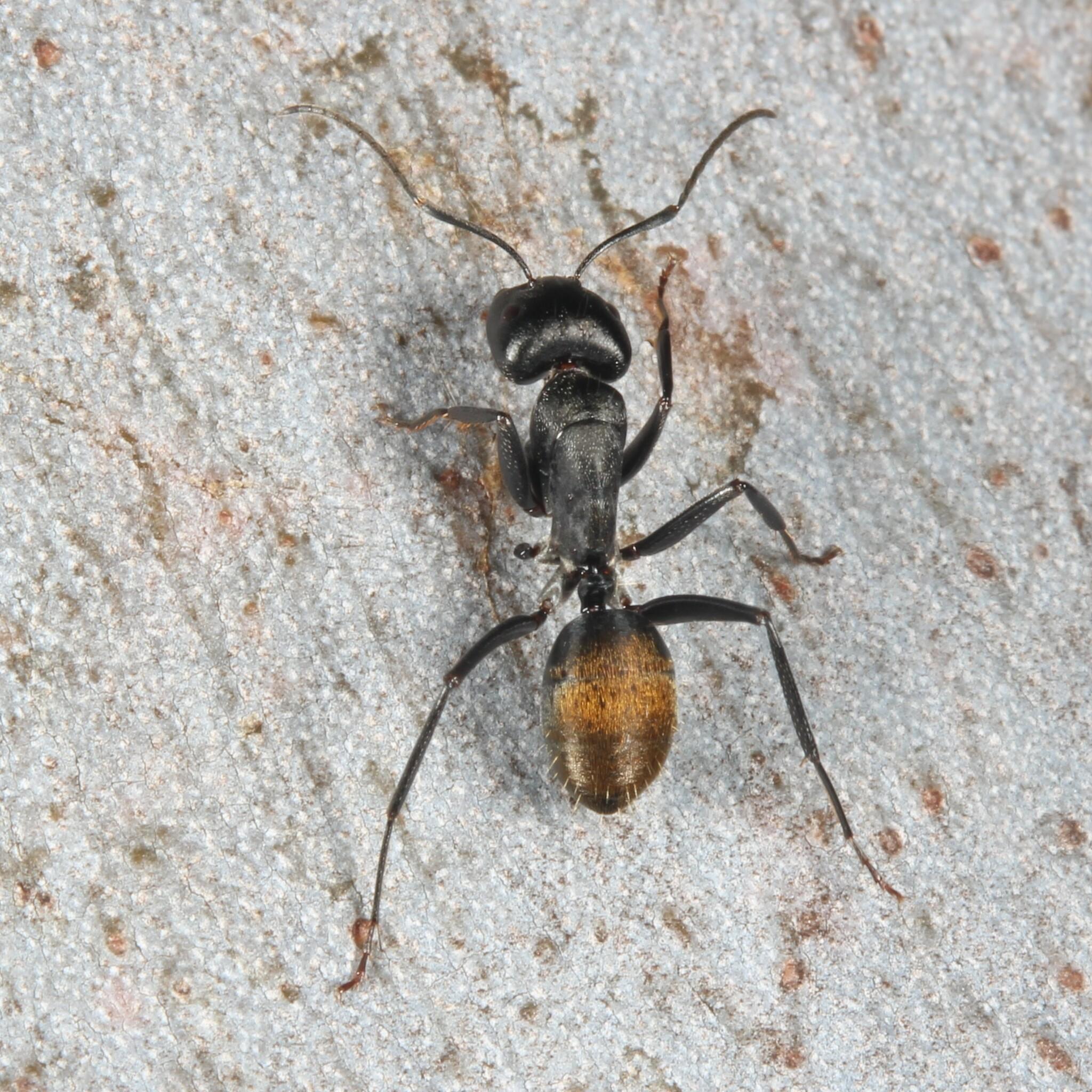 Golden-tailed Sugar AntThe gold on this ant is a uniform. Scientists have found at least 140 species that seem to belong to one golden look-alike club: a shining golden body and the shape of an ant.
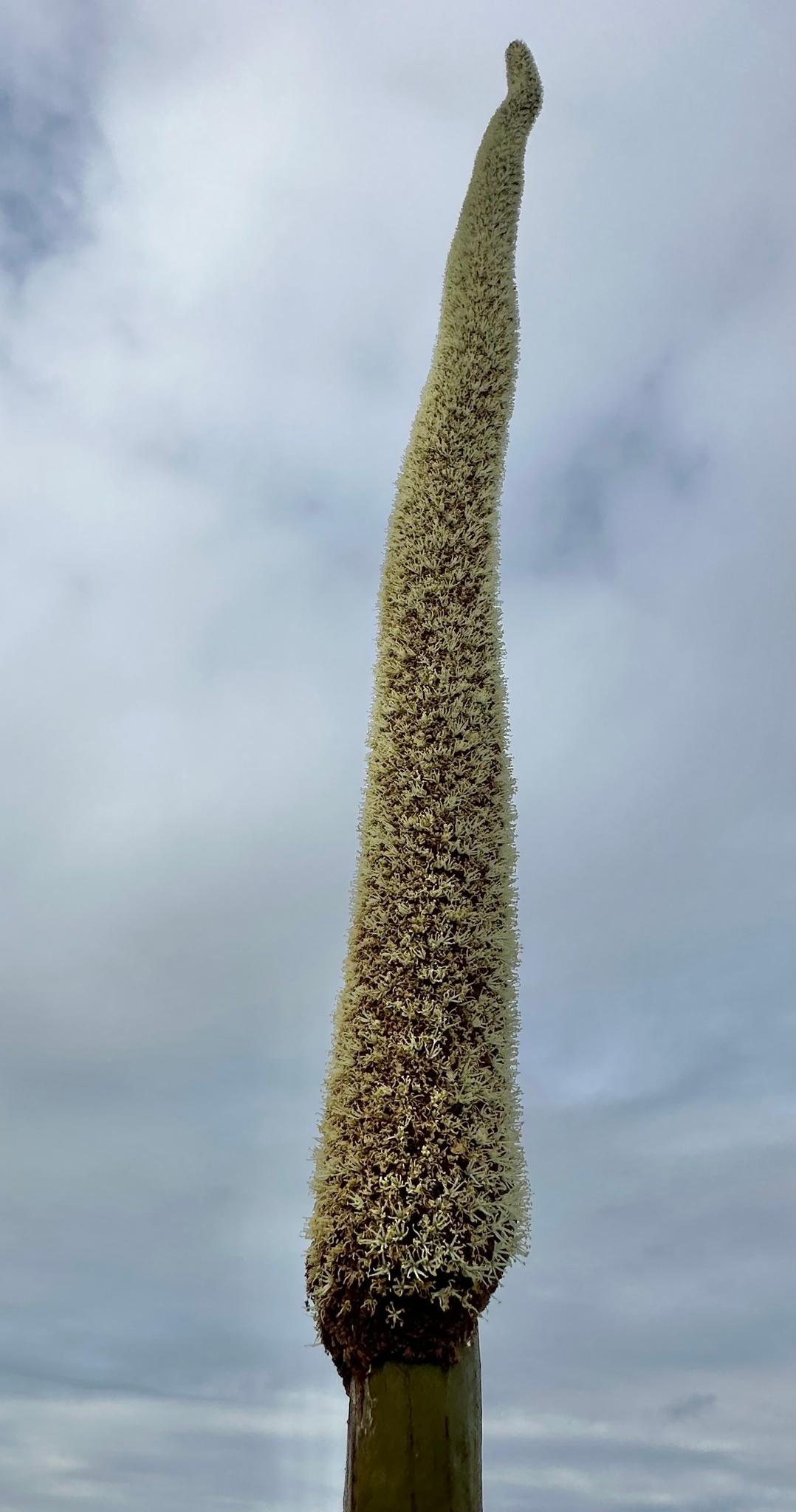 Grass trees flowering after fireThe bush around it is black, and out of a scorched grass tree comes a spike up to four metres long, carrying hundreds of nectar-rich flowers. Grass trees don't need fire to flower, but fire spurs them on.
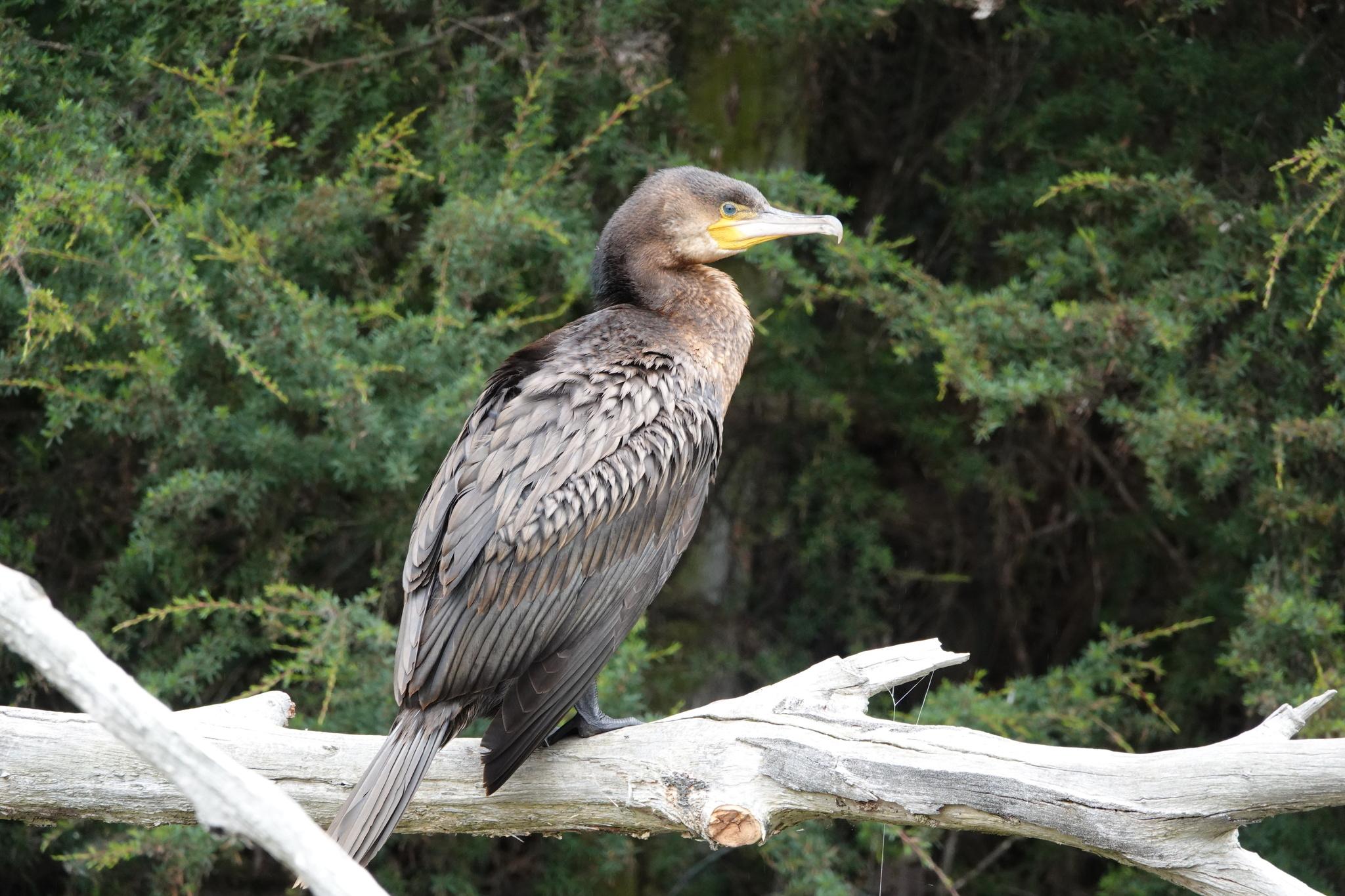 Great CormorantThe largest of Australia's cormorants, and one of the largest in the world. Underwater it chases fish with its feet, not its wings.
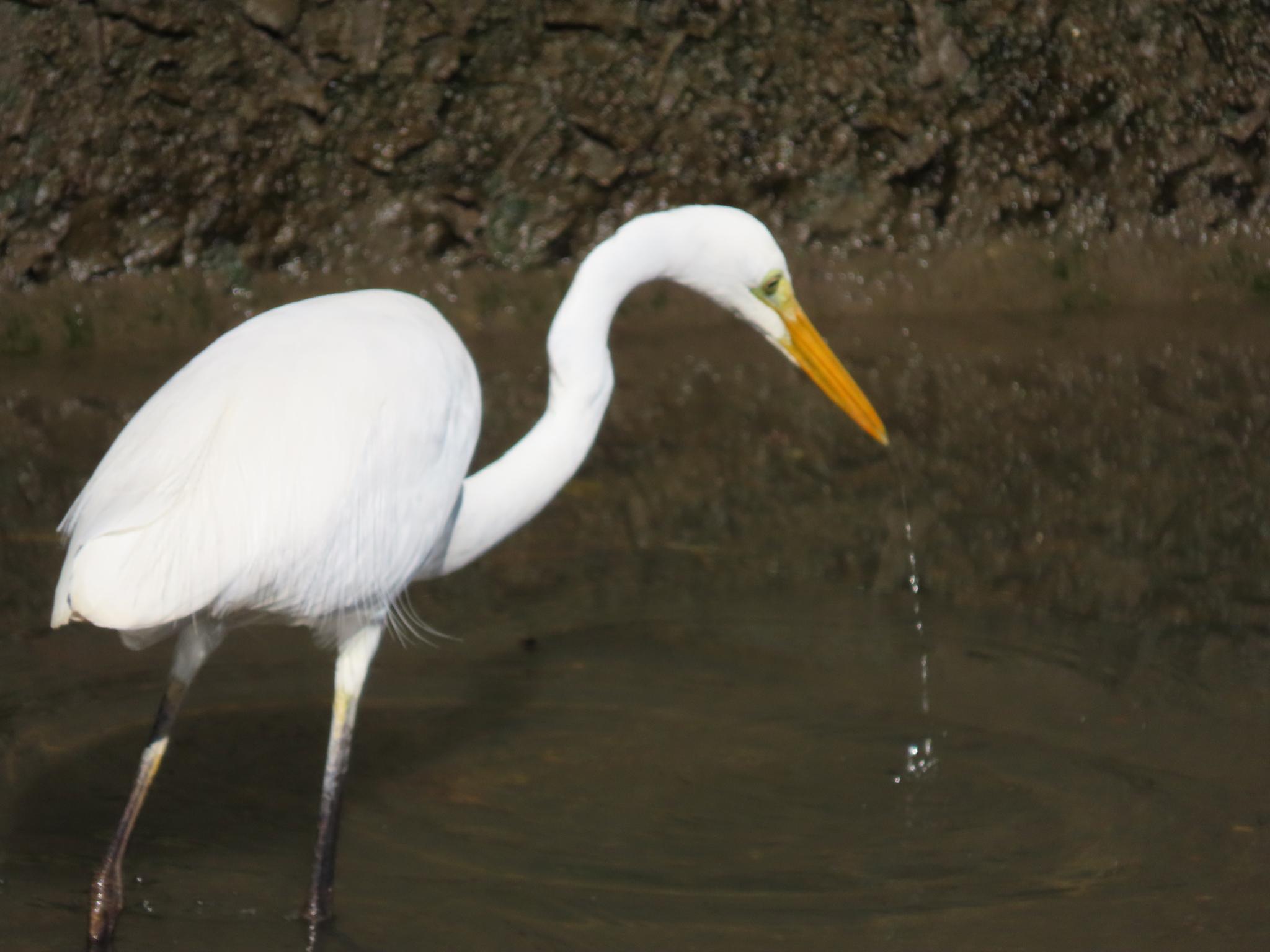 Great EgretIn spring, the great egret dresses up. Its yellow bill turns mostly black, the bare skin on its face turns green, and long, hair-like plumes hang across its back.
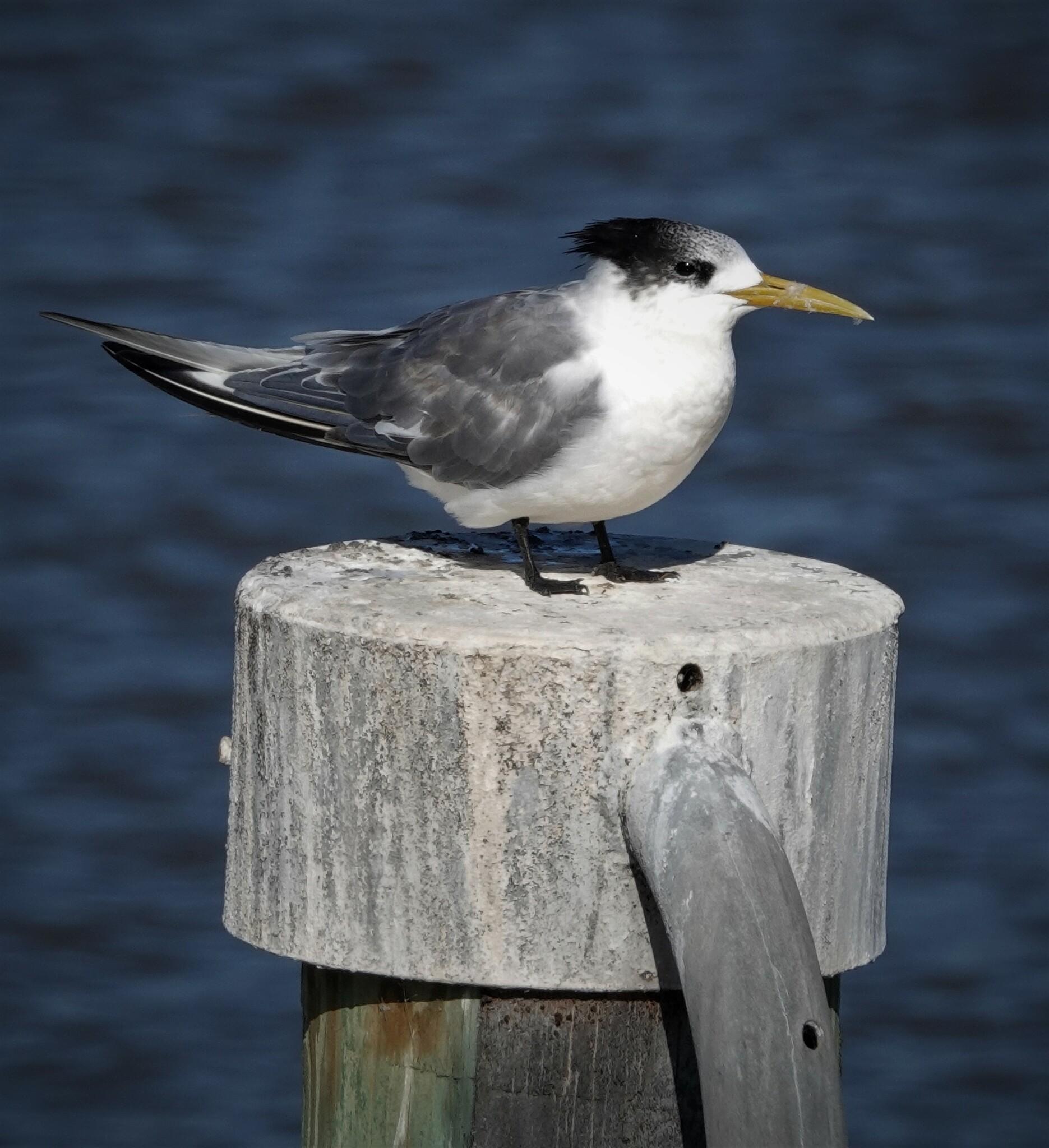 Greater Crested TernThe bird hanging over the water, then dropping into it, is a crested tern. Like other terns, it's related to gulls but has a straighter, more pointed bill, slimmer wings and a forked tail.
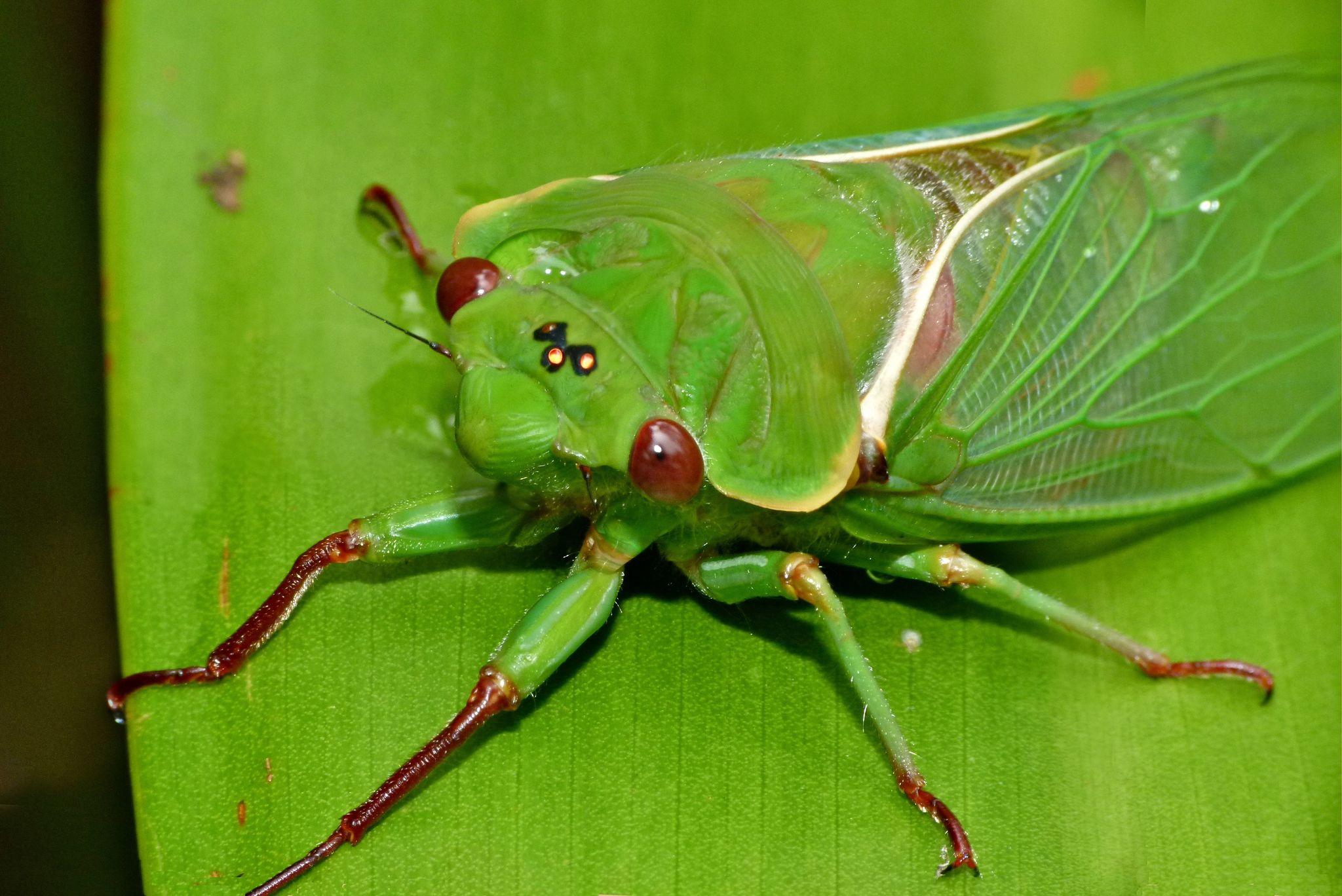 Green GrocerThat empty shell low on the trunk is the door a green grocer climbed out of. Look at the ground below it.
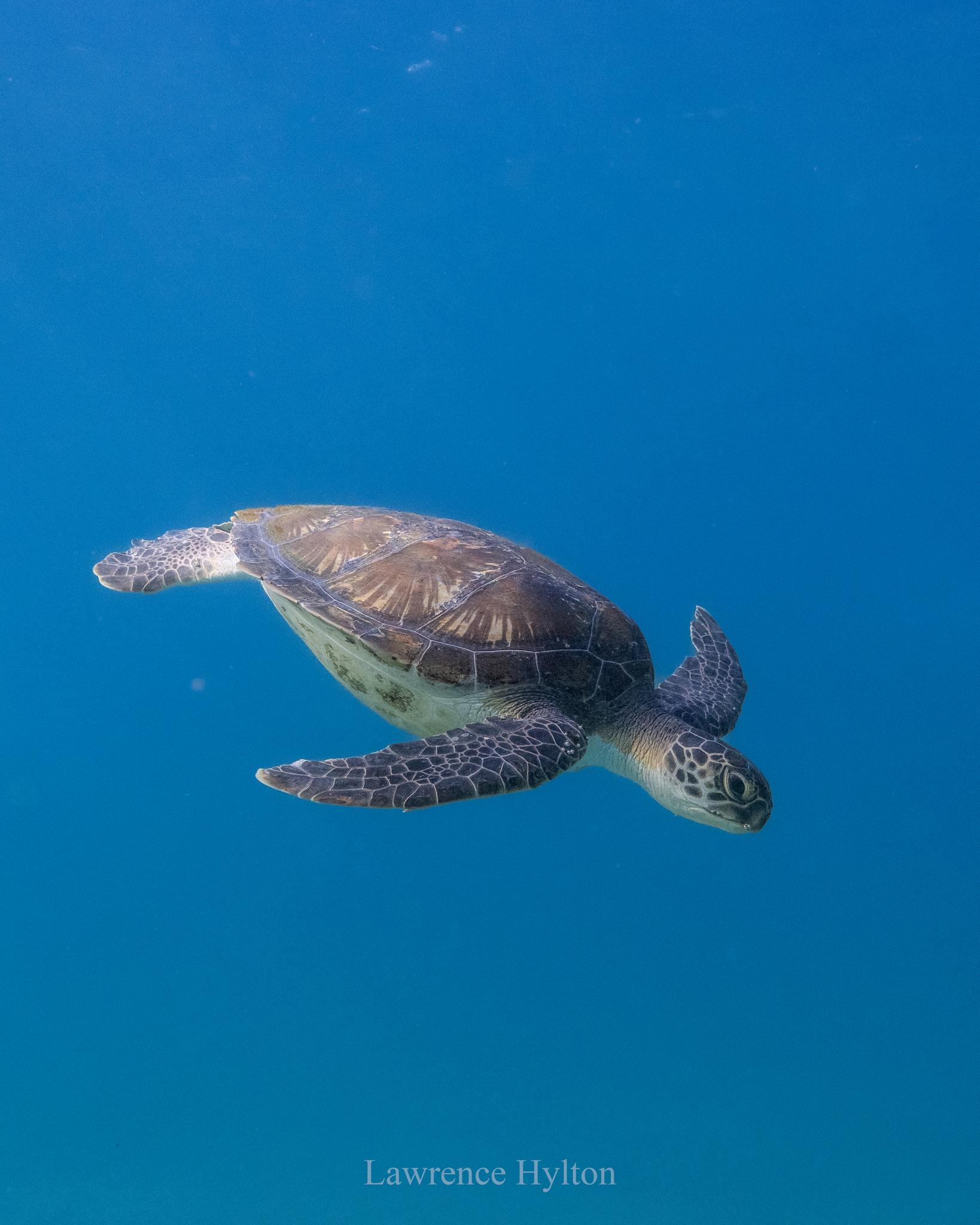 Green Sea TurtleA green turtle isn't named for its shell. It's named for the colour of its fat.
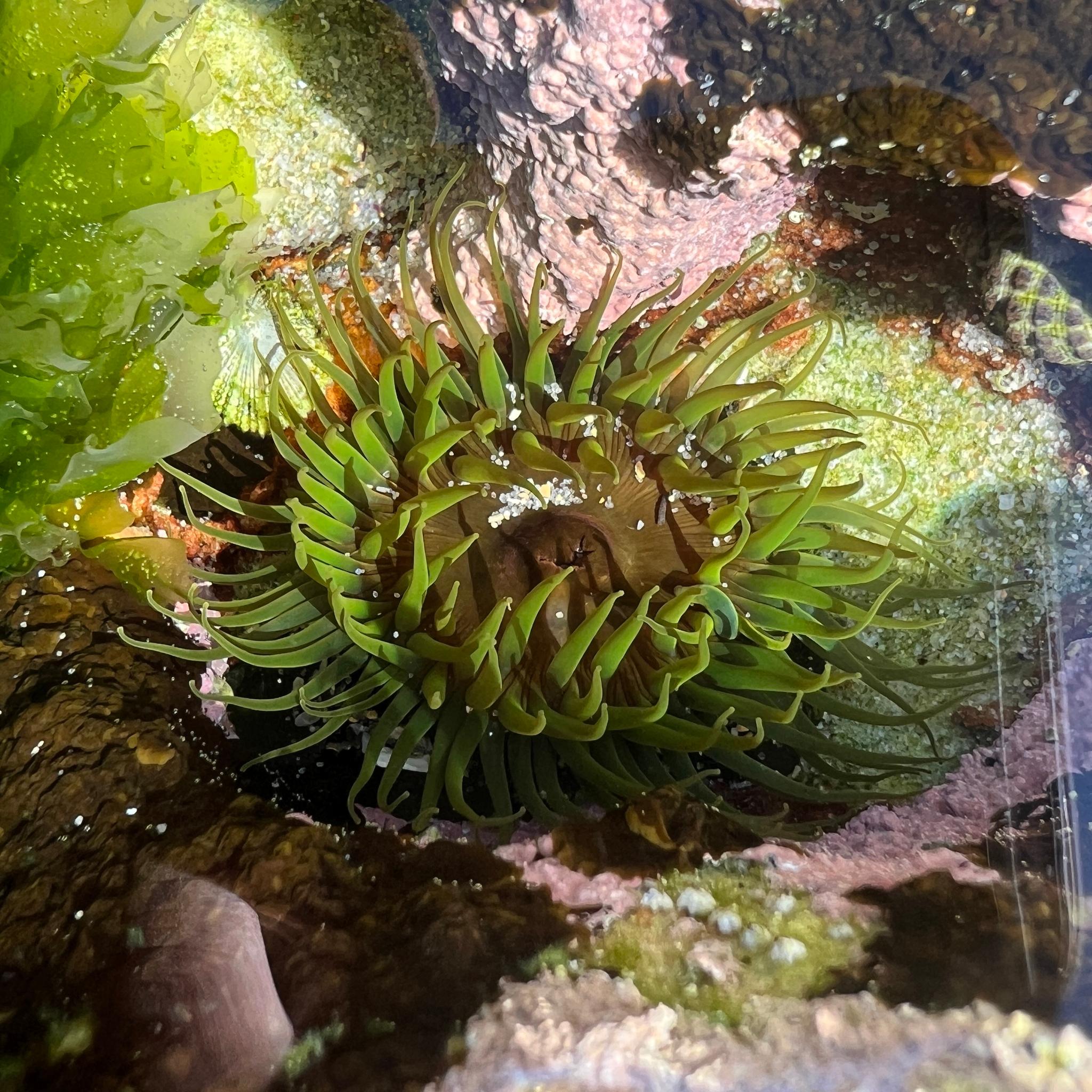 Green Snakelock AnemoneIts tentacles writhe in the water like a head of snakes, which is where the name comes from. Each one is part of a trap for the small animals the tide brings in.
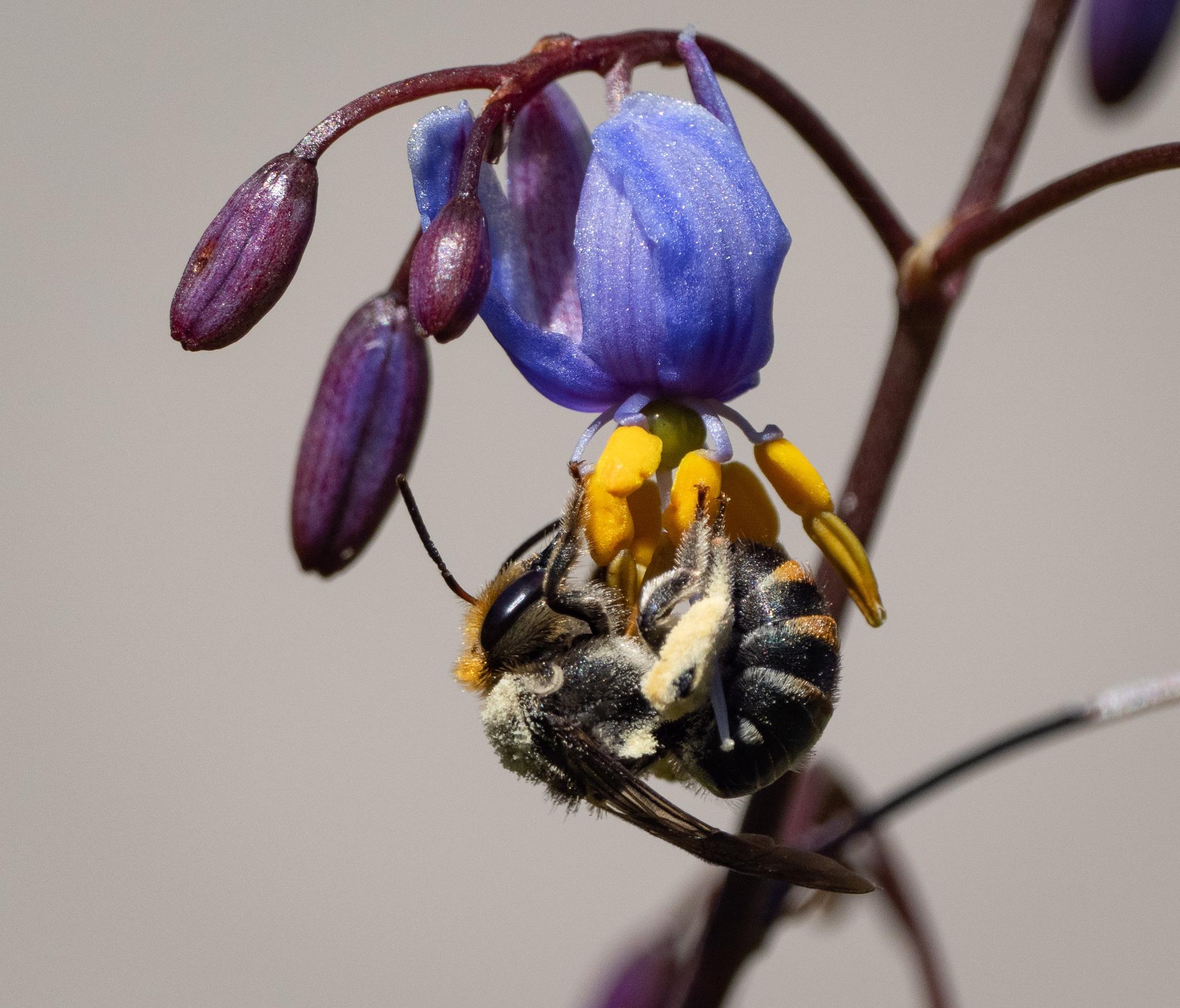 Green-and-gold Nomia BeeBy day, male nomia bees forage for nectar like any bee. At night, hundreds of them gather together, clinging to grass stems.
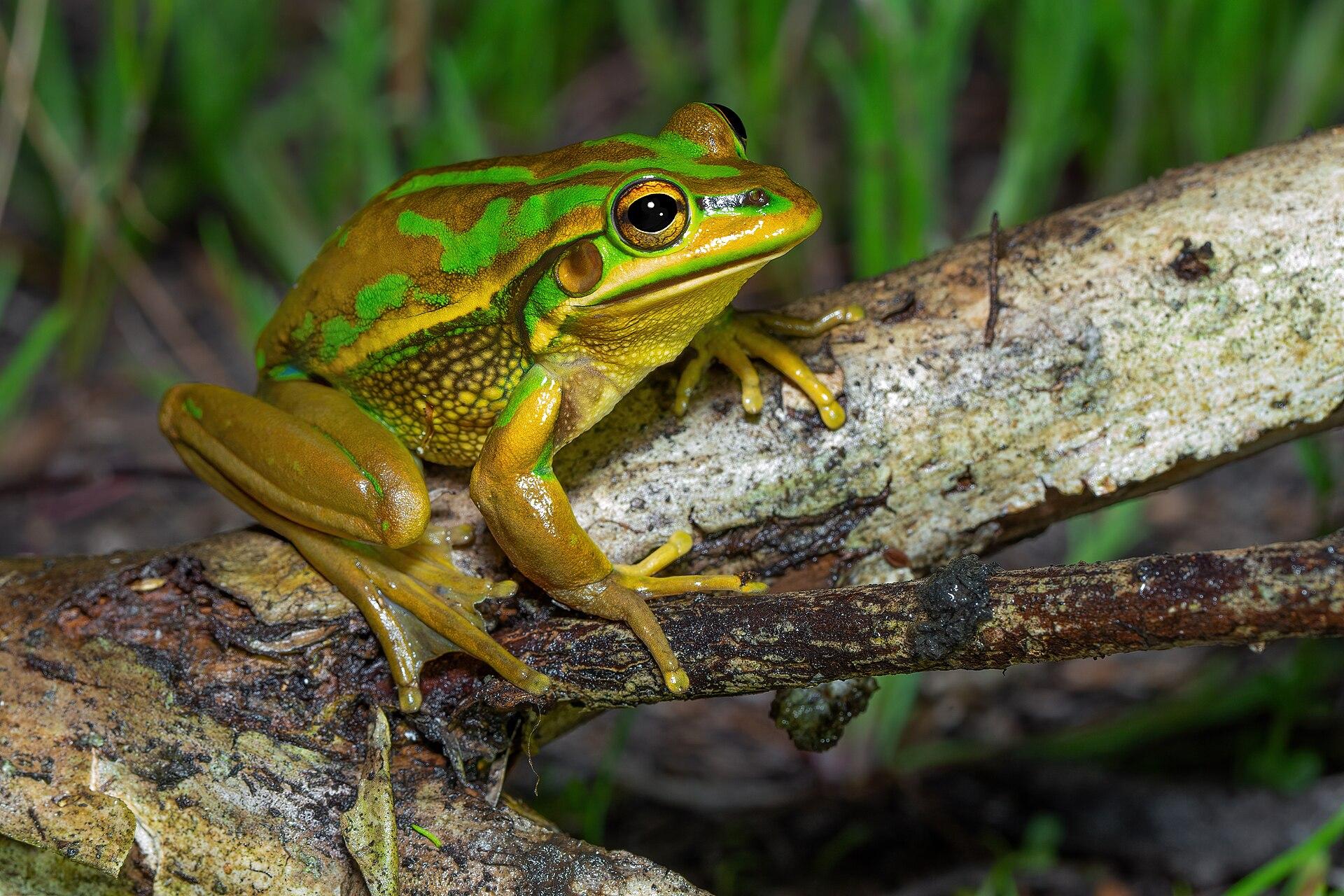 Green-and-Golden Bell FrogA frog sitting out in the sun. Most Australian frogs keep out of it.
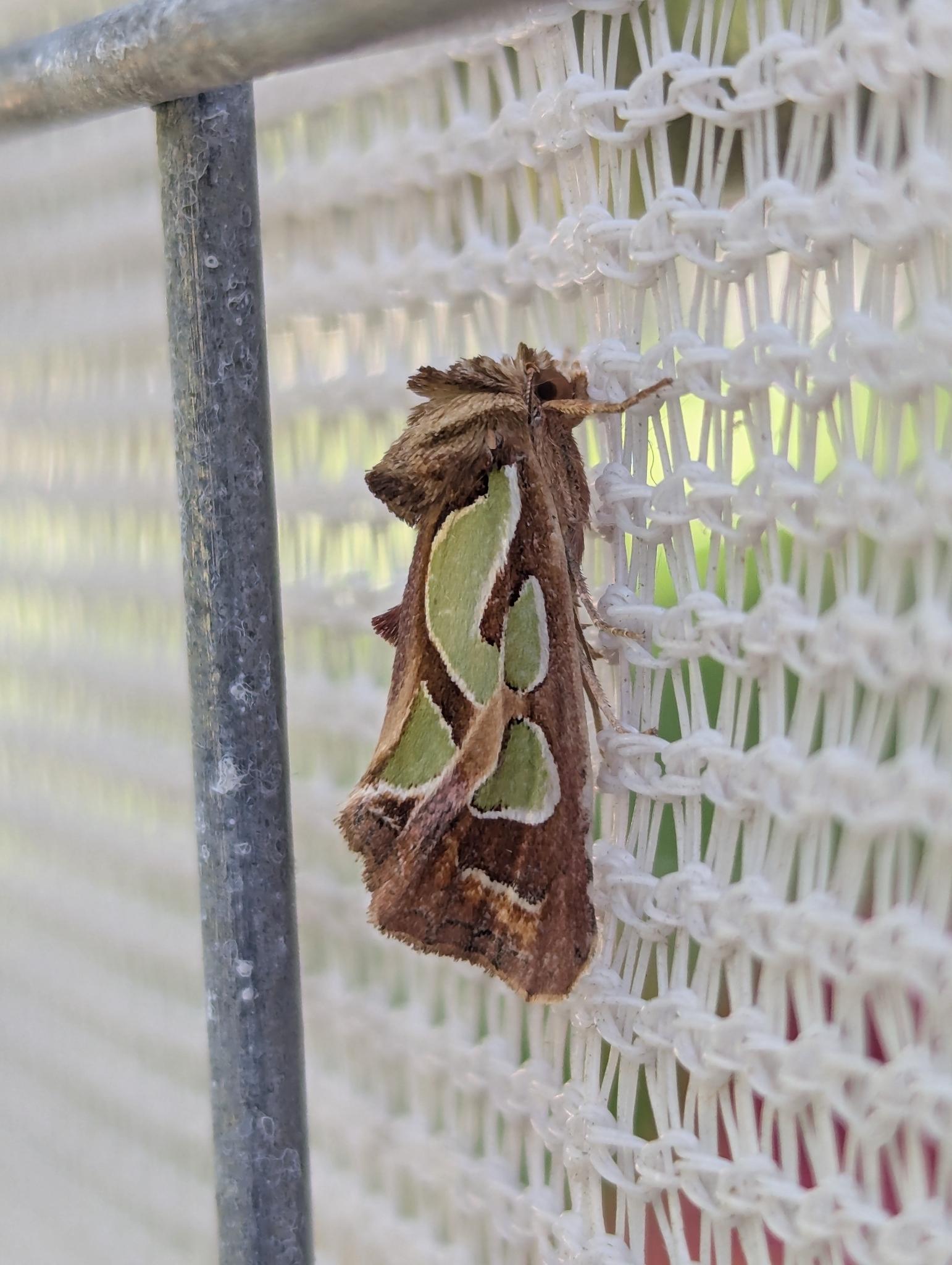 Green-blotched MothThe green on this moth's wings is made of scales. Each blotch is a patch of tiny overlapping scales, coloured and laid like tiles.
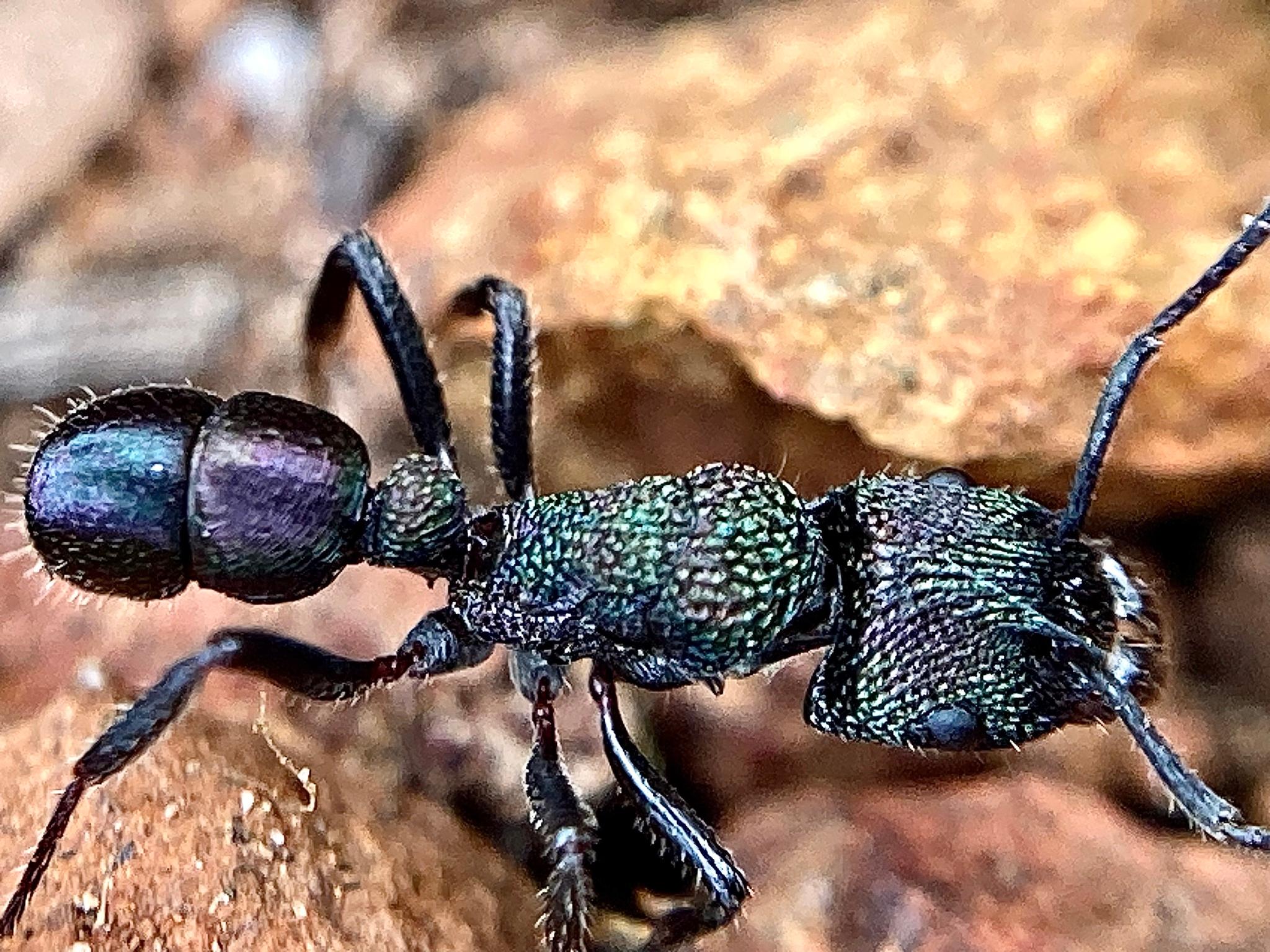 Green-head AntThe metallic green ant on the path is one of the most abundant and widespread insects in Australia. And it's one of the toughest.
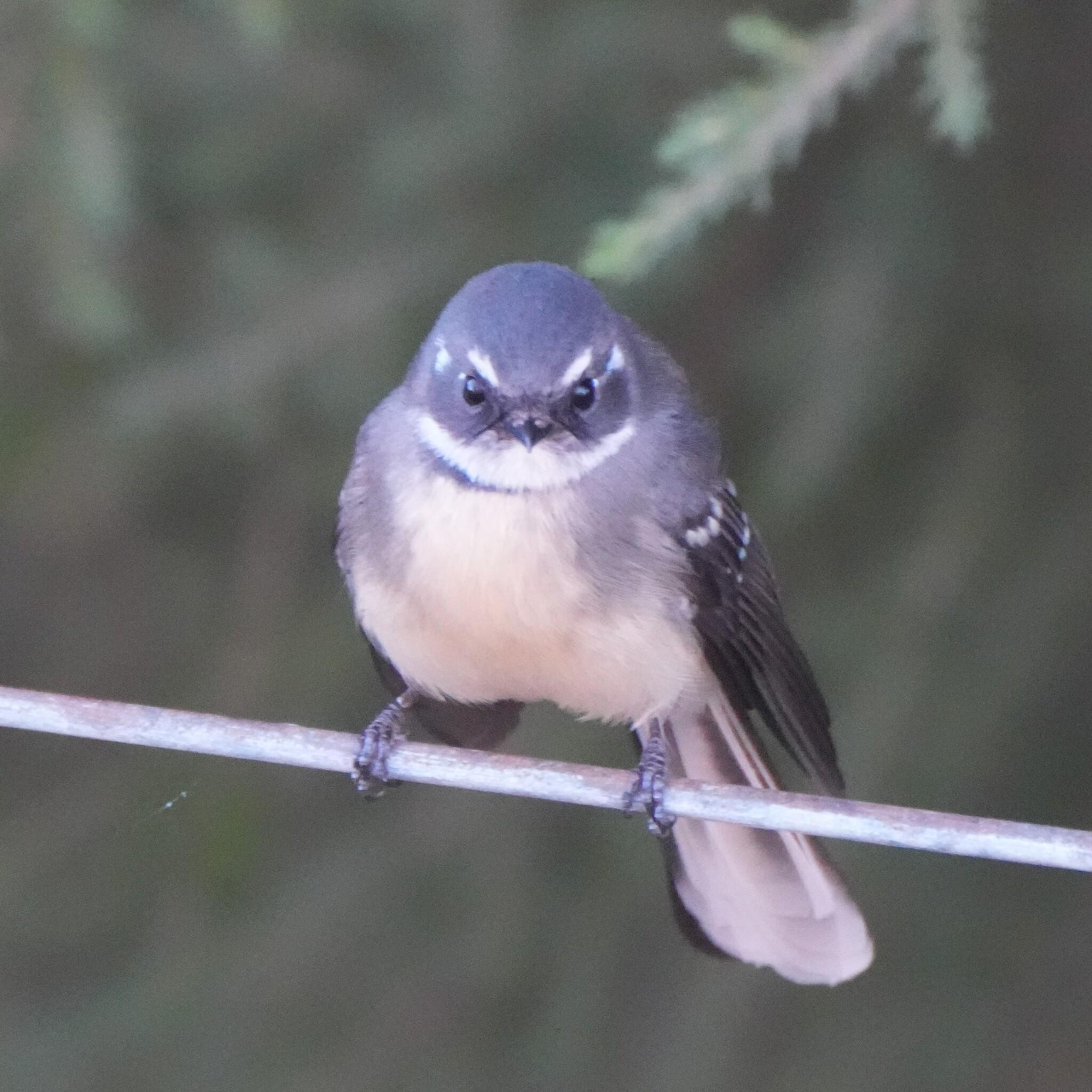 Grey FantailIt's a songbird, and songbirds have a surprising home.
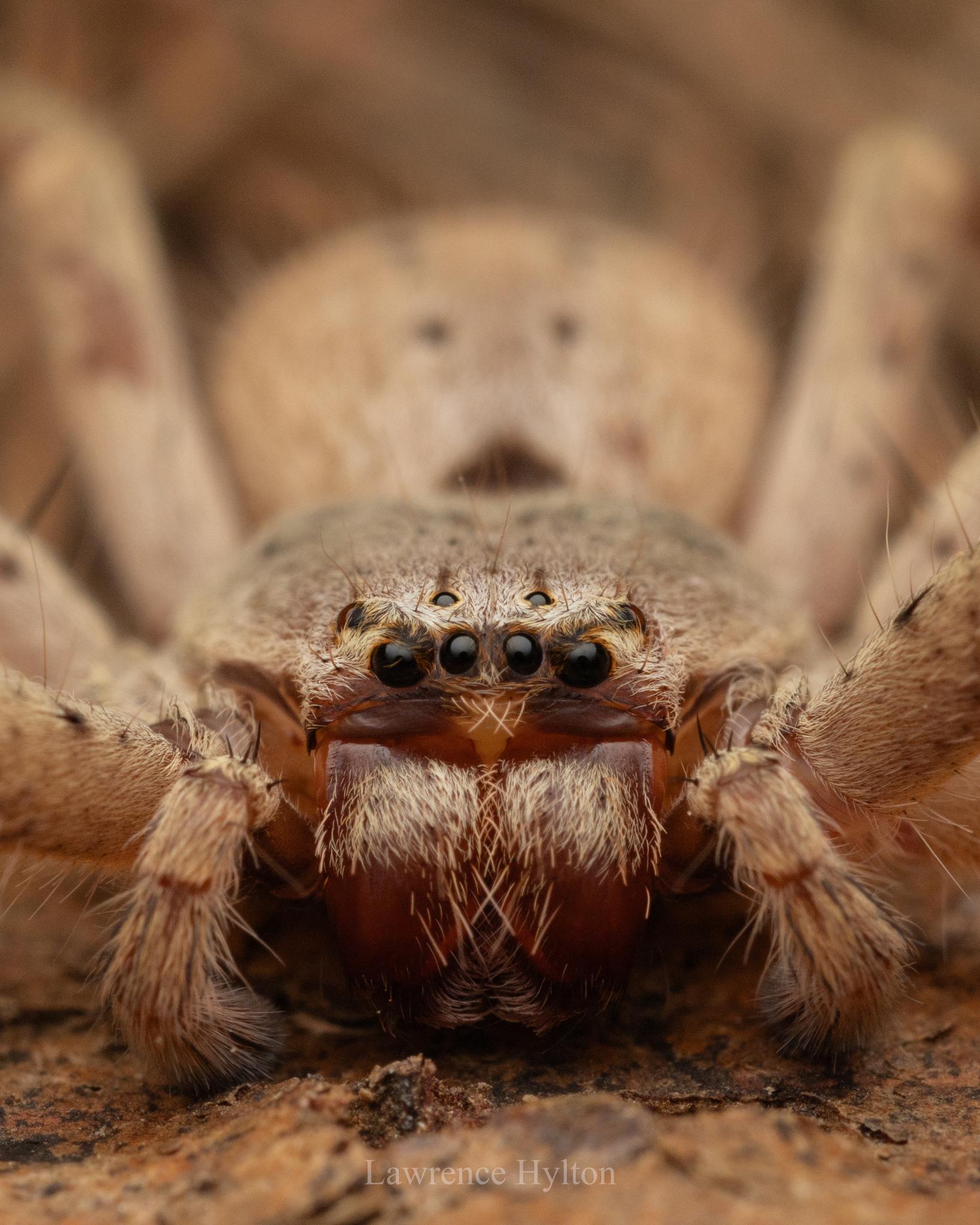 Grey HuntsmanTo a lot of people, a huntsman on the wall is the scariest thing in the house. Here's what mothers in this one's genus do.
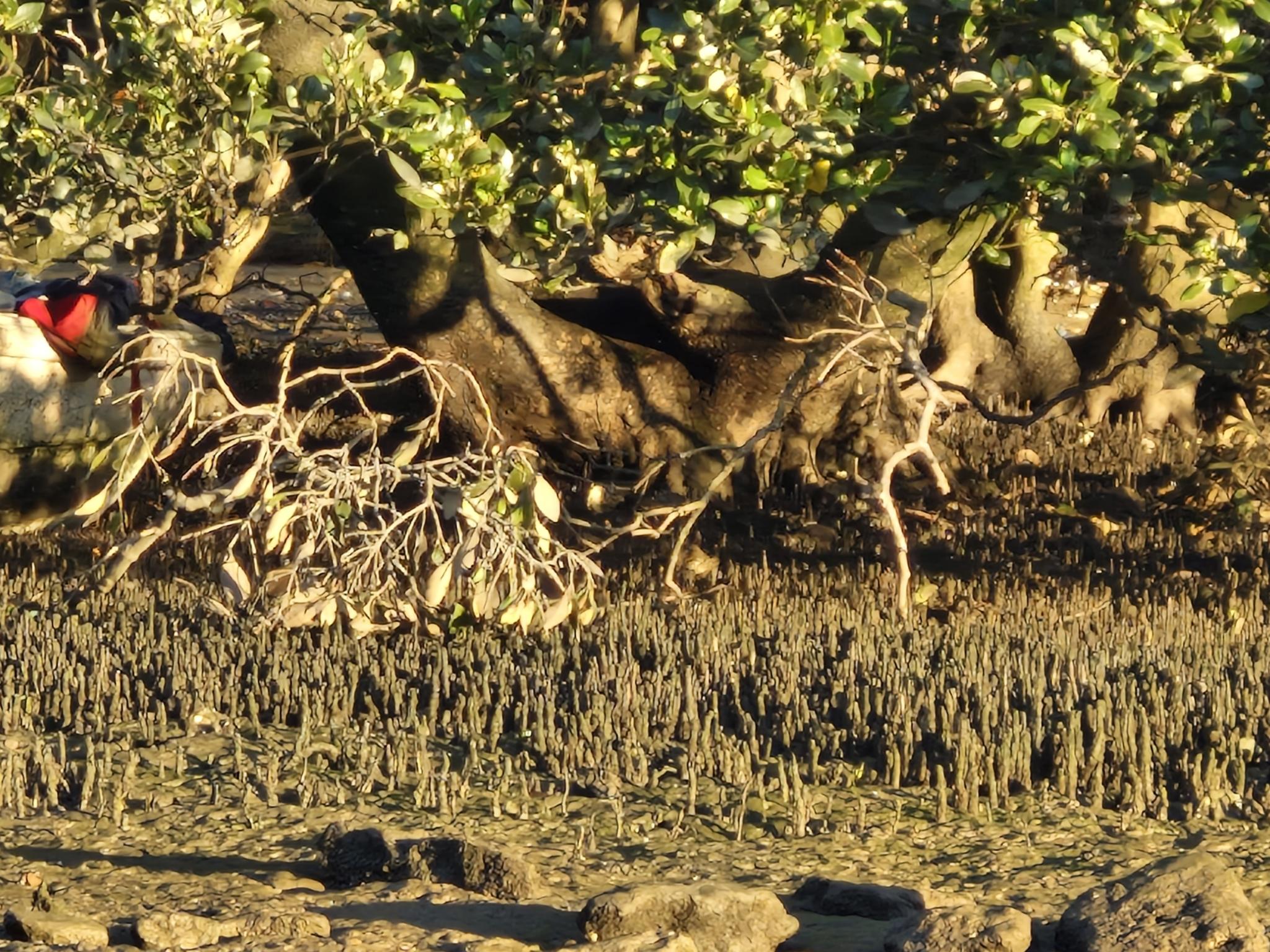 Grey MangroveThe pencil-like spikes sticking up out of the mud around a grey mangrove are its roots, breathing roots sent up from shallow roots below. And on the branches, its seed is already sprouting while the fruit still hangs from the tree.
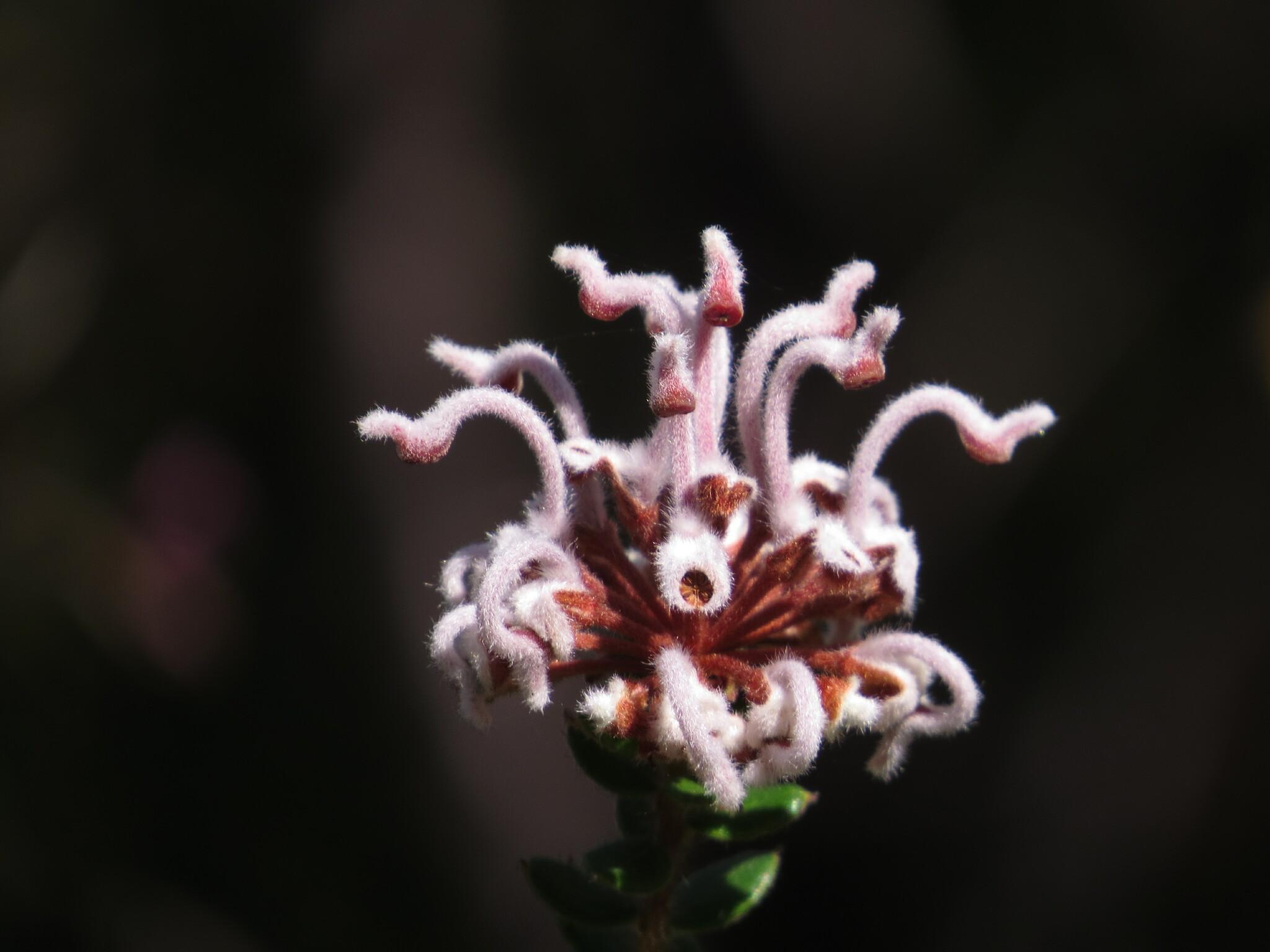 Grey Spider FlowerThe seeds of this grevillea are in the soil around it, waiting for a fire. After one passes, a pulse of seedlings comes up within months.
- Grey-headed Flying-foxBlind as a bat? Not this one.
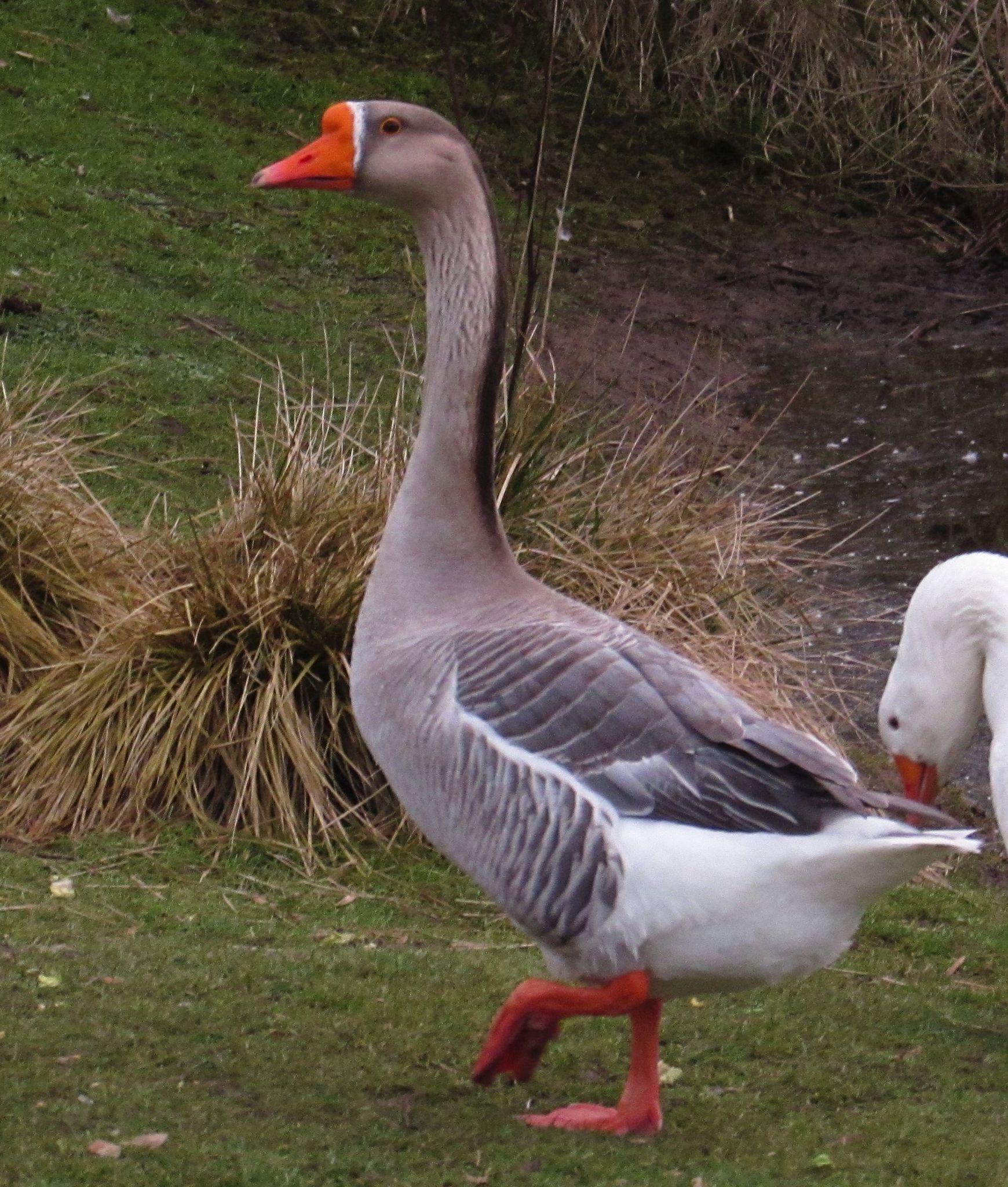 Greylag × Swan GooseIt looks like any park goose. It's a farm animal, not a native, and it's a cross between two separate lines of farm goose from opposite ends of Eurasia.
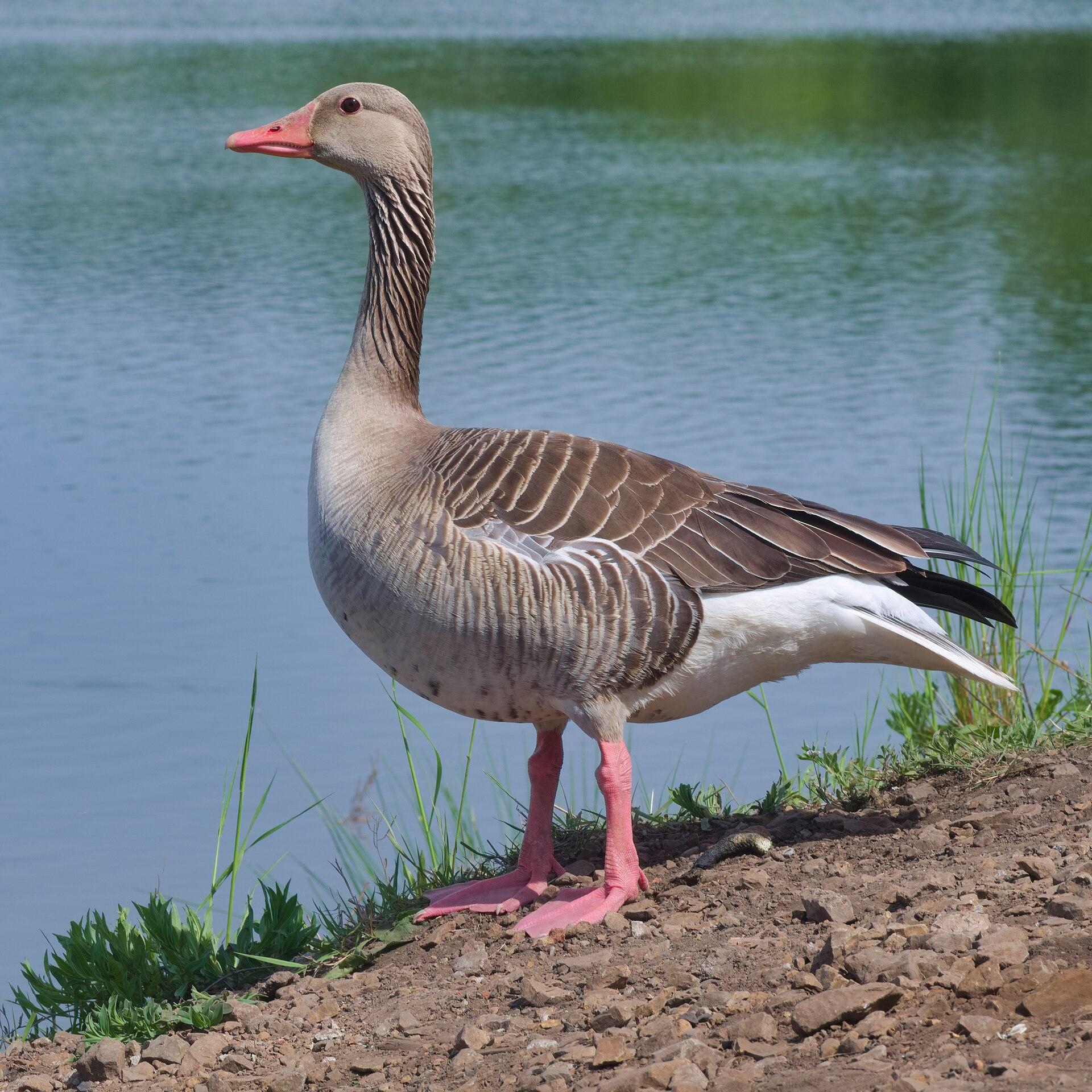 Greylag GooseThis goose is introduced, but it has a deep human story. The wild greylag goose is the ancestor of Europe's farmyard geese.
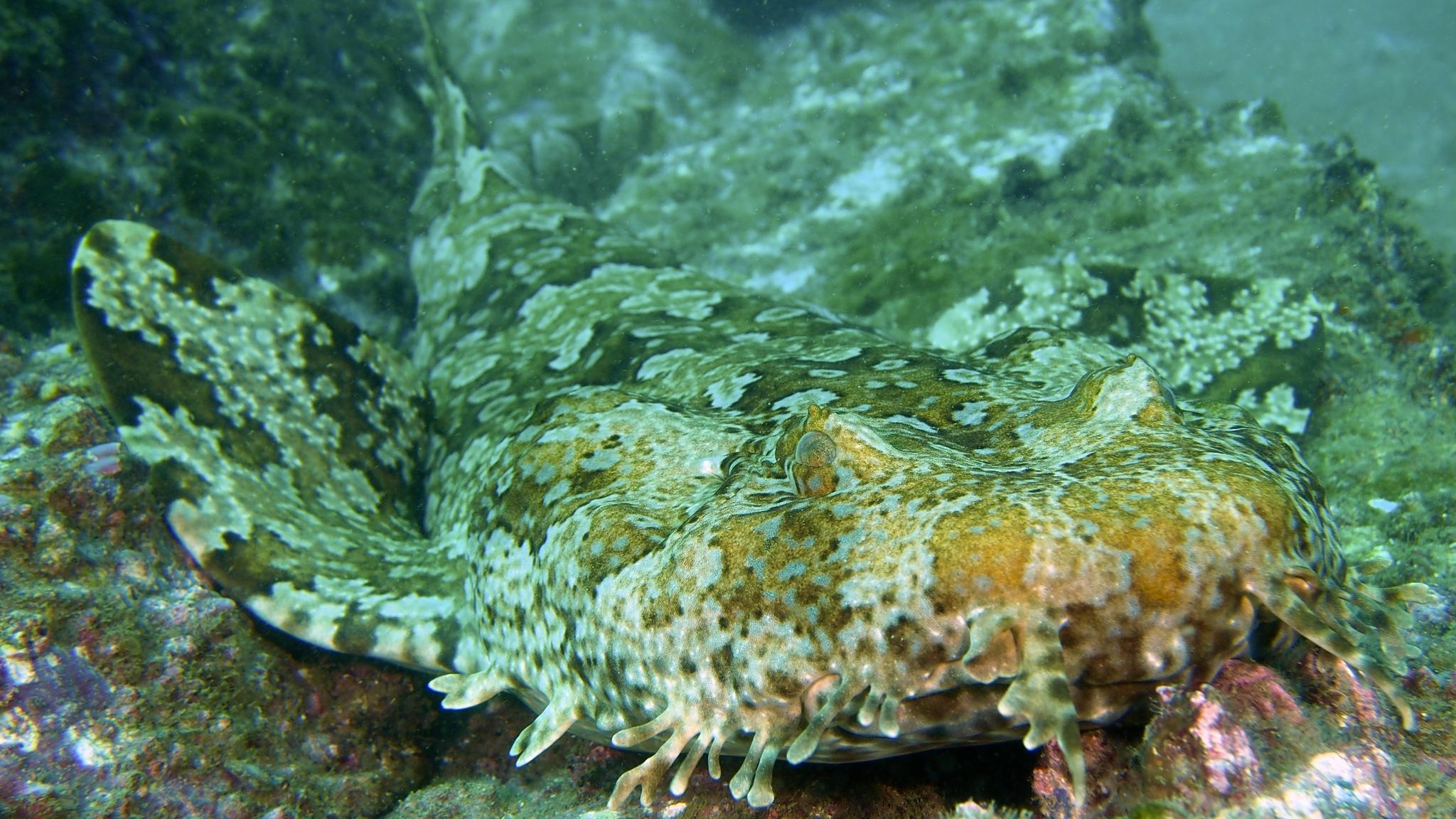 Gulf WobbegongA shark lying perfectly still on the bottom, patterned like the rocks around it. Many people believe sharks have to keep swimming or they'll drown.
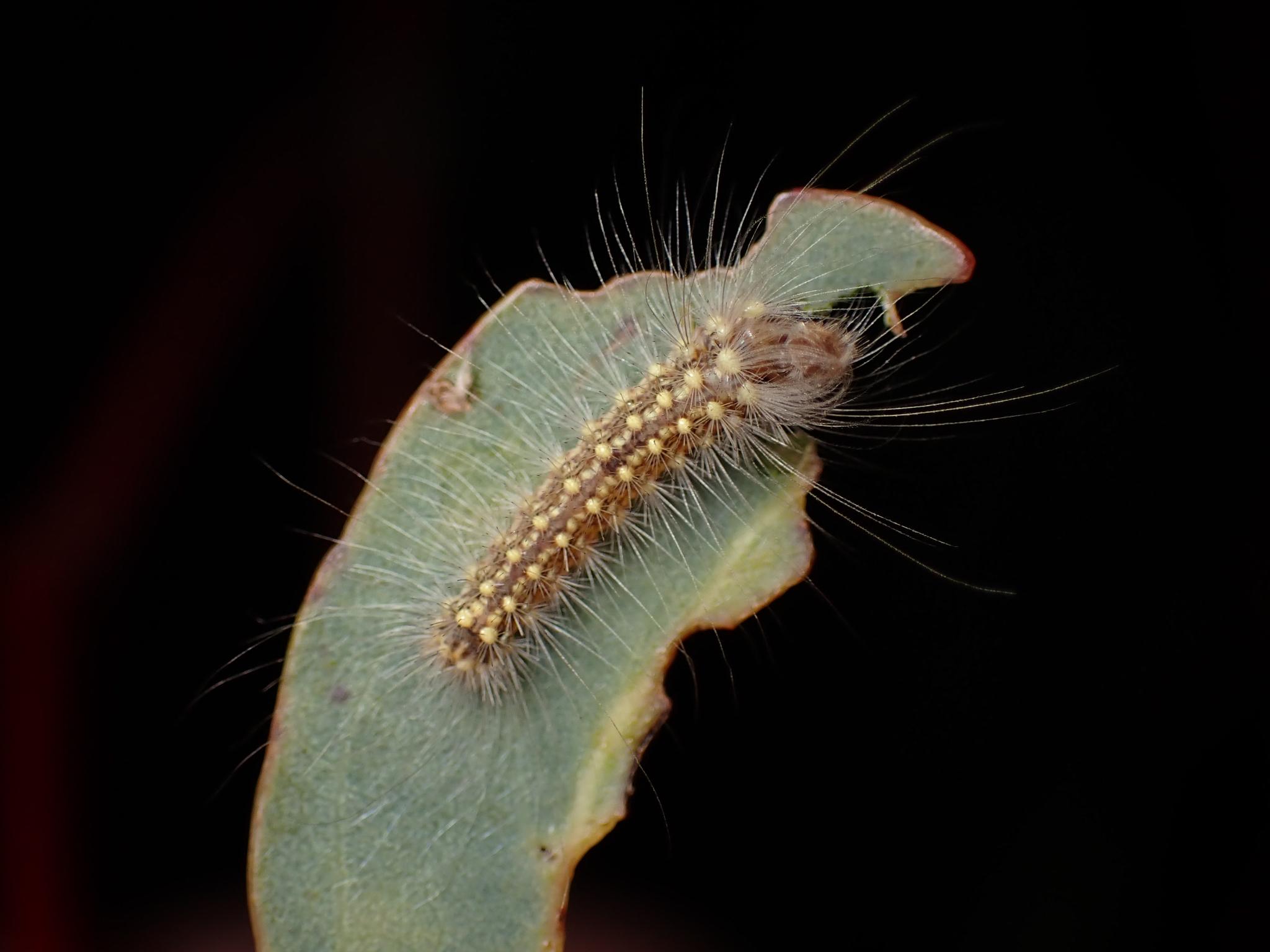 Gum Leaf SkeletoniserThat tower on its head is made of its own old heads. Each time this caterpillar moults, it keeps the empty head capsule, and the stack grows.
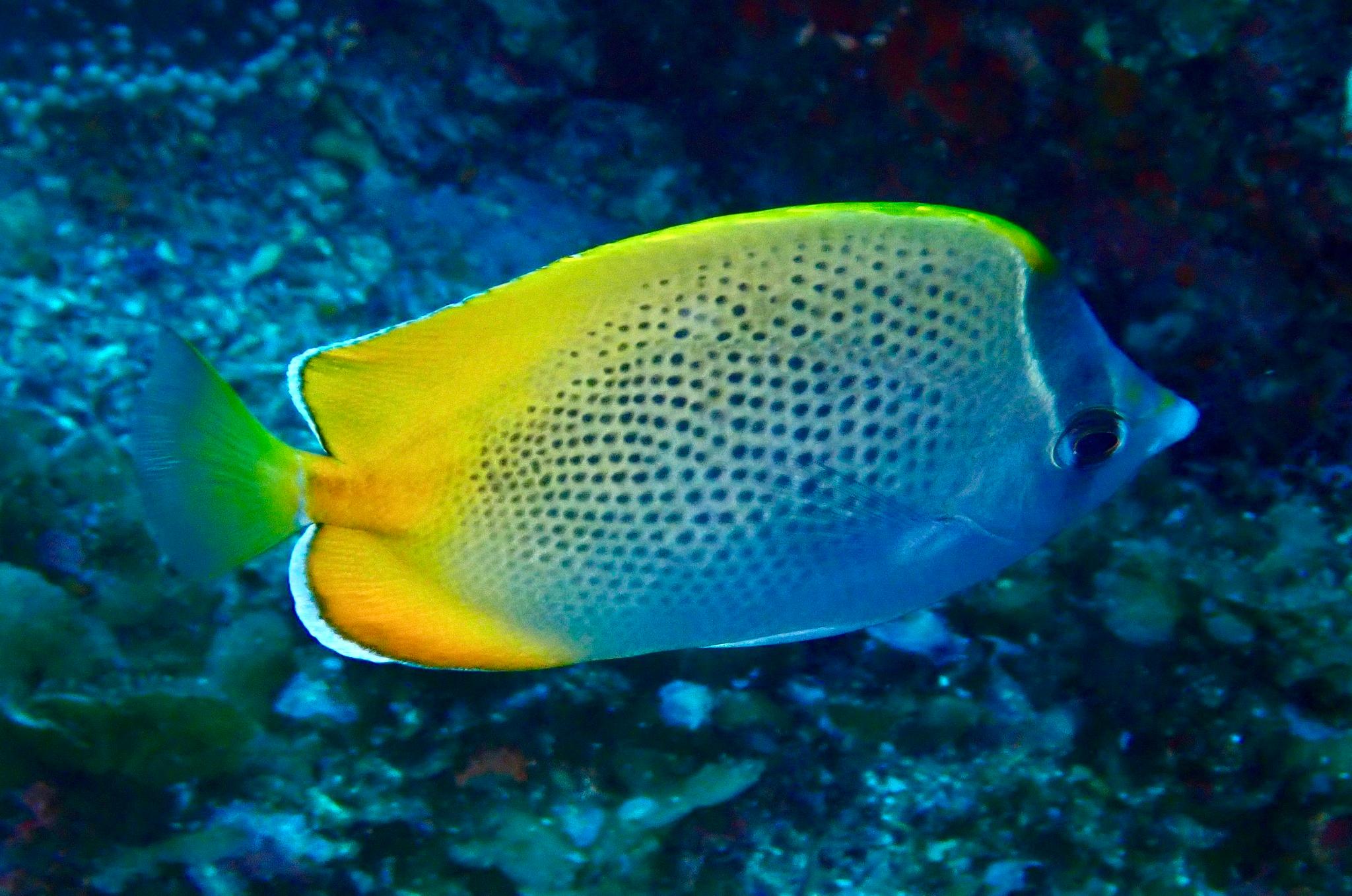 Gunther's ButterflyfishMost butterflyfishes are precision pickers, nosing over the reef and plucking food from it. This one broke away.
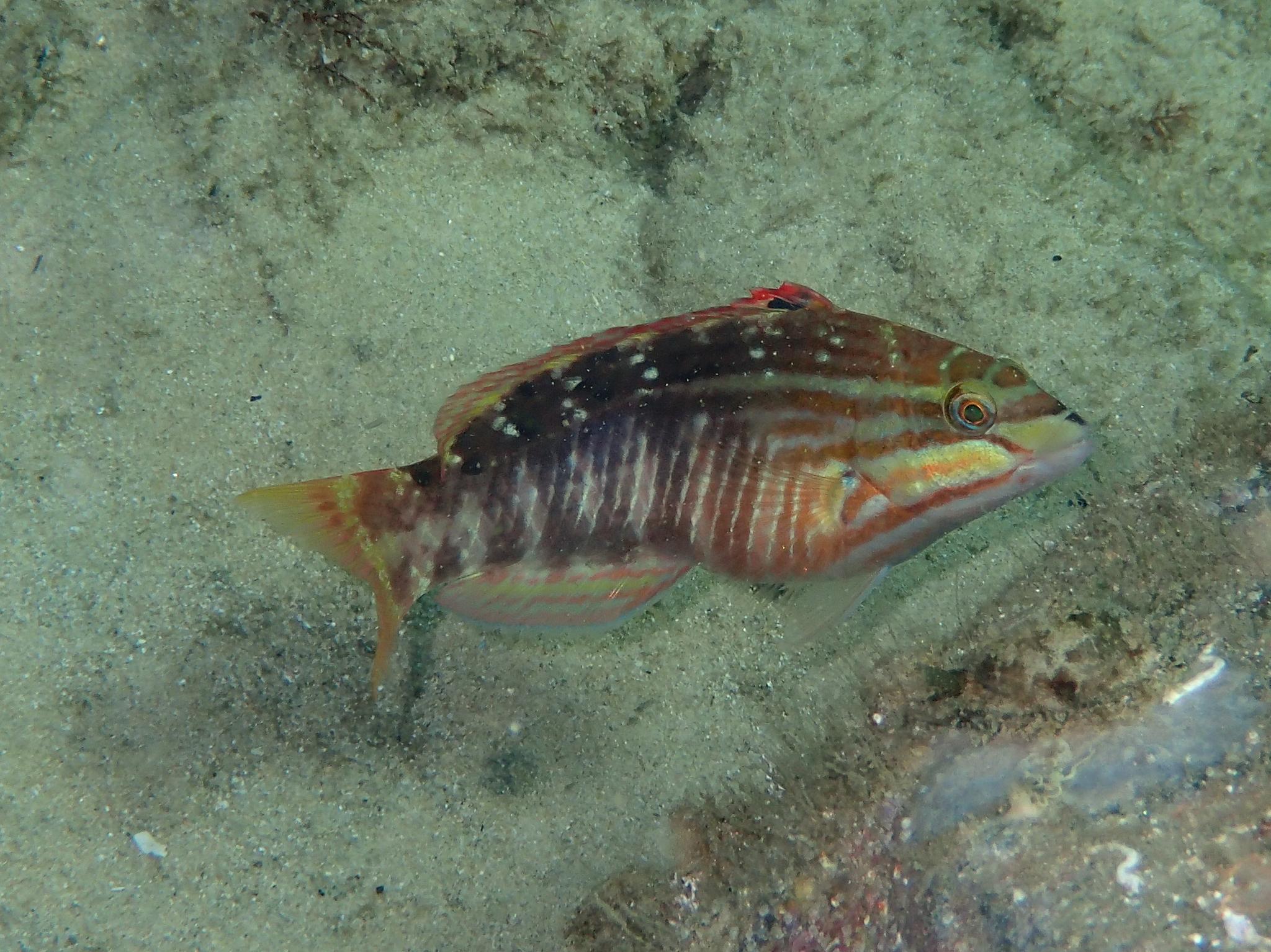 Gunther's WrasseMost wrasses tell you their life story in colour. Like most wrasses, the blue groper can change sex: every one starts life as a female, and the big blue ones are males that have changed.
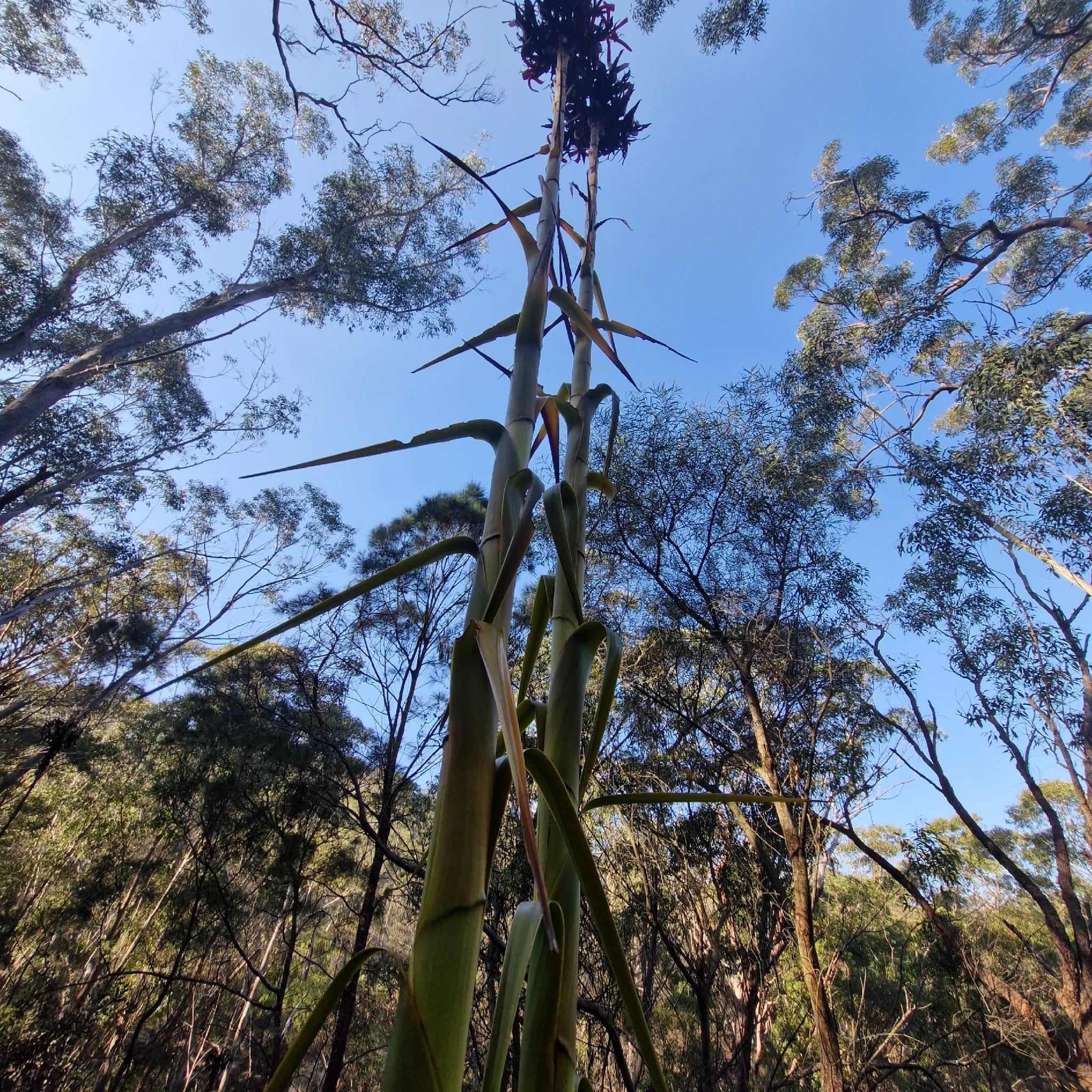 Gymea LilyIt sends up a flower stalk up to five metres high, topped with a ball of red flowers up to 70 cm across, out of a fountain of sword-shaped leaves up to 2.5 m long.
- Gymea lily spikes shooting upThe spike rises out of the fountain of leaves like something thrown, climbing towards a ball of red flowers up to 70 cm across, on a stalk that can grow to five metres.
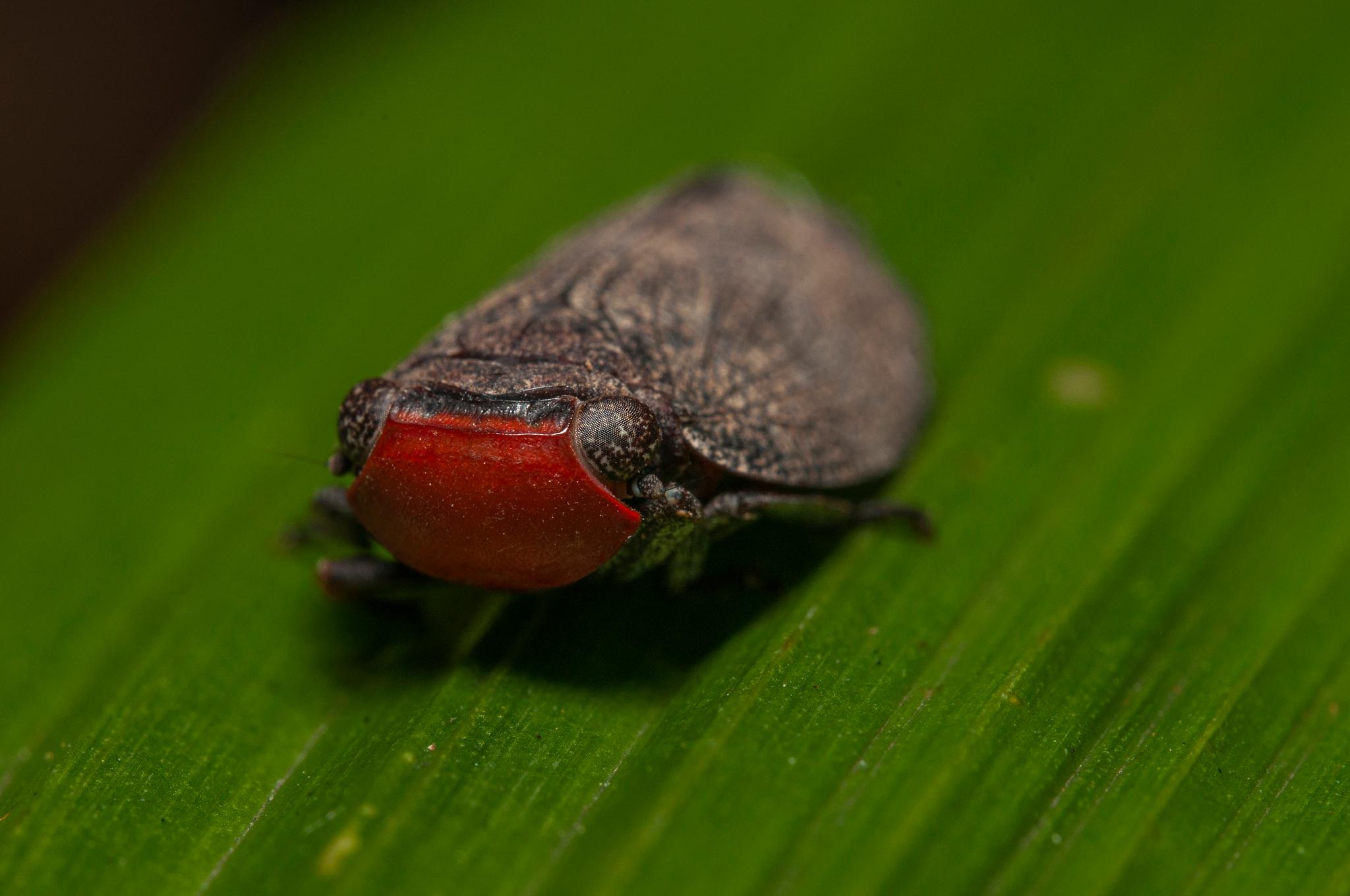 Hackerobrachys viridiventrisThis little planthopper has no common name. It has only its scientific one, and *viridiventris* just means "green belly".
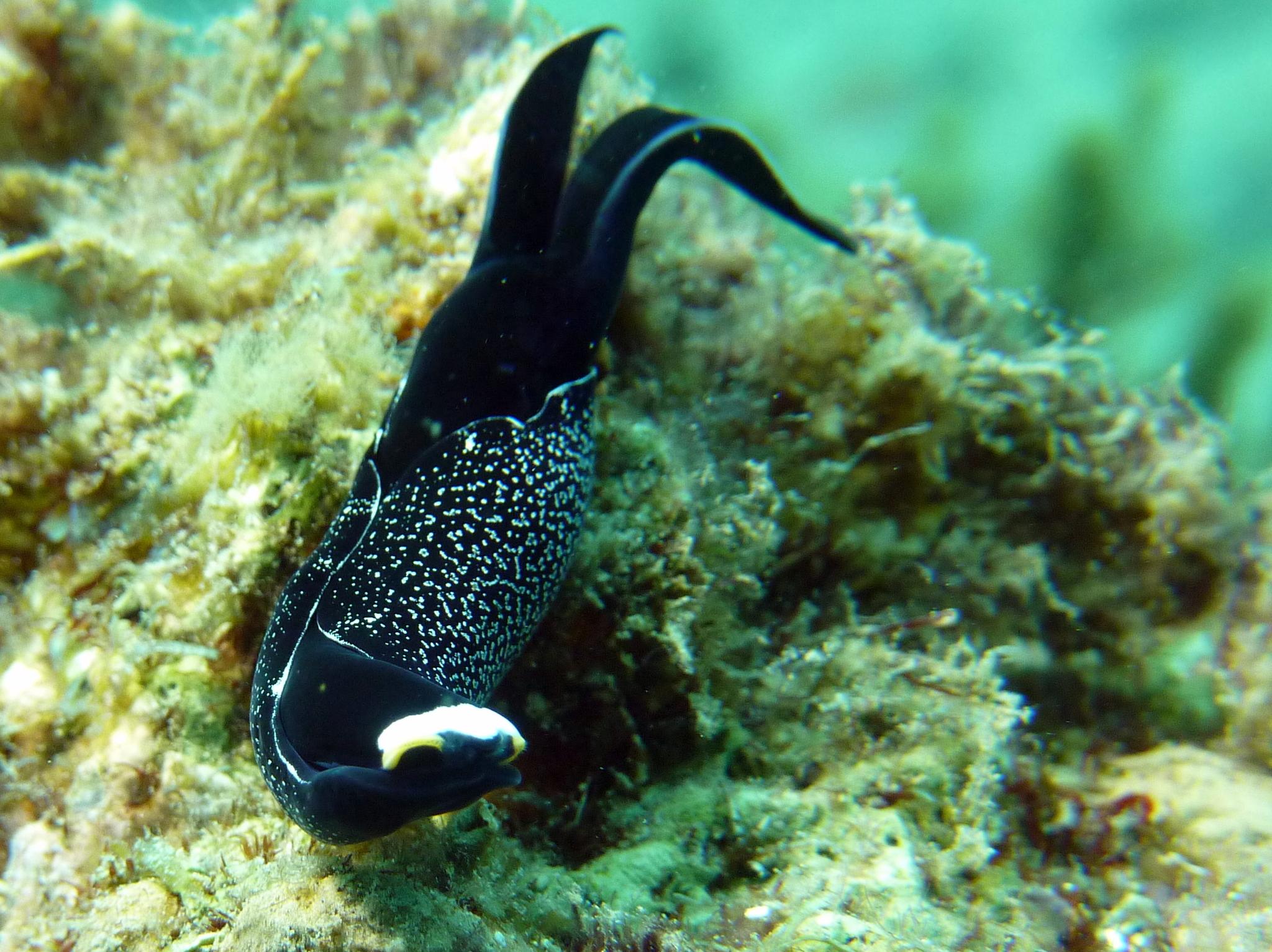 Headband Headshield SlugThis sea slug has no teeth. Its relatives are thought to swallow prey by sucking it in very quickly, and an expert at the Australian Museum predicted this one does the same.
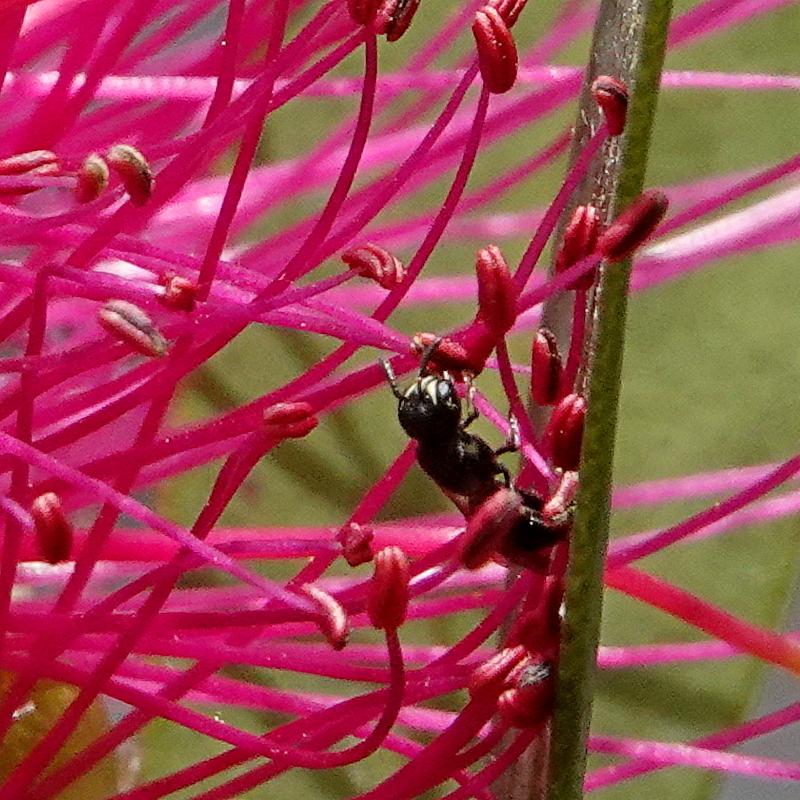 Healesville Masked BeeMost bees carry pollen home on the outside of their bodies. Masked bees, like this one, swallow it and carry it home inside them.
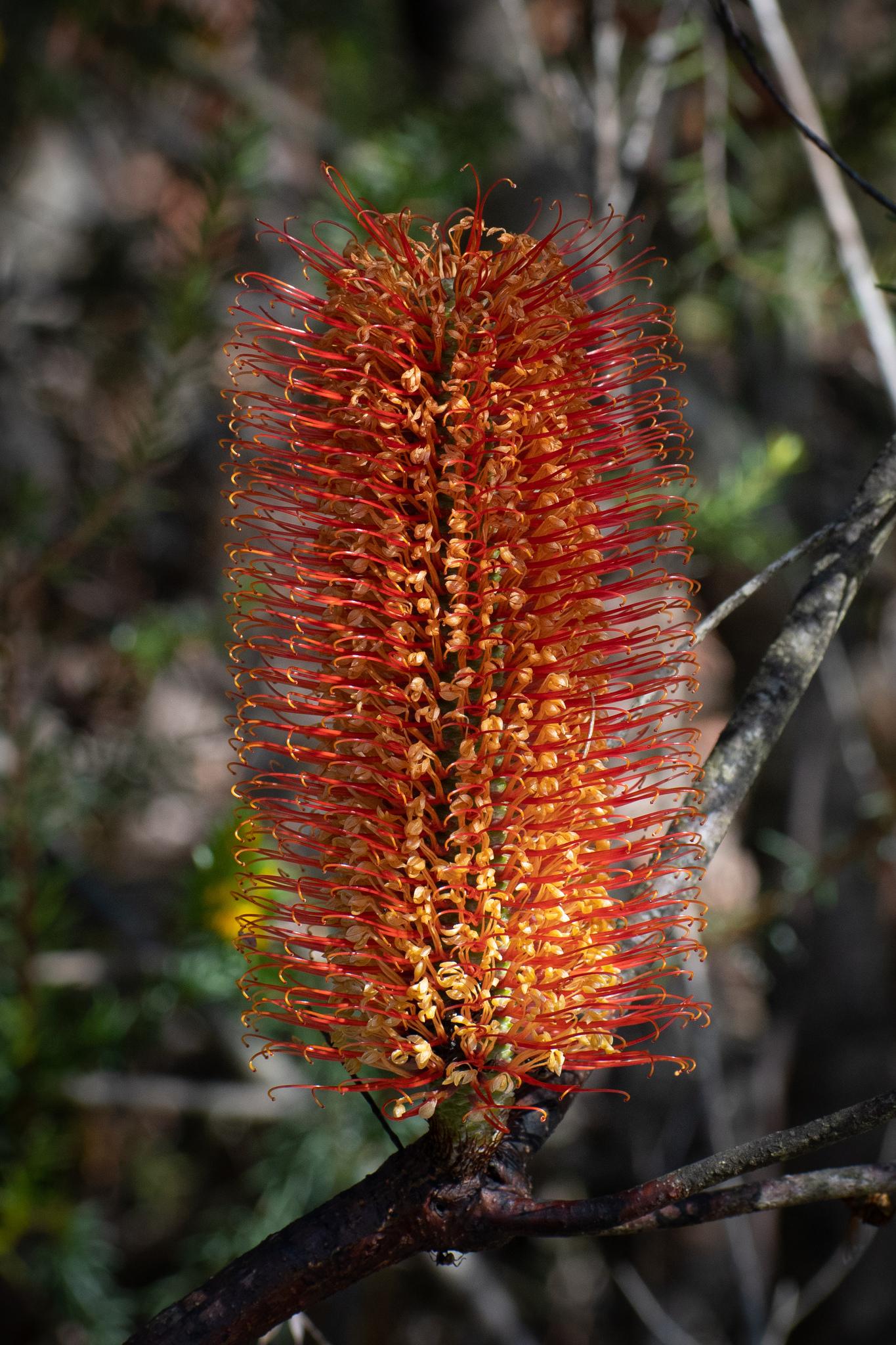 Heath-leaved banksiaThis banksia has no way back from a fire. Unlike the waratah, it has no lignotuber, no woody swelling underground to regrow from.
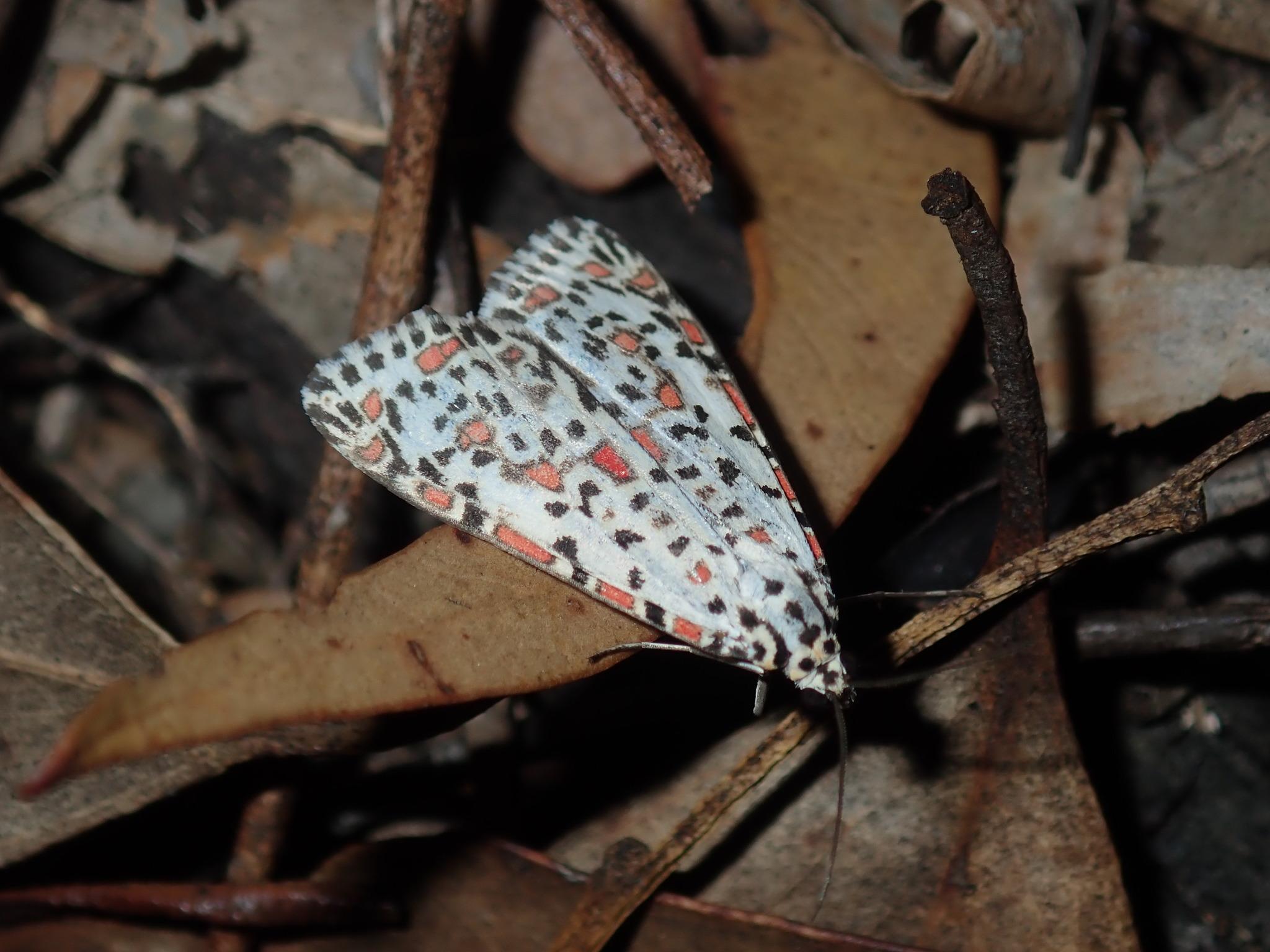 Heliotrope MothThe heliotrope moth belongs to a genus of tropical moths that have done something remarkable: they have spread across whole continents, helped along by poison.
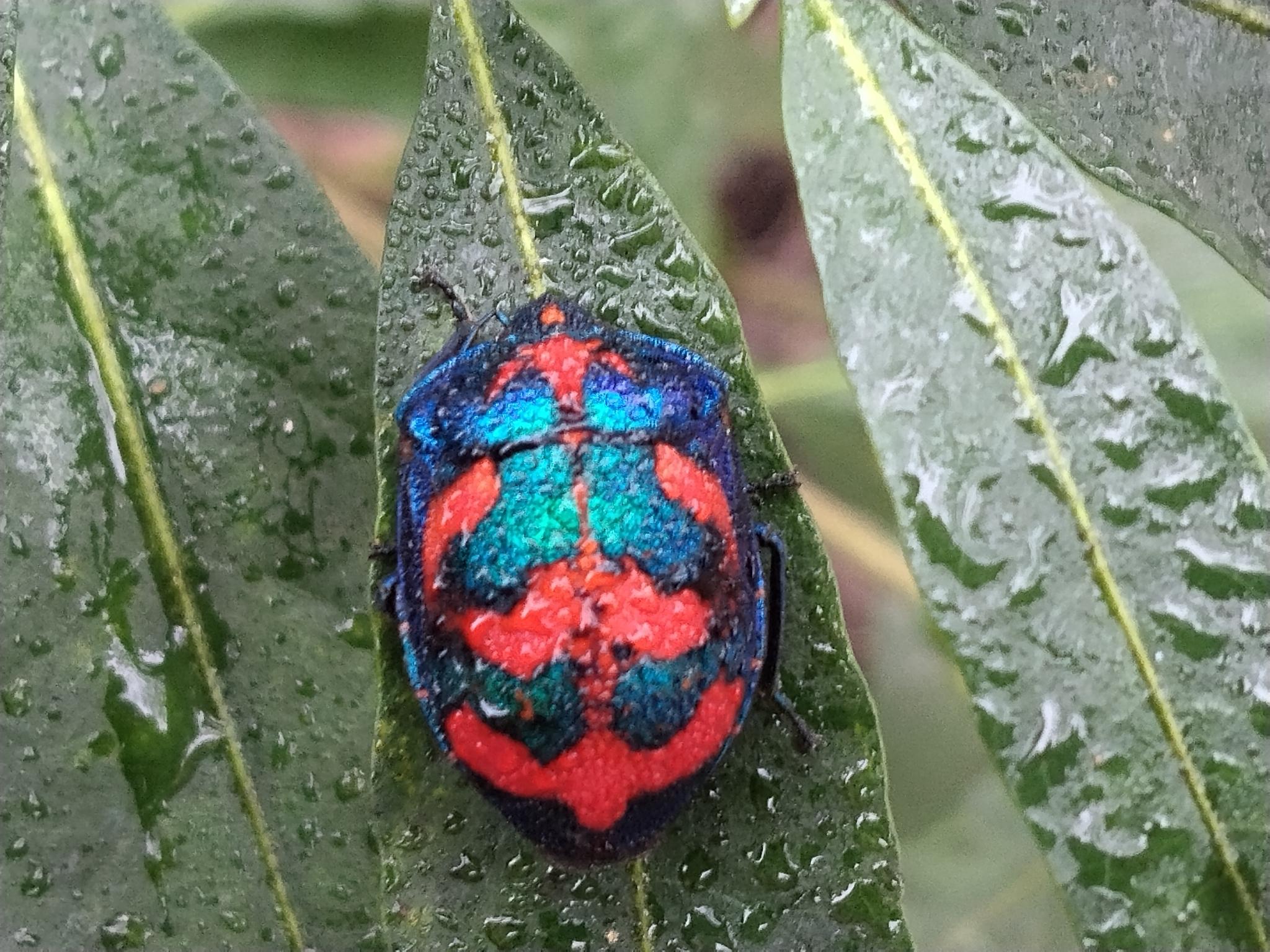 Hibiscus Harlequin BugThe shiny blue cluster on the leaf isn't a family. Hibiscus harlequin bug nymphs gather in groups, and often their neighbours aren't their brothers and sisters.
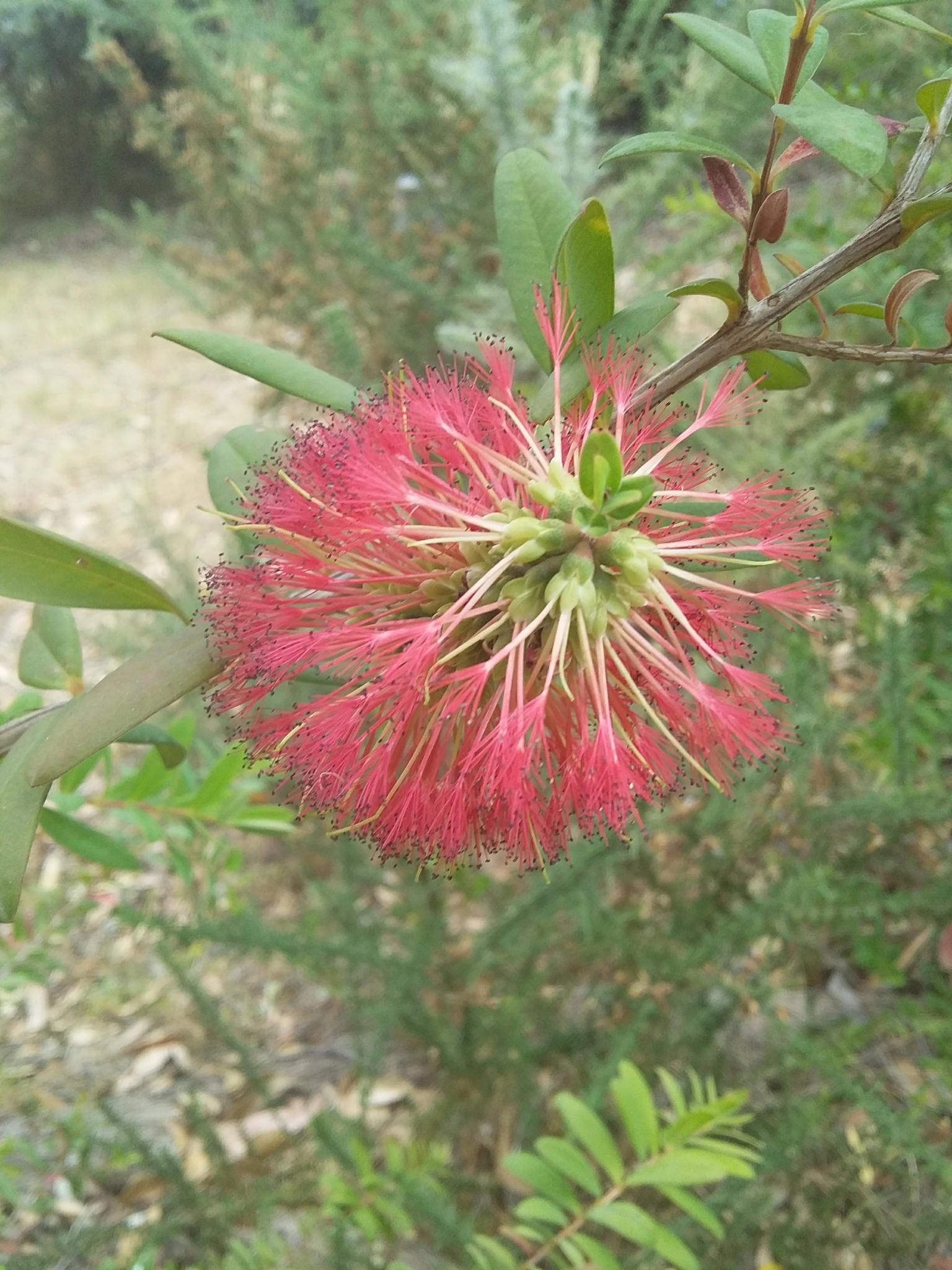 Hillock bushIt's a honey-myrtle, in the myrtle family, which includes the gum trees. And that family's oldest well-dated gum-tree fossils weren't found in Australia.
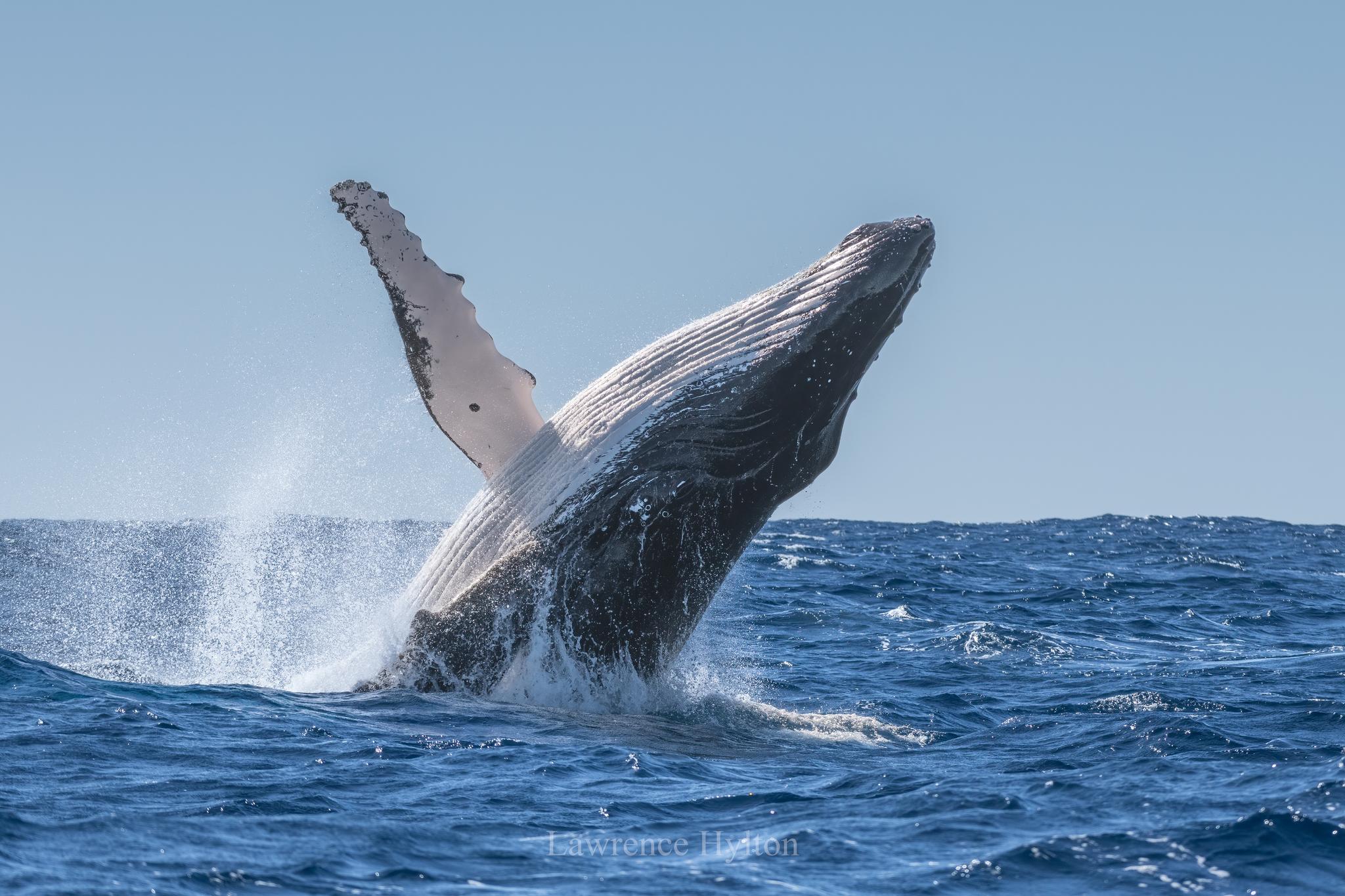 Humpback WhaleIn the seas where they feed, humpbacks hunt with nets made of air. A group of whales dives beneath a school of fish while one swims in a tightening circle, blowing a ring of bubbles.
- Humpback whales heading northSomewhere under that blow, a male humpback may be singing. On the winter journey north to warm breeding waters, males sing long, complex songs.
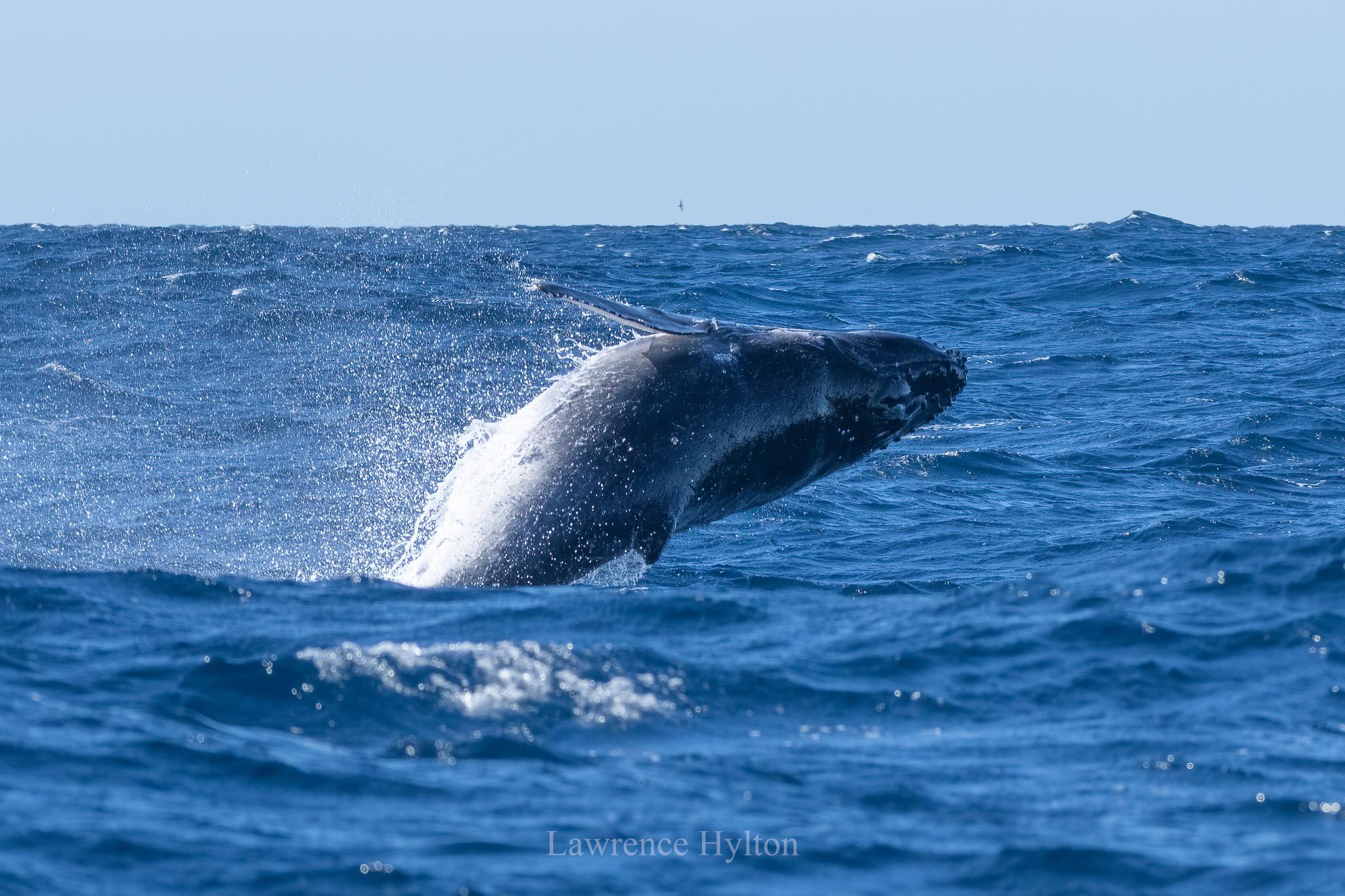 Humpback whales: mothers and calves heading southThe calf beside her was born in warm northern water, and for good reason. A newborn humpback doesn't have the thick fat layer adults have.
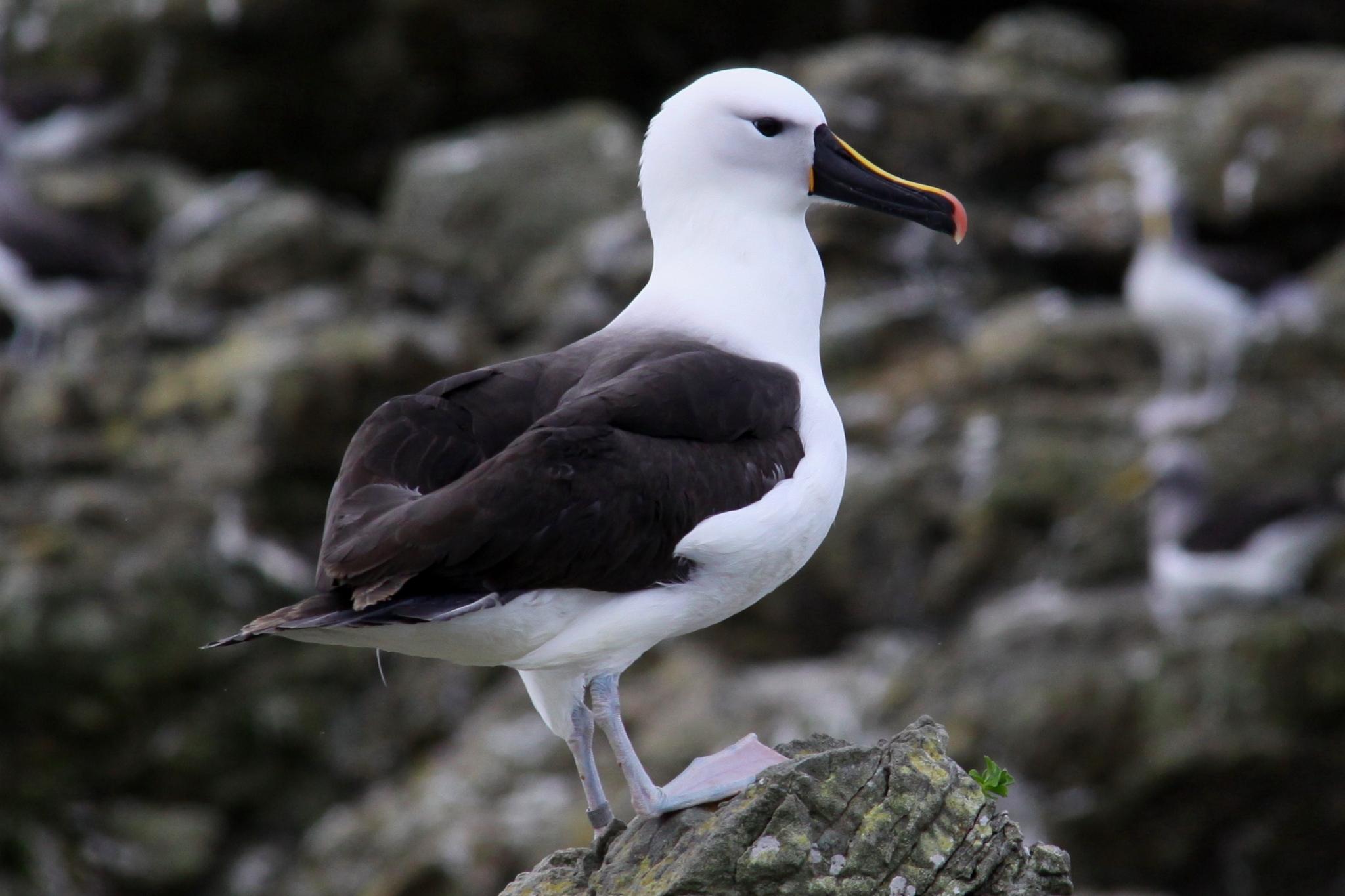 Indian Yellow-nosed AlbatrossThis albatross is a long way from home. Its kind breeds on islands in the southern Indian Ocean and mostly wanders between southern Africa and south-west Australia.
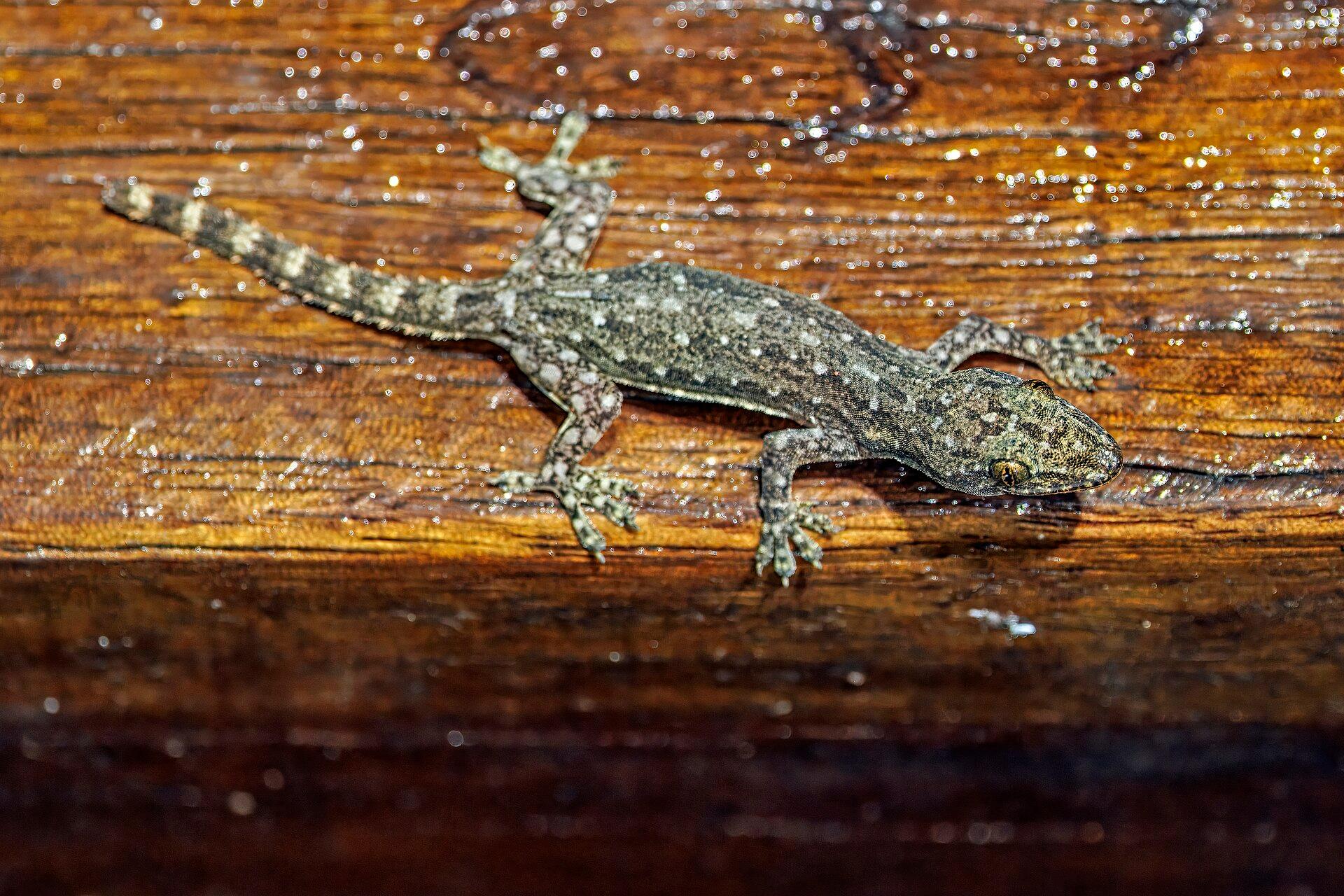 Indo-Pacific House GeckoEvery Indo-Pacific house gecko is female. There are no males at all.
- Jacarandas floweringSixty-six million years ago an asteroid hit the Earth, and every dinosaur except the birds died out. In the few million years after, as the world grew back, a new family of flowering plants began: the trumpet flowers.
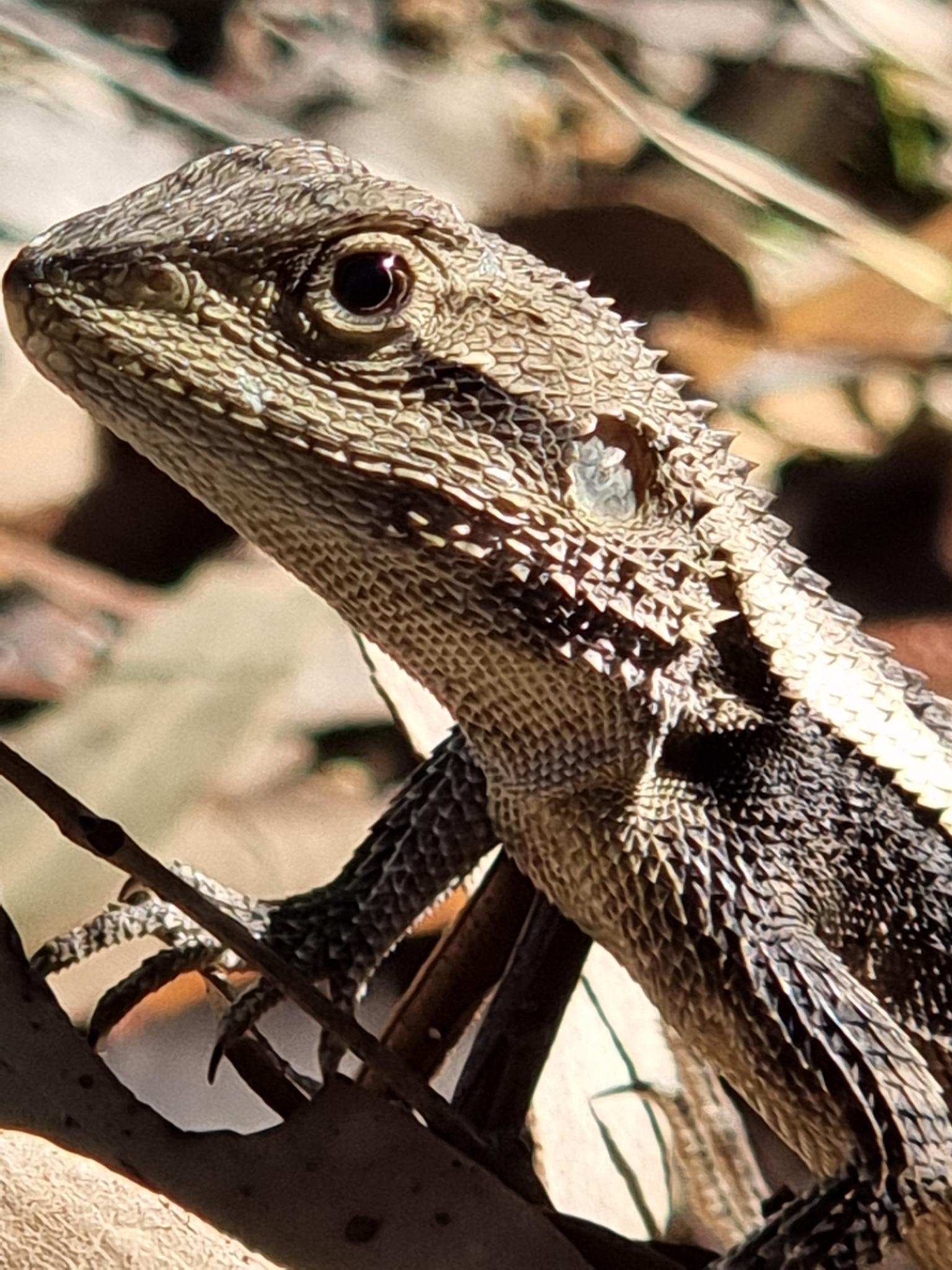 Jacky DragonWhether this dragon hatched male or female was decided partly by the weather. In jacky dragons, very warm or very cool nests produce mostly females, while middling temperatures give about half and half.
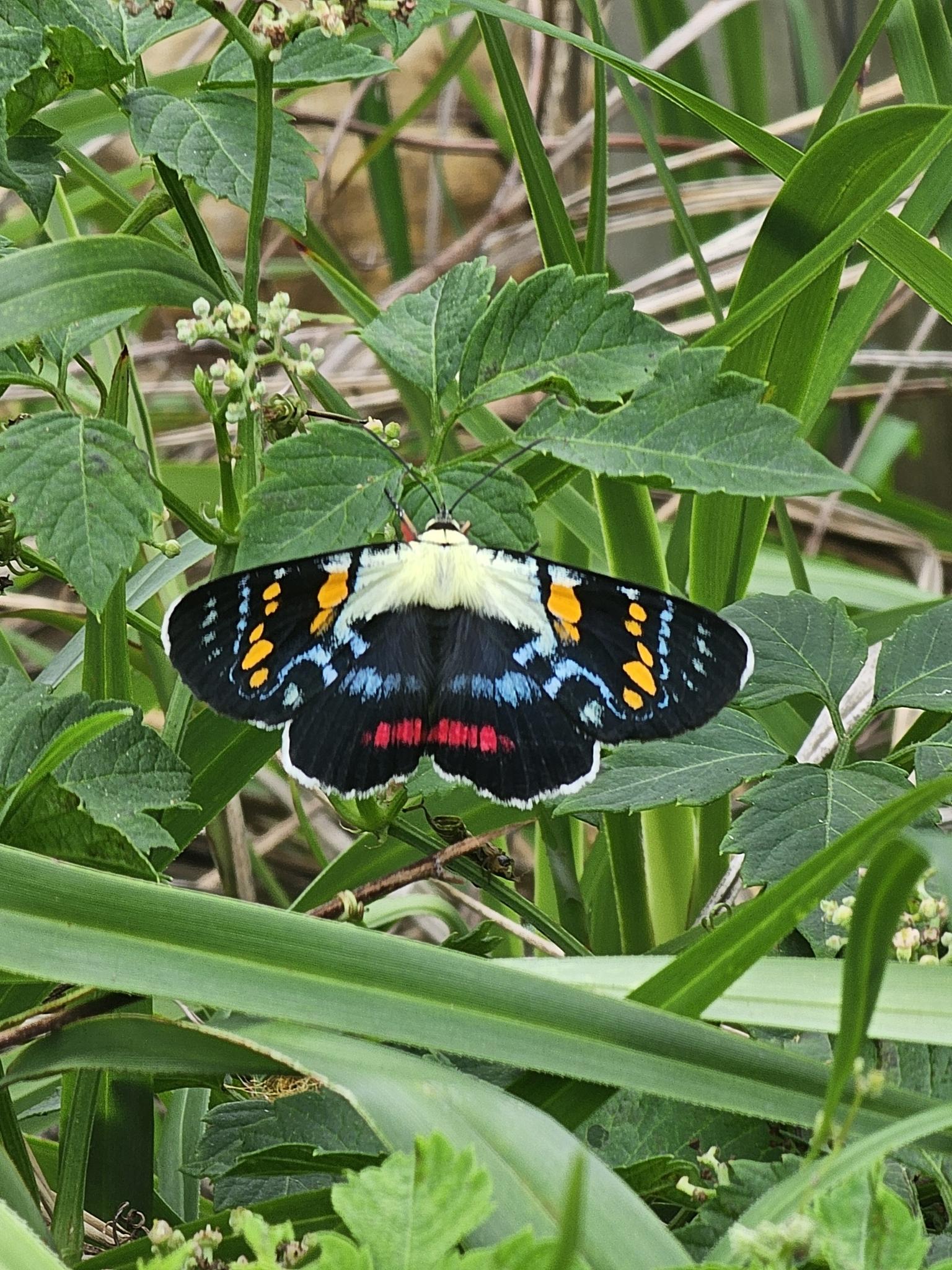 Joseph's Coat MothIt looks like a butterfly dressed for a party: black wings splashed with orange, cream and blue, flying in broad daylight. It's named for Joseph's coat of many colours.
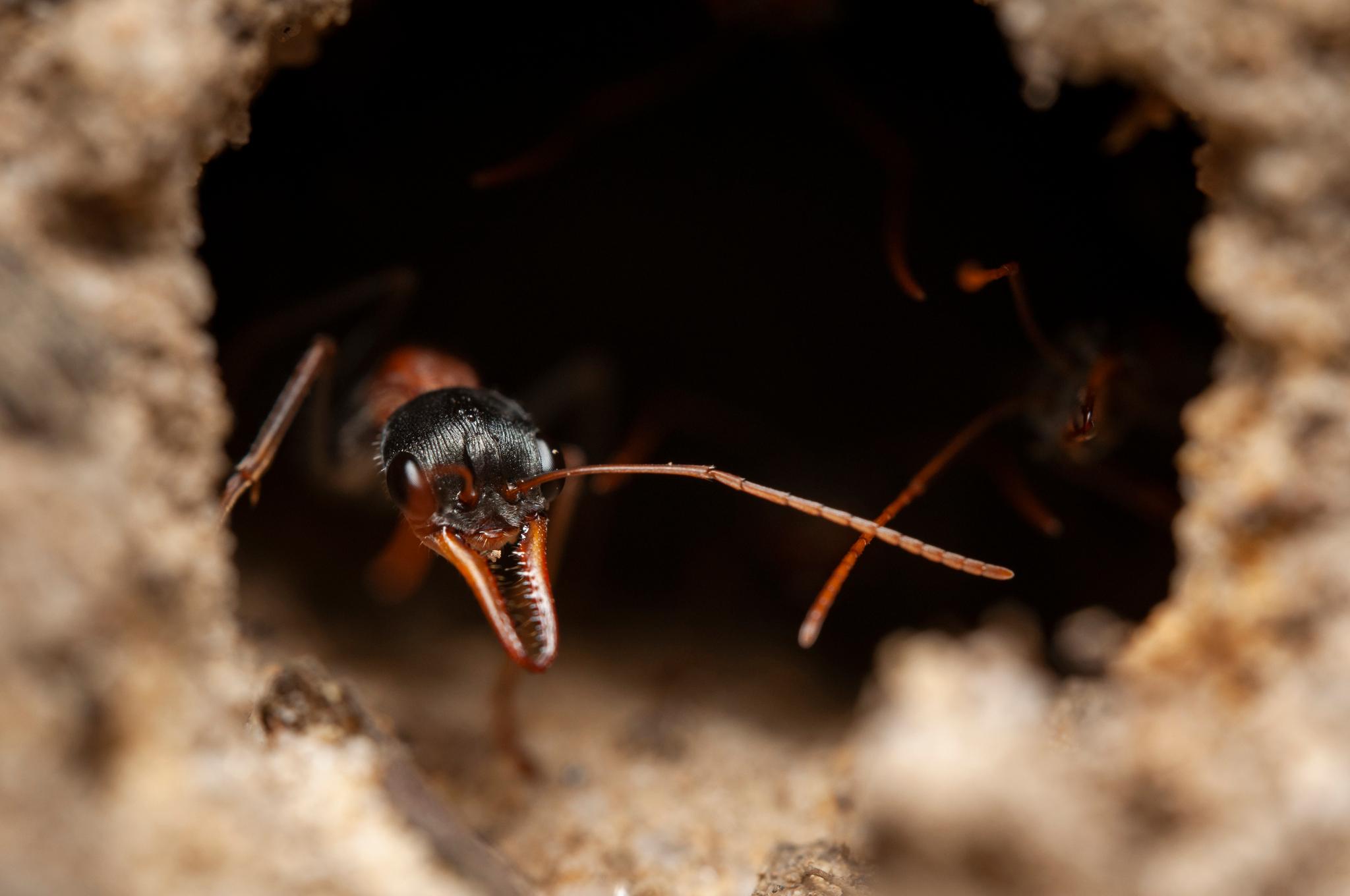 Jumping Jack AntAn ant that jumps. Only four groups of ants are known to jump forward, and bull ants are one.
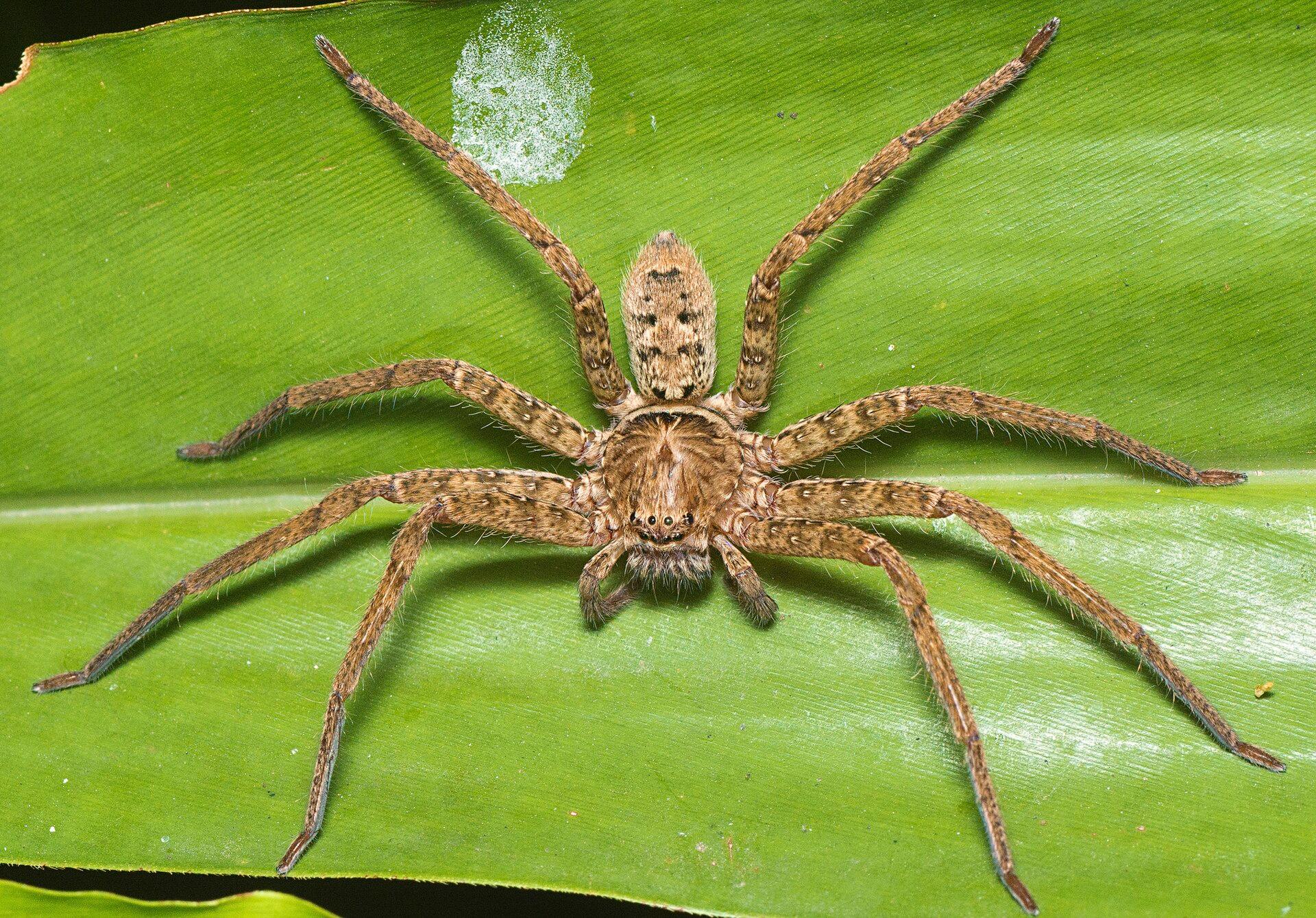 Jungle Huntsman SpiderPeople often find what looks like a huntsman on the bark or the wall, and it's only the skin. Huntsman spiders shed their skin to grow, and the empty skins are often mistaken for the spider itself.
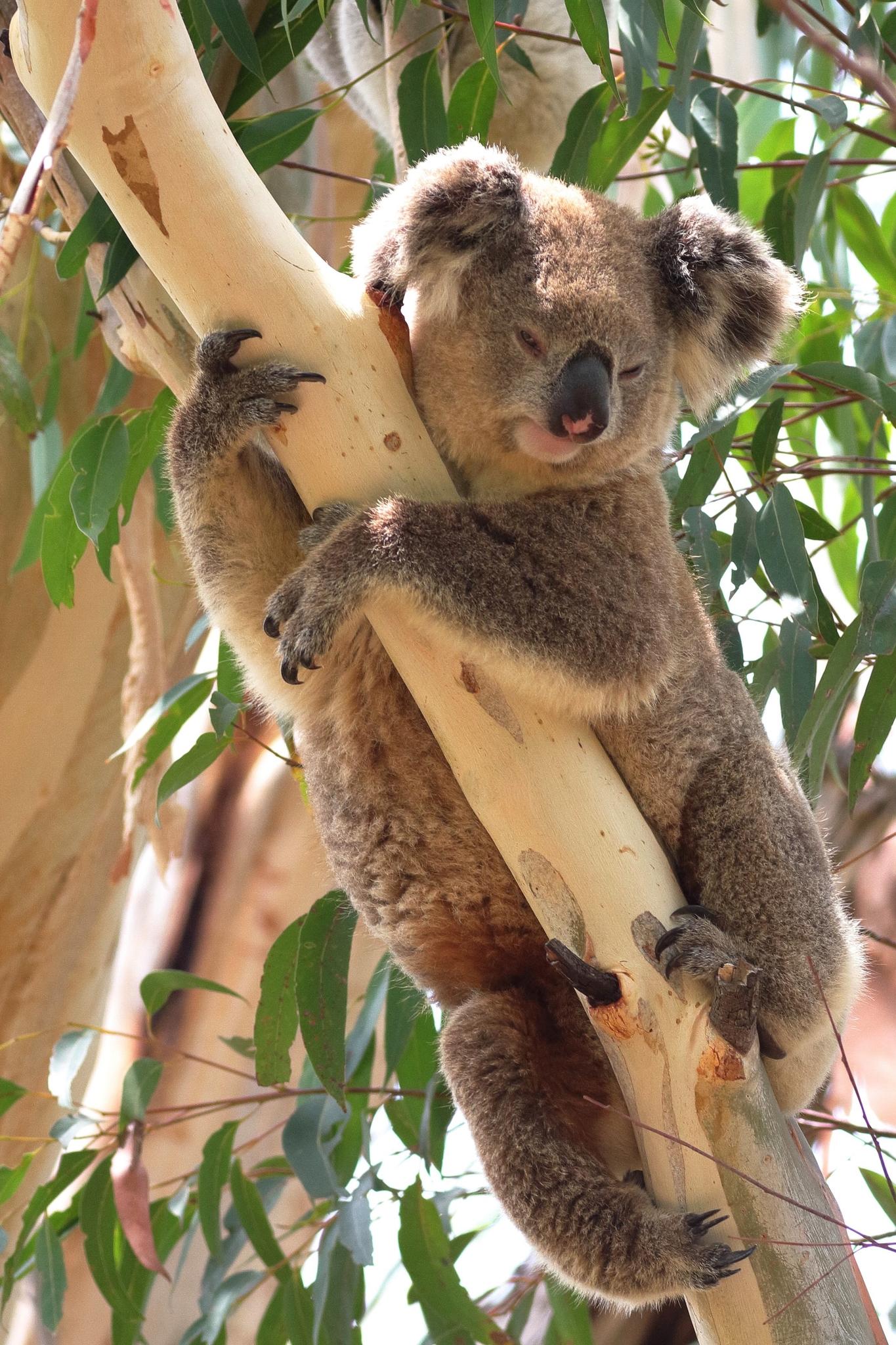 KoalaA newborn koala can't eat what koalas live on. A joey can't digest gum leaves at first.
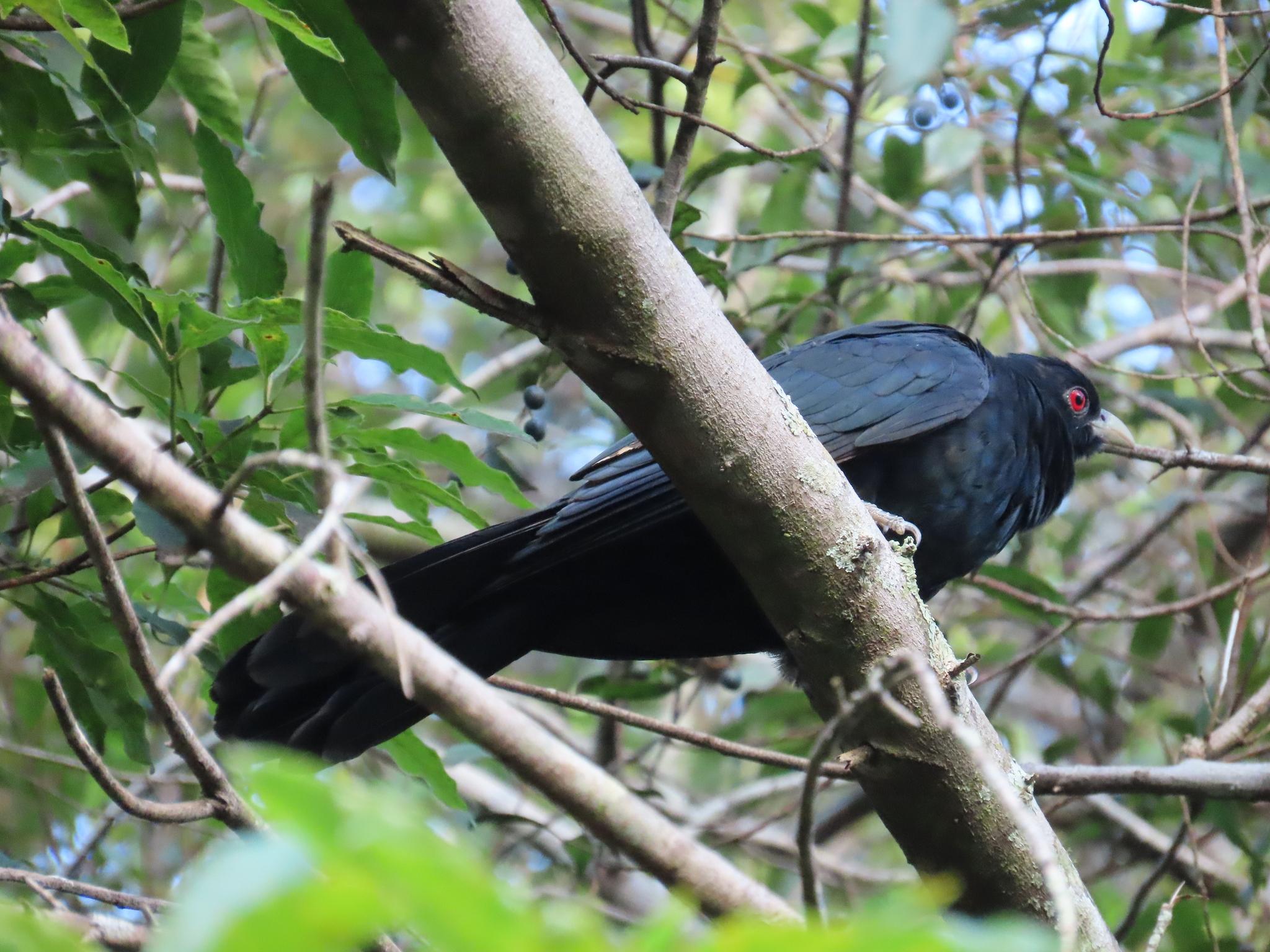 Koels calling through the nightKoo-el. Koo-el.
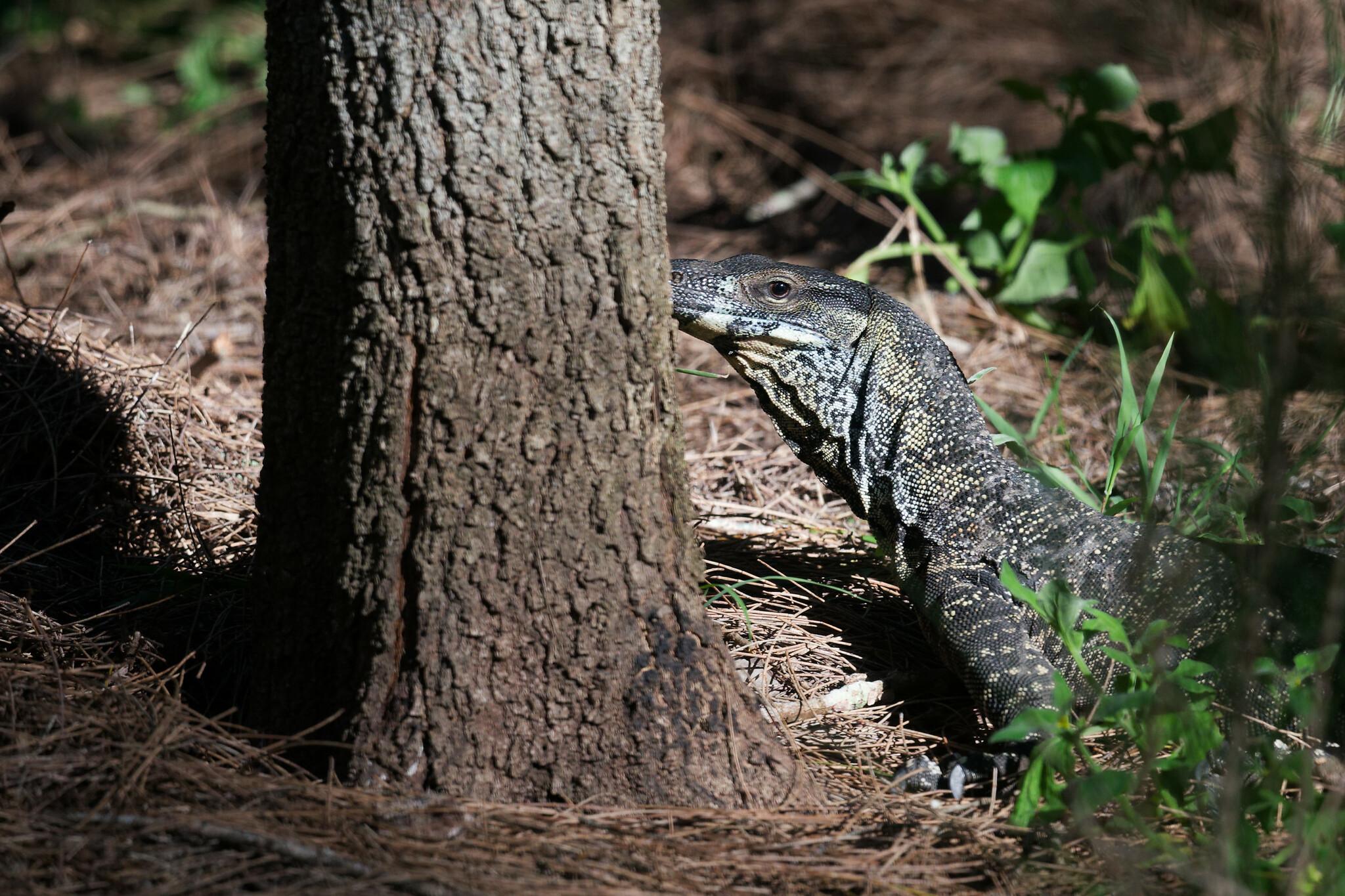 Lace MonitorA female lace monitor doesn't build a nest. She borrows one.
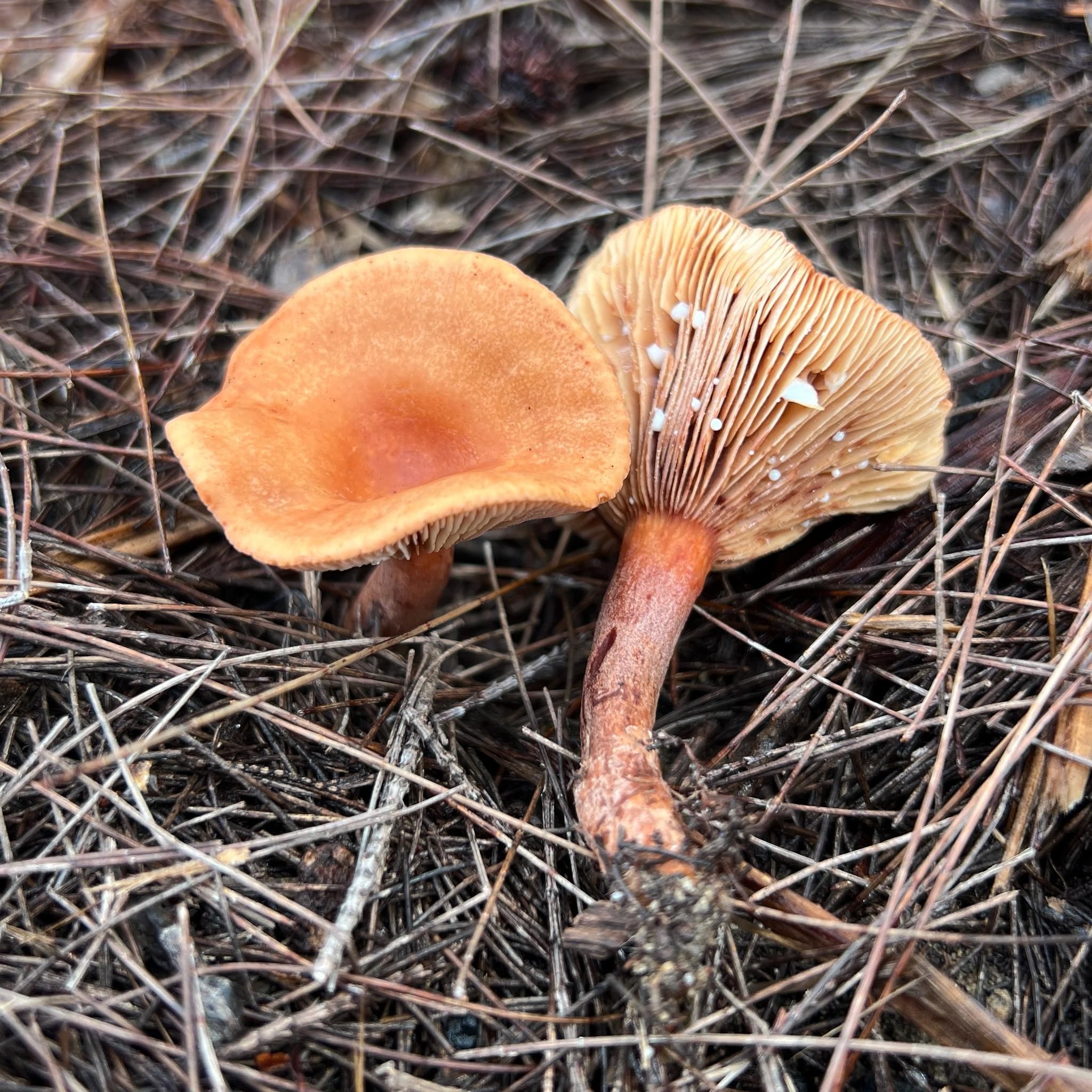 Lactarius eucalyptiIt's easy to file a mushroom with the plants: it grows out of the ground and stays put. DNA says otherwise.
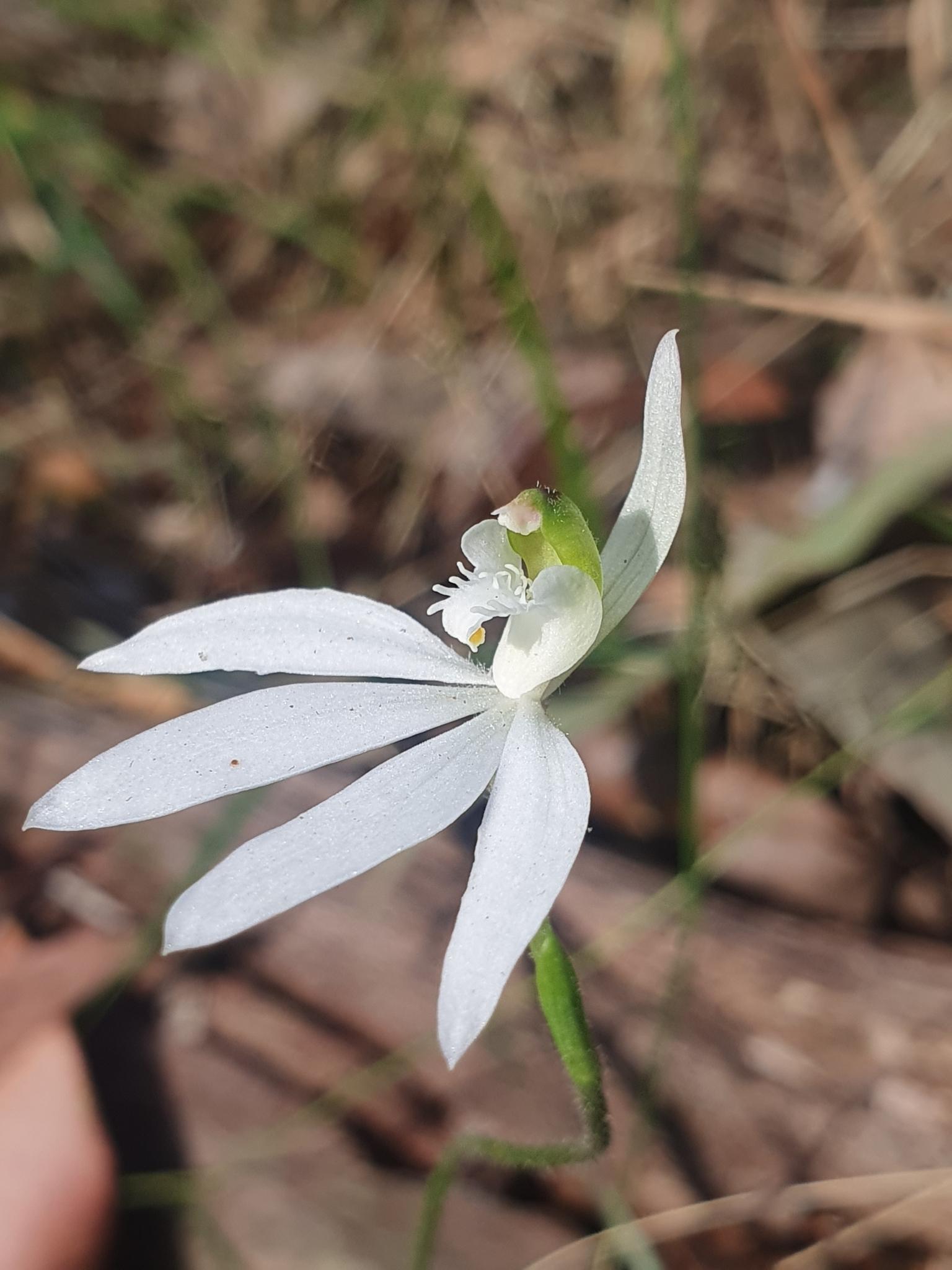 Lady FingersWe tend to think of orchids as hothouse flowers from steamy jungles. Lady fingers is a small white orchid on the Sydney bush floor, flowering in spring, mostly August to October.
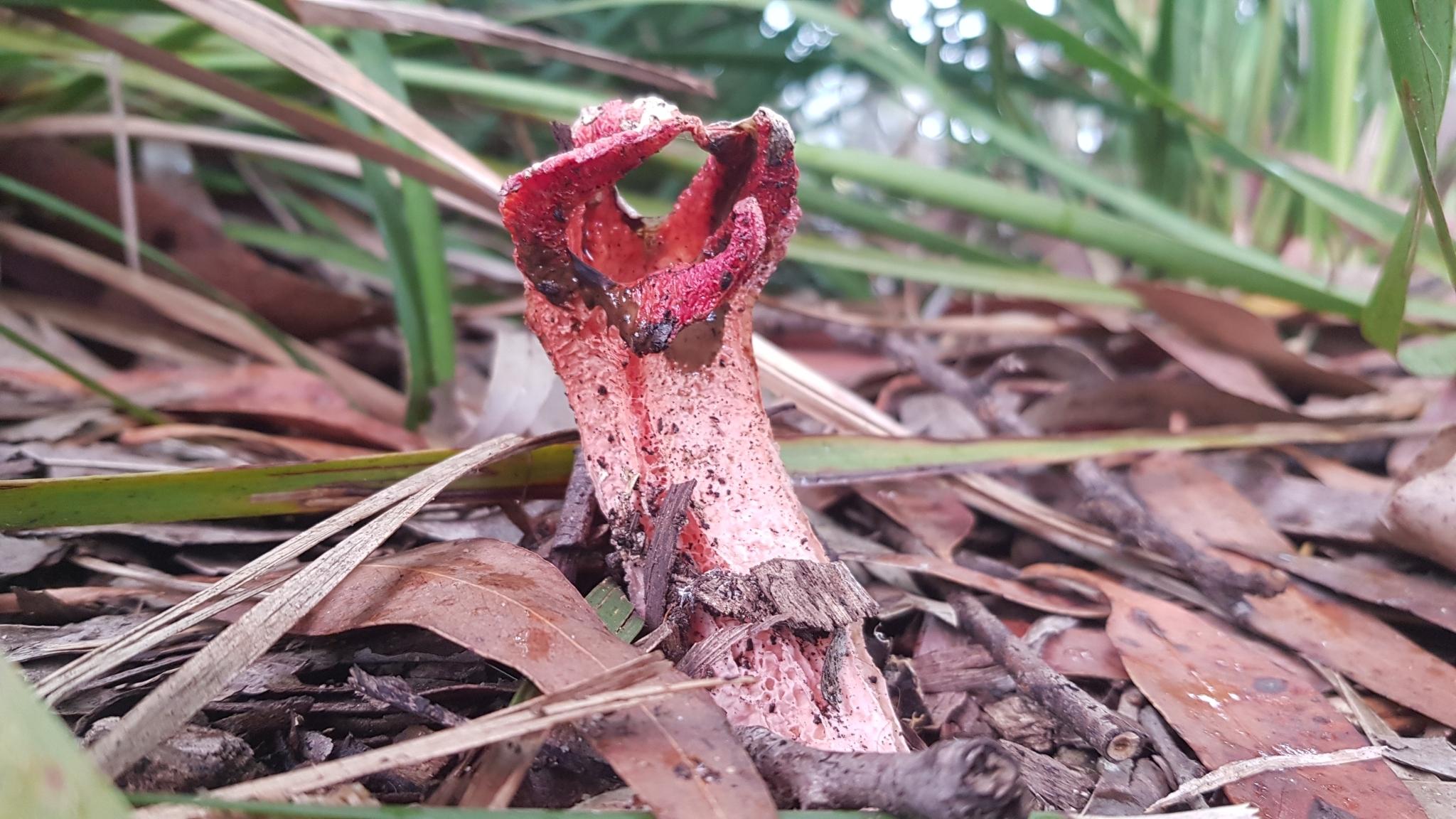 Lantern stinkhornThat smell of decay is an invitation. The lantern stinkhorn draws insects in, and they carry its spores away in their droppings.
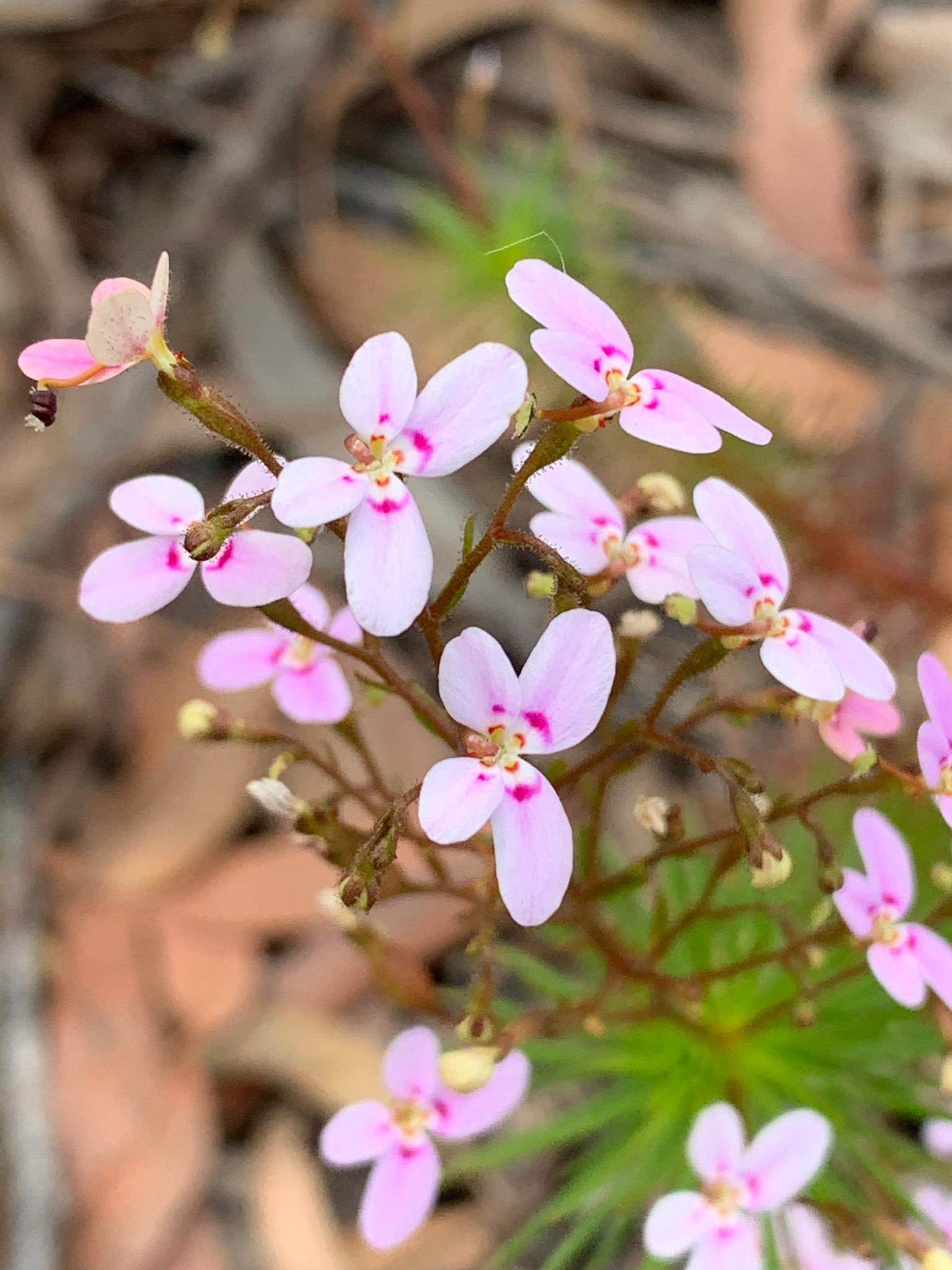 Larchleaf triggerplantInside this flower is a loaded arm. Like other triggerplants, it has a long bent column with the pollen sacs at its tip, and it's set like a trap.
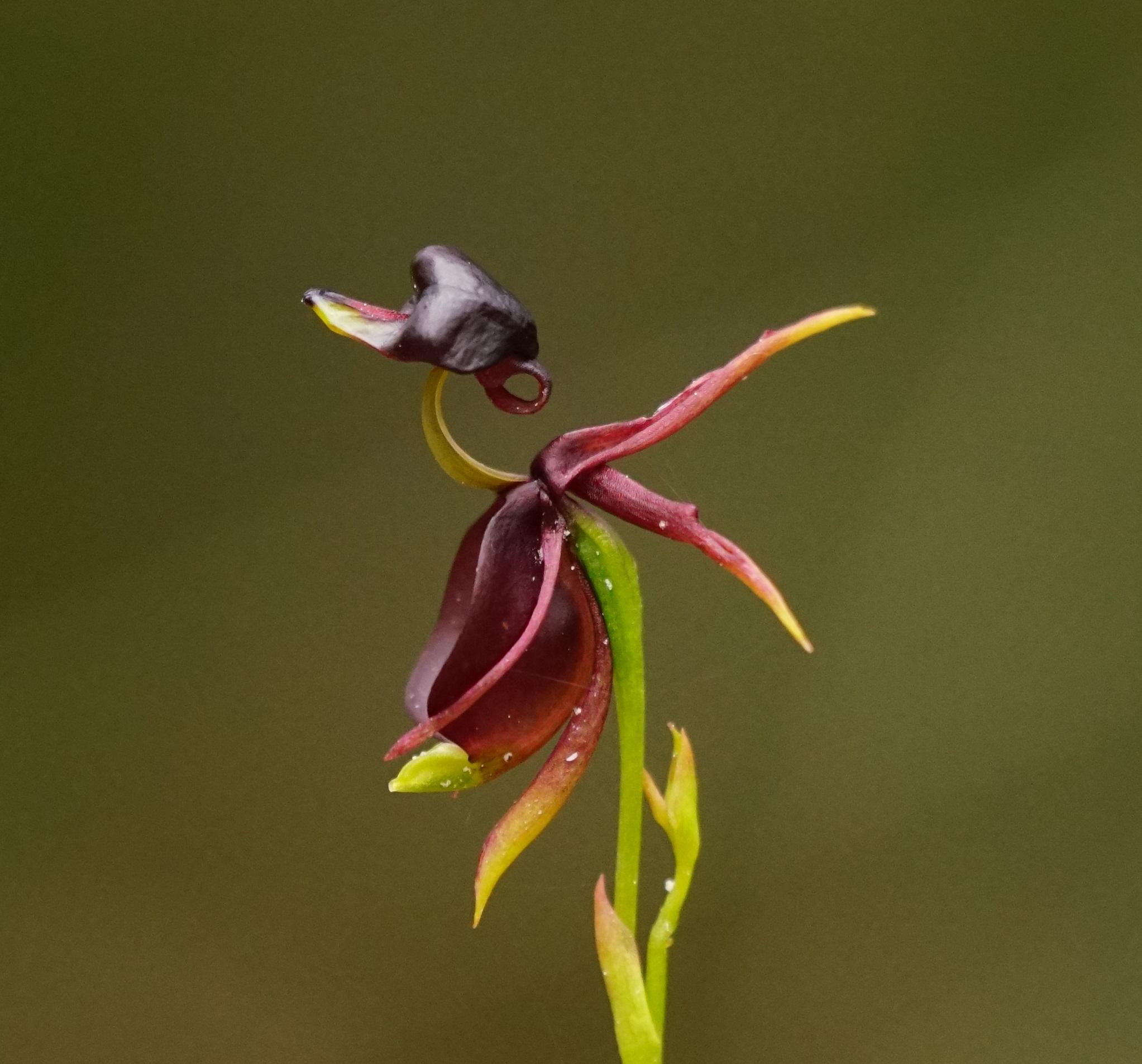 Large Flying Duck OrchidPlants aren't supposed to move. This one has a trap.
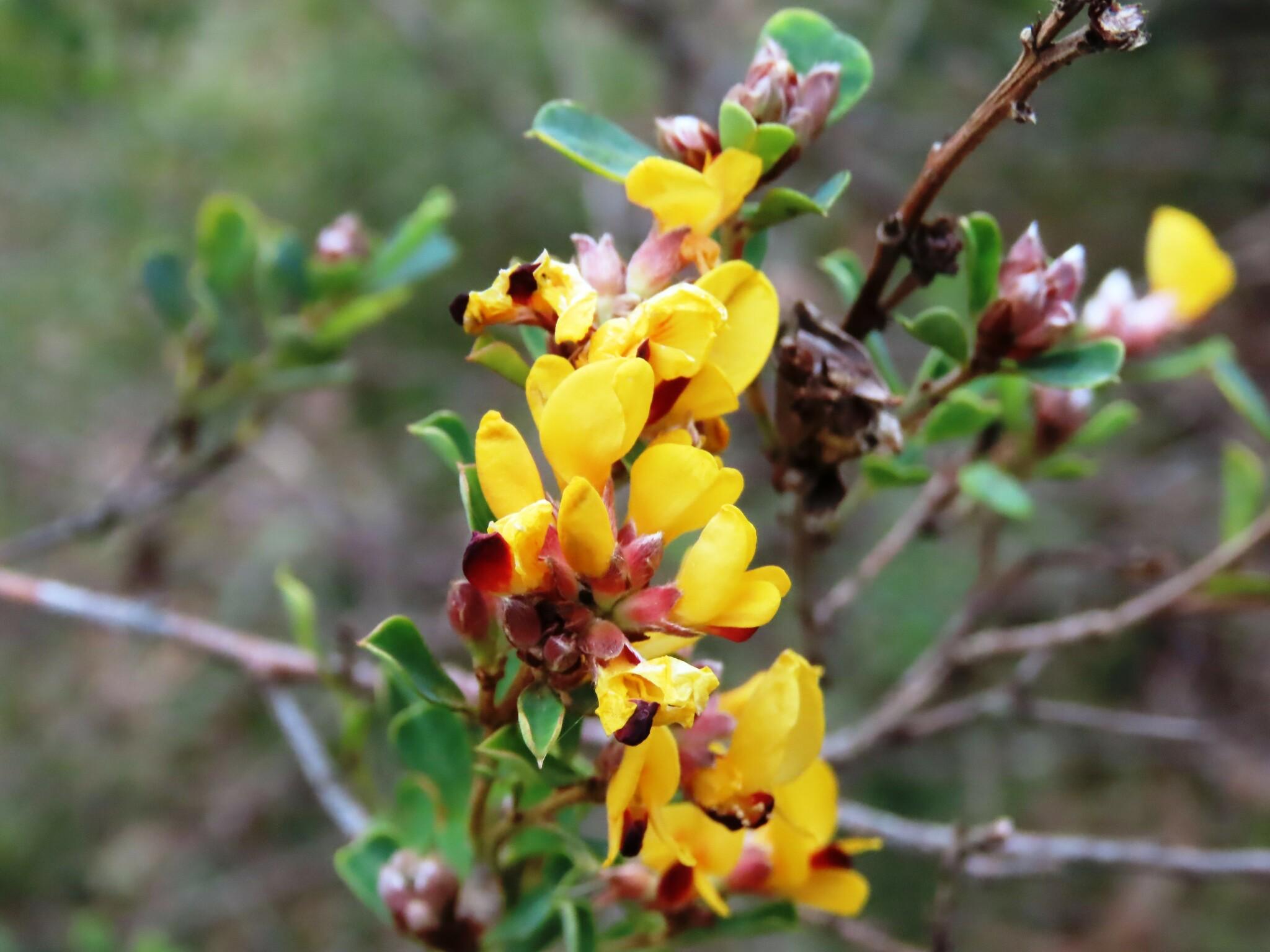 Large-leaf Bush PeaThis bush pea is holding up more lives than its own. Caterpillars of a small butterfly, *Neolucia mathewi*, have been recorded eating its flowers.
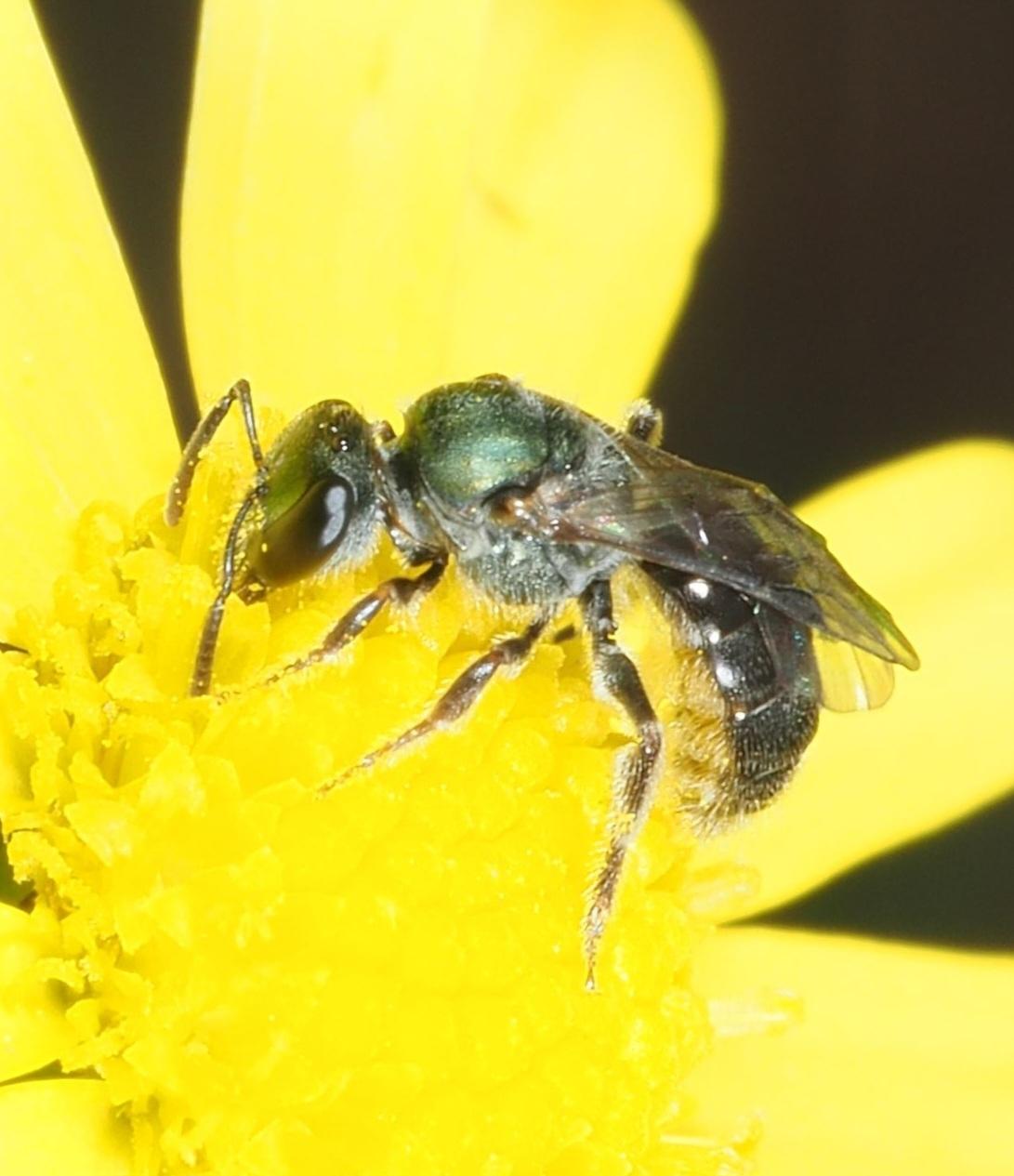 Lasioglossum urbanumThis tiny bee may not be going home to a nest of her own. Her kind can share one burrow in the ground: one nest was reported to hold at least 160 females, and every one of them was laying her own eggs.
- Last humpback whales of the seasonHumpbacks leave their breeding grounds in an order. The females that aren't feeding a calf go first.
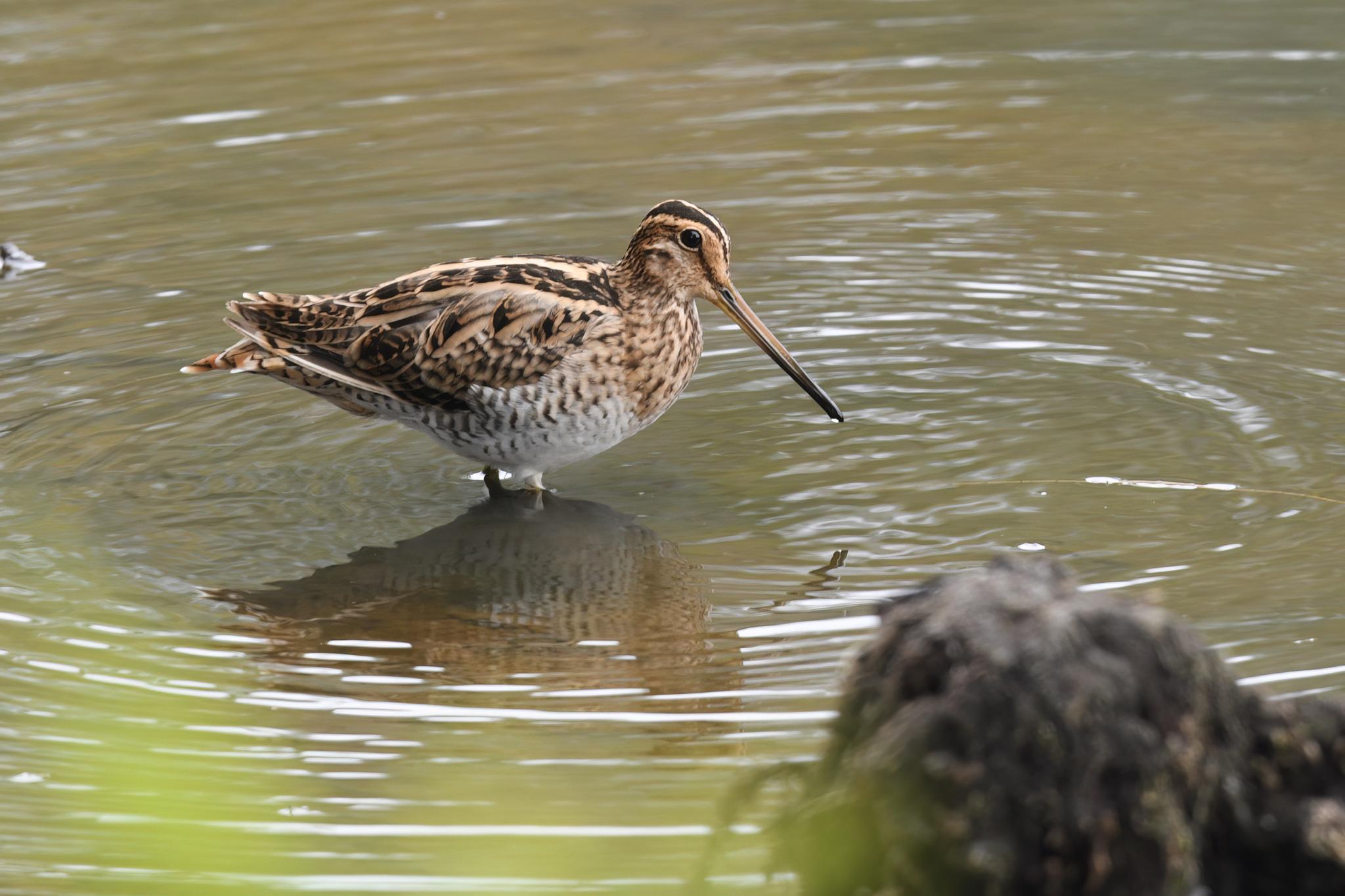 Latham's SnipeThis bird may have flown here from Japan, possibly in one long push, stopping at only a few staging areas on the way. In Japan, where it breeds, people call it the Thunder Bird.
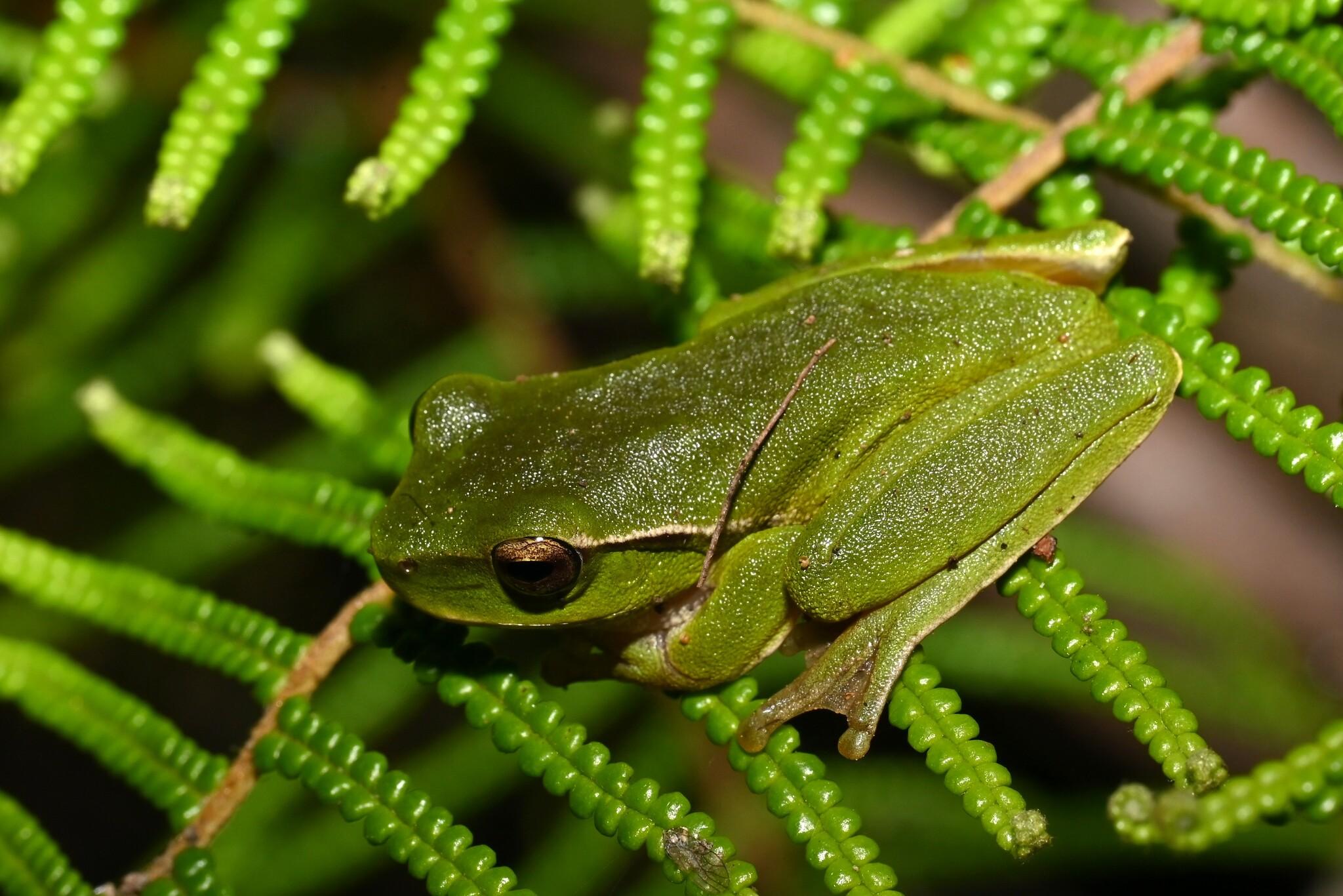 Leaf Green Tree FrogThis frog lives nowhere else on Earth but here: along the NSW coast and ranges, between Bellingen and the Sydney region. That stretch of country is its whole world.
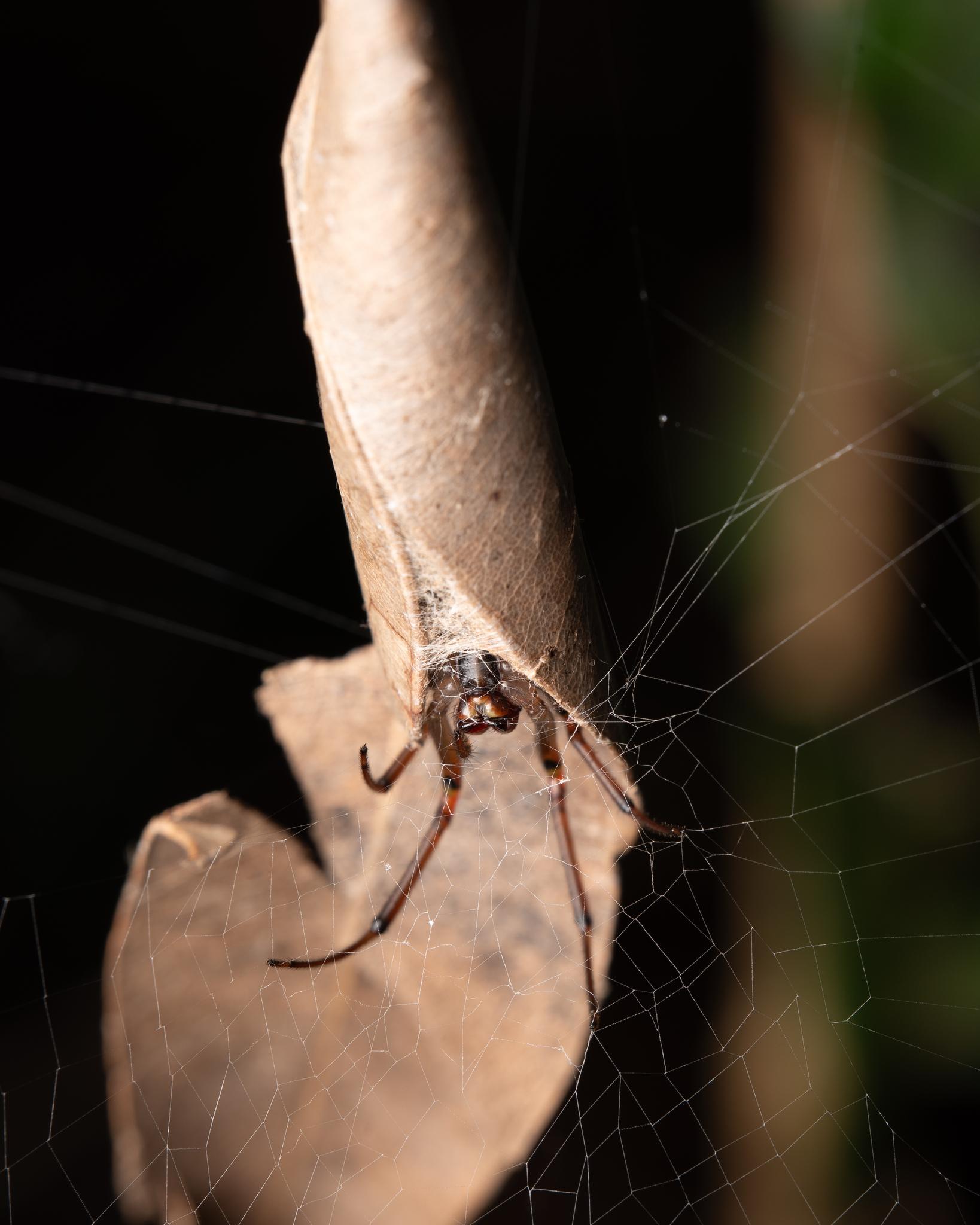 Leaf-curling SpiderThis spider lives in a leaf it picked up off the ground. It hoisted the leaf up into its web, curled it into a tube with silk, sealed the top, and moved in, leaving the open end facing the centre of the web.
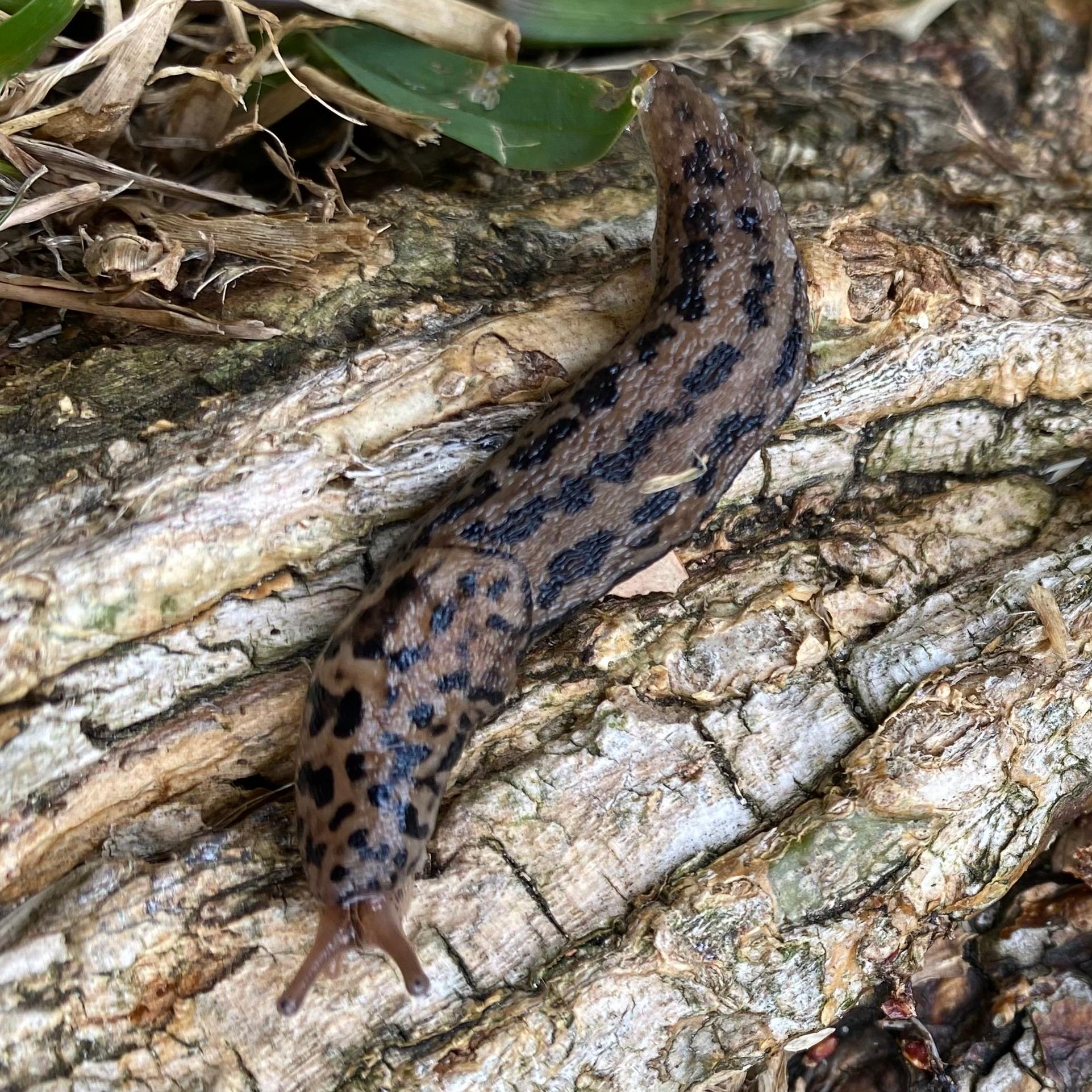 Leopard SlugLeopard slugs mate in mid-air. A pair twine around each other and lower themselves from a branch on a rope of slime, swaying there while they exchange sperm.
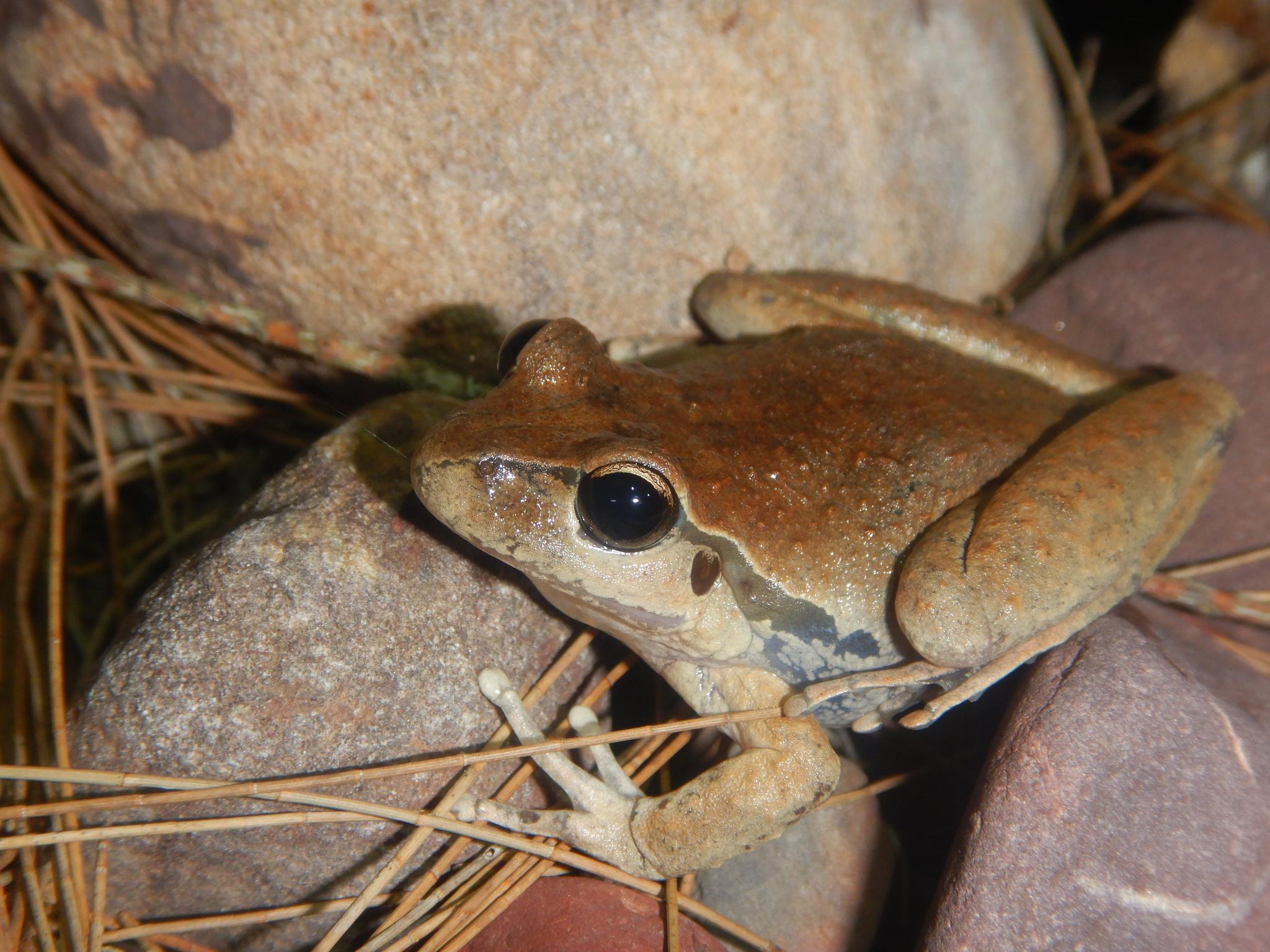 Lesueur's Stony-creek FrogIn a fast stony creek, the tadpoles of Lesueur's frog hang on to the rocks with their mouths so the current can't sweep them away. When they grow up, the males can turn from grey-brown to yellow at night.
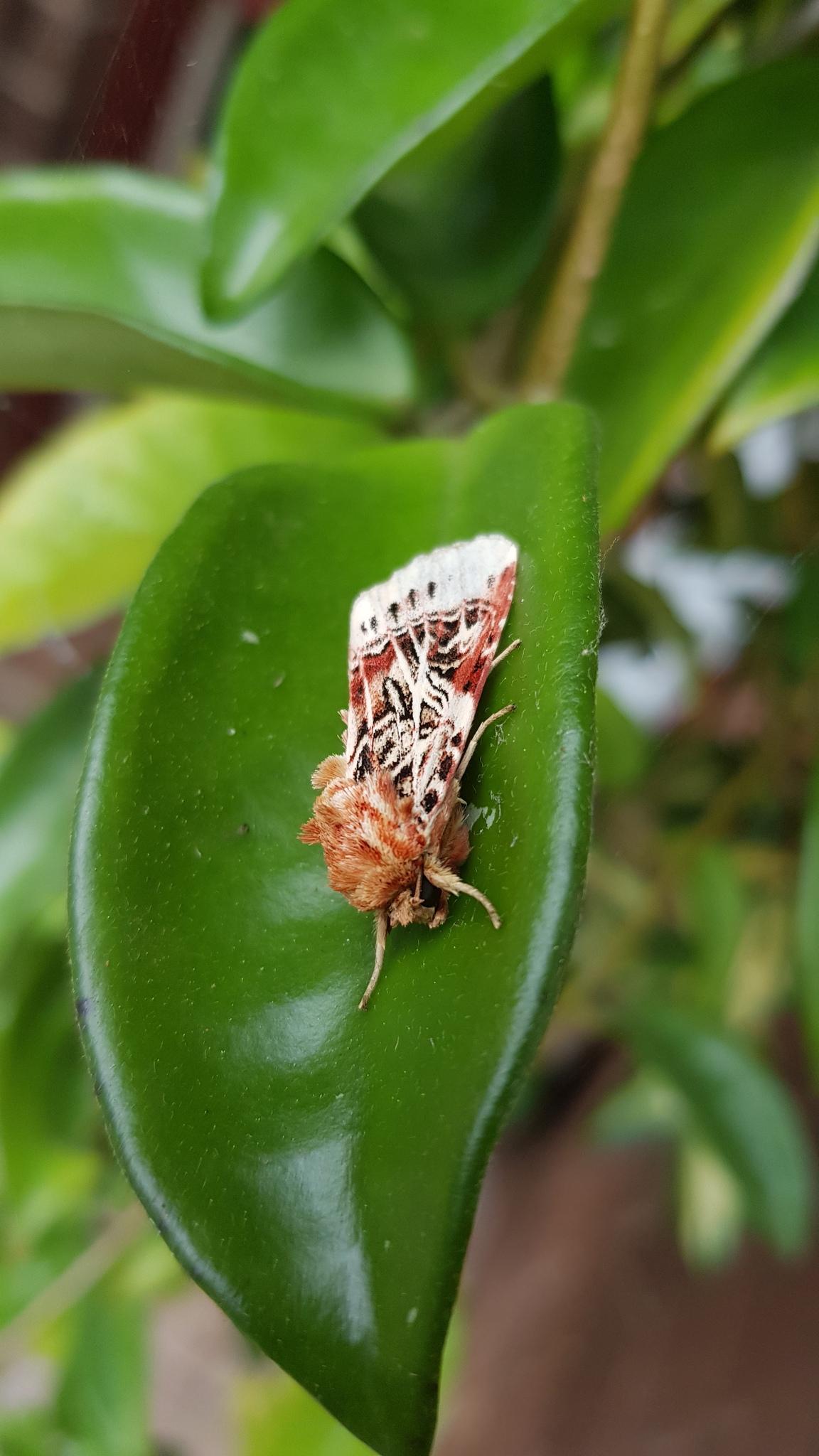 Lily Caterpillar MothIts caterpillars feed only on certain plants of the amaryllis family. The adult moths talk by scent: a female gives off a scent that draws males to her.
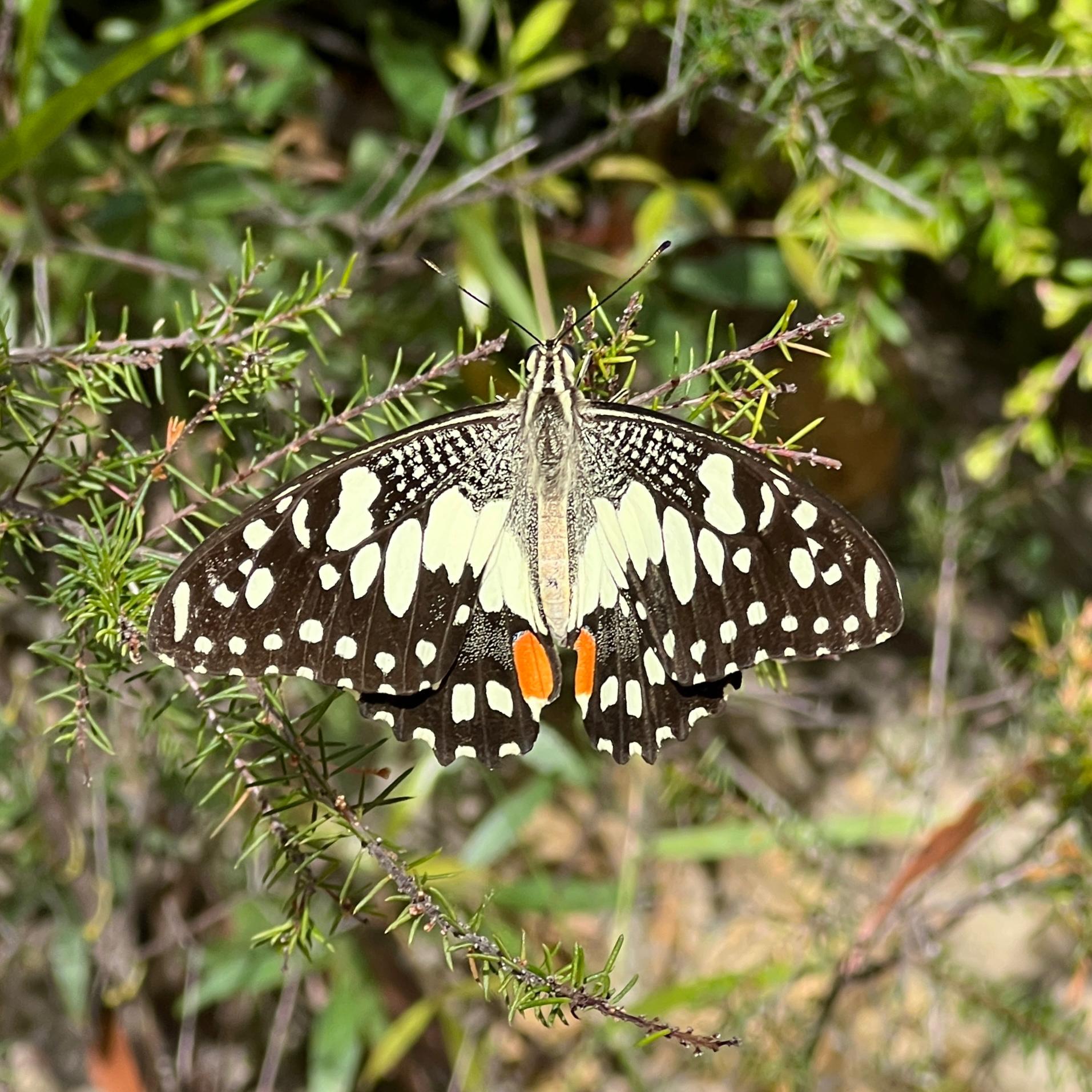 Lime SwallowtailMany gardeners think of the lime swallowtail as a citrus pest that must have arrived with the lemon trees. It's the other way round.
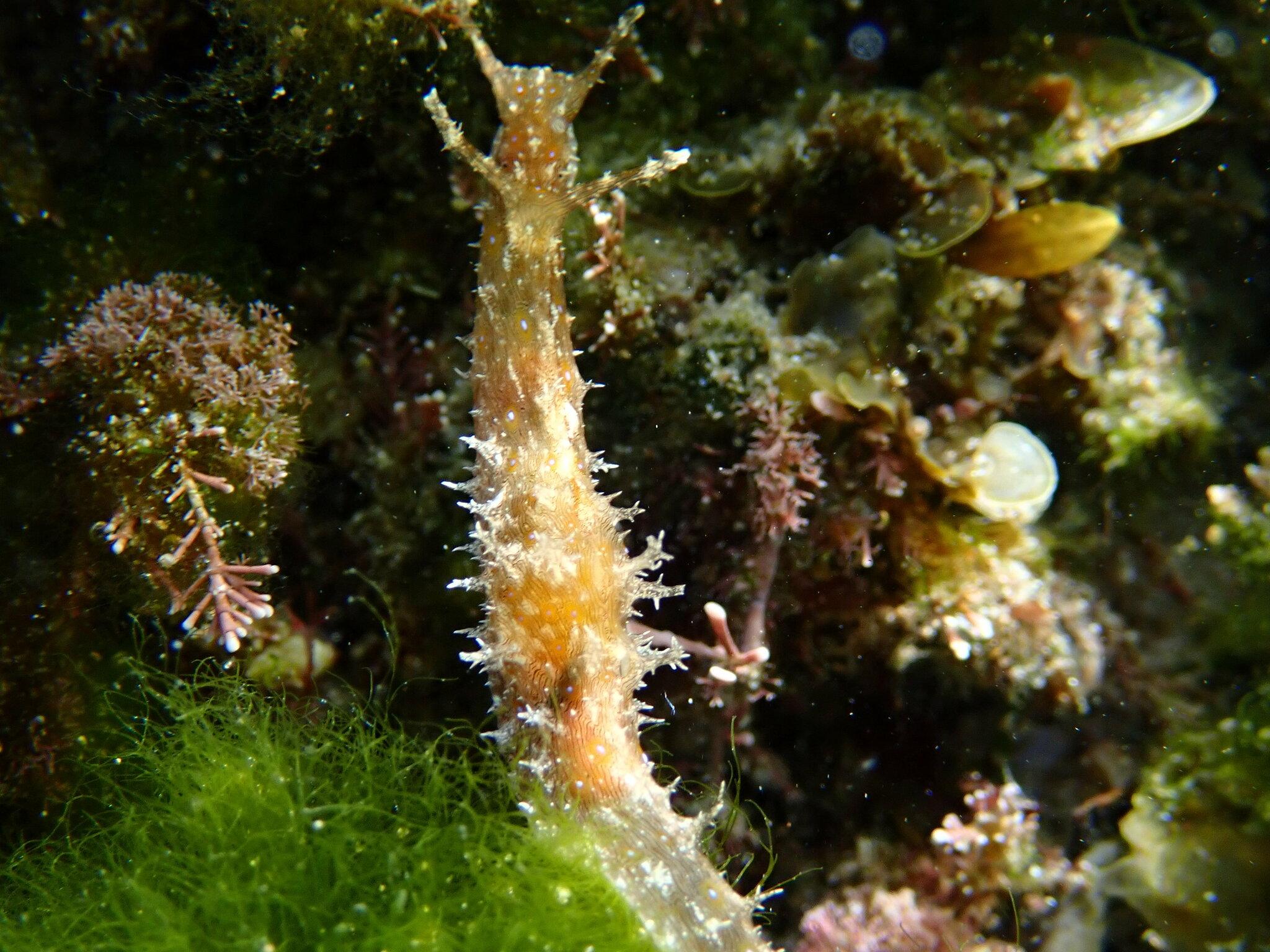 Lined SeahareWhen a lined sea hare is disturbed, it squirts a cloud of purple ink. Sometimes they turn up in large numbers, a whole crowd of small striped slugs grazing together.
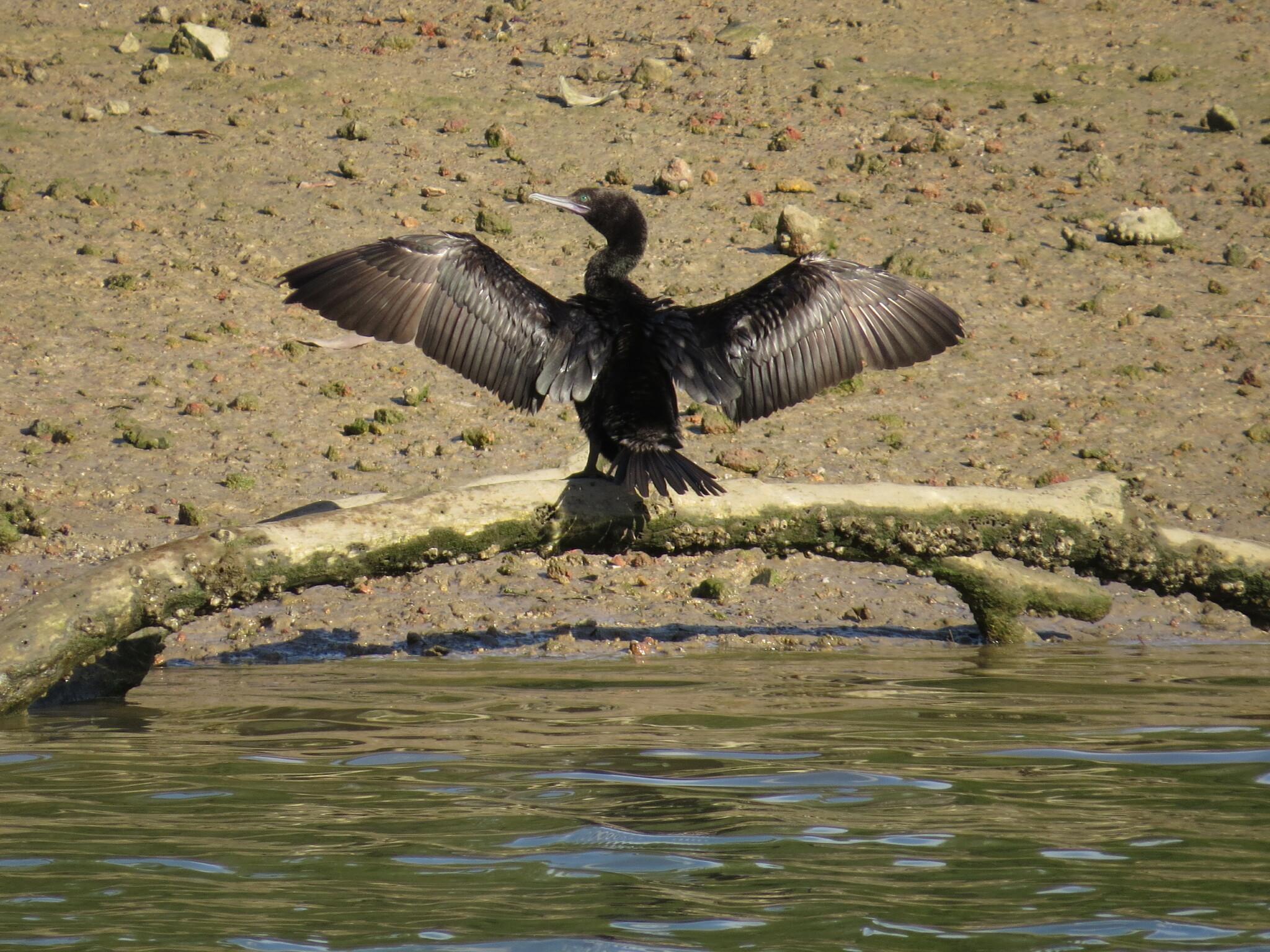 Little Black CormorantWhen a little black cormorant dives, it puts on goggles. It has special extra eyelids that slide across and protect its eyes underwater.
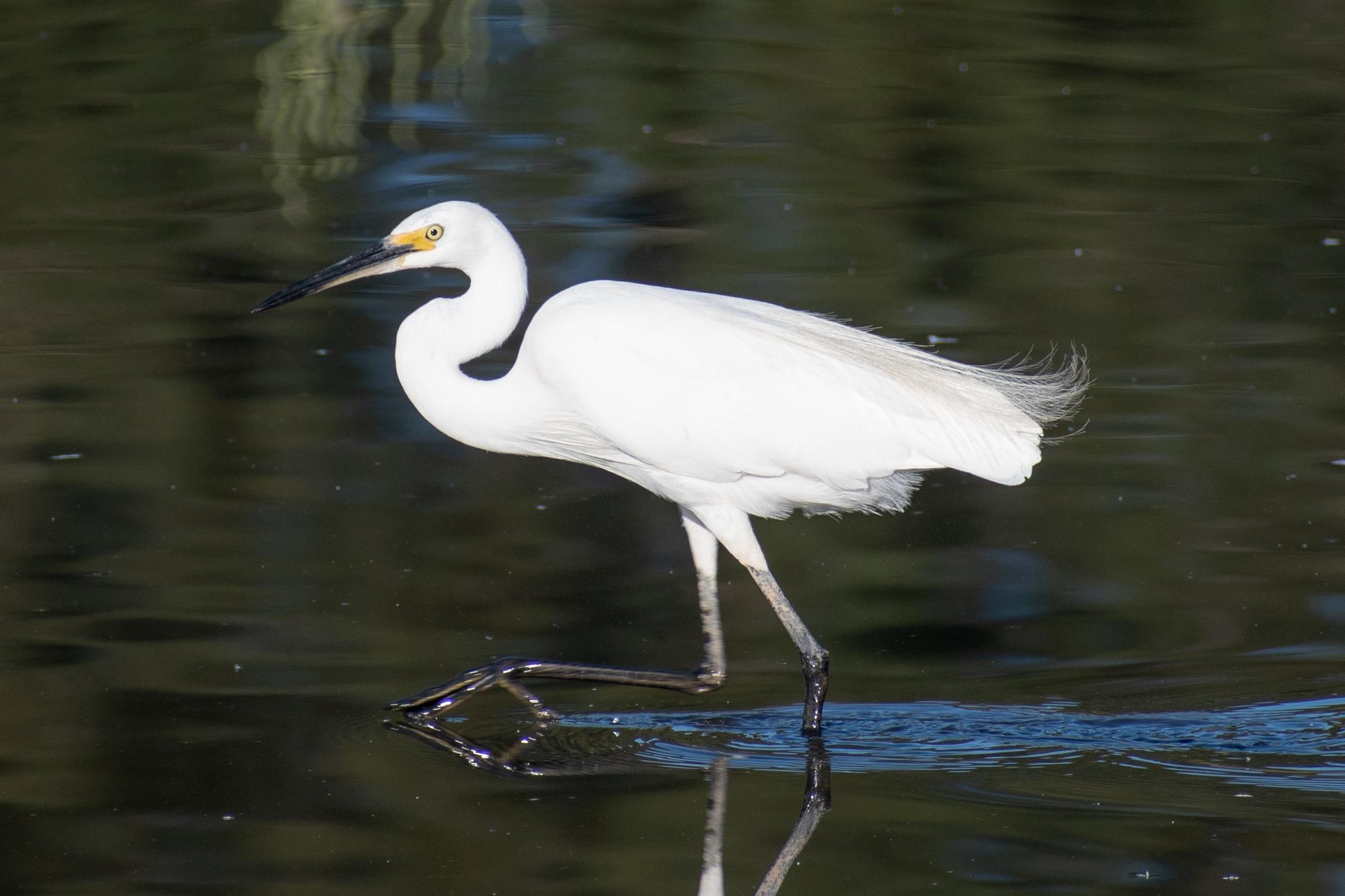 Little EgretThe little egret stirs up its dinner. It shuffles one foot in the shallows to flush out prey, then strikes in a lightning-fast movement.
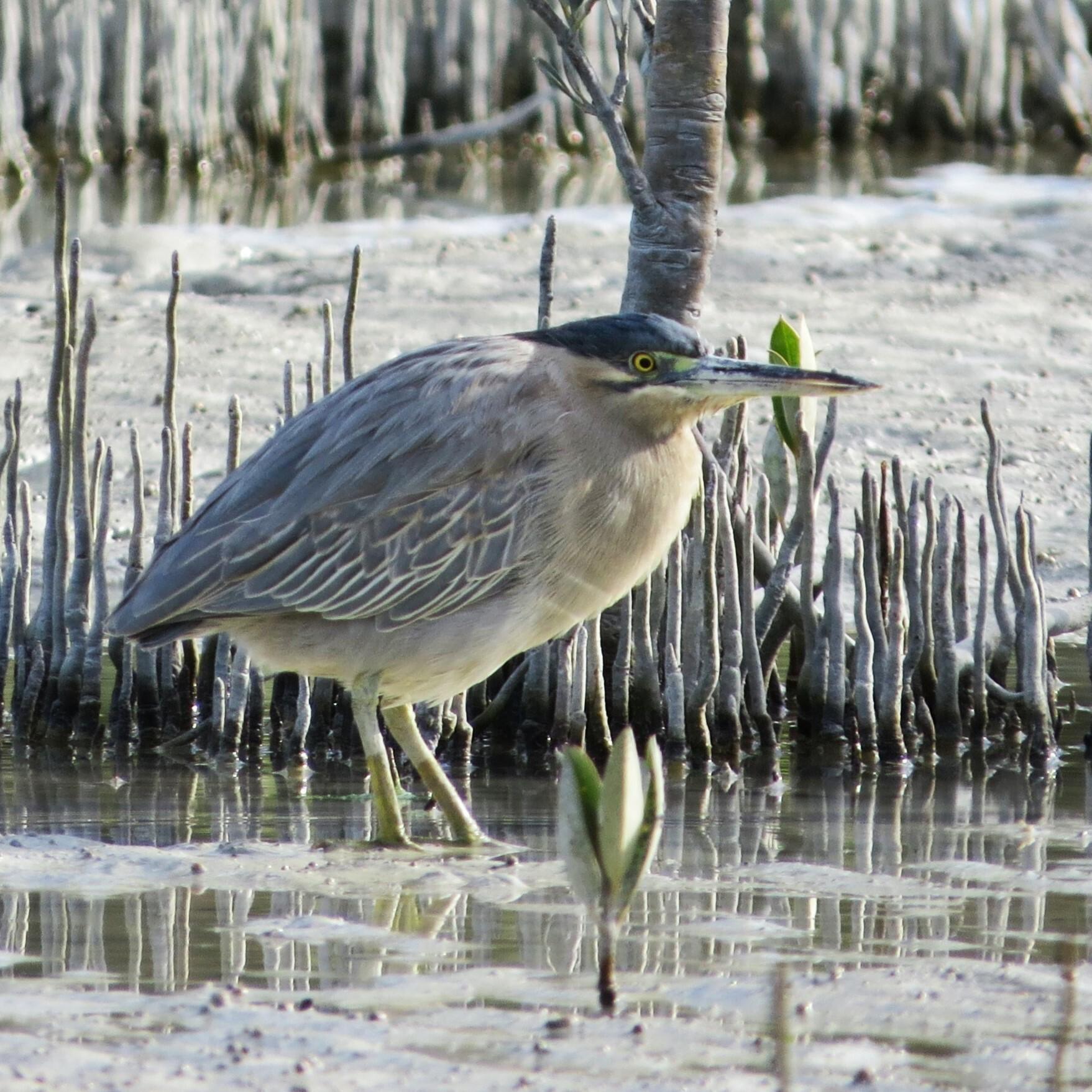 Little HeronThe little heron is a patient hunter. It stalks crabs and small fish along the mangroves and mudflats, slowly, or simply stands and waits for them to show themselves.
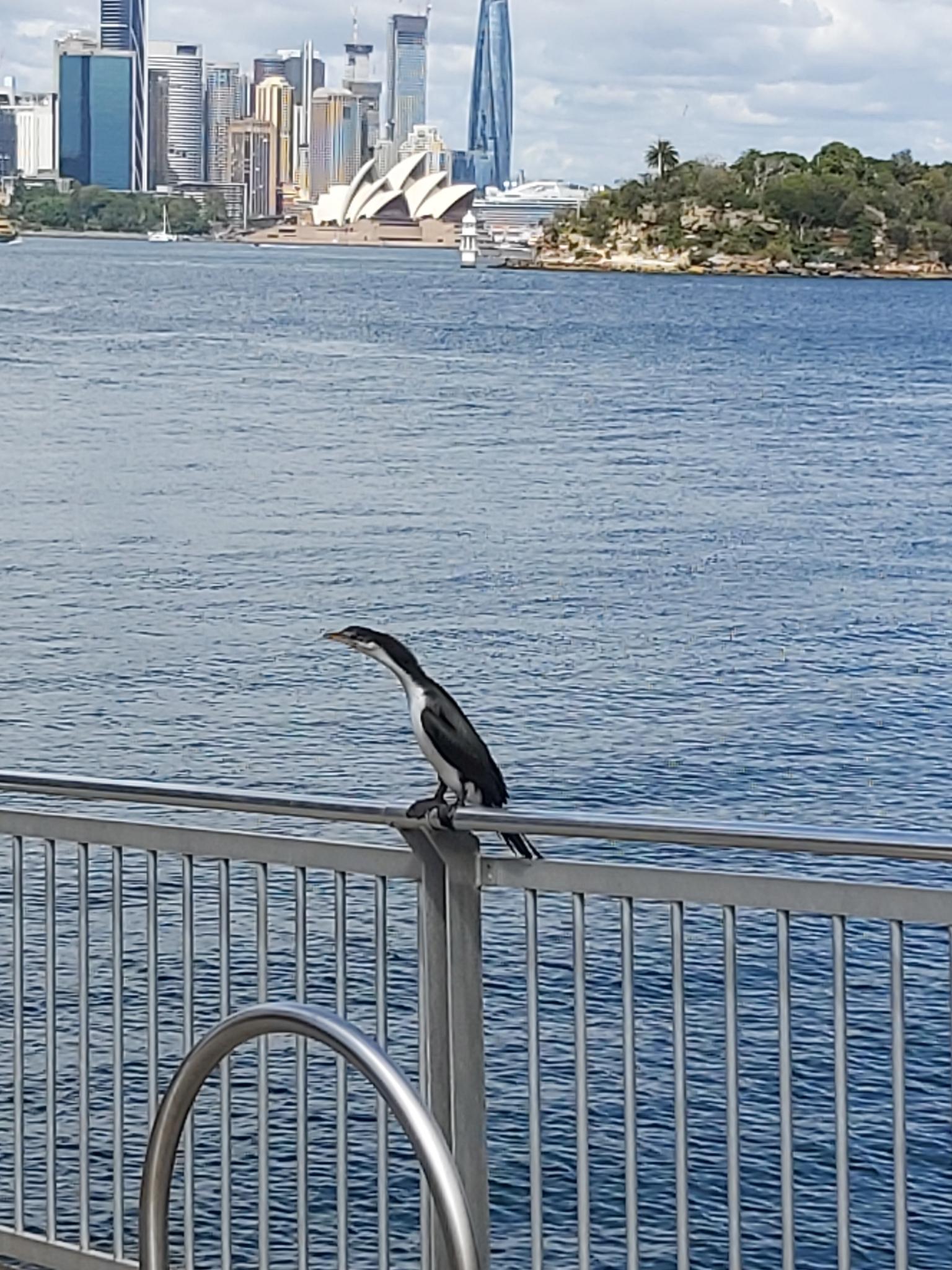 Little Pied CormorantThat little cormorant holding its wings out on a branch isn't showing off. It's drying them.
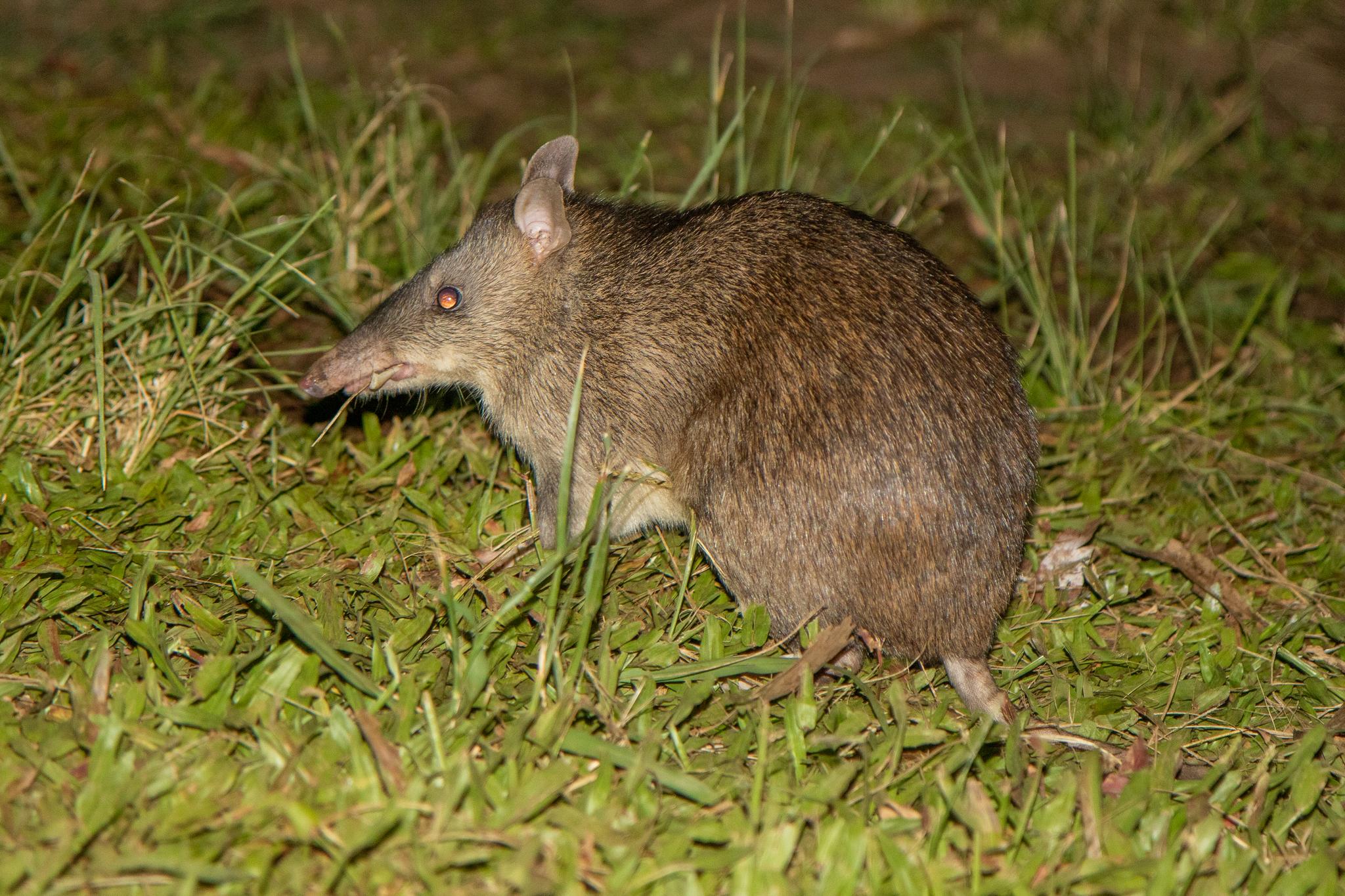 Long-nosed BandicootThose small cone-shaped holes in the lawn are a bandicoot's work. Each one was dug with its front feet, just big enough for its long, sensitive snout to reach in and sniff out insects and other small prey.
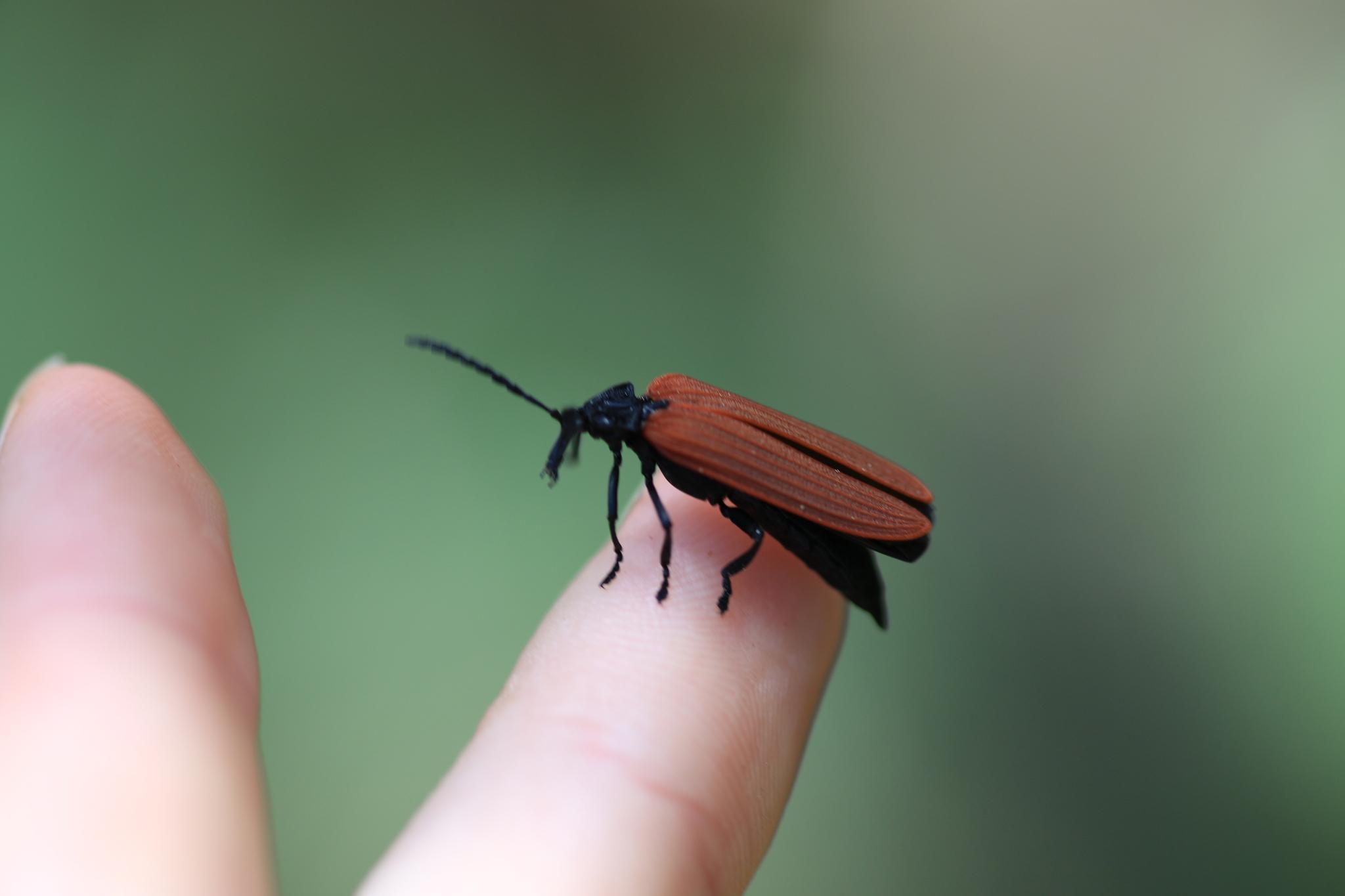 Long-nosed Lycid BeetleThis is the original. The long-nosed lycid's brick-red and black means what it says.
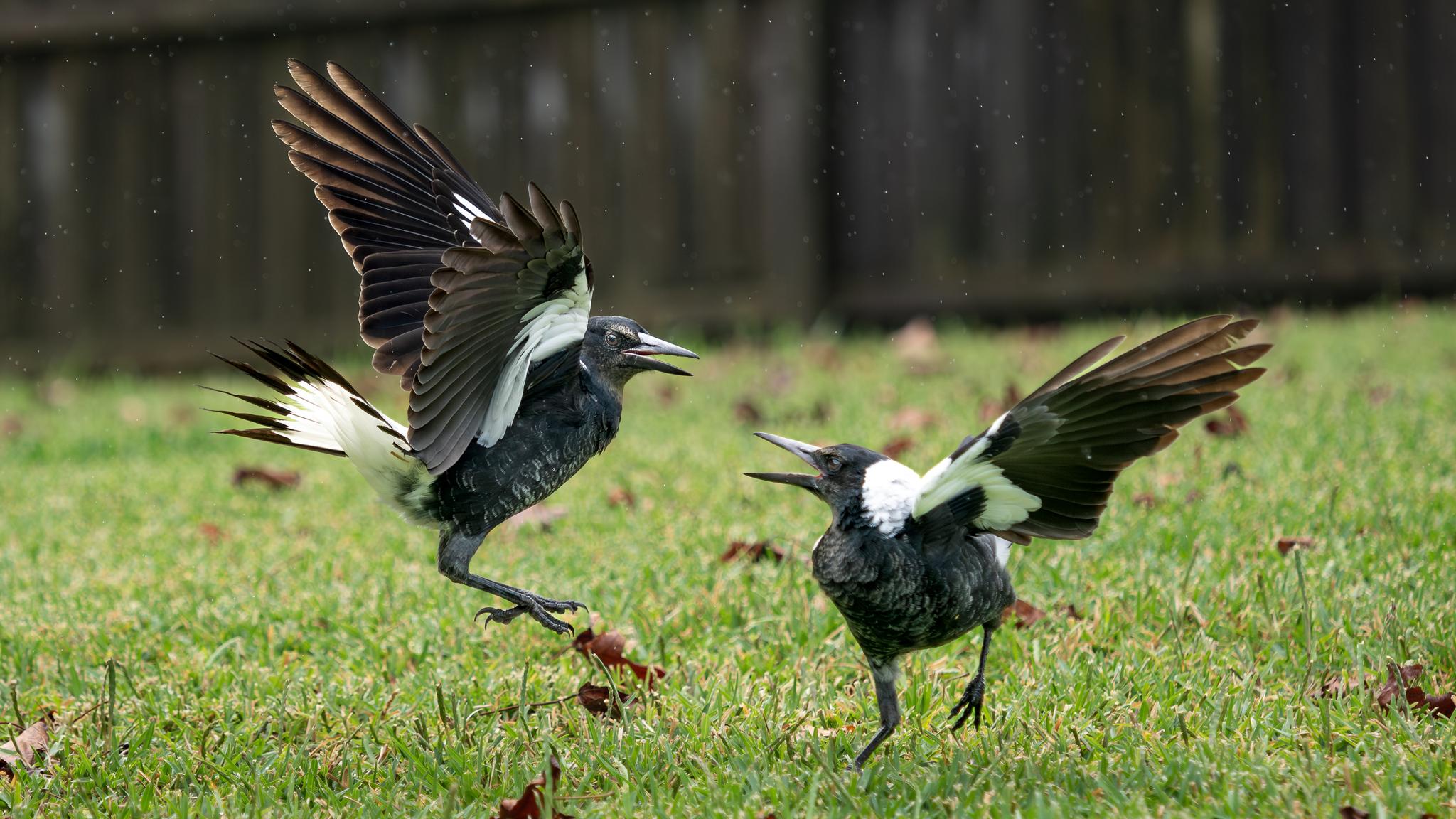 Magpie fledglings begging to be fedThat noisy young magpie, all open beak and flapping, is growing up in a crowd. And the size of the crowd may shape the bird it becomes.
- Magpies swoopingA swooping magpie may not be swooping everyone. Some magpies only go for particular people.
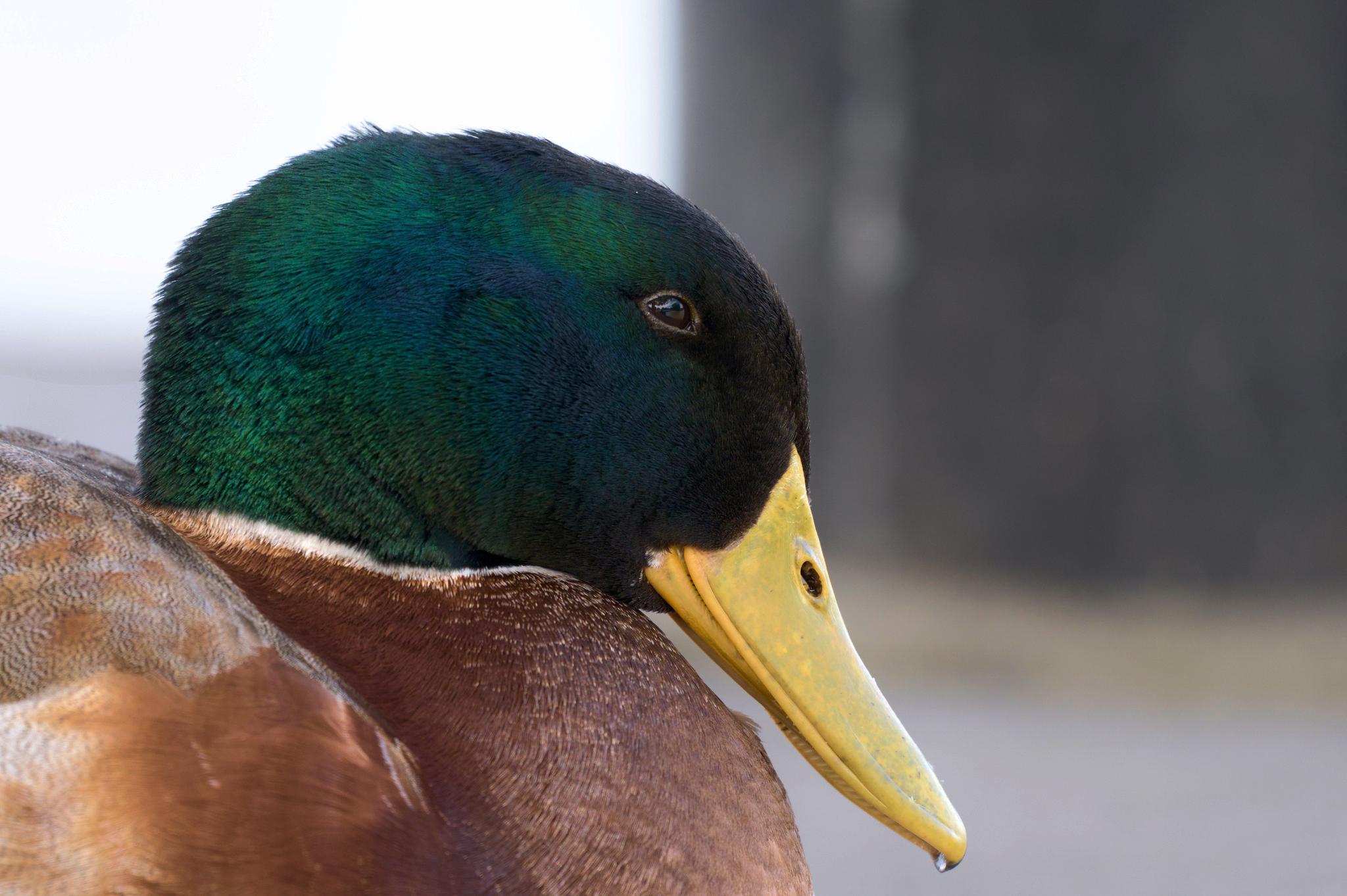 MallardMallards seem never to have reached Australia on their own. Every mallard here comes from birds that people brought.
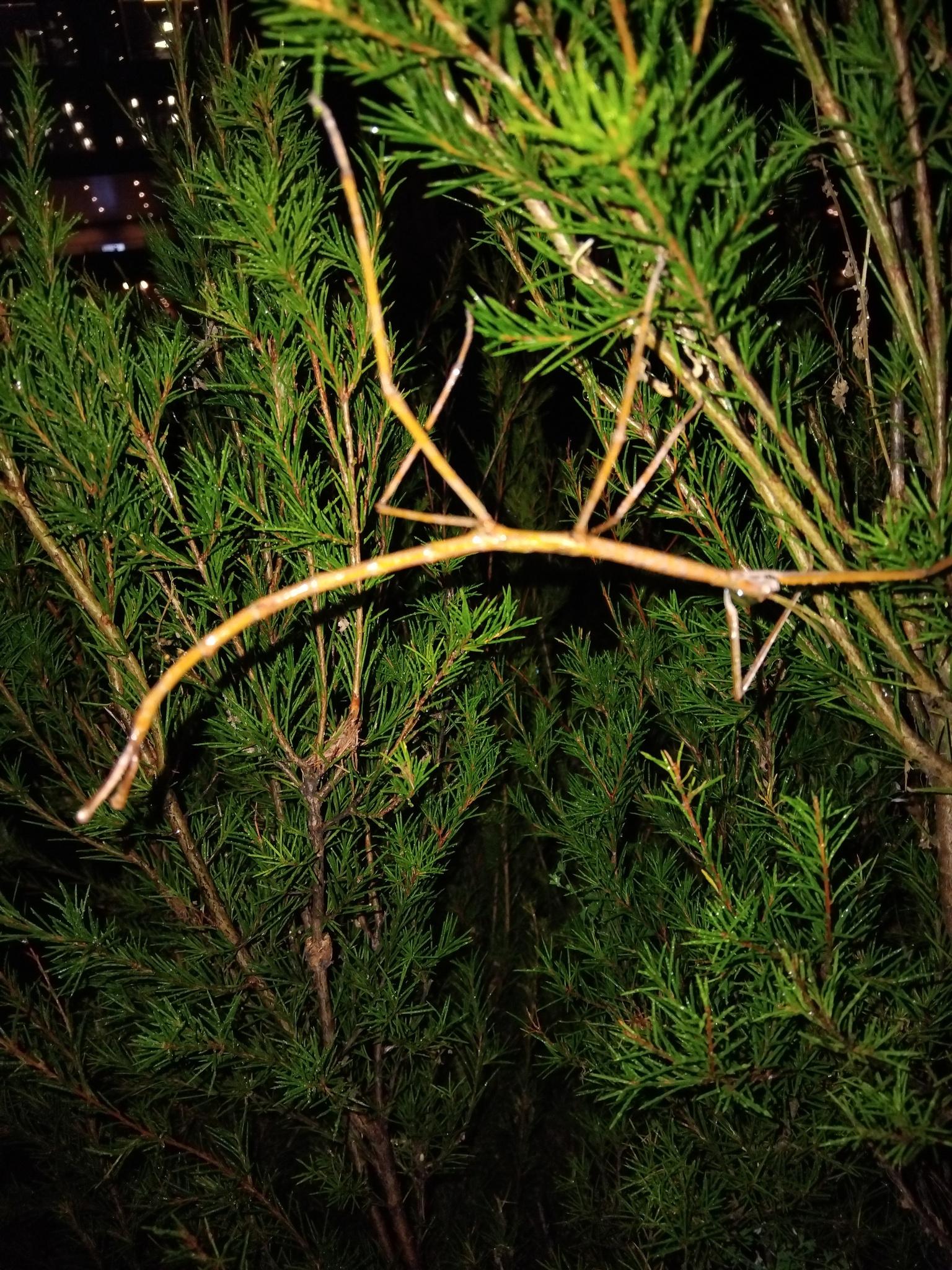 Margin-winged Stick InsectIf it starts to rock gently from side to side, it isn't nervous. When disturbed, a stick insect may sway back and forth, like a dead leaf or twig moving in the breeze.
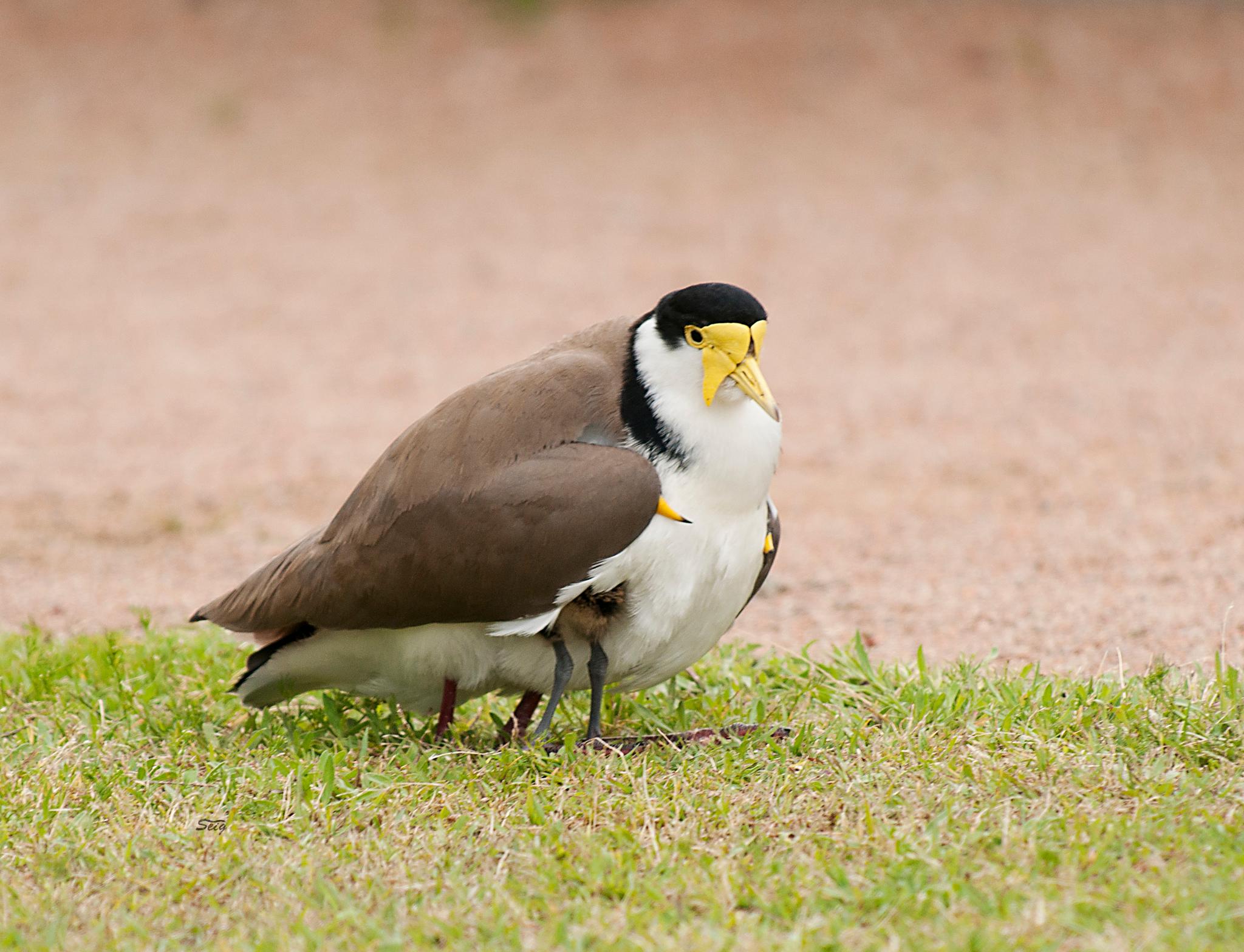 Masked lapwing (plover) chicks, and parents defending nestsA few hours after hatching, these lapwing chicks were already out of the nest, fully covered in down, walking and feeding themselves. Their parents stand guard: diving at intruders, or faking a broken wing to lure them away.
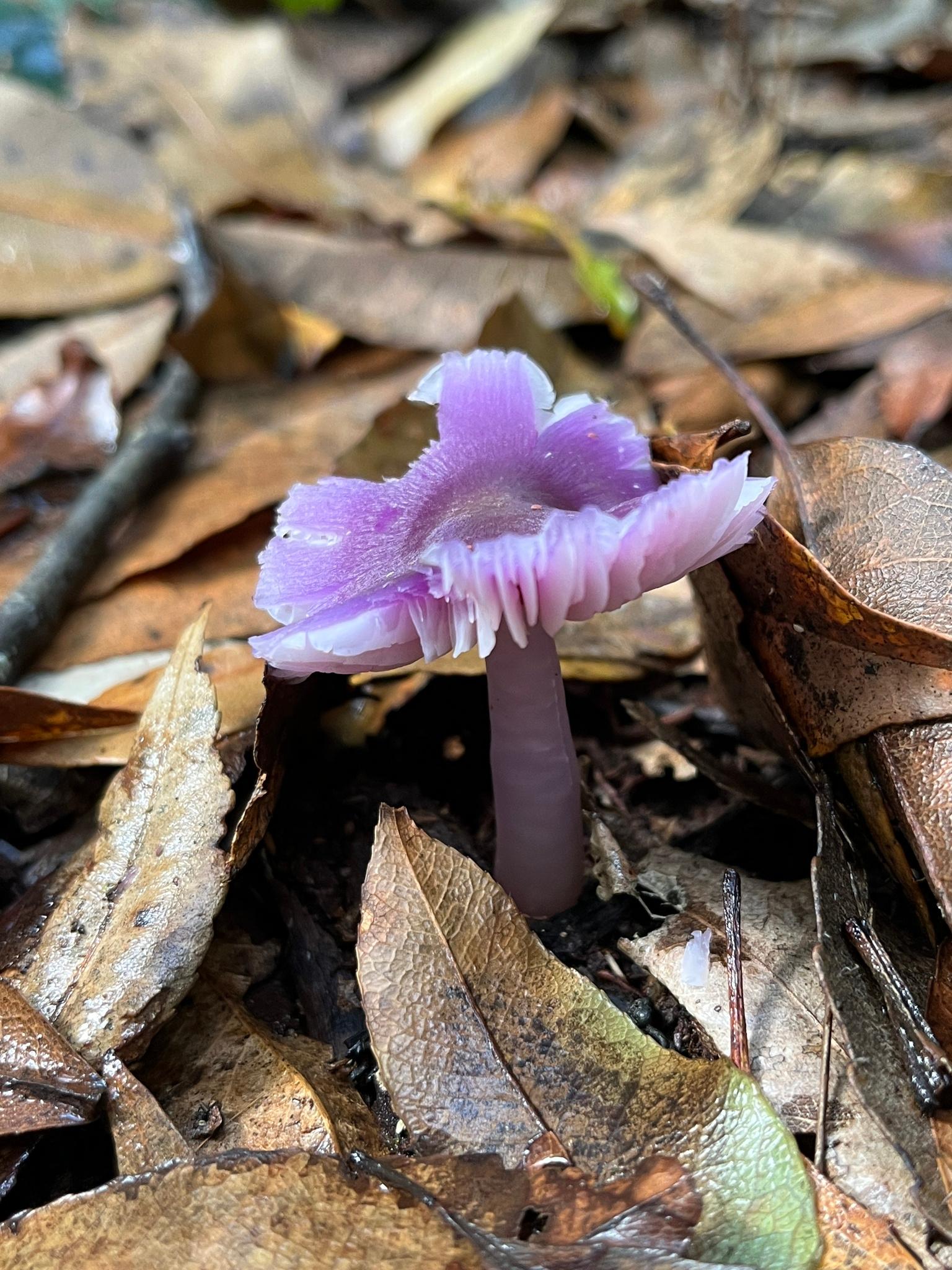 Mauve splitting waxcapIts conical mauve cap splits from the edge towards the centre as it ages, which is how it got its name.
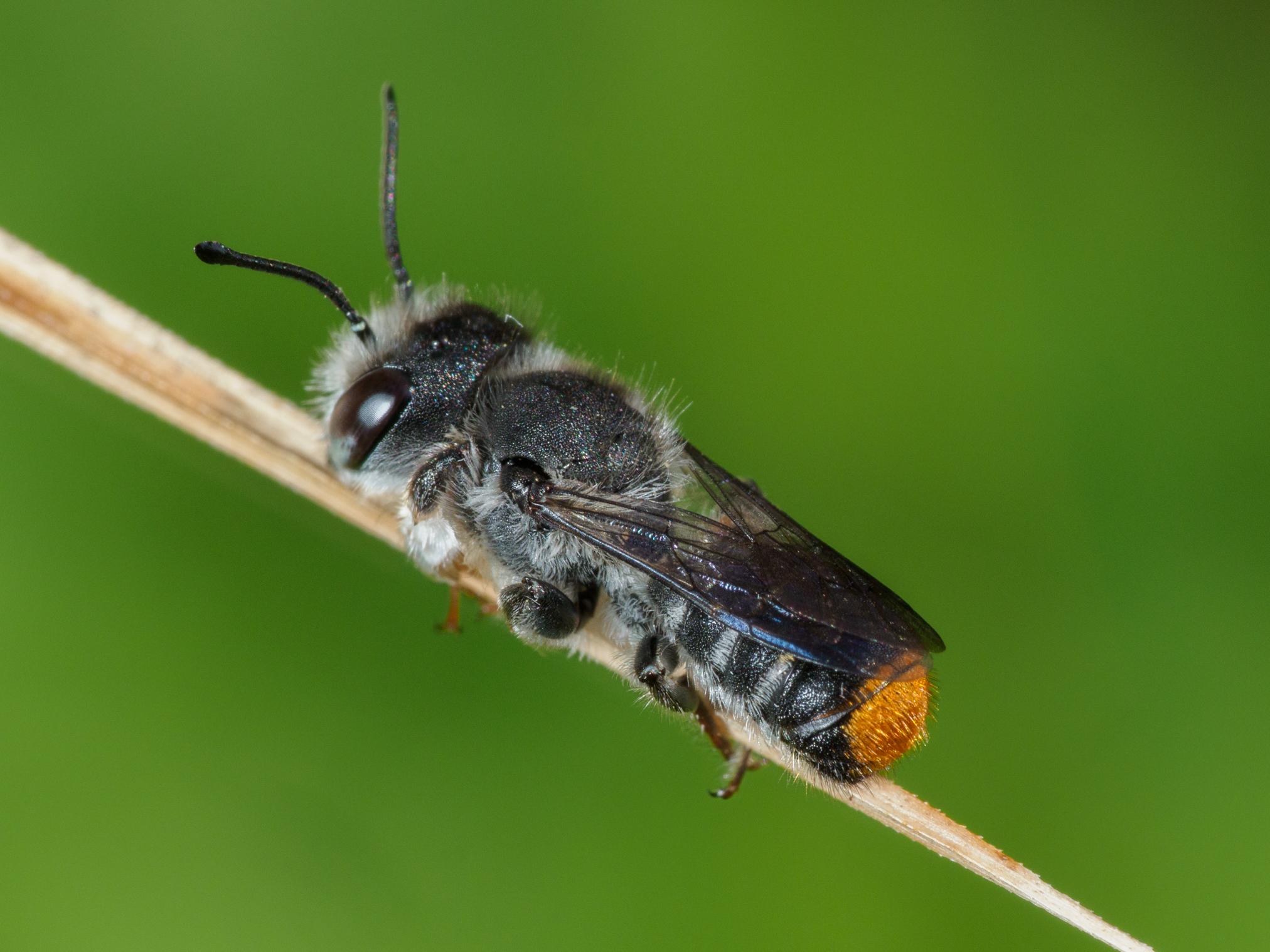 Megachile feroxLike other male leafcutter bees, this male has oddly shaped feet with dark markings. During courtship he is believed to rub them over the female's eyes.
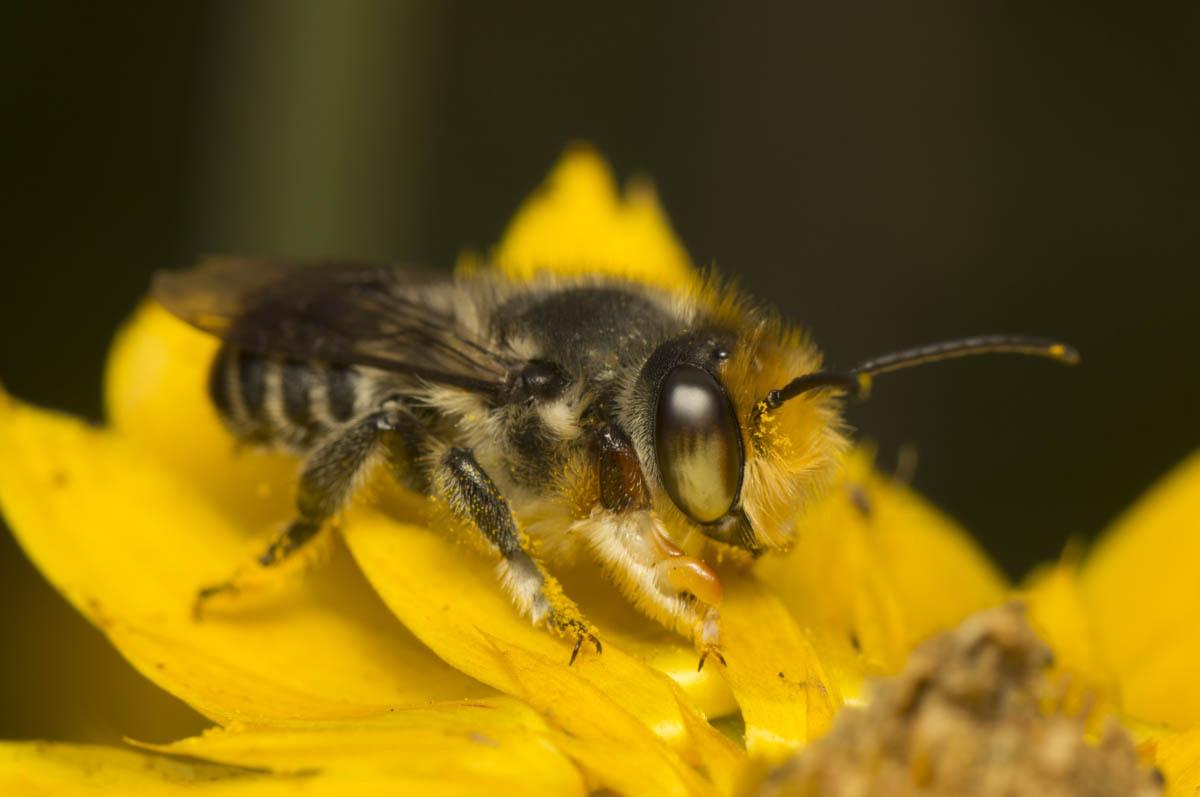 Megachile maculariformisIf this is a male, look at his feet. They're oddly shaped, marked with dark patches.
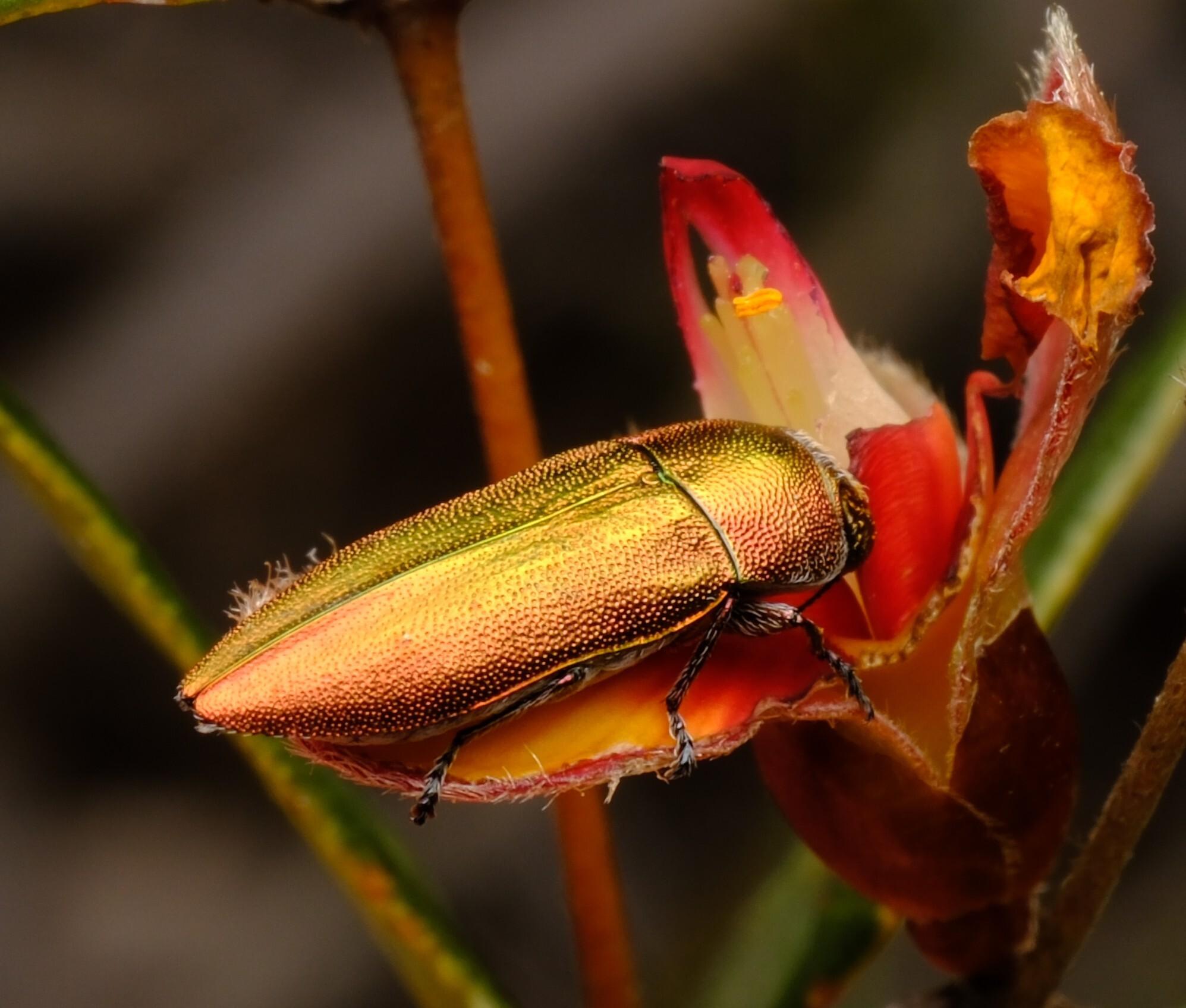 Melobasis propinquaOne Australian jewel beetle is famous for trying to mate with beer bottles. Researchers think the shine fooled it.
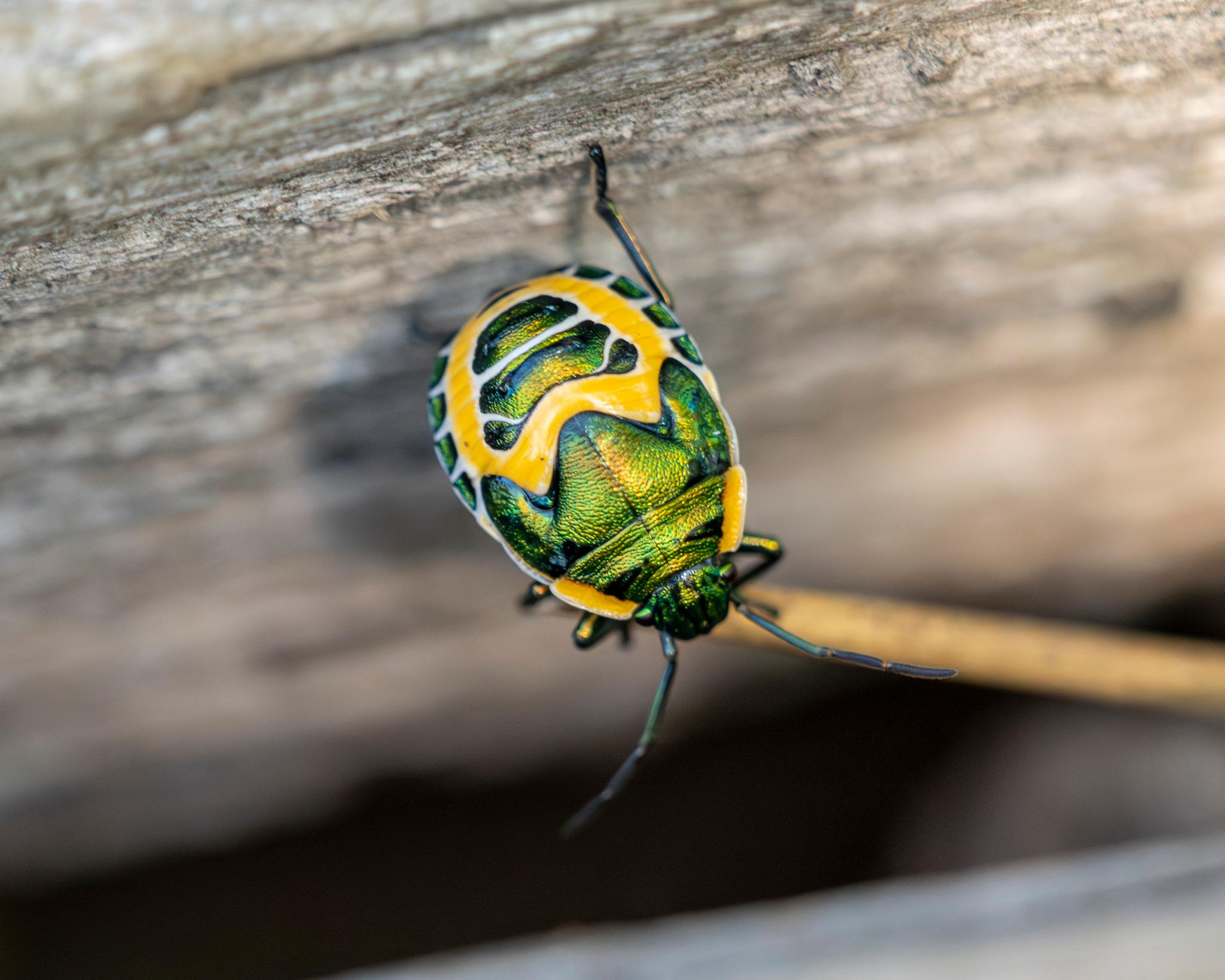 Metallic Shield BugThat shining back isn't its wings. It's one great shield, and it's part of the bug's own body: the last section of its thorax, grown so large that it roofs over the wings completely.
- Migratory shorebirds arriving (bar-tailed godwits and others)The birds arriving on our mudflats and beaches now have just come off one of the longest journeys any animal makes. Some of them have barely touched down.
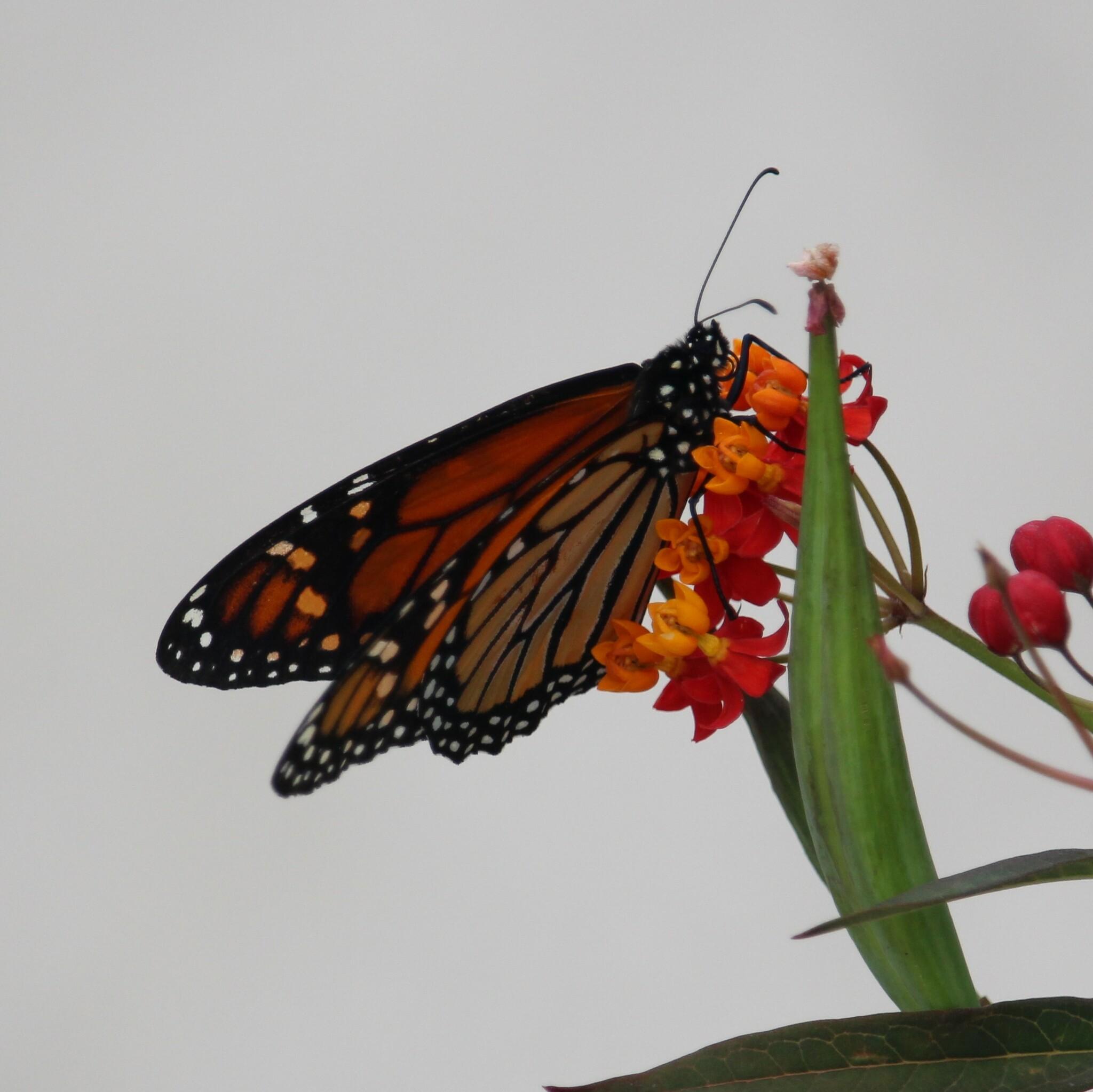 MonarchIt's a natural icon. But surprisingly, it's not native.
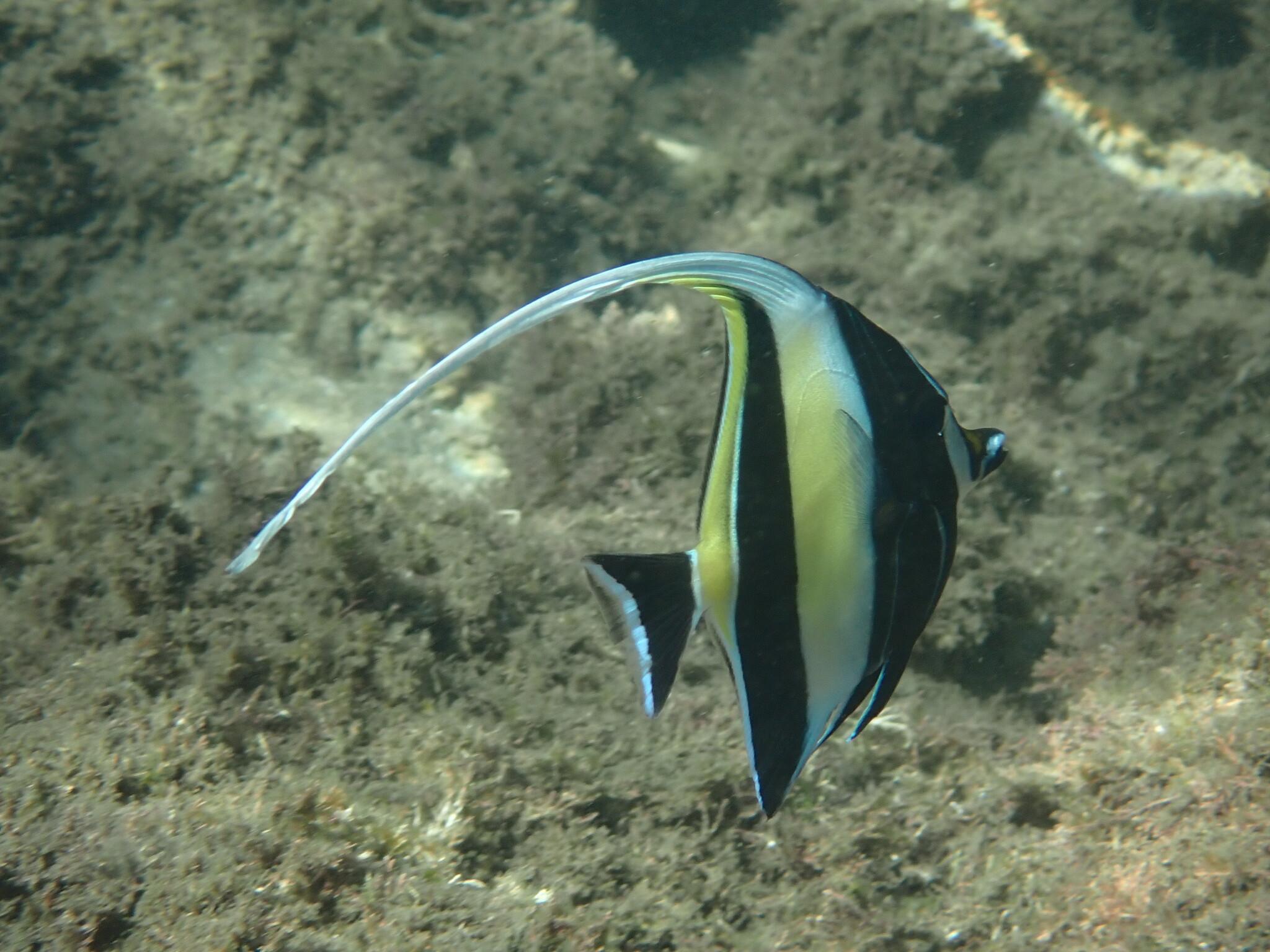 Moorish IdolIf you've seen Finding Nemo, you've met one: Gill, the scarred fish in the dentist's tank who plans the great escape. A real Moorish idol rarely does well in a tank at all.
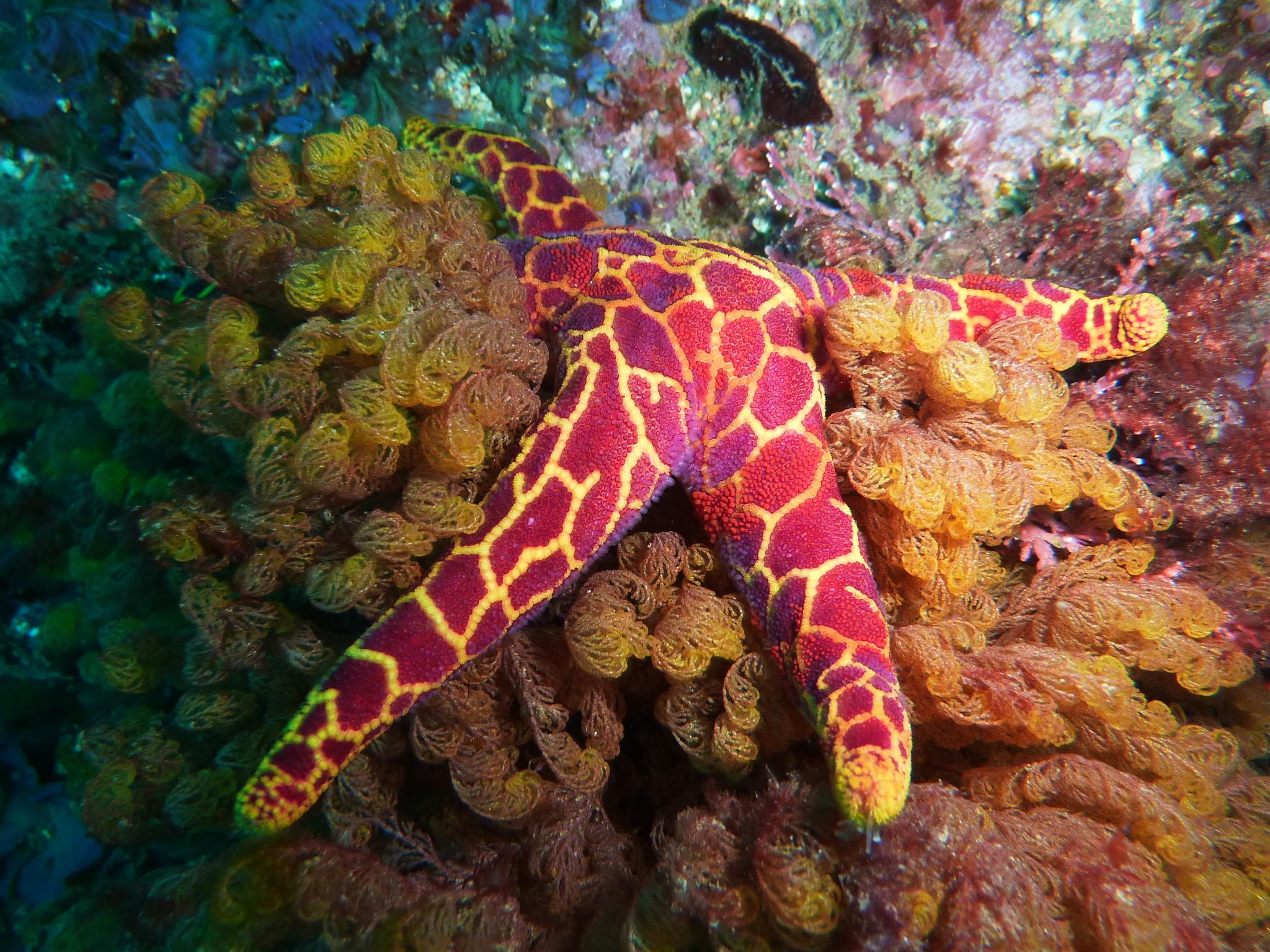 Mosaic Sea StarA patchwork of orange, purple and red, up to about 24 centimetres across. It's been recorded with a small shrimp that lives on it, so a sea star like this can be a whole neighbourhood.
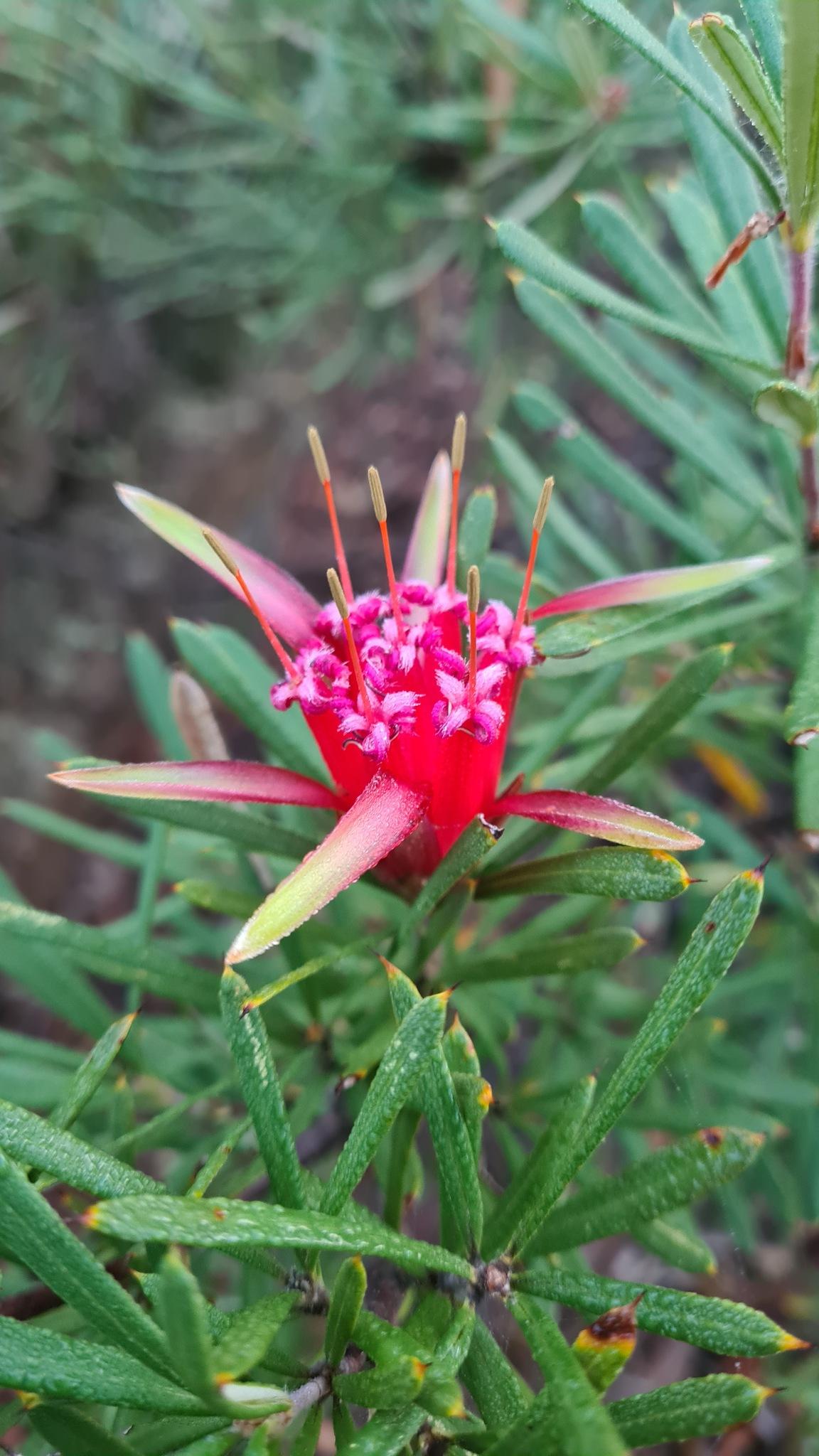 Mountain DevilIts name comes from its fruit. The woody pod, 15 to 25 millimetres long, has a short beak and a long horn on each half, and it can look a little like a tiny devil's head.
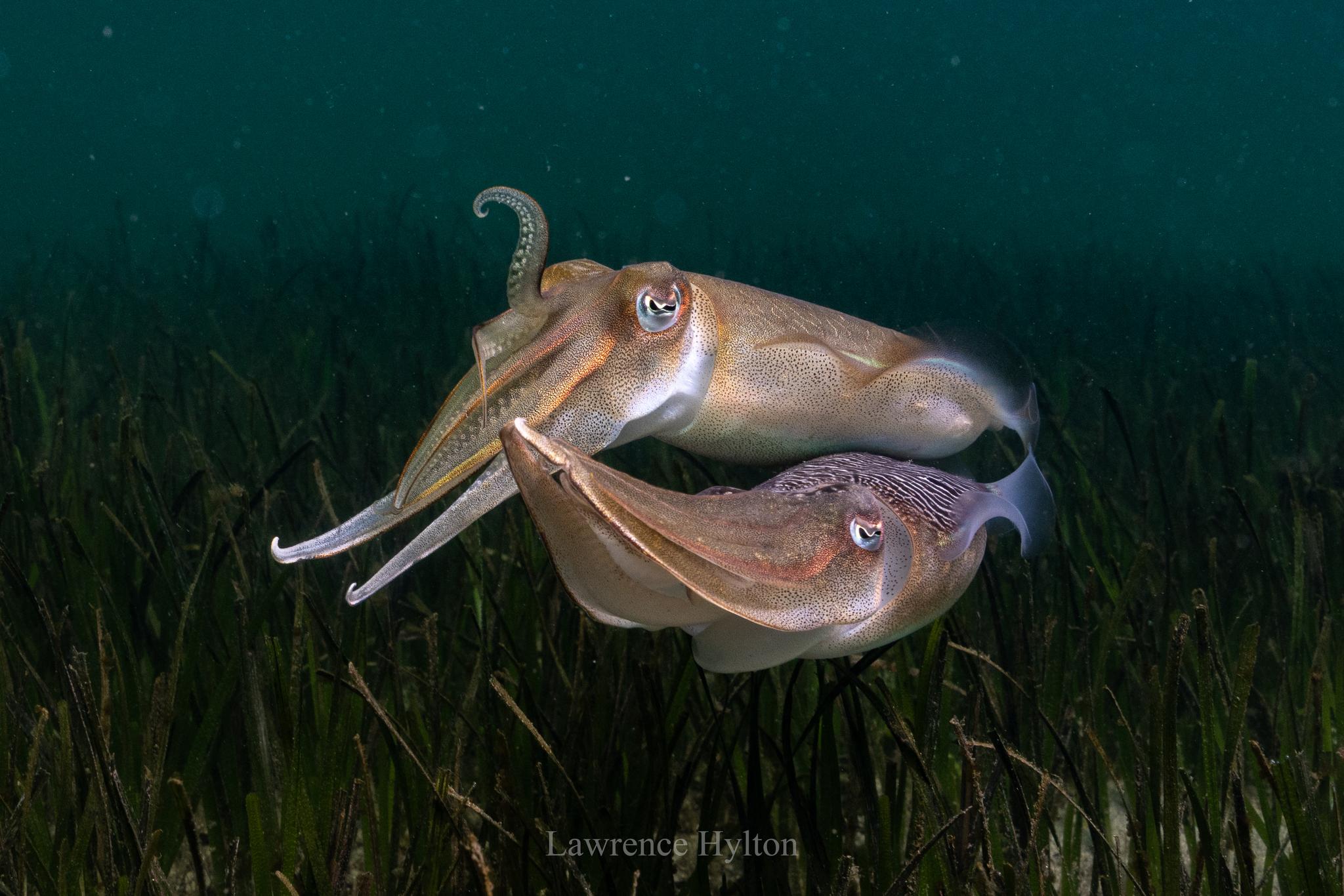 Mourning CuttlefishA male mourning cuttlefish courting a female, with a rival nearby, can be two animals at once. On the side facing her, he shows his courtship colours.
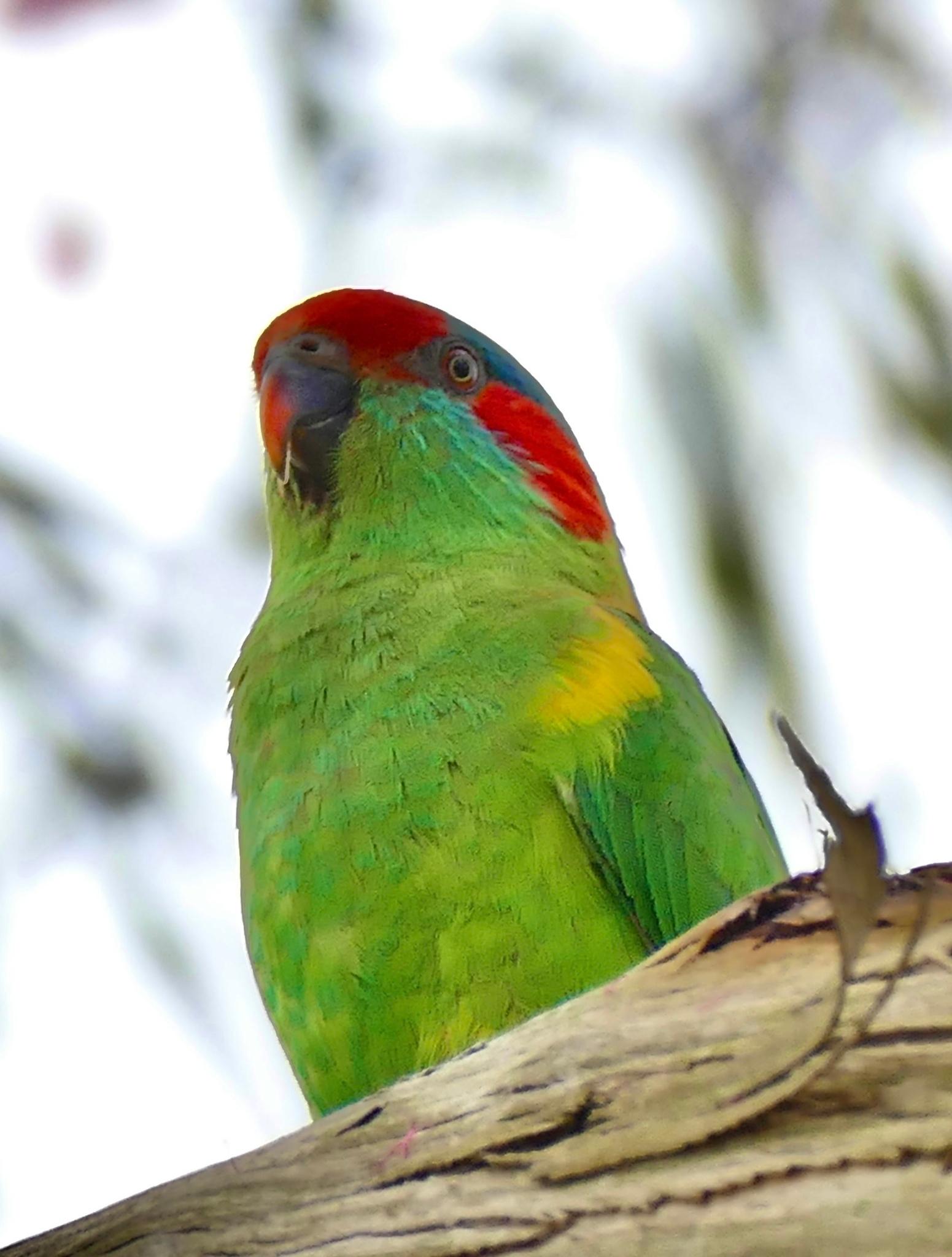 Musk LorikeetThe flock screeching in that flowering gum are musk lorikeets. They feed mainly on eucalypt pollen and nectar, lapping it up with brush-tipped tongues, and they wander widely, following the flowering trees.
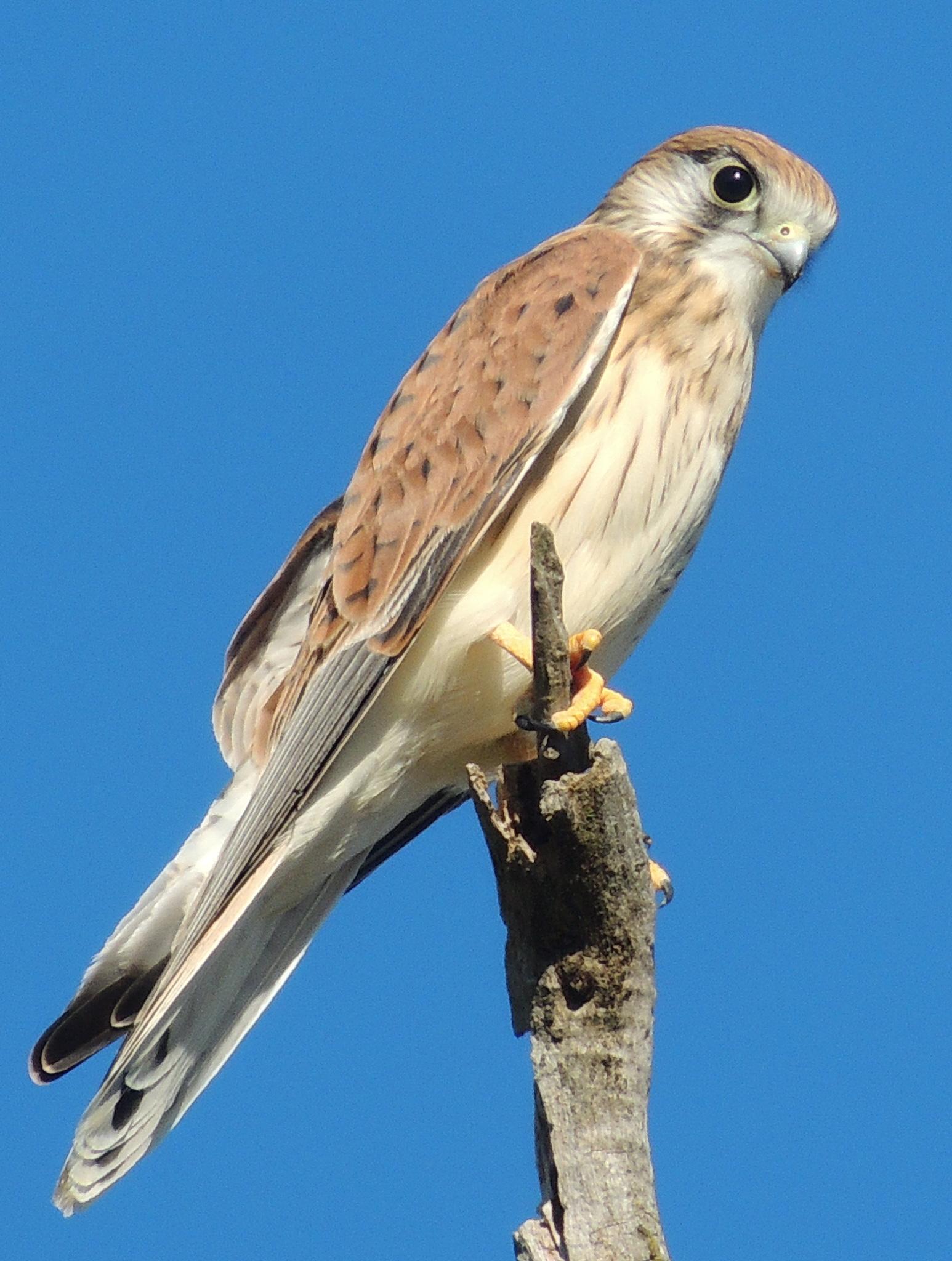 Nankeen KestrelIt hangs in the air on rapid wingbeats, fanned tail working as a rudder, head and body held still while it watches the ground.
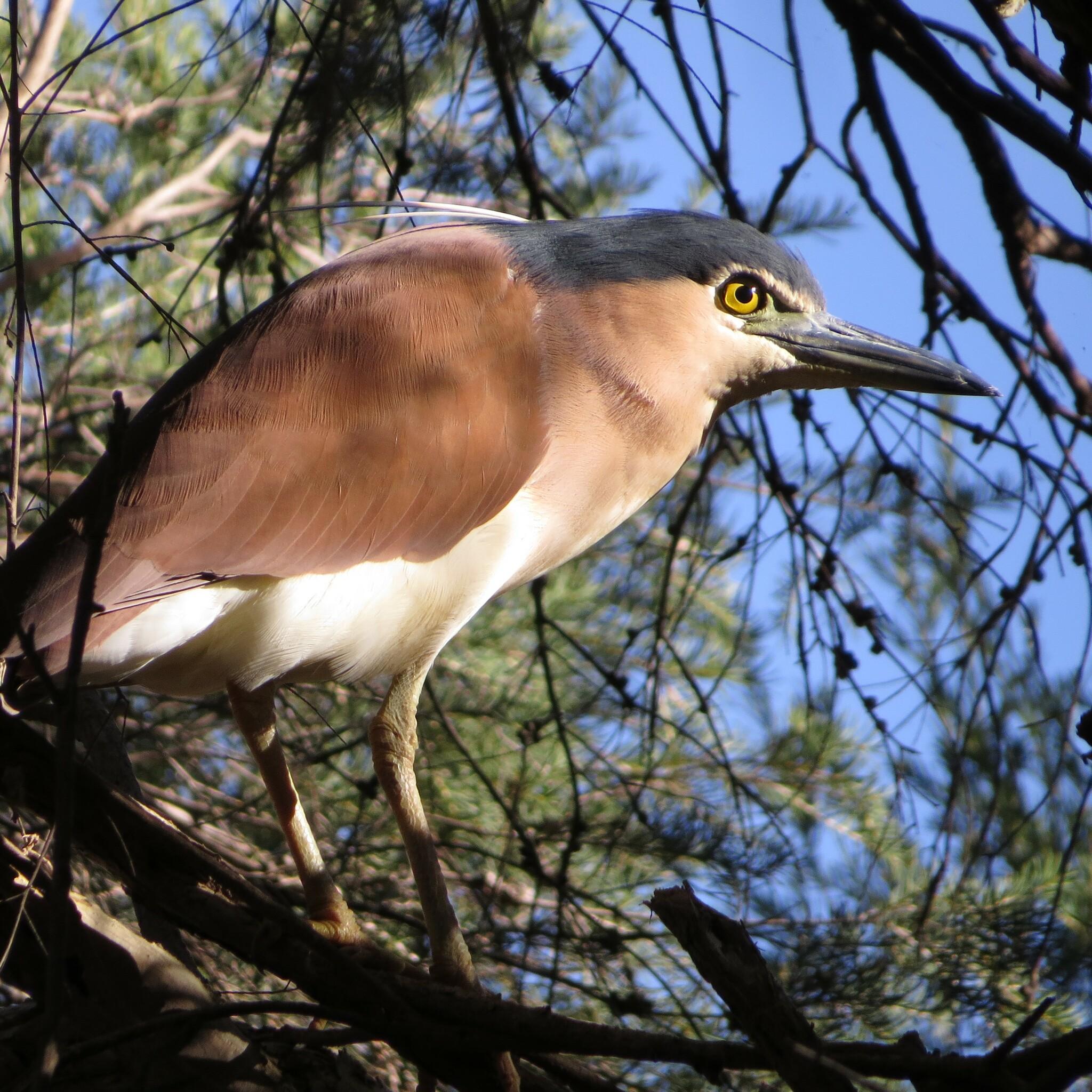 Nankeen Night HeronIts name is a piece of history. In early colonial times, the colonists named it for the colour of nankeen, a cotton cloth from China.
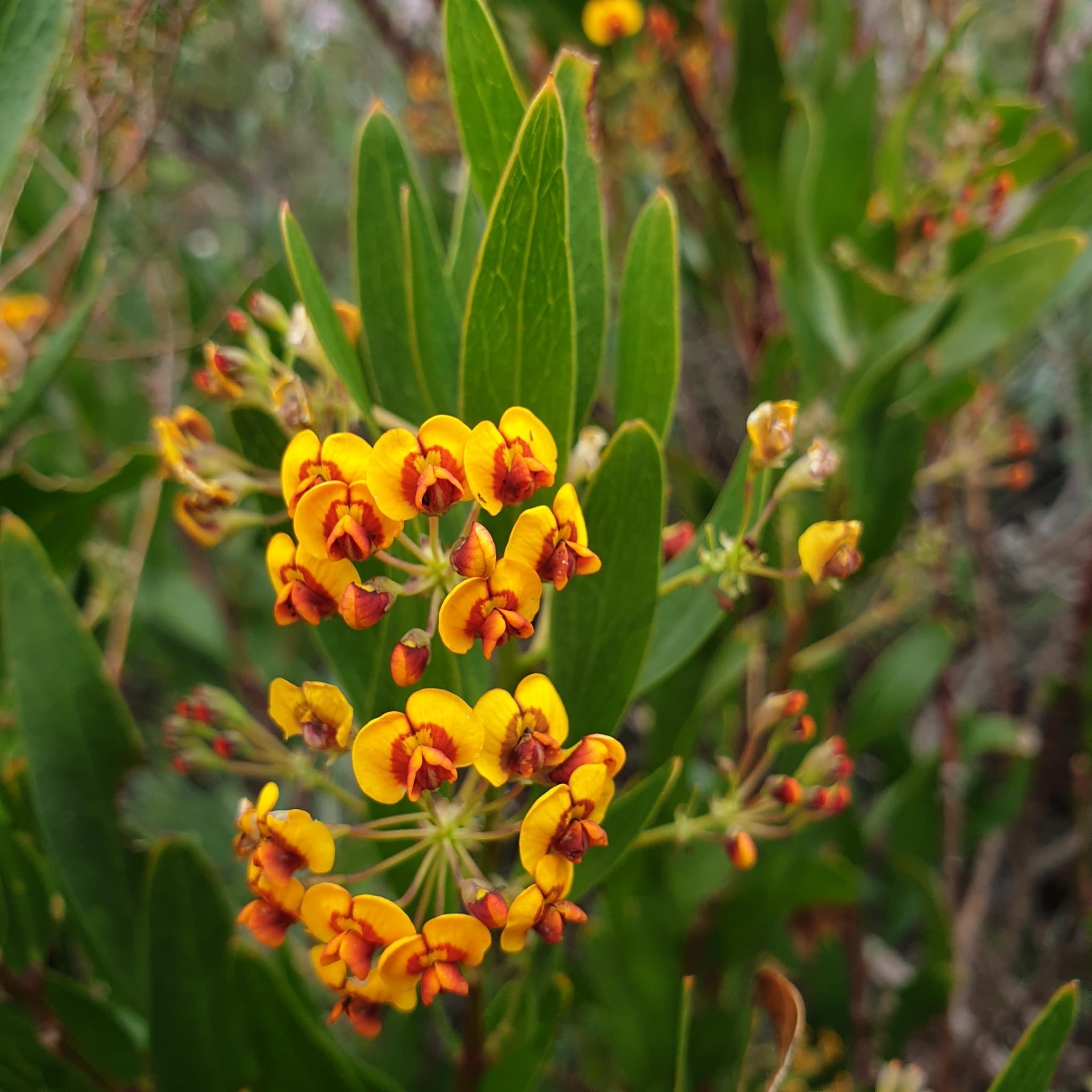 Narrow leaf bitter peaIts name is a warning. Every bitter pea has leaves that taste bitter.
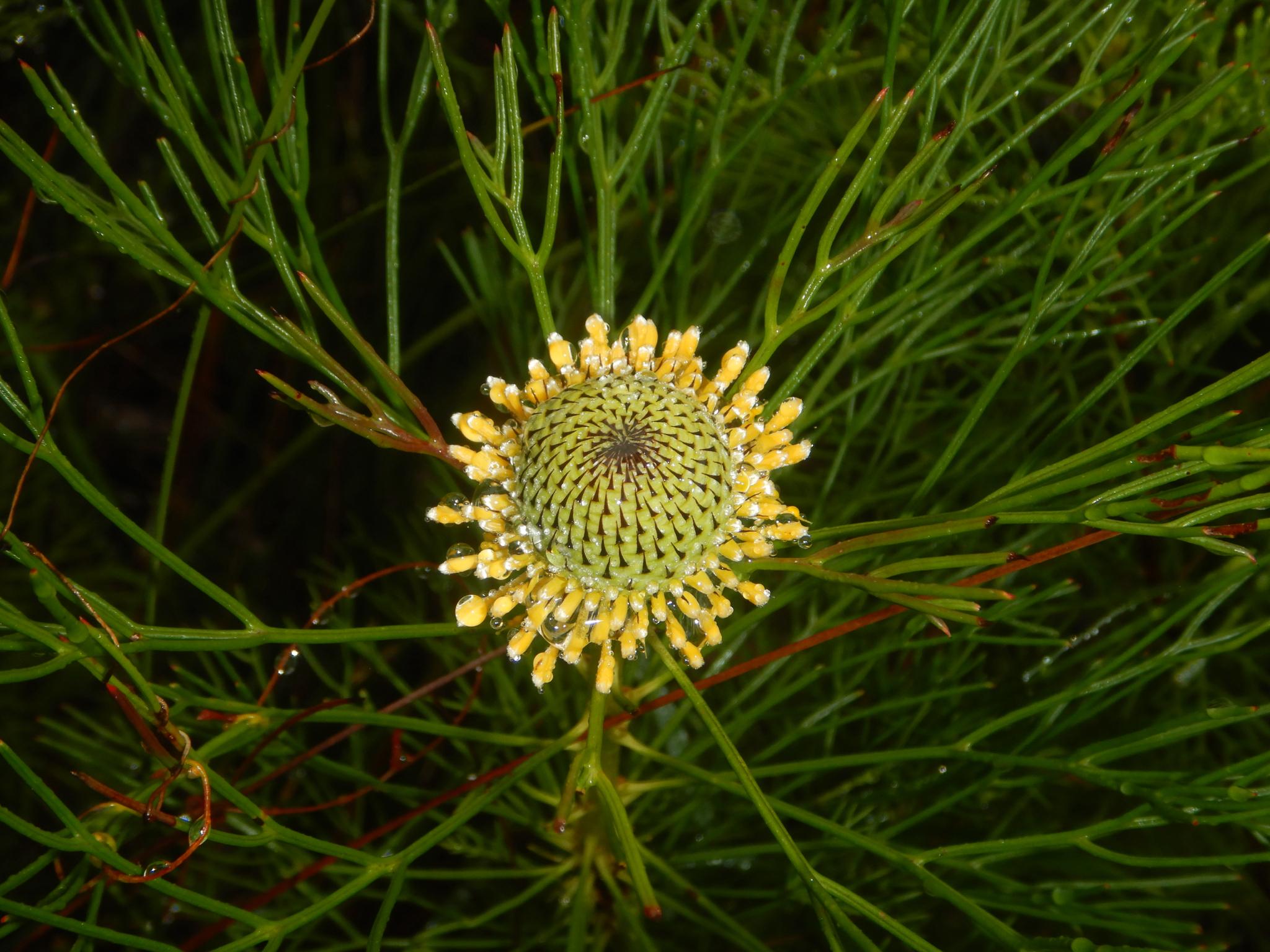 Narrow-leaf DrumsticksThe "drumsticks" are its seed cones: knobs up to about 2.5 centimetres across, which stay on the bush for a long time. Inside, each holds tiny hairy nuts, two or three millimetres long and weighing about four milligrams.
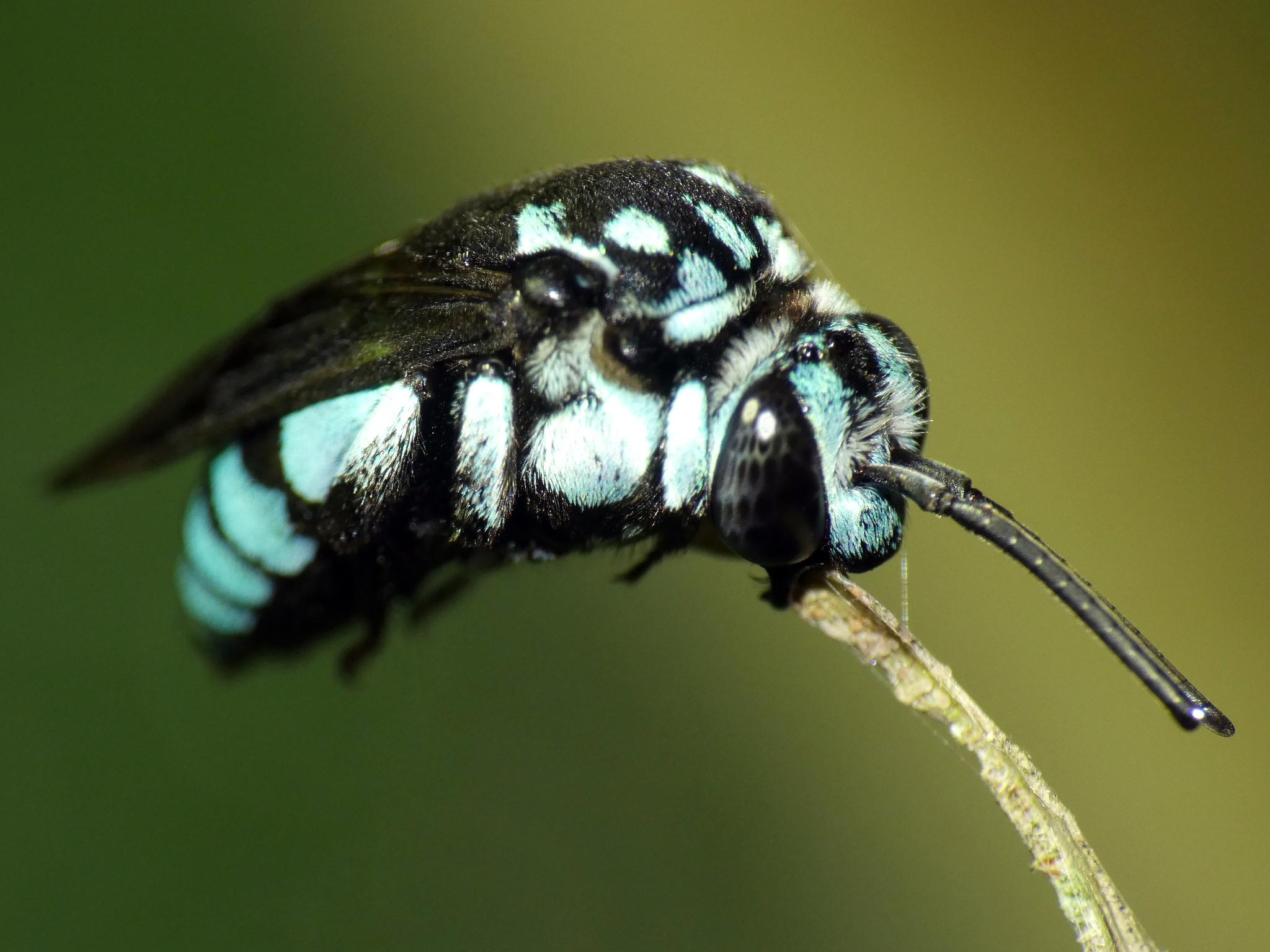 Neon Cuckoo BeeThat flash of iridescent blue and black is a neon cuckoo bee, probably the most striking of Sydney's cuckoo bees. It never builds a nest or gathers food for its young.
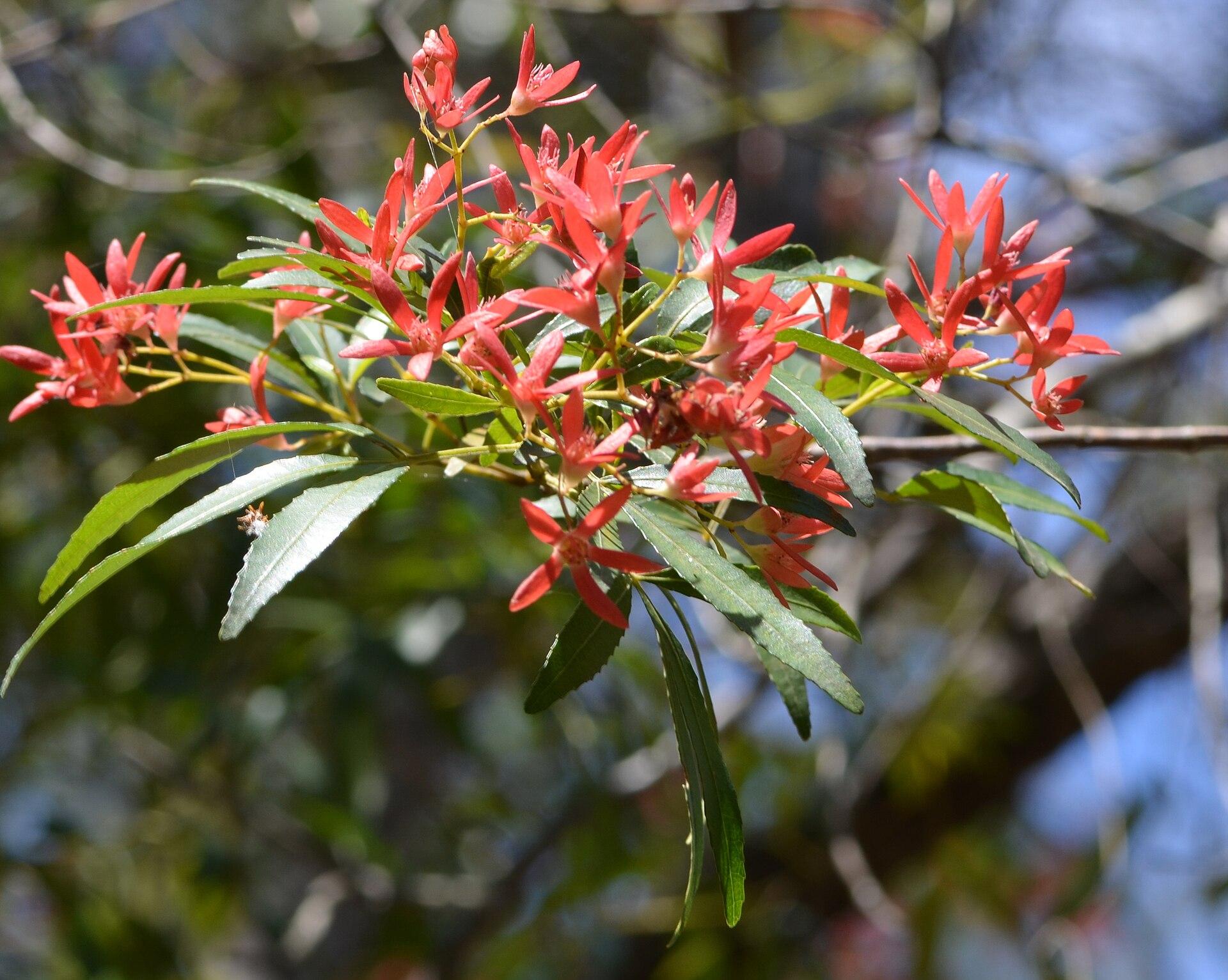 New South Wales christmas bushThose red "flowers" aren't flowers. The real petals are tiny, about 3 mm long.
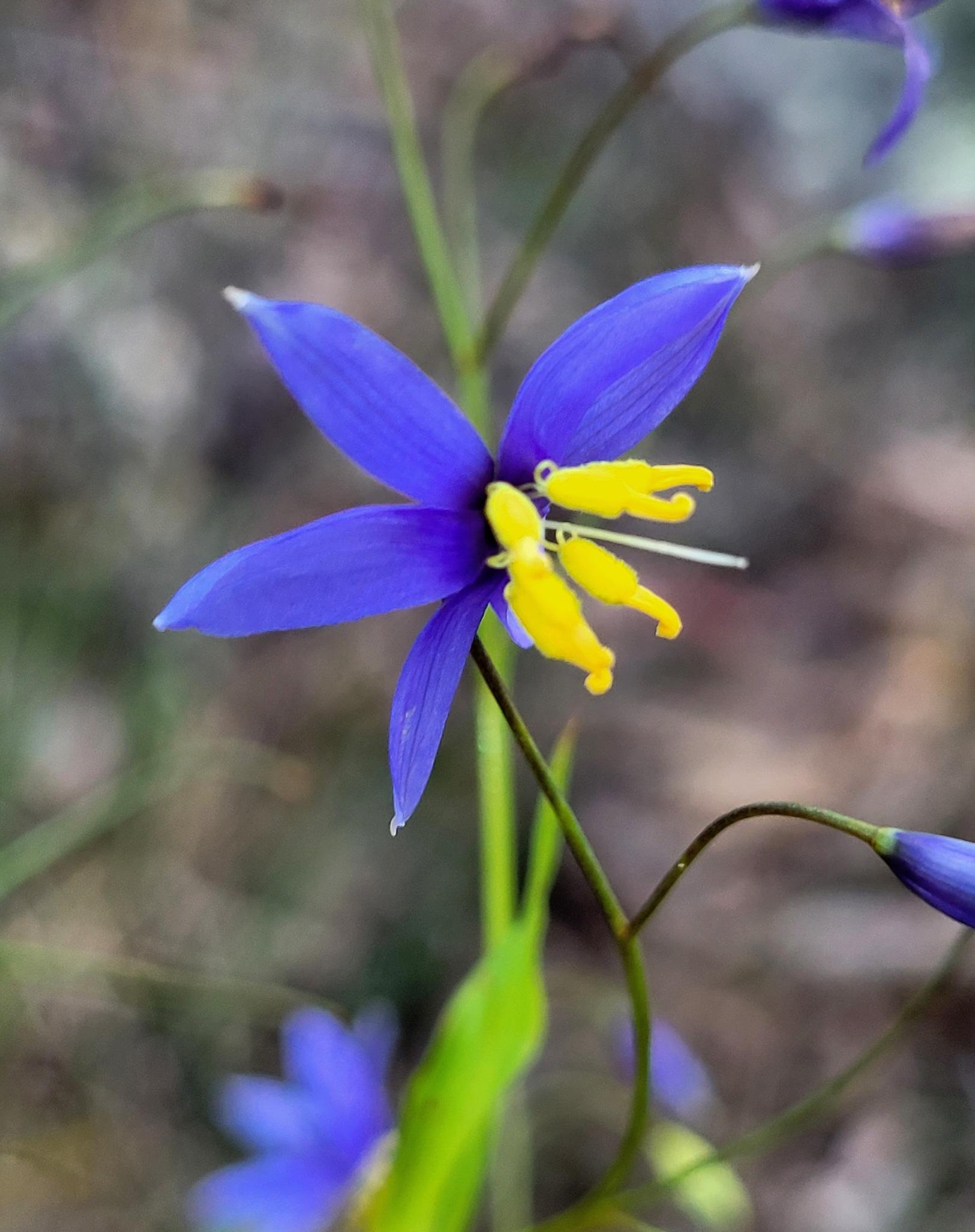 Nodding blue lilyThis delicate blue lily has another name: blindgrass.
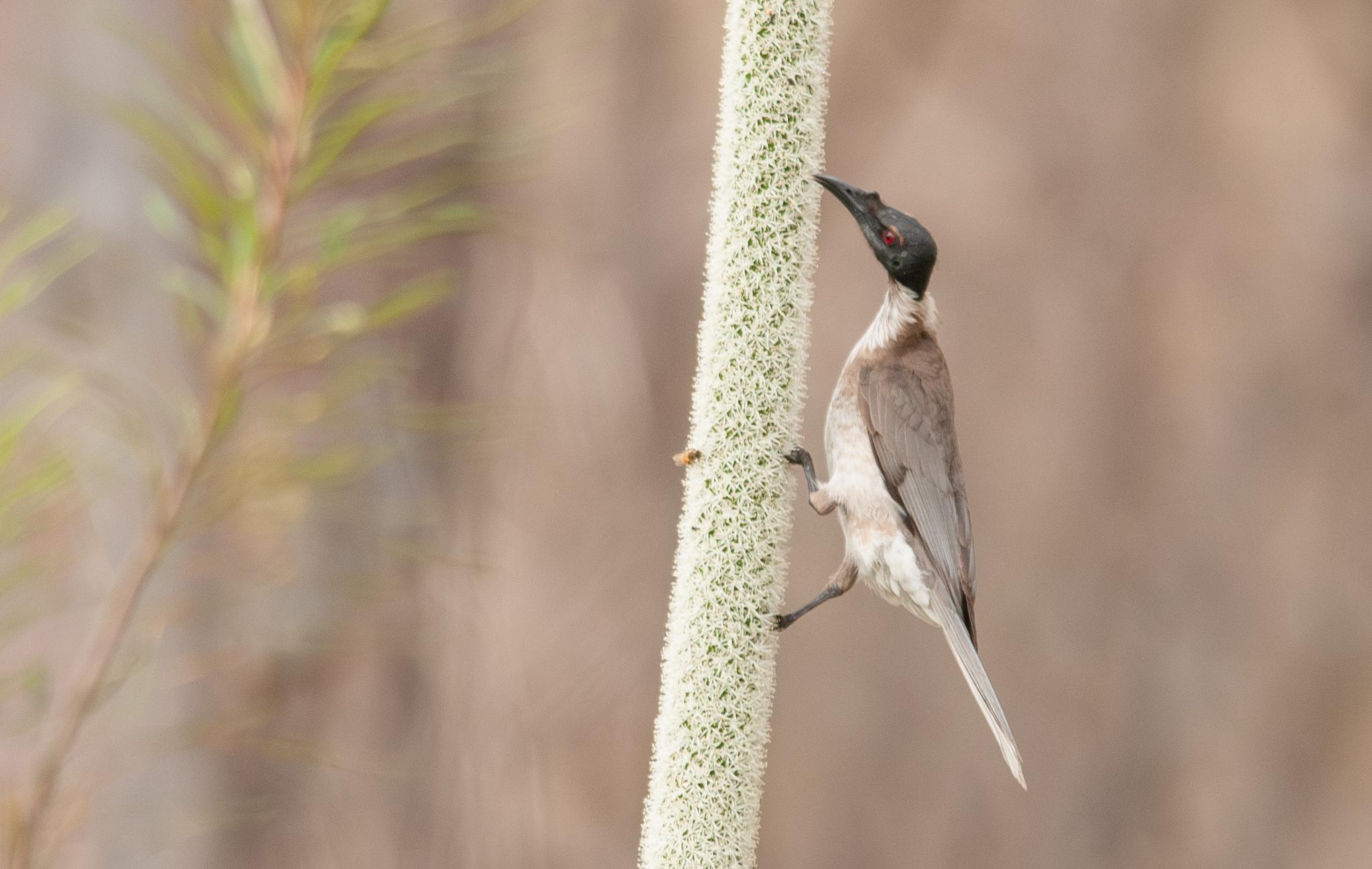 Noisy Friarbird"Tobacco! Four o'clock!" That loud, harsh honking is a noisy friarbird, a honeyeater with a bare head and a knob on its bill, and people have long written its call down as words.
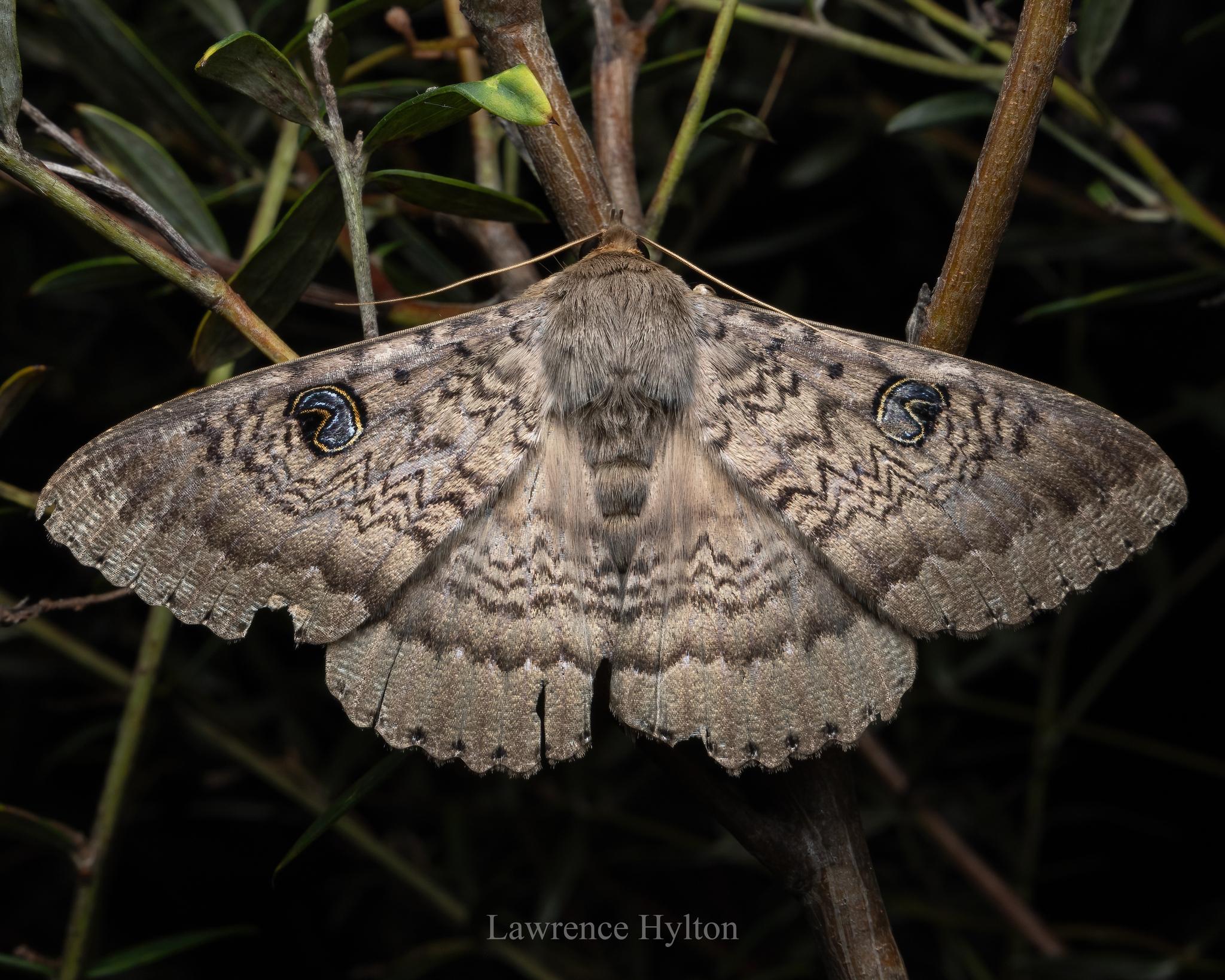 Northern Wattle MothA male's hind legs are so covered in scent scales that he seems to have no feet at all.
- NSW Christmas bush turning redThe red on a Christmas bush isn't flowers. The real petals were tiny, about 3 mm long, and they're over.
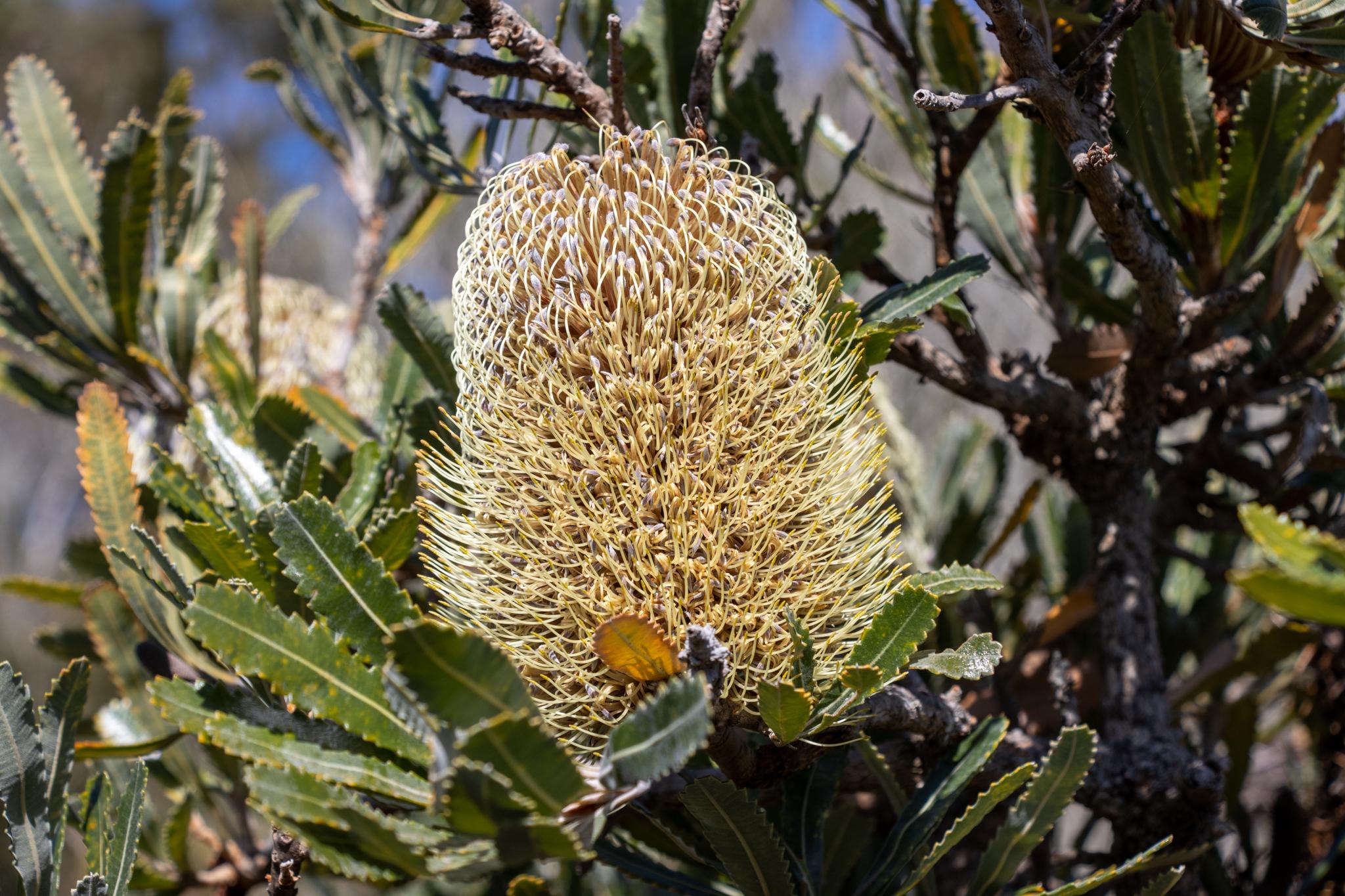 Old man banksiaGenerations of Australian children have been a little afraid of banksias. In May Gibbs's Gumnut stories they became the Big Bad Banksia Men, the villains of the bush.
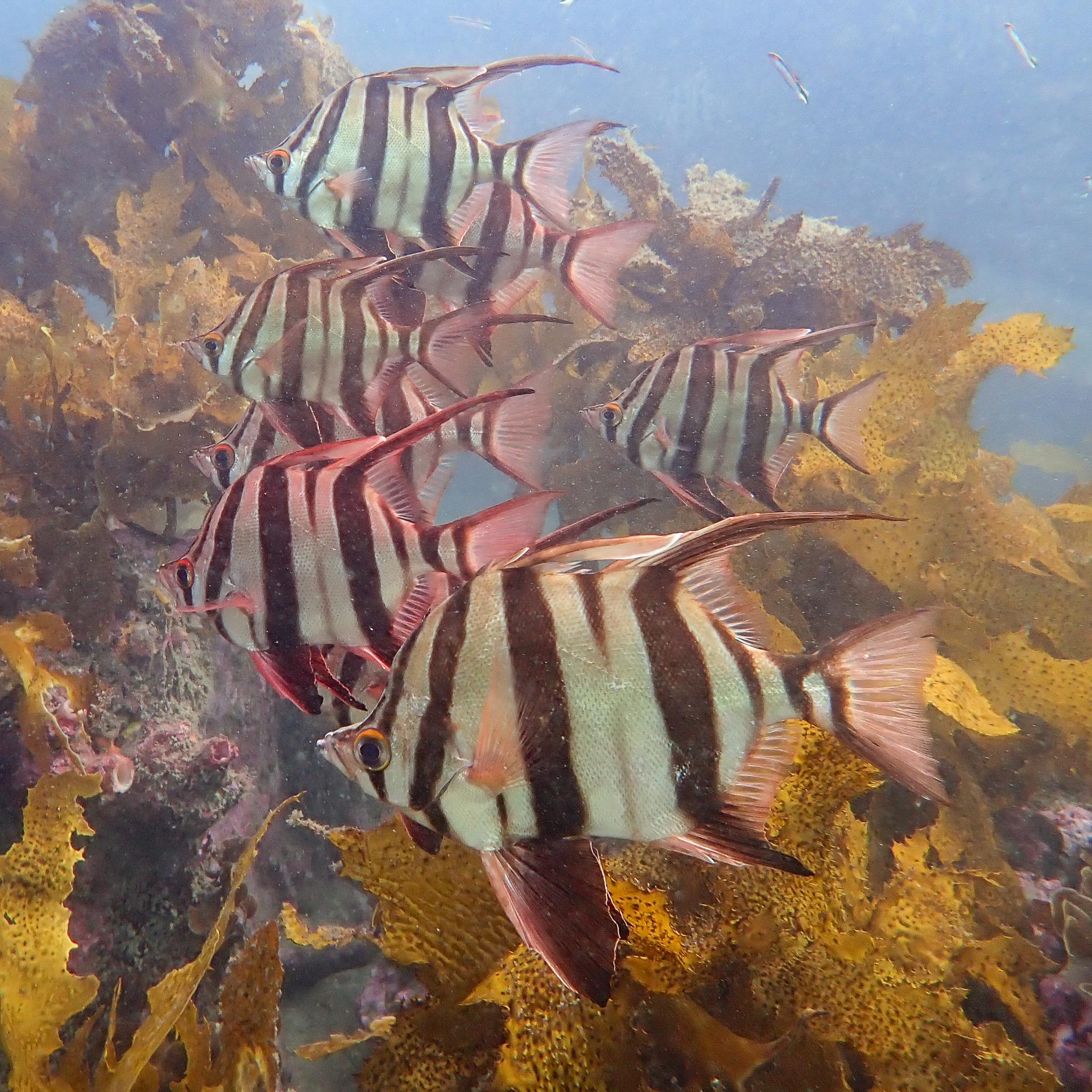 Old WifeThe old wife has no close living relatives. It's the only species in its whole family, a single twig at the end of a long, otherwise bare branch.
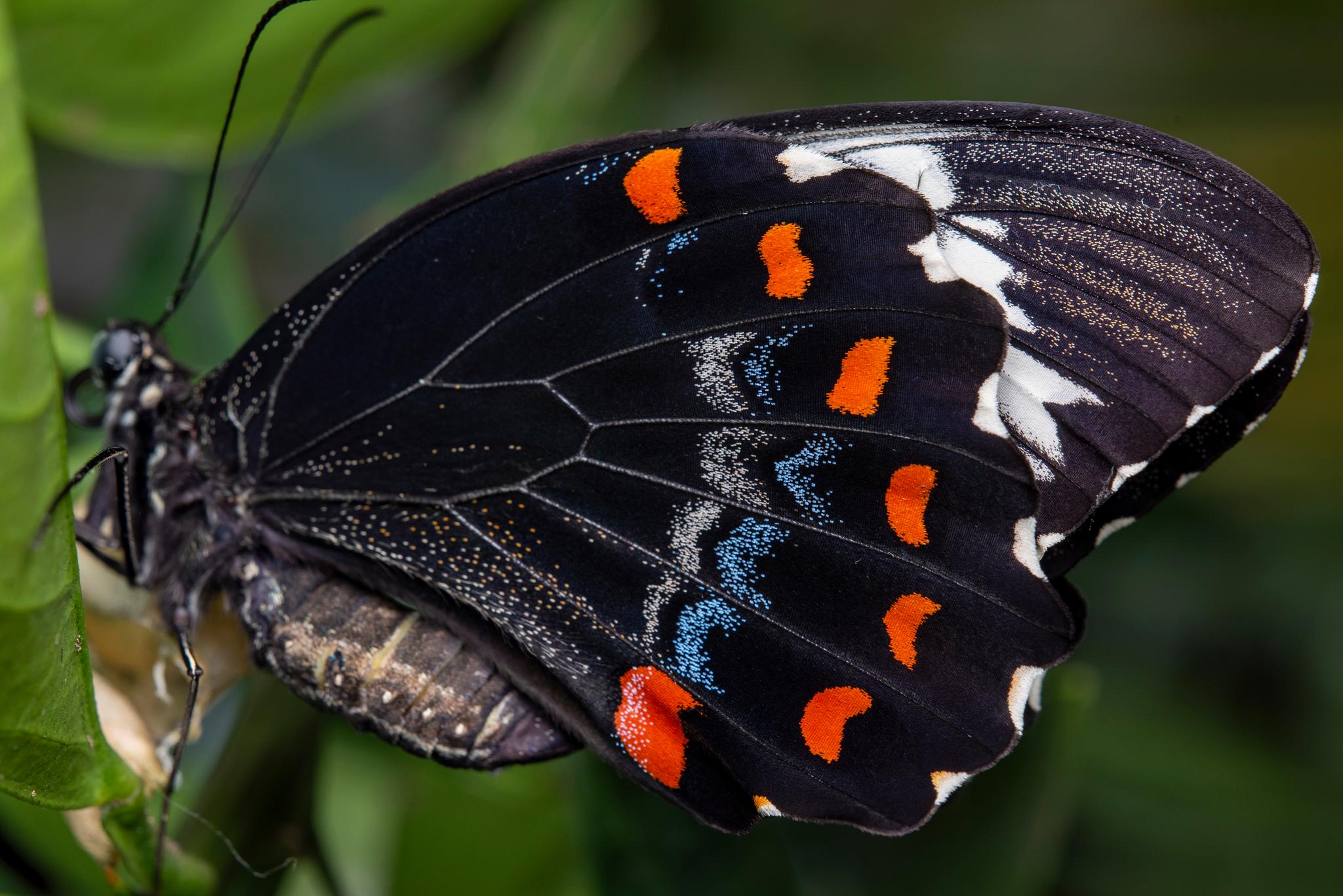 Orchard SwallowtailThe big black-and-white butterfly patrolling the garden is an orchard swallowtail. The males are territorial, and they'll chase anything black and white, even magpies.
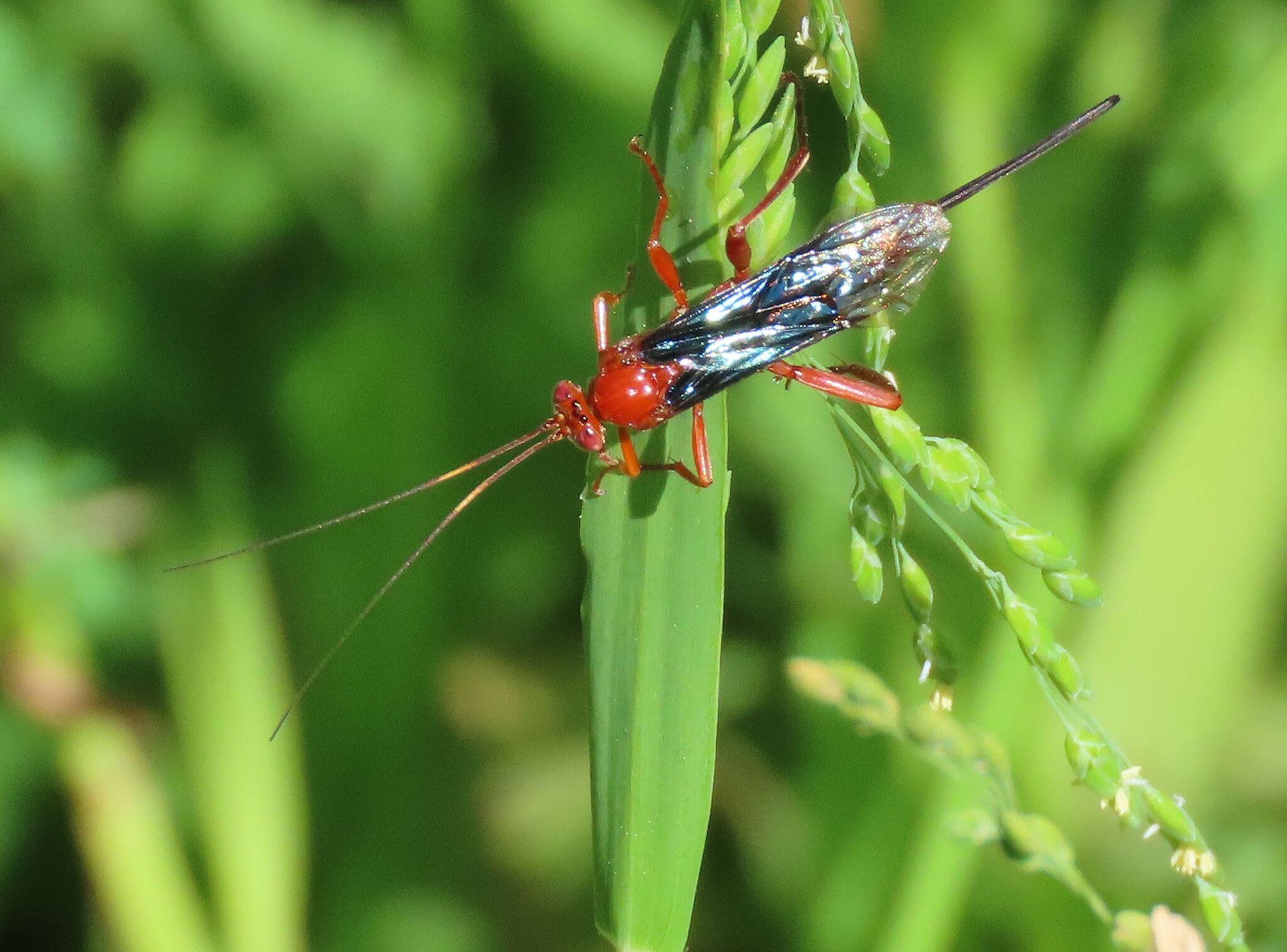 Orchid Dupe WaspThis wasp is the mark in a con. Tongue orchids trick male orchid dupe wasps into trying to mate with the flower, and it costs them: a study found a fooled male uses up about a tenth of his sperm in a single encounter.
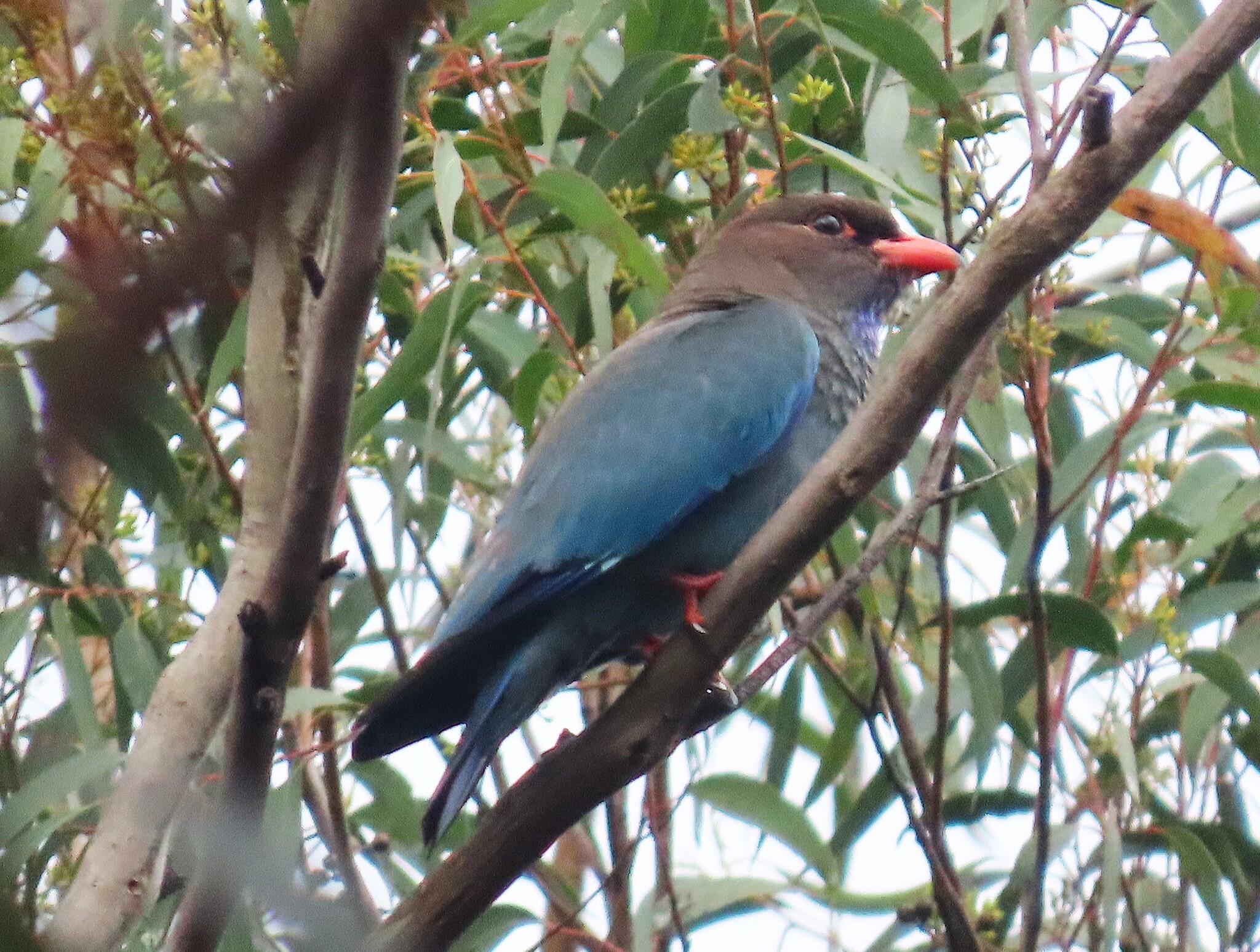 Oriental DollarbirdThat bird twisting through the air after an insect, then back to the same perch, is a dollarbird. It's named for the pale-blue coins near its wingtips, which flash as it turns.
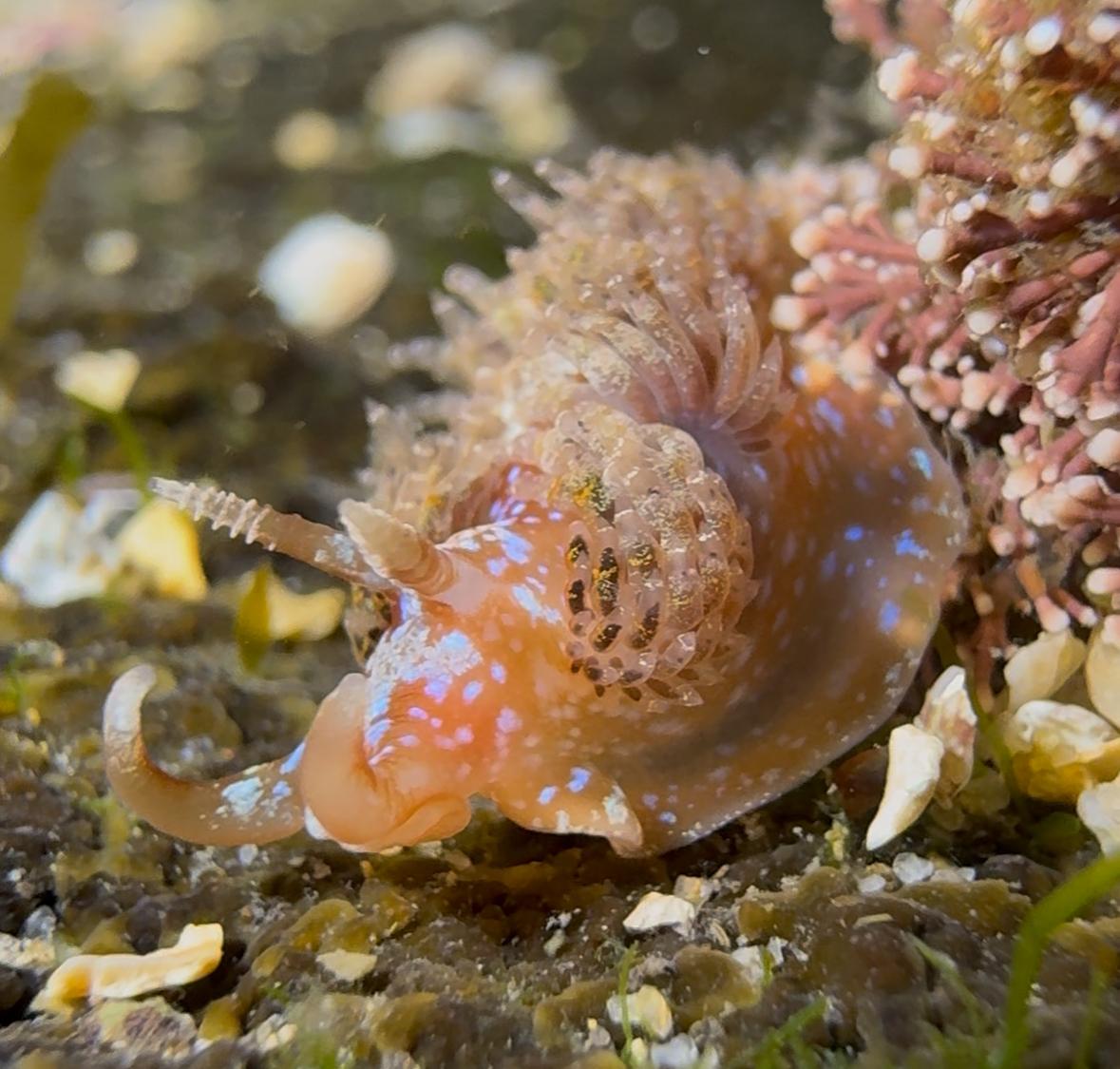 Ornate facelinidThis sea slug hunts its own kind. One ornate facelinid, 56 millimetres long, photographed in Sydney Harbour, was eating a 21 millimetre sea slug of another species, and it has been found doing that at least three times.
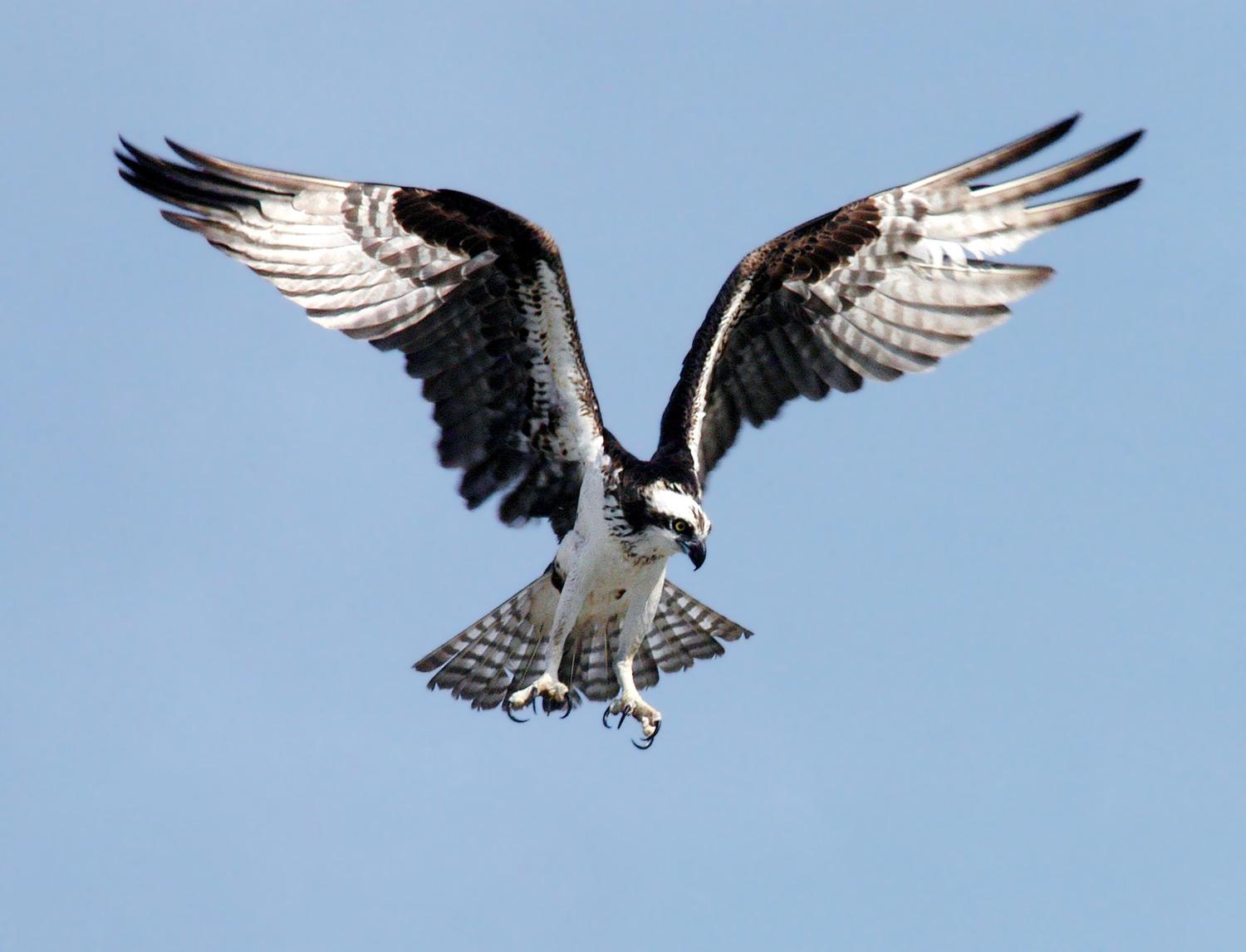 OspreyIt folds its wings and drops headlong at the water, feet first, talons out. It may go right under.
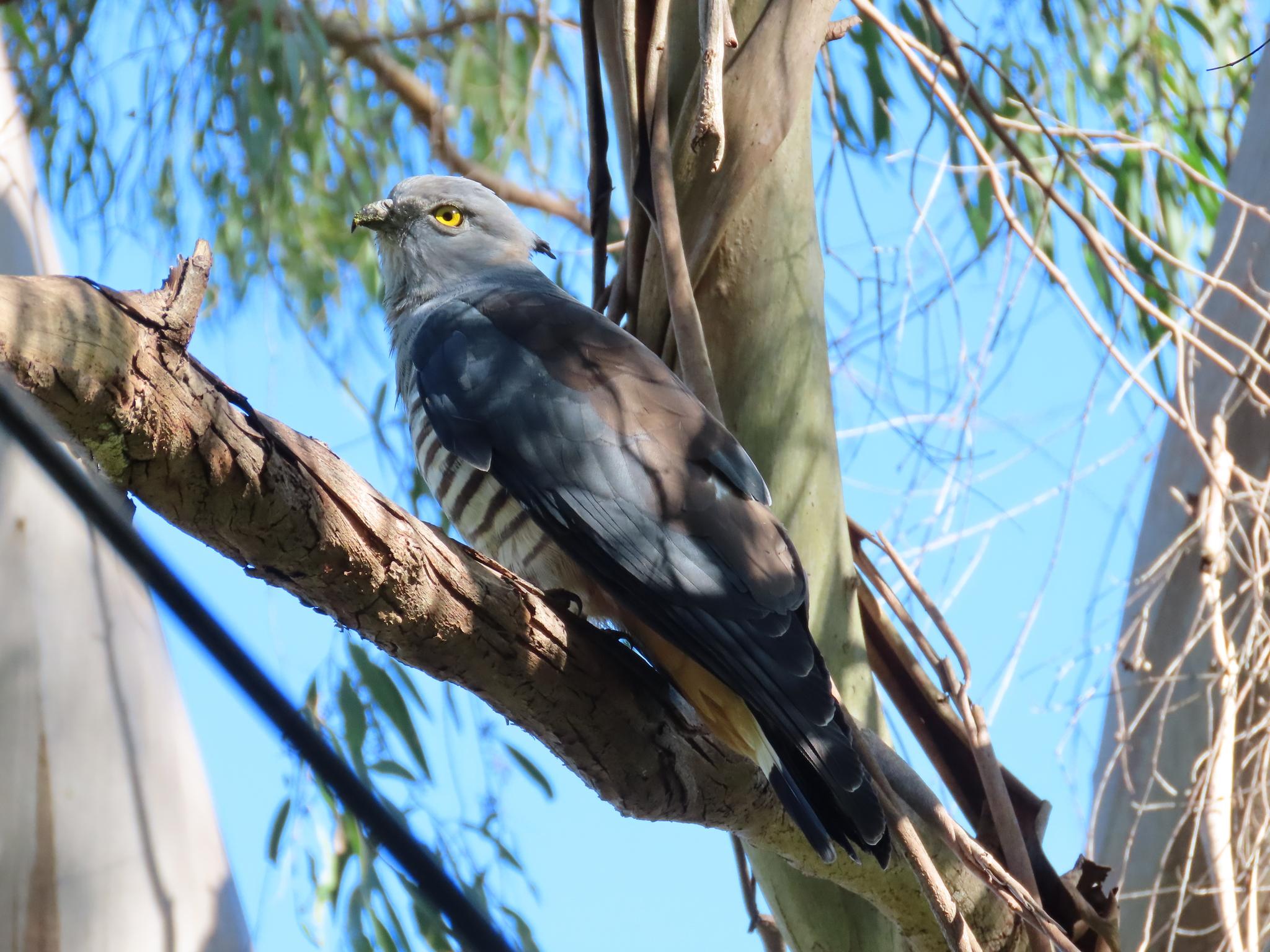 Pacific BazaIts eyes are golden-yellow, domed, and set on the sides of its head. That gives it excellent side vision, for scanning the leaves around it, and what it's scanning for is some of the best-hidden prey in the bush.
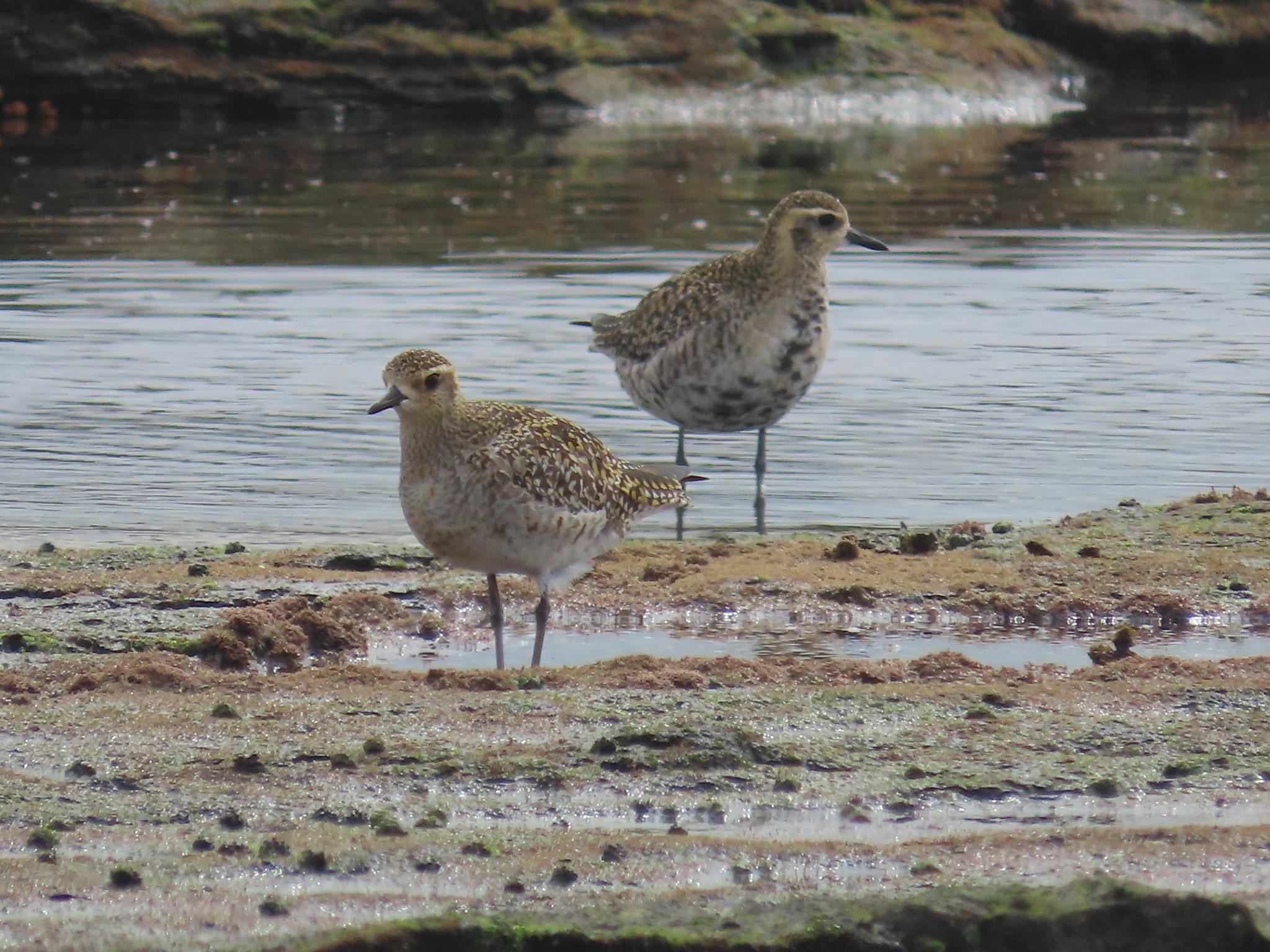 Pacific Golden-PloverThis plover lives in a nearly endless summer. It breeds on the Arctic tundra in the northern summer, then arrives in Australia in September and stays through ours, leaving mostly in April.
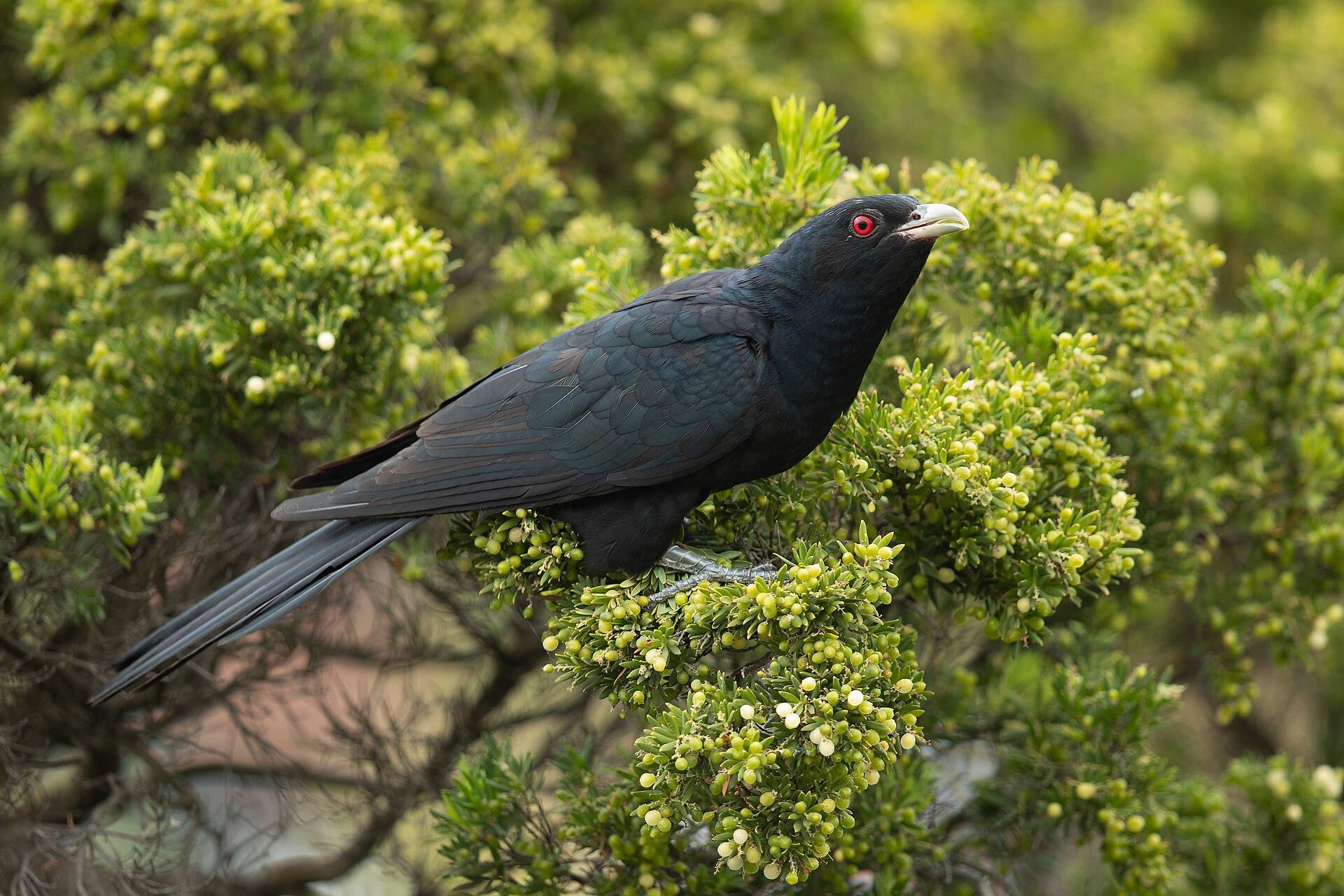 Pacific KoelThat big young bird begging in the tree is a koel, and the small bird stuffing food down its throat isn't its parent. A koel laid her egg in that bird's nest.
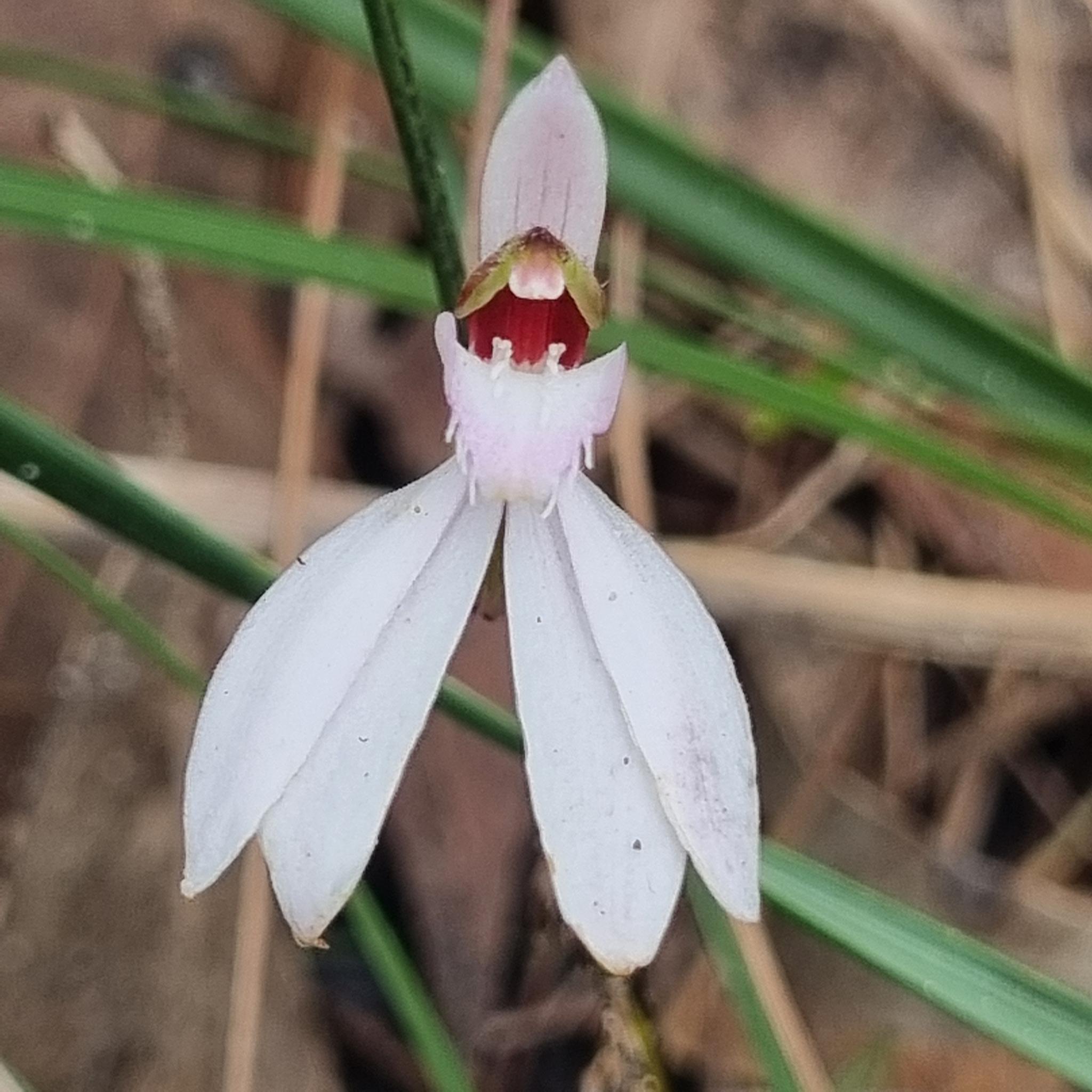 Painted FingersAn orchid that flowers at the wrong time. Its Sydney cousins, Lady Fingers and Pink Fingers, flower in spring, from August to October.
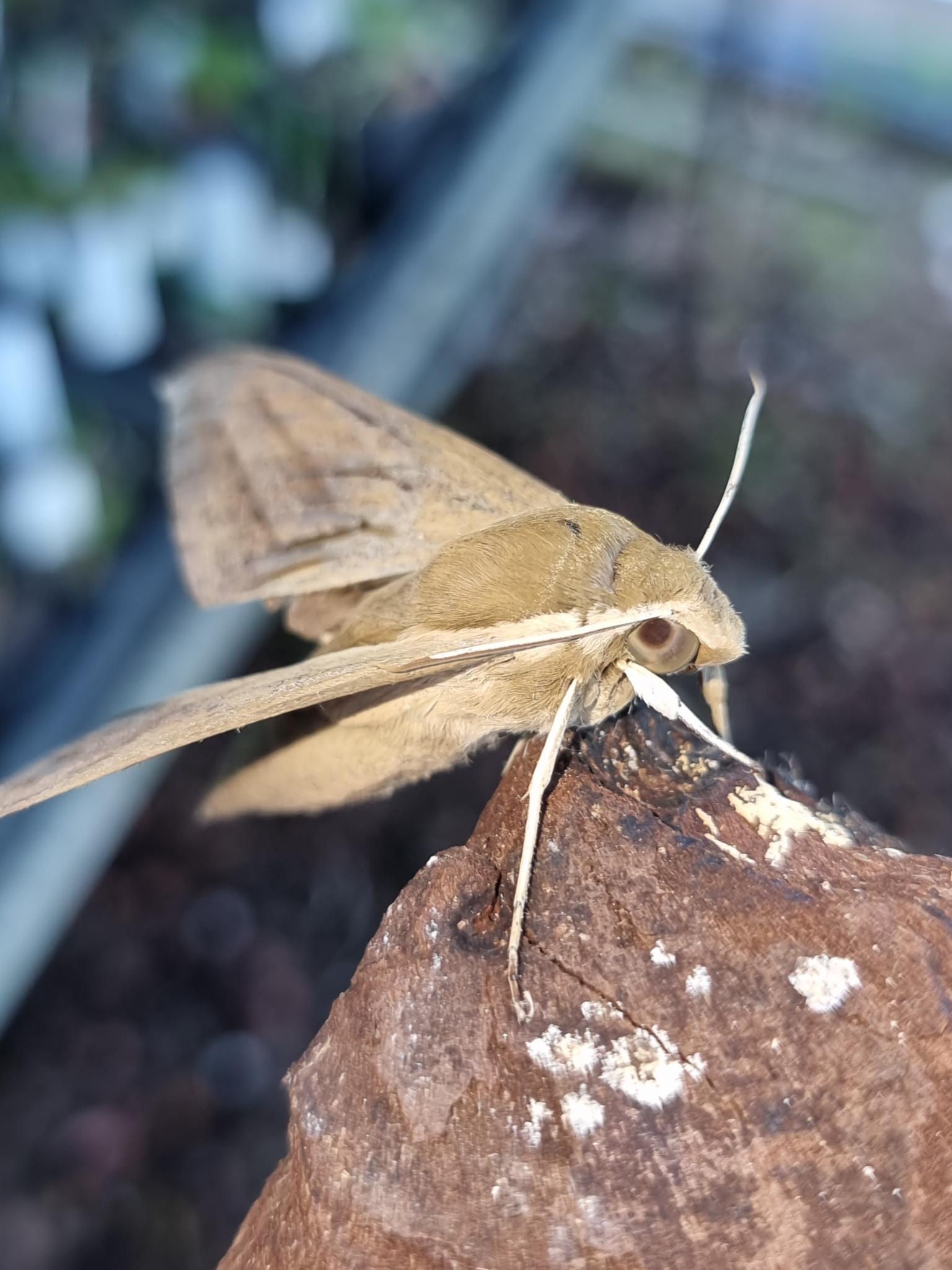 Pale Brown HawkmothThat caterpillar is looking at you. Or seems to be.
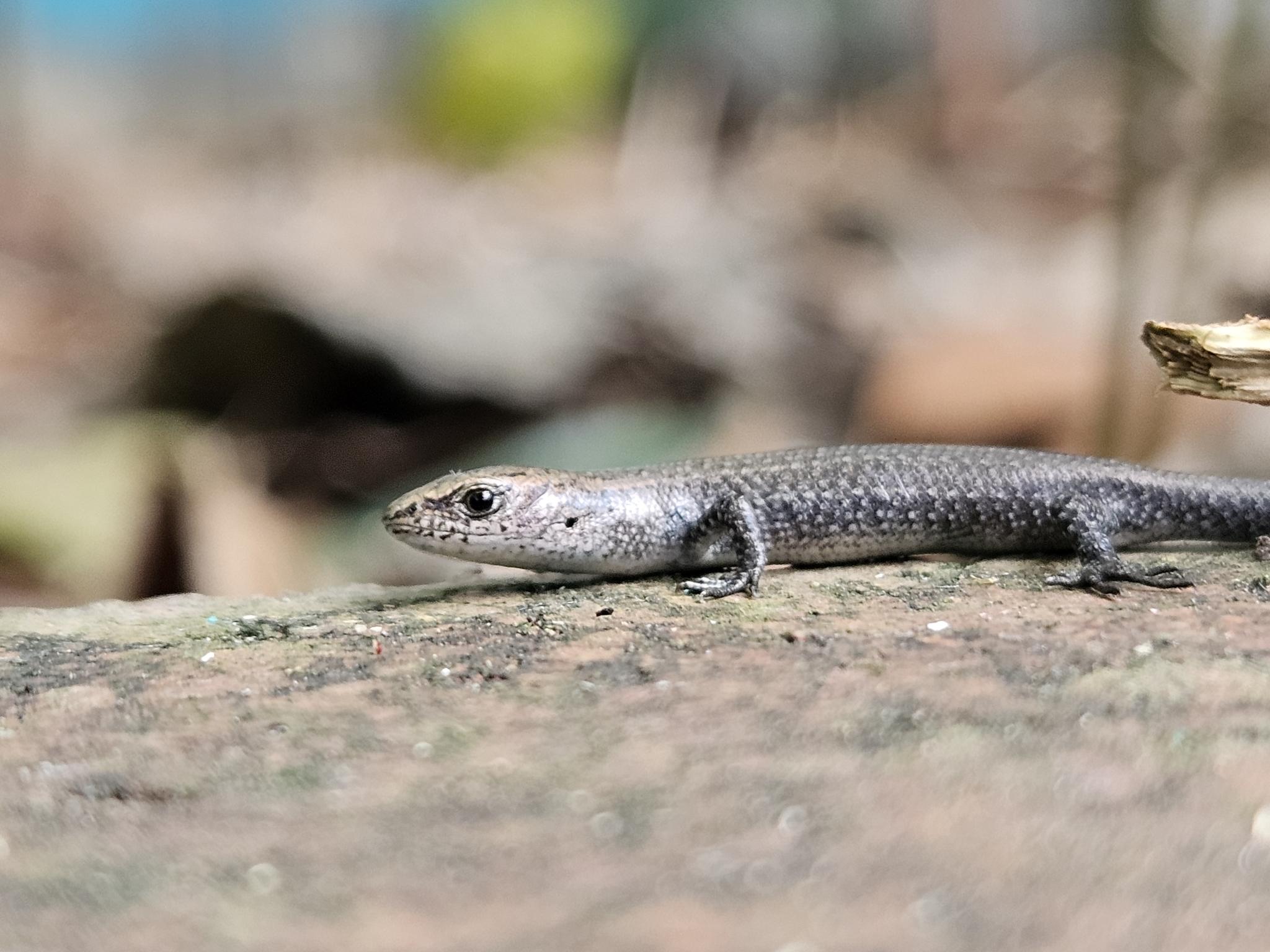 Pale-flecked Garden SunskinkThis little skink has travelled. Pale-flecked garden sunskinks are often carried around in freight and cargo.
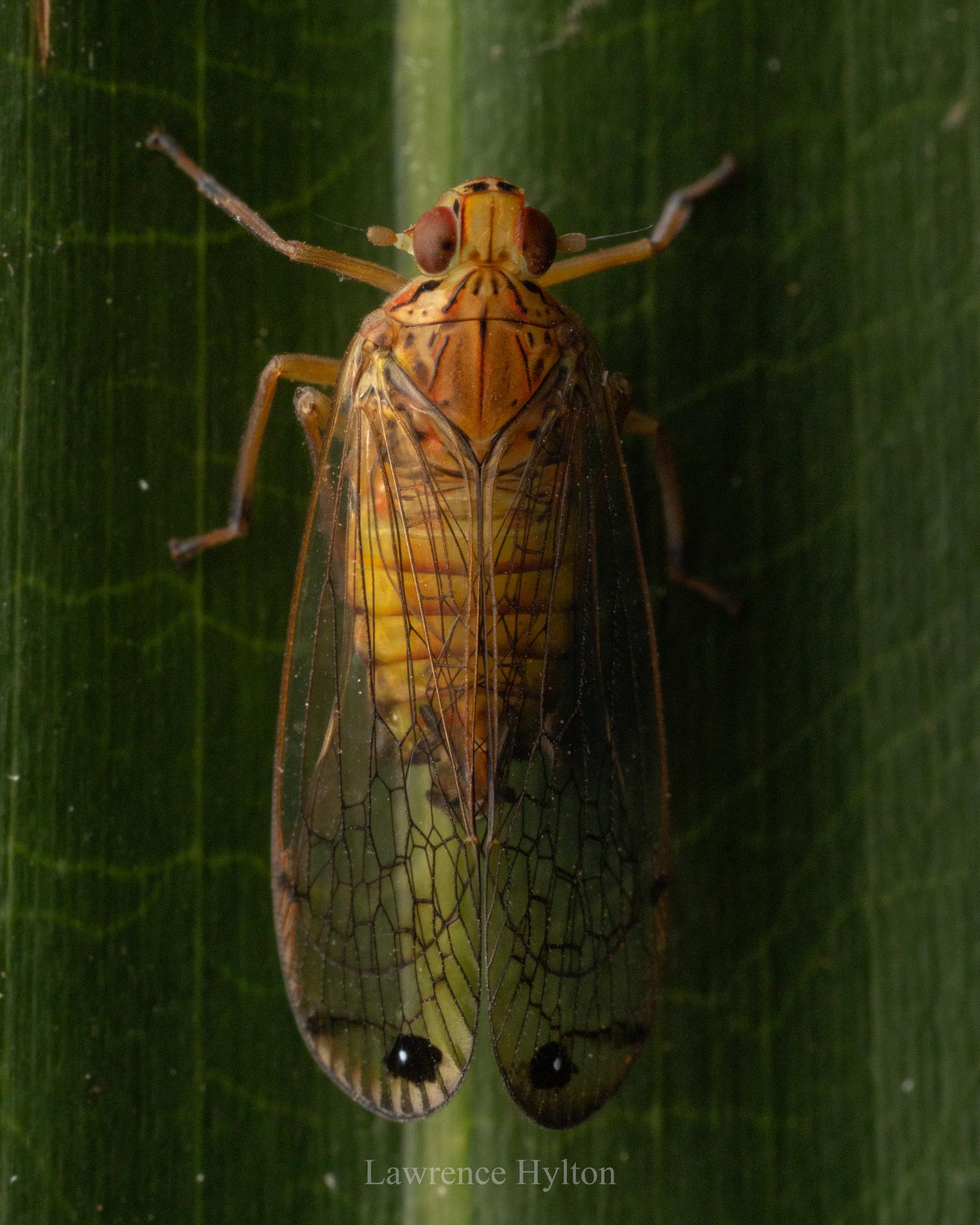 Palm planthopperPlanthoppers live by drinking plants. This one, like its relatives, pushes a beak into a plant and sips its sap.
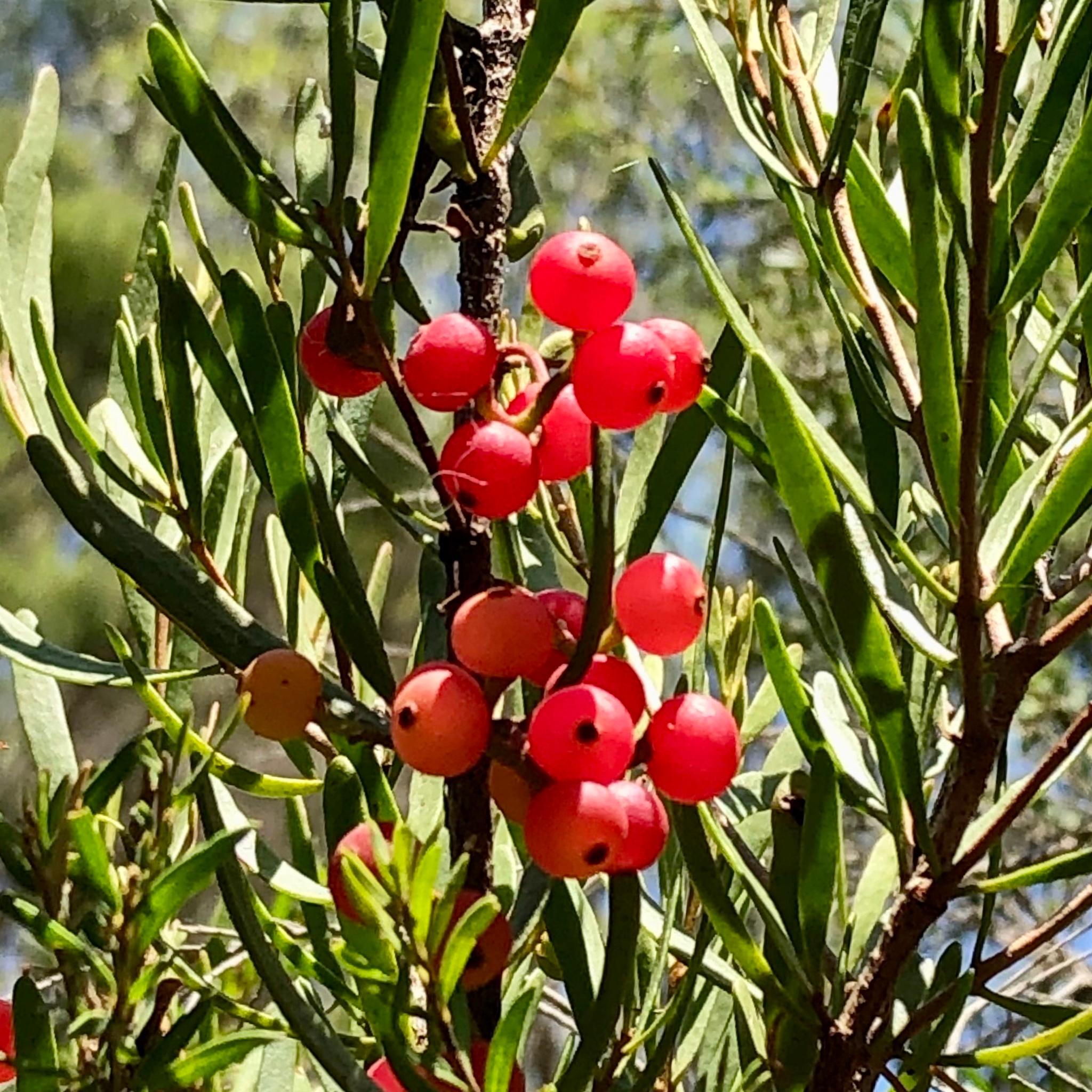 Paperbark MistletoeThat clump hanging in the paperbark isn't the tree. It's a mistletoe living on it, and it was planted by a bird.
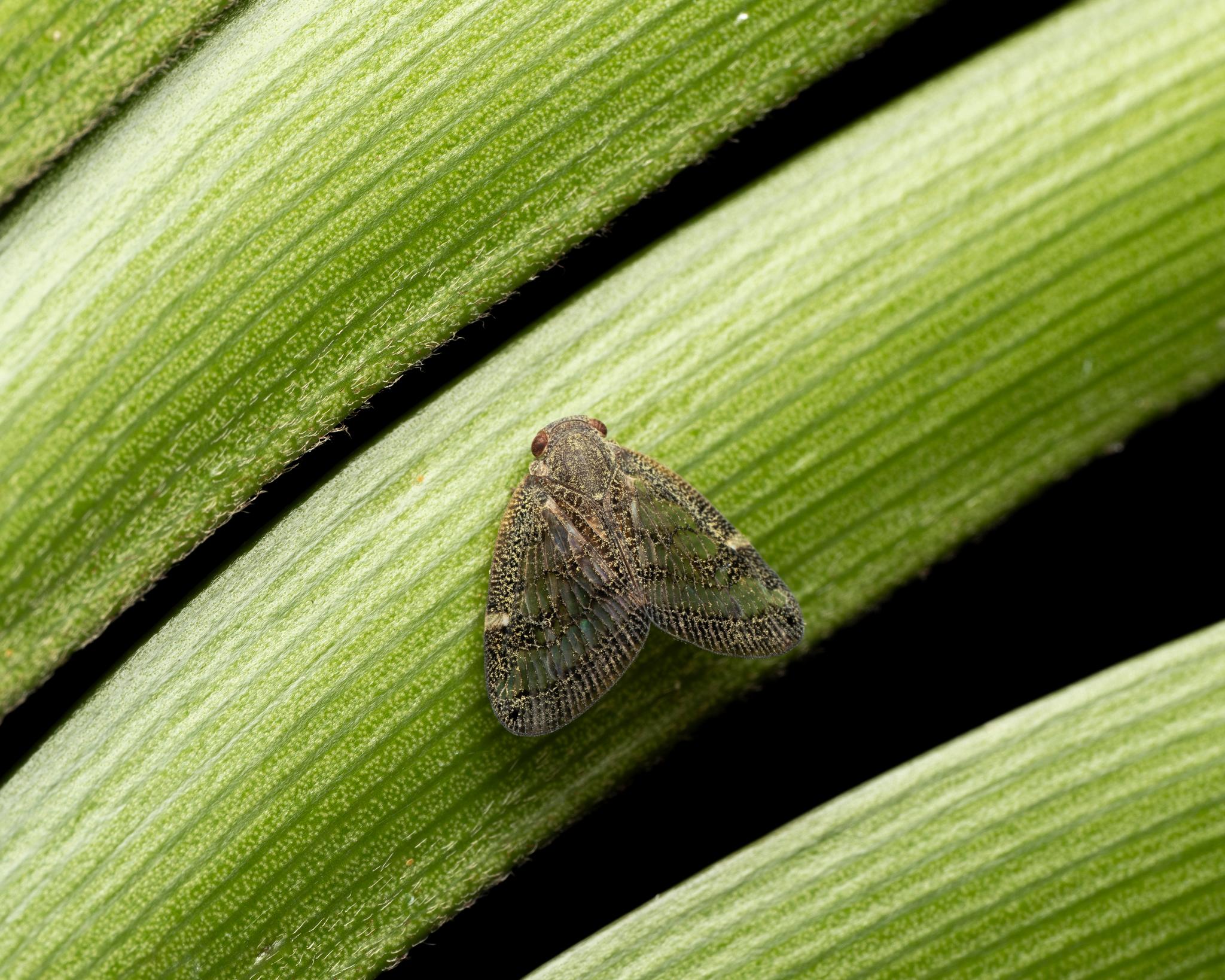 Passionvine hopperThis little hopper is Australian, and it has a reputation across the Tasman. Almost 150 years ago it turned up in New Zealand, along with a handful of other Australian hoppers.
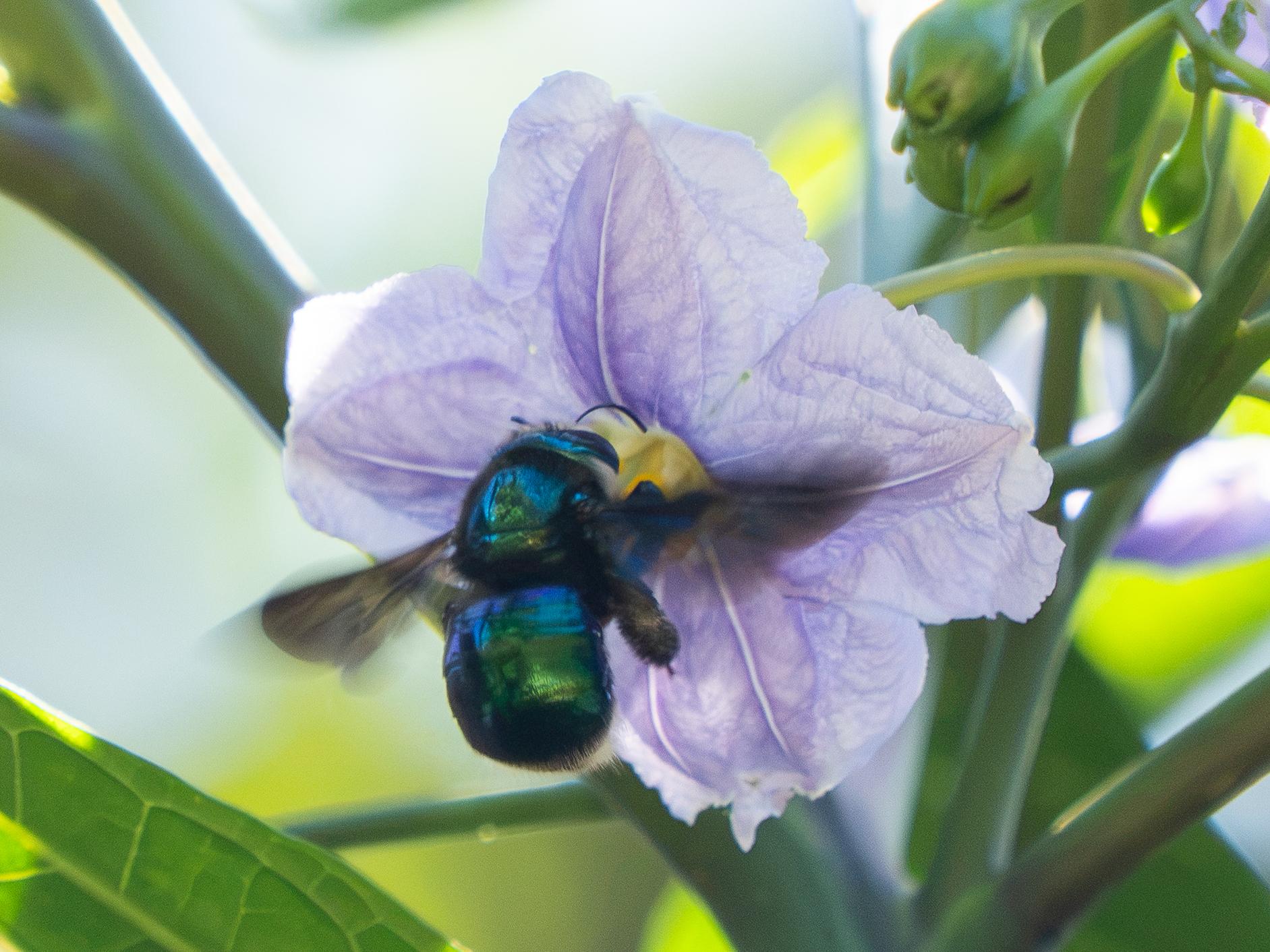 Peacock Carpenter BeeIts colours won't hold still. Sometimes it looks purple, then, moments later, a yellowy green.
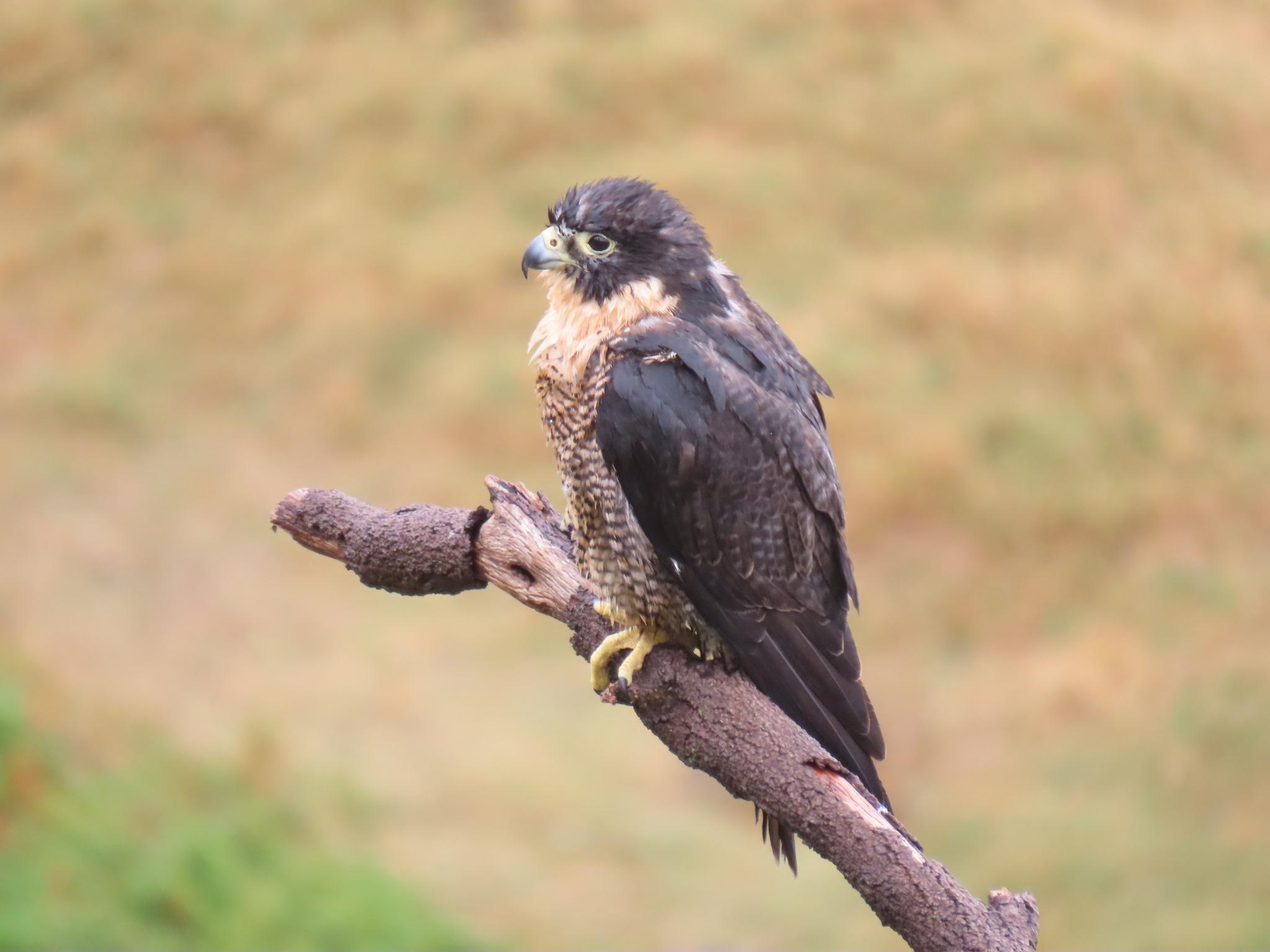 Peregrine FalconIt climbs high above its prey, then folds and drops. In this dive, the stoop, a peregrine can swoop at up to 300 kilometres an hour, one of the fastest birds of prey, and it knocks its target out of the sky with incredible force.
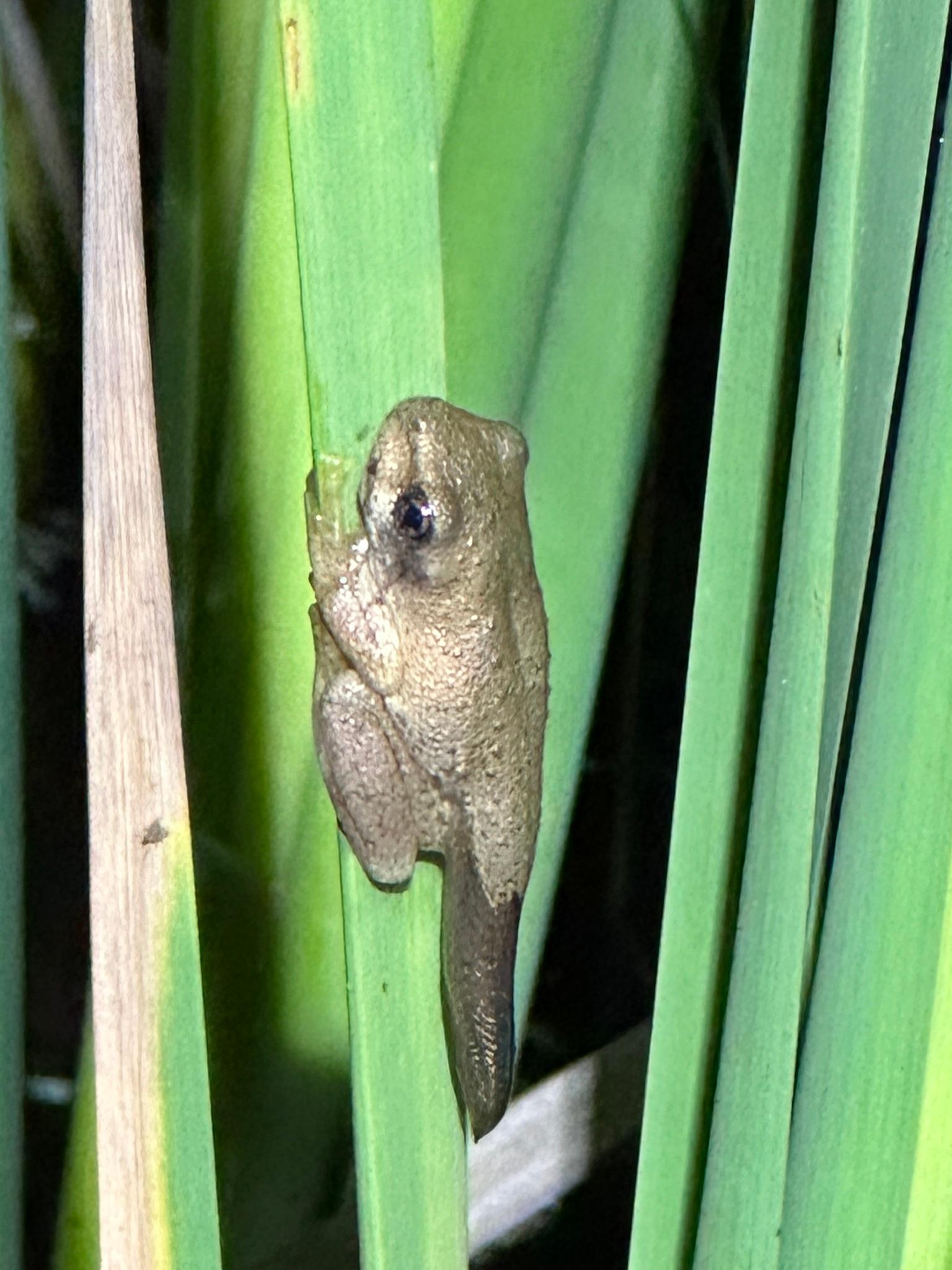 Peron's Tree FrogThat drilling call in the dark has been described as a "maniacal cackle". It's a male Peron's tree frog.
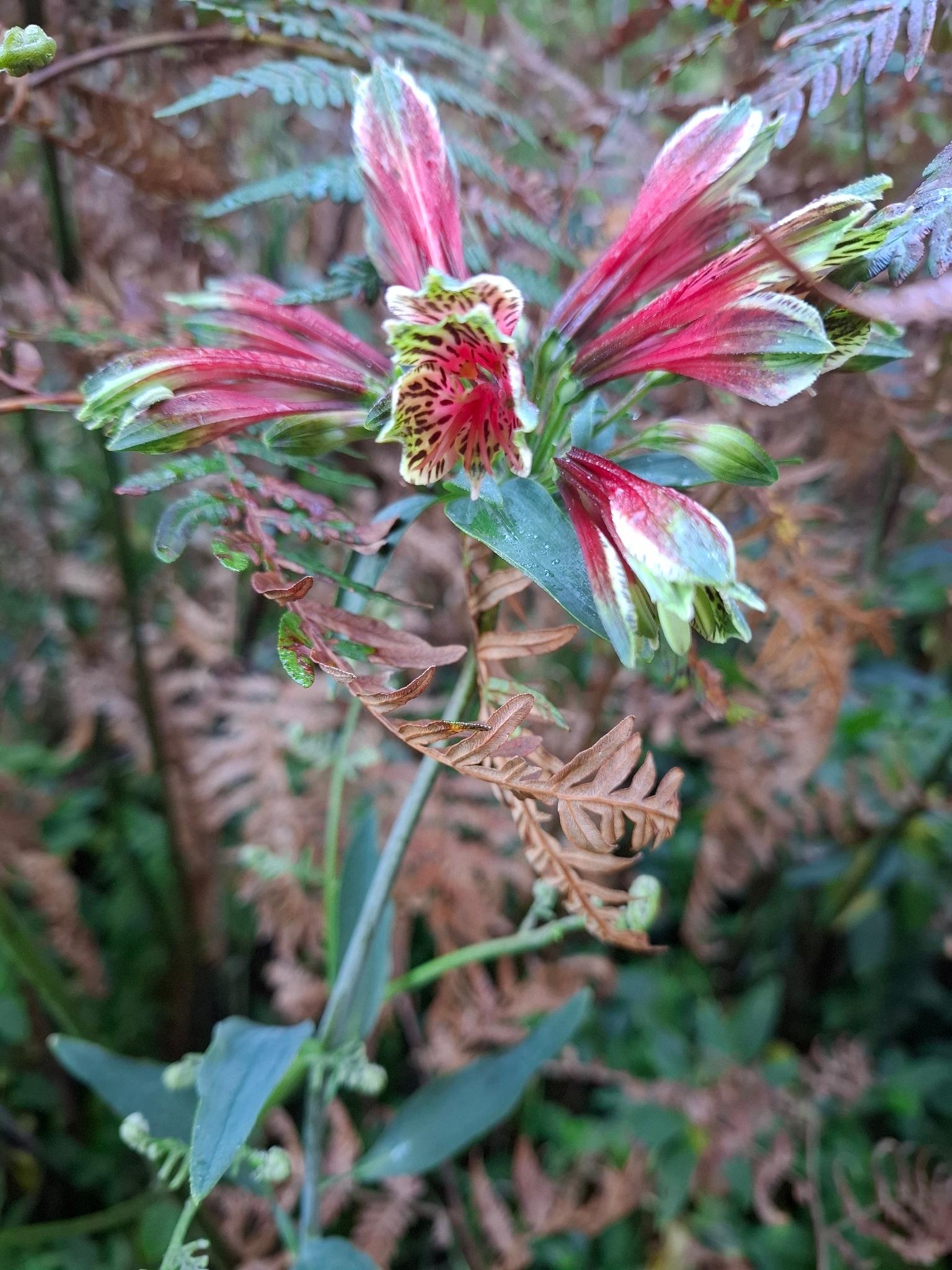 Peruvian LilyThe Peruvian lily isn't from Peru. It's native to Brazil, Paraguay and Argentina, and around Sydney it's an introduced garden plant that has spread into the bush.
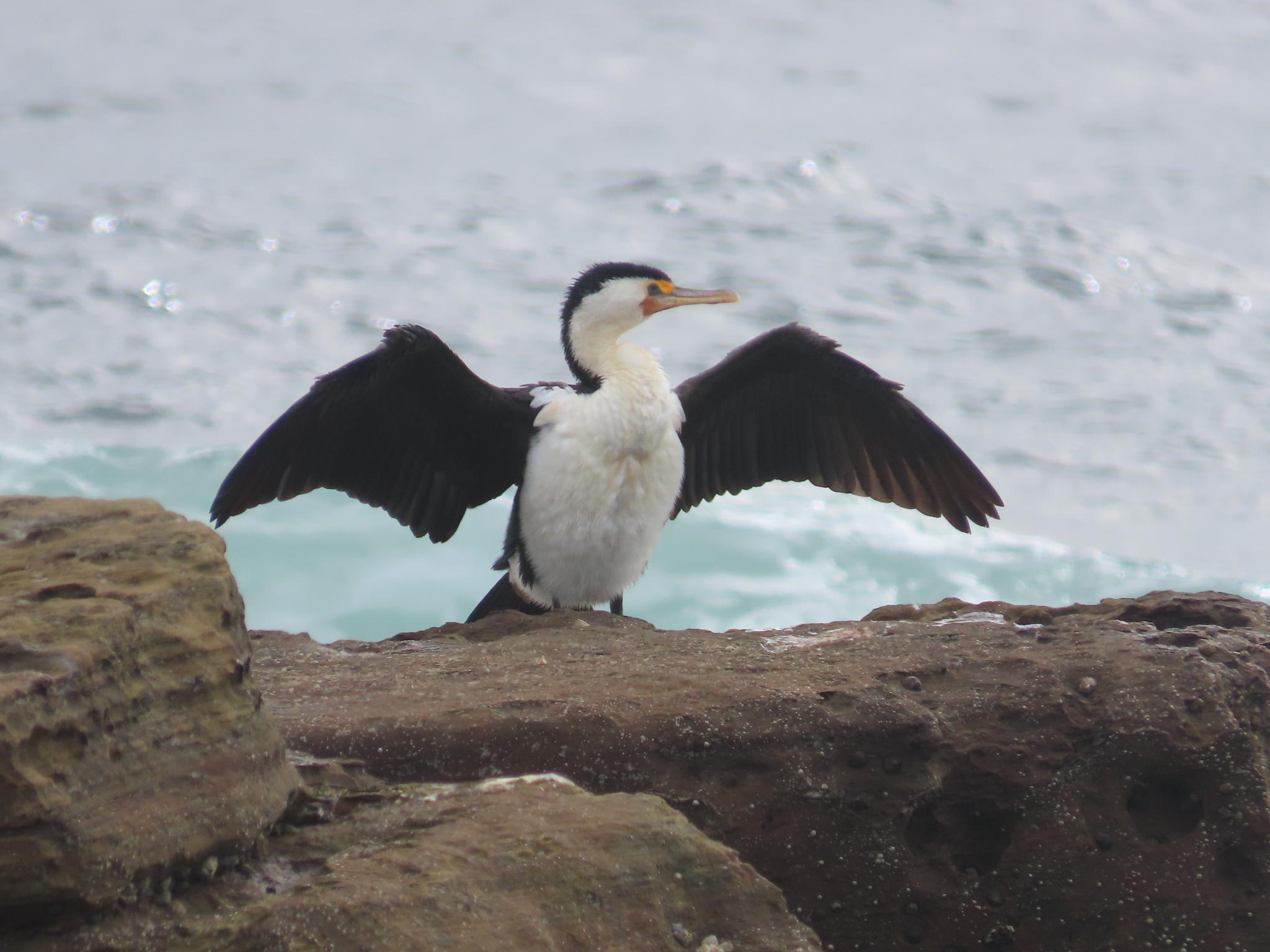 Pied CormorantA pied cormorant's nest is made of seaweed, twigs or sticks, cemented together with droppings. It sounds unglamorous.
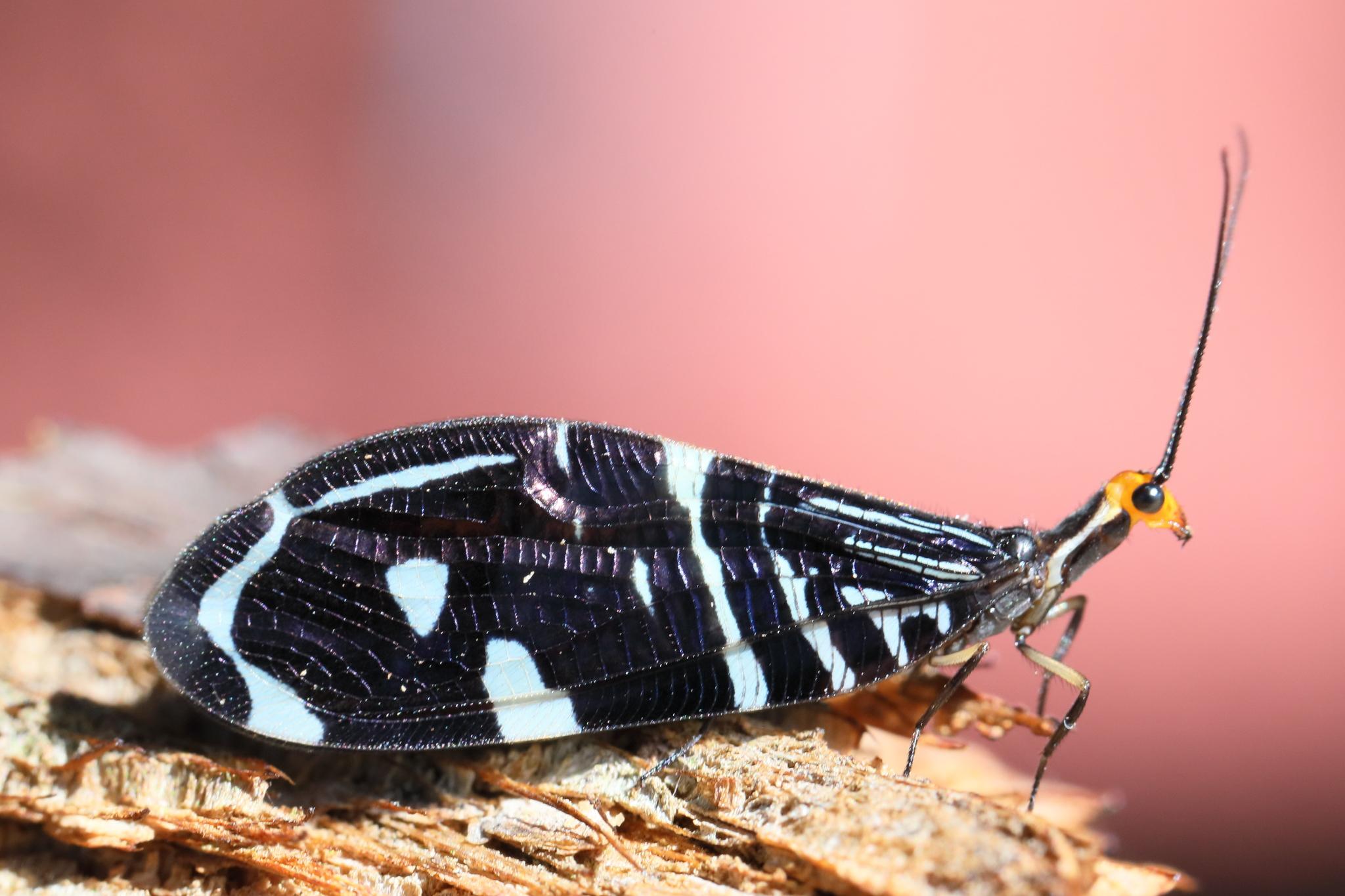 Pied LacewingThe pied lacewing looks delicate, all veined wings and slow flight. It didn't start that way.
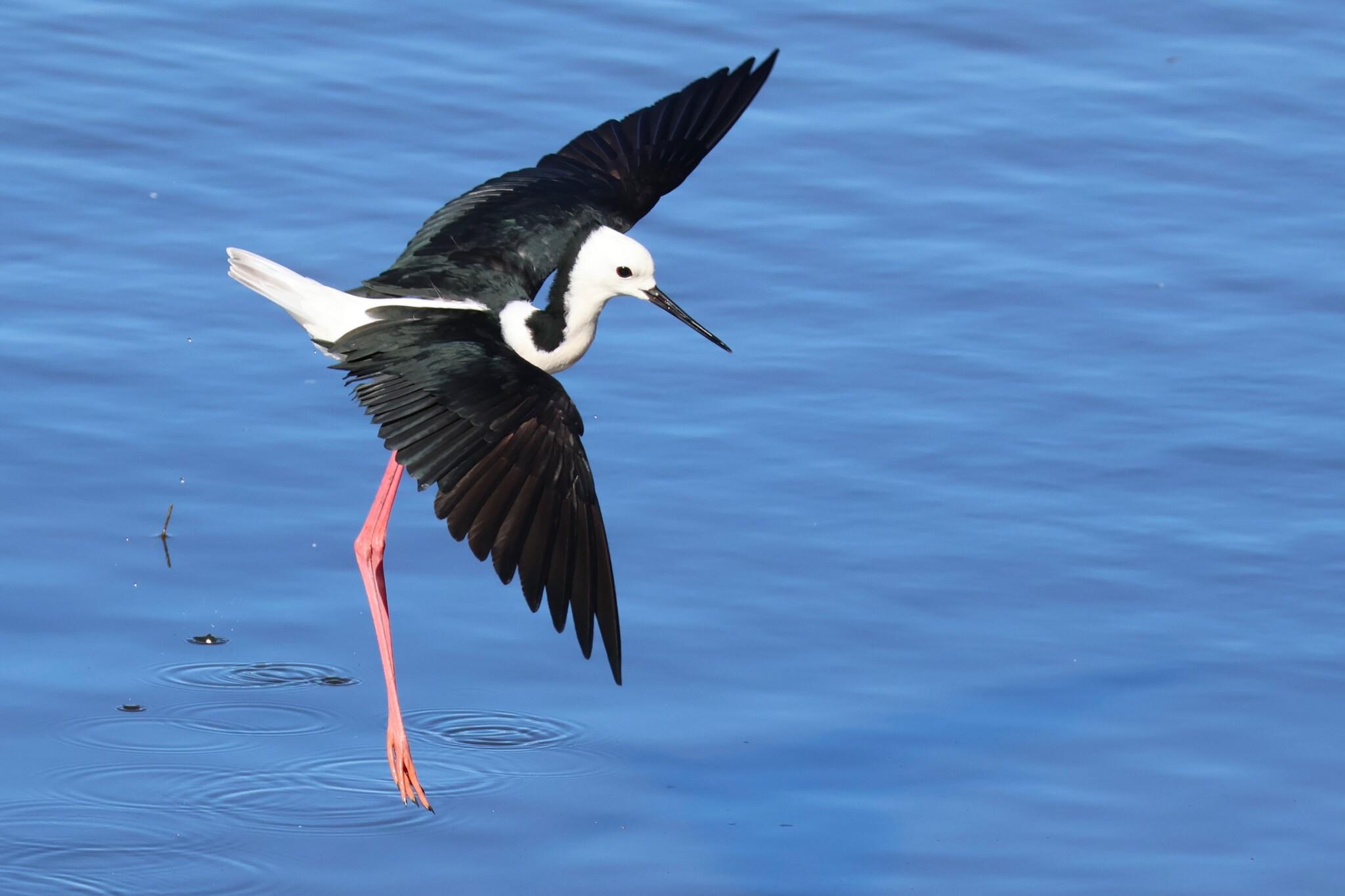 Pied StiltIt's a bird on stilts, and it uses them. The pied stilt wades rather than swims, picking insects and other small prey off or near the surface, and only now and then plunging its head under.
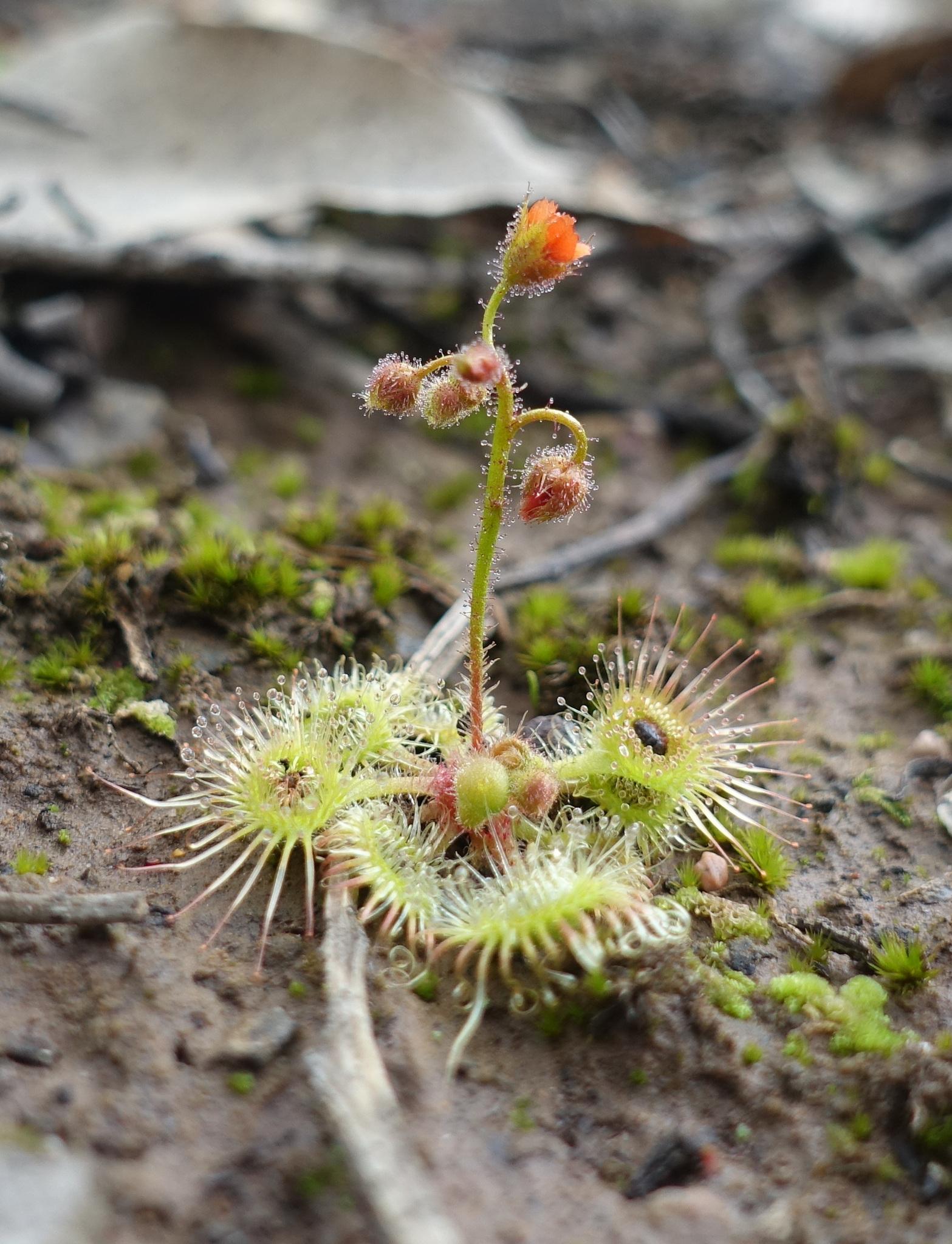 Pimpernel sundewThis sundew throws its food. Around the rim of each tiny cupped leaf stand a dozen or more dry tentacles.
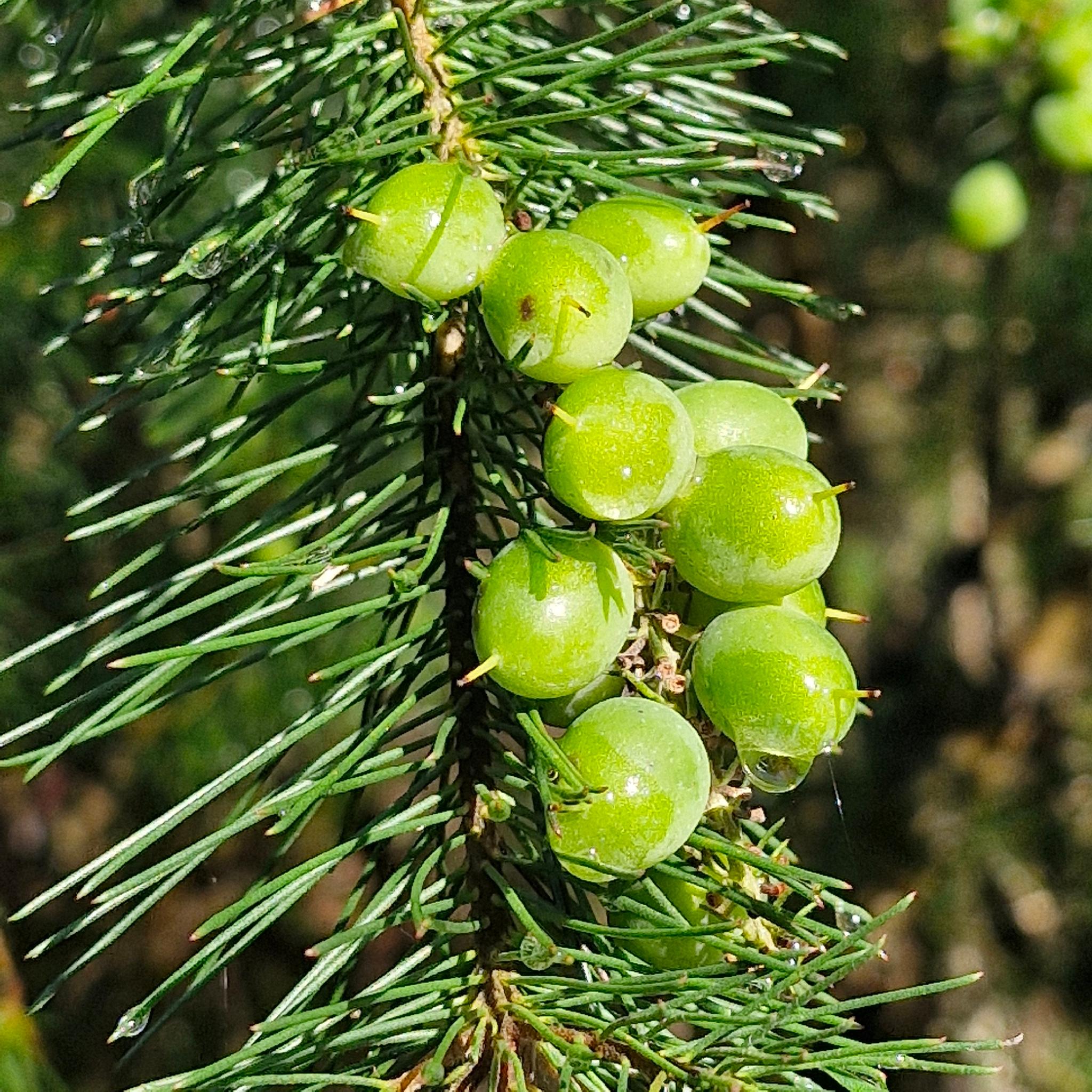 Pine-leaf GeebungThose fleshy geebung fruits are a deal with an animal. A plant can't walk its seeds away from home, so it pays something to carry them.
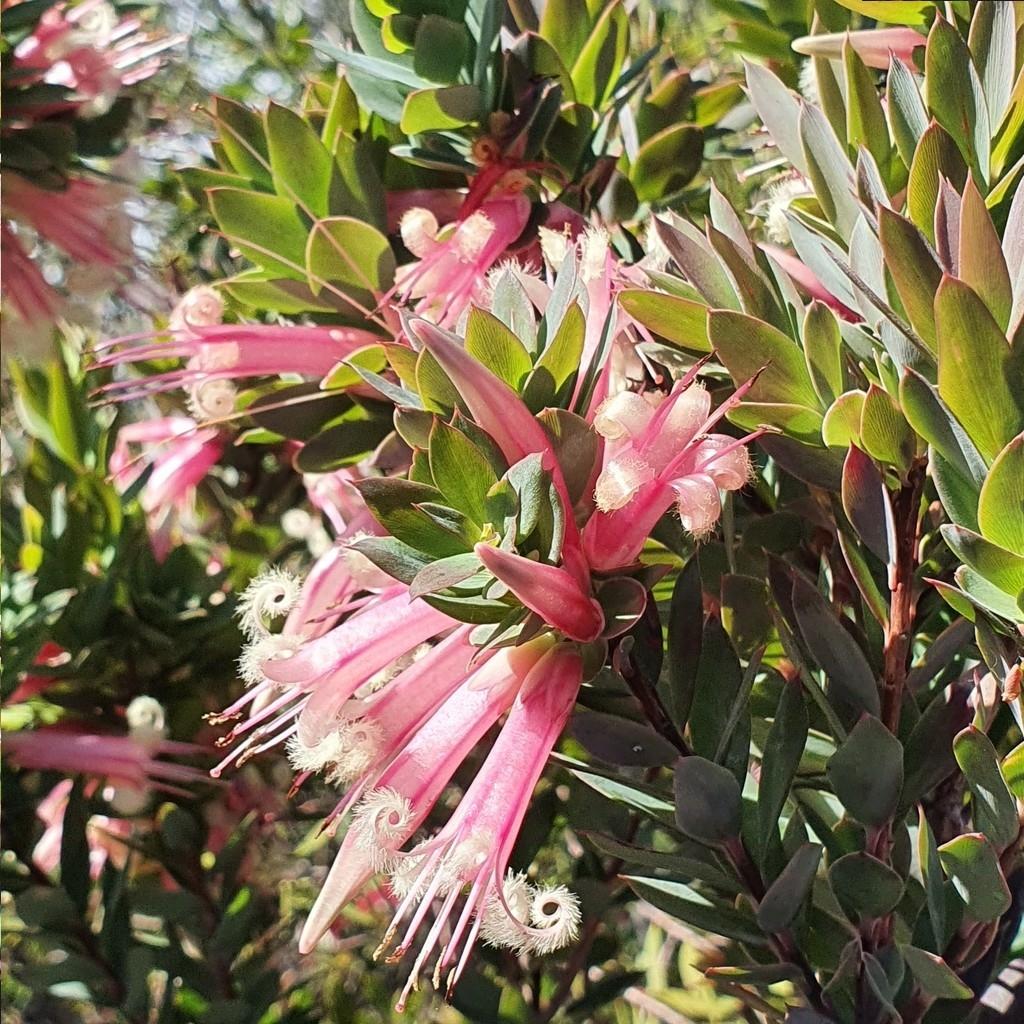 Pink five-cornersEach flower of pink five-corners is a narrow tube, pink to red, up to about 29 millimetres long. Flowers have shapes for a reason.
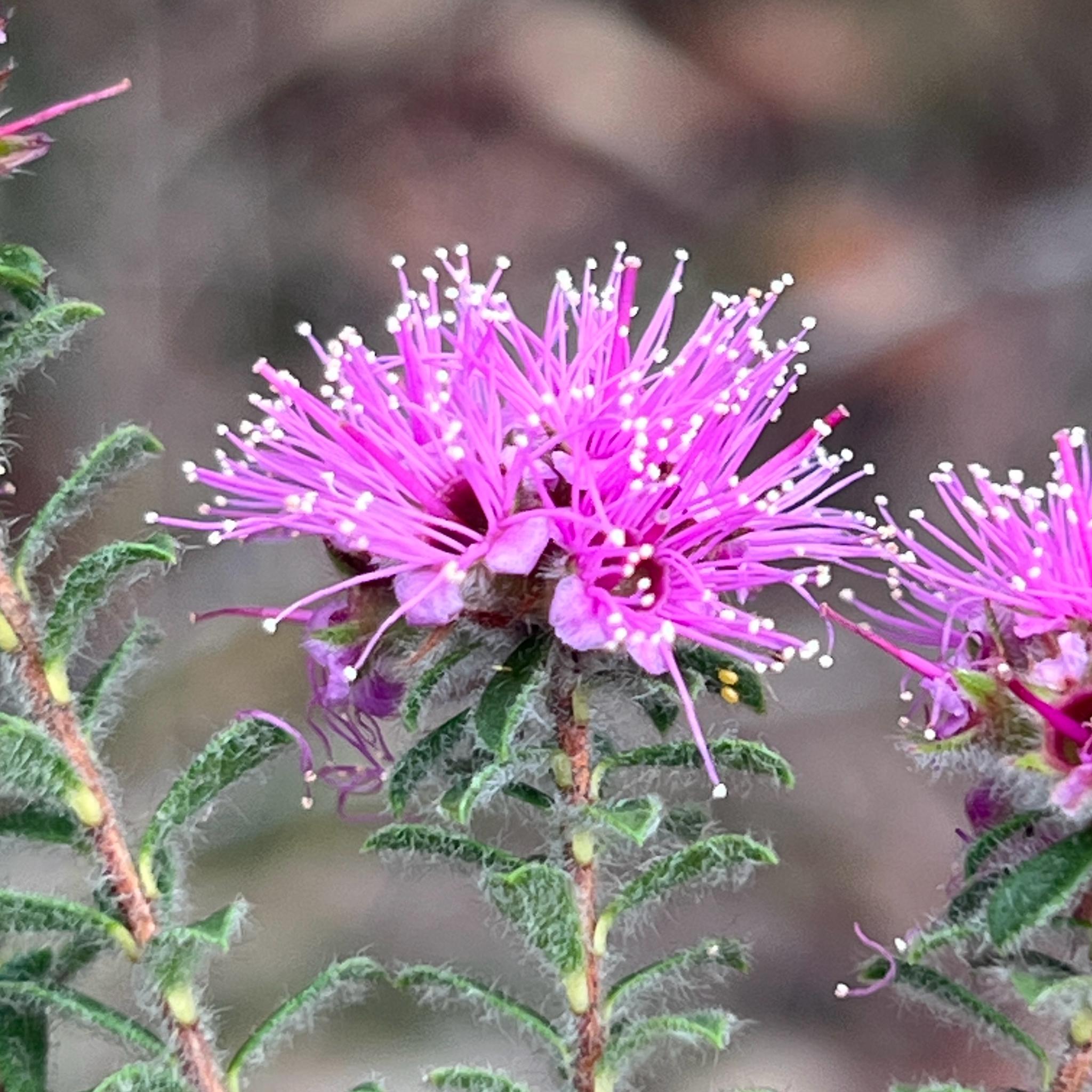 Pink KunzeaThis shrub waits for fire to have children. Its seeds sprout best after they've been heated above 60°C, as in a bushfire, and most new plants come up after a fire.
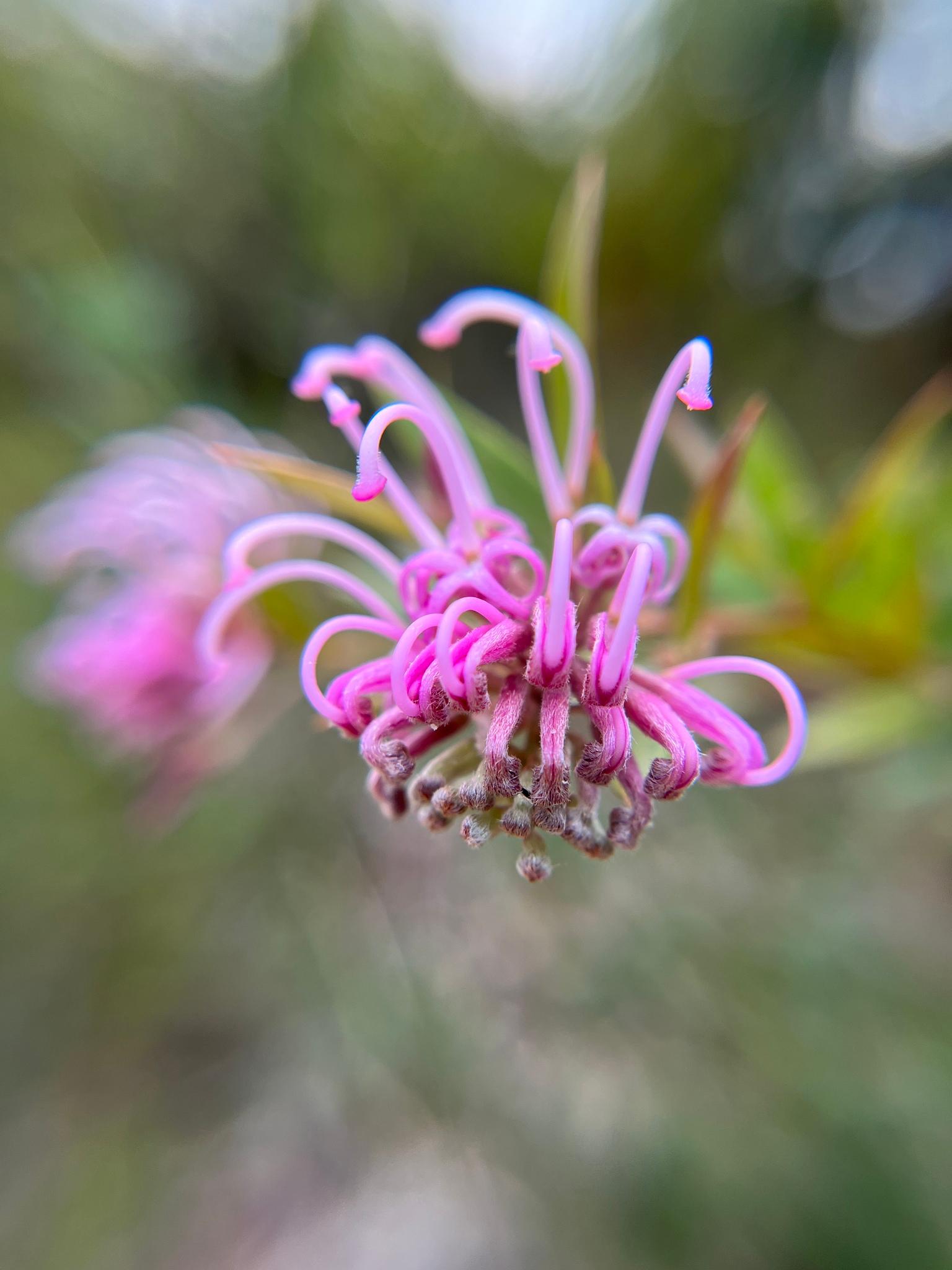 Pink Spider FlowerA grevillea looks as Australian as anything in the bush. But the story researchers now tell begins in Africa.
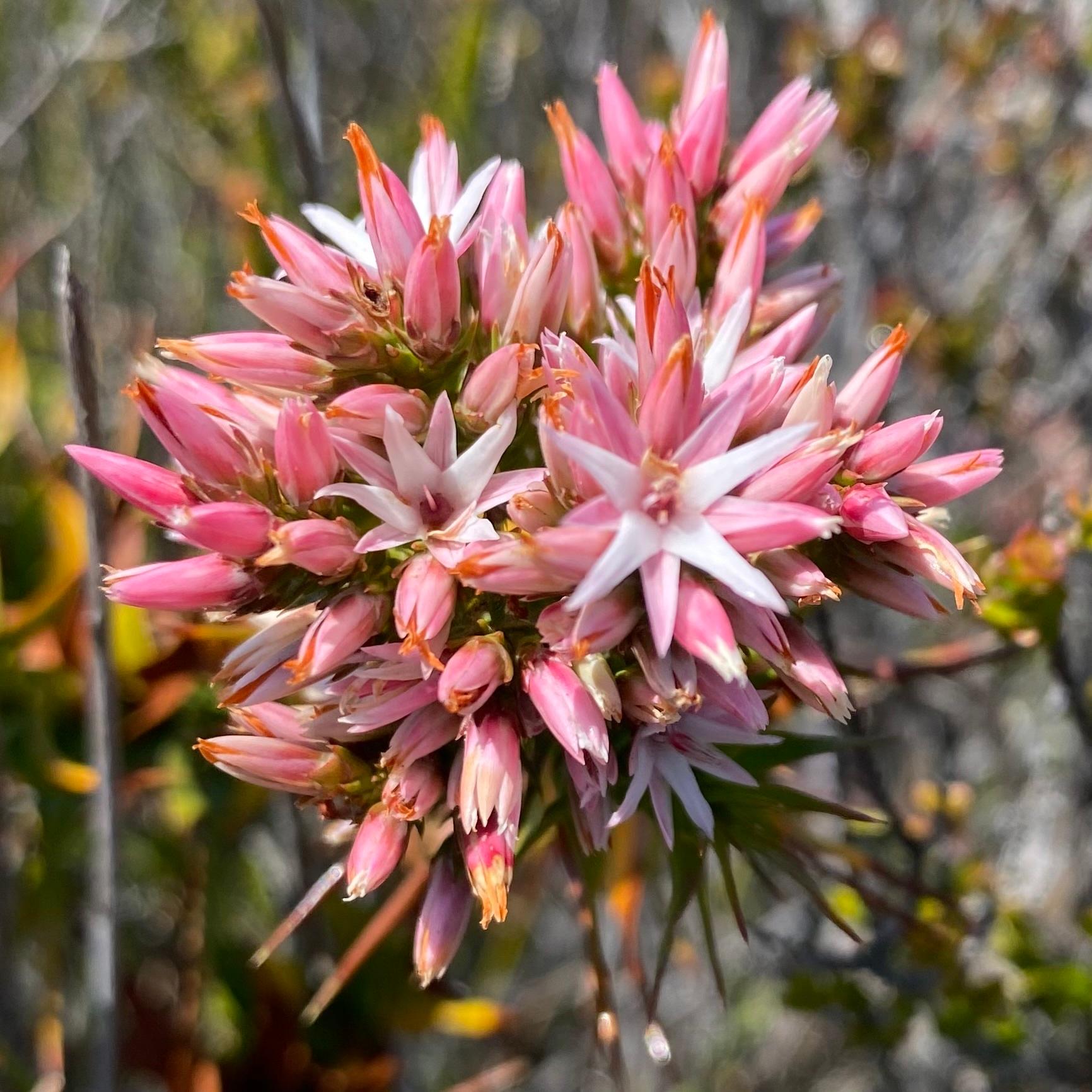 Pink Swamp HeathThis pink heath is standing in a sponge. On Sydney's sandstone plateaus, where the rock lets little water through, swamps form at the heads of streams, on spongy black peat that can be at least four metres deep.
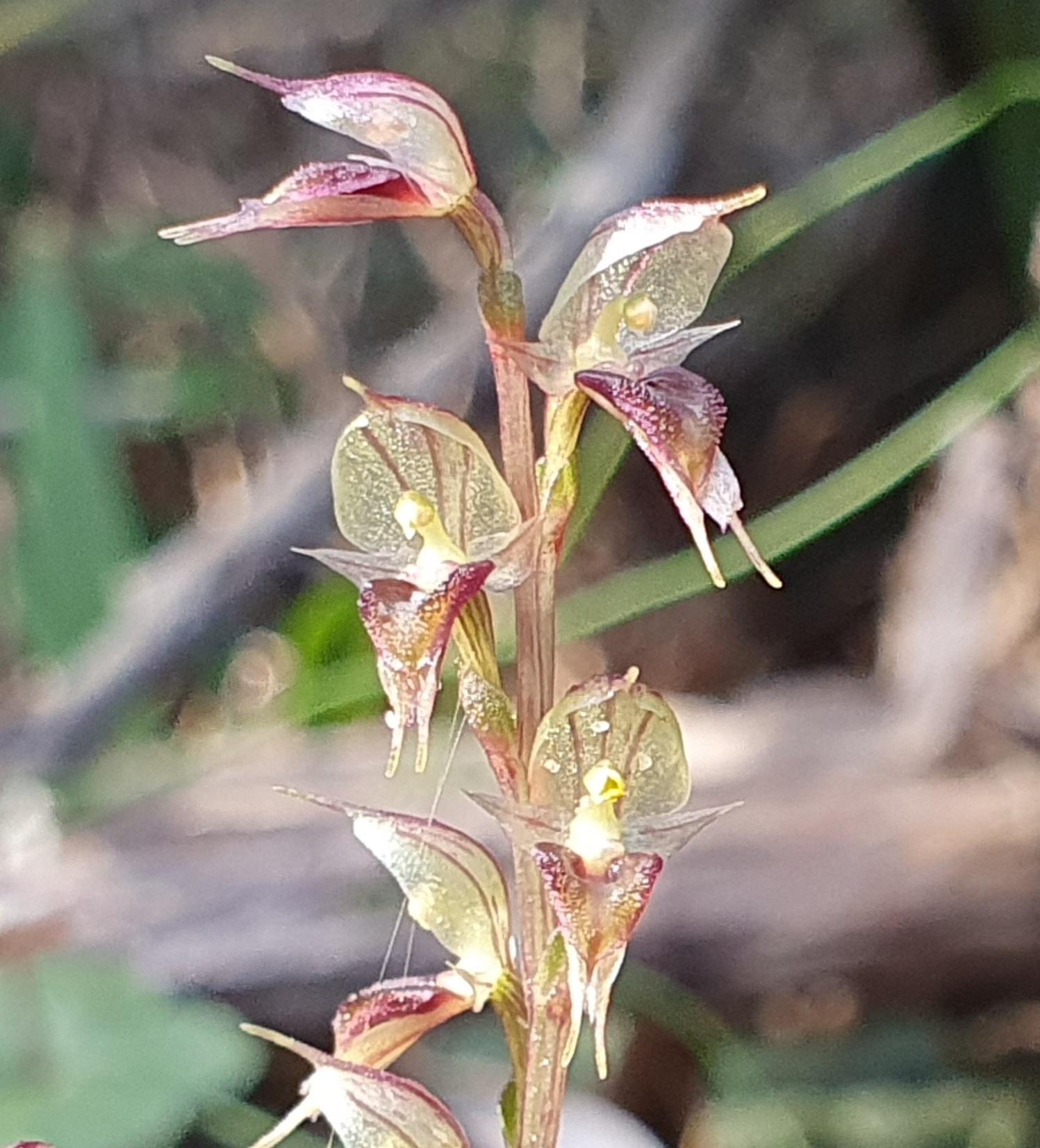 Pixie CapsPixie caps are mosquito orchids, and almost everything about them is small. Like other mosquito orchids, they flower from autumn into winter, when little else does, and lie dormant through the heat of summer.
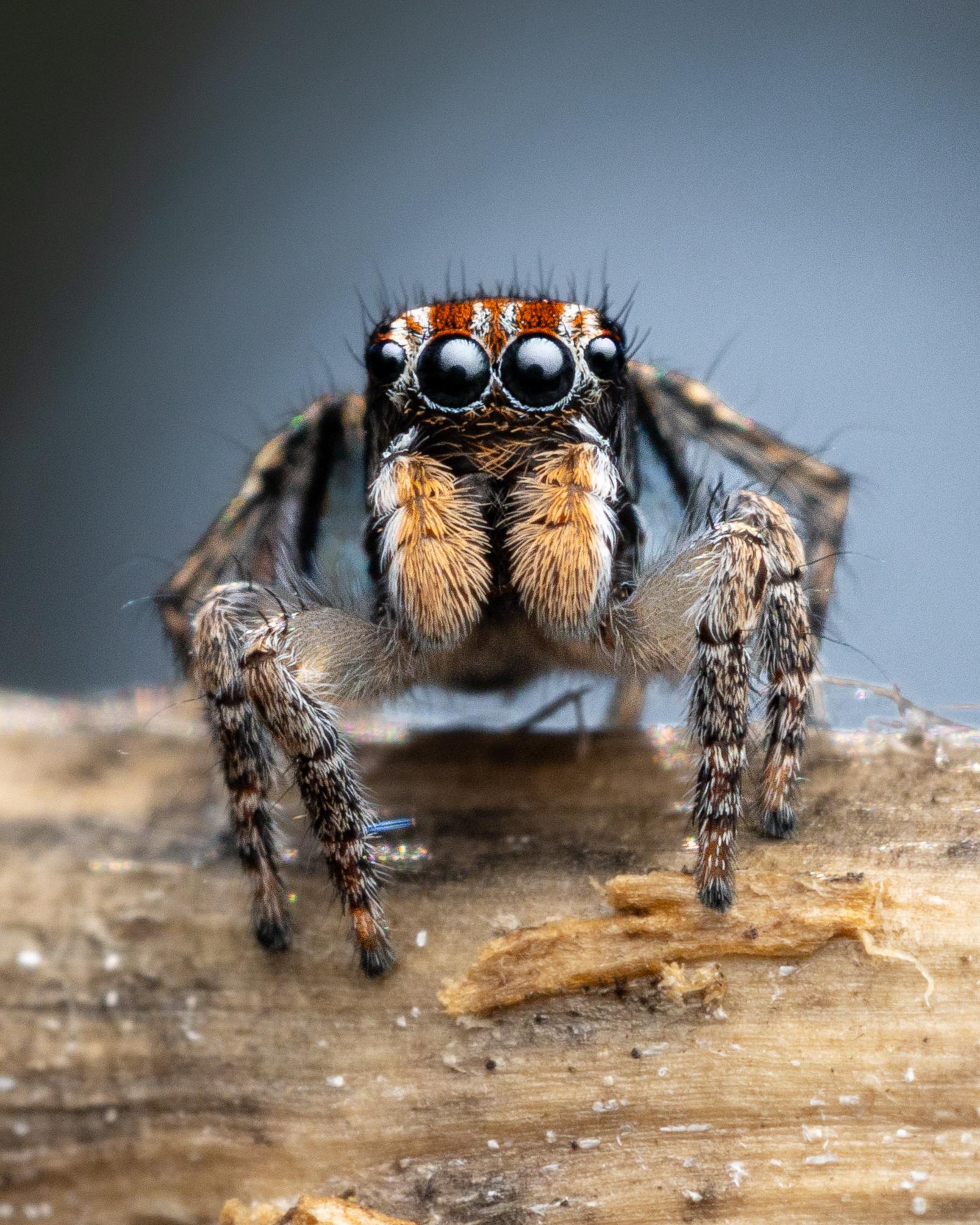 Plumed Peacock SpiderWhen he dances, he tilts his raised fan to one side and waves a single leg at her. The front of that leg is covered in blue scales that flash only from certain angles.
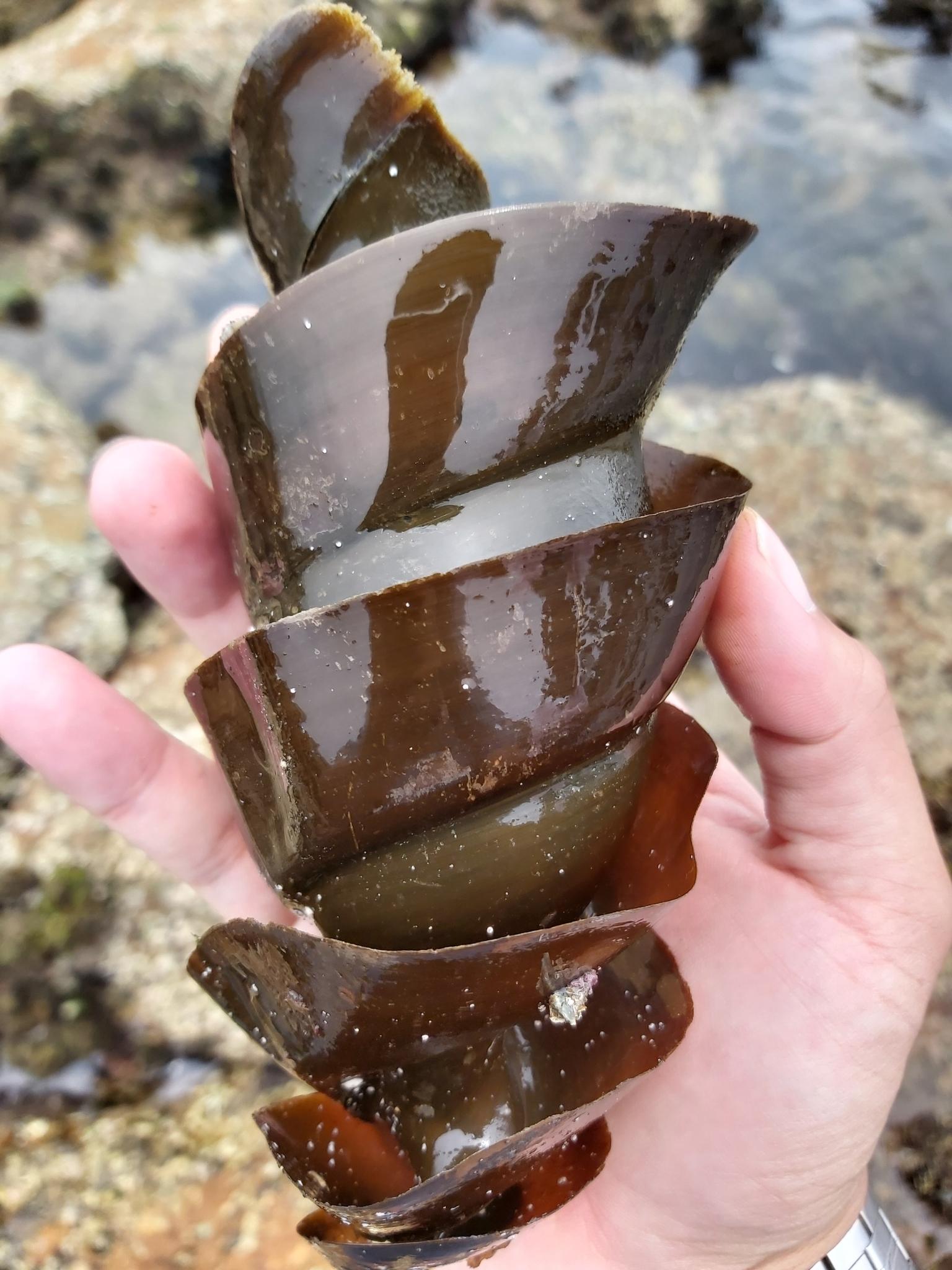 Port Jackson SharkThat dark brown spiral, about 15 cm long, is a Port Jackson shark's egg case. When it was laid, it was soft.
- Port Jackson sharks laying spiral egg casesIf you've ever found a brown spiral on the beach, like a corkscrew made of leather, you've held a shark's nursery. A Port Jackson shark laid it.
- Possum joeys riding on their mothers' backsThat joey has moved out of the pouch. After several months inside, it now rides on its mother's back while it learns to climb and feed for itself.
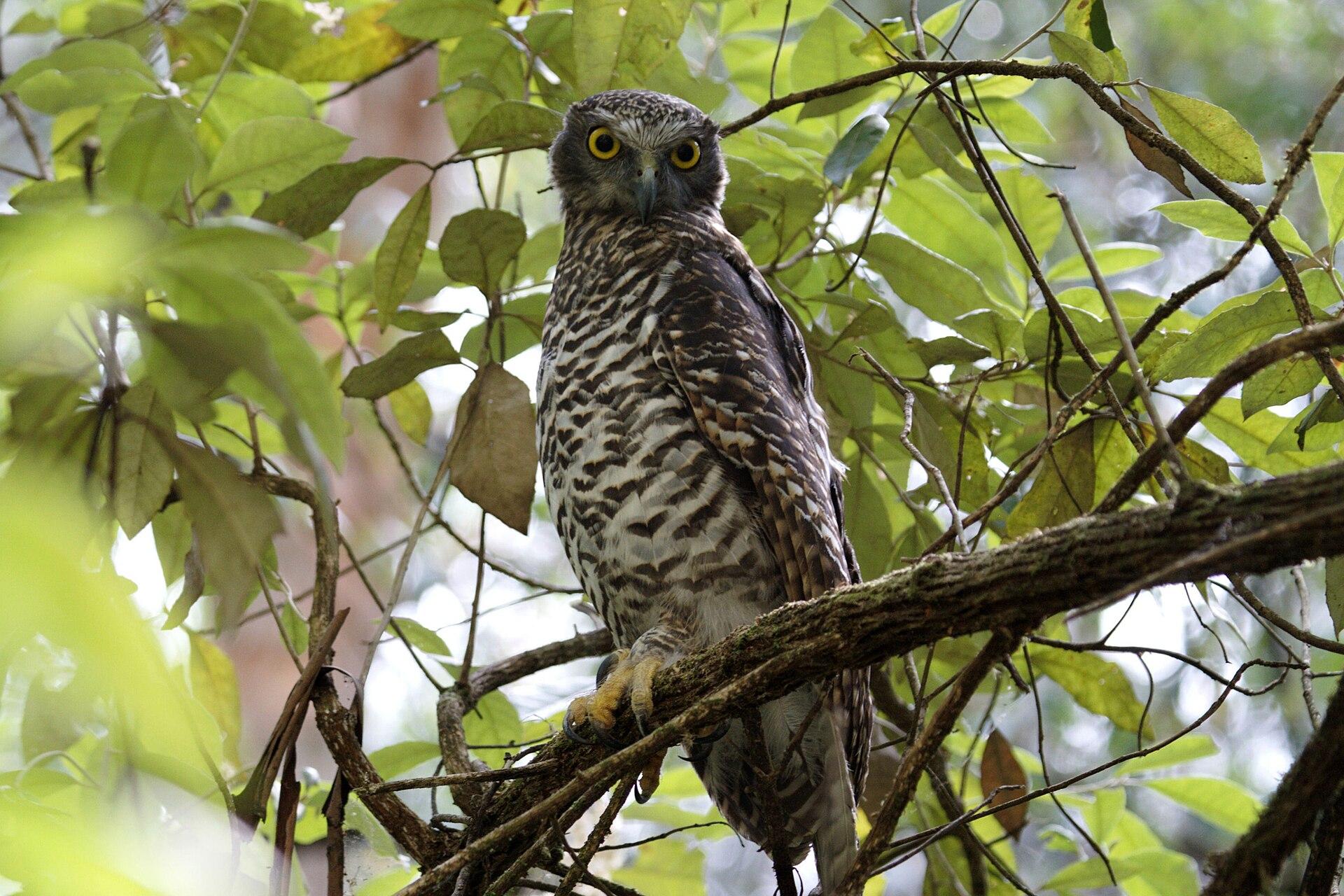 Powerful OwlAustralia's largest owl mates for life, in some cases for more than 30 years, and the pair defends its territory together all year round. It hunts mainly possums and gliders, especially ringtail possums.
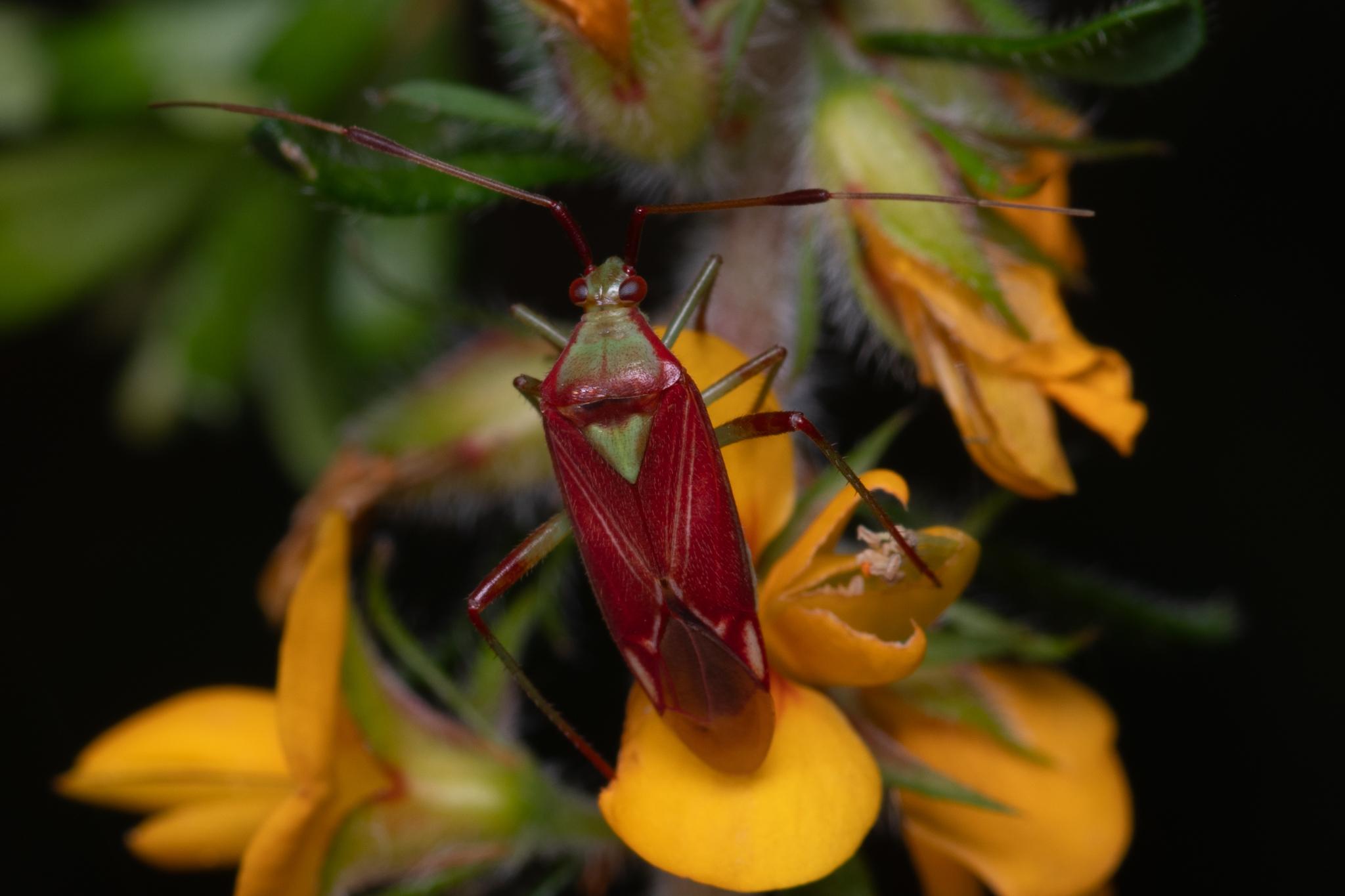 Pseudopantilius australisThis bug was named in London in 1873, in a catalogue of the British Museum's bug collection, under a different name. A century and a half later, little about how it lives has made it into print.
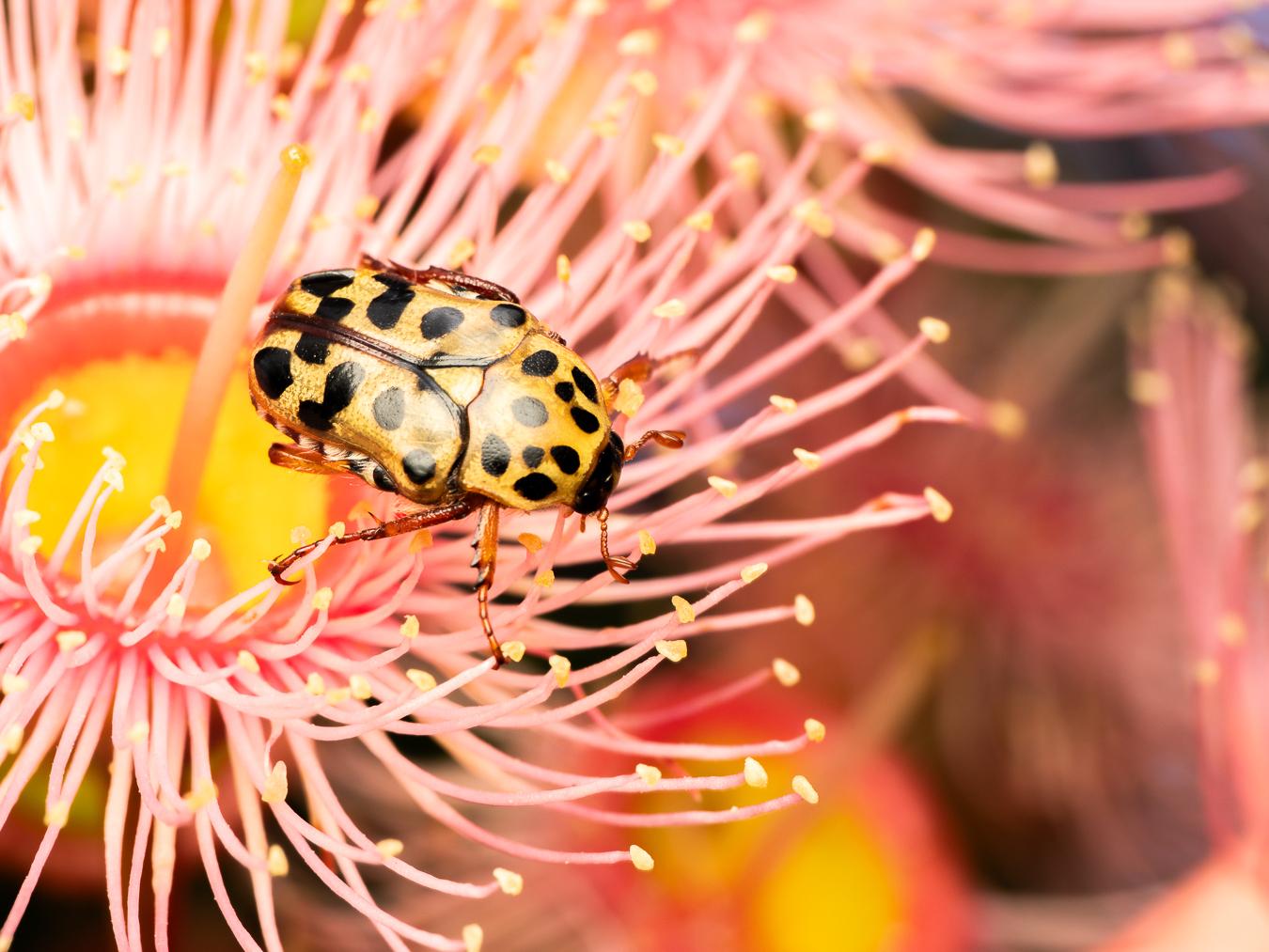 Punctate Flower ChaferMost beetles take off clumsily. They have to swing their hard wing cases up and out of the way, like opening the doors of a car, before the flying wings underneath can unfold.
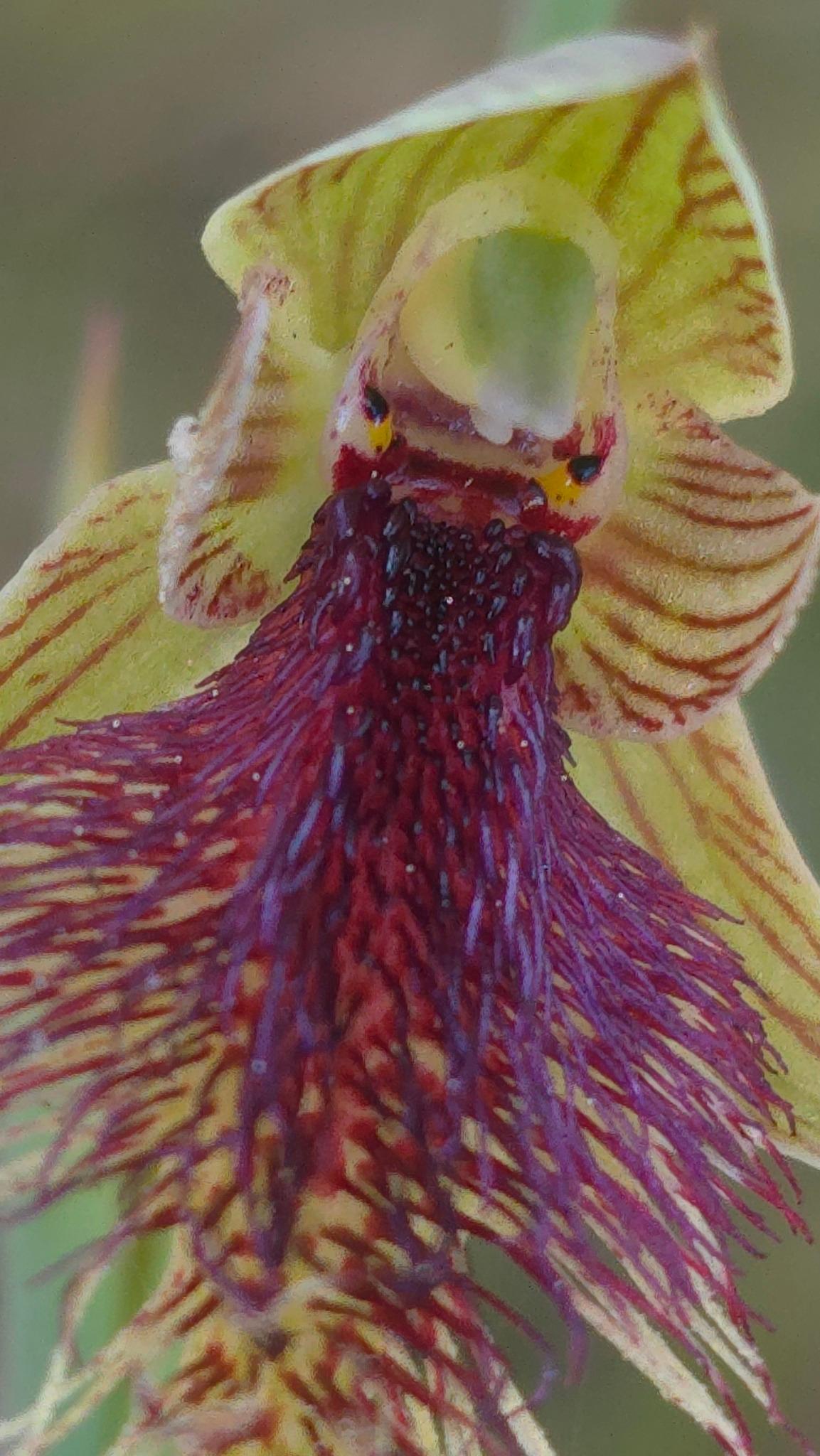 Purple Beard OrchidThe purple beard is a lure. Like other beard orchids, this flower has a hairy, ornamented lip, and big, colourful flower wasps seem to be drawn to it.
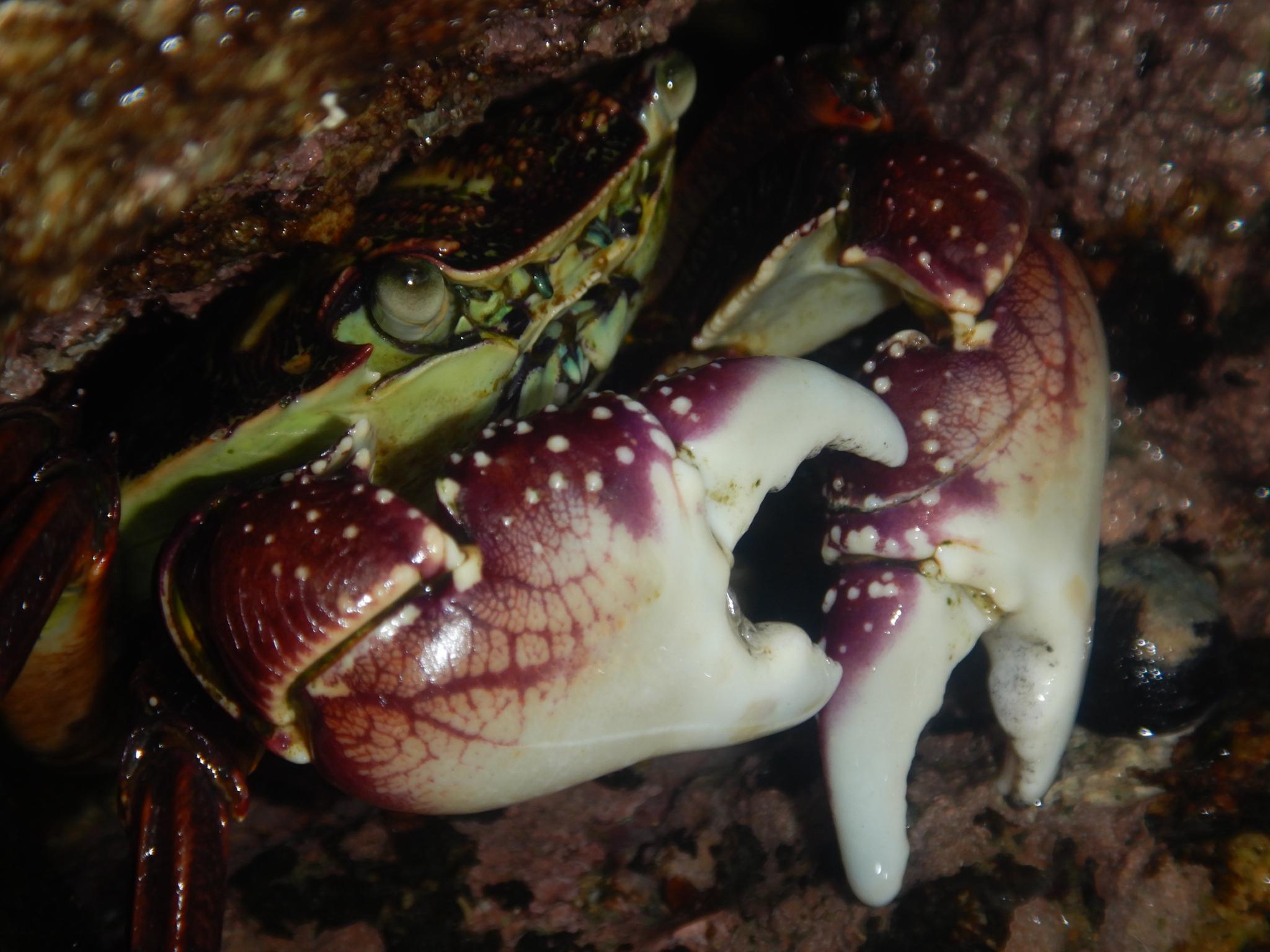 Purple Rock CrabIt's the most active, noticeable crab on Sydney's rocky coast, and it darts about so fast it's hard to catch. The same species lives in New Zealand and South America too.
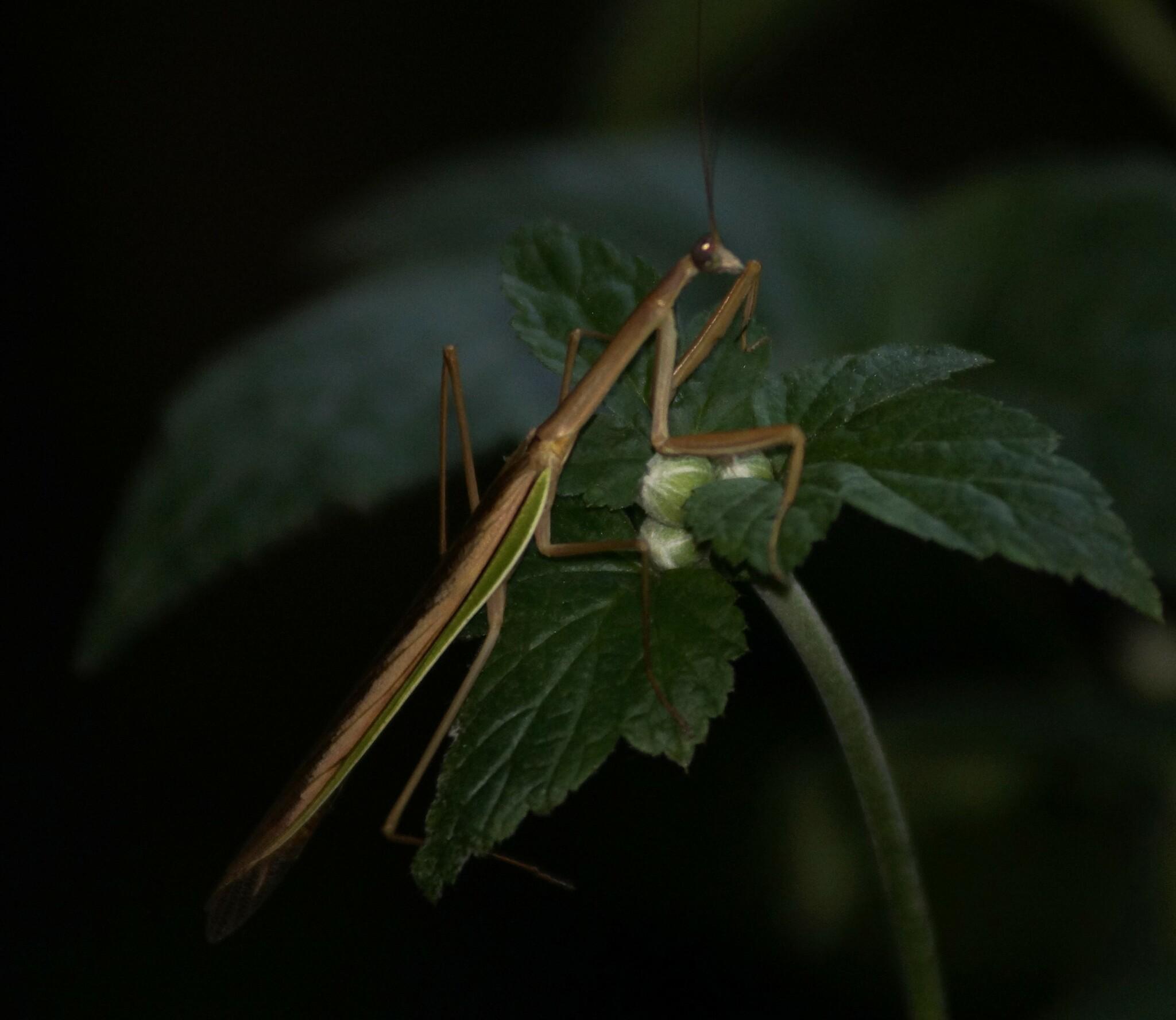 Purple-winged MantisIt waits among the flowers, camouflaged and still, until a bee or fly comes in for the nectar. Then it strikes, piercing its prey with spiny front legs.
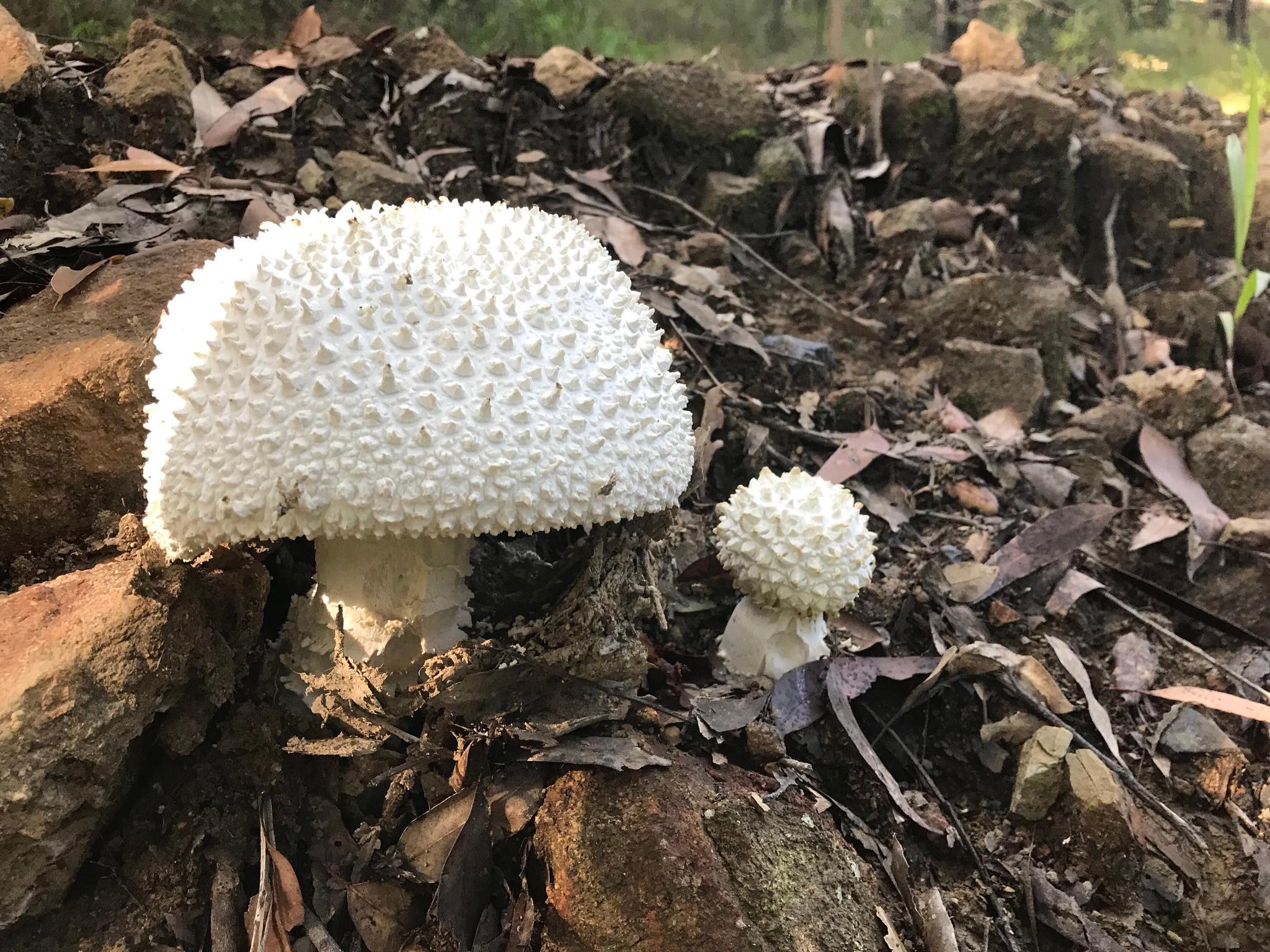 Pyramid Builder LepidellaWhat you're looking at is a payment slip. The mushroom is only the visible tip of a fungus, and like other *Amanita* fungi, its threads partner with the roots of native trees.
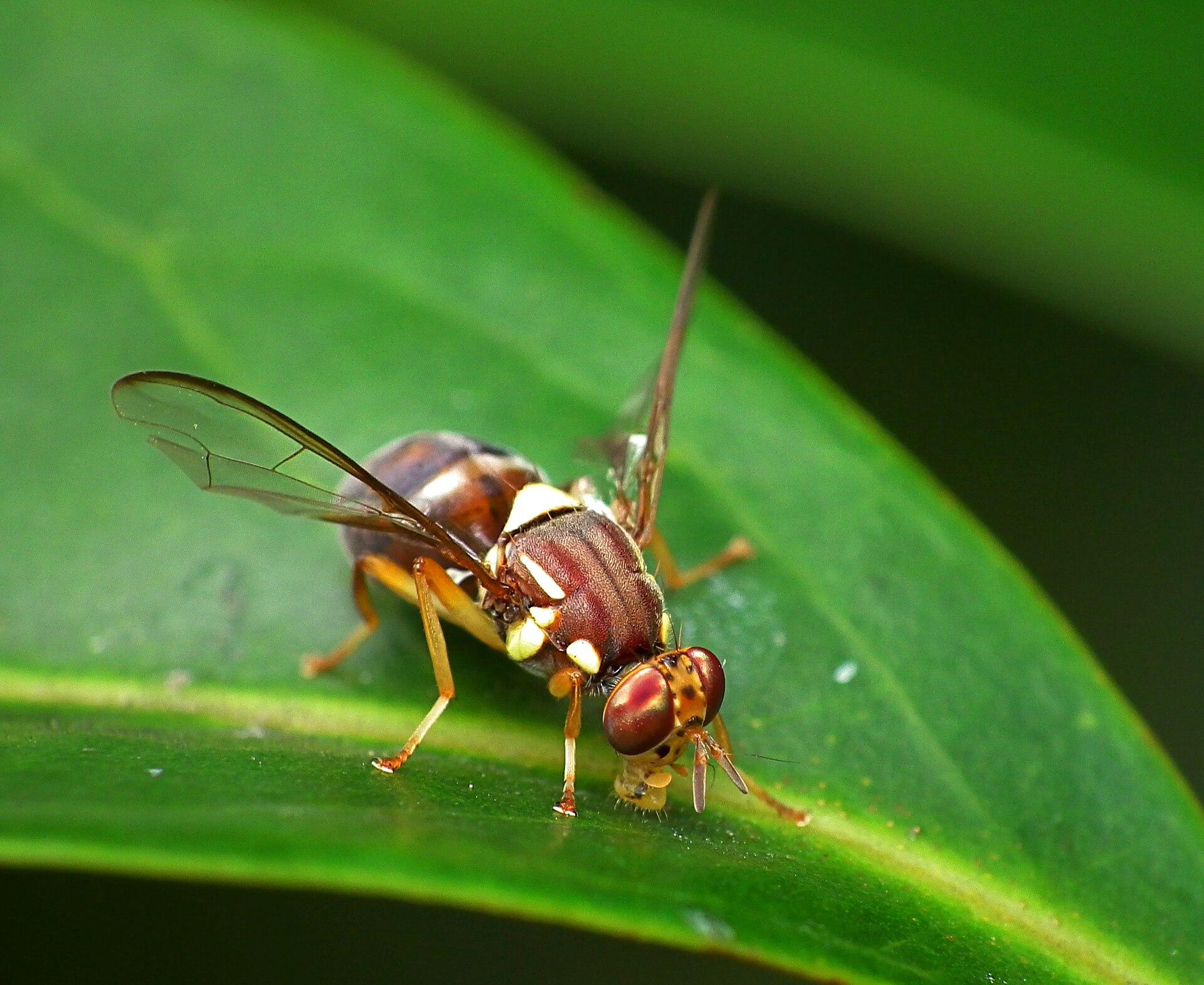 Queensland Fruit FlyAt dusk, Queensland fruit flies mate. That small fact is how scientists tell them apart from a sister species that looks almost exactly the same, but mates in the middle of the day.
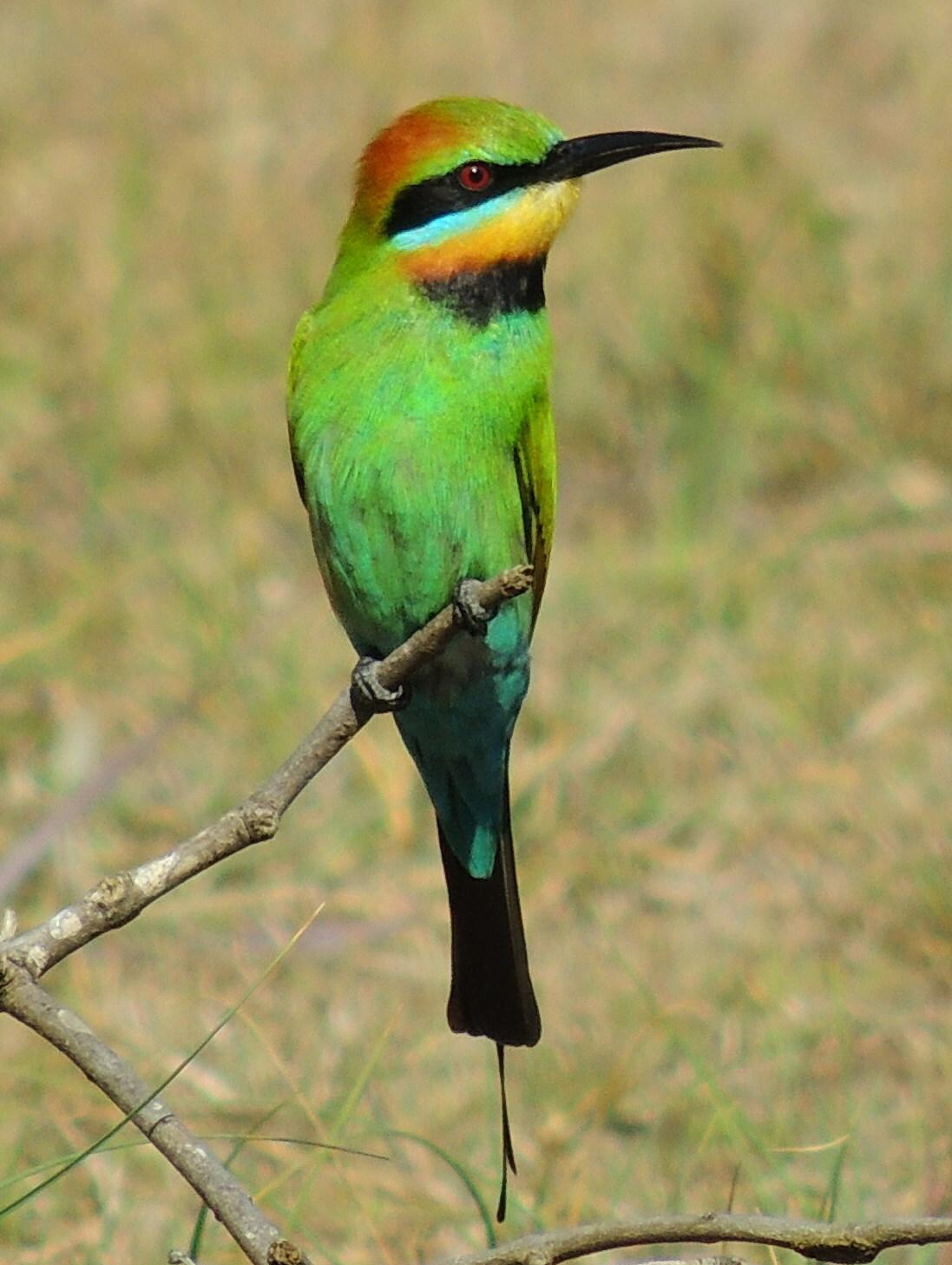 Rainbow Bee-eaterBefore it swallows a bee or wasp, the rainbow bee-eater rubs it against its perch to get rid of the sting and the venom glands. Then it eats.
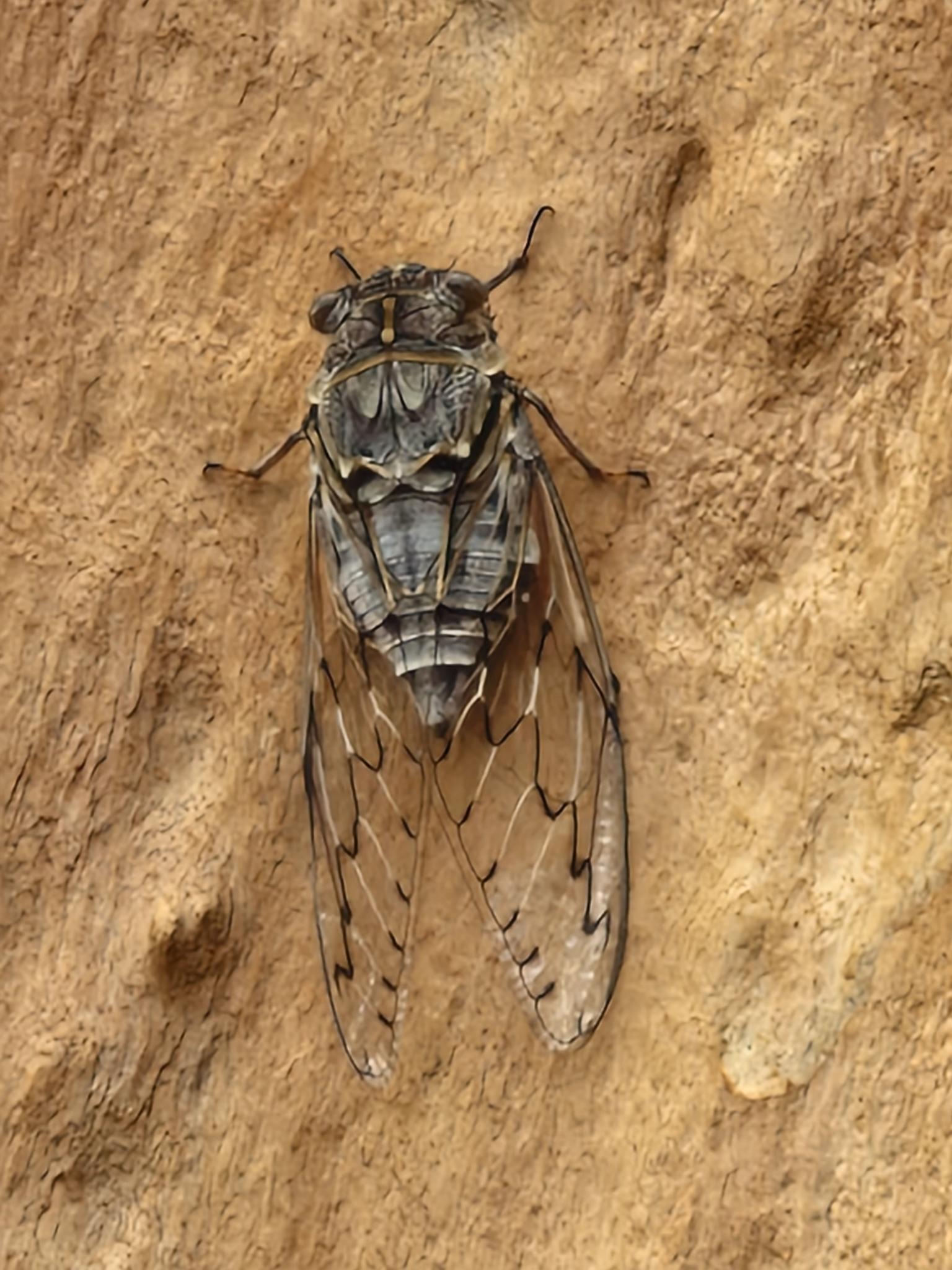 Razor GrinderAt dusk the forest starts to grind. One patch of razor grinders sings together, then another takes it up from somewhere else, and the waves of song keep rolling in from different parts of the forest without a break.
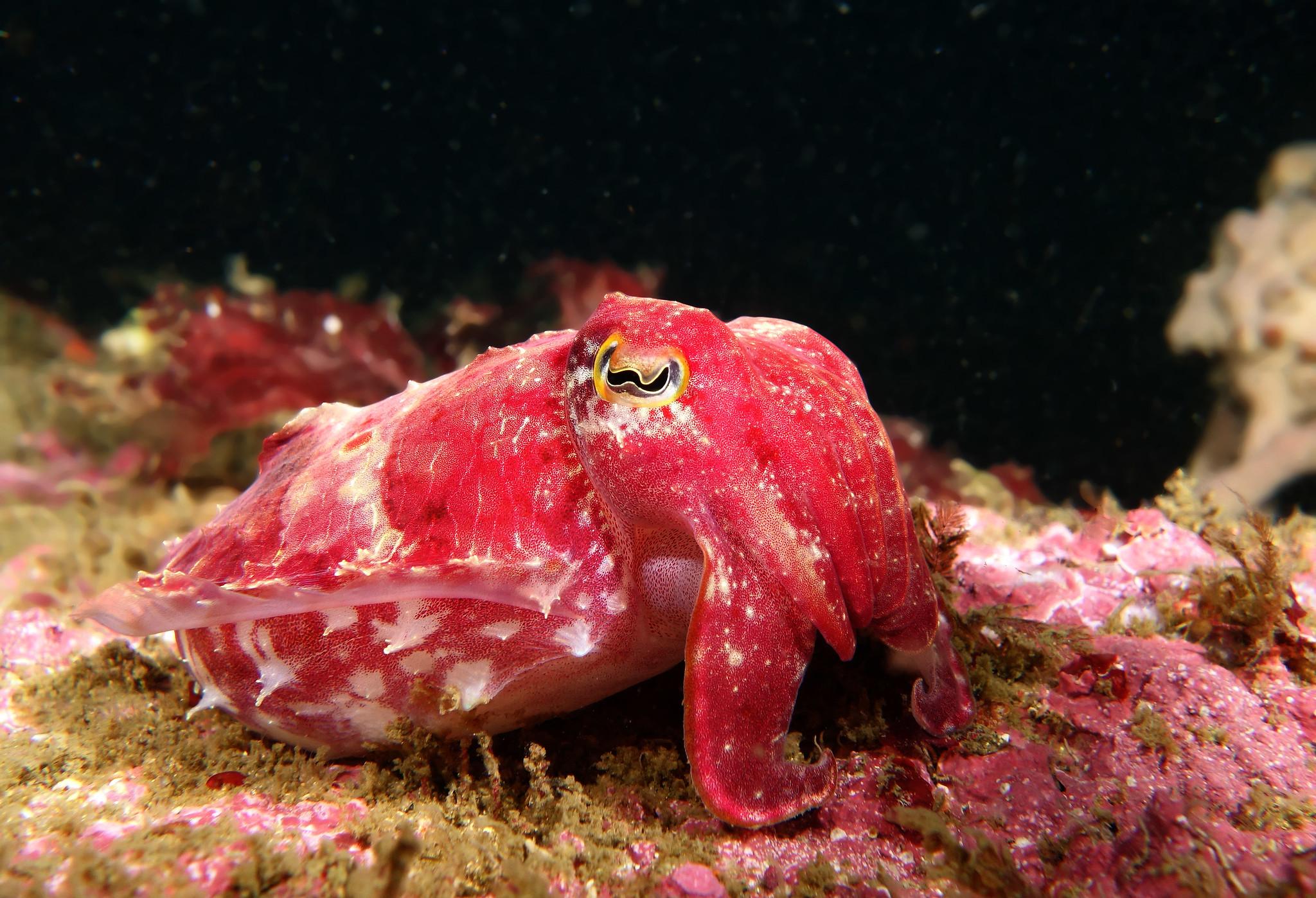 Reaper CuttlefishThe reaper cuttlefish is looking at the same water you are, and seeing something you don't.
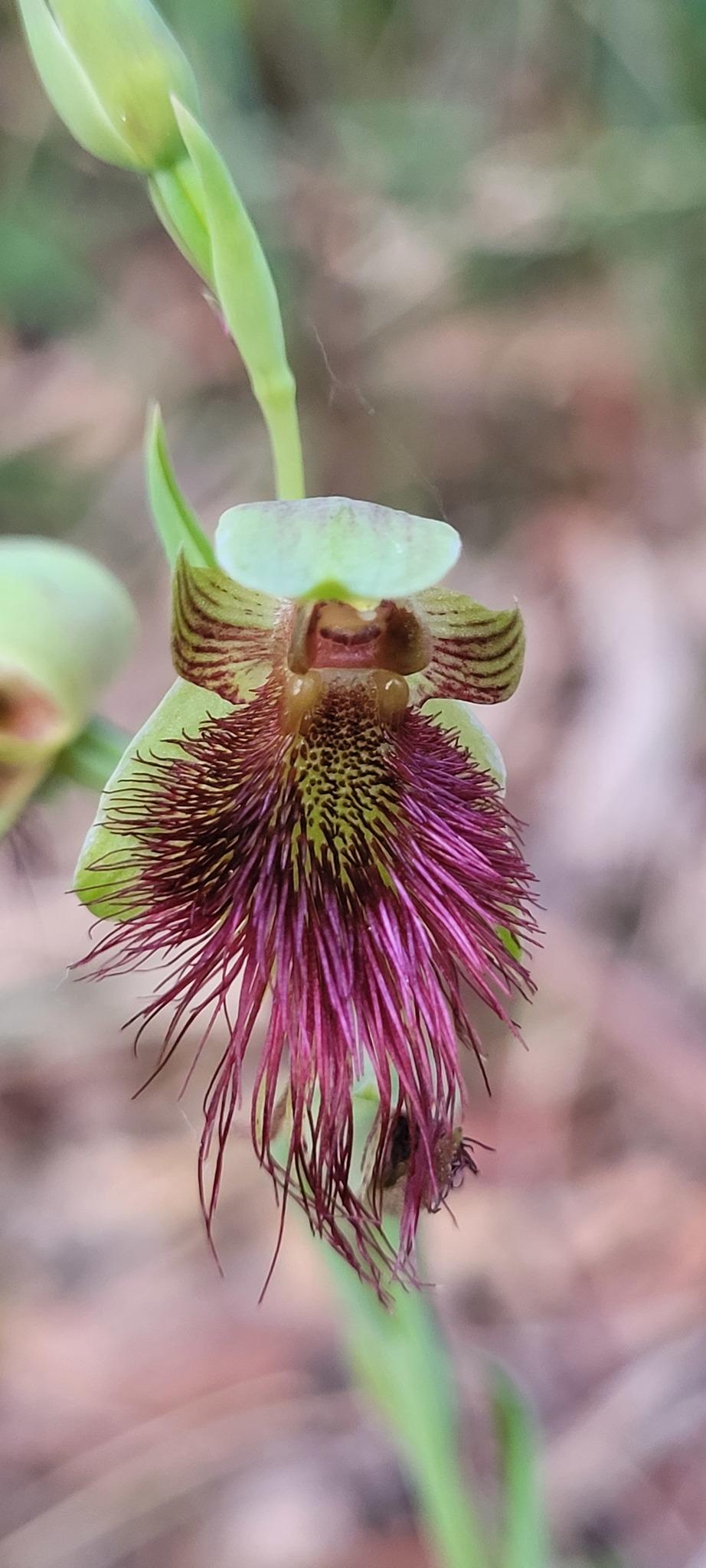 Red beard orchidThat beard is bait. Like other beard orchids, it has a hairy, ornamented lip, and big, colourful flower wasps seem to be drawn to it.
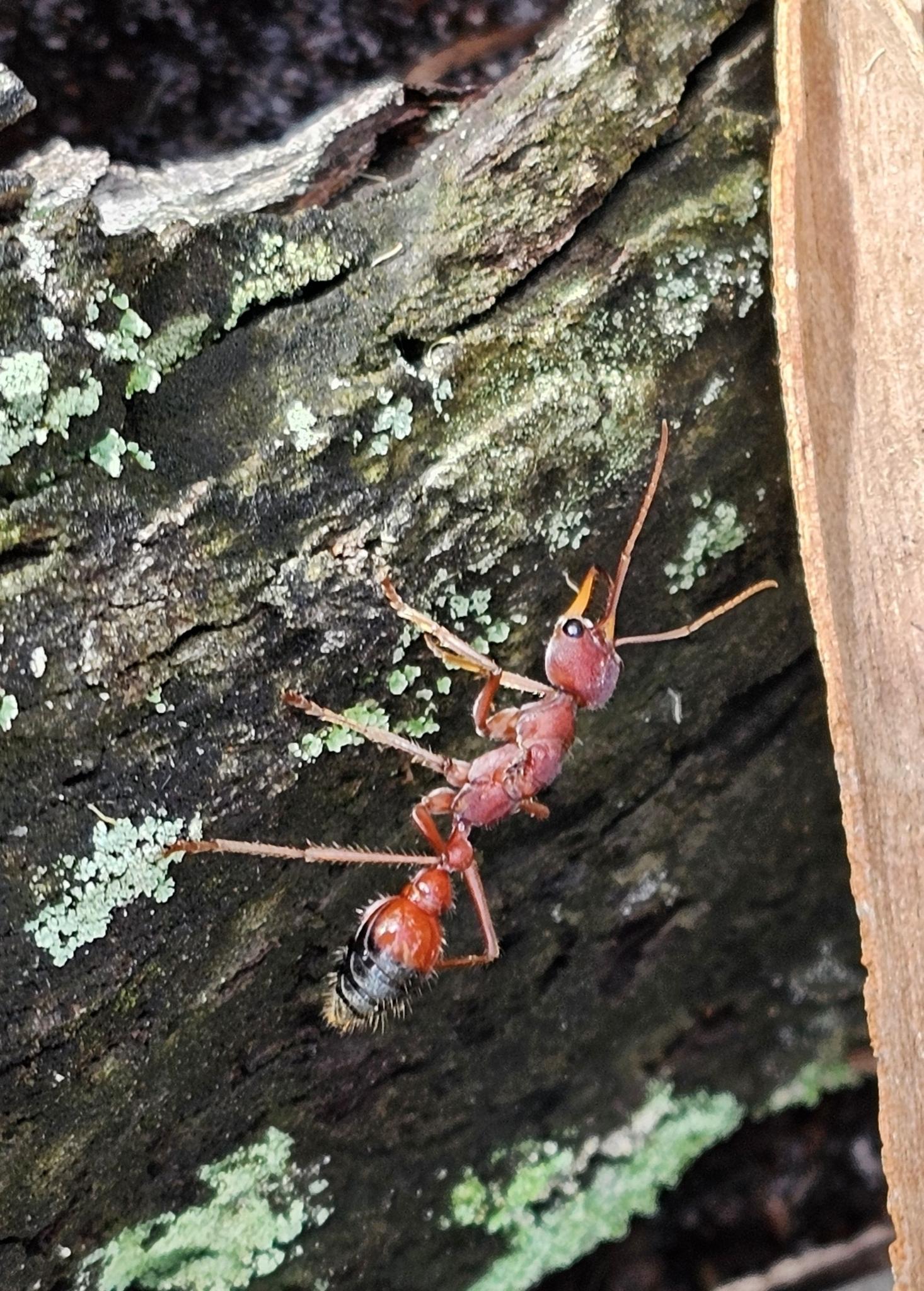 Red Bull AntIt has seen you. Bull ants have superb eyesight: they can track an intruder from a metre away, and will follow or even chase it a good distance from the nest.
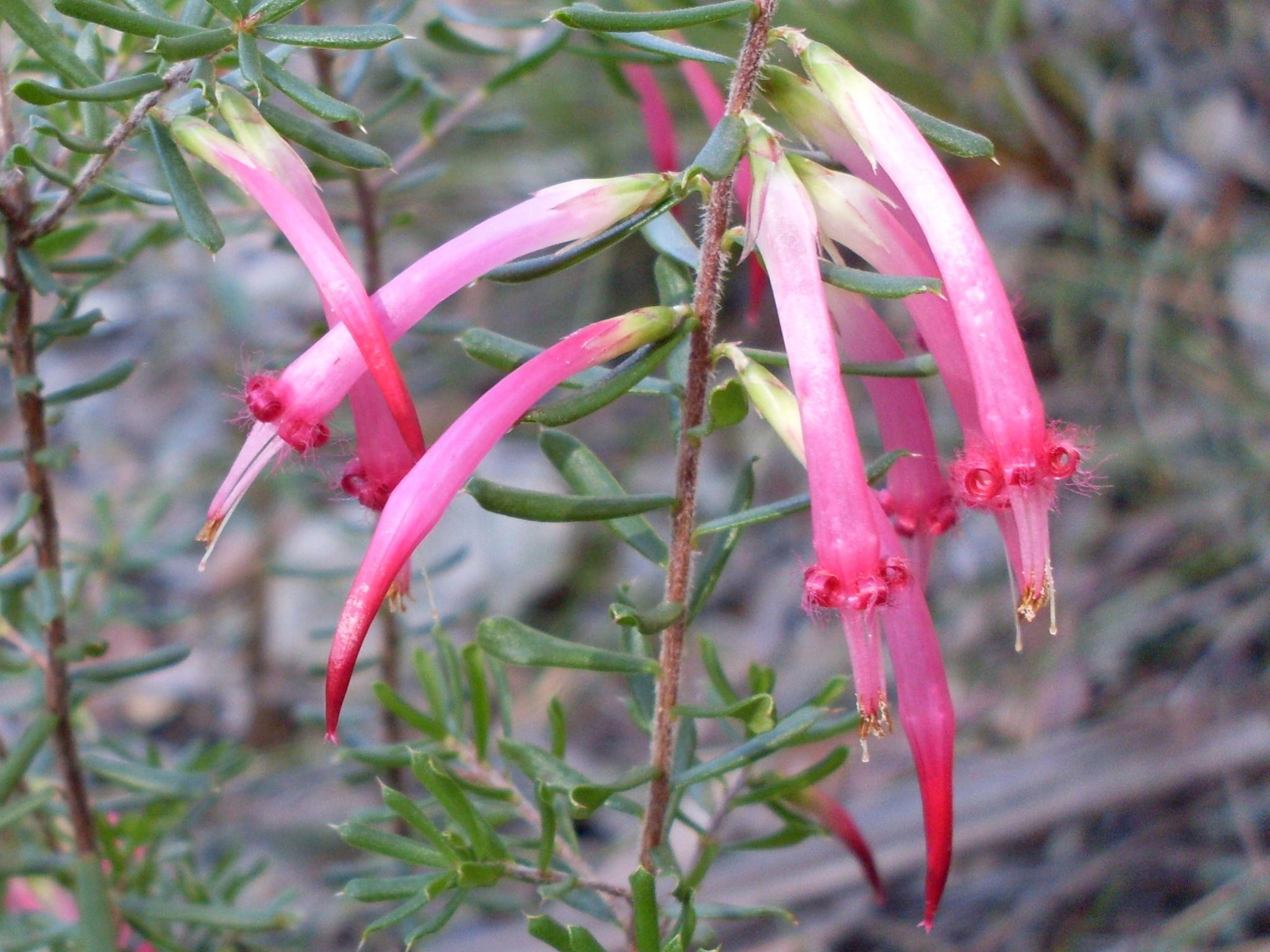 Red Five-cornersIts flowers are red tubes, hanging down, 15 to 25 millimetres long. In Australia's heath family, that shape and colour go with birds.
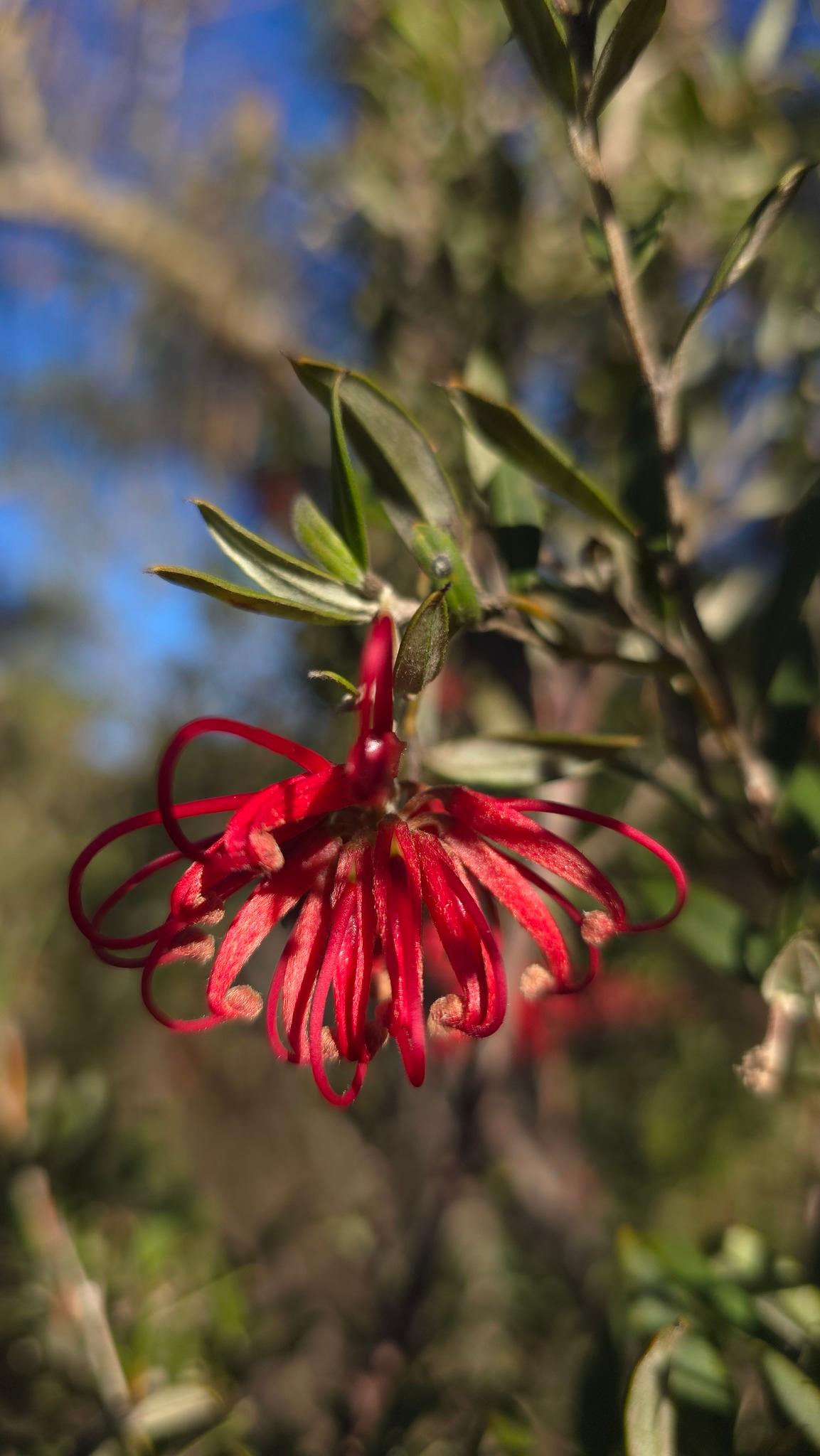 Red Spider FlowerUnder this grevillea, its seeds are waiting for a fire. Heat alone won't wake them.
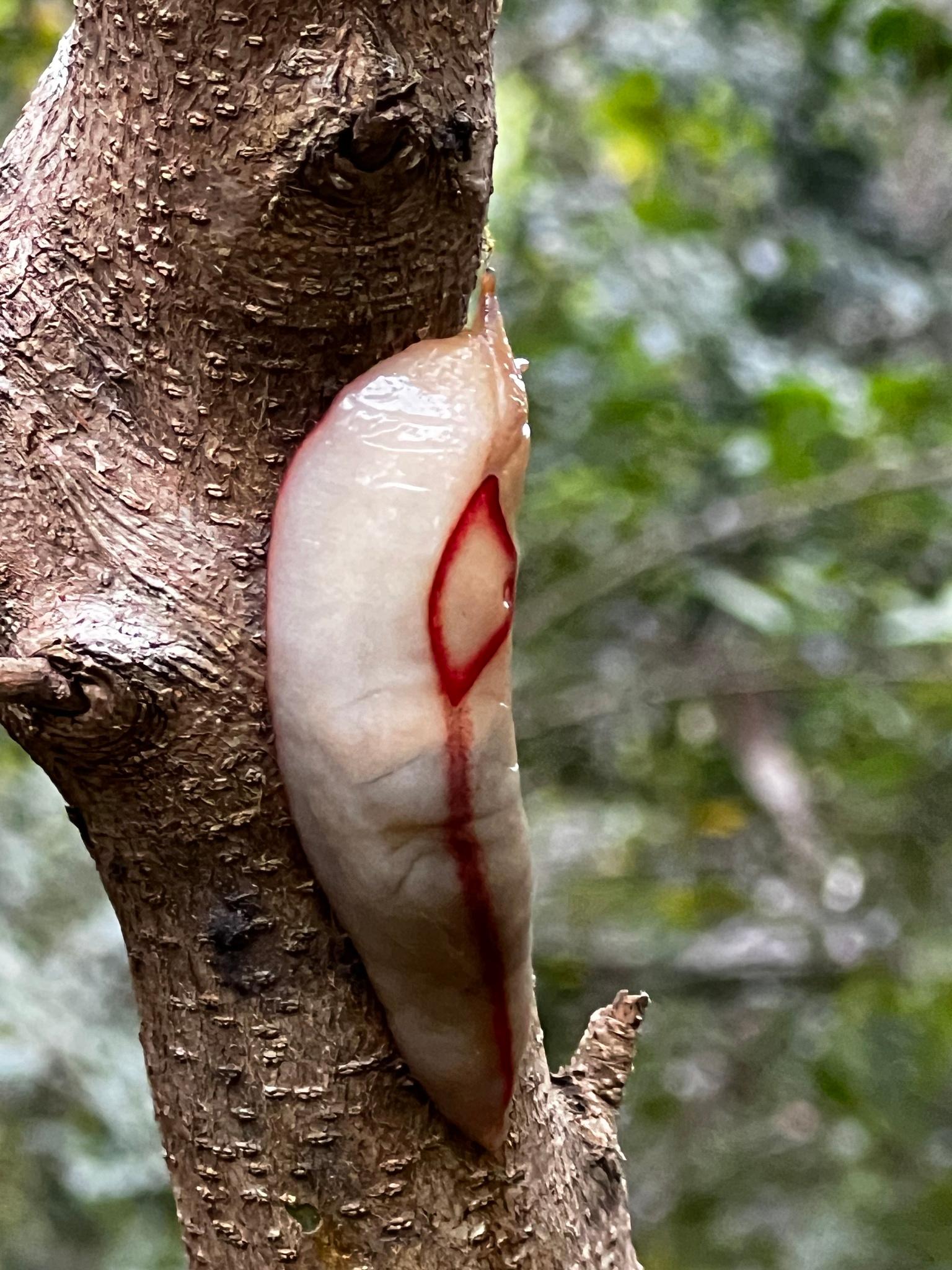 Red Triangle SlugThis is Australia's largest native land slug, and it's grazing. The smooth trunks of some gum trees carry a film of microscopic algae, too fine to see, and the red triangle slug scrapes it off as it goes, leaving scalloped tracks behind.
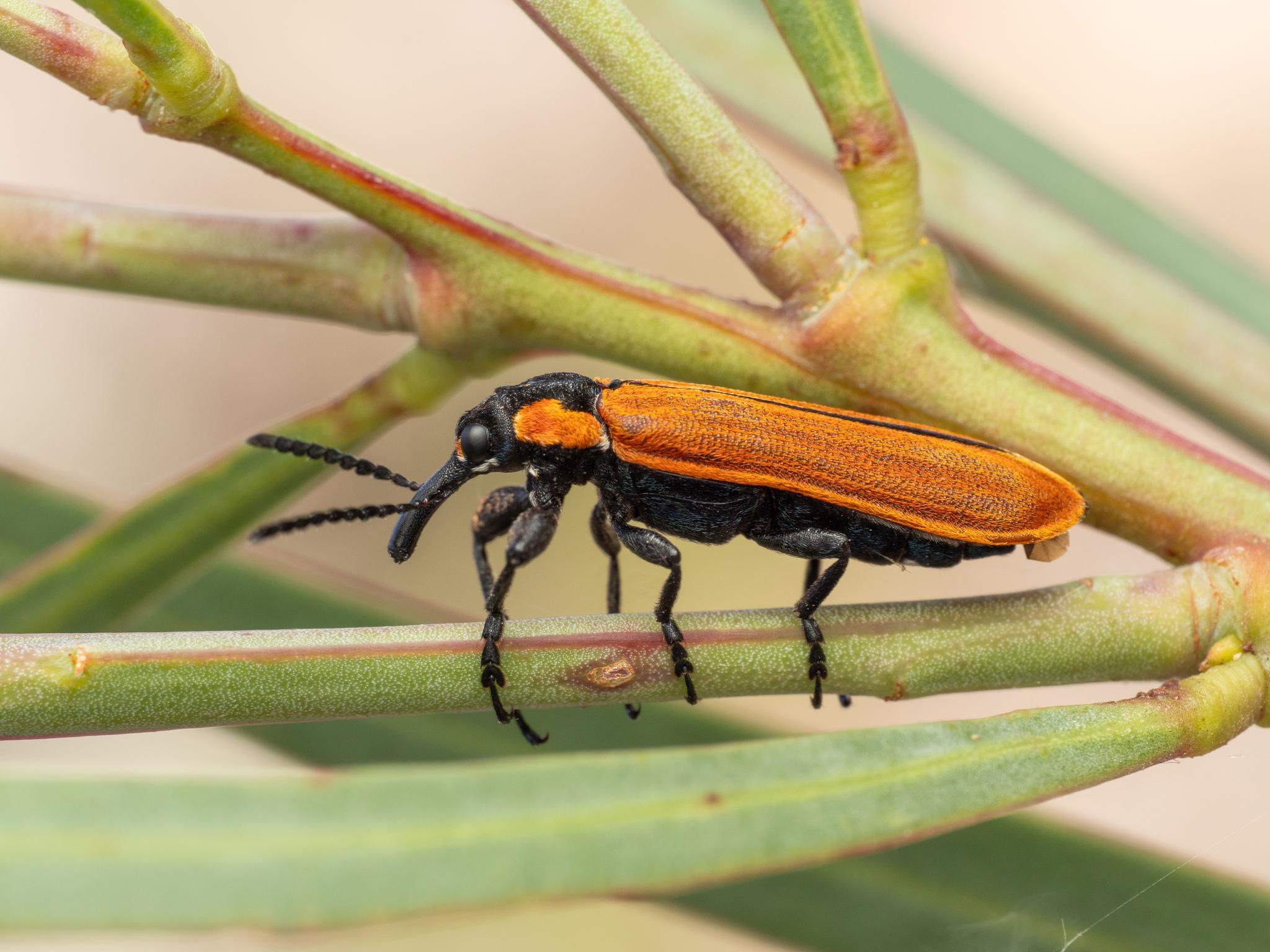 Red weevilBrick-red and black is a warning in the bush. The Long-nosed Lycid wears it, and backs it up.
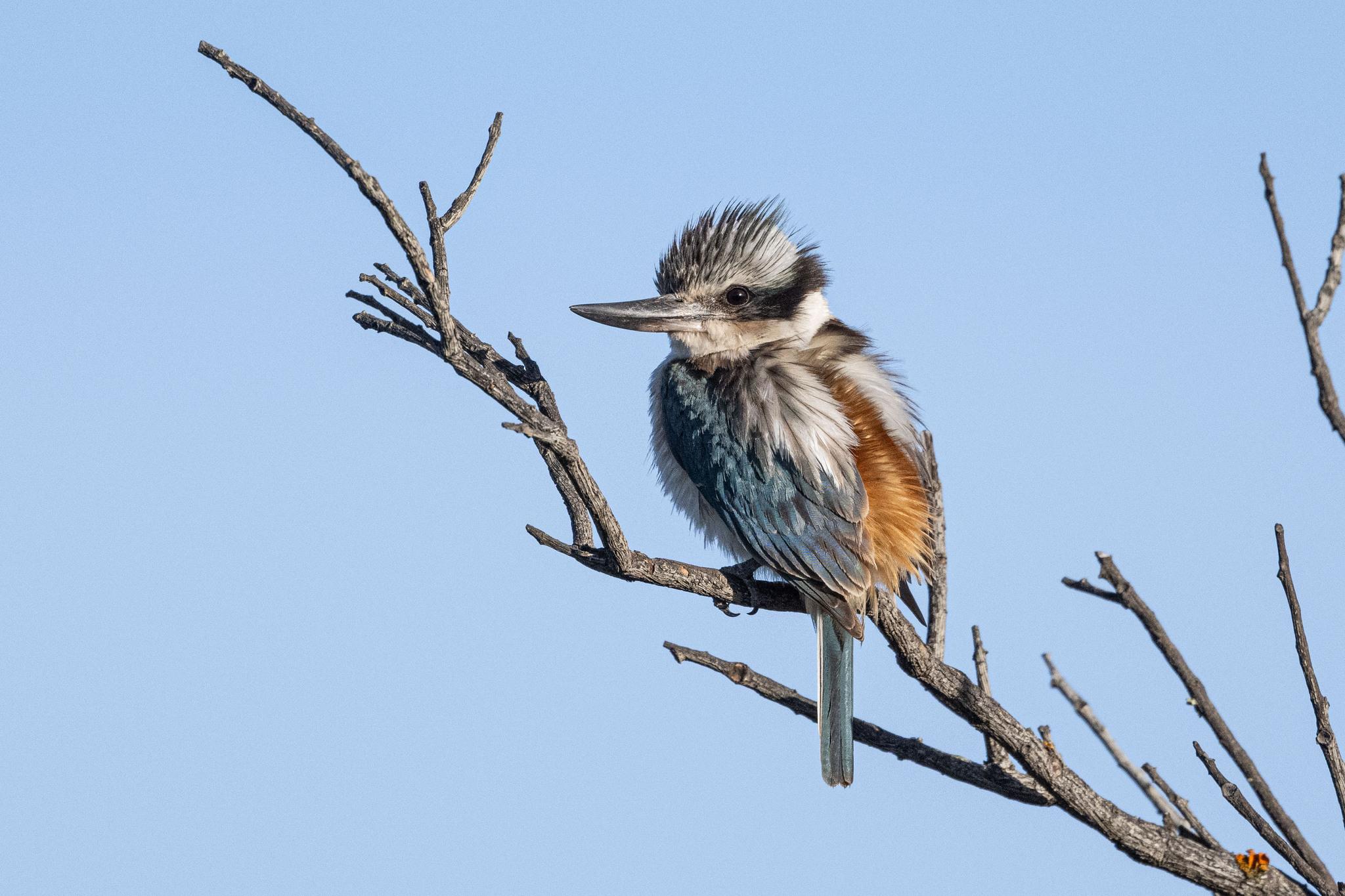 Red-backed KingfisherA kingfisher, and nowhere near the water. The red-backed kingfisher is a bird of the dry inland, of mulga and dry forest.
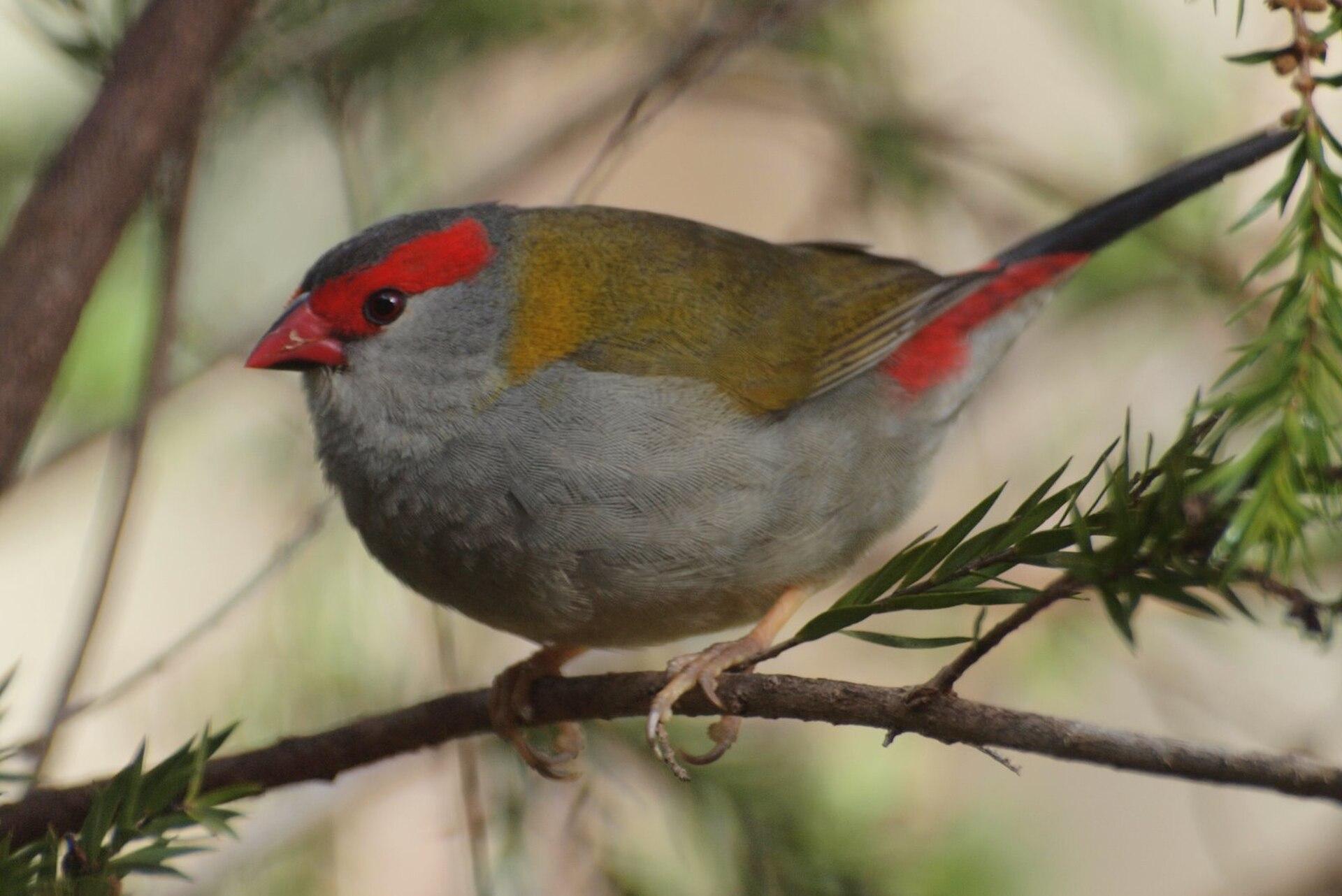 Red-browed FinchA red eyebrow and a red rump, in the scruffy grass by the tracks. Red-browed finches do well in weedy strips along railway lines and creeks, where seeding grasses escape the lawnmower.
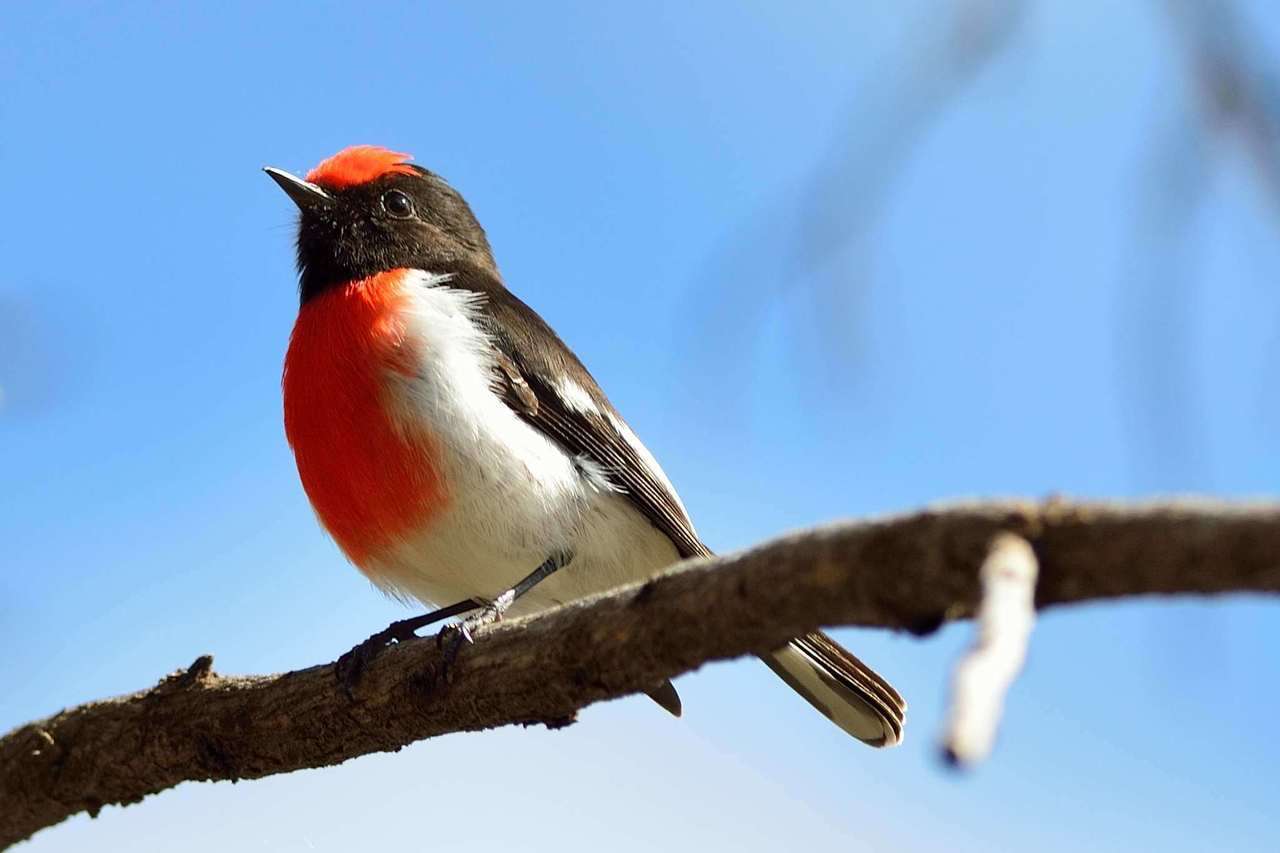 Red-capped RobinIt isn't really a robin. Early colonists, a long way from home, called Australia's red-breasted birds robins after the European robin, which they only roughly resemble.
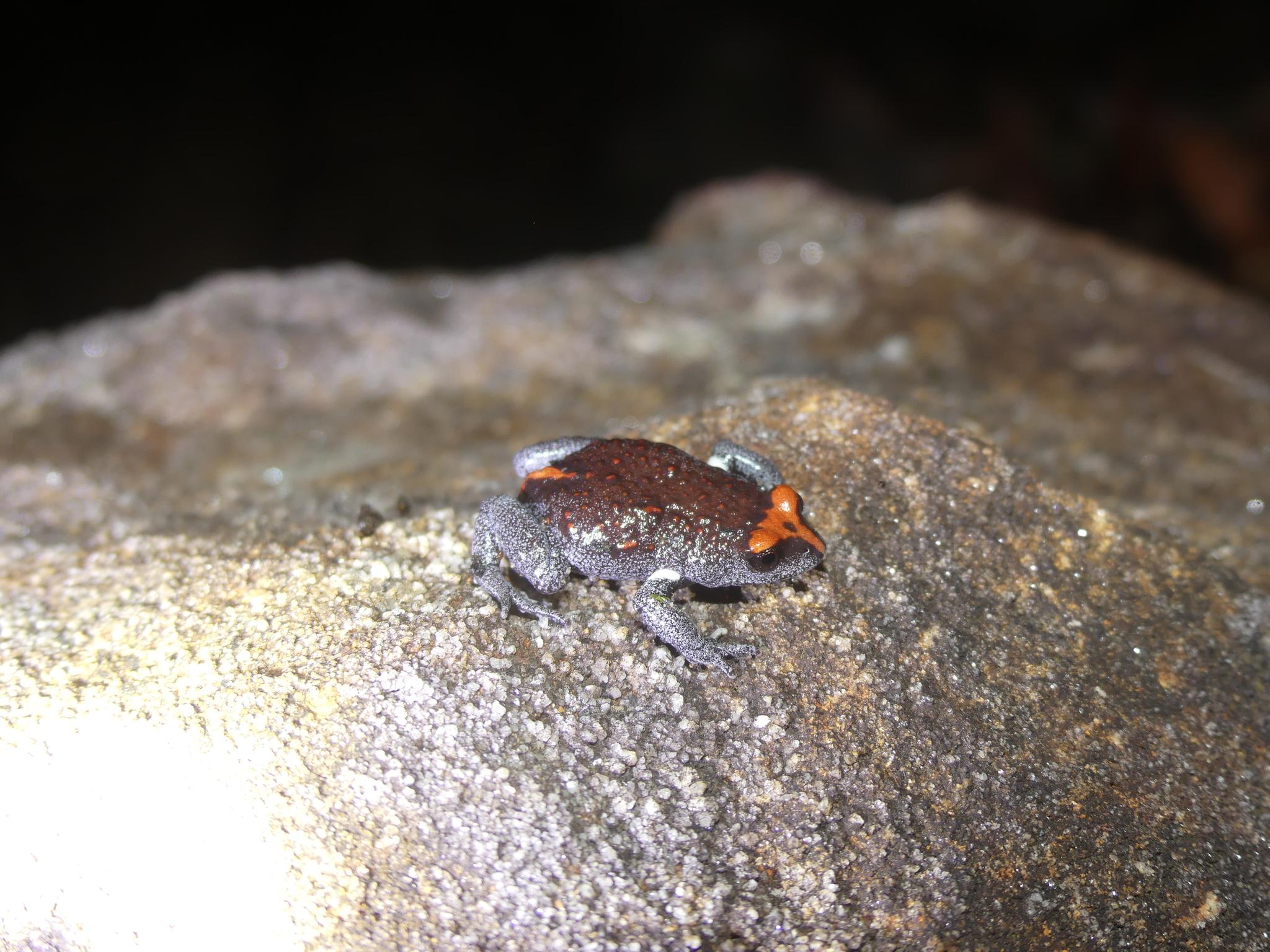 Red-crowned ToadletThe red-crowned toadlet doesn't lay its eggs in water. It lays them on land, and the male stays to guard the nest.
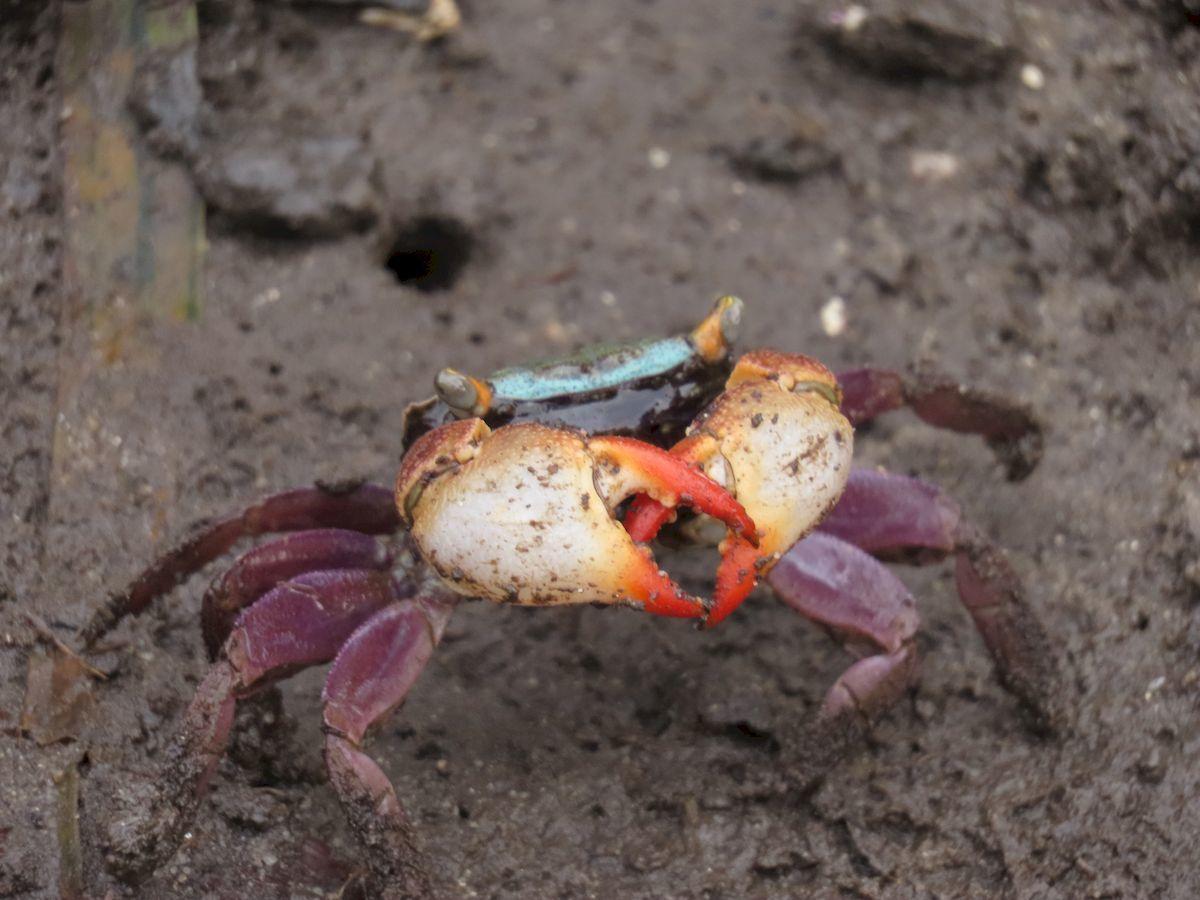 Red-fingered Marsh CrabMangrove leaves are tough food. They're full of cellulose, the stiff fibre that makes plants hard to digest.
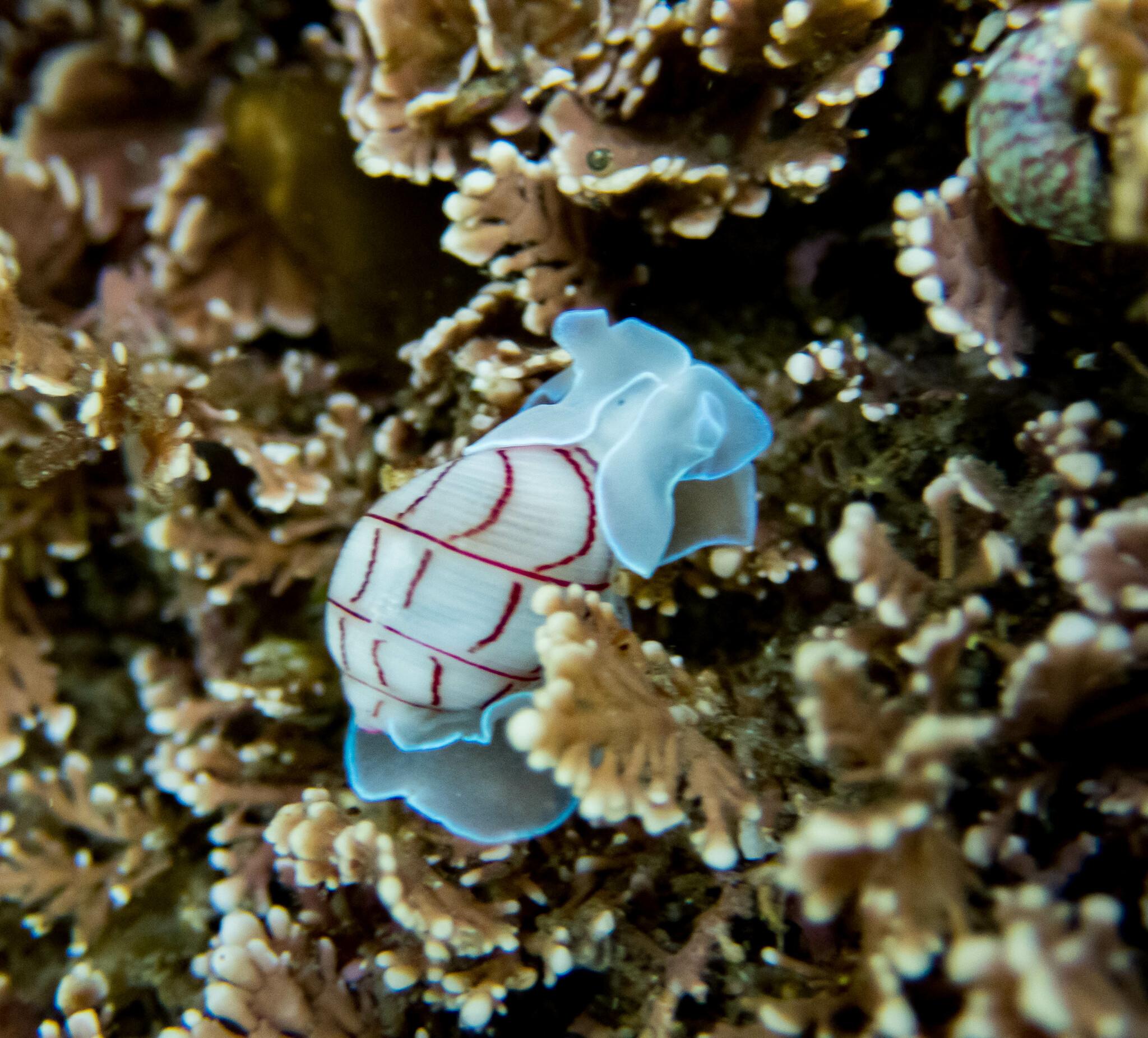 Red-lined Bubble SnailMany sea slugs come from snails. Somewhere in their past, their ancestors carried shells, and over generations those shells shrank and were lost.
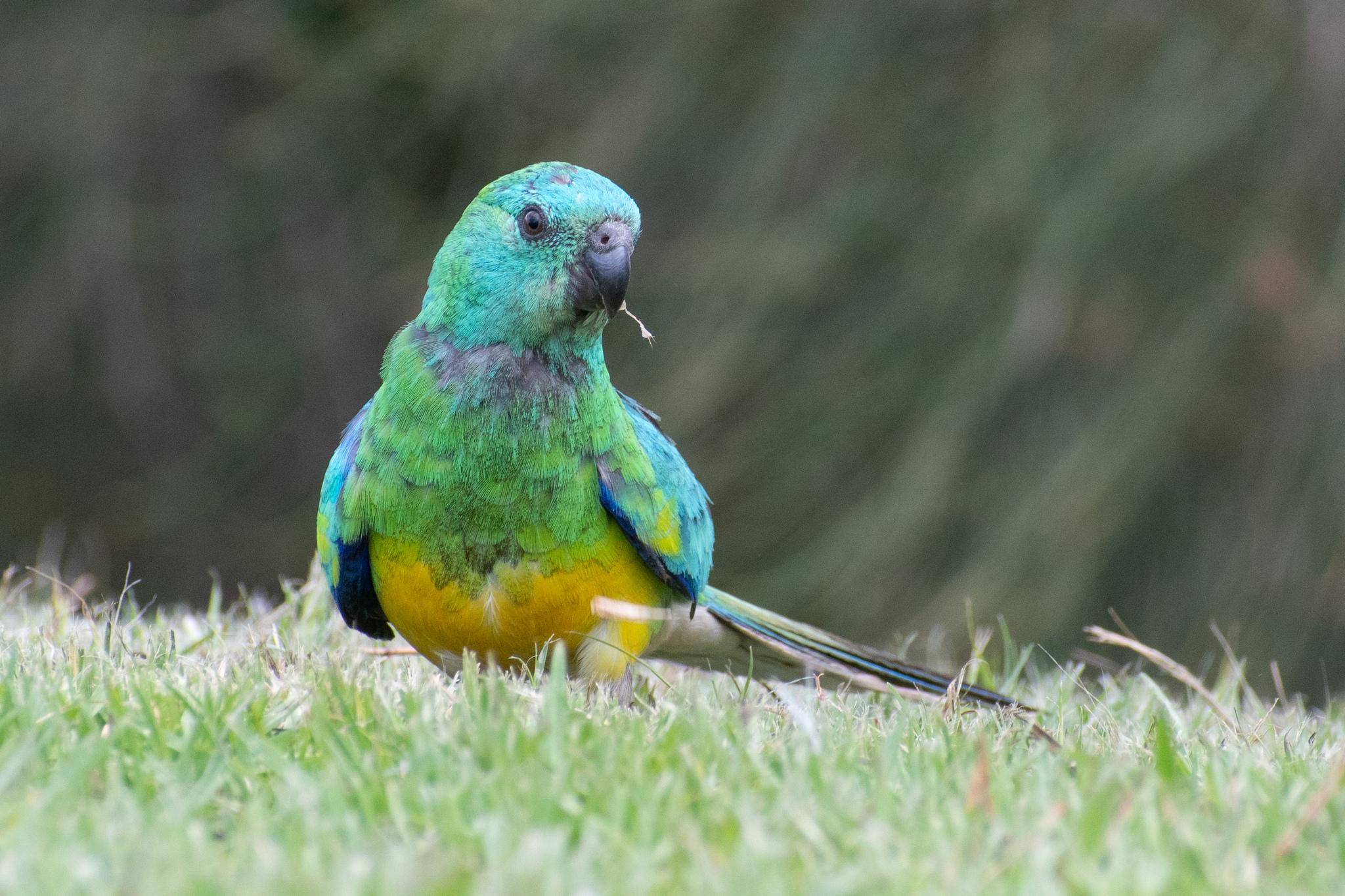 Red-rumped ParrotThese two are probably partners for life. Red-rumped parrots mate for life.
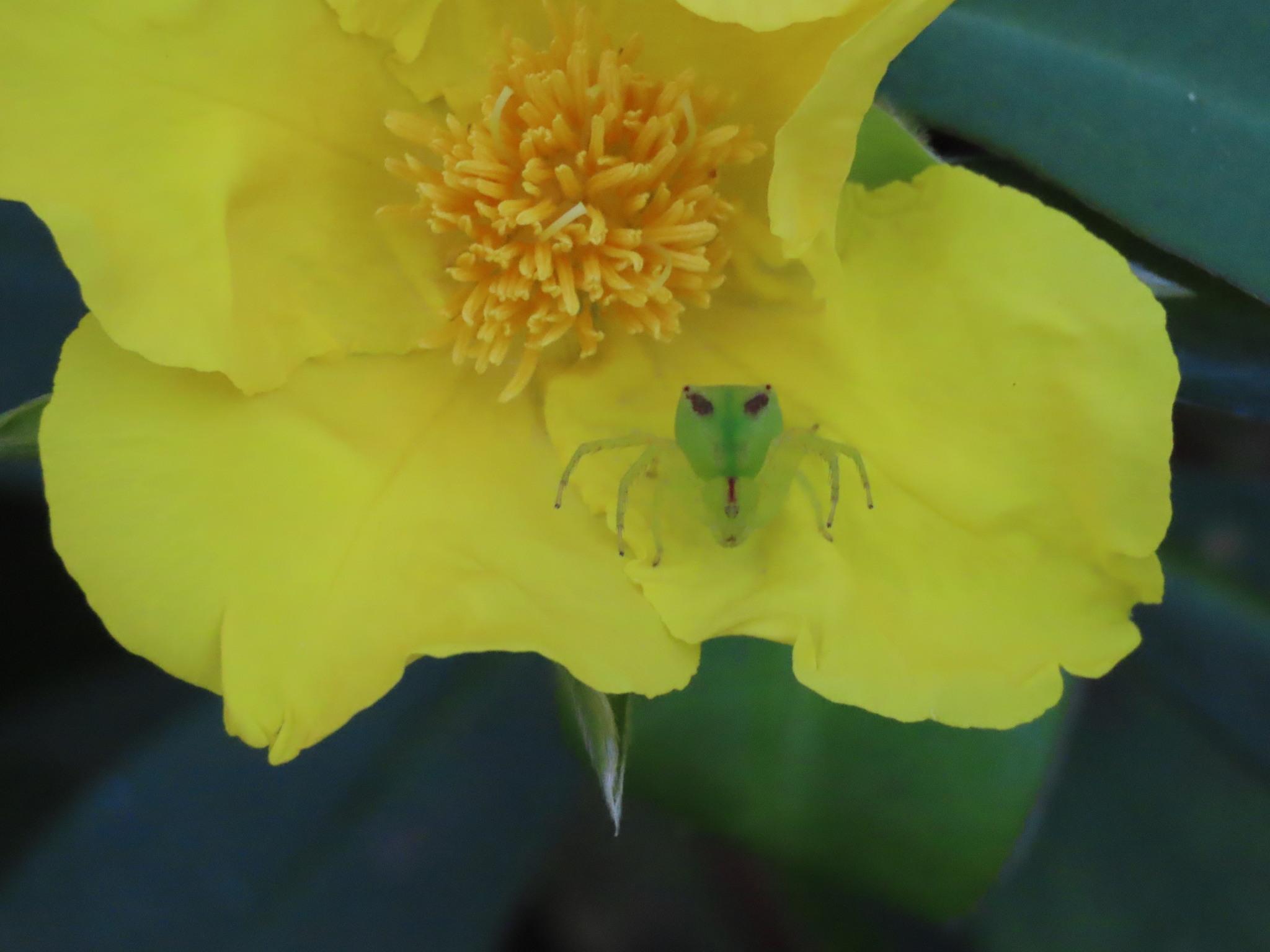 Red-tipped Crab SpiderThis spider hunts by doing almost nothing. Crab spiders sit and wait.
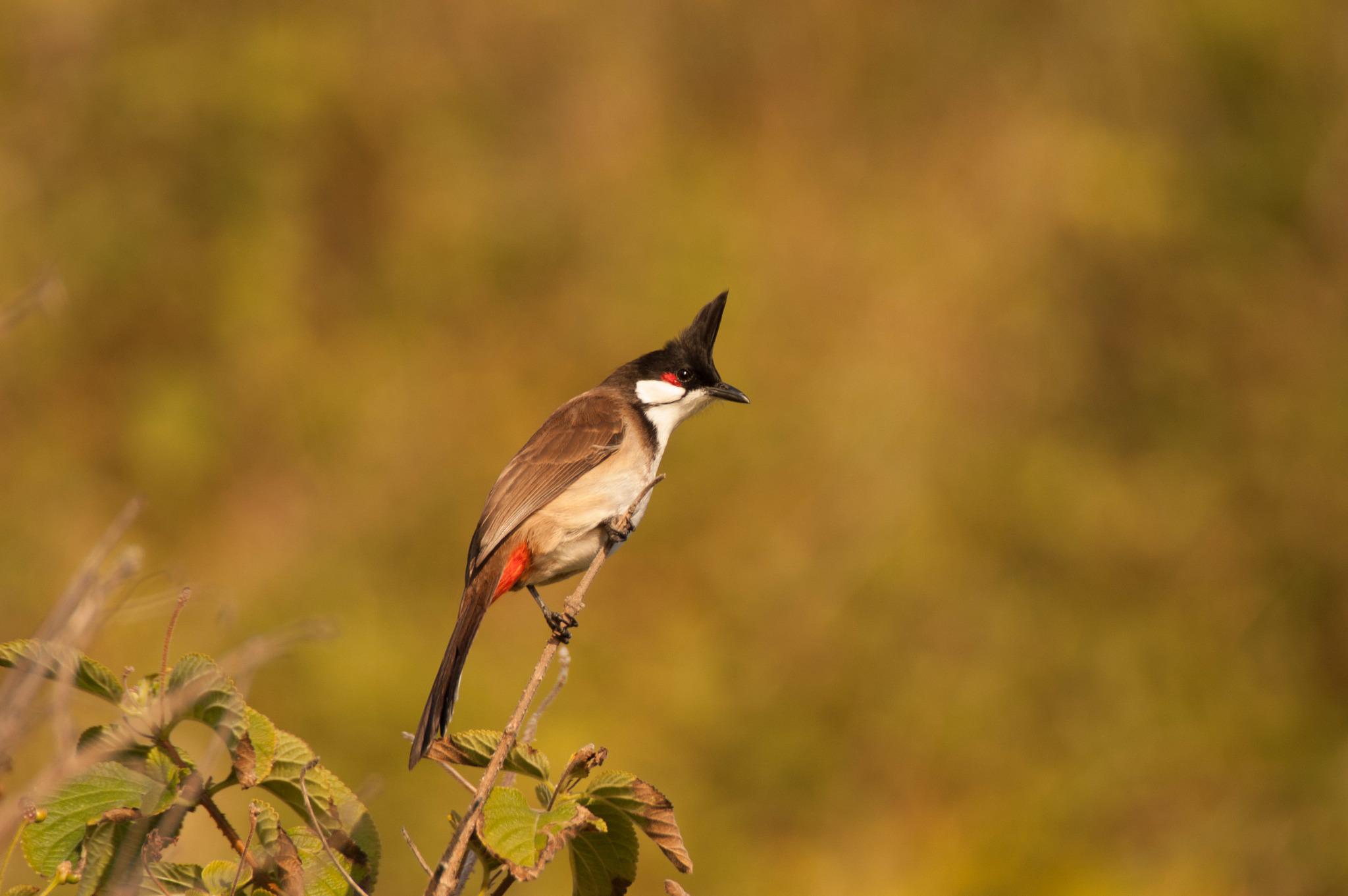 Red-whiskered BulbulWith its pointed black crest and red cheek patch, this bird looks like it's from somewhere else. It is.
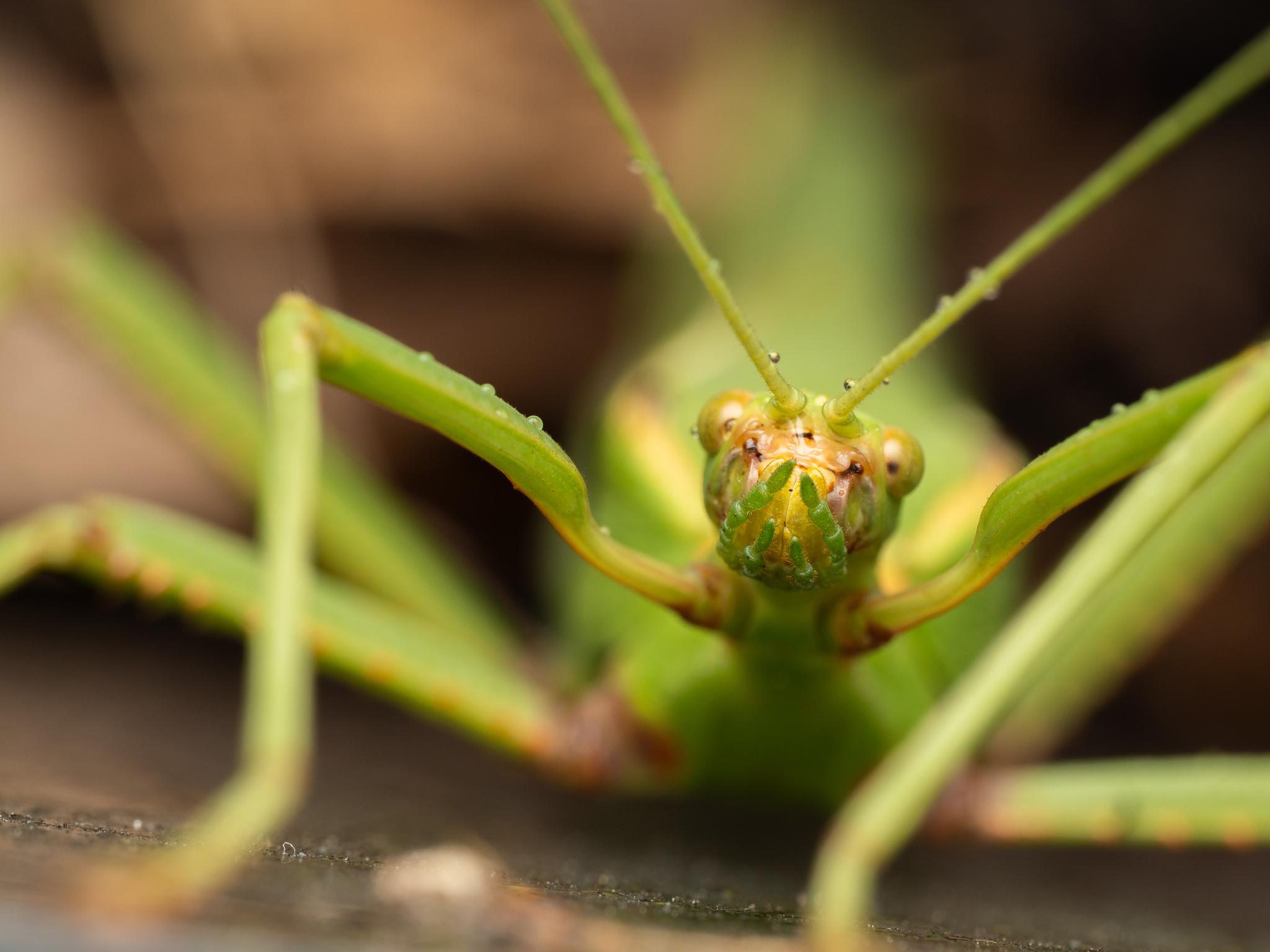 Red-winged Stick InsectA stick insect is a lie told with a whole body: green or brown, still as a twig. This one is hiding a second lie.
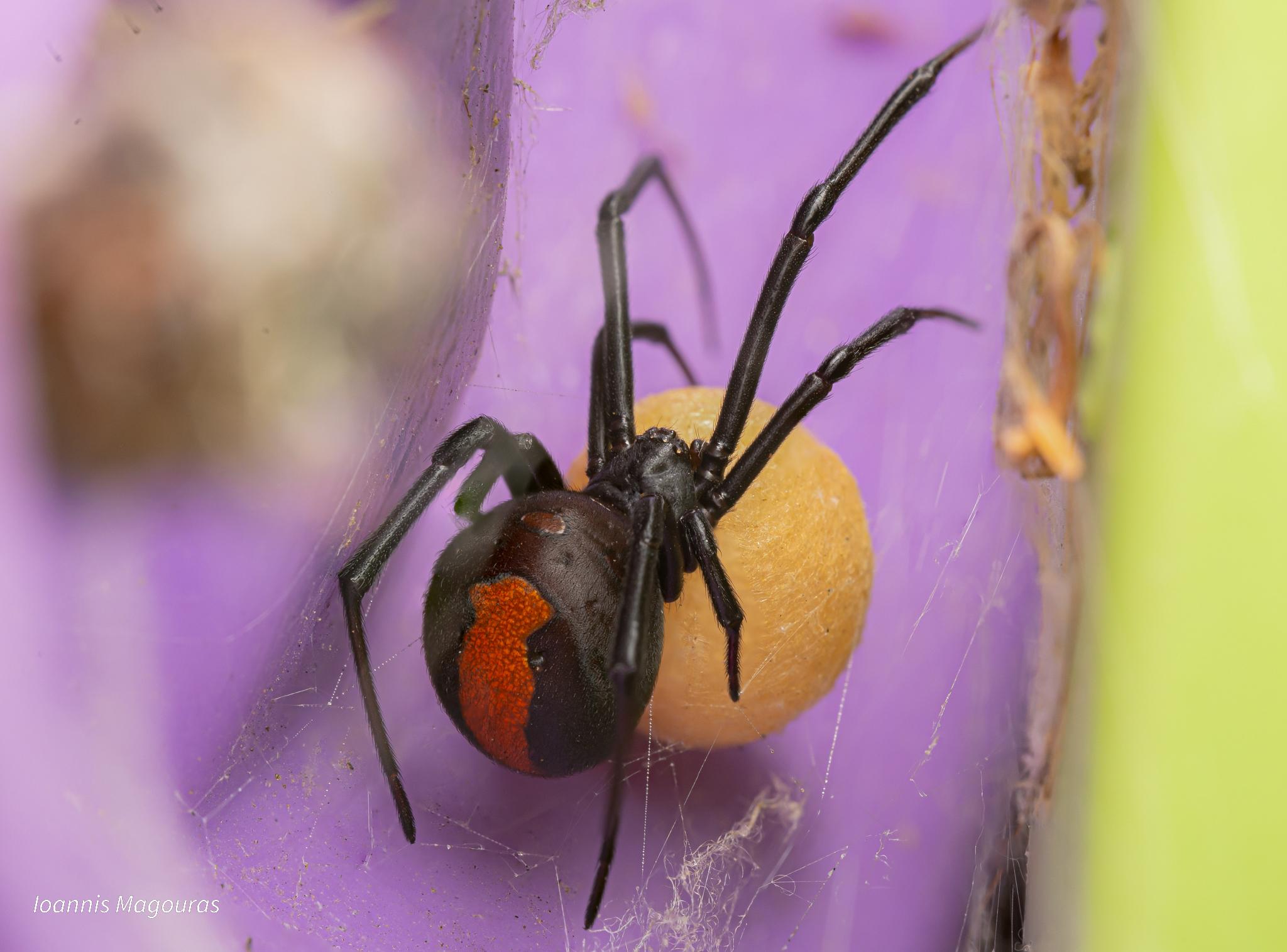 Redback SpiderTo mate, the tiny male redback stands on his head and somersaults his abdomen towards the female's mouth. She starts squirting digestive juices onto him while they mate.
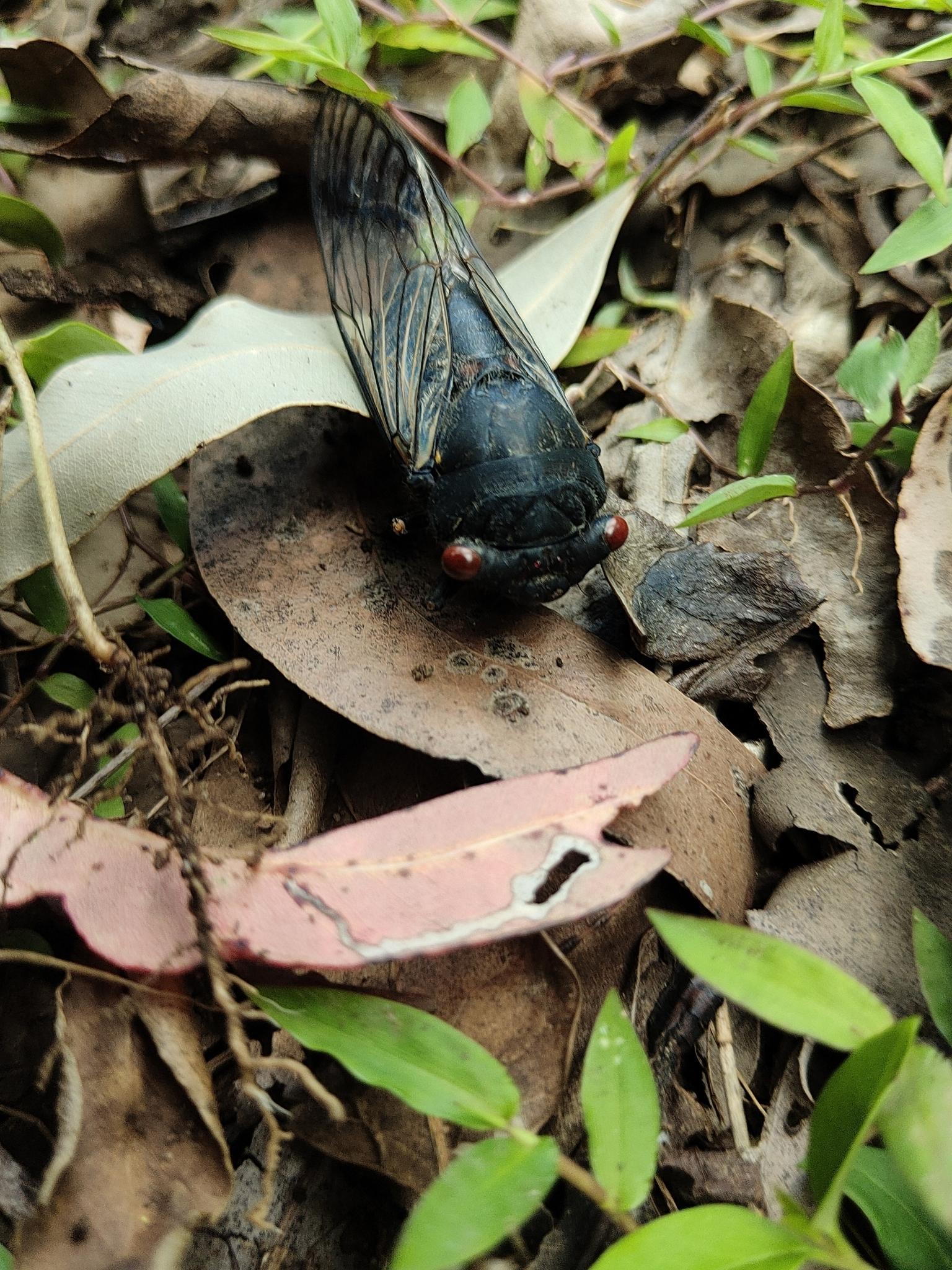 Redeye CicadaUnder trees where redeye cicadas had gathered, Australian Museum scientists kept finding little "parcels" on the ground: clumps of smashed-up cicada, red eyes still dotted through. Something was eating them.
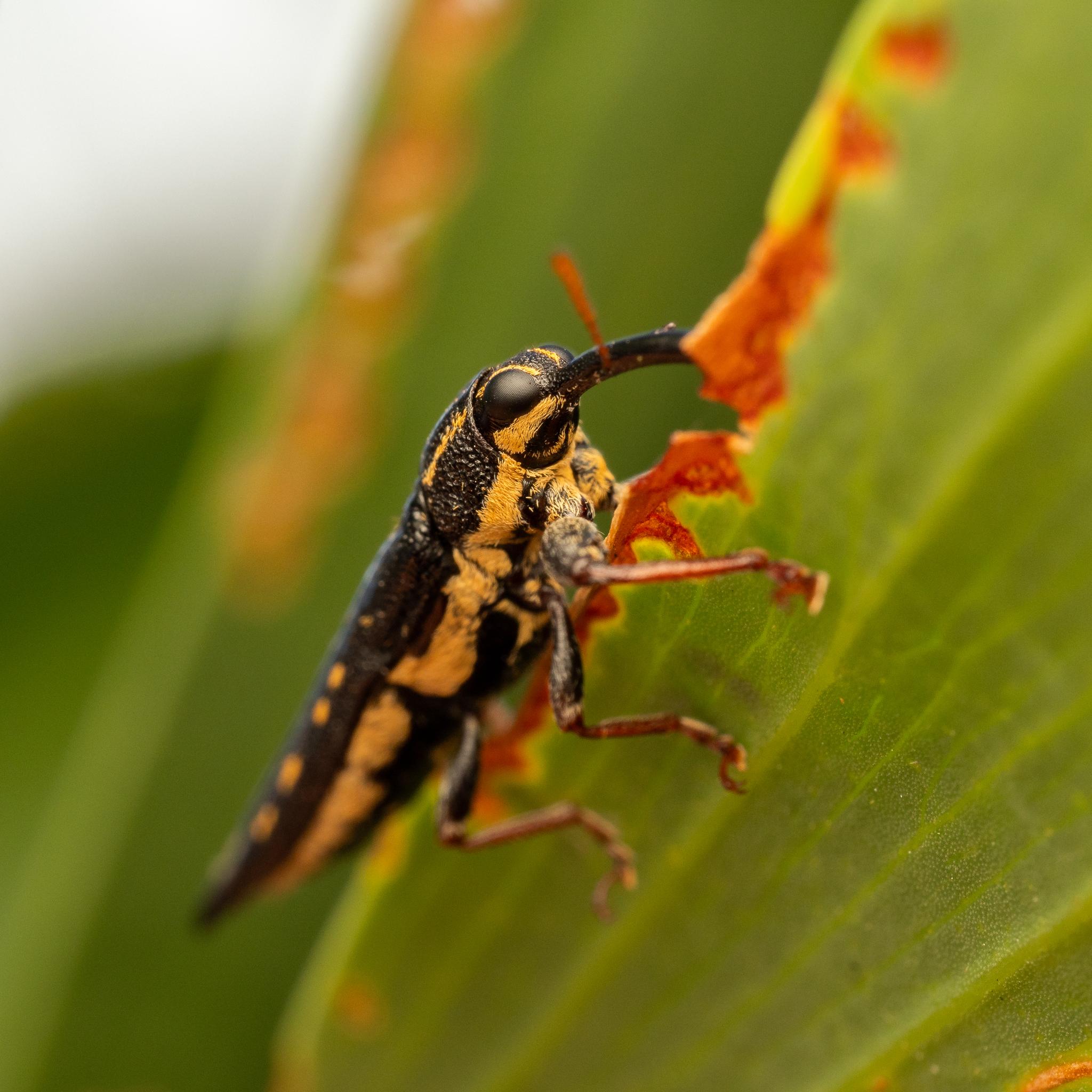 Rhinotia lineataThis slim weevil belongs to a big genus: *Rhinotia* has 87 described species, and they mostly feed on wattles. In Australia that's a good choice.
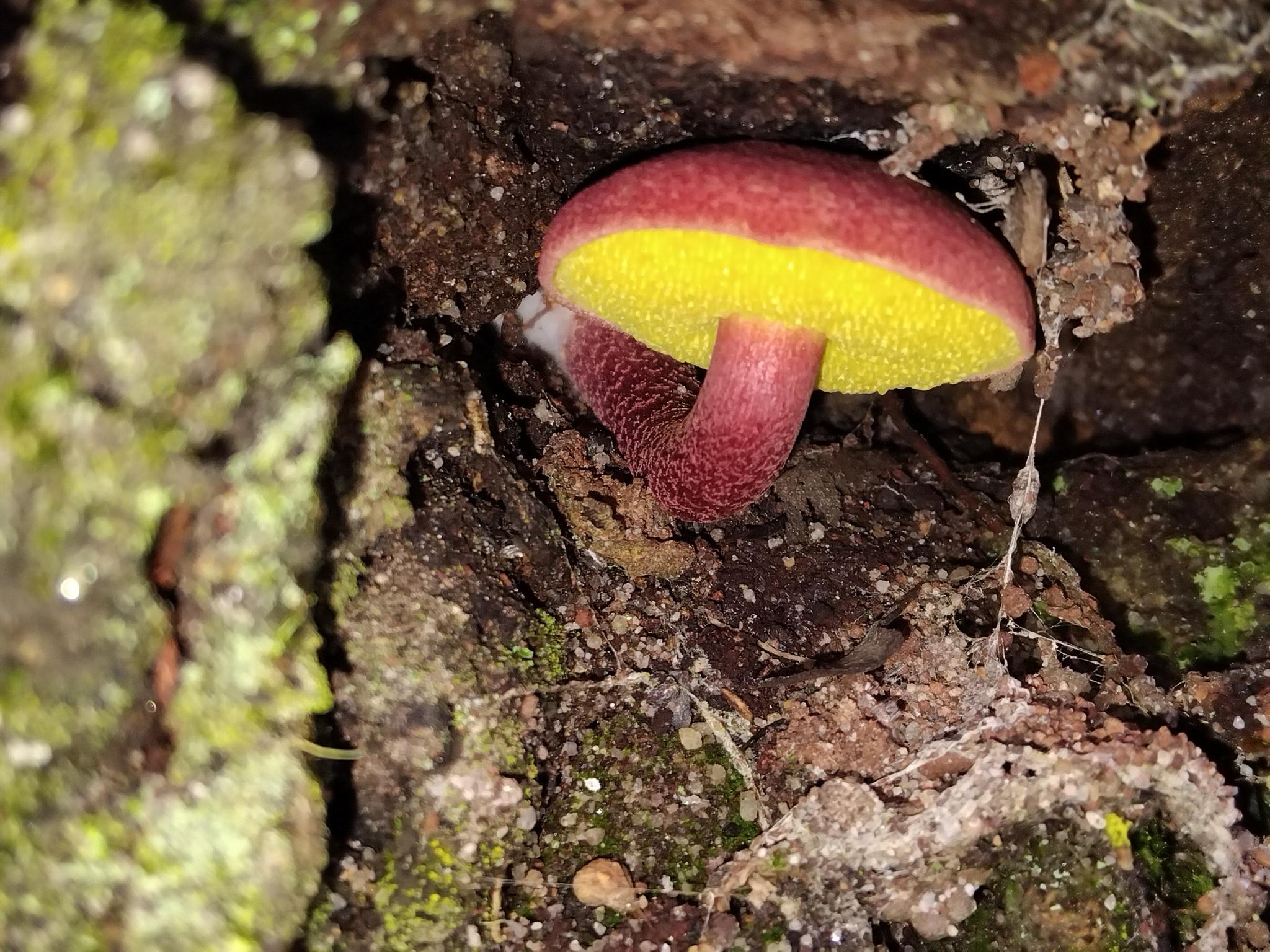 Rhubarb boleteBrilliant red on top, bright yellow underneath. As it ages, the cap darkens, dries and splits, and bright yellow flesh shows through the cracks.
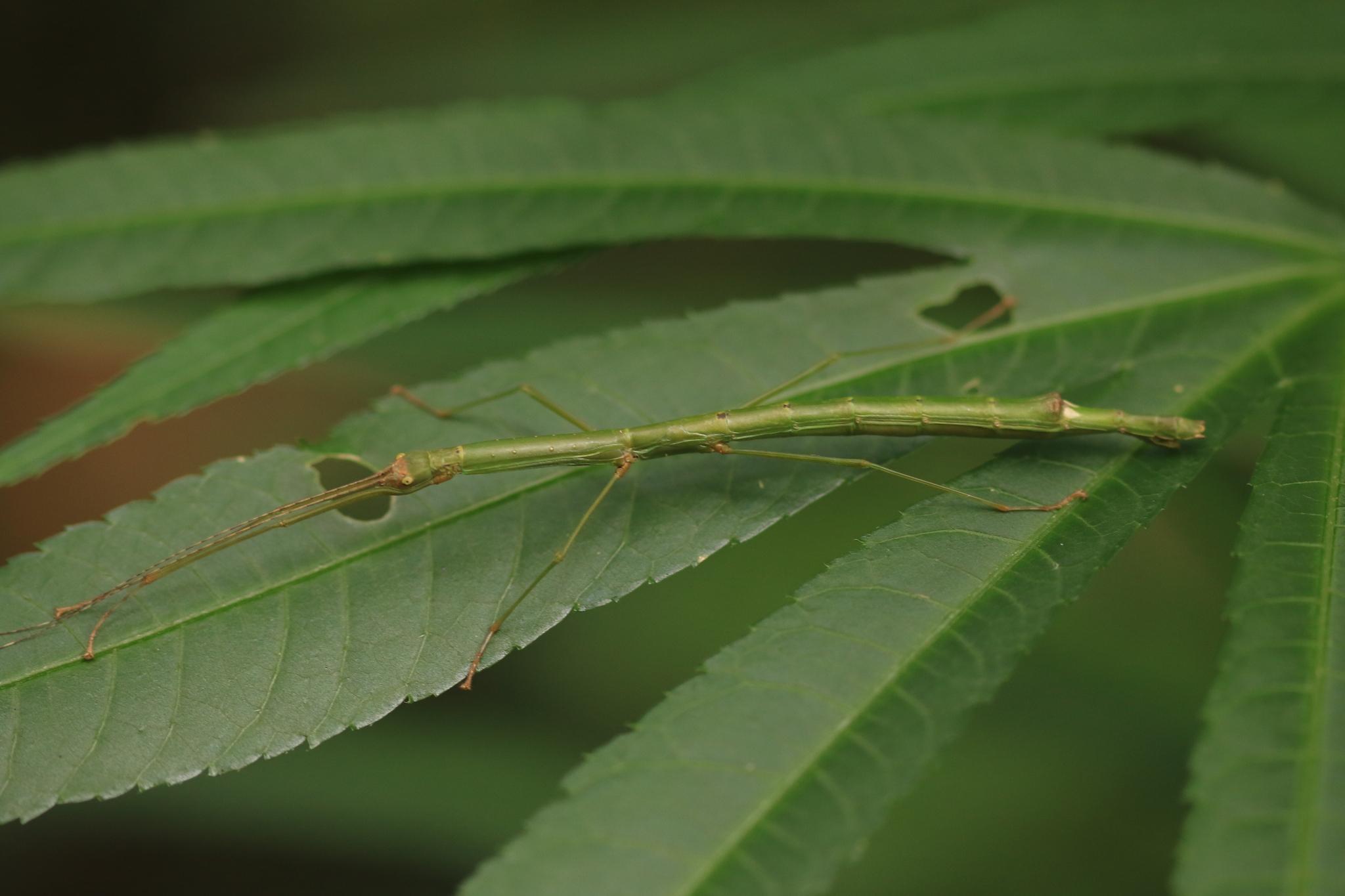 Richmond River Stick InsectA stick insect's disguise doesn't stop at its body. Many stick insects lay eggs that look like seeds, and perhaps this one does too.
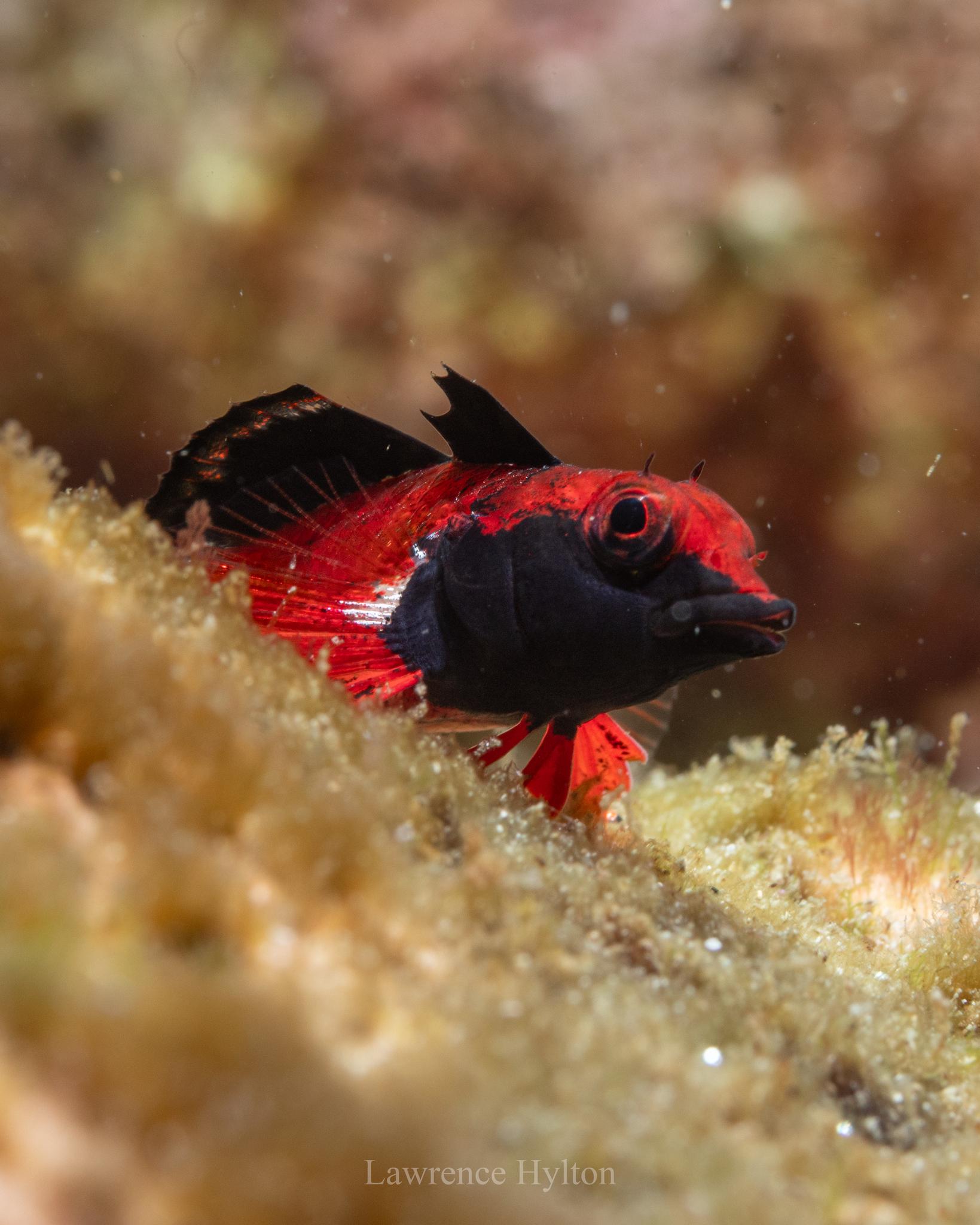 Ringscale ThreefinThe ringscale threefin is a fish small enough to sit on a fingertip, and the males look masked: reddish-orange, with a black head. Triplefins are named for the three fins along their backs.
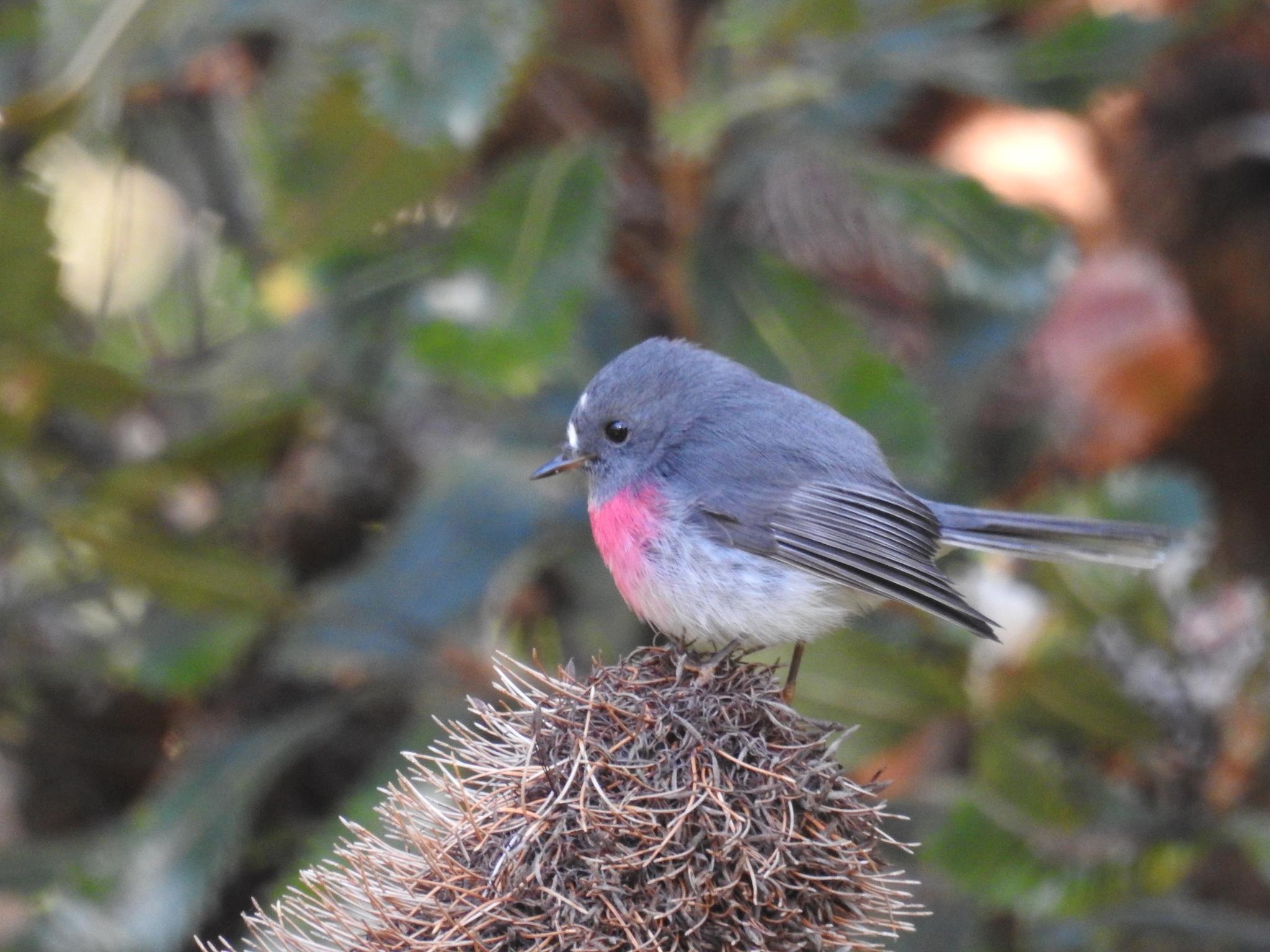 Rose RobinIt weighs about 8 grams, and it hunts in the air: the most acrobatic of the red robins, snatching flying insects high in the trees. Its nest is a cup of green moss, disguised with lichen.
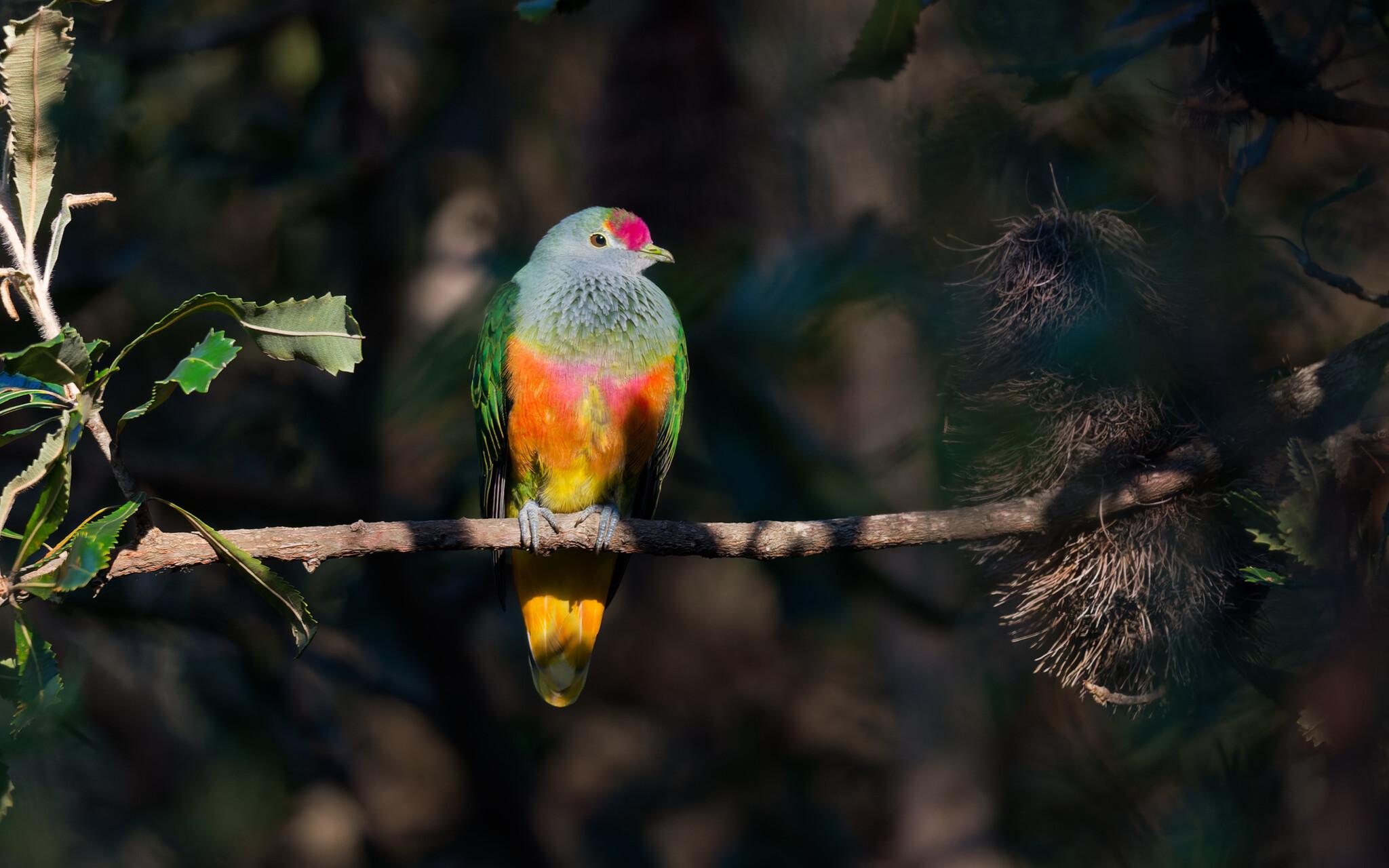 Rose-crowned Fruit DoveThis little rainforest pigeon, green with a rose-pink cap, is a long way south. Its home forests end well north of Sydney.
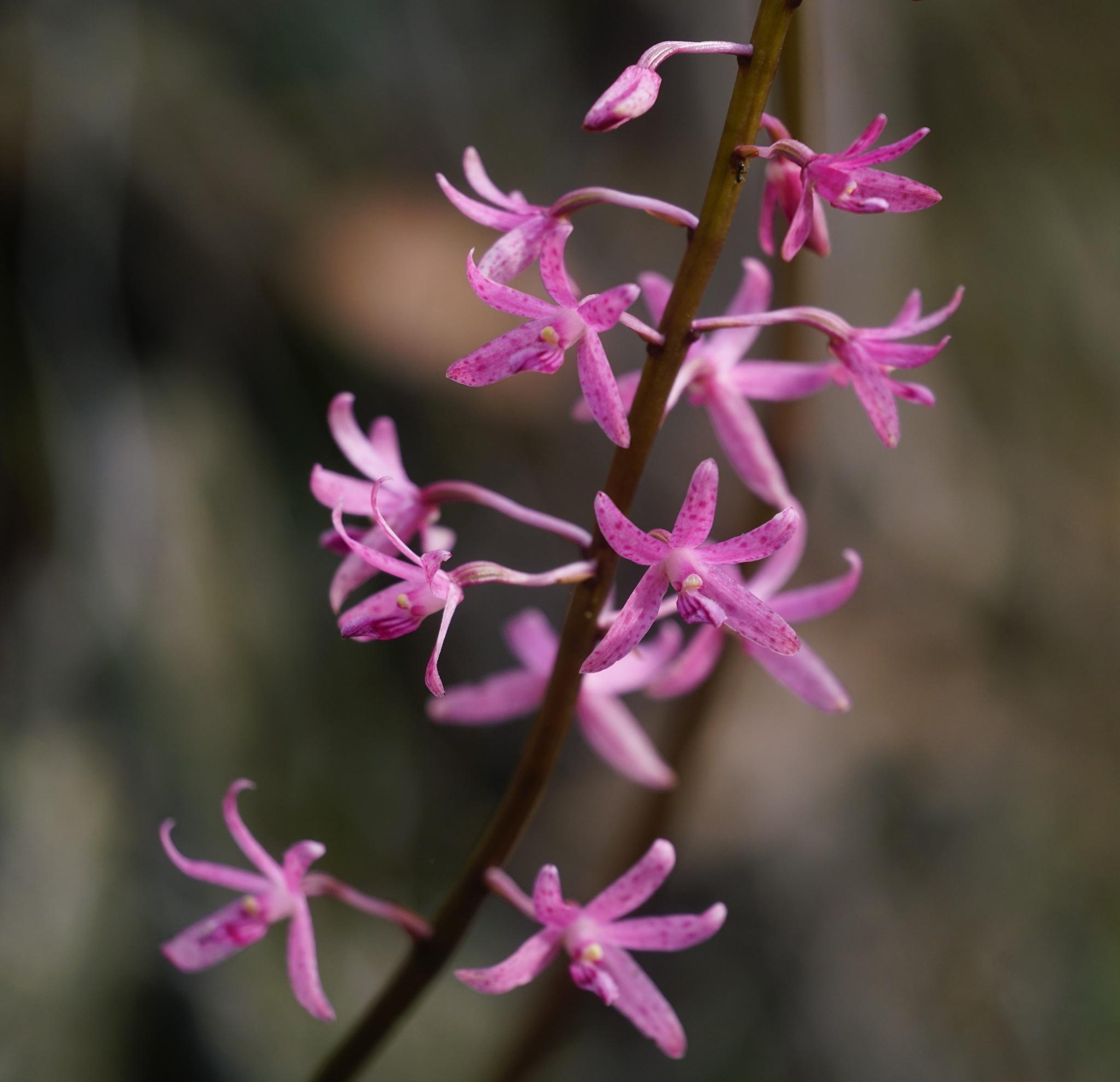 Rosy Hyacinth OrchidThe rosy hyacinth orchid has no proper green leaves. Like its relatives, it's thought to feed on fungi in the soil, tapping the same underground network the gum trees around it use.
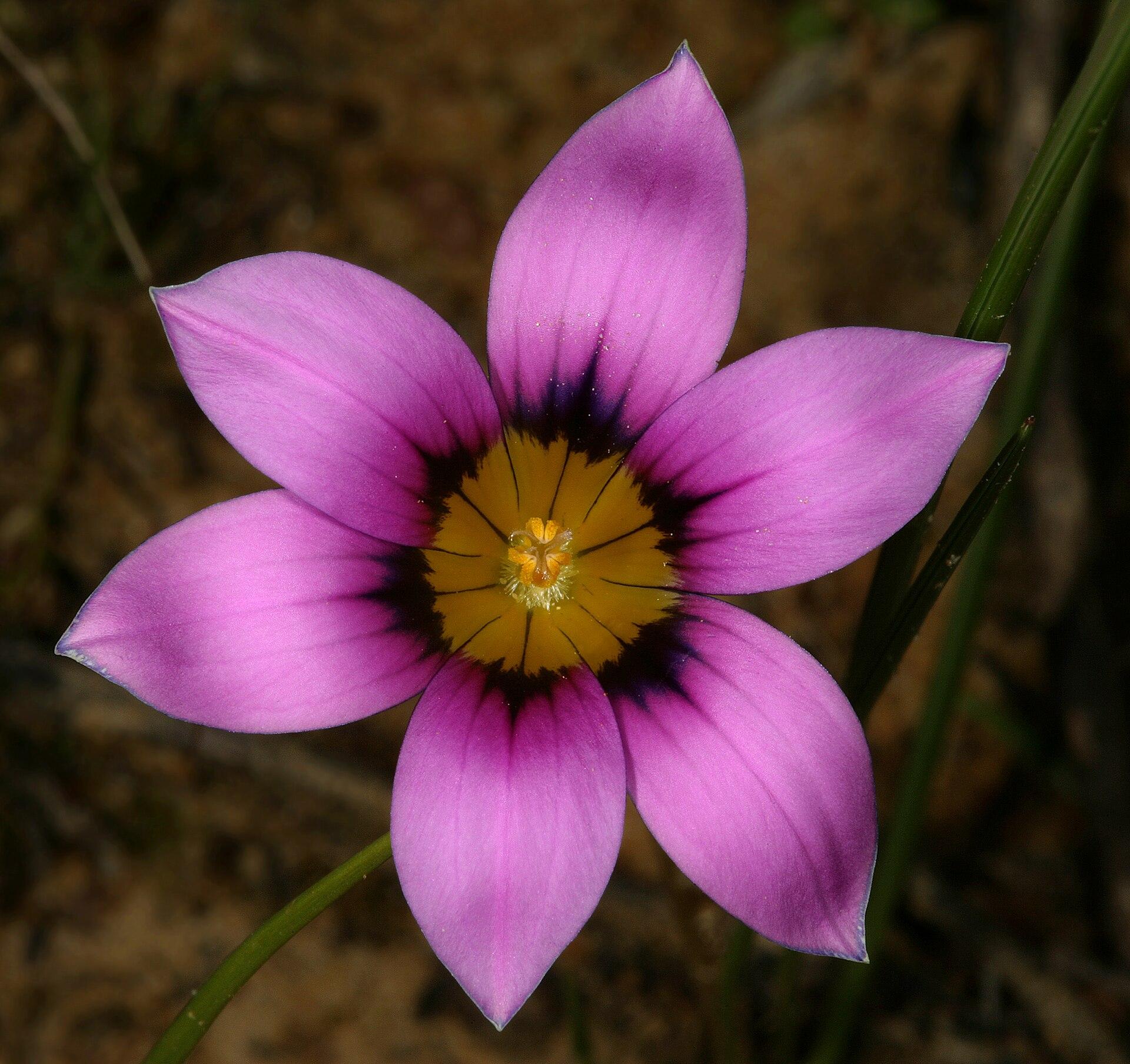 Rosy sandcrocusThe rosy sandcrocus is nearly impossible to pull up. Tug the leaves and they snap off at the top of its corm, a bulb-like underground stem that can sit as deep as 20 centimetres.
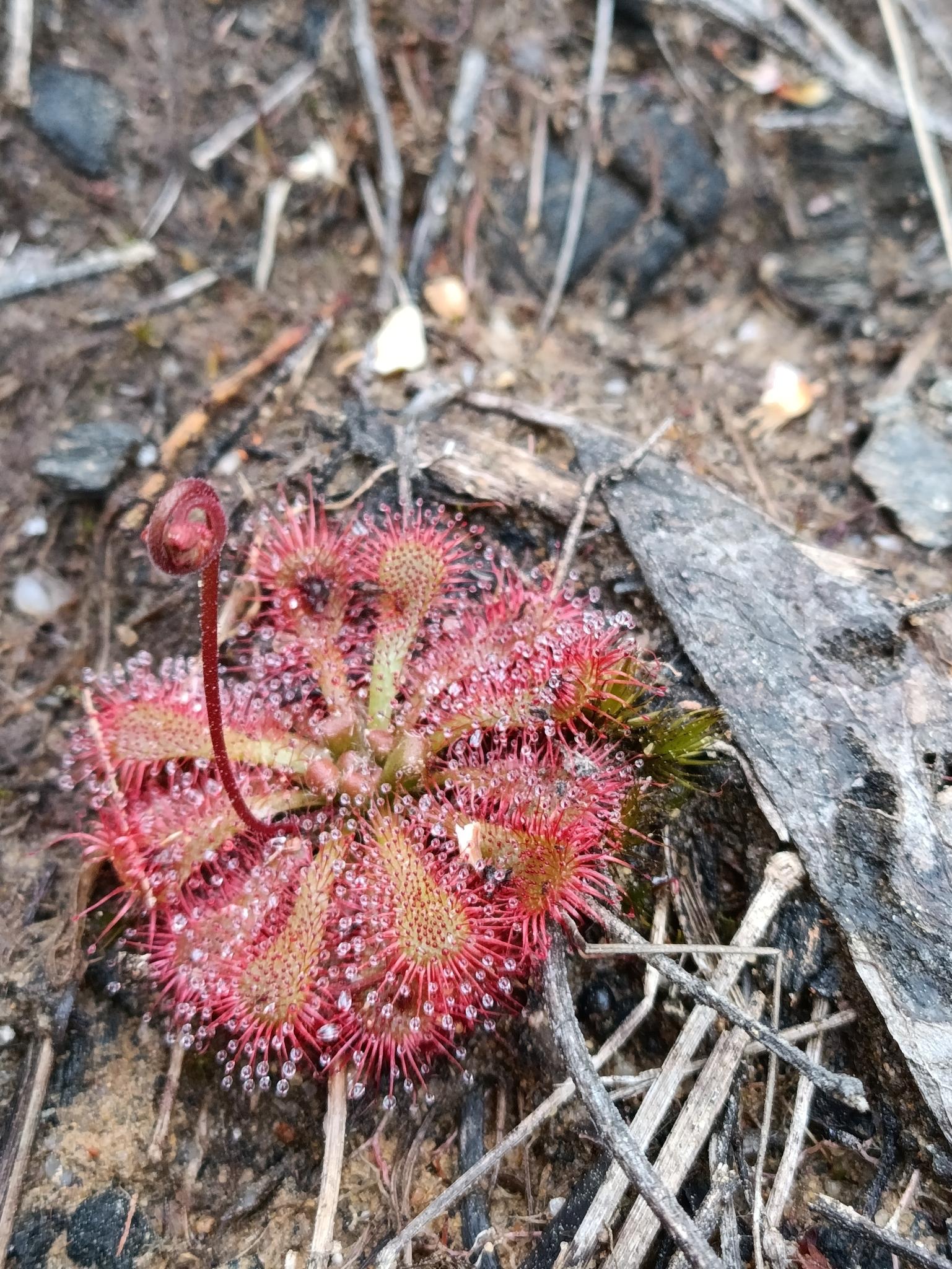 Rosy SundewA rosy sundew is a trap. Its leaves are covered in stalked glands, sticky tentacles that bend in to hold an insect and digest it.
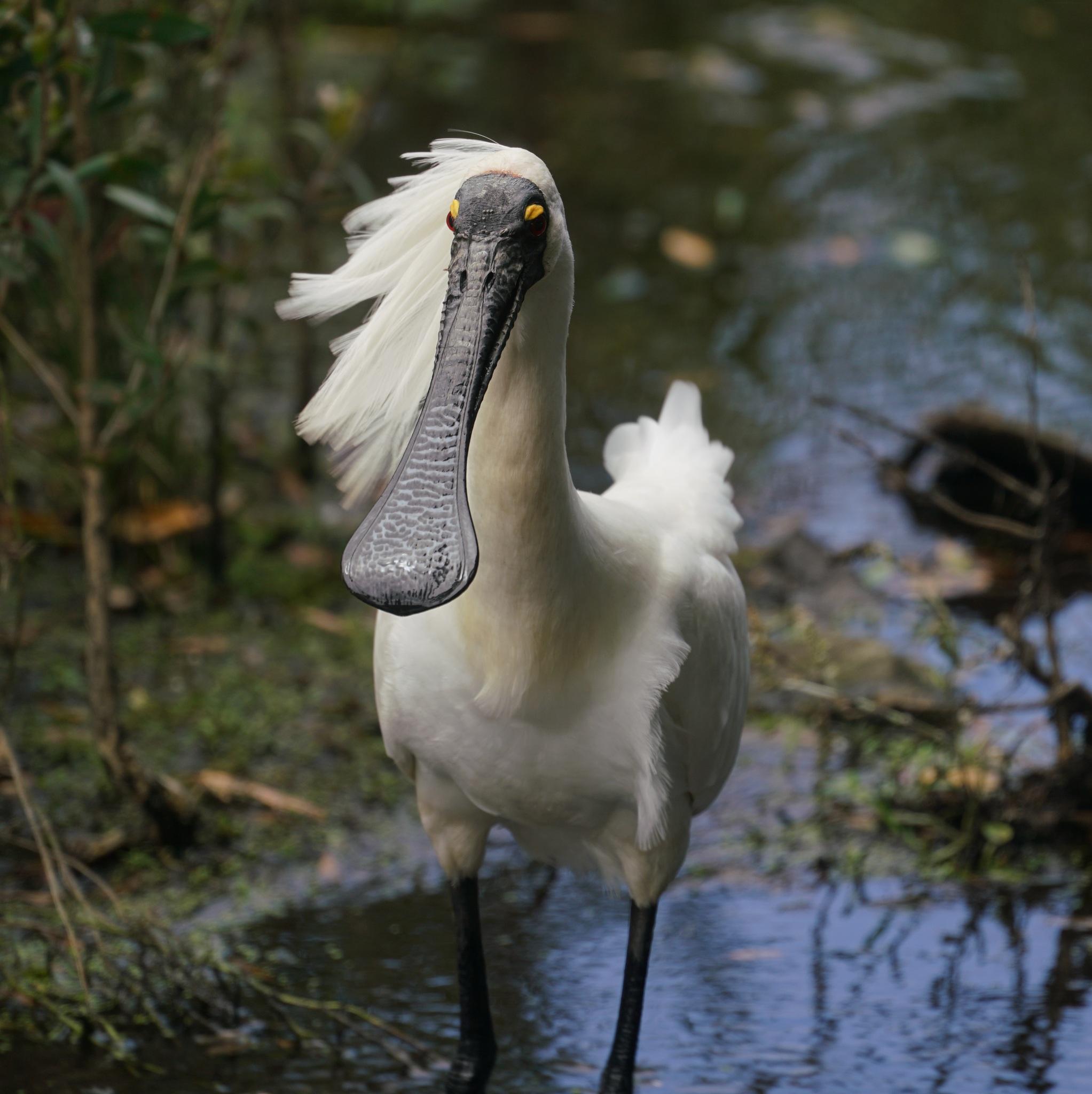 Royal SpoonbillIt isn't looking for its food. It sweeps its open bill from side to side through water less than 40 cm deep, and feels for it.
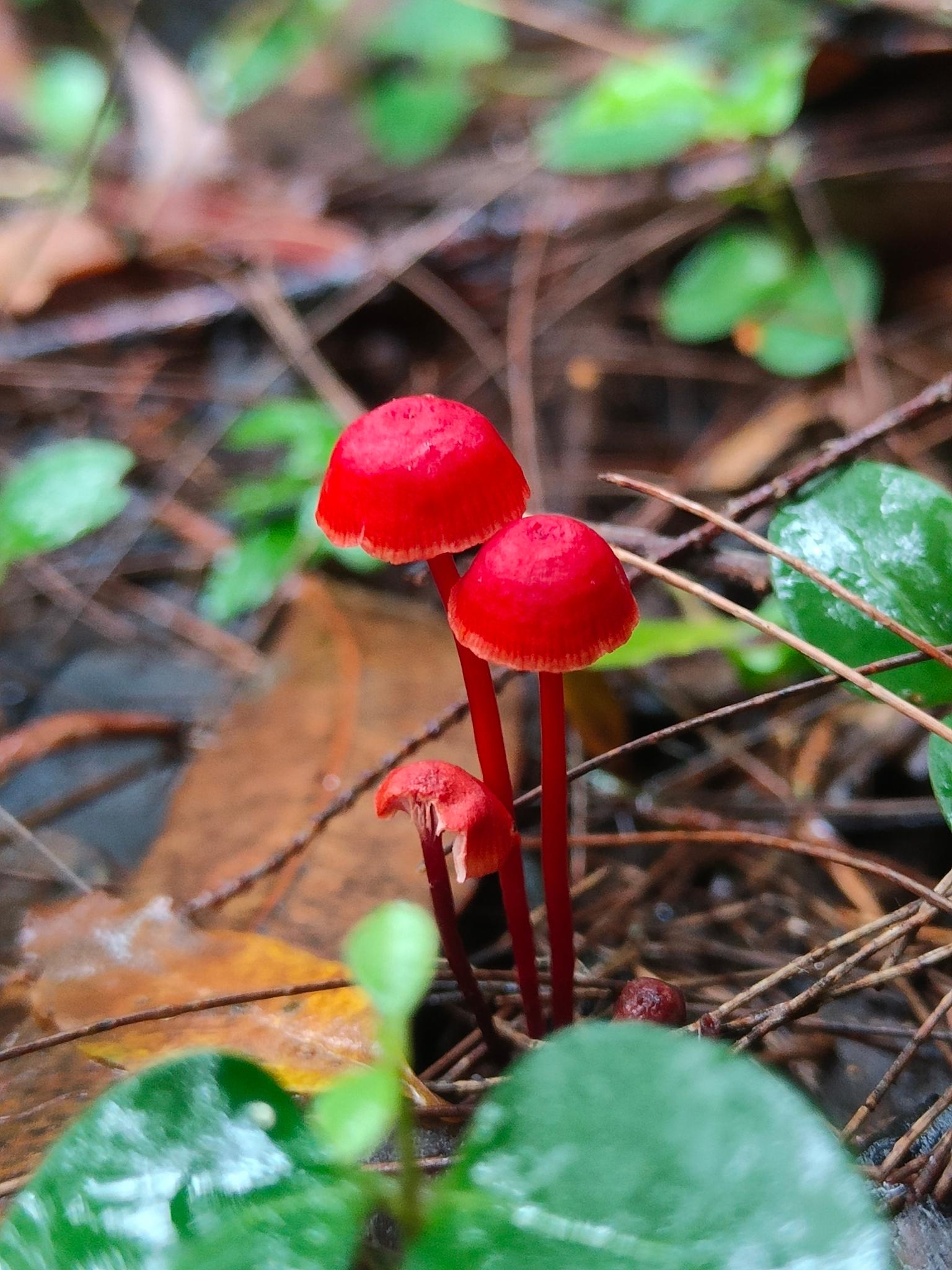 Ruby bonnetIt's tiny and blood red, and slimy all over: on very fresh ones, blobs of goo sit on the stem. It came up after good rain.
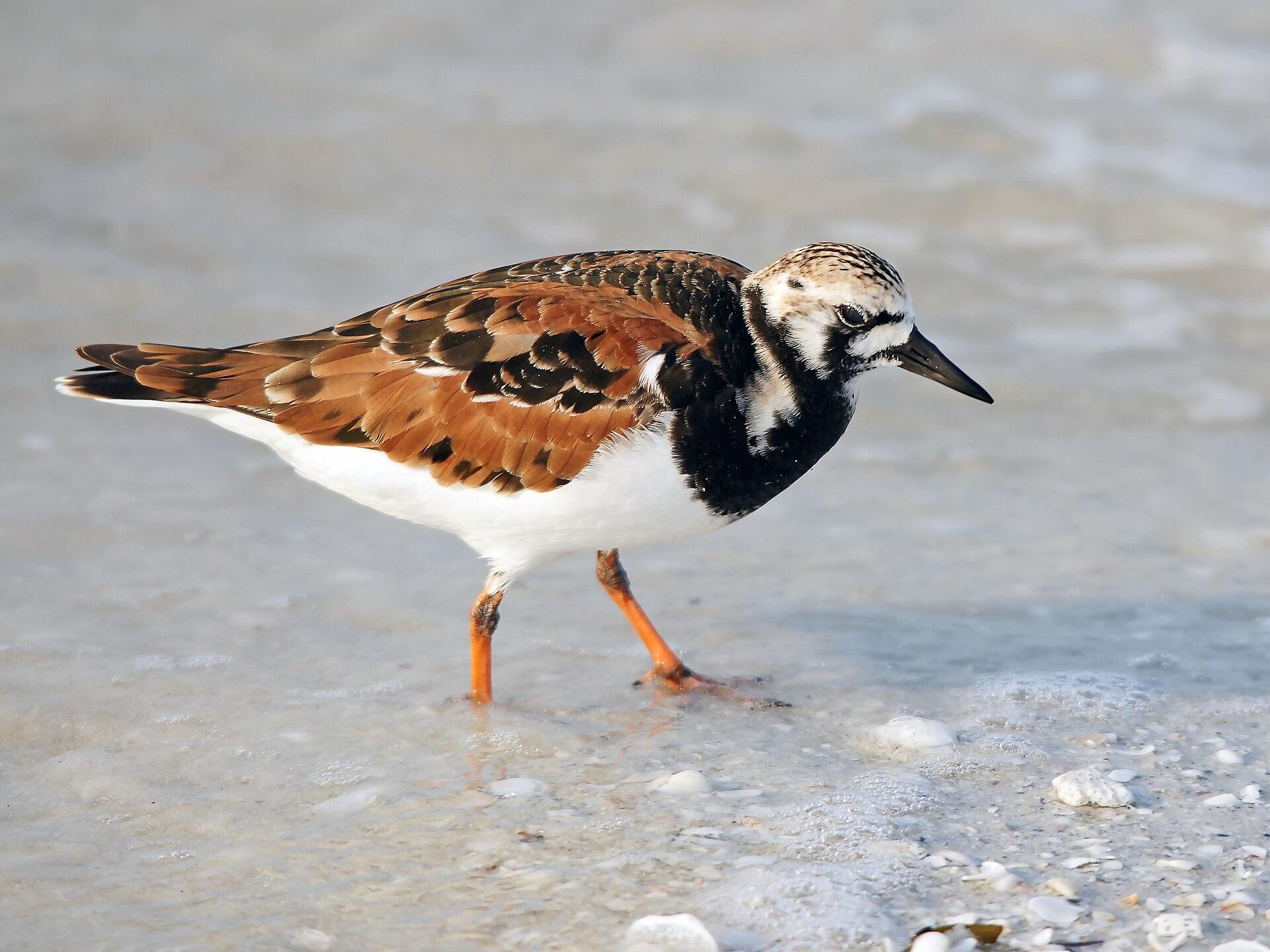 Ruddy TurnstoneThe small mottled bird working the rock platform is a ruddy turnstone, and it does exactly what its name says. It flips stones and seaweed with its wedge-shaped bill and grabs the sand-hoppers hiding underneath, stone after stone, all morning.
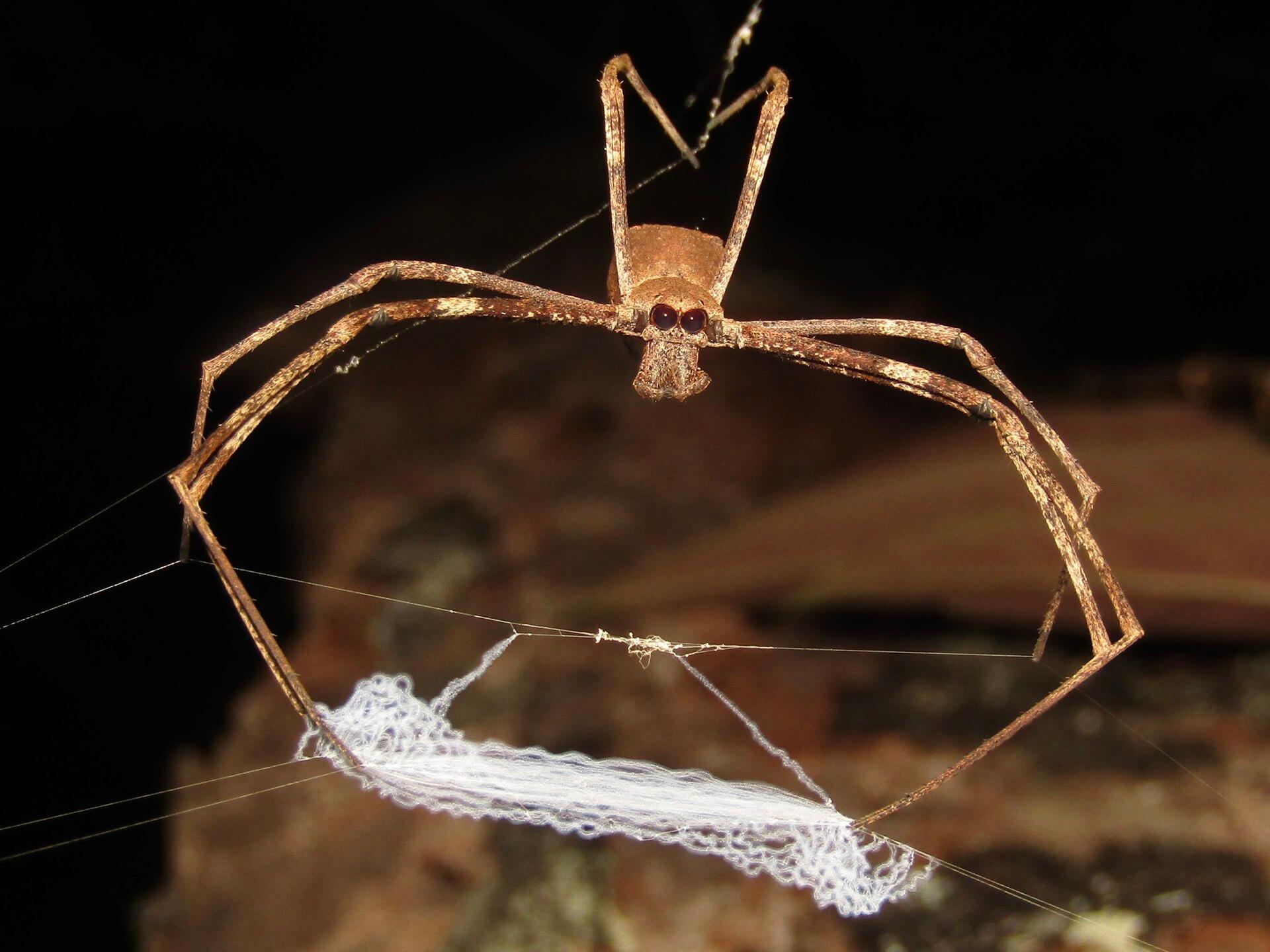 Rufous Net-casting SpiderThose two huge eyes gather light better than a cat's or an owl's. Their lenses have an f-number of 0.58, against 0.9 for a cat and 1.1 for an owl.
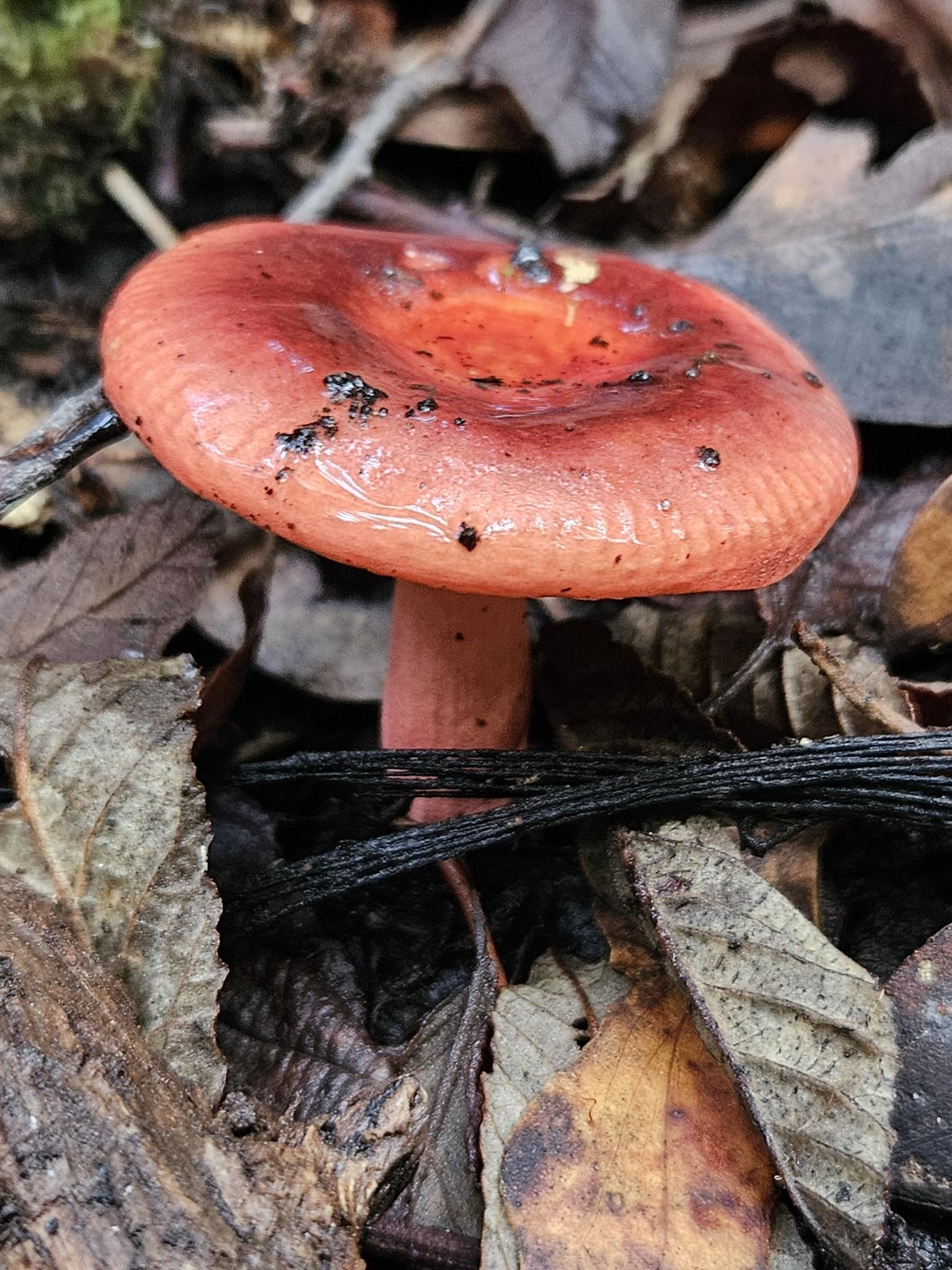 Russula clelandiiThis mushroom is only the tip. Like other Russulas, the fungus it belongs to lives mostly out of sight, as threads wrapped in a dense sheath around the young roots of trees.
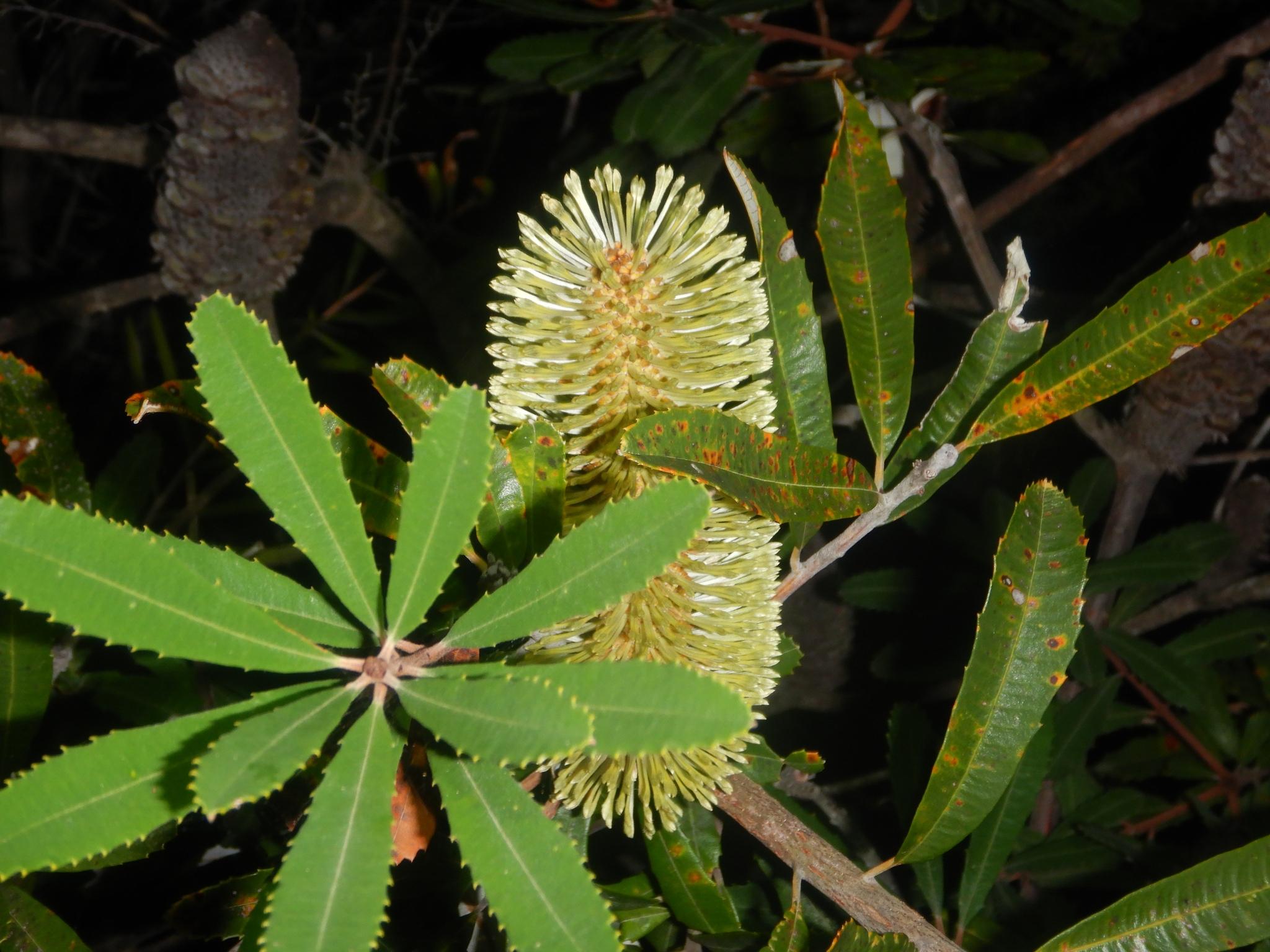 Rusty BanksiaThis banksia is in no hurry. A seedling may take more than 17 years to flower for the first time, and one study says more than 23.
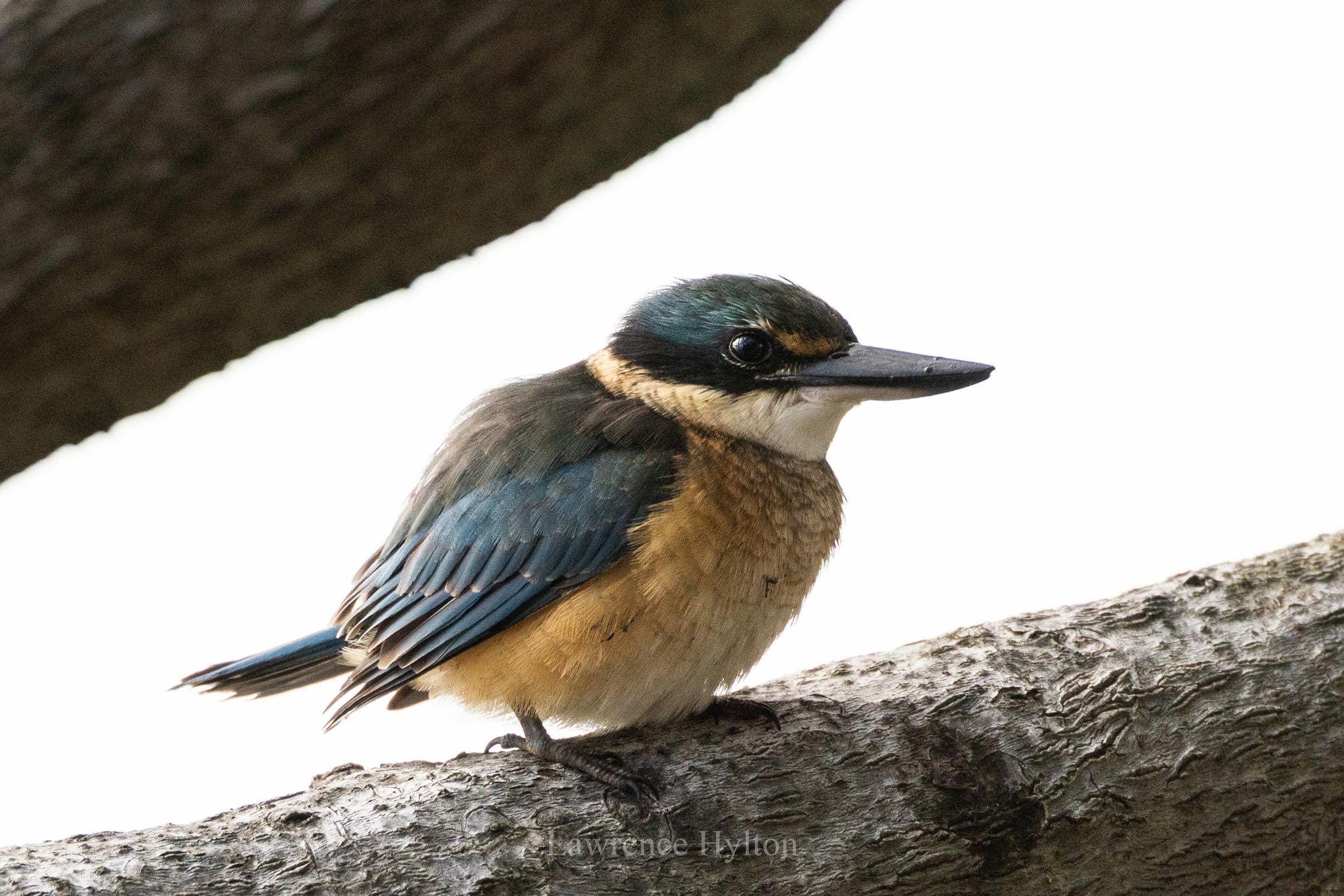 Sacred KingfisherDespite its name, the sacred kingfisher on that low branch isn't watching the water. It hunts mostly on land, dropping onto lizards and insects below.
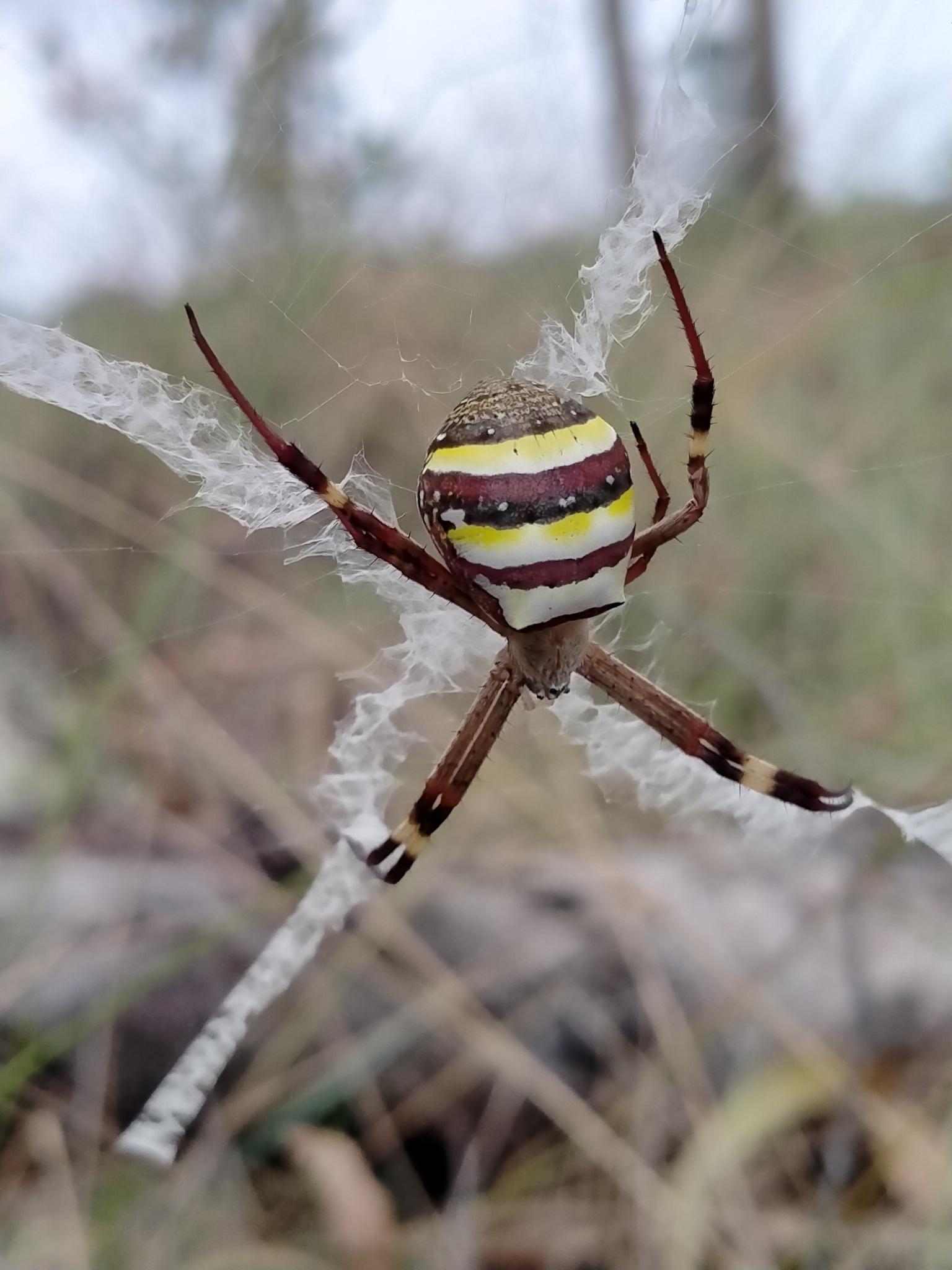 Saint Andrew's Cross SpiderWe named it for the cross in its web, after the X-shaped cross of Saint Andrew. But the cross isn't drawn for us.
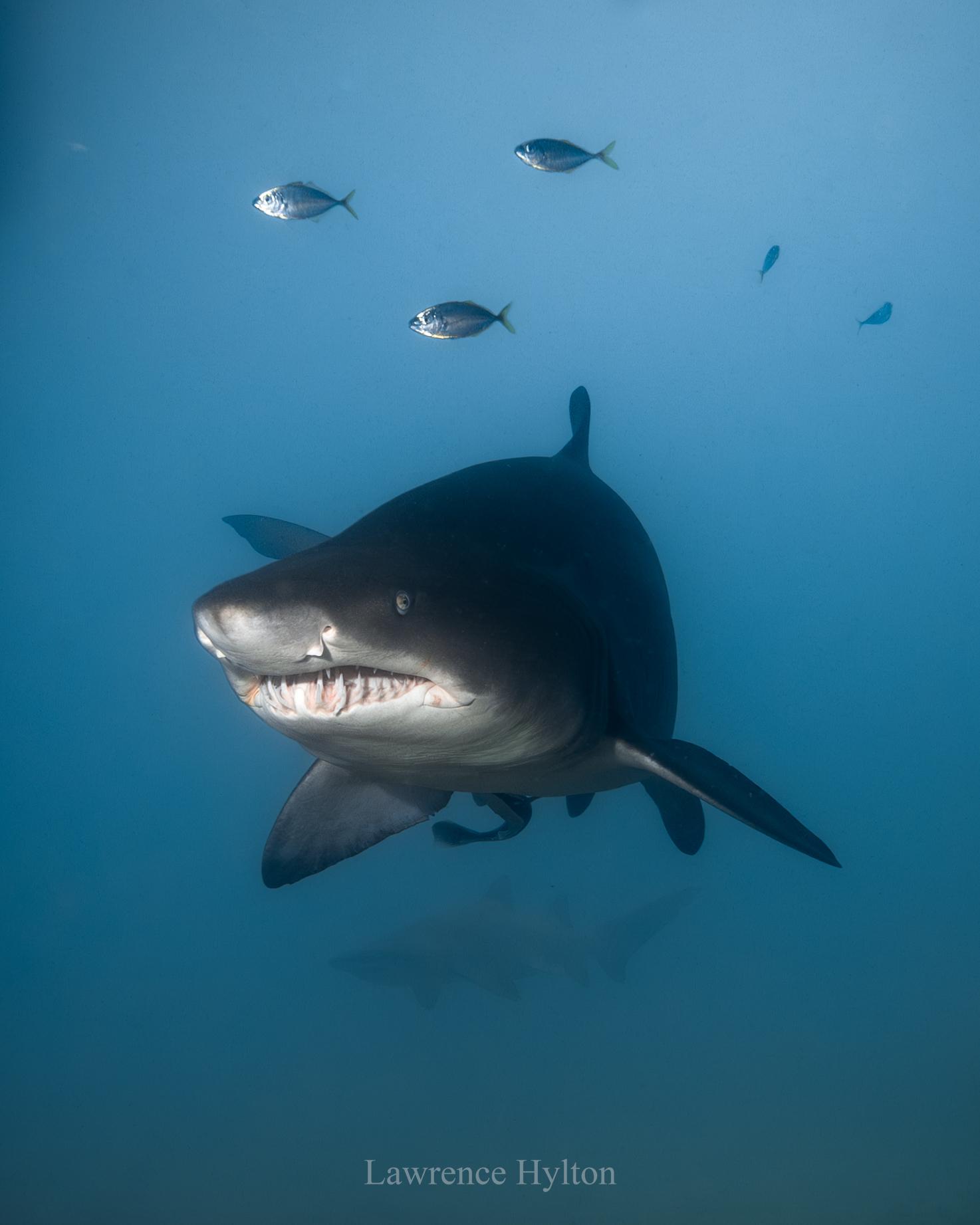 Sand Tiger SharkThe grey nurse shark hanging almost motionless in the water won its first fight before it was born. Inside its mother, the unborn pups hatch from their egg cases at about 55 mm long, then eat the unfertilised eggs around them, and their own brothers and sisters.
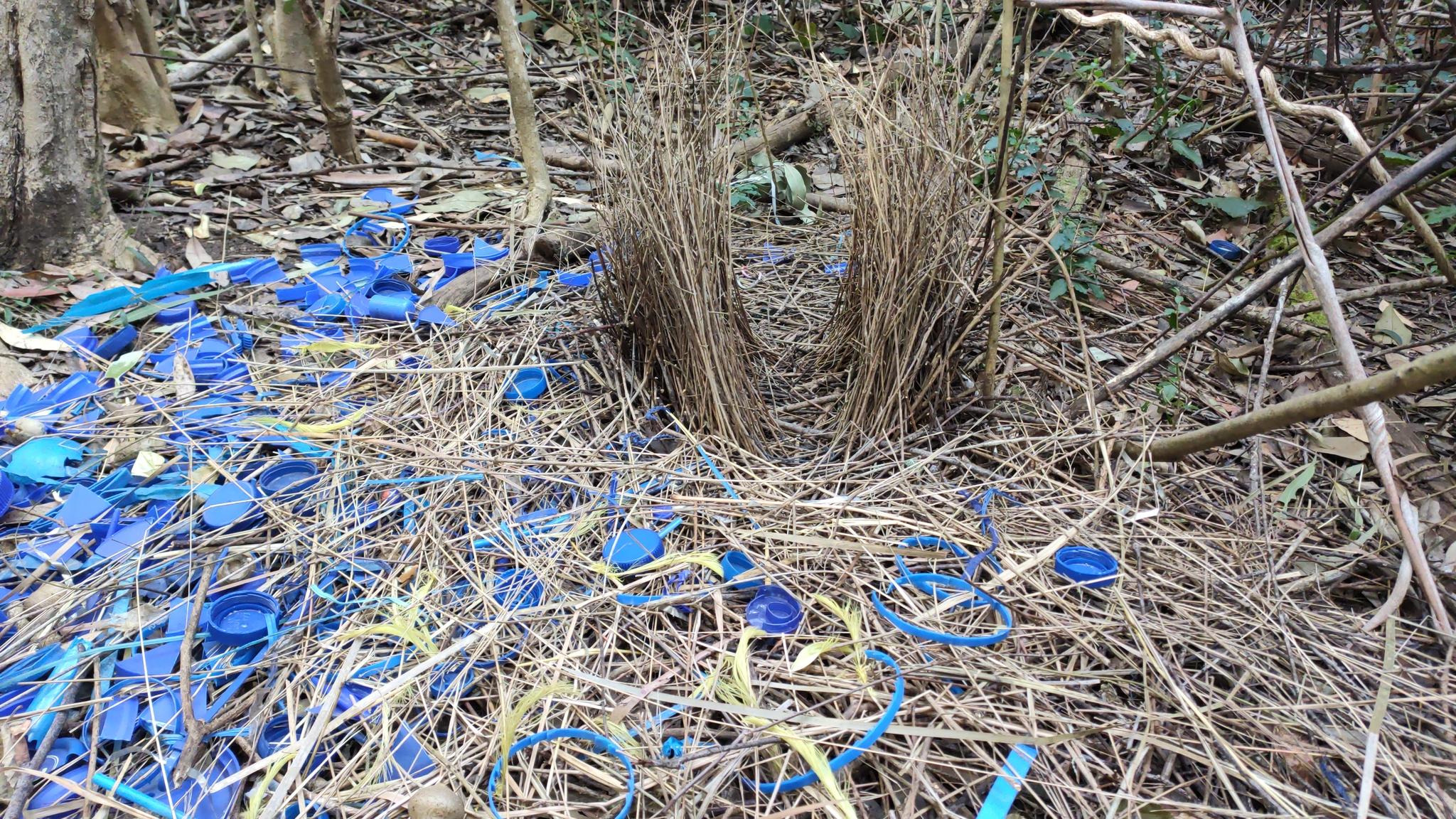 Satin bowerbirds building and decorating bowersLook at the ground in front of the bower, at the blue he's gathered: pegs, straws, bottle tops.
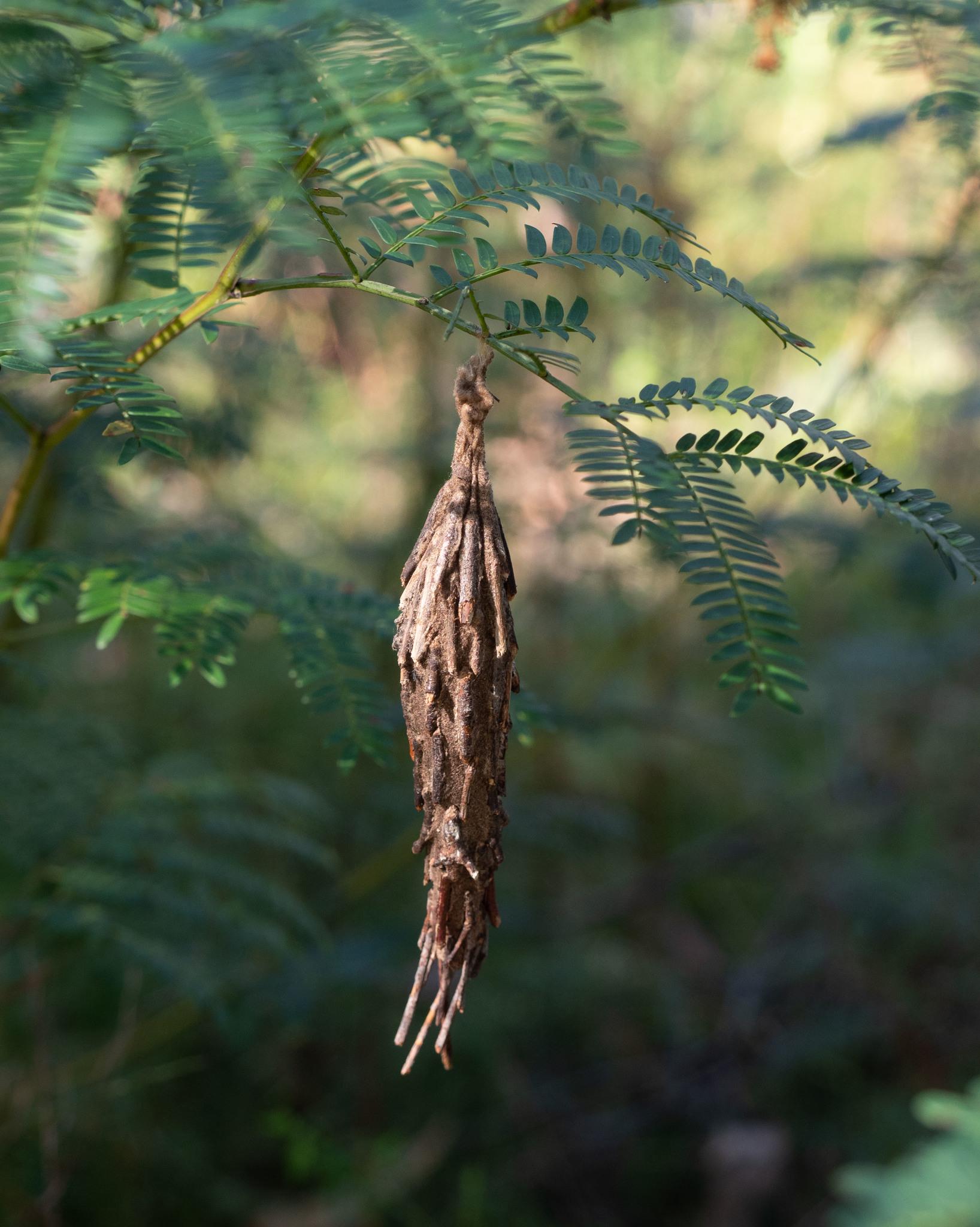 Saunders' Case MothThat bundle of twigs is a house, and the animal inside built it. The caterpillar spins a silk case and covers it, first with leaves, then with short twigs laid lengthwise, and drags it everywhere it goes.
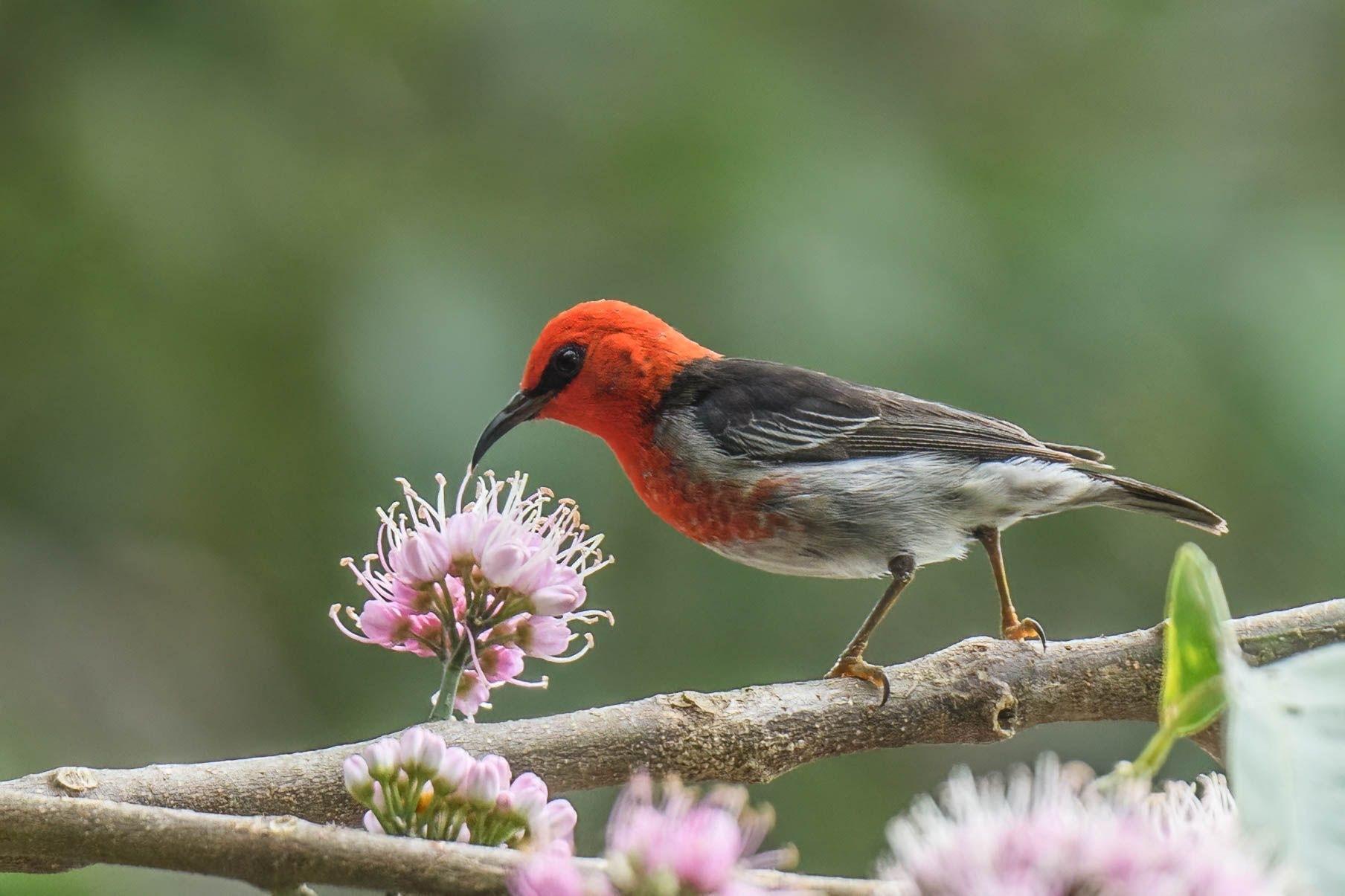 Scarlet MyzomelaA tiny bird in brilliant red, and around Sydney it doesn't keep an address. It's a nomad, following the plants that flower in autumn and winter, and every so often its numbers suddenly explode in one area.
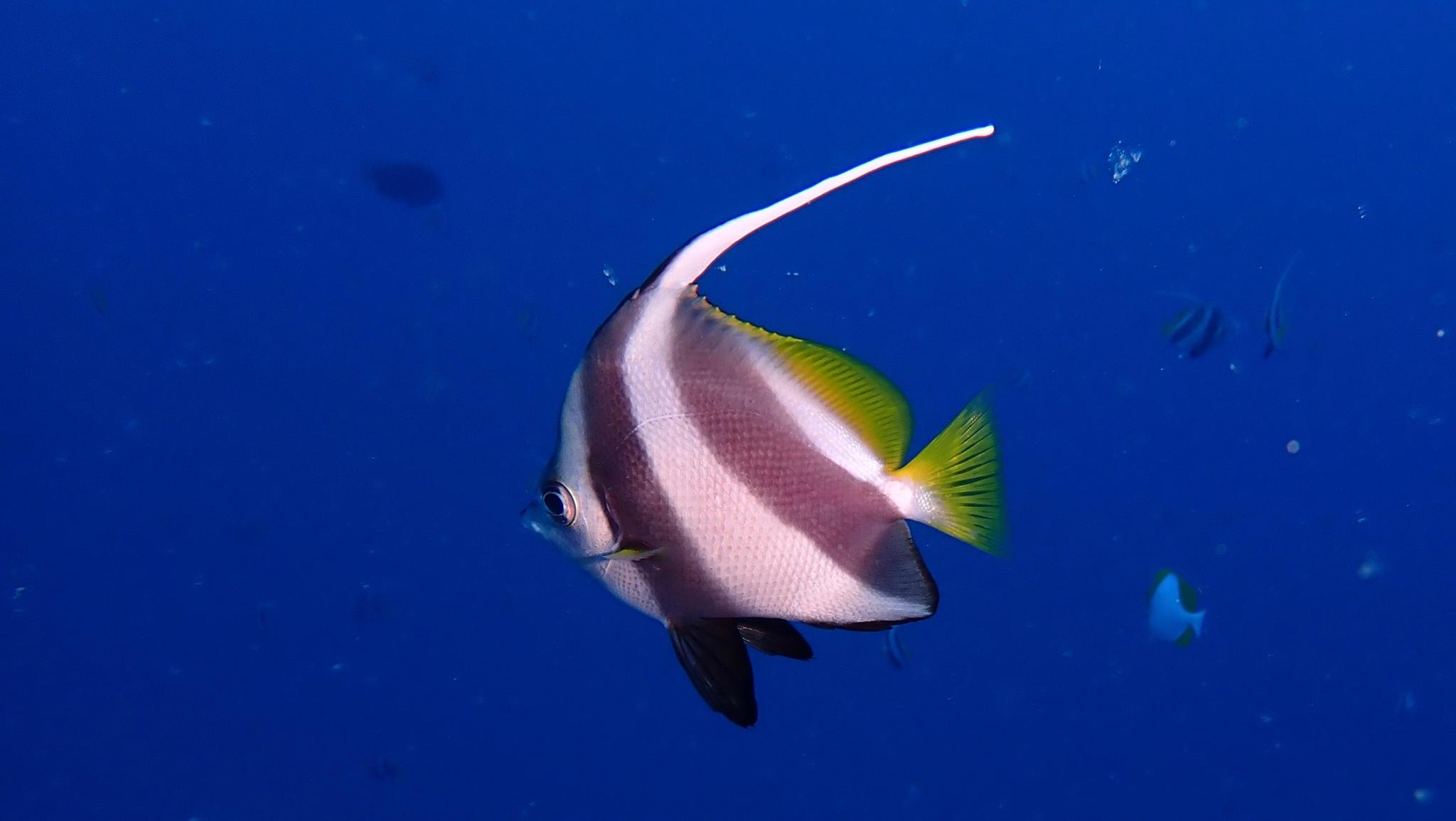 Schooling BannerfishThis fish has a job. Besides feeding on plankton, the schooling bannerfish picks parasites off other fish.
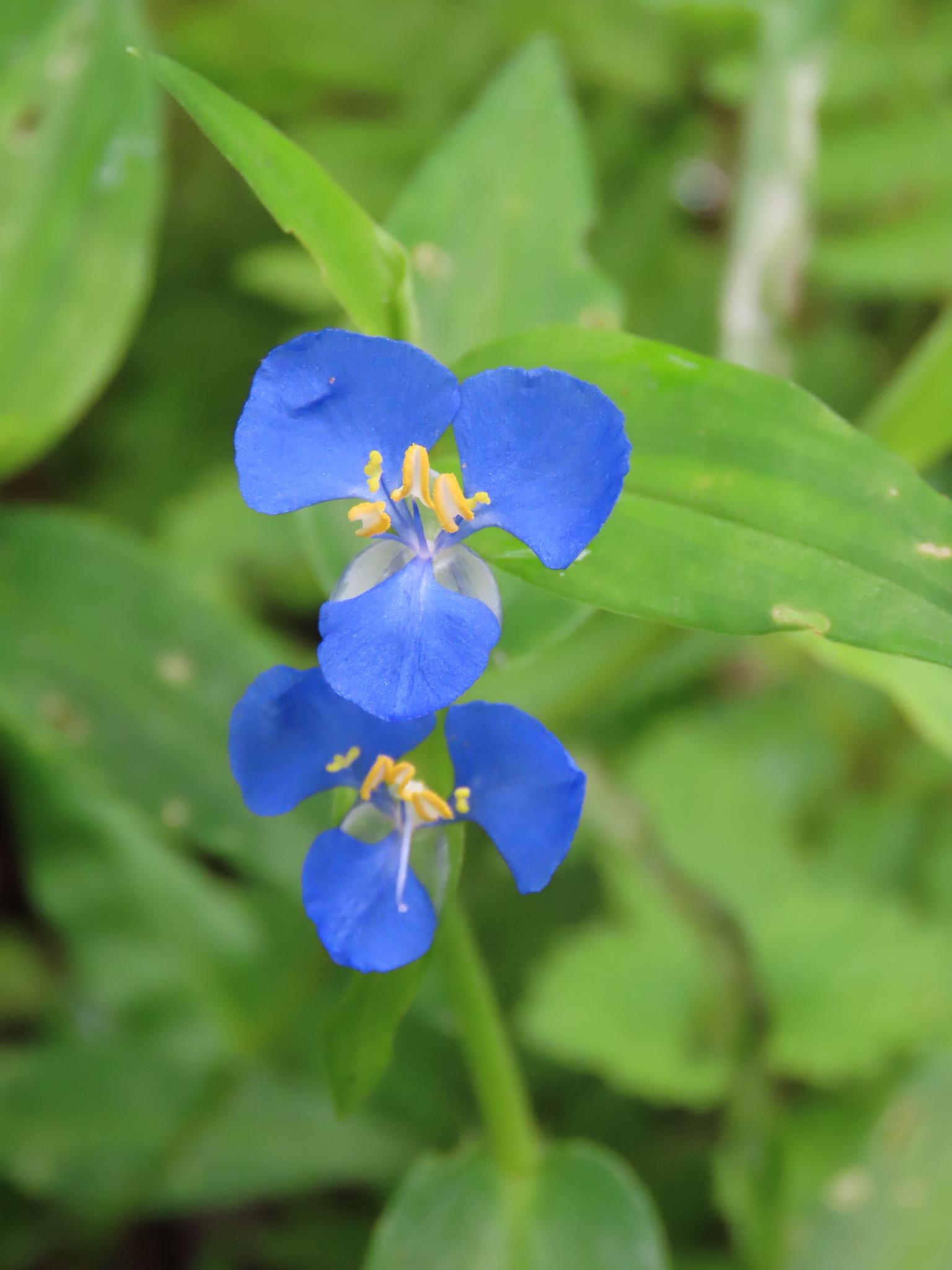 Scurvy weedIts name carries a story: that early settlers ate it to fight scurvy. You'll find that story repeated in many places, but no one has found an original record of it.
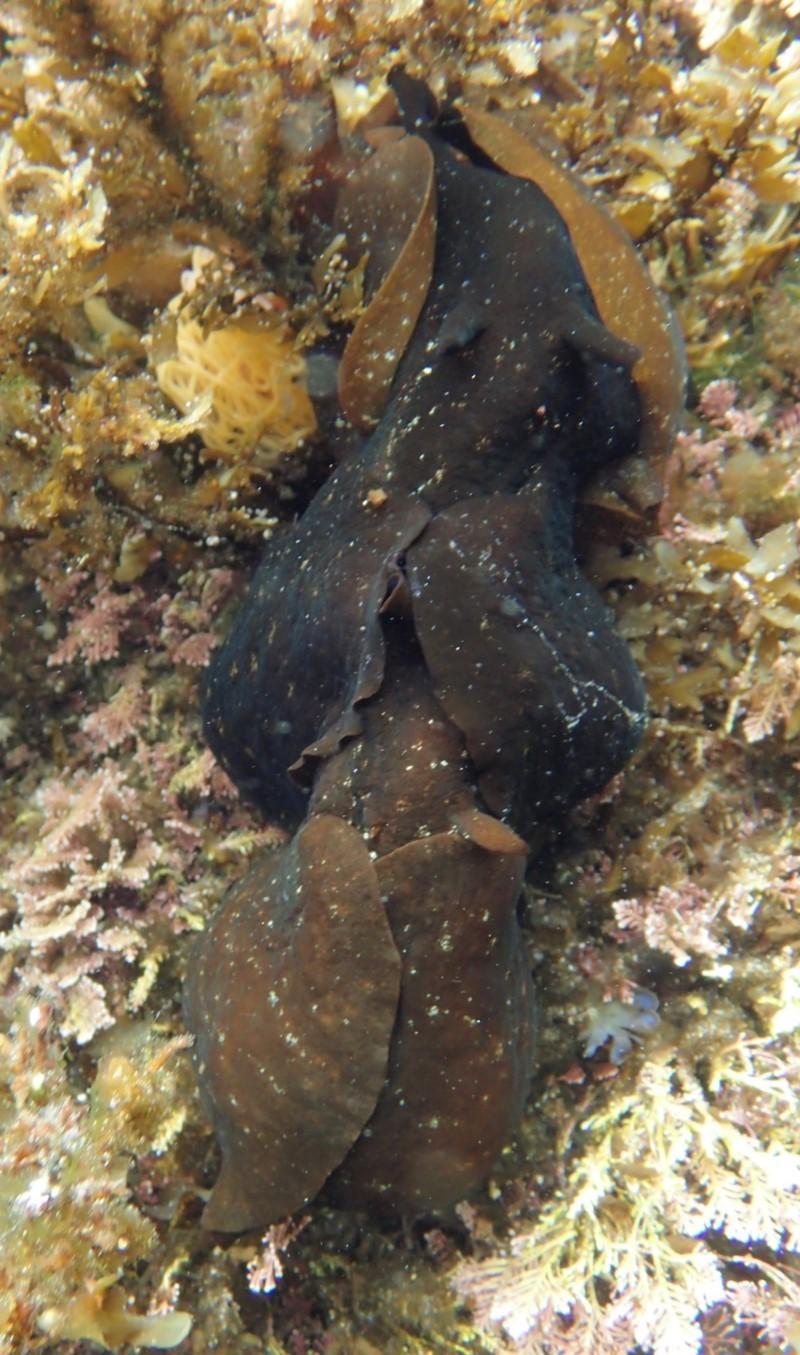 Sea hares mating in rockpoolsThat cluster of sea hares in the rockpool isn't one couple. It may be a chain.
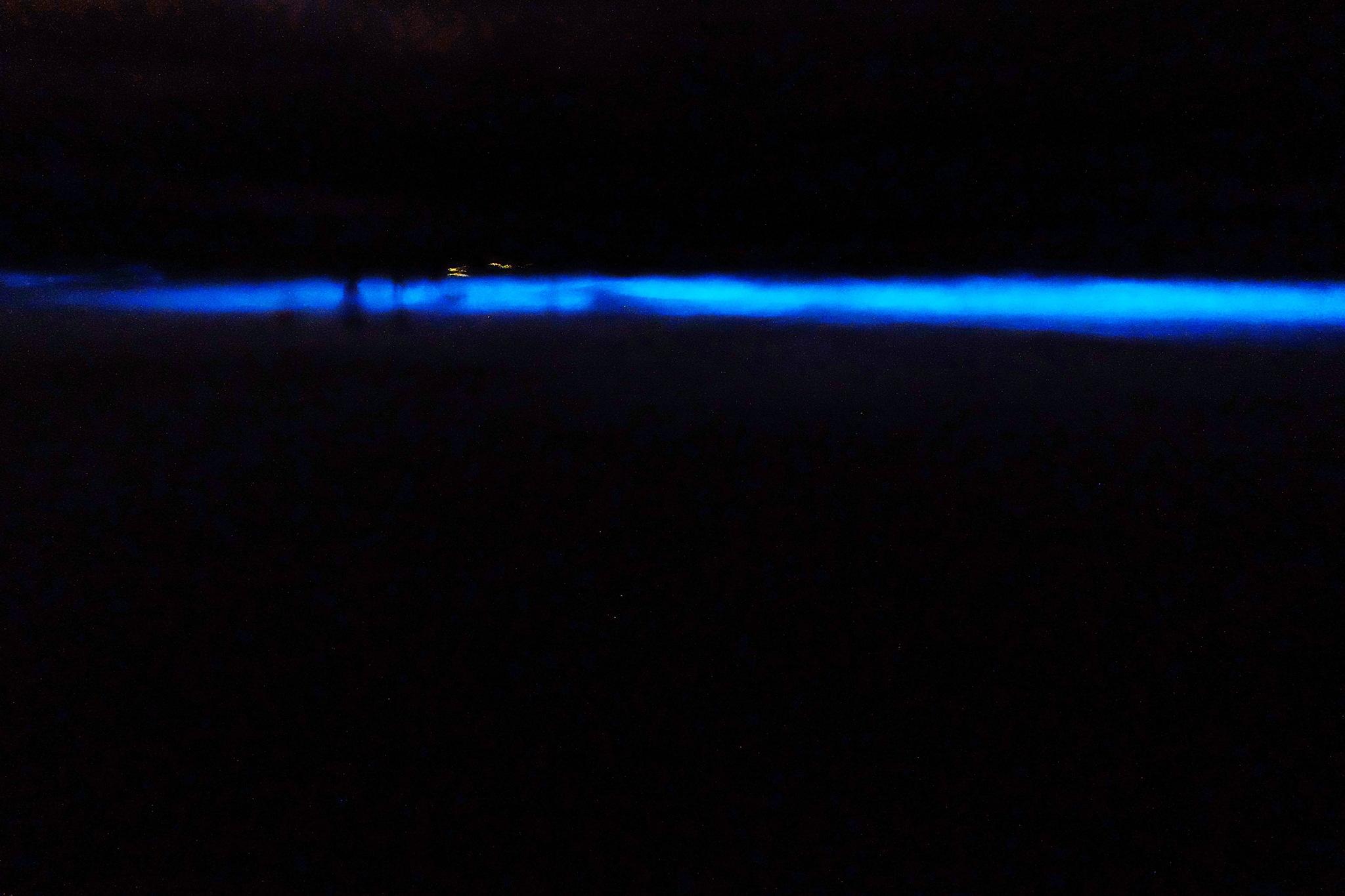 Sea sparkle: glowing blue wavesIf you're lucky enough to see the waves glowing blue at night, you're watching plankton. It flashes when the water is disturbed, by a breaking wave or by something trying to eat it.
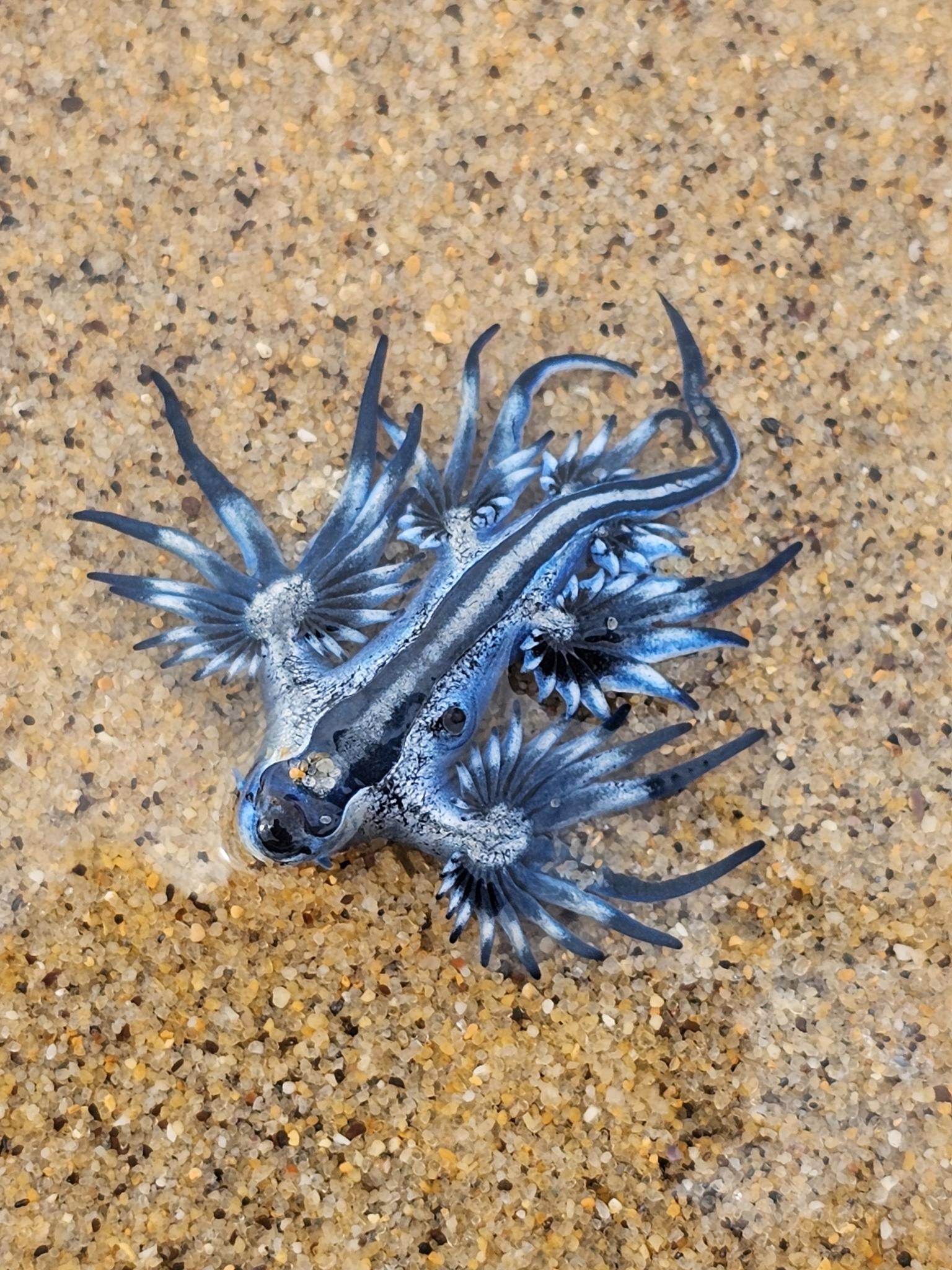 Sea SwallowIt lives upside down on the surface of the open ocean, held up partly by a bubble of gas in its stomach. When it turns up on the beach, it has usually come ashore with the fleet it hunts.
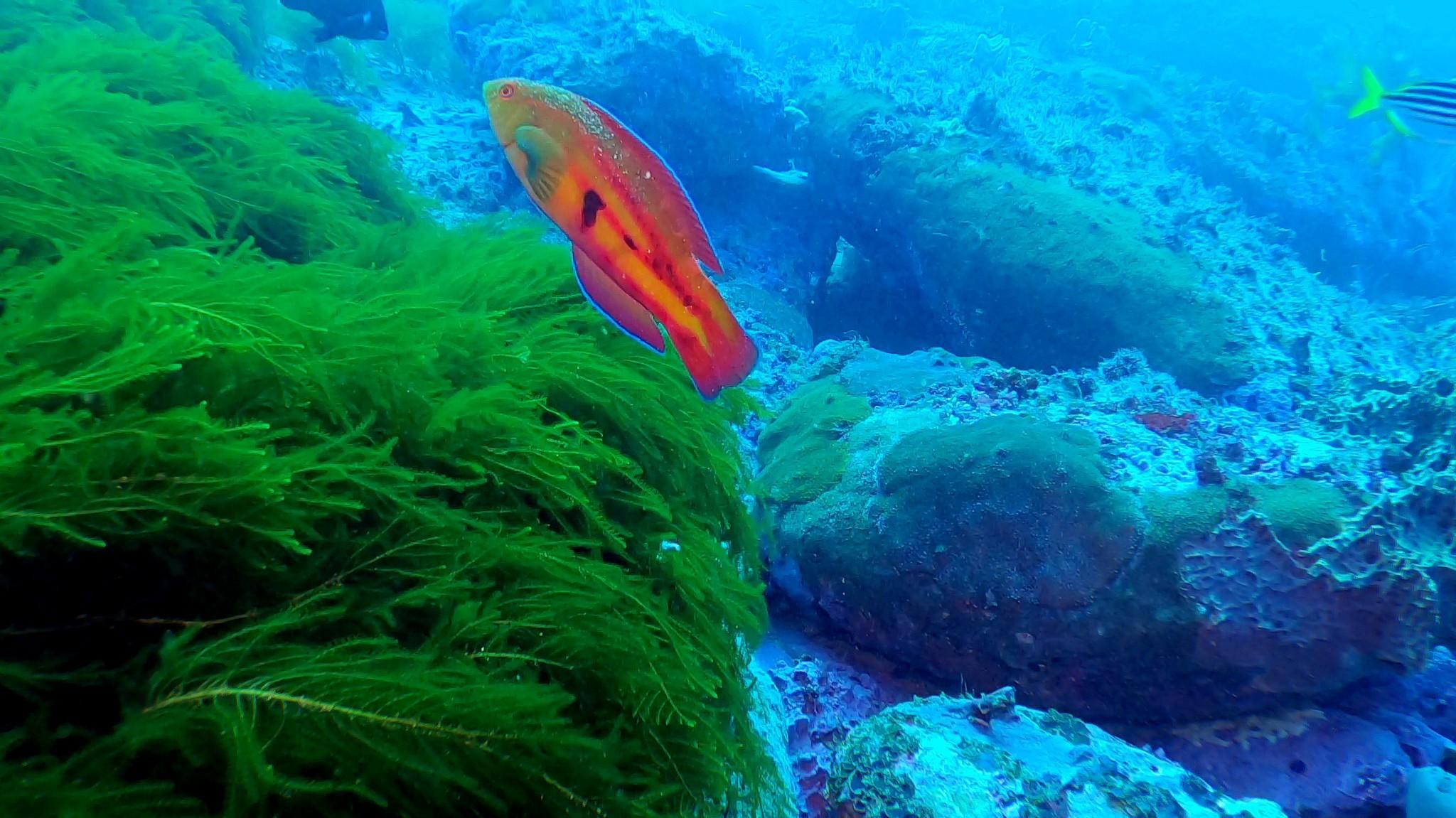 Senator WrasseA scientist naming this fish saw Rome. The blue spots on its fins reminded him of the clavi, the ornamental trim on the robes of Roman nobles, and he named it laticlavius, after the broad stripe worn by senators.
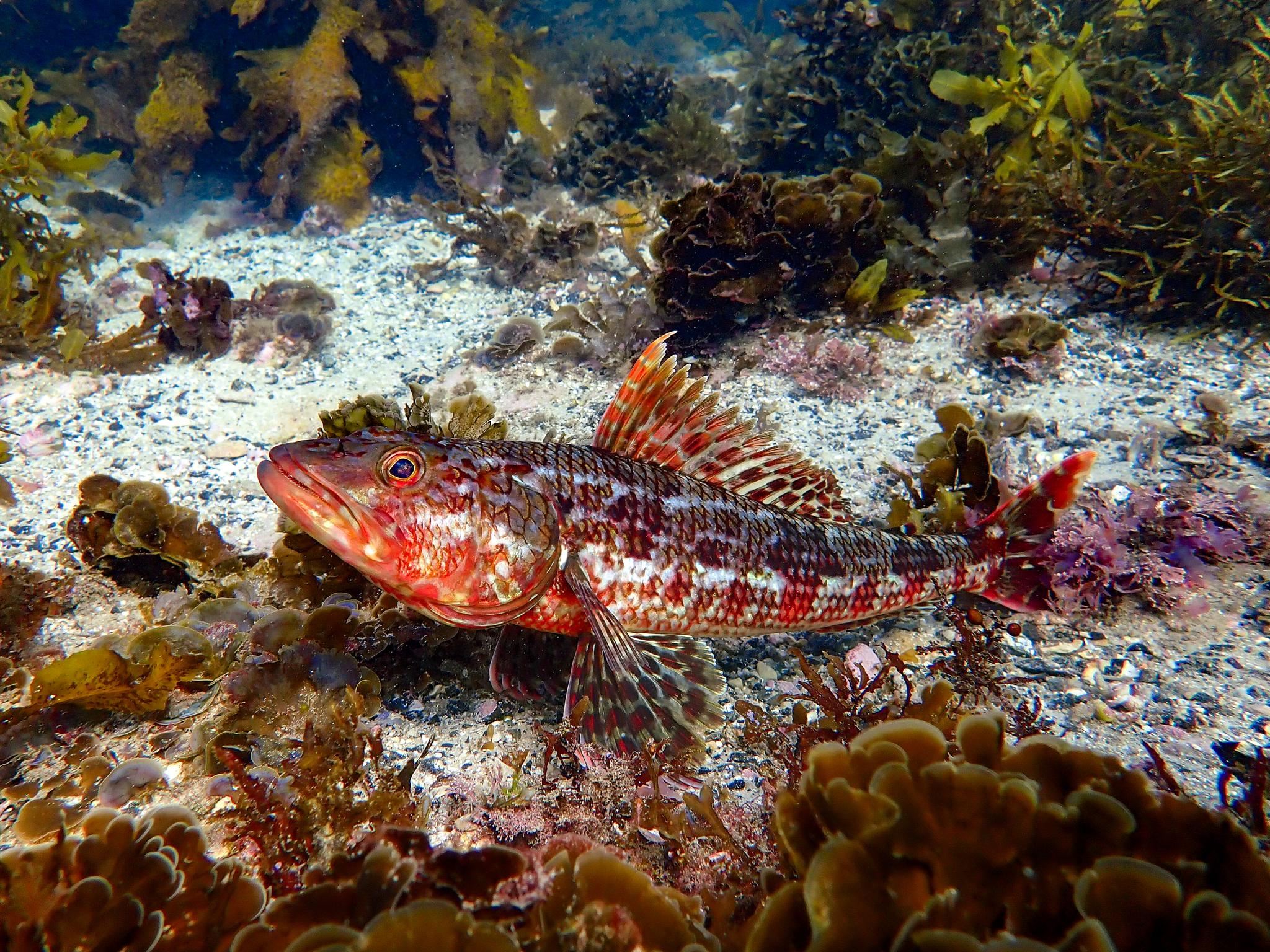 Sergeant BakerIts name may come from the colony's first years. Sergeant William Baker was Governor Phillip's orderly sergeant, reportedly a keen fisherman, and he may have caught one.
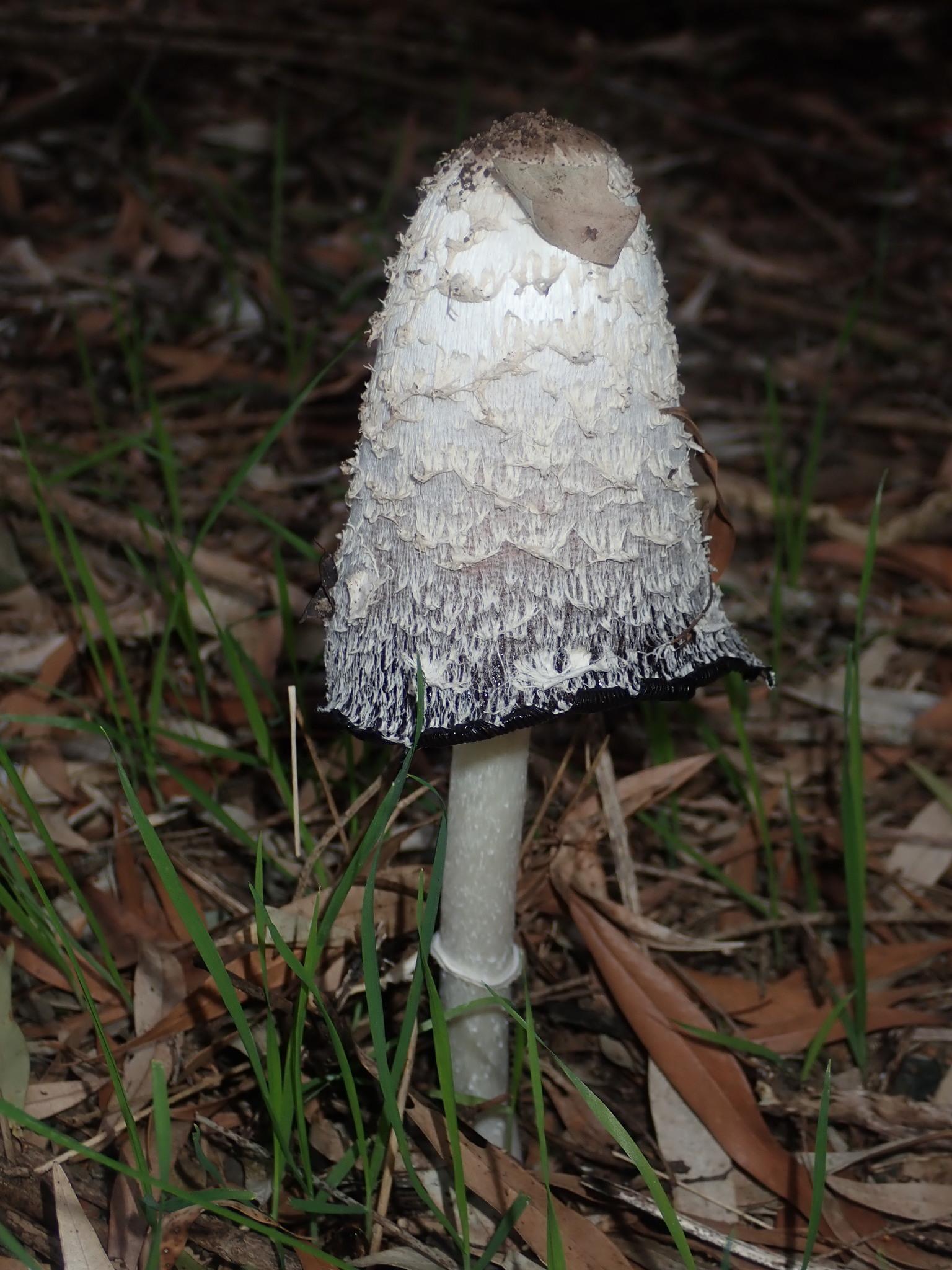 Shaggy ManeWithin days, this mushroom will dissolve. As it matures, it digests itself: its gills and spores turn into a black, inky liquid.
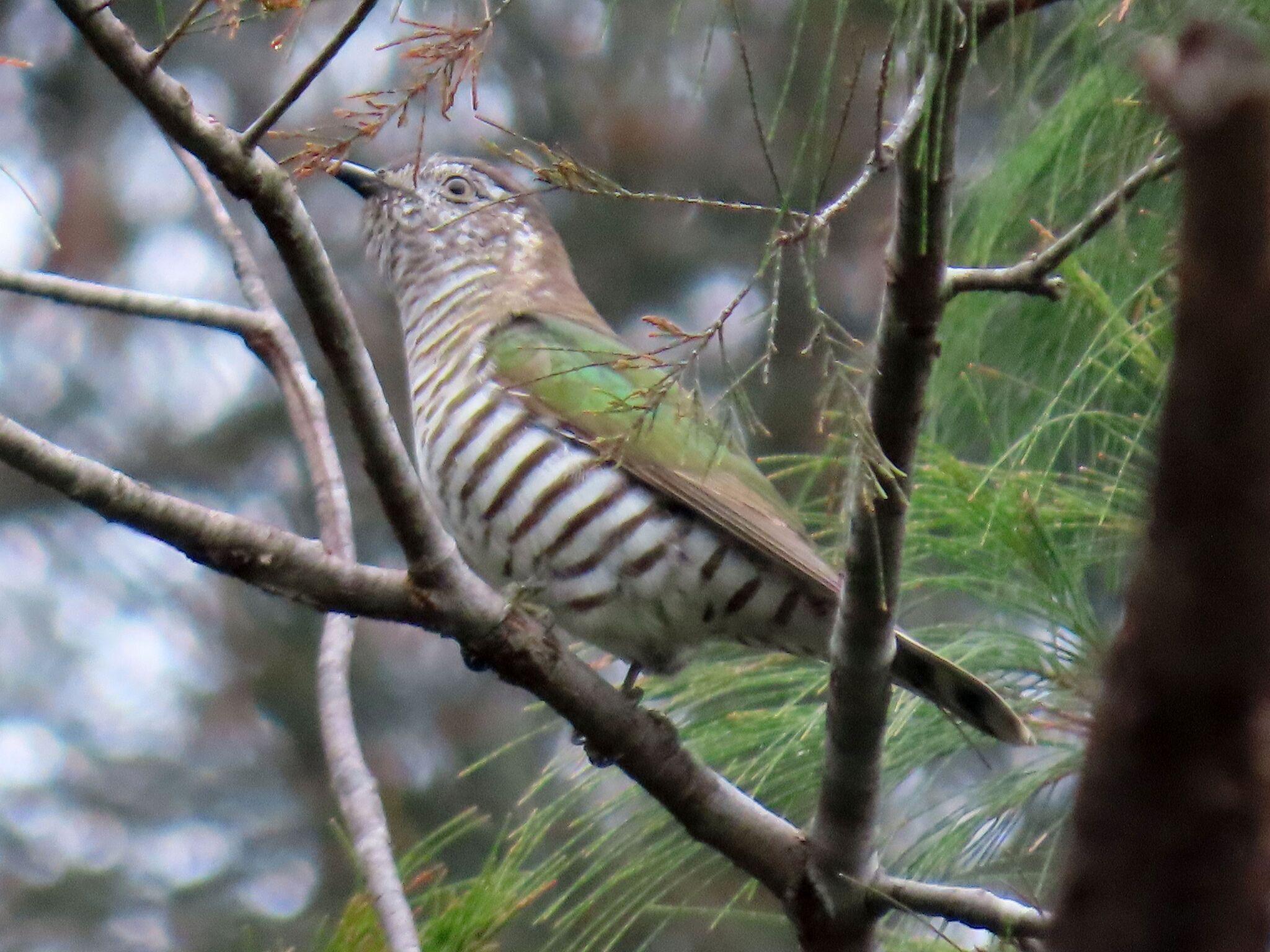 Shining Bronze CuckooThis little cuckoo, about 25 grams, never raises its own young. Its chick hatches blind and mostly naked in another bird's nest, and within 24 to 96 hours it pushes everything else out.
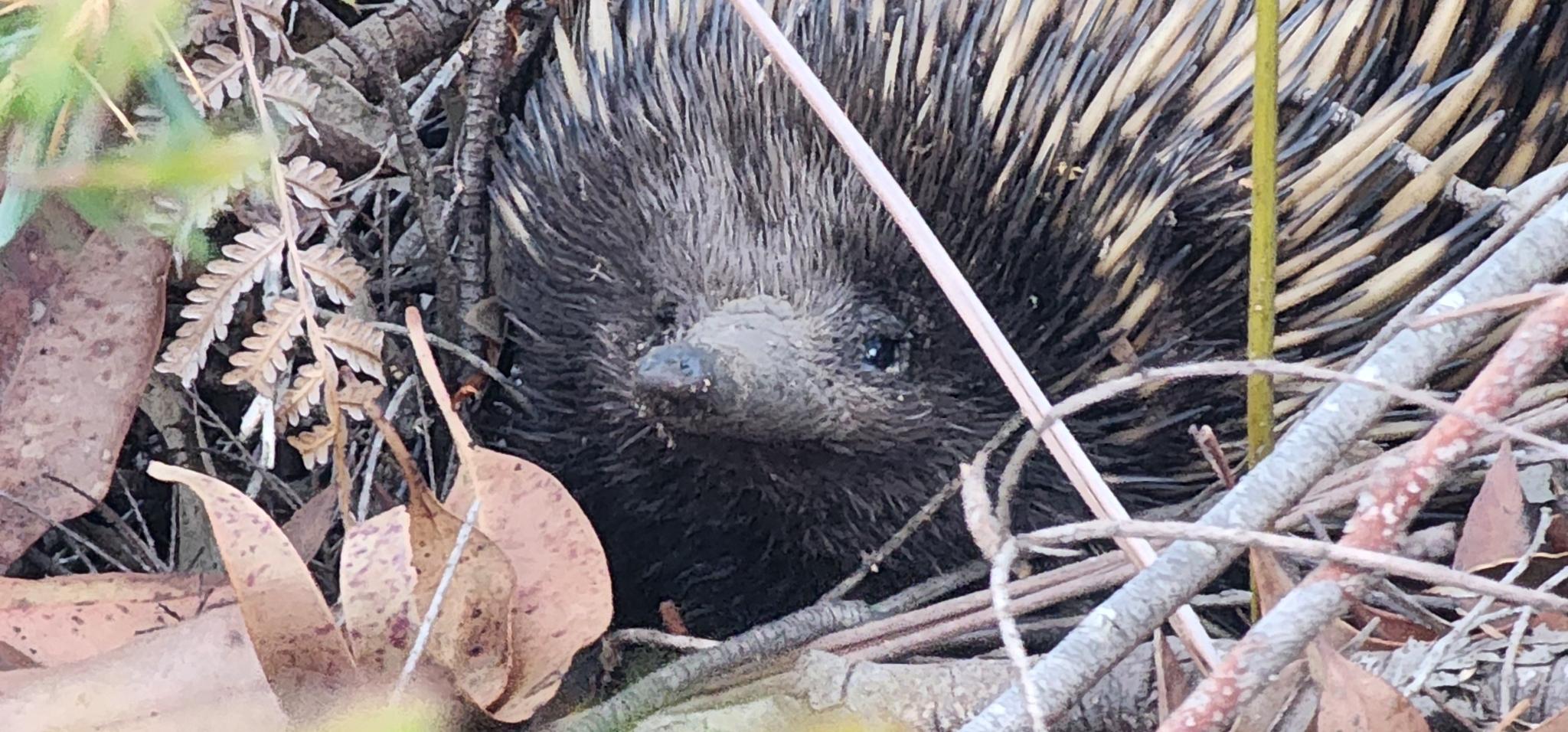 Short-beaked echidnaAbout 180 million years ago, in the Jurassic, dinosaurs were spreading across the world. Mammals were small, mostly shrew-sized, and probably came out at night.
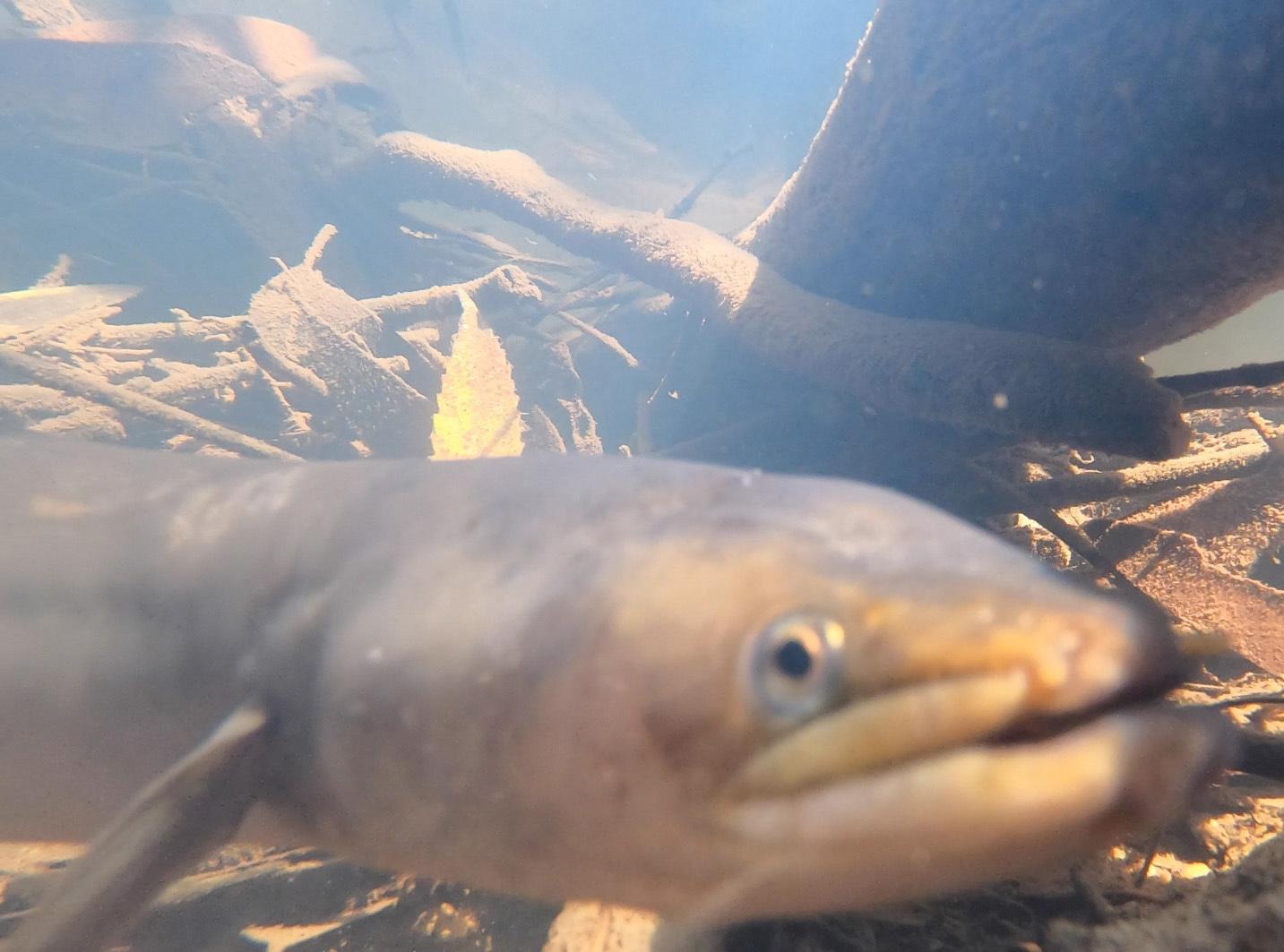 Short-finned EelThis eel may have been living in this creek or pond for many years. Adults can spend up to 20 years in fresh water.
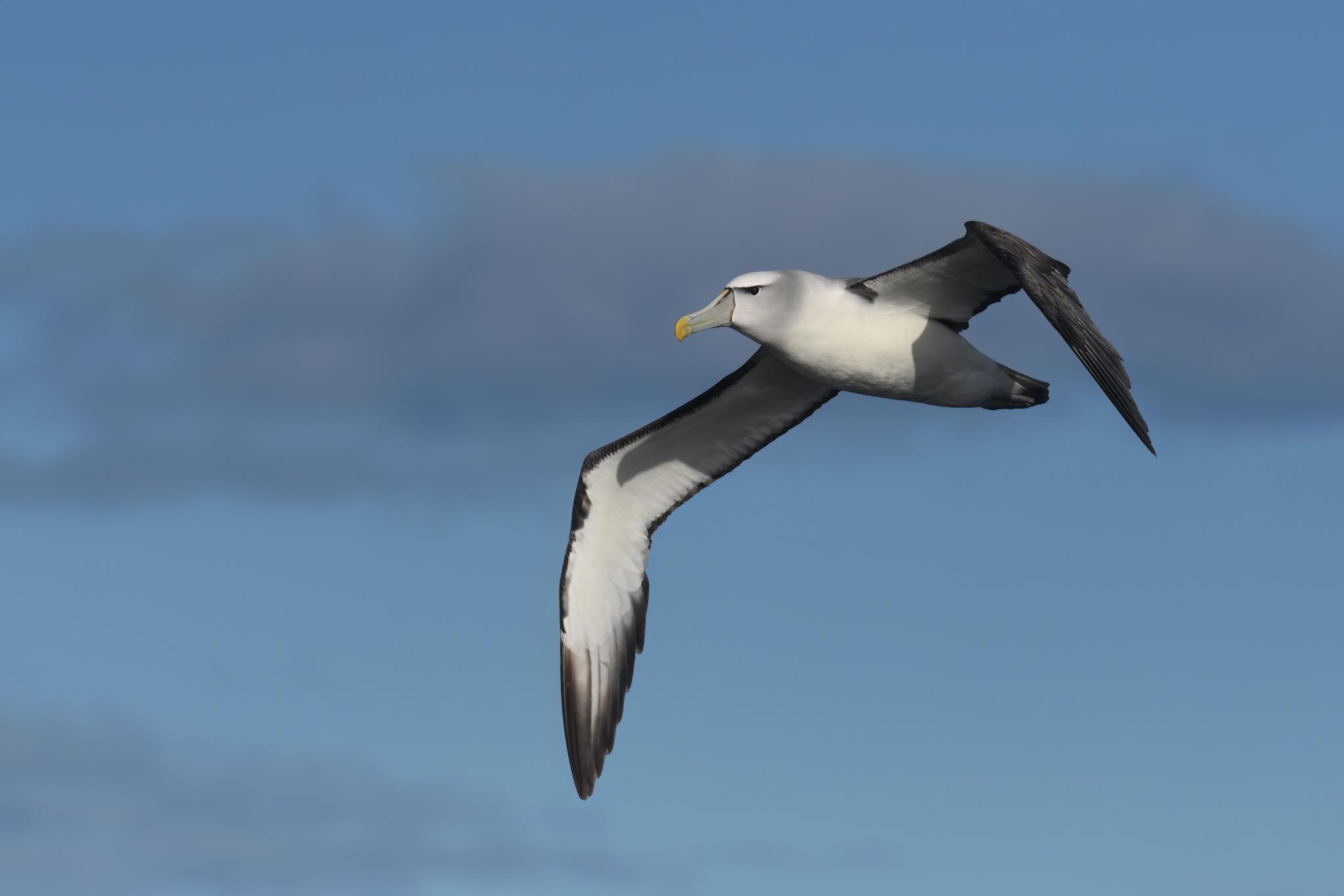 Shy AlbatrossOf all the world's albatrosses, the shy albatross is the only one that breeds only in Australia. It nests on three small islands off Tasmania, and nowhere else.
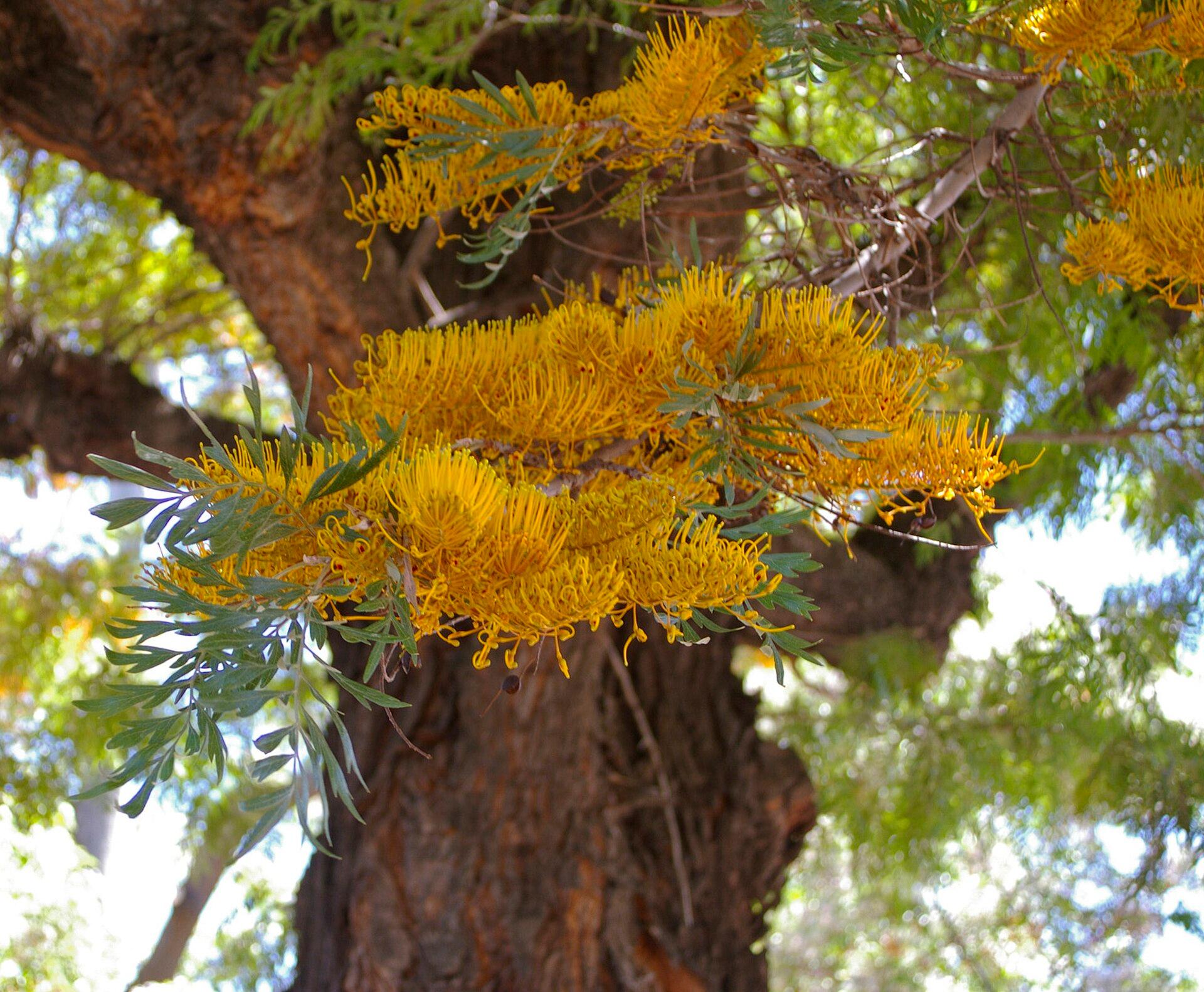 Silk oakThe silk oak isn't an oak. It's a grevillea, a giant one: a tree that can grow 8 to 40 metres tall, cousin to the small spider flowers of the bush.
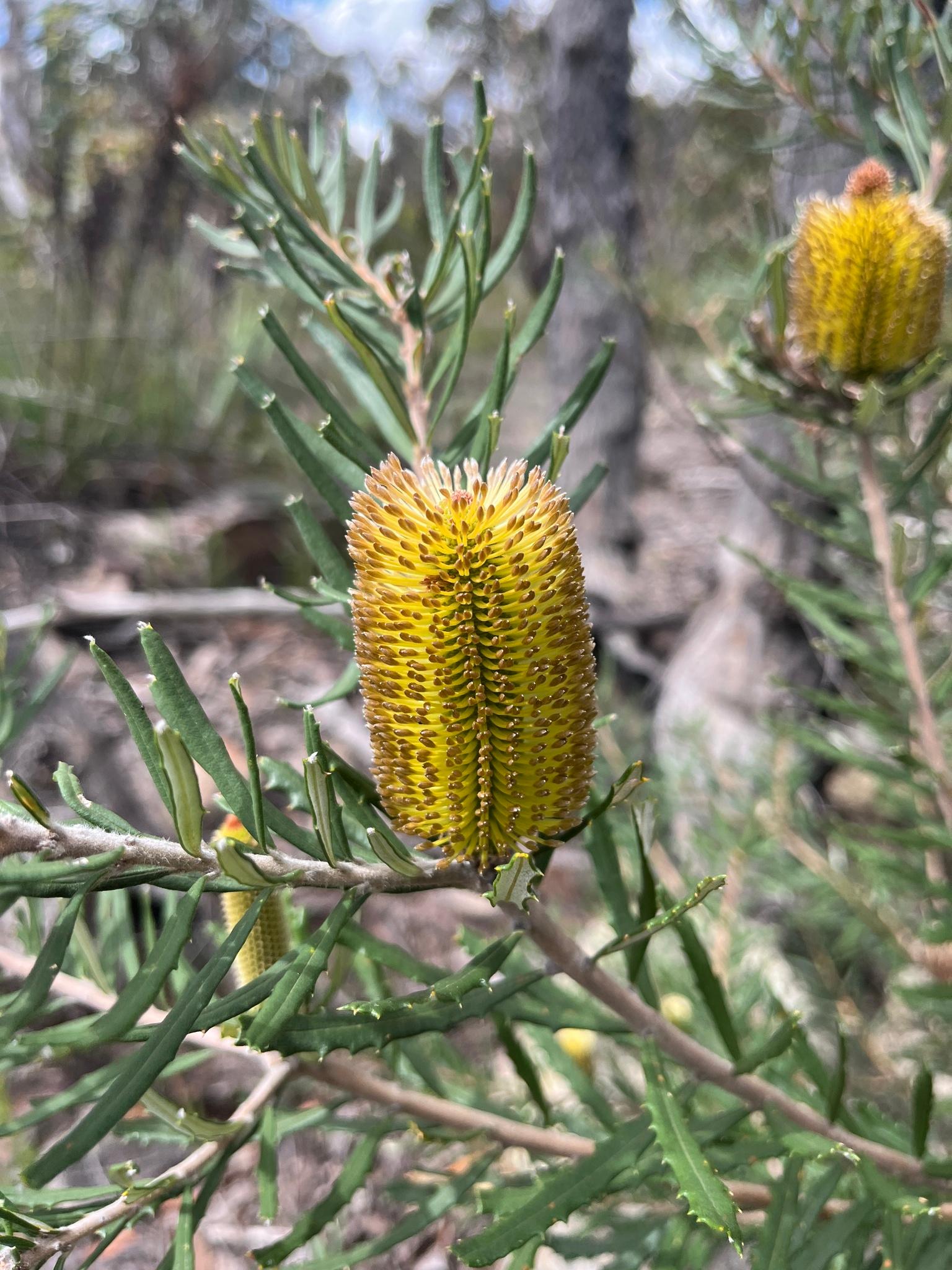 Silver BanksiaA single flower spike on this banksia can hold up to 1000 flowers. They don't open all at once.
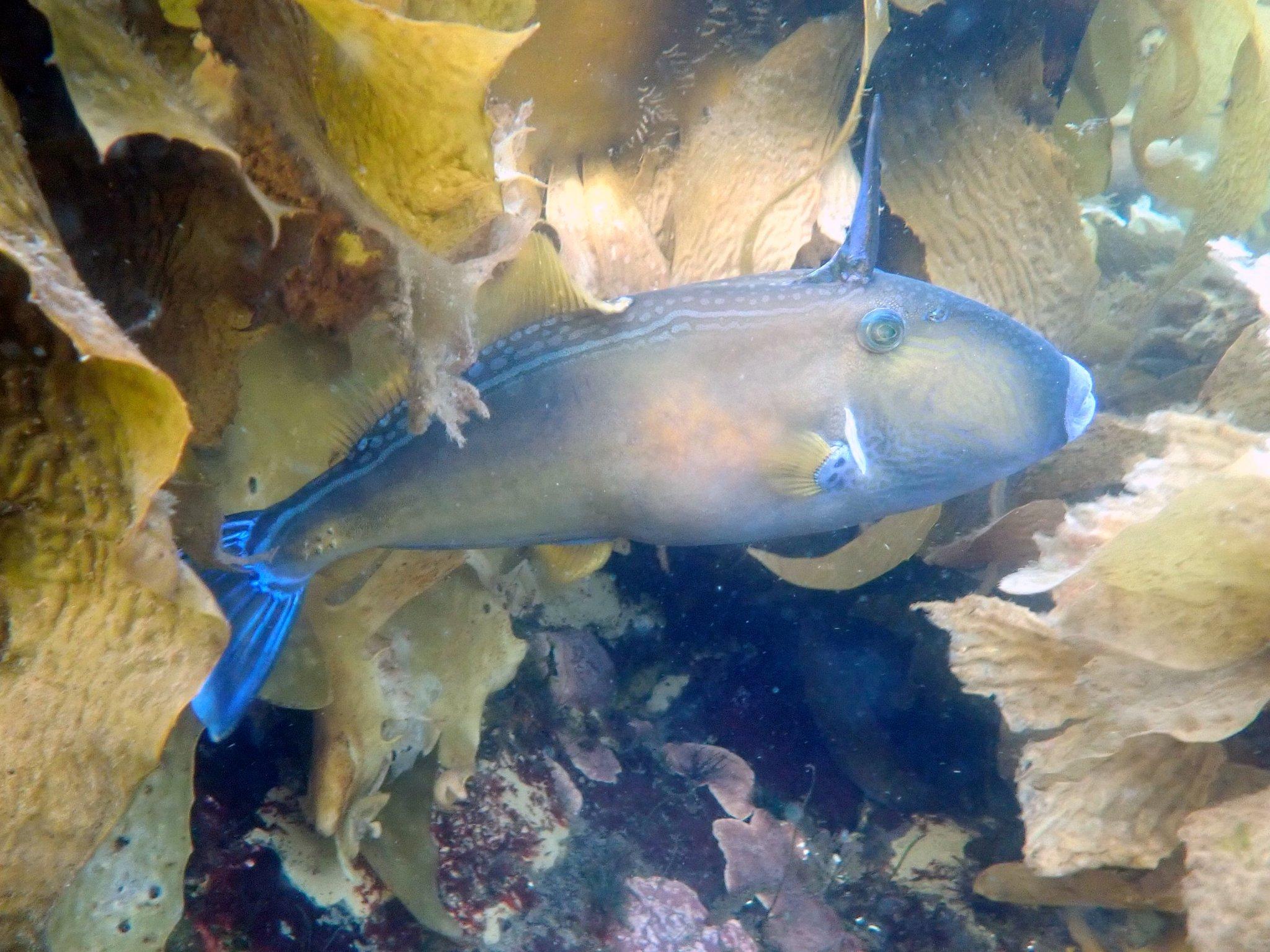 Sixspine LeatherjacketThat big spine over its eye can be locked upright. Like other leatherjackets, it has a tiny second spine that wedges the big one in place, so it can't be pushed back down.
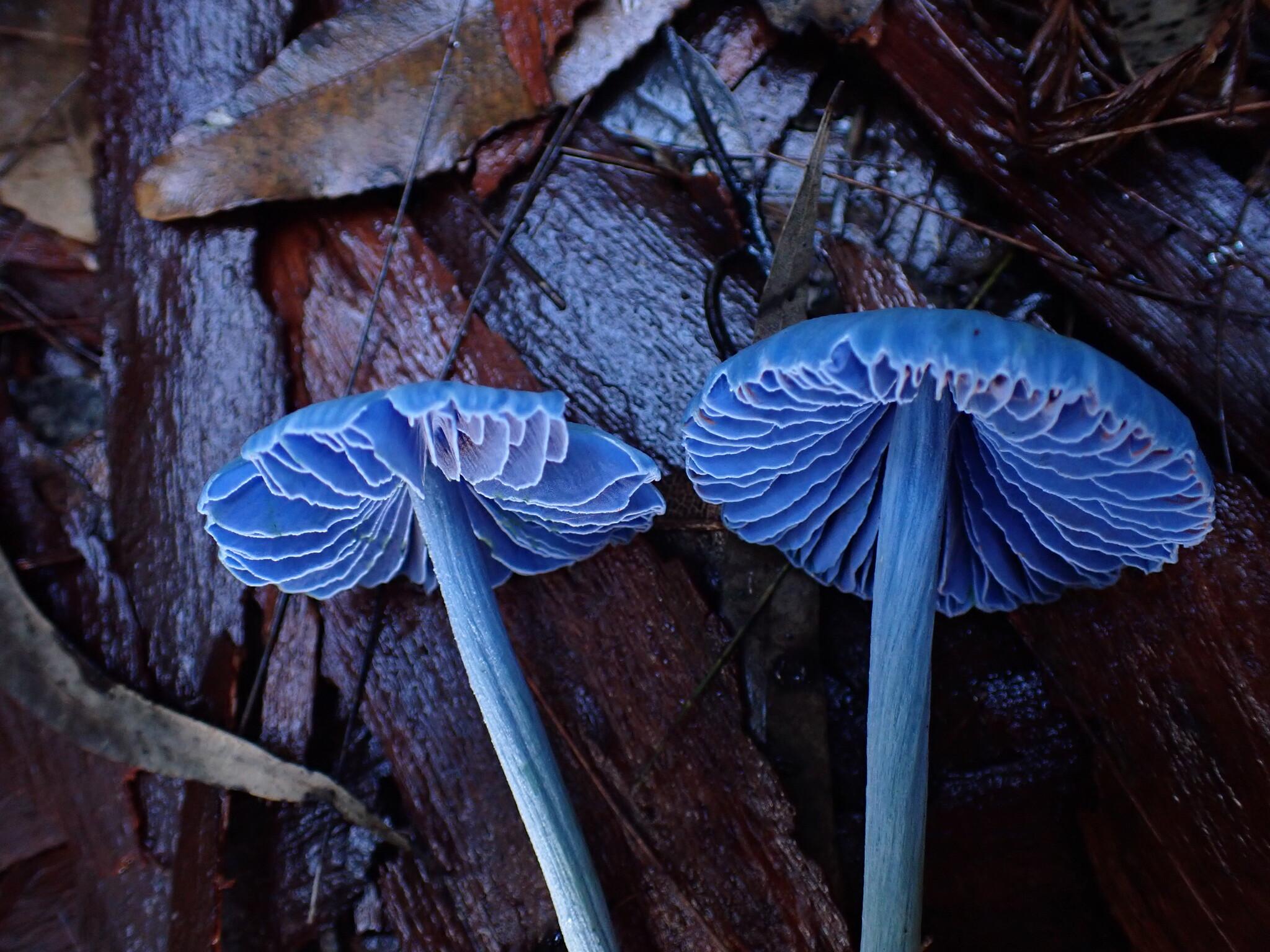 Skyblue pinkgillAn intensely sky-blue mushroom, blue from cap to gills to stem, can look like a toy someone dropped in the leaf litter. It's real.
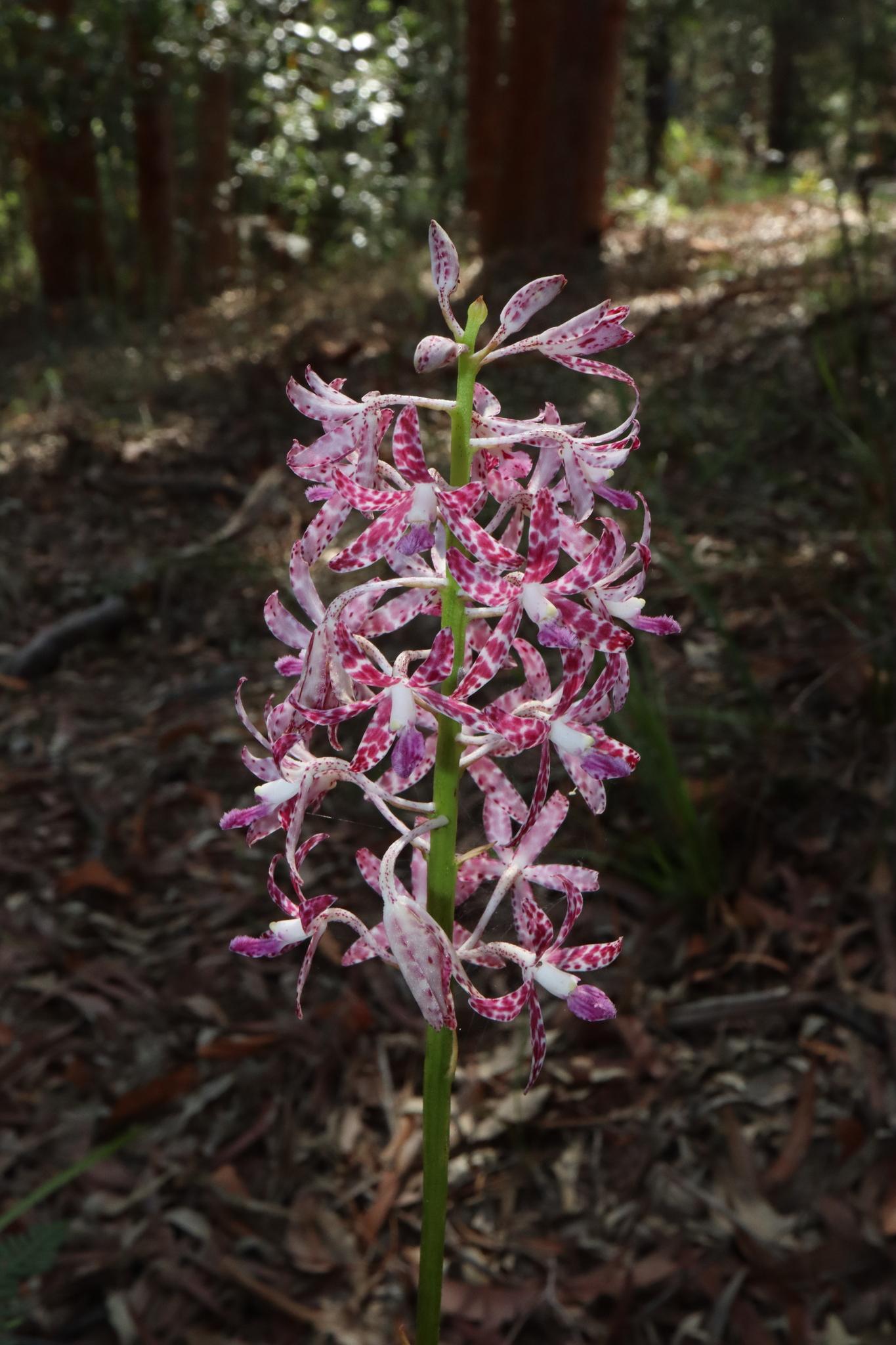 Slender hyacinth orchidIf you've spotted a hyacinth orchid, you're witness to something far bigger than it may initially seem.
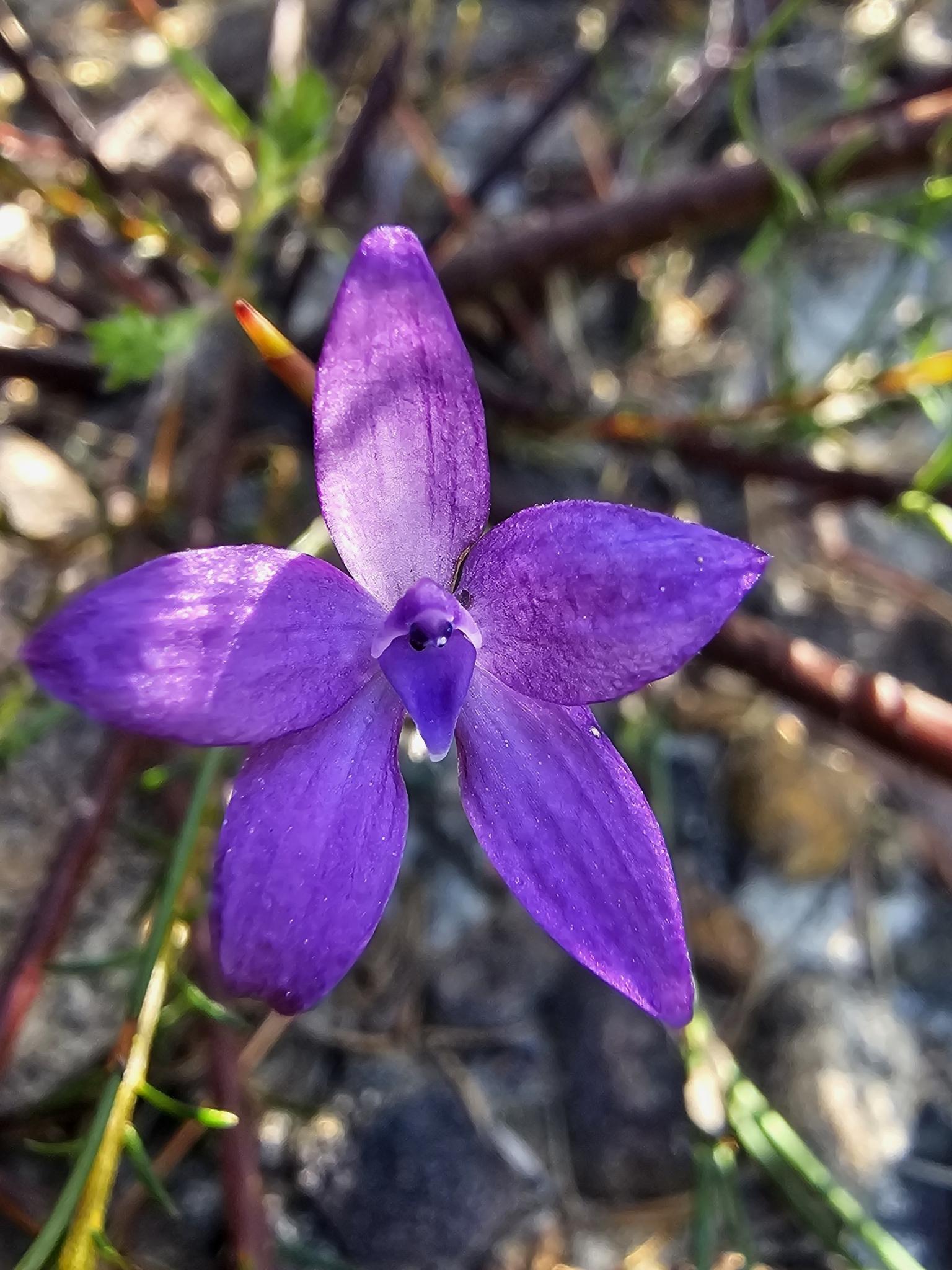 Small Waxlip OrchidThis little orchid is probably lying. It's thought to be pollinated by native bees that it fools with the promise of food.
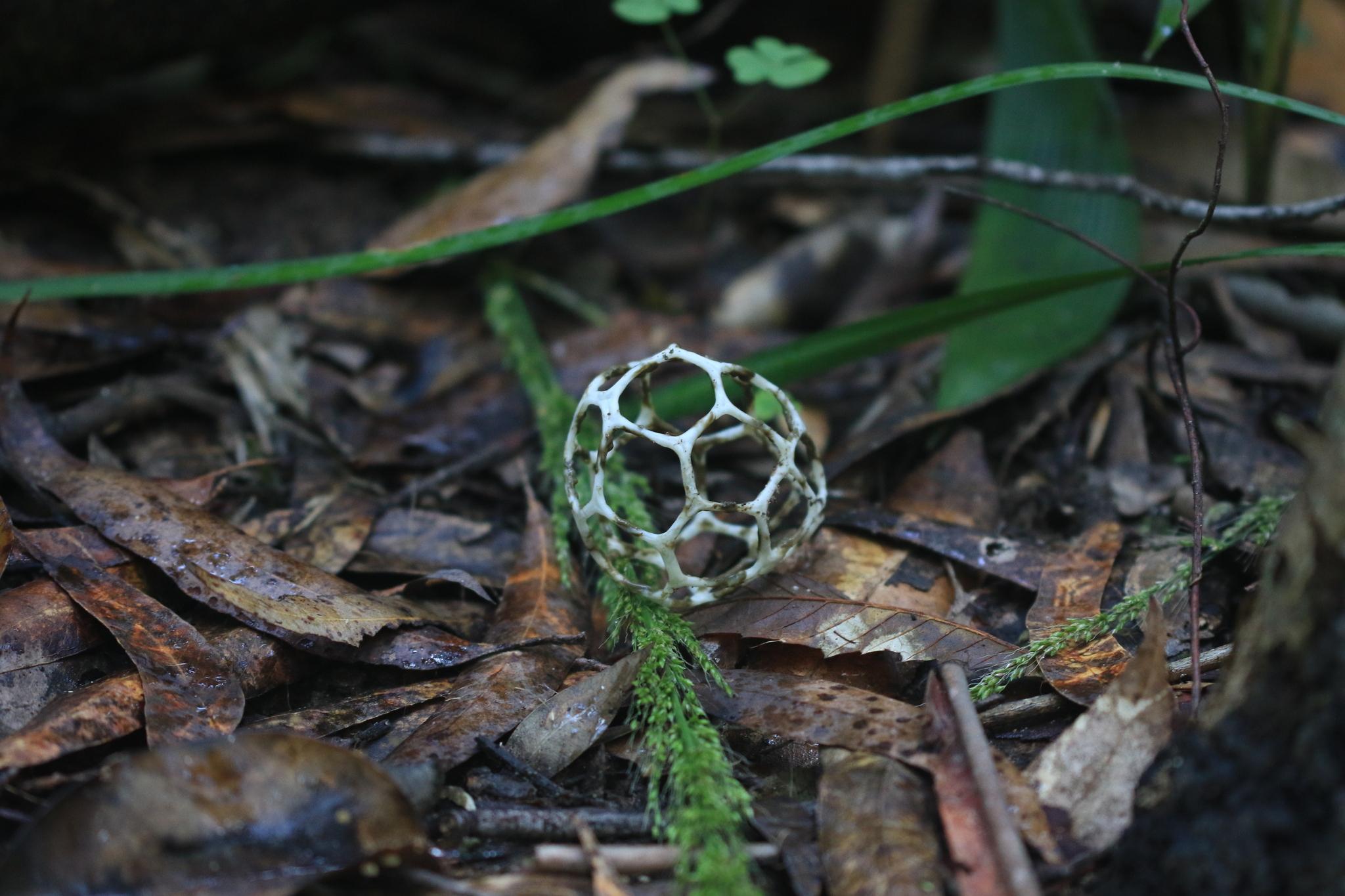 Smooth cage fungusThis white cage, like a soccer ball with the panels punched out, hatched from an off-white "egg". Its inside is coated in brown spore slime, and the slime stinks.
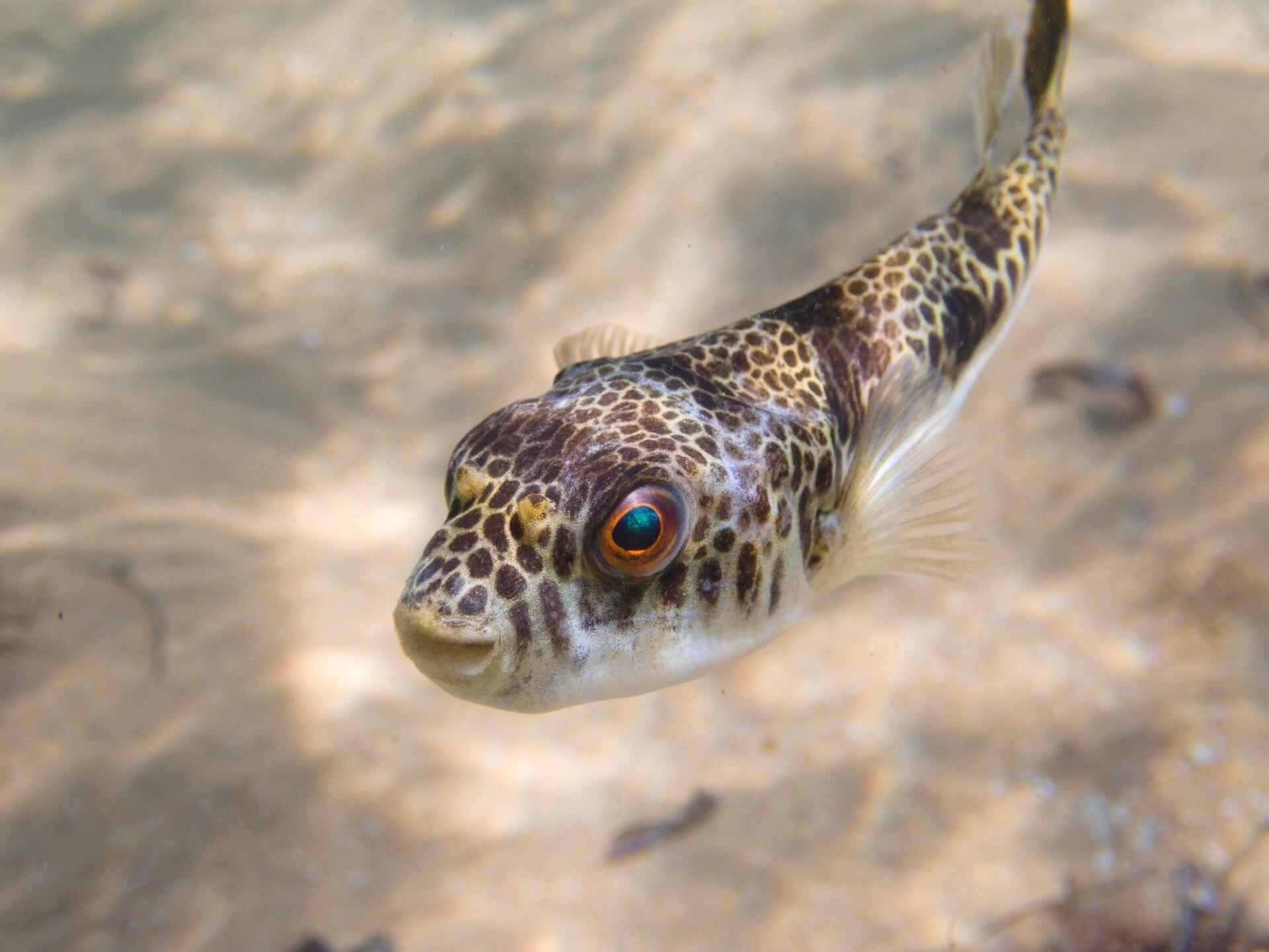 Smooth ToadfishThis little toadfish of the estuary is very poisonous. But scientists have found another use for it: it keeps a record.
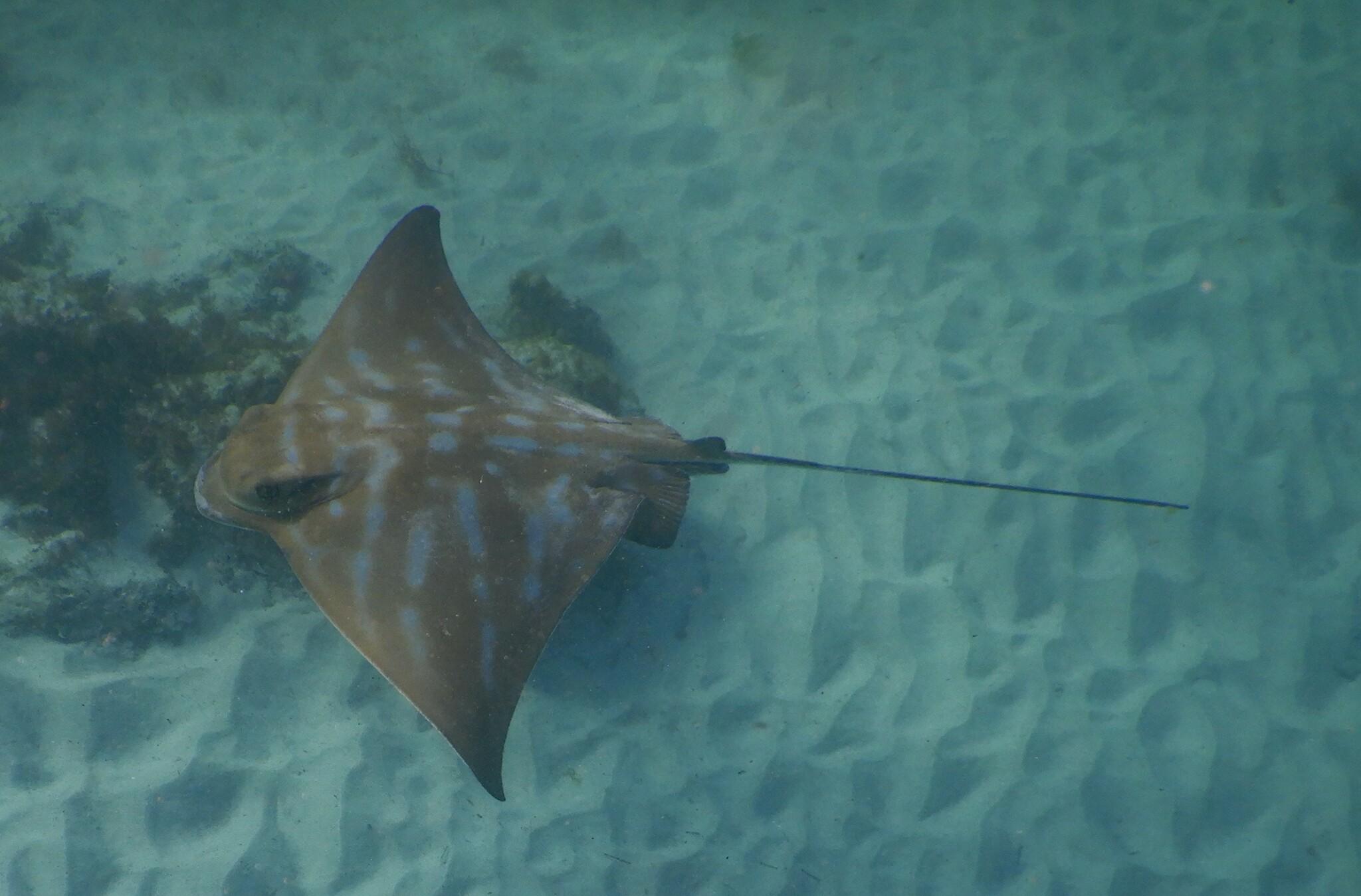 Southern Eagle RayAn eagle ray doesn't so much swim as fly, beating its wide fins like wings and trailing a whip-like tail. Its pups are born already 20 to 30 cm across, flying from their first minute.
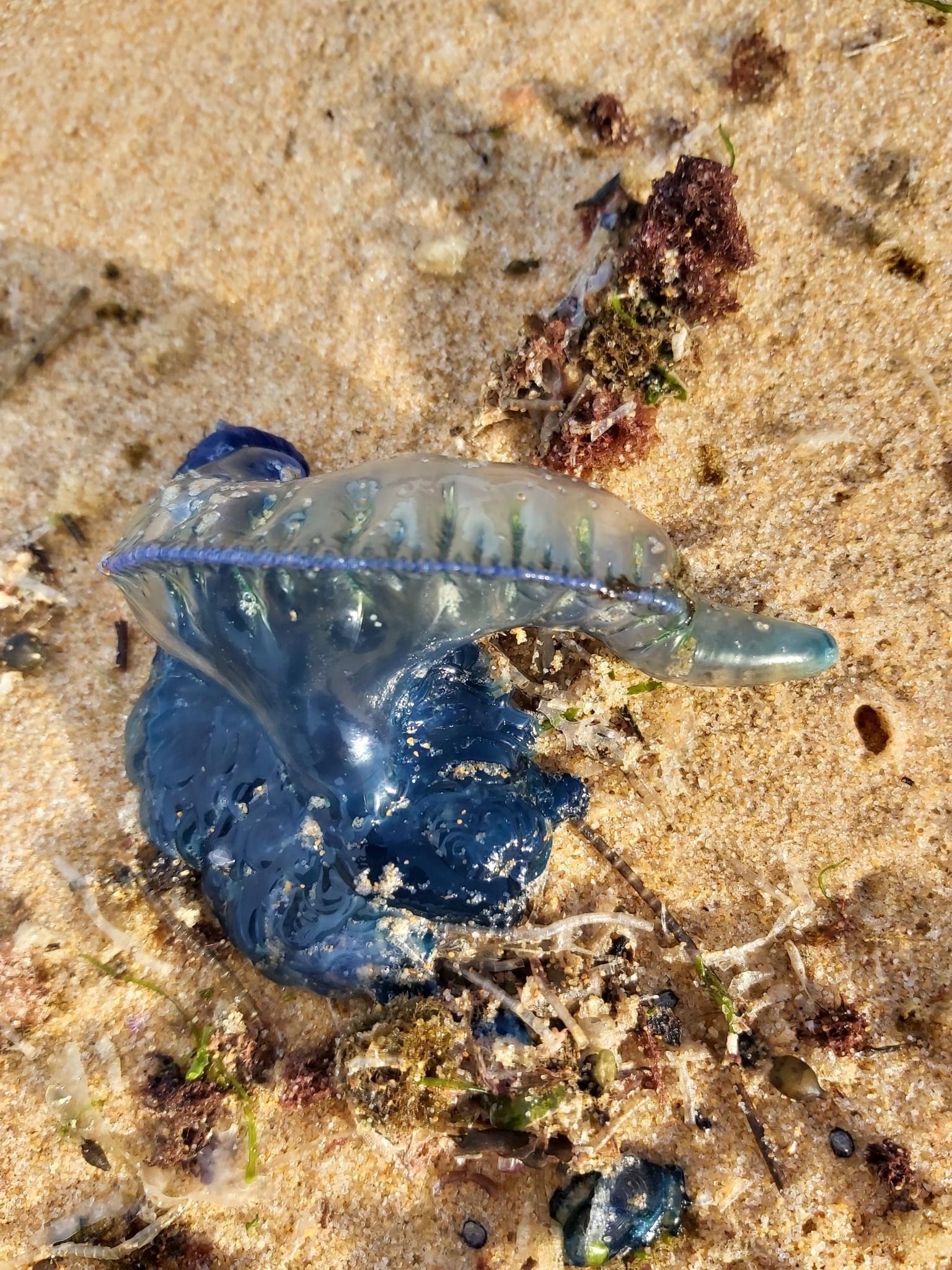 Southern Man-O-WarFor a long time, a bluebottle was a bluebottle: one species, drifting around the whole world. In 2025, scientists sequenced the genomes of 151 bluebottles and found at least four species.
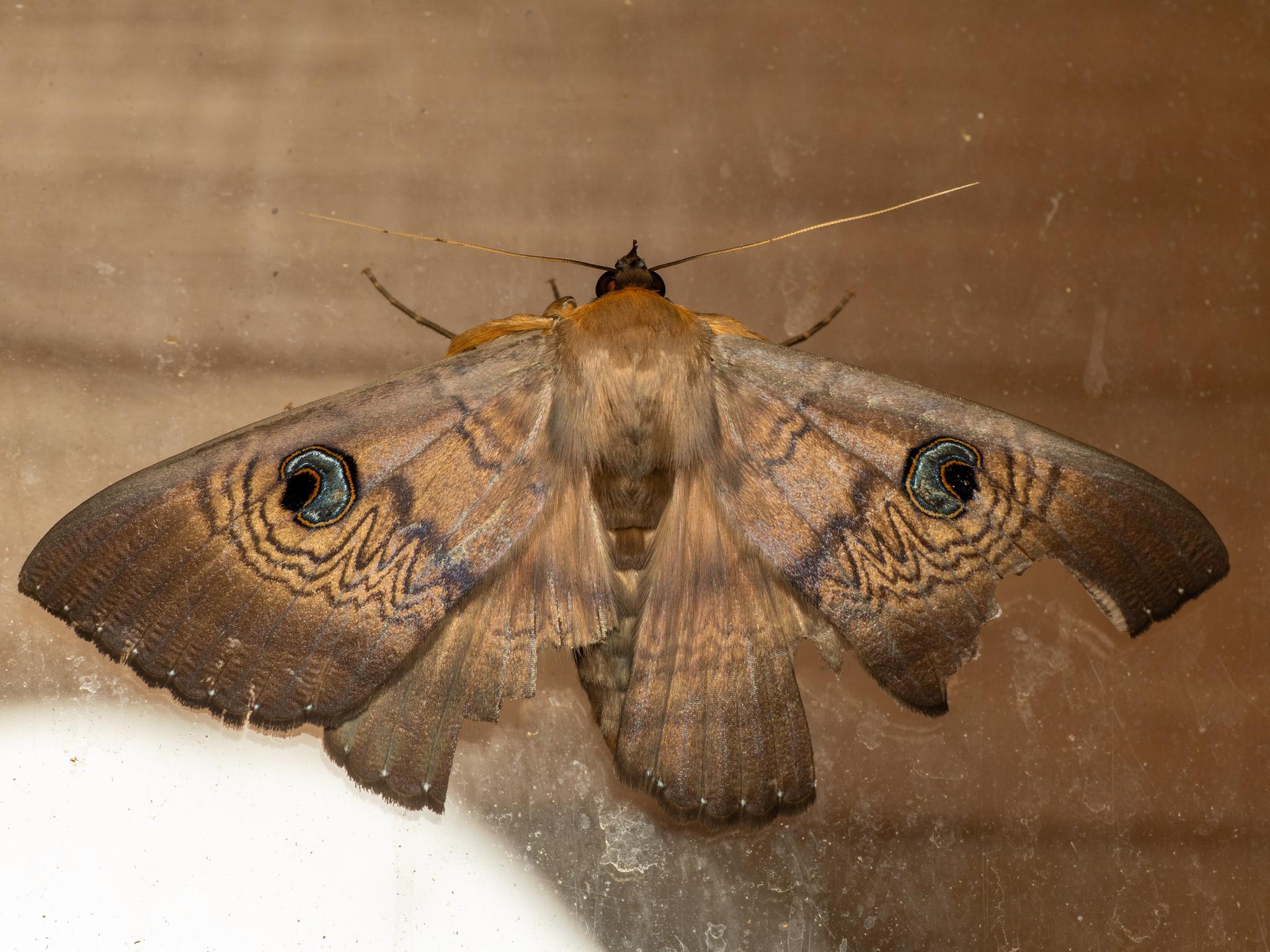 Southern Moon MothOn each wing, an eye. A dark pupil, and in it pale highlights, like light glinting off a real, wet eye.
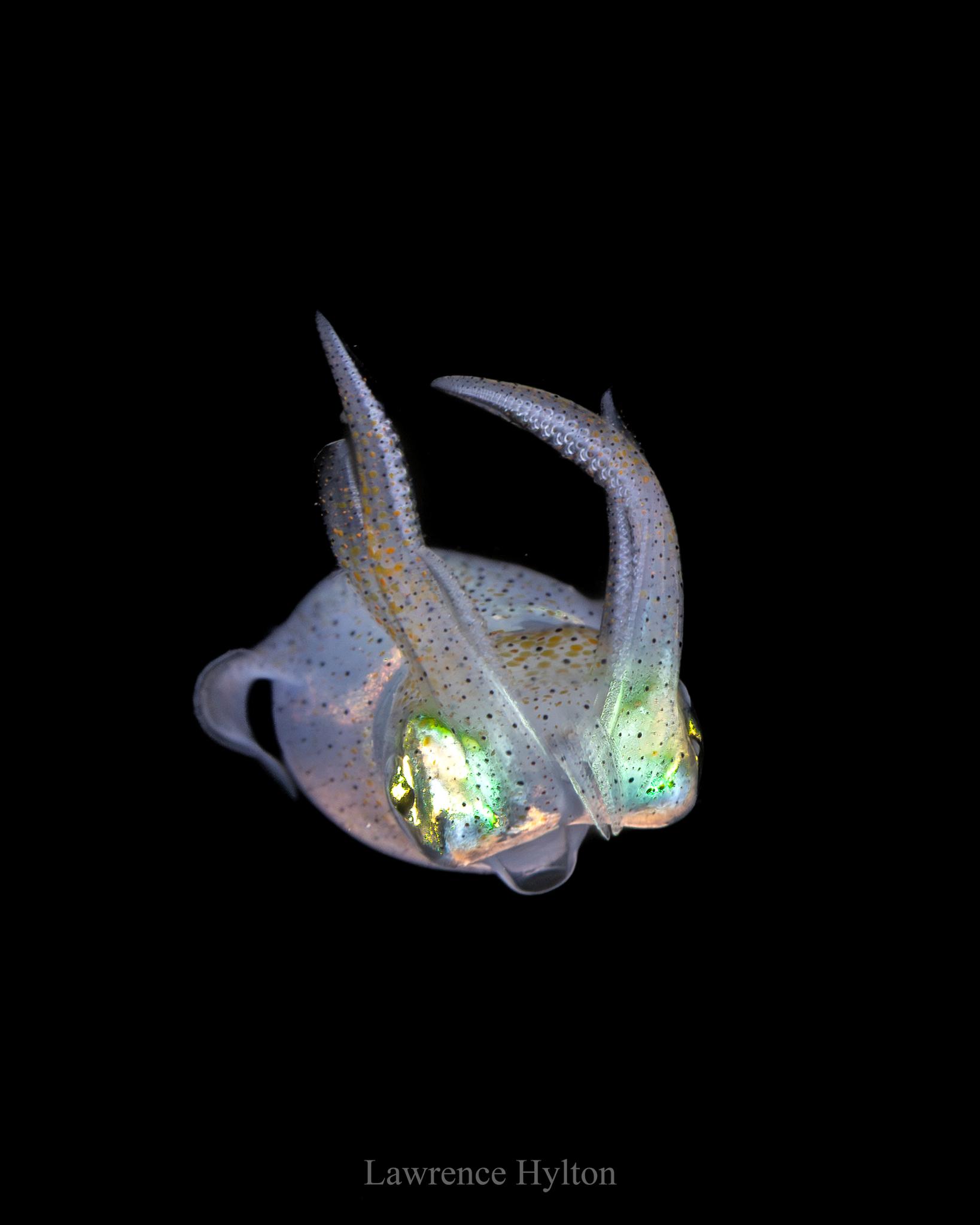 Southern Reef SquidThe squid hovering over the weed probably wasn't alive this time last year. A southern reef squid's whole life probably lasts less than a year, around 6 to 10 months after hatching.
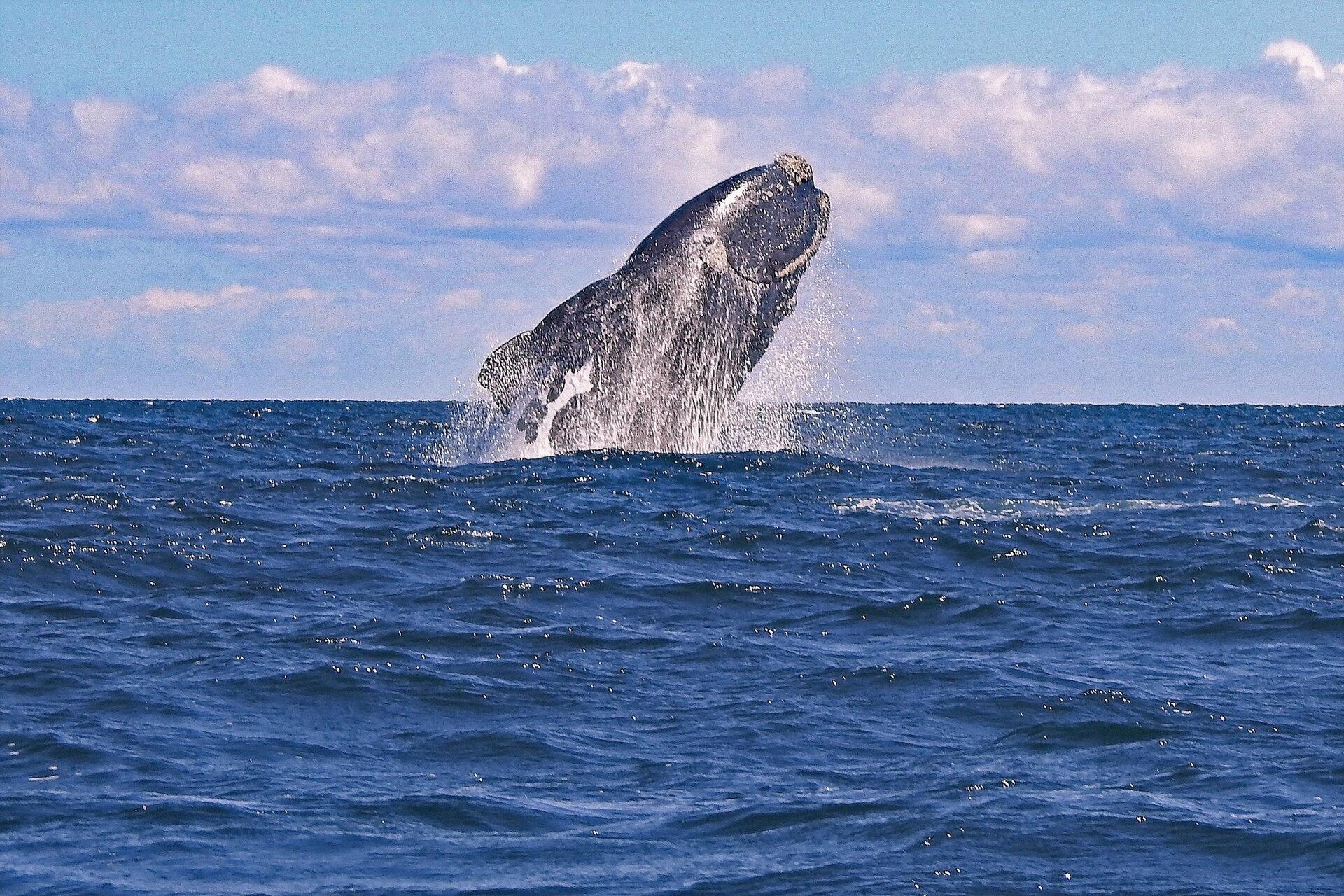 Southern Right WhaleThere's no fin on its back. The southern right whale is the only large whale without one.
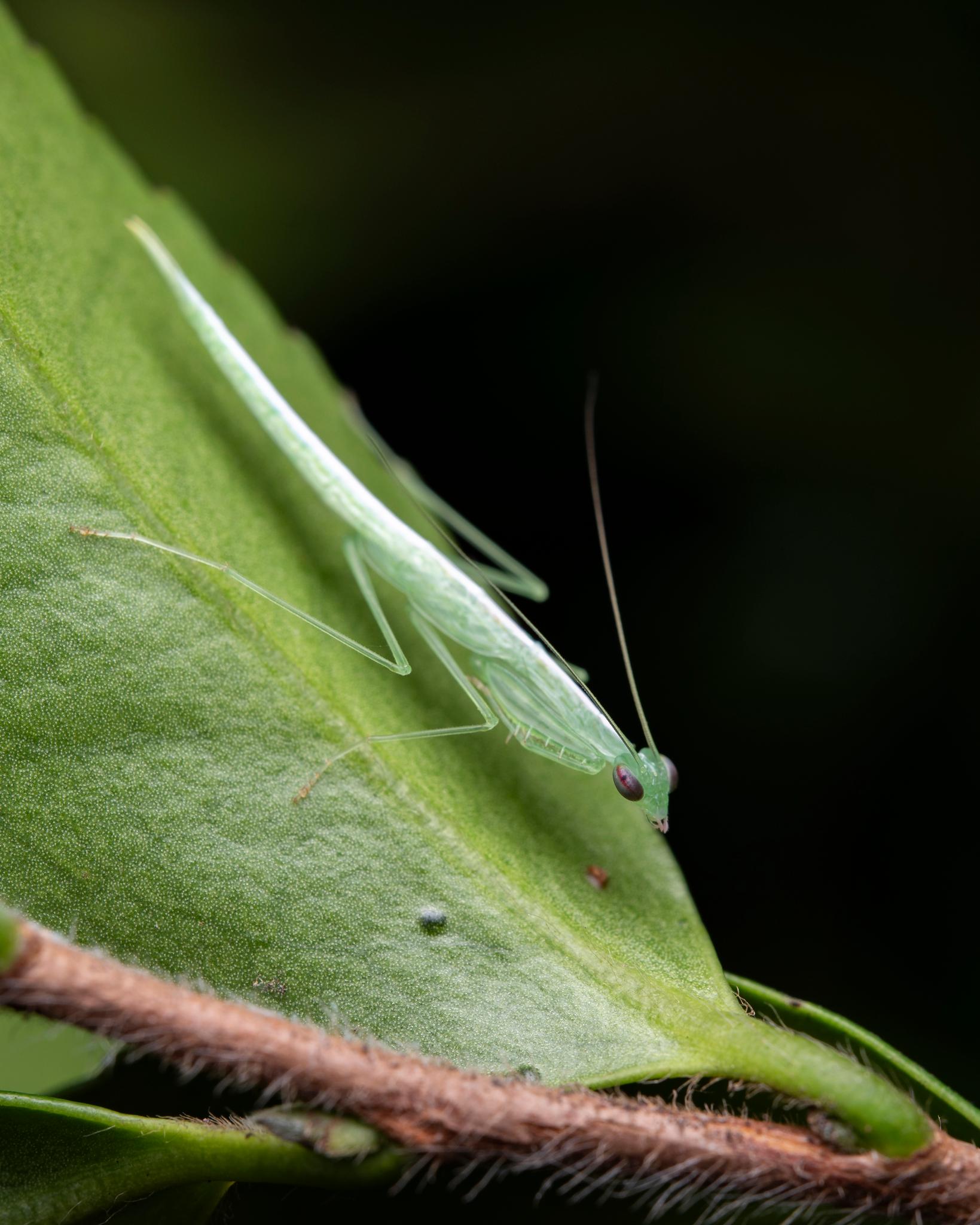 Southern Snake MantisSnake mantises are long and thin, and among the mantises people see most often in Australia. Yet this species, the southern snake mantis, was only formally named by scientists in 2026.
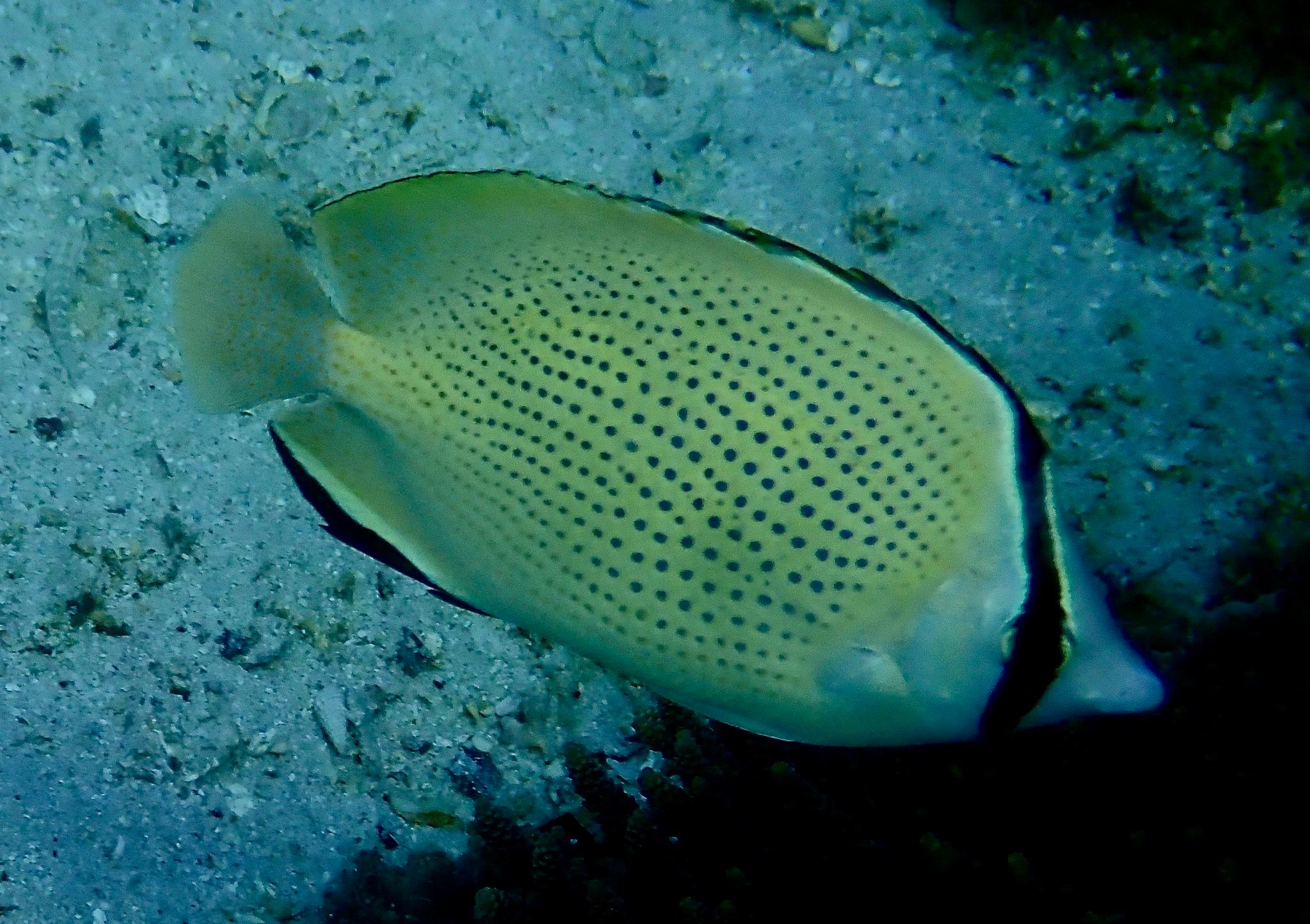 Speckled ButterflyfishThis butterflyfish almost certainly didn't hatch anywhere near here. In Sydney it's a tropical stray, most likely carried south as a tiny larva on the East Australian Current, the same warm river in the sea that carries young eels down the coast.
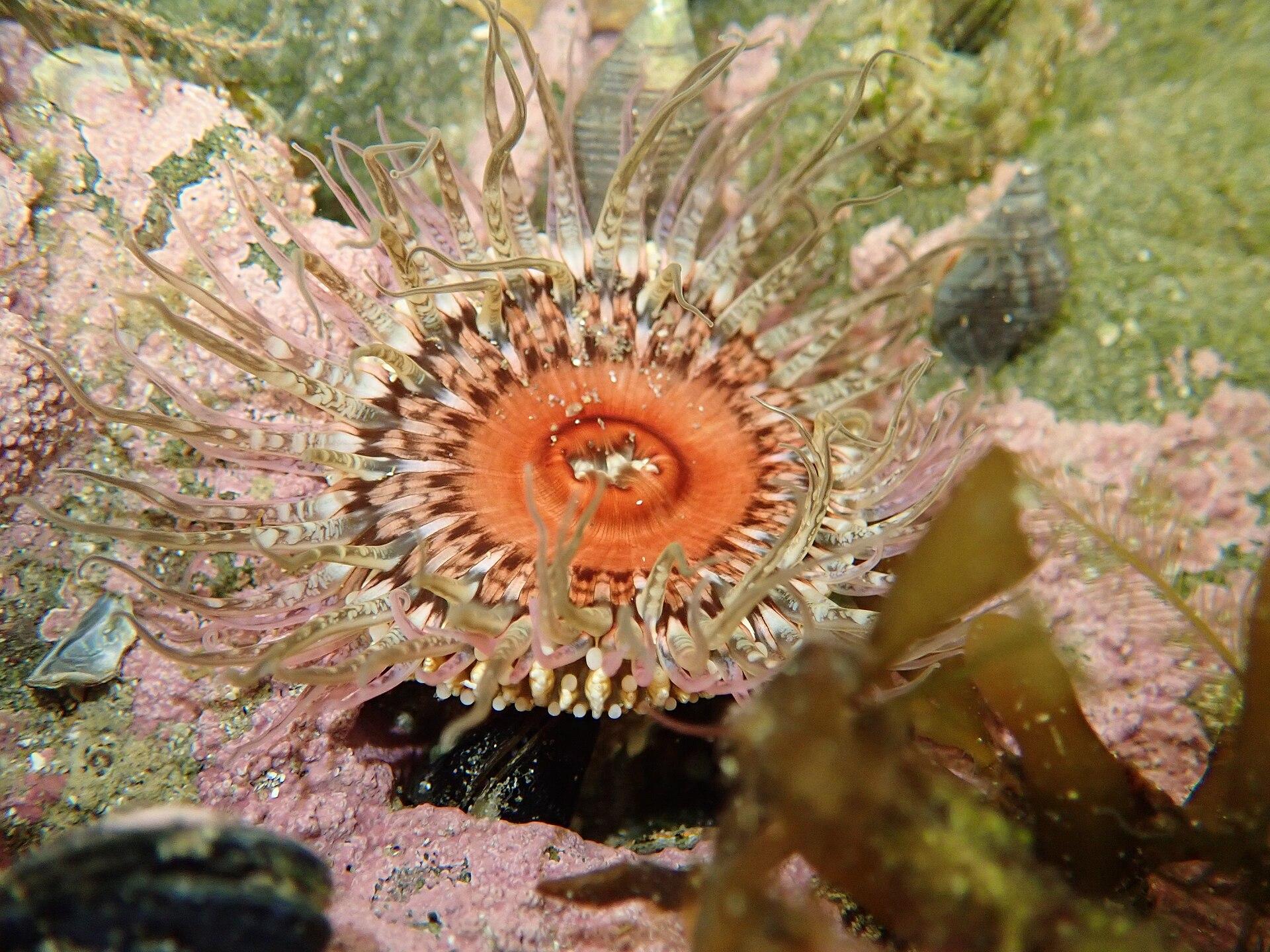 Speckled rock anemoneThat lump of gravel on the rock is alive. The speckled rock anemone sticks bits of gravel and sand between its tentacles, which often hides its real colours.
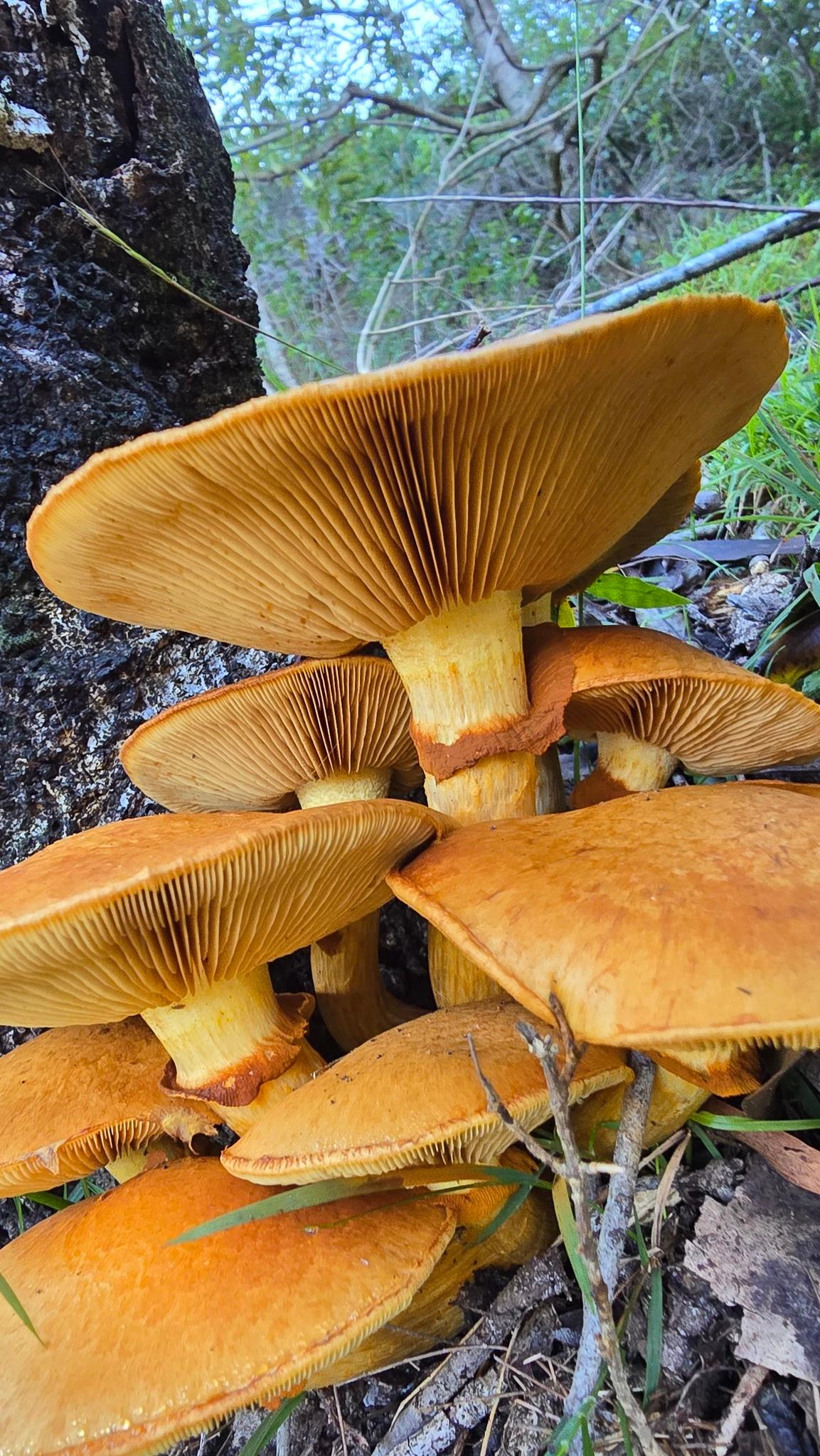 Spectacular RustgillA dense golden clump bursting from the foot of a living tree looks like an attack. Usually it isn't.
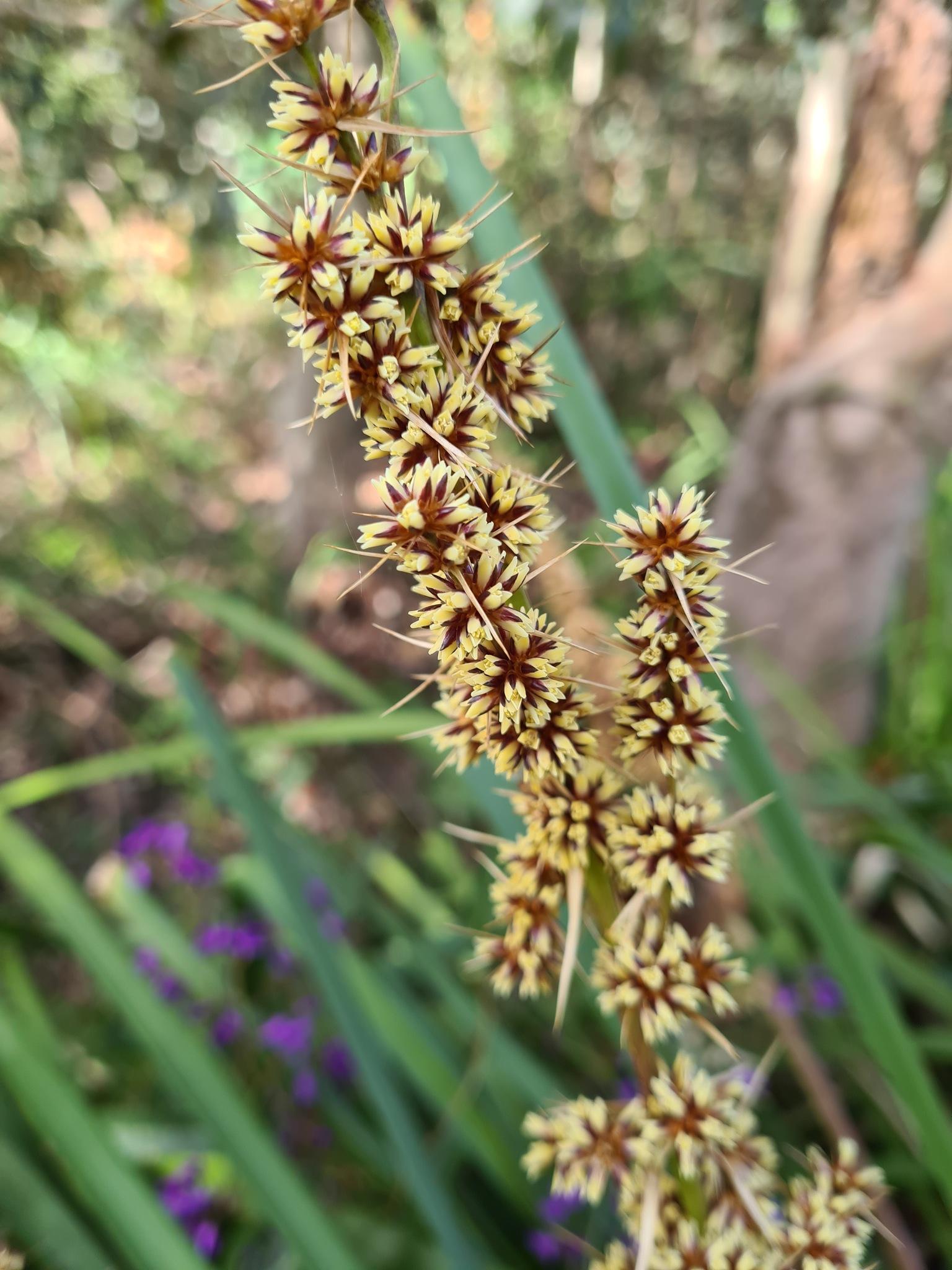 Spiny-headed Mat-rushIt's one of the plainest plants around: a tough clump of long green leaves. Look again.
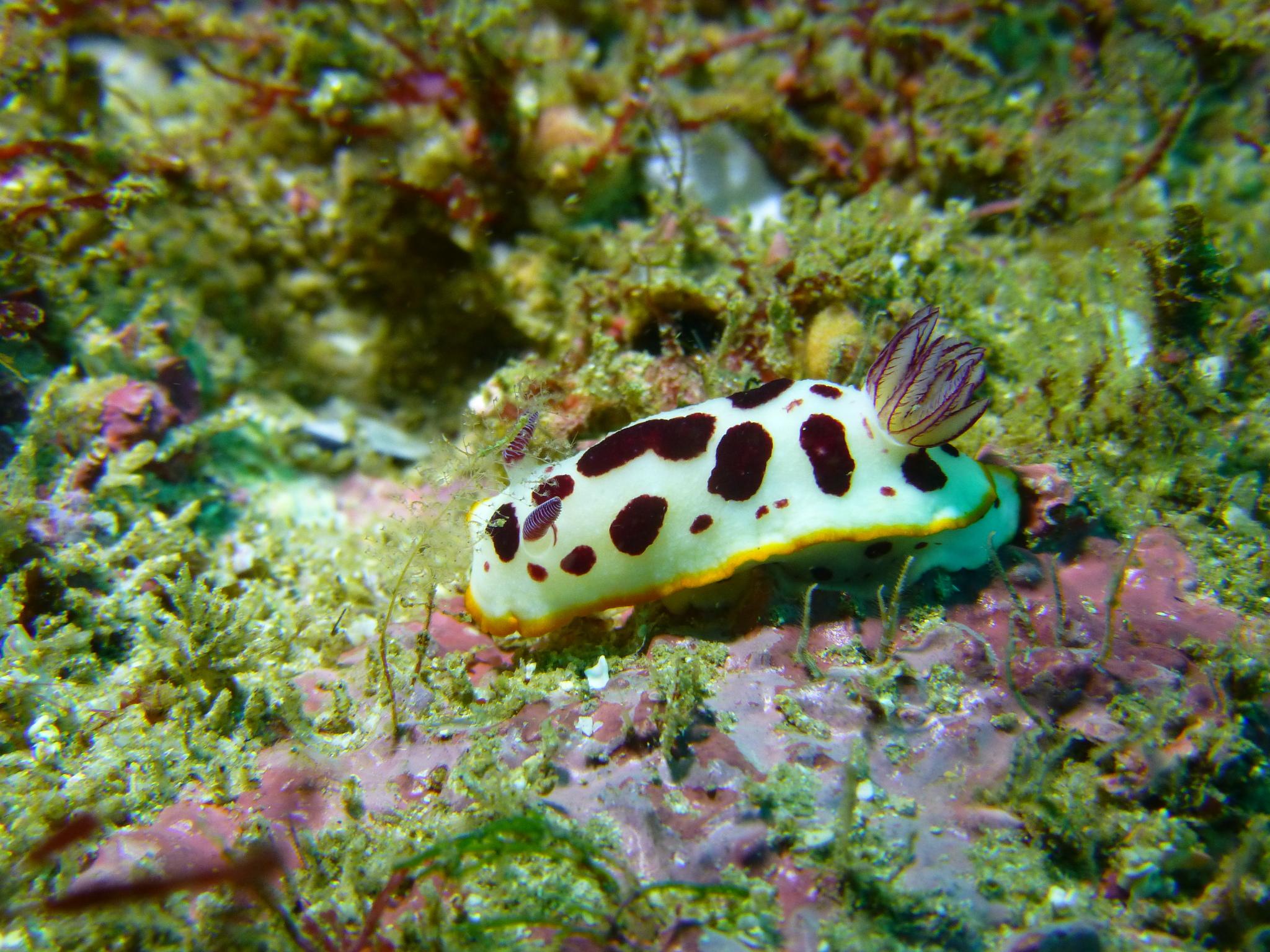 Splendid GoniobranchIt's found only in New South Wales and southern Queensland, and it isn't the only one wearing red spots. In south-eastern Australia there's a group of sea slugs, different species, that all wear the same red-spotted pattern.
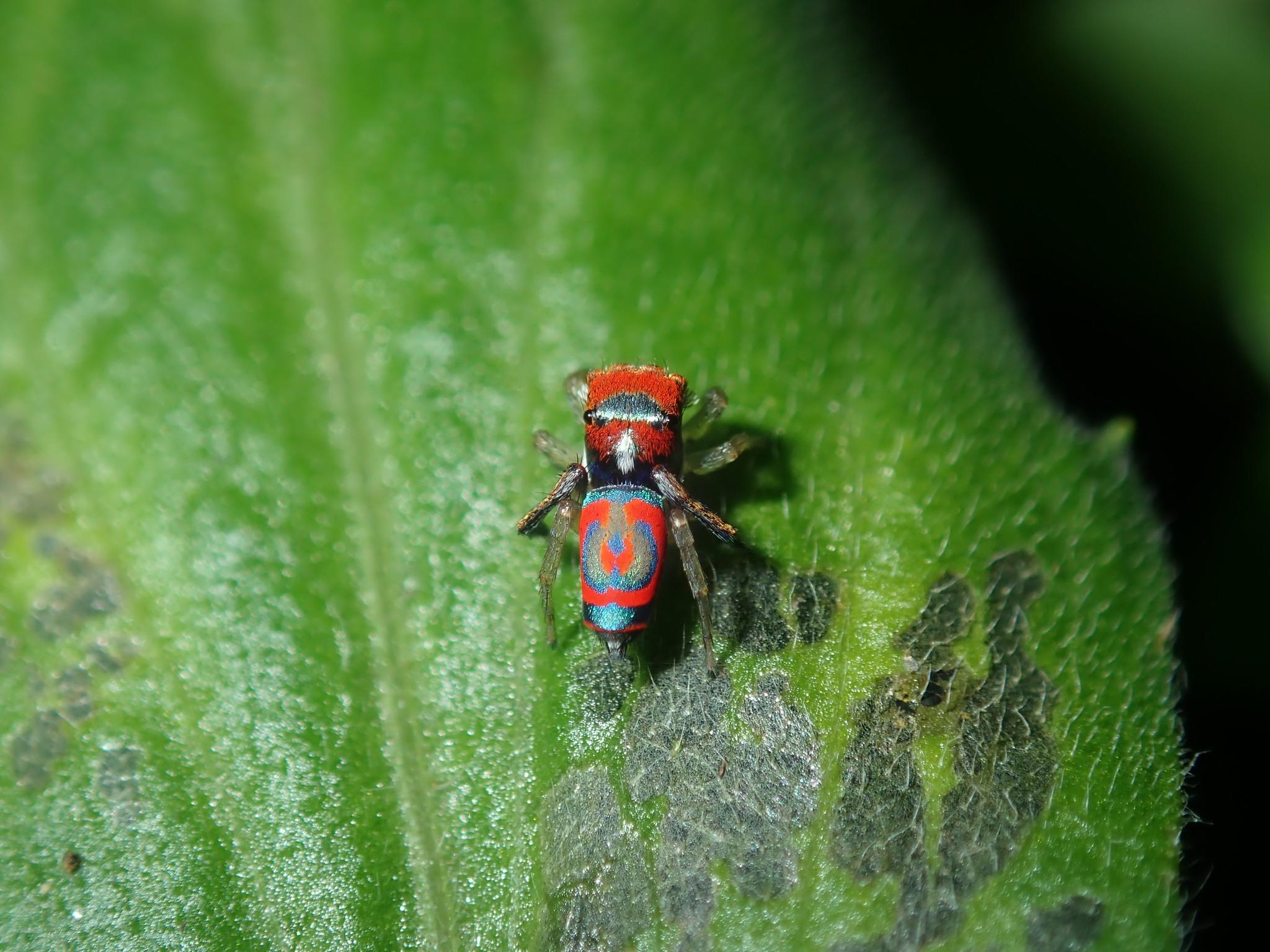 Splendid Peacock SpiderThere's no blue in his blue. His blue scales are colourless.
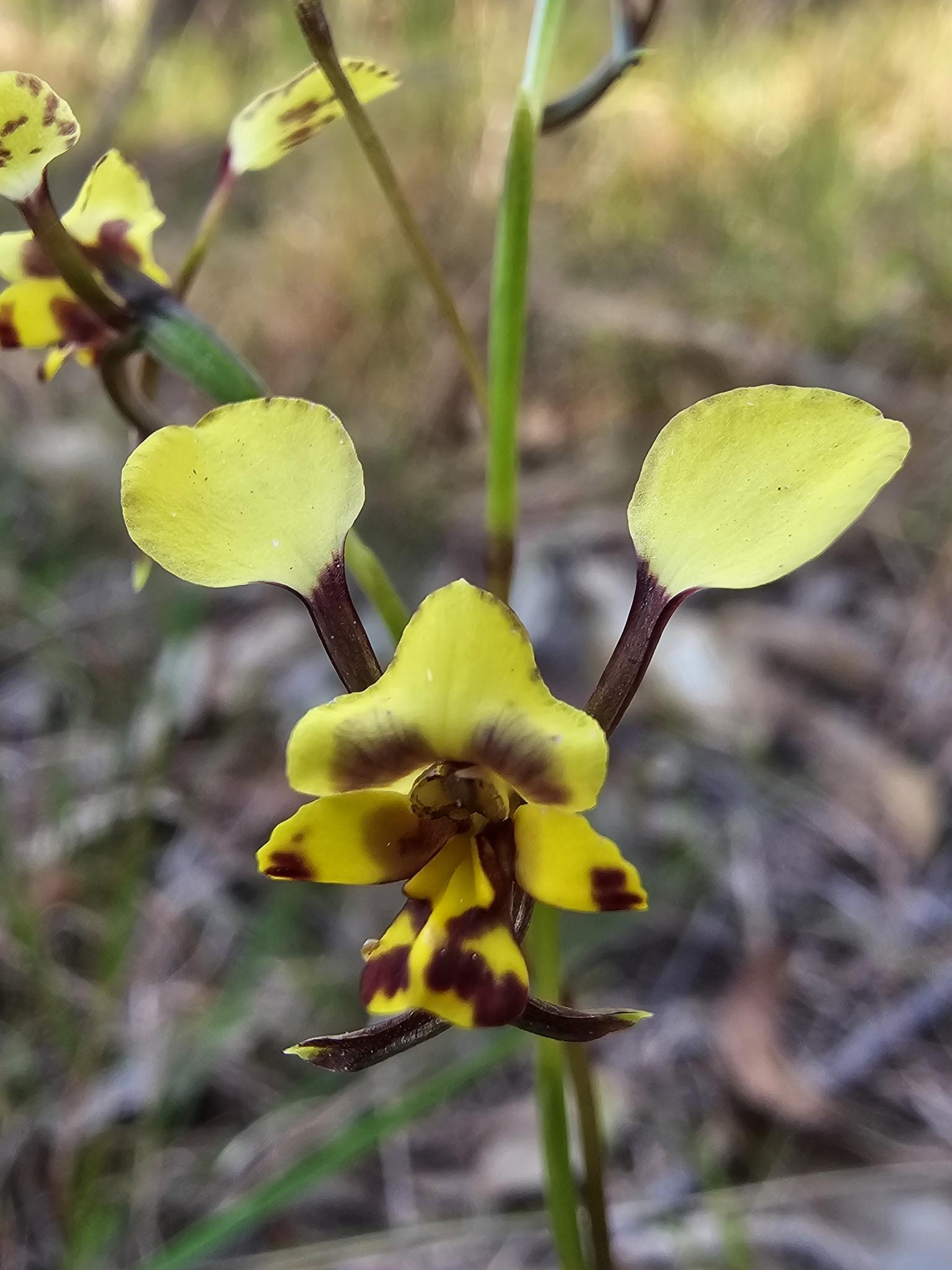 Spotted DoubletailThis flower is carrying a sign you can't see. It's printed in ultraviolet, a colour bees see and we don't, and it marks the way to nectar.
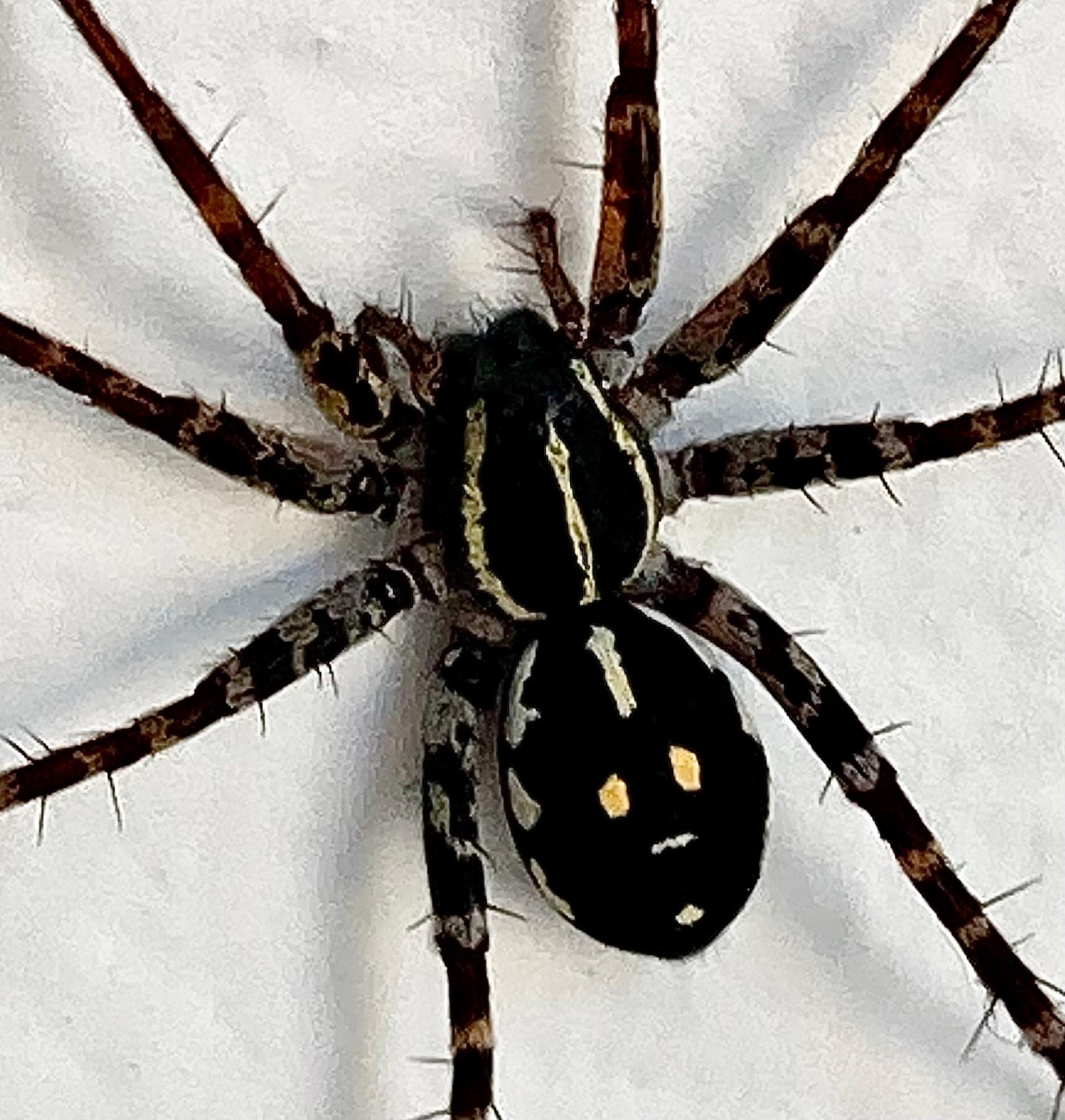 Spotted Ground Swift SpiderThis spider is wearing a disguise, and the costume it's chosen is a spider wasp. Spider wasps move through leaf litter in a stop-start way, waving their orange antennae as they search for prey.
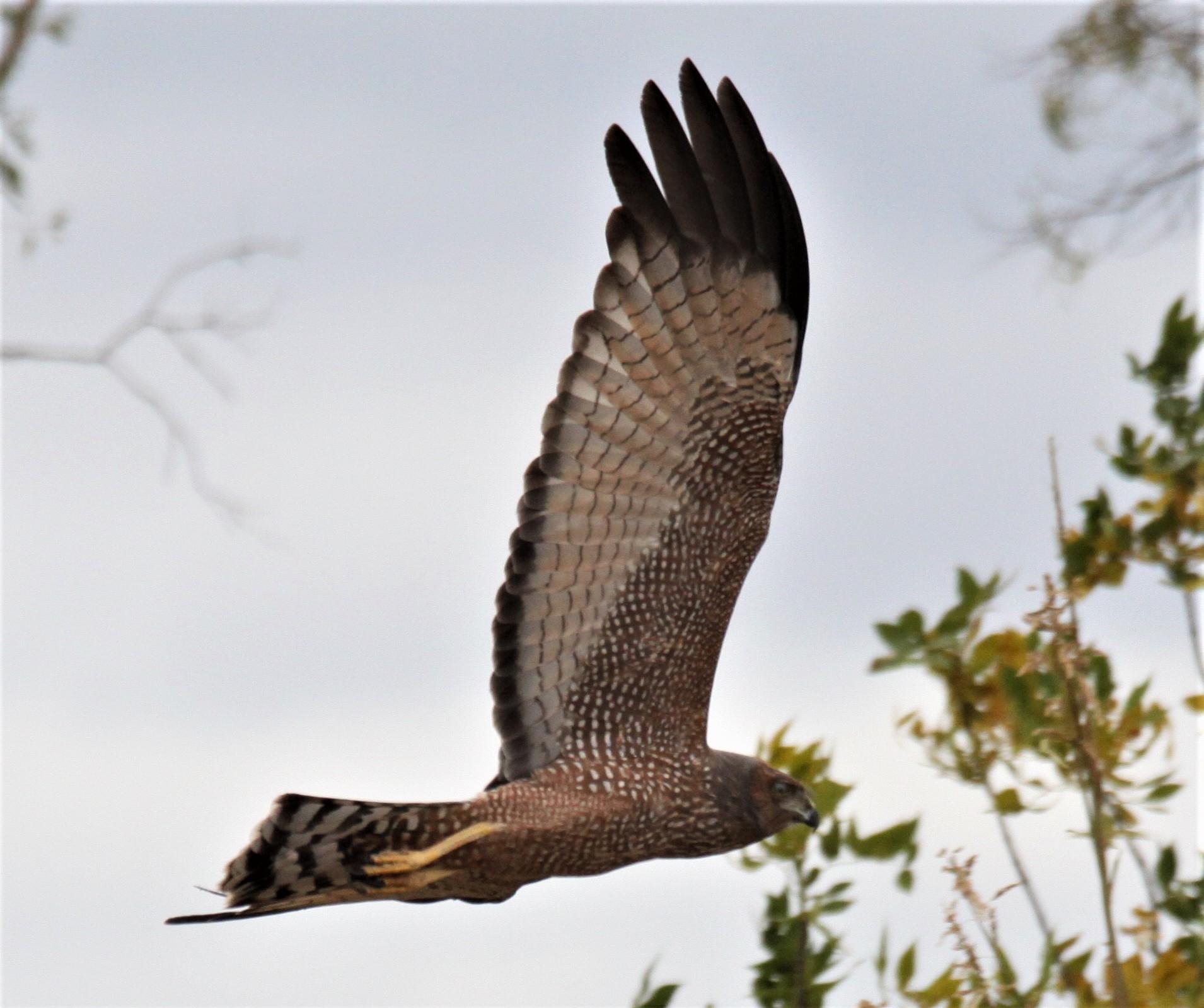 Spotted HarrierIt drifts low and slow over the grass, wings swept up, and it isn't only looking. It's listening.
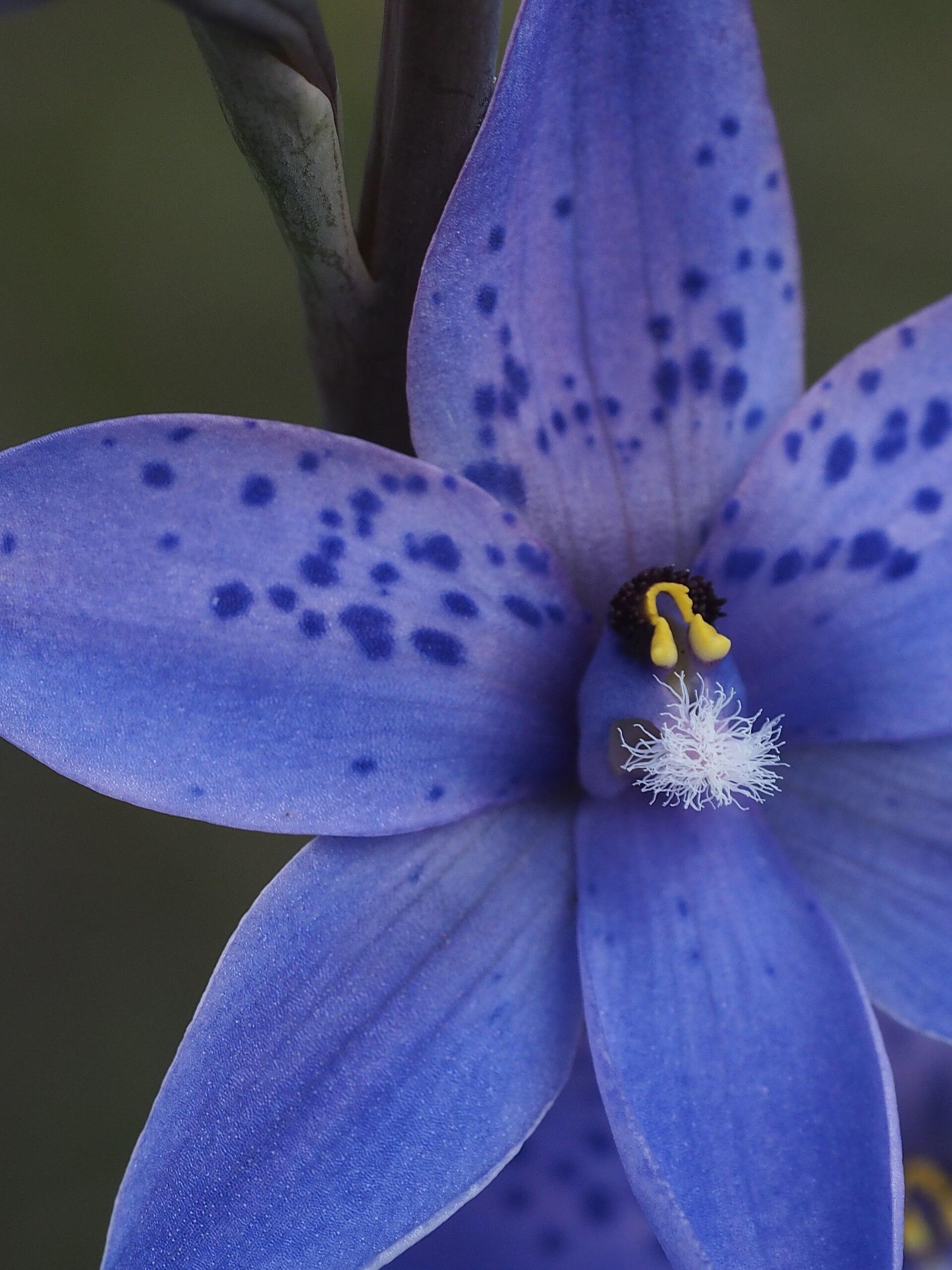 Spotted sun-orchidSun orchids live up to their name. The flowers close at night and open on warm, sunny days, and the hotter it is, the faster and wider they open.
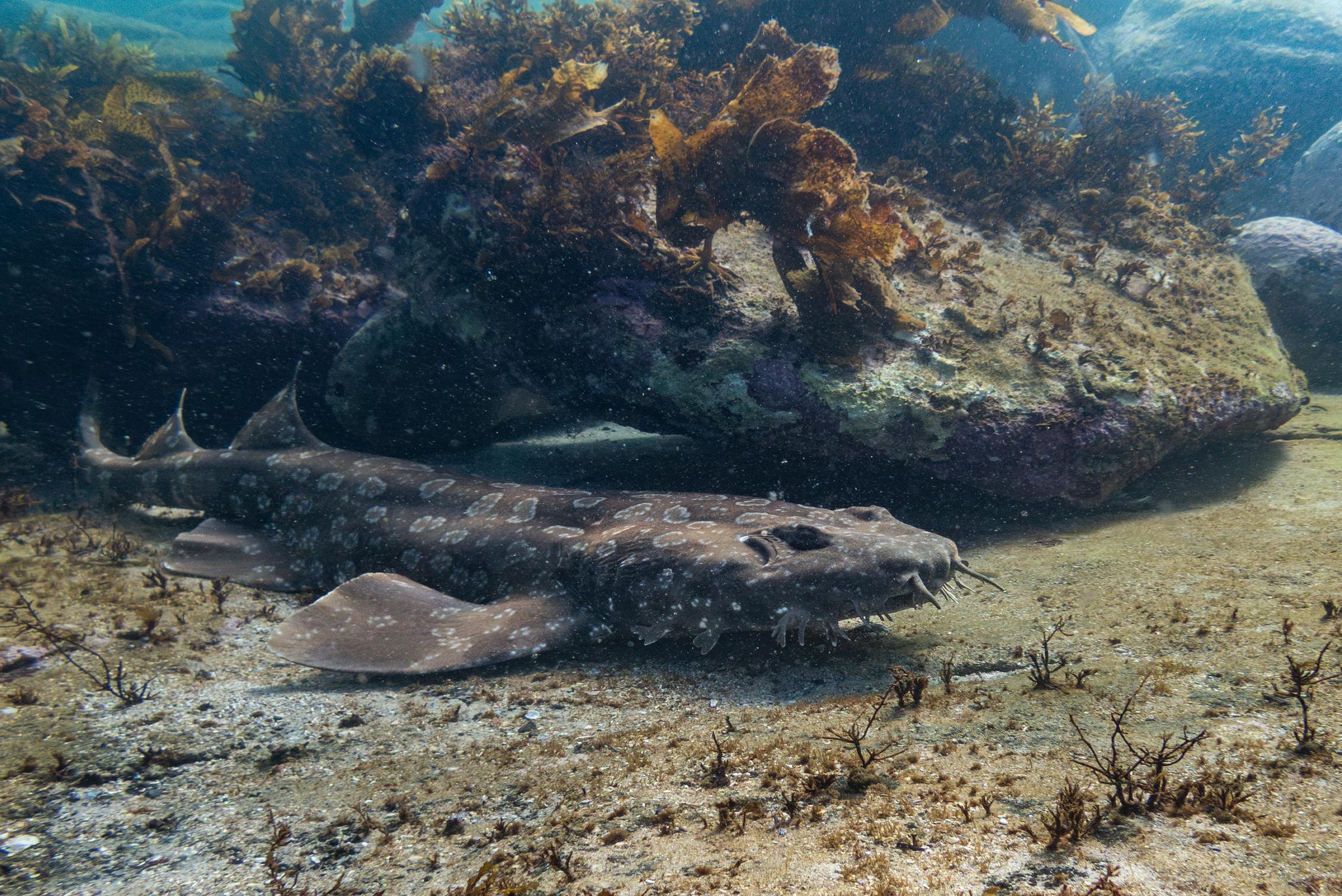 Spotted WobbegongIt's spring, and a female spotted wobbegong may be close to giving birth. She has carried her young inside her for 10 to 11 months, and she can have as many as 37 at once.
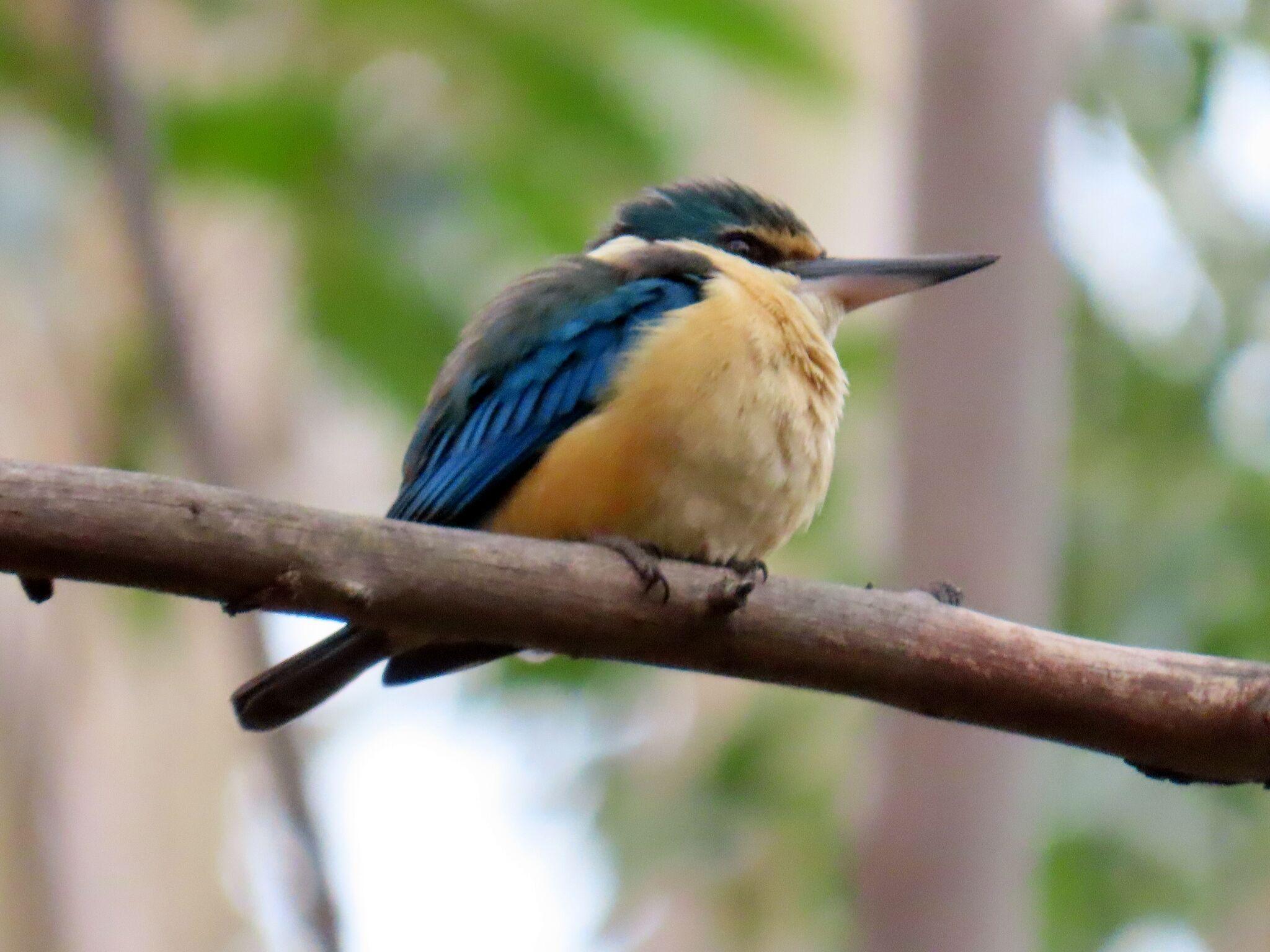 Spring migrants arriving back (koels, cuckoos, dollarbirds, kingfishers)That rising "koo-el", over and over, often well into the night, is a male koel, and he has just come a very long way. He spent the winter to the north, as far as New Guinea and beyond, and flew back down in late September or early October.
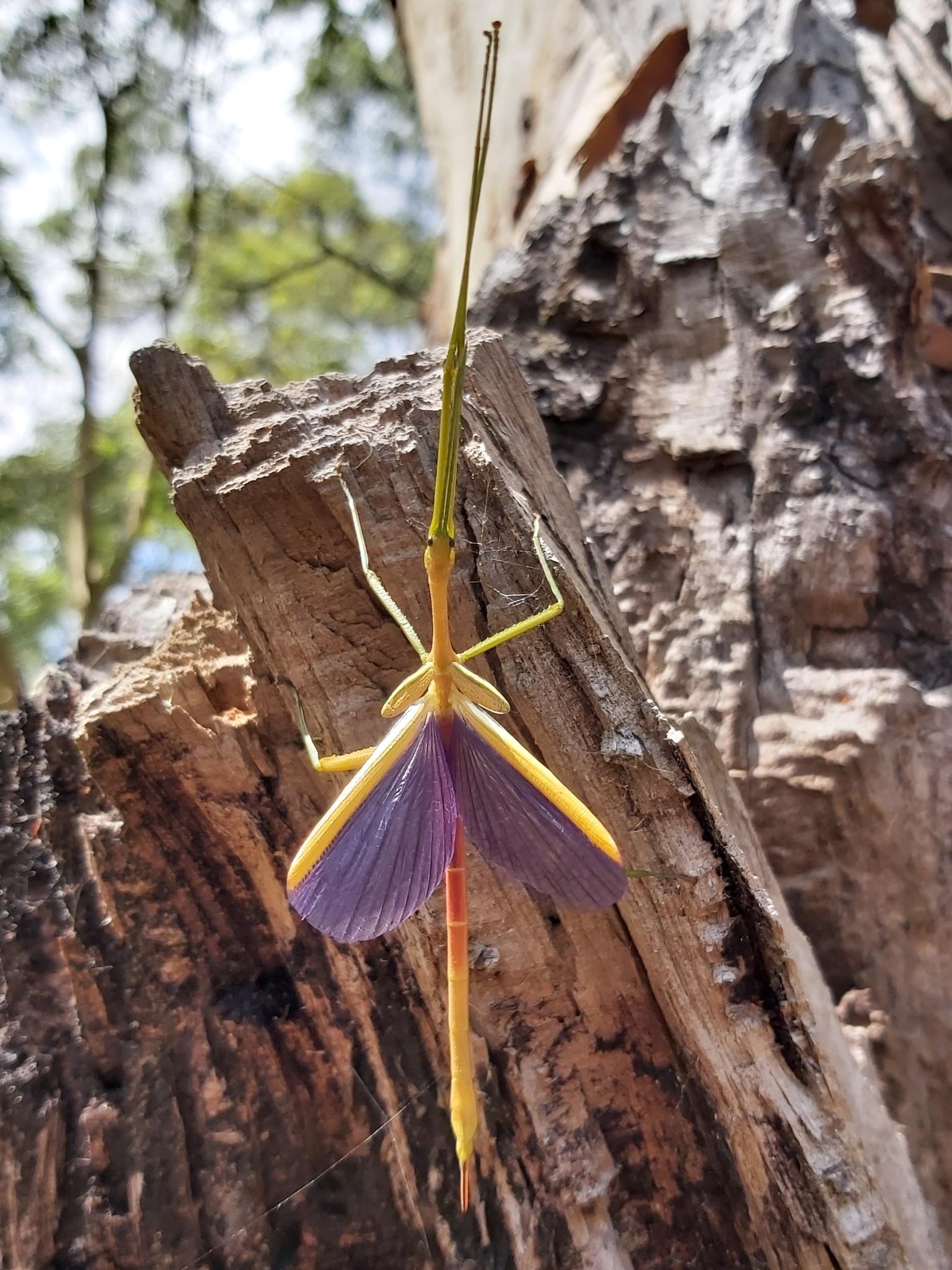 Spur Legged PhasmidMost stick insects are quite rare. A stick insect's whole life is built around not being noticed: the stillness, the colour and shape of a twig.
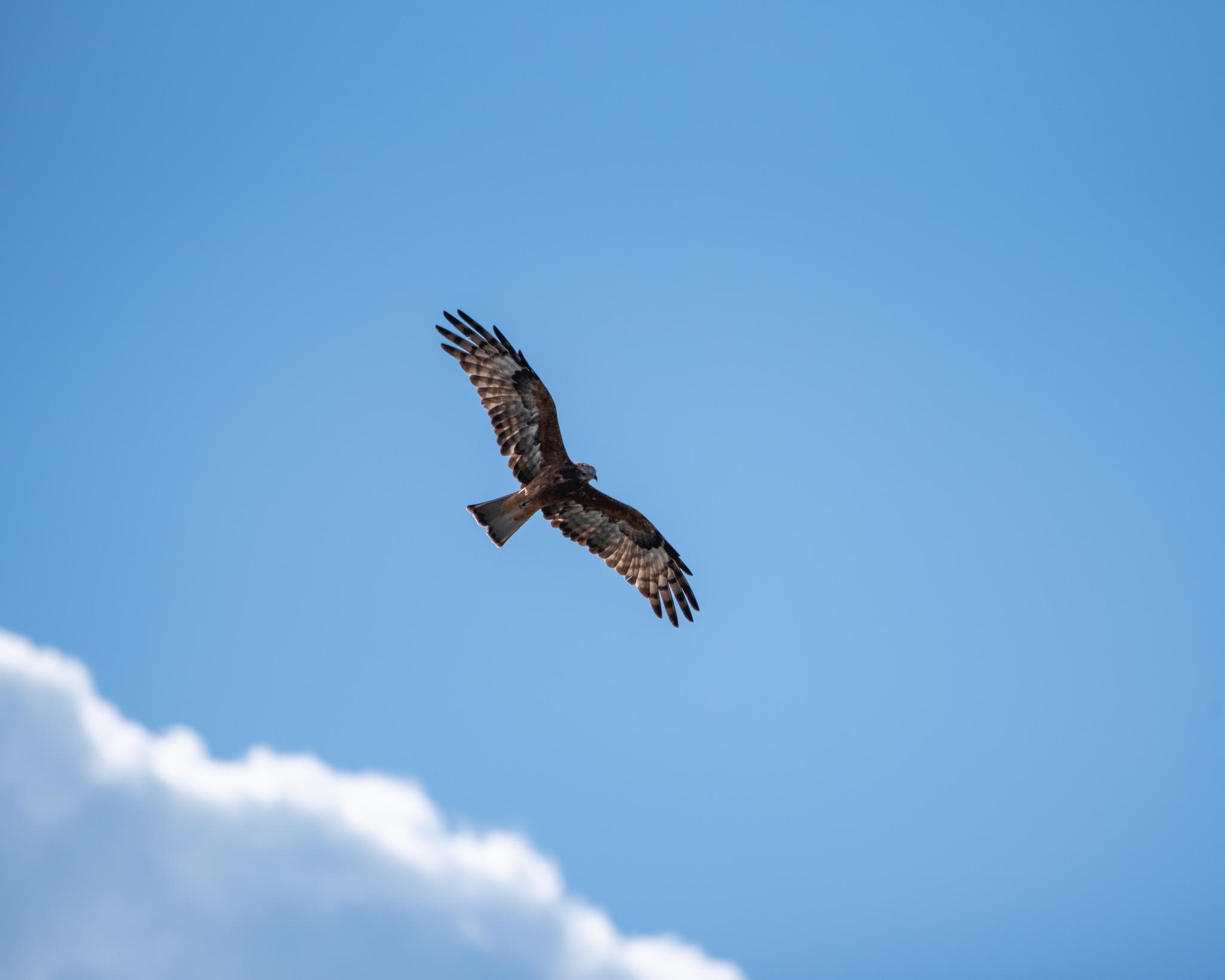 Square-tailed KiteThe square-tailed kite drifting over the treetops isn't looking for anything dead. It doesn't eat carrion.
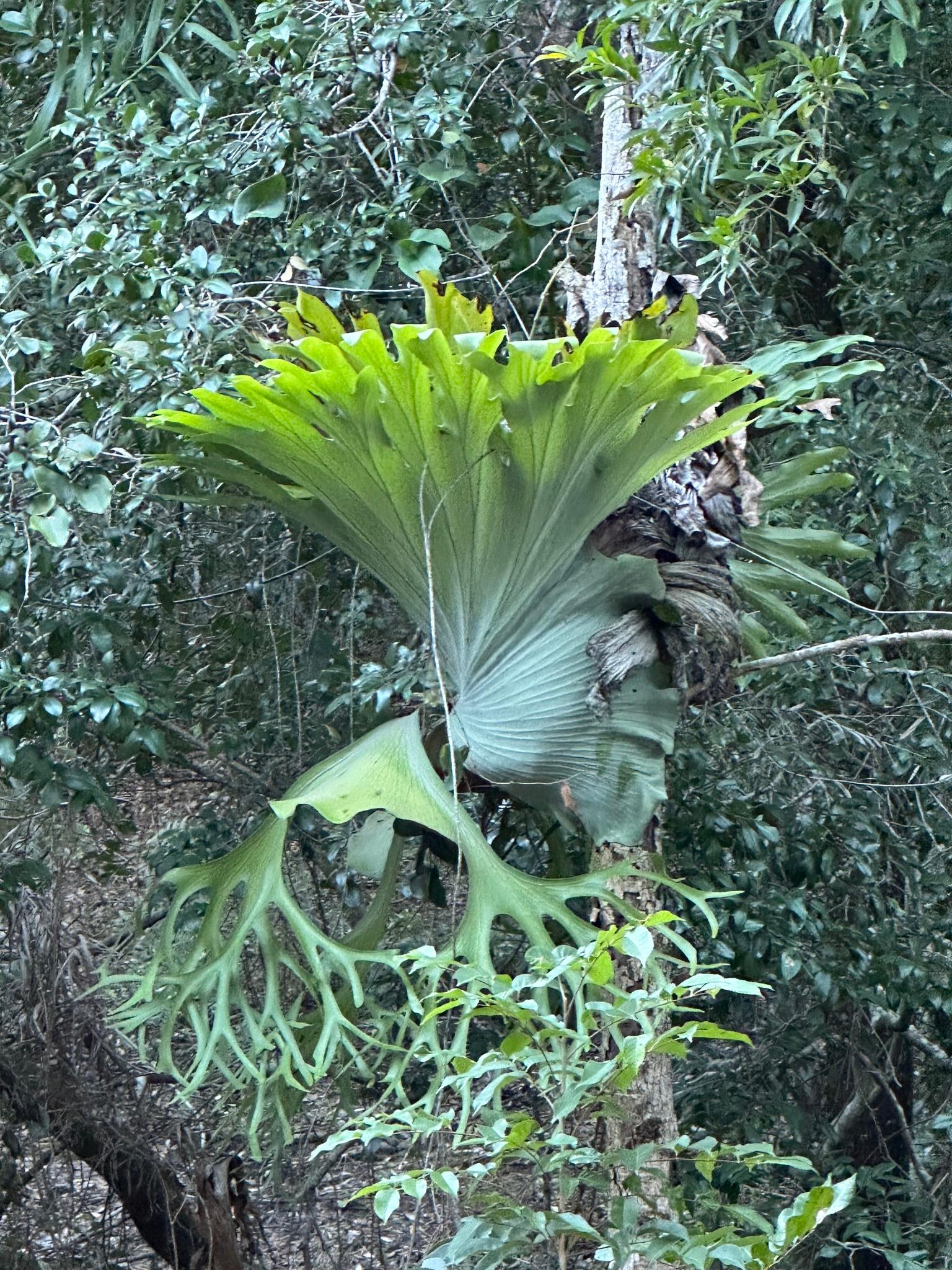 Stag Horn FernThis staghorn is a loner. Its cousin, Sydney's elkhorn, lives in colonies that share a nest and split the work.
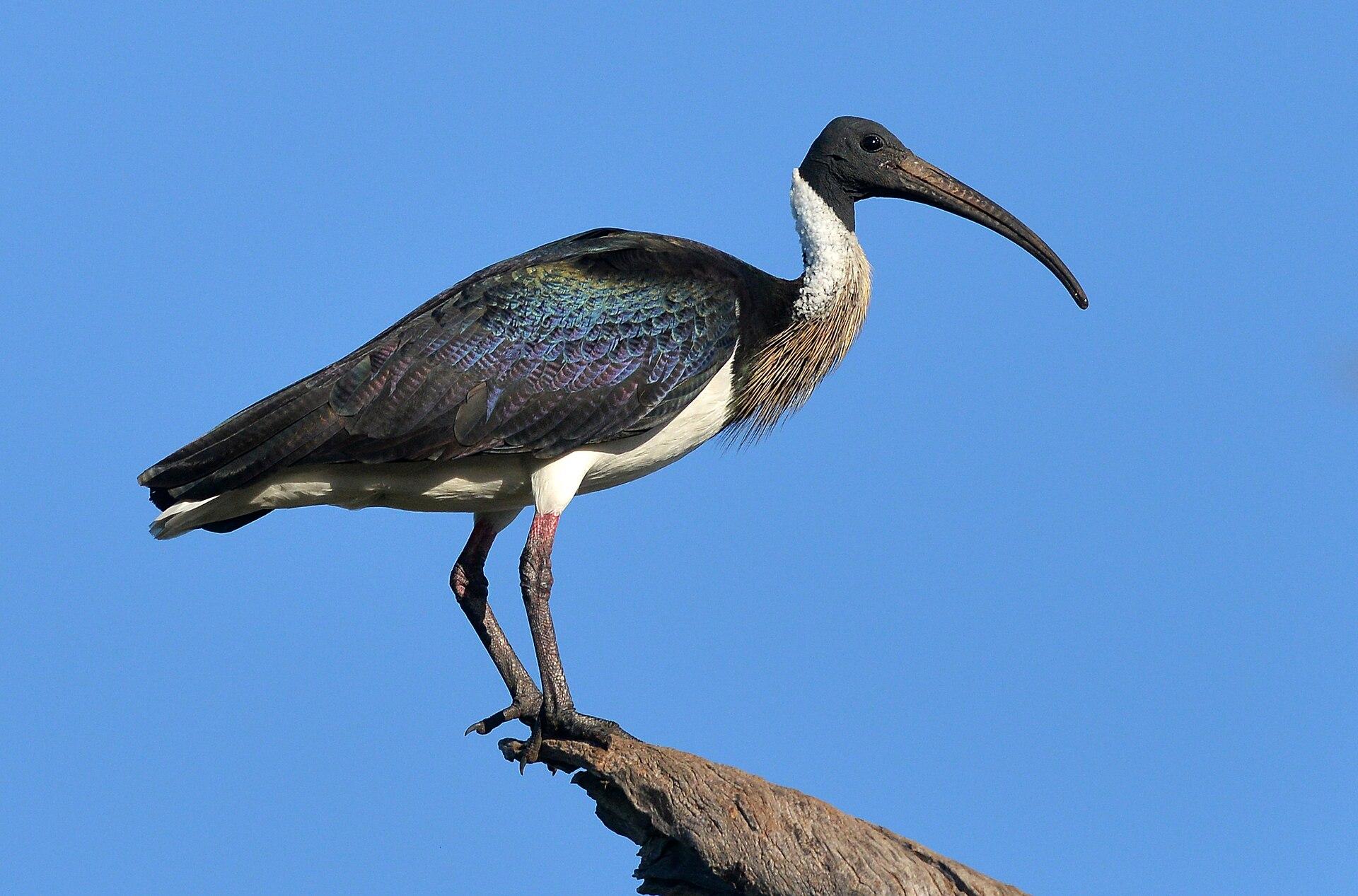 Straw-necked IbisIn the city, ibises have a bad name: the white one raiding the bins is the "bin chicken". This is a different ibis, with a nickname earned the other way.
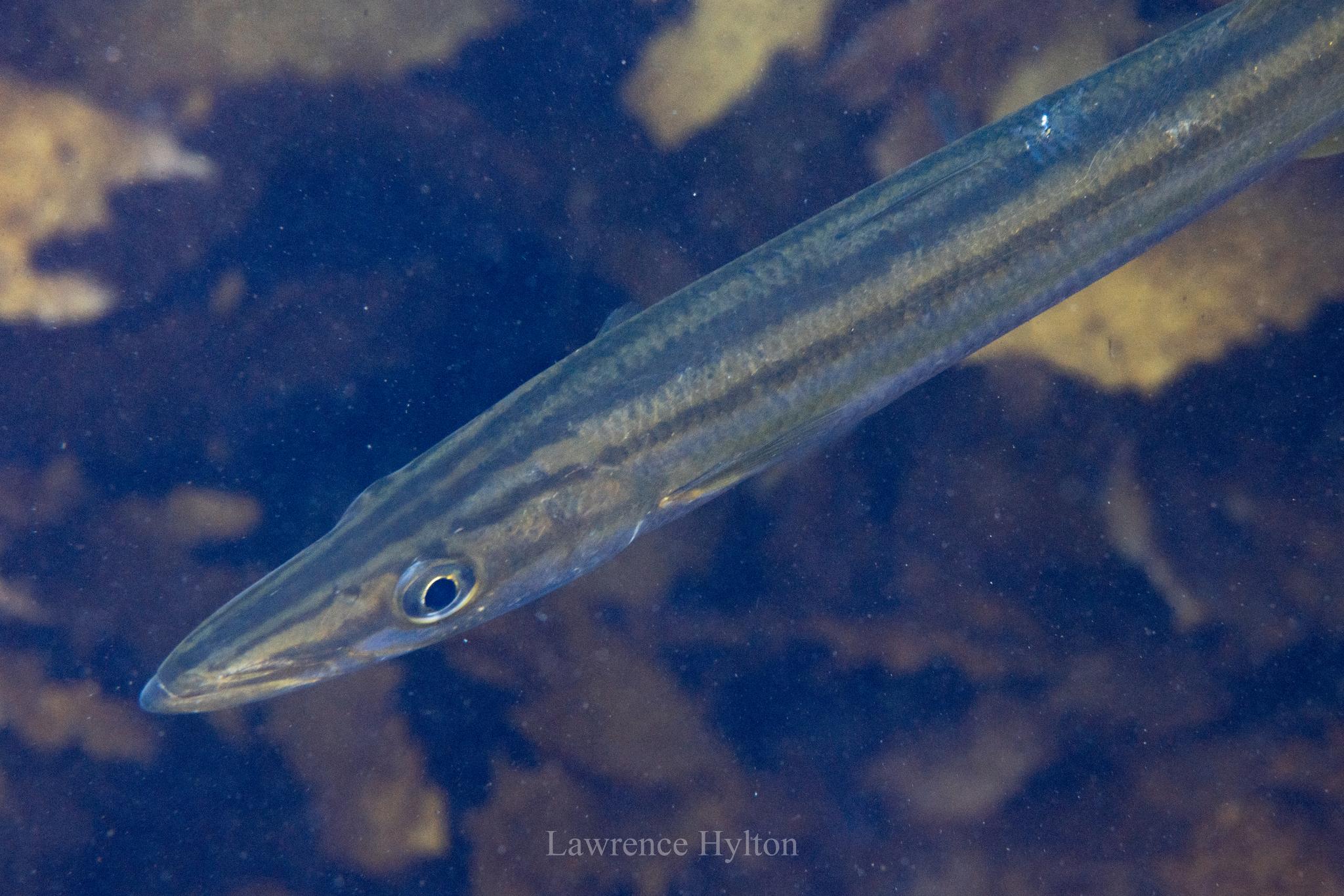 Striped BarracudaA barracuda is a voracious carnivore, built to hunt small fishes. Young striped barracuda school over seagrass, silver and watchful.
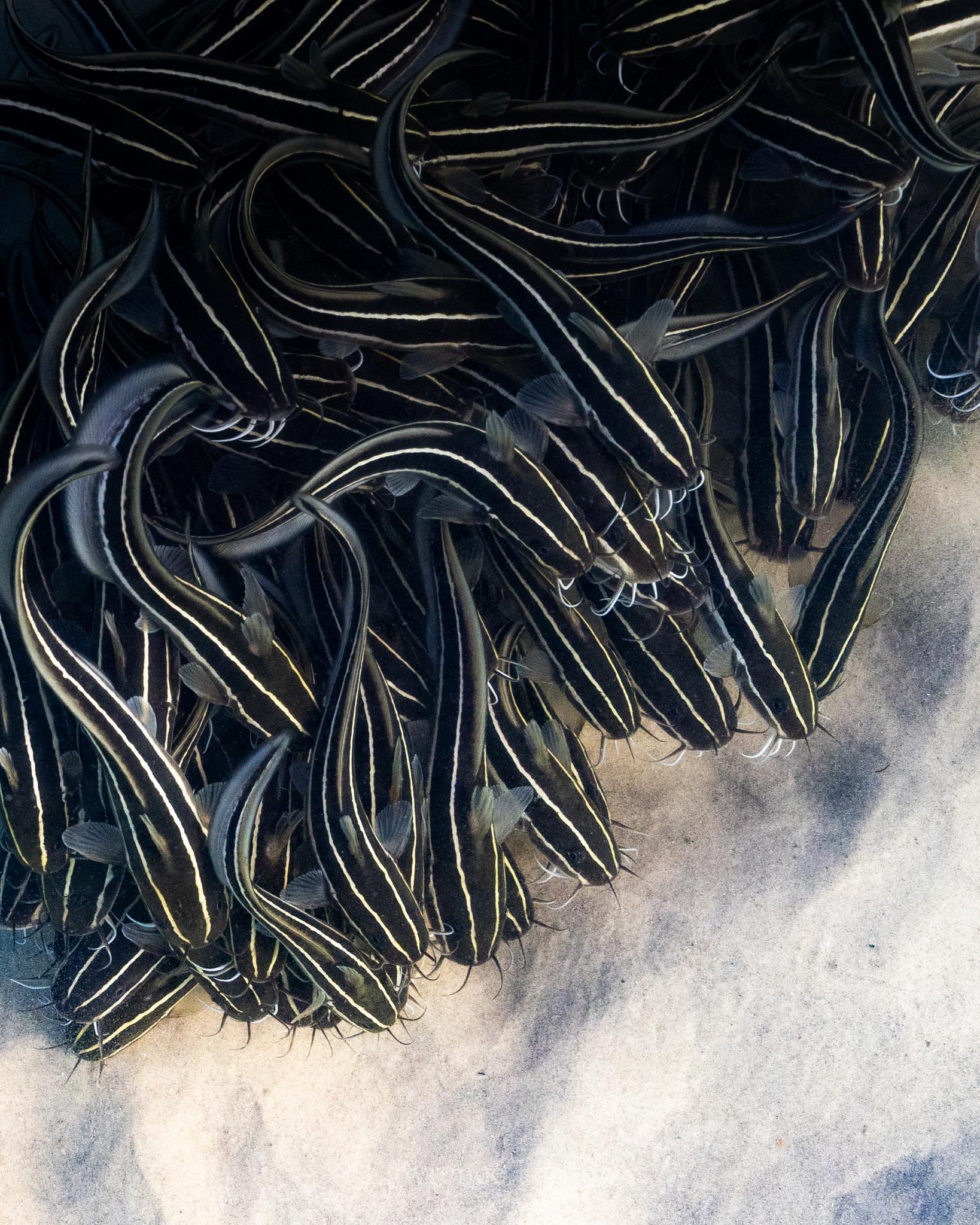 Striped Eel CatfishYoung striped catfish swim in dense balls, sometimes hundreds strong, rolling as if they were one animal. The adults usually go it alone or in small groups.
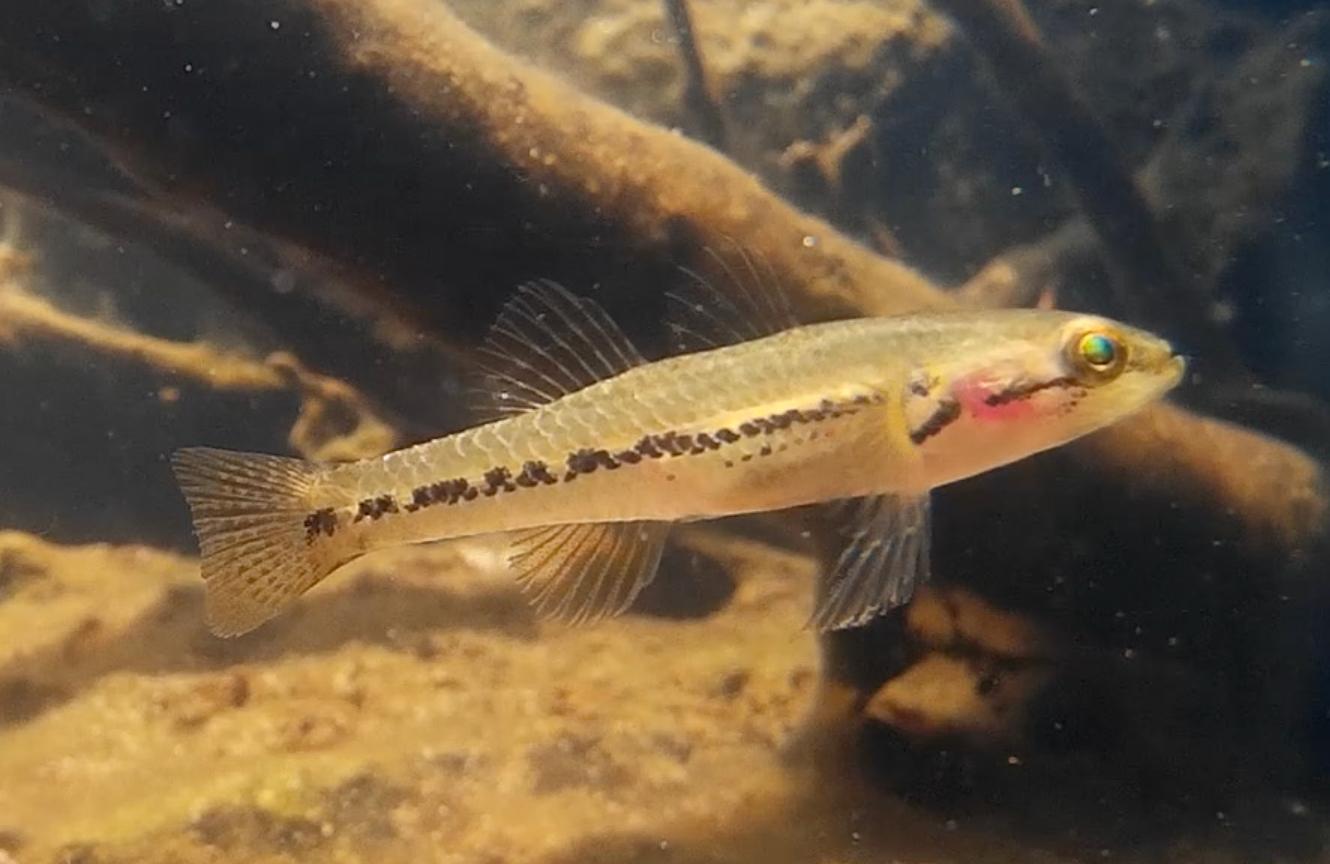 Striped gudgeonThis fish started life going the other way. Its father guarded the eggs and fanned them until they hatched, about four days later.
- Striped Marsh FrogThat froth floating on the pond may be a nursery. Striped marsh frogs lay their eggs as a foam raft on still water, even in fish ponds and abandoned swimming pools.
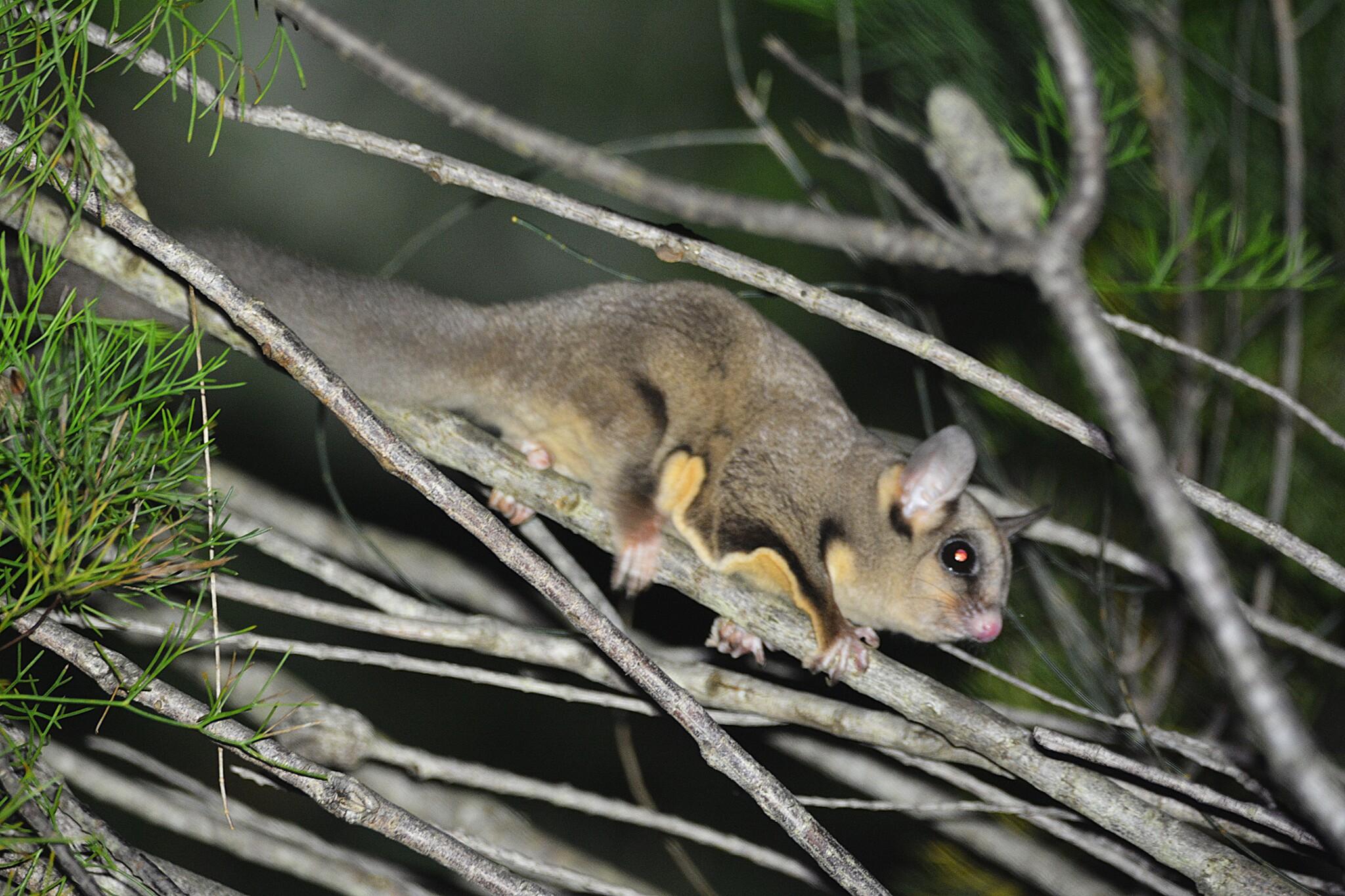 Sugar GliderIf something small launches from one tree and sails silently to another, it may be a sugar glider. It can glide up to 50 metres between trees on a skin membrane stretched from its fifth finger to its ankle, steering with its long bushy tail.
- Superb FairywrenIt looks like the perfect little family: one bright blue male, a brown female, and a few helpers, hopping around the garden together. It isn't what it seems.
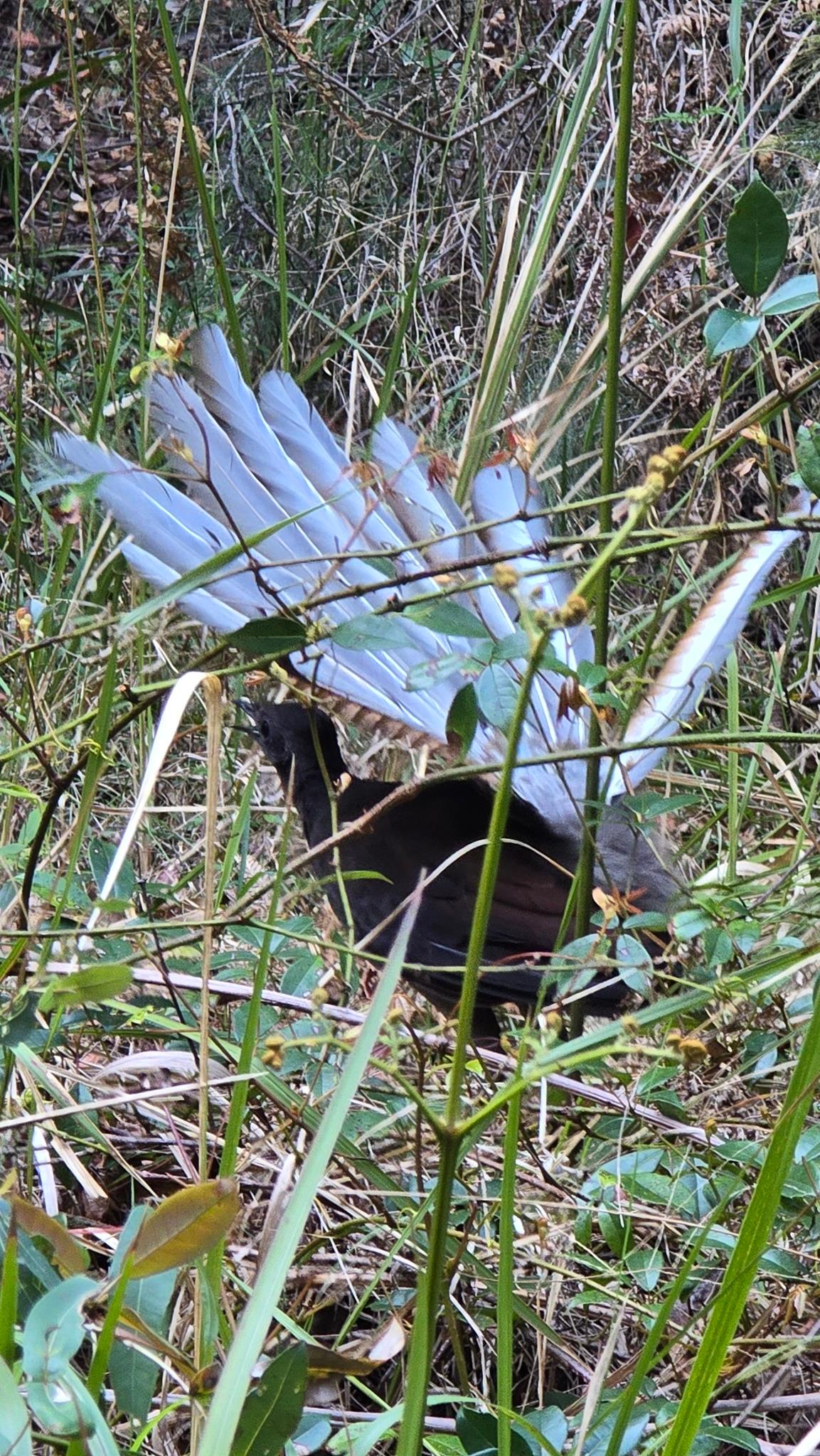 Superb LyrebirdA lyrebird scratching through the leaves is doing more than finding lunch. Raking for insects, lyrebirds turn over about 155 tonnes of leaf litter and soil per hectare each year where conditions suit them.
- Superb lyrebirds displaying and mimickingSomewhere in his song to a female, it may suddenly sound as if a whole flock of small birds has spotted a predator and is mobbing it, all raising the alarm at once. There is no flock.
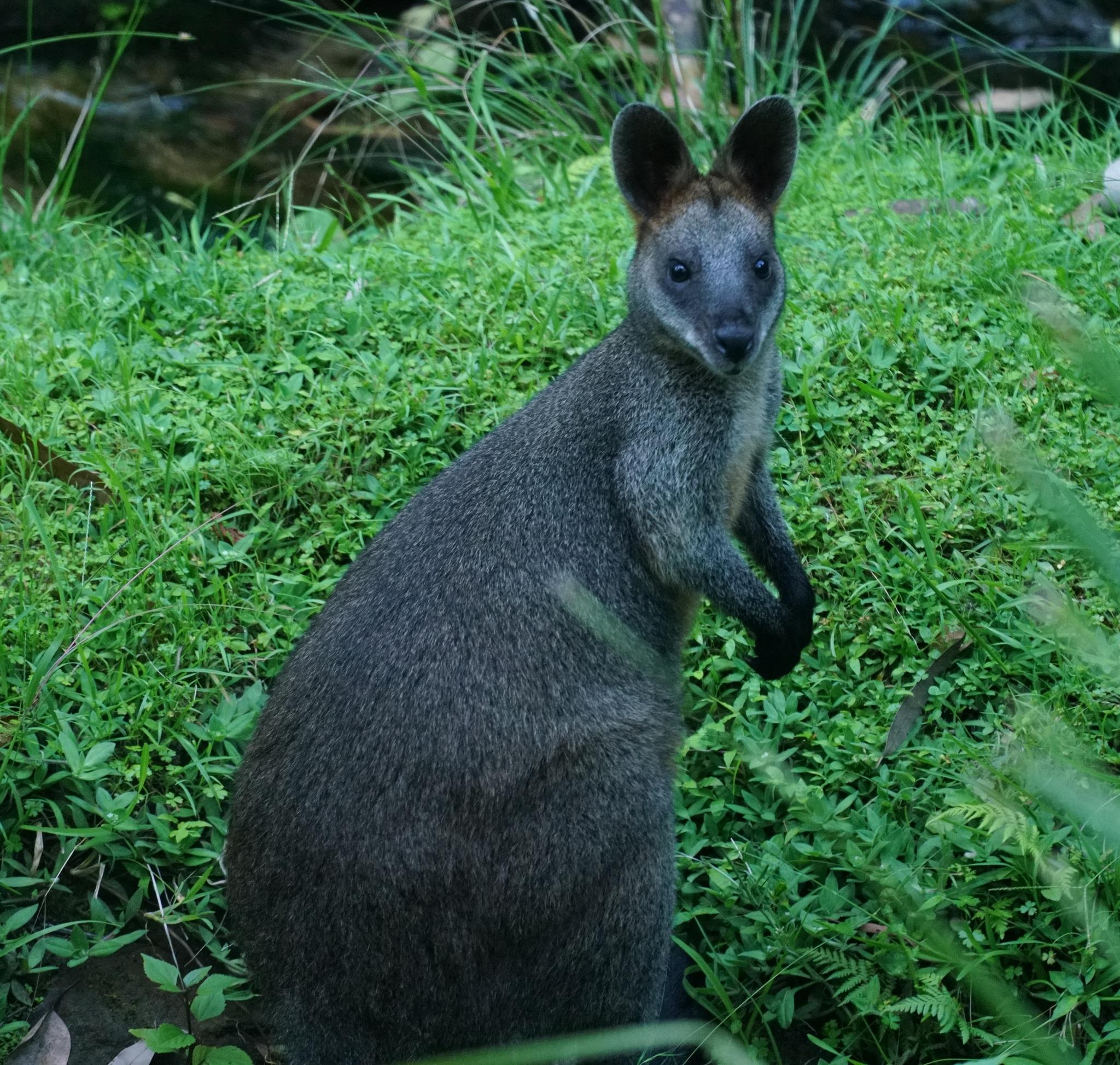 Swamp WallabyThe dark wallaby crashing off through the undergrowth may be the most constantly pregnant animal you'll ever see.
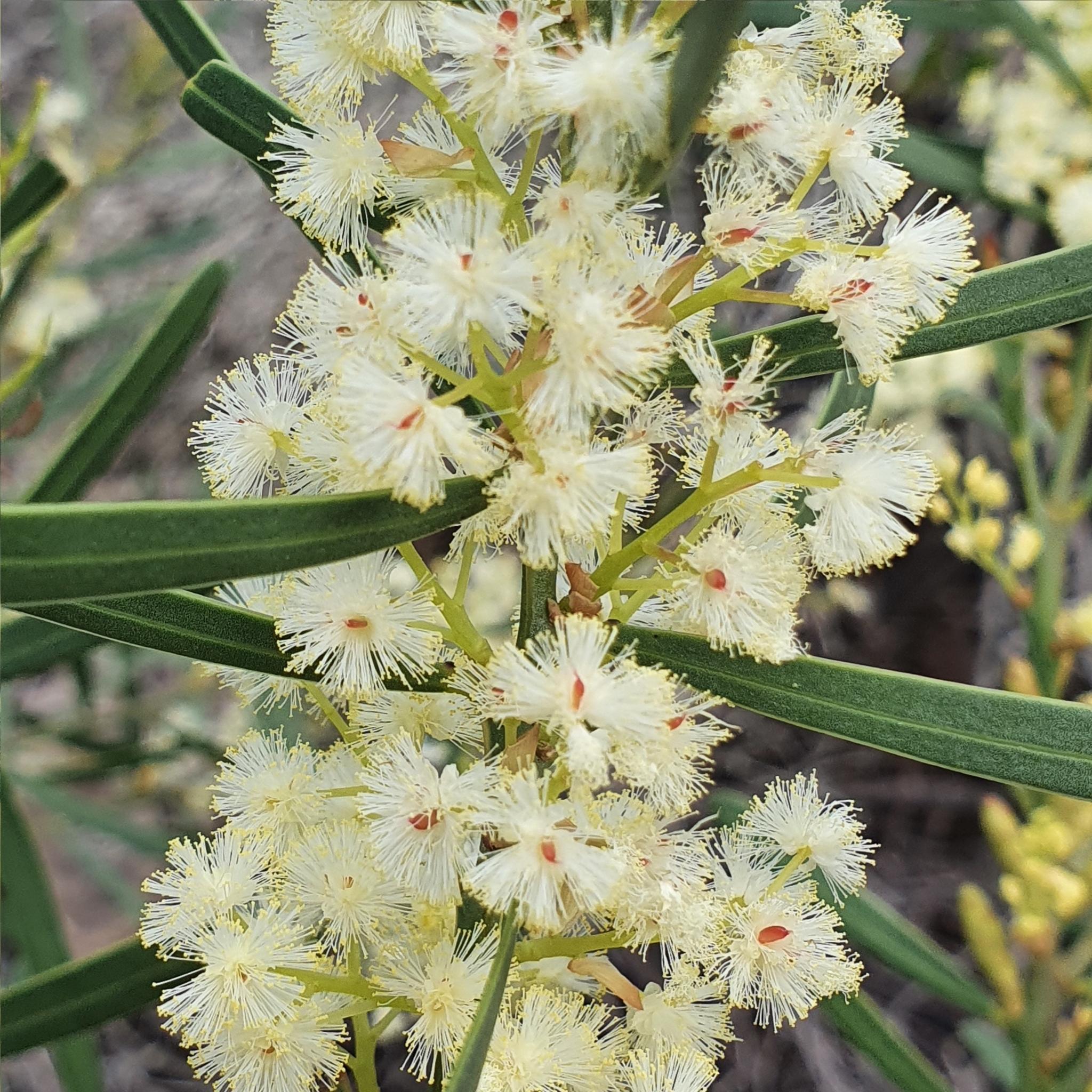 Sweet WattleThere are more sweet wattles here than you can see. Their seeds lie dormant in the soil, sometimes long after the parents are gone, waiting.
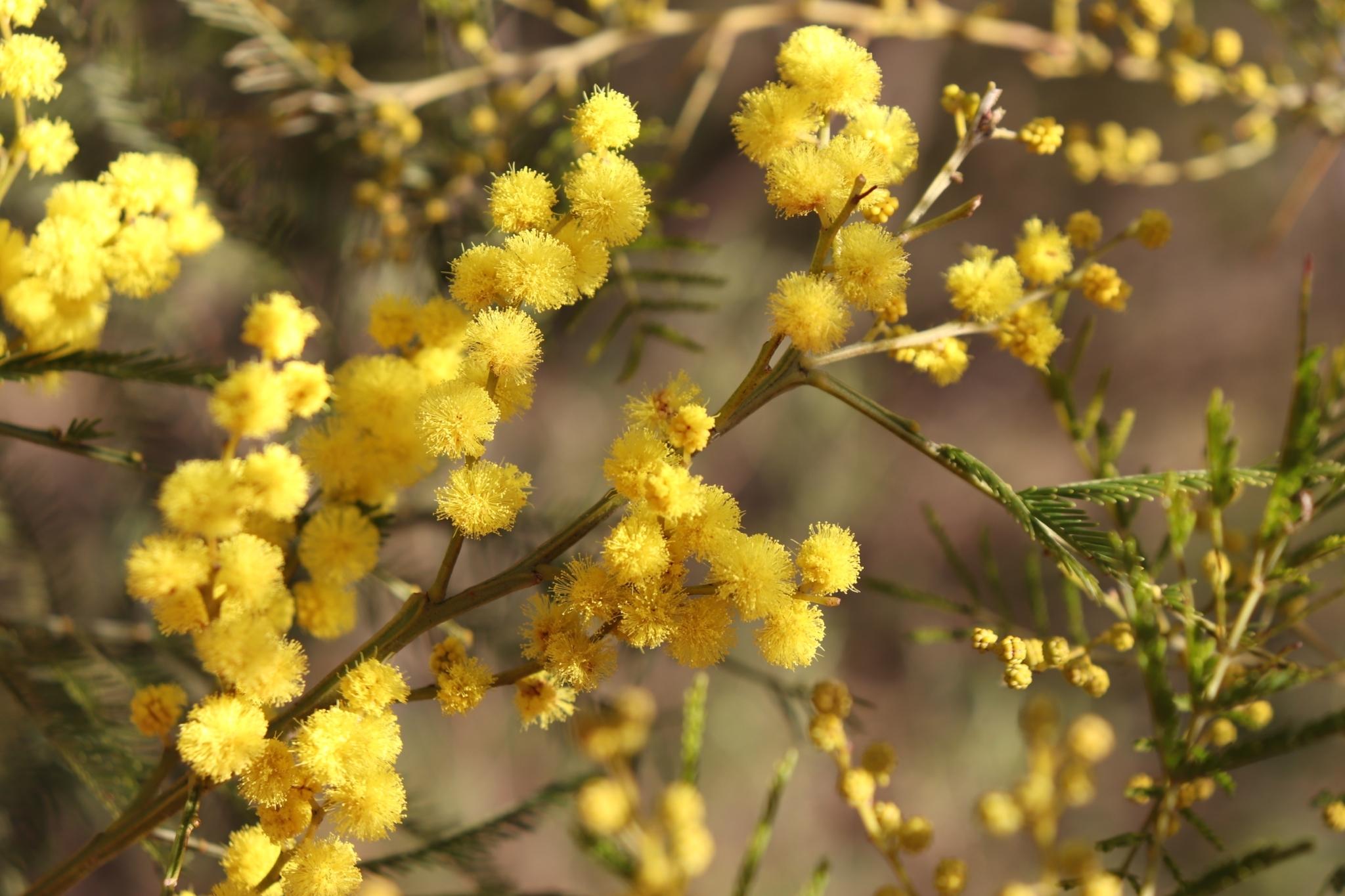 Sydney green wattleIn Sydney, this wattle is a local. The D'harawal people call it Boo'kerrikin.
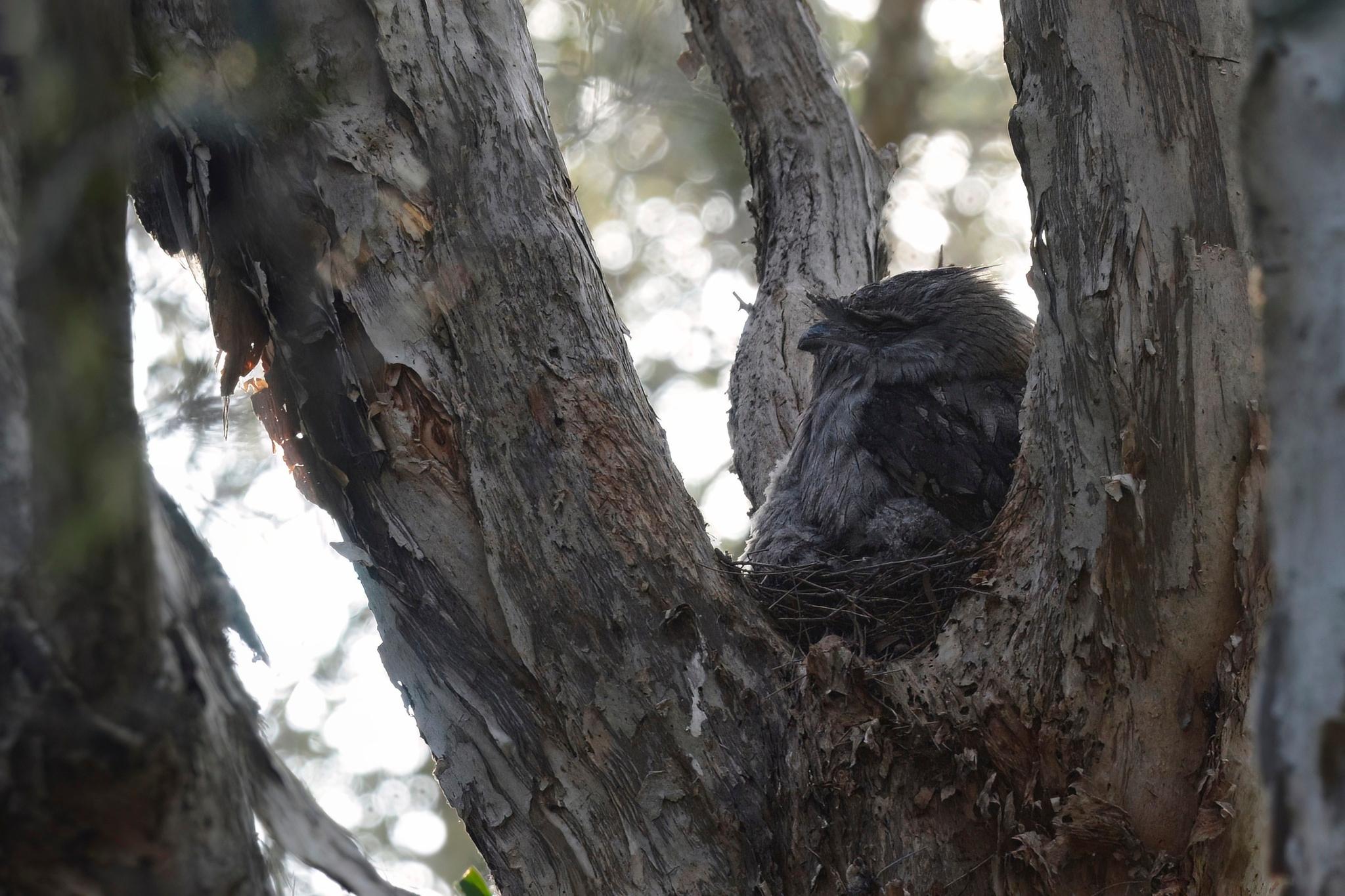 Tawny frogmouth chicks on a branch beside a parentIf you come across a frogmouth and its chick, look at how they seem to grow out of the branch. That's no accident.
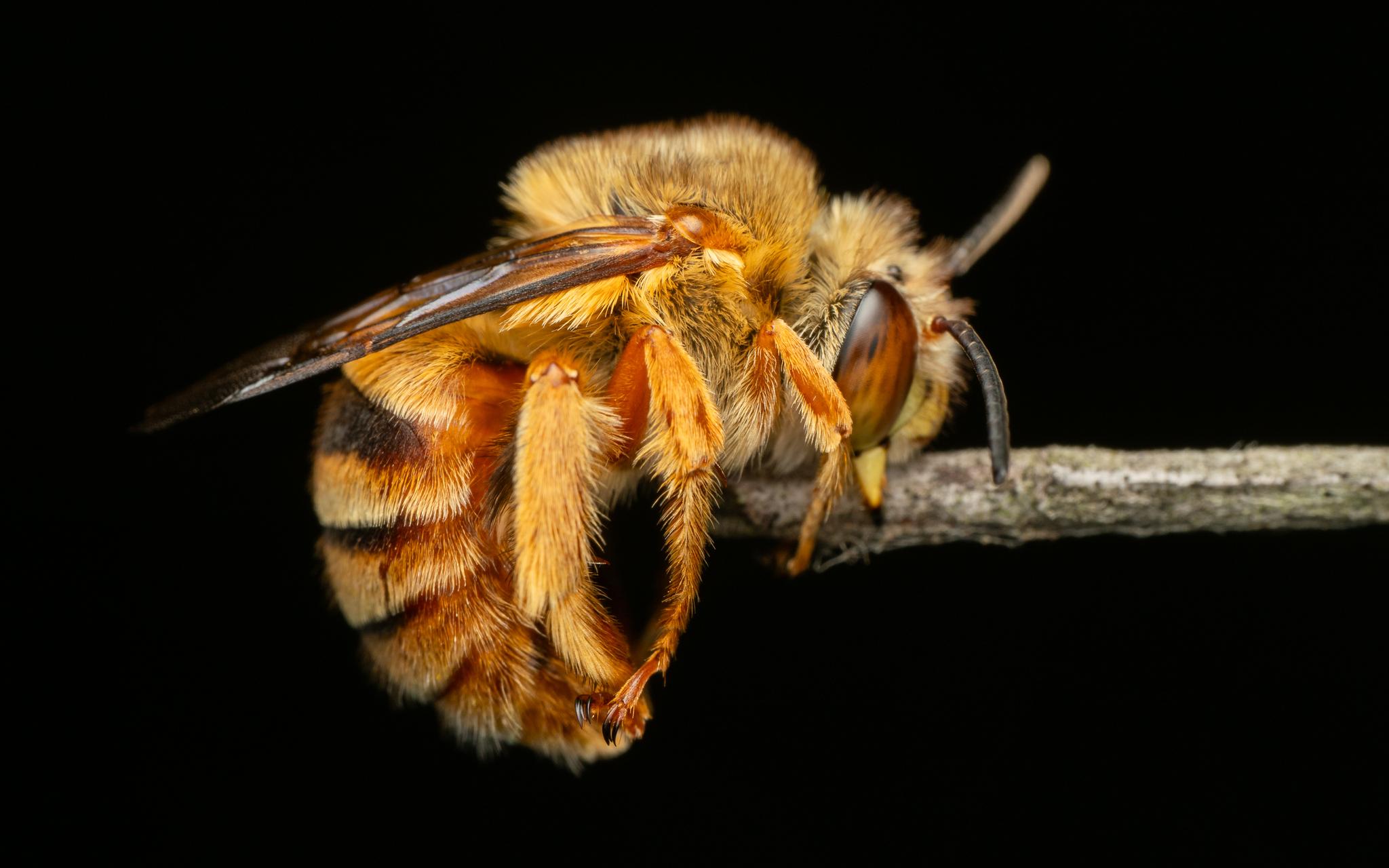 Teddy Bear BeeThat golden, furry bee looks like the opposite of a wasp. It isn't.
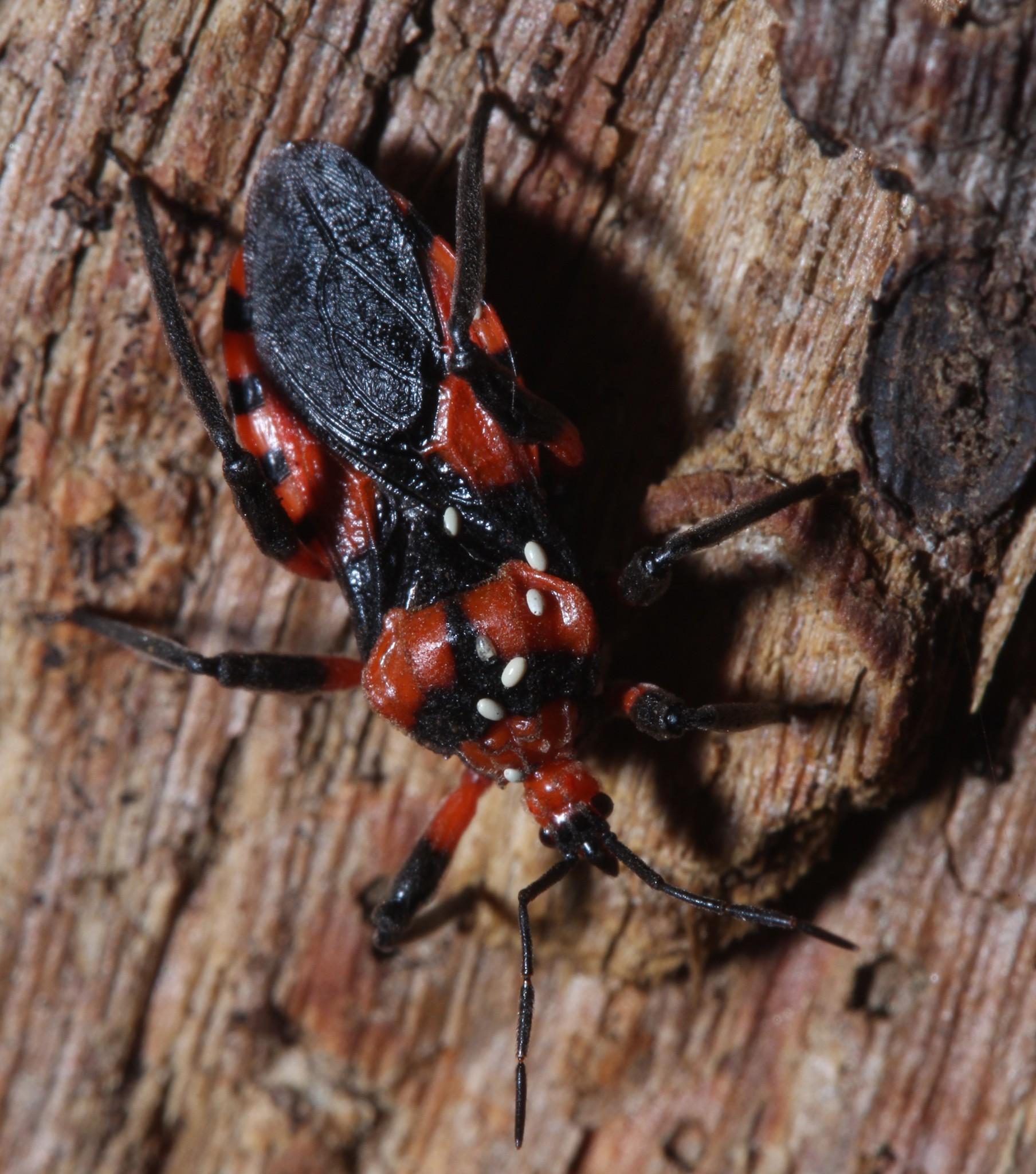 Termite Assassin BugThe termite assassin bug doesn't go into the termites' tunnel. It sits on top and pushes its beak inside.
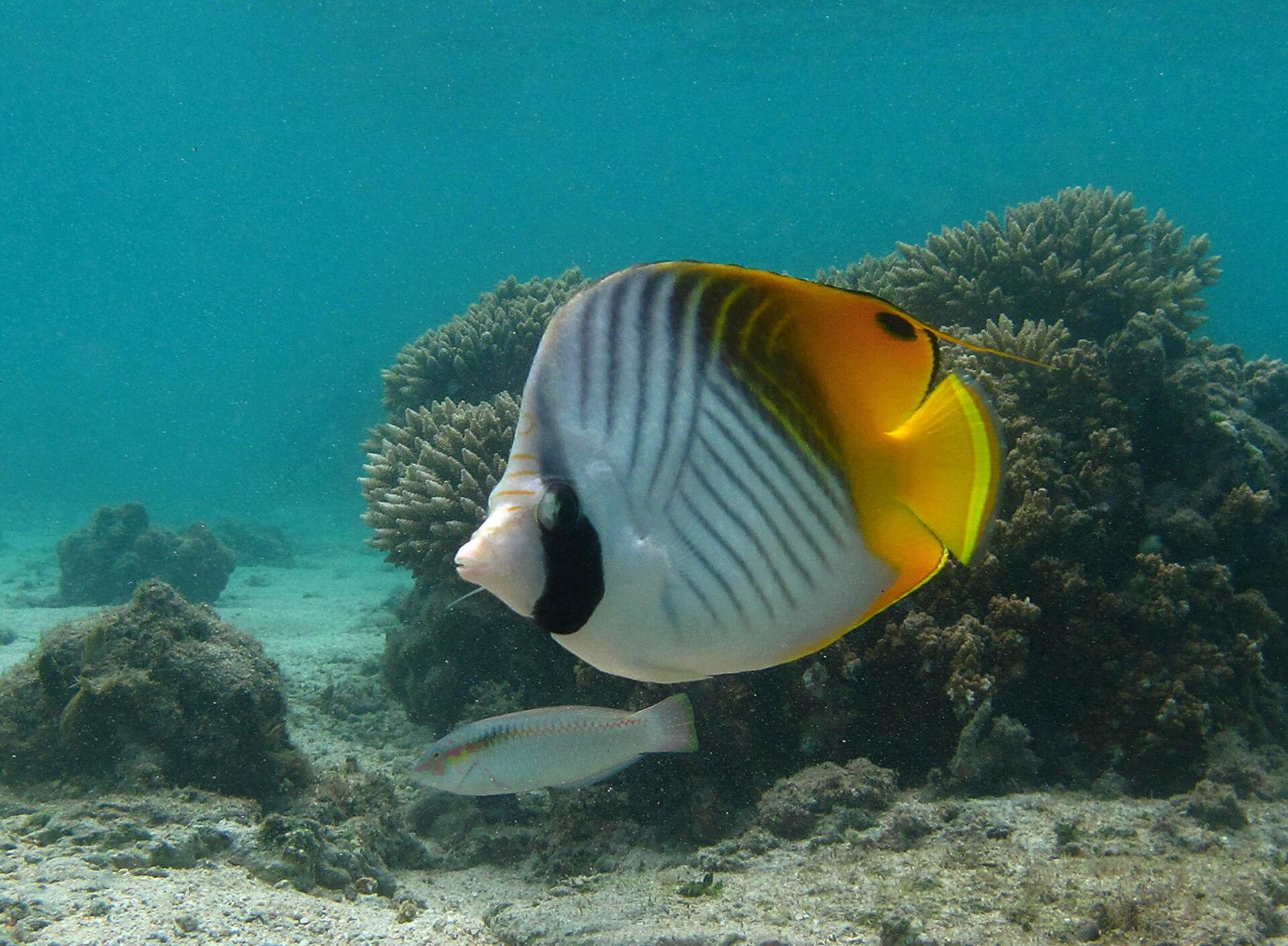 Threadfin ButterflyfishIts scientific name, *auriga*, means "charioteer". Someone looked at the long thread trailing from its back fin and saw a coachman's whip.
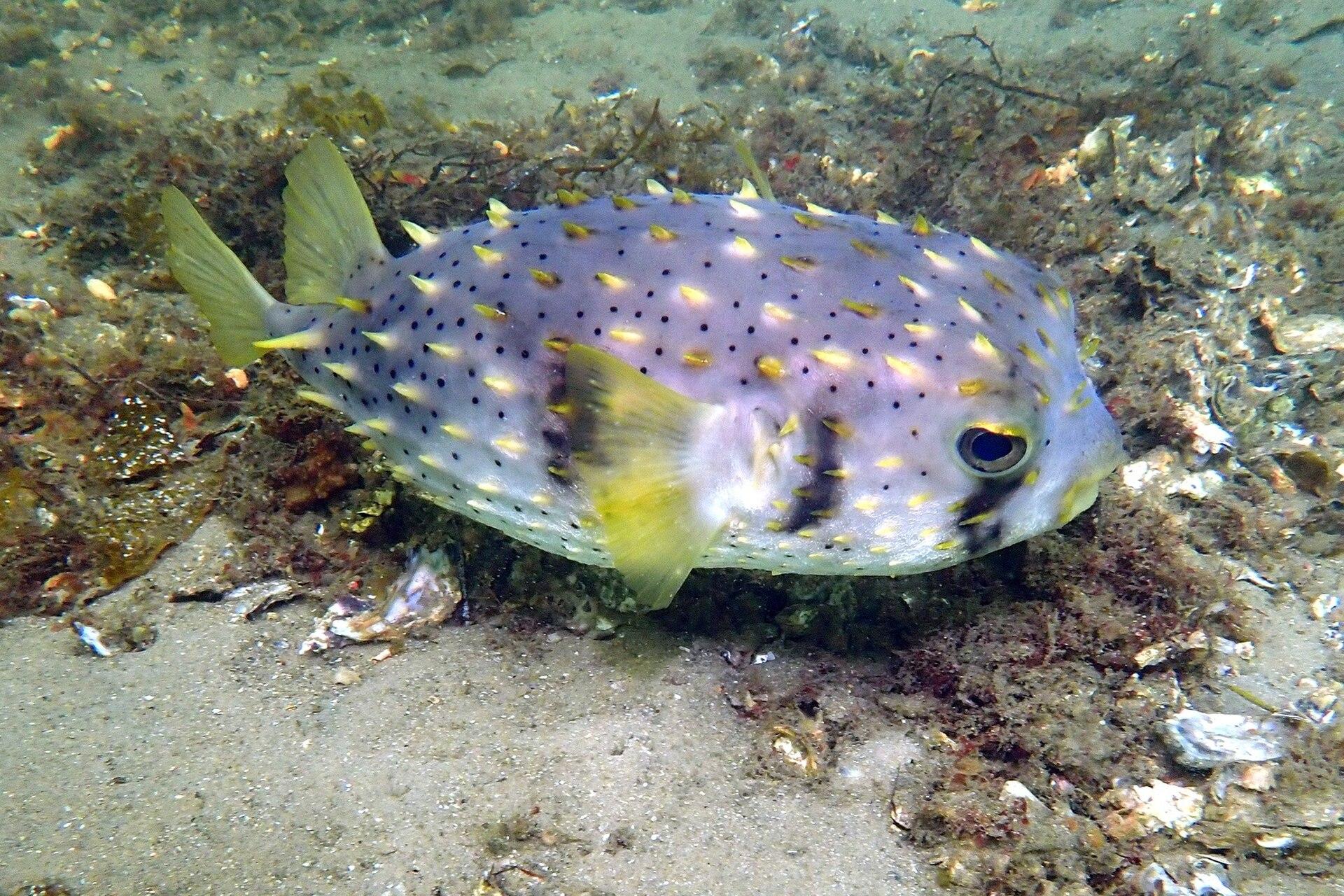 Threebar PorcupinefishIt doesn't need to be fast. When alarmed, like other porcupinefishes, it can puff itself up into a spiny ball.
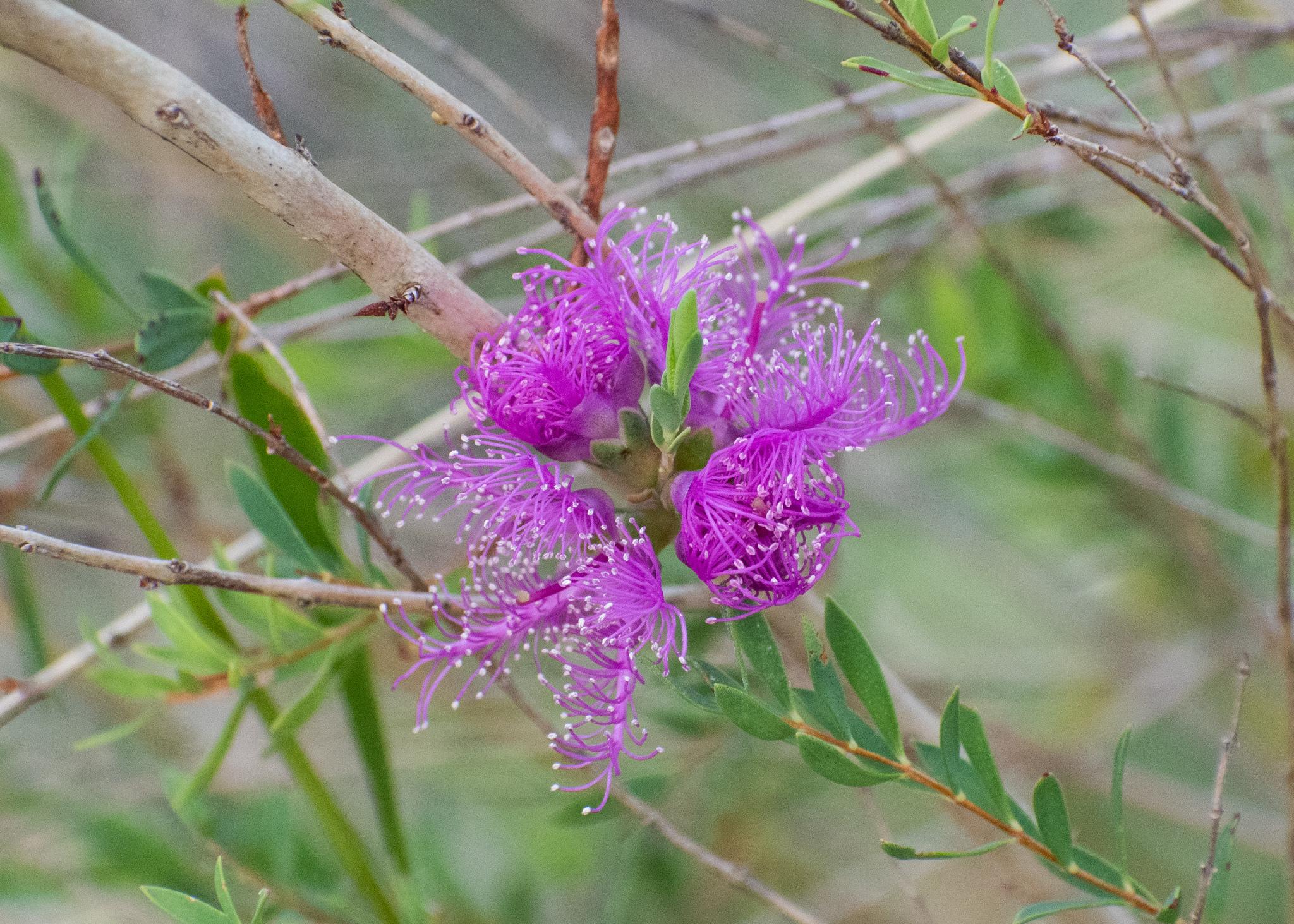 Thyme honey-myrtleAfter a fire, this little shrub's stems are killed. But below ground, a woody lignotuber survives, and sends up new shoots.
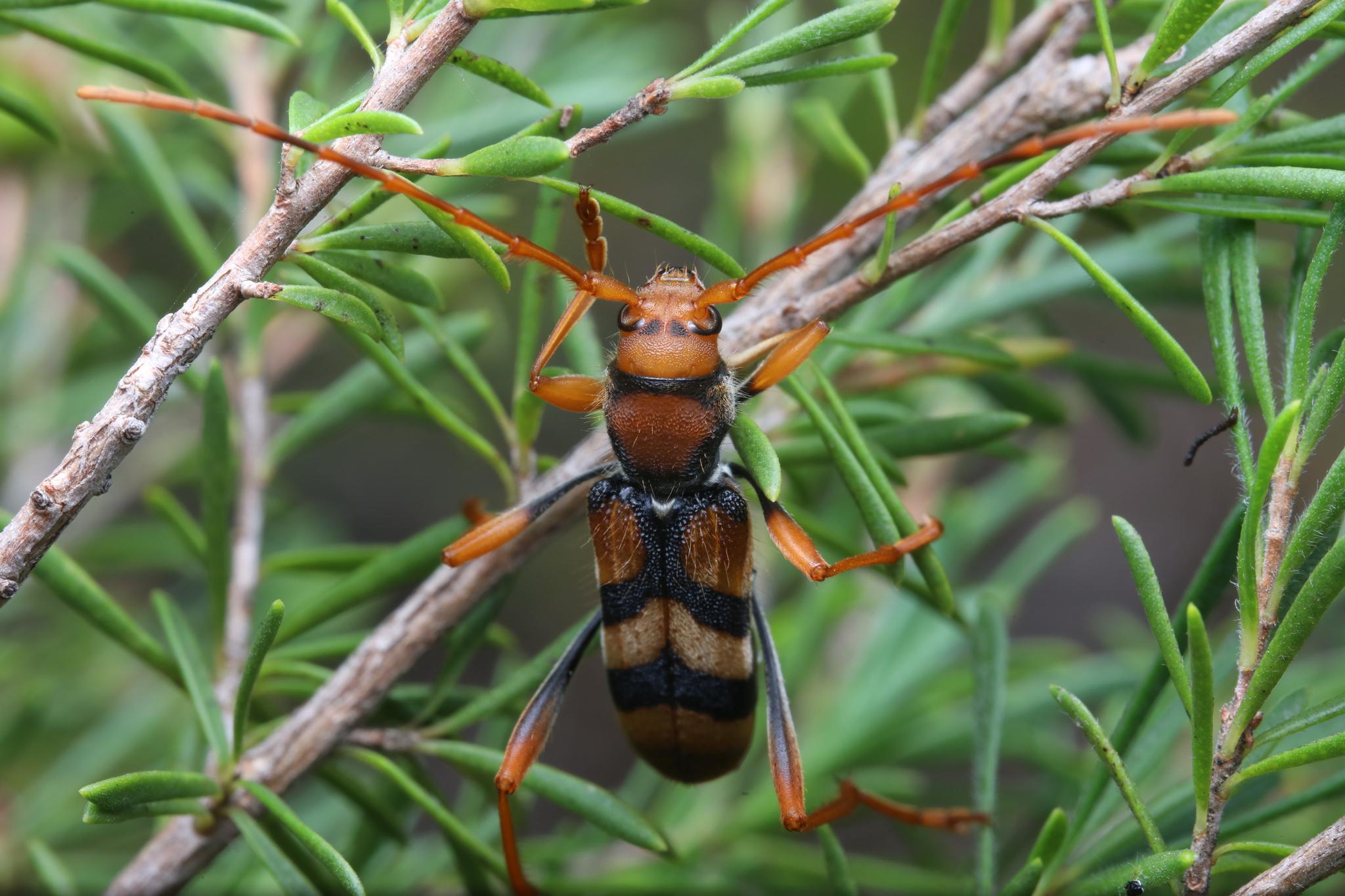 Tiger longhornYellow and black, long legs, long feelers swept back: at first glance the tiger longhorn looks like a wasp. It's a beetle.
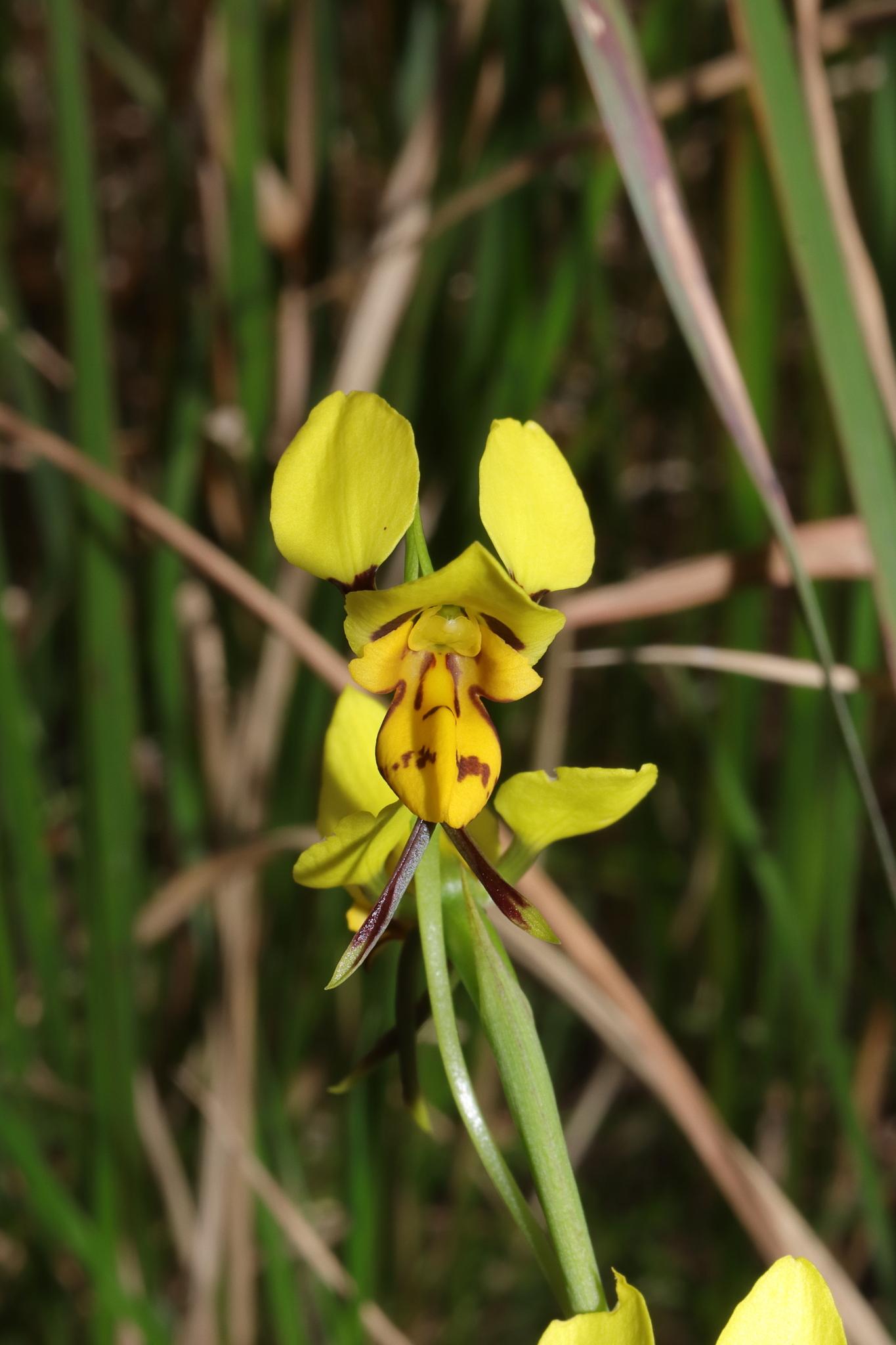 Tiger OrchidThe tiger orchid is a donkey orchid, and donkey orchids are con artists. Their flowers look strikingly like the pea flowers blooming around them.
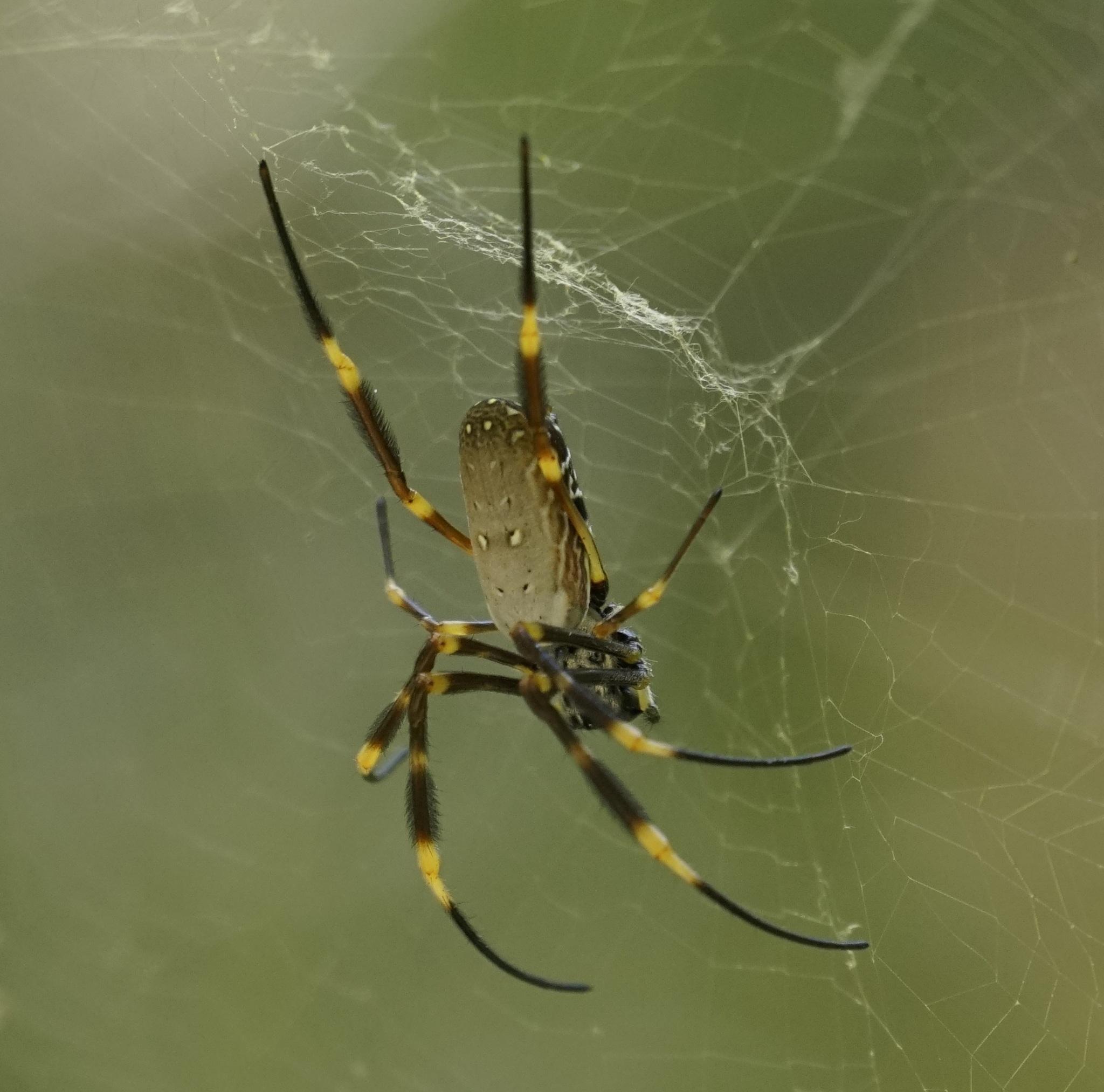 Tiger SpiderEvery so often, a photo goes round of a golden orb-weaver with a small bird hanging in its web, shared as proof that Australian spiders eat birds. Part of it is true.
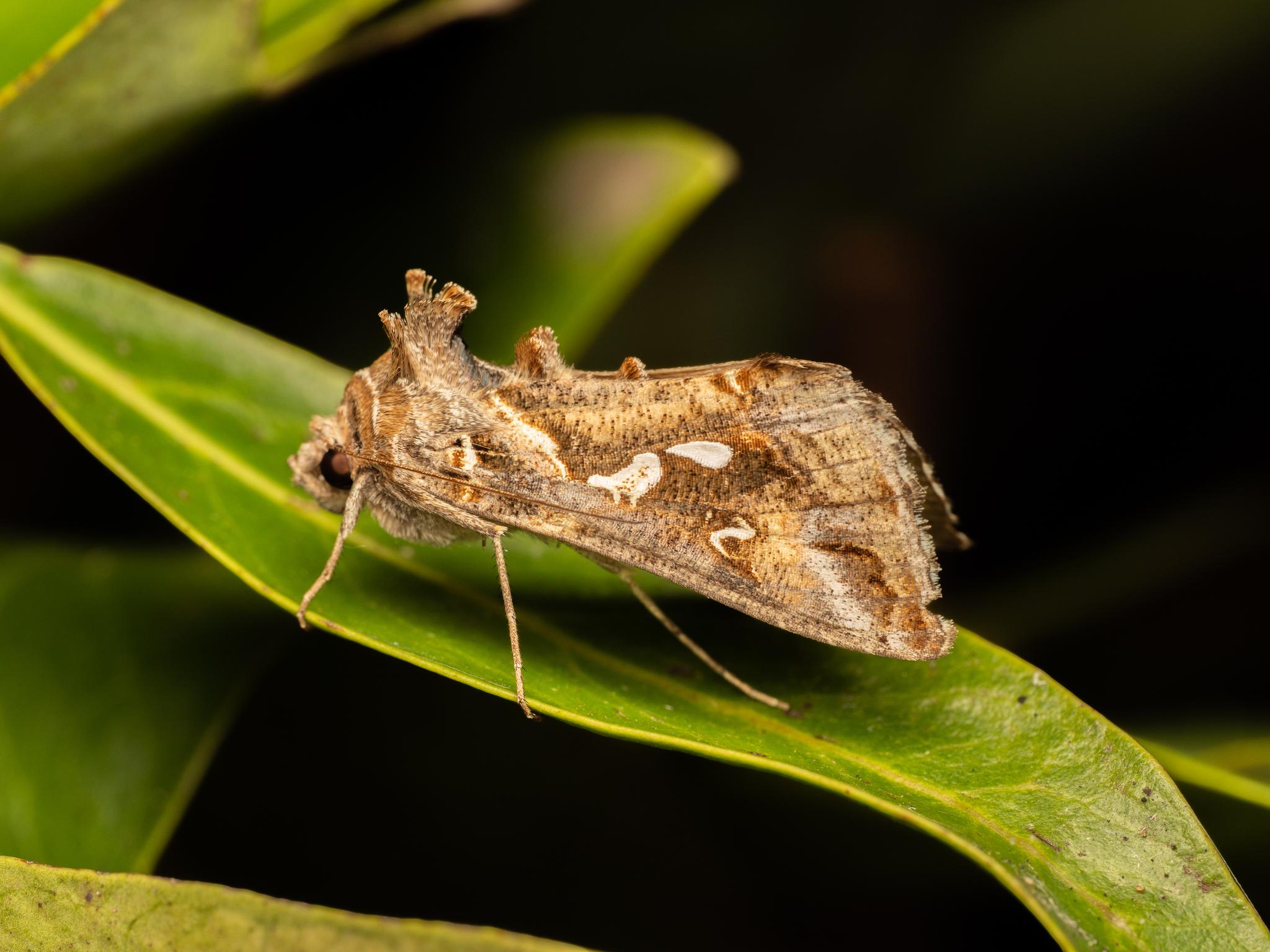 Tobacco LooperThis caterpillar walks like an inchworm: it humps up its middle, then reaches forward. But it isn't one.
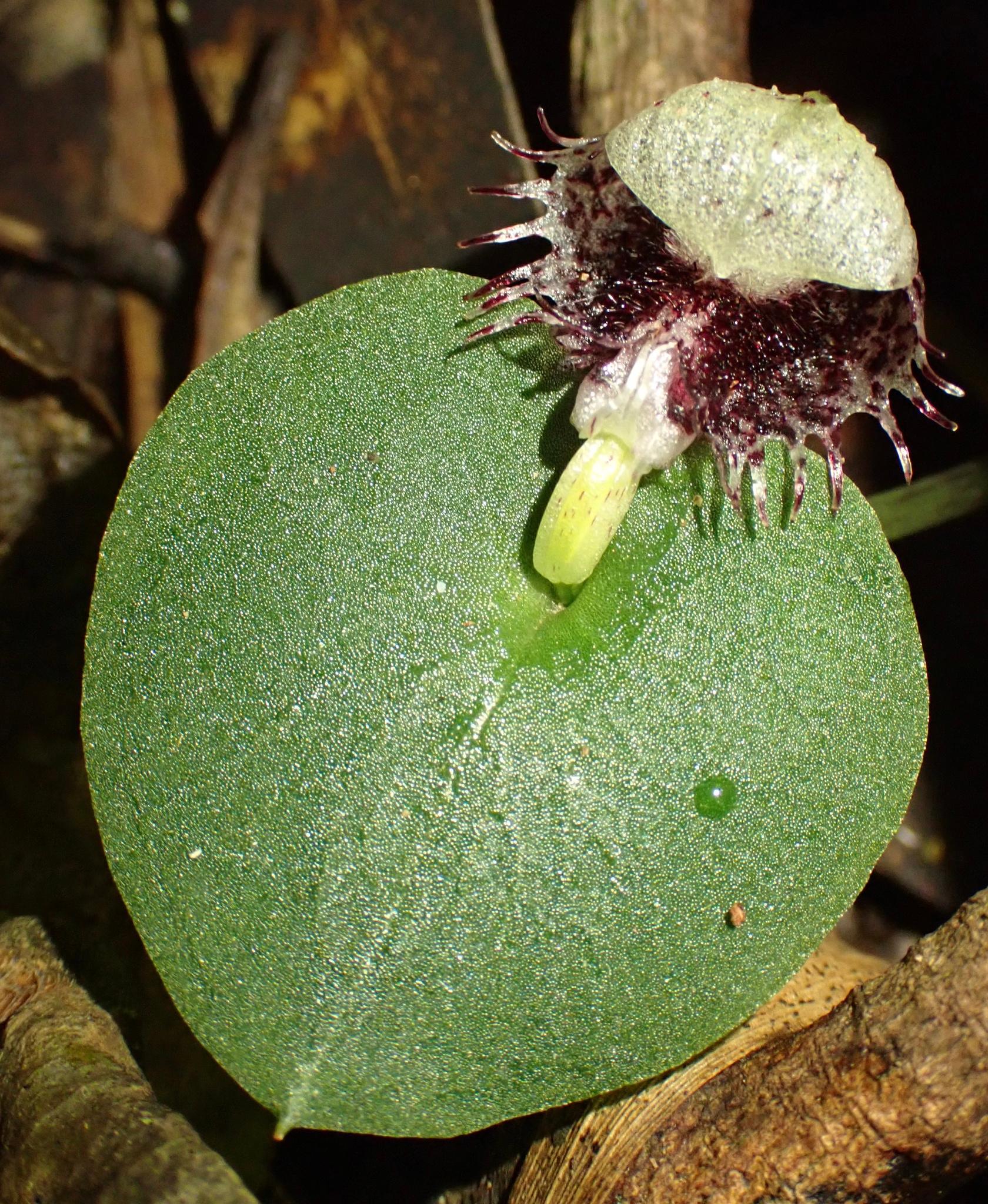 Toothed helmet orchidYou have to get down on the ground to see it properly: a small dark flower sitting close to the soil. That's where its world is.
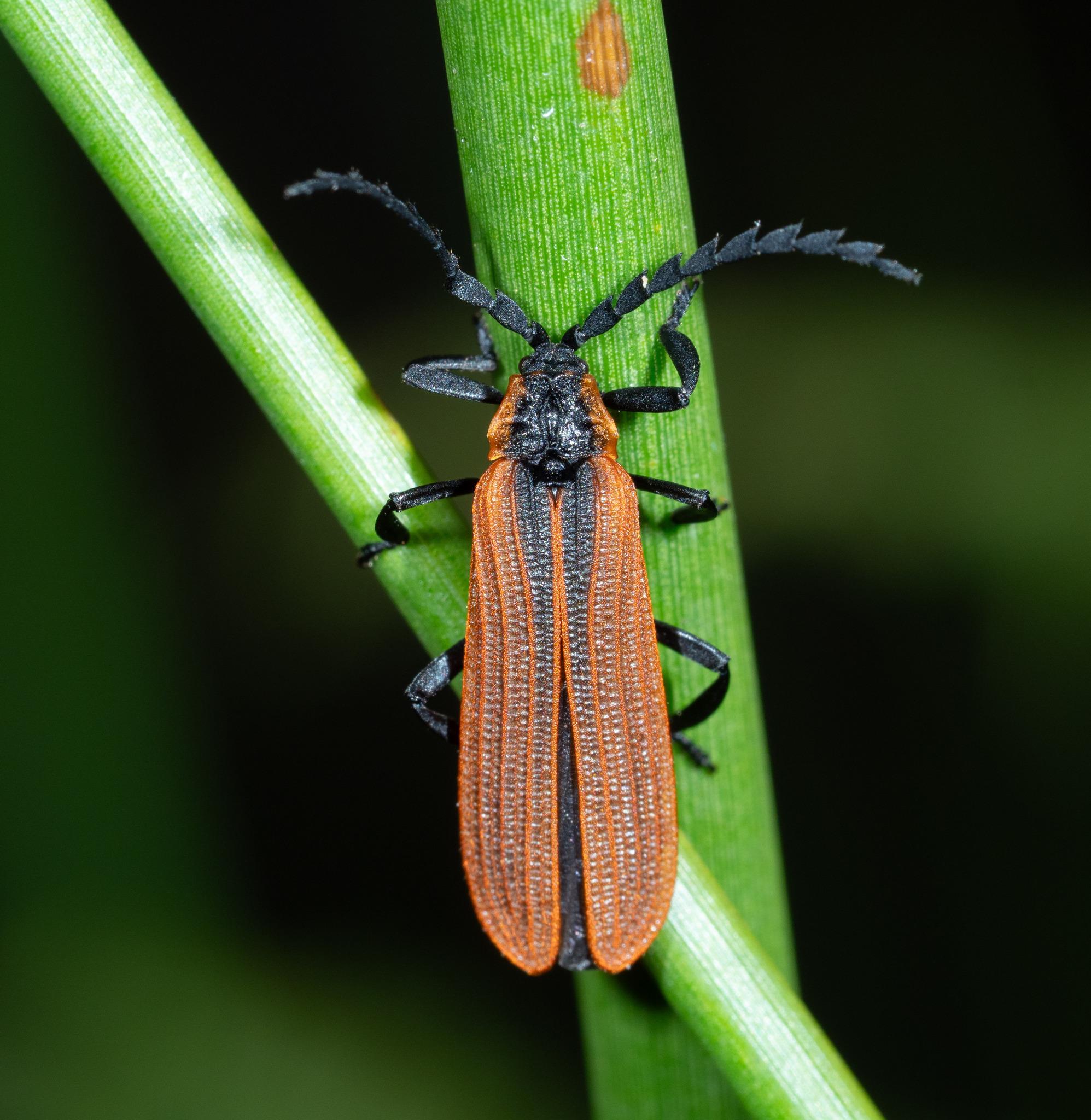 Trichalus ampliatusIts wing covers are a fine net of ridges, like lace. This is a net-winged beetle, a lycid, and its bright colours are a warning that is true.
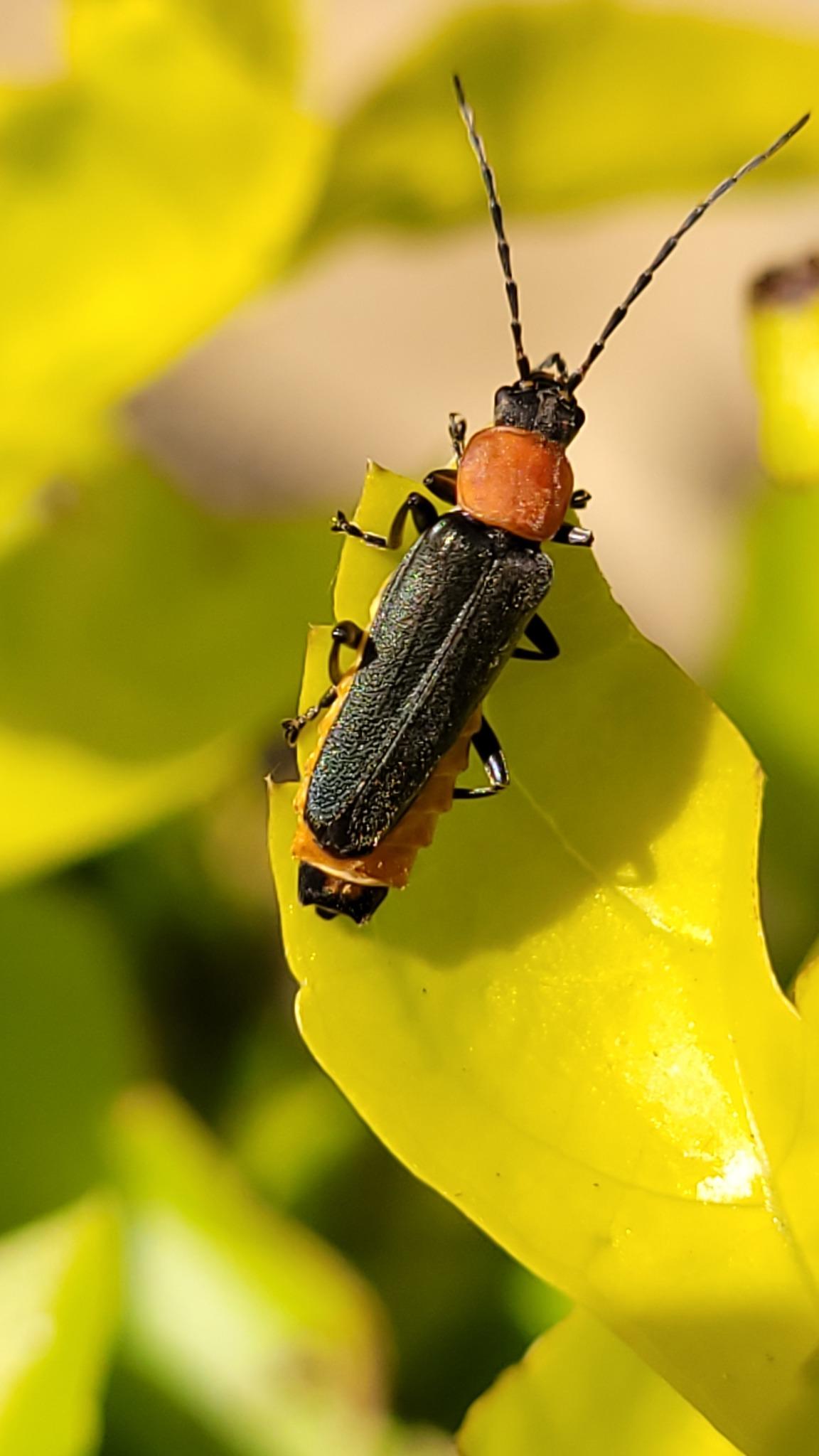 Tricolor Soldier BeetleBlack, orange and yellow, like a road sign. On a beetle, colours that loud usually say one thing: don't eat me.
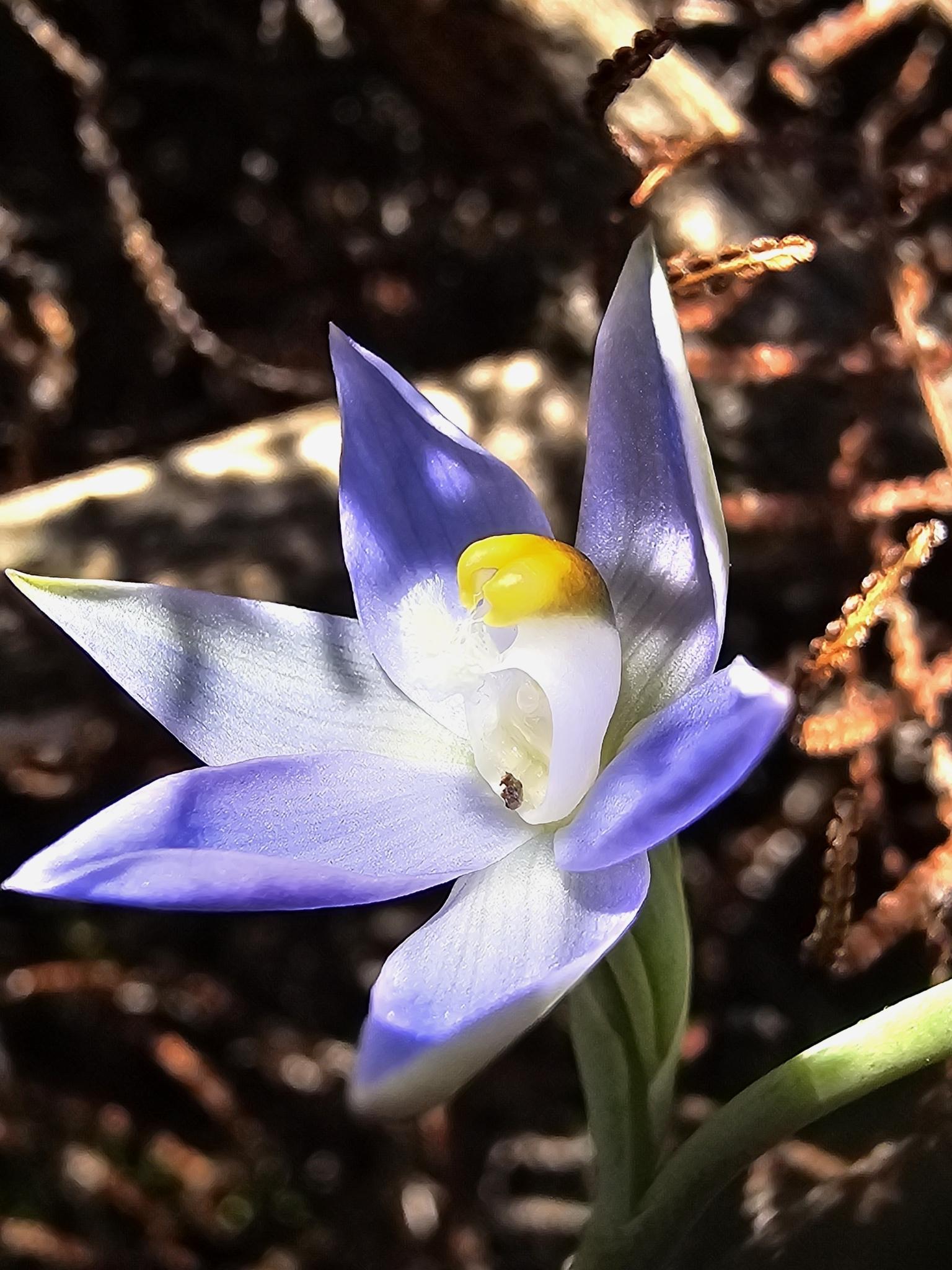 Trim sun orchidIts rich purple flowers are slow to open, and they open only on warm to hot days. You may have to come back.
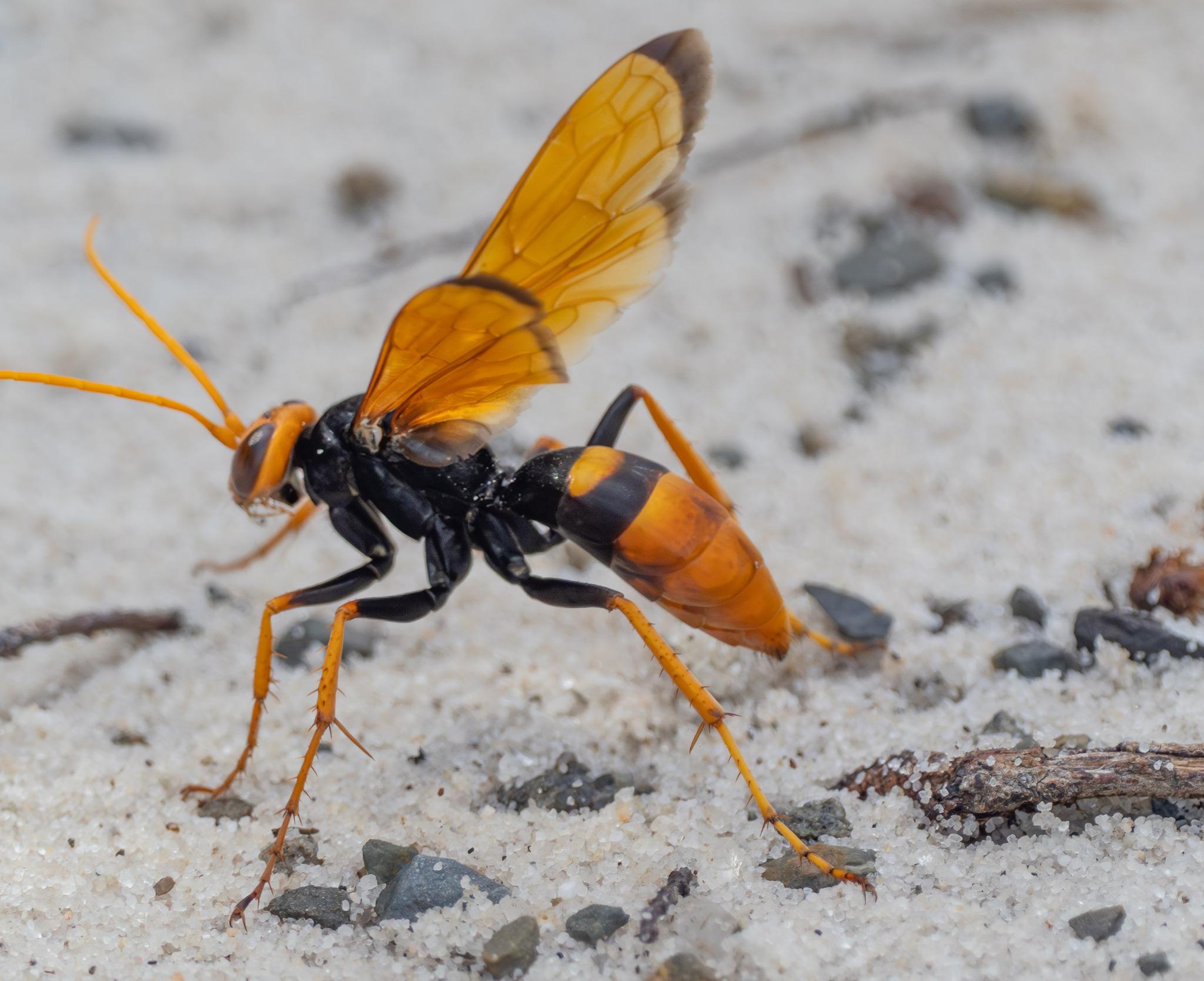 Two-coloured orange spider waspYou might have seen viral videos of a gigantic orange wasp and an even larger spider locked in battle, with the caption simply saying "Australia 💀". This wasp that terrifies tourists has specialised to hunt large spiders, as big as a huntsman and up to twice her own weight.
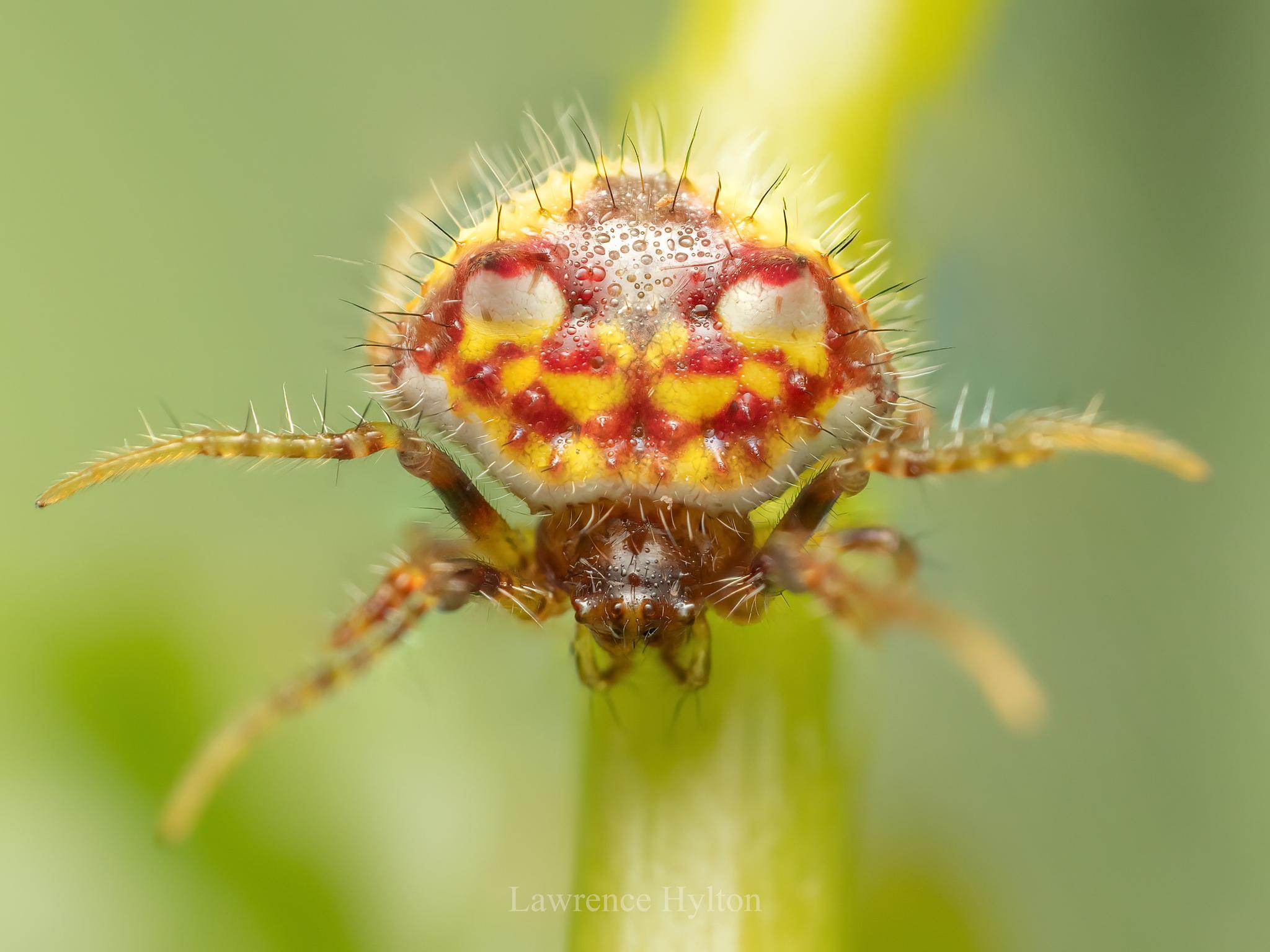 Two-spined spiderBy day the two-spined spider hides under a leaf, and it's one of the few spiders that can change colour quickly. At night it builds a wheel web and catches moths several times its own size.
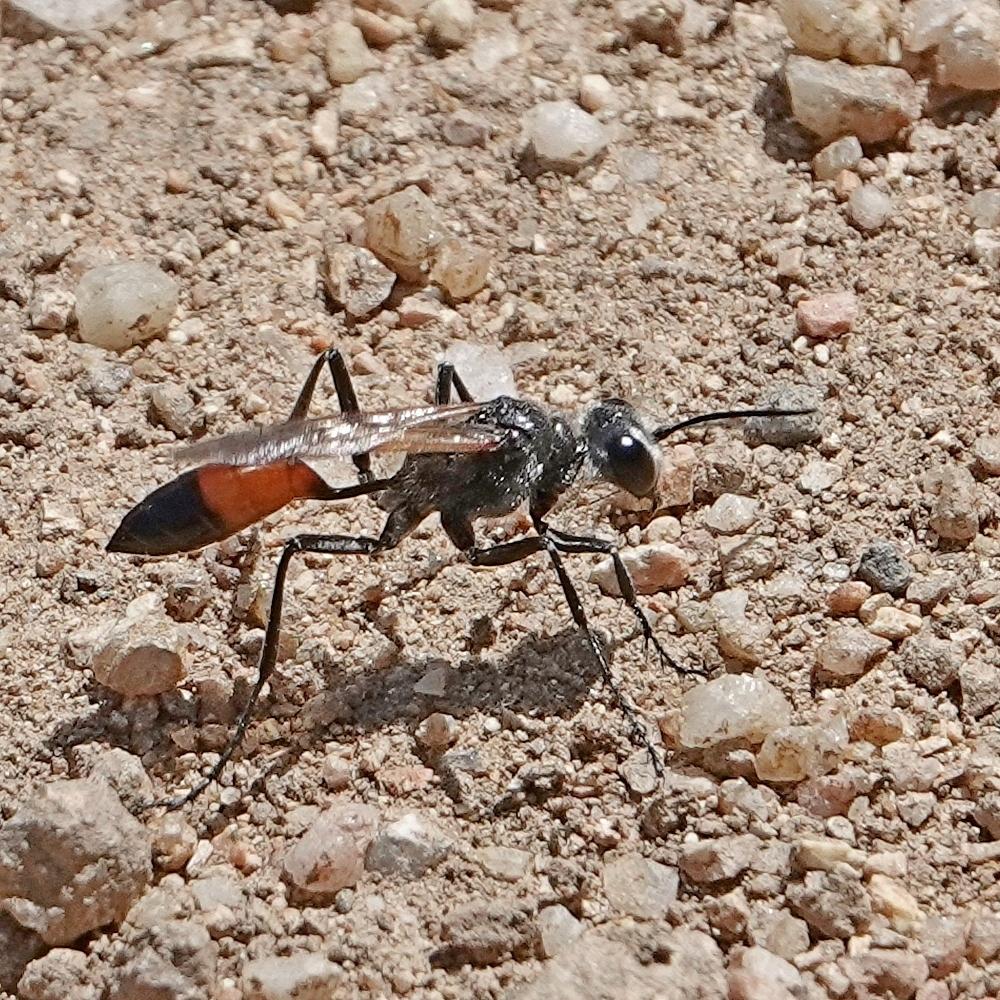 Tyde's Sand WaspFor a long time, people thought using tools was one of the things that made us human. This wasp didn't get the message.
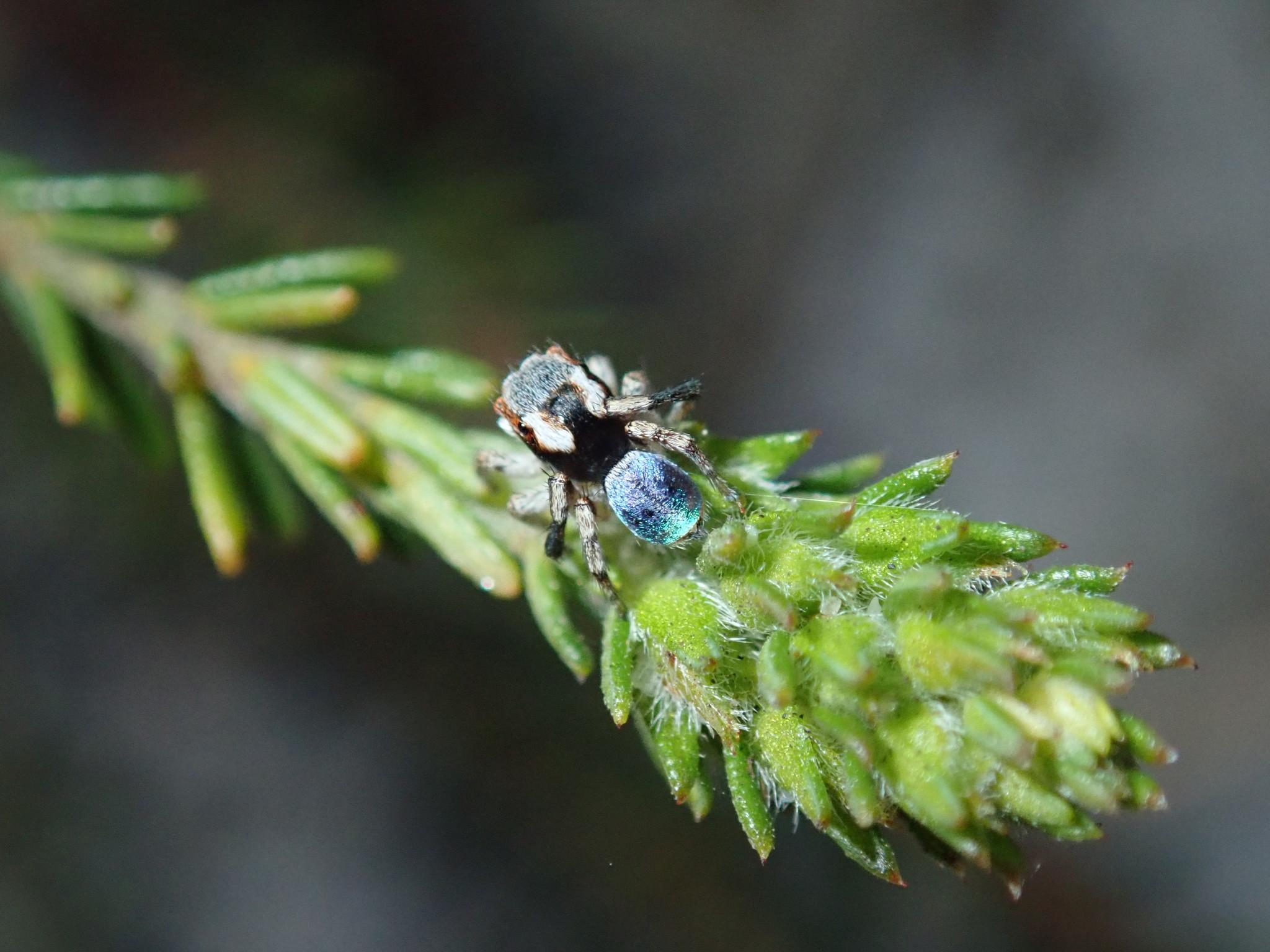 Unusual Peacock SpiderHe's about to dance. Male peacock spiders court females with some of the most elaborate dances of any insect or spider, stepping and waving while drumming vibrations through the ground.
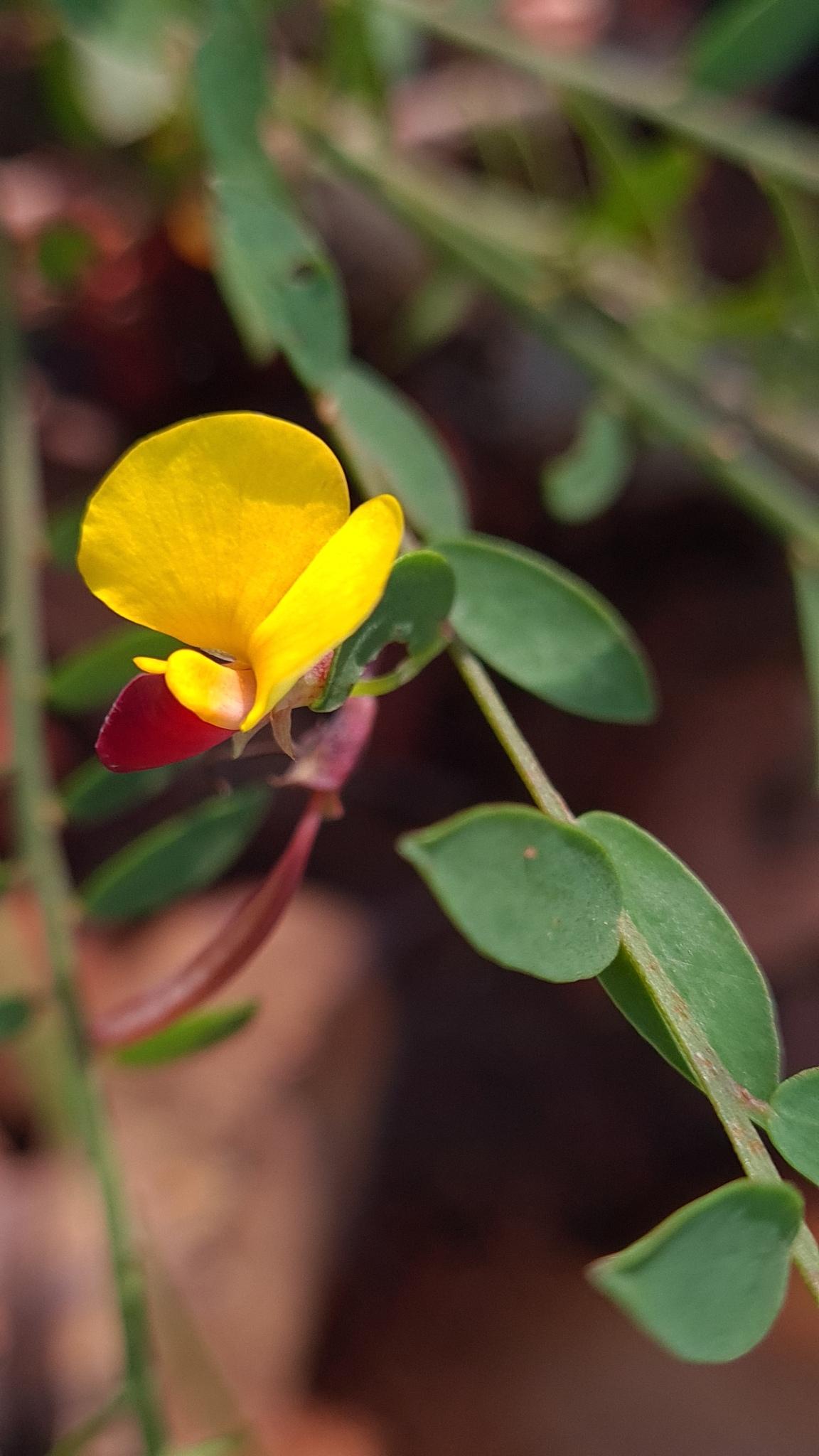 Variable BossiaeaMost of this plant's children are underground, waiting. Its seeds build up in the soil, and when they were tested, 86% were alive but only 8% were ready to sprout straight away.
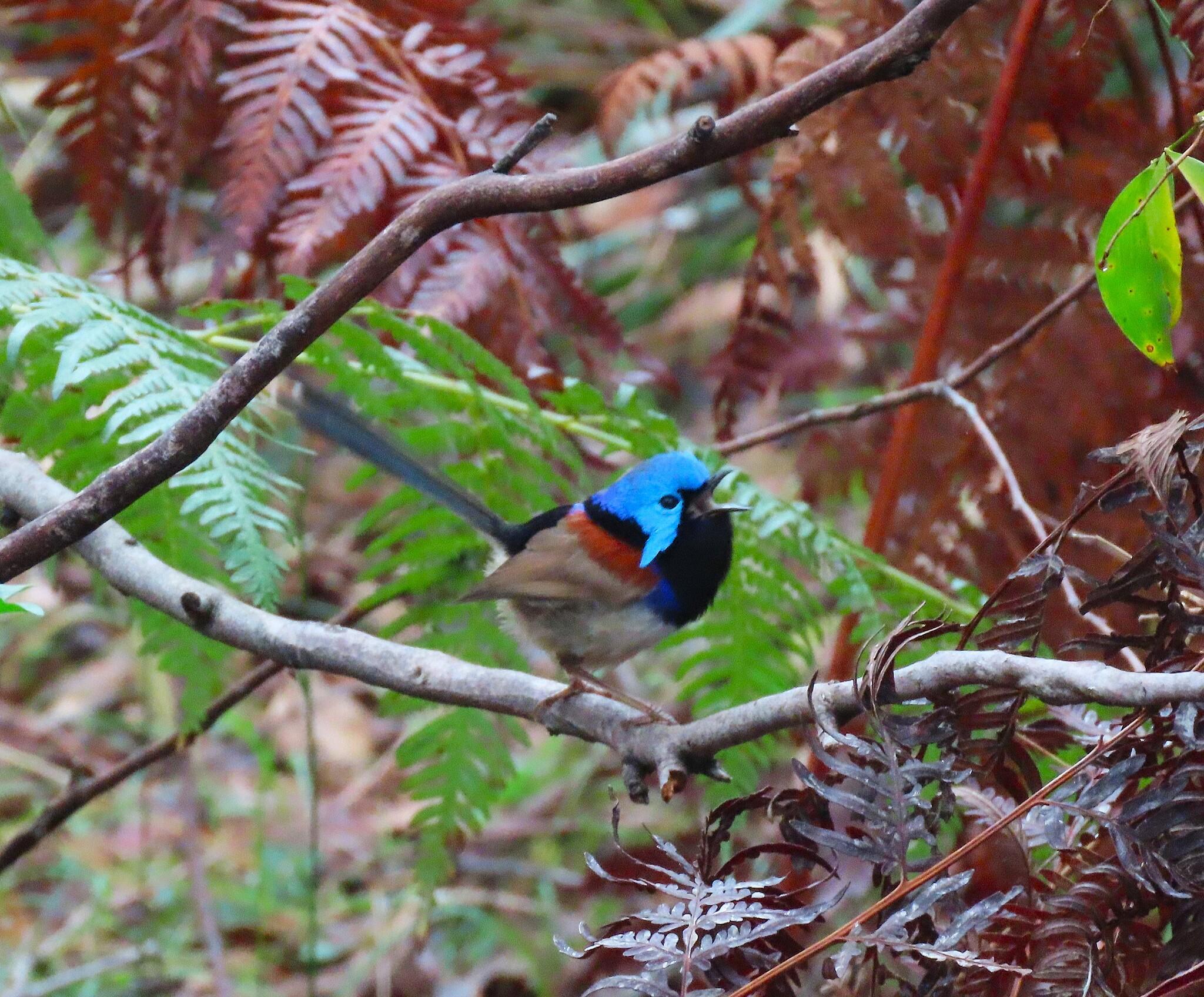 Variegated FairywrenThe blue-and-chestnut male with his little band of brown birds looks like a sultan with a harem. That's how many people have seen him.
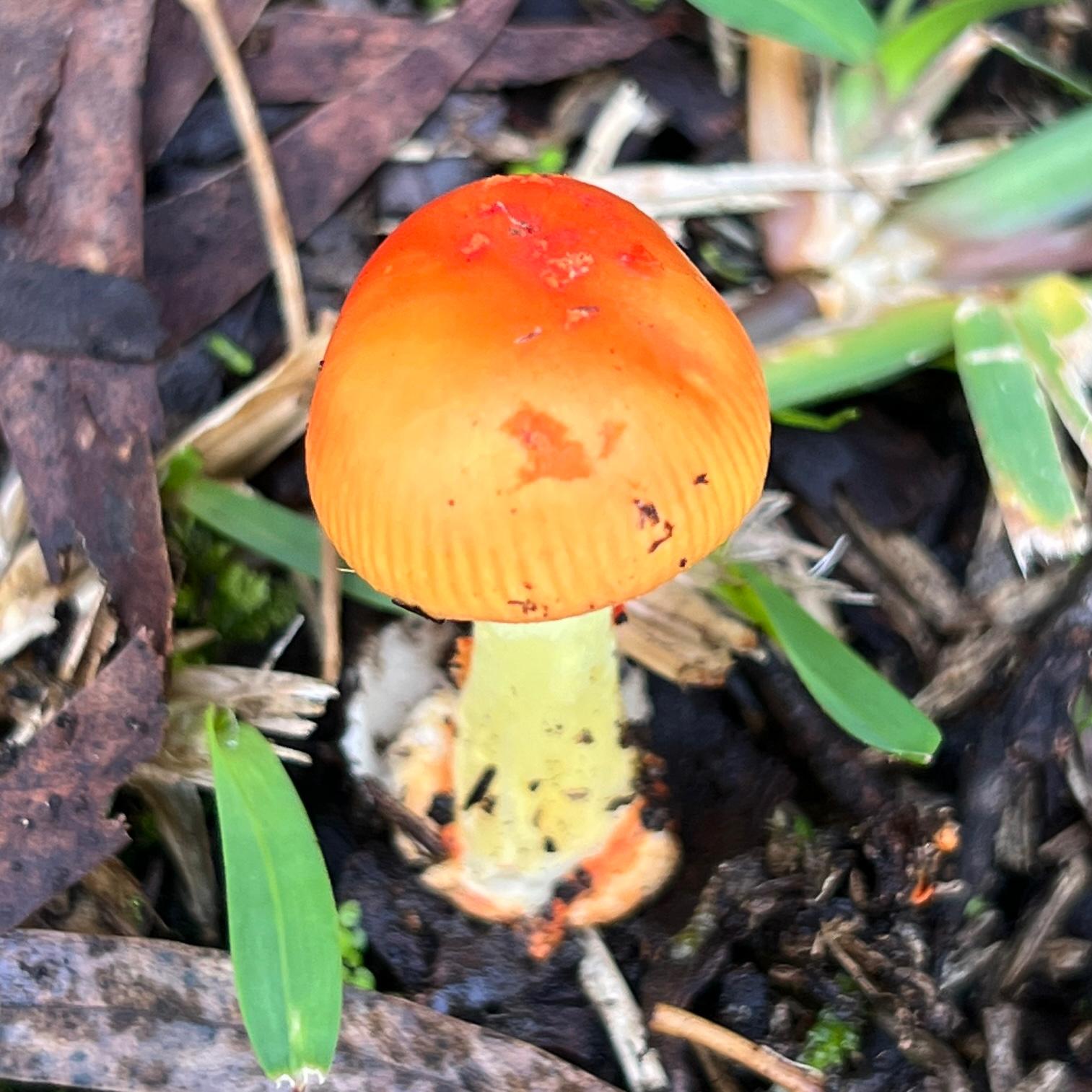 Vermilion AmanitaA red cap on a pale stem, under the gums. It looks like the toadstool from the fairy tales, but it isn't.
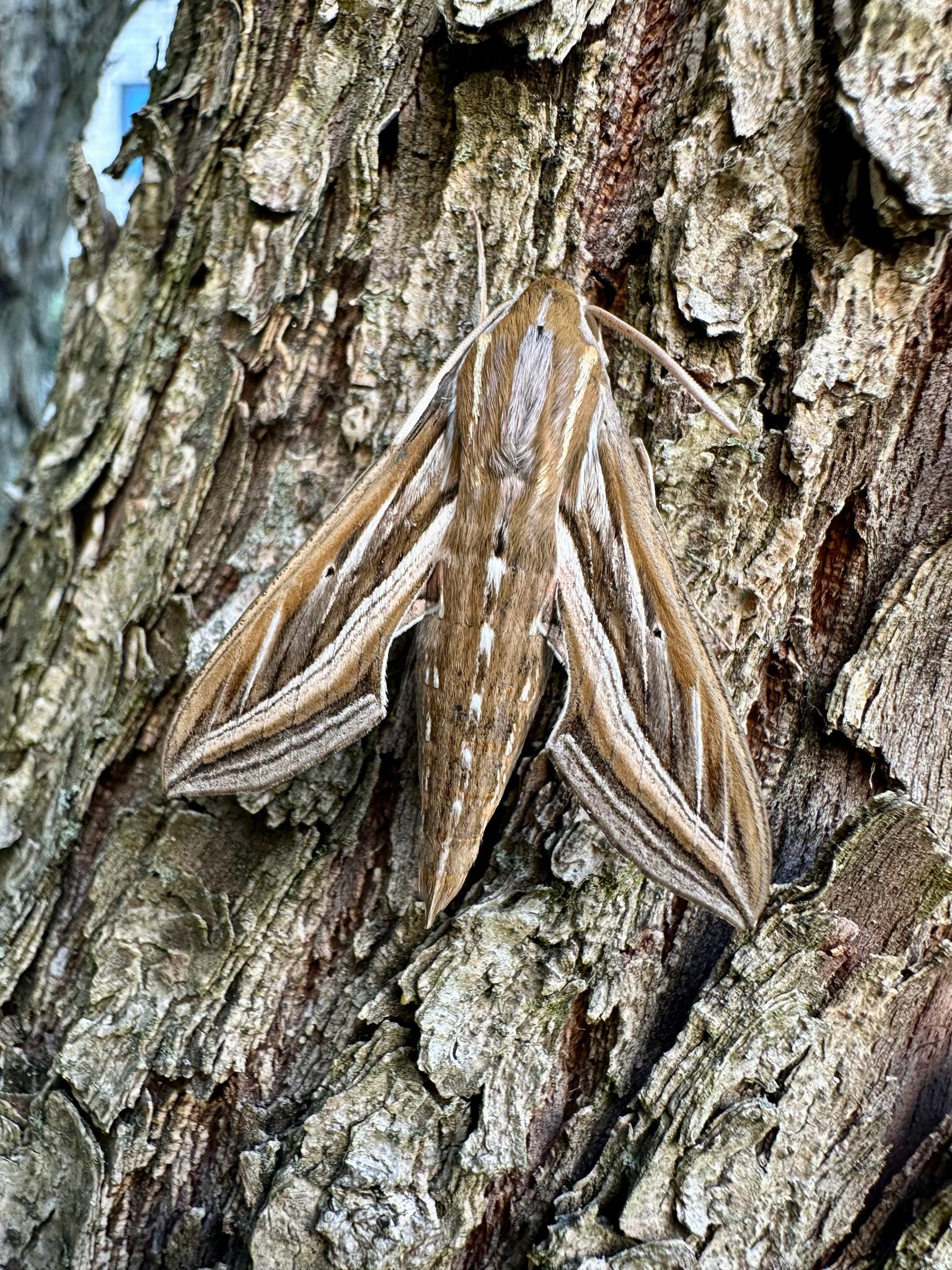 Vine HawkmothThis moth's species doesn't stop at borders. Vine hawkmoths are native here, and they're strong long-distance fliers: they're known to migrate to Europe from the Mediterranean and Africa, turning up far from where they bred.
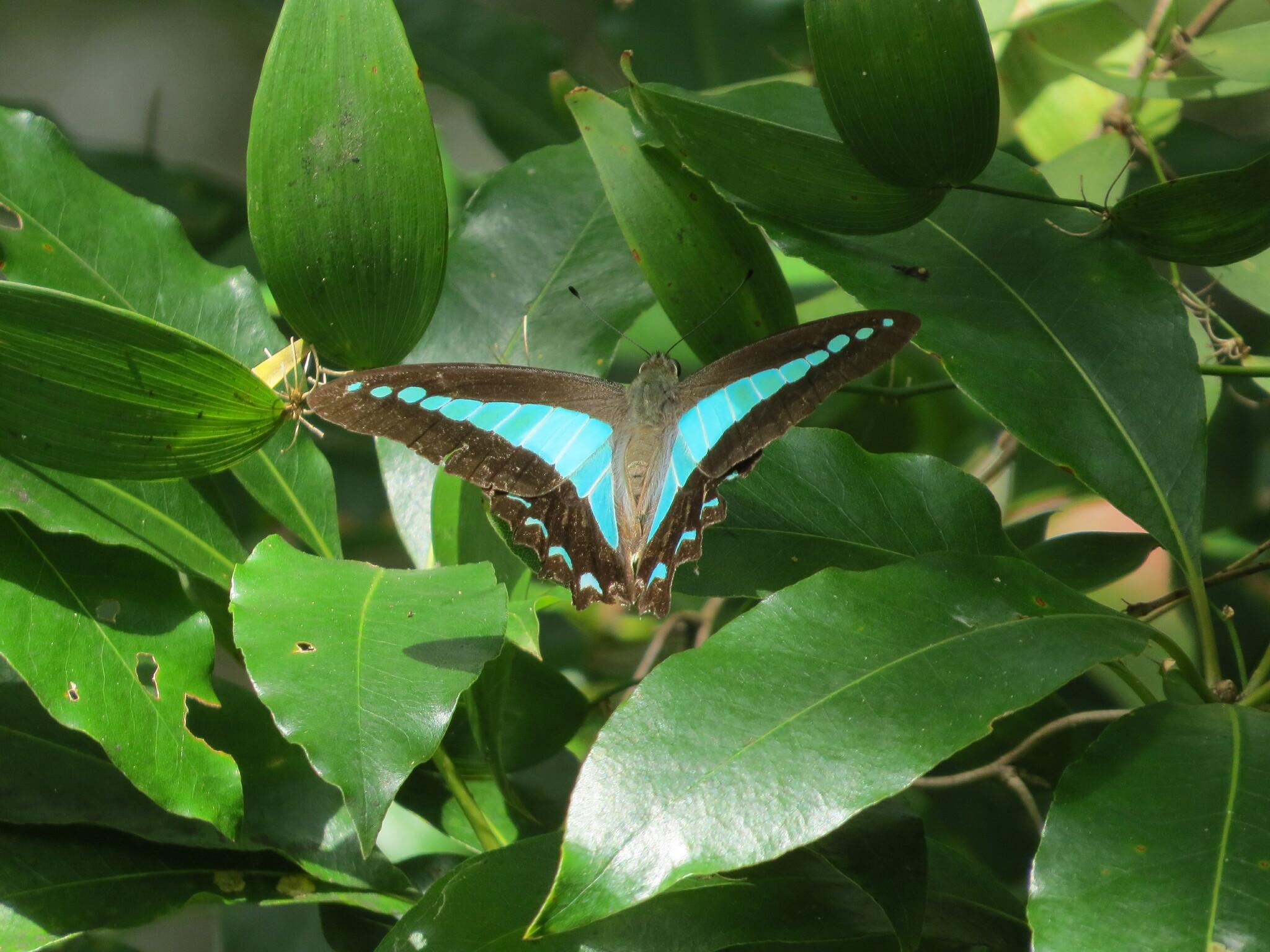 Wallacea BluebottleThis is Sydney's blue triangle butterfly, and it shouldn't really be here. It prefers moist rainforest.
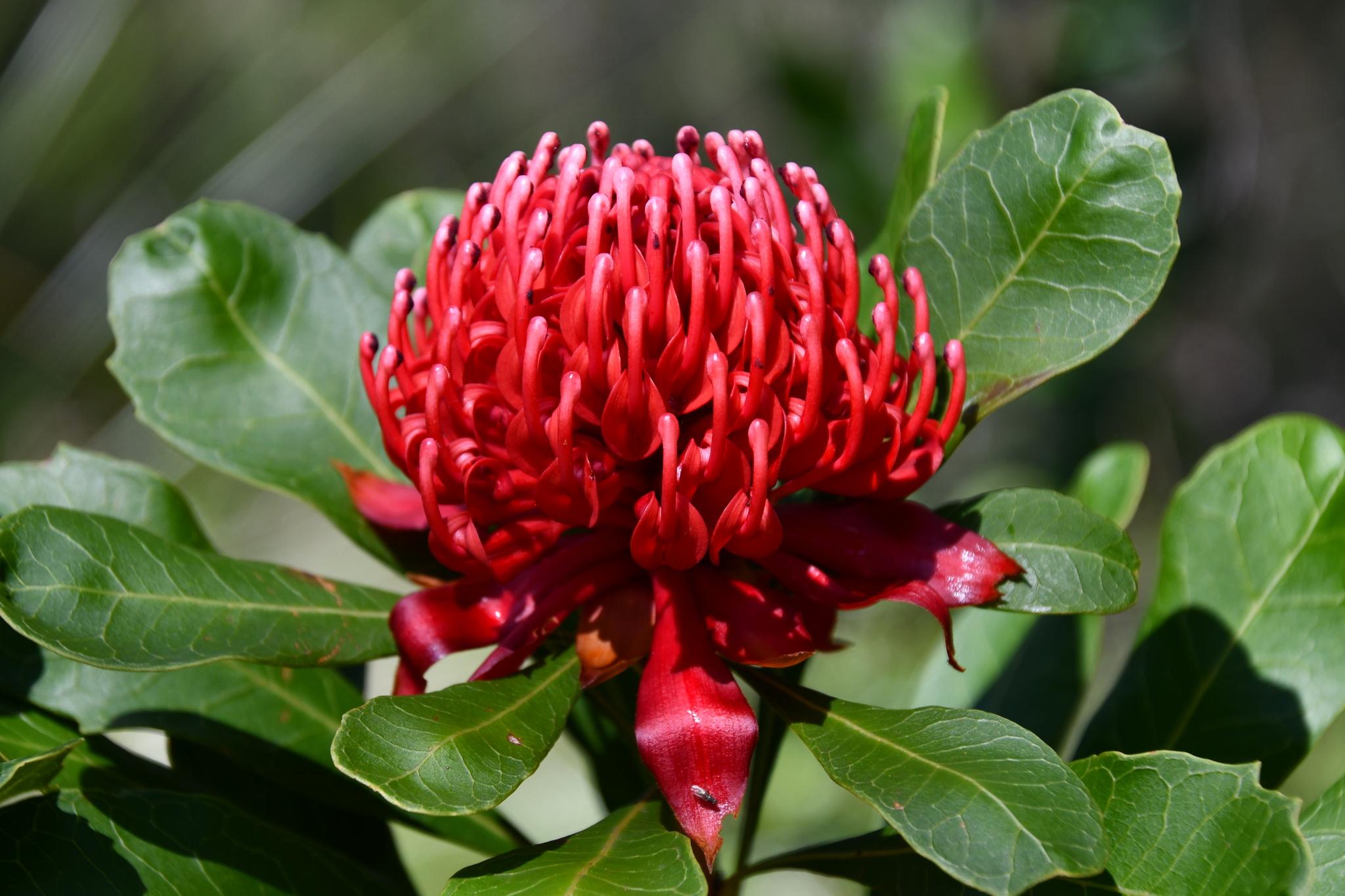 WaratahThe waratah is about as Australian as a flower gets. Its name is one of the first Aboriginal words the colony wrote down: the First Fleet's Lieutenant William Dawes recorded "waratah", meaning "red-flowering tree", in his notebooks.
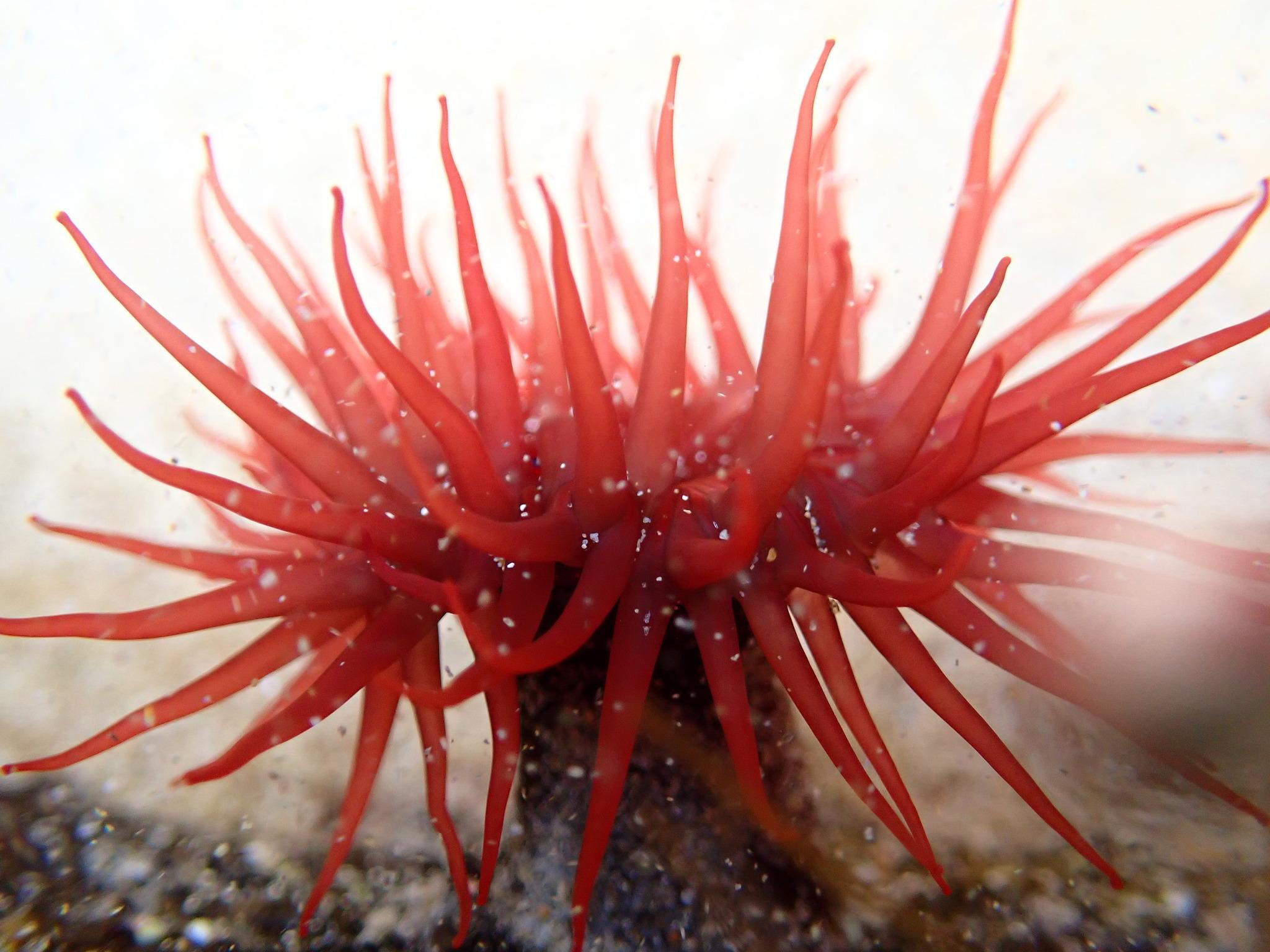 Waratah AnemoneThe small red anemones around this one are probably its children, and they came out of its mouth. Waratah anemone young are released fully formed through the adult's mouth, then settle on the nearest rock.
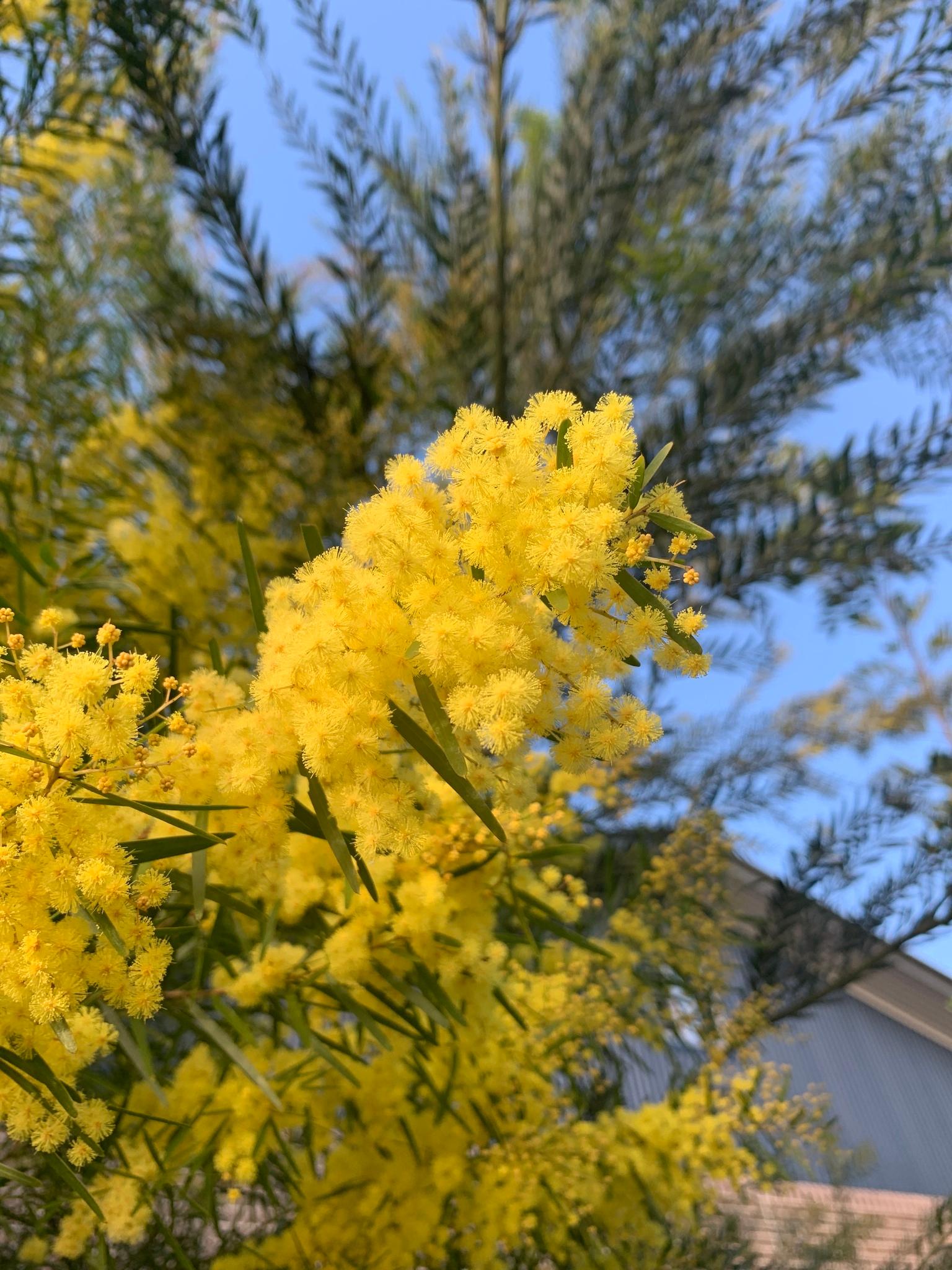 Wattle bloomThe wattles are in bloom, gold everywhere. Each of those fluffy flowers is the start of a seed, and many of those seeds will go underground with ants.
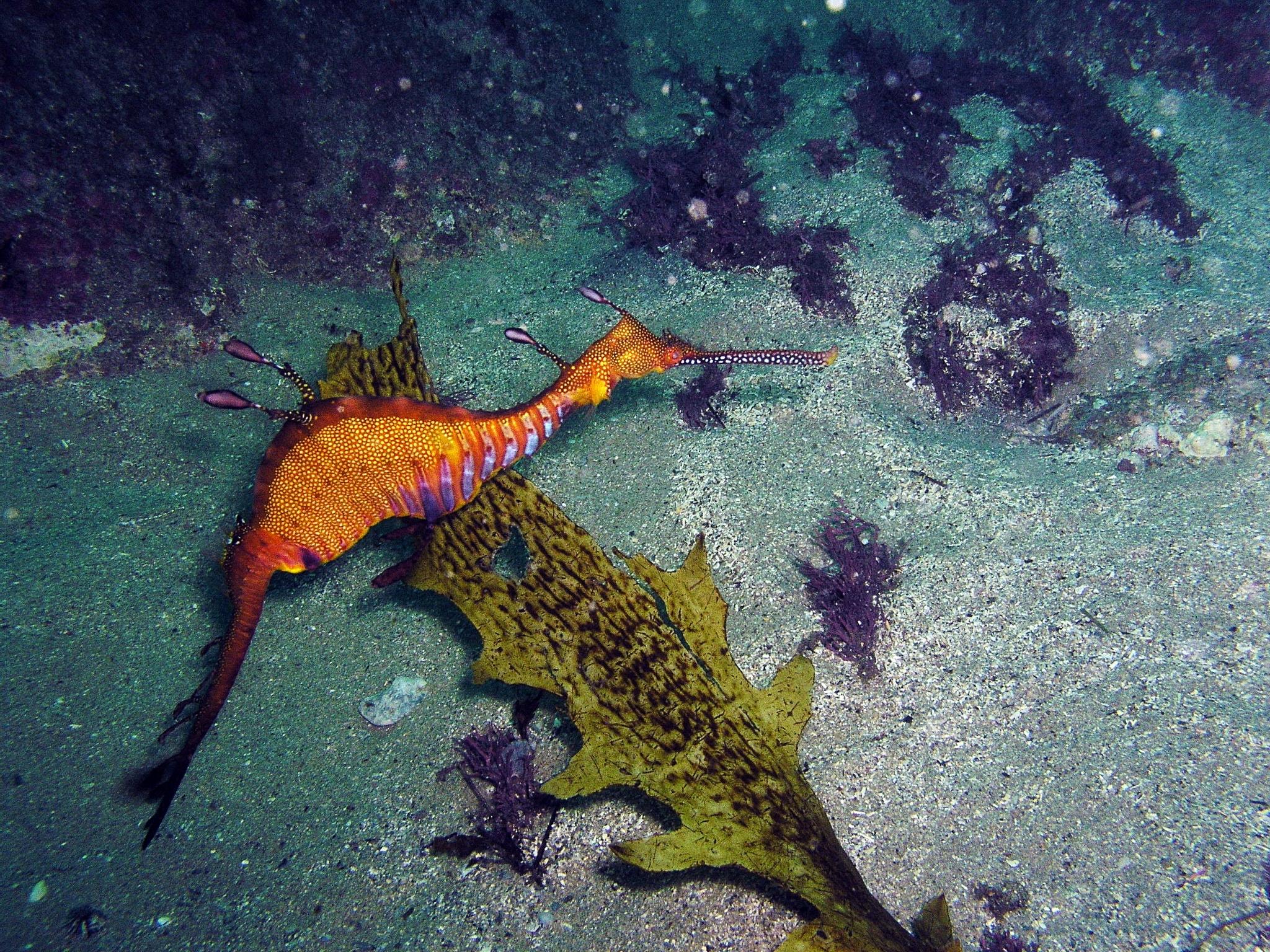 Weedy SeadragonIf you see a weedy seadragon with a cluster of eggs under its tail, that's the father. He carries up to 250 eggs, fixed to the underside of his tail, for 30 to 38 days until they hatch.
- Weedy seadragon males carrying eggsThe father isn't hiding them. Up to 250 eggs are fixed to the underside of his tail, out in the open water, for 30 to 38 days until they hatch.
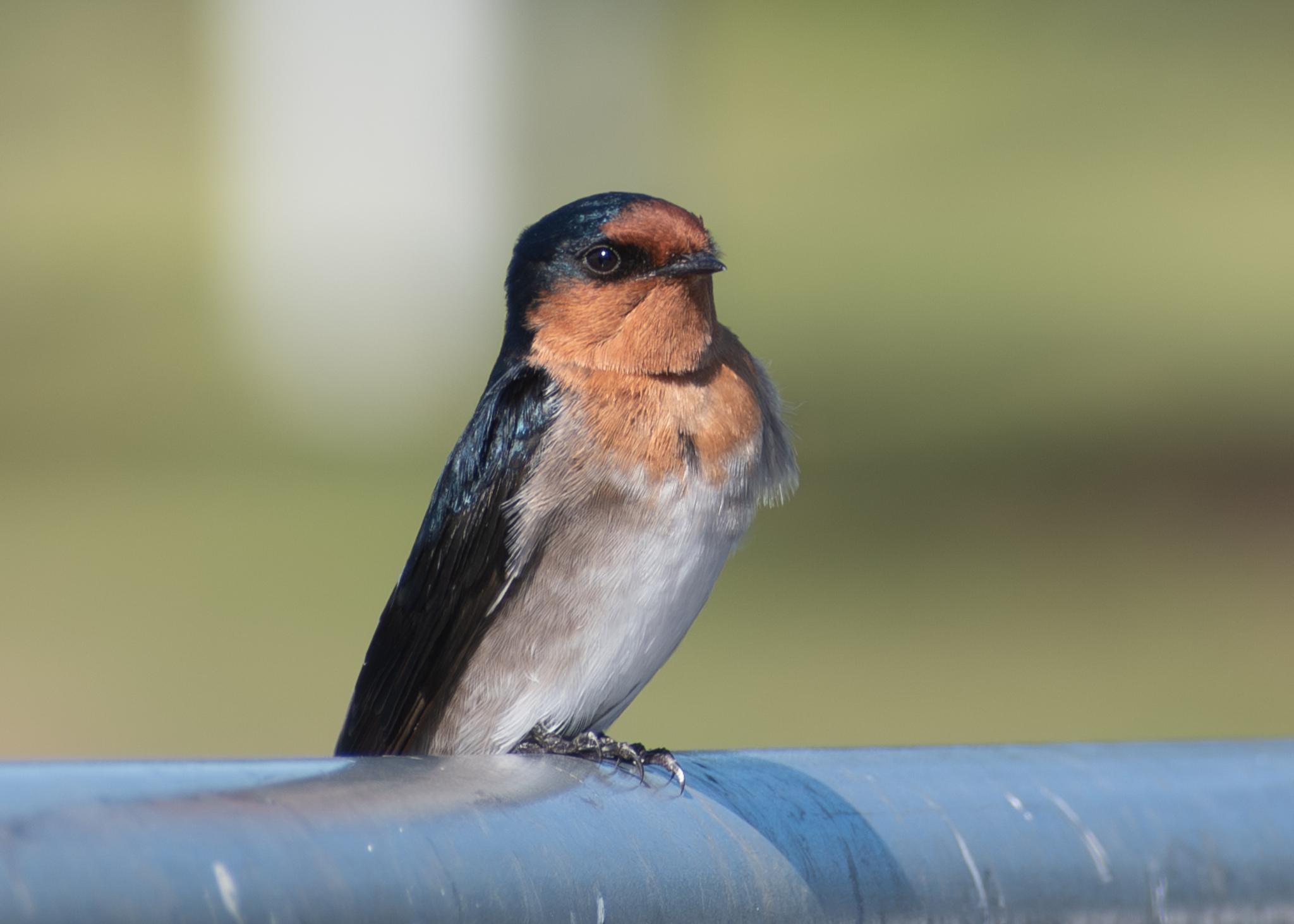 Welcome SwallowThat swallow skimming low over the water is feeding on the wing. Short bristles at the corners of its mouth help steer insects into its wide-open mouth, and protect its eyes.
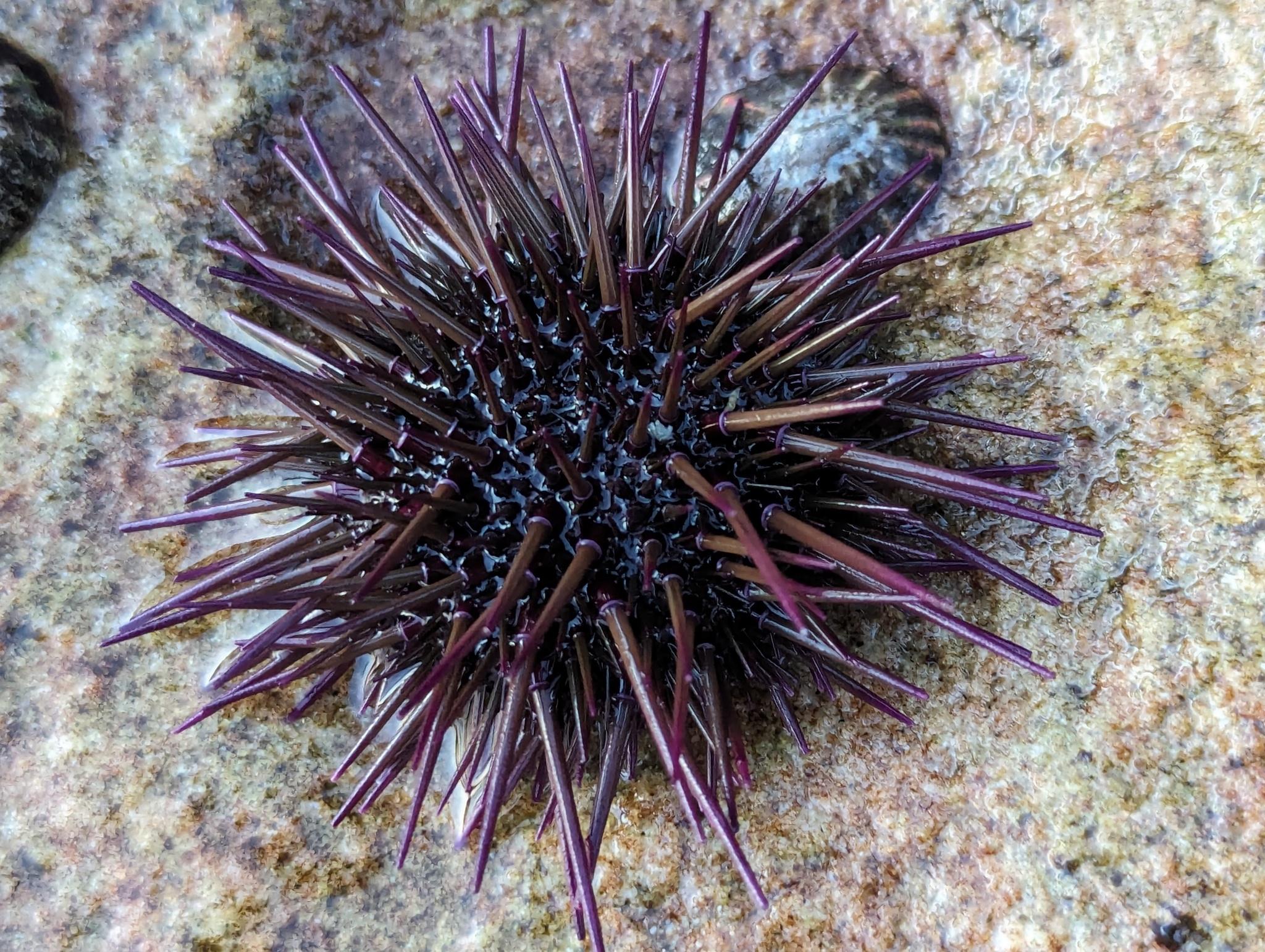 Western Pacific purple sea urchinIts colour varies so much, from light olive green to pink to dark purple, that scientists once thought it was three different species. Urchins like this one cluster together and use their sharp spines to burrow into rock for shelter.
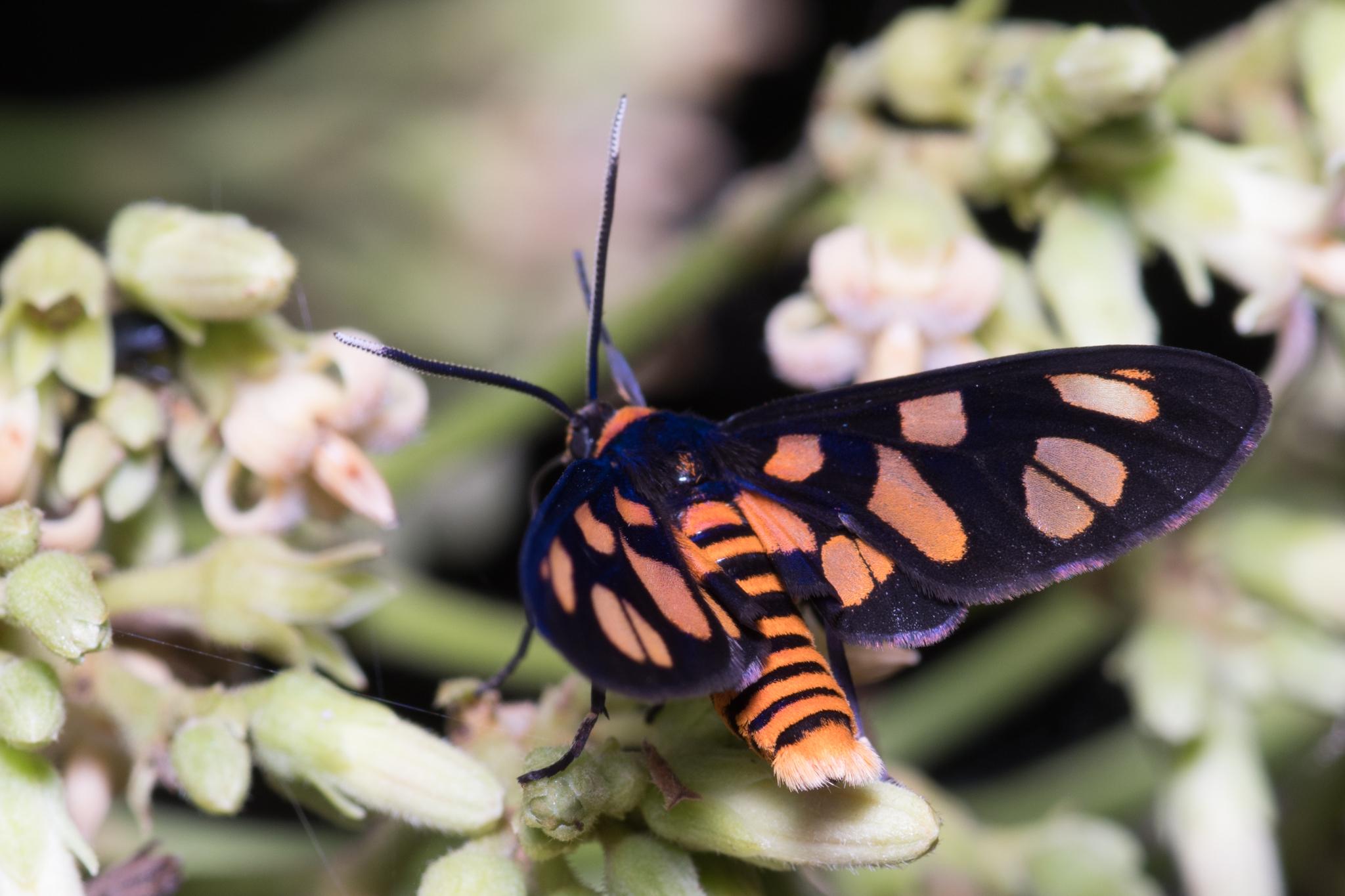 White Antennae Wasp MothOrange spots and stripes on black: it looks like a wasp. The easy guess is that it's bluffing, a harmless moth dressed in a dangerous animal's colours.
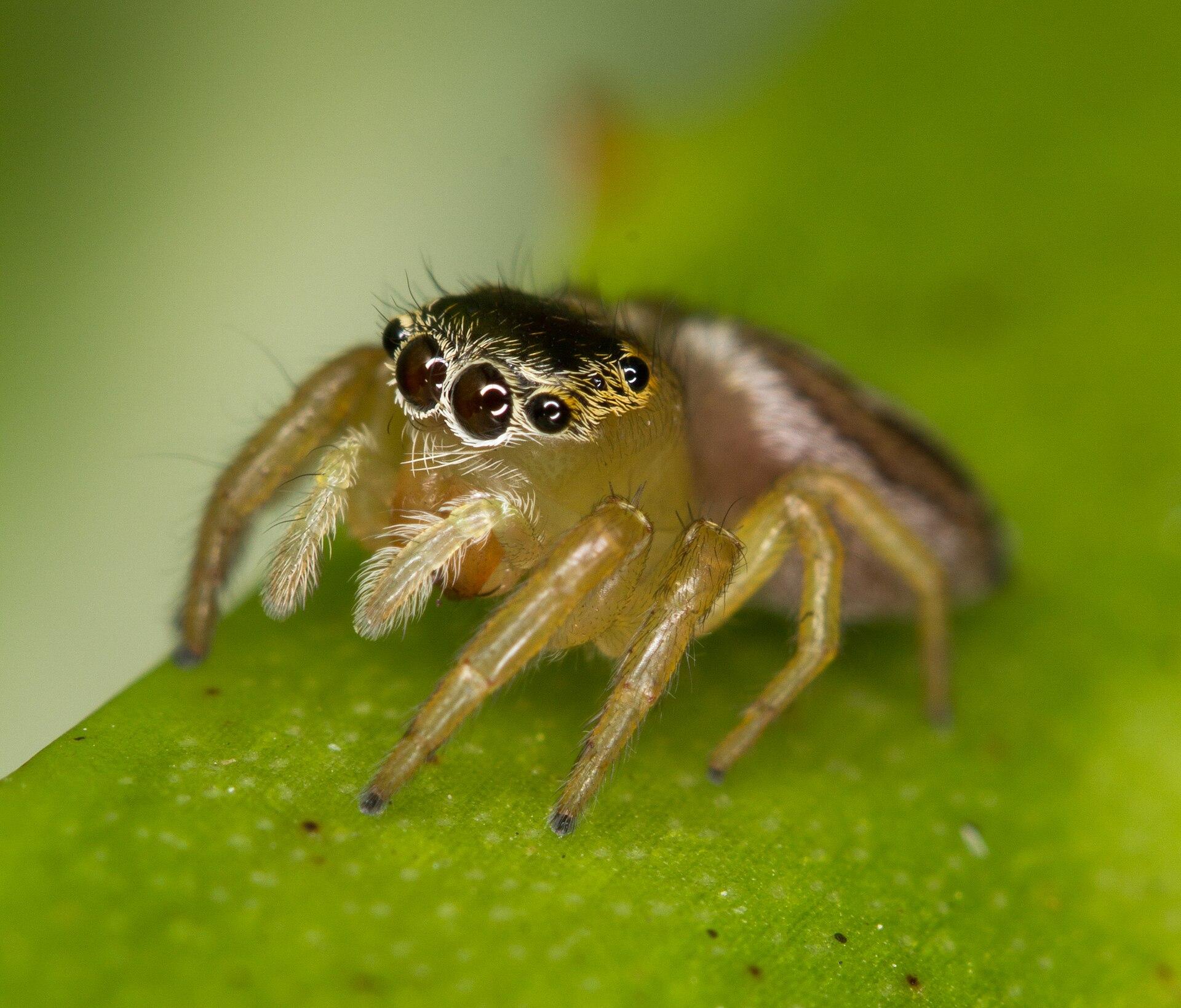 White Garland House HopperIt has seen you. Like many jumping spiders, it hunts by day with excellent eyesight, tracking and stalking its prey and judging the distance before it suddenly leaps, pushed off by its strong back legs.
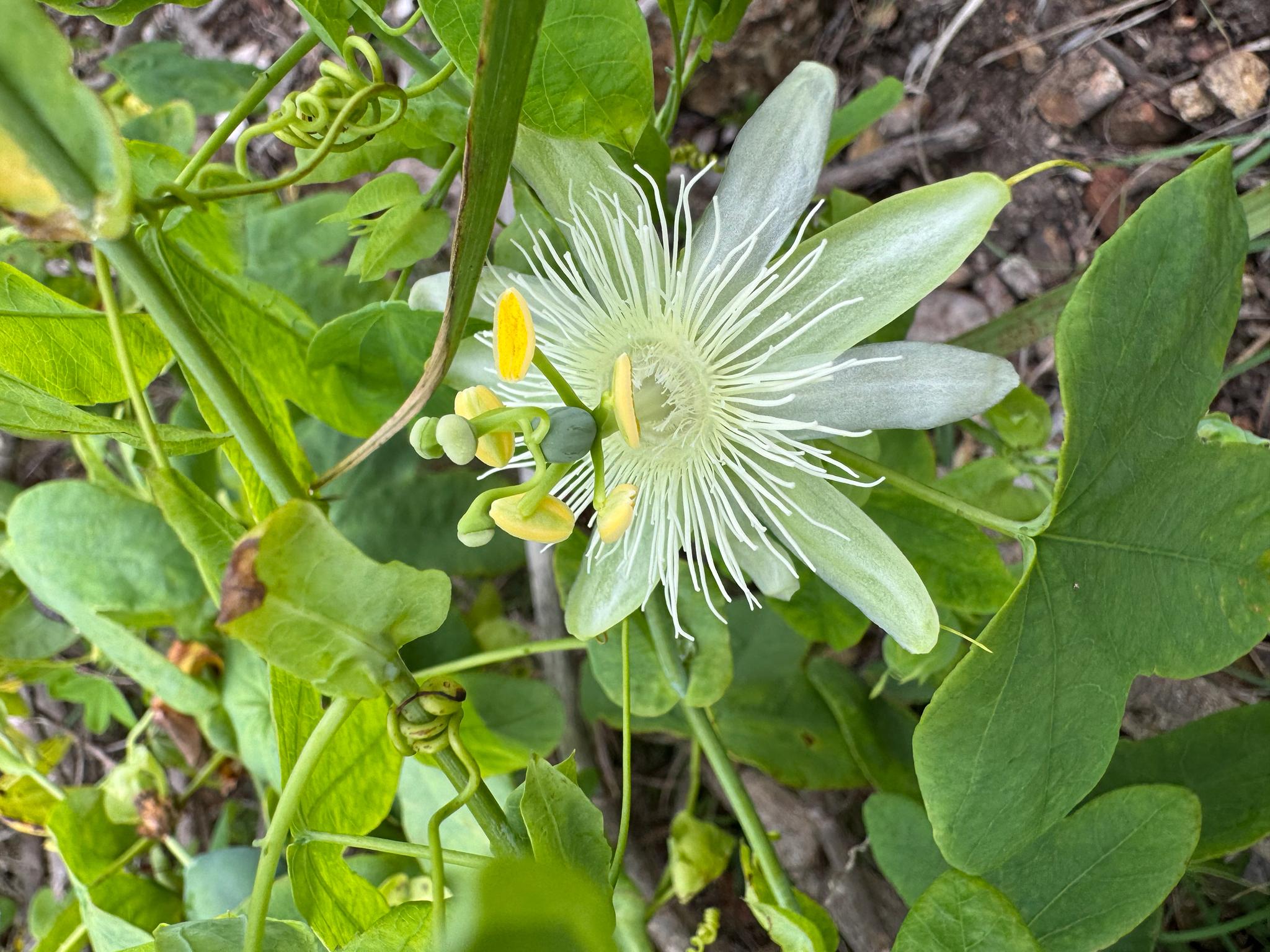 White passionflowerThat white flower in the coastal scrub looks like it belongs. It doesn't.
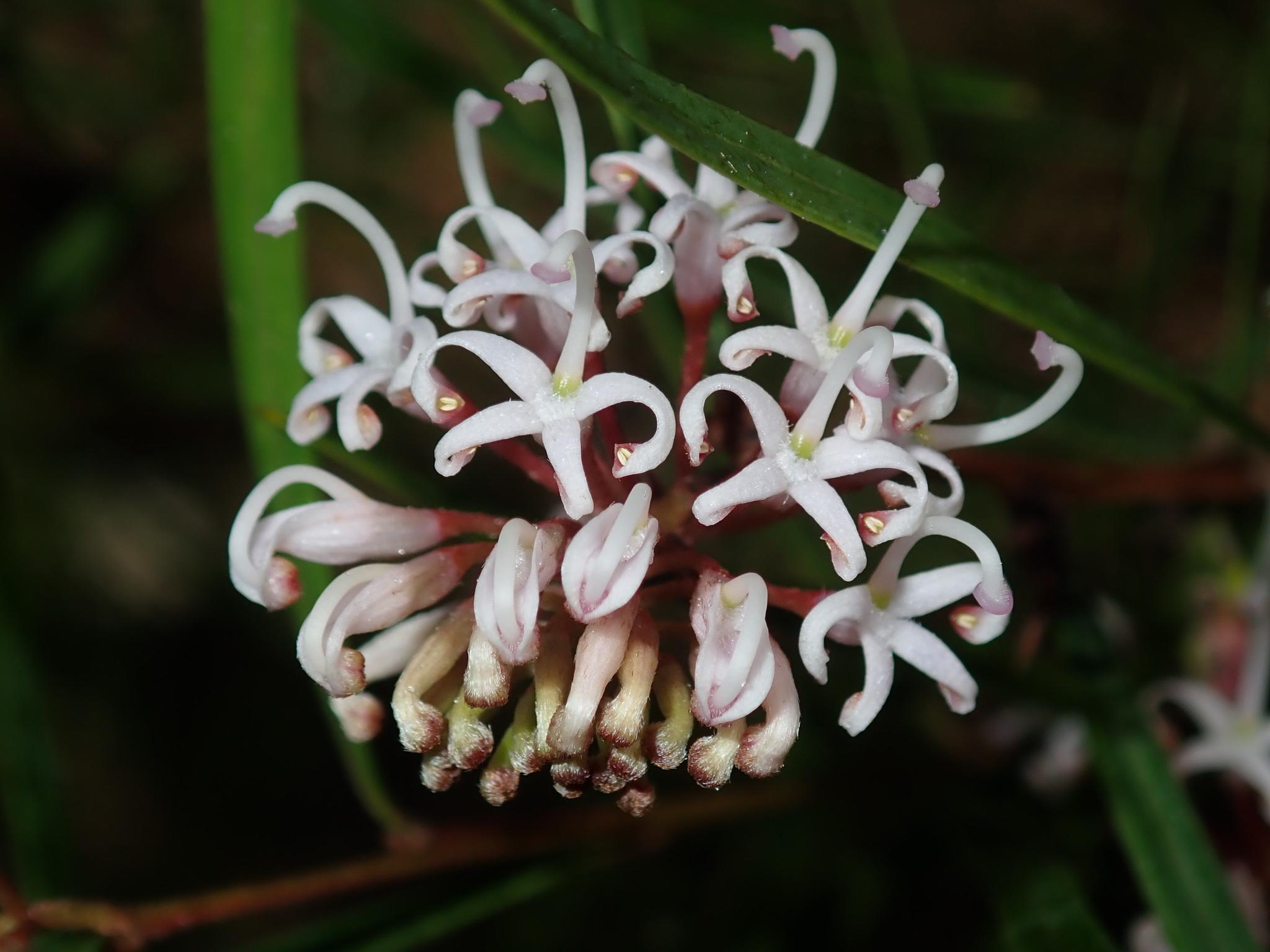 White Spider FlowerEach seed of this grevillea carries a fatty snack for ants. Small ants team up to shift a seed up to 20 centimetres, and big ants drag seeds back to their nests.
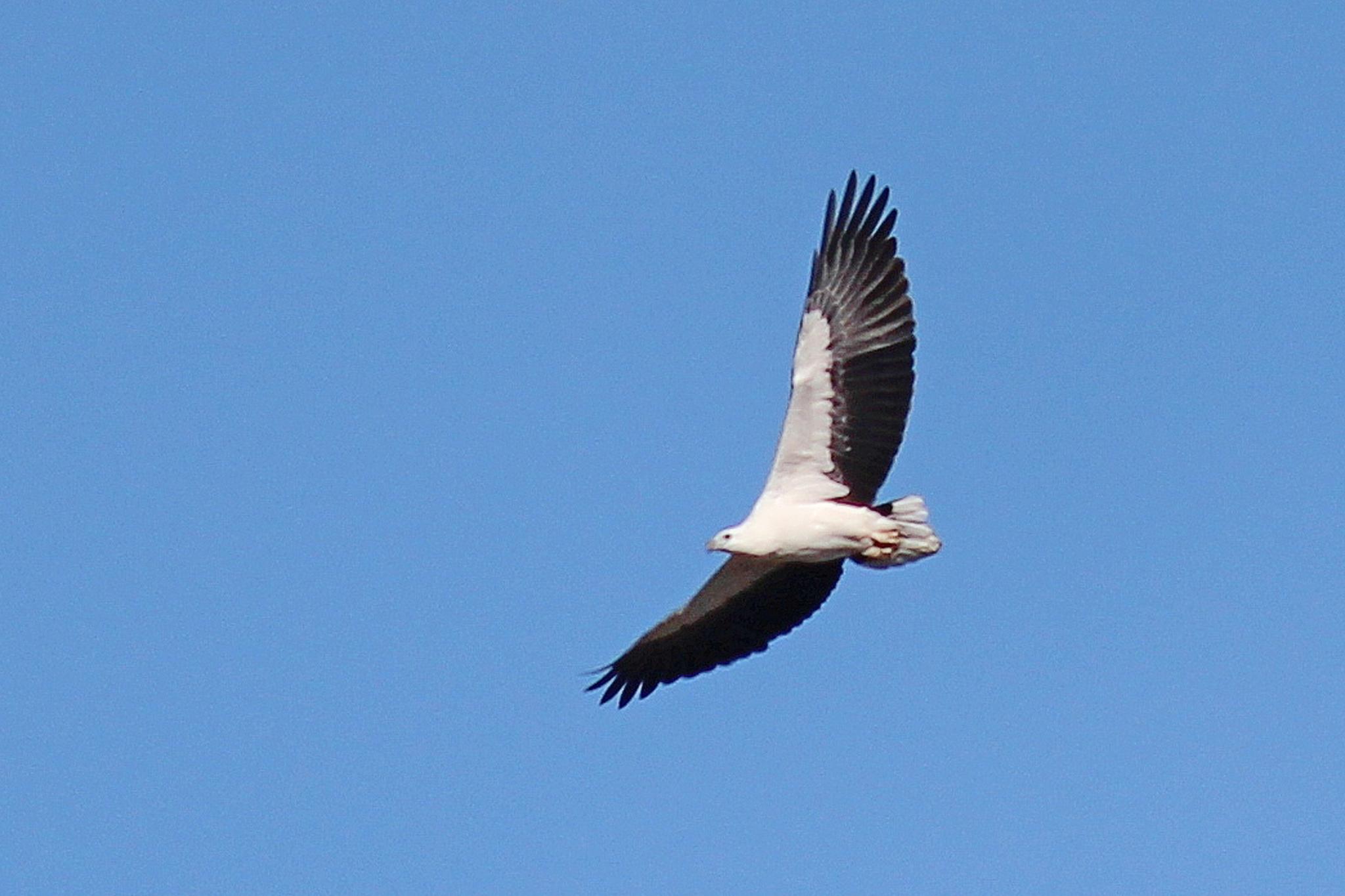 White-bellied Sea-EagleWith its white chest and huge wings, the white-bellied sea-eagle looks like everything an eagle is supposed to be. Then it opens its beak and honks, loud and goose-like.
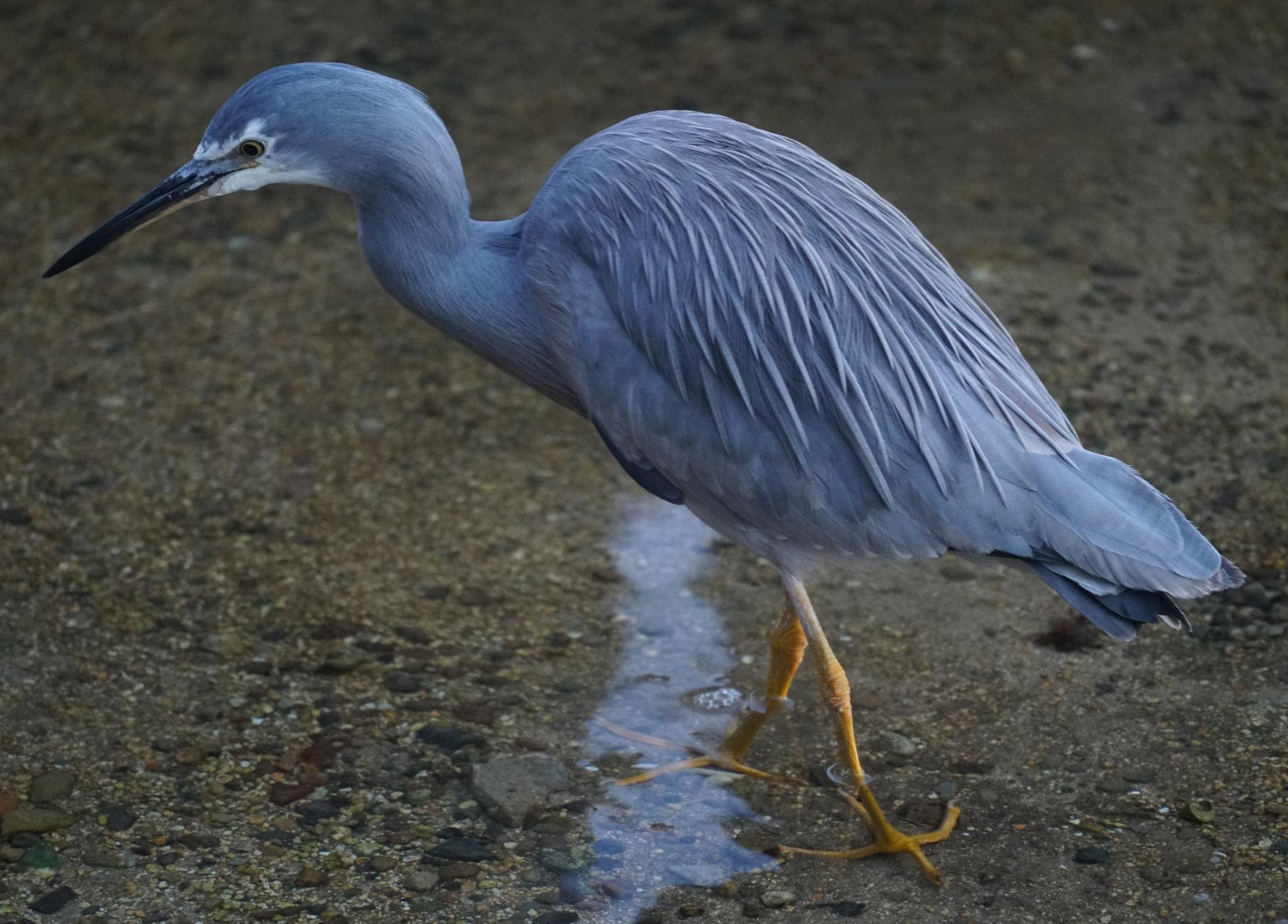 White-faced HeronEvery heron has a hidden spring. Like other herons, the white-faced heron has a special hinge at the sixth bone of its neck, and it lets the folded neck shoot out in an instant.
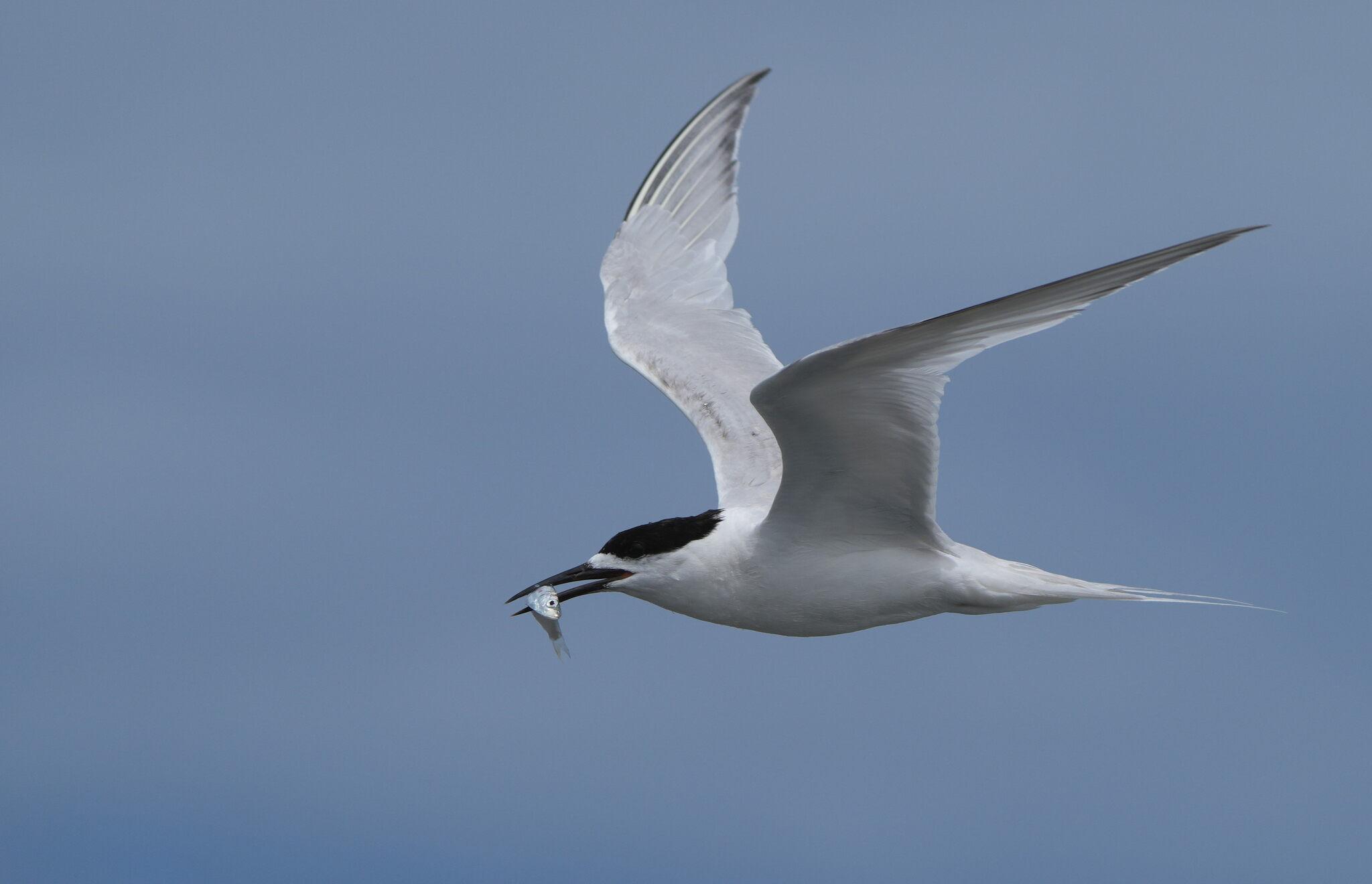 White-fronted TernThis tern is probably young, and probably a New Zealander. Most white-fronted terns breed across the Tasman, and in autumn some of them, mostly young birds, cross over to spend the winter on our coast.
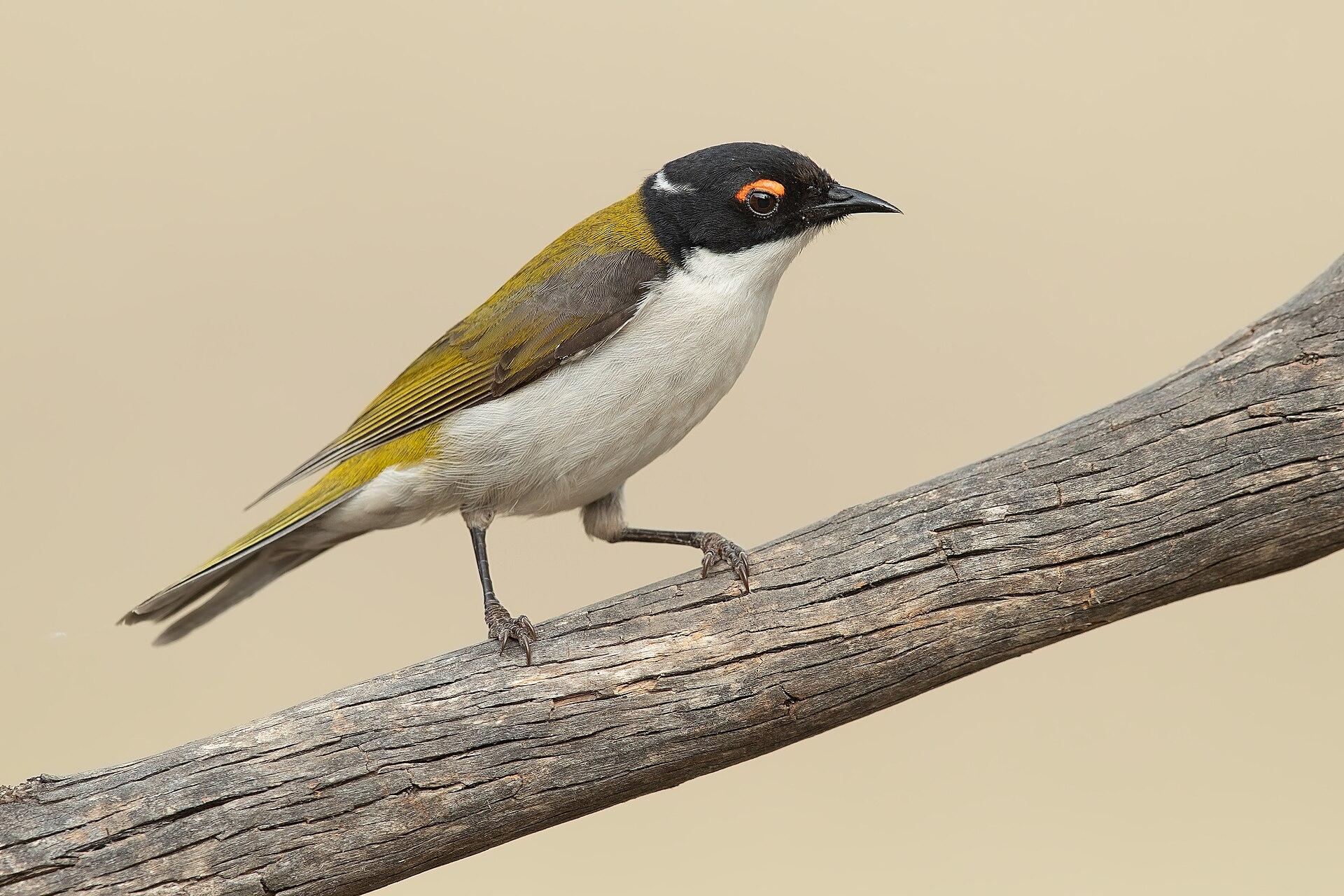 White-naped HoneyeaterIt weighs about 13 grams, and it may not be travelling alone. White-naped honeyeaters migrate in flocks of hundreds, sometimes thousands, skimming just above the treetops.
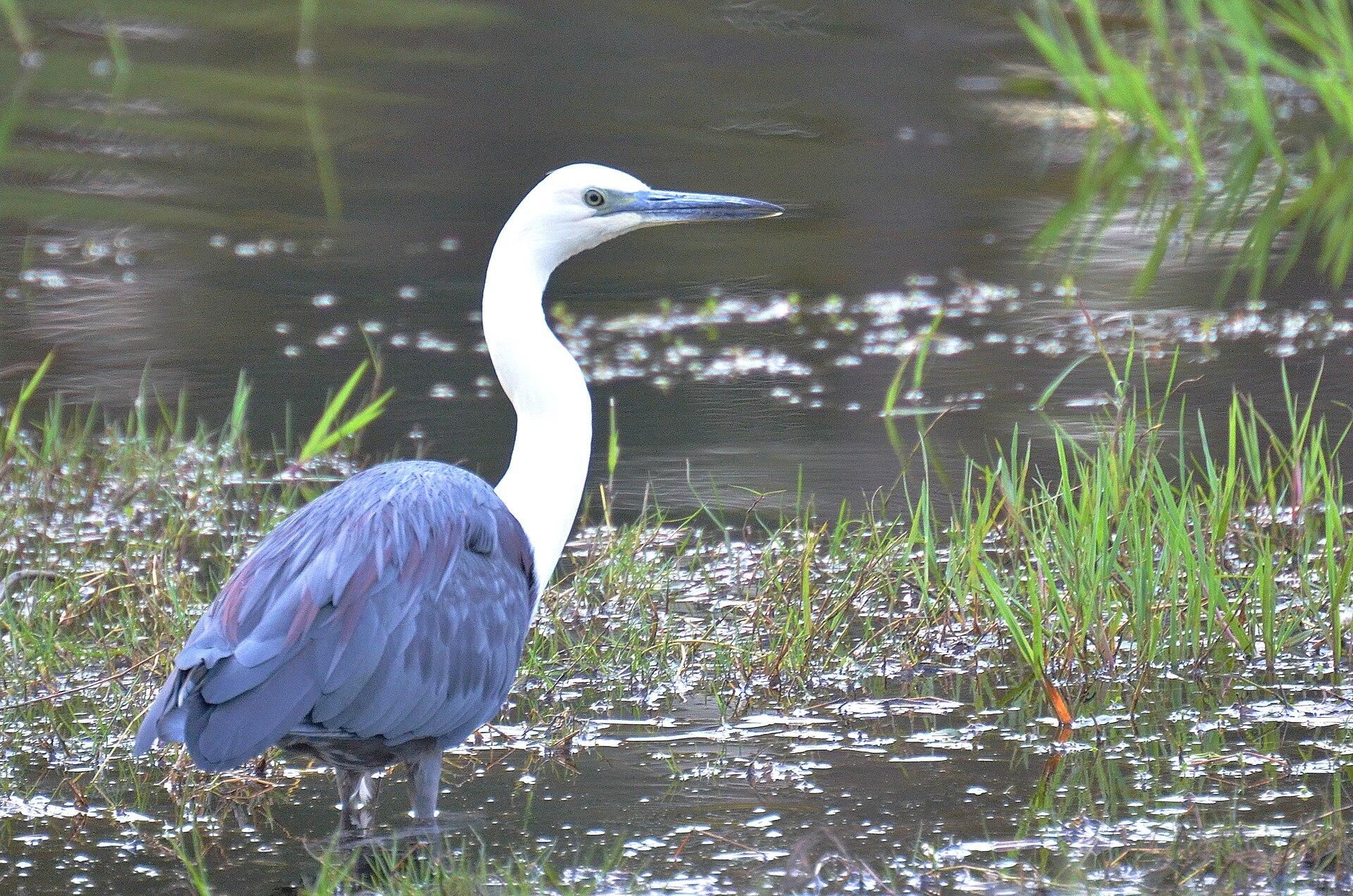 White-necked HeronIt stands so still it looks carved. Then the neck shoots out, faster than its prey can react.
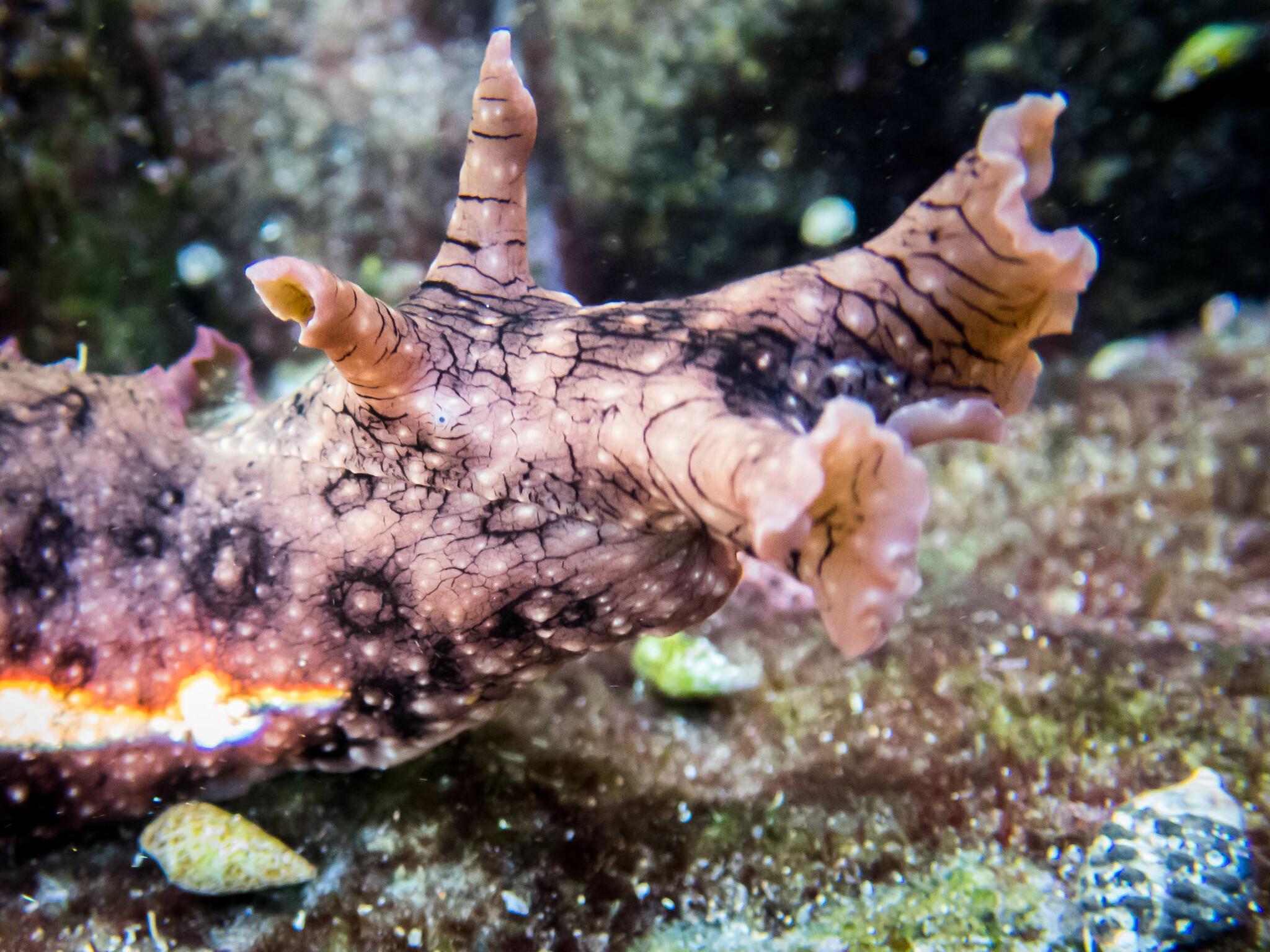 White-speckled SeahareThis soft, speckled sea hare is one of the most successful on the continent. It and one relative are the most widespread sea hares in Australian waters, recorded in 16 of the coastal regions scientists map, and the only two recorded from the Great Australian Bight.
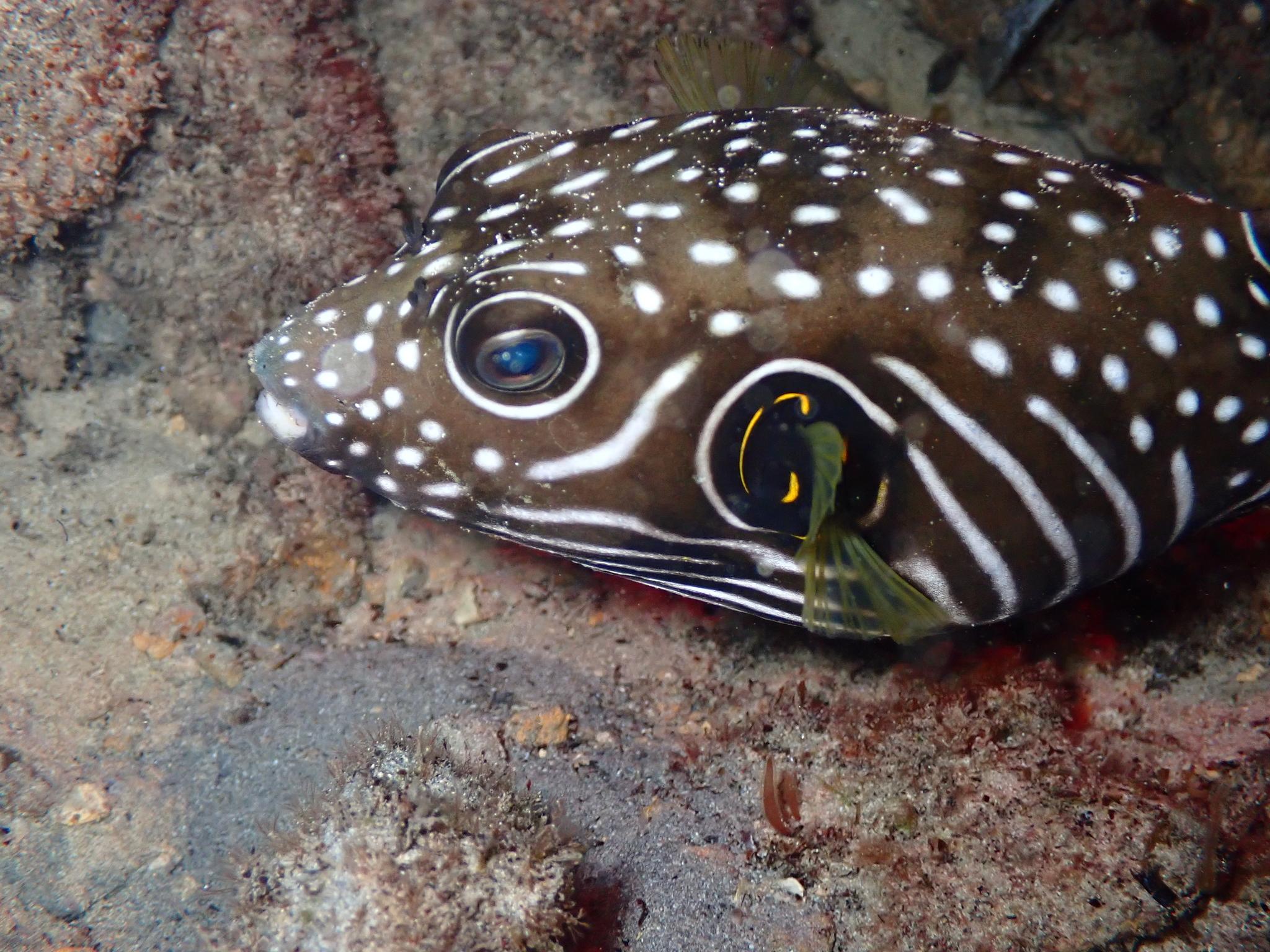 White-spotted PufferIt looks gentle: a round fish speckled with white spots. It eats a huge range of reef life, from algae, sponges and coral to crabs, molluscs and tube worms.
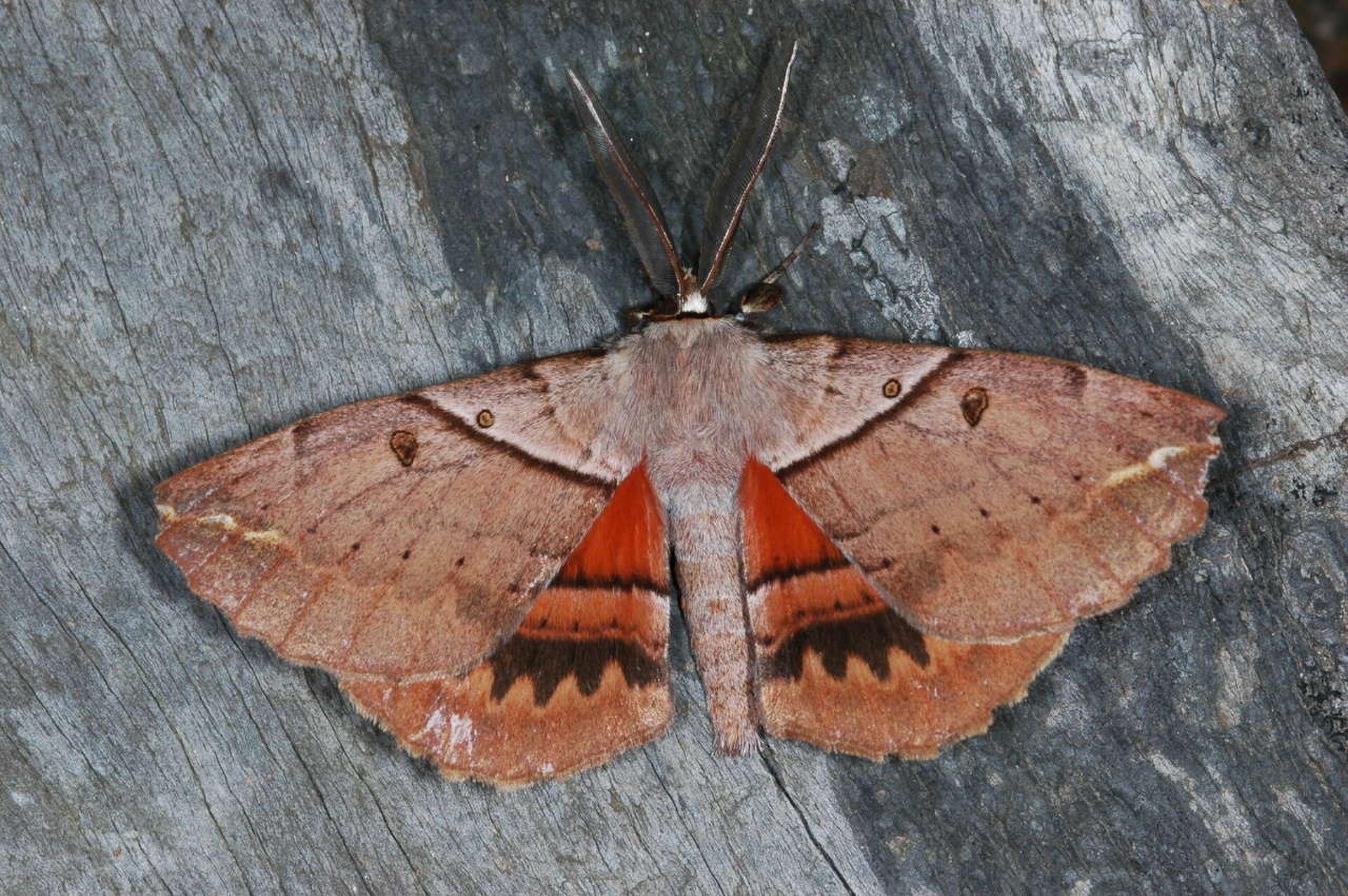 White-stemmed Acacia MothThis big moth will never eat. Like all moths in its family, the adult has no working mouthparts.
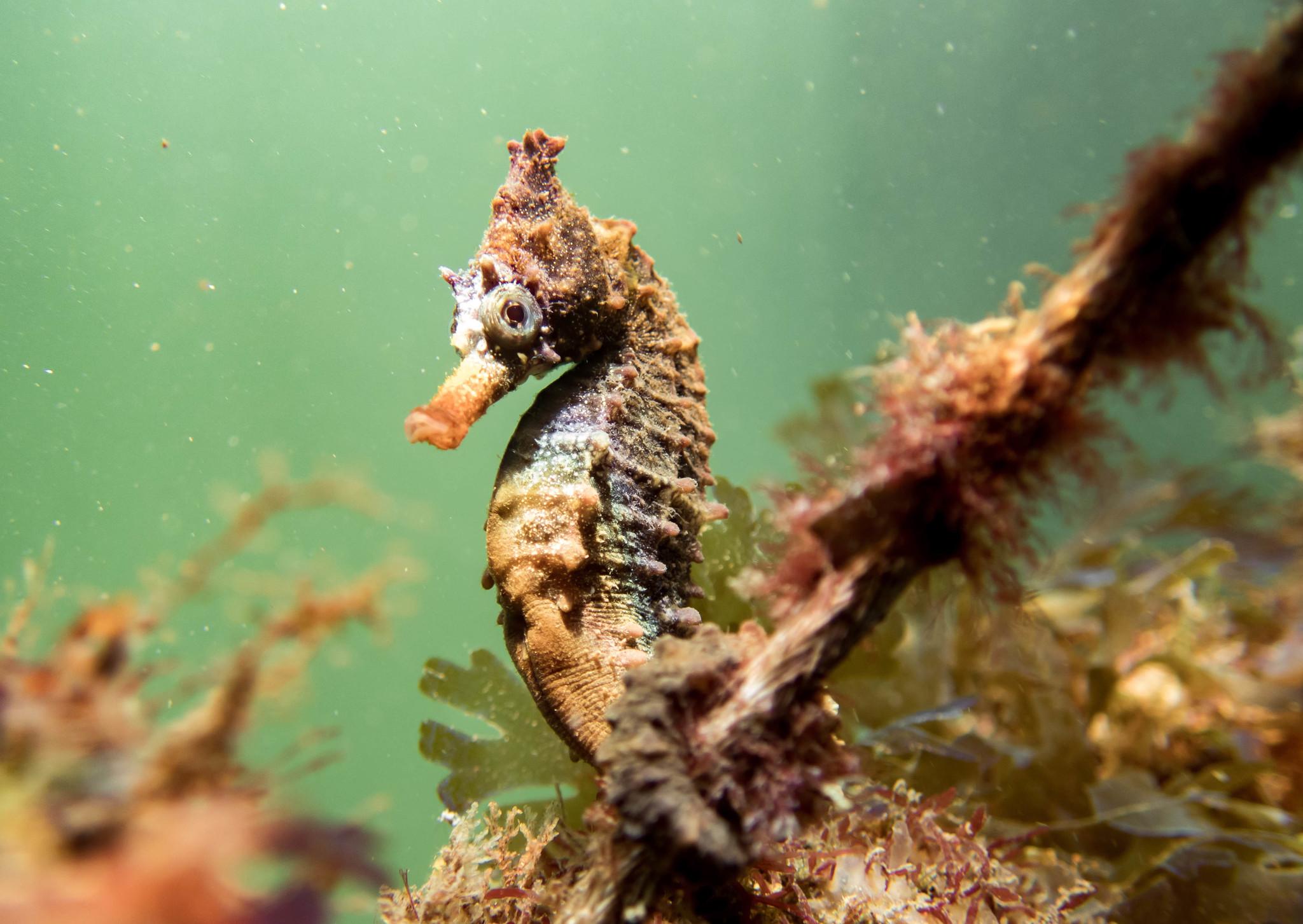 White's SeahorseThis seahorse may be a pregnant father. The female lays her eggs into his pouch.
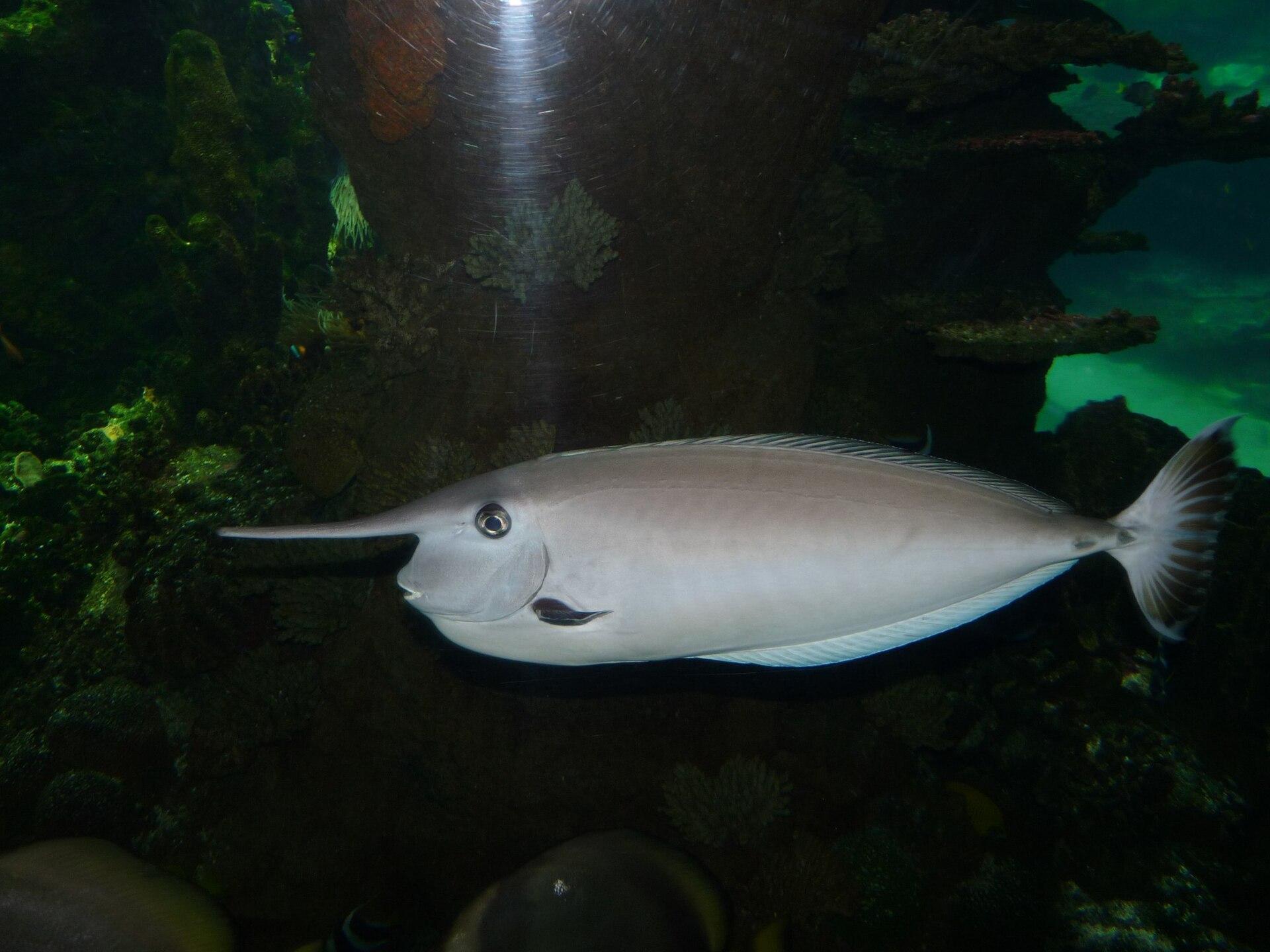 Whitemargin UnicornfishIt's named for the horn in front of its eyes. But its weapons are at the other end.
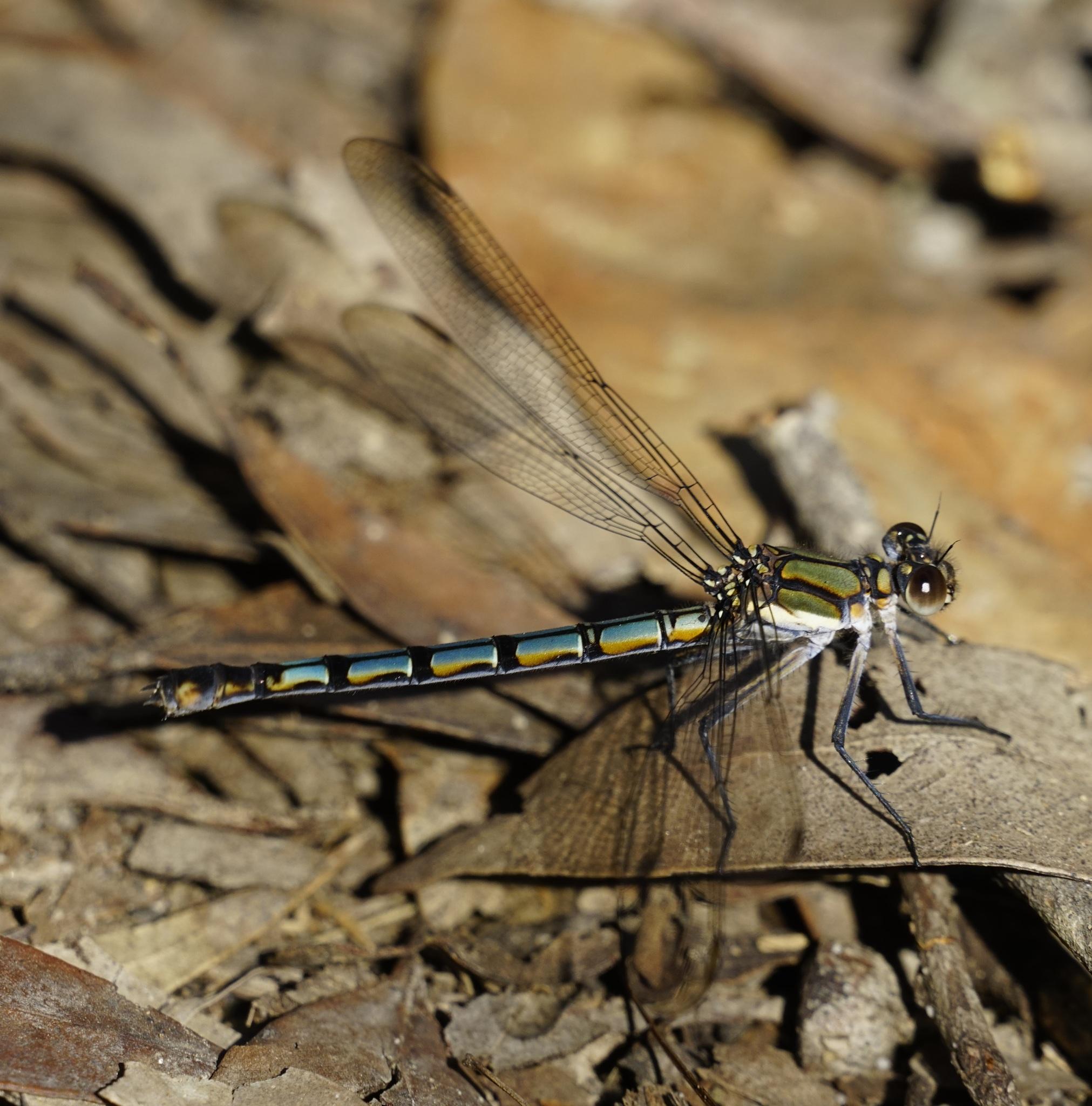 Whitewater RockmasterThis damselfly is the size its kind settled on. It wasn't always so.
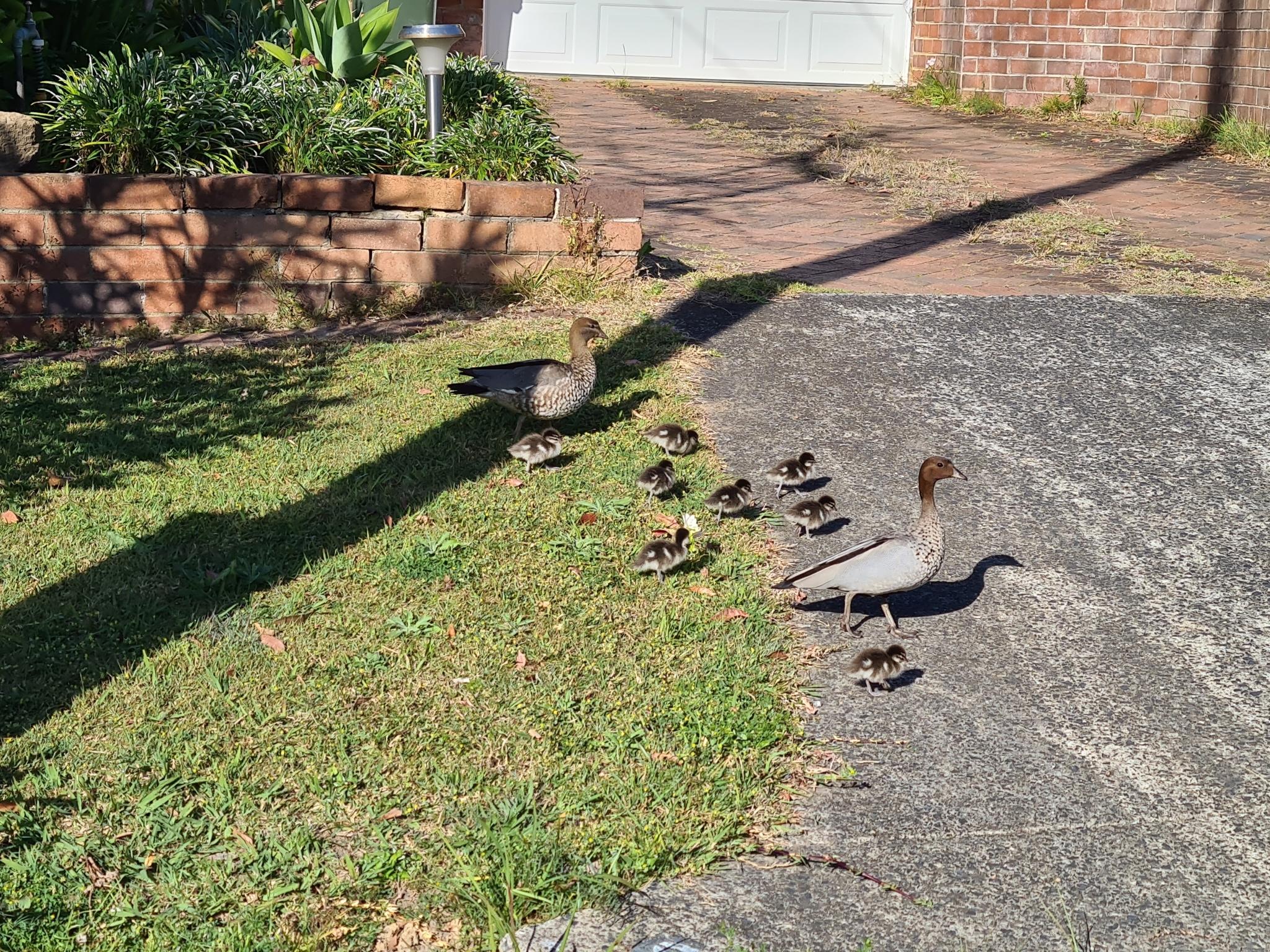 Wood duck ducklings following their parentsThese ducklings began life up a tree. Wood ducks nest in tree hollows, sometimes away from water.
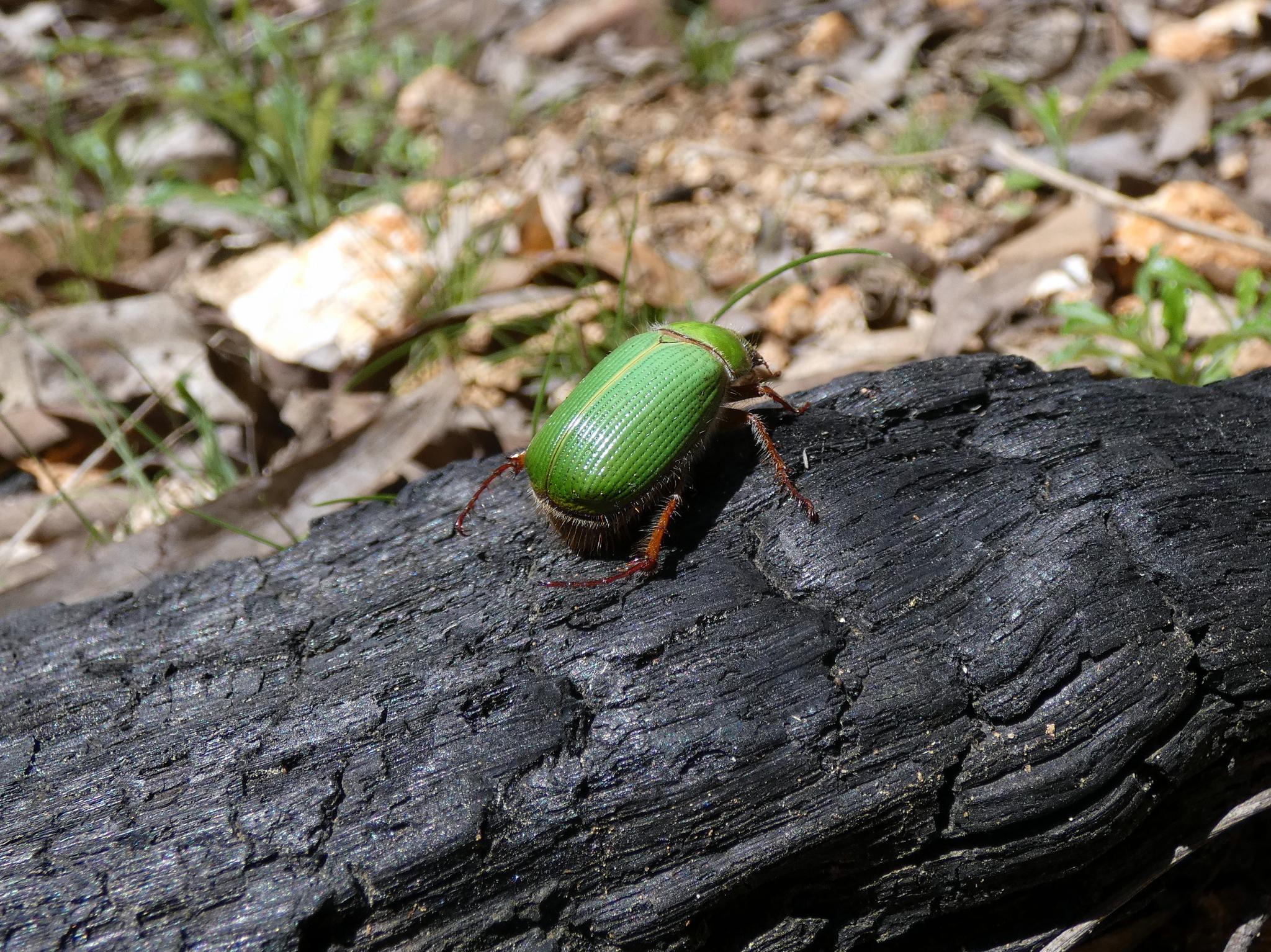 Xylonichus eucalyptiThe shine you can see is only part of it. Beetles of its genus throw back an unusually large share of near-infrared light, the part of sunlight our eyes can't see, which carries more than half of the sun's energy.
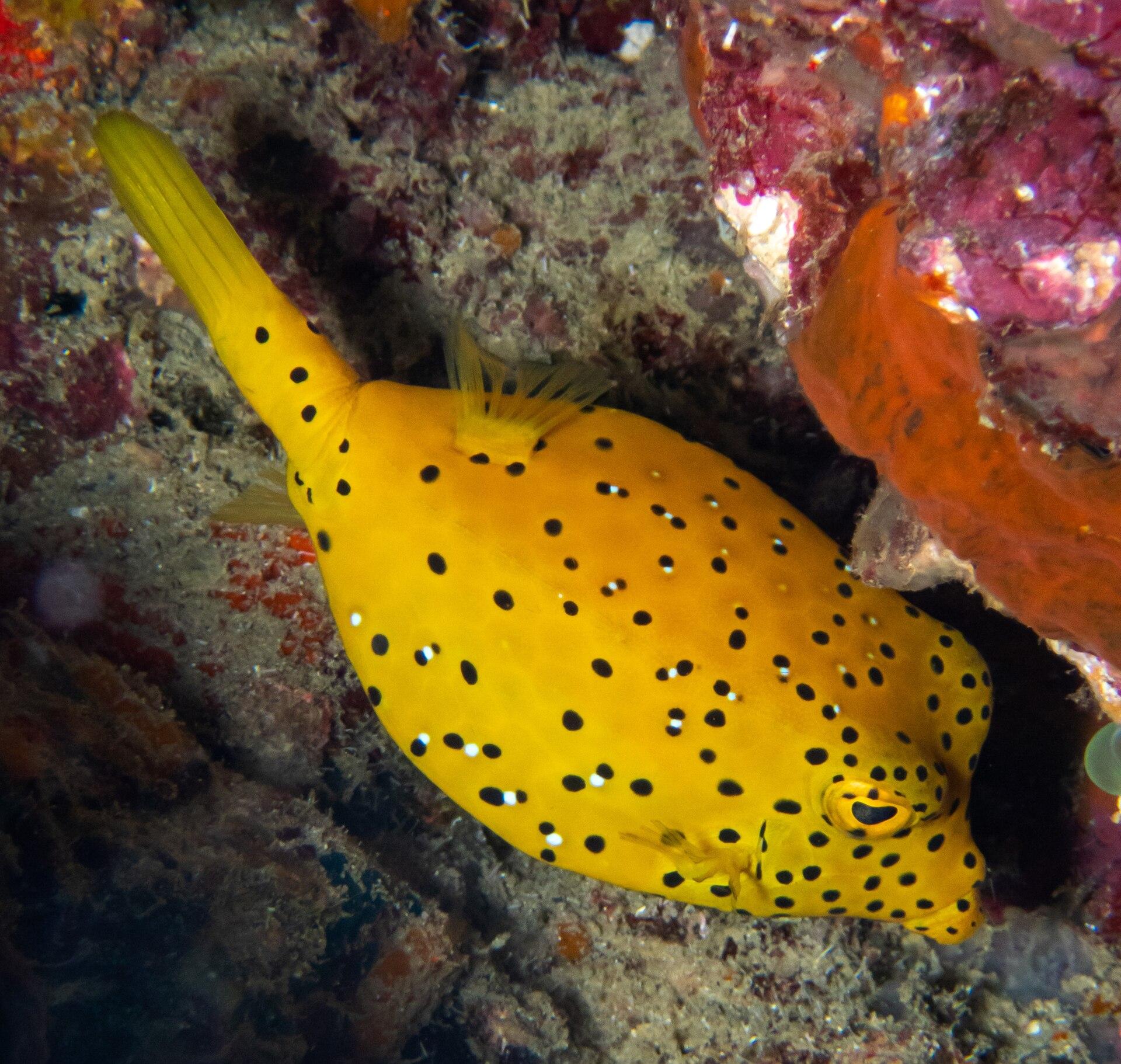 Yellow BoxfishA young yellow boxfish is about as easy to spot as a fish can be: bright yellow, with black spots, like a dice someone dropped in the sea. It isn't trying to hide.
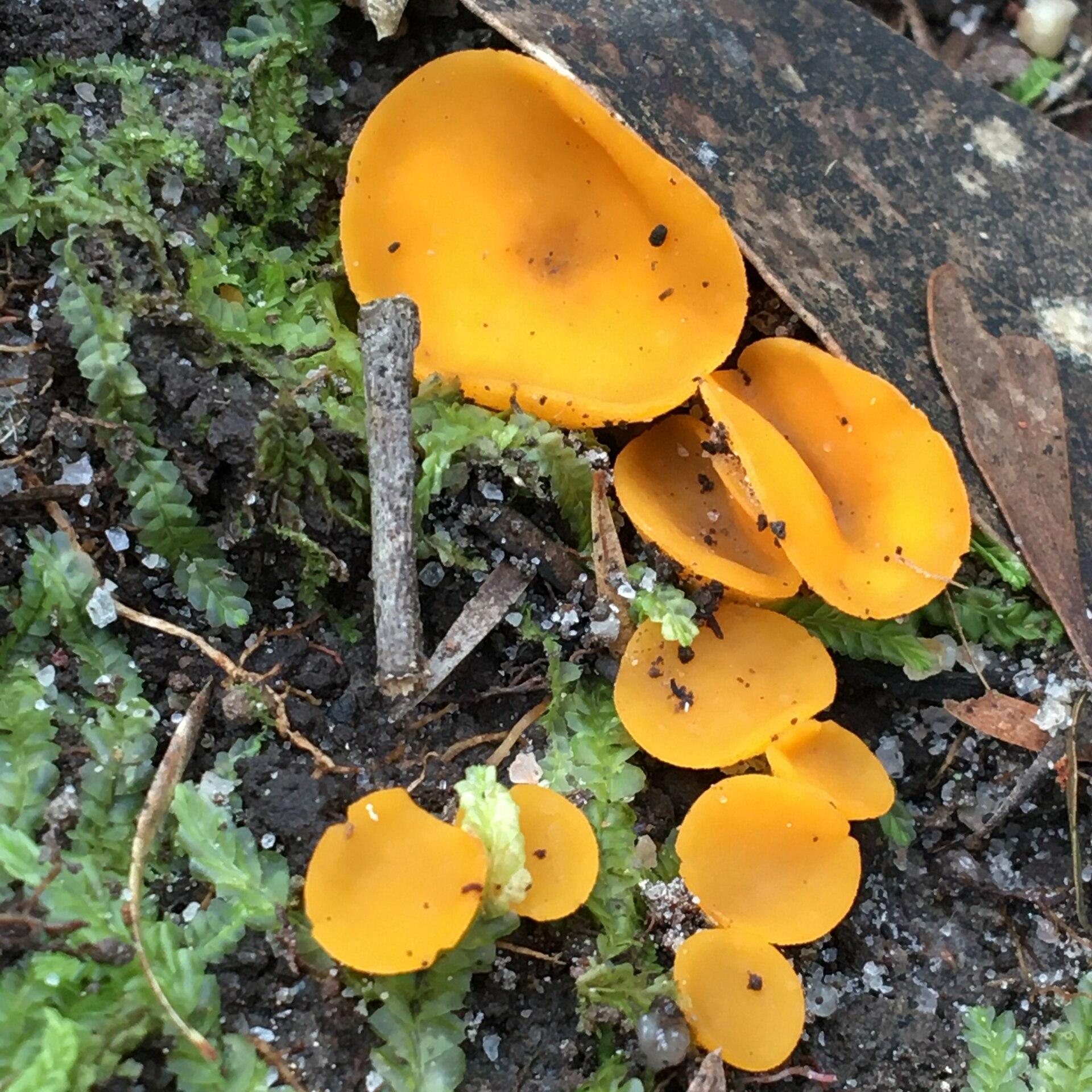 Yellow Earth ButtonsIt isn't a mushroom. Yellow earth buttons is a disc fungus, small yellow buttons on the soil.
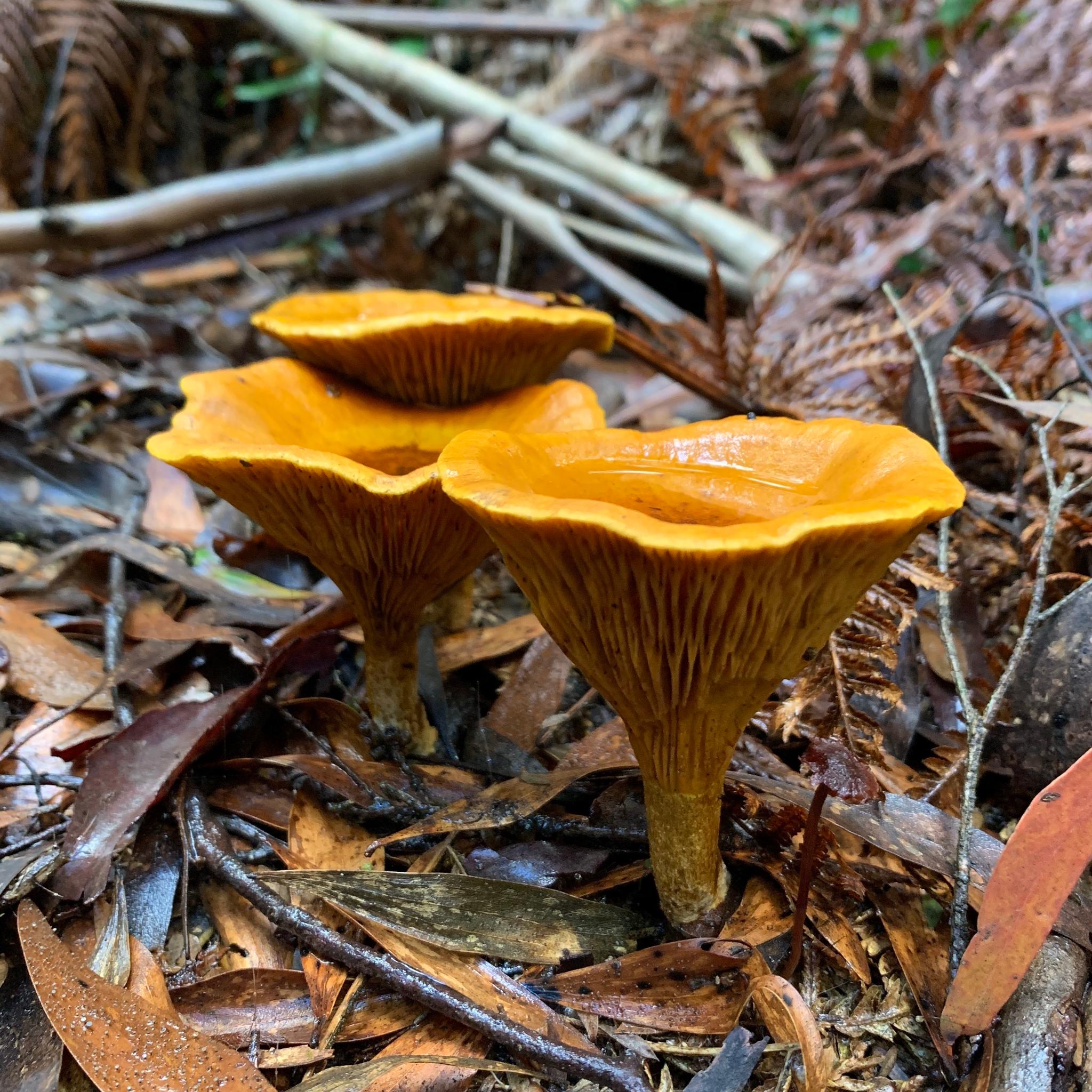 Yellow funnel rollrimWhat you're looking at is only the fruit. Most of this fungus is underground, as threads.
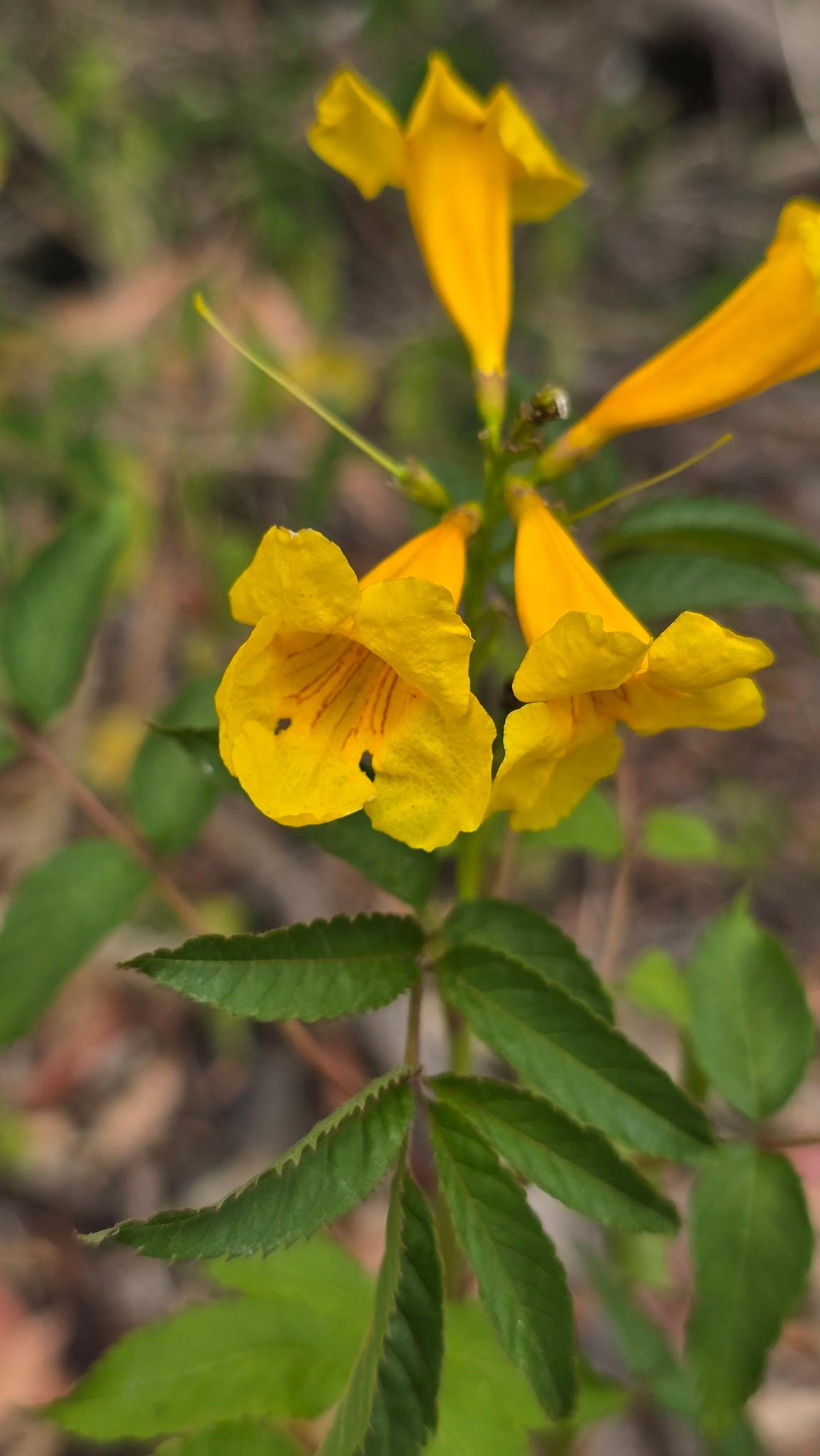 Yellow trumpet flowerThe yellow trumpets are pretty, and they're working fast. A young plant can start setting seed within two years.
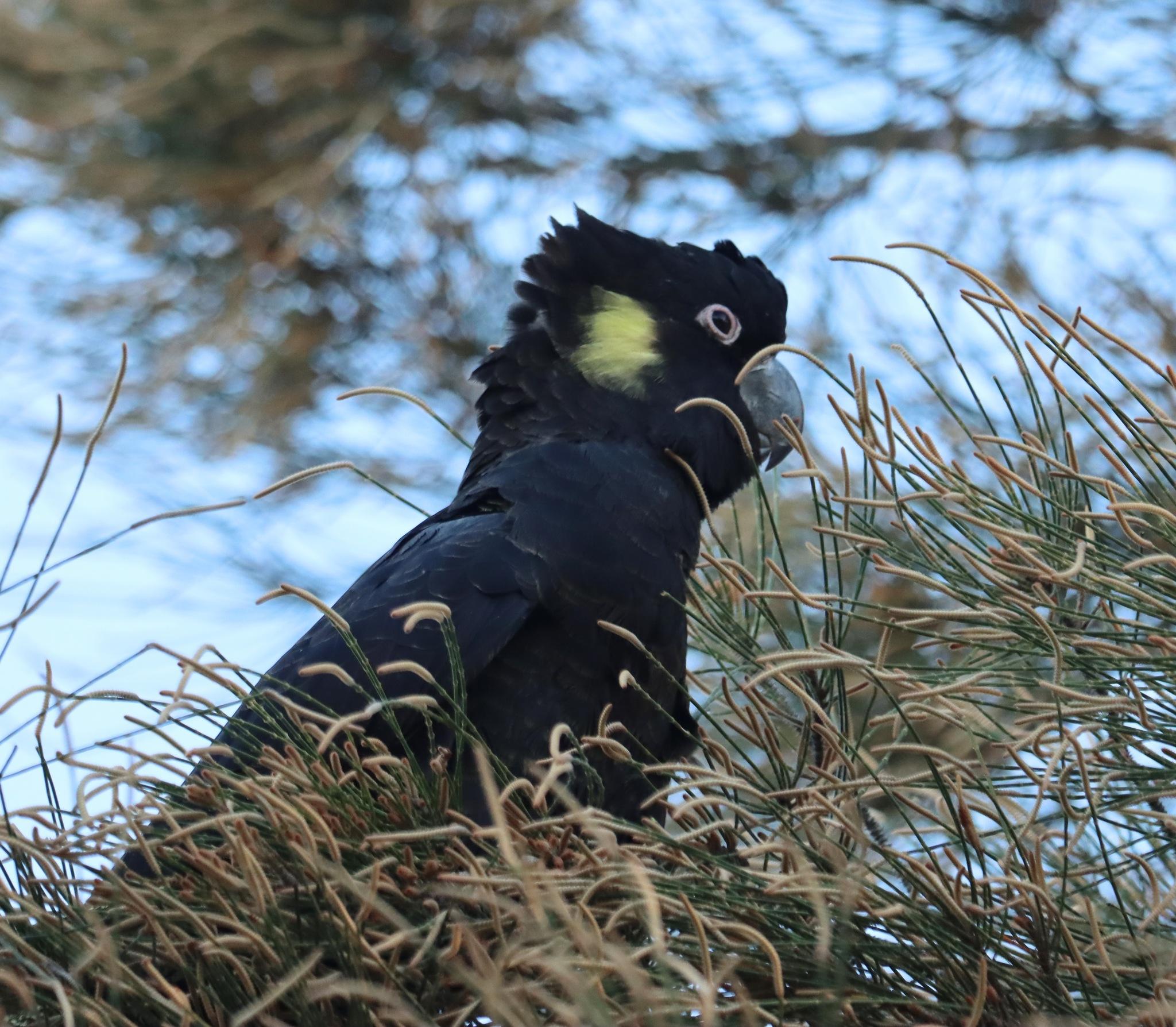 Yellow-tailed Black CockatooA family of yellow-tailed black cockatoos moving through the trees is usually a story about one child.
- Yellow-tailed black cockatoo flocks feedingThat crunching overhead may be a cockatoo tearing into a pine cone. Its beak can open a woody hakea pod for just two seeds.
 YellowbellyFor its size, the yellowbelly is particularly loud. Its song is an engine-like rattle that ends in a sudden groan, so it seems to roll through the trees.
 Yellowfin LeatherjacketAt night, this leatherjacket can sometimes be seen biting onto a strand of seagrass and holding on, so the water doesn't carry it away while it sleeps.
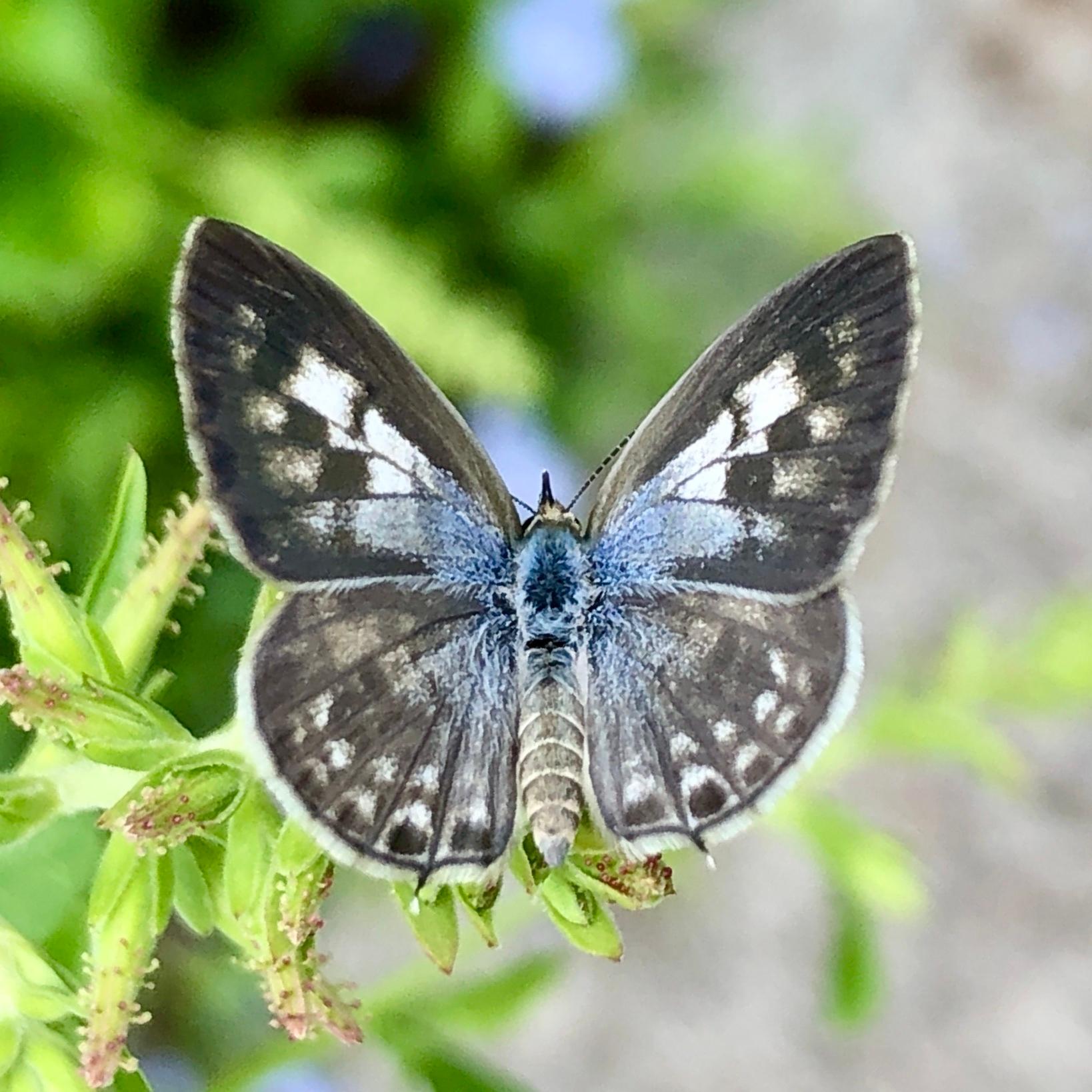 Zebra BlueThe caterpillars of this little butterfly eat the flowers and buds of plumbago, including the common garden plumbago. Sometimes small ants gather around them.