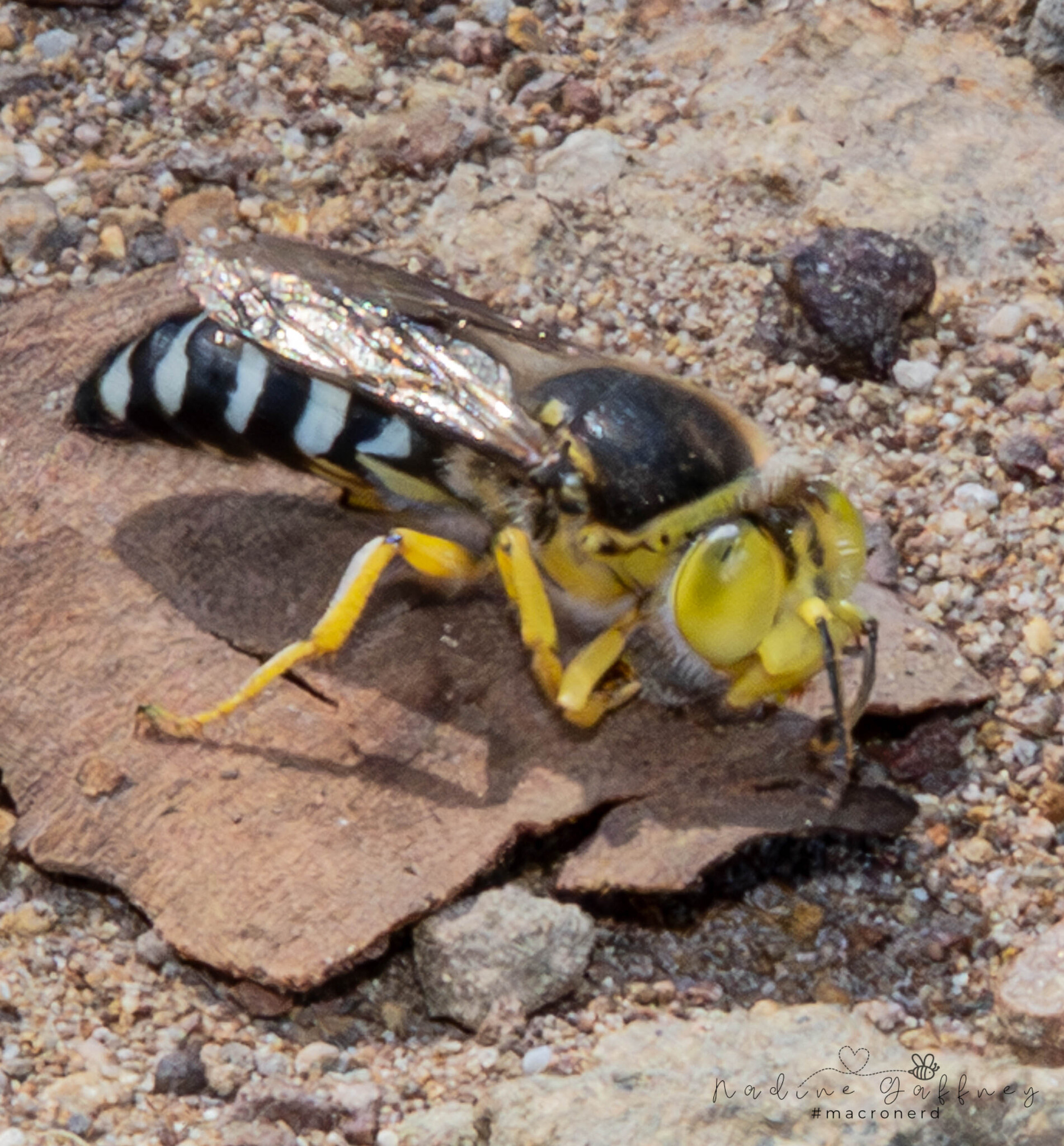
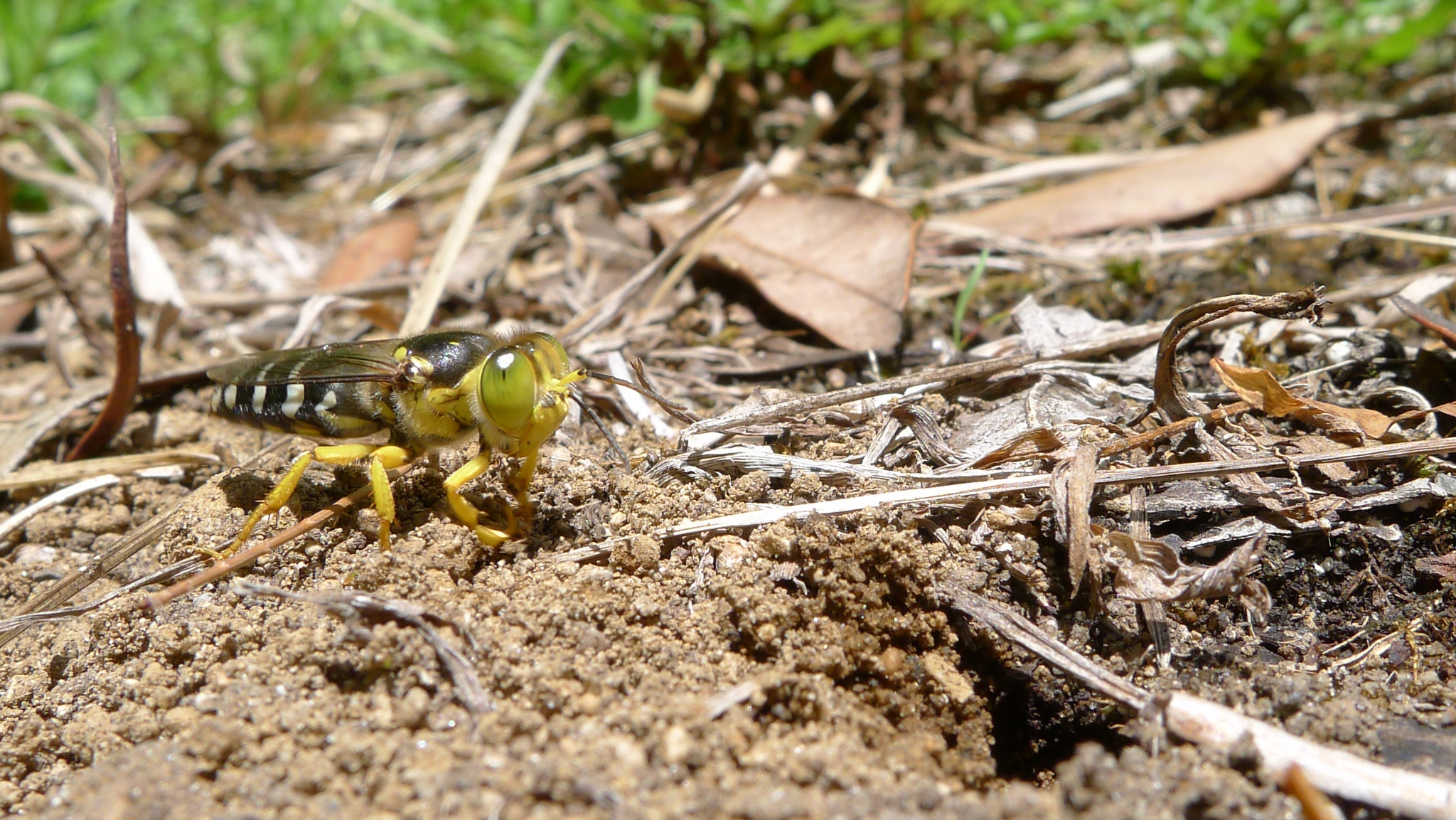
Sand wasps are fly hunters. They catch flies on the wing, paralyse them with a sting in mid-air, and carry them back to a burrow in the ground, where a grub is waiting.
Waiting is the word that matters. A spider wasp lays one egg on one paralysed spider, seals it in a chamber and goes. She never meets her young. A sand wasp mother keeps coming back, fly after fly, to feed a grub that has already hatched.
Biologists have long seen this as one of the small steps on the road to family life in insects. One idea of how that road ran: first, a mother who leaves a packed lunch and walks away; then a mother who keeps bringing food to her young; and at the far end, the great colonies of bees, ants and paper wasps, where whole families raise the young together. No one can watch that road being travelled. But sand wasps show what one of its early steps might look like.
If she's darting low over bare ground with something in her grip, she's on her way home. Somewhere under there, a grub is waiting for her.