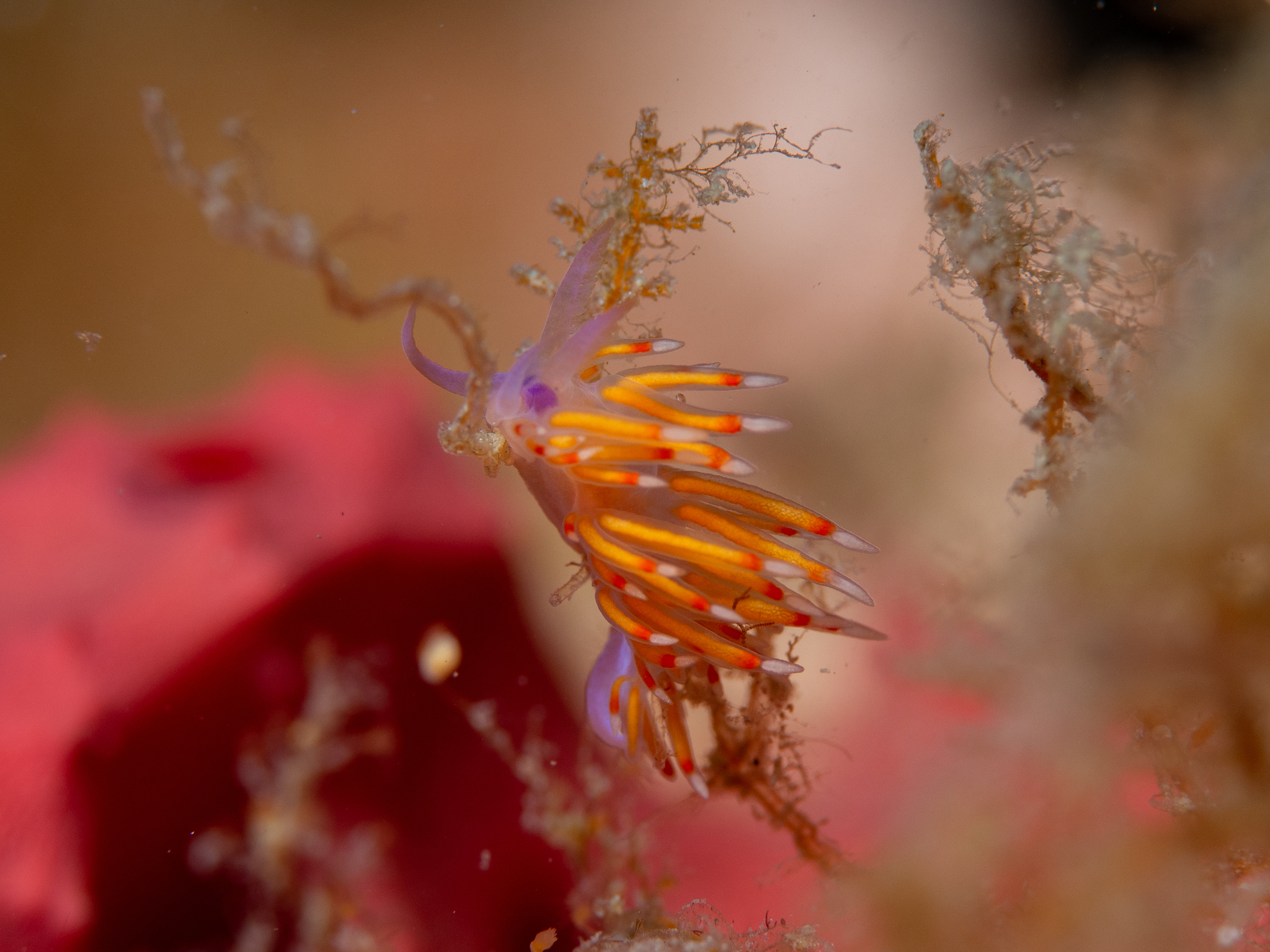
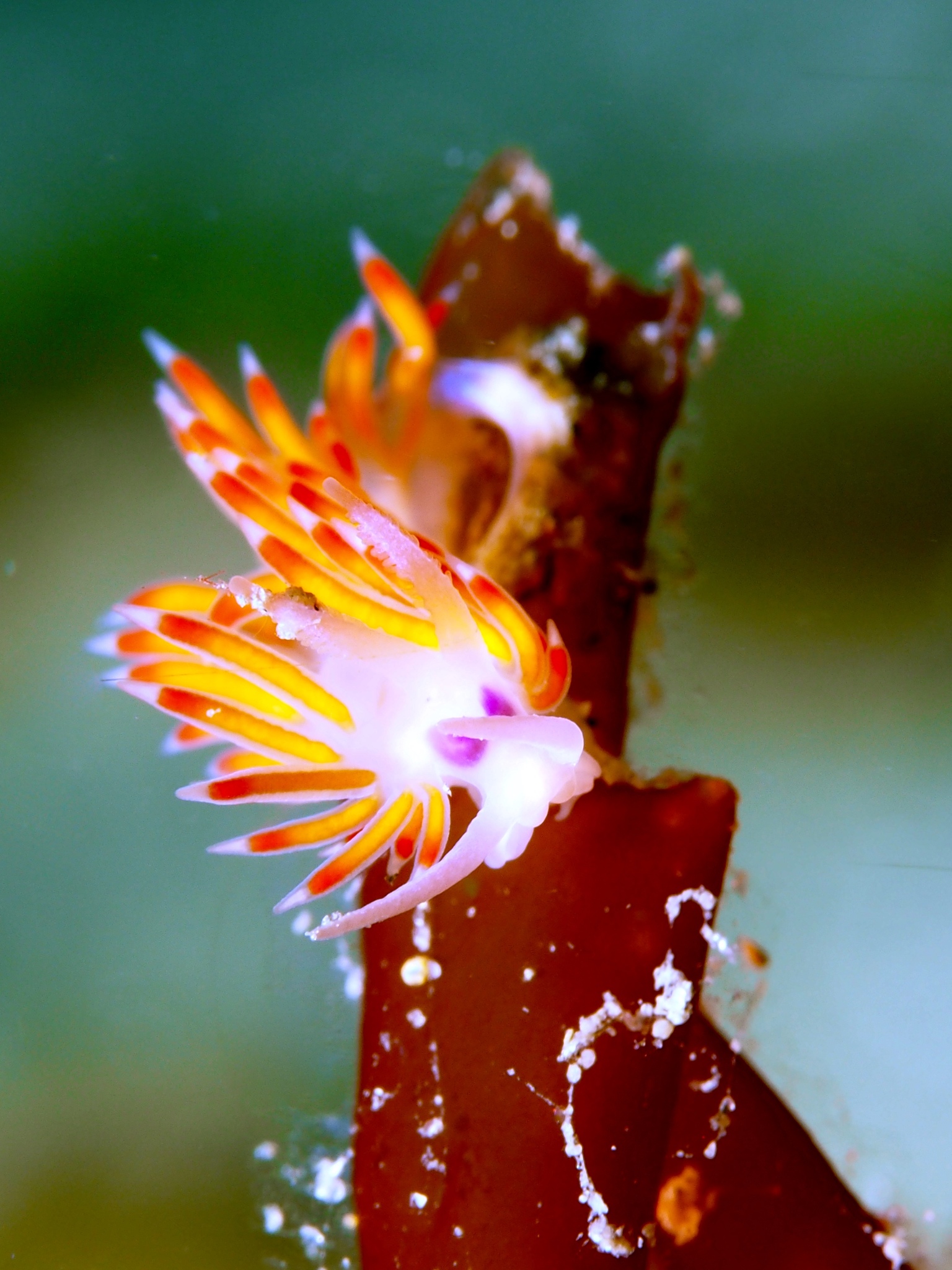
Those orange fingers on its back are probably loaded with stolen weapons. Sea slugs like this one eat stinging animals and keep their stinging capsules, each one able to inject venom, in a small sac at the tip of each finger. In this species the sac is white.
About 600 kinds of sea slug can do it. DNA suggests their common ancestor hunted hydroids, the feathery relatives of jellyfish, and that the trick of keeping the stings arose at least twice. A young one of this species has been photographed sitting on a hydroid colony.
It's a hard slug to pin down. It's uncommon, but crowds of them can appear in one spot and vanish just as fast. And scientists still aren't sure which genus it belongs in: it sits in this one provisionally, waiting on its DNA.
Whatever stung its last meal may now be guarding it.