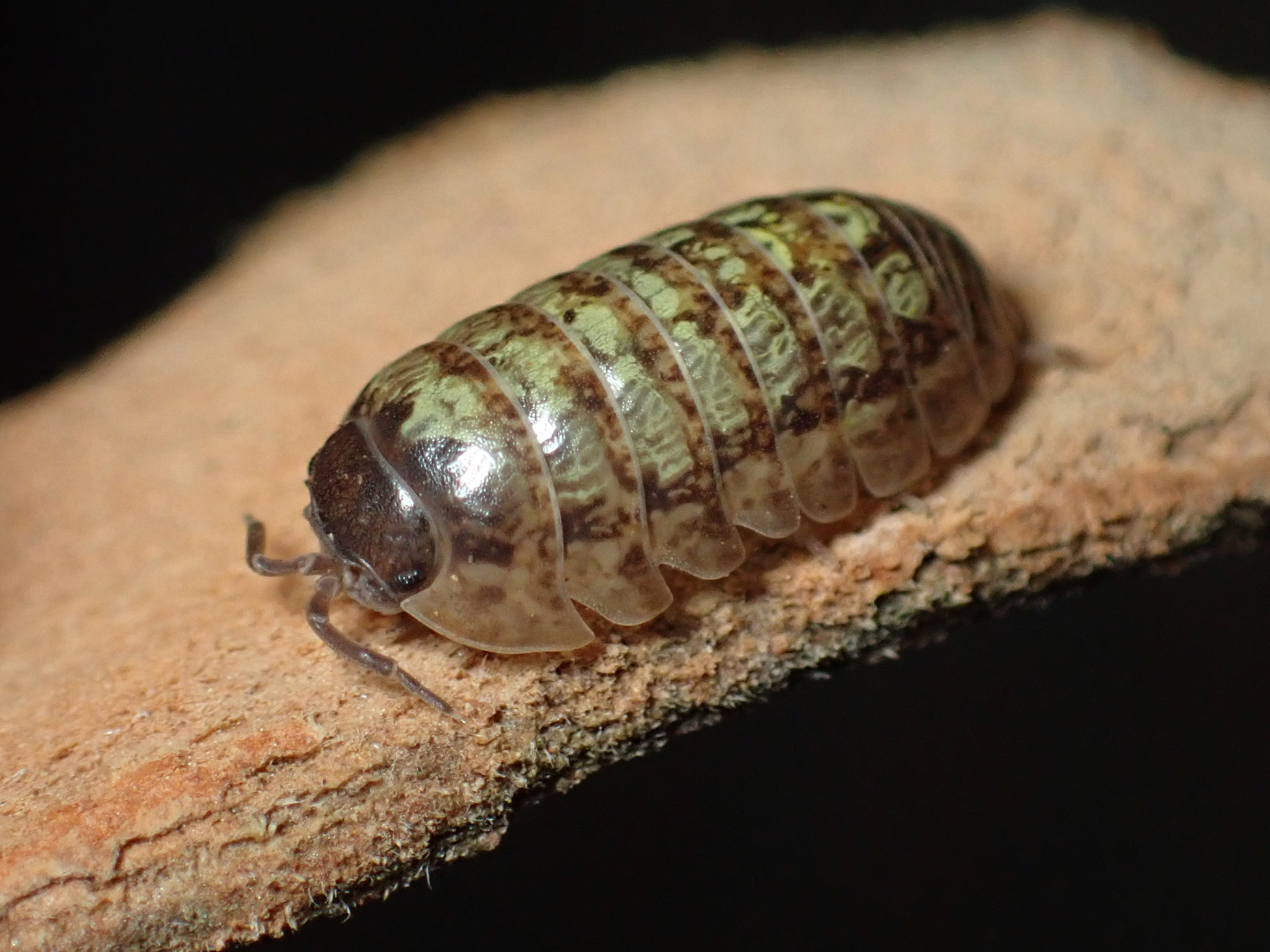
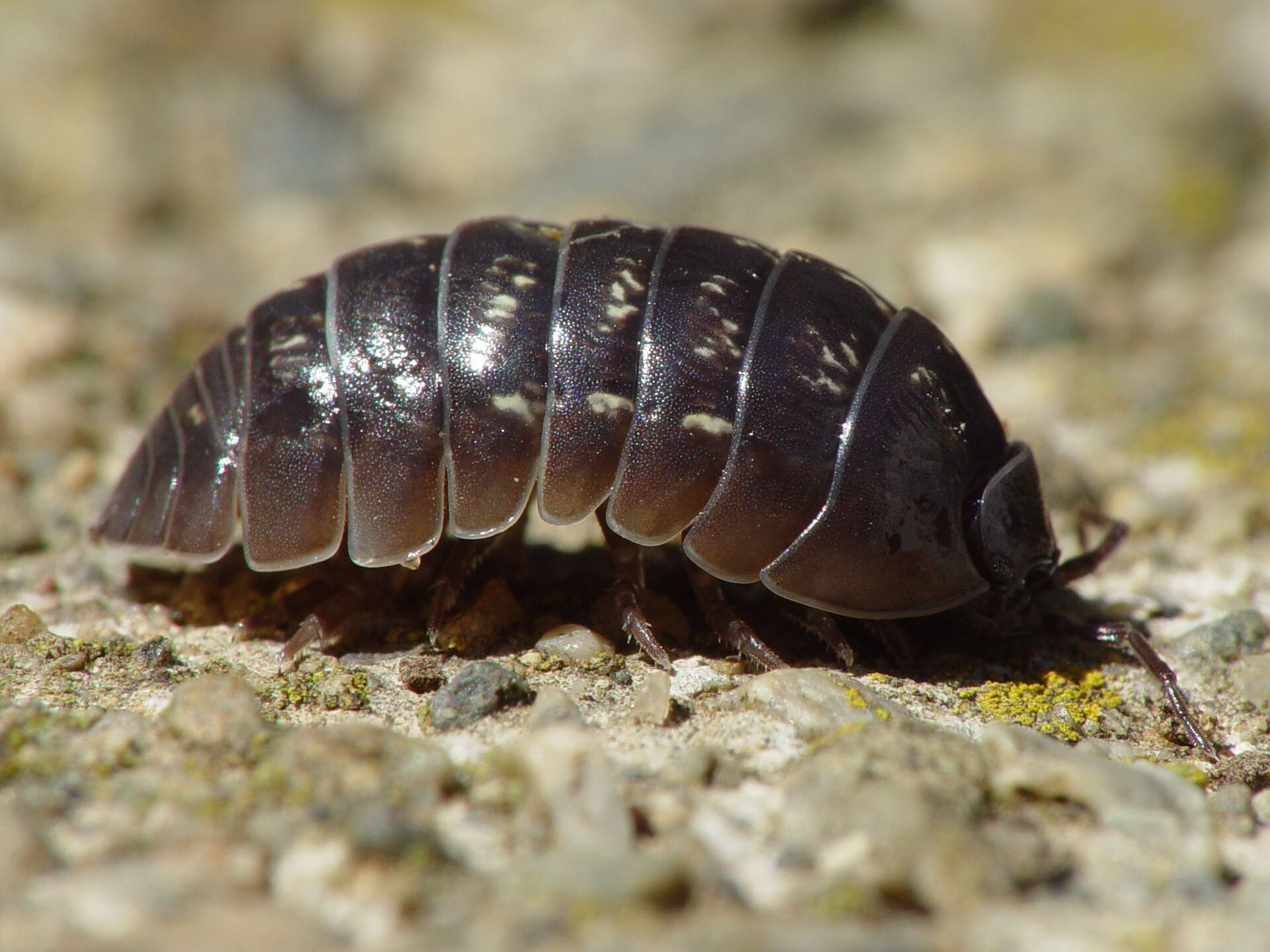
Tap a pill woodlouse and it rolls into a ball. Inside that ball is one of the strangest stories in biology.
Some pill woodlice carry a bacterium, Wolbachia, living inside their cells. In some of them, a big chunk of that bacterium's DNA, about 3 million letters long, has been copied into the woodlouse's own chromosomes. And it has taken charge. That stretch of bacterial DNA now decides which woodlice become female.
We tend to think of the line between species as a wall. It leaks. Here, genes from a bacterium have become part of what makes an animal male or female.
This woodlouse is introduced, a European species. But its kind, the woodlice, made one of the great crossings on their own: they are crustaceans, relatives of crabs and prawns, that came onto land. DNA suggests they did it around 298 million years ago.
It may be female because, somewhere in its family's past, a bacterium wrote itself into the family's DNA.