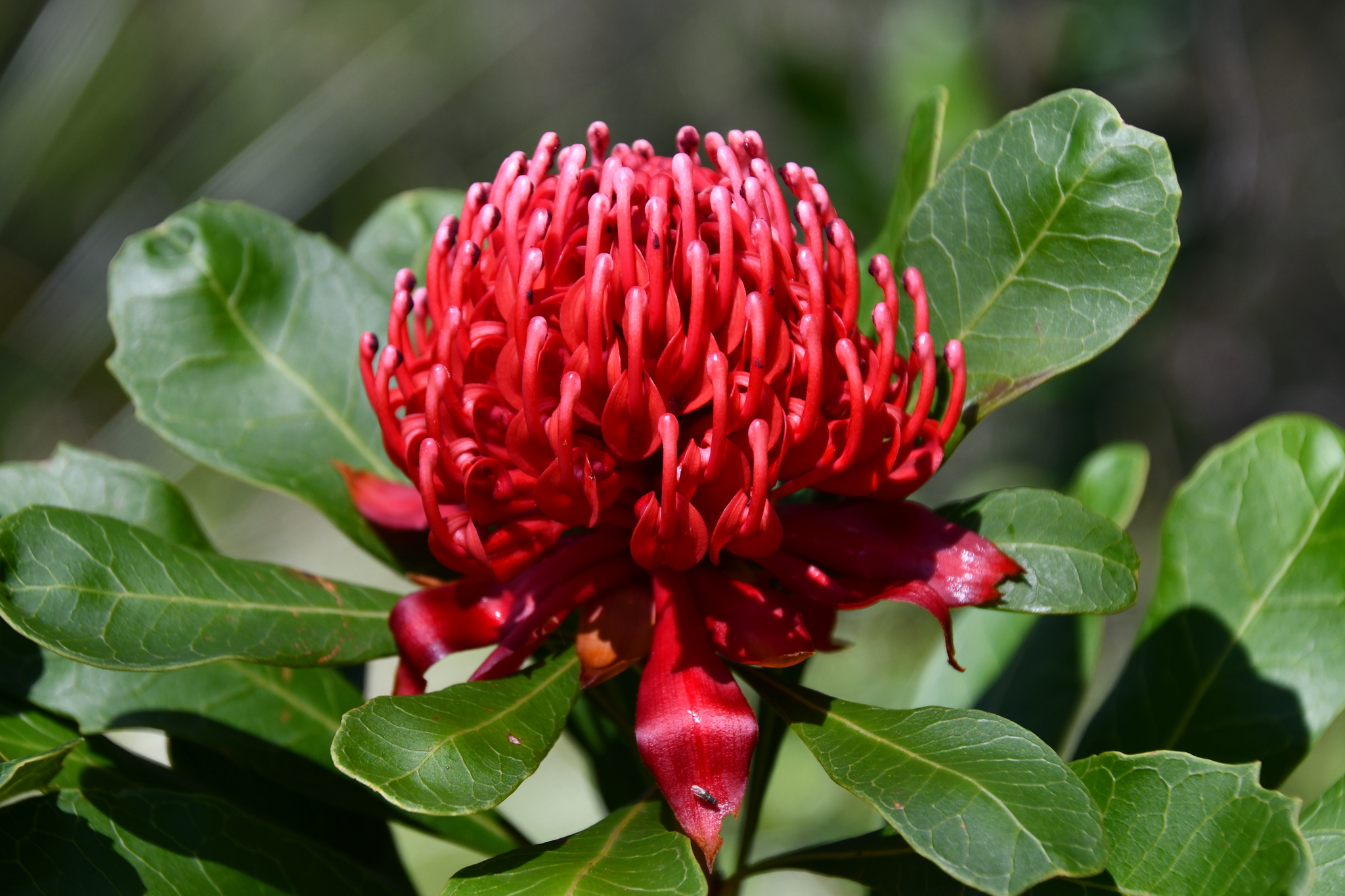
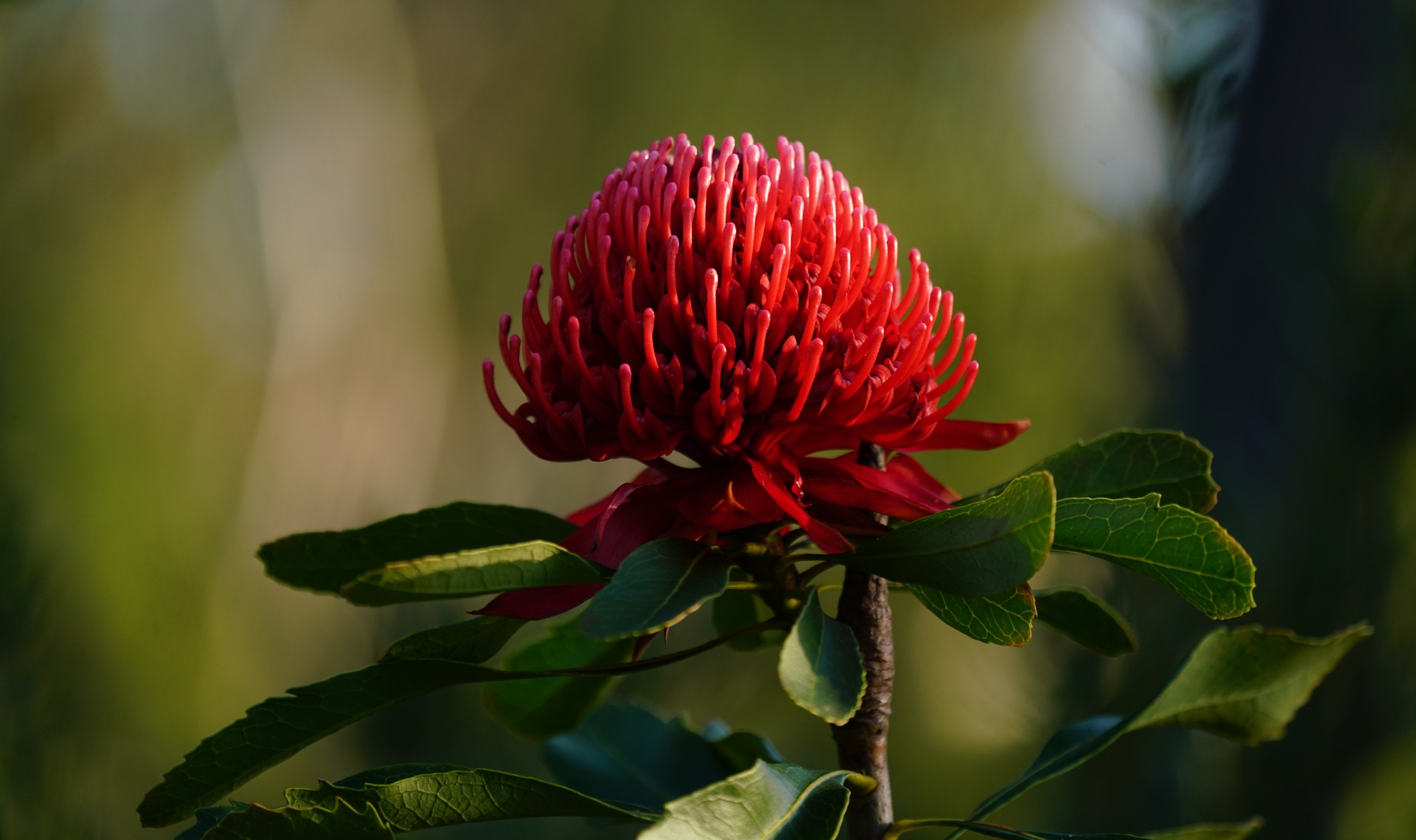
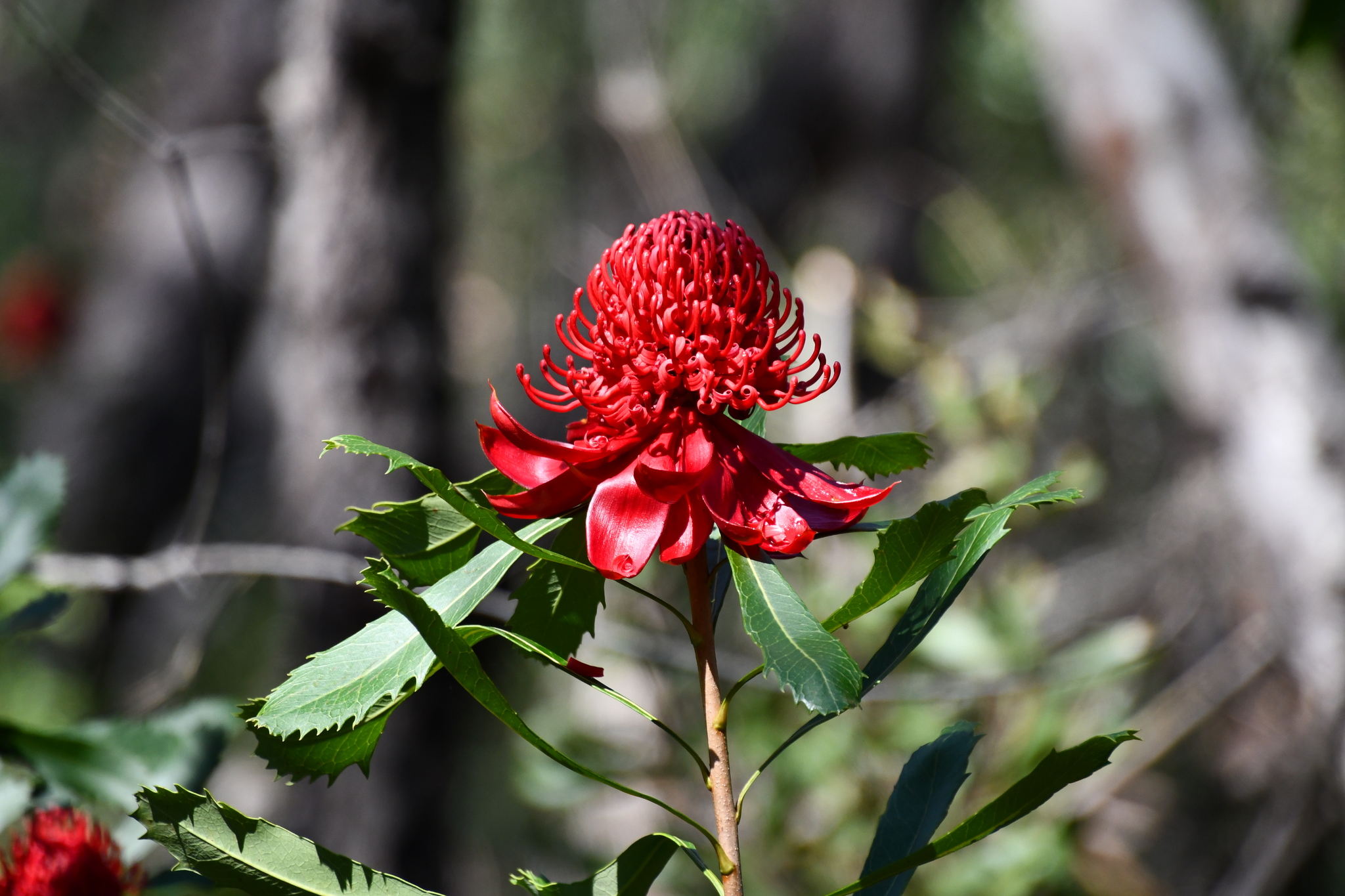
The waratah is about as Australian as a flower gets. Its name is one of the first Aboriginal words the colony wrote down: the First Fleet's Lieutenant William Dawes recorded "waratah", meaning "red-flowering tree", in his notebooks.
But its family came from somewhere else. Fossil pollen and DNA suggest the protea family's ancestors spread overland from Africa, through South America and a then-forested Antarctica, while the southern continents were still joined. Seed by seed, over millions of years, they walked. The ancestors of the waratahs, grevilleas and banksias came into Australia through its south-western tip, which stayed attached to Antarctica until about 70 million years ago.
It's a family used to fire, too: some of its members were already living in fire-prone bush almost 90 million years ago. After a bushfire, a waratah can grow back from a lignotuber, a woody swelling of its stem that sits partly or wholly underground.
Since then the continents have drifted apart. You're standing at the far end of a walk across lands that are no longer joined.