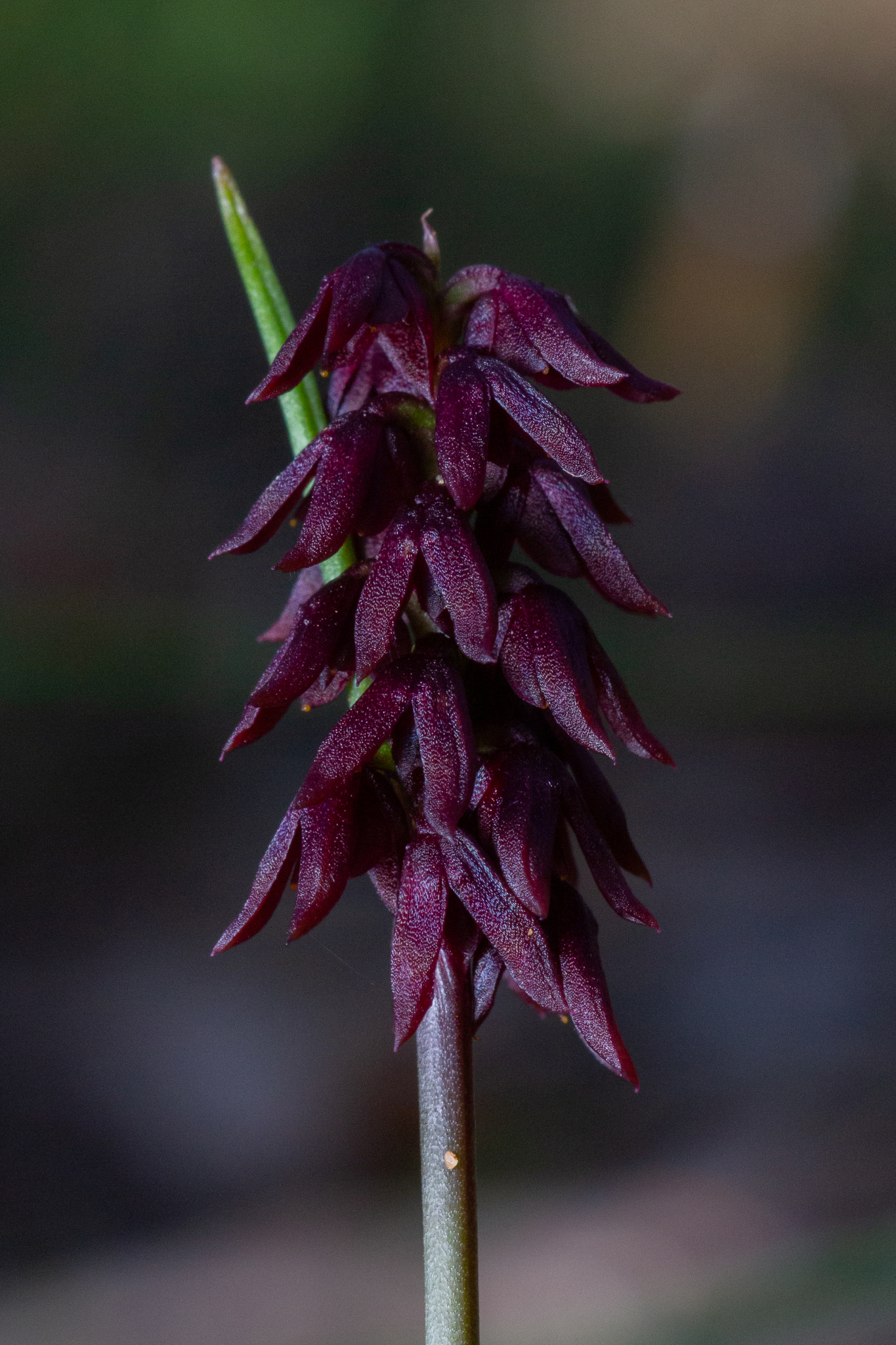
You'll probably have to kneel. Like other midge orchids, its flowers are some of the smallest of any Australian orchid, and its partners are smaller still. In its close relatives, the flowers are visited mainly by female flies less than 3 mm long, which come for a sip of liquid and leave with the orchid's pollen packets stuck to their backs.
It's a deal that's been struck, in one form or another, for a very long time. A stingless bee preserved in amber 15 to 20 million years old still carries an orchid's pollen packet. DNA suggests the ancestor of every living orchid grew about 80 million years ago, while dinosaurs still walked the Earth.
Most of us will never notice the flies. They're too small and their visits too quick. But the next generation of this orchid depends on them.
Down here, at eye level with the flower, you've stepped into their world.