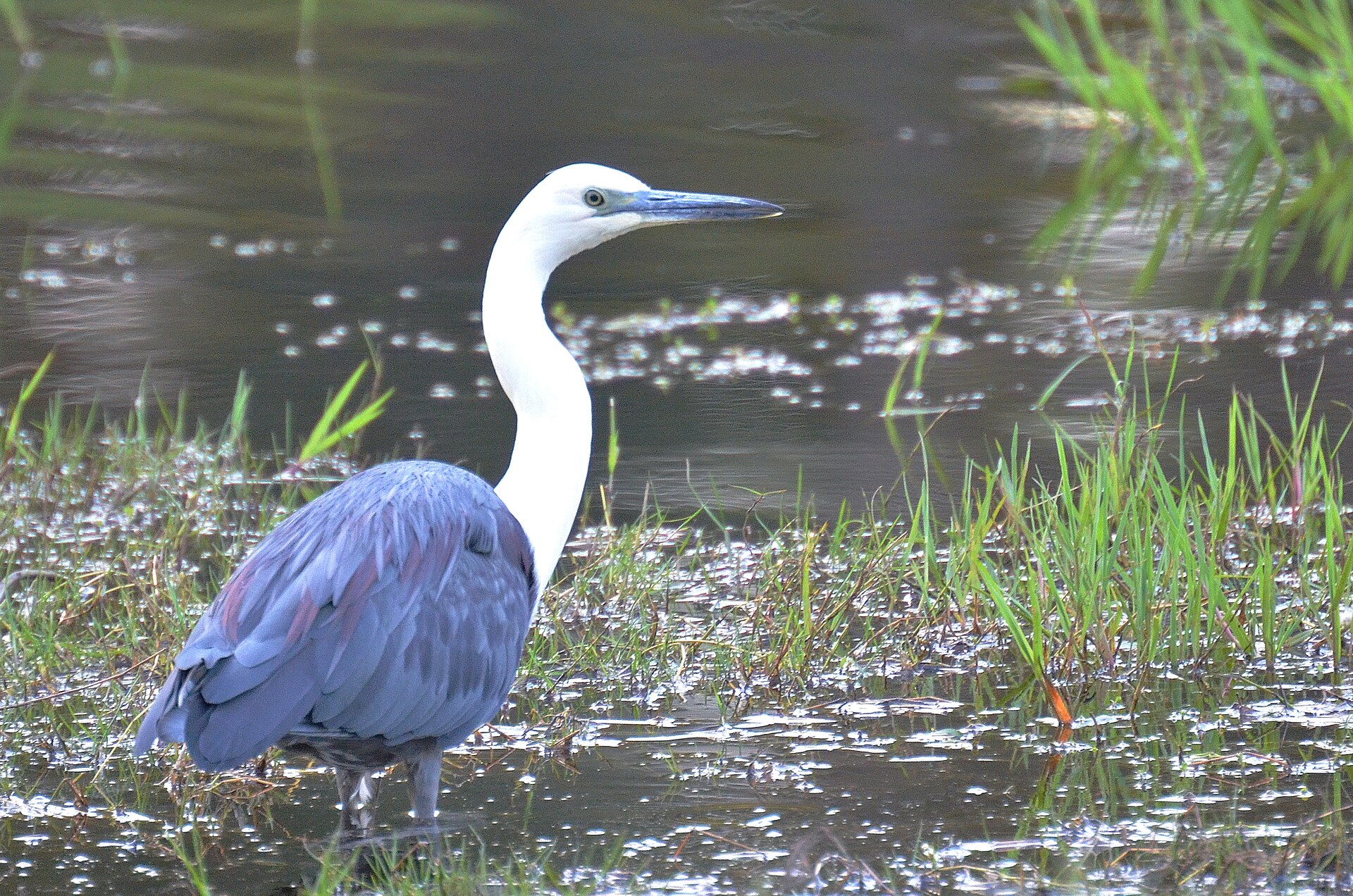
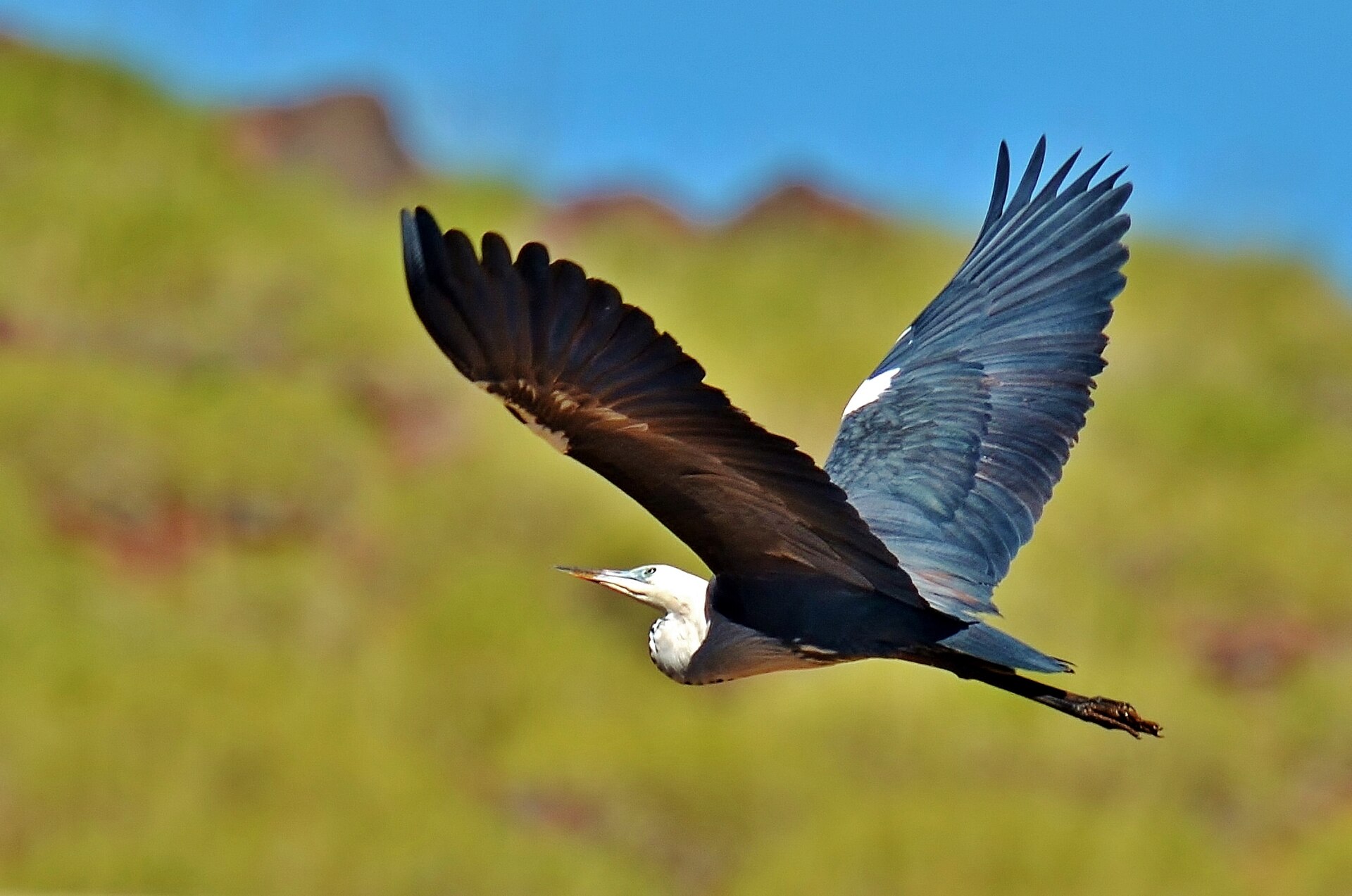

It stands so still it looks carved. Then the neck shoots out, faster than its prey can react. Like other herons, it has a special hinge at the sixth bone of its neck, which lets it fire out its folded neck in an instant.
That strike is old. The oldest well-dated heron fossil, from Belgium, is 32 to 33 million years old. And between 19 and 16 million years ago, a heron hunted in southern New Zealand, along a warm shallow lake of about 5,600 square kilometres, ringed by casuarinas, eucalypts and palms. That's a landscape we'd call Australian, on the other side of the Tasman. Today New Zealand has no eucalypt forests of its own. The heron's world there is gone, but its kind kept the same patient stance, and the same hinged neck.
Wait for the next strike. It's the move a heron made on a lakeshore of gum trees in New Zealand, 19 million years ago.