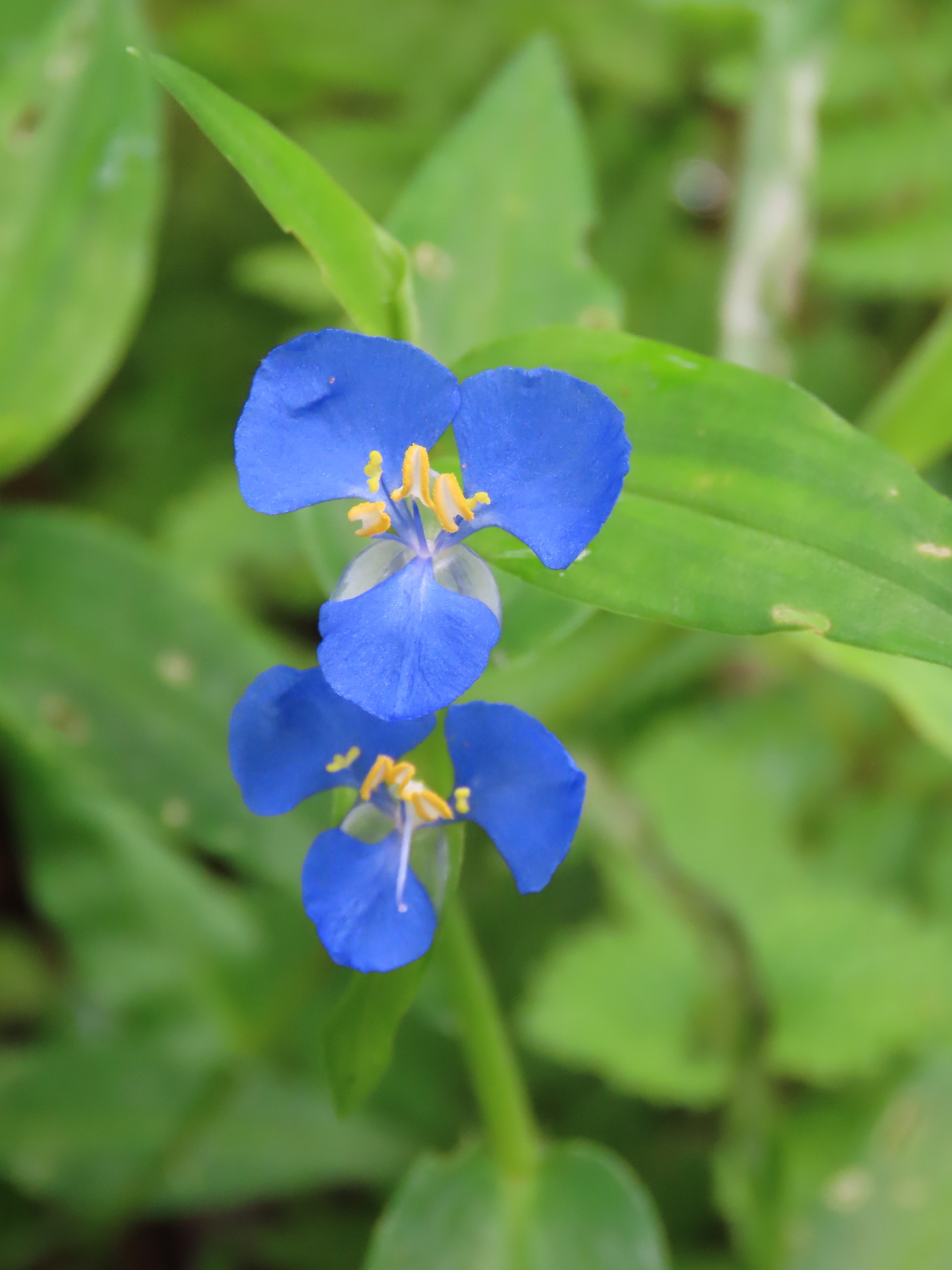
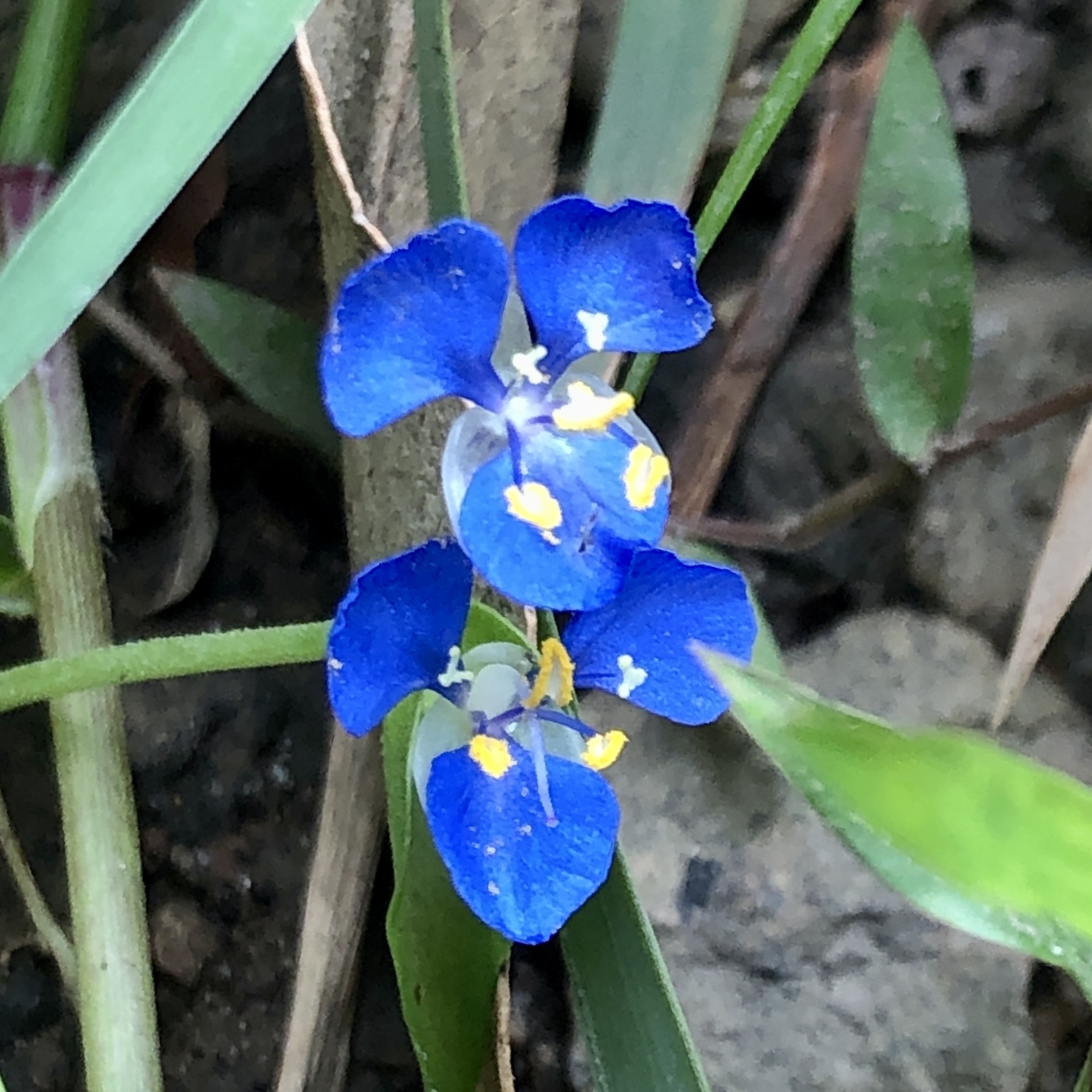
Its name carries a story: that early settlers ate it to fight scurvy. You'll find that story repeated in many places, but no one has found an original record of it. The name may be telling a tale that never happened.
What the flower is doing is better documented. Each blue flower lasts only part of a day: in summer it has been seen to open in the morning and close by mid-afternoon. And like its relatives, it gives insects no nectar at all, only pollen. Pollen is the whole deal. An insect comes for food, eats some, and carries the rest to the next flower.
That bargain between flowers and insects is old. A tiny beetle in amber, carrying pollen, shows insects were already pollinating flowers 99 million years ago, while dinosaurs walked the Earth.
By mid-afternoon this flower will close for good. Whatever visits it this morning is its one chance.