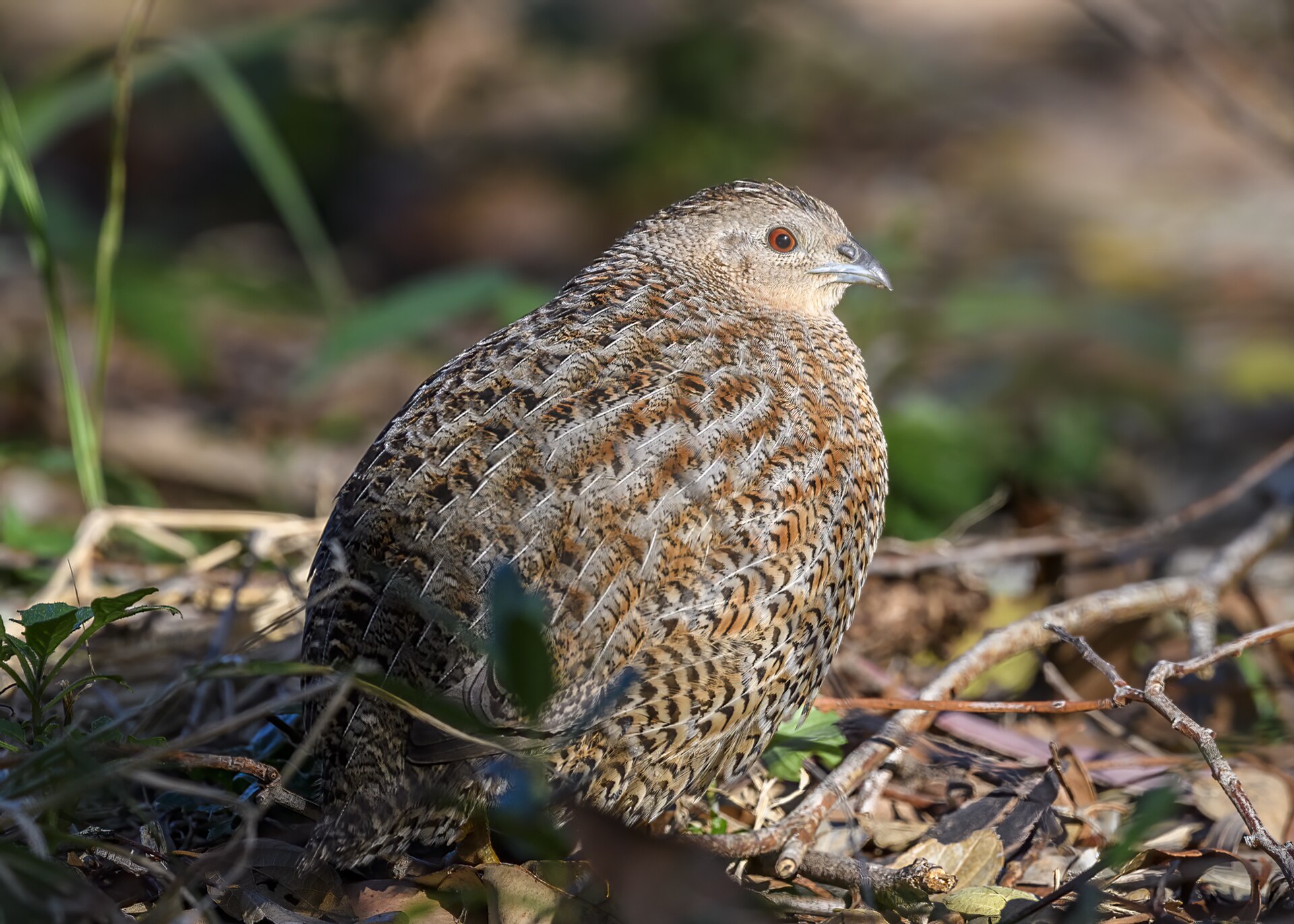
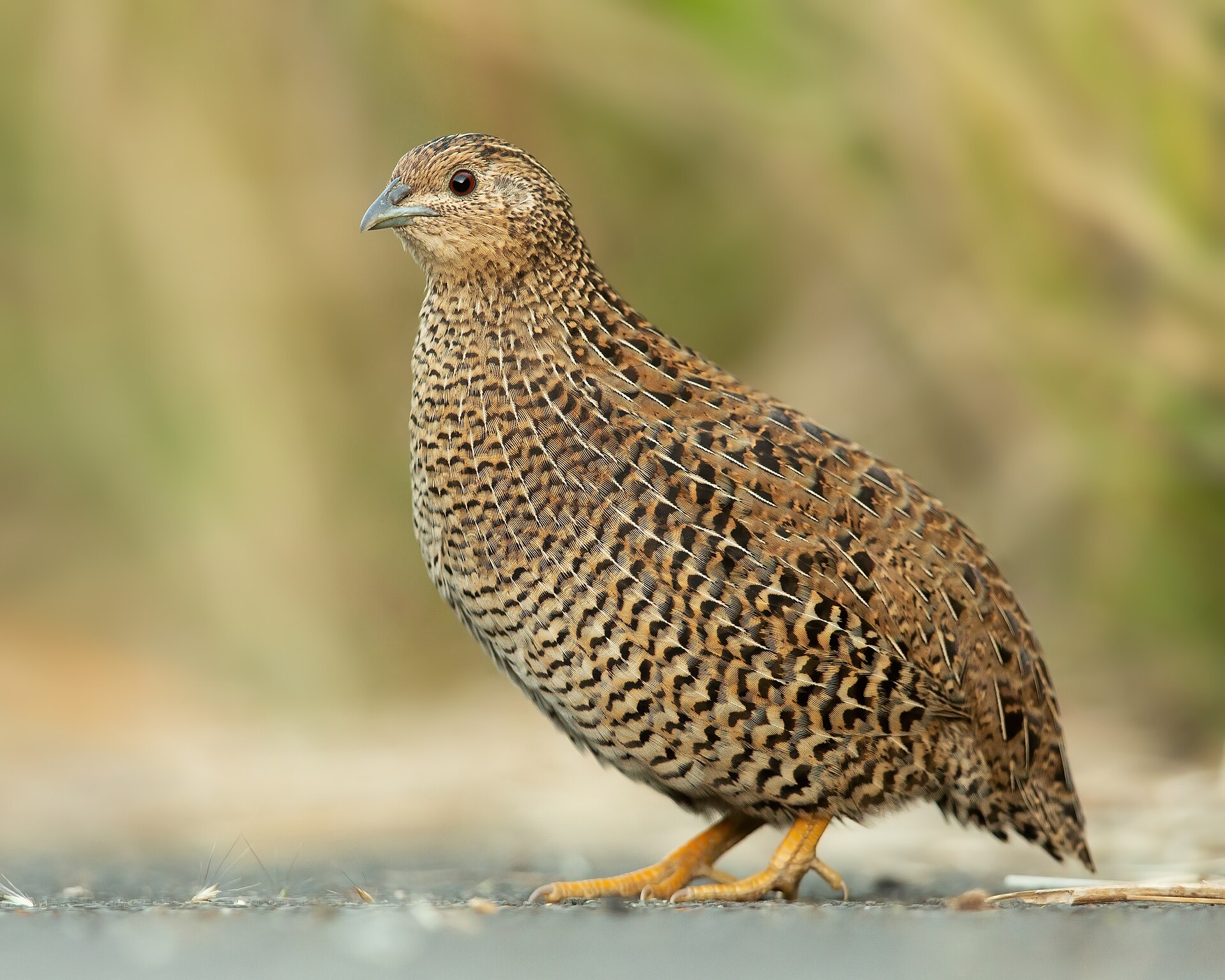

A brown quail lays a big clutch, 7 to 10 eggs, in a grass-lined scrape on the ground. The chicks leave the nest straight after they hatch, on their own legs from the first day.
Quail are landfowl, the group that also holds chickens and brush turkeys. A small bird whose skull was found in Belgium lived 66.8 to 66.7 million years ago, just before the asteroid struck. It mixes features of landfowl and of waterfowl, and sits close to the shared ancestor of both. Then the asteroid hit, and all the dinosaurs except birds died out.
Why some birds made it through is still argued over. One idea is that small birds living on the ground could ride out a world where the forests had burned and collapsed. If so, a bird much like this one, small, ground-living, nesting in a scrape, may be the kind that carried birds through the end of the dinosaurs.
The quail slipping into the grass is doing what its kind has done best all along: staying low, and surviving.