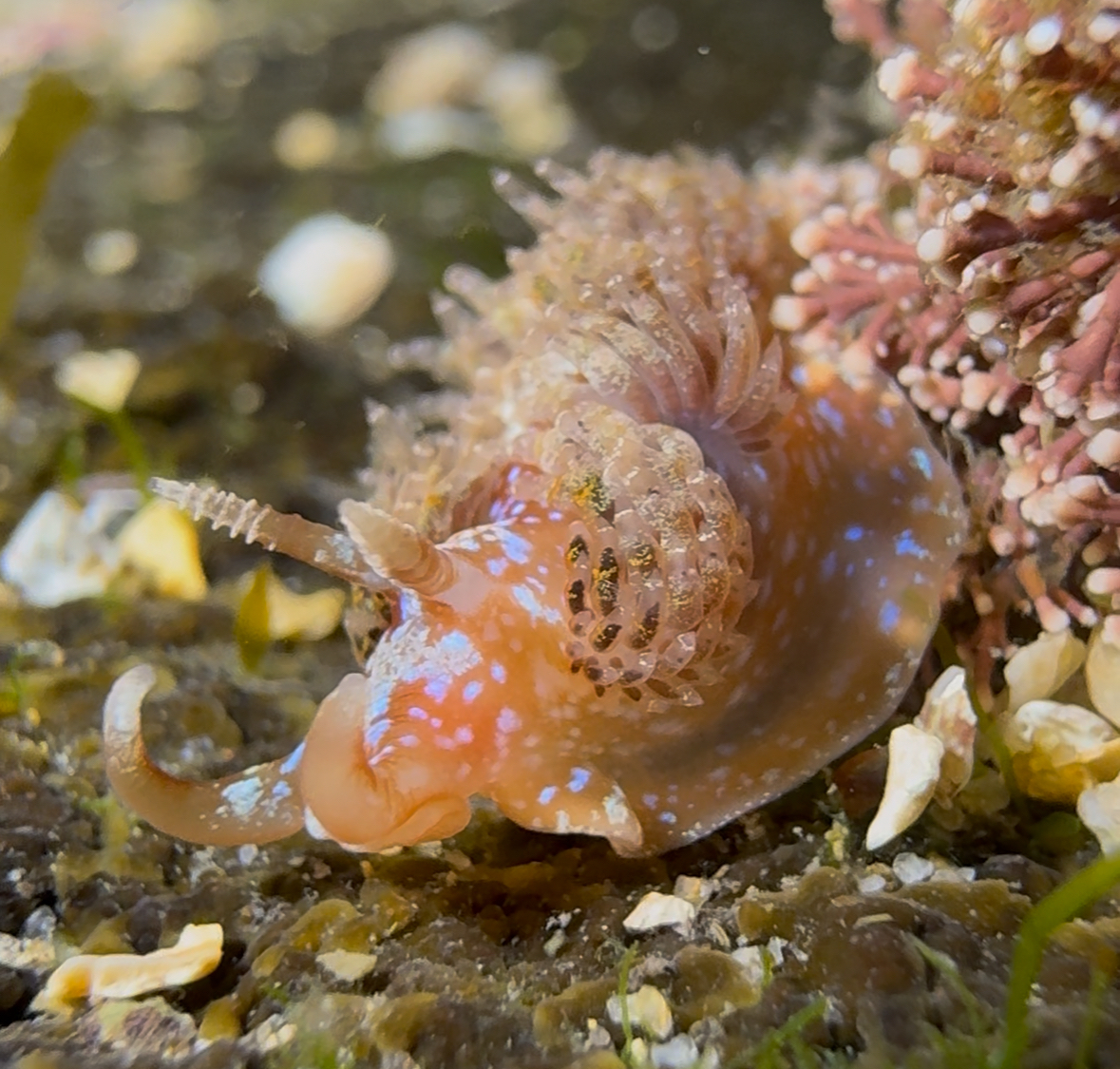
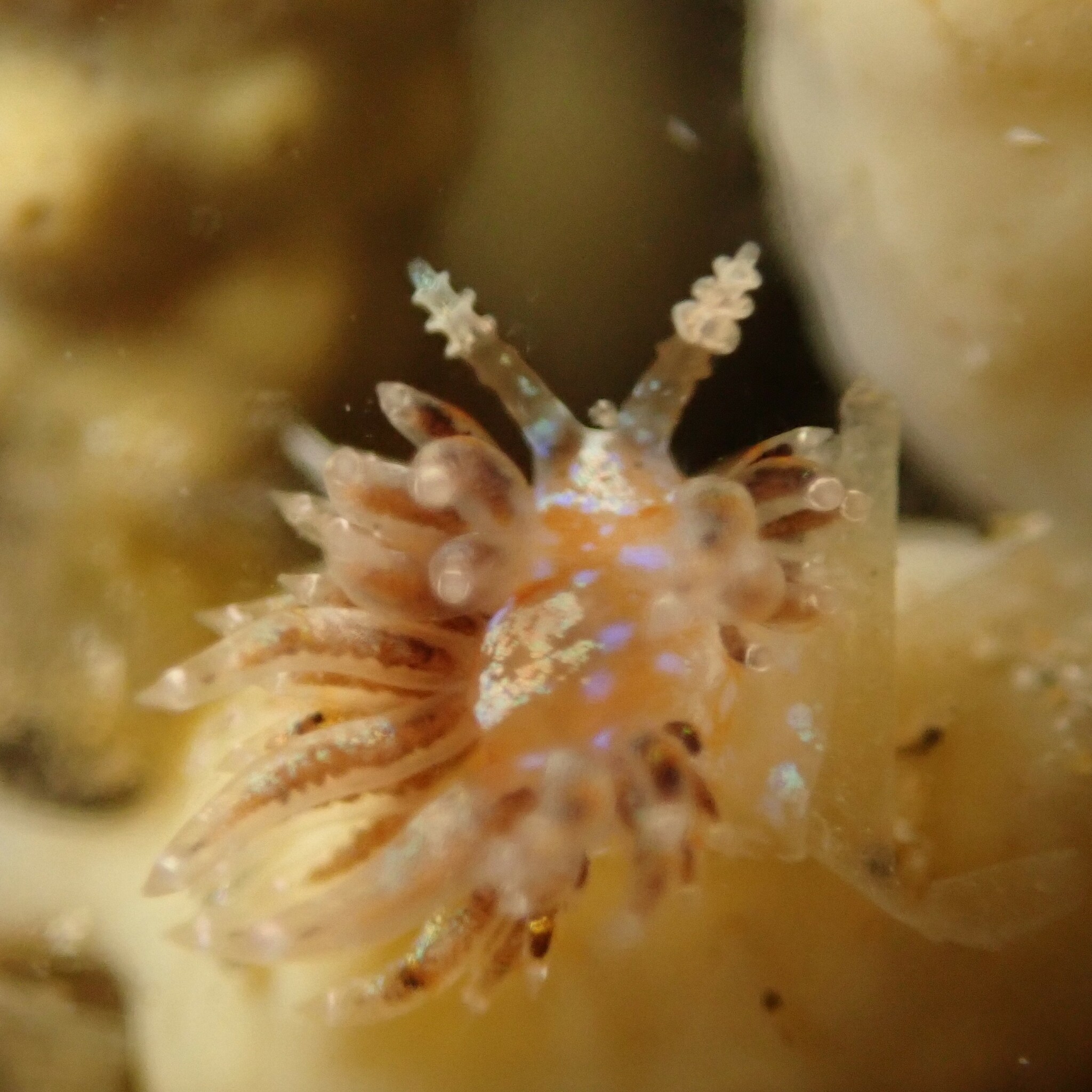
This sea slug hunts its own kind. One ornate facelinid, 56 millimetres long, photographed in Sydney Harbour, was eating a 21 millimetre sea slug of another species, and it has been found doing that at least three times. It's probably the most common slug of its type on the shores of southern Australia.
Yet the history of its kind is almost blank. Sea slugs are soft, with at most a thin, fragile shell, so they leave few fossils. DNA suggests nudibranchs split from their closest relatives about 212 million years ago, in the Triassic, though the estimate is rough. The oldest reliable fossil of their wider group is only 24 to 26 million years old. For most of that time, whatever sea slugs were doing, hunting each other included, left almost nothing behind in the rock.
It's still true today. The hunt in this rock pool will leave no trace. You may be its only record.