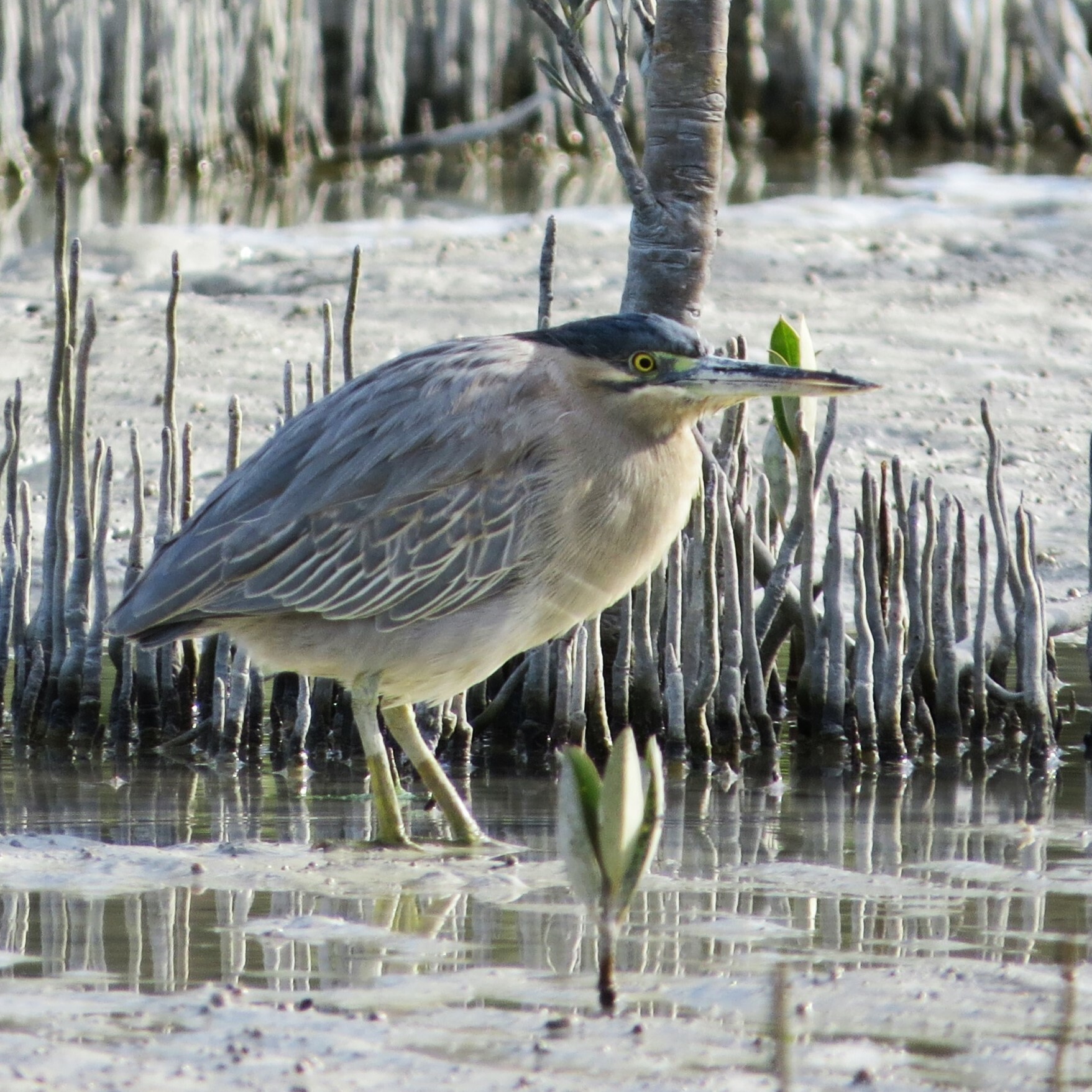
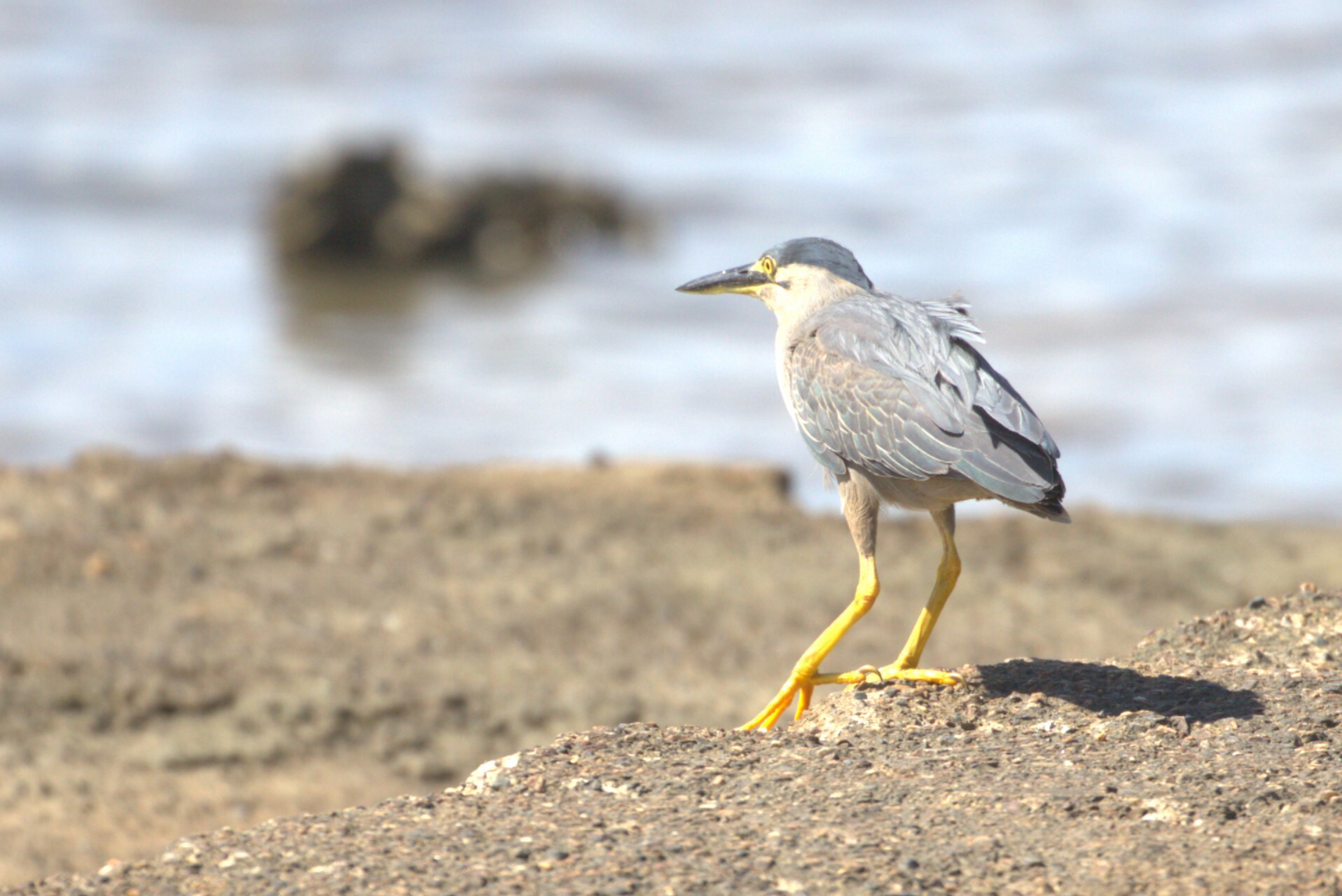
The little heron is a patient hunter. It stalks crabs and small fish along the mangroves and mudflats, slowly, or simply stands and waits for them to show themselves. Sometimes it plunges from a perch and stabs with its sharp bill. Around marinas and boat ramps it can become quite tame.
Sydney is near the southern edge of its range: south of here, its numbers fall away abruptly.
Herons have been hunting at the water's edge for a long time. The oldest well-dated heron fossil, from Belgium, is 32 to 33 million years old. Another heron, from 19 to 16 million years ago, lived in southern New Zealand, beside a shallow freshwater lake of about 5,600 square kilometres. Around it grew casuarinas, eucalypts and palms, in a warm climate. A heron, a eucalypt, a palm: a scene that could almost be here, in a place that's too cold for it now.
It's waiting for something to move. Its kind has been waiting like this for more than 30 million years.