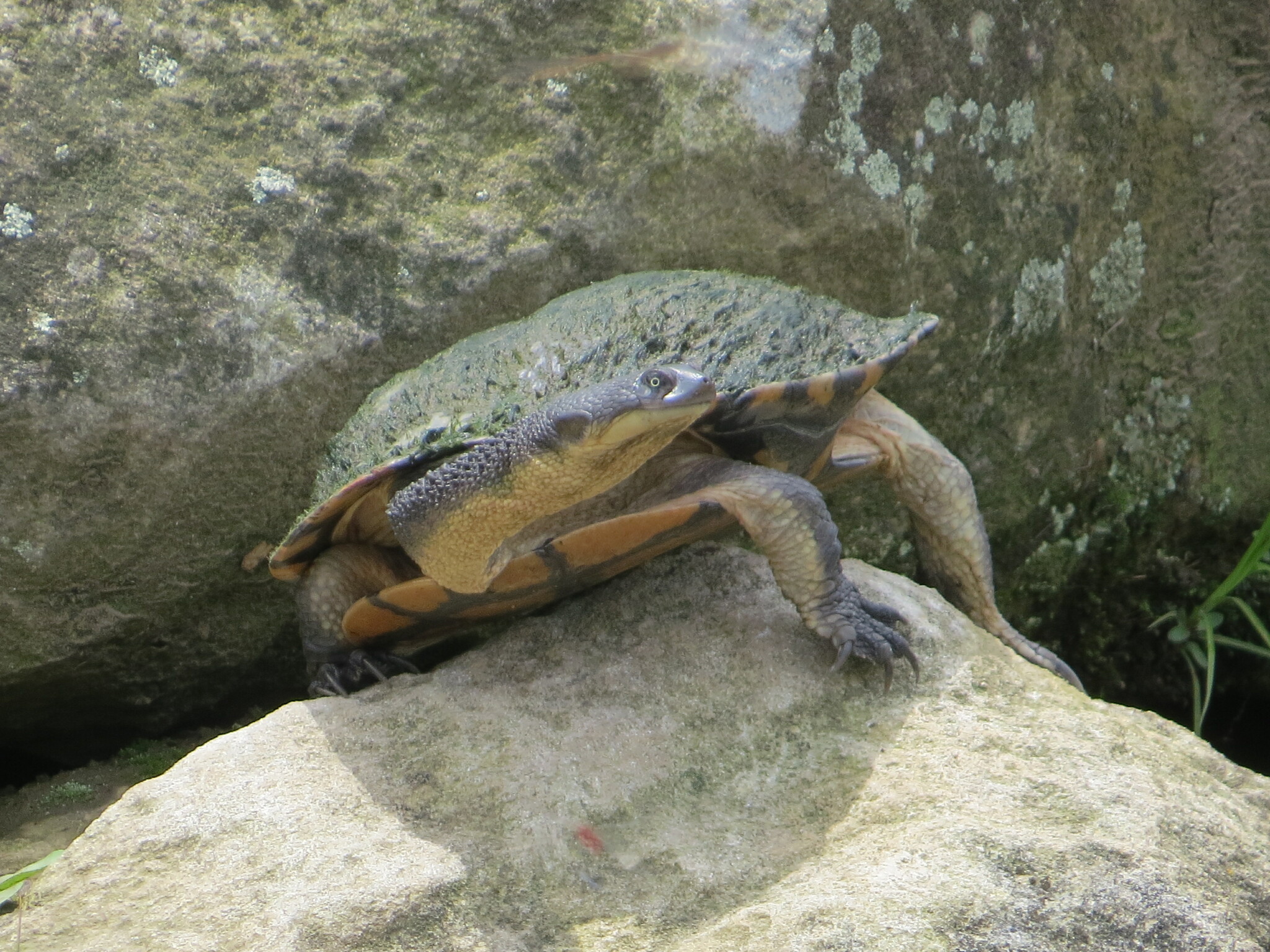
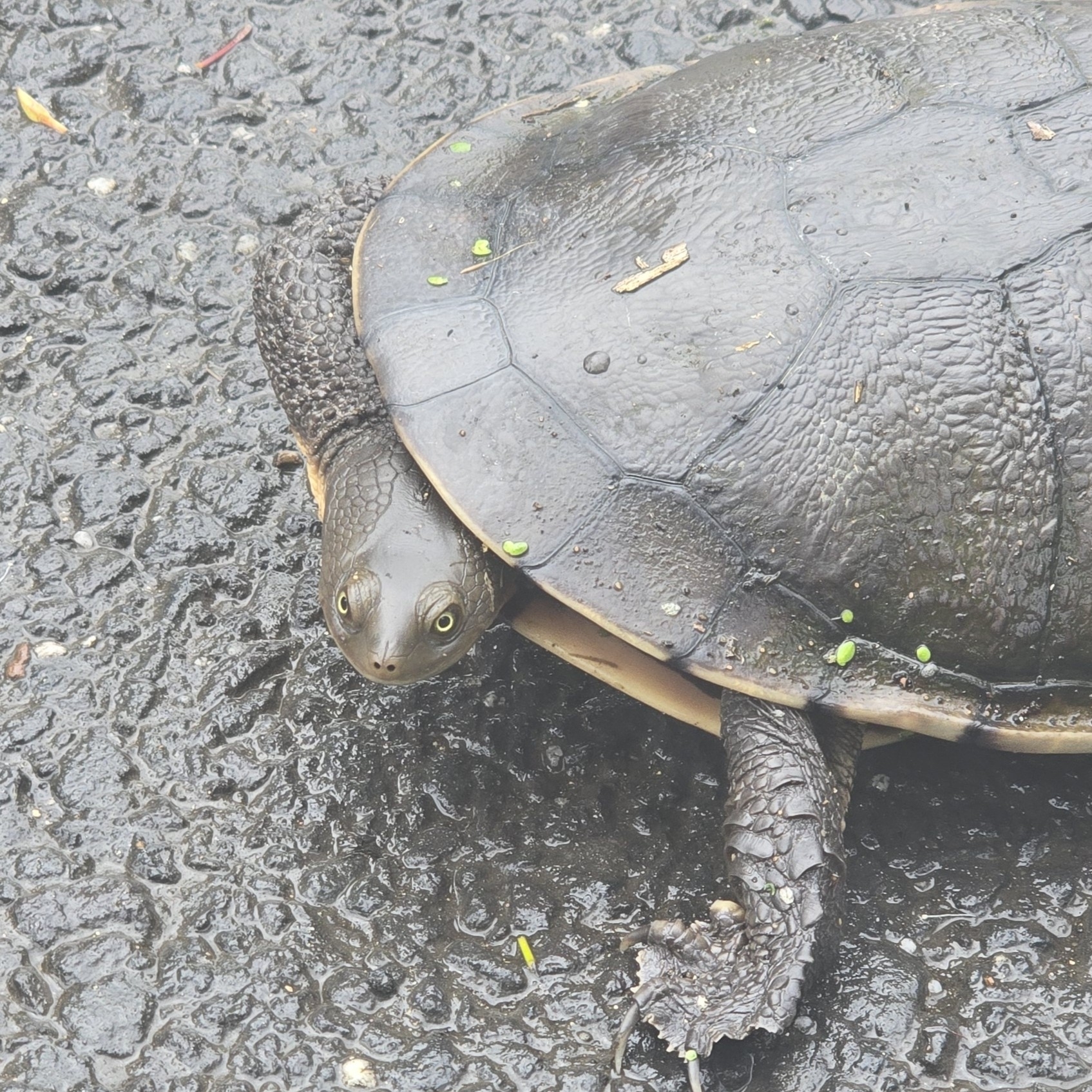
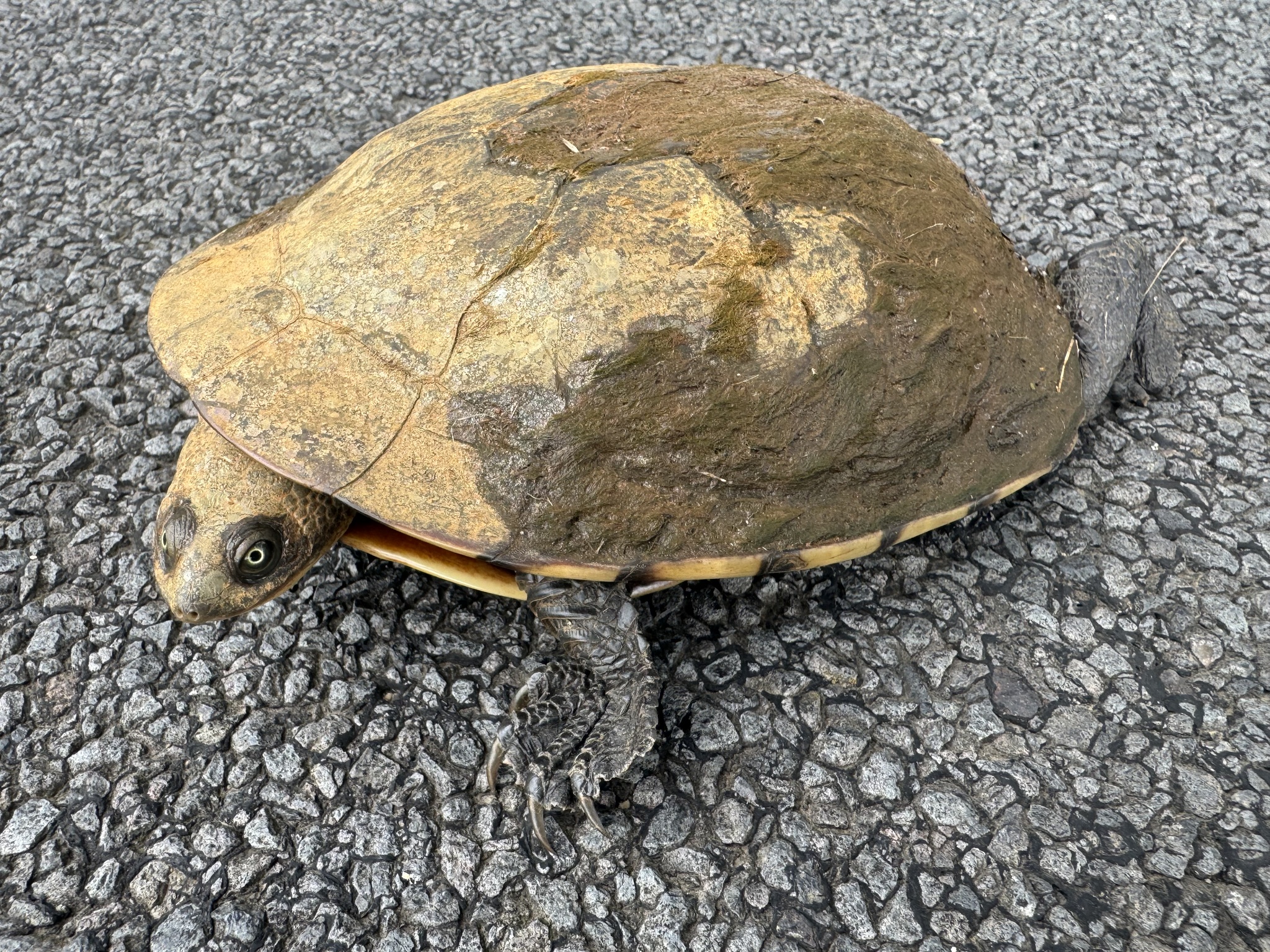
Its neck is about half as long as its shell, and it doesn't pull it straight back in. It folds it sideways, tucked under the edge of the shell. That sideways fold is what makes it a side-necked turtle, and side-necked turtles are a southern story.
Fossils show that in the Cretaceous, while dinosaurs still walked, its family lived only in the southern part of the supercontinent Gondwana. Turtles themselves go back at least 220 million years. One of the earliest known, from China, had a full shell underneath and almost none on top.
People here have known it a long time too. Its Darug name is kutukulung.
When it tucks its head away, it folds it sideways, the way its family did in Gondwana.