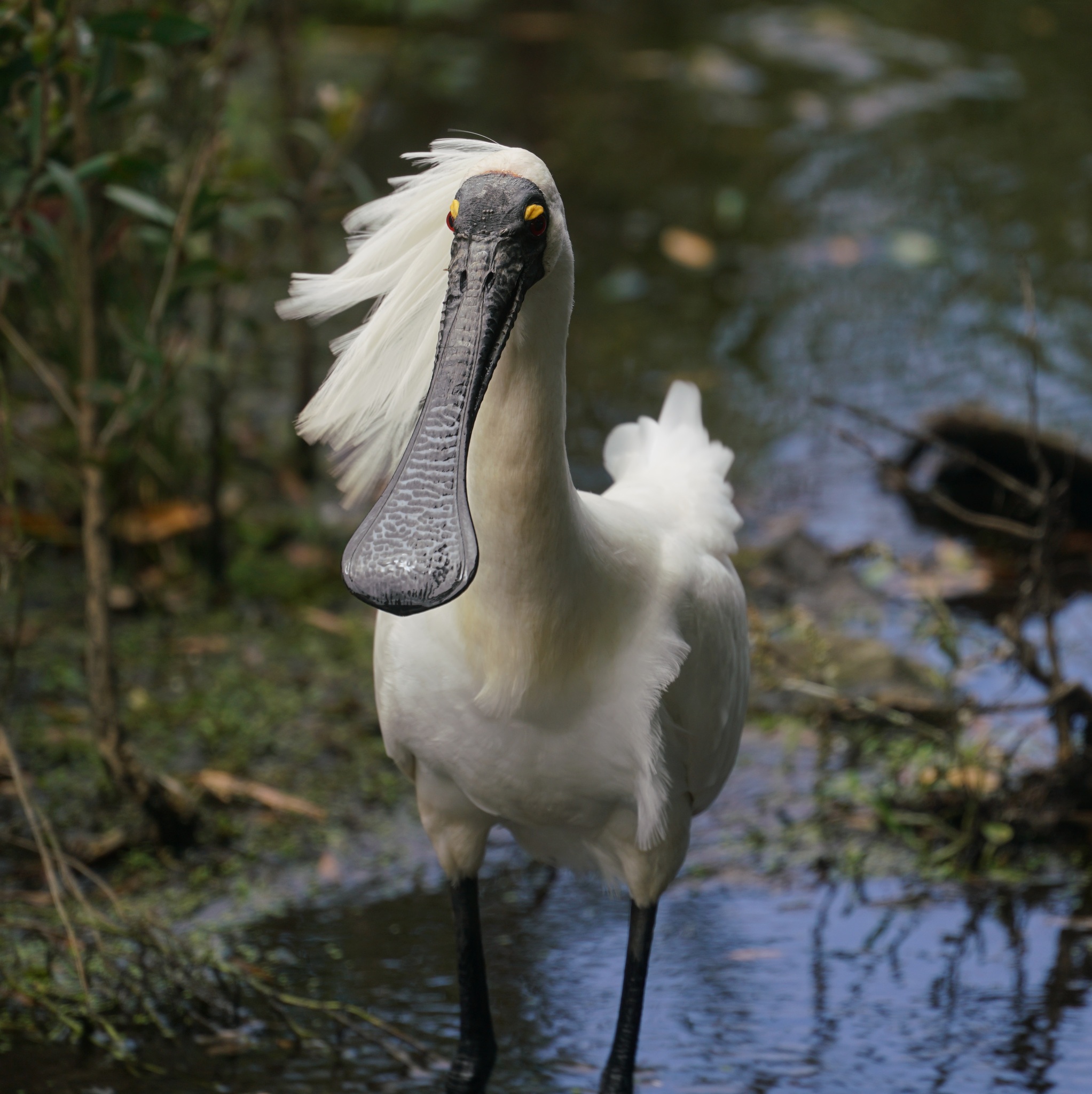
It isn't looking for its food. It sweeps its open bill from side to side through water less than 40 cm deep, and feels for it. The inside of the spoon is packed with vibration detectors, called papillae, so it can sense prey even in murky water, and feed by day or by night.
We live mostly by sight. The spoonbill's world, down in the mud, is made of touch.
Birds linked to its family lived about 55 million years ago, when Australia was still joined to Antarctica. Unlike today's ibises and spoonbills, they had much shorter legs. Perhaps the long wading legs came later, one generation at a time, as their kind moved into the shallows.
Close your eyes and run your fingertips over something. That's the spoonbill's world.