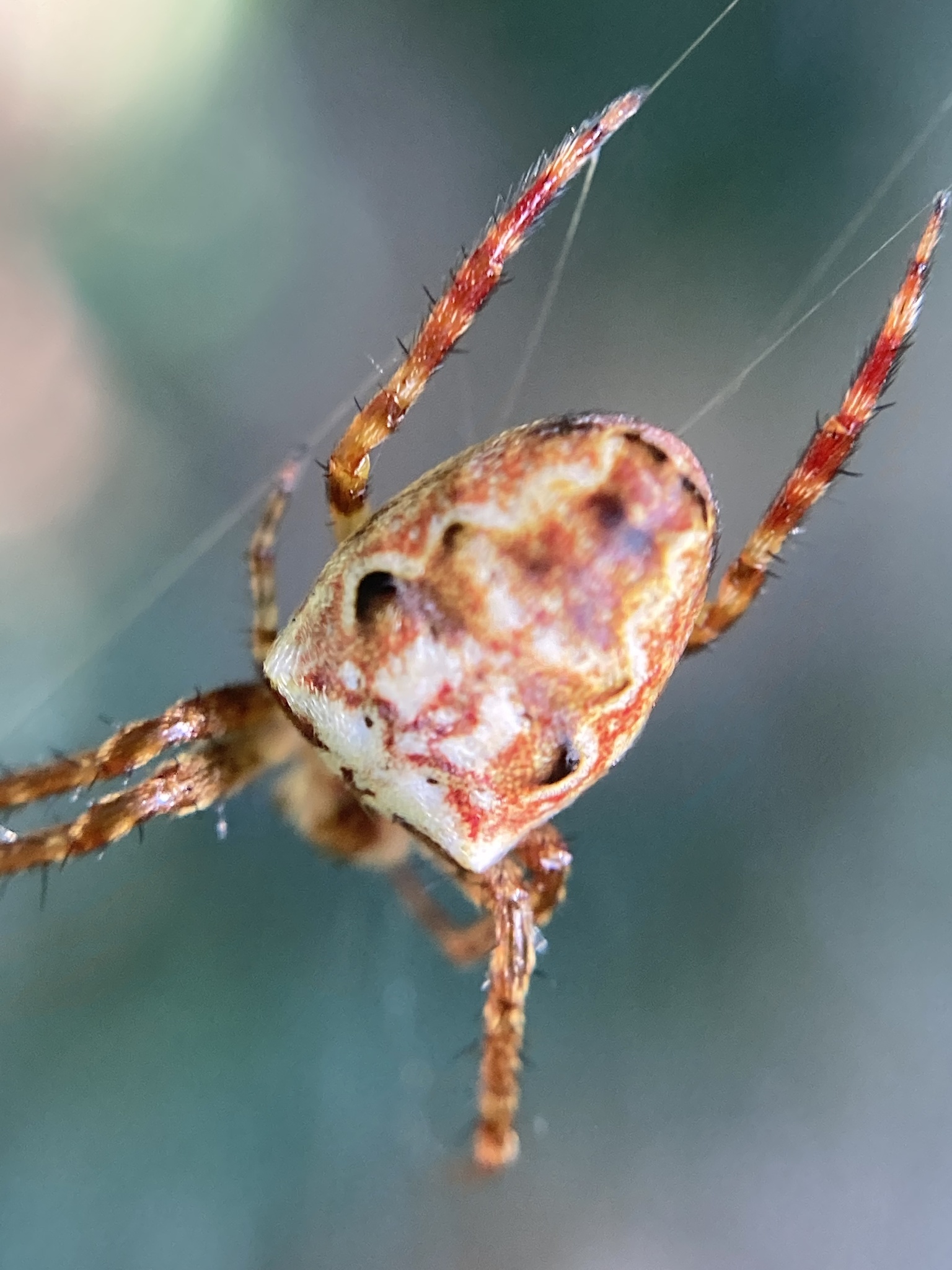
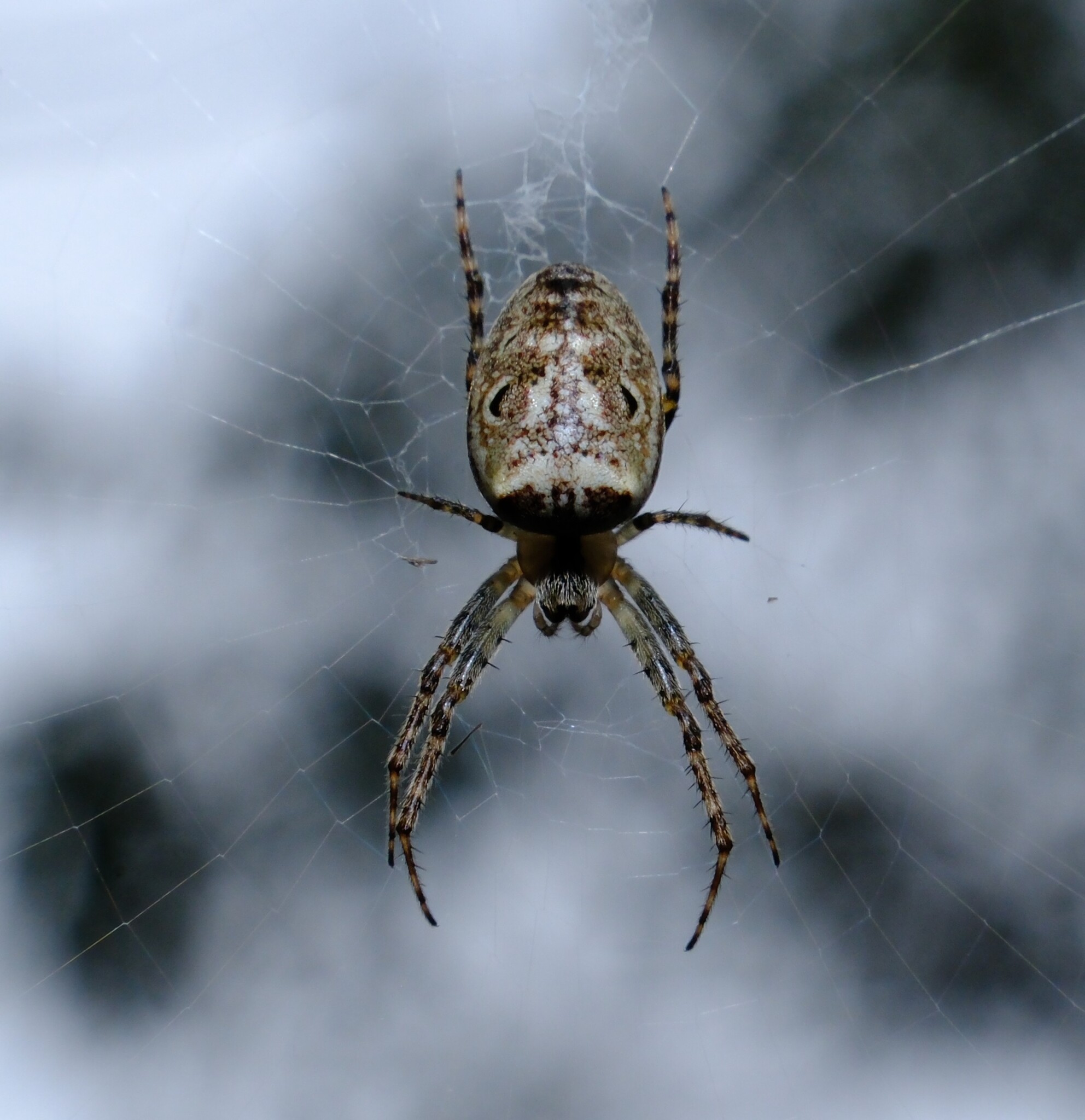
This small spider has strung a wheel of silk across a gap, and it's waiting for something to fly into it.
The orb web is an answer to flight. Insects had wings more than 350 million years ago, and for a very long time the air was theirs. By the age of the dinosaurs, the sophisticated aerial webs of the orb weavers had developed to trap the rapidly diversifying hordes of flying insects. Silk genes suggest the wheel-shaped orb web evolved at least 136 million years ago.
Silk itself is far older: an early relative of spiders already had silk spigots at least 380 million years ago. It took more than 200 million years to turn that silk into a net hung in the air across a flight path.
Look at where the web is strung. Something will fly through that gap tonight, and the spider has been betting on it for 136 million years.