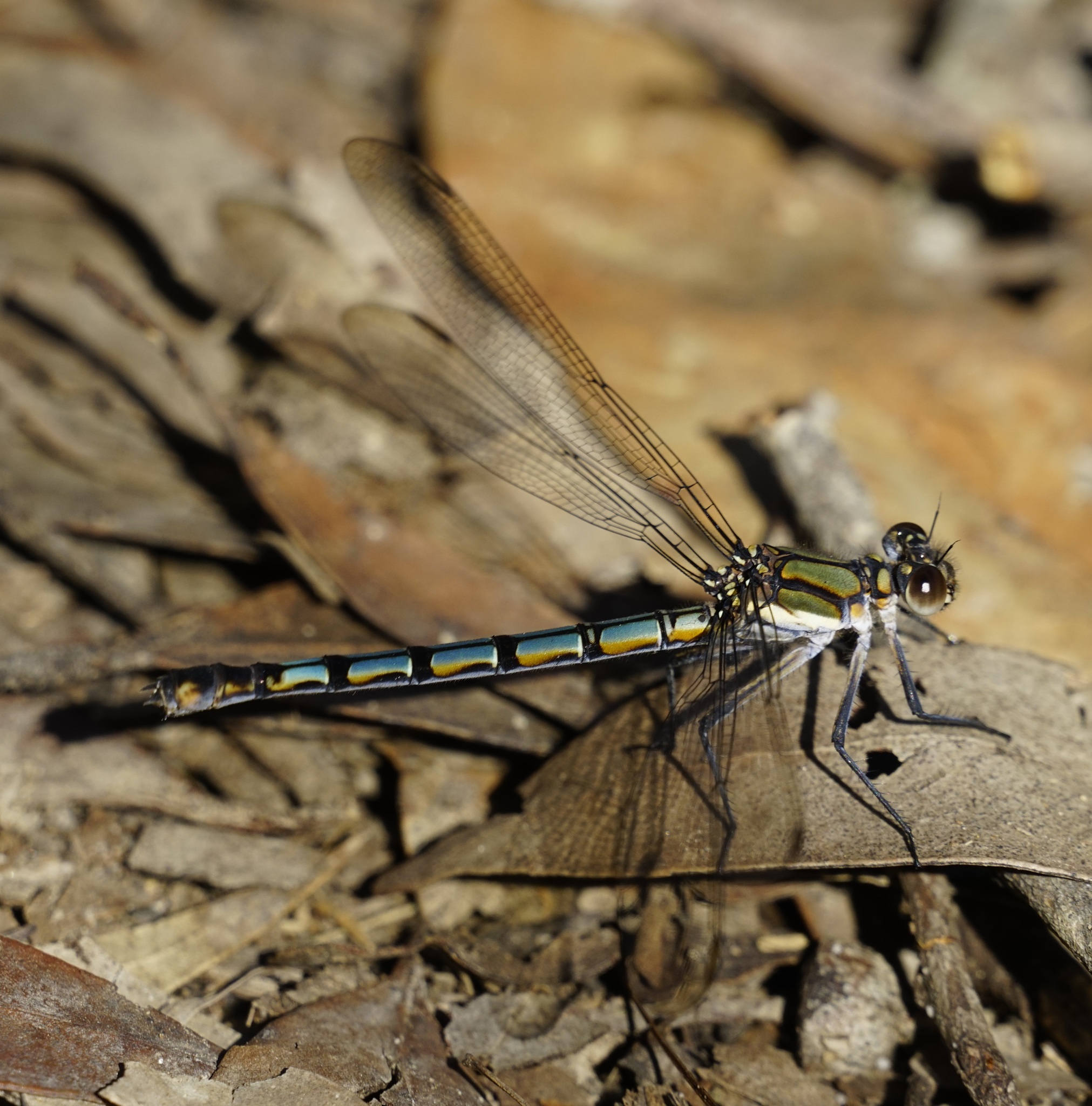
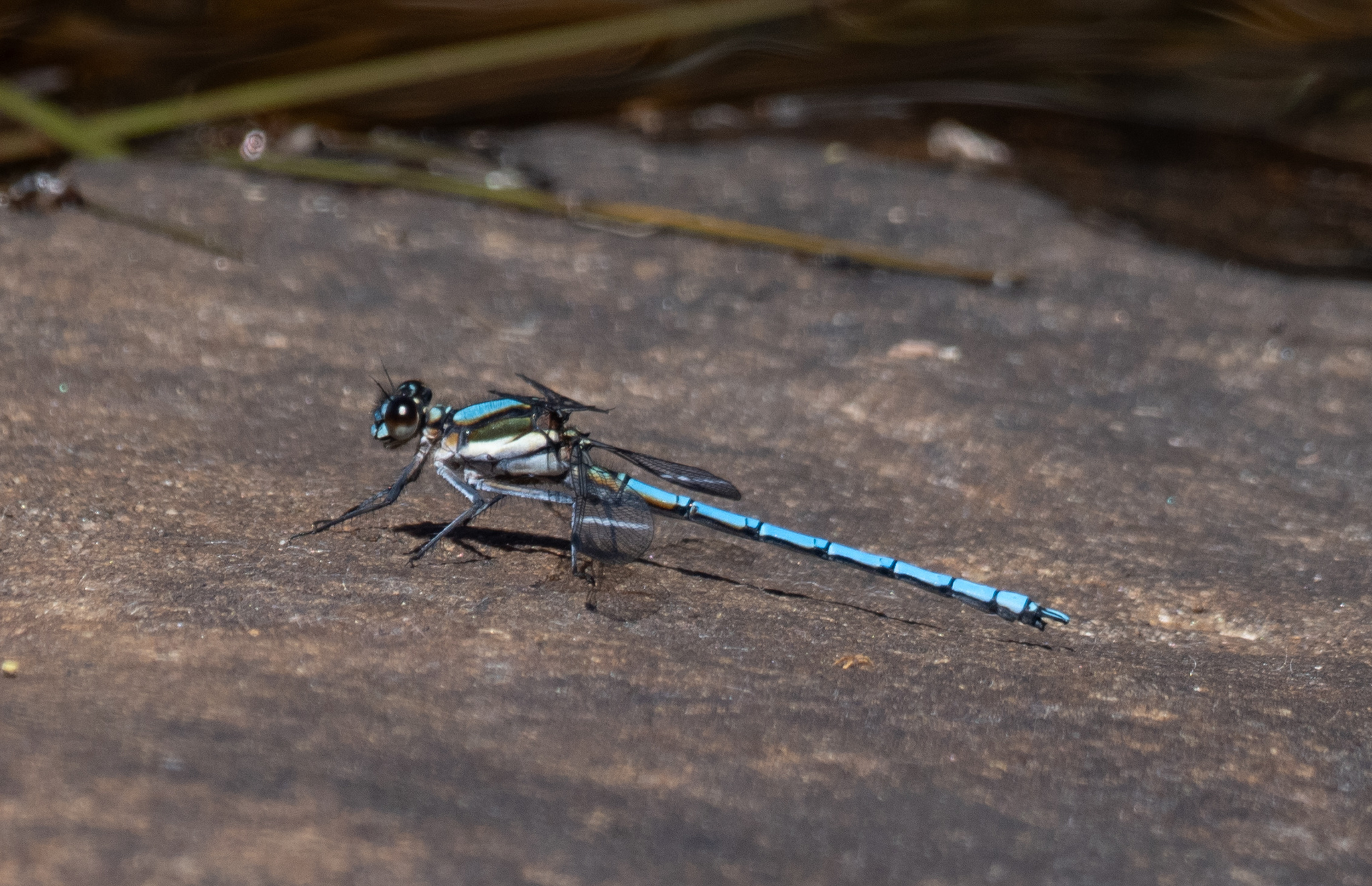
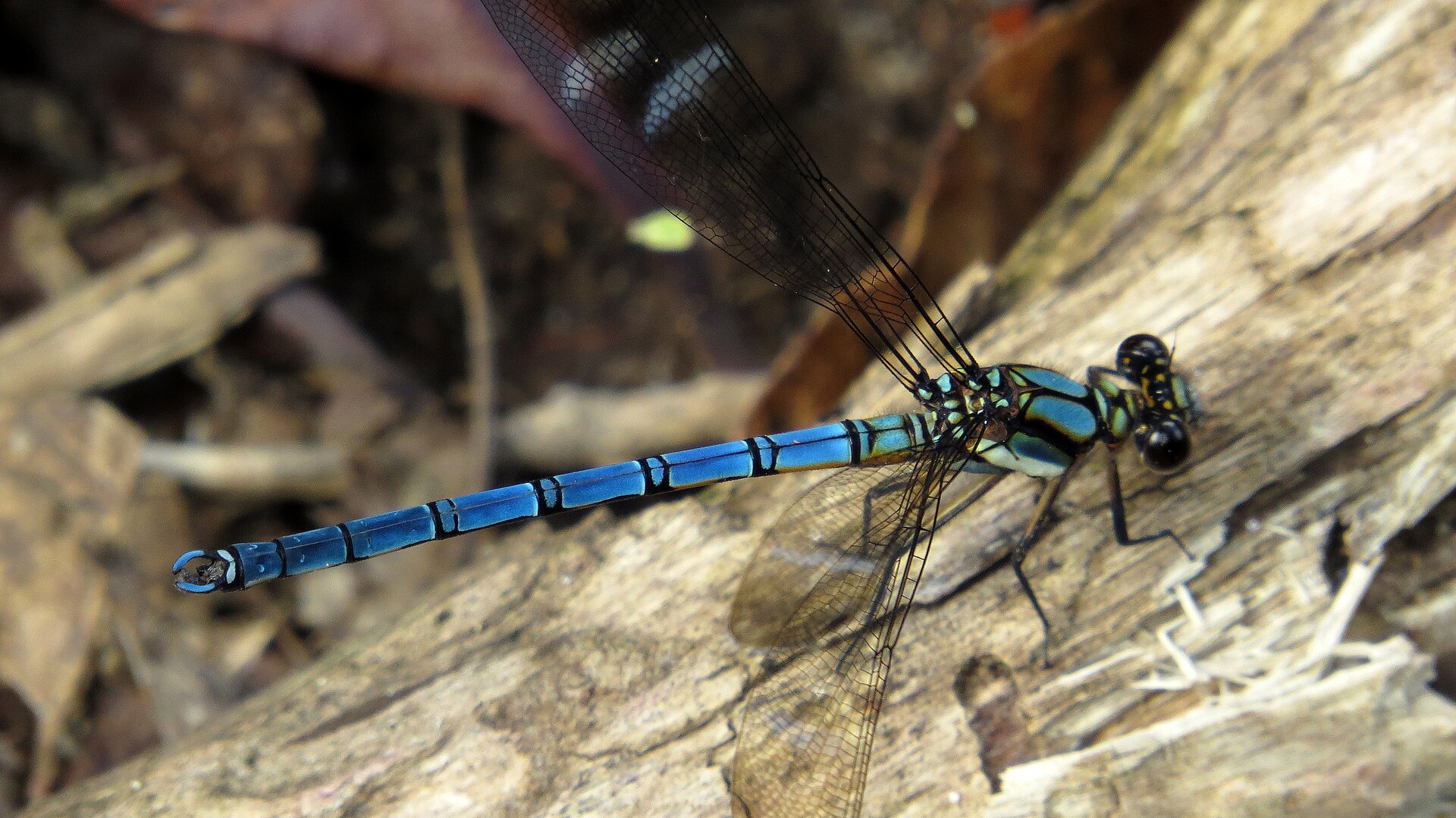
This damselfly is the size its kind settled on. It wasn't always so. In the Carboniferous and Permian, about 300 million years ago, dragonfly relatives called griffenflies reached wingspans of up to 71 centimetres. The largest dragonflies alive today, an Australian petaltail among them, reach about 16 centimetres; the largest damselflies about 19.
So imagine one with wings longer than your arm, hunting over the swamps long before the dinosaurs. No one is fully sure why they grew so big, or why nothing like them flies now. One popular idea is that there was more oxygen in the air; another is that there were no birds yet to compete with. Both are still argued over.
The rockmaster in front of you is from the same ancient order, cut down to size. For most of the history of flying animals, its kind ruled the air.