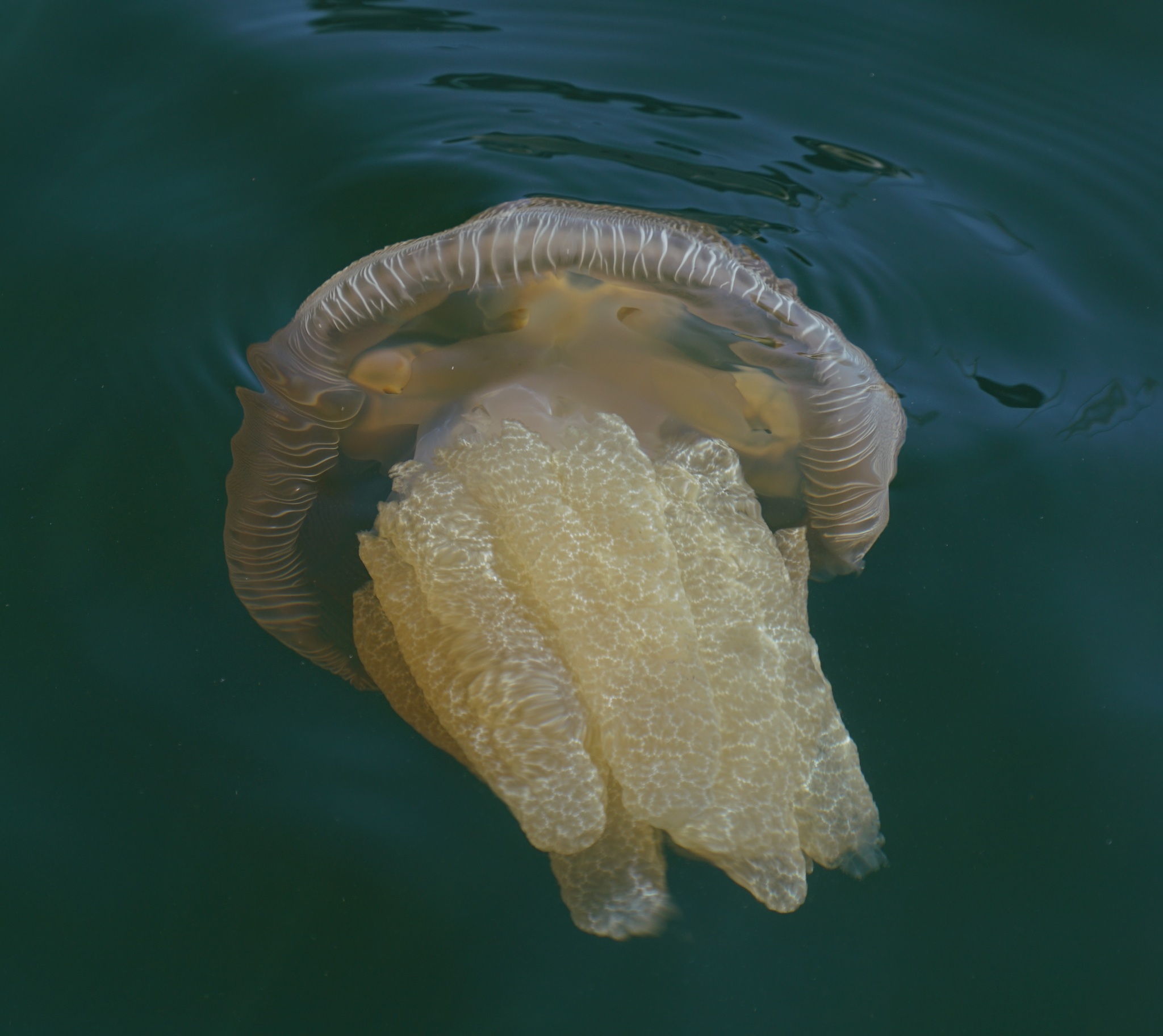
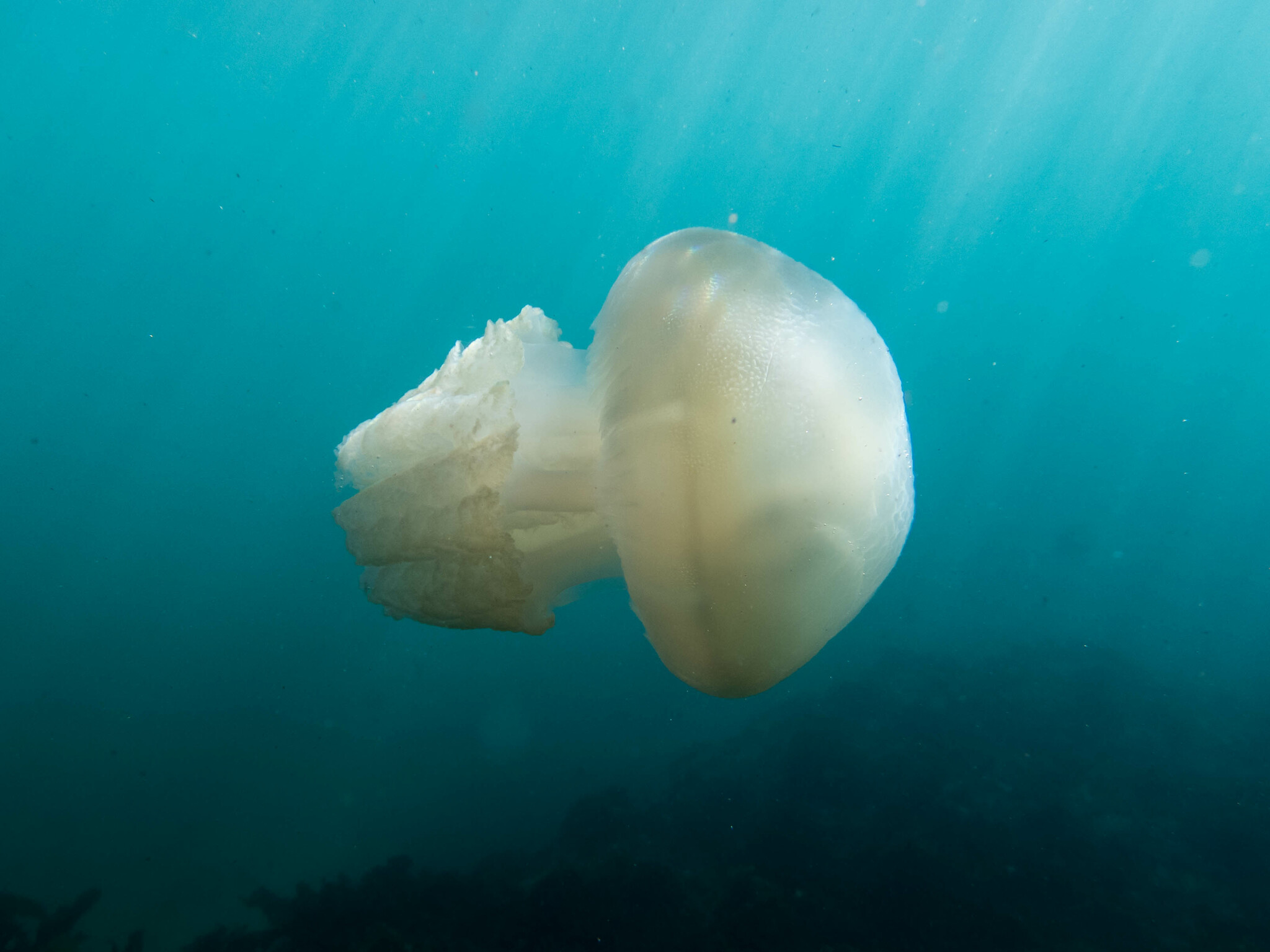
When the harbour fills with blubbers, it can look like a soup of drifting blobs. They aren't drifting. A blubber jelly has no tentacles, only eight trailing arms under its bell, and it swims. It's pushed forward both when its bell squeezes and when it relaxes, two kinds of thrust in every beat, which makes it a surprisingly efficient swimmer.
That beat is very old. The oldest certain fossil of a free-swimming jellyfish, from Canada's Burgess Shale, is about 505 million years old, with a bell up to 20 cm high. Large swimming jellyfish were already pulsing through the seas more than 500 million years ago, long before any animal walked on land.
Today the harbour is full of that ancient rhythm, thousands of times over.