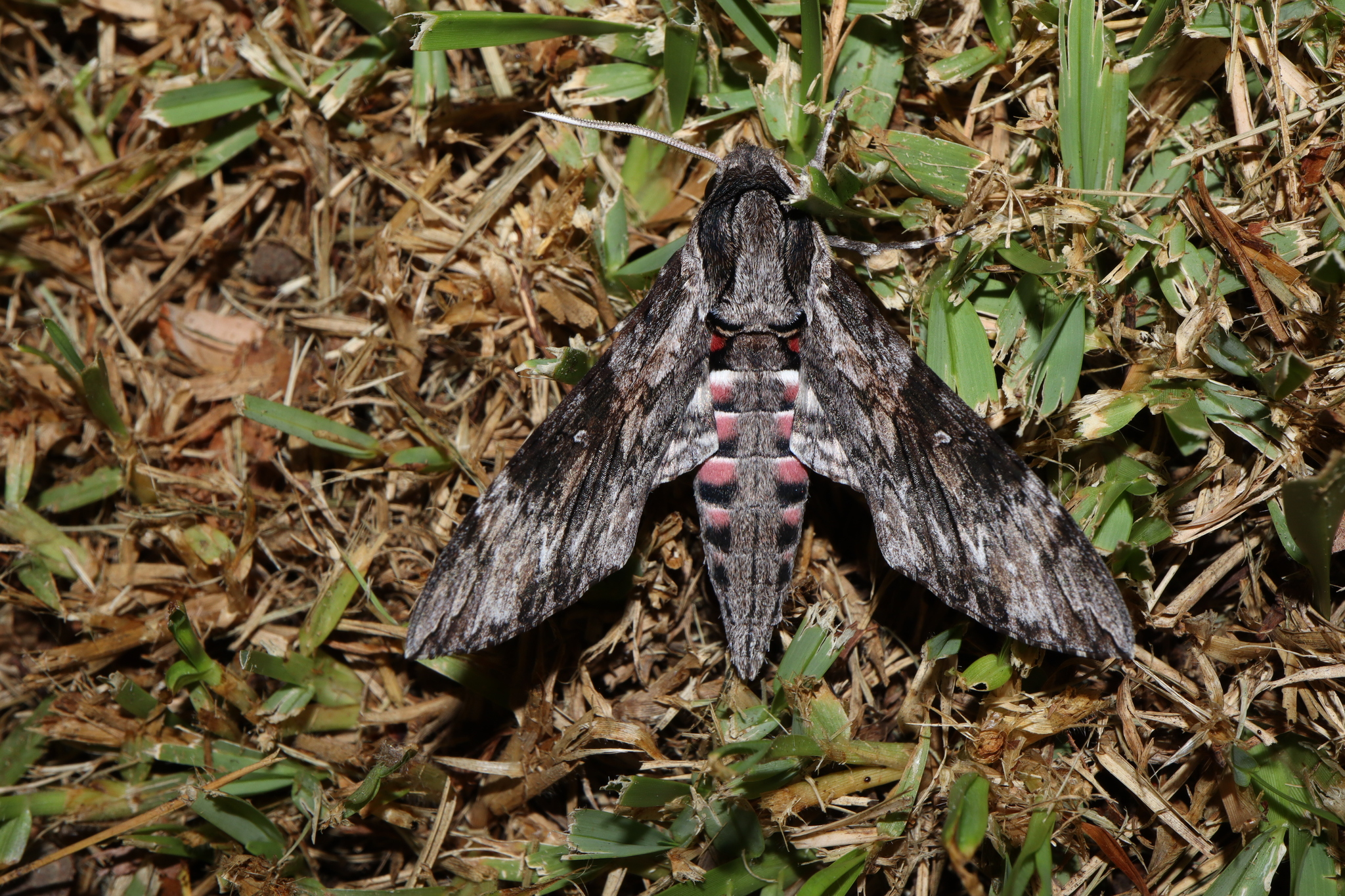
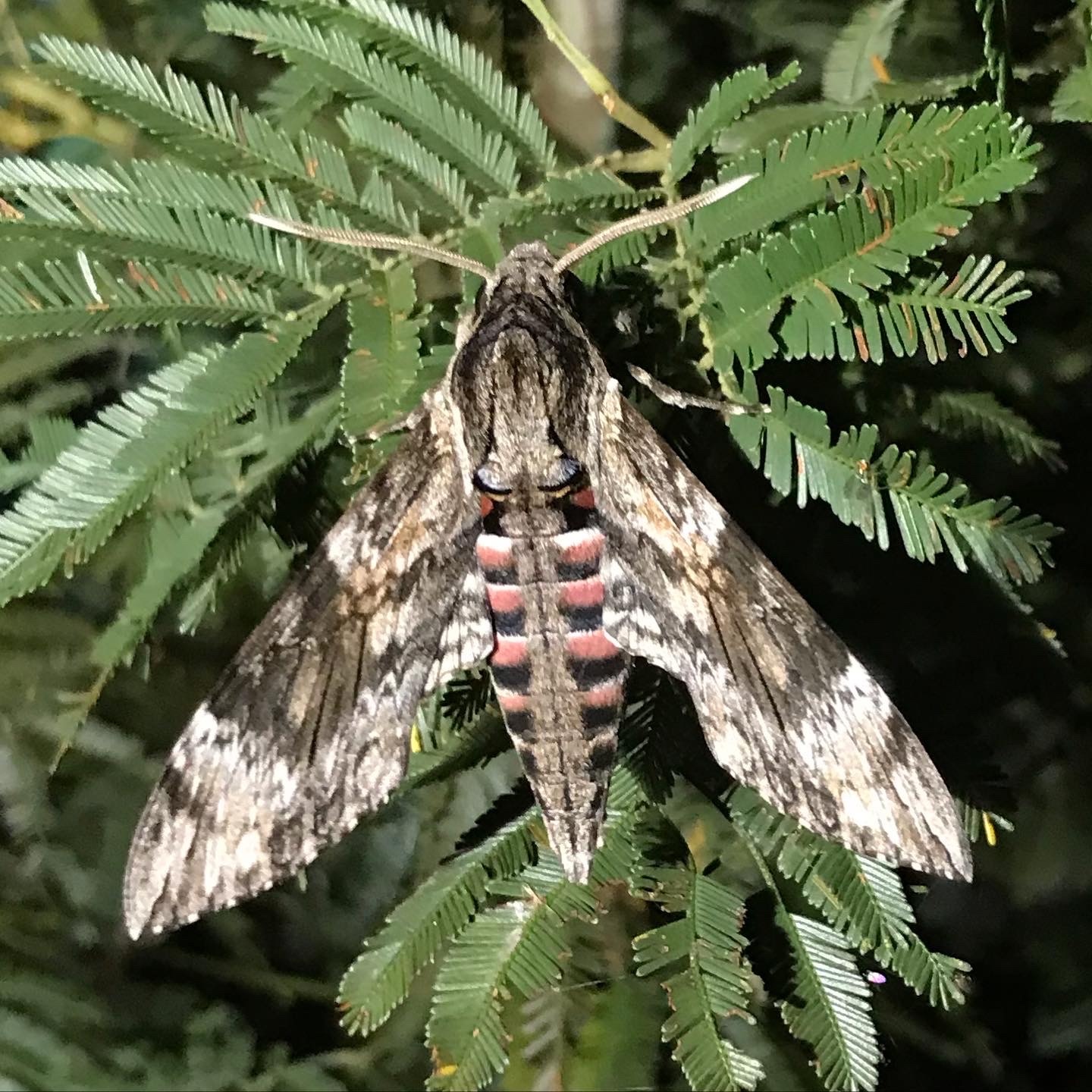
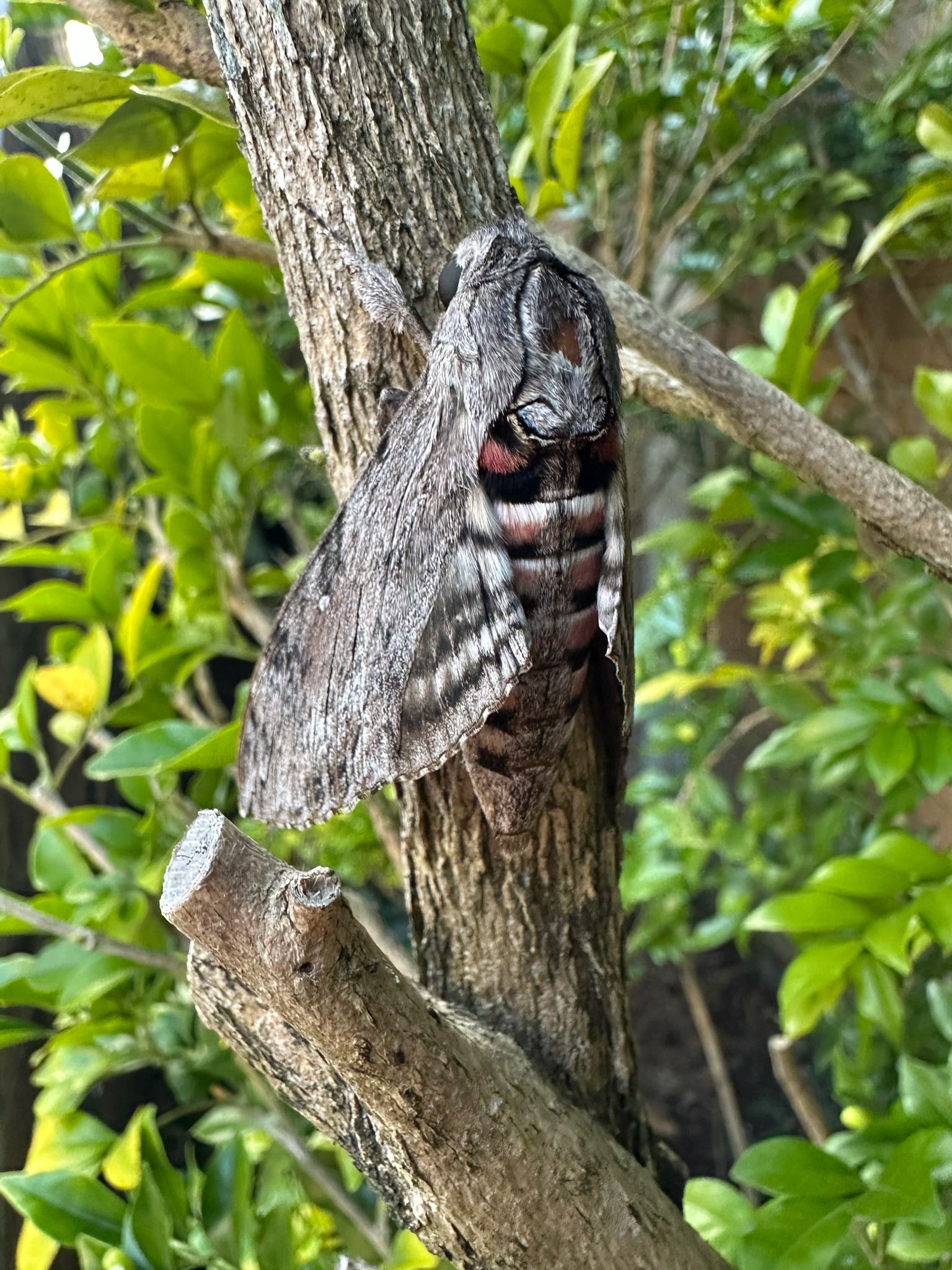
It hovers in front of a flower like a hummingbird and sips with a tongue up to 13 centimetres long, longer than its body.
You'd think a tongue like that was made for flowers. It may have begun without them. Fossil wing scales about 201 million years old are the earliest evidence of moths and butterflies, and moths with a sipping tongue were already around before there were flowering plants. One idea is that the tongue first served to drink water droplets, keeping the insect from drying out. Flowers came later and found the moths already equipped.
Since then, flowers and moths have pushed each other: deeper flowers, longer tongues. Darwin once looked at a Madagascan orchid with nectar about 30 centimetres down its spur and predicted a moth with a tongue to match. Decades after his death, it was found. It was a hawkmoth.
When it slides that tongue into a flower, it's using a tool older than flowers.