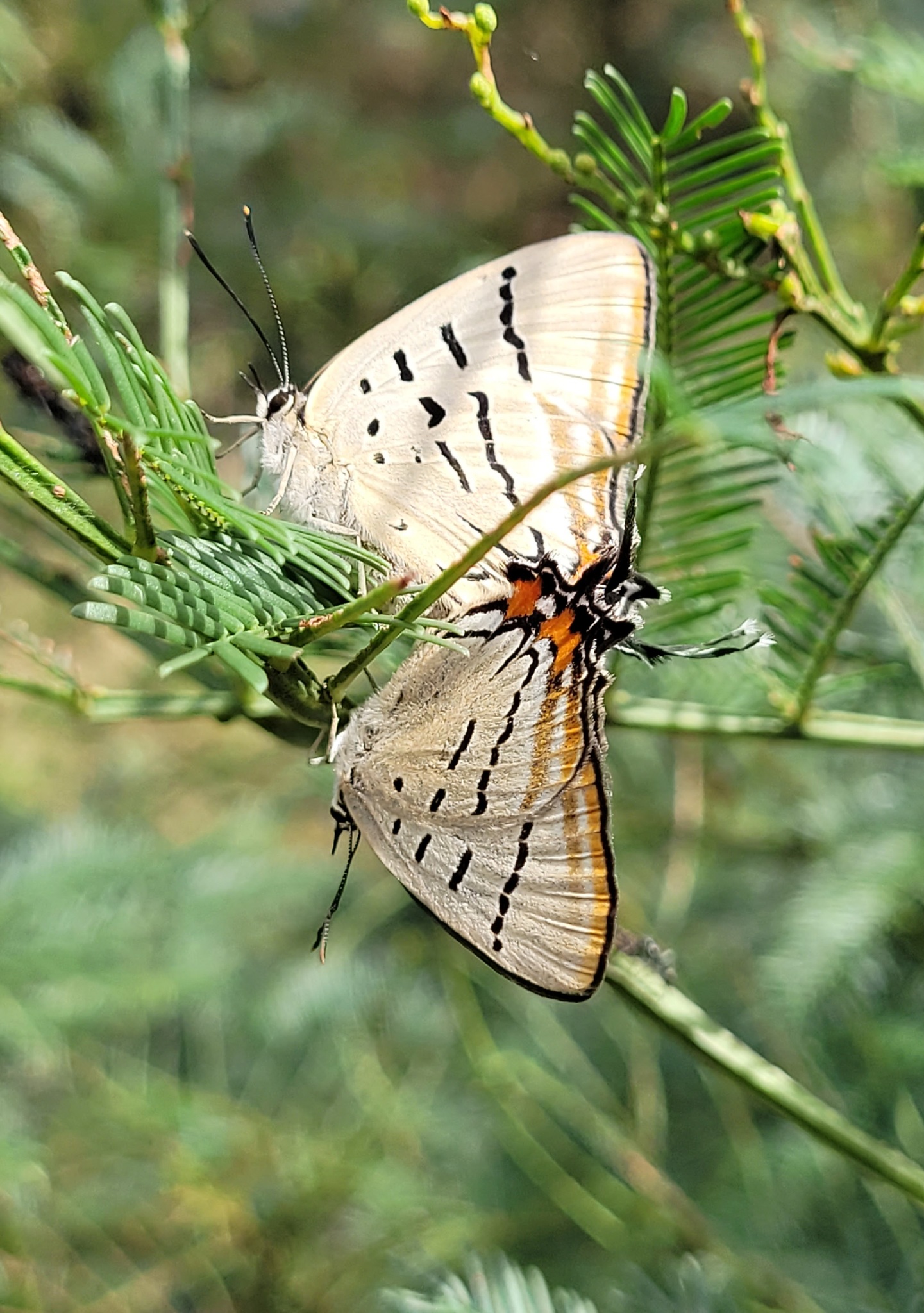
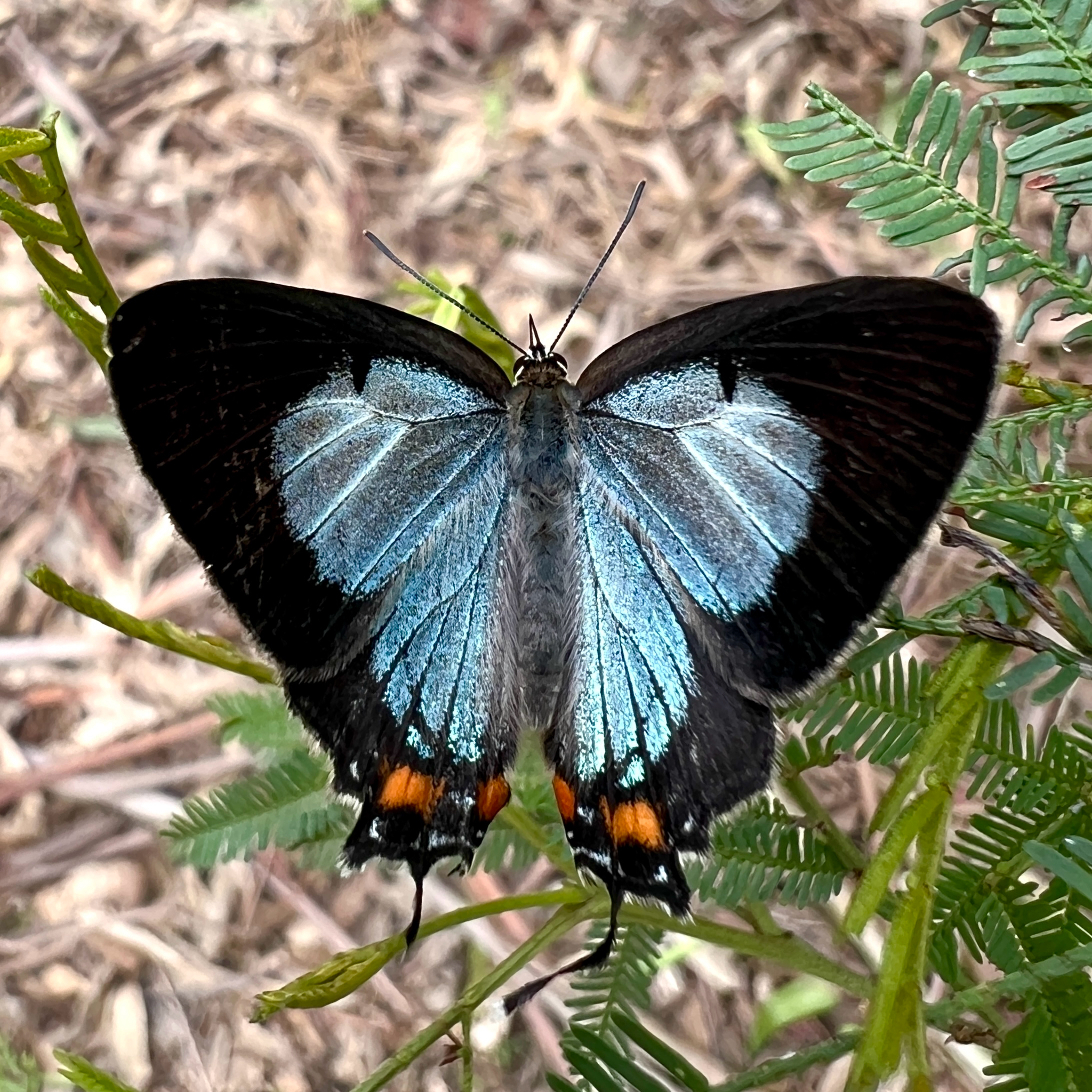
The ants swarming over these black caterpillars aren't attacking them. They're working for them. The caterpillars make honeydew, the ants drink it, and in return the ants stand guard and keep predators away.
The caterpillars keep in touch with their guards. They and their pupae make tiny vibrations that travel through the plant, two kinds of call from the pupae and three from the caterpillars. In experiments, pupae that had been muted had trouble keeping their ant guard.
The deal is very old. The blues, the butterfly family this one belongs to, have had caterpillars partnered with ants from the start, and DNA suggests the family dates back about 64.5 million years, to just after the dinosaurs died out.
The branch in front of you is carrying a conversation you can't hear, between two kinds of animal that have been doing business since the world was recovering from the asteroid.