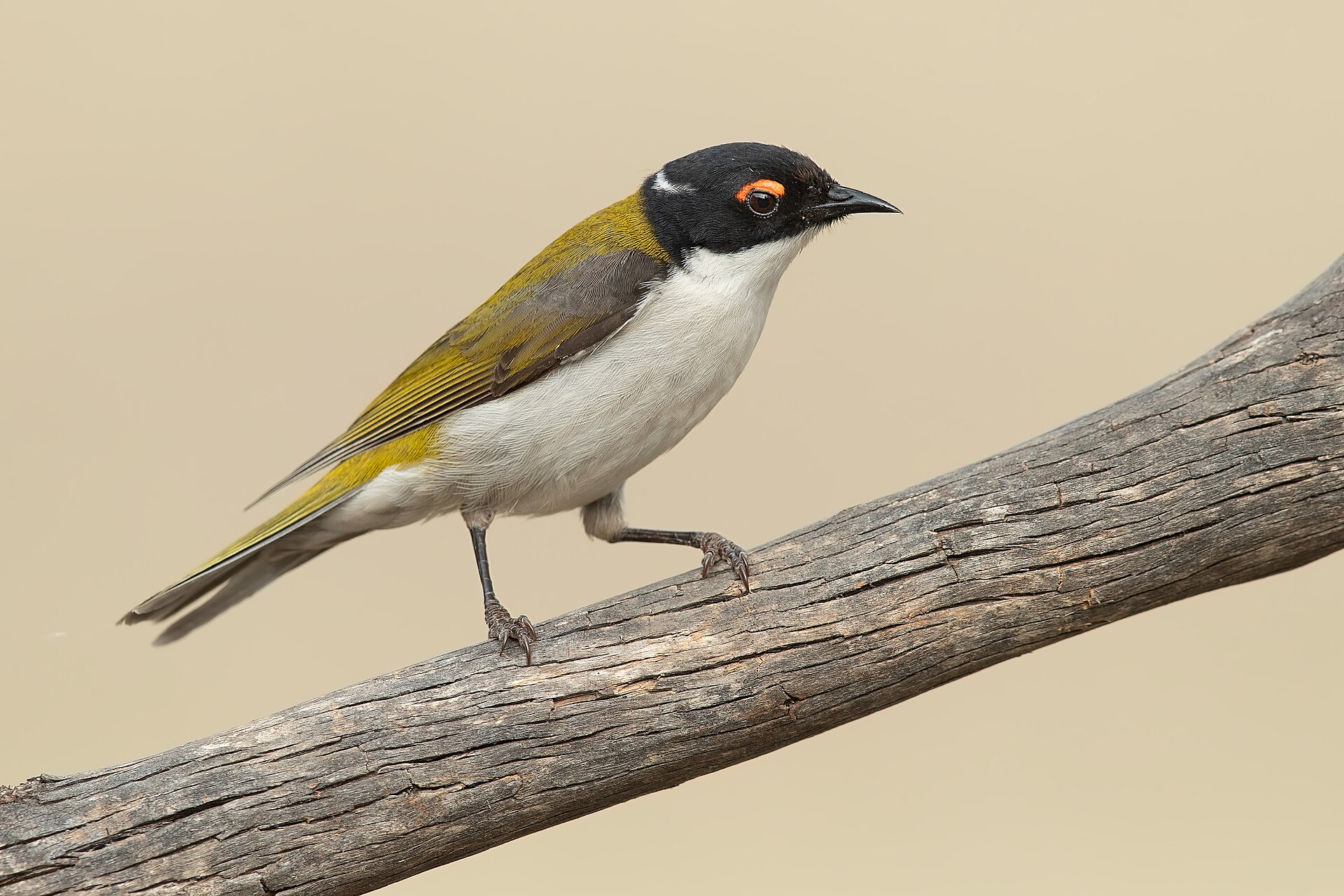
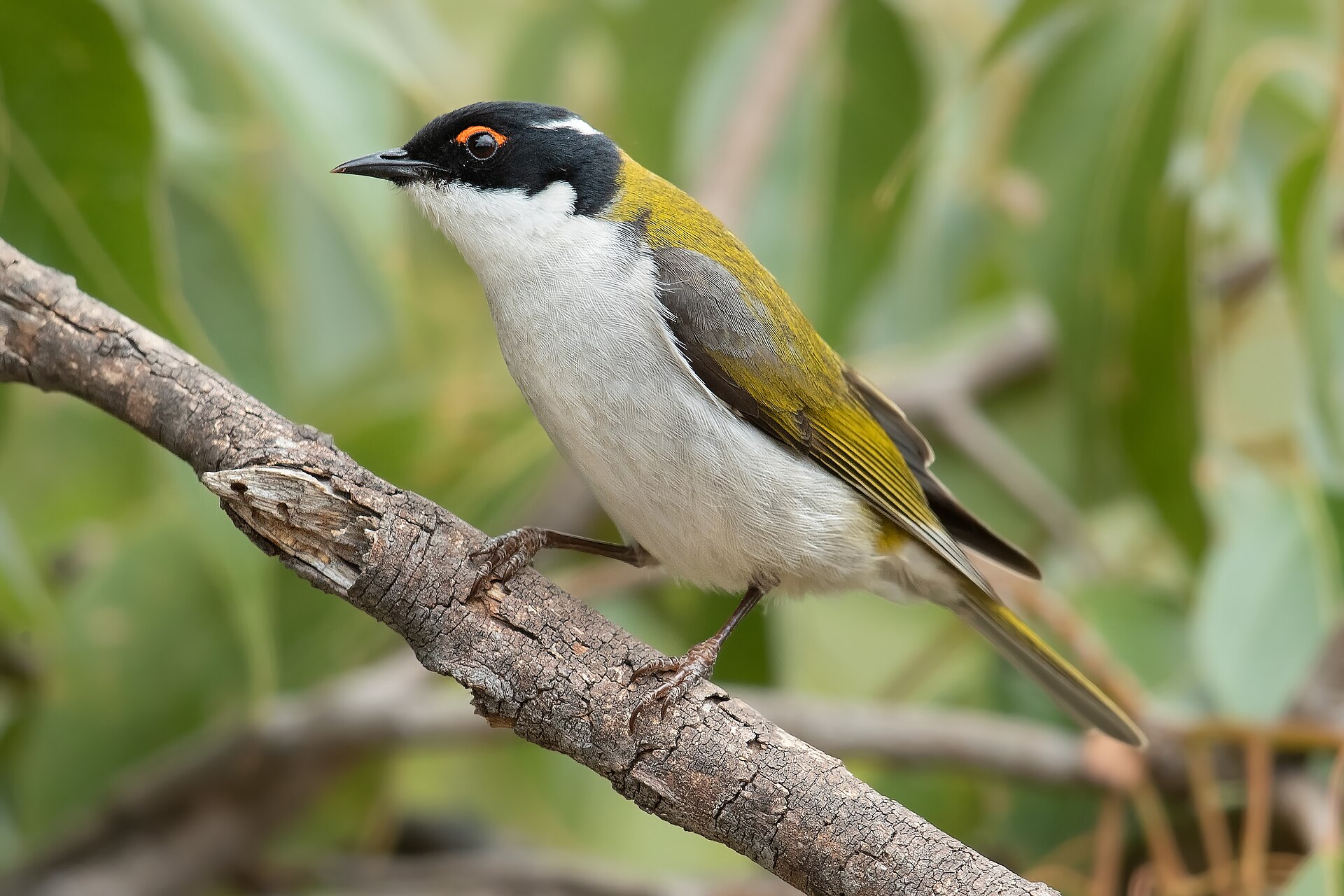

It weighs about 13 grams, and it may not be travelling alone. White-naped honeyeaters migrate in flocks of hundreds, sometimes thousands, skimming just above the treetops. Often they travel inside an even bigger stream: yellow-faced honeyeaters, which move north along the Great Dividing Range each autumn and back south each spring, following ridges, valleys and rivers. In some places thousands pass in an hour.
They're part of a very old Australian story. DNA suggests songbirds began on this continent, and that the honeyeaters and their relatives, nearly 300 species today, began here about 31 million years ago before spreading out to New Guinea and beyond.
When it settles, it works the tallest gums, picking tiny insects off the leaves and bark and only sometimes dipping into a flower. At nesting time it doesn't go it alone, either: helpers join the parents in feeding the young.
Small as it is, this bird is almost never on its own. The flock may still be passing overhead.