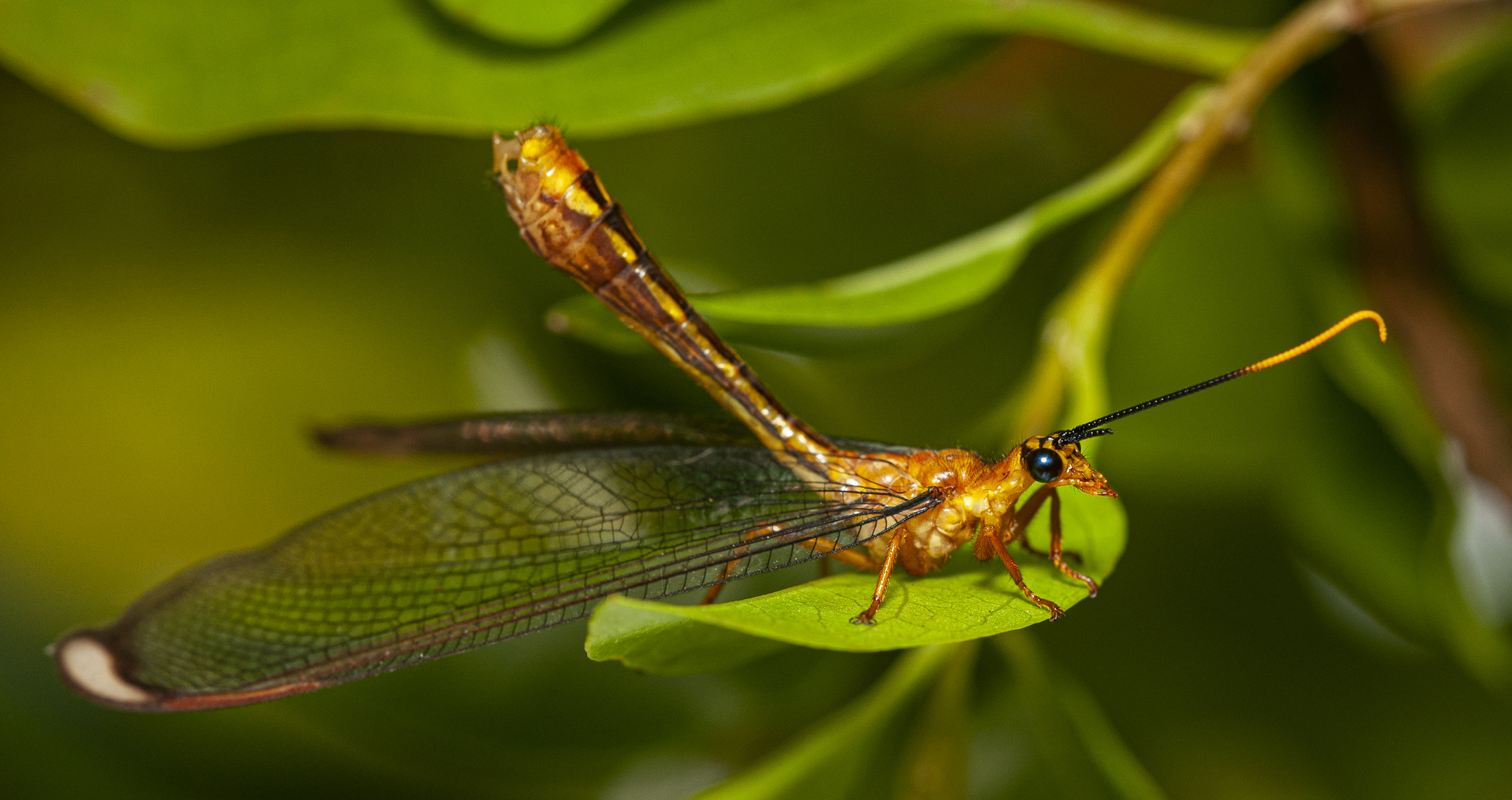
Its scientific name, myrmeleonoides, means "like an antlion", and it looks the part: a long slim body and long, net-veined wings. It's a split-footed lacewing, and its family has a past.
About 100 million years ago, while dinosaurs walked, split-footed lacewing larvae came in many more shapes than they do now. Larvae trapped in amber show more variety in their heads and mouthparts than any living ones. Since then the family's young have become much less varied. Whole ways of being a lacewing larva have gone.
It wasn't only them. In the age of dinosaurs, another family of lacewings, now extinct, looked remarkably like butterflies, with eyespots, wing scales and long sipping mouthparts, tens of millions of years before true butterflies appeared.
The lacewing in front of you is one of the survivors of a much stranger crowd.