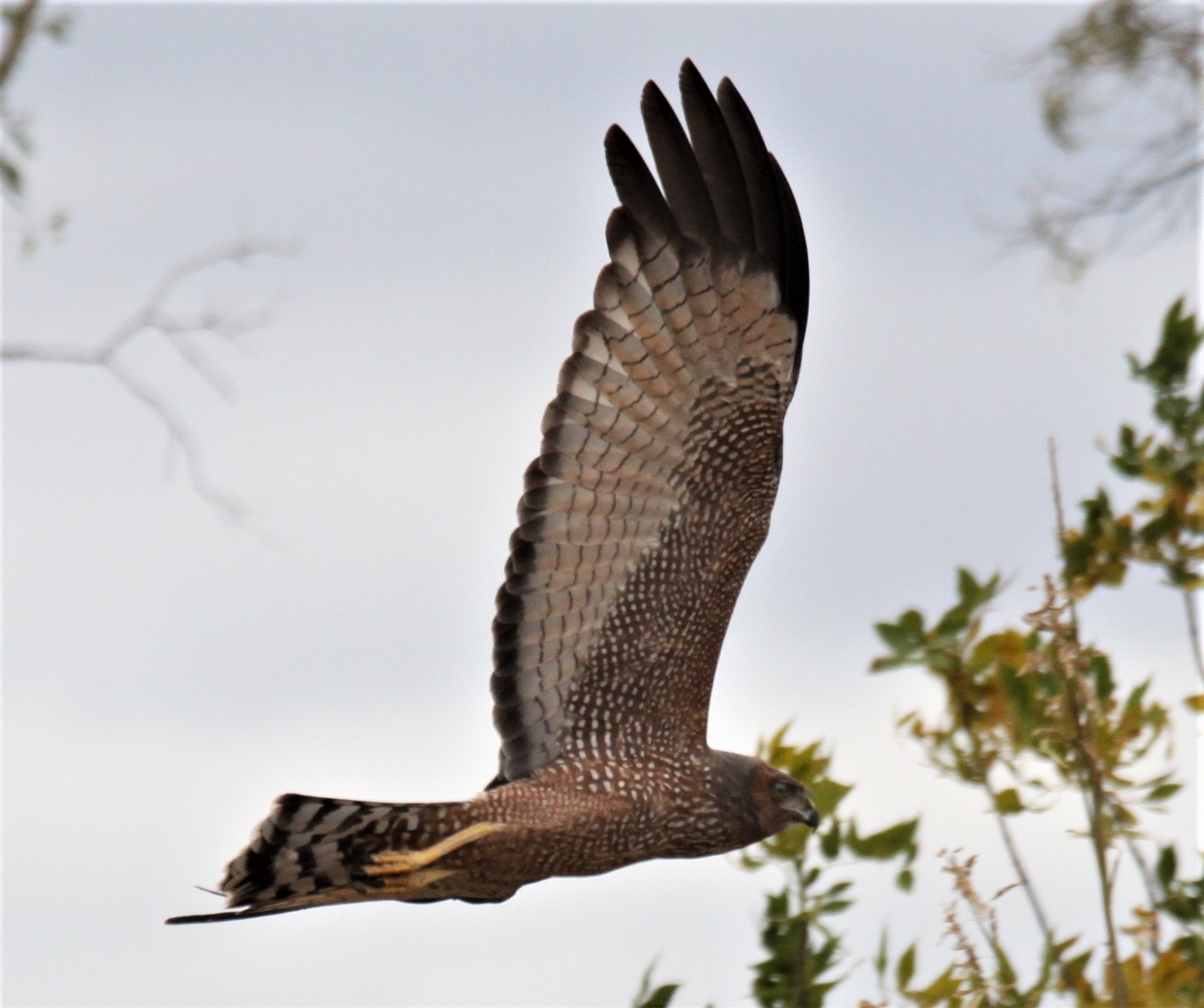
It drifts low and slow over the grass, wings swept up, and it isn't only looking. It's listening. Look at its face: a disc, like an owl's.
That's no coincidence. In 2025, scientists opened up the ears and brains of harriers and found them built like owls'. Their ear openings are enlarged, and two brain regions that work out where a sound is coming from are up to three and twelve times bigger than in other hawks, about the size of an owl's. Owls and harriers last shared an ancestor over 60 million years ago. Two lines of hunters, worlds apart, arrived at the same answer.
The question was the grass. DNA suggests harriers emerged somewhere between about 5 and 12 million years ago, around the time open country was spreading across the world. Prey that hides in grass can't always be seen, but it can be heard.
This harrier has changed again since. Other harriers nest on the ground; the spotted harrier mostly nests in trees, and was probably once a ground-nester like the rest.
Somewhere under that grass, something small is trying very hard to keep quiet.