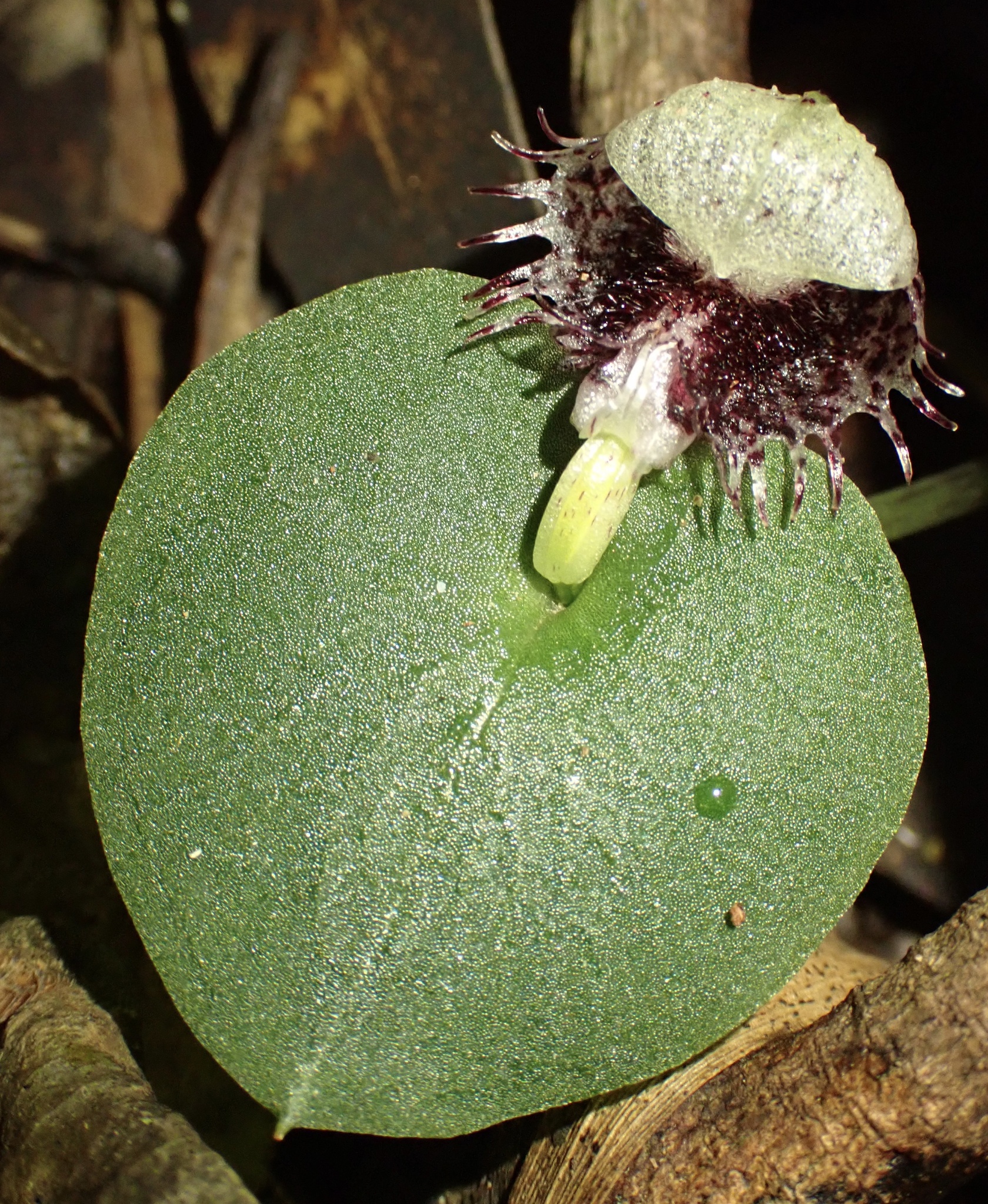
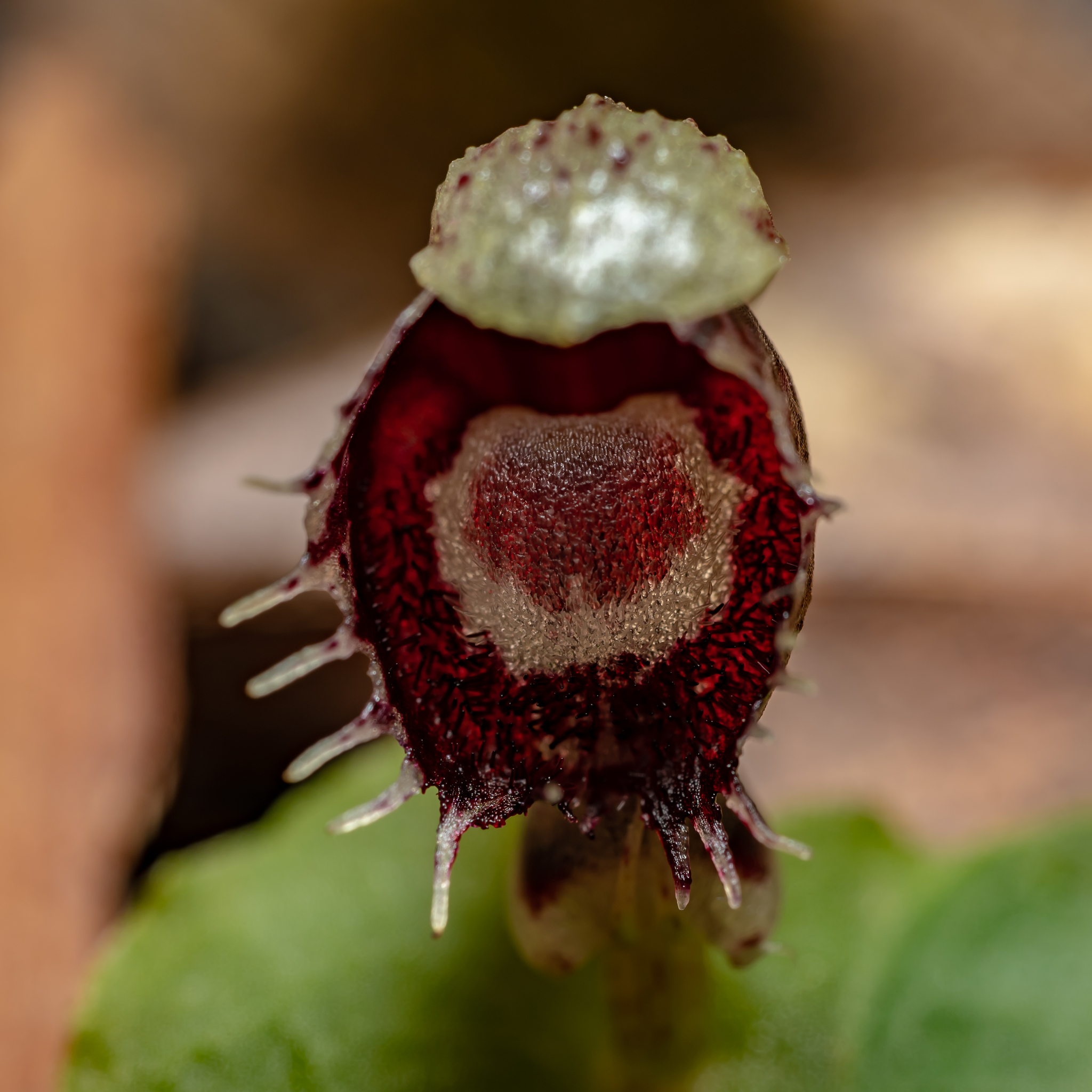
You have to get down on the ground to see it properly: a small dark flower sitting close to the soil. That's where its world is.
Helmet orchids are pollinated by fungus gnats, tiny flies that run about close to the ground in humid weather, often where the soil is rich and damp. The flower may draw them in by smell, but that's still speculation. Whatever brings them, the whole exchange happens at ankle height, between a flower you'd step over and a fly you'd never notice.
Then something odd happens. Once a flower is pollinated, its stalk thickens and grows longer before the seed is released. The flower has spent its life pressed to the ground; its seeds go out from higher up.
Orchids have been bargaining with insects for a very long time: DNA studies suggest the ancestor of all living orchids grew about 80 million years ago, while dinosaurs still walked the Earth.
Stay down there a moment. This is the scale the deal is done at.