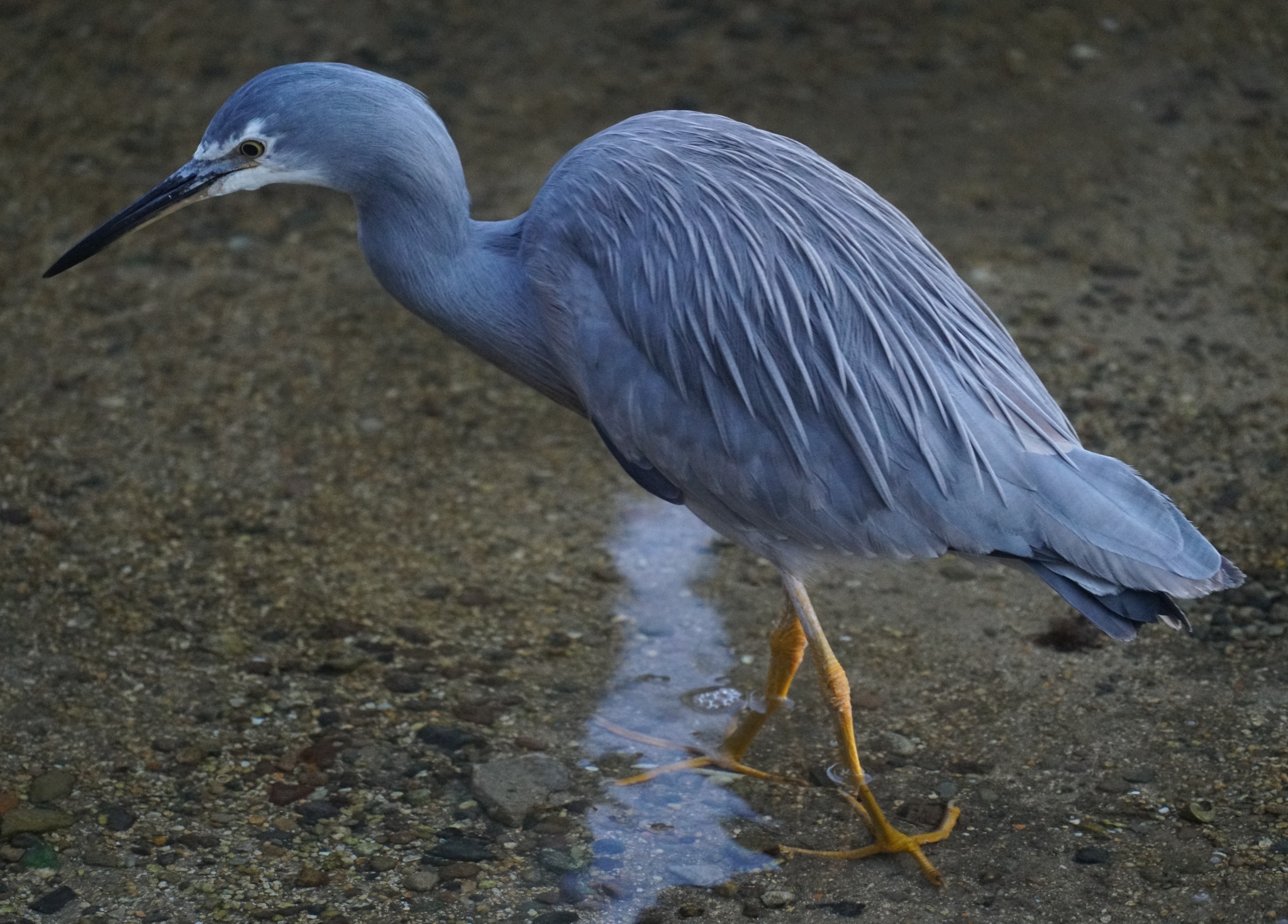
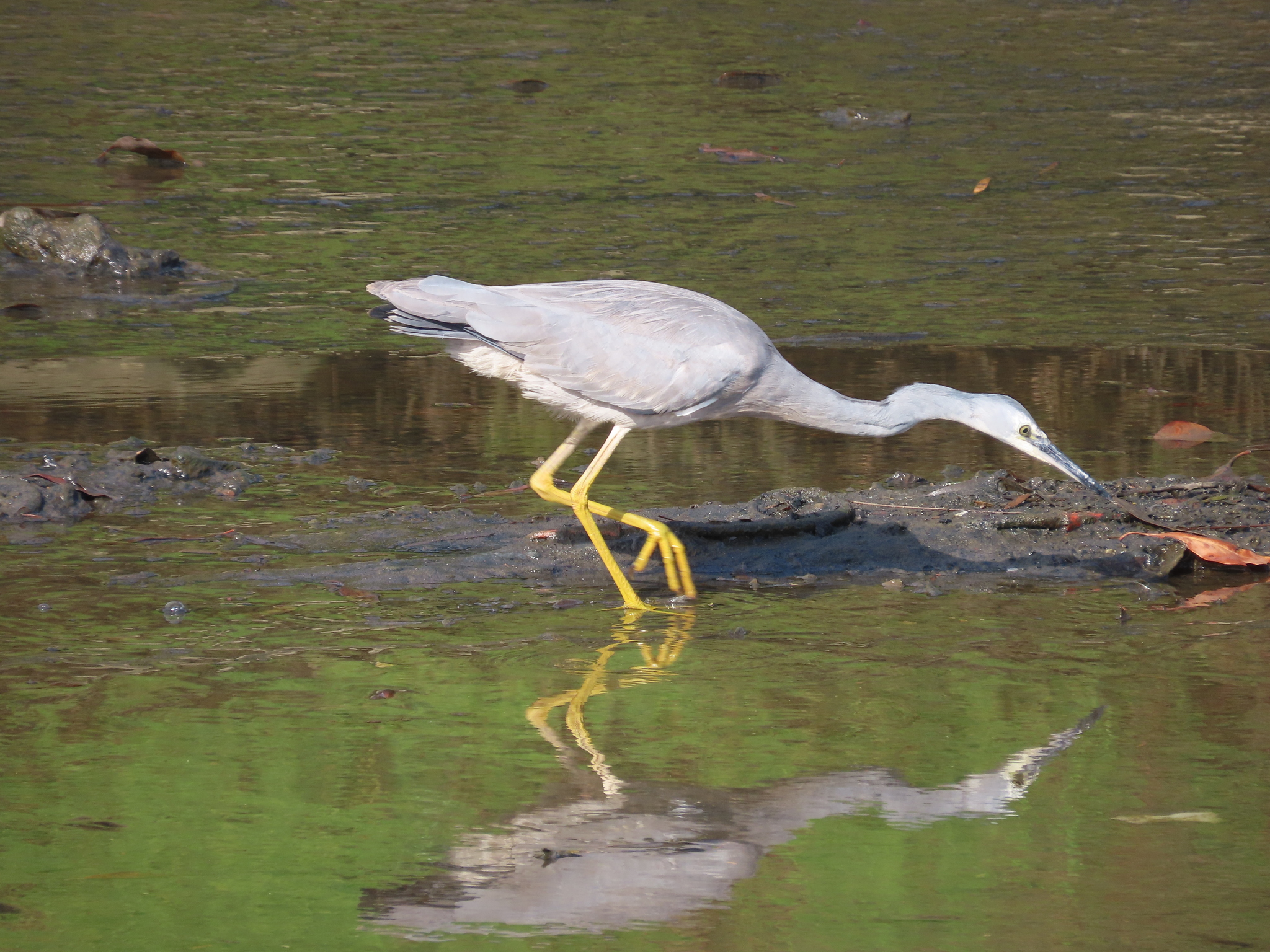
Every heron has a hidden spring. Like other herons, the white-faced heron has a special hinge at the sixth bone of its neck, and it lets the folded neck shoot out in an instant. It hunts several ways: walking to flush prey, poking into damp cracks, or simply standing in the water and watching. When it stands still, the spring is loaded.
Herons have been doing this for a long time. The oldest well-dated heron fossil, from Belgium, is 32 to 33 million years old. And between 19 and 16 million years ago a heron lived in southern New Zealand, by a shallow freshwater lake of about 5,600 square kilometres, in a warm climate, ringed by casuarinas, eucalypts and palms.
Picture it: a heron, waiting in the shallows under gum trees, 19 million years ago. Perhaps it hunted much like this one.
Give it a minute. The neck is folded. Any second now.